On this page
Quick Reference
Overview and Recommendations
Background
- •Asthma is a chronic inflammatory airway disease affecting 260 million people worldwide, characterized by variable airflow limitation, airway hyperresponsiveness, and episodic symptoms (wheeze, dyspnea, cough, chest tightness). It is a heterogeneous syndrome with multiple phenotypes, allergic, eosinophilic, exercise-induced, obesity-related, and aspirin-exacerbated, each driven by distinct molecular pathways.
- •The T2-high endotype (eosinophilic, driven by IL-4, IL-5, IL-13) accounts for ~50% of asthma and responds well to inhaled corticosteroids. The T2-low endotype (neutrophilic or paucigranulocytic) is less corticosteroid-responsive and often associated with obesity, smoking, or IL-17-driven inflammation.
- •Airway remodeling, subepithelial fibrosis, smooth muscle hypertrophy, goblet cell metaplasia, develops from both inflammation and mechanical forces of bronchoconstriction. This structural change accelerates lung function decline: each 100 cells/μL higher blood eosinophil count adds 1.0 mL/year FEV1 loss.
- •Asthma mortality remains ~180,000 deaths annually. SABA overuse is a critical risk factor: ≥11 canisters/year increases mortality 2.35-fold; even 3-5 canisters/year carries 26% excess mortality. GINA 2021 eliminated SABA monotherapy, establishing as-needed low-dose ICS-formoterol as the preferred reliever.
Evaluation
- •Suspect asthma in patients with episodic dyspnea, cough, wheeze, or chest tightness, worse at night, early morning, after exercise, or with allergen/irritant exposure. Nocturnal awakenings are a hallmark.
- •Ask about triggers (allergens, viruses, exercise, occupational exposures, NSAIDs), atopic history (eczema, allergic rhinitis), and family history. Document smoking history and SABA use frequency.
- •Examine for expiratory wheeze, prolonged expiration, hyperinflation. Between exacerbations, examination may be normal. In severe exacerbations, look for silent chest, pulsus paradoxus >10 mmHg, accessory muscle use, cyanosis.
- •Order spirometry with bronchodilator testing: confirm asthma with ≥12% and ≥200 mL increase in FEV1 after albuterol 400 μg. If normal, consider methacholine, exercise, or mannitol challenge.
- •Measure biomarkers: blood eosinophil count (≥150 cells/μL suggests T2-high), FeNO (≥25 ppb indicates eosinophilic inflammation), and serum IgE. These predict exacerbation risk and guide therapy.
- •Consider chest CT if atypical features: fixed obstruction, hemoptysis, suspicion of bronchiectasis, ABPA, or asthma-COPD overlap. Mucus plug burden on CT is an emerging prognostic marker.
- •Assess control with ACQ-5 or ACT: well-controlled = daytime symptoms ≤2 days/week, no nocturnal awakenings, no activity limitation, SABA use ≤2 days/week.
- •Evaluate for comorbidities: vocal cord dysfunction, GERD, obesity, sleep apnea, chronic rhinosinusitis with nasal polyps, ABPA.
- •In children unable to perform spirometry, use impulse oscillometry. Consider alternative diagnoses: primary ciliary dyskinesia, bronchopulmonary dysplasia, foreign body aspiration.
- •Red flags for severe exacerbation: inability to speak in full sentences, accessory muscle use, pulsus paradoxus >20 mmHg, silent chest, cyanosis, somnolence, PEF <50% personal best.
Management
- •For mild asthma (Steps 1-2), prescribe as-needed low-dose budesonide-formoterol (200/6 μg, 1 inhalation as needed), reduces severe exacerbations by 64% vs SABA alone with lower ICS exposure.
- •For moderate asthma (Step 3), use MART: budesonide-formoterol 160/4.5 μg, 2 inhalations BID plus as needed. Reduces exacerbations 40-50% vs fixed-dose ICS/LABA plus SABA.
- •For severe asthma (Steps 4-5), escalate to high-dose ICS/LABA (e.g., fluticasone furoate/vilanterol 200/25 μg daily) and add LAMA (umeclidinium 62.5 μg daily), azithromycin 500 mg three times weekly, or biologic therapy based on biomarkers.
- •Select biologic by phenotype: omalizumab (75-600 mg SC q2-4wk) for allergic asthma; mepolizumab (100 mg SC q4wk) or benralizumab (30 mg SC q4wk×3 then q8wk) for eosinophilic; dupilumab (200-300 mg SC q2wk) for T2-high; tezepelumab (210 mg SC q4wk) for all severe asthma regardless of eosinophils.
- •For acute exacerbations, give albuterol 4-8 puffs via MDI with spacer or 5 mg nebulized every 20 min for first hour. Add ipratropium 0.5 mg nebulized every 20 min for three doses in severe cases.
- •Start systemic corticosteroids: prednisolone 40-50 mg orally daily (or IV methylprednisolone 80 mg/day) for 5-7 days. Oral and IV are equally effective.
- •Titrate oxygen to SpO2 94-98%. Consider NIV for respiratory failure (pH <7.35, PaCO2 >45 mmHg), may reduce intubation (RR 0.55). Do not delay intubation if deteriorating.
- •Monitor PEF (target >60% predicted), SpO2, respiratory rate, accessory muscle use, pulsus paradoxus. ICU criteria: refractory hypoxemia, altered mental status, exhaustion, rising PaCO2, failed NIV.
- •Avoid SABA overuse: ≥3 canisters/year increases exacerbation risk (HR 1.26) and mortality (HR 1.26-2.35). Use as-needed ICS-formoterol as reliever.
- •Avoid non-dihydropyridine CCBs, nonselective beta-blockers, and NSAIDs in N-ERD.
- •Aim for clinical remission: zero exacerbations, no OCS, ACQ-5 ≤1.5, FEV1 ≥80% predicted. Remission within 1 year of ICS initiation slows FEV1 decline by 31.6 mL/year.
- •Step-down after ≥3 months of control: reduce OCS first, then consider biologic taper if remission >12 months, then reduce ICS to lowest effective dose. Do not stop biologic abruptly, COMET trial showed loss of control (HR 1.61) after stopping mepolizumab.
Board Review — High Yield
- •T2-high vs T2-low endotype, T2-high asthma (eosinophilic, elevated FeNO, IgE) responds to ICS and biologics; T2-low (neutrophilic, paucigranulocytic) is less corticosteroid-responsive and often associated with obesity or smoking.
- •GINA stepwise approach, GINA 2021 eliminated SABA monotherapy; as-needed low-dose ICS-formoterol is the preferred reliever for all severities, reducing severe exacerbations by 64% in mild asthma.
- •SMART/MART therapy, Maintenance-and-reliever therapy with budesonide-formoterol reduces exacerbations by 40-50% compared to fixed-dose ICS/LABA plus SABA, with lower total ICS exposure.
- •SABA overuse mortality, Collecting ≥11 SABA canisters per year increases mortality risk 2.35-fold; even 3-5 canisters carries 26% excess mortality.
- •Clinical remission, A composite endpoint (zero exacerbations, no OCS, ACQ-5 ≤1.5, FEV1 ≥80% predicted) is achievable with biologics in 20-38% of severe asthma patients; early remission predicts slower lung function decline.
- •Biologics for severe asthma, Six biologics are approved: omalizumab (anti-IgE), mepolizumab/benralizumab (anti-IL-5/5R), dupilumab (anti-IL-4Rα), tezepelumab (anti-TSLP), and depemokimab (ultra-long-acting anti-IL-5). Tezepelumab is effective regardless of eosinophil count.
- •Airway remodeling, Bronchoconstriction alone can induce remodeling via mechanical forces; achieving airway patency may be as important as suppressing inflammation for long-term outcomes.
- •FeNO and eosinophils as predictors, Per 10-fold increase in blood eosinophils, exacerbation rate ratio is 1.48; per 10-fold increase in FeNO, 1.44. These biomarkers guide biologic selection and predict future attack risk.
- •Azithromycin for remission, Azithromycin 500 mg three times weekly induced clinical remission in 50.6% of patients vs 38.9% with placebo in the AMAZES trial, particularly in noneosinophilic asthma.
- •Occupational asthma, At least 16% of adult-onset asthma is attributable to occupational exposures; systematic inquiry and serial PEF monitoring are essential for diagnosis.
Deep Dive — Evidence Details
1. Definition, Classification and Nomenclature
- ▸Asthma is a heterogeneous, chronic inflammatory airway disease defined by variable expiratory airflow limitation and airway hyperresponsiveness.
- ▸Phenotypic classification (T2-high vs T2-low, allergic vs eosinophilic vs obesity-related vs ACO) guides biomarker-driven treatment decisions.
- ▸Diagnosis requires objective demonstration of variable airflow obstruction, history alone is insufficient.
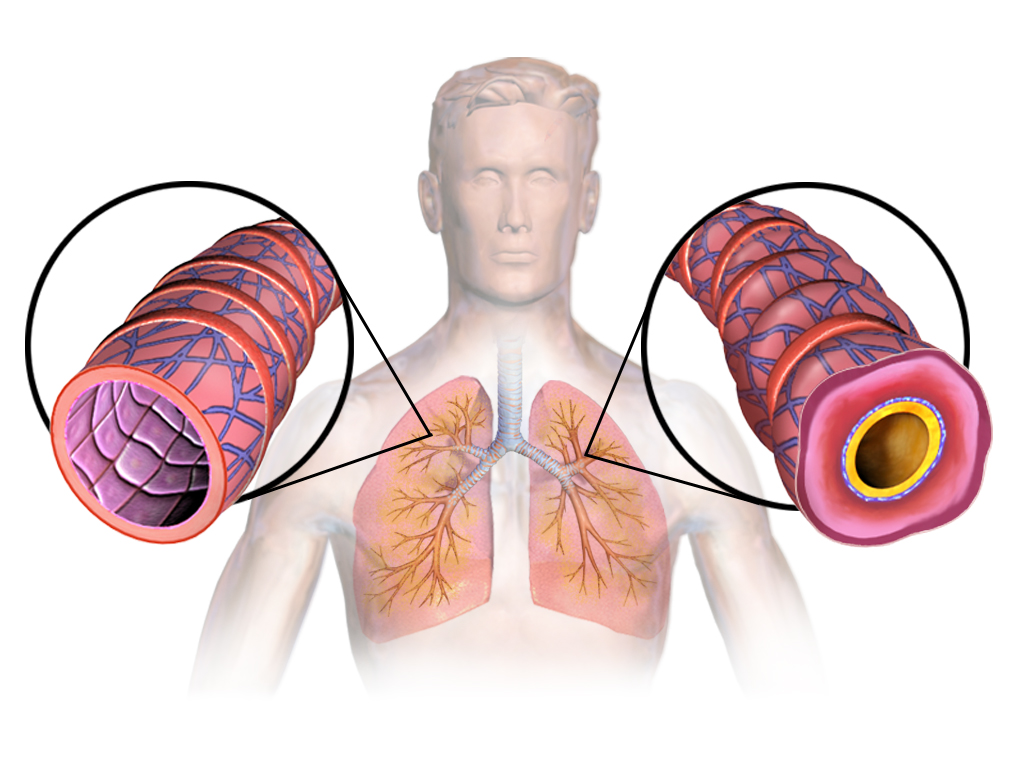
Asthma is a chronic inflammatory disease of the airways characterized by variable expiratory airflow limitation, airway hyperresponsiveness, and respiratory symptoms including wheeze, dyspnea, chest tightness, and cough that vary over time and in intensity [2]D5. It is a heterogeneous syndrome, not a single disease, encompassing multiple phenotypes driven by distinct molecular pathways [8]B3b[39]D5.
Also Called / Synonyms: Bronchial asthma, reactive airway disease (RAD, less precise, avoid), variable airflow obstruction, airway hyperresponsiveness syndrome. (EIB) is a distinct provocation pattern that can occur in patients with or without persistent asthma [1]A1c.
Key Definitions
- Severity: The intrinsic intensity of the disease before treatment, classified as intermittent, mild persistent, moderate persistent, or severe persistent [41]D5. Because severity is modified by therapy, the concept of asthma control (the degree to which symptoms, functional impairment, and risk of exacerbations are minimized) has largely replaced severity as the guide for treatment decisions [2]D5.
- Exacerbation: An acute or subacute worsening of symptoms and lung function from the patient’s usual status, requiring a change in medication [2]D5.
- Severe asthma: Asthma that requires treatment with high-dose inhaled corticosteroids plus a second controller (and/or systemic corticosteroids) to prevent it from becoming “uncontrolled,” or that remains “uncontrolled” despite this therapy [30]A1c.
- Clinical remission: A composite outcome of zero exacerbations, no long-term oral corticosteroids, well-controlled symptoms, and (in stricter definitions) normal lung function, achievable with biologic therapy in about one in four to one in five patients [19]A1a[27]B2b[71]D5.
Classification of Asthma Phenotypes
Multiple classification systems have been proposed, reflecting the heterogeneity of the disease. The most clinically useful and biomarker-driven approach identifies two broad endotypes: T2-high (eosinophilic, driven by type 2 cytokines IL-4, IL-5, IL-13) and T2-low (non-eosinophilic, encompassing neutrophilic, paucigranulocytic, and obesity-related subtypes) [8]B3b[32]B2b. Within these categories, the following phenotypes are recognized:
| Phenotype | Key Distinguishing Feature | Associated Biomarker/Subtype |
|---|---|---|
| Allergic (early-onset) | Childhood onset, atopy, personal/family history of allergic disease | Elevated IgE, positive aeroallergen skin tests [29]C4 |
| Eosinophilic (late-onset) | Adult onset, often severe, frequent , sinusitis | Blood eosinophil count ≥150 cells/μL; FeNO ≥25 ppb [40]B2b[86]D5 |
| Exercise-induced bronchoconstriction (EIB) | Airway narrowing specifically triggered by exercise; normal baseline lung function | Positive exercise challenge test [1]A1c |
| Obesity-related asthma | Late onset, female predominance, poor response to inhaled corticosteroids, minimal type 2 inflammation | Low FeNO, low blood eosinophils; metabolic dysregulation [26]D5[79]D5 |
| Asthma- overlap (ACO) | Persistent airflow limitation (post-bronchodilator FEV1/FVC < LLN) with features of both asthma and COPD | Smoking history, emphysema on CT, incomplete reversibility [70]D5[72]B2b |
| (AERD) | Severe asthma with nasal polyps and sensitivity to COX-1 inhibitors | Elevated urinary leukotriene E4, eosinophilia |
| Cough-variant asthma | Cough as the predominant or sole symptom; no wheeze or dyspnea | Positive methacholine challenge; normal spirometry |
Clinical Significance
Asthma affects approximately 300 million people worldwide and caused 0.40 million deaths in 2015, with substantial morbidity and healthcare costs [36]B2a. Despite advances in therapy, a significant proportion of patients remain uncontrolled, particularly those with severe asthma. The recognition of distinct phenotypes and endotypes has transformed from a one-size-fits-all stepwise approach to a precision-medicine strategy guided by biomarkers [35]D5[42]D5.
Pearl: Asthma is physiologically an obstructive airway disease with characteristic variable airflow limitation, the key diagnostic distinction from fixed obstructive diseases such as COPD is demonstration of reversibility (≥12% and ≥200 mL increase in FEV1 after bronchodilator) or bronchial hyperresponsiveness on provocation testing [7]A1c[33]A1c.
Understanding the underlying inflammatory mechanisms that drive these phenotypes is the subject of the next section.
2. Pathophysiology and Mechanism
- ▸Asthma is driven by epithelial-derived alarmins (TSLP, IL-33, IL-25) that initiate type 2 inflammation in approximately half of patients, with IL-4/IL-13 driving IgE production and IL-5 sustaining eosinophil survival.
- ▸Bronchoconstriction alone, without eosinophilic inflammation, can induce airway remodeling, including subepithelial fibrosis and mucus gland hyperplasia, via mechanical forces.
- ▸Non-type 2 asthma (T2-low) involves neutrophilic inflammation, NETs, and IL-17/IL-8 pathways, responds poorly to corticosteroids, and is more common in obesity and older age.
From the clinical classification of asthma, the underlying pathobiology begins at the airway epithelium, the frontline interface with inhaled allergens, pollutants, and pathogens. Disruption of epithelial integrity triggers release of three alarmin cytokines: (TSLP), (IL-33), and (IL-25)[127]D5[181]D5. These alarmins activate both innate and adaptive immune cells, initiating a cascade that defines the type 2 (T2) high endotype in approximately 50% of patients with mild-to-moderate asthma[8]B3b.
Type 2 Inflammation and the Eosinophilic Cascade
TSLP, IL-33, and IL-25 promote differentiation of naïve T cells into Th2 cells and activate group 2 innate lymphoid cells (ILC2s), which together produce the canonical cytokines (IL-4), (IL-5), and (IL-13)[165]D5. IL-4 and IL-13 drive B-cell class switching to (IgE) and upregulate (VCAM-1) on endothelial cells, facilitating eosinophil trafficking. IL-5 is the principal eosinophil survival and maturation factor[101]A1b[140]A1a. The resulting eosinophilic airway inflammation is a hallmark of T2-high asthma and correlates with responsiveness to [3]A1c[8]B3b.
IL-13 exerts direct effects on the airway epithelium: it induces with increased expression and decreased ciliated cells, impairing [111]B3b[157]D5. In the VESTIGE trial, dupilumab (anti-IL-4Rα) reduced mucus plug scores on CT and improved lung function in patients with moderate-to-severe T2 asthma[89]A1b[93]A1b. , an anti-IL-5 antibody, reduces exacerbations by approximately half in severe eosinophilic asthma and also attenuates airway remodeling, decreasing reticular basement membrane thickness and airway smooth muscle mass[101]A1b[125]C4.
Airway Remodeling: Structural Changes
Airway remodeling encompasses subepithelial fibrosis, airway smooth muscle hypertrophy/hyperplasia, goblet cell metaplasia, and increased vascularity[128]D5. Critically, bronchoconstriction alone, without eosinophilic inflammation, can induce remodeling: repeated methacholine challenges in patients with asthma increased subepithelial collagen thickness and mucus gland area to a degree comparable to allergen challenge[100]A1b. This inflammation-independent pathway suggests that mechanical forces from airway narrowing directly activate structural cells. (chitinase 3-like 1), encoded by , is elevated in serum and lung tissue of patients with severe asthma and correlates with subepithelial basement membrane thickness and declining lung function[132]B3b[133]B3b.
Non-Type 2 Pathways and Neutrophilic Inflammation
Approximately half of asthma patients exhibit a T2-low endotype, characterized by absent or minimal eosinophilic inflammation[8]B3b[116]D5. Non-T2 asthma often involves neutrophilic airway inflammation driven by (IL-17), (IL-8), and (TNF-α)[136]D5[169]D5. (NETs) are increased in the airways of obese individuals with asthma and are associated with worse lung function[172]B3b. , an iron-dependent form of cell death, has been proposed as a driver of neutrophilic inflammation and corticosteroid resistance[175]D5. Obesity further modifies the inflammatory milieu: sputum neutrophils are 5% higher in obese versus non-obese asthmatics, and bronchial submucosal eosinophils are paradoxically increased despite lower (FeNO)[106]A1a.
Epithelial and Genetic Susceptibility
Genetic variants at the 17q21 locus ( / ) are strongly associated with childhood-onset asthma, particularly in the presence of early-life tobacco smoke exposure[130]B3b[131]B3b. Genome-wide association studies have also implicated / , , , and [131]B3b. Polymorphisms in predict elevated YKL-40 levels and increased asthma risk[133]B3b. Airway epithelial cells from patients with asthma have a deficient type I interferon response to rhinovirus infection, predisposing to virus-induced exacerbations[139]D5.
Circadian and Metabolic Influences
Asthma exhibits a robust circadian rhythm, with symptoms worsening overnight due to increased airway inflammation and reduced lung function. The peripheral lung clock, regulated by clock genes, modulates airway responsiveness and eosinophil trafficking[135]D5. In a randomized crossover trial, evening dosing of (400 µg once daily at 15:00-16:00) better suppressed the nocturnal dip in FEV1 and blood eosinophil counts compared with morning or twice-daily dosing[103]A1b. Metabolic dysfunction, particularly in obesity, contributes via systemic inflammation, insulin resistance, and altered adipokine profiles[80]D5[158]D5.
Pearl: The bronchoconstriction-remodeling link[100]A1b underscores that achieving and maintaining airway patency is not merely symptomatic, preventing mechanical distortion may be as important as suppressing inflammation for long-term outcomes.
3. Epidemiology, Etiology and Risk Factors
- ▸Asthma affected 260 million people globally in 2021, with age-standardised prevalence declining 40% since 1990 but absolute cases rising.
- ▸Smoking, occupational exposures (PAF 16%), air pollution, and obesity are the major modifiable risk factors, together accounting for a substantial fraction of disease burden.
- ▸Genetic risk interacts with environmental exposures; accelerated biological ageing mediates 10-20% of smoking's effect on asthma incidence.
From the mechanisms of airway inflammation, the narrative now turns to the population burden and the factors that drive asthma inception and exacerbation. Asthma affected an estimated 260 million individuals (95% UI 227-298 million) globally in 2021, with age-standardised prevalence declining by 40.0% from 1990 (5568.3 per 100 000 to 3340.1 per 100 000) [201]B2c. Yet cases rose from 238 million in 2005 back to 260 million in 2021, reflecting population growth and ageing [201]B2c. The highest age-standardised DALY rate occurs in South Asia (465.0 per 100 000) [201]B2c. Asthma mortality in children remains stable at 3 per 1 000 000, with Black children disproportionately affected [230]B2c.
Demographic Distribution
Asthma onset peaks in early childhood (<6 years) and again in adulthood (30-40 years). In severe asthma, the eosinophilic phenotype (grade 3) is more prevalent than previously recognised (83.8% of a real-life cohort), and is associated with later-onset asthma (mean 29.1 vs 6.7 years) and worse lung function [40]B2b. In the International Severe Asthma Registry, patients with noneosinophilic phenotypes were more likely to be women (81.5% vs 62.9%) and have eczema [40]B2b. Ethnic minority groups experience substantially higher secondary care utilisation: odds ratio for emergency department visits 1.74 (95% CI 1.53-1.98), hospitalisations 1.63 (1.48-1.79), and ventilation/intubation 2.67 (1.65-4.31) compared with White patients [214]B2a.
Temporal Trends
Asthma prevalence declined steadily from 1990 to 2005, then plateaued and increased slightly. The pre-pandemic annual percentage change was -1.39% (95% CI -2.07 to -0.71); during the pandemic the decline stagnated (0.47%, -1.86 to 2.79; p=0.020) [201]B2c. Paediatric asthma mortality has remained stable at 3 per 1 000 000 over 1999-2023, with higher rates in males, children 10-19 years, and Black children [230]B2c.
Risk Factors
The major modifiable risk factors are smoking, occupational exposures, air pollution, and obesity. Non-modifiable factors include genetics, atopy, and sex. The table below summarises key risk factors with effect sizes.
| Risk Factor | Odds Ratio / Hazard Ratio | Evidence Level |
|---|---|---|
| Current smoking (vs never) | HR 1.26 (1.24-1.28) for 3-5 SABA canisters/yr [200]B2b | 2b |
| Occupational exposures (asthma PAF) | 16% [211]A1c | 1c |
| PM2.5 (per 5 µg/m³) | HR 1.31 (1.22-1.42) for incident chronic lung disease [205]B2b | 2b |
| Obesity (BMI ≥30) | OR 1.3-1.5 (modest increase) [28]D5 | 5 |
| Maternal smoking in pregnancy | OR 1.3-1.5 for childhood asthma [254]D5 | 5 |
| E-cigarette use (any) | aOR 1.39 (1.28-1.51) for asthma [189]A1a | 1a |
| Phenotypic age acceleration (per 5 years) | HR 1.18 (1.15-1.20) [199]B2b | 2b |
| Genetic risk (high PRS + high PhenoAgeAccel) | HR 2.07 (1.86-2.31) [199]B2b | 2b |
Smoking and tobacco remain the most potent modifiable risk factor. Maternal smoking in pregnancy causes direct nicotine damage to fetal lung development and epigenetic effects that persist transgenerationally [254]D5. SABA overuse, a marker of poor control, is associated with incrementally increased mortality: HR 1.26 (95% CI 1.14-1.39) for 3-5 canisters/year, rising to 2.35 (2.02-2.72) for ≥11 canisters/year [200]B2b.
Occupational exposures contribute at least 16% of asthma cases (population attributable fraction) [211]A1c. Work-exacerbated asthma (WEA) is distinct from new-onset occupational asthma; both require systematic inquiry [210]D5 [129]D5.
Air pollution and landscape fire smoke are increasingly critical. Fine particulate matter (PM2.5) shows the strongest association with progression from healthy to chronic lung disease (HR 1.31 per 5 µg/m³) [205]B2b. Even at low levels (<8 µg/m³ PM2.5, <12 µg/m³ NO₂), adverse effects are observed [228]B2b. Landscape fire smoke poses particular risk for vulnerable groups including older adults, pregnant women, and Aboriginal and Torres Strait Islander peoples [155]A1c.
Obesity and metabolic dysregulation are linked to a distinct asthma phenotype. The association is modest (OR 1.3-1.5) but consistent across populations [28]D5. In children, obesity-related asthma is characterised by Th1-polarised systemic inflammation, insulin resistance, and low HDL, each independently associated with pulmonary function deficits [80]D5.
Genetic and epigenetic factors interact with environment. Genome-wide association studies have identified numerous loci, but individual effect sizes are small [249]D5. Novel signals for asthma- overlap include TSLP, FAM105A, and IL17RD [202]B3b. Accelerated biological ageing (PhenoAgeAccel) mediates 10-20% of smoking effects on asthma risk [199]B2b.
Seasonal and Infectious Triggers
Viral respiratory infections, particularly rhinovirus, are the most common triggers of asthma exacerbations, accounting for 67% of episodes in children and adults. The risk is highest in autumn and spring, coinciding with school return and viral circulation. In the NAVIGATOR trial, tezepelumab reduced exacerbations by 60% (rate ratio 0.40, 95% CI 0.34-0.48) across all seasons, including those triggered by infection [183]A1b.
Special Considerations
NSAID-exacerbated respiratory disease (N-ERD) affects 1.4% of the general population and 6.9% of people with asthma [257]B2c. Risk factors include older age, family history of asthma, long-term smoking, and occupational pollutant exposure. Asthma-COPD overlap (ACOS) is genetically distinct, with shared signals for type 2 inflammation and fixed airflow obstruction [202]B3b. Air pollution accelerates progression from asthma to COPD, especially in those with high genetic risk (HR 1.13 per IQR increase in air pollution score, p interaction <0.05) [228]B2b.
Pearl: Ask every patient with asthma about smoking, occupational exposures, and NSAID sensitivity, these three modifiable or actionable factors collectively account for over 30% of asthma burden and directly guide prevention and .
4. Clinical Presentation
- ▸Asthma presents with episodic dyspnea, cough, wheeze, and chest tightness; nocturnal symptoms and exercise-induced bronchoconstriction are characteristic.
- ▸Cough in asthma is mechanistically linked to bronchoconstriction-induced activation of airway nerves [279].
- ▸Nocturnal and early-morning symptoms reflect circadian variations in airway inflammation and hyperresponsiveness [135].
- ▸Silent chest, accessory muscle use, and pulsus paradoxus >20 mmHg are red flags for severe exacerbation.
- ▸Phenotypic variants (cough-variant, occupational, EIB, N-ERD, asthma-COPD overlap) require tailored diagnostic and management approaches.
The pathophysiologic triad of airway inflammation, hyperresponsiveness, and variable airflow obstruction translates into a characteristic clinical picture that varies across the life course, but follows typical patterns of symptom expression. The cardinal symptoms, dyspnea, cough, wheeze, and chest tightness, are episodic, often worse at night, in the early morning, or after exercise.
Presenting Symptoms
Dyspnea is the most common presenting complaint, described as chest tightness, inability to take a deep breath, or a sensation of suffocation. Symptoms typically fluctuate, with periods of remission punctuated by exacerbations triggered by allergens, viral infections, exercise, cold air, or irritants. Cough may be dry or productive, often worse at night, and can be the sole presenting symptom (cough-variant asthma). Acute bronchoconstriction itself increases capsaicin-evoked coughs, demonstrating a bidirectional interaction between airway narrowing and cough reflex sensitivity [279]A1b. Wheeze is a high-pitched, musical expiratory sound, but its absence does not exclude asthma, especially in severe exacerbations when airflow is critically reduced. Sputum production is common in eosinophilic asthma, and mucus plugs are a frequent finding on CT, persisting despite high-dose inhaled corticosteroids and linked to airflow obstruction [288]D5.
Nocturnal awakenings are a hallmark: circadian variations in airway inflammation and hyperresponsiveness peak in the early morning, driven by the peripheral lung clock [135]D5. (EIB) occurs in a substantial proportion of patients with asthma; symptom onset typically 5-15 minutes after exercise, with spontaneous recovery over 30-60 minutes [1]A1c.
Physical Examination
Auscultation during a symptomatic period reveals expiratory wheeze, often with prolonged expiration. In severe obstruction, breath sounds may be diminished (silent chest, a dangerous sign). Hyperinflation may be evident with increased anteroposterior chest diameter, use of accessory muscles, and suprasternal retraction. During an acute exacerbation, tachycardia, tachypnea, and pulsus paradoxus (a fall in systolic BP >10 mmHg during inspiration) can be present. Chest signs resolve between exacerbations in well-controlled asthma, but persistent wheeze suggests ongoing inflammation, airway remodeling, or a comorbid condition such as vocal cord dysfunction or large airway collapse [166]D5.
Phenotypic Variants
| Variant | Key Features | Frequency |
|---|---|---|
| Classic asthma | Episodic wheeze, dyspnea, cough; reversible airflow obstruction | Most common (70-80% of asthma) |
| Cough-variant asthma | Chronic cough as dominant or only symptom; normal examination | 10-30% of adults with chronic cough |
| Exercise-induced bronchoconstriction | Symptoms during or after exercise; resolves spontaneously | Up to 90% of asthma patients, also in non-asthmatic individuals [1]A1c |
| Symptoms worsen at night/early morning; circadian inflammation | Common, especially in uncontrolled asthma | |
| Occupational asthma | Symptoms develop after work exposure; improve on weekends/holidays | 5-15% of adult-onset asthma |
| Asthma- overlap | Fixed airflow obstruction, persistent symptoms, exacerbations | ~20% of obstructive airways disease [105]B2a |
| NSAID-exacerbated respiratory disease (N-ERD) | Asthma + with + NSAID sensitivity | 1.4% of general population; 6.9% of asthma [257]B2c |
| Eosinophilic asthma | Blood eosinophils ≥150-300/μL; FeNO ≥25 ppb; responds to biologics | 50-60% of severe asthma |
| Non-eosinophilic asthma | Normal eosinophils; often neutrophilic or pauci-granulocytic; less responsive to corticosteroids | 30-40% of asthma |
Red Flags
- Silent chest (no wheeze in severe obstruction) → impending respiratory arrest
- Use of accessory muscles, inability to speak in full sentences → severe exacerbation
- Pulsus paradoxus >20 mmHg → severe obstruction
- Cyanosis, somnolence, confusion → life-threatening hypoxemia, hypercapnia
- Rapid decline in peak expiratory flow (PEF) <50% of personal best → high risk of exacerbation
Atypical Presentations
- Cough without wheeze - may be cough-variant asthma, but also consider postnasal drip, GERD, or chronic cough from other causes [284]B2a.
- Isolated exertional dyspnea - may be EIB, but also deconditioning, vocal cord dysfunction, or cardiac disease.
- Wheezing that is not episodic - fixed obstruction suggests COPD, bronchiolitis, or tracheomalacia.
- Chronic cough with sputum production - consider bronchiectasis, eosinophilic bronchitis, or ABPA [46]D5.
- Dysphonia or globus sensation - consider vocal cord dysfunction or large airway collapse [266]C4.
| Clinical Feature | Association with Asthma Exacerbation Risk (Children) [281]B2a |
|---|---|
| Previous asthma attack | OR 2.0-4.1 |
| Persistent symptoms | OR 1.4-7.8 |
| Poor access to care | OR 1.2-2.3 |
| Suboptimal drug regimen | Moderately increased |
| Comorbid atopic/allergic disease | Moderately increased |
| African-American ethnicity (USA) | Moderately increased |
| Poverty | Moderately increased |
| Vitamin D deficiency | Moderately increased |
| Environmental tobacco smoke | Slightly increased |
| Younger age | Slightly increased |
| Obesity | Slightly increased |
| Low parental education | Slightly increased |
Children with asthma also have higher odds of ADHD (RR 1.99, 95% CI 1.96-2.02) [310]B2b, and sleep disturbances such as nocturia are independently associated with uncontrolled asthma (OR 6.70) [309]B2b.
These clinical features, when present, should prompt objective diagnostic testing (Section 5).
Pearl: Phenotypic variants (cough-variant, occupational, EIB, N-ERD, asthma-COPD overlap) require tailored diagnostic and approaches.
5. Diagnosis and Workup (Pulmonary Function, Bronchoscopy and Imaging Anchored)
[Compilation failed for this section after 3 attempts. Manual review required.]
6. Severity, Staging and Risk Stratification
- ▸GINA severity is defined by the treatment step required to maintain control, not by baseline symptoms.
- ▸Blood eosinophil count ≥300 cells/μL and FeNO ≥25 ppb independently predict future exacerbations (ORACLE2 meta-analysis).
- ▸Clinical remission (zero exacerbations, no OCS, ACQ ≤1.5) is achievable in ~30-38% of patients on biologics and is a key treatment goal.
The spirometric and biomarker data gathered during diagnosis must now be integrated into a severity grade and risk profile that directs treatment intensity and informs prognosis. Modern asthma severity is not a static label but a dynamic assessment based on the treatment step required to maintain control [2]D5.
GINA Severity Classification
The Global Initiative for Asthma (GINA) recommends classifying severity after several months of treatment by the step of therapy needed to achieve control [326]A1c. Severity is defined as:
- Mild asthma: Step 1 or 2 treatment (as-needed low-dose ICS-formoterol or low-dose ICS plus as-needed SABA).
- Moderate asthma: Step 3 treatment (low-dose ICS-LABA maintenance).
- Severe asthma: Step 4 or 5 treatment (high-dose ICS-LABA, often requiring add-on therapy such as LAMA, , or biologics).
| GINA Step | Controller Therapy | Severity Category |
|---|---|---|
| 1-2 | As-needed low-dose ICS-formoterol or low-dose ICS + as-needed SABA | Mild |
| 3 | Low-dose ICS-LABA maintenance | Moderate |
| 4 | Medium-dose ICS-LABA ± LAMA | Severe |
| 5 | High-dose ICS-LABA + add-on (e.g., biologic, OCS) | Severe |
This classification replaces the older severity-based approach (intermittent, mild persistent, etc.) and focuses on the treatment intensity required to maintain control rather than baseline symptoms [41]D5.
Risk Stratification for Future Exacerbations
Beyond current control, the clinician must assess the risk of future exacerbations, decline in lung function, and adverse outcomes. The ORACLE2 meta-analysis of 22 trials (n=6513) quantified the independent prognostic value of type 2 biomarkers: per 10-fold increase in blood eosinophil count, the rate ratio for severe exacerbations was 1.48, and per 10-fold increase in FeNO, 1.44 (1.26-1.65) [280]A1a. These findings establish blood eosinophil count and FeNO as high-certainty predictors of future attack risk.
SABA overuse is a potent independent risk factor. In a Swedish nationwide cohort of 365 324 patients, collecting ≥3 SABA canisters per year was associated with a stepwise increase in exacerbation risk (HR 1.26 for 3-5 canisters, 1.44 for 6-10, 1.77 for ≥11) and mortality (HR 1.26, 1.67, 2.35 respectively) [200]B2b.
| Risk Factor | Threshold/Biomarker | Impact on Exacerbation Risk |
|---|---|---|
| Blood eosinophil count | ≥300 cells/μL | RR 1.48 per 10-fold increase [280]A1a |
| FeNO | ≥25 ppb | RR 1.44 per 10-fold increase [280]A1a |
| SABA overuse | ≥3 canisters/year | HR 1.26-1.77 [200]B2b |
| Prior exacerbations | ≥1 in past year | Strongest single predictor [2]D5 |
| Low FEV₁ | <80% predicted | Increases risk of poor control [2]D5 |
| Smoking | Active or passive | Worsens control, increases exacerbations [119]D5 |
Biomarker-Based Phenotyping
The distinction between Th2-high and Th2-low asthma provides a molecular framework for risk stratification. In the landmark study by Woodruff et al., patients with Th2-high asthma (defined by elevated IL-13-inducible gene expression in airway epithelium) had significantly higher blood eosinophils, serum IgE, and airway hyperresponsiveness, and derived greater lung function improvement from inhaled corticosteroids [8]B3b. Conversely, Th2-low asthma is poorly responsive to corticosteroids and represents a challenging subgroup with neutrophilic or paucigranulocytic inflammation [116]D5.
Mucus plug burden on CT is emerging as a novel prognostic factor. In the VESTIGE trial, dupilumab reduced mucus plug scores and improved lung function in patients with high baseline mucus plug score (≥4) [89]A1b. Mucus plugs in distal small airways correlate with airway wall remodelling and lumen narrowing [380]B3b.
Clinical Remission as a Treatment Goal
Clinical remission is increasingly recognised as a composite endpoint that captures both disease control and risk reduction. The three-component definition includes: (1) zero exacerbations, (2) no maintenance oral corticosteroid use, and (3) Asthma Control Questionnaire (ACQ) score ≤1.5 [19]A1a. A four-component definition adds lung function (post-bronchodilator FEV₁ ≥80% predicted or within 5% of baseline).
In a meta-analysis of 25 studies, the pooled proportion of patients achieving three-component remission was 38% (95% CI 29-47%); four-component remission was 30% (27-34%) [19]A1a. In the NAVIGATOR/DESTINATION trials, tezepelumab achieved 28.5% three-component remission at 52 weeks versus 21.9% with placebo (OR 1.44, 95% CI 0.95-2.19) [373]A1b. The COMET study showed that stopping mepolizumab after ≥3 years led to a significant increase in exacerbations (HR 1.61, 95% CI 1.17-2.22) and loss of remission, confirming that remission is treatment-dependent [374]A1b.
Azithromycin also induces remission in a subgroup: 50.6% of patients achieved clinical remission with azithromycin versus 38.9% with placebo [12]A1b. Predictors of remission include shorter disease duration, lower BMI, better baseline quality of life, and absence of prior OCS bursts [12]A1b.
Pearl: Combining blood eosinophil count ≥300 cells/μL, FeNO ≥25 ppb, and ≥2 exacerbations in the prior year identifies the highest-risk patients for future attacks, those most likely to benefit from add-on biologic therapy [280]A1a.
| Component | Three-Components | Four-Components |
|---|---|---|
| Exacerbations | Zero in prior 6 months | Zero in prior 6 months |
| OCS use | No maintenance OCS | No maintenance OCS |
| Symptoms | ACQ ≤1.5 | ACQ ≤1.5 |
| Lung function | Not required | Post-BD FEV₁ ≥80% predicted or ≤5% decline from baseline |
7. Acute Management and Exacerbation Rescue
- ▸First-line treatment for acute asthma exacerbation: SABA (albuterol) via MDI with spacer or nebulizer, systemic corticosteroids, and oxygen targeting SpO₂ 94-98%.
- ▸Noninvasive ventilation reduces intubation rate in severe exacerbations (RR 0.55, observational data), but evidence quality is low; do not delay intubation if clinical deterioration continues.
- ▸Overuse of SABA (≥3 canisters/year) is associated with increased exacerbation and mortality risk; transition to anti-inflammatory reliever (ICS-formoterol) at discharge.
From the severity classification established in Section 6, the clinician must simultaneously initiate the acute pathway and ongoing diagnostic assessment. The goal is to rapidly reverse airflow obstruction, correct hypoxemia, and prevent progression to respiratory failure.
Step 1: Initial Assessment and Severity Classification
Classify the exacerbation as mild, moderate, severe, or life-threatening using clinical criteria (Table 1). Pulsus paradoxus >10 mmHg indicates severe obstruction [418]D5. Lung ultrasound, using the BLUE protocol, can rapidly differentiate asthma from other causes of acute respiratory failure: predominant A‑lines plus lung sliding identifies asthma with 89% sensitivity and 97% specificity [342]B2b.
Table 1. Severity Classification of Acute Asthma Exacerbations
| Severity | Clinical features | Peak flow (% predicted) |
|---|---|---|
| Mild | Dyspnoea on exertion, no accessory muscle use, SpO₂ ≥95% | >70% |
| Moderate | Dyspnoea at rest, accessory muscle use, SpO₂ 90-94% | 50-70% |
| Severe | Distressed, unable to speak in phrases, accessory muscle use, SpO₂ <90% | 33-50% |
| Life‑threatening | Silent chest, cyanosis, bradycardia, exhaustion, altered consciousness | <33% or unmeasurable |
Disposition is determined by severity: mild → outpatient management with close follow-up; moderate → emergency department (ED) observation; severe → ED or hospital ward; life‑threatening → intensive care unit (ICU).
Step 2: First-Line Intervention
Immediate treatment is three-pronged: oxygen, bronchodilators, and systemic corticosteroids.
Oxygen: Titrate to target SpO₂ 94-98%. Avoid hyperoxia. For patients with impending respiratory failure, consider noninvasive ventilation (NIV) early (see Step 3).
Bronchodilator: The drug of choice is a short‑acting β₂‑agonist (SABA), albuterol (salbutamol). Delivery via metered‑dose inhaler (MDI) with spacer is as effective as nebulization for patients who can coordinate inhalation; a meta‑analysis of 20 RCTs (2235 participants) found no difference in hospital admission (RR 0.90, 95% CI 0.69-1.18) [444]A1a. In children, MDI with spacer reduces ED length of stay and tremor risk [444]A1a. Dosing: 4-8 puffs (100 μg/puff) via MDI with spacer, or 5 mg via nebulizer, repeated every 20 minutes for the first hour. For severe exacerbations, continuous nebulization may be considered.
Systemic corticosteroids: Administer prednisolone 40-50 mg orally once daily (or IV 80 mg/day if unable to swallow) for 5-7 days. Oral and IV routes are equally effective [375]B2a. Cumulative systemic corticosteroid exposure is associated with dose‑dependent adverse effects; therefore, limit courses to the shortest effective duration [375]B2a.
Add‑on inhaled anticholinergic: For severe exacerbations, add ipratropium bromide 0.5 mg via nebulizer every 20 minutes for three doses initially. This reduces hospitalisation risk in children and adults.
Step 3: Second-Line Interventions (Escalation)
If the patient does not improve after 1 hour of first‑line therapy, escalate.
Noninvasive ventilation (NIV): A systematic review of 8 RCTs and 5 observational studies found that NIV plus standard medical therapy was associated with a reduced intubation rate (observational studies: RR 0.55, 95% CI 0.45-0.68) and reduced admission rate (RR 0.57, 95% CI 0.34-0.98) [207]D5. The quality of evidence is low, but the potential benefit is clinically important. Initiate NIV for patients with persistent (pH <7.35, PaCO₂ >45 mmHg) or respiratory distress despite maximal medical therapy.
Intravenous magnesium sulfate: Magnesium sulfate 2 g IV over 20 minutes reduces hospitalisation in patients with severe exacerbations (FEV₁ <30% predicted). It is safe and should be considered for those not responding to initial therapy.
Heliox and other agents: Heliox (70:30 helium‑oxygen) may be used as a temporising measure, but evidence is limited. Practice patterns vary widely across US ICUs, with heliox showing the highest between‑hospital variation (ICC 91%) [442]B2b.
Biologic rescue for eosinophilic exacerbations: The ABRA trial (phase 2, double‑blind, n=158) evaluated a single injection of benralizumab 100 mg at the time of an acute eosinophilic exacerbation (blood eosinophils ≥300 cells/μL). Benralizumab alone or combined with prednisolone did not meet the co‑primary endpoint of treatment failure reduction over 90 days compared with prednisolone alone; however, rates of treatment failure were numerically lower in the benralizumab groups [271]A1b. This approach is not yet standard of care but may be considered in select patients with eosinophilic exacerbations.
Step 4: Monitoring and Titration
Monitor the following at 15-30 minute intervals during the first hour, then hourly:
- SpO₂ (target ≥94%)
- Peak expiratory flow (PEF) or FEV₁ (target >60% predicted)
- Respiratory rate and accessory muscle use
- Pulsus paradoxus (declining value indicates improvement)
- Arterial blood gas if deteriorating: pH <7.35, PaCO₂ >45 mmHg, or rising PaCO₂ indicates need for ICU escalation.
Criteria for ICU admission:
- Refractory hypoxemia (SpO₂ <90% despite FiO₂ >0.5)
- Altered mental status
- Exhaustion or inability to maintain respiratory effort
- Rising PaCO₂ with respiratory acidosis
- Failed NIV trial
Step 5: Resolution and Transition to Long‑Term Management
Once the patient is stable (PEF >60% predicted, SpO₂ ≥94% on room air, no accessory muscle use for 4 hours), transition:
- Step down from IV to oral corticosteroids (if started IV, switch to oral prednisolone 40-50 mg/day).
- Discontinue inhaled anticholinergic after 24-48 hours.
- Continue SABA as needed but review frequency; overuse of SABA (≥3 canisters/year) is associated with increased exacerbation risk and mortality (HR 1.26 for 3-5 canisters, increasing to 2.35 for ≥11 canisters) [200]B2b.
- Initiate or optimise maintenance therapy (see Section 8). In patients with moderate‑to‑severe asthma, consider using a combined ICS‑formoterol as reliever (anti‑inflammatory reliever) rather than SABA alone, as this reduces severe exacerbations by 36-64% in mild asthma (SYGMA 1) [409]A1b and is recommended for all severities.
- Discharge planning: Provide an asthma action plan, ensure adherence to ICS, review inhaler technique, and schedule follow‑up within 1-2 weeks.
Controversies and Guideline Disagreement
| Question | Position A | Position B | Strength | Implication for practice |
|---|---|---|---|---|
| Delivery method for SABA in acute exacerbation | ATS 2013 (EIB guideline), strong recommendation for SABA before exercise, but no specific delivery method stipulated [1]A1c | Systematic review 2026, MDI with spacer is equivalent to nebulizer for hospital admission, with pediatric advantages [444]A1a | Mild (wording differences) | Either method is acceptable; MDI with spacer may be preferred in children for shorter ED stays and fewer tremors. |
| Role of NIV in acute asthma | CHEST 2015 review, NIV may prevent intubation in selected patients [217]D5 | Systematic review 2025, low‑quality evidence supports NIV for reduced intubation, but no RCTs powered for mortality [207]D5 | Moderate (different recommendation thresholds) | Consider a trial of NIV in patients with severe exacerbation and respiratory failure, but do not delay intubation if clinical deterioration continues. |
| Epinephrine versus selective β₂‑agonist | Thorax 2021 systematic review, no difference in treatment failure (OR 0.99, 95% CI 0.75-1.32) [413]A1a | Guidelines, recommend against epinephrine unless | Mild (wording differences) | Do not use epinephrine routinely; reserve for anaphylaxis or angio‑oedema. |
Pearl: In acute asthma exacerbation, deliver SABA via MDI with spacer (equivalent to nebulizer for outcomes) and start systemic corticosteroids immediately; monitor pulsus paradoxus for objective severity, and consider NIV for respiratory failure, but intubate without delay if the patient deteriorates. [207]D5[418]D5[444]A1a
| Drug | Starting dose | Route | Frequency | Key monitoring |
|---|---|---|---|---|
| Albuterol (salbutamol) | 4-8 puffs (100 μg/puff) or 5 mg nebulized | MDI with spacer or nebulizer | Every 20 min for first hour, then as needed | Heart rate, tremor, SpO₂ |
| Ipratropium bromide | 0.5 mg | Nebulizer | Every 20 min for 3 doses, then as needed | Heart rate, dry mouth |
| Prednisolone | 40-50 mg | Oral | Once daily for 5-7 days | Blood glucose, GI symptoms |
| Methylprednisolone (IV) | 80 mg | IV | Once daily (or divided) | Blood glucose, electrolyte |
| Magnesium sulfate | 2 g | IV over 20 min | Single dose | Blood pressure, respiratory rate |
| Benralizumab (investigational) | 100 mg | Subcutaneous | Single dose | Blood eosinophils |
8. Long-term and Definitive Management
- ▸GINA 2021 mandates that all adults and adolescents use ICS-containing reliever, never SABA alone.
- ▸Biologic therapy should be chosen based on blood eosinophils, FeNO, IgE, comorbidities, and OCS dependence; tezepelumab and dupilumab offer the broadest efficacy across T2-high and T2-low subgroups.
- ▸Clinical remission (zero exacerbations, no OCS, preserved lung function, controlled symptoms) is an achievable target and predicts improved long-term outcomes.
Once the acute exacerbation has been stabilised, the central goal of long-term asthma is to suppress airway inflammation, control symptoms, and prevent future exacerbations through a stepwise, biomarker-informed escalation of controller therapy. GINA 2021 redefined the foundation of treatment, recommending that adults and adolescents should not be treated with short-acting β₂-agonist (SABA) alone; as-needed low-dose ICS-formoterol is the preferred reliever across all steps (Track 1) [326]A1c.
Stepwise Pharmacotherapy (GINA 2021)
Steps 1-2 (mild asthma): As-needed low-dose budesonide-formoterol (200/6 μg) is preferred over SABA alone. In the SYGMA 1 trial, this strategy reduced severe exacerbations by 64% versus as-needed terbutaline (rate ratio 0.36, 95% CI 0.27-0.49) and achieved similar control to regular ICS plus as-needed SABA, with 83% lower ICS exposure [409]A1b. The DENALI trial confirmed that both components contribute to lung-function efficacy: albuterol-budesonide 180/160 μg increased FEV₁ AUC₀-₆ₕ by 80.7 mL versus budesonide alone (P = 0.003) [406]A1b. A 2025 event-driven trial found that as-needed albuterol-budesonide reduced severe exacerbation risk by 47% versus albuterol alone (HR 0.53, 95% CI 0.39-0.73) in mild asthma [408]A1b.
Steps 3-5 (moderate-to-severe asthma): Track 1 uses maintenance-and-reliever therapy (MART) with budesonide-formoterol (160/4.5 μg, 2 inhalations twice daily plus as needed). MART reduces exacerbations by 40-50% compared with fixed-dose ICS/LABA plus SABA, with lower total ICS exposure [436]D5[474]A1a. For patients with poor control on medium/high-dose ICS/LABA, add-on therapy is considered at Step 5.
Add-on Therapies for Step 5
Long-acting muscarinic antagonist (LAMA): In the CAPTAIN trial, adding tiotropium-equivalent umeclidinium to fluticasone furoate/vilanterol improved trough FEV₁ by a mean 63 mL (95% CI 30-95 mL) and reduced moderate/severe exacerbations by 15% (rate ratio 0.85, 95% CI 0.74-0.98) [94]A1b. Triple therapy (ICS/LABA/LAMA) is now a standard option for patients with persistent symptoms or exacerbations despite dual therapy.
: The AMAZES trial demonstrated that adding azithromycin 500 mg three times weekly for 12 months induced clinical remission in 50.6% of patients versus 38.9% with placebo and reduced exacerbations, particularly in noneosinophilic asthma [12]A1b.
Biologic therapy: Six biologics are approved for severe uncontrolled asthma, each targeting type 2 (T2) inflammation. The CHEST 2025 guideline recommends an individualised choice based on biomarker profile (blood eosinophils, FeNO, IgE), comorbidities, and OCS dependence [9]A1c.
| Biologic | Target | Dose | Key Trial | Exacerbation reduction (RRR) | Evidence level |
|---|---|---|---|---|---|
| Omalizumab | IgE | 75-600 mg SC q2-4 wk | INNOVATE | 26% vs placebo | 1b [9]A1c |
| Mepolizumab | IL-5 | 100 mg SC q4 wk | MENSA | 53% vs placebo (HR 0.47, 95% CI 0.35-0.63) | 1b [377]A1b |
| Benralizumab | IL-5Rα | 30 mg SC q4 wk ×3 then q8 wk | SIROCCO/CALIMA | 45-51% vs placebo | 1b [141]A1a |
| Dupilumab | IL-4Rα | 200 or 300 mg SC q2 wk | QUEST | 47.7% (200 mg) vs placebo (P<0.001) | 1b [407]A1b |
| Tezepelumab | TSLP | 210 mg SC q4 wk | NAVIGATOR | 60% vs placebo (RR 0.40, 95% CI 0.34-0.48) | 1b [98]A1b[183]A1b |
| Depemokimab | IL-5 | 100 mg SC q26 wk | SWIFT-1/2 | 58% and 48% vs placebo (P<0.001) | 1b [13]A1b |
Among biologics, dupilumab and tezepelumab have shown the broadest efficacy across biomarker subgroups, including T2-low disease [183]A1b[407]A1b. The EVEREST -to-head trial found dupilumab superior to omalizumab for nasal polyp score and smell in CRSwNP with asthma [272]A1b. Real-world data from XALOC-1 showed benralizumab reduced exacerbations by 82.7% and eliminated OCS in 47.4% of users [332]B3b. The COMET trial confirmed that stopping mepolizumab after ≥3 years leads to loss of control (HR 1.61 for exacerbation, P = 0.004), supporting continued treatment [374]A1b.
Treat-to-Target: Clinical Remission
Remission is emerging as an achievable treatment goal, defined by zero exacerbations, no OCS use, symptom control (ACQ-5 ≤1.5), and stable/normalised lung function. In the UK Severe Asthma Registry, 18.3% of patients achieved remission 1 year after biologic initiation; predictors included shorter disease duration (OR 0.85 per 10 yr) and T2-high biomarkers [456]B2b. The NAVIGATOR/DESTINATION analysis found that 28.5% of tezepelumab recipients achieved on-treatment remission at 52 weeks (OR 1.44 vs placebo) [373]A1b. Early remission (within 1 year of ICS initiation) is associated with slower annual FEV₁ decline (adjusted β = 31.6 mL/year, P = 0.001) [421]B2b.
Monitoring and Step-down
Once asthma control is achieved and sustained for ≥3 months, step-down should be considered: first reducing OCS, then tapering biologic (if remission is stable for >12 months), then reducing ICS dose to the lowest effective maintenance dose. The OPTIMAL pilot study demonstrated that anti-IL-5 dosing intervals can be safely extended in 78% of patients with stable control, without worsening lung function or symptoms [270]A1b.
Pearl: Initiate biomarker-informed therapy aiming for early clinical remission (zero exacerbations, no OCS, controlled symptoms, normalised FEV₁), remission within 1 year predicts slower lung-function decline and reduced future exacerbation risk [421]B2b[456]B2b.
History and Evolution of Treatment
- ▸Regular SABA monotherapy was abandoned due to increased mortality and loss of control; inhaled corticosteroids became the cornerstone of anti‑inflammatory therapy.
- ▸Biologics targeting IL‑5, IL‑4/IL‑13, TSLP, and IL‑33 have reduced severe exacerbations by 50-70% in appropriately selected patients.
- ▸Emerging strategies include twice‑yearly biologics (depemokimab), bispecific antibodies (lunsekimig), and treatable‑trait‑guided remission as a treatment goal.
The previous section outlined the current stepwise approach; the foundation of this framework was built through a series of landmark trials that shifted practice from bronchodilator-only rescue to anti‑inflammatory controller therapy, and finally to biomarker‑guided precision medicine [523]D5.
Pre‑Controller Era (1900-1970s)
Early asthma therapy relied on bronchodilators: adrenaline, ephedrine, and theophylline. Cromolyn sodium, introduced in the 1970s, provided prophylactic mast‑cell stabilization but was limited by efficacy and adherence [494]D5. Regular short‑acting β₂‑agonist (SABA) monotherapy was the standard of care, despite growing evidence linking it to increased bronchial hyperresponsiveness and mortality [523]D5.
The Anti‑Inflammatory Revolution (1970s-1990s)
The recognition of airway inflammation as the central driver of asthma led to the widespread adoption of inhaled corticosteroids (ICS). Beclomethasone 200 µg twice daily reduced exacerbations but was associated with a -1.54 cm/year decrement in linear growth in children (95% CI -1.15 to -1.94) [503]A1a. The Childhood Asthma Program (CAMP) and other trials confirmed that ICS improve lung function and reduce exacerbations, establishing them as cornerstone therapy [505]A1a. Theophylline fell out of favour due to narrow therapeutic window and toxicity, replaced by ICS/LABA combinations [523]D5.
Combination Therapy and SMART
Long‑acting β₂‑agonists (LABA) were added to ICS for patients uncontrolled on ICS alone. The FDA issued a black‑box warning for LABA monotherapy after trials suggested increased risk of severe exacerbations [501]A1a[504]A1a. The SYGMA 1 trial (N=3849) showed that as‑needed budesonide‑formoterol (SMART) reduced severe exacerbations by 64% versus as‑needed terbutaline (rate ratio 0.36, 95% CI 0.27-0.49) [409]A1b. The DENALI and MANDALA trials confirmed the contribution of both components in albuterol‑budesonide combination, supporting its use as a rescue therapy [406]A1b.
The Biologic Era
Monoclonal antibodies targeting type 2 inflammation revolutionized severe asthma. Mepolizumab (MENSA) reduced exacerbations by 53% (HR 0.47, 95% CI 0.35-0.64) [377]A1b. Dupilumab (LIBERTY ASTHMA QUEST) reduced severe exacerbations by 47.7% (rate ratio 0.52, 95% CI 0.41-0.66) and improved FEV₁ by 0.14 L [407]A1b. Tezepelumab (NAVIGATOR) reduced exacerbations by 56% (rate ratio 0.44, 95% CI 0.37-0.53) irrespective of baseline eosinophil count [98]A1b[411]A1b. Depemokimab (SWIFT‑1/2) enabled twice‑yearly dosing with a 58% reduction in exacerbations (rate ratio 0.42, 95% CI 0.30-0.59) [13]A1b. ‑to‑head trials remain rare; the EVEREST trial showed dupilumab superior to omalizumab for nasal polyp score and smell improvement in patients with CRSwNP and asthma [272]A1b.
Emerging Frontiers
(AMAZES) induced clinical remission in 50.6% of patients versus 38.9% with placebo, and complete remission (sputum eosinophils <3% plus clinical criteria) in 23% versus 13.7% [12]A1b. Bispecific molecules such as lunsekimig (anti‑TSLP/IL‑13) reduced FeNO by -40.9 ppb at day 29 (p<0.0001) in a phase 1b trial [90]A1b. Rademikibart (anti‑IL‑4Ra) improved FEV₁ by 189 mL (p<0.001) at week 24 [269]A1b. Allergen immunotherapy (VITAL) enhanced bronchial epithelial antiviral IFN‑β responses, potentially reducing viral‑induced exacerbations [311]A1b. The concept of clinical remission as a treatment goal is gaining traction, with tezepelumab achieving on‑treatment remission in 33.5% of patients over 2 years [373]A1b.
What Was Abandoned and Why
- Regular SABA monotherapy: increased mortality risk and loss of asthma control [523]D5.
- Theophylline as first‑line: narrow therapeutic window, interaction, toxicity [523]D5.
- Cromolyn sodium: limited efficacy compared to ICS [494]D5.
- High‑dose ICS monotherapy in moderate‑to‑severe asthma: inferior to ICS/LABA and ICS/LABA/LAMA combinations [500]A1a.
- Routine oral corticosteroids for maintenance: replaced by steroid‑sparing biologics and azithromycin [12]A1b[405]A1b.
Pearl: The evolution from bronchodilator‑only rescue to anti‑inflammatory controller therapy, and now to biomarker‑guided precision biologics and treatable‑trait management, has reduced severe exacerbation rates by >50% across all severity levels, but the greatest gains require early identification of the inflammatory phenotype and adherence to guideline‑based step‑up therapy.
| Era | Intervention | Landmark Trial | Key Efficacy Result |
|---|---|---|---|
| 1990s | Inhaled corticosteroids | CAMP & others | Reduced exacerbations, improved FEV₁ [505]A1a |
| 2000s | ICS/LABA combination | SMART (SYGMA 1) | 64% reduction vs as‑needed SABA [409]A1b |
| 2010s | Anti‑IL‑5 (mepolizumab) | MENSA | 53% reduction in exacerbations [377]A1b |
| 2010s | Anti‑IL‑4/IL‑13 (dupilumab) | QUEST | 47.7% reduction, +0.14 L FEV₁ [407]A1b |
| 2020s | Anti‑TSLP (tezepelumab) | NAVIGATOR | 56% reduction, regardless of eosinophil count [98]A1b |
| 2020s | Twice‑yearly anti‑IL‑5 (depemokimab) | SWIFT‑1/2 | 58% reduction vs placebo [13]A1b |
| 2020s | Azithromycin for remission | AMAZES | 50.6% clinical remission vs 38.9% [12]A1b |
9. Respiratory Support, Procedures & Interventional Pulmonology (Specialty-Distinctive)
- ▸Pulmonary rehabilitation improves asthma control, exercise capacity, and quality of life, yet only 20% of eligible patients participate.
- ▸Bronchial thermoplasty reduces exacerbations and OCS use in severe asthma for at least 5 years, with mild radiological bronchiectasis but no clinical sequelae.
- ▸Bronchial biopsy with a validated pathological score predicts biologic response more accurately than systemic T2 biomarkers, supporting its role in severe asthma phenotyping.
Building on the inhaled and systemic therapies detailed in Section 8, several specialty-owned interventions - from pulmonary rehabilitation to bronchoscopic procedures - target the structural and functional consequences of severe asthma that pharmacotherapy alone cannot fully reverse.
Long-Term Oxygen Therapy and Home Ventilatory Support
Chronic hypoxaemia in asthma is rare outside of advanced fixed airflow obstruction or coexistent . When PaO₂ remains ≤55 mm Hg (or 56-59 mm Hg with evidence of ) despite optimised medical therapy, long-term oxygen therapy (LTOT) is indicated for ≥15 h/day. Qualification requires a stable, awake, room-air arterial blood gas repeated at least 3 weeks apart after exacerbation resolution. No asthma-specific trial has defined the LTOT threshold, but the COPD-based rationale is extrapolated: LTOT reduces mortality when used ≥15 h/day (NNT not calculable from reported data).
Home noninvasive positive-pressure ventilation (NPPV) is indicated for patients with persistent nocturnal hypoventilation (PaCO₂ >50 mm Hg) or symptomatic sleep-disordered breathing despite maximal therapy. In asthma, NPPV is most commonly used for obesity-hypoventilation syndrome or overlap with COPD, not as a primary asthma therapy. Weak evidence supports NPPV during bronchoscopy in selected patients with severe respiratory compromise [552]D5.
Pulmonary Rehabilitation
Pulmonary rehabilitation (PR) is a structured programme of exercise training, education, and self- that improves exercise capacity, quality of life, and asthma control. A Cochrane review of 10 randomised trials (894 participants) found that PR, compared with usual care, produced clinically meaningful improvements in the Chronic Respiratory Questionnaire dyspnoea domain and the St. George’s Respiratory Questionnaire (MD -11.8 points, 95% CI -21.2 to -2.3) [56]A1a. In obese patients with suboptimally controlled asthma (BMI ≥30 kg·m⁻²), a high-intensity PR programme - including interval training, nutritional intervention, and psychological support - reduced BMI, improved Asthma Control Questionnaire score, and increased exercise capacity; benefits persisted at 12 months [528]A1b. Aerobic training alone (3 months) decreased bronchial hyperresponsiveness by 1 doubling dose (95% CI 0.3 to 1.7) and reduced serum IL-6 and MCP-1 in moderate-to-severe asthma [535]A1b.
Despite this evidence, only 20.4% of individuals with severe asthma attend PR [587]C4. Barriers include younger age, employment, and lack of referral. Unsupervised home exercise programmes also improve quality of life (SGRQ MD -11.8 points) but produce smaller gains in 6-minute walk distance (MD 22 m, 95% CI 4.4 to 39.6 m) [540]A1a. Adding strength training to endurance training does not further improve asthma-specific quality of life [574]A1b. The incremental shuttle walk test (ISWT) is a valid and responsive measure of exercise capacity in asthma, with a minimal clinically important difference of 48 m in COPD [537]B2a; the six-minute walk test also shows a learning effect of ~19 m in asthma, mandating a practice test at baseline [580]C4.
and Procedural Therapies
Bronchial Thermoplasty (BT)
BT delivers controlled radiofrequency energy to the airway walls, reducing airway smooth muscle mass. In the initial 16-patient study, BT increased the methacholine PC₂₀ by 2.37 doublings at 12 weeks (p<0.001), with improvements sustained at 2 years [313]C4. Three large randomised trials demonstrated reductions in asthma exacerbations and improvements in asthma-related quality of life, though controversy persists regarding the magnitude of benefit and the interpretation of the Asthma Intervention Research 2 trial [561]D5. Long-term follow-up (5 years) in a real-world Australian cohort of 51 very severe asthmatics (mean FEV₁ 55.5% predicted, 53% on maintenance OCS) showed a sustained reduction in steroid-requiring exacerbations from 3.8 to 1.0 per year (p<0.001) and weaning of OCS in 44% of patients; CT scanning disclosed mild, localised radiological bronchiectasis in 23/47 patients (modified Reiff score increase from 0.6 to 1.3, p<0.001) but no clinical bronchiectasis [578]C4.
Hyperpolarised gas MRI-guided BT - targeting only ventilation-defect segments - reduces the number of radiofrequency activations by 53% (p=0.003) while achieving non-inferior improvements in Asthma Quality of Life Questionnaire (AQLQ) and ACQ scores at 12 months [594]B2b. This approach may improve the risk-benefit profile of BT.
Patient selection: BT is reserved for adults with severe persistent asthma not controlled on high-dose ICS+LABA and who have declined or are not candidates for biologic therapy. The procedure is contraindicated in patients with a history of life-threatening asthma exacerbations requiring intubation or with FEV₁ <50% predicted.
Airway Stenting, Pleural Drainage, and Lung Transplant Referral
Airway stenting is rarely indicated in asthma alone. It is reserved for (TBM) or central airway collapse from , post-intubation stenosis, or external compression. In asthma, TBM can mimic severe asthma; high-dose ICS use is associated with a 3.5-fold increased odds of TBM (OR 3.5) [563]B3b. Bronchoscopic evaluation with dynamic expiratory imaging is essential to differentiate TBM from asthma. Stenting (silicone or self-expanding metallic) can provide symptomatic relief in selected patients, but long-term complications include migration, granulation tissue, and infection [532]A1c.
Pleural drainage ( , chest tube, or pleurodesis) is not part of routine asthma management. It may be required for pneumothorax complicating an asthma exacerbation, a rare event.
Lung transplant referral is considered for patients with end-stage asthma despite maximal medical and biologic therapy, typically when FEV₁ remains <30% predicted with progressive functional decline, oxygen dependence, and recurrent exacerbations. Asthma accounts for <1% of lung transplant indications. Referral should occur early enough to allow completion of the pre-transplant evaluation while the patient is still ambulatory [327]D5.
Other Bronchoscopic Adjuncts
Bronchial biopsy and bronchoalveolar lavage (BAL) are not routine but are increasingly used in severe asthma to phenotype and predict biologic response. A prospective study of 92 patients with severe uncontrolled asthma found that a validated pathological score on bronchial biopsy - including tissue eosinophilia and remodelling features - was the only independent predictor of super-response to anti-IL-5/5R therapy, outperforming the composite T2 score (blood eosinophil count + FeNO) [538]B2b. In another series, routine bronchoscopy before biologic initiation identified unsuspected comorbidities (e.g., gastroesophageal reflux signs in 21%, vocal cord dysfunction in 5%, airway infection in 27%) that altered management [539]B2b. International consensus now recommends structured CT and biopsy reporting using standardised protocols (e.g., the 11-item pathological score) to improve reproducibility and clinical decision-making [599]D5.
BAL in children with severe asthma increases bacterial detection by 1.5-fold but reduces bronchoscopy tolerance, especially in the presence of tracheobronchial malacia or current symptoms [591]C4. The benefit-risk ratio must be carefully weighed.
Pearl: For patients with severe asthma who are biologic candidates, a single bronchoscopy with biopsy (using the validated pathological score) can identify tissue eosinophilia and remodelling patterns that predict response to anti-IL-5/5R therapy more accurately than blood eosinophil counts alone [538]B2b.
| Procedure | Indication | Key Evidence | Limitations |
|---|---|---|---|
| Bronchial thermoplasty | Severe persistent asthma not controlled on high-dose ICS+LABA, declined or not candidate for biologics | Reduces exacerbations, improves QoL; 5-year durability [313]C4[578]C4 | Mild radiological bronchiectasis; 3 bronchoscopy sessions; not for FEV₁ <50% predicted |
| MRI-guided BT | Same as above, with ventilation defects on hyperpolarised gas MRI | 53% fewer activations, non-inferior improvement [594]B2b | Requires specialised MRI; limited availability |
| Airway stenting | Tracheobronchomalacia, central airway collapse due to relapsing polychondritis or post-intubation stenosis | Palliative symptom relief [532]A1c | Migration, granulation, infection; rarely for asthma alone |
| Lung transplantation | End-stage asthma (FEV₁ <30% predicted, oxygen-dependent, recurrent exacerbations) | <1% of lung transplant indications [327]D5 | Strict selection criteria; requires early referral |
10. Complications
- ▸Dynamic hyperinflation during mechanical ventilation is the primary cause of hypotension and barotrauma; a lung-protective strategy with permissive hypercapnia is essential.
- ▸Adults with asthma have a 1.23-fold increased risk of herpes zoster and an OR of 1.6 for venous thromboembolism, warranting vaccination and pharmacologic prophylaxis.
- ▸Long-term oral corticosteroid use causes dose-dependent adrenal suppression, osteoporosis, and diabetes; tapering should be attempted in all patients.
Even after successful respiratory support, the clinical course of severe asthma is punctuated by complications that span pulmonary, cardiovascular, infectious, and iatrogenic domains. Early recognition and protocolized prevention are essential to reduce morbidity and mortality.
Respiratory Failure and Barotrauma
Dynamic hyperinflation during mechanical ventilation is the primary driver of hypotension and barotrauma [217]D5. A lung-protective strategy prioritizing controlled hypoventilation (permissive hypercapnia) over normocapnia reduces the risk of pneumothorax and volutrauma [628]D5. Indications for endotracheal intubation are summarized in Table 1. Noninvasive ventilation (NIV) may avert intubation in selected patients but requires close monitoring for failure [641]A1a.
Table 1. Indications for Endotracheal Intubation in Severe Asthma
| Criterion | Threshold / Description |
|---|---|
| Altered mental status | Agitation, somnolence, or inability to protect airway |
| Respiratory arrest | Apnea or gasping respirations |
| Worsening hypercapnia | PaCO₂ > 45 mm Hg despite NIV or rising trend |
| Hemodynamic instability | Systolic BP < 90 mm Hg refractory to fluids |
| Severe hypoxemia | SpO₂ < 88% despite high-flow oxygen |
| Exhaustion | Progressive respiratory muscle fatigue |
Cardiovascular and Autonomic Complications
Severe asthma exacerbations can provoke arrhythmias (supraventricular tachycardia, ) and blood pressure instability due to hypoxemia, acidosis, and high-dose β-agonist therapy [628]D5. Autonomic dysfunction may manifest as ileus and urinary retention, particularly in patients receiving systemic corticosteroids or sedatives. Continuous cardiac monitoring is recommended during ICU .
Infectious Complications
Adults with asthma have a 1.23-fold increased risk of (pooled rate ratio; 95% CI 1.11-1.35), with higher risks in those aged ≥60 years and those on systemic corticosteroids [602]A1a. Asthma is also associated with elevated odds of pneumonia (HR 1.5-2.4 depending on smoking status) [604]B2b and nontuberculous mycobacterial infection, especially in older patients with severe airflow limitation on high-dose inhaled corticosteroids [650]B3b. Venous thromboembolism (VTE) risk is increased: individuals with VTE have an adjusted OR for asthma of 1.6 [658]B2b.
Treatment-Related Harms
Long-term oral corticosteroid (OCS) use carries a dose-dependent risk of osteoporosis, diabetes, psychiatric disorders, and adrenal suppression [623]A1a. Adrenal suppression occurs in 7% of children on inhaled corticosteroids, with a genome-wide significant variant in PDGFD (rs591118;) [627]B2b. OCS tapering should be attempted in all patients on maintenance therapy, with personalized speed and rhythm [615]D5.
Hospital-Acquired Complications and Supportive Care
DVT/PE prophylaxis: Hospitalized patients with severe asthma exacerbations should receive low-molecular-weight (e.g., 40 mg subcutaneously daily) or unfractionated heparin 5000 U subcutaneously twice daily, given the increased VTE risk [658]B2b.
Pain management: Acetaminophen or ibuprofen can be used; in young children with mild persistent asthma, acetaminophen was not associated with worse asthma outcomes compared with ibuprofen [603]A1b. Avoid nonselective NSAIDs in patients with .
Rehabilitation: Begin early mobilization and respiratory muscle training once the patient is hemodynamically stable. Inspiratory muscle training improves maximal inspiratory pressure and reduces respiratory symptoms [605]A1b.
Prevention of hospital-acquired infections: Implement oral care with chlorhexidine, elevate the of bed, and encourage early ambulation to reduce and pressure injuries. Urinary catheters should be removed as soon as possible to prevent catheter-associated UTI.
Table 2. Major Complications of Severe Asthma
| Complication | Frequency | Prevention | Management |
|---|---|---|---|
| Pneumothorax | 2-5% of ventilated patients | Low-tidal-volume ventilation, avoid high PEEP | Chest tube drainage |
| VTE | OR 1.6 for asthma [658]B2b | Pharmacologic prophylaxis | Anticoagulation per guidelines |
| Herpes zoster | Incidence 5.71/1000 person-years [602]A1a | Vaccination (recombinant zoster vaccine) | Antivirals ( , ) |
| Adrenal suppression | 7% of children on ICS [627]B2b | Lowest effective ICS dose, OCS tapering | Stress-dose steroids during illness |
| Osteoporosis | Increased with cumulative OCS [623]A1a | Calcium/vitamin D, bisphosphonates | DEXA screening, treat if T-score < -2.5 |
Pearl: In any intubated patient with severe asthma, the ventilator strategy that minimizes dynamic hyperinflation (tidal volume 6-8 mL/kg, respiratory rate 10-14/min, inspiratory-to-expiratory ratio ≥1:3) is more important than correcting PaCO₂, permissive hypercapnia saves lives [217]D5[628]D5.
11. Prognosis and Natural History
- ▸Type-2 inflammation (elevated BE and FeNO) accelerates FEV1 decline by up to 27 mL/year; each 100 cells/µL higher BE adds 1.0 mL/year loss [48].
- ▸Early clinical remission within 1 year of ICS initiation slows FEV1 decline by 31.6 mL/year and reduces exacerbation risk by 41% [421].
- ▸SABA overuse (≥11 canisters/year) increases mortality risk 2.35-fold; even 3-5 canisters/year carries a 26% excess mortality [200].
Complications such as accelerated lung function decline and recurrent exacerbations define the untreated trajectory of asthma. The natural history is heterogeneous, but key modifiable factors bend the curve toward better outcomes.
Lung Function Decline
Type-2 inflammation drives progressive airflow obstruction. In the Copenhagen General Population Study, each 100 cells/µL higher blood eosinophil count was associated with an additional FEV1 decline of 1.0 mL/year (95% CI 0.6-1.4), and each 10 ppb higher FeNO with 3.2 mL/year (95% CI 2.0-4.5) [48]B2b. Among individuals with both BE ≥300 cells/µL and FeNO ≥20 ppb, adjusted FEV1 decline reached 27 mL/year versus 18 mL/year in those with neither elevation (p for trend <0.0001) [48]B2b. This association was most pronounced in asthma with full reversibility (44 mL/year vs 24 mL/year) [48]B2b.
Remission as a Prognostic Target
Achieving early clinical remission (CR) within 1 year of inhaled corticosteroid (ICS) initiation fundamentally alters the trajectory. In a retrospective cohort of 492 patients, 4-component CR (no exacerbations, no systemic corticosteroids, symptom control, stable/normalized lung function) was associated with a 31.6 mL/year slower annual FEV1 decline (adjusted β, p=0.001) and a 41% reduced risk of moderate-to-severe exacerbations (aHR 0.591, p=0.011) [421]B2b. Benefits were greatest in type-2 high asthma, persistent airflow limitation, and severe disease [421]B2b.
Biologic Therapy and Remission
In severe asthma, biologic therapy induces remission in a substantial minority. Among 501 biologic-naïve patients in the Danish Severe Asthma Register, 19% achieved clinical remission (no exacerbations, no maintenance OCS, FEV1 >80% predicted, ACQ-6 ≤1.5) after 12 months [220]B2b. Predictors included shorter disease duration and lower BMI [220]B2b. In the International Severe Asthma Registry, 20.3% met 4-domain remission criteria within 1 year of biologic initiation; odds decreased by 15% per 10-year increase in asthma duration (OR 0.85, 95% CI 0.73-1.00) [27]B2b. also induces remission: in the AMAZES trial, 50.6% of azithromycin-treated patients achieved clinical remission versus 38.9% with placebo [12]A1b.
Mortality and SABA Overuse
Short-acting β₂-agonist (SABA) overuse is a powerful predictor of mortality. In a Swedish nationwide cohort of 365,324 asthma patients, collecting ≥11 SABA canisters per year was associated with a 2.35-fold increased mortality risk (HR 2.35, 95% CI 2.02-2.72) compared to ≤2 canisters, and a 1.77-fold increased exacerbation risk [200]B2b. Even 3-5 canisters per year carried a 26% excess mortality (HR 1.26) [200]B2b. Globally, asthma mortality has fallen since the 1980s but remains substantial, with approximately 180,000 deaths annually [672]D5.
Factors That Bend the Curve
Early intervention with ICS, biologic therapy in severe disease, smoking cessation, weight loss, and avoidance of SABA overuse all improve prognosis. Achieving clinical remission, whether through pharmacotherapy or lifestyle modification, is the strongest modifiable predictor of preserved lung function and reduced mortality. The next section examines how these principles apply across special populations, including pregnancy and childhood.
Pearl: SABA overuse (≥11 canisters/year) increases mortality risk 2.35-fold; even 3-5 canisters/year carries a 26% excess mortality [200]B2b.
| Factor | Effect on Prognosis | Evidence |
|---|---|---|
| Type-2 inflammation (BE ≥300, FeNO ≥20) | Accelerated FEV1 decline: 27 vs 18 mL/year | [48]B2b |
| Early clinical remission (4-component) | Slower FEV1 decline by 31.6 mL/year; 41% fewer exacerbations | [421]B2b |
| Biologic therapy (1 year) | 20.3% achieve 4-domain remission; odds decrease 15% per 10-year asthma duration | [27]B2b |
| Azithromycin | 50.6% achieve clinical remission vs 38.9% placebo | [12]A1b |
| SABA overuse (≥11 canisters/year) | HR 2.35 for mortality; HR 1.77 for exacerbation | [200]B2b |
| SABA overuse (3-5 canisters/year) | HR 1.26 for mortality; HR 1.26 for exacerbation | [200]B2b |
12. Special Populations & Pregnancy
- ▸Asthma exacerbations during pregnancy increase risk of adverse perinatal outcomes; maintaining ICS therapy is critical (aOR 2.29 for exacerbation if ICS is reduced) [699].
- ▸Pediatric asthma diagnosis requires age-appropriate testing (impulse oscillometry) and consideration of masquerading conditions (PCD, BPD, foreign body).
- ▸Biologic therapy is more effective when initiated early in children (≤11 years) and is safe during pregnancy and breastfeeding per Delphi consensus [703].
Prognosis varies markedly across the lifespan and in the presence of pregnancy, comorbidity, or immune compromise; each of these scenarios demands specific diagnostic and therapeutic adjustments.
Pediatrics
Underdiagnosis of asthma is common in children, with 20-70% of cases remaining undetected in the community [329]D5. For young children who cannot perform spirometry, impulse oscillometry offers a noninvasive alternative to assess airway obstruction and bronchodilator response [343]D5. The differential diagnosis must include primary ciliary dyskinesia (especially with chronic wet cough and neonatal respiratory distress) [219]C4, bronchopulmonary dysplasia in preterm survivors [652]D5[704]D5, and [306]B2b.
For acute exacerbations, short-acting beta-agonists (SABA) delivered by metered-dose inhaler with spacer are as effective as nebulization and reduce ED length of stay and the risk of tremor in children [444]A1a. In the PICU, low heated high-flow nasal cannula flow rates (≤5 L/min) for continuous SABA delivery are associated with shorter durations of respiratory support and hospital stay [738]B2b. Biologic therapy (omalizumab, dupilumab, mepolizumab) reduces severe exacerbations overall (adjusted OR 0.47, 95% CI 0.28-0.80), with greater benefit when initiated at age ≤11 years than in adolescents [729]B2b.
Obesity-related asthma in children is a distinct phenotype with worse control and a small but significant increased risk of exacerbations (OR 1.17, 95% CI 1.03-1.34) [678]B2a[80]D5. Viral detection (not age) independently predicts failure of ED [689]B2b. In children with , asthma is associated with higher odds of overt stroke (adjusted OR 3.05) [401]B2b.
Pregnancy
Asthma exacerbations during pregnancy occur in approximately 20% of women, with 6% requiring hospitalization [414]B2a. Severe exacerbations increase the risk of low birth weight (RR 3.02), preterm delivery (RR 1.51), and pre-eclampsia (OR 1.30, 95% CI 1.12-1.51) [679]B2a[608]B2b. Poor asthma control, rather than exacerbations alone, appears most strongly correlated with adverse perinatal outcomes [702]B2b.
Continued use of inhaled corticosteroids (ICS) is safe and reduces exacerbation risk [722]B2b[414]B2a. High-dose ICS (≥1000 mcg/day) is associated with congenital anomalies (aOR 3.87); the lowest effective dose should be used [722]B2b. A FENO-guided algorithm reduces exacerbations in non-eosinophilic [690]A1b. Telehealth-supported self-management improves asthma control and quality of life compared with usual care [490]A1b.
| Medication | Safety in Pregnancy | Recommendation |
|---|---|---|
| ICS (low-moderate dose) | No increased risk of fetal anomalies [722]B2b | Continue throughout pregnancy |
| High-dose ICS | Congenital anomalies (aOR 3.87) [722]B2b | Use lowest effective dose |
| SABA | Safe | Continue as needed |
| LABA (with ICS) | No increased risk [722]B2b | Continue with ICS |
| Oral corticosteroids | Increased low birth weight (RR 1.41) [679]B2a | Reserve for severe exacerbations |
| Biologics | Consensus supports use [703]D5 | Shared decision-making |
Biologic therapy can be used during conception, throughout pregnancy, and during , based on international Delphi consensus [703]D5. Supplementation with n-3 LCPUFA (fish oil 2.4 g/day) in the third trimester reduced persistent wheeze or asthma in offspring by 30.7% (HR 0.69, 95% CI 0.49-0.97) [681]A1b. Prenatal vitamin D (4400 IU/day) did not affect asthma incidence at age 6 years [682]A1b.
Elderly
is frequently underdiagnosed or overdiagnosed [329]D5. Multimedication due to multimorbidity is common and is associated with poor asthma control and increased exacerbations [701]C4. Airway closure during bronchoconstriction correlates with sputum neutrophil counts and neutrophil elastase, suggesting a neutrophilic inflammatory phenotype that may be less responsive to corticosteroids [725]C4.
Inhaled corticosteroids remain the cornerstone of maintenance therapy; however, systemic effects (osteoporosis, cataracts, adrenal suppression) require monitoring [614]D5. Mannitol challenge testing has high specificity (94%) but low sensitivity (19%) for confirming asthma in this population [724]C4.
Immunocompromised
Patients with asthma and immunosuppression, whether from neutropenia, solid organ transplantation, or chronic corticosteroid use, are at risk for [46]D5. During influenza pandemics, asthma is a common underlying condition (73% of hospitalized H1N1 patients had ≥1 chronic condition) [707]C4. Inhaled corticosteroids should be continued; live attenuated influenza vaccine is contraindicated, but inactivated vaccine is safe and recommended.
Pearl: In pregnant women with asthma, the single most modifiable risk factor for exacerbation is continuation of ICS therapy; reducing or stopping ICS is associated with a 2.29-fold increased odds of exacerbation (aOR 2.29) [699]B2b.
13. Prevention, Screening & Surveillance
- ▸Four modifiable risk factors (smoking, obesity, occupational exposures, air pollution) account for ~30% of global asthma burden; smoking cessation normalizes airway epithelial changes and improves lung function within 6 weeks [741, 756, 766].
- ▸Case-finding with spirometry in symptomatic adults with risk factors identifies undiagnosed asthma/COPD in 20% of individuals; early pulmonologist-directed care reduces health care utilization by 52% [191, 765].
- ▸Annual influenza (inactivated preferred in children with wheezing history), pneumococcal, and COVID-19 vaccination are recommended for all patients with asthma; RSV vaccination should be considered in older adults [744, 779, 808, 781, 793].
After addressing the unique needs of pregnant women and other special populations, attention turns to prevention across the disease spectrum, from averting onset in at-risk individuals to identifying undiagnosed cases and maintaining long-term control in established disease.
Primary Prevention: Modifiable Risk Factors
Four modifiable risk factors account for nearly 30% of global asthma disability-adjusted life-years: high BMI, occupational exposures, NO₂, and smoking [766]D5. Smoking cessation yields measurable benefit: 6 weeks of abstinence improves FEV₁ by 407 mL (95% CI 21-793) [741]B2b, and epithelial changes normalize after quitting [756]B2c. Proactive tobacco treatment programs increase quit rates (OR 1.57) [750]A1b; immediate scheduling of cessation clinic appointments doubles 12-month abstinence (20.7% vs 11.6%, p=0.019) [773]A1b. Reducing environmental tobacco smoke exposure in children decreases asthma-related hospitalizations and emergency department visits [742]B2b and episodes of poor asthma control (48% reduction, p=0.042) [742]B2b. Occupational asthma is preventable through exposure elimination; surveillance programmes for workers exposed to asthmagens should include periodic spirometry and symptom questionnaires [739]A1c[768]D5.
Vaccination as Primary Prevention
| Vaccine | Population | Recommendation | Key Evidence |
|---|---|---|---|
| Influenza (inactivated) | All patients ≥6 months | Annual; preferred over live attenuated in children with wheezing history | [786]A1a[787]A1a[744]A1b |
| Pneumococcal (PCV13, PPSV23) | Adults 19-64 with asthma | PCV13 followed by PPSV23 ≥8 weeks later | [225]D5[779]B3b |
| All patients ≥5 years | Primary series + booster; safe in severe asthma | [747]B2b[748]B2b[808]C4 | |
| RSV | Adults ≥60 years with asthma | Newly approved; consider in those with comorbidities | [781]A1a[793]B3b |
| Tdap ( ) | Adults with asthma | Single dose if not previously vaccinated | [782]A1a |
Secondary Prevention: Case-Finding
Approximately 20% of adults with respiratory symptoms have undiagnosed asthma or [765]B2c[753]B2c. The Undiagnosed COPD and Asthma Population trial (n=508) demonstrated that early diagnosis and pulmonologist-directed care reduced health care utilization for respiratory illness (IRR 0.48, 95% CI 0.36-0.63) and improved FEV₁ by 94 mL (95% CI 50-138) and quality of life (SGRQ -3.5 points) [191]A1b. Benefits were greatest in those with higher symptom burden [740]A1b. Case-finding should target adults with respiratory symptoms and risk factors (age, BMI, smoking history) using spirometry [765]B2c. A simple probability score (age, sex, race/ethnicity, BMI, smoking status, pack-years) identifies subclinical airflow obstruction with C-statistic 0.81; 3.2 individuals need spirometry to detect one case [302]B2c.
Surveillance of the Diagnosed Patient
Regular monitoring of symptom control, exacerbation history, and spirometry is recommended. The September peak in asthma exacerbations persists, particularly in children [805]B2c; preemptive review of inhaler technique and medication adherence before fall is prudent. Smoking cessation and vaccination status should be reinforced at every visit [764]D5[773]A1b[784]D5. Oral corticosteroid stewardship is critical: cumulative doses >1000 mg prednisolone-equivalent are associated with irreversible harm [797]A1c. Biologic therapy requires long-term surveillance for lymphoma; dupilumab is associated with increased risk (HR 1.79, particularly T-cell/NK-cell lymphomas) [198]B2b.
Pearl: Case-finding with spirometry in symptomatic adults with any smoking history or obesity identifies one undiagnosed asthma or COPD case for every 3 to 5 individuals tested; early intervention reduces respiratory-related healthcare utilization by half [191]A1b[765]B2c.
References
- [1]
Parsons JP, Hallstrand TS, Mastronarde JG et al.. “An official American Thoracic Society clinical practice guideline: exercise-induced bronchoconstriction.” American journal of respiratory and critical care medicine (2013). PMID: 23634861 ↗
L1GUIDELINECited in: 1. Definition, Classification and Nomenclature, 2. Pathophysiology and Mechanism, 4. Clinical Presentation, 5. Diagnosis and Workup (Pulmonary Function, Bronchoscopy and Imaging Anchored), 7. Acute Management and Exacerbation Rescue, History and Evolution of Treatment - [2]
Reddel HK, Taylor DR, Bateman ED et al.. “An official American Thoracic Society/European Respiratory Society statement: asthma control and exacerbations: standardizing endpoints for clinical asthma trials and clinical practice.” American journal of respiratory and critical care medicine (2009). PMID: 19535666 ↗
L5GUIDELINECited in: 1. Definition, Classification and Nomenclature, 6. Severity, Staging and Risk Stratification, History and Evolution of Treatment, 11. Prognosis and Natural History - [3]
Dweik RA, Boggs PB, Erzurum SC et al.. “An official ATS clinical practice guideline: interpretation of exhaled nitric oxide levels (FENO) for clinical applications.” American journal of respiratory and critical care medicine (2011). PMID: 21885636 ↗
L1GUIDELINECited in: 1. Definition, Classification and Nomenclature, 2. Pathophysiology and Mechanism, 7. Acute Management and Exacerbation Rescue, History and Evolution of Treatment - [4]
Holguin F, Cardet JC, Chung KF et al.. “Management of severe asthma: a European Respiratory Society/American Thoracic Society guideline.” The European respiratory journal (2020). PMID: 31558662 ↗
L1GUIDELINECited in: 1. Definition, Classification and Nomenclature, 7. Acute Management and Exacerbation Rescue, History and Evolution of Treatment - [5]
Chang AB, Fortescue R, Grimwood K et al.. “European Respiratory Society guidelines for the management of children and adolescents with bronchiectasis.” The European respiratory journal (2021). PMID: 33542057 ↗
L1GUIDELINECited in: 1. Definition, Classification and Nomenclature, 8. Long-term and Definitive Management, History and Evolution of Treatment, 11. Prognosis and Natural History - [6]
Duijts L, van Meel ER, Moschino L et al.. “European Respiratory Society guideline on long-term management of children with bronchopulmonary dysplasia.” The European respiratory journal (2020). PMID: 31558663 ↗
L1GUIDELINECited in: 1. Definition, Classification and Nomenclature, 4. Clinical Presentation, 7. Acute Management and Exacerbation Rescue, 8. Long-term and Definitive Management, History and Evolution of Treatment - [7]
Gaillard EA, Kuehni CE, Turner S et al.. “European Respiratory Society clinical practice guidelines for the diagnosis of asthma in children aged 5-16 years.” The European respiratory journal (2021). PMID: 33863747 ↗
L1GUIDELINECited in: 1. Definition, Classification and Nomenclature, 5. Diagnosis and Workup (Pulmonary Function, Bronchoscopy and Imaging Anchored), History and Evolution of Treatment, 11. Prognosis and Natural History - [8]
Woodruff PG, Modrek B, Choy DF et al.. “T-helper type 2-driven inflammation defines major subphenotypes of asthma.” American journal of respiratory and critical care medicine (2009). PMID: 19483109 ↗
L3RCTCited in: 1. Definition, Classification and Nomenclature, 2. Pathophysiology and Mechanism, 6. Severity, Staging and Risk Stratification, 7. Acute Management and Exacerbation Rescue, 8. Long-term and Definitive Management, History and Evolution of Treatment - [9]
Oberle AJ, Abbas F, Adrish M et al.. “Biologic Management in Severe Asthma for Adults: An American College of Chest Physicians Clinical Practice Guideline.” Chest (2025). PMID: 41005695 ↗
L1GUIDELINECited in: 1. Definition, Classification and Nomenclature, 7. Acute Management and Exacerbation Rescue, 8. Long-term and Definitive Management, History and Evolution of Treatment, 11. Prognosis and Natural History - [10]
Boulet LP, Turmel J, Irwin RS. “Cough in the Athlete: CHEST Guideline and Expert Panel Report.” Chest (2016). PMID: 27865877 ↗
L1GUIDELINECited in: 1. Definition, Classification and Nomenclature, History and Evolution of Treatment - [11]
Calfee CS, Delucchi K, Parsons PE et al.. “Subphenotypes in acute respiratory distress syndrome: latent class analysis of data from two randomised controlled trials.” The Lancet. Respiratory medicine (2014). PMID: 24853585 ↗
L2RCTCited in: 1. Definition, Classification and Nomenclature, 3. Epidemiology, Etiology and Risk Factors, 6. Severity, Staging and Risk Stratification, 7. Acute Management and Exacerbation Rescue, 8. Long-term and Definitive Management, History and Evolution of Treatment, 11. Prognosis and Natural History - [12]
Thomas D, McDonald VM, Stevens S et al.. “Effect of Azithromycin on Asthma Remission in Adults With Persistent Uncontrolled Asthma: A Secondary Analysis of a Randomized, Double-Anonymized, Placebo-Controlled Trial.” Chest (2024). PMID: 38431051 ↗
L1RCTCited in: 1. Definition, Classification and Nomenclature, 6. Severity, Staging and Risk Stratification, 7. Acute Management and Exacerbation Rescue, 8. Long-term and Definitive Management, History and Evolution of Treatment, 11. Prognosis and Natural History - [13]
Jackson DJ, Wechsler ME, Jackson DJ et al.. “Twice-Yearly Depemokimab in Severe Asthma with an Eosinophilic Phenotype.” The New England journal of medicine (2024). PMID: 39248309 ↗
L1RCTCited in: 1. Definition, Classification and Nomenclature, 6. Severity, Staging and Risk Stratification, 7. Acute Management and Exacerbation Rescue, 8. Long-term and Definitive Management, History and Evolution of Treatment - [14]
Bacharier LB, Maspero JF, Katelaris CH et al.. “Dupilumab in Children with Uncontrolled Moderate-to-Severe Asthma.” The New England journal of medicine (2021). PMID: 34879449 ↗
L1RCTCited in: 1. Definition, Classification and Nomenclature, 3. Epidemiology, Etiology and Risk Factors, 6. Severity, Staging and Risk Stratification, 7. Acute Management and Exacerbation Rescue, 8. Long-term and Definitive Management, History and Evolution of Treatment, 10. Complications - [15]
Corren J, Lemanske RF, Hanania NA et al.. “Lebrikizumab treatment in adults with asthma.” The New England journal of medicine (2011). PMID: 21812663 ↗
L1RCTCited in: 1. Definition, Classification and Nomenclature, 11. Prognosis and Natural History - [16]
Krug N, Hohlfeld JM, Kirsten AM et al.. “Allergen-induced asthmatic responses modified by a GATA3-specific DNAzyme.” The New England journal of medicine (2015). PMID: 25981191 ↗
L1RCTCited in: 1. Definition, Classification and Nomenclature - [17]
Price D, Musgrave SD, Shepstone L et al.. “Leukotriene antagonists as first-line or add-on asthma-controller therapy.” The New England journal of medicine (2011). PMID: 21542741 ↗
L1RCTCited in: 1. Definition, Classification and Nomenclature - [18]
Wechsler ME, Ford LB, Maspero JF et al.. “Long-term safety and efficacy of dupilumab in patients with moderate-to-severe asthma (TRAVERSE): an open-label extension study.” The Lancet. Respiratory medicine (2021). PMID: 34597534 ↗
L4TRIAL_NONRANDOMCited in: 1. Definition, Classification and Nomenclature, 8. Long-term and Definitive Management, 11. Prognosis and Natural History - [19]
Shackleford A, Heaney LG, Redmond C et al.. “Clinical remission attainment, definitions, and correlates among patients with severe asthma treated with biologics: a systematic review and meta-analysis.” The Lancet. Respiratory medicine (2024). PMID: 39549709 ↗
L1SR_OBSCited in: 1. Definition, Classification and Nomenclature, 4. Clinical Presentation, 6. Severity, Staging and Risk Stratification - [20]
Irwin RS, French CL, Chang AB et al.. “Classification of Cough as a Symptom in Adults and Management Algorithms: CHEST Guideline and Expert Panel Report.” Chest (2017). PMID: 29080708 ↗
L1SR_OBSCited in: 1. Definition, Classification and Nomenclature, 6. Severity, Staging and Risk Stratification, 11. Prognosis and Natural History - [21]
Postma DS, Brightling C, Baldi S et al.. “Exploring the relevance and extent of small airways dysfunction in asthma (ATLANTIS): baseline data from a prospective cohort study.” The Lancet. Respiratory medicine (2019). PMID: 30876830 ↗
L2COHORTCited in: 1. Definition, Classification and Nomenclature, 5. Diagnosis and Workup (Pulmonary Function, Bronchoscopy and Imaging Anchored) - [22]
Okoniewski W, Lu KD, Forno E. “Weight Loss for Children and Adults with Obesity and Asthma. A Systematic Review of Randomized Controlled Trials.” Annals of the American Thoracic Society (2019). PMID: 30605347 ↗
L1SR_MA_RCTCited in: 1. Definition, Classification and Nomenclature, 11. Prognosis and Natural History - [23]
Rodriguez A, Brickley E, Rodrigues L et al.. “Urbanisation and asthma in low-income and middle-income countries: a systematic review of the urban-rural differences in asthma prevalence.” Thorax (2019). PMID: 31278168 ↗
L2SR_OBSCited in: 1. Definition, Classification and Nomenclature, 5. Diagnosis and Workup (Pulmonary Function, Bronchoscopy and Imaging Anchored) - [24]
Petsky HL, Cates CJ, Lasserson TJ et al.. “A systematic review and meta-analysis: tailoring asthma treatment on eosinophilic markers (exhaled nitric oxide or sputum eosinophils).” Thorax (2010). PMID: 20937641 ↗
L1SR_OBSCited in: 1. Definition, Classification and Nomenclature - [25]
Chipps BE, Jarjour N, Calhoun WJ et al.. “A Comprehensive Analysis of the Stability of Blood Eosinophil Levels.” Annals of the American Thoracic Society (2021). PMID: 33891831 ↗
L2RCTCited in: 1. Definition, Classification and Nomenclature, History and Evolution of Treatment - [26]
Althoff MD, Gaietto K, Holguin F et al.. “Obesity-related Asthma: A Pathobiology-based Overview of Existing and Emerging Treatment Approaches.” American journal of respiratory and critical care medicine (2024). PMID: 39311907 ↗
L5REVIEW_NARRATIVECited in: 1. Definition, Classification and Nomenclature, 12. Special Populations & Pregnancy - [27]
Perez-de-Llano L, Scelo G, Tran TN et al.. “Exploring Definitions and Predictors of Severe Asthma Clinical Remission after Biologic Treatment in Adults.” American journal of respiratory and critical care medicine (2024). PMID: 38701495 ↗
L2OTHERCited in: 1. Definition, Classification and Nomenclature, 7. Acute Management and Exacerbation Rescue, 8. Long-term and Definitive Management, 11. Prognosis and Natural History - [28]
Beuther DA, Weiss ST, Sutherland ER. “Obesity and asthma.” American journal of respiratory and critical care medicine (2006). PMID: 16627866 ↗
L5REVIEW_NARRATIVECited in: 1. Definition, Classification and Nomenclature, 2. Pathophysiology and Mechanism, 3. Epidemiology, Etiology and Risk Factors, 5. Diagnosis and Workup (Pulmonary Function, Bronchoscopy and Imaging Anchored), 10. Complications - [29]
Moore WC, Meyers DA, Wenzel SE et al.. “Identification of asthma phenotypes using cluster analysis in the Severe Asthma Research Program.” American journal of respiratory and critical care medicine (2009). PMID: 19892860 ↗
L4OTHERCited in: 1. Definition, Classification and Nomenclature - [30]
Chung KF, Wenzel SE, Brozek JL et al.. “International ERS/ATS guidelines on definition, evaluation and treatment of severe asthma.” The European respiratory journal (2013). PMID: 24337046 ↗
L1OTHERCited in: 1. Definition, Classification and Nomenclature, 5. Diagnosis and Workup (Pulmonary Function, Bronchoscopy and Imaging Anchored) - [31]
Brightling C, Greening N. “Airway inflammation in COPD: progress to precision medicine.” The European respiratory journal (2019). PMID: 31073084 ↗
L5REVIEW_NARRATIVECited in: 1. Definition, Classification and Nomenclature, 2. Pathophysiology and Mechanism, 3. Epidemiology, Etiology and Risk Factors, 6. Severity, Staging and Risk Stratification, 11. Prognosis and Natural History - [32]
Maison N, Omony J, Illi S et al.. “T2-high asthma phenotypes across lifespan.” The European respiratory journal (2022). PMID: 35210326 ↗
L2OTHERCited in: 1. Definition, Classification and Nomenclature - [33]
Louis R, Satia I, Ojanguren I et al.. “European Respiratory Society guidelines for the diagnosis of asthma in adults.” The European respiratory journal (2022). PMID: 35169025 ↗
L1OTHERCited in: 1. Definition, Classification and Nomenclature, 4. Clinical Presentation, 5. Diagnosis and Workup (Pulmonary Function, Bronchoscopy and Imaging Anchored) - [34]
Woo SH, Lee CH, Kim MY et al.. “2025 Korean Guidelines for Cardiopulmonary Resuscitation: Part 11. First aid.” Clinical and experimental emergency medicine (2026). PMID: 42297414 ↗
L1GUIDELINECited in: 1. Definition, Classification and Nomenclature - [35]
Lommatzsch M, Brusselle GG, Levy ML et al.. “A2BCD: a concise guide for asthma management.” The Lancet. Respiratory medicine (2023). PMID: 36716752 ↗
L5REVIEW_NARRATIVECited in: 1. Definition, Classification and Nomenclature, 5. Diagnosis and Workup (Pulmonary Function, Bronchoscopy and Imaging Anchored) - [36]
. “Global, regional, and national deaths, prevalence, disability-adjusted life years, and years lived with disability for chronic obstructive pulmonary disease and asthma, 1990-2015: a systematic analysis for the Global Burden of Disease Study 2015.” The Lancet. Respiratory medicine (2017). PMID: 28822787 ↗
L2OTHERCited in: 1. Definition, Classification and Nomenclature, 5. Diagnosis and Workup (Pulmonary Function, Bronchoscopy and Imaging Anchored) - [37]
McDowell PJ, Diver S, Yang F et al.. “The inflammatory profile of exacerbations in patients with severe refractory eosinophilic asthma receiving mepolizumab (the MEX study): a prospective observational study.” The Lancet. Respiratory medicine (2021). PMID: 33971168 ↗
L2OTHERCited in: 1. Definition, Classification and Nomenclature - [38]
Kole TM, Vanden Berghe E, Kraft M et al.. “Predictors and associations of the persistent airflow limitation phenotype in asthma: a post-hoc analysis of the ATLANTIS study.” The Lancet. Respiratory medicine (2022). PMID: 35907424 ↗
L2OTHERCited in: 1. Definition, Classification and Nomenclature - [39]
Schoettler N, Strek ME. “Recent Advances in Severe Asthma: From Phenotypes to Personalized Medicine.” Chest (2019). PMID: 31678077 ↗
L5REVIEW_NARRATIVECited in: 1. Definition, Classification and Nomenclature, 2. Pathophysiology and Mechanism - [40]
Heaney LG, Perez de Llano L, Al-Ahmad M et al.. “Eosinophilic and Noneosinophilic Asthma: An Expert Consensus Framework to Characterize Phenotypes in a Global Real-Life Severe Asthma Cohort.” Chest (2021). PMID: 33887242 ↗
L2OTHERCited in: 1. Definition, Classification and Nomenclature, 3. Epidemiology, Etiology and Risk Factors, 7. Acute Management and Exacerbation Rescue, 8. Long-term and Definitive Management, History and Evolution of Treatment - [41]
Graham LM. “Classifying asthma.” Chest (2006). PMID: 16840364 ↗
L5REVIEW_NARRATIVECited in: 1. Definition, Classification and Nomenclature, 2. Pathophysiology and Mechanism, 6. Severity, Staging and Risk Stratification, 11. Prognosis and Natural History - [42]
Couillard S, Jackson DJ, Wechsler ME et al.. “Workup of Severe Asthma.” Chest (2021). PMID: 34265308 ↗
L5REVIEW_NARRATIVECited in: 1. Definition, Classification and Nomenclature, 2. Pathophysiology and Mechanism, 5. Diagnosis and Workup (Pulmonary Function, Bronchoscopy and Imaging Anchored), History and Evolution of Treatment - [43]
Baghdassarian H, Blackstone SA, Clay OS et al.. “Variant STAT4 and Response to Ruxolitinib in an Autoinflammatory Syndrome.” The New England journal of medicine (2023). PMID: 37256972 ↗
L4OTHERCited in: 1. Definition, Classification and Nomenclature, 3. Epidemiology, Etiology and Risk Factors - [44]
Kumar R, Seibold MA, Aldrich MC et al.. “Genetic ancestry in lung-function predictions.” The New England journal of medicine (2010). PMID: 20647190 ↗
L2OTHERCited in: 1. Definition, Classification and Nomenclature, 5. Diagnosis and Workup (Pulmonary Function, Bronchoscopy and Imaging Anchored) - [45]
Layton TJ, Barnett ML, Hicks TR et al.. “Attention Deficit-Hyperactivity Disorder and Month of School Enrollment.” The New England journal of medicine (2018). PMID: 30485780 ↗
L2OTHERCited in: 1. Definition, Classification and Nomenclature, 5. Diagnosis and Workup (Pulmonary Function, Bronchoscopy and Imaging Anchored) - [46]
Kosmidis C, Denning DW. “The clinical spectrum of pulmonary aspergillosis.” Thorax (2014). PMID: 25354514 ↗
L5REVIEW_NARRATIVECited in: 1. Definition, Classification and Nomenclature, 4. Clinical Presentation, 6. Severity, Staging and Risk Stratification, 11. Prognosis and Natural History, 12. Special Populations & Pregnancy - [47]
David B, Bafadhel M, Koenderman L et al.. “Eosinophilic inflammation in COPD: from an inflammatory marker to a treatable trait.” Thorax (2020). PMID: 33122447 ↗
L5REVIEW_NARRATIVECited in: 1. Definition, Classification and Nomenclature, 2. Pathophysiology and Mechanism - [48]
Çolak Y, Afzal S, Marott JL et al.. “Type-2 inflammation and lung function decline in chronic airway disease in the general population.” Thorax (2024). PMID: 38195642 ↗
L2OTHERCited in: 1. Definition, Classification and Nomenclature, 3. Epidemiology, Etiology and Risk Factors, History and Evolution of Treatment, 11. Prognosis and Natural History - [49]
Gysens F, Mestdagh P, de Bony de Lavergne E et al.. “Unlocking the secrets of long non-coding RNAs in asthma.” Thorax (2022). PMID: 35246486 ↗
L5REVIEW_NARRATIVECited in: 1. Definition, Classification and Nomenclature - [50]
Lavoie G, Howell I, Melhorn J et al.. “Effects of azithromycin in severe eosinophilic asthma with concomitant monoclonal antibody treatment.” Thorax (2025). PMID: 39694544 ↗
L2OTHERCited in: 1. Definition, Classification and Nomenclature - [51]
Marsh SE, Travers J, Weatherall M et al.. “Proportional classifications of COPD phenotypes.” Thorax (2008). PMID: 18728201 ↗
L4OTHERCited in: 1. Definition, Classification and Nomenclature, 5. Diagnosis and Workup (Pulmonary Function, Bronchoscopy and Imaging Anchored) - [52]
Aetou M, Bergs I, Ratsimba SFN et al.. “Effect of Chewing Gum on Fractional Exhaled Nitric Oxide Values in Patients with Asthma: A Proof of Concept Study.” Journal of asthma and allergy (2026). PMID: 42416083 ↗
L1TRIAL_NONRANDOMCited in: 1. Definition, Classification and Nomenclature, 5. Diagnosis and Workup (Pulmonary Function, Bronchoscopy and Imaging Anchored) - [53]
Bai S, Gao Y, Sun Z et al.. “Phagocytic aberrations in macrophages in asthma: a mechanistic systematic review integrating in vitro, animal, and human evidence.” Frontiers in immunology (2026). PMID: 42382752 ↗
L5SR_OBSCited in: 1. Definition, Classification and Nomenclature, 2. Pathophysiology and Mechanism - [54]
Xu J, Kathiresan T, Siddiqui A et al.. “Cough biomarkers for diagnosis and monitoring of respiratory disease: a systematic review.” European respiratory review : an official journal of the European Respiratory Society (2026). PMID: 42342266 ↗
L2SR_OBSCited in: 1. Definition, Classification and Nomenclature - [55]
Calle Rubio M, López-Campos JL, Casas Maldonado F et al.. “Spanish Clinical Practice Guidelines for the Diagnosis and Management of Alpha-1 Antitrypsin Deficiency: 2026 Update.” Archivos de bronconeumologia (2026). PMID: 42392940 ↗
L1GUIDELINECited in: 1. Definition, Classification and Nomenclature, 5. Diagnosis and Workup (Pulmonary Function, Bronchoscopy and Imaging Anchored), History and Evolution of Treatment - [56]
Osadnik CR, Gleeson C, McDonald VM et al.. “Pulmonary rehabilitation versus usual care for adults with asthma.” The Cochrane database of systematic reviews (2022). PMID: 35993916 ↗
L1SR_OBSCited in: 1. Definition, Classification and Nomenclature, 3. Epidemiology, Etiology and Risk Factors, 4. Clinical Presentation, 6. Severity, Staging and Risk Stratification, 7. Acute Management and Exacerbation Rescue, 9. Respiratory Support, Procedures & Interventional Pulmonology (Specialty-Distinctive), 11. Prognosis and Natural History - [57]
Bonini M, Di Mambro C, Calderon MA et al.. “Beta₂-agonists for exercise-induced asthma.” The Cochrane database of systematic reviews (2013). PMID: 24089311 ↗
L1SR_OBSCited in: 1. Definition, Classification and Nomenclature, 5. Diagnosis and Workup (Pulmonary Function, Bronchoscopy and Imaging Anchored), 8. Long-term and Definitive Management - [58]
Carson KV, Chandratilleke MG, Picot J et al.. “Physical training for asthma.” The Cochrane database of systematic reviews (2013). PMID: 24085631 ↗
L1SR_OBSCited in: 1. Definition, Classification and Nomenclature, 5. Diagnosis and Workup (Pulmonary Function, Bronchoscopy and Imaging Anchored), 7. Acute Management and Exacerbation Rescue - [59]
Osborn DA, Sinn JK. “Prebiotics in infants for prevention of allergy.” The Cochrane database of systematic reviews (2013). PMID: 23543544 ↗
L1SR_OBSCited in: 1. Definition, Classification and Nomenclature - [60]
Donovan T, Milan SJ, Wang R et al.. “Anti-IL-5 therapies for chronic obstructive pulmonary disease.” The Cochrane database of systematic reviews (2020). PMID: 33295032 ↗
L1SR_OBSCited in: 1. Definition, Classification and Nomenclature, History and Evolution of Treatment - [61]
Petsky HL, Kew KM, Chang AB. “Exhaled nitric oxide levels to guide treatment for children with asthma.” The Cochrane database of systematic reviews (2016). PMID: 27825189 ↗
L1SR_OBSCited in: 1. Definition, Classification and Nomenclature - [62]
Ammenwerth E, Neyer S, Hörbst A et al.. “Adult patient access to electronic health records.” The Cochrane database of systematic reviews (2021). PMID: 33634854 ↗
L1SR_OBSCited in: 1. Definition, Classification and Nomenclature - [63]
Petsky HL, Kynaston JA, Turner C et al.. “Tailored interventions based on sputum eosinophils versus clinical symptoms for asthma in children and adults.” The Cochrane database of systematic reviews (2007). PMID: 17443604 ↗
L1SR_OBSCited in: 1. Definition, Classification and Nomenclature, 2. Pathophysiology and Mechanism - [64]
Zou P, Fan Y, Xie C et al.. “Allergen Sensitization Profiles and Co-Sensitization Networks in Children with Allergic Rhinitis and Asthma: A Propensity Score-Matched Retrospective Study.” Journal of asthma and allergy (2026). PMID: 42333264 ↗
L3COHORTCited in: 1. Definition, Classification and Nomenclature, 11. Prognosis and Natural History, 12. Special Populations & Pregnancy - [65]
Kuniyoshi Y. “Atopic dermatitis/eczema phenotypes and their association with food allergy: a nationwide birth cohort study in Japan.” European journal of pediatrics (2026). PMID: 42332302 ↗
L2COHORTCited in: 1. Definition, Classification and Nomenclature, History and Evolution of Treatment - [66]
Li C, Zhu L, Yu G et al.. “Distinct clinical phenotypes and outcomes in pediatric chronic eosinophilic pneumonia: a 12- year retrospective cohort study.” European journal of pediatrics (2026). PMID: 42319480 ↗
L2COHORTCited in: 1. Definition, Classification and Nomenclature - [67]
Bush A, Fleming L, Saglani S. “Severe asthma in children.” Respirology (Carlton, Vic.) (2017). PMID: 28543931 ↗
L5REVIEW_NARRATIVECited in: 1. Definition, Classification and Nomenclature, 5. Diagnosis and Workup (Pulmonary Function, Bronchoscopy and Imaging Anchored), 6. Severity, Staging and Risk Stratification, 9. Respiratory Support, Procedures & Interventional Pulmonology (Specialty-Distinctive) - [68]
Schmidt HJ, Bhandari V, Bhandari A et al.. “The future in paediatric respirology.” Respirology (Carlton, Vic.) (2010). PMID: 20409021 ↗
L5REVIEW_NARRATIVECited in: 1. Definition, Classification and Nomenclature, 3. Epidemiology, Etiology and Risk Factors, 5. Diagnosis and Workup (Pulmonary Function, Bronchoscopy and Imaging Anchored), 6. Severity, Staging and Risk Stratification, 11. Prognosis and Natural History - [69]
Yao X, Sun Y, Wang W et al.. “Interleukin (IL)-25: Pleiotropic roles in asthma.” Respirology (Carlton, Vic.) (2015). PMID: 26699081 ↗
L5REVIEW_NARRATIVECited in: 1. Definition, Classification and Nomenclature - [70]
Tho NV, Park HY, Nakano Y. “Asthma-COPD overlap syndrome (ACOS): A diagnostic challenge.” Respirology (Carlton, Vic.) (2015). PMID: 26450153 ↗
L5REVIEW_NARRATIVECited in: 1. Definition, Classification and Nomenclature, 5. Diagnosis and Workup (Pulmonary Function, Bronchoscopy and Imaging Anchored) - [71]
Thomas D, Lewthwaite H, Gibson PG et al.. “Unlocking Asthma Remission: Key Insights From an Expert Roundtable Discussion.” Respirology (Carlton, Vic.) (2025). PMID: 40407301 ↗
L5REVIEW_NARRATIVECited in: 1. Definition, Classification and Nomenclature, 11. Prognosis and Natural History - [72]
Barrecheguren M, Pinto L, Mostafavi-Pour-Manshadi SM et al.. “Identification and definition of asthma-COPD overlap: The CanCOLD study.” Respirology (Carlton, Vic.) (2020). PMID: 32064708 ↗
L2OTHERCited in: 1. Definition, Classification and Nomenclature - [73]
Chen L, A Hoefel G, Pathinayake PS et al.. “Inflammation-induced loss of CFTR-expressing airway ionocytes in non-eosinophilic asthma.” Respirology (Carlton, Vic.) (2024). PMID: 39358991 ↗
L3OTHERCited in: 1. Definition, Classification and Nomenclature, 2. Pathophysiology and Mechanism, 6. Severity, Staging and Risk Stratification, 8. Long-term and Definitive Management - [74]
Farah CS, Salome CM. “Asthma and obesity: a known association but unknown mechanism.” Respirology (Carlton, Vic.) (2012). PMID: 21992497 ↗
L5REVIEW_NARRATIVECited in: 1. Definition, Classification and Nomenclature, 2. Pathophysiology and Mechanism - [75]
Gibson PG. “Obesity and asthma.” Annals of the American Thoracic Society (2013). PMID: 24313764 ↗
L5OTHERCited in: 1. Definition, Classification and Nomenclature, 7. Acute Management and Exacerbation Rescue, 8. Long-term and Definitive Management - [76]
Lumeng CN. “Lung Macrophage Diversity and Asthma.” Annals of the American Thoracic Society (2016). PMID: 27027949 ↗
L5REVIEW_NARRATIVECited in: 1. Definition, Classification and Nomenclature, 2. Pathophysiology and Mechanism - [77]
Shin S, Poliwoda J, Whitmore GA et al.. “Cough in Adults with Undiagnosed Respiratory Symptoms.” Annals of the American Thoracic Society (2025). PMID: 40788604 ↗
L4OTHERCited in: 1. Definition, Classification and Nomenclature, 3. Epidemiology, Etiology and Risk Factors, 4. Clinical Presentation, 5. Diagnosis and Workup (Pulmonary Function, Bronchoscopy and Imaging Anchored), 6. Severity, Staging and Risk Stratification, History and Evolution of Treatment, 13. Prevention, Screening & Surveillance - [78]
Bhatraju NK, Agrawal A. “Mitochondrial Dysfunction Linking Obesity and Asthma.” Annals of the American Thoracic Society (2017). PMID: 29161084 ↗
L5REVIEW_NARRATIVECited in: 1. Definition, Classification and Nomenclature, 2. Pathophysiology and Mechanism, 4. Clinical Presentation, 6. Severity, Staging and Risk Stratification - [79]
Bates JHT, Poynter ME, Frodella CM et al.. “Pathophysiology to Phenotype in the Asthma of Obesity.” Annals of the American Thoracic Society (2017). PMID: 29161090 ↗
L5REVIEW_NARRATIVECited in: 1. Definition, Classification and Nomenclature - [80]
Rastogi D, Holguin F. “Metabolic Dysregulation, Systemic Inflammation, and Pediatric Obesity-related Asthma.” Annals of the American Thoracic Society (2017). PMID: 29161075 ↗
L5REVIEW_NARRATIVECited in: 1. Definition, Classification and Nomenclature, 2. Pathophysiology and Mechanism, 3. Epidemiology, Etiology and Risk Factors, 5. Diagnosis and Workup (Pulmonary Function, Bronchoscopy and Imaging Anchored), 12. Special Populations & Pregnancy - [81]
Chen R, Wei L, Dai Y et al.. “Efficacy and safety of mepolizumab in a Chinese population with severe asthma: a phase III, randomised, double-blind, placebo-controlled trial.” ERJ open research (2024). PMID: 38770009 ↗
L1OTHERCited in: 1. Definition, Classification and Nomenclature, 3. Epidemiology, Etiology and Risk Factors, 6. Severity, Staging and Risk Stratification, 7. Acute Management and Exacerbation Rescue, 8. Long-term and Definitive Management - [82]
Ardura-Garcia C, Abellan A, Cuevas-Ocaña S et al.. “ERS International Congress 2021: highlights from the Paediatric Assembly.” ERJ open research (2022). PMID: 35615416 ↗
L5REVIEW_NARRATIVECited in: 1. Definition, Classification and Nomenclature, 5. Diagnosis and Workup (Pulmonary Function, Bronchoscopy and Imaging Anchored), 6. Severity, Staging and Risk Stratification, 8. Long-term and Definitive Management - [83]
Zervas E, Samitas K, Papaioannou AI et al.. “An algorithmic approach for the treatment of severe uncontrolled asthma.” ERJ open research (2018). PMID: 29531957 ↗
L5REVIEW_NARRATIVECited in: 1. Definition, Classification and Nomenclature, 5. Diagnosis and Workup (Pulmonary Function, Bronchoscopy and Imaging Anchored) - [84]
Perotin JM, Gauquelin L, Just N et al.. “Severe asthma care trajectories: the French RAMSES cohort.” ERJ open research (2024). PMID: 38651091 ↗
L2OTHERCited in: 1. Definition, Classification and Nomenclature - [85]
Kuks PJM, Kole TM, Kraft M et al.. “Neutrophilic inflammation in sputum or blood does not define a clinically distinct asthma phenotype in ATLANTIS.” ERJ open research (2025). PMID: 39963164 ↗
L2OTHERCited in: 1. Definition, Classification and Nomenclature - [86]
de Groot JC, Ten Brinke A, Bel EH. “Management of the patient with eosinophilic asthma: a new era begins.” ERJ open research (2015). PMID: 27730141 ↗
L5REVIEW_NARRATIVECited in: 1. Definition, Classification and Nomenclature - [87]
Hansen ESH, Moeller AL, Backer V et al.. “Severe outcomes of COVID-19 among patients with COPD and asthma.” ERJ open research (2021). PMID: 33527079 ↗
L2OTHERCited in: 1. Definition, Classification and Nomenclature, History and Evolution of Treatment - [88]
Cosío BG, Casanova C, Soler-Cataluña JJ et al.. “Unravelling young COPD and pre-COPD in the general population.” ERJ open research (2023). PMID: 36814553 ↗
L4OTHERCited in: 1. Definition, Classification and Nomenclature - [89]
Porsbjerg C, Dunican EM, Lugogo NL et al.. “Effect of dupilumab on mucus burden in patients with moderate-to-severe asthma: the VESTIGE trial.” American journal of respiratory and critical care medicine (2026). PMID: 41145399 ↗
L1RCTCited in: 2. Pathophysiology and Mechanism, 5. Diagnosis and Workup (Pulmonary Function, Bronchoscopy and Imaging Anchored), 6. Severity, Staging and Risk Stratification, History and Evolution of Treatment - [90]
Deiteren A, Krupka E, Bontinck L et al.. “A proof-of-mechanism trial in asthma with lunsekimig, a bispecific NANOBODY molecule.” The European respiratory journal (2025). PMID: 39884759 ↗
L1RCTCited in: 2. Pathophysiology and Mechanism, 7. Acute Management and Exacerbation Rescue, 8. Long-term and Definitive Management, History and Evolution of Treatment - [91]
Leung C, Park HY, Li X et al.. “Transcriptomic profiling of the airway epithelium in COPD links airway eosinophilia to type 2 inflammation and corticosteroid response.” The European respiratory journal (2025). PMID: 39978857 ↗
L2RCTCited in: 2. Pathophysiology and Mechanism, History and Evolution of Treatment - [92]
Diver S, Khalfaoui L, Emson C et al.. “Effect of tezepelumab on airway inflammatory cells, remodelling, and hyperresponsiveness in patients with moderate-to-severe uncontrolled asthma (CASCADE): a double-blind, randomised, placebo-controlled, phase 2 trial.” The Lancet. Respiratory medicine (2021). PMID: 34256031 ↗
L1RCTCited in: 2. Pathophysiology and Mechanism, 7. Acute Management and Exacerbation Rescue, History and Evolution of Treatment - [93]
Castro M, Papi A, Porsbjerg C et al.. “Effect of dupilumab on exhaled nitric oxide, mucus plugs, and functional respiratory imaging in patients with type 2 asthma (VESTIGE): a randomised, double-blind, placebo-controlled, phase 4 trial.” The Lancet. Respiratory medicine (2025). PMID: 39947221 ↗
L1RCTCited in: 2. Pathophysiology and Mechanism, 7. Acute Management and Exacerbation Rescue, 8. Long-term and Definitive Management, History and Evolution of Treatment - [94]
Lee LA, Bailes Z, Barnes N et al.. “Efficacy and safety of once-daily single-inhaler triple therapy (FF/UMEC/VI) versus FF/VI in patients with inadequately controlled asthma (CAPTAIN): a double-blind, randomised, phase 3A trial.” The Lancet. Respiratory medicine (2020). PMID: 32918892 ↗
L1RCTCited in: 2. Pathophysiology and Mechanism, 3. Epidemiology, Etiology and Risk Factors, 4. Clinical Presentation, 6. Severity, Staging and Risk Stratification, 7. Acute Management and Exacerbation Rescue, 8. Long-term and Definitive Management, History and Evolution of Treatment - [95]
Bruton A, Lee A, Yardley L et al.. “Physiotherapy breathing retraining for asthma: a randomised controlled trial.” The Lancet. Respiratory medicine (2017). PMID: 29248433 ↗
L1RCTCited in: 2. Pathophysiology and Mechanism, 5. Diagnosis and Workup (Pulmonary Function, Bronchoscopy and Imaging Anchored), 6. Severity, Staging and Risk Stratification, 7. Acute Management and Exacerbation Rescue, 8. Long-term and Definitive Management, History and Evolution of Treatment, 11. Prognosis and Natural History - [96]
Calfee CS, Delucchi KL, Sinha P et al.. “Acute respiratory distress syndrome subphenotypes and differential response to simvastatin: secondary analysis of a randomised controlled trial.” The Lancet. Respiratory medicine (2018). PMID: 30078618 ↗
L2RCTCited in: 2. Pathophysiology and Mechanism, 3. Epidemiology, Etiology and Risk Factors, 11. Prognosis and Natural History - [97]
Hansen ESH, Pitzner-Fabricius A, Toennesen LL et al.. “Effect of aerobic exercise training on asthma in adults: a systematic review and meta-analysis.” The European respiratory journal (2020). PMID: 32350100 ↗
L1SR_OBSCited in: 2. Pathophysiology and Mechanism - [98]
Menzies-Gow A, Corren J, Bourdin A et al.. “Tezepelumab in Adults and Adolescents with Severe, Uncontrolled Asthma.” The New England journal of medicine (2021). PMID: 33979488 ↗
L1RCTCited in: 2. Pathophysiology and Mechanism, 4. Clinical Presentation, 7. Acute Management and Exacerbation Rescue, 8. Long-term and Definitive Management, History and Evolution of Treatment - [99]
Gauvreau GM, O'Byrne PM, Boulet LP et al.. “Effects of an anti-TSLP antibody on allergen-induced asthmatic responses.” The New England journal of medicine (2014). PMID: 24846652 ↗
L1RCTCited in: 2. Pathophysiology and Mechanism - [100]
Grainge CL, Lau LC, Ward JA et al.. “Effect of bronchoconstriction on airway remodeling in asthma.” The New England journal of medicine (2011). PMID: 21612469 ↗
L1RCTCited in: 2. Pathophysiology and Mechanism - [101]
Haldar P, Brightling CE, Hargadon B et al.. “Mepolizumab and exacerbations of refractory eosinophilic asthma.” The New England journal of medicine (2009). PMID: 19264686 ↗
L1RCTCited in: 2. Pathophysiology and Mechanism, 6. Severity, Staging and Risk Stratification, 11. Prognosis and Natural History - [102]
Brightling CE, Nair P, Cousins DJ et al.. “Risankizumab in Severe Asthma - A Phase 2a, Placebo-Controlled Trial.” The New England journal of medicine (2021). PMID: 34706172 ↗
L1RCTCited in: 2. Pathophysiology and Mechanism, 6. Severity, Staging and Risk Stratification - [103]
Wang R, Maidstone R, Singh D et al.. “The impact of dosage timing for inhaled corticosteroids in asthma: a randomised three-way crossover trial.” Thorax (2025). PMID: 40234005 ↗
L1RCTCited in: 2. Pathophysiology and Mechanism, 5. Diagnosis and Workup (Pulmonary Function, Bronchoscopy and Imaging Anchored), 7. Acute Management and Exacerbation Rescue, 8. Long-term and Definitive Management, History and Evolution of Treatment - [104]
Chalmers JD, Chotirmall SH. “Bronchiectasis: new therapies and new perspectives.” The Lancet. Respiratory medicine (2018). PMID: 29478908 ↗
L1SR_OBSCited in: 2. Pathophysiology and Mechanism, 11. Prognosis and Natural History - [105]
Gibson PG, McDonald VM. “Asthma-COPD overlap 2015: now we are six.” Thorax (2015). PMID: 25948695 ↗
L2SR_OBSCited in: 2. Pathophysiology and Mechanism, 4. Clinical Presentation, 6. Severity, Staging and Risk Stratification, 11. Prognosis and Natural History - [106]
Scott HA, Ng SH, McLoughlin RF et al.. “Effect of obesity on airway and systemic inflammation in adults with asthma: a systematic review and meta-analysis.” Thorax (2023). PMID: 36948588 ↗
L1SR_OBSCited in: 2. Pathophysiology and Mechanism - [107]
Melén E, Zar HJ, Siroux V et al.. “Asthma Inception: Epidemiologic Risk Factors and Natural History Across the Life Course.” American journal of respiratory and critical care medicine (2024). PMID: 38981012 ↗
L5REVIEW_NARRATIVECited in: 2. Pathophysiology and Mechanism, 3. Epidemiology, Etiology and Risk Factors, 4. Clinical Presentation, 8. Long-term and Definitive Management, History and Evolution of Treatment, 11. Prognosis and Natural History - [108]
McGregor MC, Krings JG, Nair P et al.. “Role of Biologics in Asthma.” American journal of respiratory and critical care medicine (2019). PMID: 30525902 ↗
L5REVIEW_NARRATIVECited in: 2. Pathophysiology and Mechanism, 7. Acute Management and Exacerbation Rescue, 8. Long-term and Definitive Management - [109]
Barnes PJ. “Theophylline.” American journal of respiratory and critical care medicine (2013). PMID: 23672674 ↗
L5REVIEW_NARRATIVECited in: 2. Pathophysiology and Mechanism, 7. Acute Management and Exacerbation Rescue, 8. Long-term and Definitive Management - [110]
Foer D, Beeler PE, Cui J et al.. “Asthma Exacerbations in Patients with Type 2 Diabetes and Asthma on Glucagon-like Peptide-1 Receptor Agonists.” American journal of respiratory and critical care medicine (2021). PMID: 33052715 ↗
L2OTHERCited in: 2. Pathophysiology and Mechanism, 3. Epidemiology, Etiology and Risk Factors, 4. Clinical Presentation, 11. Prognosis and Natural History - [111]
Boomer J, Choi J, Alsup A et al.. “Increased Muc5AC and Decreased Ciliated Cells in Severe Asthma Partially Restored by Inhibition of IL-4Rα Receptor.” American journal of respiratory and critical care medicine (2024). PMID: 38935626 ↗
L3OTHERCited in: 2. Pathophysiology and Mechanism - [112]
Polverino F, Sin DD. “Type 2 airway inflammation in COPD.” The European respiratory journal (2024). PMID: 38485148 ↗
L5REVIEW_NARRATIVECited in: 2. Pathophysiology and Mechanism, 3. Epidemiology, Etiology and Risk Factors, 6. Severity, Staging and Risk Stratification, 11. Prognosis and Natural History - [113]
Thomas D, McDonald VM, Pavord ID et al.. “Asthma remission: what is it and how can it be achieved?” The European respiratory journal (2022). PMID: 35361633 ↗
L5REVIEW_NARRATIVECited in: 2. Pathophysiology and Mechanism, 3. Epidemiology, Etiology and Risk Factors, 4. Clinical Presentation, 8. Long-term and Definitive Management, History and Evolution of Treatment, 11. Prognosis and Natural History, 13. Prevention, Screening & Surveillance - [114]
Pijnenburg MW, Frey U, De Jongste JC et al.. “Childhood asthma: pathogenesis and phenotypes.” The European respiratory journal (2022). PMID: 34711541 ↗
L5OTHERCited in: 2. Pathophysiology and Mechanism, 5. Diagnosis and Workup (Pulmonary Function, Bronchoscopy and Imaging Anchored) - [115]
Morice AH, Millqvist E, Bieksiene K et al.. “ERS guidelines on the diagnosis and treatment of chronic cough in adults and children.” The European respiratory journal (2020). PMID: 31515408 ↗
L1OTHERCited in: 2. Pathophysiology and Mechanism, 4. Clinical Presentation, 5. Diagnosis and Workup (Pulmonary Function, Bronchoscopy and Imaging Anchored) - [116]
Liu T, Woodruff PG, Zhou X. “Advances in non-type 2 severe asthma: from molecular insights to novel treatment strategies.” The European respiratory journal (2024). PMID: 38697650 ↗
L5REVIEW_NARRATIVECited in: 2. Pathophysiology and Mechanism, 3. Epidemiology, Etiology and Risk Factors, 4. Clinical Presentation, 6. Severity, Staging and Risk Stratification, 11. Prognosis and Natural History - [117]
Hallstrand TS, Leuppi JD, Joos G et al.. “ERS technical standard on bronchial challenge testing: pathophysiology and methodology of indirect airway challenge testing.” The European respiratory journal (2018). PMID: 30361249 ↗
L1OTHERCited in: 2. Pathophysiology and Mechanism, 4. Clinical Presentation - [118]
Yang IA, Jenkins CR, Salvi SS. “Chronic obstructive pulmonary disease in never-smokers: risk factors, pathogenesis, and implications for prevention and treatment.” The Lancet. Respiratory medicine (2022). PMID: 35427530 ↗
L5REVIEW_NARRATIVECited in: 2. Pathophysiology and Mechanism, 3. Epidemiology, Etiology and Risk Factors - [119]
Jayasooriya SM, Devereux G, Soriano JB et al.. “Asthma: epidemiology, risk factors, and opportunities for prevention and treatment.” The Lancet. Respiratory medicine (2025). PMID: 40684789 ↗
L5REVIEW_NARRATIVECited in: 2. Pathophysiology and Mechanism, 4. Clinical Presentation, 6. Severity, Staging and Risk Stratification - [120]
Long MB, Chotirmall SH, Shteinberg M et al.. “Rethinking bronchiectasis as an inflammatory disease.” The Lancet. Respiratory medicine (2024). PMID: 38971168 ↗
L5REVIEW_NARRATIVECited in: 2. Pathophysiology and Mechanism, 8. Long-term and Definitive Management - [121]
Budden KF, Shukla SD, Rehman SF et al.. “Functional effects of the microbiota in chronic respiratory disease.” The Lancet. Respiratory medicine (2019). PMID: 30975495 ↗
L5REVIEW_NARRATIVECited in: 2. Pathophysiology and Mechanism - [122]
Couillard S, Jackson DJ, Pavord ID et al.. “Choosing the Right Biologic for the Right Patient With Severe Asthma.” Chest (2024). PMID: 39245321 ↗
L5REVIEW_NARRATIVECited in: 2. Pathophysiology and Mechanism, 7. Acute Management and Exacerbation Rescue, 8. Long-term and Definitive Management, 12. Special Populations & Pregnancy - [123]
Teelucksingh S, Davis A, Nelson-Piercy C. “Asthma and Pregnancy: A Narrative Review.” Chest (2025). PMID: 41015198 ↗
L5REVIEW_NARRATIVECited in: 2. Pathophysiology and Mechanism, 3. Epidemiology, Etiology and Risk Factors, 6. Severity, Staging and Risk Stratification, 8. Long-term and Definitive Management, 12. Special Populations & Pregnancy - [124]
Zhuo B, Ran S, Qian AM et al.. “Air Pollution Metabolomic Signatures and Chronic Respiratory Diseases Risk: A Longitudinal Study.” Chest (2024). PMID: 39059576 ↗
L2OTHERCited in: 2. Pathophysiology and Mechanism - [125]
Taillé C, Hamidi F, Heddebaut N et al.. “Impact of Mepolizumab on Airway Remodeling and Inflammation in Severe Eosinophilic Asthma.” Chest (2025). PMID: 41354402 ↗
L4OTHERCited in: 2. Pathophysiology and Mechanism, 7. Acute Management and Exacerbation Rescue, 8. Long-term and Definitive Management - [126]
Basnet S, Palmenberg AC, Gern JE. “Rhinoviruses and Their Receptors.” Chest (2019). PMID: 30659817 ↗
L5REVIEW_NARRATIVECited in: 2. Pathophysiology and Mechanism - [127]
Mitchell PD, O'Byrne PM. “Epithelial-Derived Cytokines in Asthma.” Chest (2016). PMID: 27818325 ↗
L5REVIEW_NARRATIVECited in: 2. Pathophysiology and Mechanism - [128]
Hirota N, Martin JG. “Mechanisms of airway remodeling.” Chest (2013). PMID: 24008953 ↗
L5REVIEW_NARRATIVECited in: 2. Pathophysiology and Mechanism - [129]
Tarlo SM, Lemiere C. “Occupational asthma.” The New England journal of medicine (2014). PMID: 24521110 ↗
L5REVIEW_NARRATIVECited in: 2. Pathophysiology and Mechanism, 3. Epidemiology, Etiology and Risk Factors - [130]
Bouzigon E, Corda E, Aschard H et al.. “Effect of 17q21 variants and smoking exposure in early-onset asthma.” The New England journal of medicine (2008). PMID: 18923164 ↗
L3OTHERCited in: 2. Pathophysiology and Mechanism - [131]
Moffatt MF, Gut IG, Demenais F et al.. “A large-scale, consortium-based genomewide association study of asthma.” The New England journal of medicine (2010). PMID: 20860503 ↗
L3OTHERCited in: 2. Pathophysiology and Mechanism - [132]
Chupp GL, Lee CG, Jarjour N et al.. “A chitinase-like protein in the lung and circulation of patients with severe asthma.” The New England journal of medicine (2007). PMID: 18003958 ↗
L3OTHERCited in: 2. Pathophysiology and Mechanism - [133]
Ober C, Tan Z, Sun Y et al.. “Effect of variation in CHI3L1 on serum YKL-40 level, risk of asthma, and lung function.” The New England journal of medicine (2008). PMID: 18403759 ↗
L3OTHERCited in: 2. Pathophysiology and Mechanism, 5. Diagnosis and Workup (Pulmonary Function, Bronchoscopy and Imaging Anchored) - [134]
Wang R, Murray CS, Fowler SJ et al.. “Asthma diagnosis: into the fourth dimension.” Thorax (2021). PMID: 33504564 ↗
L5REVIEW_NARRATIVECited in: 2. Pathophysiology and Mechanism, 4. Clinical Presentation, 5. Diagnosis and Workup (Pulmonary Function, Bronchoscopy and Imaging Anchored), 8. Long-term and Definitive Management, History and Evolution of Treatment - [135]
Durrington HJ, Farrow SN, Loudon AS et al.. “The circadian clock and asthma.” Thorax (2013). PMID: 23704227 ↗
L5OTHERCited in: 2. Pathophysiology and Mechanism, 4. Clinical Presentation - [136]
Crisford H, Sapey E, Rogers GB et al.. “Neutrophils in asthma: the good, the bad and the bacteria.” Thorax (2021). PMID: 33632765 ↗
L5REVIEW_NARRATIVECited in: 2. Pathophysiology and Mechanism, 7. Acute Management and Exacerbation Rescue - [137]
Bradley KL, Stokes CA, Marciniak SJ et al.. “Role of unfolded proteins in lung disease.” Thorax (2020). PMID: 33077618 ↗
L5REVIEW_NARRATIVECited in: 2. Pathophysiology and Mechanism - [138]
Baarsma HA, Königshoff M. “'WNT-er is coming': WNT signalling in chronic lung diseases.” Thorax (2017). PMID: 28416592 ↗
L5REVIEW_NARRATIVECited in: 2. Pathophysiology and Mechanism - [139]
Wark PA, Gibson PG. “Asthma exacerbations . 3: Pathogenesis.” Thorax (2006). PMID: 17008482 ↗
L5REVIEW_NARRATIVECited in: 2. Pathophysiology and Mechanism - [140]
Farne HA, Wilson A, Powell C et al.. “Anti-IL5 therapies for asthma.” The Cochrane database of systematic reviews (2017). PMID: 28933516 ↗
L1SR_OBSCited in: 2. Pathophysiology and Mechanism, 8. Long-term and Definitive Management, History and Evolution of Treatment - [141]
Farne HA, Wilson A, Milan S et al.. “Anti-IL-5 therapies for asthma.” The Cochrane database of systematic reviews (2022). PMID: 35838542 ↗
L1SR_OBSCited in: 2. Pathophysiology and Mechanism, 8. Long-term and Definitive Management, History and Evolution of Treatment - [142]
Powell C, Milan SJ, Dwan K et al.. “Mepolizumab versus placebo for asthma.” The Cochrane database of systematic reviews (2015). PMID: 26214266 ↗
L1SR_OBSCited in: 2. Pathophysiology and Mechanism - [143]
Wilkinson M, Hart A, Milan SJ et al.. “Vitamins C and E for asthma and exercise-induced bronchoconstriction.” The Cochrane database of systematic reviews (2014). PMID: 24936673 ↗
L1SR_OBSCited in: 2. Pathophysiology and Mechanism, 5. Diagnosis and Workup (Pulmonary Function, Bronchoscopy and Imaging Anchored) - [144]
Grande AJ, Silva V, Andriolo BN et al.. “Water-based exercise for adults with asthma.” The Cochrane database of systematic reviews (2014). PMID: 25032820 ↗
L1SR_OBSCited in: 2. Pathophysiology and Mechanism - [145]
Patchen BK, Best CM, Boiteau J et al.. “Vitamin D supplementation in pregnant or breastfeeding women or young children for preventing asthma.” The Cochrane database of systematic reviews (2025). PMID: 40792481 ↗
L1SR_OBSCited in: 2. Pathophysiology and Mechanism, 12. Special Populations & Pregnancy - [146]
Rowe BH, Spooner CH, Ducharme FM et al.. “Corticosteroids for preventing relapse following acute exacerbations of asthma.” The Cochrane database of systematic reviews (2007). PMID: 17636617 ↗
L1SR_OBSCited in: 2. Pathophysiology and Mechanism - [147]
Petsky HL, Li A, Chang AB. “Tailored interventions based on sputum eosinophils versus clinical symptoms for asthma in children and adults.” The Cochrane database of systematic reviews (2017). PMID: 28837221 ↗
L1SR_OBSCited in: 2. Pathophysiology and Mechanism - [148]
Petsky HL, Cates CJ, Li AM et al.. “Tailored interventions based on exhaled nitric oxide versus clinical symptoms for asthma in children and adults.” The Cochrane database of systematic reviews (2008). PMID: 18425949 ↗
L1SR_OBSCited in: 2. Pathophysiology and Mechanism - [149]
Shah PA, Brightling C. “Biologics for severe asthma-Which, when and why?” Respirology (Carlton, Vic.) (2023). PMID: 37222237 ↗
L5REVIEW_NARRATIVECited in: 2. Pathophysiology and Mechanism, 4. Clinical Presentation, 7. Acute Management and Exacerbation Rescue, 8. Long-term and Definitive Management - [150]
Thawanaphong S, Nair P. “Contemporary Concise Review 2024: Chronic Obstructive Pulmonary Disease.” Respirology (Carlton, Vic.) (2025). PMID: 40437348 ↗
L5REVIEW_NARRATIVECited in: 2. Pathophysiology and Mechanism, 3. Epidemiology, Etiology and Risk Factors, History and Evolution of Treatment, 13. Prevention, Screening & Surveillance - [151]
Wang G, McDonald VM. “Contemporary Concise Review 2020: Asthma.” Respirology (Carlton, Vic.) (2021). PMID: 34164877 ↗
L5REVIEW_NARRATIVECited in: 2. Pathophysiology and Mechanism, 7. Acute Management and Exacerbation Rescue, 8. Long-term and Definitive Management - [152]
Ohtani K, Lee AM, Lam S. “Frontiers in bronchoscopic imaging.” Respirology (Carlton, Vic.) (2012). PMID: 22126413 ↗
L5REVIEW_NARRATIVECited in: 2. Pathophysiology and Mechanism, 5. Diagnosis and Workup (Pulmonary Function, Bronchoscopy and Imaging Anchored), 9. Respiratory Support, Procedures & Interventional Pulmonology (Specialty-Distinctive) - [153]
Elliot JG, Noble PB, Mauad T et al.. “Inflammation-dependent and independent airway remodelling in asthma.” Respirology (Carlton, Vic.) (2018). PMID: 29943875 ↗
L3OTHERCited in: 2. Pathophysiology and Mechanism - [154]
King GG, James A, Harkness L et al.. “Pathophysiology of severe asthma: We've only just started.” Respirology (Carlton, Vic.) (2018). PMID: 29316003 ↗
L5REVIEW_NARRATIVECited in: 2. Pathophysiology and Mechanism - [155]
McDonald VM, Archbold G, Beyene T et al.. “Asthma and landscape fire smoke: A Thoracic Society of Australia and New Zealand position statement.” Respirology (Carlton, Vic.) (2023). PMID: 37712340 ↗
L1REVIEW_NARRATIVECited in: 2. Pathophysiology and Mechanism, 3. Epidemiology, Etiology and Risk Factors, 6. Severity, Staging and Risk Stratification - [156]
Hashmi MD, Khan A, Shafiq M. “Bronchial thermoplasty: State of the art.” Respirology (Carlton, Vic.) (2022). PMID: 35692074 ↗
L5REVIEW_NARRATIVECited in: 2. Pathophysiology and Mechanism, 8. Long-term and Definitive Management - [157]
Whitsett JA. “Airway Epithelial Differentiation and Mucociliary Clearance.” Annals of the American Thoracic Society (2018). PMID: 30431340 ↗
L5REVIEW_NARRATIVECited in: 2. Pathophysiology and Mechanism, 4. Clinical Presentation - [158]
Wood LG. “Diet, Obesity, and Asthma.” Annals of the American Thoracic Society (2017). PMID: 29161081 ↗
L5REVIEW_NARRATIVECited in: 2. Pathophysiology and Mechanism - [159]
DeVries A, Vercelli D. “Epigenetic Mechanisms in Asthma.” Annals of the American Thoracic Society (2016). PMID: 27027952 ↗
L5REVIEW_NARRATIVECited in: 2. Pathophysiology and Mechanism - [160]
Bush A. “Lung Development and Aging.” Annals of the American Thoracic Society (2016). PMID: 28005431 ↗
L5REVIEW_NARRATIVECited in: 2. Pathophysiology and Mechanism, 3. Epidemiology, Etiology and Risk Factors, 5. Diagnosis and Workup (Pulmonary Function, Bronchoscopy and Imaging Anchored), 11. Prognosis and Natural History - [161]
Lee AS, Lee JS, He Z et al.. “Reflux-Aspiration in Chronic Lung Disease.” Annals of the American Thoracic Society (2020). PMID: 31697575 ↗
L5REVIEW_NARRATIVECited in: 2. Pathophysiology and Mechanism, 3. Epidemiology, Etiology and Risk Factors, 4. Clinical Presentation - [162]
Matson SM, Demoruelle MK, Castro M. “Airway Disease in Rheumatoid Arthritis.” Annals of the American Thoracic Society (2022). PMID: 34929135 ↗
L5REVIEW_NARRATIVECited in: 2. Pathophysiology and Mechanism - [163]
Millien VO, Lu W, Mak G et al.. “Airway fibrinogenolysis and the initiation of allergic inflammation.” Annals of the American Thoracic Society (2014). PMID: 25525732 ↗
L5REVIEW_NARRATIVECited in: 2. Pathophysiology and Mechanism - [164]
Maspero JF, Gupta A, Schmidt O et al.. “Effect of Dupilumab on Sleep Disturbance in Patients With Uncontrolled Moderate-to-Severe Asthma, Type 2 Inflammation, and Nocturnal Awakenings: The MORPHEO Randomized Controlled Trial.” Journal of investigational allergology & clinical immunology (2026). PMID: 42370853 ↗
L1RCTCited in: 2. Pathophysiology and Mechanism, 4. Clinical Presentation - [165]
Maspero J, Adir Y, Al-Ahmad M et al.. “Type 2 inflammation in asthma and other airway diseases.” ERJ open research (2022). PMID: 35923421 ↗
L5REVIEW_NARRATIVECited in: 2. Pathophysiology and Mechanism, 4. Clinical Presentation, 8. Long-term and Definitive Management - [166]
Grillo LJF, Housley GM, Gangadharan S et al.. “Physiotherapy for large airway collapse: an ABC approach.” ERJ open research (2022). PMID: 35211621 ↗
L5REVIEW_NARRATIVECited in: 2. Pathophysiology and Mechanism, 4. Clinical Presentation - [167]
Mozaffaripour A, Tcherner S, Durom E et al.. “Airway mucus and 129Xe MRI ventilation after single inhaler triple therapy in asthma.” ERJ open research (2025). PMID: 41089567 ↗
L4OTHERCited in: 2. Pathophysiology and Mechanism, 7. Acute Management and Exacerbation Rescue, 8. Long-term and Definitive Management - [168]
Fieldes M, Bourguignon C, Assou S et al.. “Targeted therapy in eosinophilic chronic obstructive pulmonary disease.” ERJ open research (2021). PMID: 33855061 ↗
L5REVIEW_NARRATIVECited in: 2. Pathophysiology and Mechanism, 11. Prognosis and Natural History - [169]
Kyriakopoulos C, Gogali A, Bartziokas K et al.. “Identification and treatment of T2-low asthma in the era of biologics.” ERJ open research (2021). PMID: 34109244 ↗
L5REVIEW_NARRATIVECited in: 2. Pathophysiology and Mechanism, 5. Diagnosis and Workup (Pulmonary Function, Bronchoscopy and Imaging Anchored), 7. Acute Management and Exacerbation Rescue, 8. Long-term and Definitive Management - [170]
Tsai YG, Wang JY, Yang KD et al.. “Long-term PM2.5 exposure impairs lung growth and increases airway inflammation in Taiwanese school children.” ERJ open research (2025). PMID: 40692837 ↗
L2OTHERCited in: 2. Pathophysiology and Mechanism, 8. Long-term and Definitive Management - [171]
Liao SY, Linderholm AL, Yoneda KY et al.. “Airway transcriptomic profiling after bronchial thermoplasty.” ERJ open research (2019). PMID: 30792984 ↗
L4OTHERCited in: 2. Pathophysiology and Mechanism - [172]
Williams EJ, Wood LG, Dowling LRC et al.. “Neutrophil extracellular traps are increased in the airways of obese asthmatic patients.” ERJ open research (2025). PMID: 41257191 ↗
L3OTHERCited in: 2. Pathophysiology and Mechanism, 5. Diagnosis and Workup (Pulmonary Function, Bronchoscopy and Imaging Anchored) - [173]
van der Veer T, Andrinopoulou ER, Makani P et al.. “Automated computed tomographic analysis of bronchial thickness and mucus plugs in bronchiectasis with asthma.” ERJ open research (2025). PMID: 40761656 ↗
L3OTHERCited in: 2. Pathophysiology and Mechanism, 5. Diagnosis and Workup (Pulmonary Function, Bronchoscopy and Imaging Anchored) - [174]
Lodge CJ, Doherty A, Bui DS et al.. “Is asthma associated with COVID-19 infection? A UK Biobank analysis.” ERJ open research (2021). PMID: 34849374 ↗
L2OTHERCited in: 2. Pathophysiology and Mechanism - [175]
Song MZ, Wang XH. “Ferroptosis-mediated metabolic reprogramming as a driver of the inflammatory microenvironment in neutrophilic asthma: a perspective.” Frontiers in immunology (2026). PMID: 42433355 ↗
L5OTHERCited in: 2. Pathophysiology and Mechanism - [176]
Duvall MG, Sun Y, Mirzakhani H et al.. “Lower plasma resolvin D1 level and greater sputum eosinophilia characterize a cluster of severe asthma patients.” Respiratory research (2026). PMID: 42432742 ↗
L2OTHERCited in: 2. Pathophysiology and Mechanism - [177]
Takeuchi H, Taya M, Takashima S et al.. “Hydrogen-generating silicon-based agent is effective in a mouse model of ovalbumin-induced allergic bronchial asthma.” Biomedical journal (2026). PMID: 42425486 ↗
L5OTHERCited in: 2. Pathophysiology and Mechanism - [178]
Rafsanjani A, Rezaei N, Sharif-Paghaleh E. “Experimental Mouse Models of Asthma and the Emerging Role of In Vivo Imaging.” Translational research : the journal of laboratory and clinical medicine (2026). PMID: 42425407 ↗
L5REVIEW_NARRATIVECited in: 2. Pathophysiology and Mechanism - [179]
Sun J, Liu Z, Zhang Y et al.. “Celastrol alleviates airway remodeling in severe steroid-resistant asthma via AMOTL1-dependent restoration of Hippo/YAP signaling.” Phytomedicine : international journal of phytotherapy and phytopharmacology (2026). PMID: 42424677 ↗
L5OTHERCited in: 2. Pathophysiology and Mechanism - [180]
Feng R, Bai Q, Ding N et al.. “Veratramine alleviates asthmatic airway remodelling via the PKM2/CREB1 lactylation/SMAD7 axis.” Phytomedicine : international journal of phytotherapy and phytopharmacology (2026). PMID: 42424674 ↗
L5OTHERCited in: 2. Pathophysiology and Mechanism - [181]
Binoy AC, Brack S, Doherty TA. “Innate airway immune response to fungal allergens.” Frontiers in immunology (2026). PMID: 42421946 ↗
L5REVIEW_NARRATIVECited in: 2. Pathophysiology and Mechanism - [182]
Meng Y, Lim JS, Chen C et al.. “Genetic susceptibility to respiratory health effects from outdoor air pollution: a structured narrative review.” European respiratory review : an official journal of the European Respiratory Society (2026). PMID: 42419777 ↗
L5REVIEW_NARRATIVECited in: 2. Pathophysiology and Mechanism - [183]
Corren J, Menzies-Gow A, Chupp G et al.. “Efficacy of Tezepelumab in Severe, Uncontrolled Asthma: Pooled Analysis of the PATHWAY and NAVIGATOR Clinical Trials.” American journal of respiratory and critical care medicine (2023). PMID: 37015033 ↗
L1RCTCited in: 3. Epidemiology, Etiology and Risk Factors, 7. Acute Management and Exacerbation Rescue, 8. Long-term and Definitive Management, History and Evolution of Treatment - [184]
Bhatt SP, Rabe KF, Hanania NA et al.. “Dupilumab for chronic obstructive pulmonary disease with type 2 inflammation: a pooled analysis of two phase 3, randomised, double-blind, placebo-controlled trials.” The Lancet. Respiratory medicine (2025). PMID: 39900091 ↗
L1RCTCited in: 3. Epidemiology, Etiology and Risk Factors, 4. Clinical Presentation, 7. Acute Management and Exacerbation Rescue, 8. Long-term and Definitive Management, History and Evolution of Treatment - [185]
Rabe KF, Celli BR, Wechsler ME et al.. “Safety and efficacy of itepekimab in patients with moderate-to-severe COPD: a genetic association study and randomised, double-blind, phase 2a trial.” The Lancet. Respiratory medicine (2021). PMID: 34302758 ↗
L1RCTCited in: 3. Epidemiology, Etiology and Risk Factors, 7. Acute Management and Exacerbation Rescue, 8. Long-term and Definitive Management, History and Evolution of Treatment, 11. Prognosis and Natural History - [186]
Menzies-Gow A, Wechsler ME, Brightling CE et al.. “Long-term safety and efficacy of tezepelumab in people with severe, uncontrolled asthma (DESTINATION): a randomised, placebo-controlled extension study.” The Lancet. Respiratory medicine (2023). PMID: 36702146 ↗
L1RCTCited in: 3. Epidemiology, Etiology and Risk Factors, 7. Acute Management and Exacerbation Rescue, 8. Long-term and Definitive Management, History and Evolution of Treatment - [187]
Papi A, Wise RA, Jackson DJ et al.. “Budesonide-glycopyrronium-formoterol fumarate dihydrate in uncontrolled asthma (KALOS and LOGOS): twin multicentre, double-blind, double-dummy, parallel-group, randomised, phase 3 trials.” The Lancet. Respiratory medicine (2026). PMID: 41692019 ↗
L1RCTCited in: 3. Epidemiology, Etiology and Risk Factors, 7. Acute Management and Exacerbation Rescue - [188]
Castro M, Zangrilli J, Wechsler ME et al.. “Reslizumab for inadequately controlled asthma with elevated blood eosinophil counts: results from two multicentre, parallel, double-blind, randomised, placebo-controlled, phase 3 trials.” The Lancet. Respiratory medicine (2015). PMID: 25736990 ↗
L1RCTCited in: 3. Epidemiology, Etiology and Risk Factors, 4. Clinical Presentation, 11. Prognosis and Natural History - [189]
Wills TA, Soneji SS, Choi K et al.. “E-cigarette use and respiratory disorders: an integrative review of converging evidence from epidemiological and laboratory studies.” The European respiratory journal (2021). PMID: 33154031 ↗
L1SR_OBSCited in: 3. Epidemiology, Etiology and Risk Factors - [190]
Yndigegn T, Lindahl B, Mars K et al.. “Beta-Blockers after Myocardial Infarction and Preserved Ejection Fraction.” The New England journal of medicine (2024). PMID: 38587241 ↗
L1RCTCited in: 3. Epidemiology, Etiology and Risk Factors, 5. Diagnosis and Workup (Pulmonary Function, Bronchoscopy and Imaging Anchored), 7. Acute Management and Exacerbation Rescue, 8. Long-term and Definitive Management, History and Evolution of Treatment - [191]
Aaron SD, Vandemheen KL, Whitmore GA et al.. “Early Diagnosis and Treatment of COPD and Asthma - A Randomized, Controlled Trial.” The New England journal of medicine (2024). PMID: 38767248 ↗
L1RCTCited in: 3. Epidemiology, Etiology and Risk Factors, 4. Clinical Presentation, 5. Diagnosis and Workup (Pulmonary Function, Bronchoscopy and Imaging Anchored), 6. Severity, Staging and Risk Stratification, 8. Long-term and Definitive Management, History and Evolution of Treatment, 11. Prognosis and Natural History, 13. Prevention, Screening & Surveillance - [192]
Papi A, Chipps BE, Beasley R et al.. “Albuterol-Budesonide Fixed-Dose Combination Rescue Inhaler for Asthma.” The New England journal of medicine (2022). PMID: 35569035 ↗
L1RCTCited in: 3. Epidemiology, Etiology and Risk Factors, 4. Clinical Presentation - [193]
Nair P, Wenzel S, Rabe KF et al.. “Oral Glucocorticoid-Sparing Effect of Benralizumab in Severe Asthma.” The New England journal of medicine (2017). PMID: 28530840 ↗
L1RCTCited in: 3. Epidemiology, Etiology and Risk Factors, 4. Clinical Presentation - [194]
Wechsler ME, Ruddy MK, Pavord ID et al.. “Efficacy and Safety of Itepekimab in Patients with Moderate-to-Severe Asthma.” The New England journal of medicine (2021). PMID: 34706171 ↗
L1RCTCited in: 3. Epidemiology, Etiology and Risk Factors - [195]
Beasley R, Holliday M, Reddel HK et al.. “Controlled Trial of Budesonide-Formoterol as Needed for Mild Asthma.” The New England journal of medicine (2019). PMID: 31112386 ↗
L1RCTCited in: 3. Epidemiology, Etiology and Risk Factors, 4. Clinical Presentation, 11. Prognosis and Natural History - [196]
McKeever T, Mortimer K, Wilson A et al.. “Quadrupling Inhaled Glucocorticoid Dose to Abort Asthma Exacerbations.” The New England journal of medicine (2018). PMID: 29504499 ↗
L1RCTCited in: 3. Epidemiology, Etiology and Risk Factors, 11. Prognosis and Natural History - [197]
Shoemark A, Shteinberg M, De Soyza A et al.. “Characterization of Eosinophilic Bronchiectasis: A European Multicohort Study.” American journal of respiratory and critical care medicine (2022). PMID: 35050830 ↗
L2COHORTCited in: 3. Epidemiology, Etiology and Risk Factors, 6. Severity, Staging and Risk Stratification, 11. Prognosis and Natural History - [198]
Ma KS, Brumbaugh B, Saff RR et al.. “Dupilumab and lymphoma risk among patients with asthma: a population-based cohort study.” The European respiratory journal (2025). PMID: 40537179 ↗
L2COHORTCited in: 3. Epidemiology, Etiology and Risk Factors, 6. Severity, Staging and Risk Stratification, 8. Long-term and Definitive Management, 11. Prognosis and Natural History, 13. Prevention, Screening & Surveillance - [199]
Wang T, Duan W, Jia X et al.. “Associations of combined phenotypic ageing and genetic risk with incidence of chronic respiratory diseases in the UK Biobank: a prospective cohort study.” The European respiratory journal (2024). PMID: 38061785 ↗
L2COHORTCited in: 3. Epidemiology, Etiology and Risk Factors - [200]
Nwaru BI, Ekström M, Hasvold P et al.. “Overuse of short-acting β2-agonists in asthma is associated with increased risk of exacerbation and mortality: a nationwide cohort study of the global SABINA programme.” The European respiratory journal (2020). PMID: 31949111 ↗
L2COHORTCited in: 3. Epidemiology, Etiology and Risk Factors, 6. Severity, Staging and Risk Stratification, 7. Acute Management and Exacerbation Rescue, 11. Prognosis and Natural History - [201]
. “Global, regional, and national burden of asthma and atopic dermatitis, 1990-2021, and projections to 2050: a systematic analysis of the Global Burden of Disease Study 2021.” The Lancet. Respiratory medicine (2025). PMID: 40147466 ↗
L2SR_OBSCited in: 3. Epidemiology, Etiology and Risk Factors, 6. Severity, Staging and Risk Stratification, 11. Prognosis and Natural History - [202]
John C, Guyatt AL, Shrine N et al.. “Genetic Associations and Architecture of Asthma-COPD Overlap.” Chest (2022). PMID: 35104449 ↗
L3SR_OBSCited in: 3. Epidemiology, Etiology and Risk Factors - [203]
Sikdar S, Wyss AB, Lee MK et al.. “Interaction between Genetic Risk Scores for reduced pulmonary function and smoking, asthma and endotoxin.” Thorax (2021). PMID: 33963087 ↗
L3SR_OBSCited in: 3. Epidemiology, Etiology and Risk Factors, 5. Diagnosis and Workup (Pulmonary Function, Bronchoscopy and Imaging Anchored) - [204]
Andreasson KH, Skou ST, Ulrik CS et al.. “Breathing Exercises for Patients with Asthma in Specialist Care: A Multicenter Randomized Clinical Trial.” Annals of the American Thoracic Society (2022). PMID: 35588357 ↗
L1RCTCited in: 3. Epidemiology, Etiology and Risk Factors, 6. Severity, Staging and Risk Stratification, 7. Acute Management and Exacerbation Rescue, 8. Long-term and Definitive Management, History and Evolution of Treatment, 11. Prognosis and Natural History - [205]
Wang X, Chen L, Cai M et al.. “Air pollution associated with incidence and progression trajectory of chronic lung diseases: a population-based cohort study.” Thorax (2023). PMID: 36732083 ↗
L2COHORTCited in: 3. Epidemiology, Etiology and Risk Factors, 6. Severity, Staging and Risk Stratification, 11. Prognosis and Natural History - [206]
Kimura Y, Jo T, Inoue N et al.. “Gabapentinoids and risk for asthma exacerbations: a nationwide retrospective cohort study.” Thorax (2026). PMID: 40850791 ↗
L2COHORTCited in: 3. Epidemiology, Etiology and Risk Factors, 6. Severity, Staging and Risk Stratification, History and Evolution of Treatment, 11. Prognosis and Natural History - [207]
Homer-Bouthiette C, Wilson KC. “Noninvasive Ventilation in Acute Asthma Exacerbations: A Systematic Review.” Annals of the American Thoracic Society (2025). PMID: 39642363 ↗
L5SR_OBSCited in: 3. Epidemiology, Etiology and Risk Factors, 4. Clinical Presentation, 5. Diagnosis and Workup (Pulmonary Function, Bronchoscopy and Imaging Anchored), 6. Severity, Staging and Risk Stratification, 7. Acute Management and Exacerbation Rescue, 11. Prognosis and Natural History - [208]
Lowe AA, Bender B, Liu AH et al.. “Environmental Concerns for Children with Asthma on the Navajo Nation.” Annals of the American Thoracic Society (2018). PMID: 29485894 ↗
L3SR_OBSCited in: 3. Epidemiology, Etiology and Risk Factors, 6. Severity, Staging and Risk Stratification - [209]
Svanes Ø, Bertelsen RJ, Lygre SHL et al.. “Cleaning at Home and at Work in Relation to Lung Function Decline and Airway Obstruction.” American journal of respiratory and critical care medicine (2018). PMID: 29451393 ↗
L2OTHERCited in: 3. Epidemiology, Etiology and Risk Factors, 4. Clinical Presentation, 5. Diagnosis and Workup (Pulmonary Function, Bronchoscopy and Imaging Anchored), 8. Long-term and Definitive Management, 11. Prognosis and Natural History - [210]
Harber P, Redlich CA, Henneberger P. “Work-exacerbated Asthma.” American journal of respiratory and critical care medicine (2018). PMID: 29327949 ↗
L5OTHERCited in: 3. Epidemiology, Etiology and Risk Factors, 4. Clinical Presentation - [211]
Blanc PD, Annesi-Maesano I, Balmes JR et al.. “The Occupational Burden of Nonmalignant Respiratory Diseases. An Official American Thoracic Society and European Respiratory Society Statement.” American journal of respiratory and critical care medicine (2019). PMID: 31149852 ↗
L1REVIEW_NARRATIVECited in: 3. Epidemiology, Etiology and Risk Factors - [212]
Cabrera López C, Sánchez Santos A, Lemes Castellano A et al.. “Eosinophil Subtypes in Adults with Asthma and Adults with Chronic Obstructive Pulmonary Disease.” American journal of respiratory and critical care medicine (2023). PMID: 37071848 ↗
L3OTHERCited in: 3. Epidemiology, Etiology and Risk Factors, 6. Severity, Staging and Risk Stratification, 7. Acute Management and Exacerbation Rescue - [213]
Blatter J, Han YY, Forno E et al.. “Folate and asthma.” American journal of respiratory and critical care medicine (2013). PMID: 23650899 ↗
L5REVIEW_NARRATIVECited in: 3. Epidemiology, Etiology and Risk Factors, 12. Special Populations & Pregnancy - [214]
Akin-Imran A, Bajpai A, McCartan D et al.. “Ethnic variation in asthma healthcare utilisation and exacerbation: systematic review and meta-analysis.” ERJ open research (2023). PMID: 37143831 ↗
L2SR_OBSCited in: 3. Epidemiology, Etiology and Risk Factors, 6. Severity, Staging and Risk Stratification, 7. Acute Management and Exacerbation Rescue, 11. Prognosis and Natural History - [215]
Asher MI, García-Marcos L, Pearce NE et al.. “Trends in worldwide asthma prevalence.” The European respiratory journal (2020). PMID: 32972987 ↗
L5REVIEW_NARRATIVECited in: 3. Epidemiology, Etiology and Risk Factors - [216]
Allbright K, Villandre J, Crotty Alexander LE et al.. “The paradox of the safer cigarette: understanding the pulmonary effects of electronic cigarettes.” The European respiratory journal (2024). PMID: 38609098 ↗
L5REVIEW_NARRATIVECited in: 3. Epidemiology, Etiology and Risk Factors, 6. Severity, Staging and Risk Stratification, 11. Prognosis and Natural History - [217]
Leatherman J. “Mechanical ventilation for severe asthma.” Chest (2015). PMID: 26033128 ↗
L5REVIEW_NARRATIVECited in: 3. Epidemiology, Etiology and Risk Factors, 5. Diagnosis and Workup (Pulmonary Function, Bronchoscopy and Imaging Anchored), 6. Severity, Staging and Risk Stratification, 7. Acute Management and Exacerbation Rescue, 9. Respiratory Support, Procedures & Interventional Pulmonology (Specialty-Distinctive), 10. Complications, 11. Prognosis and Natural History - [218]
Wu TD, Fawzy A, Brigham E et al.. “Association of Triglyceride-Glucose Index and Lung Health: A Population-Based Study.” Chest (2021). PMID: 33839084 ↗
L2OTHERCited in: 3. Epidemiology, Etiology and Risk Factors, 5. Diagnosis and Workup (Pulmonary Function, Bronchoscopy and Imaging Anchored) - [219]
Guan Y, Yang H, Yao X et al.. “Clinical and Genetic Spectrum of Children With Primary Ciliary Dyskinesia in China.” Chest (2021). PMID: 33577779 ↗
L4OTHERCited in: 3. Epidemiology, Etiology and Risk Factors, 5. Diagnosis and Workup (Pulmonary Function, Bronchoscopy and Imaging Anchored), 12. Special Populations & Pregnancy - [220]
Hansen S, Baastrup Søndergaard M, von Bülow A et al.. “Clinical Response and Remission in Patients With Severe Asthma Treated With Biologic Therapies.” Chest (2023). PMID: 37925144 ↗
L2OTHERCited in: 3. Epidemiology, Etiology and Risk Factors, 6. Severity, Staging and Risk Stratification, 7. Acute Management and Exacerbation Rescue, 8. Long-term and Definitive Management, 11. Prognosis and Natural History - [221]
Agarwal R. “Allergic bronchopulmonary aspergillosis.” Chest (2009). PMID: 19265090 ↗
L5REVIEW_NARRATIVECited in: 3. Epidemiology, Etiology and Risk Factors, 5. Diagnosis and Workup (Pulmonary Function, Bronchoscopy and Imaging Anchored), 6. Severity, Staging and Risk Stratification - [222]
Baffi CW, Wood L, Winnica D et al.. “Metabolic Syndrome and the Lung.” Chest (2016). PMID: 26836925 ↗
L5REVIEW_NARRATIVECited in: 3. Epidemiology, Etiology and Risk Factors, 5. Diagnosis and Workup (Pulmonary Function, Bronchoscopy and Imaging Anchored), 10. Complications - [223]
Bonham CA, Patterson KC, Strek ME. “Asthma Outcomes and Management During Pregnancy.” Chest (2017). PMID: 28867295 ↗
L5REVIEW_NARRATIVECited in: 3. Epidemiology, Etiology and Risk Factors, 8. Long-term and Definitive Management, 12. Special Populations & Pregnancy - [224]
Klevebro S, Uhl C, Konradsen JR et al.. “Safety and efficiency of peanut oral immunotherapy in preschool children with slow up-dosing and low maintenance dosing: a randomised controlled trial.” The Lancet regional health. Europe (2026). PMID: 42403919 ↗
L1RCTCited in: 3. Epidemiology, Etiology and Risk Factors, 11. Prognosis and Natural History - [225]
Torres A, Blasi F, Dartois N et al.. “Which individuals are at increased risk of pneumococcal disease and why? Impact of COPD, asthma, smoking, diabetes, and/or chronic heart disease on community-acquired pneumonia and invasive pneumococcal disease.” Thorax (2015). PMID: 26219979 ↗
L5REVIEW_NARRATIVECited in: 3. Epidemiology, Etiology and Risk Factors, 6. Severity, Staging and Risk Stratification, 8. Long-term and Definitive Management, 11. Prognosis and Natural History, 13. Prevention, Screening & Surveillance - [226]
Forno E, Gogna M, Cepeda A et al.. “Asthma in Latin America.” Thorax (2015). PMID: 26103996 ↗
L5REVIEW_NARRATIVECited in: 3. Epidemiology, Etiology and Risk Factors - [227]
Pollock J, Polverino E, Dhar R et al.. “Use of inhaled corticosteroids in bronchiectasis: data from the European Bronchiectasis Registry (EMBARC).” Thorax (2025). PMID: 40122611 ↗
L2OTHERCited in: 3. Epidemiology, Etiology and Risk Factors, 6. Severity, Staging and Risk Stratification, History and Evolution of Treatment, 11. Prognosis and Natural History - [228]
Li G, Zhang K, Yang T et al.. “Air pollution, genetic susceptibility and risk of progression from asthma to COPD.” Thorax (2025). PMID: 40691049 ↗
L2OTHERCited in: 3. Epidemiology, Etiology and Risk Factors, 6. Severity, Staging and Risk Stratification - [229]
Umetsu DT. “Mechanisms by which obesity impacts upon asthma.” Thorax (2016). PMID: 27672120 ↗
L5REVIEW_NARRATIVECited in: 3. Epidemiology, Etiology and Risk Factors - [230]
Hardee IJ, Monuteaux MC, Hoffmann RM et al.. “Trends in asthma-related paediatric mortality.” Thorax (2026). PMID: 42055910 ↗
L2OTHERCited in: 3. Epidemiology, Etiology and Risk Factors, 6. Severity, Staging and Risk Stratification - [231]
Zeng BY, Hsu CW, Hung CM et al.. “Reassessing the risk-modifying effects of novel antidiabetic agents on asthma-COPD overlap syndrome: a dose-stratified network meta-analysis of 316,832 adults from 128 randomised trials.” EClinicalMedicine (2026). PMID: 42376494 ↗
L1SR_OBSCited in: 3. Epidemiology, Etiology and Risk Factors, 11. Prognosis and Natural History - [232]
Williamson A, Martineau AR, Sheikh A et al.. “Vitamin D for the management of asthma.” The Cochrane database of systematic reviews (2023). PMID: 36744416 ↗
L1SR_OBSCited in: 3. Epidemiology, Etiology and Risk Factors, 4. Clinical Presentation, 7. Acute Management and Exacerbation Rescue, 11. Prognosis and Natural History - [233]
Butler M, Schultz TJ, Halligan P et al.. “Hospital nurse-staffing models and patient- and staff-related outcomes.” The Cochrane database of systematic reviews (2019). PMID: 31012954 ↗
L2SR_OBSCited in: 3. Epidemiology, Etiology and Risk Factors, 6. Severity, Staging and Risk Stratification, 7. Acute Management and Exacerbation Rescue, 11. Prognosis and Natural History - [234]
Poole P, Sathananthan K, Fortescue R. “Mucolytic agents versus placebo for chronic bronchitis or chronic obstructive pulmonary disease.” The Cochrane database of systematic reviews (2019). PMID: 31107966 ↗
L1SR_OBSCited in: 3. Epidemiology, Etiology and Risk Factors, 4. Clinical Presentation, 6. Severity, Staging and Risk Stratification, 7. Acute Management and Exacerbation Rescue, History and Evolution of Treatment, 11. Prognosis and Natural History - [235]
Crossingham I, Turner S, Ramakrishnan S et al.. “Combination fixed-dose beta agonist and steroid inhaler as required for adults or children with mild asthma.” The Cochrane database of systematic reviews (2021). PMID: 33945639 ↗
L1SR_OBSCited in: 3. Epidemiology, Etiology and Risk Factors, 5. Diagnosis and Workup (Pulmonary Function, Bronchoscopy and Imaging Anchored), 6. Severity, Staging and Risk Stratification, 7. Acute Management and Exacerbation Rescue, 8. Long-term and Definitive Management, 11. Prognosis and Natural History - [236]
Wang HZ, Hayles EH, Fiander M et al.. “Probiotics in infants for prevention of allergic disease.” The Cochrane database of systematic reviews (2025). PMID: 40511642 ↗
L1SR_OBSCited in: 3. Epidemiology, Etiology and Risk Factors, 11. Prognosis and Natural History - [237]
Janjua S, Carter D, Threapleton CJ et al.. “Telehealth interventions: remote monitoring and consultations for people with chronic obstructive pulmonary disease (COPD).” The Cochrane database of systematic reviews (2021). PMID: 34693988 ↗
L1SR_OBSCited in: 3. Epidemiology, Etiology and Risk Factors, 4. Clinical Presentation, 6. Severity, Staging and Risk Stratification, 8. Long-term and Definitive Management - [238]
Craig SS, Dalziel SR, Powell CV et al.. “Interventions for escalation of therapy for acute exacerbations of asthma in children: an overview of Cochrane Reviews.” The Cochrane database of systematic reviews (2020). PMID: 32767571 ↗
L1SR_OBSCited in: 3. Epidemiology, Etiology and Risk Factors, 7. Acute Management and Exacerbation Rescue - [239]
Kew KM, Carr R, Donovan T et al.. “Asthma education for school staff.” The Cochrane database of systematic reviews (2017). PMID: 28402017 ↗
L1SR_OBSCited in: 3. Epidemiology, Etiology and Risk Factors, 7. Acute Management and Exacerbation Rescue - [240]
Robertson NU, Schoonees A, Brand A et al.. “Pine bark (Pinus spp.) extract for treating chronic disorders.” The Cochrane database of systematic reviews (2020). PMID: 32990945 ↗
L1SR_OBSCited in: 3. Epidemiology, Etiology and Risk Factors - [241]
Drick N, Valtin C, Fuge J. “Effectiveness of treatment with tezepelumab in patients with severe asthma, smoking asthmatics and patients with severe Asthma and COPD: A real-world cohort study.” The journal of allergy and clinical immunology. In practice (2026). PMID: 42386154 ↗
L2COHORTCited in: 3. Epidemiology, Etiology and Risk Factors, 5. Diagnosis and Workup (Pulmonary Function, Bronchoscopy and Imaging Anchored), 7. Acute Management and Exacerbation Rescue, 8. Long-term and Definitive Management, History and Evolution of Treatment - [242]
Nambiar S, Bong How S, Gummer J et al.. “Metabolomics in chronic lung diseases.” Respirology (Carlton, Vic.) (2019). PMID: 30907495 ↗
L5REVIEW_NARRATIVECited in: 3. Epidemiology, Etiology and Risk Factors - [243]
Williamson EJ, Forbes A. “Introduction to propensity scores.” Respirology (Carlton, Vic.) (2014). PMID: 24889820 ↗
L5REVIEW_NARRATIVECited in: 3. Epidemiology, Etiology and Risk Factors, 6. Severity, Staging and Risk Stratification, 11. Prognosis and Natural History - [244]
Agustí A, Rapsomaniki E, Beasley R et al.. “Treatable traits in the NOVELTY study.” Respirology (Carlton, Vic.) (2022). PMID: 35861464 ↗
L2OTHERCited in: 3. Epidemiology, Etiology and Risk Factors, 5. Diagnosis and Workup (Pulmonary Function, Bronchoscopy and Imaging Anchored), 6. Severity, Staging and Risk Stratification - [245]
Porsbjerg C, Menzies-Gow A. “Co-morbidities in severe asthma: Clinical impact and management.” Respirology (Carlton, Vic.) (2017). PMID: 28328160 ↗
L5REVIEW_NARRATIVECited in: 3. Epidemiology, Etiology and Risk Factors, 4. Clinical Presentation, 5. Diagnosis and Workup (Pulmonary Function, Bronchoscopy and Imaging Anchored) - [246]
Owens RL, Macrea MM, Teodorescu M. “The overlaps of asthma or COPD with OSA: A focused review.” Respirology (Carlton, Vic.) (2017). PMID: 28677827 ↗
L5REVIEW_NARRATIVECited in: 3. Epidemiology, Etiology and Risk Factors, 4. Clinical Presentation, 5. Diagnosis and Workup (Pulmonary Function, Bronchoscopy and Imaging Anchored), 6. Severity, Staging and Risk Stratification, 11. Prognosis and Natural History - [247]
Yatera K, Nishida C. “Contemporary Concise Review 2023: Environmental and occupational lung diseases.” Respirology (Carlton, Vic.) (2024). PMID: 38826078 ↗
L5REVIEW_NARRATIVECited in: 3. Epidemiology, Etiology and Risk Factors - [248]
Yasaratne D, Idrose NS, Dharmage SC. “Asthma in developing countries in the Asia-Pacific Region (APR).” Respirology (Carlton, Vic.) (2023). PMID: 37702387 ↗
L5REVIEW_NARRATIVECited in: 3. Epidemiology, Etiology and Risk Factors - [249]
Ober C. “Asthma Genetics in the Post-GWAS Era.” Annals of the American Thoracic Society (2016). PMID: 27027959 ↗
L5REVIEW_NARRATIVECited in: 3. Epidemiology, Etiology and Risk Factors - [250]
Tighe RM, Torres LR, Miller R. “Evaluating Deployment-related Respiratory Diseases in Military Veterans.” Annals of the American Thoracic Society (2025). PMID: 40632889 ↗
L5REVIEW_NARRATIVECited in: 3. Epidemiology, Etiology and Risk Factors, 4. Clinical Presentation, 5. Diagnosis and Workup (Pulmonary Function, Bronchoscopy and Imaging Anchored), 8. Long-term and Definitive Management, History and Evolution of Treatment - [251]
Miller RL, Lawrence J. “Understanding Root Causes of Asthma. Perinatal Environmental Exposures and Epigenetic Regulation.” Annals of the American Thoracic Society (2018). PMID: 29676631 ↗
L5REVIEW_NARRATIVECited in: 3. Epidemiology, Etiology and Risk Factors - [252]
Memar EHE, Shirzadi R, Rahsepar NS et al.. “Efficacy and safety of high-flow nasal cannula versus continuous positive airway pressure and conventional oxygen therapies in pediatric acute respiratory failure: a systematic review and meta-analysis.” BMC pediatrics (2026). PMID: 42387462 ↗
L1SR_OBSCited in: 3. Epidemiology, Etiology and Risk Factors, 6. Severity, Staging and Risk Stratification, 7. Acute Management and Exacerbation Rescue, 10. Complications, 11. Prognosis and Natural History, 12. Special Populations & Pregnancy - [253]
Turner RD, Birring SS. “Chronic cough as a disease.” ERJ open research (2024). PMID: 39559449 ↗
L5REVIEW_NARRATIVECited in: 3. Epidemiology, Etiology and Risk Factors, 4. Clinical Presentation - [254]
Zacharasiewicz A. “Maternal smoking in pregnancy and its influence on childhood asthma.” ERJ open research (2016). PMID: 27730206 ↗
L5REVIEW_NARRATIVECited in: 3. Epidemiology, Etiology and Risk Factors, 6. Severity, Staging and Risk Stratification, 11. Prognosis and Natural History, 12. Special Populations & Pregnancy - [255]
Marsland I, Sobala R, De Soyza A et al.. “Multimorbidity in bronchiectasis: a systematic scoping review.” ERJ open research (2023). PMID: 36687362 ↗
L2REVIEW_NARRATIVECited in: 3. Epidemiology, Etiology and Risk Factors, 4. Clinical Presentation, 5. Diagnosis and Workup (Pulmonary Function, Bronchoscopy and Imaging Anchored), 6. Severity, Staging and Risk Stratification, 11. Prognosis and Natural History - [256]
Bradicich M, Schuurmans MM. “Smoking status and second-hand smoke biomarkers in COPD, asthma and healthy controls.” ERJ open research (2020). PMID: 32714953 ↗
L5REVIEW_NARRATIVECited in: 3. Epidemiology, Etiology and Risk Factors, 5. Diagnosis and Workup (Pulmonary Function, Bronchoscopy and Imaging Anchored) - [257]
Andersén H, Ilmarinen P, Honkamäki J et al.. “NSAID-exacerbated respiratory disease: a population study.” ERJ open research (2022). PMID: 35083326 ↗
L2OTHERCited in: 3. Epidemiology, Etiology and Risk Factors, 4. Clinical Presentation, 8. Long-term and Definitive Management, History and Evolution of Treatment - [258]
Lapinel NC, Choate R, Aksamit TR et al.. “Characteristics of exacerbators in the US Bronchiectasis and NTM Research Registry: a cross-sectional study.” ERJ open research (2024). PMID: 39534769 ↗
L2OTHERCited in: 3. Epidemiology, Etiology and Risk Factors, 6. Severity, Staging and Risk Stratification, 11. Prognosis and Natural History - [259]
Ardura-Garcia C, Kainz K, Mallet MC et al.. “ERS International Congress 2022: highlights from the Paediatrics Assembly.” ERJ open research (2023). PMID: 37228264 ↗
L5REVIEW_NARRATIVECited in: 3. Epidemiology, Etiology and Risk Factors - [260]
Ou C, Deng Z, Liao Y et al.. “C-BIOPRED severe asthma clinical phenotypes: link to complement and coagulation pathways and galectin 10.” ERJ open research (2025). PMID: 40822235 ↗
L2OTHERCited in: 3. Epidemiology, Etiology and Risk Factors, 7. Acute Management and Exacerbation Rescue, History and Evolution of Treatment, 12. Special Populations & Pregnancy - [261]
Dossche LWJ, Farjam G, Zuidweg MJP et al.. “Asthma in Children With Congenital Lung Malformations: A Population-Based Case-Control Study.” Pediatric pulmonology (2026). PMID: 42379145 ↗
L3CASE_CONTROLCited in: 3. Epidemiology, Etiology and Risk Factors, 5. Diagnosis and Workup (Pulmonary Function, Bronchoscopy and Imaging Anchored), 8. Long-term and Definitive Management - [262]
Siddiqui S, Ding B, Dolin P et al.. “Epidemiology, clinical management, and outcomes in patients with eosinophilic granulomatosis with polyangiitis in England: A retrospective observational cohort study.” The journal of allergy and clinical immunology. Global (2026). PMID: 42405355 ↗
L2COHORTCited in: 3. Epidemiology, Etiology and Risk Factors, 5. Diagnosis and Workup (Pulmonary Function, Bronchoscopy and Imaging Anchored), 6. Severity, Staging and Risk Stratification - [263]
Jankovic Makek M, Tolic E, Lange C et al.. “Diagnostic Yield of Nontuberculous Mycobacteria Testing in Patients with Chronic Lung Diseases: A Retrospective Cohort Study.” Infection and drug resistance (2026). PMID: 42381728 ↗
L2COHORTCited in: 3. Epidemiology, Etiology and Risk Factors - [264]
Pelluri R, Royyuru LST, Varukolu S et al.. “Association Between the Use of Gabapentinoids and Exacerbations of Chronic Obstructive Pulmonary Disease: A Systematic Review and Meta-analysis.” Current therapeutic research, clinical and experimental (2026). PMID: 42405224 ↗
L1SR_OBSCited in: 3. Epidemiology, Etiology and Risk Factors, 8. Long-term and Definitive Management - [265]
Cayiroz K, Coteli C, Sarikaya SA et al.. “A 67-Year-Old Woman With Intractable Cough and Dyspnea After Catheter Ablation for Atrial Fibrillation.” Chest (2026). PMID: 42419860 ↗
L4CASE_REPORTCited in: 3. Epidemiology, Etiology and Risk Factors, 4. Clinical Presentation - [266]
Gaddikeri R, Shah P. “Case 347: Tracheobronchial Smooth Muscle Atrophy and Separation.” Radiology (2026). PMID: 42377126 ↗
L4CASE_REPORTCited in: 3. Epidemiology, Etiology and Risk Factors, 4. Clinical Presentation, 5. Diagnosis and Workup (Pulmonary Function, Bronchoscopy and Imaging Anchored) - [267]
Nici L, Mammen MJ, Charbek E et al.. “Pharmacologic Management of Chronic Obstructive Pulmonary Disease. An Official American Thoracic Society Clinical Practice Guideline.” American journal of respiratory and critical care medicine (2020). PMID: 32283960 ↗
L1GUIDELINECited in: 4. Clinical Presentation, 8. Long-term and Definitive Management, History and Evolution of Treatment - [268]
Chupp G, Nagase H, Skowasch D et al.. “Switching to twice-yearly depemokimab from mepolizumab/benralizumab in severe asthma: a multicenter, randomized, double-blind, phase 3A clinical trial (NIMBLE).” American journal of respiratory and critical care medicine (2026). PMID: 41738176 ↗
L1RCTCited in: 4. Clinical Presentation, 7. Acute Management and Exacerbation Rescue, 8. Long-term and Definitive Management, History and Evolution of Treatment - [269]
Kerwin E, Yang T, Su N et al.. “Rademikibart Treatment for Moderate-to-Severe Uncontrolled Asthma: A Phase 2B Randomized Clinical Trial.” American journal of respiratory and critical care medicine (2025). PMID: 39998473 ↗
L1RCTCited in: 4. Clinical Presentation, 6. Severity, Staging and Risk Stratification, 7. Acute Management and Exacerbation Rescue, 8. Long-term and Definitive Management, History and Evolution of Treatment - [270]
Soendergaard MB, Bjerrum AS, Rasmussen LM et al.. “Titration of anti-IL-5 biologics in severe asthma: an open-label randomised controlled trial (the OPTIMAL study).” The European respiratory journal (2024). PMID: 38843910 ↗
L1RCTCited in: 4. Clinical Presentation, 7. Acute Management and Exacerbation Rescue, 8. Long-term and Definitive Management, History and Evolution of Treatment - [271]
Ramakrishnan S, Russell REK, Mahmood HR et al.. “Treating eosinophilic exacerbations of asthma and COPD with benralizumab (ABRA): a double-blind, double-dummy, active placebo-controlled randomised trial.” The Lancet. Respiratory medicine (2024). PMID: 39615502 ↗
L1RCTCited in: 4. Clinical Presentation, 7. Acute Management and Exacerbation Rescue, 8. Long-term and Definitive Management, History and Evolution of Treatment - [272]
De Corso E, Canonica GW, Heffler E et al.. “Dupilumab versus omalizumab in patients with chronic rhinosinusitis with nasal polyps and coexisting asthma (EVEREST): a multicentre, randomised, double-blind, head-to-head phase 4 trial.” The Lancet. Respiratory medicine (2025). PMID: 41033334 ↗
L1RCTCited in: 4. Clinical Presentation, 6. Severity, Staging and Risk Stratification, 7. Acute Management and Exacerbation Rescue, 8. Long-term and Definitive Management, History and Evolution of Treatment - [273]
Harrison TW, Chanez P, Menzella F et al.. “Onset of effect and impact on health-related quality of life, exacerbation rate, lung function, and nasal polyposis symptoms for patients with severe eosinophilic asthma treated with benralizumab (ANDHI): a randomised, controlled, phase 3b trial.” The Lancet. Respiratory medicine (2020). PMID: 33357499 ↗
L1RCTCited in: 4. Clinical Presentation - [274]
Lipworth BJ, Han JK, Desrosiers M et al.. “Tezepelumab in Adults with Severe Chronic Rhinosinusitis with Nasal Polyps.” The New England journal of medicine (2025). PMID: 40106374 ↗
L1RCTCited in: 4. Clinical Presentation, 6. Severity, Staging and Risk Stratification, 7. Acute Management and Exacerbation Rescue, 8. Long-term and Definitive Management, History and Evolution of Treatment, 11. Prognosis and Natural History - [275]
Bateman ED, Reddel HK, O'Byrne PM et al.. “As-Needed Budesonide-Formoterol versus Maintenance Budesonide in Mild Asthma.” The New England journal of medicine (2018). PMID: 29768147 ↗
L1RCTCited in: 4. Clinical Presentation, 6. Severity, Staging and Risk Stratification - [276]
Bel EH, Wenzel SE, Thompson PJ et al.. “Oral glucocorticoid-sparing effect of mepolizumab in eosinophilic asthma.” The New England journal of medicine (2014). PMID: 25199060 ↗
L1RCTCited in: 4. Clinical Presentation, 11. Prognosis and Natural History - [277]
Jackson DJ, Bacharier LB, Mauger DT et al.. “Quintupling Inhaled Glucocorticoids to Prevent Childhood Asthma Exacerbations.” The New England journal of medicine (2018). PMID: 29504498 ↗
L1RCTCited in: 4. Clinical Presentation, 11. Prognosis and Natural History - [278]
Quittner AL, O'Donnell AE, Salathe MA et al.. “Quality of Life Questionnaire-Bronchiectasis: final psychometric analyses and determination of minimal important difference scores.” Thorax (2014). PMID: 25323621 ↗
L4RCTCited in: 4. Clinical Presentation, 6. Severity, Staging and Risk Stratification, 7. Acute Management and Exacerbation Rescue, 8. Long-term and Definitive Management, History and Evolution of Treatment, 11. Prognosis and Natural History - [279]
Satia I, Badri H, Woodhead M et al.. “The interaction between bronchoconstriction and cough in asthma.” Thorax (2017). PMID: 28235887 ↗
L1RCTCited in: 4. Clinical Presentation, 7. Acute Management and Exacerbation Rescue, 8. Long-term and Definitive Management, History and Evolution of Treatment - [280]
Meulmeester FL, Mailhot-Larouche S, Celis-Preciado C et al.. “Inflammatory and clinical risk factors for asthma attacks (ORACLE2): a patient-level meta-analysis of control groups of 22 randomised trials.” The Lancet. Respiratory medicine (2025). PMID: 40215991 ↗
L1SR_OBSCited in: 4. Clinical Presentation, 6. Severity, Staging and Risk Stratification, History and Evolution of Treatment - [281]
Buelo A, McLean S, Julious S et al.. “At-risk children with asthma (ARC): a systematic review.” Thorax (2018). PMID: 29871982 ↗
L2SR_OBSCited in: 4. Clinical Presentation - [282]
Tsai CH, Wu AC, Chiang BL et al.. “CEACAM3 decreases asthma exacerbations and modulates respiratory syncytial virus latent infection in children.” Thorax (2020). PMID: 32606071 ↗
L4SR_OBSCited in: 4. Clinical Presentation - [283]
Tackett AP, Urman R, Barrington-Trimis J et al.. “Prospective study of e-cigarette use and respiratory symptoms in adolescents and young adults.” Thorax (2024). PMID: 37582630 ↗
L2COHORTCited in: 4. Clinical Presentation, 5. Diagnosis and Workup (Pulmonary Function, Bronchoscopy and Imaging Anchored) - [284]
Zhang J, Perret JL, Chang AB et al.. “Risk factors for chronic cough in adults: A systematic review and meta-analysis.” Respirology (Carlton, Vic.) (2021). PMID: 34658107 ↗
L2SR_OBSCited in: 4. Clinical Presentation - [285]
Nolasco S, Kjarsgaard M, Lauks S et al.. “Clinical Remission by a Comprehensive Severe Asthma Management Strategy Guided by Airway Inflammometry and Bioimaging.” American journal of respiratory and critical care medicine (2025). PMID: 40540629 ↗
L2OTHERCited in: 4. Clinical Presentation - [286]
Cokorudy B, Harrison J, Chan AHY. “Digital markers of asthma exacerbations: a systematic review.” ERJ open research (2024). PMID: 39687395 ↗
L2SR_OBSCited in: 4. Clinical Presentation - [287]
Ruffles TJC, Marchant JM, Masters IB et al.. “Outcomes of protracted bacterial bronchitis in children: A 5-year prospective cohort study.” Respirology (Carlton, Vic.) (2020). PMID: 33045125 ↗
L2COHORTCited in: 4. Clinical Presentation, 9. Respiratory Support, Procedures & Interventional Pulmonology (Specialty-Distinctive) - [288]
Fahy JV. “The pathobiology and treatment of mucus plugs in asthma and COPD: state of the art.” The European respiratory journal (2026). PMID: 41713949 ↗
L5REVIEW_NARRATIVECited in: 4. Clinical Presentation - [289]
Lloyd CM, Robinson DS. “Allergen-induced airway remodelling.” The European respiratory journal (2007). PMID: 17470623 ↗
L5REVIEW_NARRATIVECited in: 4. Clinical Presentation - [290]
Kirkham EM, Ishman S, Garetz S et al.. “Progression of mild sleep-disordered breathing in children managed with watchful waiting.” Journal of clinical sleep medicine : JCSM : official publication of the American Academy of Sleep Medicine (2026). PMID: 42414790 ↗
L2RCTCited in: 4. Clinical Presentation, 6. Severity, Staging and Risk Stratification, 7. Acute Management and Exacerbation Rescue, 8. Long-term and Definitive Management, History and Evolution of Treatment, 12. Special Populations & Pregnancy - [291]
Santino TA, Chaves GS, Freitas DA et al.. “Breathing exercises for adults with asthma.” The Cochrane database of systematic reviews (2020). PMID: 32212422 ↗
L1SR_OBSCited in: 4. Clinical Presentation, 6. Severity, Staging and Risk Stratification, 11. Prognosis and Natural History - [292]
Chong LY, Piromchai P, Sharp S et al.. “Biologics for chronic rhinosinusitis.” The Cochrane database of systematic reviews (2021). PMID: 33710614 ↗
L1SR_OBSCited in: 4. Clinical Presentation, 6. Severity, Staging and Risk Stratification, 11. Prognosis and Natural History - [293]
Chan A, De Simoni A, Wileman V et al.. “Digital interventions to improve adherence to maintenance medication in asthma.” The Cochrane database of systematic reviews (2022). PMID: 35691614 ↗
L1SR_OBSCited in: 4. Clinical Presentation, 5. Diagnosis and Workup (Pulmonary Function, Bronchoscopy and Imaging Anchored), 11. Prognosis and Natural History - [294]
Naing C, Ni H. “Statins for asthma.” The Cochrane database of systematic reviews (2020). PMID: 32668027 ↗
L1SR_OBSCited in: 4. Clinical Presentation, 5. Diagnosis and Workup (Pulmonary Function, Bronchoscopy and Imaging Anchored), 6. Severity, Staging and Risk Stratification, 11. Prognosis and Natural History - [295]
Kelly C, Grundy S, Lynes D et al.. “Self-management for bronchiectasis.” The Cochrane database of systematic reviews (2018). PMID: 29411860 ↗
L1SR_OBSCited in: 4. Clinical Presentation, 5. Diagnosis and Workup (Pulmonary Function, Bronchoscopy and Imaging Anchored), 8. Long-term and Definitive Management, 9. Respiratory Support, Procedures & Interventional Pulmonology (Specialty-Distinctive) - [296]
McDonald VM, Vertigan AE, Gibson PG. “How to set up a severe asthma service.” Respirology (Carlton, Vic.) (2011). PMID: 21692918 ↗
L5REVIEW_NARRATIVECited in: 4. Clinical Presentation, 5. Diagnosis and Workup (Pulmonary Function, Bronchoscopy and Imaging Anchored) - [297]
Fatemi F, Sadroddiny E, Gheibi A et al.. “Biomolecular markers in assessment and treatment of asthma.” Respirology (Carlton, Vic.) (2014). PMID: 24698542 ↗
L5REVIEW_NARRATIVECited in: 4. Clinical Presentation, 5. Diagnosis and Workup (Pulmonary Function, Bronchoscopy and Imaging Anchored) - [298]
Armstrong M, Vogiatzis I. “Personalized exercise training in chronic lung diseases.” Respirology (Carlton, Vic.) (2019). PMID: 31270909 ↗
L5REVIEW_NARRATIVECited in: 4. Clinical Presentation - [299]
McDonald VM, Maltby S, Reddel HK et al.. “Severe asthma: Current management, targeted therapies and future directions-A roundtable report.” Respirology (Carlton, Vic.) (2016). PMID: 27905186 ↗
L5REVIEW_NARRATIVECited in: 4. Clinical Presentation - [300]
Li E, Landers CT, Tung HY et al.. “Fungi in Mucoobstructive Airway Diseases.” Annals of the American Thoracic Society (2018). PMID: 30431347 ↗
L5REVIEW_NARRATIVECited in: 4. Clinical Presentation - [301]
Gaietto K, Yue M, Han YY et al.. “Exposure to Violence and Asthma Endotypes in Puerto Rican Youth.” Annals of the American Thoracic Society (2025). PMID: 40548909 ↗
L3OTHERCited in: 4. Clinical Presentation, 11. Prognosis and Natural History - [302]
Bhatt SP, Balte PP, Schwartz JE et al.. “Pooled Cohort Probability Score for Subclinical Airflow Obstruction.” Annals of the American Thoracic Society (2022). PMID: 35176216 ↗
L2OTHERCited in: 4. Clinical Presentation, 5. Diagnosis and Workup (Pulmonary Function, Bronchoscopy and Imaging Anchored), 8. Long-term and Definitive Management, 13. Prevention, Screening & Surveillance - [303]
Koskela HO, Nurmi HM, Purokivi MK. “Cough-provocation tests with hypertonic aerosols.” ERJ open research (2020). PMID: 32337214 ↗
L5REVIEW_NARRATIVECited in: 4. Clinical Presentation, 6. Severity, Staging and Risk Stratification, 8. Long-term and Definitive Management, 11. Prognosis and Natural History - [304]
Haahtela T, Selroos O, O'Byrne PM. “Revisiting early intervention in adult asthma.” ERJ open research (2015). PMID: 27730140 ↗
L5REVIEW_NARRATIVECited in: 4. Clinical Presentation, 5. Diagnosis and Workup (Pulmonary Function, Bronchoscopy and Imaging Anchored), 8. Long-term and Definitive Management, 11. Prognosis and Natural History - [305]
Kuhn M, Nalbant E, Kohlbrenner D et al.. “Validation of a small cough detector.” ERJ open research (2023). PMID: 36699651 ↗
L4OTHERCited in: 4. Clinical Presentation, History and Evolution of Treatment - [306]
O'Sullivan-Bakshi S, Diamond-Pott H, Kaune DF et al.. “Language barriers are associated with worse outcomes in pediatric foreign body aspiration: A national cohort study.” International journal of pediatric otorhinolaryngology (2026). PMID: 42413470 ↗
L2COHORTCited in: 4. Clinical Presentation, 5. Diagnosis and Workup (Pulmonary Function, Bronchoscopy and Imaging Anchored), 6. Severity, Staging and Risk Stratification, 7. Acute Management and Exacerbation Rescue, 9. Respiratory Support, Procedures & Interventional Pulmonology (Specialty-Distinctive), 10. Complications, 12. Special Populations & Pregnancy - [307]
Hou S, Zheng Y, Wang L et al.. “[Efficacy assessment of stapokibart in chronic rhinosinusitis with nasal polyps stratified by Type 2 inflammation-related clinical characteristics].” Lin chuang er bi yan hou tou jing wai ke za zhi = Journal of clinical otorhinolaryngology head and neck surgery (2026). PMID: 42402683 ↗
L1RCTCited in: 4. Clinical Presentation, 6. Severity, Staging and Risk Stratification, 7. Acute Management and Exacerbation Rescue - [308]
Zhou N, Fang C, Feng M et al.. “Case Report: Benralizumab combined with a steroid-sparing strategy in a case of severe eosinophilic granulomatosis with polyangiitis.” Frontiers in immunology (2026). PMID: 42389539 ↗
L4CASE_REPORTCited in: 4. Clinical Presentation, 5. Diagnosis and Workup (Pulmonary Function, Bronchoscopy and Imaging Anchored), 6. Severity, Staging and Risk Stratification - [309]
Erbay M, Bülbül Y. “Which sleep-related factors matter most in asthma? A prospective study of sleep duration, sleep quality, and nocturia.” Allergologia et immunopathologia (2026). PMID: 42433056 ↗
L2COHORTCited in: 4. Clinical Presentation - [310]
Çelik SS, Erkoyun E, Hacı İA et al.. “Association of allergic diseases and attention-deficit/hyperactivity (ADHD) disorder in children: a large-scale cohort study.” Allergologia et immunopathologia (2026). PMID: 42433047 ↗
L2COHORTCited in: 4. Clinical Presentation, 5. Diagnosis and Workup (Pulmonary Function, Bronchoscopy and Imaging Anchored) - [311]
Woehlk C, Ramu S, Sverrild A et al.. “Allergen Immunotherapy Enhances Airway Epithelial Antiviral Immunity in Patients with Allergic Asthma (VITAL Study): A Double-Blind Randomized Controlled Trial.” American journal of respiratory and critical care medicine (2023). PMID: 36701676 ↗
L1RCTCited in: 5. Diagnosis and Workup (Pulmonary Function, Bronchoscopy and Imaging Anchored), History and Evolution of Treatment, 9. Respiratory Support, Procedures & Interventional Pulmonology (Specialty-Distinctive) - [312]
Bosma CB, Aaron SD, Celli BR et al.. “Airway Mucus Plugs in Asthma and COPD: Pathobiology, Imaging, and Implications for Clinical Trials.” American journal of respiratory and critical care medicine (2026). PMID: 42330343 ↗
L5TRIAL_NONRANDOMCited in: 5. Diagnosis and Workup (Pulmonary Function, Bronchoscopy and Imaging Anchored), 11. Prognosis and Natural History - [313]
Cox G, Miller JD, McWilliams A et al.. “Bronchial thermoplasty for asthma.” American journal of respiratory and critical care medicine (2006). PMID: 16456145 ↗
L4TRIAL_NONRANDOMCited in: 5. Diagnosis and Workup (Pulmonary Function, Bronchoscopy and Imaging Anchored), 9. Respiratory Support, Procedures & Interventional Pulmonology (Specialty-Distinctive) - [314]
Wilkinson TMA, Akuthota P. “CompEx Asthma: is it time for a change in clinical trials?” The European respiratory journal (2025). PMID: 40841143 ↗
L5TRIAL_NONRANDOMCited in: 5. Diagnosis and Workup (Pulmonary Function, Bronchoscopy and Imaging Anchored) - [315]
Ghimire JJ, Jat KR, Sankar J et al.. “Azithromycin for Poorly Controlled Asthma in Children: A Randomized Controlled Trial.” Chest (2022). PMID: 35202621 ↗
L1RCTCited in: 5. Diagnosis and Workup (Pulmonary Function, Bronchoscopy and Imaging Anchored), 6. Severity, Staging and Risk Stratification, 7. Acute Management and Exacerbation Rescue, 8. Long-term and Definitive Management, History and Evolution of Treatment, 11. Prognosis and Natural History - [316]
Wechsler ME, Kelley JM, Boyd IO et al.. “Active albuterol or placebo, sham acupuncture, or no intervention in asthma.” The New England journal of medicine (2011). PMID: 21751905 ↗
L1RCTCited in: 5. Diagnosis and Workup (Pulmonary Function, Bronchoscopy and Imaging Anchored) - [317]
Cahill KN, Katz HR, Cui J et al.. “KIT Inhibition by Imatinib in Patients with Severe Refractory Asthma.” The New England journal of medicine (2017). PMID: 28514613 ↗
L1RCTCited in: 5. Diagnosis and Workup (Pulmonary Function, Bronchoscopy and Imaging Anchored), 9. Respiratory Support, Procedures & Interventional Pulmonology (Specialty-Distinctive) - [318]
Mastronarde JG, Anthonisen NR, Castro M et al.. “Efficacy of esomeprazole for treatment of poorly controlled asthma.” The New England journal of medicine (2009). PMID: 19357404 ↗
L1RCTCited in: 5. Diagnosis and Workup (Pulmonary Function, Bronchoscopy and Imaging Anchored) - [319]
Hong YS, Park HY, Ryu S et al.. “The association of blood eosinophil counts and FEV1 decline: a cohort study.” The European respiratory journal (2024). PMID: 38636990 ↗
L2COHORTCited in: 5. Diagnosis and Workup (Pulmonary Function, Bronchoscopy and Imaging Anchored) - [320]
Puzzolo E, Fleeman N, Lorenzetti F et al.. “Estimated health effects from domestic use of gaseous fuels for cooking and heating in high-income, middle-income, and low-income countries: a systematic review and meta-analyses.” The Lancet. Respiratory medicine (2024). PMID: 38310914 ↗
L1SR_OBSCited in: 5. Diagnosis and Workup (Pulmonary Function, Bronchoscopy and Imaging Anchored) - [321]
Loebinger MR, Quint JK, van der Laan R et al.. “Risk Factors for Nontuberculous Mycobacterial Pulmonary Disease: A Systematic Literature Review and Meta-Analysis.” Chest (2023). PMID: 37429481 ↗
L1SR_OBSCited in: 5. Diagnosis and Workup (Pulmonary Function, Bronchoscopy and Imaging Anchored), 11. Prognosis and Natural History - [322]
Garcia-Aymerich J, de Las Heras M, Carsin AE et al.. “General population-based lung function trajectories over the life course: an accelerated cohort study.” The Lancet. Respiratory medicine (2025). PMID: 40383131 ↗
L2COHORTCited in: 5. Diagnosis and Workup (Pulmonary Function, Bronchoscopy and Imaging Anchored) - [323]
Dharmage SC, Bui DS, Walters EH et al.. “Lifetime spirometry patterns of obstruction and restriction, and their risk factors and outcomes: a prospective cohort study.” The Lancet. Respiratory medicine (2022). PMID: 36244396 ↗
L2COHORTCited in: 5. Diagnosis and Workup (Pulmonary Function, Bronchoscopy and Imaging Anchored) - [324]
Wu X, Liu X, Zhou Y et al.. “3-month, 6-month, 9-month, and 12-month respiratory outcomes in patients following COVID-19-related hospitalisation: a prospective study.” The Lancet. Respiratory medicine (2021). PMID: 33964245 ↗
L2COHORTCited in: 5. Diagnosis and Workup (Pulmonary Function, Bronchoscopy and Imaging Anchored) - [325]
Karrasch S, Linde K, Rücker G et al.. “Accuracy of FENO for diagnosing asthma: a systematic review.” Thorax (2016). PMID: 27388487 ↗
L2SR_OBSCited in: 5. Diagnosis and Workup (Pulmonary Function, Bronchoscopy and Imaging Anchored) - [326]
Reddel HK, Bacharier LB, Bateman ED et al.. “Global Initiative for Asthma Strategy 2021: Executive Summary and Rationale for Key Changes.” American journal of respiratory and critical care medicine (2022). PMID: 34658302 ↗
L1OTHERCited in: 5. Diagnosis and Workup (Pulmonary Function, Bronchoscopy and Imaging Anchored), 6. Severity, Staging and Risk Stratification, 8. Long-term and Definitive Management - [327]
Criner GJ, Eberhardt R, Fernandez-Bussy S et al.. “Interventional Bronchoscopy.” American journal of respiratory and critical care medicine (2020). PMID: 32023078 ↗
L5REVIEW_NARRATIVECited in: 5. Diagnosis and Workup (Pulmonary Function, Bronchoscopy and Imaging Anchored), 9. Respiratory Support, Procedures & Interventional Pulmonology (Specialty-Distinctive) - [328]
Celli BR, Fabbri LM, Aaron SD et al.. “Differential Diagnosis of Suspected Chronic Obstructive Pulmonary Disease Exacerbations in the Acute Care Setting: Best Practice.” American journal of respiratory and critical care medicine (2023). PMID: 36701677 ↗
L5REVIEW_NARRATIVECited in: 5. Diagnosis and Workup (Pulmonary Function, Bronchoscopy and Imaging Anchored), 10. Complications, 11. Prognosis and Natural History - [329]
Aaron SD, Boulet LP, Reddel HK et al.. “Underdiagnosis and Overdiagnosis of Asthma.” American journal of respiratory and critical care medicine (2018). PMID: 29756989 ↗
L5REVIEW_NARRATIVECited in: 5. Diagnosis and Workup (Pulmonary Function, Bronchoscopy and Imaging Anchored), 12. Special Populations & Pregnancy - [330]
Marshall H, Smith LJ, Biancardi AM et al.. “Phenotyping asthma and/or chronic obstructive pulmonary disease using 129Xe MRI and comprehensive physiologic testing.” American journal of respiratory and critical care medicine (2026). PMID: 41072430 ↗
L3OTHERCited in: 5. Diagnosis and Workup (Pulmonary Function, Bronchoscopy and Imaging Anchored) - [331]
Xue M, Dehaas E, Chaudhary N et al.. “Breastfeeding and risk of childhood asthma: a systematic review and meta-analysis.” ERJ open research (2021). PMID: 34912884 ↗
L1SR_OBSCited in: 5. Diagnosis and Workup (Pulmonary Function, Bronchoscopy and Imaging Anchored) - [332]
Jackson DJ, Pelaia G, Emmanuel B et al.. “Benralizumab in severe eosinophilic asthma by previous biologic use and key clinical subgroups: real-world XALOC-1 programme.” The European respiratory journal (2024). PMID: 38575162 ↗
L3OTHERCited in: 5. Diagnosis and Workup (Pulmonary Function, Bronchoscopy and Imaging Anchored), 7. Acute Management and Exacerbation Rescue, 8. Long-term and Definitive Management - [333]
Han YY, Yan Q, Chen W et al.. “Child maltreatment, anxiety and depression, and asthma among British adults in the UK Biobank.” The European respiratory journal (2022). PMID: 35301250 ↗
L4OTHERCited in: 5. Diagnosis and Workup (Pulmonary Function, Bronchoscopy and Imaging Anchored) - [334]
Aili A, Wang Y, Shang Y et al.. “LPG 18:0 is a general biomarker of asthma and inhibits the differentiation and function of regulatory T-cells.” The European respiratory journal (2024). PMID: 39147414 ↗
L3OTHERCited in: 5. Diagnosis and Workup (Pulmonary Function, Bronchoscopy and Imaging Anchored), 7. Acute Management and Exacerbation Rescue - [335]
Soendergaard MB, Hjortdahl F, Hansen S et al.. “Pre-biologic disease trajectories are associated with morbidity burden and biologic treatment response in severe asthma.” The European respiratory journal (2025). PMID: 39788633 ↗
L3OTHERCited in: 5. Diagnosis and Workup (Pulmonary Function, Bronchoscopy and Imaging Anchored), 7. Acute Management and Exacerbation Rescue, 8. Long-term and Definitive Management - [336]
Derom E, van Weel C, Liistro G et al.. “Primary care spirometry.” The European respiratory journal (2008). PMID: 18166597 ↗
L5REVIEW_NARRATIVECited in: 5. Diagnosis and Workup (Pulmonary Function, Bronchoscopy and Imaging Anchored), 13. Prevention, Screening & Surveillance - [337]
Lommatzsch M, Buhl R, Bergmann KC et al.. “Eosinophils in asthma phenotypes: perpetrators or guilty by association?” The Lancet. Respiratory medicine (2025). PMID: 40645201 ↗
L5REVIEW_NARRATIVECited in: 5. Diagnosis and Workup (Pulmonary Function, Bronchoscopy and Imaging Anchored) - [338]
Higbee DH, Granell R, Davey Smith G et al.. “Prevalence, risk factors, and clinical implications of preserved ratio impaired spirometry: a UK Biobank cohort analysis.” The Lancet. Respiratory medicine (2021). PMID: 34739861 ↗
L2OTHERCited in: 5. Diagnosis and Workup (Pulmonary Function, Bronchoscopy and Imaging Anchored) - [339]
Kraft M, Richardson M, Hallmark B et al.. “The role of small airway dysfunction in asthma control and exacerbations: a longitudinal, observational analysis using data from the ATLANTIS study.” The Lancet. Respiratory medicine (2022). PMID: 35247313 ↗
L2OTHERCited in: 5. Diagnosis and Workup (Pulmonary Function, Bronchoscopy and Imaging Anchored) - [340]
Hassan W, Wang R, Mohammedalhadi A et al.. “Asthma diagnosis in adults and children: challenges, future directions, and a call to action.” The Lancet. Respiratory medicine (2026). PMID: 42409035 ↗
L5REVIEW_NARRATIVECited in: 5. Diagnosis and Workup (Pulmonary Function, Bronchoscopy and Imaging Anchored) - [341]
Lichtenstein DA. “BLUE-protocol and FALLS-protocol: two applications of lung ultrasound in the critically ill.” Chest (2015). PMID: 26033127 ↗
L5REVIEW_NARRATIVECited in: 5. Diagnosis and Workup (Pulmonary Function, Bronchoscopy and Imaging Anchored), 7. Acute Management and Exacerbation Rescue, 10. Complications - [342]
Lichtenstein DA, Mezière GA. “Relevance of lung ultrasound in the diagnosis of acute respiratory failure: the BLUE protocol.” Chest (2008). PMID: 18403664 ↗
L2OTHERCited in: 5. Diagnosis and Workup (Pulmonary Function, Bronchoscopy and Imaging Anchored), 7. Acute Management and Exacerbation Rescue, 10. Complications - [343]
Bickel S, Popler J, Lesnick B et al.. “Impulse oscillometry: interpretation and practical applications.” Chest (2014). PMID: 25180727 ↗
L5REVIEW_NARRATIVECited in: 5. Diagnosis and Workup (Pulmonary Function, Bronchoscopy and Imaging Anchored), 12. Special Populations & Pregnancy - [344]
McIntosh MJ, Kooner HK, Eddy RL et al.. “CT Mucus Score and 129Xe MRI Ventilation Defects After 2.5 Years' Anti-IL-5Rα in Eosinophilic Asthma.” Chest (2023). PMID: 36781102 ↗
L2OTHERCited in: 5. Diagnosis and Workup (Pulmonary Function, Bronchoscopy and Imaging Anchored), 6. Severity, Staging and Risk Stratification - [345]
Woodruff PG, Barr RG, Bleecker E et al.. “Clinical Significance of Symptoms in Smokers with Preserved Pulmonary Function.” The New England journal of medicine (2016). PMID: 27168432 ↗
L2OTHERCited in: 5. Diagnosis and Workup (Pulmonary Function, Bronchoscopy and Imaging Anchored) - [346]
Edwards KM, Zhu Y, Griffin MR et al.. “Burden of human metapneumovirus infection in young children.” The New England journal of medicine (2013). PMID: 23406028 ↗
L2OTHERCited in: 5. Diagnosis and Workup (Pulmonary Function, Bronchoscopy and Imaging Anchored), 13. Prevention, Screening & Surveillance - [347]
Kulkarni N, Pierse N, Rushton L et al.. “Carbon in airway macrophages and lung function in children.” The New England journal of medicine (2006). PMID: 16822993 ↗
L4OTHERCited in: 5. Diagnosis and Workup (Pulmonary Function, Bronchoscopy and Imaging Anchored) - [348]
Doroudian M, MacLoughlin R, Poynton F et al.. “Nanotechnology based therapeutics for lung disease.” Thorax (2019). PMID: 31285360 ↗
L5REVIEW_NARRATIVECited in: 5. Diagnosis and Workup (Pulmonary Function, Bronchoscopy and Imaging Anchored) - [349]
McClean KM, Kee F, Young IS et al.. “Obesity and the lung: 1. Epidemiology.” Thorax (2008). PMID: 18587034 ↗
L5REVIEW_NARRATIVECited in: 5. Diagnosis and Workup (Pulmonary Function, Bronchoscopy and Imaging Anchored) - [350]
Petousi N, Talbot NP, Pavord I et al.. “Measuring lung function in airways diseases: current and emerging techniques.” Thorax (2019). PMID: 31036773 ↗
L5REVIEW_NARRATIVECited in: 5. Diagnosis and Workup (Pulmonary Function, Bronchoscopy and Imaging Anchored), History and Evolution of Treatment - [351]
Svenningsen S, Kirby M, Starr D et al.. “What are ventilation defects in asthma?” Thorax (2013). PMID: 23956019 ↗
L3OTHERCited in: 5. Diagnosis and Workup (Pulmonary Function, Bronchoscopy and Imaging Anchored) - [352]
Hopkin JM. “The diagnosis of asthma, a clinical syndrome.” Thorax (2012). PMID: 22561527 ↗
L5REVIEW_NARRATIVECited in: 5. Diagnosis and Workup (Pulmonary Function, Bronchoscopy and Imaging Anchored) - [353]
Zhu Z, Mao Y, Fan Y et al.. “Effect of physical activity on pulmonary function and quality of life in asthma patients: a systematic review and meta-analysis.” Frontiers in medicine (2026). PMID: 42369146 ↗
L1SR_OBSCited in: 5. Diagnosis and Workup (Pulmonary Function, Bronchoscopy and Imaging Anchored), 11. Prognosis and Natural History, 12. Special Populations & Pregnancy - [354]
Normansell R, Kew KM, Bridgman AL. “Sublingual immunotherapy for asthma.” The Cochrane database of systematic reviews (2015). PMID: 26315994 ↗
L1SR_OBSCited in: 5. Diagnosis and Workup (Pulmonary Function, Bronchoscopy and Imaging Anchored), 7. Acute Management and Exacerbation Rescue, 8. Long-term and Definitive Management - [355]
Fortescue R, Kew KM, Leung MST. “Sublingual immunotherapy for asthma.” The Cochrane database of systematic reviews (2020). PMID: 32926419 ↗
L1SR_OBSCited in: 5. Diagnosis and Workup (Pulmonary Function, Bronchoscopy and Imaging Anchored), 8. Long-term and Definitive Management - [356]
Griesel M, Wagner C, Mikolajewska A et al.. “Inhaled corticosteroids for the treatment of COVID-19.” The Cochrane database of systematic reviews (2022). PMID: 35262185 ↗
L1SR_OBSCited in: 5. Diagnosis and Workup (Pulmonary Function, Bronchoscopy and Imaging Anchored), 13. Prevention, Screening & Surveillance - [357]
Normansell R, Walker S, Milan SJ et al.. “Omalizumab for asthma in adults and children.” The Cochrane database of systematic reviews (2014). PMID: 24414989 ↗
L1SR_OBSCited in: 5. Diagnosis and Workup (Pulmonary Function, Bronchoscopy and Imaging Anchored) - [358]
Pike KC, Akhbari M, Kneale D et al.. “Interventions for autumn exacerbations of asthma in children.” The Cochrane database of systematic reviews (2018). PMID: 29518252 ↗
L1SR_OBSCited in: 5. Diagnosis and Workup (Pulmonary Function, Bronchoscopy and Imaging Anchored), History and Evolution of Treatment - [359]
Leong P, Gibson PG, Vertigan AE et al.. “Vocal cord dysfunction/inducible laryngeal obstruction-2022 Melbourne Roundtable Report.” Respirology (Carlton, Vic.) (2023). PMID: 37221142 ↗
L5REVIEW_NARRATIVECited in: 5. Diagnosis and Workup (Pulmonary Function, Bronchoscopy and Imaging Anchored) - [360]
van den Wijngaart LS, Roukema J, Merkus PJ. “Respiratory disease and respiratory physiology: putting lung function into perspective: paediatric asthma.” Respirology (Carlton, Vic.) (2015). PMID: 25645369 ↗
L5REVIEW_NARRATIVECited in: 5. Diagnosis and Workup (Pulmonary Function, Bronchoscopy and Imaging Anchored) - [361]
Dhar R, Ip M, Kulkarni T et al.. “Challenges faced in managing adult asthma: A perspective from Asian countries.” Respirology (Carlton, Vic.) (2020). PMID: 32885896 ↗
L5REVIEW_NARRATIVECited in: 5. Diagnosis and Workup (Pulmonary Function, Bronchoscopy and Imaging Anchored) - [362]
Barsky EE, Giancola LM, Baxi SN et al.. “A Practical Approach to Severe Asthma in Children.” Annals of the American Thoracic Society (2018). PMID: 29220200 ↗
L5REVIEW_NARRATIVECited in: 5. Diagnosis and Workup (Pulmonary Function, Bronchoscopy and Imaging Anchored), 8. Long-term and Definitive Management, History and Evolution of Treatment, 12. Special Populations & Pregnancy - [363]
Lynch SV. “The Lung Microbiome and Airway Disease.” Annals of the American Thoracic Society (2016). PMID: 28005424 ↗
L5REVIEW_NARRATIVECited in: 5. Diagnosis and Workup (Pulmonary Function, Bronchoscopy and Imaging Anchored) - [364]
Rosser F, Han YY, Rothenberger SD et al.. “Air Quality Index and Emergency Department Visits and Hospitalizations for Childhood Asthma.” Annals of the American Thoracic Society (2022). PMID: 35394903 ↗
L3OTHERCited in: 5. Diagnosis and Workup (Pulmonary Function, Bronchoscopy and Imaging Anchored), 7. Acute Management and Exacerbation Rescue - [365]
Reilly MJ, Wang L, Rosenman KD. “The Burden of Work-related Asthma in Michigan, 1988-2018.” Annals of the American Thoracic Society (2020). PMID: 31682471 ↗
L4OTHERCited in: 5. Diagnosis and Workup (Pulmonary Function, Bronchoscopy and Imaging Anchored), 13. Prevention, Screening & Surveillance - [366]
Nassikas NJ, Rifas-Shiman SL, Luttmann-Gibson H et al.. “Precipitation and Adolescent Respiratory Health in the Northeast United States.” Annals of the American Thoracic Society (2023). PMID: 36749585 ↗
L2OTHERCited in: 5. Diagnosis and Workup (Pulmonary Function, Bronchoscopy and Imaging Anchored) - [367]
Gaietto K, Bergum N, Acevedo-Torres N et al.. “The Impact of SARS-CoV-2 Infection on Symptom Control and Lung Function in Children with Asthma.” Annals of the American Thoracic Society (2023). PMID: 37495209 ↗
L3OTHERCited in: 5. Diagnosis and Workup (Pulmonary Function, Bronchoscopy and Imaging Anchored) - [368]
Ajayababu A, Antony A, Goyal B et al.. “Prevalence of allergic bronchopulmonary aspergillosis/Aspergillus sensitization in chronic obstructive pulmonary disease: A systematic review and meta-analysis.” Respiratory investigation (2026). PMID: 42361722 ↗
L2SR_OBSCited in: 5. Diagnosis and Workup (Pulmonary Function, Bronchoscopy and Imaging Anchored), 11. Prognosis and Natural History - [369]
Vila M, Agustí A, Vestbo J et al.. “Contrasting the clinical and biological characteristics of young and old COPD patients.” ERJ open research (2025). PMID: 40008176 ↗
L2OTHERCited in: 5. Diagnosis and Workup (Pulmonary Function, Bronchoscopy and Imaging Anchored), History and Evolution of Treatment - [370]
Ardura-Garcia C, Cuevas-Ocaña S, Freitag N et al.. “ERS International Congress 2020: highlights from the Paediatric Assembly.” ERJ open research (2021). PMID: 33778048 ↗
L5REVIEW_NARRATIVECited in: 5. Diagnosis and Workup (Pulmonary Function, Bronchoscopy and Imaging Anchored) - [371]
Keijzer PB, van der Kamp MR, Thio BJ et al.. “Assessing paediatric exercise-induced bronchoconstriction using electromyography.” ERJ open research (2020). PMID: 32613016 ↗
L4OTHERCited in: 5. Diagnosis and Workup (Pulmonary Function, Bronchoscopy and Imaging Anchored) - [372]
Yadav P, Gupta AK, Gautam AK et al.. “Perspective Analysis of Microbial Pathogens in Acute Exacerbation of Asthma: Insights from the Tertiary Care Center of North India - A Hospital-based Prospective Study.” Annals of African medicine (2026). PMID: 42390242 ↗
L4COHORTCited in: 5. Diagnosis and Workup (Pulmonary Function, Bronchoscopy and Imaging Anchored) - [373]
Wechsler ME, Brusselle G, Virchow JC et al.. “Clinical response and on-treatment clinical remission with tezepelumab in a broad population of patients with severe, uncontrolled asthma: results over 2 years from the NAVIGATOR and DESTINATION studies.” The European respiratory journal (2024). PMID: 39326921 ↗
L1RCTCited in: 6. Severity, Staging and Risk Stratification, 7. Acute Management and Exacerbation Rescue, 8. Long-term and Definitive Management, History and Evolution of Treatment - [374]
Moore WC, Kornmann O, Humbert M et al.. “Stopping versus continuing long-term mepolizumab treatment in severe eosinophilic asthma (COMET study).” The European respiratory journal (2022). PMID: 34172470 ↗
L1RCTCited in: 6. Severity, Staging and Risk Stratification, 7. Acute Management and Exacerbation Rescue, 8. Long-term and Definitive Management, History and Evolution of Treatment - [375]
Bleecker ER, Menzies-Gow AN, Price DB et al.. “Systematic Literature Review of Systemic Corticosteroid Use for Asthma Management.” American journal of respiratory and critical care medicine (2020). PMID: 31525297 ↗
L2SR_OBSCited in: 6. Severity, Staging and Risk Stratification, 7. Acute Management and Exacerbation Rescue, 8. Long-term and Definitive Management, 10. Complications - [376]
Ailani J, Lipton RB, Goadsby PJ et al.. “Atogepant for the Preventive Treatment of Migraine.” The New England journal of medicine (2021). PMID: 34407343 ↗
L1RCTCited in: 6. Severity, Staging and Risk Stratification, 7. Acute Management and Exacerbation Rescue, 8. Long-term and Definitive Management, History and Evolution of Treatment - [377]
Ortega HG, Liu MC, Pavord ID et al.. “Mepolizumab treatment in patients with severe eosinophilic asthma.” The New England journal of medicine (2014). PMID: 25199059 ↗
L1RCTCited in: 6. Severity, Staging and Risk Stratification, 7. Acute Management and Exacerbation Rescue, 8. Long-term and Definitive Management, History and Evolution of Treatment, 11. Prognosis and Natural History - [378]
Beck LA, Thaçi D, Hamilton JD et al.. “Dupilumab treatment in adults with moderate-to-severe atopic dermatitis.” The New England journal of medicine (2014). PMID: 25006719 ↗
L1RCTCited in: 6. Severity, Staging and Risk Stratification, 8. Long-term and Definitive Management - [379]
Keir HR, Shoemark A, Dicker AJ et al.. “Neutrophil extracellular traps, disease severity, and antibiotic response in bronchiectasis: an international, observational, multicohort study.” The Lancet. Respiratory medicine (2021). PMID: 33609487 ↗
L2COHORTCited in: 6. Severity, Staging and Risk Stratification, 11. Prognosis and Natural History - [380]
Hsieh A, Vasilescu DM, Barker-Mulleder J et al.. “Mucus Plugs Correlate with Small Airway Remodelling in Asthma: A Case-Control Study.” American journal of respiratory and critical care medicine (2025). PMID: 40845271 ↗
L3CASE_CONTROLCited in: 6. Severity, Staging and Risk Stratification - [381]
Njoku CM, Hurst JR, Kinsman L et al.. “COPD in Africa: risk factors, hospitalisation, readmission and associated outcomes-a systematic review and meta-analysis.” Thorax (2023). PMID: 36635039 ↗
L1SR_OBSCited in: 6. Severity, Staging and Risk Stratification, 9. Respiratory Support, Procedures & Interventional Pulmonology (Specialty-Distinctive) - [382]
Fingleton J, McLachlan R, Sparks J et al.. “Treatable Trait Guided Asthma Management: A Feasibility Study.” Respirology (Carlton, Vic.) (2025). PMID: 40074003 ↗
L2RCTCited in: 6. Severity, Staging and Risk Stratification, 7. Acute Management and Exacerbation Rescue, 8. Long-term and Definitive Management, History and Evolution of Treatment - [383]
Beasley R, Harper J, Bird G et al.. “Inhaled Corticosteroid Therapy in Adult Asthma. Time for a New Therapeutic Dose Terminology.” American journal of respiratory and critical care medicine (2019). PMID: 30645143 ↗
L5REVIEW_NARRATIVECited in: 6. Severity, Staging and Risk Stratification, 7. Acute Management and Exacerbation Rescue, 8. Long-term and Definitive Management - [384]
Vinnikov D, Khafagy A, Blanc PD et al.. “High-altitude alpine therapy and lung function in asthma: systematic review and meta-analysis.” ERJ open research (2016). PMID: 27730196 ↗
L1SR_OBSCited in: 6. Severity, Staging and Risk Stratification - [385]
Bateman ED, Hurd SS, Barnes PJ et al.. “Global strategy for asthma management and prevention: GINA executive summary.” The European respiratory journal (2008). PMID: 18166595 ↗
L1OTHERCited in: 6. Severity, Staging and Risk Stratification - [386]
Osadnik CR, Brighton LJ, Burtin C et al.. “European Respiratory Society statement on frailty in adults with chronic lung disease.” The European respiratory journal (2023). PMID: 37414420 ↗
L1OTHERCited in: 6. Severity, Staging and Risk Stratification - [387]
Zar HJ, Cacho F, Kootbodien T et al.. “Early-life respiratory syncytial virus disease and long-term respiratory health.” The Lancet. Respiratory medicine (2024). PMID: 39265601 ↗
L5REVIEW_NARRATIVECited in: 6. Severity, Staging and Risk Stratification, 8. Long-term and Definitive Management, 10. Complications, 11. Prognosis and Natural History - [388]
Kharitonov SA, Barnes PJ. “Exhaled biomarkers.” Chest (2006). PMID: 17099035 ↗
L5REVIEW_NARRATIVECited in: 6. Severity, Staging and Risk Stratification - [389]
Ouranos K, Michael M, Mylona EK et al.. “Comparative Efficacy of Biologic Agents for Severe Chronic Rhinosinusitis with Nasal Polyps: A Systematic Review and Network Meta-analysis.” The Journal of allergy and clinical immunology (2026). PMID: 42398863 ↗
L1SR_OBSCited in: 6. Severity, Staging and Risk Stratification, 8. Long-term and Definitive Management - [390]
Di Pietrantonj C, Rivetti A, Marchione P et al.. “Vaccines for measles, mumps, rubella, and varicella in children.” The Cochrane database of systematic reviews (2021). PMID: 34806766 ↗
L1SR_OBSCited in: 6. Severity, Staging and Risk Stratification, 10. Complications, 13. Prevention, Screening & Surveillance - [391]
Di Pietrantonj C, Rivetti A, Marchione P et al.. “Vaccines for measles, mumps, rubella, and varicella in children.” The Cochrane database of systematic reviews (2020). PMID: 32309885 ↗
L1SR_OBSCited in: 6. Severity, Staging and Risk Stratification, 10. Complications, 13. Prevention, Screening & Surveillance - [392]
Dhar R, Rhee CK, Perng DW et al.. “The burden of systemic corticosteroid use in asthma management in Asia.” Respirology (Carlton, Vic.) (2023). PMID: 37301540 ↗
L5REVIEW_NARRATIVECited in: 6. Severity, Staging and Risk Stratification, 7. Acute Management and Exacerbation Rescue, 8. Long-term and Definitive Management, 11. Prognosis and Natural History - [393]
Sferrazza Papa GF, Pellegrino GM, Pellegrino R. “Asthma and respiratory physiology: putting lung function into perspective.” Respirology (Carlton, Vic.) (2014). PMID: 25060051 ↗
L5REVIEW_NARRATIVECited in: 6. Severity, Staging and Risk Stratification - [394]
Holguin F. “Oxidative stress in airway diseases.” Annals of the American Thoracic Society (2013). PMID: 24313766 ↗
L5REVIEW_NARRATIVECited in: 6. Severity, Staging and Risk Stratification - [395]
Wang T, Keil AP, Buse JB et al.. “Glucagon-like Peptide 1 Receptor Agonists and Asthma Exacerbations: Which Patients Benefit Most?” Annals of the American Thoracic Society (2024). PMID: 39012183 ↗
L2OTHERCited in: 6. Severity, Staging and Risk Stratification, 7. Acute Management and Exacerbation Rescue, 8. Long-term and Definitive Management, 11. Prognosis and Natural History - [396]
Crothers K, Adams SV, Turner AP et al.. “COVID-19 Severity and Mortality in Veterans with Chronic Lung Disease.” Annals of the American Thoracic Society (2024). PMID: 38530061 ↗
L2OTHERCited in: 6. Severity, Staging and Risk Stratification, 7. Acute Management and Exacerbation Rescue, 11. Prognosis and Natural History - [397]
Thorsen J, Stokholm J, Rasmussen MA et al.. “Asthma and Wheeze Severity and the Oropharyngeal Microbiota in Children and Adolescents.” Annals of the American Thoracic Society (2022). PMID: 35904980 ↗
L3OTHERCited in: 6. Severity, Staging and Risk Stratification - [398]
Moore BB, Moore TA. “Viruses in Idiopathic Pulmonary Fibrosis. Etiology and Exacerbation.” Annals of the American Thoracic Society (2015). PMID: 26595738 ↗
L5REVIEW_NARRATIVECited in: 6. Severity, Staging and Risk Stratification, 11. Prognosis and Natural History - [399]
Liu NM, Pijnenburg MW, Deschildre A et al.. “Severe Paediatric Asthma Collaborative in Europe: real-world data on children on biologics.” ERJ open research (2025). PMID: 40551791 ↗
L4OTHERCited in: 6. Severity, Staging and Risk Stratification, 8. Long-term and Definitive Management - [400]
Tanabe N, Matsumoto H, Kogo M et al.. “Exploring the roles of airway dipeptidyl peptidase 1 in obstructive airway disease.” ERJ open research (2025). PMID: 40391061 ↗
L2OTHERCited in: 6. Severity, Staging and Risk Stratification - [401]
Bafunyembaka G, Nacher M, Maniassom C et al.. “Asthma and overt stroke in children with sickle cell disease: a multicenter pediatric cohort study in French Guiana.” BMC pediatrics (2026). PMID: 42387435 ↗
L2COHORTCited in: 6. Severity, Staging and Risk Stratification, 10. Complications, 12. Special Populations & Pregnancy - [402]
Fu L, Liu K, Du Y et al.. “The shifting landscape of asthma in the United States: An over 20-year analysis of prevalence, severity, and medication paradigms, 1999-2023.” The World Allergy Organization journal (2026). PMID: 42433470 ↗
L2OTHERCited in: 6. Severity, Staging and Risk Stratification - [403]
Ali E, Ashraf M. “Health disparities and socioeconomic challenges faced by the Khawaja Sira (intersex and gender-diverse) community in Islamabad, Pakistan: A descriptive cross-sectional study.” PLOS global public health (2026). PMID: 42430312 ↗
L4OTHERCited in: 6. Severity, Staging and Risk Stratification - [404]
Gauvreau GM, Sehmi R, FitzGerald JM et al.. “Benralizumab for allergic asthma: a randomised, double-blind, placebo-controlled trial.” The European respiratory journal (2024). PMID: 39060015 ↗
L1RCTCited in: 7. Acute Management and Exacerbation Rescue, 8. Long-term and Definitive Management, History and Evolution of Treatment - [405]
Wechsler ME, Menzies-Gow A, Brightling CE et al.. “Evaluation of the oral corticosteroid-sparing effect of tezepelumab in adults with oral corticosteroid-dependent asthma (SOURCE): a randomised, placebo-controlled, phase 3 study.” The Lancet. Respiratory medicine (2022). PMID: 35364018 ↗
L1RCTCited in: 7. Acute Management and Exacerbation Rescue, 8. Long-term and Definitive Management, History and Evolution of Treatment - [406]
Chipps BE, Israel E, Beasley R et al.. “Albuterol-Budesonide Pressurized Metered Dose Inhaler in Patients With Mild-to-Moderate Asthma: Results of the DENALI Double-Blind Randomized Controlled Trial.” Chest (2023). PMID: 37003355 ↗
L1RCTCited in: 7. Acute Management and Exacerbation Rescue, 8. Long-term and Definitive Management, History and Evolution of Treatment - [407]
Castro M, Corren J, Pavord ID et al.. “Dupilumab Efficacy and Safety in Moderate-to-Severe Uncontrolled Asthma.” The New England journal of medicine (2018). PMID: 29782217 ↗
L1RCTCited in: 7. Acute Management and Exacerbation Rescue, 8. Long-term and Definitive Management, History and Evolution of Treatment - [408]
LaForce C, Albers F, Danilewicz A et al.. “As-Needed Albuterol-Budesonide in Mild Asthma.” The New England journal of medicine (2025). PMID: 40388330 ↗
L1RCTCited in: 7. Acute Management and Exacerbation Rescue, 8. Long-term and Definitive Management, History and Evolution of Treatment - [409]
O'Byrne PM, FitzGerald JM, Bateman ED et al.. “Inhaled Combined Budesonide-Formoterol as Needed in Mild Asthma.” The New England journal of medicine (2018). PMID: 29768149 ↗
L1RCTCited in: 7. Acute Management and Exacerbation Rescue, 8. Long-term and Definitive Management, History and Evolution of Treatment - [410]
Rabe KF, Nair P, Brusselle G et al.. “Efficacy and Safety of Dupilumab in Glucocorticoid-Dependent Severe Asthma.” The New England journal of medicine (2018). PMID: 29782224 ↗
L1RCTCited in: 7. Acute Management and Exacerbation Rescue, 8. Long-term and Definitive Management - [411]
Corren J, Parnes JR, Wang L et al.. “Tezepelumab in Adults with Uncontrolled Asthma.” The New England journal of medicine (2017). PMID: 28877011 ↗
L1RCTCited in: 7. Acute Management and Exacerbation Rescue, 8. Long-term and Definitive Management, History and Evolution of Treatment - [412]
Jiang M, Zhang Y, Liu T et al.. “Circulating miRNAs and childhood asthma ICS response: a stratified analysis in the intervention arm of an RCT with vitamin D effect modification.” Thorax (2025). PMID: 40467329 ↗
L2RCTCited in: 7. Acute Management and Exacerbation Rescue, 8. Long-term and Definitive Management, History and Evolution of Treatment - [413]
Baggott C, Hardy JK, Sparks J et al.. “Epinephrine (adrenaline) compared to selective beta-2-agonist in adults or children with acute asthma: a systematic review and meta-analysis.” Thorax (2021). PMID: 34593615 ↗
L1SR_OBSCited in: 7. Acute Management and Exacerbation Rescue - [414]
Murphy VE, Clifton VL, Gibson PG. “Asthma exacerbations during pregnancy: incidence and association with adverse pregnancy outcomes.” Thorax (2006). PMID: 16443708 ↗
L2SR_OBSCited in: 7. Acute Management and Exacerbation Rescue, 12. Special Populations & Pregnancy - [415]
Wang AL, Lahousse L, Dahlin A et al.. “Novel genetic variants associated with inhaled corticosteroid treatment response in older adults with asthma.” Thorax (2022). PMID: 35501119 ↗
L2SR_OBSCited in: 7. Acute Management and Exacerbation Rescue - [416]
Passos NF, Freitas PD, Carvalho-Pinto RM et al.. “Increased physical activity reduces sleep disturbances in asthma: A randomized controlled trial.” Respirology (Carlton, Vic.) (2022). PMID: 36068181 ↗
L1RCTCited in: 7. Acute Management and Exacerbation Rescue, 8. Long-term and Definitive Management, History and Evolution of Treatment - [417]
Lowden R, Turner S. “Past asthma exacerbation in children predicting future exacerbation: a systematic review.” ERJ open research (2022). PMID: 36382233 ↗
L2SR_OBSCited in: 7. Acute Management and Exacerbation Rescue - [418]
Hamzaoui O, Monnet X, Teboul JL. “Pulsus paradoxus.” The European respiratory journal (2012). PMID: 23222878 ↗
L5REVIEW_NARRATIVECited in: 7. Acute Management and Exacerbation Rescue - [419]
El Malt HH, Elaissaoui S, De Cesaro Schpchacki N et al.. “Clinical Efficacy of Tezepelumab in Moderate-to-Severe Uncontrolled Chronic Rhinosinusitis with Nasal Polyps: A Systematic Review of Randomized Controlled Trials.” American journal of rhinology & allergy (2026). PMID: 42377059 ↗
L1SR_MA_RCTCited in: 7. Acute Management and Exacerbation Rescue, 8. Long-term and Definitive Management, 11. Prognosis and Natural History - [420]
Prakash YS, Pabelick CM, Sieck GC. “Mitochondrial Dysfunction in Airway Disease.” Chest (2017). PMID: 28336486 ↗
L5REVIEW_NARRATIVECited in: 7. Acute Management and Exacerbation Rescue - [421]
Bae E, Park HJ, Park H et al.. “Early clinical remission and its role in lung function decline and exacerbation in adult Korean patients with asthma.” Thorax (2025). PMID: 40050022 ↗
L2OTHERCited in: 7. Acute Management and Exacerbation Rescue, 8. Long-term and Definitive Management, 11. Prognosis and Natural History - [422]
Johnston NW, Sears MR. “Asthma exacerbations . 1: epidemiology.” Thorax (2006). PMID: 16877691 ↗
L5OTHERCited in: 7. Acute Management and Exacerbation Rescue, 10. Complications - [423]
Baker JG, Wilcox RG. “β-Blockers, heart disease and COPD: current controversies and uncertainties.” Thorax (2016). PMID: 27927840 ↗
L5REVIEW_NARRATIVECited in: 7. Acute Management and Exacerbation Rescue, 8. Long-term and Definitive Management - [424]
Allam VSRR, Pavlidis S, Liu G et al.. “Macrophage migration inhibitory factor promotes glucocorticoid resistance of neutrophilic inflammation in a murine model of severe asthma.” Thorax (2022). PMID: 36344253 ↗
L5OTHERCited in: 7. Acute Management and Exacerbation Rescue - [425]
Li D, Ye Q. “Re: Effects of resistance training with/without photobiomodulation on muscle and respiratory function in difficult-to-control asthma: a randomized trial.” Lasers in medical science (2026). PMID: 42429841 ↗
L5RCTCited in: 7. Acute Management and Exacerbation Rescue, 8. Long-term and Definitive Management, History and Evolution of Treatment - [426]
Faria RJ, Bazoni PS, Santos JBRD et al.. “Efficacy and Safety of Biologic Therapies for Uncontrolled Asthma: An Overview of Systematic Reviews.” Pediatric pulmonology (2026). PMID: 42411189 ↗
L5SR_OBSCited in: 7. Acute Management and Exacerbation Rescue, 8. Long-term and Definitive Management - [427]
McLean S, Chandler D, Nurmatov U et al.. “Telehealthcare for asthma.” The Cochrane database of systematic reviews (2010). PMID: 20927763 ↗
L1SR_OBSCited in: 7. Acute Management and Exacerbation Rescue - [428]
Singh M, Jaiswal N. “Dehumidifiers for chronic asthma.” The Cochrane database of systematic reviews (2013). PMID: 23760885 ↗
L1SR_OBSCited in: 7. Acute Management and Exacerbation Rescue - [429]
Chandratilleke MG, Carson KV, Picot J et al.. “Physical training for asthma.” The Cochrane database of systematic reviews (2012). PMID: 22592674 ↗
L1SR_OBSCited in: 7. Acute Management and Exacerbation Rescue - [430]
Dribin TE, Schnadower D, Sampson HA et al.. “Prediction model for children with anaphylaxis who may not require emergency department care: a multicenter retrospective cohort study.” The journal of allergy and clinical immunology. In practice (2026). PMID: 42342031 ↗
L2COHORTCited in: 7. Acute Management and Exacerbation Rescue, History and Evolution of Treatment, 11. Prognosis and Natural History - [431]
Politis J, Bardin PG, Leong P. “Contemporary Concise Review 2023: Asthma.” Respirology (Carlton, Vic.) (2024). PMID: 38940241 ↗
L5REVIEW_NARRATIVECited in: 7. Acute Management and Exacerbation Rescue, 8. Long-term and Definitive Management, History and Evolution of Treatment, 11. Prognosis and Natural History - [432]
Miyata J, Fukunaga K. “Contemporary Concise Review 2025: Asthma.” Respirology (Carlton, Vic.) (2026). PMID: 42386508 ↗
L5REVIEW_NARRATIVECited in: 7. Acute Management and Exacerbation Rescue, 8. Long-term and Definitive Management - [433]
Kumar RK, Herbert C, Foster PS. “Mouse models of acute exacerbations of allergic asthma.” Respirology (Carlton, Vic.) (2016). PMID: 26922049 ↗
L5REVIEW_NARRATIVECited in: 7. Acute Management and Exacerbation Rescue - [434]
Chung LP, Upham JW, Bardin PG et al.. “Rational oral corticosteroid use in adult severe asthma: A narrative review.” Respirology (Carlton, Vic.) (2019). PMID: 31713955 ↗
L5REVIEW_NARRATIVECited in: 7. Acute Management and Exacerbation Rescue - [435]
Bjerregaard A, Laing IA, Backer V et al.. “Clinical characteristics of eosinophilic asthma exacerbations.” Respirology (Carlton, Vic.) (2016). PMID: 27649851 ↗
L2OTHERCited in: 7. Acute Management and Exacerbation Rescue - [436]
Jenkins CR, Bateman ED, Sears MR et al.. “What have we learnt about asthma control from trials of budesonide/formoterol as maintenance and reliever?” Respirology (Carlton, Vic.) (2020). PMID: 32237004 ↗
L5REVIEW_NARRATIVECited in: 7. Acute Management and Exacerbation Rescue, 8. Long-term and Definitive Management - [437]
Davis SR, Ampon RD, Poulos LM et al.. “Prevalence and burden of difficult-to-treat and severe asthma in Australia: A national population survey.” Respirology (Carlton, Vic.) (2024). PMID: 38709664 ↗
L4OTHERCited in: 7. Acute Management and Exacerbation Rescue - [438]
Terry PB, Traystman RJ. “The Clinical Significance of Collateral Ventilation.” Annals of the American Thoracic Society (2016). PMID: 27739872 ↗
L5REVIEW_NARRATIVECited in: 7. Acute Management and Exacerbation Rescue, 9. Respiratory Support, Procedures & Interventional Pulmonology (Specialty-Distinctive), 11. Prognosis and Natural History - [439]
Erzurum SC. “New Insights in Oxidant Biology in Asthma.” Annals of the American Thoracic Society (2016). PMID: 27027950 ↗
L5REVIEW_NARRATIVECited in: 7. Acute Management and Exacerbation Rescue - [440]
Pollak M, Shapira M, Gatt D et al.. “Transient Tachypnea of the Newborn and the Association with Preschool Asthma.” Annals of the American Thoracic Society (2025). PMID: 40382764 ↗
L3OTHERCited in: 7. Acute Management and Exacerbation Rescue, 8. Long-term and Definitive Management - [441]
Chung KF. “Potential Role of the Lung Microbiome in Shaping Asthma Phenotypes.” Annals of the American Thoracic Society (2017). PMID: 29161086 ↗
L5REVIEW_NARRATIVECited in: 7. Acute Management and Exacerbation Rescue - [442]
Homer-Bouthiette C, Shen BH, Dobie AC et al.. “Practice Patterns for Acute Asthma Exacerbation in Adult Patients Admitted to U.S. Intensive Care Units.” Annals of the American Thoracic Society (2024). PMID: 38935672 ↗
L2OTHERCited in: 7. Acute Management and Exacerbation Rescue - [443]
Smith MA, Dinh D, Ly NP et al.. “Changes in the Use of Invasive and Noninvasive Mechanical Ventilation in Pediatric Asthma: 2009-2019.” Annals of the American Thoracic Society (2023). PMID: 36315585 ↗
L2OTHERCited in: 7. Acute Management and Exacerbation Rescue, 12. Special Populations & Pregnancy - [444]
Adadja J, Boumenna T, Bergeron F et al.. “Effectiveness of short-acting beta-2 agonists delivered by metered-dose inhaler with spacer versus nebulizer in acute asthma exacerbations: a systematic review and meta-analysis.” The Journal of asthma : official journal of the Association for the Care of Asthma (2026). PMID: 42370850 ↗
L1SR_OBSCited in: 7. Acute Management and Exacerbation Rescue, 8. Long-term and Definitive Management, 11. Prognosis and Natural History, 12. Special Populations & Pregnancy - [445]
Canonica GW, Virchow JC, Bourdin A et al.. “Real-world comparative effectiveness of biologic therapies in severe asthma: EU-ADVANTAGE.” ERJ open research (2025). PMID: 40761646 ↗
L2OTHERCited in: 7. Acute Management and Exacerbation Rescue, 8. Long-term and Definitive Management - [446]
Pham DD, Kim Y, Song WJ et al.. “Predictors of asthma exacerbation between high and low blood eosinophil counts.” ERJ open research (2025). PMID: 40630382 ↗
L2OTHERCited in: 7. Acute Management and Exacerbation Rescue, 8. Long-term and Definitive Management, History and Evolution of Treatment - [447]
Canonica GW, Bagnasco D, Lee JK et al.. “Mepolizumab in patients with severe asthma and blood eosinophil counts between 150 and 300 cells per µL: benefits at two years.” ERJ open research (2025). PMID: 41220814 ↗
L4OTHERCited in: 7. Acute Management and Exacerbation Rescue, History and Evolution of Treatment - [448]
Pham DD, Lee JH, Kwon HS et al.. “Biomarkers of type 2 inflammation as predictors of response to biologics for severe eosinophilic asthma.” ERJ open research (2025). PMID: 40874166 ↗
L2OTHERCited in: 7. Acute Management and Exacerbation Rescue - [449]
Noble J, Bean O, Bruce P et al.. “Protocol for the INFORM ASTHMA Trial: budesonide-formoterol reliever in adults with asthma on maintenance inhaled corticosteroid.” ERJ open research (2025). PMID: 40630387 ↗
L5OTHERCited in: 7. Acute Management and Exacerbation Rescue - [450]
Eastwood MC, Busby J, Kolmert J et al.. “Urinary thromboxane and isoprostane levels are elevated in symptom-high T2-biomarker-low severe asthma.” ERJ open research (2025). PMID: 40874172 ↗
L2OTHERCited in: 7. Acute Management and Exacerbation Rescue - [451]
Mazi A, Aljohany A, Fouad M et al.. “Real-world effectiveness and safety of dupilumab therapy in children ≤6 years with uncontrolled persistent asthma: a propensity-matched retrospective cohort study.” Frontiers in pediatrics (2026). PMID: 42376036 ↗
L2COHORTCited in: 7. Acute Management and Exacerbation Rescue - [452]
Rivard R, Mailhot-Larouche S, Borg C et al.. “Hypereosinophilia With Pseudomonas aeruginosa Infection in Patients With Asthma on Anti-Inteleurkin-5 Biologics.” Chest (2026). PMID: 42419852 ↗
L4CASE_REPORTCited in: 7. Acute Management and Exacerbation Rescue, 8. Long-term and Definitive Management - [453]
Muiser S, Imkamp K, Seigers D et al.. “Budesonide/formoterol maintenance and reliever therapy versus fluticasone/salmeterol fixed-dose treatment in patients with COPD.” Thorax (2023). PMID: 36725331 ↗
L1RCTCited in: 8. Long-term and Definitive Management - [454]
Rosser FJ, Yue M, Han YY et al.. “Long-Term PM2.5 Exposure and Upregulation of CLCA1 Expression in Nasal Epithelium from Youth with Asthma.” Annals of the American Thoracic Society (2025). PMID: 38986136 ↗
L4SR_OBSCited in: 8. Long-term and Definitive Management - [455]
Sadatsafavi M, Tran TN, Scelo G et al.. “Prevention of Cardiovascular and Other Systemic Adverse Outcomes in Patients with Asthma Treated with Biologics.” American journal of respiratory and critical care medicine (2025). PMID: 40383109 ↗
L2OTHERCited in: 8. Long-term and Definitive Management - [456]
McDowell PJ, McDowell R, Busby J et al.. “Clinical remission in severe asthma with biologic therapy: an analysis from the UK Severe Asthma Registry.” The European respiratory journal (2023). PMID: 37857423 ↗
L2OTHERCited in: 8. Long-term and Definitive Management - [457]
O'Byrne PM, Reddel HK, Beasley R. “The management of mild asthma.” The European respiratory journal (2021). PMID: 33093120 ↗
L5REVIEW_NARRATIVECited in: 8. Long-term and Definitive Management - [458]
Bateman ED, Price DB, Wang HC et al.. “Reply to: Cause or consequence?” The European respiratory journal (2022). PMID: 35210324 ↗
L5OTHERCited in: 8. Long-term and Definitive Management - [459]
Lai K, Satia I, Song WJ et al.. “Cough and cough hypersensitivity as treatable traits of asthma.” The Lancet. Respiratory medicine (2023). PMID: 37336227 ↗
L5REVIEW_NARRATIVECited in: 8. Long-term and Definitive Management - [460]
Yadav CP, Chakraborty A, Price DB et al.. “Prediction Pathway for Severe Asthma Exacerbations: A Bayesian Network Analysis.” Chest (2025). PMID: 40398558 ↗
L2OTHERCited in: 8. Long-term and Definitive Management - [461]
Sutherland ER, Martin RJ. “Asthma and atypical bacterial infection.” Chest (2007). PMID: 18079229 ↗
L5REVIEW_NARRATIVECited in: 8. Long-term and Definitive Management, History and Evolution of Treatment, 11. Prognosis and Natural History - [462]
Leung C, Sin DD. “Asthma-COPD Overlap: What Are the Important Questions?” Chest (2021). PMID: 34626594 ↗
L5REVIEW_NARRATIVECited in: 8. Long-term and Definitive Management, History and Evolution of Treatment - [463]
Shang W, Wang G, Han D. “Tezepelumab in patients with asthma: a systematic review and meta-analysis of randomized controlled trials.” Clinics (Sao Paulo, Brazil) (2026). PMID: 42378864 ↗
L1SR_MA_RCTCited in: 8. Long-term and Definitive Management - [464]
FitzGerald JM, Gibson PG. “Asthma exacerbations . 4: Prevention.” Thorax (2006). PMID: 17071835 ↗
L5REVIEW_NARRATIVECited in: 8. Long-term and Definitive Management, History and Evolution of Treatment - [465]
Chapman KR, Barnes NC, Greening AP et al.. “Single maintenance and reliever therapy (SMART) of asthma: a critical appraisal.” Thorax (2010). PMID: 20581409 ↗
L5REVIEW_NARRATIVECited in: 8. Long-term and Definitive Management - [466]
Martin MJ, Beasley R, Harrison TW. “Towards a personalised treatment approach for asthma attacks.” Thorax (2020). PMID: 32839286 ↗
L5REVIEW_NARRATIVECited in: 8. Long-term and Definitive Management - [467]
Keirsbulck M, Savouré M, Lequy E et al.. “Long-term exposure to ambient air pollution and asthma symptom score in the CONSTANCES cohort.” Thorax (2022). PMID: 35236762 ↗
L2OTHERCited in: 8. Long-term and Definitive Management - [468]
Chen Y, Shi L, Wang Y et al.. “Impact of oral bacterial lysates on asthma control and immune parameters in children: evidence from an updated systematic review and meta-analysis of randomized trials.” Frontiers in pharmacology (2026). PMID: 42358363 ↗
L1SR_OBSCited in: 8. Long-term and Definitive Management, 12. Special Populations & Pregnancy - [469]
Tee AK, Koh MS, Gibson PG et al.. “Long-acting beta2-agonists versus theophylline for maintenance treatment of asthma.” The Cochrane database of systematic reviews (2007). PMID: 17636663 ↗
L1SR_OBSCited in: 8. Long-term and Definitive Management - [470]
Welsh EJ, Cates CJ. “Formoterol versus short-acting beta-agonists as relief medication for adults and children with asthma.” The Cochrane database of systematic reviews (2010). PMID: 20824877 ↗
L1SR_OBSCited in: 8. Long-term and Definitive Management - [471]
Ni Chroinin M, Greenstone I, Lasserson TJ et al.. “Addition of inhaled long-acting beta2-agonists to inhaled steroids as first line therapy for persistent asthma in steroid-naive adults and children.” The Cochrane database of systematic reviews (2009). PMID: 19821344 ↗
L1SR_OBSCited in: 8. Long-term and Definitive Management - [472]
Cates CJ, Oleszczuk M, Stovold E et al.. “Safety of regular formoterol or salmeterol in children with asthma: an overview of Cochrane reviews.” The Cochrane database of systematic reviews (2012). PMID: 23076961 ↗
L1SR_OBSCited in: 8. Long-term and Definitive Management, 13. Prevention, Screening & Surveillance - [473]
Goyal V, Chang AB. “Combination inhaled corticosteroids and long-acting beta2-agonists for children and adults with bronchiectasis.” The Cochrane database of systematic reviews (2014). PMID: 24913725 ↗
L1SR_OBSCited in: 8. Long-term and Definitive Management - [474]
Cates CJ, Lasserson TJ. “Combination formoterol and inhaled steroid versus beta2-agonist as relief medication for chronic asthma in adults and children.” The Cochrane database of systematic reviews (2009). PMID: 19160317 ↗
L1SR_OBSCited in: 8. Long-term and Definitive Management - [475]
Gibson PG, McDonald VM, Thomas D. “Treatable traits, combination inhaler therapy and the future of asthma management.” Respirology (Carlton, Vic.) (2023). PMID: 37518933 ↗
L5REVIEW_NARRATIVECited in: 8. Long-term and Definitive Management - [476]
Jenkins CR. “Mild asthma: Conundrums, complexities and the need to customize care.” Respirology (Carlton, Vic.) (2023). PMID: 38143421 ↗
L5REVIEW_NARRATIVECited in: 8. Long-term and Definitive Management - [477]
Brusselle G, Bracke K. “Targeting immune pathways for therapy in asthma and chronic obstructive pulmonary disease.” Annals of the American Thoracic Society (2014). PMID: 25525740 ↗
L5REVIEW_NARRATIVECited in: 8. Long-term and Definitive Management - [478]
Wang JG, Li W, Liu B et al.. “Long-Term Air Pollution Exposure, Plant-based Diet, and Asthma Exacerbations in the Nurses' Health Study II.” Annals of the American Thoracic Society (2026). PMID: 40720872 ↗
L2OTHERCited in: 8. Long-term and Definitive Management - [479]
Wong GW, Miravitlles M, Chisholm A et al.. “Respiratory guidelines--which real world?” Annals of the American Thoracic Society (2014). PMID: 24559026 ↗
L5OTHERCited in: 8. Long-term and Definitive Management - [480]
Lee TY, Petkau J, Sadatsafavi M. “Long-Term Natural History of Severe Asthma Exacerbations and Their Impact on the Disease Course.” Annals of the American Thoracic Society (2022). PMID: 34797732 ↗
L2OTHERCited in: 8. Long-term and Definitive Management, History and Evolution of Treatment - [481]
Volerman A, Balachandran U, Siros M et al.. “Mask Use with Spacers/Valved Holding Chambers and Metered Dose Inhalers among Children with Asthma.” Annals of the American Thoracic Society (2021). PMID: 33052700 ↗
L5REVIEW_NARRATIVECited in: 8. Long-term and Definitive Management, 12. Special Populations & Pregnancy - [482]
Zhang J, Lim YH, So R et al.. “Long-Term Exposure to Air Pollution and Risk of Acute Lower Respiratory Infections in the Danish Nurse Cohort.” Annals of the American Thoracic Society (2024). PMID: 38513223 ↗
L2OTHERCited in: 8. Long-term and Definitive Management - [483]
Domingo C, Rabe KF, Price D et al.. “Long-term efficacy of dupilumab in severe asthma by baseline oral corticosteroid dose.” ERJ open research (2023). PMID: 38020559 ↗
L1OTHERCited in: 8. Long-term and Definitive Management - [484]
Liu MC, Bel EH, Kornmann O et al.. “Health outcomes after stopping long-term mepolizumab in severe eosinophilic asthma: COMET.” ERJ open research (2022). PMID: 35036420 ↗
L1OTHERCited in: 8. Long-term and Definitive Management - [485]
Baekdal JA, Krogh N, Sakhare G et al.. “Study protocol: a 52-week, multicentre, observational, prospective study on the use of a smart platform connected to a single-inhaler triple therapy (ICS/LABA/LAMA) to evaluate effectiveness on treatment adherence and inhaler technique in patients with poorly controlled asthma.” BMC pulmonary medicine (2026). PMID: 42414967 ↗
L5COHORTCited in: 8. Long-term and Definitive Management - [486]
Tharpe C, Davidson J, Mardaga K et al.. “Real-world outcomes of personalized sublingual immunotherapy for environmental allergies delivered through a telemedicine platform: a retrospective longitudinal cohort study.” Frontiers in allergy (2026). PMID: 42358593 ↗
L2COHORTCited in: 8. Long-term and Definitive Management - [487]
Joos GF, O'Connor B, Anderson SD et al.. “Indirect airway challenges.” The European respiratory journal (2003). PMID: 12797503 ↗
L5GUIDELINECited in: History and Evolution of Treatment - [488]
McFadden ER. “Acute severe asthma.” American journal of respiratory and critical care medicine (2003). PMID: 14522812 ↗
L5REVIEW_NARRATIVECited in: History and Evolution of Treatment - [489]
Okyere DO, Bui DS, Washko GR et al.. “Predictors of lung function trajectories in population-based studies: A systematic review.” Respirology (Carlton, Vic.) (2021). PMID: 34490723 ↗
L2SR_OBSCited in: History and Evolution of Treatment - [490]
Zairina E, Abramson MJ, McDonald CF et al.. “Telehealth to improve asthma control in pregnancy: A randomized controlled trial.” Respirology (Carlton, Vic.) (2016). PMID: 27037722 ↗
L1RCTCited in: History and Evolution of Treatment, 12. Special Populations & Pregnancy - [491]
Lang JE, Mougey EB, Hossain MJ et al.. “Fish Oil Supplementation in Overweight/Obese Patients with Uncontrolled Asthma. A Randomized Trial.” Annals of the American Thoracic Society (2019). PMID: 30678465 ↗
L1RCTCited in: History and Evolution of Treatment - [492]
McQuaid EL, Barker D, Chen ES et al.. “Addressing Pediatric Asthma Disparities through RI-AIR's Community Approach: A Randomized Trial.” Annals of the American Thoracic Society (2025). PMID: 40569168 ↗
L1RCTCited in: History and Evolution of Treatment - [493]
Lv N, Xiao L, Camargo CA et al.. “Abdominal and general adiposity and level of asthma control in adults with uncontrolled asthma.” Annals of the American Thoracic Society (2014). PMID: 25343191 ↗
L4RCTCited in: History and Evolution of Treatment - [494]
Bernstein IL. “Cromolyn sodium.” Chest (1985). PMID: 3917246 ↗
L5REVIEW_NARRATIVECited in: History and Evolution of Treatment - [495]
Grossman J. “One airway, one disease.” Chest (1997). PMID: 9042022 ↗
L5REVIEW_NARRATIVECited in: History and Evolution of Treatment - [496]
Pfeffer PE, Mudway IS, Grigg J. “Air Pollution and Asthma: Mechanisms of Harm and Considerations for Clinical Interventions.” Chest (2020). PMID: 33461908 ↗
L5REVIEW_NARRATIVECited in: History and Evolution of Treatment - [497]
Singh AM, Busse WW. “Asthma exacerbations. 2: aetiology.” Thorax (2006). PMID: 16936237 ↗
L5REVIEW_NARRATIVECited in: History and Evolution of Treatment - [498]
Zhang X, Gray AR, Hancox RJ. “Predictors of lung function in early adulthood: A population-based cohort study.” Respirology (Carlton, Vic.) (2024). PMID: 38720400 ↗
L2COHORTCited in: History and Evolution of Treatment, 11. Prognosis and Natural History - [499]
Toelle B, Ram FS. “WITHDRAWN: Written individualised management plans for asthma in children and adults.” The Cochrane database of systematic reviews (2011). PMID: 21735389 ↗
L1SR_OBSCited in: History and Evolution of Treatment - [500]
Oba Y, Anwer S, Maduke T et al.. “Effectiveness and tolerability of dual and triple combination inhaler therapies compared with each other and varying doses of inhaled corticosteroids in adolescents and adults with asthma: a systematic review and network meta-analysis.” The Cochrane database of systematic reviews (2022). PMID: 36472162 ↗
L1SR_OBSCited in: History and Evolution of Treatment - [501]
Kew KM, Beggs S, Ahmad S. “Stopping long-acting beta2-agonists (LABA) for children with asthma well controlled on LABA and inhaled corticosteroids.” The Cochrane database of systematic reviews (2015). PMID: 25997166 ↗
L1SR_OBSCited in: History and Evolution of Treatment - [502]
Nurmatov U, Venderbosch I, Devereux G et al.. “Allergen-specific oral immunotherapy for peanut allergy.” The Cochrane database of systematic reviews (2012). PMID: 22972130 ↗
L1SR_OBSCited in: History and Evolution of Treatment - [503]
Sharek PJ, Bergman DA. “Beclomethasone for asthma in children: effects on linear growth.” The Cochrane database of systematic reviews (2000). PMID: 10796632 ↗
L1SR_OBSCited in: History and Evolution of Treatment - [504]
Ahmad S, Kew KM, Normansell R. “Stopping long-acting beta2-agonists (LABA) for adults with asthma well controlled by LABA and inhaled corticosteroids.” The Cochrane database of systematic reviews (2015). PMID: 26089258 ↗
L1SR_OBSCited in: History and Evolution of Treatment - [505]
McKean M, Ducharme F. “Inhaled steroids for episodic viral wheeze of childhood.” The Cochrane database of systematic reviews (2000). PMID: 10796596 ↗
L1SR_OBSCited in: History and Evolution of Treatment - [506]
Alhassan T, Almarzooqi F. “Global research trends in the epidemiology of allergic disorders: a bibliometric and evidence-mapping review.” Frontiers in medicine (2026). PMID: 42328574 ↗
L5SR_OBSCited in: History and Evolution of Treatment - [507]
Martin RA, Hodgkins SR, Dixon AE et al.. “Aligning mouse models of asthma to human endotypes of disease.” Respirology (Carlton, Vic.) (2014). PMID: 24811131 ↗
L5REVIEW_NARRATIVECited in: History and Evolution of Treatment - [508]
Vestbo J, Lange P. “Natural history of COPD: Focusing on change in FEV1.” Respirology (Carlton, Vic.) (2015). PMID: 26176980 ↗
L5REVIEW_NARRATIVECited in: History and Evolution of Treatment, 11. Prognosis and Natural History - [509]
Hoy R, Burdon J, Chen L et al.. “Work-related asthma: A position paper from the Thoracic Society of Australia and New Zealand and the National Asthma Council Australia.” Respirology (Carlton, Vic.) (2020). PMID: 33020986 ↗
L1REVIEW_NARRATIVECited in: History and Evolution of Treatment - [510]
Liang BM, Lam DC, Feng YL. “Clinical applications of lung function tests: a revisit.” Respirology (Carlton, Vic.) (2012). PMID: 22329710 ↗
L5REVIEW_NARRATIVECited in: History and Evolution of Treatment, 9. Respiratory Support, Procedures & Interventional Pulmonology (Specialty-Distinctive) - [511]
Hancox RJ, Le Souëf PN, Anderson GP et al.. “Asthma: time to confront some inconvenient truths.” Respirology (Carlton, Vic.) (2010). PMID: 20199640 ↗
L5REVIEW_NARRATIVECited in: History and Evolution of Treatment - [512]
Poon AH, Hamid Q. “Severe Asthma: Have We Made Progress?” Annals of the American Thoracic Society (2016). PMID: 27027956 ↗
L5REVIEW_NARRATIVECited in: History and Evolution of Treatment, 11. Prognosis and Natural History - [513]
Davies DE. “Epithelial barrier function and immunity in asthma.” Annals of the American Thoracic Society (2014). PMID: 25525727 ↗
L5REVIEW_NARRATIVECited in: History and Evolution of Treatment, 13. Prevention, Screening & Surveillance - [514]
Moreira S, Clow L, Coles-Piper E et al.. “Developing low-carbon salbutamol MDI: assessment of relative bioavailability and pharmacodynamic relative potency of salbutamol MDI with propellant HFA-152a.” BMJ open respiratory research (2026). PMID: 42309649 ↗
L1RCTCited in: History and Evolution of Treatment - [515]
Pimentel JC. “Furrier's lung.” Thorax (1970). PMID: 5484998 ↗
L4OTHERCited in: History and Evolution of Treatment - [516]
Massetti G, Martella M, Ruini C et al.. “Is blood eosinophilia a treatable trait in chronic obstructive airway diseases?” Frontiers in immunology (2026). PMID: 42305539 ↗
L5CASE_REPORTCited in: History and Evolution of Treatment - [517]
Beasley R, Hughes R, Agusti A et al.. “Prevalence and clinical characteristics of persistent airflow limitation in a cohort of adults with asthma and/or chronic obstructive pulmonary disease.” Annals of the American Thoracic Society (2026). PMID: 40961358 ↗
L2OTHERCited in: History and Evolution of Treatment - [518]
Vauterin D, Van Vaerenbergh F, Grymonprez M et al.. “Predictors of mortality and hospitalised exacerbations in obstructive airway diseases.” ERJ open research (2025). PMID: 40927543 ↗
L2OTHERCited in: History and Evolution of Treatment, 11. Prognosis and Natural History - [519]
Jeannetot D, de Ridder M, Mosseveld M et al.. “Treatment choice for adult patients with moderate-to-severe asthma: the TAILOR study.” ERJ open research (2025). PMID: 40589911 ↗
L2OTHERCited in: History and Evolution of Treatment - [520]
Edris A, Voorhies K, Lutz SM et al.. “Asthma exacerbations and eosinophilia in the UK Biobank: a genome-wide association study.” ERJ open research (2024). PMID: 38196893 ↗
L3OTHERCited in: History and Evolution of Treatment - [521]
Khateeb J, Kramer MR, Freund O et al.. “Real-world evidence of tezepelumab for severe asthma: a retrospective multicentre cohort.” ERJ open research (2025). PMID: 40901376 ↗
L2OTHERCited in: History and Evolution of Treatment - [522]
Emilsson ÖI, Johansson H, Johannessen A et al.. “Heritability of cough across two generations: the RHINESSA study.” ERJ open research (2024). PMID: 39104957 ↗
L2OTHERCited in: History and Evolution of Treatment - [523]
Molfino NA, O'Byrne PM. “An Eight-Century Evolution of Asthma Therapeutics in Western Countries: From Medieval Regimens to Anti-inflammatory Reliever Therapy and Precision Biologics.” Advances in therapy (2026). PMID: 42423946 ↗
L5REVIEW_NARRATIVECited in: History and Evolution of Treatment - [524]
Miranda M, Brown M, van Haren FMP et al.. “Nebulised heparin as a treatment for lung diseases: formulation challenges and pulmonary drug delivery strategies.” Lung (2026). PMID: 42384225 ↗
L5REVIEW_NARRATIVECited in: History and Evolution of Treatment - [525]
De Angelis A, Marrades P, Perea L et al.. “The importance of symptoms in bronchiectasis.” European respiratory review : an official journal of the European Respiratory Society (2026). PMID: 42342265 ↗
L5REVIEW_NARRATIVECited in: History and Evolution of Treatment, 9. Respiratory Support, Procedures & Interventional Pulmonology (Specialty-Distinctive) - [526]
Girodet PO, Dournes G, Thumerel M et al.. “Calcium channel blocker reduces airway remodeling in severe asthma. A proof-of-concept study.” American journal of respiratory and critical care medicine (2015). PMID: 25633090 ↗
L1RCTCited in: 9. Respiratory Support, Procedures & Interventional Pulmonology (Specialty-Distinctive) - [527]
Ghanizada M, Malm Tillgren S, Menzel M et al.. “Azithromycin enhances epithelial antiviral immunity in uncontrolled asthma: results from the AZIMUNE randomized controlled trial.” The European respiratory journal (2026). PMID: 42097684 ↗
L1RCTCited in: 9. Respiratory Support, Procedures & Interventional Pulmonology (Specialty-Distinctive) - [528]
Türk Y, Theel W, van Huisstede A et al.. “Short-term and long-term effect of a high-intensity pulmonary rehabilitation programme in obese patients with asthma: a randomised controlled trial.” The European respiratory journal (2020). PMID: 32299852 ↗
L1RCTCited in: 9. Respiratory Support, Procedures & Interventional Pulmonology (Specialty-Distinctive) - [529]
Stolz D, Papakonstantinou E, Pascarella M et al.. “Airway smooth muscle area to predict steroid responsiveness in COPD patients receiving triple therapy (HISTORIC): a randomised, placebo-controlled, double-blind, investigator-initiated trial.” The European respiratory journal (2023). PMID: 37385657 ↗
L1RCTCited in: 9. Respiratory Support, Procedures & Interventional Pulmonology (Specialty-Distinctive) - [530]
Dhariwal J, Cameron A, Wong E et al.. “Pulmonary Innate Lymphoid Cell Responses during Rhinovirus-induced Asthma Exacerbations In Vivo: A Clinical Trial.” American journal of respiratory and critical care medicine (2021). PMID: 34469272 ↗
L2TRIAL_NONRANDOMCited in: 9. Respiratory Support, Procedures & Interventional Pulmonology (Specialty-Distinctive) - [531]
Gonem S, Berair R, Singapuri A et al.. “Fevipiprant, a prostaglandin D2 receptor 2 antagonist, in patients with persistent eosinophilic asthma: a single-centre, randomised, double-blind, parallel-group, placebo-controlled trial.” The Lancet. Respiratory medicine (2016). PMID: 27503237 ↗
L1RCTCited in: 9. Respiratory Support, Procedures & Interventional Pulmonology (Specialty-Distinctive) - [532]
Du Rand IA, Barber PV, Goldring J et al.. “Summary of the British Thoracic Society guidelines for advanced diagnostic and therapeutic flexible bronchoscopy in adults.” Thorax (2011). PMID: 22003155 ↗
L1GUIDELINECited in: 9. Respiratory Support, Procedures & Interventional Pulmonology (Specialty-Distinctive) - [533]
Finnegan SL, Browning M, Duff E et al.. “Brain activity measured by functional brain imaging predicts breathlessness improvement during pulmonary rehabilitation.” Thorax (2022). PMID: 36572534 ↗
L2RCTCited in: 9. Respiratory Support, Procedures & Interventional Pulmonology (Specialty-Distinctive) - [534]
Daynes E, Greening N, Singh SJ. “Randomised controlled trial to investigate the use of high-frequency airway oscillations as training to improve dyspnoea (TIDe) in COPD.” Thorax (2021). PMID: 34706980 ↗
L1RCTCited in: 9. Respiratory Support, Procedures & Interventional Pulmonology (Specialty-Distinctive) - [535]
França-Pinto A, Mendes FA, de Carvalho-Pinto RM et al.. “Aerobic training decreases bronchial hyperresponsiveness and systemic inflammation in patients with moderate or severe asthma: a randomised controlled trial.” Thorax (2015). PMID: 26063507 ↗
L1RCTCited in: 9. Respiratory Support, Procedures & Interventional Pulmonology (Specialty-Distinctive) - [536]
Ali FR, Kay AB, Larché M. “Airway hyperresponsiveness and bronchial mucosal inflammation in T cell peptide-induced asthmatic reactions in atopic subjects.” Thorax (2007). PMID: 17389757 ↗
L4RCTCited in: 9. Respiratory Support, Procedures & Interventional Pulmonology (Specialty-Distinctive) - [537]
Parreira VF, Janaudis-Ferreira T, Evans RA et al.. “Measurement properties of the incremental shuttle walk test. a systematic review.” Chest (2014). PMID: 24384555 ↗
L2SR_OBSCited in: 9. Respiratory Support, Procedures & Interventional Pulmonology (Specialty-Distinctive) - [538]
Cosío BG, Iglesias A, Shafiek H et al.. “The Role of Bronchial Biopsy in the Prediction of Response to Biologic Therapy in Severe Uncontrolled Asthma: A Prospective Study.” Chest (2024). PMID: 39742914 ↗
L2COHORTCited in: 9. Respiratory Support, Procedures & Interventional Pulmonology (Specialty-Distinctive) - [539]
Cosío BG, Shafiek H, Mosteiro M et al.. “Redefining the Role of Bronchoscopy in the Workup of Severe Uncontrolled Asthma in the Era of Biologics: A Prospective Study.” Chest (2023). PMID: 36921895 ↗
L2COHORTCited in: 9. Respiratory Support, Procedures & Interventional Pulmonology (Specialty-Distinctive) - [540]
Taylor D, Jenkins AR, Parrott K et al.. “Efficacy of unsupervised exercise in adults with obstructive lung disease: a systematic review and meta-analysis.” Thorax (2021). PMID: 33685962 ↗
L1SR_OBSCited in: 9. Respiratory Support, Procedures & Interventional Pulmonology (Specialty-Distinctive) - [541]
Wells JM, Arenberg DA, Barjaktarevic I et al.. “Safety and Tolerability of Comprehensive Research Bronchoscopy in Chronic Obstructive Pulmonary Disease. Results from the SPIROMICS Bronchoscopy Substudy.” Annals of the American Thoracic Society (2019). PMID: 30653926 ↗
L2TRIAL_NONRANDOMCited in: 9. Respiratory Support, Procedures & Interventional Pulmonology (Specialty-Distinctive) - [542]
Bonner KL, Fontanella S, Gore M et al.. “Lower airway immunophenotyping in severe preschool wheeze reveals distinct clusters described by heterogeneity in neutrophil phenotypes.” American journal of respiratory and critical care medicine (2026). PMID: 41738142 ↗
L2OTHERCited in: 9. Respiratory Support, Procedures & Interventional Pulmonology (Specialty-Distinctive) - [543]
Fayon M, Beaufils F, Esteves P et al.. “Bronchial Remodeling-based Latent Class Analysis Predicts Exacerbations in Severe Preschool Wheezers.” American journal of respiratory and critical care medicine (2023). PMID: 36108144 ↗
L2OTHERCited in: 9. Respiratory Support, Procedures & Interventional Pulmonology (Specialty-Distinctive) - [544]
Naveed SU, Clements D, Jackson DJ et al.. “Matrix Metalloproteinase-1 Activation Contributes to Airway Smooth Muscle Growth and Asthma Severity.” American journal of respiratory and critical care medicine (2017). PMID: 27967204 ↗
L3OTHERCited in: 9. Respiratory Support, Procedures & Interventional Pulmonology (Specialty-Distinctive) - [545]
Kariyawasam HH, Aizen M, Barkans J et al.. “Remodeling and airway hyperresponsiveness but not cellular inflammation persist after allergen challenge in asthma.” American journal of respiratory and critical care medicine (2007). PMID: 17272787 ↗
L4OTHERCited in: 9. Respiratory Support, Procedures & Interventional Pulmonology (Specialty-Distinctive) - [546]
Ingram JL, Huggins MJ, Church TD et al.. “Airway fibroblasts in asthma manifest an invasive phenotype.” American journal of respiratory and critical care medicine (2011). PMID: 21471104 ↗
L3OTHERCited in: 9. Respiratory Support, Procedures & Interventional Pulmonology (Specialty-Distinctive) - [547]
Lezmi G, Gosset P, Deschildre A et al.. “Airway Remodeling in Preschool Children with Severe Recurrent Wheeze.” American journal of respiratory and critical care medicine (2015). PMID: 25961111 ↗
L4OTHERCited in: 9. Respiratory Support, Procedures & Interventional Pulmonology (Specialty-Distinctive) - [548]
Gupta A, Sjoukes A, Richards D et al.. “Relationship between serum vitamin D, disease severity, and airway remodeling in children with asthma.” American journal of respiratory and critical care medicine (2011). PMID: 21908411 ↗
L3OTHERCited in: 9. Respiratory Support, Procedures & Interventional Pulmonology (Specialty-Distinctive) - [549]
Tajima Y, Tashiro T, Furukawa T et al.. “Pulmonary Nocardiosis With Endobronchial Involvement Caused by Nocardiaaraoensis.” Chest (2024). PMID: 38199738 ↗
L4CASE_REPORTCited in: 9. Respiratory Support, Procedures & Interventional Pulmonology (Specialty-Distinctive) - [550]
Walters EH, Reid DW, Johns DP et al.. “Nonpharmacological and pharmacological interventions to prevent or reduce airway remodelling.” The European respiratory journal (2007). PMID: 17766634 ↗
L5REVIEW_NARRATIVECited in: 9. Respiratory Support, Procedures & Interventional Pulmonology (Specialty-Distinctive) - [551]
Bergeron C, Tulic MK, Hamid Q. “Tools used to measure airway remodelling in research.” The European respiratory journal (2007). PMID: 17329494 ↗
L5REVIEW_NARRATIVECited in: 9. Respiratory Support, Procedures & Interventional Pulmonology (Specialty-Distinctive) - [552]
Ambrosino N, Vagheggini G. “Noninvasive positive pressure ventilation in the acute care setting: where are we?” The European respiratory journal (2008). PMID: 18378782 ↗
L5REVIEW_NARRATIVECited in: 9. Respiratory Support, Procedures & Interventional Pulmonology (Specialty-Distinctive), 10. Complications - [553]
Porsbjerg C, Nieto-Fontarigo JJ, Cerps S et al.. “Phenotype and severity of asthma determines bronchial epithelial immune responses to a viral mimic.” The European respiratory journal (2022). PMID: 34916261 ↗
L3OTHERCited in: 9. Respiratory Support, Procedures & Interventional Pulmonology (Specialty-Distinctive) - [554]
Barbato A, Bertuola F, Kuehni C et al.. “Paediatrics in Berlin.” The European respiratory journal (2009). PMID: 19648520 ↗
L5OTHERCited in: 9. Respiratory Support, Procedures & Interventional Pulmonology (Specialty-Distinctive) - [555]
den Otter I, Willems LN, van Schadewijk A et al.. “Lung function decline in asthma patients with elevated bronchial CD8, CD4 and CD3 cells.” The European respiratory journal (2016). PMID: 27230446 ↗
L2OTHERCited in: 9. Respiratory Support, Procedures & Interventional Pulmonology (Specialty-Distinctive) - [556]
Spruit MA, Marvisi M, Coolen J et al.. “Clinical highlights from the 2013 ERS Congress in Barcelona.” The European respiratory journal (2014). PMID: 24696118 ↗
L5OTHERCited in: 9. Respiratory Support, Procedures & Interventional Pulmonology (Specialty-Distinctive) - [557]
Baraldo S, Turato G, Bazzan E et al.. “Noneosinophilic asthma in children: relation with airway remodelling.” The European respiratory journal (2011). PMID: 21310879 ↗
L3OTHERCited in: 9. Respiratory Support, Procedures & Interventional Pulmonology (Specialty-Distinctive) - [558]
Marozkina NV, Wang XQ, Stsiapura V et al.. “Phenotype of asthmatics with increased airway S-nitrosoglutathione reductase activity.” The European respiratory journal (2014). PMID: 25359343 ↗
L4OTHERCited in: 9. Respiratory Support, Procedures & Interventional Pulmonology (Specialty-Distinctive) - [559]
Garriga-Grimau L, Kantar A, Grimwood K et al.. “First results from the international paediatric bronchiectasis registry (Child-BEAR-Net Registry) describing multicountry variations in childhood bronchiectasis and its management: a multicentre, cross-sectional study.” The Lancet. Respiratory medicine (2025). PMID: 40757932 ↗
L4OTHERCited in: 9. Respiratory Support, Procedures & Interventional Pulmonology (Specialty-Distinctive) - [560]
Zhang RL, Pan CX, Tang CL et al.. “Motile Ciliary Disorders of the Nasal Epithelium in Adults With Bronchiectasis.” Chest (2022). PMID: 36435264 ↗
L3OTHERCited in: 9. Respiratory Support, Procedures & Interventional Pulmonology (Specialty-Distinctive) - [561]
Laxmanan B, Egressy K, Murgu SD et al.. “Advances in Bronchial Thermoplasty.” Chest (2016). PMID: 27006157 ↗
L5REVIEW_NARRATIVECited in: 9. Respiratory Support, Procedures & Interventional Pulmonology (Specialty-Distinctive) - [562]
Wahidi MM, Herth FJF, Chen A et al.. “State of the Art: Interventional Pulmonology.” Chest (2019). PMID: 31678309 ↗
L5REVIEW_NARRATIVECited in: 9. Respiratory Support, Procedures & Interventional Pulmonology (Specialty-Distinctive) - [563]
Shah V, Husta B, Mehta A et al.. “Association Between Inhaled Corticosteroids and Tracheobronchomalacia.” Chest (2020). PMID: 31978429 ↗
L3OTHERCited in: 9. Respiratory Support, Procedures & Interventional Pulmonology (Specialty-Distinctive) - [564]
Panchabhai TS, Mukhopadhyay S, Sehgal S et al.. “Plugs of the Air Passages: A Clinicopathologic Review.” Chest (2016). PMID: 27445091 ↗
L5REVIEW_NARRATIVECited in: 9. Respiratory Support, Procedures & Interventional Pulmonology (Specialty-Distinctive) - [565]
Pradere P, Gauvain C, Danel C et al.. “Airway-Centered Fibroelastosis: A Distinct Entity.” Chest (2016). PMID: 26836939 ↗
L4OTHERCited in: 9. Respiratory Support, Procedures & Interventional Pulmonology (Specialty-Distinctive) - [566]
Aberegg SK, Maddock SD, Blagev DP et al.. “Diagnosis of EVALI: General Approach and the Role of Bronchoscopy.” Chest (2020). PMID: 32092322 ↗
L5REVIEW_NARRATIVECited in: 9. Respiratory Support, Procedures & Interventional Pulmonology (Specialty-Distinctive) - [567]
Lewis A, Jung P, Williams P et al.. “Singing for lung health following completion of pulmonary rehabilitation: feasibility of a randomised controlled trial.” BMJ open respiratory research (2026). PMID: 41494697 ↗
L2RCTCited in: 9. Respiratory Support, Procedures & Interventional Pulmonology (Specialty-Distinctive) - [568]
Tanner N, Saglani S, Li AM et al.. “Airway inflammation in severe asthmatics with acid gastro-oesophageal reflux.” Thorax (2021). PMID: 34497139 ↗
L3OTHERCited in: 9. Respiratory Support, Procedures & Interventional Pulmonology (Specialty-Distinctive) - [569]
Malmström K, Pelkonen AS, Malmberg LP et al.. “Lung function, airway remodelling and inflammation in symptomatic infants: outcome at 3 years.” Thorax (2011). PMID: 21199817 ↗
L2OTHERCited in: 9. Respiratory Support, Procedures & Interventional Pulmonology (Specialty-Distinctive) - [570]
Coleman JM, Naik C, Holguin F et al.. “Epithelial eotaxin-2 and eotaxin-3 expression: relation to asthma severity, luminal eosinophilia and age at onset.” Thorax (2012). PMID: 23015684 ↗
L3OTHERCited in: 9. Respiratory Support, Procedures & Interventional Pulmonology (Specialty-Distinctive) - [571]
van Huisstede A, Rudolphus A, Castro Cabezas M et al.. “Effect of bariatric surgery on asthma control, lung function and bronchial and systemic inflammation in morbidly obese subjects with asthma.” Thorax (2015). PMID: 25934136 ↗
L2OTHERCited in: 9. Respiratory Support, Procedures & Interventional Pulmonology (Specialty-Distinctive) - [572]
Torrego A, Hew M, Oates T et al.. “Expression and activation of TGF-beta isoforms in acute allergen-induced remodelling in asthma.” Thorax (2007). PMID: 17251317 ↗
L4OTHERCited in: 9. Respiratory Support, Procedures & Interventional Pulmonology (Specialty-Distinctive) - [573]
Matsushima H, Takayanagi N, Kurashima K et al.. “Multiple tracheobronchial mucosal lesions in two cases of Churg-Strauss syndrome.” Respirology (Carlton, Vic.) (2006). PMID: 16423211 ↗
L4CASE_REPORTCited in: 9. Respiratory Support, Procedures & Interventional Pulmonology (Specialty-Distinctive) - [574]
Bello GL, Oliva FM, Malovini A et al.. “Effect of combined strength and endurance training in adults with asthma: a randomized controlled trial.” Jornal brasileiro de pneumologia : publicacao oficial da Sociedade Brasileira de Pneumologia e Tisilogia (2025). PMID: 41370562 ↗
L1RCTCited in: 9. Respiratory Support, Procedures & Interventional Pulmonology (Specialty-Distinctive) - [575]
Barbera JP, Mossayebi MH, Khanuja K et al.. “Idiopathic subglottic stenosis in pregnancy: A systematic review.” International journal of gynaecology and obstetrics: the official organ of the International Federation of Gynaecology and Obstetrics (2025). PMID: 41347323 ↗
L4SR_OBSCited in: 9. Respiratory Support, Procedures & Interventional Pulmonology (Specialty-Distinctive) - [576]
Osadnik CR, Singh S. “Pulmonary rehabilitation for obstructive lung disease.” Respirology (Carlton, Vic.) (2019). PMID: 31038835 ↗
L5REVIEW_NARRATIVECited in: 9. Respiratory Support, Procedures & Interventional Pulmonology (Specialty-Distinctive) - [577]
Adams DC, Miller AJ, Applegate MB et al.. “Quantitative assessment of airway remodelling and response to allergen in asthma.” Respirology (Carlton, Vic.) (2019). PMID: 30845351 ↗
L3OTHERCited in: 9. Respiratory Support, Procedures & Interventional Pulmonology (Specialty-Distinctive) - [578]
Hatch M, Lilburn P, Scott C et al.. “Safety and efficacy of bronchial thermoplasty in Australia 5 years post-procedure.” Respirology (Carlton, Vic.) (2023). PMID: 37550800 ↗
L4OTHERCited in: 9. Respiratory Support, Procedures & Interventional Pulmonology (Specialty-Distinctive) - [579]
Guan WJ, Gao YH, Xu G et al.. “Aetiology of bronchiectasis in Guangzhou, southern China.” Respirology (Carlton, Vic.) (2015). PMID: 25819403 ↗
L4OTHERCited in: 9. Respiratory Support, Procedures & Interventional Pulmonology (Specialty-Distinctive) - [580]
Jenkins S, Cecins NM. “Six-minute walk test in pulmonary rehabilitation: do all patients need a practice test?” Respirology (Carlton, Vic.) (2010). PMID: 20920121 ↗
L4OTHERCited in: 9. Respiratory Support, Procedures & Interventional Pulmonology (Specialty-Distinctive) - [581]
Kon SS, Clark AL, Dilaver D et al.. “Response of the COPD Assessment Test to pulmonary rehabilitation in unselected chronic respiratory disease.” Respirology (Carlton, Vic.) (2013). PMID: 23521698 ↗
L4OTHERCited in: 9. Respiratory Support, Procedures & Interventional Pulmonology (Specialty-Distinctive) - [582]
Arron JR, Choy DF, Scheerens H et al.. “Noninvasive biomarkers that predict treatment benefit from biologic therapies in asthma.” Annals of the American Thoracic Society (2013). PMID: 24313774 ↗
L5REVIEW_NARRATIVECited in: 9. Respiratory Support, Procedures & Interventional Pulmonology (Specialty-Distinctive) - [583]
Panchabhai TS, Mehta AC. “Historical perspectives of bronchoscopy. Connecting the dots.” Annals of the American Thoracic Society (2015). PMID: 25965540 ↗
L5OTHERCited in: 9. Respiratory Support, Procedures & Interventional Pulmonology (Specialty-Distinctive) - [584]
Bonato M, Gallo E, Bazzan E et al.. “Air Pollution Relates to Airway Pathology in Children with Wheezing.” Annals of the American Thoracic Society (2021). PMID: 34004126 ↗
L4OTHERCited in: 9. Respiratory Support, Procedures & Interventional Pulmonology (Specialty-Distinctive) - [585]
Weinstein DJ, Hull JE, Ritchie BL et al.. “Exercise-associated Excessive Dynamic Airway Collapse in Military Personnel.” Annals of the American Thoracic Society (2016). PMID: 27332956 ↗
L4OTHERCited in: 9. Respiratory Support, Procedures & Interventional Pulmonology (Specialty-Distinctive) - [586]
Pinnock H, Murphie P, Vogiatzis I et al.. “Telemedicine and virtual respiratory care in the era of COVID-19.” ERJ open research (2022). PMID: 35891622 ↗
L5REVIEW_NARRATIVECited in: 9. Respiratory Support, Procedures & Interventional Pulmonology (Specialty-Distinctive) - [587]
Jarosch I, Schneeberger T, Holtdirk A et al.. “Which people with severe asthma attend pulmonary rehabilitation? Insights from the German Asthma Net.” ERJ open research (2025). PMID: 40470148 ↗
L4OTHERCited in: 9. Respiratory Support, Procedures & Interventional Pulmonology (Specialty-Distinctive) - [588]
Dubey S, Gelder C, Pink G et al.. “Respiratory subtype of relapsing polychondritis frequently presents as difficult asthma: a descriptive study of respiratory involvement in relapsing polychondritis with 13 patients from a single UK centre.” ERJ open research (2021). PMID: 33614776 ↗
L4OTHERCited in: 9. Respiratory Support, Procedures & Interventional Pulmonology (Specialty-Distinctive) - [589]
McDonald VM, Harrington J, Clark VL et al.. “Multidisciplinary care in chronic airway diseases: the Newcastle model.” ERJ open research (2022). PMID: 35983538 ↗
L5OTHERCited in: 9. Respiratory Support, Procedures & Interventional Pulmonology (Specialty-Distinctive) - [590]
Muijsenberg AJL, Haesevoets S, Houben-Wilke S et al.. “Motivation and preferences for learning of patients with COPD or asthma and their significant others in pulmonary rehabilitation: a qualitative study.” ERJ open research (2024). PMID: 38887681 ↗
L5OTHERCited in: 9. Respiratory Support, Procedures & Interventional Pulmonology (Specialty-Distinctive) - [591]
Ben Tkhayat R, Taytard J, Corvol H et al.. “Benefits and risks of bronchoalveolar lavage in severe asthma in children.” ERJ open research (2021). PMID: 34881325 ↗
L4OTHERCited in: 9. Respiratory Support, Procedures & Interventional Pulmonology (Specialty-Distinctive) - [592]
Dey S, Lu W, Weber HC et al.. “Large airway wall vascularity in patients with asthma-COPD overlap: a bronchoscopy study.” ERJ open research (2024). PMID: 38978556 ↗
L4OTHERCited in: 9. Respiratory Support, Procedures & Interventional Pulmonology (Specialty-Distinctive) - [593]
Vogiatzis I, Marvisi M, Coolen J et al.. “Clinical highlights: messages from Munich.” ERJ open research (2015). PMID: 27730129 ↗
L5OTHERCited in: 9. Respiratory Support, Procedures & Interventional Pulmonology (Specialty-Distinctive) - [594]
Svenningsen S, Nair P, Eddy RL et al.. “Bronchial thermoplasty guided by hyperpolarised gas magnetic resonance imaging in adults with severe asthma: a 1-year pilot randomised trial.” ERJ open research (2021). PMID: 34589541 ↗
L2OTHERCited in: 9. Respiratory Support, Procedures & Interventional Pulmonology (Specialty-Distinctive) - [595]
. “[Guidelines for the diagnosis and treatment of tracheobronchial tuberculosis (2025 Edition)].” Zhonghua jie he he hu xi za zhi = Zhonghua jiehe he huxi zazhi = Chinese journal of tuberculosis and respiratory diseases (2026). PMID: 42108173 ↗
L1GUIDELINECited in: 9. Respiratory Support, Procedures & Interventional Pulmonology (Specialty-Distinctive), 10. Complications - [596]
Gephine S, Le Rouzic O, Cailliau E et al.. “Does care managers' initial professional background affect the outcomes of pulmonary rehabilitation? A retrospective cohort study of 2450 individuals with chronic respiratory diseases.” Chronic respiratory disease (2026). PMID: 41546859 ↗
L2COHORTCited in: 9. Respiratory Support, Procedures & Interventional Pulmonology (Specialty-Distinctive) - [597]
Frei-Stuber L, Mohren J, Mau E et al.. “Severe Occupational Hypersensitivity Pneumonitis: A Case Series of Four Patients Requiring Lung Transplantation.” American journal of industrial medicine (2026). PMID: 41845945 ↗
L4CASE_REPORTCited in: 9. Respiratory Support, Procedures & Interventional Pulmonology (Specialty-Distinctive) - [598]
Mosgrove F, Kocks JW, Kompatsiari E et al.. “The European respiratory society guideline for adult bronchiectasis 2025: summary and implementation guide for primary care.” NPJ primary care respiratory medicine (2026). PMID: 42259823 ↗
L1OTHERCited in: 9. Respiratory Support, Procedures & Interventional Pulmonology (Specialty-Distinctive) - [599]
Garcia-Rivero JL, Peña E, González-Piñeiro A et al.. “Multidisciplinary Recommendations for the Use of Chest CT and Bronchial Biopsy in Severe Asthma: An Expert Consensus Based on Real-World Experience.” Journal of asthma and allergy (2026). PMID: 42222522 ↗
L5OTHERCited in: 9. Respiratory Support, Procedures & Interventional Pulmonology (Specialty-Distinctive) - [600]
Wechsler ME, Wenzel SE, Groshong SD et al.. “Effect of Dupilumab on Airway Inflammation in Patients With Persistent Asthma.” Allergy (2026). PMID: 42215290 ↗
L1OTHERCited in: 9. Respiratory Support, Procedures & Interventional Pulmonology (Specialty-Distinctive) - [601]
Bonniaud P, Fabre A, Frossard N et al.. “Optimising experimental research in respiratory diseases: an ERS statement.” The European respiratory journal (2018). PMID: 29773606 ↗
L5GUIDELINECited in: 10. Complications - [602]
Mortimer KJ, Cruz AA, Sepúlveda-Pachón IT et al.. “Global herpes zoster burden in adults with asthma: a systematic review and meta-analysis.” The European respiratory journal (2024). PMID: 38901886 ↗
L1SR_OBSCited in: 10. Complications - [603]
Sheehan WJ, Mauger DT, Paul IM et al.. “Acetaminophen versus Ibuprofen in Young Children with Mild Persistent Asthma.” The New England journal of medicine (2016). PMID: 27532828 ↗
L1RCTCited in: 10. Complications - [604]
Çolak Y, Afzal S, Nordestgaard BG et al.. “Characteristics and Prognosis of Never-Smokers and Smokers with Asthma in the Copenhagen General Population Study. A Prospective Cohort Study.” American journal of respiratory and critical care medicine (2015). PMID: 25914942 ↗
L2COHORTCited in: 10. Complications - [605]
Boswell-Ruys CL, Lewis CRH, Wijeysuriya NS et al.. “Impact of respiratory muscle training on respiratory muscle strength, respiratory function and quality of life in individuals with tetraplegia: a randomised clinical trial.” Thorax (2020). PMID: 31937553 ↗
L1RCTCited in: 10. Complications - [606]
Atkinson M, Lakhanpaul M, Smyth A et al.. “Comparison of oral amoxicillin and intravenous benzyl penicillin for community acquired pneumonia in children (PIVOT trial): a multicentre pragmatic randomised controlled equivalence trial.” Thorax (2007). PMID: 17567657 ↗
L1RCTCited in: 10. Complications - [607]
Perrin K, Wijesinghe M, Healy B et al.. “Randomised controlled trial of high concentration versus titrated oxygen therapy in severe exacerbations of asthma.” Thorax (2011). PMID: 21597111 ↗
L1RCTCited in: 10. Complications - [608]
Abdullah K, Zhu J, Gershon A et al.. “Effect of asthma exacerbation during pregnancy in women with asthma: a population-based cohort study.” The European respiratory journal (2020). PMID: 31772000 ↗
L2COHORTCited in: 10. Complications, 12. Special Populations & Pregnancy, 13. Prevention, Screening & Surveillance - [609]
Gill PJ, Ashdown HF, Wang K et al.. “Identification of children at risk of influenza-related complications in primary and ambulatory care: a systematic review and meta-analysis.” The Lancet. Respiratory medicine (2014). PMID: 25481379 ↗
L1SR_OBSCited in: 10. Complications - [610]
Schultze A, Walker AJ, MacKenna B et al.. “Risk of COVID-19-related death among patients with chronic obstructive pulmonary disease or asthma prescribed inhaled corticosteroids: an observational cohort study using the OpenSAFELY platform.” The Lancet. Respiratory medicine (2020). PMID: 32979987 ↗
L2COHORTCited in: 10. Complications - [611]
Gehring U, Wijga AH, Hoek G et al.. “Exposure to air pollution and development of asthma and rhinoconjunctivitis throughout childhood and adolescence: a population-based birth cohort study.” The Lancet. Respiratory medicine (2015). PMID: 27057569 ↗
L2COHORTCited in: 10. Complications - [612]
Gaston B, Singel D, Doctor A et al.. “S-nitrosothiol signaling in respiratory biology.” American journal of respiratory and critical care medicine (2006). PMID: 16528016 ↗
L5REVIEW_NARRATIVECited in: 10. Complications - [613]
Miller AC, Gladwin MT. “Pulmonary complications of sickle cell disease.” American journal of respiratory and critical care medicine (2012). PMID: 22447965 ↗
L5REVIEW_NARRATIVECited in: 10. Complications, 12. Special Populations & Pregnancy - [614]
de Benedictis FM, Bush A. “Corticosteroids in respiratory diseases in children.” American journal of respiratory and critical care medicine (2012). PMID: 21920920 ↗
L5REVIEW_NARRATIVECited in: 10. Complications, 12. Special Populations & Pregnancy - [615]
Suehs CM, Menzies-Gow A, Price D et al.. “Expert Consensus on the Tapering of Oral Corticosteroids for the Treatment of Asthma. A Delphi Study.” American journal of respiratory and critical care medicine (2021). PMID: 33112646 ↗
L5OTHERCited in: 10. Complications - [616]
Rusconi F, Galassi C, Forastiere F et al.. “Maternal complications and procedures in pregnancy and at birth and wheezing phenotypes in children.” American journal of respiratory and critical care medicine (2006). PMID: 16998092 ↗
L4OTHERCited in: 10. Complications - [617]
Rosenberg CE, Khoury P. “Approach to Eosinophilia Presenting With Pulmonary Symptoms.” Chest (2020). PMID: 33002503 ↗
L5CASE_REPORTCited in: 10. Complications - [618]
Perret JL, Matheson MC, Gurrin LC et al.. “Childhood measles contributes to post-bronchodilator airflow obstruction in middle-aged adults: A cohort study.” Respirology (Carlton, Vic.) (2018). PMID: 29560611 ↗
L2COHORTCited in: 10. Complications - [619]
Deviaene M, Haldane V, Black JE et al.. “Rates and Characteristics of Bronchiectasis-Related Hospitalizations in the United States in 2022: A Population-Based Cohort Study.” Annals of the American Thoracic Society (2026). PMID: 41973988 ↗
L2COHORTCited in: 10. Complications - [620]
Gauvreau GM, Davis BE, Scadding G et al.. “Allergen provocation tests in respiratory research: building on 50 years of experience.” The European respiratory journal (2022). PMID: 35086834 ↗
L5REVIEW_NARRATIVECited in: 10. Complications - [621]
Wark PAB, Pathinayake PS, Eapen MS et al.. “Asthma, COPD and SARS-CoV-2 infection (COVID-19): potential mechanistic insights.” The European respiratory journal (2021). PMID: 34244320 ↗
L5OTHERCited in: 10. Complications - [622]
Nakanishi T, Forgetta V, Handa T et al.. “The undiagnosed disease burden associated with alpha-1 antitrypsin deficiency genotypes.” The European respiratory journal (2020). PMID: 32675199 ↗
L4OTHERCited in: 10. Complications - [623]
Volmer T, Effenberger T, Trautner C et al.. “Consequences of long-term oral corticosteroid therapy and its side-effects in severe asthma in adults: a focused review of the impact data in the literature.” The European respiratory journal (2018). PMID: 30190274 ↗
L1REVIEW_NARRATIVECited in: 10. Complications - [624]
Beltramo G, Cottenet J, Mariet AS et al.. “Chronic respiratory diseases are predictors of severe outcome in COVID-19 hospitalised patients: a nationwide study.” The European respiratory journal (2021). PMID: 34016619 ↗
L2OTHERCited in: 10. Complications - [625]
Ma Y, Wu Y, Zhang Y et al.. “Associations between maternal complications during pregnancy and childhood asthma: a retrospective cohort study.” ERJ open research (2023). PMID: 37057092 ↗
L2COHORTCited in: 10. Complications, 12. Special Populations & Pregnancy - [626]
Espejo D, Pilia F, Romero-Mesones C et al.. “Respiratory sequelae in patients with bronchial asthma after SARS-CoV-2 pneumonia: a retrospective study in a large academic centre in 2020.” ERJ open research (2025). PMID: 39931665 ↗
L2COHORTCited in: 10. Complications - [627]
Hawcutt DB, Francis B, Carr DF et al.. “Susceptibility to corticosteroid-induced adrenal suppression: a genome-wide association study.” The Lancet. Respiratory medicine (2018). PMID: 29551627 ↗
L2OTHERCited in: 10. Complications - [628]
Garner O, Ramey JS, Hanania NA. “Management of Life-Threatening Asthma: Severe Asthma Series.” Chest (2022). PMID: 35218742 ↗
L5REVIEW_NARRATIVECited in: 10. Complications - [629]
Garpestad E, Brennan J, Hill NS. “Noninvasive ventilation for critical care.” Chest (2007). PMID: 17699147 ↗
L5REVIEW_NARRATIVECited in: 10. Complications, 12. Special Populations & Pregnancy - [630]
Gupta S, Pattanaik D, Krishnaswamy G. “Common Variable Immune Deficiency and Associated Complications.” Chest (2019). PMID: 31128118 ↗
L5REVIEW_NARRATIVECited in: 10. Complications - [631]
Mehari A, Klings ES. “Chronic Pulmonary Complications of Sickle Cell Disease.” Chest (2016). PMID: 26836905 ↗
L5REVIEW_NARRATIVECited in: 10. Complications - [632]
Shen H, Zheng R, Du M et al.. “Environmental pollutants exposure-derived extracellular vesicles: crucial players in respiratory disorders.” Thorax (2024). PMID: 38631896 ↗
L5REVIEW_NARRATIVECited in: 10. Complications - [633]
Anderson J, Do LAH, Wurzel D et al.. “Severe respiratory syncytial virus disease in preterm infants: a case of innate immaturity.” Thorax (2021). PMID: 33574121 ↗
L5REVIEW_NARRATIVECited in: 10. Complications - [634]
Crump C, Sundquist J, Sundquist K. “Preterm or early term birth and long-term risk of asthma into midadulthood: a national cohort and cosibling study.” Thorax (2022). PMID: 35907641 ↗
L2OTHERCited in: 10. Complications - [635]
Dangers L, Laviolette L, Georges M et al.. “Relieving dyspnoea by non-invasive ventilation decreases pain thresholds in amyotrophic lateral sclerosis.” Thorax (2016). PMID: 27507899 ↗
L4OTHERCited in: 10. Complications - [636]
Goodwin AT, Singanayagam A, Jenkins G. “Review of the British Thoracic Society Winter Meeting 2018, 5-7 December 2018, London, UK.” Thorax (2019). PMID: 31383777 ↗
L5REVIEW_NARRATIVECited in: 10. Complications - [637]
Lagravinese G, Santacesaria P, Castellana G et al.. “EEG patterns and cognitive outcomes in chronic respiratory disorders: a systematic review.” Clinical neurophysiology : official journal of the International Federation of Clinical Neurophysiology (2026). PMID: 42349048 ↗
L2SR_OBSCited in: 10. Complications - [638]
Ferguson L, Futamura M, Vakirlis E et al.. “Leukotriene receptor antagonists for eczema.” The Cochrane database of systematic reviews (2018). PMID: 30343498 ↗
L1SR_OBSCited in: 10. Complications - [639]
Soe HH, Abas AB, Than NN et al.. “Vitamin D supplementation for sickle cell disease.” The Cochrane database of systematic reviews (2017). PMID: 28105733 ↗
L1SR_OBSCited in: 10. Complications - [640]
Johnstone KJ, Chang AB, Fong KM et al.. “Inhaled corticosteroids for subacute and chronic cough in adults.” The Cochrane database of systematic reviews (2013). PMID: 23543575 ↗
L1SR_OBSCited in: 10. Complications - [641]
Lim WJ, Mohammed Akram R, Carson KV et al.. “Non-invasive positive pressure ventilation for treatment of respiratory failure due to severe acute exacerbations of asthma.” The Cochrane database of systematic reviews (2012). PMID: 23235608 ↗
L1SR_OBSCited in: 10. Complications - [642]
Motaze NV, Mbuagbaw L, Young T. “Prostaglandins before caesarean section for preventing neonatal respiratory distress.” The Cochrane database of systematic reviews (2013). PMID: 24218013 ↗
L1SR_OBSCited in: 10. Complications, 12. Special Populations & Pregnancy - [643]
Wang K, Shun-Shin M, Gill P et al.. “Neuraminidase inhibitors for preventing and treating influenza in children.” The Cochrane database of systematic reviews (2012). PMID: 22258949 ↗
L1SR_OBSCited in: 10. Complications - [644]
Walters JA, Gibson PG, Wood-Baker R et al.. “Systemic corticosteroids for acute exacerbations of chronic obstructive pulmonary disease.” The Cochrane database of systematic reviews (2009). PMID: 19160195 ↗
L1SR_OBSCited in: 10. Complications - [645]
Adler R, Kozlov M, Kriplani K et al.. “IL-17 inhibitor therapy and risk of chronic obstructive pulmonary disease and related pulmonary outcomes in patients with psoriasis: A real-world cohort study.” Respiratory medicine (2026). PMID: 42314776 ↗
L2COHORTCited in: 10. Complications - [646]
Mugutso E, Freund O, Pitrou I et al.. “Blood eosinophil counts and postoperative outcomes in early-stage lung cancer: a retrospective cohort study.” Respiratory research (2026). PMID: 42067843 ↗
L2COHORTCited in: 10. Complications - [647]
Yarmus L, Ernst A, Feller-Kopman D. “Emerging technologies for the thorax: indications, management and complications.” Respirology (Carlton, Vic.) (2009). PMID: 20051044 ↗
L5REVIEW_NARRATIVECited in: 10. Complications - [648]
Chang AB, Bell SC, Byrnes CA et al.. “Thoracic Society of Australia and New Zealand (TSANZ) position statement on chronic suppurative lung disease and bronchiectasis in children, adolescents and adults in Australia and New Zealand.” Respirology (Carlton, Vic.) (2023). PMID: 36863703 ↗
L1OTHERCited in: 10. Complications - [649]
Wark PAB, Pathinayake PS, Kaiko G et al.. “ACE2 expression is elevated in airway epithelial cells from older and male healthy individuals but reduced in asthma.” Respirology (Carlton, Vic.) (2021). PMID: 33455043 ↗
L4OTHERCited in: 10. Complications - [650]
Hojo M, Iikura M, Hirano S et al.. “Increased risk of nontuberculous mycobacterial infection in asthmatic patients using long-term inhaled corticosteroid therapy.” Respirology (Carlton, Vic.) (2012). PMID: 21995339 ↗
L3OTHERCited in: 10. Complications - [651]
Li B, Gillmeyer KR, Molloy-Paolillo B et al.. “Scoping Review of Pulmonary Telemedicine Consults: Current Knowledge and Research Gaps.” Annals of the American Thoracic Society (2023). PMID: 36490386 ↗
L5REVIEW_NARRATIVECited in: 10. Complications - [652]
Collaco JM, McGrath-Morrow SA. “Respiratory Phenotypes for Preterm Infants, Children, and Adults: Bronchopulmonary Dysplasia and More.” Annals of the American Thoracic Society (2018). PMID: 29328889 ↗
L5REVIEW_NARRATIVECited in: 10. Complications, 12. Special Populations & Pregnancy - [653]
De A, Jung KH, Davis H et al.. “Effects of Air Pollution on Respiratory Events and Pain Crises among Children with Sickle Cell Disease in New York City.” Annals of the American Thoracic Society (2024). PMID: 39194342 ↗
L3OTHERCited in: 10. Complications - [654]
Ruhl AP, Sadreameli SC, Allen JL et al.. “Identifying Clinical and Research Priorities in Sickle Cell Lung Disease. An Official American Thoracic Society Workshop Report.” Annals of the American Thoracic Society (2019). PMID: 31469310 ↗
L1OTHERCited in: 10. Complications - [655]
Suratt BT, Ubags NDJ, Rastogi D et al.. “An Official American Thoracic Society Workshop Report: Obesity and Metabolism. An Emerging Frontier in Lung Health and Disease.” Annals of the American Thoracic Society (2017). PMID: 28570148 ↗
L1OTHERCited in: 10. Complications - [656]
Andonotopo W, Bachnas MA, Prabowo W et al.. “Respiratory-onset peripartum cardiomyopathy: a systematic review of diagnostic pitfalls and clinical outcomes.” Journal of perinatal medicine (2026). PMID: 42219619 ↗
L4SR_OBSCited in: 10. Complications - [657]
Wandana A, Tanely JC, Sudrajat RMC et al.. “Evaluating montelukast-second-generation antihistamine combinations versus monotherapy in allergic rhinitis: A network meta-analysis.” Asia Pacific allergy (2026). PMID: 42182608 ↗
L1SR_OBSCited in: 10. Complications - [658]
Nilausen KF, Landt EM, Al-Shuweli S et al.. “Venous thromboembolism associated with severe dyspnoea and asthma in 102 792 adults.” ERJ open research (2023). PMID: 38020573 ↗
L2OTHERCited in: 10. Complications - [659]
Tsai H, Lee J, Hedlin H et al.. “Methamphetamine use association with pulmonary diseases: a retrospective investigation of hospital discharges in California from 2005 to 2011.” ERJ open research (2019). PMID: 31637253 ↗
L3OTHERCited in: 10. Complications - [660]
Hvidtfeldt M, Sverrild A, Pulga A et al.. “Mucosal cryobiopsies: a new method for studying airway pathology in asthma.” ERJ open research (2022). PMID: 35350284 ↗
L4OTHERCited in: 10. Complications - [661]
Gibson PG, Yang IA, Upham JW et al.. “Efficacy of azithromycin in severe asthma from the AMAZES randomised trial.” ERJ open research (2019). PMID: 31886156 ↗
L1OTHERCited in: 10. Complications - [662]
Hoffmann C, Liebers U, Humbsch P et al.. “An adaptation strategy to urban heat: hospital rooms with radiant cooling accelerate patient recovery.” ERJ open research (2021). PMID: 34476248 ↗
L1OTHERCited in: 10. Complications - [663]
Mohammadi T, Sadatsafavi M, Carlsten C. “The economics of precision health: preventing air pollution-induced exacerbation in asthma.” ERJ open research (2021). PMID: 33778052 ↗
L2OTHERCited in: 10. Complications - [664]
Lazarus SC, Krishnan JA, King TS et al.. “Mometasone or Tiotropium in Mild Asthma with a Low Sputum Eosinophil Level.” The New England journal of medicine (2019). PMID: 31112384 ↗
L1RCTCited in: 11. Prognosis and Natural History - [665]
Allen S, Britton JR, Leonardi-Bee JA. “Association between antioxidant vitamins and asthma outcome measures: systematic review and meta-analysis.” Thorax (2009). PMID: 19406861 ↗
L2SR_OBSCited in: 11. Prognosis and Natural History - [666]
Clark VL, Gibson PG, Genn G et al.. “Multidimensional assessment of severe asthma: A systematic review and meta-analysis.” Respirology (Carlton, Vic.) (2017). PMID: 28776330 ↗
L2SR_OBSCited in: 11. Prognosis and Natural History - [667]
Luo J, Yang L, Yang J et al.. “Efficacy and safety of phosphodiesterase 4 inhibitors in patients with asthma: A systematic review and meta-analysis.” Respirology (Carlton, Vic.) (2018). PMID: 29502338 ↗
L1SR_OBSCited in: 11. Prognosis and Natural History - [668]
Hunninghake GM, Weiss ST, Celedón JC. “Asthma in Hispanics.” American journal of respiratory and critical care medicine (2005). PMID: 16210666 ↗
L5REVIEW_NARRATIVECited in: 11. Prognosis and Natural History - [669]
Bloom CI, Yang F, Hubbard R et al.. “Association of Dose of Inhaled Corticosteroids and Frequency of Adverse Events.” American journal of respiratory and critical care medicine (2025). PMID: 39088770 ↗
L3OTHERCited in: 11. Prognosis and Natural History - [670]
FitzGerald JM, Barnes PJ, Chipps BE et al.. “The burden of exacerbations in mild asthma: a systematic review.” ERJ open research (2020). PMID: 32802826 ↗
L2SR_OBSCited in: 11. Prognosis and Natural History - [671]
Doiron D, de Hoogh K, Probst-Hensch N et al.. “Air pollution, lung function and COPD: results from the population-based UK Biobank study.” The European respiratory journal (2019). PMID: 31285306 ↗
L2OTHERCited in: 11. Prognosis and Natural History - [672]
Braman SS. “The global burden of asthma.” Chest (2006). PMID: 16840363 ↗
L5REVIEW_NARRATIVECited in: 11. Prognosis and Natural History - [673]
El-Boudali M, Vaittinada Ayar P, Rousseau G et al.. “Diagnostic agreement between prehospital and in-hospital diagnoses for dyspnea: a retrospective study in a French prehospital emergency medical service.” BMC emergency medicine (2026). PMID: 42337701 ↗
L4COHORTCited in: 11. Prognosis and Natural History - [674]
Pianigiani T, Paggi I, Cooper GE et al.. “Natural killer cells in the lung: novel insight and future challenge in the airway diseases.” ERJ open research (2025). PMID: 40071269 ↗
L5REVIEW_NARRATIVECited in: 11. Prognosis and Natural History, 13. Prevention, Screening & Surveillance - [675]
Moshammer H, Hoek G, Luttmann-Gibson H et al.. “Parental smoking and lung function in children: an international study.” American journal of respiratory and critical care medicine (2006). PMID: 16484675 ↗
L2SR_OBSCited in: 12. Special Populations & Pregnancy - [676]
Alansari K, Sayyed R, Davidson BL et al.. “IV Magnesium Sulfate for Bronchiolitis: A Randomized Trial.” Chest (2017). PMID: 28286262 ↗
L1RCTCited in: 12. Special Populations & Pregnancy - [677]
van de Loo KF, van Gelder MM, Roukema J et al.. “Prenatal maternal psychological stress and childhood asthma and wheezing: a meta-analysis.” The European respiratory journal (2015). PMID: 26541526 ↗
L2SR_OBSCited in: 12. Special Populations & Pregnancy - [678]
Ahmadizar F, Vijverberg SJ, Arets HG et al.. “Childhood obesity in relation to poor asthma control and exacerbation: a meta-analysis.” The European respiratory journal (2016). PMID: 27587561 ↗
L2SR_OBSCited in: 12. Special Populations & Pregnancy - [679]
Namazy JA, Murphy VE, Powell H et al.. “Effects of asthma severity, exacerbations and oral corticosteroids on perinatal outcomes.” The European respiratory journal (2012). PMID: 22903964 ↗
L2SR_OBSCited in: 12. Special Populations & Pregnancy - [680]
Mensink-Bout SM, van Meel ER, de Jongste JC et al.. “Maternal diet in pregnancy and child's respiratory outcomes: an individual participant data meta-analysis of 18 000 children.” The European respiratory journal (2022). PMID: 34503987 ↗
L2SR_OBSCited in: 12. Special Populations & Pregnancy - [681]
Bisgaard H, Stokholm J, Chawes BL et al.. “Fish Oil-Derived Fatty Acids in Pregnancy and Wheeze and Asthma in Offspring.” The New England journal of medicine (2016). PMID: 28029926 ↗
L1RCTCited in: 12. Special Populations & Pregnancy - [682]
Litonjua AA, Carey VJ, Laranjo N et al.. “Six-Year Follow-up of a Trial of Antenatal Vitamin D for Asthma Reduction.” The New England journal of medicine (2020). PMID: 32023372 ↗
L1RCTCited in: 12. Special Populations & Pregnancy - [683]
Bisgaard H, Mikkelsen M, Rasmussen MA et al.. “Atopic and non-atopic effects of fish oil supplementation during pregnancy.” Thorax (2023). PMID: 37696621 ↗
L1RCTCited in: 12. Special Populations & Pregnancy - [684]
Bédard A, Northstone K, Henderson AJ et al.. “Mediterranean diet during pregnancy and childhood respiratory and atopic outcomes: birth cohort study.” The European respiratory journal (2020). PMID: 31831586 ↗
L2COHORTCited in: 12. Special Populations & Pregnancy - [685]
Voraphani N, Stern DA, Zhai J et al.. “The role of growth and nutrition in the early origins of spirometric restriction in adult life: a longitudinal, multicohort, population-based study.” The Lancet. Respiratory medicine (2021). PMID: 34843665 ↗
L2SR_OBSCited in: 12. Special Populations & Pregnancy - [686]
Pfeffer PE, Hawrylowicz CM. “Vitamin D in Asthma: Mechanisms of Action and Considerations for Clinical Trials.” Chest (2017). PMID: 28923762 ↗
L5TRIAL_NONRANDOMCited in: 12. Special Populations & Pregnancy, 13. Prevention, Screening & Surveillance - [687]
Stokholm J, Sevelsted A, Bønnelykke K et al.. “Maternal propensity for infections and risk of childhood asthma: a registry-based cohort study.” The Lancet. Respiratory medicine (2014). PMID: 25066330 ↗
L2COHORTCited in: 12. Special Populations & Pregnancy - [688]
Bui DS, Perret JL, Walters EH et al.. “Association between very to moderate preterm births, lung function deficits, and COPD at age 53 years: analysis of a prospective cohort study.” The Lancet. Respiratory medicine (2022). PMID: 35189074 ↗
L2COHORTCited in: 12. Special Populations & Pregnancy - [689]
Ducharme FM, Zemek R, Chauhan BF et al.. “Factors associated with failure of emergency department management in children with acute moderate or severe asthma: a prospective, multicentre, cohort study.” The Lancet. Respiratory medicine (2016). PMID: 27451347 ↗
L2COHORTCited in: 12. Special Populations & Pregnancy - [690]
Murphy VE, Porsbjerg CM, Robijn AL et al.. “Biomarker-guided management reduces exacerbations in non-eosinophilic asthma in pregnancy: A secondary analysis of a randomized controlled trial.” Respirology (Carlton, Vic.) (2019). PMID: 31656059 ↗
L1RCTCited in: 12. Special Populations & Pregnancy - [691]
Murphy VE, Johnson RF, Wang YC et al.. “Proteomic study of plasma proteins in pregnant women with asthma.” Respirology (Carlton, Vic.) (2006). PMID: 16423200 ↗
L3RCTCited in: 12. Special Populations & Pregnancy - [692]
Hayatbakhsh MR, Sadasivam S, Mamun AA et al.. “Maternal smoking during and after pregnancy and lung function in early adulthood: a prospective study.” Thorax (2009). PMID: 19525264 ↗
L2COHORTCited in: 12. Special Populations & Pregnancy - [693]
Mahon GM, Koppelman GH, Vonk JM. “Grandmaternal smoking, asthma and lung function in the offspring: the Lifelines cohort study.” Thorax (2021). PMID: 33542091 ↗
L2COHORTCited in: 12. Special Populations & Pregnancy - [694]
Jakwerth CA, Weckmann M, Illi S et al.. “17q21 Variants Disturb Mucosal Host Defense in Childhood Asthma.” American journal of respiratory and critical care medicine (2024). PMID: 38064241 ↗
L3OTHERCited in: 12. Special Populations & Pregnancy - [695]
Mendez KM, Kachroo P, Prince N et al.. “Exploring the Varied Clinical Presentation of Pediatric Asthma through the Metabolome.” American journal of respiratory and critical care medicine (2025). PMID: 39965055 ↗
L4OTHERCited in: 12. Special Populations & Pregnancy - [696]
Yu W, Thurston GD. “Reductions in Respiratory Hospital Visits after a Coal Coking Plant Closure: A Natural Experiment.” American journal of respiratory and critical care medicine (2025). PMID: 40691837 ↗
L2OTHERCited in: 12. Special Populations & Pregnancy - [697]
Yon C, Thompson DA, Jude JA et al.. “Crosstalk between CD4+ T Cells and Airway Smooth Muscle in Pediatric Obesity-related Asthma.” American journal of respiratory and critical care medicine (2023). PMID: 36194662 ↗
L5OTHERCited in: 12. Special Populations & Pregnancy - [698]
Middleton PG, Gade EJ, Aguilera C et al.. “ERS/TSANZ Task Force Statement on the management of reproduction and pregnancy in women with airways diseases.” The European respiratory journal (2020). PMID: 31699837 ↗
L5REVIEW_NARRATIVECited in: 12. Special Populations & Pregnancy - [699]
Lee B, Wong E, Tan T et al.. “Pregnancy, asthma and exacerbations: a population-based cohort.” The European respiratory journal (2025). PMID: 40876965 ↗
L2OTHERCited in: 12. Special Populations & Pregnancy - [700]
Annesi-Maesano I, Bayram H, Cecchi L et al.. “Natural disasters and respiratory health.” The European respiratory journal (2025). PMID: 40841146 ↗
L5REVIEW_NARRATIVECited in: 12. Special Populations & Pregnancy - [701]
Chanoine S, Sanchez M, Pin I et al.. “Multimorbidity medications and poor asthma prognosis.” The European respiratory journal (2018). PMID: 29545275 ↗
L4OTHERCited in: 12. Special Populations & Pregnancy - [702]
Grzeskowiak LE, Smith B, Roy A et al.. “Patterns, predictors and outcomes of asthma control and exacerbations during pregnancy: a prospective cohort study.” ERJ open research (2016). PMID: 27730170 ↗
L2COHORTCited in: 12. Special Populations & Pregnancy - [703]
Naftel J, Jackson DJ, Coleman M et al.. “An international consensus on the use of asthma biologics in pregnancy.” The Lancet. Respiratory medicine (2024). PMID: 39216499 ↗
L5REVIEW_NARRATIVECited in: 12. Special Populations & Pregnancy - [704]
Cassady SJ, Lasso-Pirot A, Deepak J. “Phenotypes of Bronchopulmonary Dysplasia in Adults.” Chest (2020). PMID: 32473946 ↗
L5REVIEW_NARRATIVECited in: 12. Special Populations & Pregnancy - [705]
Sodhi A, Pisani M, Glassberg MK et al.. “Sex and Gender in Lung Disease and Sleep Disorders: A State-of-the-Art Review.” Chest (2022). PMID: 35300976 ↗
L5REVIEW_NARRATIVECited in: 12. Special Populations & Pregnancy - [706]
Vadas P, Gold M, Perelman B et al.. “Platelet-activating factor, PAF acetylhydrolase, and severe anaphylaxis.” The New England journal of medicine (2008). PMID: 18172172 ↗
L3OTHERCited in: 12. Special Populations & Pregnancy - [707]
Jain S, Kamimoto L, Bramley AM et al.. “Hospitalized patients with 2009 H1N1 influenza in the United States, April-June 2009.” The New England journal of medicine (2009). PMID: 19815859 ↗
L4OTHERCited in: 12. Special Populations & Pregnancy - [708]
Zhang X, Hartman TJ, Adgent M et al.. “Maternal prenatal carotenoids and child lung function: exploration of modifying factors.” Thorax (2025). PMID: 40588415 ↗
L2OTHERCited in: 12. Special Populations & Pregnancy - [709]
Popovic M, Maule M, Moccia C et al.. “Maternal eating disorders and respiratory outcomes in childhood: findings from the EU Child Cohort Network.” Thorax (2026). PMID: 41330642 ↗
L2OTHERCited in: 12. Special Populations & Pregnancy - [710]
Martins Costa Gomes G, Collison AM, Karmaus WJJ et al.. “Association between maternal asthma and impaired infant lung function is diminished by inhaled corticosteroid use in pregnancy.” Thorax (2026). PMID: 41207792 ↗
L2OTHERCited in: 12. Special Populations & Pregnancy - [711]
Halonen JI, Lanki T, Yli-Tuomi T et al.. “Urban air pollution, and asthma and COPD hospital emergency room visits.” Thorax (2008). PMID: 18267984 ↗
L2OTHERCited in: 12. Special Populations & Pregnancy - [712]
Wu Y, Xu R, Wen B et al.. “Temperature variability and asthma hospitalisation in Brazil, 2000-2015: a nationwide case-crossover study.” Thorax (2021). PMID: 33758074 ↗
L3OTHERCited in: 12. Special Populations & Pregnancy - [713]
Zhao Y, Li M, Ai A et al.. “Efficacy of traditional Chinese medicine decoctions combined with conventional therapy for pediatric asthma: a network meta-analysis.” Frontiers in pharmacology (2026). PMID: 42428505 ↗
L1SR_OBSCited in: 12. Special Populations & Pregnancy - [714]
Poole PJ, Chacko E, Wood-Baker RW et al.. “Influenza vaccine for patients with chronic obstructive pulmonary disease.” The Cochrane database of systematic reviews (2006). PMID: 16437444 ↗
L1SR_OBSCited in: 12. Special Populations & Pregnancy - [715]
Rungsiprakarn P, Laopaiboon M, Sangkomkamhang US et al.. “Interventions for treating constipation in pregnancy.” The Cochrane database of systematic reviews (2015). PMID: 26342714 ↗
L1SR_OBSCited in: 12. Special Populations & Pregnancy - [716]
Bain E, Pierides KL, Clifton VL et al.. “Interventions for managing asthma in pregnancy.” The Cochrane database of systematic reviews (2014). PMID: 25331331 ↗
L1SR_OBSCited in: 12. Special Populations & Pregnancy - [717]
Maas T, Kaper J, Sheikh A et al.. “Mono and multifaceted inhalant and/or food allergen reduction interventions for preventing asthma in children at high risk of developing asthma.” The Cochrane database of systematic reviews (2009). PMID: 19588394 ↗
L1SR_OBSCited in: 12. Special Populations & Pregnancy - [718]
Gunaratne AW, Makrides M, Collins CT. “Maternal prenatal and/or postnatal n-3 long chain polyunsaturated fatty acids (LCPUFA) supplementation for preventing allergies in early childhood.” The Cochrane database of systematic reviews (2015). PMID: 26197477 ↗
L1SR_OBSCited in: 12. Special Populations & Pregnancy - [719]
Griffith RJ, Alsweiler J, Moore AE et al.. “Interventions to prevent women from developing gestational diabetes mellitus: an overview of Cochrane Reviews.” The Cochrane database of systematic reviews (2020). PMID: 32526091 ↗
L1SR_OBSCited in: 12. Special Populations & Pregnancy - [720]
Foong RE, Franklin P, Sanna F et al.. “Longitudinal effects of prenatal exposure to plastic-derived chemicals and their metabolites on asthma and lung function from childhood into adulthood.” Respirology (Carlton, Vic.) (2022). PMID: 36184579 ↗
L2OTHERCited in: 12. Special Populations & Pregnancy - [721]
Matsunaga NY, Oliveira MS, Morcillo AM et al.. “Physical activity and asthma control level in children and adolescents.” Respirology (Carlton, Vic.) (2017). PMID: 28612960 ↗
L4OTHERCited in: 12. Special Populations & Pregnancy - [722]
Wu YC, Wang IT, Huang HY et al.. “The Association Between Use of Inhaled Corticosteroids and Long-Acting Beta2-Agonists During Pregnancy and Adverse Fetal Outcomes.” Respirology (Carlton, Vic.) (2025). PMID: 40923553 ↗
L2OTHERCited in: 12. Special Populations & Pregnancy - [723]
Park HW, Jung JW, Kim KM et al.. “Xenon ventilation computed tomography and the management of asthma in the elderly.” Respirology (Carlton, Vic.) (2014). PMID: 24512222 ↗
L4OTHERCited in: 12. Special Populations & Pregnancy - [724]
White EC, de Klerk N, Hantos Z et al.. “Mannitol challenge testing for asthma in a community cohort of young adults.” Respirology (Carlton, Vic.) (2016). PMID: 27917572 ↗
L4OTHERCited in: 12. Special Populations & Pregnancy - [725]
Porsbjerg CM, Gibson PG, Pretto JJ et al.. “Relationship between airway pathophysiology and airway inflammation in older asthmatics.” Respirology (Carlton, Vic.) (2013). PMID: 23734667 ↗
L4OTHERCited in: 12. Special Populations & Pregnancy - [726]
Chuesakoolvanich K. “Cost of hospitalizing asthma patients in a regional hospital in Thailand.” Respirology (Carlton, Vic.) (2007). PMID: 17539851 ↗
L4OTHERCited in: 12. Special Populations & Pregnancy - [727]
Harris DA, Pensa MA, Redlich CA et al.. “Community-based Participatory Research Is Needed to Address Pulmonary Health Disparities.” Annals of the American Thoracic Society (2016). PMID: 27249657 ↗
L5REVIEW_NARRATIVECited in: 12. Special Populations & Pregnancy - [728]
Wright LS, Rifas-Shiman SL, Oken E et al.. “Prenatal and Early Life Fructose, Fructose-Containing Beverages, and Midchildhood Asthma.” Annals of the American Thoracic Society (2018). PMID: 29219619 ↗
L2OTHERCited in: 12. Special Populations & Pregnancy - [729]
Owora AH, Kloepfer K, Tepper R et al.. “Real-world effectiveness of asthma biologics by age of initiation and early-childhood risk factors.” Annals of the American Thoracic Society (2026). PMID: 41721757 ↗
L2OTHERCited in: 12. Special Populations & Pregnancy - [730]
Forno E, Brandenburg DD, Castro-Rodriguez JA et al.. “Asthma in the Americas: An Update: A Joint Perspective from the Brazilian Thoracic Society, Canadian Thoracic Society, Latin American Thoracic Society, and American Thoracic Society.” Annals of the American Thoracic Society (2022). PMID: 35030062 ↗
L5REVIEW_NARRATIVECited in: 12. Special Populations & Pregnancy - [731]
Leyenaar JK, Shieh MS, Pekow PS et al.. “Variation in Pediatric Asthmonia Diagnosis and Outcomes among Hospitalized Children.” Annals of the American Thoracic Society (2021). PMID: 33566750 ↗
L2OTHERCited in: 12. Special Populations & Pregnancy - [732]
Duszyk K, McDonald VM, Thomas D et al.. “The treatable traits of asthma in pregnancy: a clinical audit.” ERJ open research (2024). PMID: 38887677 ↗
L4OTHERCited in: 12. Special Populations & Pregnancy - [733]
Caffrey Osvald E, Lundholm C, Brew BK et al.. “Maternal asthma and lung function, childhood asthma and growth: the MAESTRO-Child study.” ERJ open research (2025). PMID: 41220825 ↗
L2OTHERCited in: 12. Special Populations & Pregnancy - [734]
Brew BK, Gibson PG, Collison AM et al.. “Infant respiratory outcomes following asthma management and exacerbations in pregnancy.” ERJ open research (2025). PMID: 40761652 ↗
L1OTHERCited in: 12. Special Populations & Pregnancy - [735]
Mogensen I, Hallberg J, Palmberg L et al.. “Lung function in young adulthood: differences between males and females with asthma.” ERJ open research (2022). PMID: 35747229 ↗
L2OTHERCited in: 12. Special Populations & Pregnancy - [736]
Parkin JGH, Delgado-Ortiz L, Delvert R et al.. “ERS International Congress 2022: highlights from the Epidemiology and Environment Assembly.” ERJ open research (2023). PMID: 37077547 ↗
L5OTHERCited in: 12. Special Populations & Pregnancy - [737]
Flashner BM, Rifas-Shiman SL, Oken E et al.. “Contributions of asthma, rhinitis and IgE to exhaled nitric oxide in adolescents.” ERJ open research (2021). PMID: 33898613 ↗
L4OTHERCited in: 12. Special Populations & Pregnancy - [738]
Roy S, Wilson PT, Litonjua AA et al.. “Heated high flow nasal cannula flow rates in critical pediatric asthma: an observational cohort study.” The Journal of asthma : official journal of the Association for the Care of Asthma (2026). PMID: 42372089 ↗
L2COHORTCited in: 12. Special Populations & Pregnancy - [739]
Baur X, Sigsgaard T, Aasen TB et al.. “Guidelines for the management of work-related asthma.” The European respiratory journal (2012). PMID: 22379148 ↗
L1GUIDELINECited in: 13. Prevention, Screening & Surveillance - [740]
Tardif A, Whitmore GA, Vandemheen KL et al.. “Patient Factors and Clinical Efficacy of Early Identification and Treatment of Chronic Obstructive Pulmonary Disease and Asthma.” American journal of respiratory and critical care medicine (2025). PMID: 41056133 ↗
L1RCTCited in: 13. Prevention, Screening & Surveillance - [741]
Chaudhuri R, Livingston E, McMahon AD et al.. “Effects of smoking cessation on lung function and airway inflammation in smokers with asthma.” American journal of respiratory and critical care medicine (2006). PMID: 16645173 ↗
L2RCTCited in: 13. Prevention, Screening & Surveillance - [742]
Gerald LB, Gerald JK, Gibson L et al.. “Changes in environmental tobacco smoke exposure and asthma morbidity among urban school children.” Chest (2008). PMID: 19017893 ↗
L2RCTCited in: 13. Prevention, Screening & Surveillance - [743]
Farber HJ, Knowles SB, Brown NL et al.. “Secondhand tobacco smoke in children with asthma: sources of and parental perceptions about exposure in children and parental readiness to change.” Chest (2008). PMID: 18339788 ↗
L4RCTCited in: 13. Prevention, Screening & Surveillance - [744]
Belshe RB, Edwards KM, Vesikari T et al.. “Live attenuated versus inactivated influenza vaccine in infants and young children.” The New England journal of medicine (2007). PMID: 17301299 ↗
L1RCTCited in: 13. Prevention, Screening & Surveillance - [745]
Bozier J, Chivers EK, Chapman DG et al.. “The Evolving Landscape of e-Cigarettes: A Systematic Review of Recent Evidence.” Chest (2020). PMID: 32006591 ↗
L5SR_OBSCited in: 13. Prevention, Screening & Surveillance - [746]
Jones RC, Price D, Ryan D et al.. “Opportunities to diagnose chronic obstructive pulmonary disease in routine care in the UK: a retrospective study of a clinical cohort.” The Lancet. Respiratory medicine (2014). PMID: 24717623 ↗
L2COHORTCited in: 13. Prevention, Screening & Surveillance - [747]
Shi T, Pan J, Katikireddi SV et al.. “Risk of COVID-19 hospital admission among children aged 5-17 years with asthma in Scotland: a national incident cohort study.” The Lancet. Respiratory medicine (2021). PMID: 34861180 ↗
L2COHORTCited in: 13. Prevention, Screening & Surveillance - [748]
Shi T, Pan J, Vasileiou E et al.. “Risk of serious COVID-19 outcomes among adults with asthma in Scotland: a national incident cohort study.” The Lancet. Respiratory medicine (2022). PMID: 35033224 ↗
L2COHORTCited in: 13. Prevention, Screening & Surveillance - [749]
Wee LE, Tan JYJ, Chiew CJ et al.. “A Nationwide Cohort Study of Delta and Omicron SARS-CoV-2 Outcomes in Vaccinated Individuals With Chronic Lung Disease.” Chest (2024). PMID: 38871281 ↗
L2COHORTCited in: 13. Prevention, Screening & Surveillance - [750]
Melzer AC, Clothier BA, Japuntich SJ et al.. “Comparative Effectiveness of Proactive Tobacco Treatment among Smokers with and without Chronic Lower Respiratory Disease.” Annals of the American Thoracic Society (2018). PMID: 29144886 ↗
L1RCTCited in: 13. Prevention, Screening & Surveillance - [751]
Faiz A, Mahbub RM, Boedijono FS et al.. “IL-33 Expression Is Lower in Current Smokers at both Transcriptomic and Protein Levels.” American journal of respiratory and critical care medicine (2023). PMID: 37708400 ↗
L4OTHERCited in: 13. Prevention, Screening & Surveillance - [752]
Feldman AS, He Y, Moore ML et al.. “Toward primary prevention of asthma. Reviewing the evidence for early-life respiratory viral infections as modifiable risk factors to prevent childhood asthma.” American journal of respiratory and critical care medicine (2015). PMID: 25369458 ↗
L5REVIEW_NARRATIVECited in: 13. Prevention, Screening & Surveillance - [753]
Gerstein E, Bierbrier J, Whitmore GA et al.. “Impact of Undiagnosed Chronic Obstructive Pulmonary Disease and Asthma on Symptoms, Quality of Life, Healthcare Use, and Work Productivity.” American journal of respiratory and critical care medicine (2023). PMID: 37792953 ↗
L2OTHERCited in: 13. Prevention, Screening & Surveillance - [754]
Kloepfer KM, Olenec JP, Lee WM et al.. “Increased H1N1 infection rate in children with asthma.” American journal of respiratory and critical care medicine (2012). PMID: 22366048 ↗
L2OTHERCited in: 13. Prevention, Screening & Surveillance - [755]
Choi T, Devries M, Bacharier LB et al.. “Enhanced Neutralizing Antibody Responses to Rhinovirus C and Age-Dependent Patterns of Infection.” American journal of respiratory and critical care medicine (2021). PMID: 33357024 ↗
L2OTHERCited in: 13. Prevention, Screening & Surveillance - [756]
Broekema M, ten Hacken NH, Volbeda F et al.. “Airway epithelial changes in smokers but not in ex-smokers with asthma.” American journal of respiratory and critical care medicine (2009). PMID: 19797761 ↗
L2OTHERCited in: 13. Prevention, Screening & Surveillance - [757]
Bégin P, Tremblay K, Daley D et al.. “Association of urokinase-type plasminogen activator with asthma and atopy.” American journal of respiratory and critical care medicine (2007). PMID: 17363771 ↗
L3OTHERCited in: 13. Prevention, Screening & Surveillance - [758]
Gref A, Merid SK, Gruzieva O et al.. “Genome-Wide Interaction Analysis of Air Pollution Exposure and Childhood Asthma with Functional Follow-up.” American journal of respiratory and critical care medicine (2017). PMID: 27901618 ↗
L3OTHERCited in: 13. Prevention, Screening & Surveillance - [759]
Saha BK, Bonnier A, Chong WH et al.. “A 75-Year-Old Woman With Pulmonary Nodules and Dyspnea.” Chest (2021). PMID: 34246389 ↗
L4CASE_REPORTCited in: 13. Prevention, Screening & Surveillance - [760]
Errasti Viader J, de la Fuente-Arrillaga C, Campo Ezquibela A et al.. “Association Between Mediterranean Diet and the Incidence of Adult-Onset Asthma in the SUN Project: A Spanish Prospective Cohort Study.” Respirology (Carlton, Vic.) (2026). PMID: 41693097 ↗
L2COHORTCited in: 13. Prevention, Screening & Surveillance - [761]
Polosa R, Thomson NC. “Smoking and asthma: dangerous liaisons.” The European respiratory journal (2012). PMID: 22903959 ↗
L5REVIEW_NARRATIVECited in: 13. Prevention, Screening & Surveillance - [762]
Thomson NC. “Asthma and smoking-induced airway disease without spirometric COPD.” The European respiratory journal (2017). PMID: 28461294 ↗
L5REVIEW_NARRATIVECited in: 13. Prevention, Screening & Surveillance - [763]
Benincasa G, DeMeo DL, Glass K et al.. “Epigenetics and pulmonary diseases in the horizon of precision medicine: a review.” The European respiratory journal (2021). PMID: 33214212 ↗
L5REVIEW_NARRATIVECited in: 13. Prevention, Screening & Surveillance - [764]
Jiménez-Ruiz CA, Andreas S, Lewis KE et al.. “Statement on smoking cessation in COPD and other pulmonary diseases and in smokers with comorbidities who find it difficult to quit.” The European respiratory journal (2015). PMID: 25882805 ↗
L5REVIEW_NARRATIVECited in: 13. Prevention, Screening & Surveillance - [765]
Preteroti M, Whitmore GA, Vandemheen KL et al.. “Population-based case-finding to identify subjects with undiagnosed asthma or COPD.” The European respiratory journal (2020). PMID: 32299864 ↗
L2OTHERCited in: 13. Prevention, Screening & Surveillance - [766]
Koppelman GH, Pino-Yanes M, Melén E et al.. “Genetic and environmental risk factors for asthma: towards prevention.” The Lancet. Respiratory medicine (2025). PMID: 41038211 ↗
L5REVIEW_NARRATIVECited in: 13. Prevention, Screening & Surveillance - [767]
Midgley CM, Watson JT, Nix WA et al.. “Severe respiratory illness associated with a nationwide outbreak of enterovirus D68 in the USA (2014): a descriptive epidemiological investigation.” The Lancet. Respiratory medicine (2015). PMID: 26482320 ↗
L4OTHERCited in: 13. Prevention, Screening & Surveillance - [768]
Cullinan P, Muñoz X, Suojalehto H et al.. “Occupational lung diseases: from old and novel exposures to effective preventive strategies.” The Lancet. Respiratory medicine (2017). PMID: 28089118 ↗
L5REVIEW_NARRATIVECited in: 13. Prevention, Screening & Surveillance - [769]
Patti MA, Henderson NB, Phipatanakul W et al.. “Recommendations for Clinicians to Combat Environmental Disparities in Pediatric Asthma: A Review.” Chest (2024). PMID: 39059578 ↗
L5REVIEW_NARRATIVECited in: 13. Prevention, Screening & Surveillance - [770]
Rhedin S, Lundholm C, Osvald EC et al.. “Pneumonia in Infancy and Risk for Asthma: The Role of Familial Confounding and Pneumococcal Vaccination.” Chest (2021). PMID: 33727032 ↗
L2OTHERCited in: 13. Prevention, Screening & Surveillance - [771]
Holt PG, Strickland DH, Hales BJ et al.. “Defective respiratory tract immune surveillance in asthma: a primary causal factor in disease onset and progression.” Chest (2014). PMID: 24493508 ↗
L5REVIEW_NARRATIVECited in: 13. Prevention, Screening & Surveillance - [772]
Bierbrier J, Gerstein E, Whitmore GA et al.. “Impact of Dyspnea on Adults With Respiratory Symptoms Without a Defined Diagnosis.” Chest (2024). PMID: 39242078 ↗
L2OTHERCited in: 13. Prevention, Screening & Surveillance - [773]
Karadoğan D, Telatar TG, Kaya İ et al.. “Twelve-month smoking cessation outcomes following immediate referral in people who smoke with chronic airway diseases: a randomized study.” Addiction science & clinical practice (2026). PMID: 42121293 ↗
L1RCTCited in: 13. Prevention, Screening & Surveillance - [774]
Jarvis D, Newson R, Janson C et al.. “Prevalence of asthma-like symptoms with ageing.” Thorax (2017). PMID: 28974648 ↗
L2OTHERCited in: 13. Prevention, Screening & Surveillance - [775]
Persson C, Uller L. “Transepithelial exit of leucocytes: inflicting, reflecting or resolving airway inflammation?” Thorax (2010). PMID: 20688768 ↗
L5REVIEW_NARRATIVECited in: 13. Prevention, Screening & Surveillance - [776]
Çolak Y, Afzal S, Nordestgaard BG et al.. “Majority of never-smokers with airflow limitation do not have asthma: the Copenhagen General Population Study.” Thorax (2016). PMID: 27015799 ↗
L4OTHERCited in: 13. Prevention, Screening & Surveillance - [777]
Bednarek M, Maciejewski J, Wozniak M et al.. “Prevalence, severity and underdiagnosis of COPD in the primary care setting.” Thorax (2008). PMID: 18234906 ↗
L4OTHERCited in: 13. Prevention, Screening & Surveillance - [778]
Robertson W, Robertson AS, Burge CB et al.. “Clinical investigation of an outbreak of alveolitis and asthma in a car engine manufacturing plant.” Thorax (2007). PMID: 17504818 ↗
L3OTHERCited in: 13. Prevention, Screening & Surveillance - [779]
Klemets P, Lyytikäinen O, Ruutu P et al.. “Risk of invasive pneumococcal infections among working age adults with asthma.” Thorax (2010). PMID: 20685743 ↗
L3OTHERCited in: 13. Prevention, Screening & Surveillance - [780]
Palmer KT, Cullinan P, Rice S et al.. “Mortality from infectious pneumonia in metal workers: a comparison with deaths from asthma in occupations exposed to respiratory sensitisers.” Thorax (2009). PMID: 19703831 ↗
L2OTHERCited in: 13. Prevention, Screening & Surveillance - [781]
Li Y, Kenmoe S, Begier E et al.. “Hospitalization Burden Estimates of Respiratory Syncytial Virus With Adjustment for Case Underascertainment in Adults Aged 18 to 65 Years in High-Income Countries: A Systematic Review, Meta-Analysis, and Modeling Study.” Open forum infectious diseases (2026). PMID: 42325648 ↗
L1SR_OBSCited in: 13. Prevention, Screening & Surveillance - [782]
Liu X, Yu X, Yang Q et al.. “Association of asthma and COPD with pertussis risk: A systematic review and meta-analysis.” Respiratory medicine (2026). PMID: 42309234 ↗
L1SR_OBSCited in: 13. Prevention, Screening & Surveillance - [783]
Doyon-Plourde P, Chong J, Abrams EM et al.. “Aluminium adjuvants in vaccines and potential health effects: systematic review.” BMJ (Clinical research ed.) (2026). PMID: 42091164 ↗
L5SR_OBSCited in: 13. Prevention, Screening & Surveillance - [784]
Gulati RR, Yaqub F, Goodman AL. “Enhancing uptake of respiratory vaccinations in asthma and chronic obstructive pulmonary disease (COPD) patients: a systematic review.” Vaccine (2026). PMID: 42000586 ↗
L5SR_OBSCited in: 13. Prevention, Screening & Surveillance - [785]
Cates CJ, Cates MJ. “Regular treatment with salmeterol for chronic asthma: serious adverse events.” The Cochrane database of systematic reviews (2008). PMID: 18646149 ↗
L1SR_OBSCited in: 13. Prevention, Screening & Surveillance - [786]
Cates CJ, Jefferson TO, Rowe BH. “Vaccines for preventing influenza in people with asthma.” The Cochrane database of systematic reviews (2008). PMID: 18425863 ↗
L1SR_OBSCited in: 13. Prevention, Screening & Surveillance - [787]
Cates CJ, Rowe BH. “Vaccines for preventing influenza in people with asthma.” The Cochrane database of systematic reviews (2013). PMID: 23450529 ↗
L1SR_OBSCited in: 13. Prevention, Screening & Surveillance - [788]
Behbod B, Sharma M, Baxi R et al.. “Family and carer smoking control programmes for reducing children's exposure to environmental tobacco smoke.” The Cochrane database of systematic reviews (2018). PMID: 29383710 ↗
L1SR_OBSCited in: 13. Prevention, Screening & Surveillance - [789]
Demicheli V, Rivetti A, Debalini MG et al.. “Vaccines for measles, mumps and rubella in children.” The Cochrane database of systematic reviews (2012). PMID: 22336803 ↗
L1SR_OBSCited in: 13. Prevention, Screening & Surveillance - [790]
Baxi R, Sharma M, Roseby R et al.. “Family and carer smoking control programmes for reducing children's exposure to environmental tobacco smoke.” The Cochrane database of systematic reviews (2014). PMID: 24671922 ↗
L1SR_OBSCited in: 13. Prevention, Screening & Surveillance - [791]
Eizner AM, Mandelberg A, Ovadia A et al.. “Clinical Outcomes Associated With Long-Acting Beta Agonist Escalation in Preschool Children With Severe Asthma: A Retrospective Hospital Based Clinic Cohort Study.” Pediatric pulmonology (2026). PMID: 42089784 ↗
L3COHORTCited in: 13. Prevention, Screening & Surveillance - [792]
Tsunemi M, Kuribayashi K, Ishimura E et al.. “Differential association of fluticasone furoate and budesonide with clinically detected COVID-19: a retrospective cohort study.” BMJ open respiratory research (2026). PMID: 41922024 ↗
L3COHORTCited in: 13. Prevention, Screening & Surveillance - [793]
Fonseca MJ, Bratković S, Pedersen M et al.. “Burden of respiratory syncytial virus and influenza in adults - a Danish nationwide cohort study.” Clinical microbiology and infection : the official publication of the European Society of Clinical Microbiology and Infectious Diseases (2026). PMID: 41839420 ↗
L3COHORTCited in: 13. Prevention, Screening & Surveillance - [794]
O'Grady KF, Cripps AW, Grimwood K. “Paediatric and adult bronchiectasis: Vaccination in prevention and management.” Respirology (Carlton, Vic.) (2018). PMID: 30477047 ↗
L5REVIEW_NARRATIVECited in: 13. Prevention, Screening & Surveillance - [795]
Anderson GP. “Prospects for an asthma vaccine.” Respirology (Carlton, Vic.) (2010). PMID: 20663094 ↗
L5REVIEW_NARRATIVECited in: 13. Prevention, Screening & Surveillance - [796]
Zaidi SR, Blakey JD. “Why are people with asthma susceptible to pneumonia? A review of factors related to upper airway bacteria.” Respirology (Carlton, Vic.) (2019). PMID: 30887658 ↗
L5REVIEW_NARRATIVECited in: 13. Prevention, Screening & Surveillance - [797]
Blakey J, Chung LP, McDonald VM et al.. “Oral corticosteroids stewardship for asthma in adults and adolescents: A position paper from the Thoracic Society of Australia and New Zealand.” Respirology (Carlton, Vic.) (2021). PMID: 34587348 ↗
L1REVIEW_NARRATIVECited in: 13. Prevention, Screening & Surveillance - [798]
Gerke AK, Yang M, Tang F et al.. “Association of hospitalizations for asthma with seasonal and pandemic influenza.” Respirology (Carlton, Vic.) (2014). PMID: 23931674 ↗
L2OTHERCited in: 13. Prevention, Screening & Surveillance - [799]
Shi Z, Dal Grande E, Taylor AW et al.. “Association between soft drink consumption and asthma and chronic obstructive pulmonary disease among adults in Australia.” Respirology (Carlton, Vic.) (2012). PMID: 22142454 ↗
L4OTHERCited in: 13. Prevention, Screening & Surveillance - [800]
Schneider I, Rodwell L, Baum S et al.. “Assessing spirometry competence through certification in community-based healthcare settings in Australia and New Zealand: A position paper of the Australian and New Zealand Society of Respiratory Science.” Respirology (Carlton, Vic.) (2020). PMID: 33319478 ↗
L1OTHERCited in: 13. Prevention, Screening & Surveillance - [801]
Fonseca VMB, Milani TMS, Prado R et al.. “Oral administration of Saccharomyces cerevisiae UFMG A-905 prevents allergic asthma in mice.” Respirology (Carlton, Vic.) (2017). PMID: 28166610 ↗
L5OTHERCited in: 13. Prevention, Screening & Surveillance - [802]
Jackson DJ, Hartert TV, Martinez FD et al.. “Asthma: NHLBI Workshop on the Primary Prevention of Chronic Lung Diseases.” Annals of the American Thoracic Society (2014). PMID: 24754822 ↗
L5REVIEW_NARRATIVECited in: 13. Prevention, Screening & Surveillance - [803]
Simons E, Dell SD, Moineddin R et al.. “Associations between Neighborhood Walkability and Incident and Ongoing Asthma in Children.” Annals of the American Thoracic Society (2018). PMID: 29664674 ↗
L2OTHERCited in: 13. Prevention, Screening & Surveillance - [804]
Veldhuis CB, George M, Everett BG et al.. “The Association of Asthma, Sexual Identity, and Inhaled Substance Use among U.S. Adolescents.” Annals of the American Thoracic Society (2021). PMID: 33027599 ↗
L4OTHERCited in: 13. Prevention, Screening & Surveillance - [805]
Larsen K, Zhu J, Feldman LY et al.. “The Annual September Peak in Asthma Exacerbation Rates. Still a Reality?” Annals of the American Thoracic Society (2016). PMID: 26636481 ↗
L2OTHERCited in: 13. Prevention, Screening & Surveillance - [806]
Logar-Henderson C, MacLeod JS, Arrandale VH et al.. “Adult Asthma among Workers in Ontario. Results from the Occupational Disease Surveillance System.” Annals of the American Thoracic Society (2019). PMID: 30682323 ↗
L2OTHERCited in: 13. Prevention, Screening & Surveillance - [807]
Date K, Antoniou E, Polkowska-Kramek A et al.. “The Global Burden of Human Metapneumovirus in High-Risk Adults: A Systematic Literature Review and Meta-Analysis.” Journal of epidemiology and global health (2026). PMID: 42126483 ↗
L1SR_OBSCited in: 13. Prevention, Screening & Surveillance - [808]
Bossios A, Bacon AM, Eger K et al.. “COVID-19 vaccination acceptance, safety and side-effects in European patients with severe asthma.” ERJ open research (2023). PMID: 38020570 ↗
L4OTHERCited in: 13. Prevention, Screening & Surveillance - [809]
Bertels X, Ross JC, Faner R et al.. “Clinical relevance of lung function trajectory clusters in middle-aged and older adults.” ERJ open research (2024). PMID: 38333649 ↗
L2OTHERCited in: 13. Prevention, Screening & Surveillance - [810]
Liu H, Aviszus K, Zelarney P et al.. “Vaccine-elicited B- and T-cell immunity to SARS-CoV-2 is impaired in chronic lung disease patients.” ERJ open research (2023). PMID: 37583809 ↗
L2OTHERCited in: 13. Prevention, Screening & Surveillance - [811]
Zheng XY, Guo SJ, Hu JX et al.. “Long-term associations of PM1 versus PM2.5 and PM10 with asthma and asthma-related respiratory symptoms in the middle-aged and elderly population.” ERJ open research (2024). PMID: 38957167 ↗
L2OTHERCited in: 13. Prevention, Screening & Surveillance - [812]
Satia I, Adatia A, Cusack RP et al.. “Influence of age, sex and respiratory viruses on the rates of emergency department visits and hospitalisations with respiratory tract infections, asthma and COPD.” ERJ open research (2021). PMID: 34046485 ↗
L2OTHERCited in: 13. Prevention, Screening & Surveillance - [813]
Arinze JT, de Roos EW, Karimi L et al.. “Prevalence and incidence of, and risk factors for chronic cough in the adult population: the Rotterdam Study.” ERJ open research (2020). PMID: 32337212 ↗
L2OTHERCited in: 13. Prevention, Screening & Surveillance - [814]
Zhang J, Zhang Y, Li H. “Risk factors for residual obstructive sleep apnea after adenotonsillectomy in children: A single-center retrospective cohort study.” American journal of otolaryngology (2026). PMID: 42349273 ↗
L2COHORTCited in: 13. Prevention, Screening & Surveillance