On this page
Quick Reference
Overview and Recommendations
Background
- •COPD, chronic obstructive pulmonary disease, is a common, preventable, and treatable chronic respiratory disease defined by persistent airflow limitation due to small airway disease and parenchymal destruction (emphysema). It affects approximately 392 million people globally (10.3% of adults aged 30-79) and is the third leading cause of death worldwide, causing 3.2 million deaths in 2015.
- •The dominant risk factor is cigarette smoking (OR 3.2), but occupational exposures (14% attributable fraction), household air pollution from biomass, and ambient air pollution (PM2.5 per 5 μg/m³ increase OR 1.52) contribute significantly, especially in low- and middle-income countries where over 80% of cases reside.
- •Genetic susceptibility amplifies risk: alpha-1 antitrypsin deficiency (Pi*ZZ genotype) causes early-onset emphysema; CFTR variants increase chronic bronchitis risk (OR 1.53); and a high polygenic risk score combined with smoking yields a hazard ratio of 11.62 for COPD.
- •The disease encompasses several clinically relevant phenotypes: chronic bronchitis (cough and sputum ≥3 months/year for 2 years), emphysema (parenchymal destruction with reduced DLCO), frequent exacerbator (≥2 exacerbations/year), asthma-COPD overlap (variable obstruction with eosinophilic inflammation), and eosinophilic phenotype (blood eosinophils ≥300 cells/μL), each with distinct treatment implications.
- •Pathophysiology involves chronic neutrophilic inflammation driven by inhaled particles, with protease-antiprotease imbalance (neutrophil elastase, MMP-9), oxidative stress, and cellular senescence. A subset (20-40%) exhibits type 2 inflammation with eosinophils, IL-5, IL-13, and epithelial alarmins, which is targetable by biologics.
- •The natural history is characterized by accelerated FEV1 decline (mean 30-60 mL/year), with exacerbations, acute worsening of symptoms, accelerating progression and increasing mortality. The median survival after first hospitalization for COPD is 3.6 years, with mortality peaking in the first week post-exacerbation.
Evaluation
- •Suspect COPD in any patient ≥40 years with exertional dyspnea, chronic cough, sputum production, and/or a history of smoking (≥10 pack-years) or other exposure to noxious particles (biomass, occupational dusts/fumes).
- •Ask about the modified Medical Research Council (mMRC) dyspnea scale (grade ≥2 indicates significant symptoms), cough frequency, sputum volume and purulence, and number of exacerbations in the past year (including those requiring antibiotics, steroids, or hospitalization).
- •Examine for signs of hyperinflation: barrel chest, hyperresonance to percussion, diminished breath sounds, prolonged expiration, and wheezing. In advanced disease, look for pursed-lip breathing, use of accessory muscles, tripod positioning, cyanosis, and signs of cor pulmonale (peripheral edema, elevated jugular venous pressure).
- •Order post-bronchodilator spirometry as the gold-standard diagnostic test: a ratio of forced expiratory volume in 1 second to forced vital capacity (FEV1/FVC) <0.70 confirms persistent airflow limitation. Perform spirometry 15-30 minutes after 400 μg inhaled salbutamol.
- •Grade severity by FEV1 percent predicted: GOLD 1 (≥80%), GOLD 2 (50-79%), GOLD 3 (30-49%), GOLD 4 (<30%). Also assess symptom burden using the COPD Assessment Test (CAT ≥10 indicates high symptoms) or mMRC (≥2).
- •Classify exacerbation risk: high risk if ≥2 moderate exacerbations or ≥1 hospitalization for exacerbation in the prior year. This drives escalation to triple therapy and consideration of additional agents.
- •Measure blood eosinophil count at least once to identify type 2 inflammation: ≥300 cells/μL predicts benefit from inhaled corticosteroids and eligibility for biologic therapy (dupilumab, mepolizumab).
- •Order additional pulmonary function tests: lung volumes (body plethysmography) to detect hyperinflation (increased TLC, elevated RV/TLC ratio) and diffusing capacity for carbon monoxide (DLCO) to quantify gas transfer defect indicative of emphysema; DLCO <80% predicted is a strong predictor of mortality.
- •Obtain high-resolution CT (HRCT) of the chest for phenotyping (emphysema, airway wall thickening, bronchiectasis), excluding alternative diagnoses (interstitial lung disease, bronchiectasis, lung cancer), and evaluating candidates for lung volume reduction.
- •Test all patients for alpha-1 antitrypsin deficiency at diagnosis: measure serum AAT level; if <23 μmol/L, proceed to genotyping. Severe deficiency (AAT <11 μmol/L) qualifies for augmentation therapy.
- •Order arterial blood gas if FEV1 <50% predicted or if signs of respiratory failure (cyanosis, confusion, use of accessory muscles): chronic hypoxemia (PaO2 <60 mmHg) and/or hypercapnia (PaCO2 >45 mmHg) guide long-term oxygen therapy and home NIV.
- •Evaluate for common comorbidities: cardiovascular disease (ECG, echocardiogram if suspected), osteoporosis (DEXA scan if risk factors), anxiety and depression (screening questionnaires), and lung cancer (low-dose CT if eligible per screening criteria).
- •For acute exacerbation diagnosis, use clinical criteria: increased dyspnea, increased sputum volume, and/or sputum purulence. Point-of-care CRP >20 mg/L supports antibiotic use. The Roth score (≥9.95 seconds) and Dyspnea Severity Score (≤5) can aid safe discharge decisions from the emergency department.
- •Consider alternative diagnoses if atypical features: asthma (variable obstruction, younger age, atopy), bronchiectasis (copious purulent sputum, clubbing), interstitial lung disease (crackles, restrictive pattern), heart failure (orthopnea, edema, BNP elevation), tuberculosis (endemic areas, hemoptysis).
Management
- •Initiate smoking cessation for all patients who smoke: combine pharmacotherapy (varenicline 1 mg twice daily, bupropion 150 mg twice daily, or nicotine replacement therapy) with behavioral counseling. Cytisinicline 3 mg three times daily for 6-12 weeks is an alternative.
- •Start first-line maintenance therapy with a long-acting muscarinic antagonist (LAMA) / long-acting β2-agonist (LABA) combination for symptomatic patients (mMRC ≥2 or CAT ≥10): umeclidinium/vilanterol 62.5/25 μg once daily, or indacaterol/glycopyrronium 110/50 μg once daily, or tiotropium/olodaterol 2.5/2.5 μg two puffs once daily.
- •For patients with low symptom burden (mMRC 0-1, CAT <10) and low exacerbation risk, LAMA or LABA monotherapy is acceptable: tiotropium 18 μg once daily or indacaterol 75 μg once daily.
- •Escalate to triple therapy (ICS/LAMA/LABA) in patients with ≥1 exacerbation in the past year despite dual bronchodilation, especially if blood eosinophils ≥300 cells/μL: fluticasone furoate/umeclidinium/vilanterol 100/62.5/25 μg once daily, or budesonide/glycopyrrolate/formoterol 320/18/9.6 μg twice daily. Triple therapy reduces moderate/severe exacerbations by 15-25% versus dual therapy and, in ETHOS, reduced all-cause mortality (HR 0.51).
- •For patients with persistent exacerbations despite triple therapy and blood eosinophils ≥300 cells/μL, add a biologic: dupilumab 300 mg subcutaneously every 2 weeks (reduces exacerbations by 30%, improves FEV1 by 83 mL) or mepolizumab 100 mg subcutaneously every 4 weeks (reduces exacerbations by 21%).
- •For frequent exacerbators (≥2 exacerbations/year) despite optimal inhaled therapy, consider add-on azithromycin 250 mg daily or 500 mg three times weekly. Monitor QTc interval and hearing; hearing decrements occur in 25% of patients.
- •For patients with chronic bronchitis phenotype and frequent exacerbations, consider roflumilast 500 μg once daily (PDE4 inhibitor). Monitor for weight loss and gastrointestinal side effects; reduces exacerbations by 12-16%.
- •For acute exacerbation: administer short-acting bronchodilators, albuterol 2.5 mg via nebulizer every 20 minutes for three doses, then every 2-4 hours as needed. Add ipratropium 0.5 mg if inadequate response.
- •Give systemic corticosteroids: prednisolone 30-40 mg orally once daily for 5 days (or IV methylprednisolone equivalent). Do not extend beyond 5 days; longer courses increase hyperglycemia risk (NNH=5).
- •Start antibiotics only if sputum is purulent or CRP >20 mg/L: amoxicillin-clavulanate 875/125 mg twice daily for 5 days, or azithromycin 500 mg on day 1 then 250 mg daily for 4 days if penicillin-allergic.
- •Provide supplemental oxygen to target SpO2 88-92% during exacerbation. Use Venturi mask (24-28% FiO2). Avoid hyperoxia (SpO2 >92%) to reduce risk of hypercapnic respiratory failure.
- •Initiate noninvasive ventilation (NIV) if pH <7.35 and PaCO2 >45 mmHg despite medical therapy: BiPAP mode, start IPAP 10-12 cmH2O, EPAP 4-5 cmH2O, titrate to tidal volume 6-8 mL/kg and respiratory rate <25/min. Recheck ABG after 1-2 hours; if no improvement, escalate to invasive ventilation.
- •For severe exacerbation with NIV failure (no pH improvement), hemodynamic instability, or altered mental status, proceed to invasive mechanical ventilation. Use lung-protective ventilation strategies.
- •Prescribe long-term oxygen therapy (LTOT) for patients with chronic severe resting hypoxemia: PaO2 ≤55 mmHg or SpO2 ≤88% on room air. Use at least 15 hours/day to improve survival.
- •Consider nocturnal NIV for patients with chronic stable hypercapnia (PaCO2 ≥52 mmHg) after optimization of medical therapy. High-intensity NIV targeted to reduce PaCO2 by ≥20% improves 1-year survival (NNT=5).
- •Refer all symptomatic patients to pulmonary rehabilitation: improves exercise capacity (6-minute walk distance +57 m), reduces hospital readmissions (OR 0.48), and improves quality of life. Start within 3 weeks of exacerbation discharge.
- •Ensure up-to-date vaccinations: influenza vaccine annually, pneumococcal vaccine (PCV13 followed by PPSV23 at least 8 weeks later), COVID-19 vaccine, and consider pertussis and RSV vaccines per local guidelines.
- •Avoid: maintenance oral corticosteroids (poor risk-benefit), theophylline (narrow therapeutic window), benzodiazepines (respiratory depression), and beta-blockers without a separate cardiovascular indication (metoprolol increased exacerbation hospitalizations in BLOCK COPD trial).
- •Refer for bronchoscopic lung volume reduction (endobronchial valves) in patients with heterogeneous emphysema, hyperinflation (RV >175% predicted), and no collateral ventilation. Zephyr valves improved FEV1 by 106 mL, 6MWD by 39 m, and SGRQ by 7 points; pneumothorax risk 26.6%.
- •Refer for lung volume reduction surgery or lung transplantation in selected patients with advanced disease (GOLD 3-4, BODE index 7-10, progressive despite maximal therapy).
Board Review — High Yield
- •GOLD criteria, COPD diagnosis requires post-bronchodilator FEV1/FVC <0.70.
- •FLAME trial, LAMA/LABA (indacaterol/glycopyrronium) superior to ICS/LABA for exacerbation prevention.
- •IMPACT/ETHOS trials, Triple therapy reduces exacerbations and, in ETHOS, all-cause mortality vs LAMA/LABA.
- •BODE index, Multidimensional prognostic score (BMI, Obstruction, Dyspnea, Exercise) predicts mortality better than FEV1 alone.
- •Blood eosinophils, ≥300 cells/μL predicts ICS benefit and eligibility for biologics (dupilumab, mepolizumab).
- •NIV in acute exacerbation, Reduces intubation (RR 0.36) and mortality (RR 0.46) when pH <7.35 and PaCO2 >45.
- •Azithromycin, Reduces exacerbations in frequent exacerbators; monitor QTc and hearing.
- •Alpha-1 antitrypsin deficiency, Test all COPD patients at diagnosis; severe deficiency (AAT <11 μmol/L) qualifies for augmentation therapy.
- •Pulmonary rehabilitation, Reduces hospital readmissions (OR 0.48) and improves exercise capacity.
- •Smoking cessation, Single most effective intervention; pharmacotherapy + counseling triples quit rates.
Deep Dive — Evidence Details
Definition, Classification and Nomenclature
- ▸COPD is defined by a post-bronchodilator FEV1/FVC < 0.70, belonging to the obstructive class of lung disease.
- ▸The disease is a syndrome with multiple phenotypes (chronic bronchitis, emphysema, eosinophilic, frequent exacerbator, AATD, ACO) that require different management strategies.
- ▸Pre-COPD and young COPD represent early stages where intervention may alter disease trajectory.
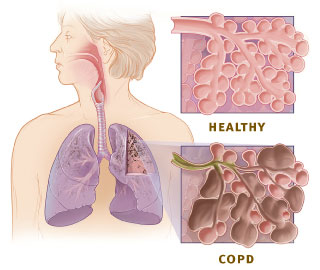
Chronic obstructive pulmonary disease ( ) is a common, preventable, and treatable chronic respiratory disease characterised by persistent airflow limitation that is usually progressive and associated with an enhanced chronic inflammatory response in the airways and the lung to noxious particles or gases [3]A1c. The diagnosis requires spirometric confirmation: a post-bronchodilator ratio of forced expiratory volume in 1 second to forced vital capacity (FEV1/FVC) < 0.70 [3]A1c. This defines the obstructive physiologic class that anchors all subsequent evaluation and .
Also Called / Synonyms: Chronic obstructive lung disease (COLD), chronic obstructive airway disease (COAD). The historical terms "chronic bronchitis" and "emphysema" are not synonyms but rather distinct phenotypes within the COPD spectrum.
Phases and Stages
- Stable COPD: No acute worsening of symptoms.
- Exacerbation (AECOPD): Acute worsening of respiratory symptoms requiring additional therapy [5]A1c.
- Pre-COPD: Symptomatic individuals with normal spirometry (FEV1/FVC ≥ 0.70) but with structural abnormalities (emphysema >5% on CT, bronchial thickening, or reduced diffusing capacity) or accelerated lung function decline in those < 50 years with >10 pack-year smoking history [68]D5[77]B2c.
- Young COPD: FEV1/FVC < 0.70 in individuals ≤ 50 years of age [77]B2c.
Classification of Types and Variants
| Name | Key Distinguishing Feature | Associated Marker/Subtype |
|---|---|---|
| Chronic bronchitis (CB) | Cough and sputum production for ≥3 months in 2 consecutive years | Mucus hypersecretion, goblet cell hyperplasia [23]D5 |
| Emphysema | CT evidence of parenchymal destruction; reduced diffusing capacity | Alpha-1 antitrypsin deficiency (AATD) in a subset [8]A1c[51]A1c |
| Frequent exacerbator phenotype | ≥2 moderate/severe exacerbations per year | History of prior exacerbations is the strongest predictor [36]B2b |
| Asthma-COPD overlap (ACO) | Persistent airflow obstruction with features of both asthma and COPD | Eosinophilic inflammation, variable airway obstruction [67]D5 |
| Eosinophilic phenotype | Blood eosinophil count ≥ 300 cells/μL | Responsive to inhaled corticosteroids and anti-IL-5 therapies [12]A1b[13]A1b[39]D5 |
| Alpha-1 antitrypsin deficiency (AATD) | Severely reduced AAT level (< 11 μmol/L) and emphysema | Genotype (PiZZ, PiSZ) [8]A1c[51]A1c |
| Preserved ratio impaired spirometry (PRISm) | FEV1/FVC ≥ 0.70 but FEV1 < 80% predicted; not COPD | Higher cardiometabolic risk (diabetes, , obesity) [48]B2a |
Clinical Significance
COPD is a leading cause of morbidity and mortality worldwide. In 2015, it caused 3.2 million deaths and was the third leading cause of death globally [32]B2c. The global prevalence among adults aged 30-79 years is 10.3% (GOLD definition), translating to 391.9 million affected individuals, with more than 80% living in low- and middle-income countries [15]B2c. The disease is underdiagnosed; many patients with symptomatic COPD remain undetected until advanced stages [68]D5.
Pearl: The diagnosis of COPD hinges on a single spirometric threshold (post-bronchodilator FEV1/FVC < 0.70), but the disease encompasses multiple phenotypes with distinct biology, treatment responses, and prognoses. The frequent exacerbator phenotype is the most clinically actionable, it predicts future exacerbation risk and guides escalation of inhaled therapy [36]B2b.
2. Pathophysiology and Mechanism
- ▸COPD pathophysiology involves small airway disease and emphysema, both driven by chronic inflammation from inhaled toxins.
- ▸Neutrophilic inflammation is most common, but a type 2 eosinophilic endotype exists in 20-40% of patients.
- ▸Oxidative stress, cellular senescence, and protease-antiprotease imbalance are central mechanisms.
- ▸Systemic inflammation links COPD to comorbidities such as cardiovascular disease and skeletal muscle wasting.
The airflow limitation that defines arises from two interdependent pathological processes: small airway disease (obstructive bronchiolitis) and parenchymal destruction (emphysema), each driven by chronic inflammation triggered by inhaled noxious particles and gases [106]D5. Inhaled cigarette smoke or pollutants activate airway epithelial cells and alveolar macrophages, releasing chemotactic factors (IL-8, LTB4, CXCL1) that recruit neutrophils, monocytes, and CD8+ T cells [27]D5[71]D5. These inflammatory cells release proteases (neutrophil elastase, MMP-9, MMP-12) that degrade extracellular matrix, leading to loss of alveolar attachments and destruction of terminal bronchioles [97]B3b[138]D5. MicroCT studies show that terminal bronchiole loss precedes spirometric airflow obstruction, with a 41% reduction in terminal bronchioles already present in GOLD stage 1 COPD [92]B3b[97]B3b.
Small Airway Disease and Emphysema
The earliest lesion is loss of elastin fibers in alveolar attachments surrounding terminal bronchioles, observed before microscopic emphysema [97]B3b. This leads to progressive narrowing and obliteration of small airways. Concurrently, protease-mediated destruction of alveolar walls causes emphysematous airspace enlargement, reducing elastic recoil and expiratory flow [138]D5. Alpha-1 antitrypsin deficiency exemplifies the protease-antiprotease imbalance, but in most COPD, oxidative stress inactivates antiproteases and amplifies tissue damage [138]D5.
Inflammatory Pathways and Cellular Players
Neutrophilic inflammation predominates, with activation of the NLRP3 inflammasome and IL-1beta release [27]D5. A subset of patients (20-40%) exhibits type 2 inflammation with eosinophilia, driven by IL-5, IL-13, and epithelial alarmins (IL-33, TSLP) [90]D5[39]D5. IL-33, when oxidized, signals through RAGE/EGFR rather than ST2, promoting mucus metaplasia and epithelial remodeling [98]D5. Eosinophil-derived IL-13 can stimulate alveolar macrophage MMP-12 production, contributing to emphysema [104]C4. The IL-17/Th17 axis is also implicated, particularly in neutrophilic inflammation [27]D5[125]B2b.
Mucus Hypersecretion and Mucociliary Dysfunction
Chronic bronchitis results from goblet cell hyperplasia and submucosal gland hypertrophy, driven by IL-13 and EGFR signaling [23]D5[133]D5. Mucus hypersecretion obstructs small airways, impairs mucociliary clearance, and creates a niche for bacterial colonization [107]D5[131]D5. Acquired CFTR dysfunction from cigarette smoke further reduces airway surface liquid, worsening mucus stasis [101]D5.
Oxidative Stress, Aging, and Senescence
Cigarette smoke directly generates reactive oxygen species (ROS) and depletes antioxidants. Oxidative stress activates PI3K-mTOR signaling, reducing sirtuin-1 and sirtuin-6, leading to cellular senescence with p21-mediated cell cycle arrest [24]D5. Senescent cells secrete a senescence-associated secretory phenotype (SASP) that perpetuates inflammation [24]D5[137]D5. Telomere shortening and mitochondrial dysfunction (e.g., SPG7-mediated mPTP regulation) are also observed [153]D5[137]D5.
Vascular Remodeling and Gas Exchange Impairment
Endothelial dysfunction from cigarette smoke leads to intimal thickening, smooth muscle hypertrophy, and loss of capillaries [132]D5. This contributes to ventilation-perfusion mismatch and, in advanced disease, pulmonary . Hypoxic vasoconstriction is blunted, worsening gas exchange [132]D5[26]D5.
Systemic Inflammation and Comorbidities
Spillover of inflammatory mediators (IL-6, TNF-alpha, CRP) into the circulation drives systemic manifestations: skeletal muscle wasting, cachexia, cardiovascular disease, osteoporosis, and diabetes [99]D5[109]D5. The Endothelial Activation and Stress Index (EASIX) predicts mortality, reflecting endothelial injury [148]B2b.
Pearl: The loss of terminal bronchioles begins before spirometric obstruction is detectable; early identification of small airway disease using CT or physiological tests may enable intervention at a pre-COPD stage [92]B3b[97]B3b.
3. Epidemiology, Etiology and Risk Factors
- ▸Global prevalence of COPD is 10.3% (GOLD definition) in adults aged 30-79 years, with >80% of cases in LMICs.
- ▸Current smoking is the strongest modifiable risk factor (OR 3.2), and its interaction with high genetic risk produces an 11.6-fold increase in hazard.
- ▸Non-tobacco risk factors (biomass, occupational exposures, air pollution) account for ~50% of global COPD, especially in women and LMICs.
The pathophysiologic cascade described above is driven by a discrete set of exposures acting on genetic susceptibility. Quantifying the burden and identifying modifiable drivers are essential for targeting prevention and case-finding.
Global Burden
is the third leading cause of death worldwide, affecting >400 million people [194]D5. In 2019, the global prevalence among adults aged 30-79 years was 10.3% (95% CI 8.2‑12.8) using the GOLD fixed‑ratio definition, translating to 391.9 million (312.6‑487.9) individuals; the lower‑limit‑of‑normal definition gave 7.6% (5.8‑10.1) or 292.0 million (219.8‑385.6) [15]B2c. Over 80% of cases (315.5 million) live in low‑ and middle‑income countries (LMICs) [15]B2c. Regional prevalence varies: highest in the Western Pacific (11.7%, 9.3‑14.6) and lowest in the Americas (6.8%, 5.6‑8.2) [15]B2c. Incidence is difficult to quantify because of underdiagnosis; community‑based case‑finding identified undiagnosed COPD in 1.6% of symptomatic adults [167]A1b.
Demographic Patterns
Male sex confers a 2.1‑fold odds (OR 2.1, 95% CI 1.8‑2.3) [15]B2c. However, the sex gap is narrowing; prevalence among women is projected to increase while that among men declines, driven by slower declines in female tobacco use and greater exposure to household air pollution [194]D5[105]D5. Approximately 50% of all COPD cases worldwide are attributable to non‑tobacco risk factors, a proportion exceeding 70% in some LMICs [105]D5.
Risk Factors
The dominant modifiable risk factor is cigarette smoking (current smoker OR 3.2, 95% CI 2.5‑4.0) [15]B2c. Occupational exposures contribute a population attributable fraction of 14% [127]D5. Household air pollution from biomass combustion is a major driver in LMICs (OR 1.4, 1.2‑1.7) [15]B2c. Ambient air pollution, particularly PM₂.₅ and nitrogen oxides, is independently associated with lower lung function and higher COPD prevalence: per 5 µg/m³ increase in PM₂.₅, the OR for COPD was 1.52 (1.42‑1.62) in the UK Biobank [189]C4 and the HR for incident COPD was 1.31 (1.22‑1.42) [176]B2b. Genetic factors amplify risk: CFTR‑causing variants raise the odds of chronic bronchitis (OR 1.53) [161]B3b, and a polygenic risk score combined with current smoking yields a hazard ratio of 11.62 (10.31‑13.10) versus low‑risk never‑smokers [190]B2b. Early‑life exposures, maternal smoking, childhood asthma, lower respiratory infections, are strongly associated with accelerated lung function decline and COPD in adulthood [135]D5[62]D5. A healthy dietary pattern is protective (OR 0.88, 0.82‑0.94) [183]B2a.
| Risk Factor | OR/RR (95% CI) | Evidence Level | Reference |
|---|---|---|---|
| Current smoking | OR 3.2 (2.5‑4.0) | High (meta‑analysis) | [15]B2c |
| Male sex | OR 2.1 (1.8‑2.3) | High (meta‑analysis) | [15]B2c |
| Low BMI (<18.5) | OR 2.2 (1.7‑2.7) | High (meta‑analysis) | [15]B2c |
| Biomass exposure | OR 1.4 (1.2‑1.7) | High (meta‑analysis) | [15]B2c |
| Occupational exposure | OR 1.4 (1.3‑1.6); PAR 14% | High (meta‑analysis) | [15]B2c[127]D5 |
| PM₂.₅ (per 5 µg/m³) | OR 1.52 (1.42‑1.62) | High (large cohort) | [189]C4 |
| NOx (per 50 ppb) | HR 1.45 (1.35‑1.55) | Moderate (cohort) | [185]B2b |
| CFTR variant (heterozygote) | OR 1.53 (p=0.0025) | Moderate (genetic study) | [161]B3b |
| High genetic risk + current smoking | HR 11.62 (10.31‑13.10) | Moderate (cohort) | [190]B2b |
| Healthy dietary pattern | OR 0.88 (0.82‑0.94) | Moderate (meta‑analysis) | [183]B2a |
The table shows that smoking and genetic risk are multiplicative, while air pollution and occupational exposures contribute independent, modifiable risk.
Temporal Trends and Special Considerations
Global COPD prevalence has remained stable in absolute terms due to population ageing, but age‑standardized mortality rates have declined in some high‑income countries [225]D5[194]D5. The burden is shifting toward women and LMICs, where non‑smoking risk factors predominate [194]D5. Underdiagnosis remains a major barrier: an estimated 70‑80% of COPD cases are undiagnosed in many regions [68]D5[167]A1b. Exacerbations follow a seasonal pattern, peaking in winter months, driven by viral infections and temperature extremes [223]D5[206]D5.
Pearl: The single most actionable risk factor is smoking cessation, current smoking confers a 3.2‑fold odds of COPD, and the combination of high genetic risk and smoking multiplies risk more than 11‑fold, emphasizing that genetic susceptibility should motivate, not discourage, cessation efforts [15]B2c[190]B2b.
| Risk Factor | OR/RR (95% CI) | Evidence Level | Reference |
|---|---|---|---|
| Current smoking | OR 3.2 (2.5-4.0) | High (meta-analysis) | [15]B2c |
| Male sex | OR 2.1 (1.8-2.3) | High (meta-analysis) | [15]B2c |
| Low BMI (<18.5) | OR 2.2 (1.7-2.7) | High (meta-analysis) | [15]B2c |
| Biomass exposure | OR 1.4 (1.2-1.7) | High (meta-analysis) | [15]B2c |
| Occupational exposure | OR 1.4 (1.3-1.6); PAR 14% | High (meta-analysis) | [15]B2c[127]D5 |
| PM₂.₅ (per 5 µg/m³) | OR 1.52 (1.42-1.62) | High (large cohort) | [189]C4 |
| NOx (per 50 ppb) | HR 1.45 (1.35-1.55) | Moderate (cohort) | [185]B2b |
| CFTR variant (heterozygote) | OR 1.53 (p=0.0025) | Moderate (genetic study) | [161]B3b |
| High genetic risk + current smoking | HR 11.62 (10.31-13.10) | Moderate (cohort) | [190]B2b |
| Healthy dietary pattern | OR 0.88 (0.82-0.94) | Moderate (meta-analysis) | [183]B2a |
4. Clinical Presentation
- ▸Exertional dyspnoea is the hallmark symptom, progressing from activity limitation to resting breathlessness as dynamic hyperinflation worsens.
- ▸Chronic cough and sputum production are present in the majority of patients and are often dismissed as 'smoker's cough', delaying diagnosis.
- ▸Physical signs of hyperinflation (barrel chest, hyperresonance, prolonged expiration) are the key findings on chest examination.
These risk factors translate into a characteristic clinical syndrome that evolves insidiously over years, often unrecognized until a critical threshold of lung function loss is crossed. The cardinal symptom is exertional dyspnoea, which progresses from breathlessness on hills or stairs to dyspnoea at rest, reflecting the worsening ventilatory limitation and dynamic hyperinflation that drive the patient's disability [3]A1c.
Presenting Symptoms
Chronic cough is the most frequent initial symptom, present in up to 70% of patients at diagnosis, and is often dismissed as "smoker's cough" [254]B2a. It is typically intermittent at first, then daily, and may be worse on waking. Sputum production is reported by about 30-50% of patients; the sputum is mucoid and becomes purulent during exacerbations [3]A1c. Wheezing and chest tightness are common, especially after exertion or on exposure to irritants. Exacerbations, acute worsening of dyspnoea, cough, and sputum that require treatment escalation, are sentinel events that accelerate lung function decline and increase mortality [61]D5. Many patients also experience cough hypersensitivity; those with chronic cough have heightened capsaicin cough reflex sensitivity compared to those without (geometric mean C5 3.36 vs 44.50 µmol·L⁻¹, p=0.003) [260]B3b. Fatigue and muscle weakness are frequent, driven by systemic inflammation, deconditioning, and the increased work of breathing [252]C4.
Physical Examination Findings
Chest signs depend on disease severity. The classic findings of advanced are a barrel chest (increased anteroposterior diameter), hyperresonance to percussion, diminished breath sounds, and prolonged expiration, all signs of hyperinflation and airflow obstruction [3]A1c. Wheezing may be heard on forced expiration or at rest. Pursed-lip breathing and use of accessory muscles (sternocleidomastoid, scalenes) indicate severe ventilatory impairment. Cyanosis and tripod position (leaning forward with arms braced) signal acute or chronic respiratory failure. The table below summarizes the key signs and their clinical significance.
| Finding | Clinical Significance |
|---|---|
| Barrel chest | Chronic hyperinflation; loss of lung elastic recoil |
| Hyperresonance to percussion | Lung hyperinflation (emphysema) |
| Diminished breath sounds | Airflow limitation; emphysematous destruction |
| Prolonged expiration | Expiratory airflow obstruction; hallmark of COPD |
| Wheezing | Bronchospasm; may be absent in advanced disease |
| Pursed-lip breathing | Auto-PEEP; positive end-expiratory pressure |
| Use of accessory muscles | Increased work of breathing; imminent respiratory failure |
| Cyanosis | Severe hypoxemia; advanced disease |
Phenotypic Variants
COPD is clinically heterogeneous. The chronic bronchitis phenotype (chronic cough and sputum production for ≥3 months in 2 consecutive years) is associated with more frequent exacerbations and a higher risk of pneumonia. The emphysema phenotype (dyspnoea without prominent cough, barrel chest, cachexia) is more likely to have gas trapping and reduced diffusing capacity. Asthma-COPD overlap (ACO) is characterized by more variable airflow obstruction, higher symptom burden, and more exacerbations than either condition alone [285]B2c. Pre-COPD, symptomatic individuals with preserved spirometry (FEV₁/FVC ≥0.70) but with structural abnormalities (emphysema >5% on CT, bronchial thickening, or reduced DLCO), represents a high-risk group for progression to fixed airflow obstruction [77]B2c.
Red Flags
Immediate evaluation is required for: acute worsening of dyspnoea at rest, cyanosis, confusion or drowsiness, inability to speak in full sentences, use of accessory muscles, and paradoxical abdominal movement. These signs predict acute hypercapnic respiratory failure and warrant urgent assessment for noninvasive ventilation or intubation [213]A1a.
Atypical Presentations
Never-smokers with COPD have milder symptoms, less emphysema, and fewer comorbidities than smokers, yet they still experience frequent exacerbations and impaired quality of life [105]D5. Young COPD (age ≤50 years with FEV₁/FVC <0.70) is often unrecognized; these patients are more likely to be cigarette smokers and have a higher prevalence of asthma, but they may present with minimal dyspnoea until the disease is advanced [77]B2c. Dysphagia is common in stable COPD, with prolonged swallowing times and increased risk of aspiration due to breathing-swallowing discoordination, which may contribute to exacerbations [283]B3b.
Pearl: The triad of chronic cough, progressive exertional dyspnoea, and recurrent exacerbations defines the clinical trajectory of COPD; early recognition hinges on asking about breathlessness during activities the patient has stopped doing, not just what they do now.
5. Diagnosis and Workup (Pulmonary Function, Bronchoscopy and Imaging Anchored)
- ▸Post-bronchodilator spirometry (FEV₁/FVC <0.70) is the gold-standard diagnostic test for COPD, with the fixed ratio preferred for simplicity despite potential overdiagnosis in the elderly.
- ▸DLCO <80% predicted is a strong independent predictor of mortality and should be measured in all patients with suspected or confirmed COPD.
- ▸HRCT is essential for phenotyping (emphysema, airway disease, bronchiectasis) and for excluding alternative diagnoses, especially when evaluating for lung volume reduction procedures.
The clinical presentation of dyspnea, cough, and sputum in a smoker aged >40 years raises suspicion, but the diagnosis of requires spirometric confirmation of persistent airflow limitation. Objective testing not only establishes the diagnosis but also quantifies severity, identifies the dominant phenotype, and guides treatment decisions.
Gold-Standard Test: Post-Bronchodilator Spirometry
The single gold-standard diagnostic test is spirometry showing a post-bronchodilator forced expiratory volume in 1 second (FEV₁)/forced vital capacity (FVC) ratio <0.70 (fixed ratio) or below the lower limit of normal (LLN). The Global Initiative for Chronic Obstructive Lung Disease (GOLD) recommends the fixed ratio for its simplicity and robust prediction of clinical outcomes [3]A1c[255]A1c. However, the fixed ratio overdiagnoses airflow obstruction in the elderly and underdiagnoses in younger adults; some guidelines, including the ATS/ERS, prefer the LLN [222]D5. The test-of-choice is spirometry performed 15-30 minutes after inhalation of 400 μg . A post-bronchodilator ratio <0.70 confirms the diagnosis in the appropriate clinical context.
Spirometric Severity and Additional PFTs
Severity of airflow limitation is graded by FEV₁ percent predicted: GOLD 1 (≥80%), GOLD 2 (50-79%), GOLD 3 (30-49%), GOLD 4 (<30%). The STAR classification, using FEV₁/FVC ratio thresholds (≥0.60, ≥0.50, ≥0.40, <0.40), provides better discrimination of mortality and symptoms across racial/ethnic groups [25]B2b. The FEV₃/FEV₆ ratio is a sensitive marker of small airways disease in smokers with a normal FEV₁/FVC ratio [35]C4. Parameter D, derived from the expiratory volume-time curve, is less influenced by demographics and may identify mild obstruction missed by standard criteria [335]B2c.
Lung volumes measured by body plethysmography often show hyperinflation (increased total lung capacity [TLC]) and air trapping (elevated residual volume [RV]/TLC ratio). These findings are characteristic of emphysema and correlate with dyspnea and exercise limitation.
Diffusing capacity for carbon monoxide (DLCO) is a key measure of gas transfer. A reduced DLCO (<80% predicted) indicates emphysema and is a strong predictor of all-cause mortality, independent of the BODE index and CT emphysema [331]B2b. The COPD- Score using DLCO (DLCO <60% predicted) identifies patients at high risk for lung cancer death [198]B2b. DLCO is heritable (23-28% in unrelated individuals) and a variant in ADGRG6 is associated with lower DLCO in COPD [292]B2b.
Arterial Blood Gas (ABG)
ABG is indicated in patients with FEV₁ <50% predicted, signs of respiratory failure, or during exacerbations. Chronic hypoxemia (PaO₂ <60 mmHg) and/or hypercapnia (PaCO₂ >45 mmHg) signal advanced disease and may qualify for long-term oxygen therapy or home noninvasive ventilation [289]A1b.
Imaging: High-Resolution CT (HRCT)
HRCT is the dominant imaging modality and is indicated in all patients with COPD for phenotyping, excluding alternative diagnoses, and evaluating candidates for lung volume reduction. Key findings:
| Finding | Clinical Significance |
|---|---|
| Emphysema (low attenuation areas < -950 HU) | Quantifies parenchymal destruction; correlates with reduced DLCO, impaired left ventricular filling, and mortality [309]C4[331]B2b |
| Airway wall thickening | Indicates chronic bronchitis phenotype; associated with faster FEV₁ decline [299]B3b |
| Bronchiectasis | Present in 4-72% of severe COPD; associated with frequent exacerbations and worse outcomes [30]D5 |
| Interstitial lung abnormalities (ILA) | Attenuates the reduction in FVC caused by emphysema; may confound spirometric interpretation [38]C4 |
CT also identifies small airways disease via parametric response mapping (functional small airway disease) [299]B3b and helps detect combined pulmonary fibrosis and emphysema (CPFE) [66]D5.
Bronchoscopy (Diagnostic)
Bronchoscopy is not part of the routine diagnosis of COPD. It is reserved for specific indications:
- Evaluation of suspected lung cancer (new nodule, mass, or mediastinal lymphadenopathy) - using EBUS-TBNA, navigational bronchoscopy, or transbronchial biopsy.
- Suspected infection (tuberculosis, nontuberculous mycobacteria, aspergillosis) - bronchoalveolar lavage (BAL) for culture and molecular testing.
- Unexplained - transbronchial lung biopsy or cryobiopsy.
- Hemoptysis or persistent consolidation.
BAL can also measure mucin concentrations (MUC5AC, MUC5B) as research biomarkers of chronic bronchitis [308]C4 but is not yet clinical standard.
Alpha-1 Antitrypsin Deficiency (AATD) Testing
All individuals with COPD should be tested for AATD at diagnosis [8]A1c[51]A1c. The recommended approach is a two-step strategy: initial serum AAT level; if <23 µmol/L (<1.2 g/L), proceed to genotyping (DNA sequencing of SERPINA1). Severe deficiency (AAT <11 µmol/L) qualifies for augmentation therapy [8]A1c.
Diagnostic Algorithm
- Clinical suspicion: Chronic dyspnea, cough, sputum, and/or exacerbations in a patient ≥40 years with smoking history or other exposure.
- Post-bronchodilator spirometry: If FEV₁/FVC <0.70 (or <LLN), confirm COPD.
- Assess severity: FEV₁% predicted, symptom burden (CAT, mMRC), exacerbation history.
- Additional testing:
- Lung volumes and DLCO if hyperinflation or emphysema is suspected.
- HRCT to phenotype and exclude other diagnoses.
- ABG if FEV₁ <50% predicted or signs of respiratory failure.
- AATD testing.
- Exclude mimics: Asthma, bronchiectasis, ILD, heart failure, tuberculosis.
- Bronchoscopy only if indicated by specific findings (mass, infection, interstitial disease).
For exacerbation diagnosis, clinical criteria (increased dyspnea, sputum volume/purulence) are mainstays. Point-of-care CRP testing reduces unnecessary antibiotic use [293]A1b. In the emergency department, the Roth score (≥9.95 seconds) and Dyspnea Severity Score (≤5) have high sensitivity (87.4% and 88.9%) for safe discharge decisions [350]B2b.
Pearl: The diagnosis of COPD is confirmed by a post-bronchodilator FEV₁/FVC <0.70, but this single cutoff can misclassify at the extremes of age; when clinical suspicion is high and spirometry is equivocal, consider lung volumes and DLCO to uncover air trapping or gas transfer defect that signal early disease [128]D5[331]B2b.
| Test | Purpose | Key Finding | Interpretation |
|---|---|---|---|
| Post-bronchodilator spirometry | Confirm airflow limitation | FEV₁/FVC <0.70 | Persistent airflow obstruction; GOLD stage by FEV₁% predicted |
| Lung volumes (plethysmography) | Detect hyperinflation/air trapping | TLC >120% predicted, RV/TLC >40% | Indicates emphysema phenotype |
| DLCO | Assess gas transfer | <80% predicted | Emphysema; predicts mortality independent of BODE [331]B2b |
| HRCT | Phenotype and exclude other diagnoses | Emphysema, airway wall thickening, bronchiectasis, ILA | Guides therapy; identifies CPFE, bronchiectasis overlap |
| ABG | Evaluate respiratory failure | PaO₂ <60 mmHg, PaCO₂ >45 mmHg | Indicates need for oxygen therapy or NIV |
| AAT level + genotyping | Identify AAT deficiency | AAT <23 µmol/L | Confirm severe deficiency (<11 µmol/L) for augmentation |
6. Severity, Staging and Risk Stratification
- ▸GOLD staging using FEV1 percent predicted is complemented by symptom assessment (mMRC/CAT) and exacerbation history to assign ABCD categories that guide initial therapy intensity.
- ▸The STAR classification (FEV1/FVC ratio thresholds) provides more uniform mortality risk gradation than GOLD and is less influenced by race/ethnicity.
- ▸Blood eosinophil count ≥300 cells/μL identifies patients with type 2 inflammation who benefit most from ICS-containing triple therapy and, if exacerbations persist, from biologic therapy such as dupilumab.
Once spirometry confirms the diagnosis, the clinician must translate the degree of airflow limitation and clinical impact into a validated severity grade that guides therapy intensity, oxygen decisions, and prognosis. Staging is not a single dimension but a synthesis of spirometric severity, symptom burden, exacerbation risk, and biomarker profile.
GOLD Spirometric Classification
The most widely used scheme classifies airflow obstruction by post-bronchodilator FEV1 percent predicted: GOLD 1 (≥80%), GOLD 2 (50-79%), GOLD 3 (30-49%), and GOLD 4 (<30%) [255]A1c. This grading correlates with mortality, but symptoms and exacerbation risk vary widely within each stage, limiting its stand-alone utility for treatment decisions.
Symptom Burden and Exacerbation Risk: The ABCD Assessment
The GOLD strategy combines spirometric grade with symptom assessment (mMRC ≥2 or CAT ≥10) and exacerbation history (≥2 moderate exacerbations or ≥1 hospitalization in the prior year) to assign patients to categories A, B, C, or D [255]A1c. Category D patients, high symptom burden and high exacerbation risk, have the worst prognosis and benefit most from triple therapy (ICS/LAMA/LABA) [7]A1c[351]A1b. Importantly, the CAT-10 and mMRC-2 thresholds are not equivalent and misclassify up to 13% of patients, so the choice of instrument should be consistent [16]B2c.
| GOLD Stage | FEV1 (% predicted) | Category | Symptoms | Exacerbation Risk |
|---|---|---|---|---|
| GOLD 1 | ≥80 | A | mMRC 0-1, CAT <10 | 0 or 1 moderate* |
| GOLD 2 | 50-79 | B | mMRC ≥2, CAT ≥10 | 0 or 1 moderate* |
| GOLD 3 | 30-49 | C | mMRC 0-1, CAT <10 | ≥2 moderate or ≥1 hospitalization |
| GOLD 4 | <30 | D | mMRC ≥2, CAT ≥10 | ≥2 moderate or ≥1 hospitalization |
| *Prior year, moderate = treated with /systemic corticosteroids. |
The STAR Classification
A newer severity scheme, STaging of Airflow obstruction by Ratio (STAR) , uses FEV1/FVC ratio thresholds: STAR 1: 0.60-0.69, STAR 2: 0.50-0.59, STAR 3: 0.40-0.49, STAR 4: <0.40 [25]B2b. STAR provides more uniform gradation of mortality risk than GOLD, better differentiates symptom burden and exacerbation frequency, and is less influenced by race/ethnicity. It identifies more patients with stage 3/4 disease eligible for lung volume reduction or transplantation [25]B2b.
Blood Eosinophils as a Stratification Biomarker
Blood eosinophil count is the most practical biomarker for type 2 inflammation in , present in 20-40% of patients [90]D5. A count ≥300 cells/μL identifies patients most likely to benefit from ICS-containing regimens and, when exacerbations persist despite triple therapy, from biologic therapy (e.g., dupilumab) [88]A1a[162]A1b[244]A1b. In the ETHOS trial, triple therapy with budesonide/glycopyrrolate/formoterol 320/18/9.6 μg reduced all-cause mortality compared with dual bronchodilator (HR 0.51, 95% CI 0.33-0.80) and also reduced cardiovascular events [156]A1b[157]A1b.
Multidimensional Prognostic Scores
Single-domain measures underestimate risk. The BODE index (body mass index, obstruction, dyspnea, exercise capacity) predicts mortality better than FEV1 alone. The COPD-LUCSS-DLCO identifies patients at high risk for lung cancer death (scores 3.5-8, 2.4-fold increased risk) [198]B2b. Stable-state midrange proadrenomedullin (MR-proADM) ≥0.87 nmol/L independently predicts severe exacerbations (HR 1.30) [197]B2b. The BAt model (baseline, acuity, trigger) is a novel multidimensional framework for exacerbation severity that integrates pre-event functional status, intensity of the acute event, and causal trigger [33]D5.
Exacerbation Risk Stratification
The most powerful predictor of future exacerbations is past exacerbation frequency. The median time from first to second hospitalized exacerbation is approximately 5 years, but this interval shortens to <4 months by the 9th to 10th event [200]B3b. Mortality peaks in the first week after a severe exacerbation (40 per 10,000 per day) [200]B3b. Patients with ≥2 moderate exacerbations or ≥1 hospitalization in the prior year are classified as high risk and should receive escalation to triple therapy and consider additional options (roflumilast, , N-acetylcysteine) [7]A1c[240]A1b.
Comorbidity-Driven Risk
COPD rarely occurs in isolation. Cardiovascular disease, lung cancer, and osteoporosis are common and contribute to mortality. The presence of coronary artery calcification, emphysema, or bronchiectasis on CT, and comorbidity clusters (e.g., cachectic, psychological) worsen prognosis [191]C4[222]D5. In patients with COPD and type 2 diabetes, SGLT-2 inhibitors reduce exacerbation risk (aHR 0.79) and mortality (aHR 0.64) [229]B2b. Conversely, gabapentinoids increase exacerbation risk (HR 1.21) and should be avoided [368]B2b.
This risk stratification framework directly informs the selection of maintenance therapy and the threshold for acute intervention, discussed in the next section.
Pearl: The single strongest predictor of future exacerbations is a history of ≥2 moderate exacerbations or ≥1 hospitalization in the prior year; this should drive escalation to triple therapy in symptomatic patients with blood eosinophils ≥300 cells/μL.
7. Acute Management and Exacerbation Rescue
- ▸NIV reduces intubation risk by 64% and in-hospital mortality by 54% in acute hypercapnic respiratory failure.
- ▸Systemic corticosteroids for 5 days are sufficient; longer courses increase adverse events without added benefit.
- ▸Antibiotics should be reserved for purulent sputum or elevated CRP; routine use is not recommended.
The transition from risk stratification to acute intervention occurs when a patient presents with worsening dyspnea, increased sputum volume or purulence, and/or the need for a change in medications, the classic triad that defines an exacerbation. The ERS/ATS guideline (2017) provides a structured approach [5]A1c.
Step 1: Initial Assessment and Severity Classification
Classify the exacerbation as mild (no respiratory failure), moderate (acute hypercapnic respiratory failure, pH 7.30-7.35), or severe (pH <7.30, PaCO₂ >60 mm Hg, or altered mental status). Use arterial blood gas within 30 minutes of arrival. Disposition: mild cases can be managed as outpatients; moderate cases require hospital ward admission with monitoring; severe cases need ICU-level care [5]A1c.
Step 2: Bronchodilator Therapy
Administer a short-acting β₂‑agonist (SABA) such as albuterol 2.5 mg via nebulizer every 20 minutes for three doses, then every 2-4 hours as needed. Add a short-acting muscarinic antagonist (SAMA) like ipratropium 0.5 mg if response is inadequate. Use metered-dose inhaler with a spacer if available; nebulization is equivalent but often preferred in acute dyspnea [5]A1c.
Step 3: Systemic Corticosteroids
Give prednisolone 30-40 mg orally once daily for 5 days (or IV equivalent if oral not possible). The Cochrane meta-analysis supports reduced treatment failure and shorter hospital stay (NNT = 10 to prevent one treatment failure) [5]A1c. The STARR2 trial (2023) showed that in primary care, withholding prednisolone when blood eosinophil count is <2% is non‑inferior to routine use, but in hospitalized patients routine corticosteroids remain standard [291]A1b.
Step 4: Antibiotic Therapy
Start only if sputum is purulent, sputum volume is increased, or if CRP >20 mg/L. The ERS/ATS guideline gives a conditional recommendation for antibiotics [5]A1c. Use ‑clavulanate 875/125 mg twice daily for 5 days or a macrolide ( 500 mg on day 1, then 250 mg daily for 4 days) if penicillin‑allergic. Duration: 5 days is sufficient; longer courses do not improve outcomes [5]A1c.
Step 5: Oxygen Therapy
Target SpO₂ 88-92% using a Venturi mask (24-28% FiO₂). Avoid hyperoxia; the ATS/ERS guideline (2020) strongly recommends against long‑term oxygen for moderate hypoxemia, but for acute exacerbations oxygen is indicated to correct hypoxemia [374]A1c. Titrate to maintain SpO₂ ≤92% to reduce risk of hypercapnic respiratory failure.
Step 6: Noninvasive Ventilation (NIV)
Start NIV if pH <7.35 and PaCO₂ >45 mm Hg despite medical therapy. The Cochrane review (2017) shows NIV reduces need for intubation (RR 0.36, 95% CI 0.28-0.46) and in‑hospital mortality (RR 0.46, 95% CI 0.33-0.65) [213]A1a. Use BiPAP mode: start IPAP 10-12 cmH₂O, EPAP 4-5 cmH₂O, titrate to achieve tidal volume of 6-8 mL/kg and respiratory rate <25/min. Monitor arterial blood gases after 1-2 hours; if no improvement in pH or PaCO₂, escalate to invasive ventilation [375]A1c.
Step 7: High‑Flow Nasal Cannula (HFNC)
If NIV is not tolerated or fails, HFNC can reduce respiratory muscle workload. A randomized crossover study (2026) in exacerbation showed that asymmetrical HFNC at 60 L/min reduced respiratory rate more than symmetrical HFNC (p<0.001) [398]A1b. HFNC is an alternative for patients with mild‑to‑moderate hypercapnia and can be used as a bridge to NIV or post‑extubation.
Step 8: Escalation to ICU
Criteria for intensive care: NIV failure (no improvement in pH after 1-2 hours), hemodynamic instability, altered mental status, or need for . Invasive ventilation should be initiated promptly if NIV fails; delay increases mortality [417]B3b.
What NOT to Do
- Do not routinely use magnesium sulfate; the Cochrane review (2022) found low‑certainty evidence of a reduction in hospital admissions (OR 0.45, 95% CI 0.23-0.88) but no effect on need for NIV or mortality [214]A1a.
- Do not use theophylline acutely; it has a narrow therapeutic window and no proven benefit over inhaled bronchodilators [91]D5.
- Do not give benzodiazepines; they depress respiratory drive and increase risk of hypercapnic failure.
Drug / Modality Comparison
| Drug / Modality | Indication | Dose | Key evidence | Outcome |
|---|---|---|---|---|
| Albuterol (SABA) | First‑line bronchodilator | 2.5 mg neb every 20 min ×3, then q2-4h | Standard of care | Improves FEV₁, reduces dyspnea |
| Ipratropium (SAMA) | Add‑on to SABA | 0.5 mg neb | No high‑quality RCT in acute setting | Synergistic bronchodilation |
| Prednisolone | Systemic corticosteroid | 30-40 mg PO ×5 days | [5]A1c ERS/ATS guideline | Reduces treatment failure, NNT=10 |
| Amoxicillin‑clavulanate | Antibiotic (purulent sputum) | 875/125 mg BID ×5 days | [5]A1c ERS/ATS guideline | Reduces exacerbation duration |
| NIV (BiPAP) | Acute hypercapnic respiratory failure | IPAP 10-12, EPAP 4-5 cmH₂O | [213]A1a Cochrane | Reduces intubation (RR 0.36), mortality (RR 0.46) |
| HFNC | Alternative to NIV | 40-60 L/min, FiO₂ titrated to SpO₂ 88-92% | [398]A1b RCT | Reduces respiratory rate, diaphragm workload |
Algorithm
Caption: Figure 1: Management algorithm for (adapted from [5]A1c and [375]A1c).
Controversies and Guideline Disagreement
| Question | Position A | Position B | Strength | Implication |
|---|---|---|---|---|
| Eosinophil‑guided corticosteroid therapy | ERS/ATS 2017, recommend systemic corticosteroids for all exacerbations [5]A1c | STARR2 trial (2023), withholding prednisolone when eosinophil count <2% is non‑inferior in primary care [291]A1b | Moderate (population‑level disagreement) | In hospitalized patients, routine corticosteroids remain standard; in primary care, eosinophil‑guided strategy may reduce steroid exposure. |
| Benralizumab for eosinophilic exacerbations | ABRA trial (2024), single injection of benralizumab 100 mg reduced treatment failures at 90 days compared to prednisolone alone [238]A1b | GALATHEA/TERRANOVA (2019), benralizumab did not reduce exacerbation rate in stable COPD [382]A1b | Strong (acute vs. maintenance indication) | Benralizumab is not yet approved for acute exacerbations; use is investigational. |
Pearl: For acute exacerbation of COPD, start NIV early when pH <7.35 and PaCO₂ >45 mm Hg; use oral prednisolone 30-40 mg for 5 days, not longer; and target SpO₂ 88-92% to avoid hyperoxia‑induced hypercapnia [5]A1c[213]A1a[374]A1c.
8. Long-term and Definitive Management
- ▸Triple therapy (ICS/LAMA/LABA) reduces moderate/severe exacerbations by 25% vs LAMA/LABA and 15% vs ICS/LABA in the IMPACT trial, and budesonide/glycopyrrolate/formoterol 320 reduces all-cause mortality vs LAMA/LABA (HR 0.51) in ETHOS.
- ▸Biologic therapy (dupilumab, mepolizumab) is effective in patients with blood eosinophils ≥300 cells/μL and a history of exacerbations despite triple therapy, with dupilumab reducing exacerbation rate by 30% and mepolizumab by 21%.
- ▸Long-term NIV targeted to reduce PaCO₂ improves survival in hypercapnic COPD (1-year mortality 12% vs 33% in controls; HR 0.24).
Once the acute exacerbation has been stabilized, the clinician’s focus shifts to selecting a maintenance regimen that prevents future events, preserves lung function, and improves quality of life. The 2023 Canadian Thoracic Society (CTS) guideline recommends that all symptomatic patients with spirometry-confirmed receive long-acting bronchodilator maintenance therapy [7]A1c. For patients with moderate to severe dyspnea (modified Medical Research Council ≥ 2) and low exacerbation risk, initial therapy with a long-acting muscarinic antagonist (LAMA) / long-acting β₂-agonist (LABA) combination is recommended over monotherapy [7]A1c[234]A1c. The ATS 2020 guideline gave a strong recommendation for LAMA/LABA over LABA or LAMA alone in patients with dyspnea or exercise intolerance [234]A1c.
Inhaled Pharmacotherapy: Stepwise Escalation and De-escalation
First-line: LAMA/LABA dual therapy. In the FLAME trial, indacaterol-glycopyrronium once daily was superior to salmeterol-fluticasone in reducing the annual rate of all COPD exacerbations (rate ratio 0.89, 95% CI 0.83-0.96; P = 0.003) and prolonged time to first exacerbation (hazard ratio 0.84, 95% CI 0.78-0.91) [166]A1b. The rate of moderate or severe exacerbations was 0.98 vs 1.19 per year (rate ratio 0.83, 95% CI 0.75-0.91; P < 0.001) [166]A1b.
Second-line: Triple therapy (ICS/LAMA/LABA). In patients with one or more exacerbations in the past year despite dual bronchodilation, the addition of an inhaled corticosteroid (ICS) is conditionally recommended by the ATS [234]A1c. The CTS recommends triple therapy for those with high exacerbation risk and moderate/severe dyspnea [7]A1c. The IMPACT trial (N = 10,355) compared fluticasone furoate/umeclidinium/vilanterol 100/62.5/25 μg once daily with fluticasone furoate/vilanterol or umeclidinium/vilanterol. Triple therapy reduced moderate/severe exacerbation rate vs. umeclidinium/vilanterol (rate ratio 0.75, 95% CI 0.70-0.81; 25% difference; P < 0.001) and vs. fluticasone furoate/vilanterol (rate ratio 0.85, 95% CI 0.80-0.90; P < 0.001) [163]A1b. Severe exacerbations requiring hospitalization were reduced by 34% vs umeclidinium/vilanterol (rate ratio 0.66, 95% CI 0.56-0.78; P < 0.001) [163]A1b. The ETHOS trial (N = 8,509) showed that budesonide/glycopyrrolate/formoterol 320/18/9.6 μg twice daily reduced the annualized exacerbation rate vs. glycopyrrolate/formoterol (rate ratio 0.76, 95% CI 0.69-0.83; P < 0.001) and vs. budesonide/formoterol (rate ratio 0.87, 95% CI 0.79-0.95; P = 0.003) [165]A1b. All-cause mortality was reduced with budesonide/glycopyrrolate/formoterol 320 versus glycopyrrolate/formoterol (HR 0.51, 95% CI 0.33-0.80; P = 0.0035) [156]A1b. In the FULFIL trial, once-daily triple therapy (fluticasone furoate/umeclidinium/vilanterol 100/62.5/25 μg) improved trough FEV₁ by 142 mL vs. -29 mL with budesonide/formoterol (P < 0.001) and reduced moderate/severe exacerbation rate by 35% (95% CI 14-51; P = 0.002) [351]A1b.
ICS de-escalation. The ATS conditionally recommends ICS withdrawal for patients receiving triple therapy who have had no exacerbations in the past year [234]A1c. Blood eosinophil count is a useful biomarker: patients with eosinophils ≥ 300 cells/μL derive greater benefit from ICS, while those with < 100 cells/μL derive minimal benefit and may experience increased pneumonia risk [436]D5.
Ensifentrine. A novel dual phosphodiesterase 3 and 4 inhibitor, ensifentrine 3 mg nebulized twice daily, improved average FEV₁ AUC₀-₁₂ by 87 mL (ENHANCE-1) and 94 mL (ENHANCE-2) vs placebo (both P < 0.001) [235]A1b. Moderate/severe exacerbation rate was reduced by 36% in ENHANCE-1 (rate ratio 0.64, 95% CI 0.40-1.00; P = 0.050) and 43% in ENHANCE-2 (rate ratio 0.57, 95% CI 0.38-0.87; P = 0.009) [235]A1b.
Oral Therapies
. For patients with frequent exacerbations despite triple therapy, the MACRO trial (N = 1,142) showed that azithromycin 250 mg daily for 1 year prolonged the median time to first exacerbation (266 vs. 174 days; HR 0.73, 95% CI 0.63-0.84; P < 0.001) and reduced exacerbation frequency (1.48 vs. 1.83 per patient-year; P = 0.01) [381]A1b. The COLUMBUS trial confirmed a reduction in exacerbation rate with azithromycin 500 mg three times weekly (rate ratio 0.58, 95% CI 0.42-0.79; P = 0.001) in patients with ≥3 exacerbations in the prior year [9]A1b. Hearing decrements occurred in 25% of azithromycin-treated patients vs. 20% of placebo (P = 0.04) [381]A1b.
Roflumilast. A Cochrane review (28 trials, 18,046 participants) found that roflumilast improved FEV₁ by a mean of 49 mL (95% CI 44-54 mL) over placebo, and reduced moderate/severe exacerbations by 12-16% [120]A1a. The CTS recommends roflumilast for specific populations, particularly those with chronic bronchitis and frequent exacerbations [7]A1c.
N-acetylcysteine. High-dose N-acetylcysteine 600 mg twice daily for 1 year improved small airways function and reduced exacerbation frequency (0.96 vs. 1.71 per year;) in the HIACE trial [240]A1b. The CTS conditionally recommends N-acetylcysteine for selected patients [7]A1c.
What NOT to do: The ATS and CTS recommend against maintenance oral corticosteroids (e.g., ) and against theophylline in most patients [7]A1c[234]A1c. The BLOCK COPD trial (N = 532) showed no benefit of vs. placebo for preventing exacerbations (HR 1.05, 95% CI 0.84-1.32; P = 0.66) and increased hospitalization for exacerbation (HR 1.91, 95% CI 1.29-2.83) [426]A1b.
Long-term Oxygen Therapy and Noninvasive Ventilation
The ATS 2020 guideline strongly recommends long-term oxygen therapy (LTOT) for patients with COPD and severe chronic resting hypoxemia (PaO₂ ≤ 55 mmHg or SpO₂ ≤ 88%) (moderate-quality evidence) [374]A1c. A conditional recommendation is made against LTOT for moderate resting hypoxemia [374]A1c. A Swedish national cohort study (N = 10,134) showed that LTOT initiation was associated with significant reductions in annualized rates of total and hospitalised acute exacerbations, as well as all-cause hospitalisations [444]B2b.
For patients with chronic stable hypercapnia (PaCO₂ ≥ 52 mmHg), the ATS suggests nocturnal noninvasive ventilation (NIV) in addition to usual care (conditional recommendation, moderate certainty) [4]A1c. The 2014 German trial (N = 195) demonstrated that long-term NIV targeted to reduce PaCO₂ by ≥20% or to <48 mmHg improved 1-year survival: 12% mortality vs. 33% in controls (HR 0.24, 95%; P = 0.0004) [353]A1b. A French nationwide cohort (N = 49,503) found that NIV continuation was associated with a significant reduction in transition to death from severe exacerbation (HR 0.84, 95% CI 0.79-0.91) and from stable state (HR 0.88, 95% CI 0.83-0.93) [431]B2b.
Pulmonary Rehabilitation
Pulmonary rehabilitation (PR) improves exercise capacity, dyspnea, and health-related quality of life. A Cochrane review of 27 studies (6,008 participants) concluded that self- interventions, which include PR components, reduce respiratory-related hospital admissions [209]A1a. The ATS 2020 guideline did not issue a specific recommendation on PR timing, but the 2023 CTS guideline endorses PR as a core component of nonpharmacologic management [7]A1c.
Long-term telerehabilitation and unsupervised home training are effective alternatives. A randomized trial (N = 120) showed that telerehabilitation or unsupervised treadmill training at home reduced hospitalizations and emergency department visits compared to standard care (1.18 and 1.14 vs. 1.88 events per person-year; P < 0.001) [155]A1b. Smartphone application-based PR improved outcomes in adherent users [383]A1b. Mobile health PR (m-PR) was equivalent to centre-based PR for exercise capacity and superior for health status (CAT score MD -4.9 points, 95% CI -7.2 to -2.6) [384]A1b.
Biologics for Type 2 Inflammation
Dupilumab. In patients with COPD and blood eosinophils ≥ 300 cells/μL, the BOREAS trial (N = 939) showed that dupilumab 300 mg subcutaneously every 2 weeks reduced the annualized rate of moderate/severe exacerbations to 0.78 vs. 1.10 with placebo (rate ratio 0.70, 95% CI 0.58-0.86; P < 0.001) [244]A1b. Prebronchodilator FEV₁ improved by 160 mL vs. 77 mL at week 12 (LS mean difference 83 mL, 95% CI 42-125; P < 0.001) [244]A1b. The NOTUS trial replicated these findings (rate ratio 0.66, 95% CI 0.54-0.82; P < 0.001) [162]A1b. A pooled analysis confirmed that dupilumab reduced exacerbation risk and improved lung function across the spectrum of type 2 inflammation [158]A1b.
Mepolizumab. The MATINEE trial (N = 804) enrolled patients with COPD, blood eosinophils ≥ 300 cells/μL, and at least one exacerbation in the past year despite triple therapy. Mepolizumab 100 mg subcutaneously every 4 weeks reduced the annualized rate of moderate/severe exacerbations to 0.80 vs. 1.01 (rate ratio 0.79, 95% CI 0.66-0.94; P = 0.01) and prolonged time to first exacerbation (median 419 vs. 321 days; HR 0.77, 95% CI 0.64-0.93; P = 0.009) [12]A1b. The earlier METREX trial (N = 462) had shown a rate ratio of 0.82 (95% CI 0.68-0.98; P = 0.04) in patients with an eosinophilic phenotype [13]A1b.
Tezepelumab. The COURSE trial (N = 333) did not meet its primary endpoint: annualized rate of moderate/severe exacerbations was 1.75 vs. 2.11 (rate ratio 0.83, 90% CI 0.64-1.06;) [378]A1b. However, prespecified subgroup analyses suggested benefit in patients with baseline blood eosinophil count ≥ 150 cells/μL (rate ratio 0.66, 95% CI 0.42-1.04) and ≥ 300 cells/μL (rate ratio 0.54, 95%) [378]A1b.
Other biologics. Itepekimab (anti-IL-33) did not significantly reduce exacerbation rate in a phase 2a trial (RR 0.81, 95%; P = 0.13) [160]A1b. Astegolimab (anti-ST2) did not reduce exacerbation rate in the overall population (rate ratio 0.78, 95% CI 0.53-1.14; P = 0.19) but improved health status (SGRQ-C MD -3.3, 95% CI -6.4 to -0.2;) [82]A1b. Benralizumab failed to reduce exacerbations in the GALATHEA and TERRANOVA trials [382]A1b.
Interventional Procedures
Endobronchial valves. The LIBERATE trial (N = 190) evaluated Zephyr endobronchial valves in patients with heterogeneous emphysema and little to no collateral ventilation. At 12 months, 47.7% of valve-treated patients achieved a ≥15% improvement in FEV₁ vs. 16.8% of standard-of-care (P < 0.001). Mean improvements: FEV₁ 0.106 L (P < 0.001), 6-minute walk distance +39.31 m (P = 0.002), SGRQ -7.05 points (P = 0.004), residual volume -522 mL (P < 0.001) [236]A1b. Pneumothorax occurred in 26.6% of patients (34/128) in the treatment period [236]A1b.
and lung transplantation remain options for carefully selected patients with advanced disease [453]D5.
Inhaler Technique and Device Selection
Inhaler misuse is independently associated with poor disease control. The ATS recommends assessment of inhaler technique at every visit and repeated education [278]D5. A network meta-analysis protocol is underway to compare six educational modalities, including face-to-face physical demonstration, teach-to-goal, and video training [441]D5.
Controversies and Guideline Disagreement
| Question | Position A | Position B | Strength of disagreement | Implication for practice |
|---|---|---|---|---|
| First-line therapy in symptomatic patients with low exacerbation risk | ATS 2020 - strong recommendation for LAMA/LABA over monotherapy [234]A1c | GOLD 2019 - also recommends LAMA/LABA but allows LAMA or LABA monotherapy in group A patients [256]A1c | Mild (wording differences) | In practice, both guidelines agree that dual therapy is preferred for symptomatic patients; monotherapy is acceptable for those with minimal symptoms. |
| Role of ICS in patients with blood eosinophils < 100 cells/μL | ATS 2020 - conditional recommendation against ICS in this group [234]A1c | GOLD 2019 - suggests that ICS should be avoided or withdrawn in patients with eosinophils < 100 cells/μL [256]A1c | Mild (agreement) | Consistent; avoid ICS when eosinophils are low. |
| Timing of NIV initiation after exacerbation | ATS 2020 - suggest not initiating long-term NIV during admission for acute-on-chronic hypercapnic respiratory failure; reassess at 2-4 weeks after resolution [4]A1c | GOLD 2019 does not specify timing [256]A1c | Moderate (different specificity) | Defer NIV initiation until after the acute episode has resolved. |
Dosing Table
| Drug class | Agent | Starting dose | Target/max dose | Key monitoring |
|---|---|---|---|---|
| LAMA/LABA | Umeclidinium/vilanterol | 62.5/25 μg once daily | Same | FEV₁, symptoms, exacerbations |
| LAMA/LABA | Indacaterol/glycopyrronium | 110/50 μg once daily | Same | FEV₁, exacerbations |
| Triple therapy (ICS/LAMA/LABA) | Fluticasone furoate/umeclidinium/vilanterol | 100/62.5/25 μg once daily | Same | FEV₁, exacerbations, pneumonia |
| Triple therapy (ICS/LAMA/LABA) | Budesonide/glycopyrrolate/formoterol | 320/18/9.6 μg twice daily | 320/18/9.6 μg twice daily | FEV₁, exacerbations, pneumonia |
| Dual PDE3/4 inhibitor | Ensifentrine | 3 mg nebulized twice daily | 3 mg twice daily | FEV₁, exacerbations |
| Biologic (anti-IL-4Rα) | Dupilumab | 300 mg subcutaneously every 2 weeks | 300 mg every 2 weeks | Blood eosinophils, exacerbations, lung function |
| Biologic (anti-IL-5) | Mepolizumab | 100 mg subcutaneously every 4 weeks | 100 mg every 4 weeks | Blood eosinophils, exacerbations |
| Macrolide antibiotic | Azithromycin | 250 mg daily OR 500 mg three times weekly | 250 mg daily | Hearing, QTc, exacerbations |
| PDE4 inhibitor | Roflumilast | 500 μg once daily | 500 μg once daily | Weight loss, GI symptoms |
| Mucolytic/antioxidant | N-acetylcysteine | 600 mg twice daily | 600 mg twice daily | GI tolerance |
Warning: Beta-blockers are not indicated for exacerbation prevention in COPD without a separate cardiovascular indication. The BLOCK COPD trial (N = 532) showed no benefit of metoprolol and increased hospitalization for exacerbation (HR 1.91, 95% CI 1.29-2.83) [426]A1b.
Pearl: For patients with persistent exacerbations despite triple therapy and blood eosinophils ≥ 300 cells/μL, add-on dupilumab or mepolizumab reduces exacerbation rate by approximately 30% and 21%, respectively; for those with emphysema and hyperinflation who have heterogeneous disease with little to no collateral ventilation, endobronchial valve placement can improve lung function, exercise capacity, and quality of life [236]A1b[244]A1b[12]A1b.
History and Evolution of Treatment
- ▸Triple therapy (ICS/LAMA/LABA) reduced exacerbations by 25% vs LAMA/LABA in IMPACT and all-cause mortality by 51% vs LAMA/LABA in ETHOS, establishing it as the standard for high-risk patients.
- ▸Dupilumab and mepolizumab reduce exacerbations in eosinophilic COPD (blood eosinophils ≥300 cells/μL) with a 21-30% rate reduction, while benralizumab and tezepelumab failed to meet primary endpoints.
- ▸Maintenance oral corticosteroids and theophylline have been abandoned due to poor risk-benefit profiles; pulmonary rehabilitation and targeted noninvasive ventilation remain cornerstone non-pharmacologic interventions.
The current standard of care for emerged not from a single breakthrough but from a series of landmark trials that progressively reframed therapeutic goals, from symptom palliation to exacerbation prevention, biomarker-guided therapy, and disease modification.
The Era of Symptom-Driven Bronchodilation
For decades, treatment relied on short-acting bronchodilators and theophylline. Theophylline provided modest improvements in FEV₁, forced vital capacity, and residual volume, but its narrow therapeutic window and side-effect profile limited utility [476]A1b. By the 1990s, randomized trials showed that theophylline withdrawal in severe COPD caused significant deterioration in lung function, exercise performance, and dyspnea, yet only about half of patients were true responders [477]B2b. Oral corticosteroids were briefly used as maintenance therapy, but a Cochrane review of 24 trials found that while high-dose oral steroids increased the odds of a ≥20% FEV₁ response (OR 2.71, 95% CI 1.84-4.01), the benefit was small and outweighed by toxicity; NNT = 7 for one additional response, with no improvement in quality of life [487]A1a. Maintenance oral corticosteroids were subsequently abandoned [7]A1c.
The Long-Acting Bronchodilator Revolution
Tiotropium, the first once-daily LAMA, was shown in the Tie-COPD trial to improve FEV₁ by 127-169 mL pre-bronchodilator and ameliorate the annual decline in post-bronchodilator FEV₁ by 22 mL per year (95% CI 6-37) compared with placebo in GOLD stage 1-2 COPD [168]A1b. The FLAME trial then compared LAMA/LABA (indacaterol/glycopyrronium) against ICS/LABA (salmeterol/fluticasone) in patients with ≥1 exacerbation: LAMA/LABA reduced the annual exacerbation rate by 11% (rate ratio 0.89, 95% CI 0.83-0.96; P=0.003) and delayed time to first exacerbation (HR 0.84, 95% CI 0.78-0.91; P<0.001) [166]A1b. This established LAMA/LABA as the preferred dual therapy for exacerbation-prone patients without eosinophilic phenotype.
Triple Therapy and the Mortality Signal
The IMPACT trial (n=10,355) demonstrated that single-inhaler triple therapy (fluticasone furoate/umeclidinium/vilanterol) reduced moderate/severe exacerbations by 15% vs ICS/LABA (rate ratio 0.85, 95% CI 0.80-0.90) and by 25% vs LAMA/LABA (rate ratio 0.75, 95% CI 0.70-0.81; both P<0.001) [163]A1b. The ETHOS trial (n=8,509) confirmed that budesonide/glycopyrrolate/formoterol 320/18/9.6 μg reduced exacerbations by 24% vs glycopyrrolate/formoterol (rate ratio 0.76, 95% CI 0.69-0.83; P<0.001) [165]A1b. Critically, ETHOS showed a 51% reduction in all-cause mortality with BGF 320 vs GFF (HR 0.51, 95% CI 0.33-0.80; P=0.0035) [156]A1b, a finding that was robust to sensitivity analyses. Post-hoc analysis also demonstrated a reduction in major adverse cardiac events (HR 0.63, 95% CI 0.48-0.82) [157]A1b.
Biologics: Targeting Eosinophilic Inflammation
The recognition that 20-40% of COPD exacerbations are driven by type 2 inflammation led to trials of monoclonal antibodies. The BOREAS and NOTUS trials (n=939 and n=935) showed that dupilumab (300 mg every 2 weeks) reduced exacerbations by 30% (rate ratio 0.70, 95% CI 0.58-0.86; P<0.001) and improved FEV₁ by 83 mL at week 12 (95% CI 42-125) in patients with blood eosinophils ≥300 cells/μL on triple therapy [244]A1b[162]A1b. The MATINEE trial (n=804) demonstrated that mepolizumab (100 mg every 4 weeks) reduced exacerbations by 21% (rate ratio 0.79, 95% CI 0.66-0.94; P=0.01) in eosinophilic COPD [12]A1b. In contrast, benralizumab failed to meet its primary endpoint in GALATHEA and TERRANOVA (rate ratio 0.96 for 30 mg, P=0.65; 0.83 for 100 mg, P=0.05) [382]A1b. Tezepelumab also did not significantly reduce exacerbations in the COURSE trial (rate ratio 0.83, 90% CI 0.64-1.06; P=0.10) [378]A1b. A meta-analysis of eight trials confirmed that monoclonal antibodies as a class reduce exacerbations by 21% (rate ratio 0.79, 95% CI 0.73-0.86; P<0.001) and lower serious adverse events (OR 0.80, 95% CI 0.69-0.93; P=0.004) [88]A1a.
Novel Agents and Non-Pharmacologic Advances
Ensifentrine, a dual PDE3/PDE4 inhibitor, improved lung function by 87-94 mL (FEV₁ AUC₀₋₁₂) and reduced moderate/severe exacerbations in two Phase III trials (rate ratio 0.64 and 0.57) [235]A1b. The Zephyr endobronchial valve trial (LIBERATE) showed that in heterogeneous emphysema without collateral ventilation, valve placement improved FEV₁ by 106 mL, 6-minute walk distance by 39 meters, and SGRQ by 7.05 points (all P<0.01) [236]A1b. Long-term noninvasive ventilation targeted to reduce PaCO₂ by ≥20% improved 1-year survival in hypercapnic GOLD stage IV COPD (mortality 12% vs 33%; HR 0.24, 95% CI 0.11-0.49; P=0.0004) [353]A1b. Pulmonary rehabilitation received a strong recommendation for stable COPD and after hospitalization for exacerbation [1]A1c.
What Was Abandoned and Why
Maintenance oral corticosteroids were abandoned due to a poor risk-benefit ratio [7]A1c[487]A1a. Theophylline fell out of favor as a first-line agent because of its narrow therapeutic index, frequent drug interactions, and the availability of safer, more effective long-acting bronchodilators [7]A1c. ICS monotherapy is no longer recommended because it is less effective than LAMA or LABA monotherapy and increases pneumonia risk [436]D5.
Pearl: Maintenance oral corticosteroids and theophylline have been abandoned due to poor risk-benefit profiles; pulmonary rehabilitation and targeted noninvasive ventilation remain cornerstone non-pharmacologic interventions.
| Trial | Intervention | Key Finding | Reference |
|---|---|---|---|
| FLAME | Indacaterol/glycopyrronium vs salmeterol/fluticasone | Exacerbation rate ratio 0.89 (0.83-0.96); LAMA/LABA superior to ICS/LABA | [166]A1b |
| IMPACT | Fluticasone furoate/umeclidinium/vilanterol vs dual therapy | 25% reduction vs LAMA/LABA, 15% vs ICS/LABA in exacerbations | [163]A1b |
| ETHOS | Budesonide/glycopyrrolate/formoterol 320 vs dual therapy | 24% reduction in exacerbations; all-cause mortality HR 0.51 (0.33-0.80) | [156]A1b[165]A1b |
| BOREAS/NOTUS | Dupilumab 300 mg q2w vs placebo | Exacerbation rate ratio 0.70 (0.58-0.86); FEV₁ +83 mL at week 12 | [244]A1b[162]A1b |
| MATINEE | Mepolizumab 100 mg q4w vs placebo | Exacerbation rate ratio 0.79 (0.66-0.94) | [12]A1b |
| LIBERATE | Zephyr endobronchial valve vs standard care | 47.7% achieved ≥15% FEV₁ improvement; 6MWD +39 m | [236]A1b |
| NIV (Köhnlein) | Long-term NIV targeted to reduce PaCO₂ | 1-year mortality 12% vs 33%; HR 0.24 (0.11-0.49) | [353]A1b |
9. Respiratory Support, Procedures & Interventional Pulmonology (Specialty-Distinctive)
- ▸Pulmonary rehabilitation reduces hospital readmissions and improves exercise capacity and quality of life; telerehabilitation is non-inferior to centre-based delivery.
- ▸Long-term oxygen therapy benefits only severe daytime hypoxemia; home high-flow nasal cannula reduces exacerbations in hypercapnic COPD.
- ▸Bronchoscopic lung volume reduction improves outcomes in carefully selected patients with advanced emphysema and should be performed in high-volume centres.
Building on the evolution of pharmacotherapy, the non-pharmacologic and procedural interventions that define specialty pulmonology care for have expanded substantially.
Pulmonary Rehabilitation
Pulmonary rehabilitation (PR) is a cornerstone of COPD . The American Thoracic Society issues a strong recommendation for PR in adults with stable COPD and after hospitalization for exacerbation, based on moderate-quality evidence [1]A1c. PR reduces hospital readmissions (OR 0.48, 95% CI 0.30 to 0.77) and improves exercise capacity (6-min walk distance MD 57 m, 95% CI 29 to 86) and health-related quality of life (St. George's Respiratory Questionnaire MD -8.7 points, 95% CI -12.5 to -4.9) [174]A1a. Early PR after exacerbation leads to faster improvement in physical performance but does not prolong time to first hospital admission or death [392]A1b. Home-based PR is safe and effective; a 3-week programme initiated within 48 hours of outpatient-managed exacerbation improved CAT score by -12.5 versus -5.9 points (p=0.002) [249]A1b. Telerehabilitation is non-inferior to centre-based PR for exercise capacity (6MWD MD 13 m, 95% CI -6 to 31) and superior for health status (CAT MD -4.9 points, 95% CI -7.2 to -2.6) [384]A1b. Smartphone app-based PR improves outcomes in adherent users [383]A1b. Singing for Lung Health is non-inferior to standard exercise training for 6MWD improvement (13.1 m vs 14.1 m) [352]A1b. Neuromuscular electrical stimulation improves 6MWD by 35.7 m in severe COPD [505]A1b. Low-load blood flow restriction training produces similar strength gains to high-load training with less dyspnoea during the initial phase [385]A1b. Inspiratory muscle training does not provide additional benefit beyond PR alone for dyspnoea or exercise capacity [377]A1b[267]A1a. Despite efficacy, PR utilization remains low: only 2.5% to 4.0% of Medicare beneficiaries participated between 2013 and 2019 [539]B2b. Adherence is modest at 58% [208]B3a. Balance impairment is common and should be addressed within PR programmes [510]D5.
Long-Term Oxygen Therapy
Long-term oxygen therapy (LTOT) improves survival in patients with COPD and severe daytime hypoxemia [518]D5. In moderate hypoxemia, home oxygen probably makes little or no difference to 3-year mortality (RR 0.91) [507]A1a. Nocturnal oxygen for isolated nocturnal desaturation does not delay progression to LTOT or death (difference -3.0 percentage points, 95% CI -15.1 to 9.1) [170]A1b. LTOT initiation is associated with reduced rates of total and hospitalized acute exacerbations and all-cause hospitalizations in COPD [444]B2b. Optimizing oxygenation during activities of daily living using automated titration (target SpO₂ 90-94%) improves functional capacity (GlittreADL test time reduced by median 38 s) and reduces dyspnoea [428]A1b. Home high-flow nasal cannula reduces moderate/severe exacerbations in hypercapnic COPD (mean count 1.0 vs 2.5; ratio 2.85, 95%) and improves HRQoL [289]A1b. LTOT may be associated with better cognitive function [544]B2a.
Home Ventilatory Support
Noninvasive ventilation (NIV) in stable hypercapnic COPD remains controversial. High-intensity NIV may reduce exacerbations and mortality, but the evidence base is less developed in the United States [413]D5. Domiciliary NIV is recommended for patients with persistent hypercapnia following hospitalization for exacerbation [61]D5. Home mechanical ventilation use is increasing, particularly NIV [177]D5.
For patients with advanced emphysema and hyperinflation despite optimal medical therapy, bronchoscopic lung volume reduction (BLVR) offers benefit. Endobronchial valves improve FEV₁ (0.14 L, 95% CI 0.08 to 0.19), 6MWD (52.3 m, 95% CI 26.53 to 77.93), and SGRQ (-8.14 points, 95% CI -11.94 to -4.35) in heterogeneous emphysema without collateral ventilation [516]A1a. Coils are an option for homogeneous emphysema [516]A1a. Patient selection is critical: intact lobar fissure, absence of collateral ventilation, and heterogeneous disease predict response [528]D5. Targeted lung denervation (AIRFLOW-3) did not meet its primary endpoint (HR 1.268) but showed less dyspnoea (Transitional Dyspnoea Index >1-point improvement 35.4% vs 24.1%, p=0.021); a responder profile was identified [504]A1b. Airway scaffolds (BREATHE trial) reduced residual volume by 866 mL (95% CI 626 to 1,106) at 3 months with acceptable safety (21.7% related serious adverse events) [290]C4. BLVR should be performed in high-volume centres with multidisciplinary teams [326]D5.
and Transplantation
Lung volume reduction surgery (LVRS) improves exercise capacity and survival in selected patients with upper-lobe emphysema and low exercise capacity [323]A1a. Lung transplantation is an option for end-stage COPD. Pulmonary rehabilitation post-transplant improves lung function, exercise capacity (6MWD +86 m), and cognitive function [547]C4.
Pearl: Pulmonary rehabilitation is the single most effective non-pharmacologic intervention for COPD, yet fewer than 5% of eligible patients receive it; home-based and telerehabilitation models can bridge this gap without sacrificing efficacy.
10. Complications
- ▸Pneumothorax occurs in 26.6% of patients undergoing endobronchial valve placement for heterogeneous emphysema [236].
- ▸Cardiovascular events peak within 14 days after a severe exacerbation, with a 14.5-fold increased risk; arrhythmia and heart failure carry the highest hazard [560].
- ▸Pulmonary hypertension is common in advanced COPD; PAH-specific therapies are not recommended due to lack of efficacy and potential harm [184].
Despite the benefits of respiratory support in acute exacerbations, patients with remain vulnerable to a range of complications that span pulmonary, cardiovascular, and systemic domains. These complications arise from the disease itself, its treatments, and the frequent comorbid conditions that cluster with COPD [195]D5.
Pulmonary Complications
Respiratory failure is the most immediate threat during exacerbations. Hypercapnic respiratory failure (pH < 7.35, PaCO₂ > 45 mm Hg) develops when dynamic hyperinflation and inspiratory muscle overload overwhelm ventilatory capacity [110]D5. Hypoxemic failure may also occur due to ventilation-perfusion mismatch. In the mild-to-moderate AECOPD population, respiratory failure is present in 12.1% of patients with the emphysema phenotype versus 3.4% in those without emphysema [60]B2b.
Pneumothorax is a treatment-specific complication of lung volume reduction procedures. In the LIBERATE trial of Zephyr endobronchial valves for heterogeneous emphysema, pneumothorax occurred in 26.6% of treated patients (34 of 128) during the procedure-to-45-day window [236]A1b. Rates are also elevated after [323]A1a.
Pulmonary (PH) is a common sequelae of advanced COPD. Mild-to-moderate PH (mean PAP 25-35 mm Hg) is present in 30-70% of patients, and severe PH (mean PAP > 35 mm Hg) in approximately 5% [132]D5[395]D5. Pulmonary vascular remodelling results from chronic hypoxia, inflammation, and loss of capillaries in emphysema [132]D5[523]D5. A CT-derived main pulmonary artery to aorta diameter ratio (PA:A) > 1 is associated with a 4.78-fold increased odds of prior severe exacerbation and independently predicts future hospitalizations [562]B2b. , right ventricular hypertrophy and dilatation secondary to PH, follows and worsens prognosis [395]D5.
Infections are both triggers and complications of exacerbations. Hospital-acquired pneumonia and are risks during severe exacerbations requiring mechanical ventilation. Prophylactic macrolide (e.g., ) reduce exacerbation frequency but increase bacterial resistance [568]A1a.
Cardiovascular Complications
The post-exacerbation period carries a markedly elevated risk of nonfatal cardiovascular events. In a population-based study of 213,466 patients, the adjusted hazard ratio for any cardiovascular event (acute coronary syndrome, arrhythmia, heart failure, ischemic stroke, pulmonary hypertension) was **3.19 ** in the first 14 days after any exacerbation, and **14.5 ** in the first 14 days after a severe exacerbation [560]B2b. Arrhythmia and heart failure showed the highest signals [560]B2b. Emphysema severity on CT is also linearly related to reduced left ventricular end-diastolic volume, stroke volume, and cardiac output, independent of airflow obstruction [309]C4.
Metabolic and Systemic Complications
Metabolic alkalosis can complicate COPD exacerbations, especially after diuretic use or during recovery from hypercapnia. Acetazolamide has been studied but shows no significant effect on mortality or duration of ventilatory support (low-certainty evidence) [558]A1a. Hyperglycemia is common with systemic corticosteroid therapy; the number needed to harm for one additional hyperglycemic event is 5 (OR 4.95) [569]A1a[570]A1a.
Autonomic dysfunction manifests as arrhythmias, blood pressure instability, ileus, and urinary retention, particularly during acute exacerbations and in the setting of critical illness. Venous thromboembolism risk is increased in COPD patients hospitalized for exacerbation; standard pharmacologic prophylaxis with low-molecular-weight or unfractionated heparin is indicated unless contraindicated.
Treatment-Related Complications
Noninvasive ventilation (NIV) may cause skin breakdown, gastric distension, and claustrophobia. In acute hypercapnic respiratory failure, NIV reduces mortality and intubation risk (NNT = 8 for preventing intubation) [213]A1a[375]A1c. carries risks of ventilator-associated pneumonia, barotrauma, and prolonged weaning [173]A1a. Non-invasive weaning strategies reduce these complications [173]A1a.
Pain in COPD requires caution: opioids can depress respiratory drive, and benzodiazepines show no evidence of benefit for breathlessness and cause more drowsiness [572]A1a. Non-pharmacological measures and careful titration of low-dose opioids are preferred.
Pulmonary Rehabilitation
Pulmonary rehabilitation (PR) is strongly recommended for stable COPD and after hospitalization for exacerbation (moderate-quality evidence) [1]A1c. Initiation within 3 weeks of hospital discharge is recommended; PR should not be started during hospitalization [5]A1c. PR improves exercise capacity, quality of life, and reduces hospital readmissions [1]A1c[406]A1c.
Hospital-Acquired Complications
Strategies to prevent pressure injuries, catheter-associated urinary tract infections, and central line infections should follow standard ICU bundles. Pneumonia prevention includes oral care, elevation of the of the bed, and daily sedation interruption when applicable.
Respiratory Monitoring and Intubation Criteria
| Parameter | Threshold for Intubation | Rationale |
|---|---|---|
| pH | < 7.25 despite NIV | Progressive acidosis signals ventilatory failure [213]A1a |
| PaO₂ | < 60 mm Hg despite FiO₂ ≥ 0.6 | Refractory hypoxemia |
| PaCO₂ | Rising PaCO₂ with pH < 7.30 | Inadequate alveolar ventilation |
| Mental status | < 8 or agitation | Protection of airway and cooperation |
| Hemodynamic instability | Systolic BP < 90 mm Hg despite vasopressors | Shock |
A systematic review of trials in acute hypoxemic respiratory failure found that intubation criteria were present in 84% of trials and most pertained to oxygenation, ventilation, or neurological state [555]A1a.
Autonomic Complications
| Complication | Mechanism | Management |
|---|---|---|
| Atrial arrhythmias | Hypoxia, catecholamine surge, underlying heart disease | Rate control, rhythm control as indicated |
| Blood pressure lability | Autonomic dysfunction, volume shifts | Judicious fluid resuscitation, vasopressors if needed |
| Ileus | Opioids, electrolyte disturbances, critical illness | Bowel regimen, prokinetic agents |
| Urinary retention | Anticholinergic medications, immobility | Catheterization if needed, review of medications |
Complication Frequency, Prevention, and Management
| Complication | Frequency | Prevention | Management |
|---|---|---|---|
| Pneumothorax (after EBV) | 26.6% [236]A1b | Patient selection (fissure completeness, collateral ventilation assessment) | Chest tube drainage, monitor for resolution |
| Pulmonary hypertension | 30-70% in advanced COPD [132]D5[395]D5 | Long-term oxygen therapy if hypoxemic [184]B2a[444]B2b | Avoid PAH-specific drugs; manage underlying lung disease [184]B2a |
| Cardiovascular events (post-exacerbation) | aHR 14.5 (severe) [560]B2b | Optimize cardioprotective medications, treat comorbidities | Guideline-directed management of arrhythmia, heart failure, ACS |
| Respiratory failure | 12.1% in emphysema phenotype [60]B2b | Early NIV, prevent exacerbations | NIV, then invasive ventilation if needed |
| Hyperglycemia (from steroids) | NNH = 5 [569]A1a | Limit steroid dose and duration | Insulin therapy as needed |
Controversies and Guideline Disagreement
| Question | Position A | Position B | Strength | Implication |
|---|---|---|---|---|
| Use of PAH-specific therapies for COPD-PH | ATS/ERS guidelines recommend against (strong recommendation) [184]B2a | Some experts consider targeted therapy for selected patients with severe PH and preserved lung function [132]D5 | Moderate | In most patients, PAH drugs worsen gas exchange and do not improve outcomes; referral to PH center advised for severe cases [193]D5 |
| Initiation of long-term NIV after exacerbation | ATS suggests reassessment at 2-4 weeks, not during admission [4]A1c | Some European centers start earlier | Conditional | Early initiation may not be beneficial; waiting for stable hypercapnia is recommended |
Pearl: After a severe COPD exacerbation, the risk of a cardiovascular event is 14-fold higher in the first 2 weeks, this is a critical window for both cardiac monitoring and optimization of cardioprotective therapy [560]B2b.
11. Prognosis and Natural History
- ▸50% of patients die within 3.6 years of first hospitalisation for COPD; risk peaks at 40 deaths/10 000/day in the first week after a severe exacerbation.
- ▸Long-term NIV targeted to reduce hypercapnia reduces 1-year mortality from 33% to 12% (NNT = 5) in stable hypercapnic COPD.
- ▸Triple therapy with ICS/LAMA/LABA reduces all-cause mortality versus LAMA/LABA (HR 0.51, ETHOS) and severe exacerbations by 34% (IMPACT).
Given the multisystem impact of , the disease trajectory is determined by a complex interplay of lung function decline, exacerbation frequency, and comorbid conditions. The untreated course is one of progressive airflow obstruction punctuated by acute exacerbations that accelerate functional decline, while evidence-based interventions can bend the curve at multiple points.
Untreated Disease Course and FEV₁ Trajectory
Lung function in COPD follows one of two patterns: failure to attain a normal peak in early adulthood, or accelerated decline thereafter [135]D5. In the UPLIFT trial, the mean rate of FEV₁ decline was 30 mL/year slower with tiotropium than with placebo (95% CI 7-53 mL), but tiotropium did not significantly alter the long-term rate of decline [175]A1a[357]A1b. Patients with type 2 inflammation - indicated by blood eosinophils ≥ 300 cells/µL and FeNO ≥ 20 ppb - lose FEV₁ at 27 mL/year versus 18 mL/year in those with neither marker (p < 0.0001) [40]B2b. The natural history is also shaped by early-life factors: children with the lowest spirometry at age 10 are those who develop COPD in the sixth decade [135]D5.
Mortality and Survival
All-cause mortality in COPD is high. In a Canadian inception cohort of 73 106 patients followed from first hospitalisation for COPD, 50% died within 3.6 years and 75% within 7.7 years [200]B3b. Mortality peaks dramatically in the first week after a severe exacerbation: 40 deaths per 10 000 per day in the first week after admission, dropping to 5 per 10 000 per day after 3 months [200]B3b. The median time from the first to the second hospitalised exacerbation is approximately 5 years, but this interval shrinks to < 4 months from the 9th to the 10th exacerbation, indicating a rapid decline in health status after the second severe event [200]B3b.
In the TORCH trial, all-cause mortality at 3 years was 12.6% with salmeterol/fluticasone combination versus 15.2% with placebo (HR 0.825, 95% CI 0.681-1.002; p = 0.052) [355]A1b. The ETHOS trial showed that budesonide/glycopyrrolate/formoterol (BGF 320) reduced the risk of death compared with glycopyrrolate/formoterol: HR 0.51 (95% CI 0.33-0.80; p = 0.0035) [156]A1b. Importantly, in patients with stable hypercapnic COPD (PaCO₂ ≥ 7 kPa), addition of long-term non-invasive ventilation (NIV) targeted to reduce PaCO₂ by ≥ 20% lowered 1-year mortality from 33% to 12% (HR 0.24, 95% CI 0.11-0.49; NNT = 5) [353]A1b.
Factors That Modify Prognosis
Several interventions improve survival or alter the disease course:
- Smoking cessation remains the single most effective intervention to slow FEV₁ decline; continuous smoking strongly predicts disease progression [62]D5.
- Pharmacotherapy: Triple therapy with an ICS/LAMA/LABA reduces moderate/severe exacerbations by 15-25% versus dual therapy [163]A1b and, in the ETHOS trial, reduced all-cause mortality versus LAMA/LABA [156]A1b. LAMA/LABA (indacaterol/glycopyrronium) is superior to LABA/ICS for exacerbation prevention (rate ratio 0.83, 95% CI 0.75-0.91) [166]A1b.
- Pulmonary rehabilitation started within 3 weeks of hospital discharge reduces hospital readmission (OR 0.48, 95% CI 0.30-0.77) and improves exercise capacity by a mean 57 m on the 6-minute walk test [174]A1a.
- Long-term NIV in hypercapnic patients improves survival [353]A1b[210]A1a.
- Supplemental oxygen improves survival only in patients with chronic severe daytime hypoxemia (PaO₂ ≤ 55 mmHg); it does not benefit those with isolated nocturnal or moderate exercise-induced desaturation [170]A1b[582]A1b.
- Lung volume reduction (surgical or bronchoscopic valves) can improve survival in selected patients with heterogeneous emphysema and low exercise capacity [236]A1b.
Exacerbation Burden and Prognosis
The frequency and severity of exacerbations are powerful prognostic markers. Each severe exacerbation (requiring hospitalisation) increases the risk of subsequent exacerbations and death. The “frequent exacerbator” phenotype is consistent over time and is associated with worse quality of life and higher mortality [181]B2b. In the IMPACT trial, triple therapy reduced the rate of severe exacerbations by 34% versus LAMA/LABA (rate ratio 0.66, 95% CI 0.56-0.78) [163]A1b.
Comorbidities and Prognosis
Comorbidities - particularly cardiovascular disease, diabetes, osteoporosis, anxiety, and depression - are common and worsen prognosis [99]D5[191]C4. In one analysis, the presence of coronary artery calcification, emphysema, and bronchiectasis on CT predicted higher mortality [222]D5. Patients with psychological (anxiety/depression) and cachectic (underweight/osteoporotic) comorbidity clusters have the highest mortality [191]C4. Beta-blocker use after myocardial infarction is associated with lower mortality even in severe COPD (HR 0.68, 95% CI 0.65-0.72 for NSTEMI) [219]B2b. SGLT‑2 inhibitors in patients with diabetes and COPD reduce the composite of hospitalisation for COPD, NIV, and mortality (aHR 0.79, 95% CI 0.67-0.93) [229]B2b.
Biomarkers and Risk Prediction
Blood eosinophil count predicts the response to inhaled corticosteroids and the risk of exacerbations [272]D5[7]A1c. Stable-state midrange proadrenomedullin (MR‑proADM) ≥ 0.87 nmol/L is associated with a higher risk of severe exacerbation (HR 1.30, 95% CI 1.01-1.68) [197]B2b. The neutrophil-percentage-to-albumin ratio (NPAR) and neutrophil-to-lymphocyte ratio (NLR) predict all-cause and cardiovascular mortality in community-dwelling COPD patients [226]B2b. A 32-protein risk score derived from UK Biobank strongly predicts incident COPD (C‑index 0.826, 95% CI 0.803-0.849) [202]B2b. The COPD-LUCSS-DLCO score identifies patients at high risk of lung cancer death (score > 3.5: HR 2.4, 95% CI 2.0-2.7) [198]B2b.
Controversies and Guideline Disagreement
| Question | Position A | Position B | Strength | Implication |
|---|---|---|---|---|
| Oxygen for moderate desaturation | ATS/ERS: recommend against routine use in resting or exercise-induced moderate desaturation (SpO₂ 89-93%) [582]A1b | Some clinicians still prescribe for symptomatic patients despite lack of evidence | Strong (RCT evidence) | Avoid long-term oxygen in this population; no survival benefit |
| LAMA/LABA cardiovascular risk | Meta-analysis of 51 RCTs found LAMA/LABA and triple therapy increase MACE compared with ICS/LABA (RR 1.42 and 1.29, respectively) [243]A1a | GOLD guidelines: LAMA/LABA appropriate for first-line therapy; no excess CV risk in individual trials such as FLAME [166]A1b | Moderate (conflicting high-quality evidence) | In patients with prior CV disease or MACE risk > 1%/year, consider ICS/LABA as first choice |
Pearl: The second severe exacerbation marks a turning point, after it, the median interval to the next exacerbation shrinks to < 4 months, and the risk of death is highest in the first week post-discharge.
| Trial/Study | Population | Outcome | Rate in Intervention | Rate in Control | Effect Size |
|---|---|---|---|---|---|
| TORCH [355]A1b | Moderate-very severe COPD | 3-year all-cause mortality | 12.6% (SFC) | 15.2% (placebo) | HR 0.825 (0.681-1.002), p=0.052 |
| ETHOS [156]A1b | Moderate-very severe, prior exacerbations | 1-year all-cause mortality | BGF 320: 2.7% (derived) | GFF: 4.8% (derived) | HR 0.51 (0.33-0.80) |
| Köhnlein [353]A1b | Stable GOLD IV, PaCO₂ ≥ 7 kPa | 1-year all-cause mortality | 12% (NIV) | 33% (control) | HR 0.24 (0.11-0.49); NNT = 5 |
| Suissa [200]B3b | First hospitalised COPD | 50% mortality | - | - | 3.6 years median survival |
| LOTT [582]A1b | Stable COPD, moderate desaturation | Time to death or first hospitalisation | Oxygen: 62% at 3 years (est.) | No oxygen: 64% | HR 0.94 (0.79-1.12) |
12. Special Populations & Pregnancy
- ▸In elderly patients with COPD, ICS use increases pneumonia risk; withdrawal after exacerbation may reduce rehospitalization and death.
- ▸Children born very to moderate preterm have lower lung function and increased COPD risk in adulthood, warranting early preventive strategies.
- ▸Immunocompromised patients with COPD should receive NIV for acute respiratory failure and be prioritized for all recommended vaccinations.
The prognostic trajectories outlined above are modified by age, pregnancy, comorbid immunosuppression, and the peri-operative state, each of which demands tailored diagnostic thresholds and therapeutic adjustments.
Elderly
Age-related physiological changes and polypharmacy alter the risk-benefit balance of therapies. In patients aged ≥65 years, current use of inhaled corticosteroids (ICS) is associated with an increased risk of pneumonia hospitalization (adjusted rate ratio 1.70, 95% CI 1.63-1.77) [600]B3b. Withdrawal of ICS after an exacerbation was associated with reduced rehospitalization or death (HR 0.65) [635]B3b, suggesting that de-escalation should be considered in those without eosinophilic phenotype. The fixed ratio criterion (FEV1/FVC <0.70) overdiagnoses airway obstruction in the elderly; the lower limit of normal (LLN) is recommended to avoid unnecessary treatment [636]C4. Opioid and benzodiazepine use, alone or in combination, increases the risk of adverse respiratory events (aOR 2.32, 95% CI 1.94-2.77 for concurrent use), particularly in those with high-complexity COPD [631]B3b. In-hospital mortality for exacerbations is approximately three times higher in patients aged ≥85 years compared with those ≤65 years [611]B2b.
Pregnancy
Controlled data on COPD during pregnancy are lacking. Inhaled short-acting bronchodilators (e.g., ) are preferred for symptom relief; systemic corticosteroids should be reserved for severe exacerbations due to potential fetal effects. Influenza vaccination with inactivated vaccine is recommended during pregnancy [613]A1a and reduces exacerbation frequency (mean difference -0.37 exacerbations per vaccinated subject, 95% CI -0.64 to -0.11) [614]A1a. Delivery planning should involve a multidisciplinary team including obstetrics, pulmonology, and neonatology. Smoking cessation is paramount.
Pediatrics
COPD is rare in children, but early-life insults set the trajectory for adult disease. Children born very to moderate preterm (28 to <34 weeks) have lower lung function at age 53 years (FEV1 reduced by 190 mL, 95% CI -339 to -40 mL) and an increased risk of COPD (OR 2.9, 95% CI 1.1-7.7) [591]B2b. Even moderate to late preterm birth (32-36 weeks) is associated with reduced FEV1 z-score (-0.35, 95% CI -0.61 to -0.08) and higher asthma symptoms at 9-10 years [629]B2b. Spirometry in children should use age-appropriate reference equations; the fixed ratio should not be applied. In adolescents with persistent airflow limitation, asthma-COPD overlap should be considered, especially in those with a history of prematurity or severe asthma.
Immunocompromised
Patients with COPD and immunocompromising conditions (e.g., HIV, transplant, immunosuppressive therapy) are at high risk for opportunistic infections such as pulmonary nontuberculous mycobacterial disease (present in 28% of COPD patients in one series) [599]C4 and human metapneumovirus (hMPV) (55.2% of immunocompromised adults with hMPV require hospitalization) [633]A1a. In acute respiratory failure, noninvasive ventilation (NIV) is recommended to avoid endotracheal intubation, with strong evidence in immunocompromised hosts [300]D5[606]D5. Vaccination against influenza, pneumococcus (PCV7 induces superior immune response over PPSV23 in COPD [586]A1b), and (inactivated vaccine shows 83.50% seroconversion after third dose in elderly COPD patients [452]B2b) is essential.
Peri-operative Patient
Preoperative spirometry stratifies risk of post-operative pulmonary complications (PPCs). In patients undergoing extra-pulmonary surgery, the incidence of PPC increases with worsening FEV1 (from 19.7% in the highest quintile to 31.4% in the lowest; P for trend 0.019) [622]B2b. Perioperative bronchodilator use reduces the risk of respiratory failure and exacerbations in those with severe airflow limitation [622]B2b. For lung cancer resection, limited resection ( or wedge) may be appropriate in patients with COPD who do not meet traditional criteria for , but preoperative optimization including smoking cessation is critical [595]D5.
Pearl: Immunocompromised patients with COPD should receive NIV for acute respiratory failure and be prioritized for all recommended vaccinations.
13. Prevention, Screening & Surveillance
- ▸Smoking cessation with pharmacotherapy plus behavioural counselling is the most effective primary prevention; cytisinicline 3 mg TID is a newer option with efficacy data in COPD.
- ▸Influenza and pneumococcal vaccines reduce exacerbations (NNT ~8-10); combined vaccination provides additive benefit, and pertussis/RSV vaccines should be considered per local guidelines.
- ▸Targeted case-finding in symptomatic ever-smokers aged ≥40 years using CDQ or CAPTURE+PEF identifies undiagnosed COPD; early diagnosis reduces healthcare utilization by 52%.
Building on the specific considerations for pregnancy, the principles of prevention, screening, and surveillance apply universally across all populations, with particular attention to underserved groups.
Primary Prevention
Smoking cessation is the single most effective intervention to alter COPD progression. A combination of pharmacotherapy plus behavioural counselling achieves higher quit rates than either alone [641]A1a. First-line options include varenicline, bupropion, and nicotine replacement therapy; a Cochrane meta-analysis confirmed pharmacotherapy with high-intensity behavioural support triples quit rates over placebo (RR 2.53, 95% CI 1.83-3.50) [674]A1a. Cytisinicline 3 mg three times daily for 6-12 weeks has also demonstrated efficacy, with 12-week quit rates of 19.1% vs 4.3% in COPD patients (OR 5.3, p=0.04) [644]B2b. Nicotine metabolite ratio (NMR) can guide therapy: in normal metabolizers varenicline outperforms bupropion (43.1% vs 23.5% continuous abstinence at 9-12 weeks; OR 2.47) [647]A1b. Smoking cessation slows lung function decline and improves survival, even in severe disease [657]B2a.
Vaccination reduces exacerbation risk. Inactivated influenza vaccine decreases total exacerbations per person (MD -0.37, 95% CI -0.64 to -0.11) [614]A1a. The 23-valent pneumococcal polysaccharide vaccine (PPV) reduces community-acquired pneumonia (OR 0.62, 95% CI 0.43-0.89; NNT = 21) and exacerbations (OR 0.60, 95% CI 0.39-0.93; NNT = 8) [675]A1a. Combined influenza and PPSV23 vaccination provides additive benefit, with effectiveness for preventing acute exacerbations of 72% [677]B2b. COPD is associated with increased risk (OR 2.00) [117]B2a and substantial RSV hospitalization burden [668]B2a; relevant vaccines should be considered per local guidelines. NNT to prevent one exacerbation with influenza vaccine alone is 8 to 10 [614]A1a[675]A1a.
Occupational exposure to vapors, gases, dusts, and fumes contributes an estimated 14% of COPD [127]D5 and should be addressed through workplace controls and personal protective equipment. In low- and middle-income countries, reducing biomass smoke exposure is a key preventive strategy [656]C4.
Secondary Prevention and Screening
Targeted case-finding, not universal screening, is recommended. The US Preventive Services Task Force advises against spirometry screening in asymptomatic adults, but GOLD guidelines endorse case-finding in ever-smokers aged ≥40 years with respiratory symptoms or risk factors. The TargetCOPD trial showed that active case-finding (mailed questionnaire plus spirometry) increased new COPD diagnoses by 7.45-fold compared with routine care (4% vs 1%;, 95%) [640]A1b. The COPD Diagnostic Questionnaire (CDQ) has the highest sensitivity (0.78; AUC 0.76) among screening tools [670]B2a. The CAPTURE questionnaire plus peak expiratory flow identifies patients with FEV₁ <60% predicted or exacerbation risk with sensitivity 68.5% for CAT ≥10 and 85.6% for mMRC ≥2 [652]B2b. A simple probability score using age, sex, race/ethnicity, BMI, smoking status, and pack-years (C-statistic 0.81) can identify subclinical airflow obstruction, with a threshold of ≥15% probability requiring 3.2 spirometry tests per case detected [463]B2c. Early diagnosis and treatment reduces healthcare utilization for respiratory illness (incidence rate ratio 0.48, 95% CI 0.36-0.63) [167]A1b.
Surveillance of the Diagnosed Patient
Once diagnosed, surveillance aims to prevent exacerbations and manage comorbidities. Written action plans for prompt antibiotic and use reduce exacerbation recovery time by a mean of 5.8 days (p=0.0001) [645]B2b. Self- programs including action plans improve health-related quality of life [53]A1a. Pharmacist-led integrated care reduces exacerbation-related hospital admissions (RR 0.43) [672]A1a. Administrative data models can predict imminent severe exacerbations with an AUC of 0.82 [681]B2b. Cardiovascular risk factors are common yet undertreated in COPD, only 60.8% of patients with achieve guideline targets [680]B2c, and systematic management of these is essential to reduce the one-third of deaths attributable to cardiovascular disease.
Controversies and Guideline Disagreement
| Question | Position A | Position B | Strength | Implication |
|---|---|---|---|---|
| Screening asymptomatic adults | USPSTF: recommend against routine spirometry screening [68]D5 | GOLD: case-finding in symptomatic ever-smokers aged ≥40 years | Guideline difference | Clinicians should case-find in symptomatic at-risk individuals; avoid population-wide screening |
| Race-specific vs universal spirometry equations | NHANES race-specific equations: historically used | GLI Global equations: remove race adjustment | Growing evidence | Race-specific equations underestimate severity and delay diagnosis in African Americans [655]C4 |
Pearl: The most impactful preventive action in COPD is combining pharmacotherapy (varenicline, bupropion, NRT, or cytisinicline) with behavioural counselling for smoking cessation; even in severe disease, cessation slows lung function decline and improves survival [657]B2a.
| Tool | Sensitivity | Specificity | AUC | Reference |
|---|---|---|---|---|
| CDQ | 0.78 | 0.62 | 0.76 | [670]B2a |
| CAPTURE + PEF | 0.69 (CAT≥10) | 0.64 (CAT≥10) | , | [652]B2b |
| COPD-PS | 0.64 | 0.61 | 0.67 | [670]B2a |
| Probability Score | , | , | 0.81 | [463]B2c |
References
- [1]
Rochester CL, Alison JA, Carlin B et al.. “Pulmonary Rehabilitation for Adults with Chronic Respiratory Disease: An Official American Thoracic Society Clinical Practice Guideline.” American journal of respiratory and critical care medicine (2023). PMID: 37581410 ↗
L1GUIDELINECited in: 1. Definition, Classification and Nomenclature, History and Evolution of Treatment, 9. Respiratory Support, Procedures & Interventional Pulmonology (Specialty-Distinctive), 10. Complications - [2]
Spruit MA, Singh SJ, Garvey C et al.. “An official American Thoracic Society/European Respiratory Society statement: key concepts and advances in pulmonary rehabilitation.” American journal of respiratory and critical care medicine (2013). PMID: 24127811 ↗
L1GUIDELINECited in: 1. Definition, Classification and Nomenclature, History and Evolution of Treatment, 9. Respiratory Support, Procedures & Interventional Pulmonology (Specialty-Distinctive) - [3]
Vogelmeier CF, Criner GJ, Martinez FJ et al.. “Global Strategy for the Diagnosis, Management, and Prevention of Chronic Obstructive Lung Disease 2017 Report. GOLD Executive Summary.” American journal of respiratory and critical care medicine (2017). PMID: 28128970 ↗
L1GUIDELINECited in: 1. Definition, Classification and Nomenclature, 4. Clinical Presentation, 5. Diagnosis and Workup (Pulmonary Function, Bronchoscopy and Imaging Anchored), History and Evolution of Treatment - [4]
Macrea M, Oczkowski S, Rochwerg B et al.. “Long-Term Noninvasive Ventilation in Chronic Stable Hypercapnic Chronic Obstructive Pulmonary Disease. An Official American Thoracic Society Clinical Practice Guideline.” American journal of respiratory and critical care medicine (2020). PMID: 32795139 ↗
L1GUIDELINECited in: 1. Definition, Classification and Nomenclature, 7. Acute Management and Exacerbation Rescue, 8. Long-term and Definitive Management, 10. Complications - [5]
Wedzicha JA, Miravitlles M, Hurst JR et al.. “Management of COPD exacerbations: a European Respiratory Society/American Thoracic Society guideline.” The European respiratory journal (2017). PMID: 28298398 ↗
L1GUIDELINECited in: 1. Definition, Classification and Nomenclature, 7. Acute Management and Exacerbation Rescue, History and Evolution of Treatment, 9. Respiratory Support, Procedures & Interventional Pulmonology (Specialty-Distinctive), 10. Complications - [6]
Bakke PS, Rönmark E, Eagan T et al.. “Recommendations for epidemiological studies on COPD.” The European respiratory journal (2011). PMID: 22130763 ↗
L1GUIDELINECited in: 1. Definition, Classification and Nomenclature - [7]
Bourbeau J, Bhutani M, Hernandez P et al.. “2023 Canadian Thoracic Society Guideline on Pharmacotherapy in Patients With Stable COPD.” Chest (2023). PMID: 37690008 ↗
L1GUIDELINECited in: 1. Definition, Classification and Nomenclature, 3. Epidemiology, Etiology and Risk Factors, 4. Clinical Presentation, 5. Diagnosis and Workup (Pulmonary Function, Bronchoscopy and Imaging Anchored), 6. Severity, Staging and Risk Stratification, 7. Acute Management and Exacerbation Rescue, 8. Long-term and Definitive Management, History and Evolution of Treatment, 11. Prognosis and Natural History - [8]
Hernandez P, Bossé Y, Bush P et al.. “Alpha-1-Antitrypsin Deficiency Targeted Testing and Augmentation Therapy: A Canadian Thoracic Society Meta-Analysis and Clinical Practice Guideline.” Chest (2025). PMID: 39880301 ↗
L1GUIDELINECited in: 1. Definition, Classification and Nomenclature, 5. Diagnosis and Workup (Pulmonary Function, Bronchoscopy and Imaging Anchored), History and Evolution of Treatment - [9]
Uzun S, Djamin RS, Kluytmans JA et al.. “Azithromycin maintenance treatment in patients with frequent exacerbations of chronic obstructive pulmonary disease (COLUMBUS): a randomised, double-blind, placebo-controlled trial.” The Lancet. Respiratory medicine (2014). PMID: 24746000 ↗
L1RCTCited in: 1. Definition, Classification and Nomenclature, 5. Diagnosis and Workup (Pulmonary Function, Bronchoscopy and Imaging Anchored), 7. Acute Management and Exacerbation Rescue, 8. Long-term and Definitive Management, History and Evolution of Treatment - [10]
Hardinge M, Annandale J, Bourne S et al.. “British Thoracic Society guidelines for home oxygen use in adults.” Thorax (2015). PMID: 25870317 ↗
L1GUIDELINECited in: 1. Definition, Classification and Nomenclature, 4. Clinical Presentation, 7. Acute Management and Exacerbation Rescue - [11]
Halbert RJ, Natoli JL, Gano A et al.. “Global burden of COPD: systematic review and meta-analysis.” The European respiratory journal (2006). PMID: 16611654 ↗
L2SR_OBSCited in: 1. Definition, Classification and Nomenclature - [12]
Sciurba FC, Criner GJ, Christenson SA et al.. “Mepolizumab to Prevent Exacerbations of COPD with an Eosinophilic Phenotype.” The New England journal of medicine (2025). PMID: 40305712 ↗
L1RCTCited in: 1. Definition, Classification and Nomenclature, 3. Epidemiology, Etiology and Risk Factors, 4. Clinical Presentation, 7. Acute Management and Exacerbation Rescue, 8. Long-term and Definitive Management, History and Evolution of Treatment - [13]
Pavord ID, Chanez P, Criner GJ et al.. “Mepolizumab for Eosinophilic Chronic Obstructive Pulmonary Disease.” The New England journal of medicine (2017). PMID: 28893134 ↗
L1RCTCited in: 1. Definition, Classification and Nomenclature, 2. Pathophysiology and Mechanism, 7. Acute Management and Exacerbation Rescue, 8. Long-term and Definitive Management, History and Evolution of Treatment - [14]
Han MK, Muellerova H, Curran-Everett D et al.. “GOLD 2011 disease severity classification in COPDGene: a prospective cohort study.” The Lancet. Respiratory medicine (2012). PMID: 24321803 ↗
L2TRIAL_NONRANDOMCited in: 1. Definition, Classification and Nomenclature - [15]
Adeloye D, Song P, Zhu Y et al.. “Global, regional, and national prevalence of, and risk factors for, chronic obstructive pulmonary disease (COPD) in 2019: a systematic review and modelling analysis.” The Lancet. Respiratory medicine (2022). PMID: 35279265 ↗
L2SR_OBSCited in: 1. Definition, Classification and Nomenclature, 3. Epidemiology, Etiology and Risk Factors, 6. Severity, Staging and Risk Stratification, 11. Prognosis and Natural History - [16]
Karloh M, Fleig Mayer A, Maurici R et al.. “The COPD Assessment Test: What Do We Know So Far?: A Systematic Review and Meta-Analysis About Clinical Outcomes Prediction and Classification of Patients Into GOLD Stages.” Chest (2016). PMID: 26513112 ↗
L2SR_OBSCited in: 1. Definition, Classification and Nomenclature, 3. Epidemiology, Etiology and Risk Factors, 4. Clinical Presentation, 6. Severity, Staging and Risk Stratification, 11. Prognosis and Natural History - [17]
Postma DS, Brightling C, Baldi S et al.. “Exploring the relevance and extent of small airways dysfunction in asthma (ATLANTIS): baseline data from a prospective cohort study.” The Lancet. Respiratory medicine (2019). PMID: 30876830 ↗
L2COHORTCited in: 1. Definition, Classification and Nomenclature, 4. Clinical Presentation, 5. Diagnosis and Workup (Pulmonary Function, Bronchoscopy and Imaging Anchored), 6. Severity, Staging and Risk Stratification, 8. Long-term and Definitive Management, 11. Prognosis and Natural History - [18]
Gedebjerg A, Szépligeti SK, Wackerhausen LH et al.. “Prediction of mortality in patients with chronic obstructive pulmonary disease with the new Global Initiative for Chronic Obstructive Lung Disease 2017 classification: a cohort study.” The Lancet. Respiratory medicine (2018). PMID: 29331311 ↗
L2COHORTCited in: 1. Definition, Classification and Nomenclature, 10. Complications - [19]
Rhee CK, Chau NQ, Yunus F et al.. “Management of COPD in Asia: A position statement of the Asian Pacific Society of Respirology.” Respirology (Carlton, Vic.) (2019). PMID: 31276272 ↗
L1GUIDELINECited in: 1. Definition, Classification and Nomenclature, History and Evolution of Treatment - [20]
Kennedy CC, Novotny PJ, LeBrasseur NK et al.. “Frailty and Clinical Outcomes in Chronic Obstructive Pulmonary Disease.” Annals of the American Thoracic Society (2019). PMID: 30433830 ↗
L3RCTCited in: 1. Definition, Classification and Nomenclature - [21]
Mathioudakis AG, Moberg M, Janner J et al.. “Outcomes reported on the management of COPD exacerbations: a systematic survey of randomised controlled trials.” ERJ open research (2019). PMID: 31111041 ↗
L1RCTCited in: 1. Definition, Classification and Nomenclature - [22]
Singh D, Han MK, Bhatt SP et al.. “Is Disease Stability an Attainable Chronic Obstructive Pulmonary Disease Treatment Goal?” American journal of respiratory and critical care medicine (2025). PMID: 39680953 ↗
L5REVIEW_NARRATIVECited in: 1. Definition, Classification and Nomenclature, 4. Clinical Presentation, 5. Diagnosis and Workup (Pulmonary Function, Bronchoscopy and Imaging Anchored), 11. Prognosis and Natural History - [23]
Kim V, Criner GJ. “Chronic bronchitis and chronic obstructive pulmonary disease.” American journal of respiratory and critical care medicine (2012). PMID: 23204254 ↗
L5REVIEW_NARRATIVECited in: 1. Definition, Classification and Nomenclature, 2. Pathophysiology and Mechanism, 3. Epidemiology, Etiology and Risk Factors, 6. Severity, Staging and Risk Stratification, 9. Respiratory Support, Procedures & Interventional Pulmonology (Specialty-Distinctive), 10. Complications, 11. Prognosis and Natural History - [24]
Barnes PJ, Baker J, Donnelly LE. “Cellular Senescence as a Mechanism and Target in Chronic Lung Diseases.” American journal of respiratory and critical care medicine (2019). PMID: 30860857 ↗
L5REVIEW_NARRATIVECited in: 1. Definition, Classification and Nomenclature, 2. Pathophysiology and Mechanism, History and Evolution of Treatment - [25]
Bhatt SP, Nakhmani A, Fortis S et al.. “FEV1/FVC Severity Stages for Chronic Obstructive Pulmonary Disease.” American journal of respiratory and critical care medicine (2023). PMID: 37339502 ↗
L2OTHERCited in: 1. Definition, Classification and Nomenclature, 3. Epidemiology, Etiology and Risk Factors, 5. Diagnosis and Workup (Pulmonary Function, Bronchoscopy and Imaging Anchored), 6. Severity, Staging and Risk Stratification, 8. Long-term and Definitive Management, 9. Respiratory Support, Procedures & Interventional Pulmonology (Specialty-Distinctive), 11. Prognosis and Natural History - [26]
Adir Y, Humbert M, Chaouat A. “Sleep-related breathing disorders and pulmonary hypertension.” The European respiratory journal (2021). PMID: 32747397 ↗
L5REVIEW_NARRATIVECited in: 1. Definition, Classification and Nomenclature, 2. Pathophysiology and Mechanism, 3. Epidemiology, Etiology and Risk Factors, 5. Diagnosis and Workup (Pulmonary Function, Bronchoscopy and Imaging Anchored), 6. Severity, Staging and Risk Stratification, 7. Acute Management and Exacerbation Rescue, 8. Long-term and Definitive Management, 9. Respiratory Support, Procedures & Interventional Pulmonology (Specialty-Distinctive), 10. Complications - [27]
Brightling C, Greening N. “Airway inflammation in COPD: progress to precision medicine.” The European respiratory journal (2019). PMID: 31073084 ↗
L5REVIEW_NARRATIVECited in: 1. Definition, Classification and Nomenclature, 2. Pathophysiology and Mechanism, 3. Epidemiology, Etiology and Risk Factors, 6. Severity, Staging and Risk Stratification, 11. Prognosis and Natural History - [28]
Zhou JS, Li ZY, Xu XC et al.. “Cigarette smoke-initiated autoimmunity facilitates sensitisation to elastin-induced COPD-like pathologies in mice.” The European respiratory journal (2020). PMID: 32366484 ↗
L5OTHERCited in: 1. Definition, Classification and Nomenclature, 2. Pathophysiology and Mechanism, 11. Prognosis and Natural History - [29]
Thomson NC. “Asthma and smoking-induced airway disease without spirometric COPD.” The European respiratory journal (2017). PMID: 28461294 ↗
L5REVIEW_NARRATIVECited in: 1. Definition, Classification and Nomenclature, 4. Clinical Presentation, History and Evolution of Treatment, 13. Prevention, Screening & Surveillance - [30]
Polverino E, Dimakou K, Hurst J et al.. “The overlap between bronchiectasis and chronic airway diseases: state of the art and future directions.” The European respiratory journal (2018). PMID: 30049739 ↗
L5REVIEW_NARRATIVECited in: 1. Definition, Classification and Nomenclature, 5. Diagnosis and Workup (Pulmonary Function, Bronchoscopy and Imaging Anchored) - [31]
Zhang M, Yan R, Lou L et al.. “Effects of Concurrent Strength and Aerobic Exercise Training on Cognitive Health in Adults With Physiological or Neurocognitive Disorders: Systematic Review With Meta-analysis of Randomized Controlled Trials.” Sports health (2026). PMID: 42358083 ↗
L1SR_MA_RCTCited in: 1. Definition, Classification and Nomenclature - [32]
. “Global, regional, and national deaths, prevalence, disability-adjusted life years, and years lived with disability for chronic obstructive pulmonary disease and asthma, 1990-2015: a systematic analysis for the Global Burden of Disease Study 2015.” The Lancet. Respiratory medicine (2017). PMID: 28822787 ↗
L2OTHERCited in: 1. Definition, Classification and Nomenclature, 5. Diagnosis and Workup (Pulmonary Function, Bronchoscopy and Imaging Anchored) - [33]
Aung HWW, Vermeersch K, McAuley HJC et al.. “Multidimensional prognostic risk stratification of COPD exacerbations: the baseline, acuity, and trigger (BAt) model.” The Lancet. Respiratory medicine (2025). PMID: 41314222 ↗
L5REVIEW_NARRATIVECited in: 1. Definition, Classification and Nomenclature, 6. Severity, Staging and Risk Stratification - [34]
Du Berry C, Gray DM, Bates A et al.. “Trajectories of prematurity-associated lung disease: lifelong lung health.” The Lancet. Respiratory medicine (2025). PMID: 41319659 ↗
L5REVIEW_NARRATIVECited in: 1. Definition, Classification and Nomenclature - [35]
Dilektasli AG, Porszasz J, Casaburi R et al.. “A Novel Spirometric Measure Identifies Mild COPD Unidentified by Standard Criteria.” Chest (2016). PMID: 27452770 ↗
L4OTHERCited in: 1. Definition, Classification and Nomenclature, 3. Epidemiology, Etiology and Risk Factors, 4. Clinical Presentation, 5. Diagnosis and Workup (Pulmonary Function, Bronchoscopy and Imaging Anchored), 6. Severity, Staging and Risk Stratification - [36]
Hurst JR, Vestbo J, Anzueto A et al.. “Susceptibility to exacerbation in chronic obstructive pulmonary disease.” The New England journal of medicine (2010). PMID: 20843247 ↗
L2OTHERCited in: 1. Definition, Classification and Nomenclature - [37]
Woodruff PG, Barr RG, Bleecker E et al.. “Clinical Significance of Symptoms in Smokers with Preserved Pulmonary Function.” The New England journal of medicine (2016). PMID: 27168432 ↗
L4OTHERCited in: 1. Definition, Classification and Nomenclature, 5. Diagnosis and Workup (Pulmonary Function, Bronchoscopy and Imaging Anchored) - [38]
Washko GR, Hunninghake GM, Fernandez IE et al.. “Lung volumes and emphysema in smokers with interstitial lung abnormalities.” The New England journal of medicine (2011). PMID: 21388308 ↗
L4OTHERCited in: 1. Definition, Classification and Nomenclature, 5. Diagnosis and Workup (Pulmonary Function, Bronchoscopy and Imaging Anchored) - [39]
David B, Bafadhel M, Koenderman L et al.. “Eosinophilic inflammation in COPD: from an inflammatory marker to a treatable trait.” Thorax (2020). PMID: 33122447 ↗
L5REVIEW_NARRATIVECited in: 1. Definition, Classification and Nomenclature, 2. Pathophysiology and Mechanism - [40]
Çolak Y, Afzal S, Marott JL et al.. “Type-2 inflammation and lung function decline in chronic airway disease in the general population.” Thorax (2024). PMID: 38195642 ↗
L2OTHERCited in: 1. Definition, Classification and Nomenclature, 3. Epidemiology, Etiology and Risk Factors, History and Evolution of Treatment, 11. Prognosis and Natural History - [41]
Donaldson GC, Wedzicha JA. “COPD exacerbations .1: Epidemiology.” Thorax (2006). PMID: 16443707 ↗
L5REVIEW_NARRATIVECited in: 1. Definition, Classification and Nomenclature, History and Evolution of Treatment - [42]
Stoleriu MG, Ansari M, Strunz M et al.. “COPD basal cells are primed towards secretory to multiciliated cell imbalance driving increased resilience to environmental stressors.” Thorax (2024). PMID: 38286613 ↗
L5OTHERCited in: 1. Definition, Classification and Nomenclature - [43]
Marsh SE, Travers J, Weatherall M et al.. “Proportional classifications of COPD phenotypes.” Thorax (2008). PMID: 18728201 ↗
L4OTHERCited in: 1. Definition, Classification and Nomenclature, 2. Pathophysiology and Mechanism, 5. Diagnosis and Workup (Pulmonary Function, Bronchoscopy and Imaging Anchored) - [44]
Postma DS, Brusselle G, Bush A et al.. “I have taken my umbrella, so of course it does not rain.” Thorax (2011). PMID: 21873323 ↗
L5REVIEW_NARRATIVECited in: 1. Definition, Classification and Nomenclature, 5. Diagnosis and Workup (Pulmonary Function, Bronchoscopy and Imaging Anchored) - [45]
Sapey E, Bafadhel M, Bolton CE et al.. “Building toolkits for COPD exacerbations: lessons from the past and present.” Thorax (2019). PMID: 31273049 ↗
L5REVIEW_NARRATIVECited in: 1. Definition, Classification and Nomenclature, History and Evolution of Treatment - [46]
Vásquez-Andrade R, Alcaraz-Serrano V, Buekers J et al.. “Development of an artificial intelligence prediction model for moderate-to-severe COPD exacerbations using continuous multiple unobtrusive sensors: protocol of a multicentre prospective observational study.” BMJ open respiratory research (2026). PMID: 42242832 ↗
L5TRIAL_NONRANDOMCited in: 1. Definition, Classification and Nomenclature - [47]
Wan X, Du Y, Zhang C et al.. “Outcomes of pulmonary rehabilitation in older adults with chronic obstructive pulmonary disease: a systematic review.” BMC geriatrics (2026). PMID: 42387413 ↗
L2SR_OBSCited in: 1. Definition, Classification and Nomenclature, 3. Epidemiology, Etiology and Risk Factors, 6. Severity, Staging and Risk Stratification, 9. Respiratory Support, Procedures & Interventional Pulmonology (Specialty-Distinctive), 11. Prognosis and Natural History - [48]
Deng HY, Ran XY, Qian R. “Cardiometabolic risk and mortality in PRISm versus COPD: a systematic review and meta-analysis.” NPJ primary care respiratory medicine (2026). PMID: 42324268 ↗
L2SR_OBSCited in: 1. Definition, Classification and Nomenclature - [49]
de Victoria Carazo JM, Guirao Arrabal E, Montero-Alonso MÁ et al.. “Incidence, mortality and risk factors in COVID-19-associated pulmonary aspergillosis (CAPA): an umbrella review and meta-meta-analyses (2020-2025).” Respiratory medicine (2026). PMID: 42302999 ↗
L2SR_OBSCited in: 1. Definition, Classification and Nomenclature - [50]
Xie S, Xie M, Li G et al.. “The relationship between traditional Chinese medicine constitution and indexes in chronic obstructive pulmonary disease patients: a systematic review and network meta-analysis.” Frontiers in medicine (2026). PMID: 42254404 ↗
L2SR_OBSCited in: 1. Definition, Classification and Nomenclature - [51]
Calle Rubio M, López-Campos JL, Casas Maldonado F et al.. “Spanish Clinical Practice Guidelines for the Diagnosis and Management of Alpha-1 Antitrypsin Deficiency: 2026 Update.” Archivos de bronconeumologia (2026). PMID: 42392940 ↗
L1GUIDELINECited in: 1. Definition, Classification and Nomenclature, 5. Diagnosis and Workup (Pulmonary Function, Bronchoscopy and Imaging Anchored), History and Evolution of Treatment - [52]
Donovan T, Milan SJ, Wang R et al.. “Anti-IL-5 therapies for chronic obstructive pulmonary disease.” The Cochrane database of systematic reviews (2020). PMID: 33295032 ↗
L1SR_OBSCited in: 1. Definition, Classification and Nomenclature, History and Evolution of Treatment - [53]
Lenferink A, Brusse-Keizer M, van der Valk PD et al.. “Self-management interventions including action plans for exacerbations versus usual care in patients with chronic obstructive pulmonary disease.” The Cochrane database of systematic reviews (2017). PMID: 28777450 ↗
L1SR_OBSCited in: 1. Definition, Classification and Nomenclature, 7. Acute Management and Exacerbation Rescue, 9. Respiratory Support, Procedures & Interventional Pulmonology (Specialty-Distinctive), 13. Prevention, Screening & Surveillance - [54]
Janjua S, Banchoff E, Threapleton CJ et al.. “Digital interventions for the management of chronic obstructive pulmonary disease.” The Cochrane database of systematic reviews (2021). PMID: 33871065 ↗
L1SR_OBSCited in: 1. Definition, Classification and Nomenclature, 8. Long-term and Definitive Management, 9. Respiratory Support, Procedures & Interventional Pulmonology (Specialty-Distinctive) - [55]
Ram FS, Rodriguez-Roisin R, Granados-Navarrete A et al.. “Antibiotics for exacerbations of chronic obstructive pulmonary disease.” The Cochrane database of systematic reviews (2006). PMID: 16625602 ↗
L1SR_OBSCited in: 1. Definition, Classification and Nomenclature - [56]
Ram FS, Rodriguez-Roisin R, Granados-Navarrete A et al.. “WITHDRAWN: Antibiotics for exacerbations of chronic obstructive pulmonary disease.” The Cochrane database of systematic reviews (2011). PMID: 21249661 ↗
L1SR_OBSCited in: 1. Definition, Classification and Nomenclature, History and Evolution of Treatment - [57]
Kopsaftis Z, Carson-Chahhoud KV, Austin MA et al.. “Oxygen therapy in the pre-hospital setting for acute exacerbations of chronic obstructive pulmonary disease.” The Cochrane database of systematic reviews (2020). PMID: 31934729 ↗
L1SR_OBSCited in: 1. Definition, Classification and Nomenclature, 5. Diagnosis and Workup (Pulmonary Function, Bronchoscopy and Imaging Anchored) - [58]
Usmani ZA, Carson KV, Cheng JN et al.. “Pharmacological interventions for the treatment of anxiety disorders in chronic obstructive pulmonary disease.” The Cochrane database of systematic reviews (2011). PMID: 22071851 ↗
L1SR_OBSCited in: 1. Definition, Classification and Nomenclature - [59]
Kew KM, Seniukovich A. “Inhaled steroids and risk of pneumonia for chronic obstructive pulmonary disease.” The Cochrane database of systematic reviews (2014). PMID: 24615270 ↗
L1SR_OBSCited in: 1. Definition, Classification and Nomenclature, 5. Diagnosis and Workup (Pulmonary Function, Bronchoscopy and Imaging Anchored) - [60]
Pu J, Yu M, Wei H et al.. “Clinical and prognostic differences in mild to moderate AECOPD with and without emphysema: a 3-year multicenter prospective study.” Frontiers in medicine (2026). PMID: 42422826 ↗
L2COHORTCited in: 1. Definition, Classification and Nomenclature, 3. Epidemiology, Etiology and Risk Factors, 6. Severity, Staging and Risk Stratification, 7. Acute Management and Exacerbation Rescue, 8. Long-term and Definitive Management, 10. Complications, 11. Prognosis and Natural History - [61]
MacLeod M, Papi A, Contoli M et al.. “Chronic obstructive pulmonary disease exacerbation fundamentals: Diagnosis, treatment, prevention and disease impact.” Respirology (Carlton, Vic.) (2021). PMID: 33893708 ↗
L5REVIEW_NARRATIVECited in: 1. Definition, Classification and Nomenclature, 3. Epidemiology, Etiology and Risk Factors, 4. Clinical Presentation, 5. Diagnosis and Workup (Pulmonary Function, Bronchoscopy and Imaging Anchored), 6. Severity, Staging and Risk Stratification, 8. Long-term and Definitive Management, 9. Respiratory Support, Procedures & Interventional Pulmonology (Specialty-Distinctive), 11. Prognosis and Natural History - [62]
Lange P, Ahmed E, Lahmar ZM et al.. “Natural history and mechanisms of COPD.” Respirology (Carlton, Vic.) (2021). PMID: 33506971 ↗
L5REVIEW_NARRATIVECited in: 1. Definition, Classification and Nomenclature, 2. Pathophysiology and Mechanism, 3. Epidemiology, Etiology and Risk Factors, 5. Diagnosis and Workup (Pulmonary Function, Bronchoscopy and Imaging Anchored), 6. Severity, Staging and Risk Stratification, History and Evolution of Treatment, 10. Complications, 11. Prognosis and Natural History - [63]
Sheikh K, Coxson HO, Parraga G. “This is what COPD looks like.” Respirology (Carlton, Vic.) (2015). PMID: 26333307 ↗
L5REVIEW_NARRATIVECited in: 1. Definition, Classification and Nomenclature, 2. Pathophysiology and Mechanism, 5. Diagnosis and Workup (Pulmonary Function, Bronchoscopy and Imaging Anchored) - [64]
Cobb K, Kenyon J, Lu J et al.. “COPD is associated with increased cardiovascular disease risk independent of phenotype.” Respirology (Carlton, Vic.) (2024). PMID: 39019777 ↗
L2OTHERCited in: 1. Definition, Classification and Nomenclature - [65]
Zeng G, Sun B, Zhong N. “Non-smoking-related chronic obstructive pulmonary disease: a neglected entity?” Respirology (Carlton, Vic.) (2012). PMID: 22845669 ↗
L5REVIEW_NARRATIVECited in: 1. Definition, Classification and Nomenclature, 2. Pathophysiology and Mechanism - [66]
Margaritopoulos GA, Harari S, Caminati A et al.. “Smoking-related idiopathic interstitial pneumonia: A review.” Respirology (Carlton, Vic.) (2015). PMID: 26138798 ↗
L5REVIEW_NARRATIVECited in: 1. Definition, Classification and Nomenclature, 5. Diagnosis and Workup (Pulmonary Function, Bronchoscopy and Imaging Anchored) - [67]
Tho NV, Park HY, Nakano Y. “Asthma-COPD overlap syndrome (ACOS): A diagnostic challenge.” Respirology (Carlton, Vic.) (2015). PMID: 26450153 ↗
L5REVIEW_NARRATIVECited in: 1. Definition, Classification and Nomenclature, 5. Diagnosis and Workup (Pulmonary Function, Bronchoscopy and Imaging Anchored) - [68]
Labaki WW, Han MK. “Improving Detection of Early Chronic Obstructive Pulmonary Disease.” Annals of the American Thoracic Society (2018). PMID: 30759006 ↗
L5REVIEW_NARRATIVECited in: 1. Definition, Classification and Nomenclature, 3. Epidemiology, Etiology and Risk Factors, 4. Clinical Presentation, 5. Diagnosis and Workup (Pulmonary Function, Bronchoscopy and Imaging Anchored), 6. Severity, Staging and Risk Stratification, History and Evolution of Treatment, 11. Prognosis and Natural History, 13. Prevention, Screening & Surveillance - [69]
Shin S, Poliwoda J, Whitmore GA et al.. “Cough in Adults with Undiagnosed Respiratory Symptoms.” Annals of the American Thoracic Society (2025). PMID: 40788604 ↗
L2OTHERCited in: 1. Definition, Classification and Nomenclature, 4. Clinical Presentation, 5. Diagnosis and Workup (Pulmonary Function, Bronchoscopy and Imaging Anchored), 6. Severity, Staging and Risk Stratification, History and Evolution of Treatment, 13. Prevention, Screening & Surveillance - [70]
Garudadri S, Woodruff PG. “Targeting Chronic Obstructive Pulmonary Disease Phenotypes, Endotypes, and Biomarkers.” Annals of the American Thoracic Society (2018). PMID: 30758998 ↗
L5REVIEW_NARRATIVECited in: 1. Definition, Classification and Nomenclature - [71]
Bhat TA, Panzica L, Kalathil SG et al.. “Immune Dysfunction in Patients with Chronic Obstructive Pulmonary Disease.” Annals of the American Thoracic Society (2015). PMID: 26595735 ↗
L5REVIEW_NARRATIVECited in: 1. Definition, Classification and Nomenclature, 2. Pathophysiology and Mechanism, 6. Severity, Staging and Risk Stratification - [72]
Bui KL, Nyberg A, Maltais F et al.. “Functional Tests in Chronic Obstructive Pulmonary Disease, Part 2: Measurement Properties.” Annals of the American Thoracic Society (2017). PMID: 28244801 ↗
L5REVIEW_NARRATIVECited in: 1. Definition, Classification and Nomenclature - [73]
Mall MA. “Unplugging Mucus in Cystic Fibrosis and Chronic Obstructive Pulmonary Disease.” Annals of the American Thoracic Society (2016). PMID: 27115954 ↗
L5REVIEW_NARRATIVECited in: 1. Definition, Classification and Nomenclature - [74]
Hiemstra PS. “Altered macrophage function in chronic obstructive pulmonary disease.” Annals of the American Thoracic Society (2013). PMID: 24313770 ↗
L5REVIEW_NARRATIVECited in: 1. Definition, Classification and Nomenclature - [75]
Øie MR, Dahlslett SB, Sue-Chu M et al.. “Rhinosinusitis without nasal polyps in COPD.” ERJ open research (2020). PMID: 32665943 ↗
L2OTHERCited in: 1. Definition, Classification and Nomenclature, 3. Epidemiology, Etiology and Risk Factors, 4. Clinical Presentation, 5. Diagnosis and Workup (Pulmonary Function, Bronchoscopy and Imaging Anchored), 6. Severity, Staging and Risk Stratification, 11. Prognosis and Natural History - [76]
Celli BR, Agustí A. “COPD: time to improve its taxonomy?” ERJ open research (2018). PMID: 29707563 ↗
L5OTHERCited in: 1. Definition, Classification and Nomenclature, 2. Pathophysiology and Mechanism, 4. Clinical Presentation, 5. Diagnosis and Workup (Pulmonary Function, Bronchoscopy and Imaging Anchored) - [77]
Cosío BG, Casanova C, Soler-Cataluña JJ et al.. “Unravelling young COPD and pre-COPD in the general population.” ERJ open research (2023). PMID: 36814553 ↗
L2OTHERCited in: 1. Definition, Classification and Nomenclature, 3. Epidemiology, Etiology and Risk Factors, 4. Clinical Presentation, 5. Diagnosis and Workup (Pulmonary Function, Bronchoscopy and Imaging Anchored) - [78]
Divo MJ, Marin Oto M, Casanova Macario C et al.. “Somatotypes trajectories during adulthood and their association with COPD phenotypes.” ERJ open research (2020). PMID: 32963991 ↗
L4OTHERCited in: 1. Definition, Classification and Nomenclature, 5. Diagnosis and Workup (Pulmonary Function, Bronchoscopy and Imaging Anchored) - [79]
Bhattarai P, Lu W, Gaikwad AV et al.. “Arterial remodelling in smokers and in patients with small airway disease and COPD: implications for lung physiology and early origins of pulmonary hypertension.” ERJ open research (2022). PMID: 36478915 ↗
L3OTHERCited in: 1. Definition, Classification and Nomenclature, 10. Complications - [80]
Reddel HK, Gerhardsson de Verdier M, Agustí A et al.. “Prospective observational study in patients with obstructive lung disease: NOVELTY design.” ERJ open research (2019). PMID: 30723727 ↗
L5OTHERCited in: 1. Definition, Classification and Nomenclature - [81]
Waeijen-Smit K, Jacobsen PA, Houben-Wilke S et al.. “All-cause admissions following a first ever exacerbation-related hospitalisation in COPD.” ERJ open research (2023). PMID: 36605904 ↗
L2OTHERCited in: 1. Definition, Classification and Nomenclature - [82]
Yousuf AJ, Mohammed S, Carr L et al.. “Astegolimab, an anti-ST2, in chronic obstructive pulmonary disease (COPD-ST2OP): a phase 2a, placebo-controlled trial.” The Lancet. Respiratory medicine (2022). PMID: 35339234 ↗
L1RCTCited in: 2. Pathophysiology and Mechanism, 7. Acute Management and Exacerbation Rescue, 8. Long-term and Definitive Management, History and Evolution of Treatment - [83]
Rabe KF, Watz H, Baraldo S et al.. “Anti-inflammatory effects of roflumilast in chronic obstructive pulmonary disease (ROBERT): a 16-week, randomised, placebo-controlled trial.” The Lancet. Respiratory medicine (2018). PMID: 30224319 ↗
L1RCTCited in: 2. Pathophysiology and Mechanism - [84]
Brightling CE, Bleecker ER, Panettieri RA et al.. “Benralizumab for chronic obstructive pulmonary disease and sputum eosinophilia: a randomised, double-blind, placebo-controlled, phase 2a study.” The Lancet. Respiratory medicine (2014). PMID: 25208464 ↗
L1RCTCited in: 2. Pathophysiology and Mechanism - [85]
Zheng JP, Wen FQ, Bai CX et al.. “Twice daily N-acetylcysteine 600 mg for exacerbations of chronic obstructive pulmonary disease (PANTHEON): a randomised, double-blind placebo-controlled trial.” The Lancet. Respiratory medicine (2014). PMID: 24621680 ↗
L1RCTCited in: 2. Pathophysiology and Mechanism - [86]
Chalmers JD, Chotirmall SH. “Bronchiectasis: new therapies and new perspectives.” The Lancet. Respiratory medicine (2018). PMID: 29478908 ↗
L2SR_OBSCited in: 2. Pathophysiology and Mechanism, 11. Prognosis and Natural History - [87]
Shoemark A, Johnson ED, Shuttleworth M et al.. “Azurocidin-1 as a mediator of bronchiectasis severity, epithelial defence, and target of dipeptidyl peptidase-1 inhibition: an international, multicohort study.” The Lancet. Respiratory medicine (2026). PMID: 42044645 ↗
L2COHORTCited in: 2. Pathophysiology and Mechanism, 4. Clinical Presentation - [88]
Mohamed MMG, Kamel G, Charbek E. “Role of Monoclonal Antibodies in the Management of Eosinophilic Chronic Obstructive Pulmonary Disease: A Meta-analysis of Randomized Controlled Trials.” Annals of the American Thoracic Society (2025). PMID: 39589286 ↗
L1SR_MA_RCTCited in: 2. Pathophysiology and Mechanism, 3. Epidemiology, Etiology and Risk Factors, 6. Severity, Staging and Risk Stratification, History and Evolution of Treatment, 10. Complications, 11. Prognosis and Natural History - [89]
Daynes E, Greening N, Sidiqqui S et al.. “A randomised controlled trial to investigate the use of high-frequency airway oscillations as training to improve dyspnoea in COPD.” ERJ open research (2019). PMID: 31367635 ↗
L5RCTCited in: 2. Pathophysiology and Mechanism - [90]
Rabe KF, Rennard S, Martinez FJ et al.. “Targeting Type 2 Inflammation and Epithelial Alarmins in Chronic Obstructive Pulmonary Disease: A Biologics Outlook.” American journal of respiratory and critical care medicine (2023). PMID: 37348121 ↗
L5REVIEW_NARRATIVECited in: 2. Pathophysiology and Mechanism, 3. Epidemiology, Etiology and Risk Factors, 4. Clinical Presentation, 6. Severity, Staging and Risk Stratification, 8. Long-term and Definitive Management, 11. Prognosis and Natural History - [91]
Barnes PJ. “Theophylline.” American journal of respiratory and critical care medicine (2013). PMID: 23672674 ↗
L5REVIEW_NARRATIVECited in: 2. Pathophysiology and Mechanism, 7. Acute Management and Exacerbation Rescue, 8. Long-term and Definitive Management - [92]
Verleden SE, Hendriks JMH, Snoeckx A et al.. “Small Airway Disease in Pre-Chronic Obstructive Pulmonary Disease with Emphysema: A Cross-Sectional Study.” American journal of respiratory and critical care medicine (2024). PMID: 38055196 ↗
L3OTHERCited in: 2. Pathophysiology and Mechanism, 5. Diagnosis and Workup (Pulmonary Function, Bronchoscopy and Imaging Anchored) - [93]
Maltais F, Decramer M, Casaburi R et al.. “An official American Thoracic Society/European Respiratory Society statement: update on limb muscle dysfunction in chronic obstructive pulmonary disease.” American journal of respiratory and critical care medicine (2014). PMID: 24787074 ↗
L1REVIEW_NARRATIVECited in: 2. Pathophysiology and Mechanism, 9. Respiratory Support, Procedures & Interventional Pulmonology (Specialty-Distinctive) - [94]
Bafadhel M, McKenna S, Terry S et al.. “Acute exacerbations of chronic obstructive pulmonary disease: identification of biologic clusters and their biomarkers.” American journal of respiratory and critical care medicine (2011). PMID: 21680942 ↗
L2OTHERCited in: 2. Pathophysiology and Mechanism - [95]
Celli BR, Christenson SA, Rabe KF et al.. “Current Smoker: A Clinical Chronic Obstructive Pulmonary Disease Phenotype Affecting Disease Progression and Response to Therapy.” American journal of respiratory and critical care medicine (2025). PMID: 39938077 ↗
L5REVIEW_NARRATIVECited in: 2. Pathophysiology and Mechanism - [96]
Ryan EM, Sadiku P, Coelho P et al.. “NRF2 Activation Reprograms Defects in Oxidative Metabolism to Restore Macrophage Function in Chronic Obstructive Pulmonary Disease.” American journal of respiratory and critical care medicine (2023). PMID: 36724365 ↗
L5OTHERCited in: 2. Pathophysiology and Mechanism - [97]
Booth S, Hsieh A, Mostaco-Guidolin L et al.. “A Single-Cell Atlas of Small Airway Disease in Chronic Obstructive Pulmonary Disease: A Cross-Sectional Study.” American journal of respiratory and critical care medicine (2023). PMID: 37406359 ↗
L3OTHERCited in: 2. Pathophysiology and Mechanism - [98]
Strickson S, Houslay KF, Negri VA et al.. “Oxidised IL-33 drives COPD epithelial pathogenesis via ST2-independent RAGE/EGFR signalling complex.” The European respiratory journal (2023). PMID: 37442582 ↗
L5OTHERCited in: 2. Pathophysiology and Mechanism - [99]
Barnes PJ, Celli BR. “Systemic manifestations and comorbidities of COPD.” The European respiratory journal (2009). PMID: 19407051 ↗
L5REVIEW_NARRATIVECited in: 2. Pathophysiology and Mechanism, 3. Epidemiology, Etiology and Risk Factors, 6. Severity, Staging and Risk Stratification, 7. Acute Management and Exacerbation Rescue, 11. Prognosis and Natural History - [100]
Meiners S, Eickelberg O, Königshoff M. “Hallmarks of the ageing lung.” The European respiratory journal (2015). PMID: 25657021 ↗
L5REVIEW_NARRATIVECited in: 2. Pathophysiology and Mechanism, 3. Epidemiology, Etiology and Risk Factors - [101]
Mall MA, Hartl D. “CFTR: cystic fibrosis and beyond.” The European respiratory journal (2014). PMID: 24925916 ↗
L5OTHERCited in: 2. Pathophysiology and Mechanism - [102]
Dempsey JA, Smith CA. “Pathophysiology of human ventilatory control.” The European respiratory journal (2014). PMID: 24925922 ↗
L5REVIEW_NARRATIVECited in: 2. Pathophysiology and Mechanism - [103]
Burtin C, Decramer M, Gosselink R et al.. “Rehabilitation and acute exacerbations.” The European respiratory journal (2011). PMID: 21719481 ↗
L5REVIEW_NARRATIVECited in: 2. Pathophysiology and Mechanism, 4. Clinical Presentation, 9. Respiratory Support, Procedures & Interventional Pulmonology (Specialty-Distinctive) - [104]
Doyle AD, Mukherjee M, LeSuer WE et al.. “Eosinophil-derived IL-13 promotes emphysema.” The European respiratory journal (2019). PMID: 30728205 ↗
L4OTHERCited in: 2. Pathophysiology and Mechanism - [105]
Yang IA, Jenkins CR, Salvi SS. “Chronic obstructive pulmonary disease in never-smokers: risk factors, pathogenesis, and implications for prevention and treatment.” The Lancet. Respiratory medicine (2022). PMID: 35427530 ↗
L5REVIEW_NARRATIVECited in: 2. Pathophysiology and Mechanism, 3. Epidemiology, Etiology and Risk Factors, 4. Clinical Presentation - [106]
Agustí A, Melén E, DeMeo DL et al.. “Pathogenesis of chronic obstructive pulmonary disease: understanding the contributions of gene-environment interactions across the lifespan.” The Lancet. Respiratory medicine (2022). PMID: 35427533 ↗
L5REVIEW_NARRATIVECited in: 2. Pathophysiology and Mechanism, 3. Epidemiology, Etiology and Risk Factors, 4. Clinical Presentation - [107]
Budden KF, Shukla SD, Rehman SF et al.. “Functional effects of the microbiota in chronic respiratory disease.” The Lancet. Respiratory medicine (2019). PMID: 30975495 ↗
L5REVIEW_NARRATIVECited in: 2. Pathophysiology and Mechanism - [108]
Cho MH, Hobbs BD, Silverman EK. “Genetics of chronic obstructive pulmonary disease: understanding the pathobiology and heterogeneity of a complex disorder.” The Lancet. Respiratory medicine (2022). PMID: 35427534 ↗
L5REVIEW_NARRATIVECited in: 2. Pathophysiology and Mechanism - [109]
Balbirsingh V, Mohammed AS, Turner AM et al.. “Cardiovascular disease in chronic obstructive pulmonary disease: a narrative review.” Thorax (2022). PMID: 35772939 ↗
L5REVIEW_NARRATIVECited in: 2. Pathophysiology and Mechanism, 5. Diagnosis and Workup (Pulmonary Function, Bronchoscopy and Imaging Anchored), 6. Severity, Staging and Risk Stratification - [110]
O'Donnell DE, Parker CM. “COPD exacerbations . 3: Pathophysiology.” Thorax (2006). PMID: 16565268 ↗
L5REVIEW_NARRATIVECited in: 2. Pathophysiology and Mechanism, 4. Clinical Presentation, History and Evolution of Treatment, 10. Complications - [111]
Naesilla N, Quint JK, Zuber V. “Understanding the bidirectional relationship between chronic respiratory disease and cardiovascular disease using genetic evidence.” Thorax (2026). PMID: 41241414 ↗
L2OTHERCited in: 2. Pathophysiology and Mechanism, 4. Clinical Presentation - [112]
Ng-Blichfeldt JP, Gosens R, Dean C et al.. “Regenerative pharmacology for COPD: breathing new life into old lungs.” Thorax (2019). PMID: 30940772 ↗
L5REVIEW_NARRATIVECited in: 2. Pathophysiology and Mechanism - [113]
Franssen FM, O'Donnell DE, Goossens GH et al.. “Obesity and the lung: 5. Obesity and COPD.” Thorax (2008). PMID: 19020276 ↗
L5REVIEW_NARRATIVECited in: 2. Pathophysiology and Mechanism - [114]
Paredi P, Barnes PJ. “The airway vasculature: recent advances and clinical implications.” Thorax (2009). PMID: 19401490 ↗
L5REVIEW_NARRATIVECited in: 2. Pathophysiology and Mechanism - [115]
Vestbo J, Hogg JC. “Convergence of the epidemiology and pathology of COPD.” Thorax (2005). PMID: 16227325 ↗
L5REVIEW_NARRATIVECited in: 2. Pathophysiology and Mechanism - [116]
Persson C, Uller L. “Transepithelial exit of leucocytes: inflicting, reflecting or resolving airway inflammation?” Thorax (2010). PMID: 20688768 ↗
L5REVIEW_NARRATIVECited in: 2. Pathophysiology and Mechanism, 13. Prevention, Screening & Surveillance - [117]
Liu X, Yu X, Yang Q et al.. “Association of asthma and COPD with pertussis risk: A systematic review and meta-analysis.” Respiratory medicine (2026). PMID: 42309234 ↗
L2SR_OBSCited in: 2. Pathophysiology and Mechanism, 13. Prevention, Screening & Surveillance - [118]
Holland AE, Hill CJ, Jones AY et al.. “Breathing exercises for chronic obstructive pulmonary disease.” The Cochrane database of systematic reviews (2012). PMID: 23076942 ↗
L1SR_OBSCited in: 2. Pathophysiology and Mechanism - [119]
Chong J, Leung B, Poole P. “Phosphodiesterase 4 inhibitors for chronic obstructive pulmonary disease.” The Cochrane database of systematic reviews (2013). PMID: 24190161 ↗
L1SR_OBSCited in: 2. Pathophysiology and Mechanism, 13. Prevention, Screening & Surveillance - [120]
Janjua S, Fortescue R, Poole P. “Phosphodiesterase-4 inhibitors for chronic obstructive pulmonary disease.” The Cochrane database of systematic reviews (2020). PMID: 32356609 ↗
L1SR_OBSCited in: 2. Pathophysiology and Mechanism, 7. Acute Management and Exacerbation Rescue, 8. Long-term and Definitive Management, 10. Complications, 13. Prevention, Screening & Surveillance - [121]
Chong J, Leung B, Poole P. “Phosphodiesterase 4 inhibitors for chronic obstructive pulmonary disease.” The Cochrane database of systematic reviews (2017). PMID: 28922692 ↗
L1SR_OBSCited in: 2. Pathophysiology and Mechanism, 13. Prevention, Screening & Surveillance - [122]
Chong J, Poole P, Leung B et al.. “Phosphodiesterase 4 inhibitors for chronic obstructive pulmonary disease.” The Cochrane database of systematic reviews (2011). PMID: 21563134 ↗
L1SR_OBSCited in: 2. Pathophysiology and Mechanism, 13. Prevention, Screening & Surveillance - [123]
Struik FM, Lacasse Y, Goldstein R et al.. “Nocturnal non-invasive positive pressure ventilation for stable chronic obstructive pulmonary disease.” The Cochrane database of systematic reviews (2013). PMID: 23766138 ↗
L1SR_OBSCited in: 2. Pathophysiology and Mechanism - [124]
Huang T, Sun R, Sun Z et al.. “Immune-inflammatory vulnerability index for risk stratification in older adults with acute exacerbations of COPD: a prospective cohort study.” BMC geriatrics (2026). PMID: 42374311 ↗
L2COHORTCited in: 2. Pathophysiology and Mechanism, 7. Acute Management and Exacerbation Rescue, 11. Prognosis and Natural History - [125]
Adler R, Kozlov M, Kriplani K et al.. “IL-17 inhibitor therapy and risk of chronic obstructive pulmonary disease and related pulmonary outcomes in patients with psoriasis: A real-world cohort study.” Respiratory medicine (2026). PMID: 42314776 ↗
L2COHORTCited in: 2. Pathophysiology and Mechanism, 10. Complications - [126]
Thawanaphong S, Nair P. “Contemporary Concise Review 2024: Chronic Obstructive Pulmonary Disease.” Respirology (Carlton, Vic.) (2025). PMID: 40437348 ↗
L5REVIEW_NARRATIVECited in: 2. Pathophysiology and Mechanism, 3. Epidemiology, Etiology and Risk Factors, History and Evolution of Treatment, 13. Prevention, Screening & Surveillance - [127]
Murgia N, Gambelunghe A. “Occupational COPD-The most under-recognized occupational lung disease?” Respirology (Carlton, Vic.) (2022). PMID: 35513770 ↗
L5REVIEW_NARRATIVECited in: 2. Pathophysiology and Mechanism, 3. Epidemiology, Etiology and Risk Factors, 5. Diagnosis and Workup (Pulmonary Function, Bronchoscopy and Imaging Anchored), History and Evolution of Treatment, 13. Prevention, Screening & Surveillance - [128]
O'Donnell DE, Neder JA, Elbehairy AF. “Physiological impairment in mild COPD.” Respirology (Carlton, Vic.) (2015). PMID: 26333038 ↗
L5REVIEW_NARRATIVECited in: 2. Pathophysiology and Mechanism, 5. Diagnosis and Workup (Pulmonary Function, Bronchoscopy and Imaging Anchored) - [129]
Shukla SD, Walters EH, Simpson JL et al.. “Hypoxia-inducible factor and bacterial infections in chronic obstructive pulmonary disease.” Respirology (Carlton, Vic.) (2019). PMID: 31663668 ↗
L5REVIEW_NARRATIVECited in: 2. Pathophysiology and Mechanism, 4. Clinical Presentation - [130]
Jones B, Donovan C, Liu G et al.. “Animal models of COPD: What do they tell us?” Respirology (Carlton, Vic.) (2016). PMID: 27731525 ↗
L5REVIEW_NARRATIVECited in: 2. Pathophysiology and Mechanism, 4. Clinical Presentation, 6. Severity, Staging and Risk Stratification - [131]
Leung JM, Tiew PY, Mac Aogáin M et al.. “The role of acute and chronic respiratory colonization and infections in the pathogenesis of COPD.” Respirology (Carlton, Vic.) (2017). PMID: 28342288 ↗
L5REVIEW_NARRATIVECited in: 2. Pathophysiology and Mechanism - [132]
Blanco I, Piccari L, Barberà JA. “Pulmonary vasculature in COPD: The silent component.” Respirology (Carlton, Vic.) (2016). PMID: 27028849 ↗
L5REVIEW_NARRATIVECited in: 2. Pathophysiology and Mechanism, 10. Complications - [133]
Whitsett JA. “Airway Epithelial Differentiation and Mucociliary Clearance.” Annals of the American Thoracic Society (2018). PMID: 30431340 ↗
L5REVIEW_NARRATIVECited in: 2. Pathophysiology and Mechanism, 4. Clinical Presentation - [134]
Lee AS, Lee JS, He Z et al.. “Reflux-Aspiration in Chronic Lung Disease.” Annals of the American Thoracic Society (2020). PMID: 31697575 ↗
L5REVIEW_NARRATIVECited in: 2. Pathophysiology and Mechanism, 3. Epidemiology, Etiology and Risk Factors, 4. Clinical Presentation - [135]
Bush A. “Lung Development and Aging.” Annals of the American Thoracic Society (2016). PMID: 28005431 ↗
L5REVIEW_NARRATIVECited in: 2. Pathophysiology and Mechanism, 3. Epidemiology, Etiology and Risk Factors, 5. Diagnosis and Workup (Pulmonary Function, Bronchoscopy and Imaging Anchored), 11. Prognosis and Natural History - [136]
Ward SA, Grocott MPW, Levett DZH. “Exercise Testing, Supplemental Oxygen, and Hypoxia.” Annals of the American Thoracic Society (2017). PMID: 28590162 ↗
L5REVIEW_NARRATIVECited in: 2. Pathophysiology and Mechanism, 7. Acute Management and Exacerbation Rescue - [137]
MacNee W. “Is Chronic Obstructive Pulmonary Disease an Accelerated Aging Disease?” Annals of the American Thoracic Society (2016). PMID: 28005421 ↗
L5REVIEW_NARRATIVECited in: 2. Pathophysiology and Mechanism, 6. Severity, Staging and Risk Stratification, 11. Prognosis and Natural History - [138]
Lomas DA. “Does Protease-Antiprotease Imbalance Explain Chronic Obstructive Pulmonary Disease?” Annals of the American Thoracic Society (2016). PMID: 27115947 ↗
L5REVIEW_NARRATIVECited in: 2. Pathophysiology and Mechanism - [139]
Ritchie AI, Farne HA, Singanayagam A et al.. “Pathogenesis of Viral Infection in Exacerbations of Airway Disease.” Annals of the American Thoracic Society (2015). PMID: 26595727 ↗
L5REVIEW_NARRATIVECited in: 2. Pathophysiology and Mechanism - [140]
Kelsen SG. “The Unfolded Protein Response in Chronic Obstructive Pulmonary Disease.” Annals of the American Thoracic Society (2016). PMID: 27115948 ↗
L5REVIEW_NARRATIVECited in: 2. Pathophysiology and Mechanism - [141]
Fieldes M, Bourguignon C, Assou S et al.. “Targeted therapy in eosinophilic chronic obstructive pulmonary disease.” ERJ open research (2021). PMID: 33855061 ↗
L5REVIEW_NARRATIVECited in: 2. Pathophysiology and Mechanism, 3. Epidemiology, Etiology and Risk Factors, 6. Severity, Staging and Risk Stratification, 8. Long-term and Definitive Management, 11. Prognosis and Natural History - [142]
Baines KJ, Wright TK, Gibson PG et al.. “Azithromycin treatment modifies airway and blood gene expression networks in neutrophilic COPD.” ERJ open research (2018). PMID: 30406125 ↗
L1OTHERCited in: 2. Pathophysiology and Mechanism - [143]
Zaigham S, Persson M, Jujic A et al.. “Measures of lung function and their relationship with advanced glycation end-products.” ERJ open research (2020). PMID: 32523964 ↗
L2OTHERCited in: 2. Pathophysiology and Mechanism - [144]
Vanfleteren LEGW, Weidner J, Franssen FME et al.. “Biomarker-based clustering of patients with chronic obstructive pulmonary disease.” ERJ open research (2023). PMID: 36755966 ↗
L4OTHERCited in: 2. Pathophysiology and Mechanism - [145]
Vogiatzis I, Marvisi M, Coolen J et al.. “Clinical highlights: messages from Munich.” ERJ open research (2015). PMID: 27730129 ↗
L5OTHERCited in: 2. Pathophysiology and Mechanism - [146]
Hayman YA, Sadofsky LR, Williamson JD et al.. “The effects of exogenous lipid on THP-1 cells: an in vitro model of airway aspiration?” ERJ open research (2017). PMID: 28344981 ↗
L5OTHERCited in: 2. Pathophysiology and Mechanism - [147]
Dvorkin-Gheva A, Vanderstocken G, Yildirim AÖ et al.. “Total particulate matter concentration skews cigarette smoke's gene expression profile.” ERJ open research (2016). PMID: 27995131 ↗
L5OTHERCited in: 2. Pathophysiology and Mechanism - [148]
Zhao P, Ding Y, Huang X et al.. “Endothelial injury biomarker EASIX predicts mortality risk in adults with chronic obstructive pulmonary disease: A retrospective cohort study.” Medicine (2026). PMID: 42432898 ↗
L2COHORTCited in: 2. Pathophysiology and Mechanism - [149]
Long M, Qiu A, Jiang W et al.. “Time-series transcriptomic analysis of cigarette smoke-associated lung responses reveals COPD-related inflammatory and epithelial remodeling modules in murine models.” Frontiers in medicine (2026). PMID: 42422855 ↗
L5OTHERCited in: 2. Pathophysiology and Mechanism - [150]
Yang J, Liu Y, Meng Y et al.. “Qingre-Huatan-Liqi formula attenuates FPM-induced lung injury via modulation of MAPK signaling and NETs formation.” Frontiers in pharmacology (2026). PMID: 42422088 ↗
L5OTHERCited in: 2. Pathophysiology and Mechanism - [151]
Adhikari H, Sultana N, Goswami AM et al.. “The CHRNA5 rs16969968 variant is associated with MMP-9 expression and inflammatory signaling in COPD in a West Bengal population, India.” Frontiers in pharmacology (2026). PMID: 42422064 ↗
L3OTHERCited in: 2. Pathophysiology and Mechanism - [152]
Wang MY, Chen TT, Kang JY et al.. “LDHA-mediated H3K14 lactylation promotes LRP5 transcription to damage airway epithelial barrier in chronic obstructive pulmonary disease.” Free radical biology & medicine (2026). PMID: 42413667 ↗
L5OTHERCited in: 2. Pathophysiology and Mechanism - [153]
Xu A, Lv Y, Li S et al.. “SPG7-Mediated Regulation of mPTP and Mitochondrial Flickering in COPD: A Bioinformatics-Based Prediction of Mechanistic Framework.” International journal of chronic obstructive pulmonary disease (2026). PMID: 42404999 ↗
L5OTHERCited in: 2. Pathophysiology and Mechanism - [154]
Lin C, Huang S, Yang L et al.. “Macrophage spatiotemporal plasticity in pulmonary diseases: decoding the niche at single-cell resolution.” Frontiers in immunology (2026). PMID: 42396453 ↗
L5REVIEW_NARRATIVECited in: 2. Pathophysiology and Mechanism - [155]
Zanaboni P, Dinesen B, Hoaas H et al.. “Long-term Telerehabilitation or Unsupervised Training at Home for Patients with Chronic Obstructive Pulmonary Disease: A Randomized Controlled Trial.” American journal of respiratory and critical care medicine (2023). PMID: 36480957 ↗
L1RCTCited in: 3. Epidemiology, Etiology and Risk Factors, 4. Clinical Presentation, 7. Acute Management and Exacerbation Rescue, 8. Long-term and Definitive Management, History and Evolution of Treatment, 9. Respiratory Support, Procedures & Interventional Pulmonology (Specialty-Distinctive), 11. Prognosis and Natural History - [156]
Martinez FJ, Rabe KF, Ferguson GT et al.. “Reduced All-Cause Mortality in the ETHOS Trial of Budesonide/Glycopyrrolate/Formoterol for Chronic Obstructive Pulmonary Disease. A Randomized, Double-Blind, Multicenter, Parallel-Group Study.” American journal of respiratory and critical care medicine (2021). PMID: 33252985 ↗
L1RCTCited in: 3. Epidemiology, Etiology and Risk Factors, 6. Severity, Staging and Risk Stratification, 7. Acute Management and Exacerbation Rescue, 8. Long-term and Definitive Management, History and Evolution of Treatment, 11. Prognosis and Natural History - [157]
Singh D, Martinez FJ, Hurst JR et al.. “Effect of Triple Therapy on Cardiovascular and Severe Cardiopulmonary Events in Chronic Obstructive Pulmonary Disease: A Post Hoc Analysis of a Randomized, Double-Blind, Phase 3 Clinical Trial (ETHOS).” American journal of respiratory and critical care medicine (2025). PMID: 39213002 ↗
L1RCTCited in: 3. Epidemiology, Etiology and Risk Factors, 6. Severity, Staging and Risk Stratification, 7. Acute Management and Exacerbation Rescue, 8. Long-term and Definitive Management, History and Evolution of Treatment, 11. Prognosis and Natural History - [158]
Bhatt SP, Rabe KF, Hanania NA et al.. “Dupilumab for chronic obstructive pulmonary disease with type 2 inflammation: a pooled analysis of two phase 3, randomised, double-blind, placebo-controlled trials.” The Lancet. Respiratory medicine (2025). PMID: 39900091 ↗
L1RCTCited in: 3. Epidemiology, Etiology and Risk Factors, 4. Clinical Presentation, 7. Acute Management and Exacerbation Rescue, 8. Long-term and Definitive Management, History and Evolution of Treatment - [159]
Ferguson GT, Rabe KF, Martinez FJ et al.. “Triple therapy with budesonide/glycopyrrolate/formoterol fumarate with co-suspension delivery technology versus dual therapies in chronic obstructive pulmonary disease (KRONOS): a double-blind, parallel-group, multicentre, phase 3 randomised controlled trial.” The Lancet. Respiratory medicine (2018). PMID: 30232048 ↗
L1RCTCited in: 3. Epidemiology, Etiology and Risk Factors, 7. Acute Management and Exacerbation Rescue, 8. Long-term and Definitive Management, History and Evolution of Treatment - [160]
Rabe KF, Celli BR, Wechsler ME et al.. “Safety and efficacy of itepekimab in patients with moderate-to-severe COPD: a genetic association study and randomised, double-blind, phase 2a trial.” The Lancet. Respiratory medicine (2021). PMID: 34302758 ↗
L1RCTCited in: 3. Epidemiology, Etiology and Risk Factors, 7. Acute Management and Exacerbation Rescue, 8. Long-term and Definitive Management, History and Evolution of Treatment, 11. Prognosis and Natural History - [161]
Saferali A, Qiao D, Kim W et al.. “C FTR variants are associated with chronic bronchitis in smokers.” The European respiratory journal (2022). PMID: 34996830 ↗
L3SR_OBSCited in: 3. Epidemiology, Etiology and Risk Factors, History and Evolution of Treatment - [162]
Bhatt SP, Rabe KF, Hanania NA et al.. “Dupilumab for COPD with Blood Eosinophil Evidence of Type 2 Inflammation.” The New England journal of medicine (2024). PMID: 38767614 ↗
L1RCTCited in: 3. Epidemiology, Etiology and Risk Factors, 6. Severity, Staging and Risk Stratification, 7. Acute Management and Exacerbation Rescue, 8. Long-term and Definitive Management, History and Evolution of Treatment - [163]
Lipson DA, Barnhart F, Brealey N et al.. “Once-Daily Single-Inhaler Triple versus Dual Therapy in Patients with COPD.” The New England journal of medicine (2018). PMID: 29668352 ↗
L1RCTCited in: 3. Epidemiology, Etiology and Risk Factors, 7. Acute Management and Exacerbation Rescue, 8. Long-term and Definitive Management, History and Evolution of Treatment, 11. Prognosis and Natural History - [164]
Yndigegn T, Lindahl B, Mars K et al.. “Beta-Blockers after Myocardial Infarction and Preserved Ejection Fraction.” The New England journal of medicine (2024). PMID: 38587241 ↗
L1RCTCited in: 3. Epidemiology, Etiology and Risk Factors, 5. Diagnosis and Workup (Pulmonary Function, Bronchoscopy and Imaging Anchored), 7. Acute Management and Exacerbation Rescue, 8. Long-term and Definitive Management, History and Evolution of Treatment - [165]
Rabe KF, Martinez FJ, Ferguson GT et al.. “Triple Inhaled Therapy at Two Glucocorticoid Doses in Moderate-to-Very-Severe COPD.” The New England journal of medicine (2020). PMID: 32579807 ↗
L1RCTCited in: 3. Epidemiology, Etiology and Risk Factors, 7. Acute Management and Exacerbation Rescue, 8. Long-term and Definitive Management, History and Evolution of Treatment - [166]
Wedzicha JA, Banerji D, Chapman KR et al.. “Indacaterol-Glycopyrronium versus Salmeterol-Fluticasone for COPD.” The New England journal of medicine (2016). PMID: 27181606 ↗
L1RCTCited in: 3. Epidemiology, Etiology and Risk Factors, 7. Acute Management and Exacerbation Rescue, 8. Long-term and Definitive Management, History and Evolution of Treatment, 11. Prognosis and Natural History - [167]
Aaron SD, Vandemheen KL, Whitmore GA et al.. “Early Diagnosis and Treatment of COPD and Asthma - A Randomized, Controlled Trial.” The New England journal of medicine (2024). PMID: 38767248 ↗
L1RCTCited in: 3. Epidemiology, Etiology and Risk Factors, 4. Clinical Presentation, 5. Diagnosis and Workup (Pulmonary Function, Bronchoscopy and Imaging Anchored), 6. Severity, Staging and Risk Stratification, 7. Acute Management and Exacerbation Rescue, 8. Long-term and Definitive Management, History and Evolution of Treatment, 11. Prognosis and Natural History, 13. Prevention, Screening & Surveillance - [168]
Zhou Y, Zhong NS, Li X et al.. “Tiotropium in Early-Stage Chronic Obstructive Pulmonary Disease.” The New England journal of medicine (2017). PMID: 28877027 ↗
L1RCTCited in: 3. Epidemiology, Etiology and Risk Factors, 4. Clinical Presentation, 6. Severity, Staging and Risk Stratification, 7. Acute Management and Exacerbation Rescue, 8. Long-term and Definitive Management, History and Evolution of Treatment - [169]
Han MK, Ye W, Wang D et al.. “Bronchodilators in Tobacco-Exposed Persons with Symptoms and Preserved Lung Function.” The New England journal of medicine (2022). PMID: 36066078 ↗
L1RCTCited in: 3. Epidemiology, Etiology and Risk Factors, 4. Clinical Presentation, 5. Diagnosis and Workup (Pulmonary Function, Bronchoscopy and Imaging Anchored), 6. Severity, Staging and Risk Stratification, 11. Prognosis and Natural History - [170]
Lacasse Y, Sériès F, Corbeil F et al.. “Randomized Trial of Nocturnal Oxygen in Chronic Obstructive Pulmonary Disease.” The New England journal of medicine (2020). PMID: 32937046 ↗
L1RCTCited in: 3. Epidemiology, Etiology and Risk Factors, 6. Severity, Staging and Risk Stratification, 9. Respiratory Support, Procedures & Interventional Pulmonology (Specialty-Distinctive), 11. Prognosis and Natural History - [171]
Verstraete K, Gyselinck I, Huts H et al.. “Identifying azithromycin responders with an individual treatment effect model in COPD.” Thorax (2025). PMID: 40610208 ↗
L2RCTCited in: 3. Epidemiology, Etiology and Risk Factors, 4. Clinical Presentation, 7. Acute Management and Exacerbation Rescue, 8. Long-term and Definitive Management, History and Evolution of Treatment - [172]
Chen W, Thomas J, Sadatsafavi M et al.. “Risk of cardiovascular comorbidity in patients with chronic obstructive pulmonary disease: a systematic review and meta-analysis.” The Lancet. Respiratory medicine (2015). PMID: 26208998 ↗
L1SR_OBSCited in: 3. Epidemiology, Etiology and Risk Factors, 5. Diagnosis and Workup (Pulmonary Function, Bronchoscopy and Imaging Anchored) - [173]
Burns KEA, Stevenson J, Laird M et al.. “Non-invasive ventilation versus invasive weaning in critically ill adults: a systematic review and meta-analysis.” Thorax (2021). PMID: 34716282 ↗
L1SR_OBSCited in: 3. Epidemiology, Etiology and Risk Factors, 6. Severity, Staging and Risk Stratification, 10. Complications, 11. Prognosis and Natural History - [174]
Jenkins AR, Burtin C, Camp PG et al.. “Do pulmonary rehabilitation programmes improve outcomes in patients with COPD posthospital discharge for exacerbation: a systematic review and meta-analysis.” Thorax (2024). PMID: 38350731 ↗
L1SR_OBSCited in: 3. Epidemiology, Etiology and Risk Factors, 6. Severity, Staging and Risk Stratification, 9. Respiratory Support, Procedures & Interventional Pulmonology (Specialty-Distinctive), 11. Prognosis and Natural History - [175]
Barr RG, Bourbeau J, Camargo CA et al.. “Tiotropium for stable chronic obstructive pulmonary disease: A meta-analysis.” Thorax (2006). PMID: 16844726 ↗
L1SR_OBSCited in: 3. Epidemiology, Etiology and Risk Factors, 4. Clinical Presentation, 5. Diagnosis and Workup (Pulmonary Function, Bronchoscopy and Imaging Anchored), 6. Severity, Staging and Risk Stratification, 8. Long-term and Definitive Management, 11. Prognosis and Natural History - [176]
Wang X, Chen L, Cai M et al.. “Air pollution associated with incidence and progression trajectory of chronic lung diseases: a population-based cohort study.” Thorax (2023). PMID: 36732083 ↗
L2COHORTCited in: 3. Epidemiology, Etiology and Risk Factors, 6. Severity, Staging and Risk Stratification, 11. Prognosis and Natural History - [177]
Simonds AK. “Home Mechanical Ventilation: An Overview.” Annals of the American Thoracic Society (2016). PMID: 27560387 ↗
L5SR_OBSCited in: 3. Epidemiology, Etiology and Risk Factors, 4. Clinical Presentation, 7. Acute Management and Exacerbation Rescue, 8. Long-term and Definitive Management, History and Evolution of Treatment, 9. Respiratory Support, Procedures & Interventional Pulmonology (Specialty-Distinctive), 10. Complications, 11. Prognosis and Natural History - [178]
Morgan AD, Sharma C, Rothnie KJ et al.. “Chronic Obstructive Pulmonary Disease and the Risk of Stroke.” Annals of the American Thoracic Society (2017). PMID: 28459623 ↗
L5SR_OBSCited in: 3. Epidemiology, Etiology and Risk Factors, History and Evolution of Treatment - [179]
Wang L, Cai Y, Garssen J et al.. “The Bidirectional Gut-Lung Axis in Chronic Obstructive Pulmonary Disease.” American journal of respiratory and critical care medicine (2023). PMID: 36883945 ↗
L5REVIEW_NARRATIVECited in: 3. Epidemiology, Etiology and Risk Factors - [180]
Bhatt SP, Agusti A, Bafadhel M et al.. “Phenotypes, Etiotypes, and Endotypes of Exacerbations of Chronic Obstructive Pulmonary Disease.” American journal of respiratory and critical care medicine (2023). PMID: 37560988 ↗
L5REVIEW_NARRATIVECited in: 3. Epidemiology, Etiology and Risk Factors, 6. Severity, Staging and Risk Stratification, 8. Long-term and Definitive Management, History and Evolution of Treatment, 11. Prognosis and Natural History - [181]
Chalmers JD, Aliberti S, Filonenko A et al.. “Characterization of the "Frequent Exacerbator Phenotype" in Bronchiectasis.” American journal of respiratory and critical care medicine (2018). PMID: 29357265 ↗
L2OTHERCited in: 3. Epidemiology, Etiology and Risk Factors, 6. Severity, Staging and Risk Stratification, 8. Long-term and Definitive Management, 11. Prognosis and Natural History - [182]
Divo M, Cote C, de Torres JP et al.. “Comorbidities and risk of mortality in patients with chronic obstructive pulmonary disease.” American journal of respiratory and critical care medicine (2012). PMID: 22561964 ↗
L2OTHERCited in: 3. Epidemiology, Etiology and Risk Factors - [183]
Parvizian MK, Dhaliwal M, Li J et al.. “Relationship between dietary patterns and COPD: a systematic review and meta-analysis.” ERJ open research (2020). PMID: 32420316 ↗
L2SR_OBSCited in: 3. Epidemiology, Etiology and Risk Factors - [184]
Arif R, Pandey A, Zhao Y et al.. “Treatment of pulmonary hypertension associated with COPD: a systematic review.” ERJ open research (2022). PMID: 35198628 ↗
L2SR_OBSCited in: 3. Epidemiology, Etiology and Risk Factors, 6. Severity, Staging and Risk Stratification, 7. Acute Management and Exacerbation Rescue, 8. Long-term and Definitive Management, 9. Respiratory Support, Procedures & Interventional Pulmonology (Specialty-Distinctive), 10. Complications, 11. Prognosis and Natural History - [185]
Park SL, Lichtensztajn D, Yang J et al.. “Ambient Air Pollution and Chronic Obstructive Pulmonary Disease: The Multiethnic Cohort Study.” Annals of the American Thoracic Society (2025). PMID: 39847697 ↗
L2COHORTCited in: 3. Epidemiology, Etiology and Risk Factors, 8. Long-term and Definitive Management, History and Evolution of Treatment - [186]
Wijnant SRA, De Roos E, Kavousi M et al.. “Trajectory and mortality of preserved ratio impaired spirometry: the Rotterdam Study.” The European respiratory journal (2020). PMID: 31601717 ↗
L2OTHERCited in: 3. Epidemiology, Etiology and Risk Factors, 5. Diagnosis and Workup (Pulmonary Function, Bronchoscopy and Imaging Anchored), 6. Severity, Staging and Risk Stratification, 11. Prognosis and Natural History - [187]
Schols AM, Ferreira IM, Franssen FM et al.. “Nutritional assessment and therapy in COPD: a European Respiratory Society statement.” The European respiratory journal (2014). PMID: 25234804 ↗
L1OTHERCited in: 3. Epidemiology, Etiology and Risk Factors, 11. Prognosis and Natural History - [188]
Han YY, Yan Q, Chen W et al.. “Child maltreatment, anxiety and depression, and asthma among British adults in the UK Biobank.” The European respiratory journal (2022). PMID: 35301250 ↗
L4OTHERCited in: 3. Epidemiology, Etiology and Risk Factors, 5. Diagnosis and Workup (Pulmonary Function, Bronchoscopy and Imaging Anchored) - [189]
Doiron D, de Hoogh K, Probst-Hensch N et al.. “Air pollution, lung function and COPD: results from the population-based UK Biobank study.” The European respiratory journal (2019). PMID: 31285306 ↗
L4OTHERCited in: 3. Epidemiology, Etiology and Risk Factors, 6. Severity, Staging and Risk Stratification, 11. Prognosis and Natural History - [190]
Zhang PD, Zhang XR, Zhang A et al.. “Associations of genetic risk and smoking with incident COPD.” The European respiratory journal (2022). PMID: 34172472 ↗
L2OTHERCited in: 3. Epidemiology, Etiology and Risk Factors, 6. Severity, Staging and Risk Stratification - [191]
Egerod L, Ter Haar EAMD, Karsdal MA et al.. “Comorbidity profiles in chronic obstructive pulmonary disease: a multicohort study.” ERJ open research (2025). PMID: 41158484 ↗
L4COHORTCited in: 3. Epidemiology, Etiology and Risk Factors, 6. Severity, Staging and Risk Stratification, 11. Prognosis and Natural History - [192]
Engel RM, de Luca K, Graham PL et al.. “Predictors of chronic obstructive pulmonary disease in women who have never smoked: a cohort study.” ERJ open research (2022). PMID: 35586447 ↗
L2COHORTCited in: 3. Epidemiology, Etiology and Risk Factors, 4. Clinical Presentation - [193]
Olsson KM, Corte TJ, Kamp JC et al.. “Pulmonary hypertension associated with lung disease: new insights into pathomechanisms, diagnosis, and management.” The Lancet. Respiratory medicine (2023). PMID: 37591300 ↗
L5REVIEW_NARRATIVECited in: 3. Epidemiology, Etiology and Risk Factors, 5. Diagnosis and Workup (Pulmonary Function, Bronchoscopy and Imaging Anchored), 6. Severity, Staging and Risk Stratification, 7. Acute Management and Exacerbation Rescue, 8. Long-term and Definitive Management, 10. Complications, 11. Prognosis and Natural History - [194]
de Oca MM, Perez-Padilla R, Celli B et al.. “The global burden of COPD: epidemiology and effect of prevention strategies.” The Lancet. Respiratory medicine (2025). PMID: 40684784 ↗
L5REVIEW_NARRATIVECited in: 3. Epidemiology, Etiology and Risk Factors - [195]
Fabbri LM, Celli BR, Agustí A et al.. “COPD and multimorbidity: recognising and addressing a syndemic occurrence.” The Lancet. Respiratory medicine (2023). PMID: 37696283 ↗
L5REVIEW_NARRATIVECited in: 3. Epidemiology, Etiology and Risk Factors, 5. Diagnosis and Workup (Pulmonary Function, Bronchoscopy and Imaging Anchored), 6. Severity, Staging and Risk Stratification, 10. Complications - [196]
Menon AA, Putman RK, Sanders JL et al.. “Interstitial Lung Abnormalities, Emphysema, and Spirometry in Smokers.” Chest (2021). PMID: 34742688 ↗
L4OTHERCited in: 3. Epidemiology, Etiology and Risk Factors, 5. Diagnosis and Workup (Pulmonary Function, Bronchoscopy and Imaging Anchored) - [197]
Citgez E, Zuur-Telgen M, van der Palen J et al.. “Stable-State Midrange Proadrenomedullin Is Associated With Severe Exacerbations in COPD.” Chest (2018). PMID: 29475034 ↗
L2OTHERCited in: 3. Epidemiology, Etiology and Risk Factors, 6. Severity, Staging and Risk Stratification, 11. Prognosis and Natural History - [198]
de-Torres JP, Marín JM, Casanova C et al.. “Identification of COPD Patients at High Risk for Lung Cancer Mortality Using the COPD-LUCSS-DLCO.” Chest (2016). PMID: 26513409 ↗
L2OTHERCited in: 3. Epidemiology, Etiology and Risk Factors, 4. Clinical Presentation, 5. Diagnosis and Workup (Pulmonary Function, Bronchoscopy and Imaging Anchored), 6. Severity, Staging and Risk Stratification, 11. Prognosis and Natural History - [199]
Forsslund H, Mikko M, Karimi R et al.. “Distribution of T-cell subsets in BAL fluid of patients with mild to moderate COPD depends on current smoking status and not airway obstruction.” Chest (2014). PMID: 24264182 ↗
L4OTHERCited in: 3. Epidemiology, Etiology and Risk Factors - [200]
Suissa S, Dell'Aniello S, Ernst P. “Long-term natural history of chronic obstructive pulmonary disease: severe exacerbations and mortality.” Thorax (2012). PMID: 22684094 ↗
L3OTHERCited in: 3. Epidemiology, Etiology and Risk Factors, 6. Severity, Staging and Risk Stratification, 8. Long-term and Definitive Management, History and Evolution of Treatment, 11. Prognosis and Natural History - [201]
Angelini ED, Yang J, Balte PP et al.. “Pulmonary emphysema subtypes defined by unsupervised machine learning on CT scans.” Thorax (2023). PMID: 37268414 ↗
L3OTHERCited in: 3. Epidemiology, Etiology and Risk Factors, 4. Clinical Presentation, 5. Diagnosis and Workup (Pulmonary Function, Bronchoscopy and Imaging Anchored), 6. Severity, Staging and Risk Stratification, 11. Prognosis and Natural History - [202]
Zhang Y, Ye Z, Yang S et al.. “Proteomics-based risk prediction and drug targets identification for chronic obstructive pulmonary disease.” Thorax (2026). PMID: 40992936 ↗
L2OTHERCited in: 3. Epidemiology, Etiology and Risk Factors, 6. Severity, Staging and Risk Stratification, 11. Prognosis and Natural History - [203]
Pollock J, Polverino E, Dhar R et al.. “Use of inhaled corticosteroids in bronchiectasis: data from the European Bronchiectasis Registry (EMBARC).” Thorax (2025). PMID: 40122611 ↗
L2OTHERCited in: 3. Epidemiology, Etiology and Risk Factors, 6. Severity, Staging and Risk Stratification, History and Evolution of Treatment, 11. Prognosis and Natural History - [204]
Yang LF, Yang Z. “Associations of the systemic immune-inflammation index and systemic inflammatory response index with chronic obstructive pulmonary disease: a systematic review and meta-analysis.” Frontiers in medicine (2026). PMID: 42434011 ↗
L3SR_OBSCited in: 3. Epidemiology, Etiology and Risk Factors, 6. Severity, Staging and Risk Stratification, 10. Complications, 11. Prognosis and Natural History - [205]
Qin C, Lin S, Pang L et al.. “Risk factors for sepsis: a systematic review and meta-analysis.” Frontiers in public health (2026). PMID: 42433399 ↗
L3SR_OBSCited in: 3. Epidemiology, Etiology and Risk Factors, 6. Severity, Staging and Risk Stratification, 7. Acute Management and Exacerbation Rescue, History and Evolution of Treatment, 13. Prevention, Screening & Surveillance - [206]
Xu J, Zhang P, Wang Y et al.. “Association between extreme temperature exposure and COPD health outcomes in China: study protocol for a systematic review.” Frontiers in medicine (2026). PMID: 42428276 ↗
L5SR_OBSCited in: 3. Epidemiology, Etiology and Risk Factors, 6. Severity, Staging and Risk Stratification, 11. Prognosis and Natural History - [207]
Wang Y, Ding C, Liu Y et al.. “Bidirectional association between COPD and AF: a systematic review and meta-analysis.” Frontiers in cardiovascular medicine (2026). PMID: 42403902 ↗
L3SR_OBSCited in: 3. Epidemiology, Etiology and Risk Factors, 6. Severity, Staging and Risk Stratification, 8. Long-term and Definitive Management, 11. Prognosis and Natural History - [208]
Wang Y, Liang Q, Li X et al.. “Adherence to pulmonary rehabilitation in COPD: determinants and development of a parsimonious risk model. A systematic review.” European journal of physical and rehabilitation medicine (2026). PMID: 42394545 ↗
L3SR_OBSCited in: 3. Epidemiology, Etiology and Risk Factors, 7. Acute Management and Exacerbation Rescue, 9. Respiratory Support, Procedures & Interventional Pulmonology (Specialty-Distinctive) - [209]
Schrijver J, Lenferink A, Brusse-Keizer M et al.. “Self-management interventions for people with chronic obstructive pulmonary disease.” The Cochrane database of systematic reviews (2022). PMID: 35001366 ↗
L1SR_OBSCited in: 3. Epidemiology, Etiology and Risk Factors, 6. Severity, Staging and Risk Stratification, 8. Long-term and Definitive Management, 11. Prognosis and Natural History - [210]
Raveling T, Vonk J, Struik FM et al.. “Chronic non-invasive ventilation for chronic obstructive pulmonary disease.” The Cochrane database of systematic reviews (2021). PMID: 34368950 ↗
L1SR_OBSCited in: 3. Epidemiology, Etiology and Risk Factors, 6. Severity, Staging and Risk Stratification, 7. Acute Management and Exacerbation Rescue, 10. Complications, 11. Prognosis and Natural History - [211]
Puhan MA, Gimeno-Santos E, Cates CJ et al.. “Pulmonary rehabilitation following exacerbations of chronic obstructive pulmonary disease.” The Cochrane database of systematic reviews (2016). PMID: 27930803 ↗
L1SR_OBSCited in: 3. Epidemiology, Etiology and Risk Factors, 4. Clinical Presentation, 6. Severity, Staging and Risk Stratification, 9. Respiratory Support, Procedures & Interventional Pulmonology (Specialty-Distinctive), 11. Prognosis and Natural History - [212]
Edgar K, Iliffe S, Doll HA et al.. “Admission avoidance hospital at home.” The Cochrane database of systematic reviews (2024). PMID: 38438116 ↗
L1SR_OBSCited in: 3. Epidemiology, Etiology and Risk Factors, 6. Severity, Staging and Risk Stratification, 11. Prognosis and Natural History - [213]
Osadnik CR, Tee VS, Carson-Chahhoud KV et al.. “Non-invasive ventilation for the management of acute hypercapnic respiratory failure due to exacerbation of chronic obstructive pulmonary disease.” The Cochrane database of systematic reviews (2017). PMID: 28702957 ↗
L1SR_OBSCited in: 3. Epidemiology, Etiology and Risk Factors, 4. Clinical Presentation, 6. Severity, Staging and Risk Stratification, 7. Acute Management and Exacerbation Rescue, 10. Complications, 11. Prognosis and Natural History - [214]
Ni H, Aye SZ, Naing C. “Magnesium sulfate for acute exacerbations of chronic obstructive pulmonary disease.” The Cochrane database of systematic reviews (2022). PMID: 35616126 ↗
L1SR_OBSCited in: 3. Epidemiology, Etiology and Risk Factors, 5. Diagnosis and Workup (Pulmonary Function, Bronchoscopy and Imaging Anchored), 6. Severity, Staging and Risk Stratification, 7. Acute Management and Exacerbation Rescue, 11. Prognosis and Natural History - [215]
Poole P, Sathananthan K, Fortescue R. “Mucolytic agents versus placebo for chronic bronchitis or chronic obstructive pulmonary disease.” The Cochrane database of systematic reviews (2019). PMID: 31107966 ↗
L1SR_OBSCited in: 3. Epidemiology, Etiology and Risk Factors, 4. Clinical Presentation, 6. Severity, Staging and Risk Stratification, 7. Acute Management and Exacerbation Rescue, History and Evolution of Treatment, 11. Prognosis and Natural History - [216]
Poot CC, Meijer E, Kruis AL et al.. “Integrated disease management interventions for patients with chronic obstructive pulmonary disease.” The Cochrane database of systematic reviews (2021). PMID: 34495549 ↗
L1SR_OBSCited in: 3. Epidemiology, Etiology and Risk Factors, 4. Clinical Presentation, 7. Acute Management and Exacerbation Rescue, 8. Long-term and Definitive Management, 11. Prognosis and Natural History - [217]
Janjua S, Mathioudakis AG, Fortescue R et al.. “Prophylactic antibiotics for adults with chronic obstructive pulmonary disease: a network meta-analysis.” The Cochrane database of systematic reviews (2021). PMID: 33448349 ↗
L1SR_OBSCited in: 3. Epidemiology, Etiology and Risk Factors, 4. Clinical Presentation, 8. Long-term and Definitive Management, History and Evolution of Treatment, 11. Prognosis and Natural History - [218]
Janjua S, Carter D, Threapleton CJ et al.. “Telehealth interventions: remote monitoring and consultations for people with chronic obstructive pulmonary disease (COPD).” The Cochrane database of systematic reviews (2021). PMID: 34693988 ↗
L1SR_OBSCited in: 3. Epidemiology, Etiology and Risk Factors, 4. Clinical Presentation, 8. Long-term and Definitive Management, 11. Prognosis and Natural History - [219]
Rasmussen DB, Meteran H, Lamberts M et al.. “Beta-blockers and mortality after myocardial infarction in patients with and without chronic obstructive pulmonary disease - A Danish nationwide cohort study of 96,567 patients.” Respiratory medicine (2026). PMID: 42431469 ↗
L2COHORTCited in: 3. Epidemiology, Etiology and Risk Factors, 6. Severity, Staging and Risk Stratification, 11. Prognosis and Natural History - [220]
Zhang Z, Sun X, Ren J et al.. “Independent and interactive effects of personal light exposure and air pollution on incident COPD: A prospective cohort study with 13 million hours of light sensor data.” Environmental pollution (Barking, Essex : 1987) (2026). PMID: 42413849 ↗
L2COHORTCited in: 3. Epidemiology, Etiology and Risk Factors - [221]
Drick N, Valtin C, Fuge J. “Effectiveness of treatment with tezepelumab in patients with severe asthma, smoking asthmatics and patients with severe Asthma and COPD: A real-world cohort study.” The journal of allergy and clinical immunology. In practice (2026). PMID: 42386154 ↗
L2COHORTCited in: 3. Epidemiology, Etiology and Risk Factors, 5. Diagnosis and Workup (Pulmonary Function, Bronchoscopy and Imaging Anchored), 7. Acute Management and Exacerbation Rescue, 8. Long-term and Definitive Management, History and Evolution of Treatment - [222]
Calverley PMA, Walker PP. “Contemporary Concise Review 2022: Chronic obstructive pulmonary disease.” Respirology (Carlton, Vic.) (2023). PMID: 36922031 ↗
L5REVIEW_NARRATIVECited in: 3. Epidemiology, Etiology and Risk Factors, 5. Diagnosis and Workup (Pulmonary Function, Bronchoscopy and Imaging Anchored), 6. Severity, Staging and Risk Stratification, 9. Respiratory Support, Procedures & Interventional Pulmonology (Specialty-Distinctive), 11. Prognosis and Natural History - [223]
Ko FW, Chan KP, Hui DS et al.. “Acute exacerbation of COPD.” Respirology (Carlton, Vic.) (2016). PMID: 27028990 ↗
L5REVIEW_NARRATIVECited in: 3. Epidemiology, Etiology and Risk Factors, 5. Diagnosis and Workup (Pulmonary Function, Bronchoscopy and Imaging Anchored), 6. Severity, Staging and Risk Stratification, 7. Acute Management and Exacerbation Rescue, 8. Long-term and Definitive Management, History and Evolution of Treatment, 9. Respiratory Support, Procedures & Interventional Pulmonology (Specialty-Distinctive), 10. Complications - [224]
Negewo NA, Gibson PG, McDonald VM. “COPD and its comorbidities: Impact, measurement and mechanisms.” Respirology (Carlton, Vic.) (2015). PMID: 26374280 ↗
L5REVIEW_NARRATIVECited in: 3. Epidemiology, Etiology and Risk Factors, 11. Prognosis and Natural History - [225]
López-Campos JL, Tan W, Soriano JB. “Global burden of COPD.” Respirology (Carlton, Vic.) (2015). PMID: 26494423 ↗
L5REVIEW_NARRATIVECited in: 3. Epidemiology, Etiology and Risk Factors, 6. Severity, Staging and Risk Stratification, 11. Prognosis and Natural History - [226]
Lan CC, Su WL, Yang MC et al.. “Predictive role of neutrophil-percentage-to-albumin, neutrophil-to-lymphocyte and eosinophil-to-lymphocyte ratios for mortality in patients with COPD: Evidence from NHANES 2011-2018.” Respirology (Carlton, Vic.) (2023). PMID: 37655985 ↗
L2OTHERCited in: 3. Epidemiology, Etiology and Risk Factors, 6. Severity, Staging and Risk Stratification, 11. Prognosis and Natural History - [227]
Nambiar S, Bong How S, Gummer J et al.. “Metabolomics in chronic lung diseases.” Respirology (Carlton, Vic.) (2019). PMID: 30907495 ↗
L5REVIEW_NARRATIVECited in: 3. Epidemiology, Etiology and Risk Factors - [228]
Suen AO, Iyer AS, Cenzer I et al.. “National Prevalence of Social Isolation and Loneliness in Adults with Chronic Obstructive Pulmonary Disease.” Annals of the American Thoracic Society (2023). PMID: 37463307 ↗
L4OTHERCited in: 3. Epidemiology, Etiology and Risk Factors, 7. Acute Management and Exacerbation Rescue - [229]
Yen FS, Wei JC, Huang YH et al.. “SGLT-2 Inhibitors and the Risk of Chronic Obstructive Pulmonary Disease Exacerbations and Mortality in Chronic Obstructive Pulmonary Disease Patients.” Annals of the American Thoracic Society (2025). PMID: 39938066 ↗
L2OTHERCited in: 3. Epidemiology, Etiology and Risk Factors, 6. Severity, Staging and Risk Stratification, 11. Prognosis and Natural History - [230]
George MP, Masur H, Norris KA et al.. “Infections in the immunosuppressed host.” Annals of the American Thoracic Society (2014). PMID: 25148427 ↗
L5REVIEW_NARRATIVECited in: 3. Epidemiology, Etiology and Risk Factors, 6. Severity, Staging and Risk Stratification, 8. Long-term and Definitive Management, 9. Respiratory Support, Procedures & Interventional Pulmonology (Specialty-Distinctive), 10. Complications, 11. Prognosis and Natural History - [231]
Khor YH, Renzoni EA, Visca D et al.. “Oxygen therapy in COPD and interstitial lung disease: navigating the knowns and unknowns.” ERJ open research (2019). PMID: 31544111 ↗
L5REVIEW_NARRATIVECited in: 3. Epidemiology, Etiology and Risk Factors, 7. Acute Management and Exacerbation Rescue, 8. Long-term and Definitive Management, 9. Respiratory Support, Procedures & Interventional Pulmonology (Specialty-Distinctive) - [232]
Butler SJ, Li LSK, Ellerton L et al.. “Prevalence of comorbidities and impact on pulmonary rehabilitation outcomes.” ERJ open research (2019). PMID: 31832430 ↗
L2OTHERCited in: 3. Epidemiology, Etiology and Risk Factors, 9. Respiratory Support, Procedures & Interventional Pulmonology (Specialty-Distinctive) - [233]
Agustí A, Celli B. “Natural history of COPD: gaps and opportunities.” ERJ open research (2017). PMID: 29255718 ↗
L5OTHERCited in: 3. Epidemiology, Etiology and Risk Factors, 6. Severity, Staging and Risk Stratification, 11. Prognosis and Natural History, 13. Prevention, Screening & Surveillance - [234]
Nici L, Mammen MJ, Charbek E et al.. “Pharmacologic Management of Chronic Obstructive Pulmonary Disease. An Official American Thoracic Society Clinical Practice Guideline.” American journal of respiratory and critical care medicine (2020). PMID: 32283960 ↗
L1GUIDELINECited in: 4. Clinical Presentation, 8. Long-term and Definitive Management - [235]
Anzueto A, Barjaktarevic IZ, Siler TM et al.. “Ensifentrine, a Novel Phosphodiesterase 3 and 4 Inhibitor for the Treatment of Chronic Obstructive Pulmonary Disease: Randomized, Double-Blind, Placebo-controlled, Multicenter Phase III Trials (the ENHANCE Trials).” American journal of respiratory and critical care medicine (2023). PMID: 37364283 ↗
L1RCTCited in: 4. Clinical Presentation, 7. Acute Management and Exacerbation Rescue, 8. Long-term and Definitive Management, History and Evolution of Treatment - [236]
Criner GJ, Sue R, Wright S et al.. “A Multicenter Randomized Controlled Trial of Zephyr Endobronchial Valve Treatment in Heterogeneous Emphysema (LIBERATE).” American journal of respiratory and critical care medicine (2018). PMID: 29787288 ↗
L1RCTCited in: 4. Clinical Presentation, 7. Acute Management and Exacerbation Rescue, 8. Long-term and Definitive Management, History and Evolution of Treatment, 10. Complications, 11. Prognosis and Natural History - [237]
Griffith DE, Eagle G, Thomson R et al.. “Amikacin Liposome Inhalation Suspension for Treatment-Refractory Lung Disease Caused by Mycobacterium avium Complex (CONVERT). A Prospective, Open-Label, Randomized Study.” American journal of respiratory and critical care medicine (2018). PMID: 30216086 ↗
L1RCTCited in: 4. Clinical Presentation, 7. Acute Management and Exacerbation Rescue - [238]
Ramakrishnan S, Russell REK, Mahmood HR et al.. “Treating eosinophilic exacerbations of asthma and COPD with benralizumab (ABRA): a double-blind, double-dummy, active placebo-controlled randomised trial.” The Lancet. Respiratory medicine (2024). PMID: 39615502 ↗
L1RCTCited in: 4. Clinical Presentation, 7. Acute Management and Exacerbation Rescue, 8. Long-term and Definitive Management, History and Evolution of Treatment - [239]
Jenkins CR, Martin A, Chang CL et al.. “Bisoprolol to prevent adverse cardiac events (PACE) in COPD: a multicentre, double-blind, randomised, controlled, phase 3 trial.” The Lancet. Respiratory medicine (2026). PMID: 41579873 ↗
L1RCTCited in: 4. Clinical Presentation - [240]
Tse HN, Raiteri L, Wong KY et al.. “High-dose N-acetylcysteine in stable COPD: the 1-year, double-blind, randomized, placebo-controlled HIACE study.” Chest (2013). PMID: 23348146 ↗
L1RCTCited in: 4. Clinical Presentation, 6. Severity, Staging and Risk Stratification, 7. Acute Management and Exacerbation Rescue, 8. Long-term and Definitive Management, 11. Prognosis and Natural History - [241]
He LX, Yang L, Xiao ZK et al.. “Effects of a Novel Dual Phosphodiesterase 3 and 4 Inhibitor TQC3721 in Patients With COPD in China (PACER-II): A Phase 2, Multicenter, Randomized, Double-Anonymized, Placebo-Controlled Trial.” Chest (2026). PMID: 41812987 ↗
L1RCTCited in: 4. Clinical Presentation, 5. Diagnosis and Workup (Pulmonary Function, Bronchoscopy and Imaging Anchored), 6. Severity, Staging and Risk Stratification, 7. Acute Management and Exacerbation Rescue, 8. Long-term and Definitive Management, History and Evolution of Treatment - [242]
Celli B, Crater G, Kilbride S et al.. “Once-daily umeclidinium/vilanterol 125/25 mcg in COPD: a randomized, controlled study.” Chest (2014). PMID: 24385182 ↗
L1RCTCited in: 4. Clinical Presentation, 7. Acute Management and Exacerbation Rescue, 8. Long-term and Definitive Management, History and Evolution of Treatment - [243]
Yang M, Li Y, Jiang Y et al.. “Combination therapy with long-acting bronchodilators and the risk of major adverse cardiovascular events in patients with COPD: a systematic review and meta-analysis.” The European respiratory journal (2023). PMID: 36137586 ↗
L1SR_OBSCited in: 4. Clinical Presentation, 8. Long-term and Definitive Management, 11. Prognosis and Natural History - [244]
Bhatt SP, Rabe KF, Hanania NA et al.. “Dupilumab for COPD with Type 2 Inflammation Indicated by Eosinophil Counts.” The New England journal of medicine (2023). PMID: 37272521 ↗
L1RCTCited in: 4. Clinical Presentation, 6. Severity, Staging and Risk Stratification, 7. Acute Management and Exacerbation Rescue, 8. Long-term and Definitive Management, History and Evolution of Treatment - [245]
Vogelmeier C, Hederer B, Glaab T et al.. “Tiotropium versus salmeterol for the prevention of exacerbations of COPD.” The New England journal of medicine (2011). PMID: 21428765 ↗
L1RCTCited in: 4. Clinical Presentation - [246]
Magnussen H, Disse B, Rodriguez-Roisin R et al.. “Withdrawal of inhaled glucocorticoids and exacerbations of COPD.” The New England journal of medicine (2014). PMID: 25196117 ↗
L1RCTCited in: 4. Clinical Presentation - [247]
Sciurba FC, Ernst A, Herth FJ et al.. “A randomized study of endobronchial valves for advanced emphysema.” The New England journal of medicine (2010). PMID: 20860505 ↗
L1RCTCited in: 4. Clinical Presentation, 10. Complications - [248]
Peters SP, Kunselman SJ, Icitovic N et al.. “Tiotropium bromide step-up therapy for adults with uncontrolled asthma.” The New England journal of medicine (2010). PMID: 20979471 ↗
L1RCTCited in: 4. Clinical Presentation - [249]
Machado A, Dias C, Paixão C et al.. “Short-term effects of home-based pulmonary rehabilitation during outpatient-managed exacerbations of COPD: a randomised controlled trial.” Thorax (2025). PMID: 39689939 ↗
L1RCTCited in: 4. Clinical Presentation, 5. Diagnosis and Workup (Pulmonary Function, Bronchoscopy and Imaging Anchored), 7. Acute Management and Exacerbation Rescue, 8. Long-term and Definitive Management, History and Evolution of Treatment, 9. Respiratory Support, Procedures & Interventional Pulmonology (Specialty-Distinctive) - [250]
Puzzolo E, Fleeman N, Lorenzetti F et al.. “Estimated health effects from domestic use of gaseous fuels for cooking and heating in high-income, middle-income, and low-income countries: a systematic review and meta-analyses.” The Lancet. Respiratory medicine (2024). PMID: 38310914 ↗
L2SR_OBSCited in: 4. Clinical Presentation, 5. Diagnosis and Workup (Pulmonary Function, Bronchoscopy and Imaging Anchored) - [251]
Xu JF, Zheng HZ, Lu HW et al.. “Baseline characteristics of patients in the Chinese Bronchiectasis Registry (BE-China): a multicentre prospective cohort study.” The Lancet. Respiratory medicine (2025). PMID: 39805296 ↗
L2COHORTCited in: 4. Clinical Presentation, History and Evolution of Treatment - [252]
Kawachi S, Hoffman M, Holland AE. “Clinical Features Associated With Fatigue in People With Fibrotic Interstitial Lung Disease: Cross-Sectional Study.” Respirology (Carlton, Vic.) (2025). PMID: 40685600 ↗
L4RCTCited in: 4. Clinical Presentation - [253]
Heslop-Marshall K, Baker C, Carrick-Sen D et al.. “Randomised controlled trial of cognitive behavioural therapy in COPD.” ERJ open research (2018). PMID: 30479999 ↗
L1RCTCited in: 4. Clinical Presentation, 7. Acute Management and Exacerbation Rescue - [254]
Zhang J, Perret JL, Chang AB et al.. “Risk factors for chronic cough in adults: A systematic review and meta-analysis.” Respirology (Carlton, Vic.) (2021). PMID: 34658107 ↗
L2SR_OBSCited in: 4. Clinical Presentation - [255]
Vestbo J, Hurd SS, Agustí AG et al.. “Global strategy for the diagnosis, management, and prevention of chronic obstructive pulmonary disease: GOLD executive summary.” American journal of respiratory and critical care medicine (2012). PMID: 22878278 ↗
L1REVIEW_NARRATIVECited in: 4. Clinical Presentation, 5. Diagnosis and Workup (Pulmonary Function, Bronchoscopy and Imaging Anchored), 6. Severity, Staging and Risk Stratification, History and Evolution of Treatment - [256]
Singh D, Agusti A, Anzueto A et al.. “Global Strategy for the Diagnosis, Management, and Prevention of Chronic Obstructive Lung Disease: the GOLD science committee report 2019.” The European respiratory journal (2019). PMID: 30846476 ↗
L1REVIEW_NARRATIVECited in: 4. Clinical Presentation, 5. Diagnosis and Workup (Pulmonary Function, Bronchoscopy and Imaging Anchored), 8. Long-term and Definitive Management, History and Evolution of Treatment - [257]
Derom E, van Weel C, Liistro G et al.. “Primary care spirometry.” The European respiratory journal (2008). PMID: 18166597 ↗
L5REVIEW_NARRATIVECited in: 4. Clinical Presentation, 5. Diagnosis and Workup (Pulmonary Function, Bronchoscopy and Imaging Anchored), 13. Prevention, Screening & Surveillance - [258]
Zielinski J, Bednarek M, Górecka D et al.. “Increasing COPD awareness.” The European respiratory journal (2006). PMID: 16585092 ↗
L4OTHERCited in: 4. Clinical Presentation, 5. Diagnosis and Workup (Pulmonary Function, Bronchoscopy and Imaging Anchored), 13. Prevention, Screening & Surveillance - [259]
Mannino DM, Watt G, Hole D et al.. “The natural history of chronic obstructive pulmonary disease.” The European respiratory journal (2006). PMID: 16507865 ↗
L5REVIEW_NARRATIVECited in: 4. Clinical Presentation, 5. Diagnosis and Workup (Pulmonary Function, Bronchoscopy and Imaging Anchored), History and Evolution of Treatment - [260]
Cho PSP, Fletcher HV, Patel IS et al.. “Cough hypersensitivity and suppression in COPD.” The European respiratory journal (2021). PMID: 33303553 ↗
L3OTHERCited in: 4. Clinical Presentation - [261]
Bulpa P, Dive A, Sibille Y. “Invasive pulmonary aspergillosis in patients with chronic obstructive pulmonary disease.” The European respiratory journal (2007). PMID: 17906086 ↗
L5REVIEW_NARRATIVECited in: 4. Clinical Presentation, 5. Diagnosis and Workup (Pulmonary Function, Bronchoscopy and Imaging Anchored), 9. Respiratory Support, Procedures & Interventional Pulmonology (Specialty-Distinctive) - [262]
Pradere P, Gauvain C, Danel C et al.. “Airway-Centered Fibroelastosis: A Distinct Entity.” Chest (2016). PMID: 26836939 ↗
L4OTHERCited in: 4. Clinical Presentation, 8. Long-term and Definitive Management, 9. Respiratory Support, Procedures & Interventional Pulmonology (Specialty-Distinctive), 10. Complications - [263]
Smallwood N, Pascoe A, Goh N et al.. “The SINFONIA Study: A Randomised Controlled Trial to Determine Feasibility and Effectiveness of Online Group Singing for People With COPD or ILD and Breathlessness.” Respirology (Carlton, Vic.) (2026). PMID: 42413924 ↗
L1RCTCited in: 4. Clinical Presentation, 6. Severity, Staging and Risk Stratification, 11. Prognosis and Natural History - [264]
Philip J, Chang YK, Collins A et al.. “Consensus palliative care referral criteria for people with chronic obstructive pulmonary disease.” Thorax (2024). PMID: 39174326 ↗
L5OTHERCited in: 4. Clinical Presentation - [265]
Duvoix A, Dickens J, Haq I et al.. “Blood fibrinogen as a biomarker of chronic obstructive pulmonary disease.” Thorax (2012). PMID: 22744884 ↗
L5REVIEW_NARRATIVECited in: 4. Clinical Presentation - [266]
Lunardi AC, Marques DA Silva CC, Censo CM et al.. “The addition of motivational interventions to pulmonary rehabilitation does not improve physical and psychosocial outcomes in patients with chronic obstructive pulmonary disease: a systematic review with metanalyses.” European journal of physical and rehabilitation medicine (2026). PMID: 42394544 ↗
L1SR_OBSCited in: 4. Clinical Presentation, 8. Long-term and Definitive Management, 9. Respiratory Support, Procedures & Interventional Pulmonology (Specialty-Distinctive) - [267]
Ammous O, Feki W, Lotfi T et al.. “Inspiratory muscle training, with or without concomitant pulmonary rehabilitation, for chronic obstructive pulmonary disease (COPD).” The Cochrane database of systematic reviews (2023). PMID: 36606682 ↗
L1SR_OBSCited in: 4. Clinical Presentation, 6. Severity, Staging and Risk Stratification, 9. Respiratory Support, Procedures & Interventional Pulmonology (Specialty-Distinctive) - [268]
van Geffen WH, Tan DJ, Walters JA et al.. “Inhaled corticosteroids with combination inhaled long-acting beta2-agonists and long-acting muscarinic antagonists for chronic obstructive pulmonary disease.” The Cochrane database of systematic reviews (2023). PMID: 38054551 ↗
L1SR_OBSCited in: 4. Clinical Presentation, 8. Long-term and Definitive Management, History and Evolution of Treatment - [269]
Kelly C, Grundy S, Lynes D et al.. “Self-management for bronchiectasis.” The Cochrane database of systematic reviews (2018). PMID: 29411860 ↗
L1SR_OBSCited in: 4. Clinical Presentation, 5. Diagnosis and Workup (Pulmonary Function, Bronchoscopy and Imaging Anchored), 8. Long-term and Definitive Management, 9. Respiratory Support, Procedures & Interventional Pulmonology (Specialty-Distinctive) - [270]
Cochrane B, Akhunji MZ, Xuan W et al.. “Breathlessness Matters - Australian Cohort Study Evaluating the Impact of a Multidisciplinary, Home-Based Breathlessness Intervention Service Targeting Patients with Chronic Obstructive Pulmonary Disease (COPD).” International journal of chronic obstructive pulmonary disease (2026). PMID: 42367347 ↗
L2COHORTCited in: 4. Clinical Presentation, 5. Diagnosis and Workup (Pulmonary Function, Bronchoscopy and Imaging Anchored) - [271]
Ye X, Le S, Han S et al.. “Risk Factors and Prediction of Chronic Obstructive Pulmonary Disease After Pulmonary Tuberculosis: A Prospective Cohort Study.” International journal of chronic obstructive pulmonary disease (2026). PMID: 42328419 ↗
L2COHORTCited in: 4. Clinical Presentation, 8. Long-term and Definitive Management, 10. Complications, 13. Prevention, Screening & Surveillance - [272]
Singh D. “Pharmacological treatment of stable chronic obstructive pulmonary disease.” Respirology (Carlton, Vic.) (2021). PMID: 33829619 ↗
L5REVIEW_NARRATIVECited in: 4. Clinical Presentation, 8. Long-term and Definitive Management, History and Evolution of Treatment, 11. Prognosis and Natural History - [273]
Armstrong M, Vogiatzis I. “Personalized exercise training in chronic lung diseases.” Respirology (Carlton, Vic.) (2019). PMID: 31270909 ↗
L5REVIEW_NARRATIVECited in: 4. Clinical Presentation - [274]
Ko FW, Hui DS. “Air pollution and chronic obstructive pulmonary disease.” Respirology (Carlton, Vic.) (2012). PMID: 22142380 ↗
L5REVIEW_NARRATIVECited in: 4. Clinical Presentation, 6. Severity, Staging and Risk Stratification, 7. Acute Management and Exacerbation Rescue - [275]
Owens RL, Macrea MM, Teodorescu M. “The overlaps of asthma or COPD with OSA: A focused review.” Respirology (Carlton, Vic.) (2017). PMID: 28677827 ↗
L5REVIEW_NARRATIVECited in: 4. Clinical Presentation - [276]
Neder JA, Berton DC, Müller PT et al.. “Ventilatory Inefficiency and Exertional Dyspnea in Early Chronic Obstructive Pulmonary Disease.” Annals of the American Thoracic Society (2017). PMID: 28345959 ↗
L5REVIEW_NARRATIVECited in: 4. Clinical Presentation - [277]
Tighe RM, Torres LR, Miller R. “Evaluating Deployment-related Respiratory Diseases in Military Veterans.” Annals of the American Thoracic Society (2025). PMID: 40632889 ↗
L5REVIEW_NARRATIVECited in: 4. Clinical Presentation, 5. Diagnosis and Workup (Pulmonary Function, Bronchoscopy and Imaging Anchored), 8. Long-term and Definitive Management, History and Evolution of Treatment - [278]
Mahler DA, Halpin DMG. “Personalizing Selection of Inhaled Delivery Systems in Chronic Obstructive Pulmonary Disease.” Annals of the American Thoracic Society (2023). PMID: 37499210 ↗
L5REVIEW_NARRATIVECited in: 4. Clinical Presentation, 8. Long-term and Definitive Management - [279]
Bodduluri S, Reinhardt JM, Hoffman EA et al.. “Recent Advances in Computed Tomography Imaging in Chronic Obstructive Pulmonary Disease.” Annals of the American Thoracic Society (2018). PMID: 28812906 ↗
L5REVIEW_NARRATIVECited in: 4. Clinical Presentation, 5. Diagnosis and Workup (Pulmonary Function, Bronchoscopy and Imaging Anchored) - [280]
Wang Q, Ma Q. “Number Needed to Treat with Biologics in Type-2 Inflammation COPD: A Systematic Review and Meta-Analysis.” COPD (2026). PMID: 42405817 ↗
L1SR_OBSCited in: 4. Clinical Presentation - [281]
Shati A, Abdulmutaali A, Alsaeed N. “Respiratory Disease Detection: A Systematic Review of AI-Based Approaches, from Audio and Visual Unimodal Methods to Multimodal Integration.” Diagnostics (Basel, Switzerland) (2026). PMID: 42351549 ↗
L5SR_OBSCited in: 4. Clinical Presentation - [282]
Roche N, Devillier P, Berger P et al.. “Individual trajectory-based care for COPD: getting closer, but not there yet.” ERJ open research (2021). PMID: 34912881 ↗
L5REVIEW_NARRATIVECited in: 4. Clinical Presentation, 8. Long-term and Definitive Management - [283]
Epiu I, Gandevia SC, Boswell-Ruys CL et al.. “Tongue strength and swallowing dynamics in chronic obstructive pulmonary disease.” ERJ open research (2021). PMID: 34262969 ↗
L3OTHERCited in: 4. Clinical Presentation - [284]
Stone PW, Hickman K, Steiner MC et al.. “Predictors of pulmonary rehabilitation completion in the UK.” ERJ open research (2021). PMID: 33585658 ↗
L3OTHERCited in: 4. Clinical Presentation, 6. Severity, Staging and Risk Stratification, 7. Acute Management and Exacerbation Rescue, 9. Respiratory Support, Procedures & Interventional Pulmonology (Specialty-Distinctive) - [285]
Zhou Y, Ampon MR, Abramson MJ et al.. “Clinical characteristics of adults with self-reported diagnosed asthma and/or COPD: data from the BOLD Australia Study.” ERJ open research (2023). PMID: 37609600 ↗
L2OTHERCited in: 4. Clinical Presentation - [286]
Lirong L, Kangying W. “Evaluation of squamous cell carcinoma antigen as a diagnostic biomarker in pulmonary diseases: a male cohort study.” Diagnostic pathology (2026). PMID: 42374516 ↗
L3COHORTCited in: 4. Clinical Presentation - [287]
Gong Z, Wang J, Chen M et al.. “Clinical characteristics, symptom burden, and pulmonary function trajectories of spirometry- and MMEF-defined bronchodilator responsiveness in COPD: a single-center prospective study.” Journal of thoracic disease (2026). PMID: 42306736 ↗
L2COHORTCited in: 4. Clinical Presentation - [288]
Huanzhang D, Hui W, Qinjun Y et al.. “A multicenter randomized controlled trial and metabolomics exploration of Traditional Chinese Medicine pattern-based therapy for stable chronic obstructive pulmonary disease.” Journal of traditional Chinese medicine = Chung i tsa chih ying wen pan (2026). PMID: 42365412 ↗
L1RCTCited in: 4. Clinical Presentation - [289]
Nagata K, Horie T, Chohnabayashi N et al.. “Home High-Flow Nasal Cannula Oxygen Therapy for Stable Hypercapnic COPD: A Randomized Clinical Trial.” American journal of respiratory and critical care medicine (2022). PMID: 35771533 ↗
L1RCTCited in: 5. Diagnosis and Workup (Pulmonary Function, Bronchoscopy and Imaging Anchored), 7. Acute Management and Exacerbation Rescue, 9. Respiratory Support, Procedures & Interventional Pulmonology (Specialty-Distinctive), 10. Complications - [290]
Tana A, Valipour A, Ing A et al.. “Airway Scaffolds for Emphysema-related Hyperinflation: Six-Month Results from the BREATHE Trial.” American journal of respiratory and critical care medicine (2025). PMID: 40387356 ↗
L4TRIAL_NONRANDOMCited in: 5. Diagnosis and Workup (Pulmonary Function, Bronchoscopy and Imaging Anchored), 9. Respiratory Support, Procedures & Interventional Pulmonology (Specialty-Distinctive) - [291]
Ramakrishnan S, Jeffers H, Langford-Wiley B et al.. “Blood eosinophil-guided oral prednisolone for COPD exacerbations in primary care in the UK (STARR2): a non-inferiority, multicentre, double-blind, placebo-controlled, randomised controlled trial.” The Lancet. Respiratory medicine (2023). PMID: 37924830 ↗
L1RCTCited in: 5. Diagnosis and Workup (Pulmonary Function, Bronchoscopy and Imaging Anchored), 7. Acute Management and Exacerbation Rescue, 8. Long-term and Definitive Management, History and Evolution of Treatment, 11. Prognosis and Natural History - [292]
Terzikhan N, Sun F, Verhamme FM et al.. “Heritability and genome-wide association study of diffusing capacity of the lung.” The European respiratory journal (2018). PMID: 30049742 ↗
L2SR_OBSCited in: 5. Diagnosis and Workup (Pulmonary Function, Bronchoscopy and Imaging Anchored) - [293]
Butler CC, Gillespie D, White P et al.. “C-Reactive Protein Testing to Guide Antibiotic Prescribing for COPD Exacerbations.” The New England journal of medicine (2019). PMID: 31291514 ↗
L1RCTCited in: 5. Diagnosis and Workup (Pulmonary Function, Bronchoscopy and Imaging Anchored), 6. Severity, Staging and Risk Stratification - [294]
Gioia F, Walti LN, Orchanian-Cheff A et al.. “Risk factors for COVID-19-associated pulmonary aspergillosis: a systematic review and meta-analysis.” The Lancet. Respiratory medicine (2024). PMID: 38185135 ↗
L2SR_OBSCited in: 5. Diagnosis and Workup (Pulmonary Function, Bronchoscopy and Imaging Anchored), 6. Severity, Staging and Risk Stratification - [295]
Suryadevara R, Gregory A, Lu R et al.. “Blood-based Transcriptomic and Proteomic Biomarkers of Emphysema.” American journal of respiratory and critical care medicine (2024). PMID: 37917913 ↗
L2OTHERCited in: 5. Diagnosis and Workup (Pulmonary Function, Bronchoscopy and Imaging Anchored), 6. Severity, Staging and Risk Stratification - [296]
Celli BR, Fabbri LM, Aaron SD et al.. “Differential Diagnosis of Suspected Chronic Obstructive Pulmonary Disease Exacerbations in the Acute Care Setting: Best Practice.” American journal of respiratory and critical care medicine (2023). PMID: 36701677 ↗
L5REVIEW_NARRATIVECited in: 5. Diagnosis and Workup (Pulmonary Function, Bronchoscopy and Imaging Anchored), 10. Complications - [297]
Martinez FJ, Agusti A, Celli BR et al.. “Treatment Trials in Young Patients with Chronic Obstructive Pulmonary Disease and Pre-Chronic Obstructive Pulmonary Disease Patients: Time to Move Forward.” American journal of respiratory and critical care medicine (2022). PMID: 34672872 ↗
L5REVIEW_NARRATIVECited in: 5. Diagnosis and Workup (Pulmonary Function, Bronchoscopy and Imaging Anchored) - [298]
Halpin DMG, Criner GJ, Papi A et al.. “Global Initiative for the Diagnosis, Management, and Prevention of Chronic Obstructive Lung Disease. The 2020 GOLD Science Committee Report on COVID-19 and Chronic Obstructive Pulmonary Disease.” American journal of respiratory and critical care medicine (2021). PMID: 33146552 ↗
L1REVIEW_NARRATIVECited in: 5. Diagnosis and Workup (Pulmonary Function, Bronchoscopy and Imaging Anchored), 10. Complications, 13. Prevention, Screening & Surveillance - [299]
Ritchie AI, Donaldson GC, Hoffman EA et al.. “Structural Predictors of Lung Function Decline in Young Smokers with Normal Spirometry.” American journal of respiratory and critical care medicine (2024). PMID: 38175920 ↗
L3OTHERCited in: 5. Diagnosis and Workup (Pulmonary Function, Bronchoscopy and Imaging Anchored) - [300]
Ambrosino N, Guarracino F. “Unusual applications of noninvasive ventilation.” The European respiratory journal (2011). PMID: 21349915 ↗
L5REVIEW_NARRATIVECited in: 5. Diagnosis and Workup (Pulmonary Function, Bronchoscopy and Imaging Anchored), 7. Acute Management and Exacerbation Rescue, 9. Respiratory Support, Procedures & Interventional Pulmonology (Specialty-Distinctive), 10. Complications, 12. Special Populations & Pregnancy - [301]
Leduc C, Antoni D, Charloux A et al.. “Comorbidities in the management of patients with lung cancer.” The European respiratory journal (2017). PMID: 28356370 ↗
L5REVIEW_NARRATIVECited in: 5. Diagnosis and Workup (Pulmonary Function, Bronchoscopy and Imaging Anchored), 12. Special Populations & Pregnancy - [302]
Higbee DH, Granell R, Davey Smith G et al.. “Prevalence, risk factors, and clinical implications of preserved ratio impaired spirometry: a UK Biobank cohort analysis.” The Lancet. Respiratory medicine (2021). PMID: 34739861 ↗
L2OTHERCited in: 5. Diagnosis and Workup (Pulmonary Function, Bronchoscopy and Imaging Anchored), 6. Severity, Staging and Risk Stratification, 11. Prognosis and Natural History - [303]
Radicioni G, Ceppe A, Ford AA et al.. “Airway mucin MUC5AC and MUC5B concentrations and the initiation and progression of chronic obstructive pulmonary disease: an analysis of the SPIROMICS cohort.” The Lancet. Respiratory medicine (2021). PMID: 34058148 ↗
L2OTHERCited in: 5. Diagnosis and Workup (Pulmonary Function, Bronchoscopy and Imaging Anchored) - [304]
Vanfleteren LEGW, Spruit MA, Wouters EFM et al.. “Management of chronic obstructive pulmonary disease beyond the lungs.” The Lancet. Respiratory medicine (2016). PMID: 27264777 ↗
L5REVIEW_NARRATIVECited in: 5. Diagnosis and Workup (Pulmonary Function, Bronchoscopy and Imaging Anchored), 9. Respiratory Support, Procedures & Interventional Pulmonology (Specialty-Distinctive) - [305]
Niu Y, Niu H, Meng X et al.. “Associations Between Air Pollution and the Onset of Acute Exacerbations of COPD: A Time-Stratified Case-Crossover Study in China.” Chest (2024). PMID: 38906462 ↗
L3OTHERCited in: 5. Diagnosis and Workup (Pulmonary Function, Bronchoscopy and Imaging Anchored), 6. Severity, Staging and Risk Stratification, 7. Acute Management and Exacerbation Rescue - [306]
Faisal A, Zoumot Z, Shah PL et al.. “Effective Bronchoscopic Lung Volume Reduction Accelerates Exercise Oxygen Uptake Kinetics in Emphysema.” Chest (2016). PMID: 26111199 ↗
L4OTHERCited in: 5. Diagnosis and Workup (Pulmonary Function, Bronchoscopy and Imaging Anchored), 7. Acute Management and Exacerbation Rescue, 9. Respiratory Support, Procedures & Interventional Pulmonology (Specialty-Distinctive) - [307]
Rush B, Hertz P, Bond A et al.. “Use of Palliative Care in Patients With End-Stage COPD and Receiving Home Oxygen: National Trends and Barriers to Care in the United States.” Chest (2016). PMID: 27387892 ↗
L2OTHERCited in: 5. Diagnosis and Workup (Pulmonary Function, Bronchoscopy and Imaging Anchored), 7. Acute Management and Exacerbation Rescue - [308]
Kesimer M, Ford AA, Ceppe A et al.. “Airway Mucin Concentration as a Marker of Chronic Bronchitis.” The New England journal of medicine (2017). PMID: 28877023 ↗
L4OTHERCited in: 5. Diagnosis and Workup (Pulmonary Function, Bronchoscopy and Imaging Anchored) - [309]
Barr RG, Bluemke DA, Ahmed FS et al.. “Percent emphysema, airflow obstruction, and impaired left ventricular filling.” The New England journal of medicine (2010). PMID: 20089972 ↗
L4OTHERCited in: 5. Diagnosis and Workup (Pulmonary Function, Bronchoscopy and Imaging Anchored), 10. Complications - [310]
Cosío BG, Pascual-Guardia S, Borras-Santos A et al.. “Phenotypic characterisation of early COPD: a prospective case-control study.” ERJ open research (2020). PMID: 33043045 ↗
L3CASE_CONTROLCited in: 5. Diagnosis and Workup (Pulmonary Function, Bronchoscopy and Imaging Anchored) - [311]
Bradley C, Boland A, Clarke L et al.. “Diagnosis and treatment outcomes from prebronchodilator spirometry performed alongside lung cancer screening in a Lung Health Check programme.” Thorax (2023). PMID: 36972979 ↗
L2OTHERCited in: 5. Diagnosis and Workup (Pulmonary Function, Bronchoscopy and Imaging Anchored) - [312]
McClean KM, Kee F, Young IS et al.. “Obesity and the lung: 1. Epidemiology.” Thorax (2008). PMID: 18587034 ↗
L5REVIEW_NARRATIVECited in: 5. Diagnosis and Workup (Pulmonary Function, Bronchoscopy and Imaging Anchored) - [313]
Mathioudakis AG, Janssens W, Sivapalan P et al.. “Acute exacerbations of chronic obstructive pulmonary disease: in search of diagnostic biomarkers and treatable traits.” Thorax (2020). PMID: 32217784 ↗
L5REVIEW_NARRATIVECited in: 5. Diagnosis and Workup (Pulmonary Function, Bronchoscopy and Imaging Anchored) - [314]
De Matteis S, Jarvis D, Darnton L et al.. “Lifetime occupational exposures and chronic obstructive pulmonary disease risk in the UK Biobank cohort.” Thorax (2022). PMID: 35082144 ↗
L2OTHERCited in: 5. Diagnosis and Workup (Pulmonary Function, Bronchoscopy and Imaging Anchored) - [315]
Shen H, Zheng R, Du M et al.. “Environmental pollutants exposure-derived extracellular vesicles: crucial players in respiratory disorders.” Thorax (2024). PMID: 38631896 ↗
L5REVIEW_NARRATIVECited in: 5. Diagnosis and Workup (Pulmonary Function, Bronchoscopy and Imaging Anchored), 10. Complications - [316]
Herron M, Roche S, Fraughen DD et al.. “Optimising bronchoalveolar lavage: lessons from alpha-1 antitrypsin deficiency.” Thorax (2024). PMID: 39586664 ↗
L2OTHERCited in: 5. Diagnosis and Workup (Pulmonary Function, Bronchoscopy and Imaging Anchored) - [317]
Williamson A, Martineau AR, Jolliffe D et al.. “Vitamin D for the management of chronic obstructive pulmonary disease.” The Cochrane database of systematic reviews (2024). PMID: 39329240 ↗
L1SR_OBSCited in: 5. Diagnosis and Workup (Pulmonary Function, Bronchoscopy and Imaging Anchored), 7. Acute Management and Exacerbation Rescue - [318]
Ngai SP, Jones AY, Tam WW. “Tai Chi for chronic obstructive pulmonary disease (COPD).” The Cochrane database of systematic reviews (2016). PMID: 27272131 ↗
L1SR_OBSCited in: 5. Diagnosis and Workup (Pulmonary Function, Bronchoscopy and Imaging Anchored), 12. Special Populations & Pregnancy - [319]
Griesel M, Wagner C, Mikolajewska A et al.. “Inhaled corticosteroids for the treatment of COVID-19.” The Cochrane database of systematic reviews (2022). PMID: 35262185 ↗
L1SR_OBSCited in: 5. Diagnosis and Workup (Pulmonary Function, Bronchoscopy and Imaging Anchored), 13. Prevention, Screening & Surveillance - [320]
Ferreira IM, Brooks D, White J et al.. “Nutritional supplementation for stable chronic obstructive pulmonary disease.” The Cochrane database of systematic reviews (2012). PMID: 23235577 ↗
L1SR_OBSCited in: 5. Diagnosis and Workup (Pulmonary Function, Bronchoscopy and Imaging Anchored) - [321]
Irons JY, Kenny DT, Chang AB. “Singing for children and adults with bronchiectasis.” The Cochrane database of systematic reviews (2010). PMID: 20166097 ↗
L1SR_OBSCited in: 5. Diagnosis and Workup (Pulmonary Function, Bronchoscopy and Imaging Anchored) - [322]
Jones AP, Rowe BH. “WITHDRAWN: Bronchopulmonary hygiene physical therapy for chronic obstructive pulmonary disease and bronchiectasis.” The Cochrane database of systematic reviews (2011). PMID: 21735379 ↗
L1SR_OBSCited in: 5. Diagnosis and Workup (Pulmonary Function, Bronchoscopy and Imaging Anchored), History and Evolution of Treatment - [323]
van Agteren JE, Carson KV, Tiong LU et al.. “Lung volume reduction surgery for diffuse emphysema.” The Cochrane database of systematic reviews (2016). PMID: 27739074 ↗
L1SR_OBSCited in: 5. Diagnosis and Workup (Pulmonary Function, Bronchoscopy and Imaging Anchored), 9. Respiratory Support, Procedures & Interventional Pulmonology (Specialty-Distinctive), 10. Complications - [324]
Cross AJ, Thomas D, Liang J et al.. “Educational interventions for health professionals managing chronic obstructive pulmonary disease in primary care.” The Cochrane database of systematic reviews (2022). PMID: 35514131 ↗
L1SR_OBSCited in: 5. Diagnosis and Workup (Pulmonary Function, Bronchoscopy and Imaging Anchored) - [325]
Chan KH, Liu WC, Chang YC et al.. “Association Between Chronic Obstructive Pulmonary Disease and Survival in Patients with Lung Cancer: A Nationwide Cohort Study.” International journal of chronic obstructive pulmonary disease (2026). PMID: 42371564 ↗
L2COHORTCited in: 5. Diagnosis and Workup (Pulmonary Function, Bronchoscopy and Imaging Anchored), 8. Long-term and Definitive Management - [326]
Mineshita M, Slebos DJ. “Bronchoscopic interventions for chronic obstructive pulmonary disease.” Respirology (Carlton, Vic.) (2014). PMID: 25124070 ↗
L5REVIEW_NARRATIVECited in: 5. Diagnosis and Workup (Pulmonary Function, Bronchoscopy and Imaging Anchored), 9. Respiratory Support, Procedures & Interventional Pulmonology (Specialty-Distinctive) - [327]
Agustí A, Rapsomaniki E, Beasley R et al.. “Treatable traits in the NOVELTY study.” Respirology (Carlton, Vic.) (2022). PMID: 35861464 ↗
L2OTHERCited in: 5. Diagnosis and Workup (Pulmonary Function, Bronchoscopy and Imaging Anchored), 6. Severity, Staging and Risk Stratification - [328]
Fujino N, Sugiura H. “Novel Therapeutics for Chronic Obstructive Pulmonary Disease: From Empirical Bronchodilation to Precision Medicine.” Respirology (Carlton, Vic.) (2026). PMID: 41881492 ↗
L5REVIEW_NARRATIVECited in: 5. Diagnosis and Workup (Pulmonary Function, Bronchoscopy and Imaging Anchored), 8. Long-term and Definitive Management - [329]
Turino GM, Ma S, Cantor JO et al.. “Biomarkers in Alpha-1 Antitrypsin Deficiency Chronic Obstructive Pulmonary Disease.” Annals of the American Thoracic Society (2016). PMID: 27564670 ↗
L5REVIEW_NARRATIVECited in: 5. Diagnosis and Workup (Pulmonary Function, Bronchoscopy and Imaging Anchored) - [330]
Robichaux CE, Baldomero AK, Gravely AA et al.. “Fine Particulate Matter and Mortality in Chronic Obstructive Pulmonary Disease with Multimorbidity.” Annals of the American Thoracic Society (2025). PMID: 40315387 ↗
L2OTHERCited in: 5. Diagnosis and Workup (Pulmonary Function, Bronchoscopy and Imaging Anchored), 8. Long-term and Definitive Management - [331]
Balasubramanian A, Putcha N, MacIntyre NR et al.. “Diffusing Capacity and Mortality in Chronic Obstructive Pulmonary Disease.” Annals of the American Thoracic Society (2023). PMID: 35969416 ↗
L2OTHERCited in: 5. Diagnosis and Workup (Pulmonary Function, Bronchoscopy and Imaging Anchored) - [332]
O'Donnell DE, Ciavaglia CE, Neder JA. “When obesity and chronic obstructive pulmonary disease collide. Physiological and clinical consequences.” Annals of the American Thoracic Society (2014). PMID: 24625243 ↗
L5REVIEW_NARRATIVECited in: 5. Diagnosis and Workup (Pulmonary Function, Bronchoscopy and Imaging Anchored), 7. Acute Management and Exacerbation Rescue, 9. Respiratory Support, Procedures & Interventional Pulmonology (Specialty-Distinctive), 10. Complications - [333]
Lee J, Sun J, Lee HW. “Chronic Obstructive Pulmonary Disease and Inhaled Treatment Effects on Mortality in Patients with Lung Cancer.” Annals of the American Thoracic Society (2025). PMID: 40569182 ↗
L2OTHERCited in: 5. Diagnosis and Workup (Pulmonary Function, Bronchoscopy and Imaging Anchored), 7. Acute Management and Exacerbation Rescue, 8. Long-term and Definitive Management - [334]
Buhr RG, Jackson NJ, Fazio JC et al.. “Characteristics Associated with Lung Function Trajectories: An Analysis of the SPIROMICS Cohort.” Annals of the American Thoracic Society (2025). PMID: 40198759 ↗
L2OTHERCited in: 5. Diagnosis and Workup (Pulmonary Function, Bronchoscopy and Imaging Anchored) - [335]
Bhatt SP, Nakhmani A, Thimmegowda NM et al.. “Parameter D: New Measure of Airflow Obstruction.” Annals of the American Thoracic Society (2023). PMID: 36989246 ↗
L2OTHERCited in: 5. Diagnosis and Workup (Pulmonary Function, Bronchoscopy and Imaging Anchored) - [336]
Ajayababu A, Antony A, Goyal B et al.. “Prevalence of allergic bronchopulmonary aspergillosis/Aspergillus sensitization in chronic obstructive pulmonary disease: A systematic review and meta-analysis.” Respiratory investigation (2026). PMID: 42361722 ↗
L1SR_OBSCited in: 5. Diagnosis and Workup (Pulmonary Function, Bronchoscopy and Imaging Anchored) - [337]
Smith E, Thomas M, Calik-Kutukcu E et al.. “ERS International Congress 2020 Virtual: highlights from the Allied Respiratory Professionals Assembly.” ERJ open research (2021). PMID: 33585651 ↗
L5REVIEW_NARRATIVECited in: 5. Diagnosis and Workup (Pulmonary Function, Bronchoscopy and Imaging Anchored) - [338]
Karlsson N, Atkinson MJ, Müllerová H et al.. “Validation of a diagnosis-agnostic symptom questionnaire for asthma and/or COPD.” ERJ open research (2021). PMID: 33569501 ↗
L2OTHERCited in: 5. Diagnosis and Workup (Pulmonary Function, Bronchoscopy and Imaging Anchored) - [339]
Ostadan F, Donovan AA, Matouk E et al.. “Computed tomography reveals hypertrophic remodelling of the diaphragm in cystic fibrosis but not in COPD.” ERJ open research (2023). PMID: 37753287 ↗
L3OTHERCited in: 5. Diagnosis and Workup (Pulmonary Function, Bronchoscopy and Imaging Anchored) - [340]
Vestbo J, Janson C, Nuevo J et al.. “Observational studies assessing the pharmacological treatment of obstructive lung disease: strengths, challenges and considerations for study design.” ERJ open research (2020). PMID: 33083435 ↗
L5REVIEW_NARRATIVECited in: 5. Diagnosis and Workup (Pulmonary Function, Bronchoscopy and Imaging Anchored), 8. Long-term and Definitive Management, 11. Prognosis and Natural History - [341]
Balasubramanian A, Henderson RJ, Putcha N et al.. “Haemoglobin as a biomarker for clinical outcomes in chronic obstructive pulmonary disease.” ERJ open research (2021). PMID: 34322549 ↗
L2OTHERCited in: 5. Diagnosis and Workup (Pulmonary Function, Bronchoscopy and Imaging Anchored) - [342]
Liang X, Zheng J, Gao Y et al.. “Clinical application of oscillometry in respiratory diseases: an impulse oscillometry registry.” ERJ open research (2022). PMID: 36267898 ↗
L2OTHERCited in: 5. Diagnosis and Workup (Pulmonary Function, Bronchoscopy and Imaging Anchored), 6. Severity, Staging and Risk Stratification - [343]
Ratanawatkul P, Oh A, Richards JC et al.. “Performance of pulmonary artery dimensions measured on high-resolution computed tomography scan for identifying pulmonary hypertension.” ERJ open research (2020). PMID: 32055634 ↗
L3OTHERCited in: 5. Diagnosis and Workup (Pulmonary Function, Bronchoscopy and Imaging Anchored), 10. Complications - [344]
. “[Chinese practice guideline for the diagnosis and treatment of chronic obstructive pulmonary disease (2026 revision): protocol].” Zhonghua jie he he hu xi za zhi = Zhonghua jiehe he huxi zazhi = Chinese journal of tuberculosis and respiratory diseases (2026). PMID: 42373445 ↗
L5GUIDELINECited in: 5. Diagnosis and Workup (Pulmonary Function, Bronchoscopy and Imaging Anchored), 7. Acute Management and Exacerbation Rescue - [345]
Vázquez PF, Díez-Manglano J. “High Prevalence of Non-thyroidal Illness Syndrome in Patients with Chronic Obstructive Pulmonary Disease: A Systematic Review and Meta-analysis.” The Eurasian journal of medicine (2026). PMID: 42364217 ↗
L1SR_OBSCited in: 5. Diagnosis and Workup (Pulmonary Function, Bronchoscopy and Imaging Anchored) - [346]
Guo C, Du Y, Xiao Q et al.. “[Effect of external diaphragmatic pacing on diaphragmatic function and weaning success rate in patients with acute exacerbations of chronic obstructive pulmonary disease undergoing invasive mechanical ventilation].” Zhonghua wei zhong bing ji jiu yi xue (2026). PMID: 42427323 ↗
L1RCTCited in: 5. Diagnosis and Workup (Pulmonary Function, Bronchoscopy and Imaging Anchored), 6. Severity, Staging and Risk Stratification - [347]
Gurabi Z, Zenner M, van den Dool W et al.. “Outcomes and risk factors for mortality in patients with pulmonary non-tuberculous mycobacterial infections: A single-center retrospective cohort study.” Pneumologie (Stuttgart, Germany) (2026). PMID: 42413514 ↗
L2COHORTCited in: 5. Diagnosis and Workup (Pulmonary Function, Bronchoscopy and Imaging Anchored) - [348]
Jiang Y, Li Y, Du Y et al.. “Impact of chronic obstructive pulmonary disease on the prognosis of patients with extensive-stage small-cell lung cancer treated with chemoimmunotherapy.” Translational lung cancer research (2026). PMID: 42433226 ↗
L2OTHERCited in: 5. Diagnosis and Workup (Pulmonary Function, Bronchoscopy and Imaging Anchored) - [349]
Dai L, Shen K, Su Q et al.. “Prevalence and risk factors of small airway dysfunction among rural residents in Western China: a real-world cross-sectional study.” NPJ primary care respiratory medicine (2026). PMID: 42431951 ↗
L2OTHERCited in: 5. Diagnosis and Workup (Pulmonary Function, Bronchoscopy and Imaging Anchored) - [350]
Yazıcı MM, Ataş İ, Yılmaz GN et al.. “Evaluating the Roth and Dyspnea severity score for emergency department discharge in exacerbations of chronic obstructive pulmonary disease.” The American journal of emergency medicine (2026). PMID: 42430863 ↗
L2OTHERCited in: 5. Diagnosis and Workup (Pulmonary Function, Bronchoscopy and Imaging Anchored) - [351]
Lipson DA, Barnacle H, Birk R et al.. “FULFIL Trial: Once-Daily Triple Therapy for Patients with Chronic Obstructive Pulmonary Disease.” American journal of respiratory and critical care medicine (2017). PMID: 28375647 ↗
L1RCTCited in: 6. Severity, Staging and Risk Stratification, 7. Acute Management and Exacerbation Rescue, 8. Long-term and Definitive Management, History and Evolution of Treatment - [352]
Kaasgaard M, Rasmussen DB, Andreasson KH et al.. “Use of Singing for Lung Health as an alternative training modality within pulmonary rehabilitation for COPD: a randomised controlled trial.” The European respiratory journal (2022). PMID: 34625480 ↗
L1RCTCited in: 6. Severity, Staging and Risk Stratification, 7. Acute Management and Exacerbation Rescue, 8. Long-term and Definitive Management, History and Evolution of Treatment, 9. Respiratory Support, Procedures & Interventional Pulmonology (Specialty-Distinctive), 11. Prognosis and Natural History - [353]
Köhnlein T, Windisch W, Köhler D et al.. “Non-invasive positive pressure ventilation for the treatment of severe stable chronic obstructive pulmonary disease: a prospective, multicentre, randomised, controlled clinical trial.” The Lancet. Respiratory medicine (2014). PMID: 25066329 ↗
L1RCTCited in: 6. Severity, Staging and Risk Stratification, 7. Acute Management and Exacerbation Rescue, 8. Long-term and Definitive Management, History and Evolution of Treatment, 11. Prognosis and Natural History - [354]
Gosselink R, De Vos J, van den Heuvel SP et al.. “Impact of inspiratory muscle training in patients with COPD: what is the evidence?” The European respiratory journal (2011). PMID: 21282809 ↗
L1SR_OBSCited in: 6. Severity, Staging and Risk Stratification - [355]
Calverley PM, Anderson JA, Celli B et al.. “Salmeterol and fluticasone propionate and survival in chronic obstructive pulmonary disease.” The New England journal of medicine (2007). PMID: 17314337 ↗
L1RCTCited in: 6. Severity, Staging and Risk Stratification, 11. Prognosis and Natural History - [356]
Criner GJ, Connett JE, Aaron SD et al.. “Simvastatin for the prevention of exacerbations in moderate-to-severe COPD.” The New England journal of medicine (2014). PMID: 24836125 ↗
L1RCTCited in: 6. Severity, Staging and Risk Stratification, 11. Prognosis and Natural History - [357]
Tashkin DP, Celli B, Senn S et al.. “A 4-year trial of tiotropium in chronic obstructive pulmonary disease.” The New England journal of medicine (2008). PMID: 18836213 ↗
L1RCTCited in: 6. Severity, Staging and Risk Stratification, 10. Complications, 11. Prognosis and Natural History - [358]
Njoku CM, Hurst JR, Kinsman L et al.. “COPD in Africa: risk factors, hospitalisation, readmission and associated outcomes-a systematic review and meta-analysis.” Thorax (2023). PMID: 36635039 ↗
L2SR_OBSCited in: 6. Severity, Staging and Risk Stratification, 7. Acute Management and Exacerbation Rescue - [359]
Camillo CA, Osadnik CR, van Remoortel H et al.. “Effect of "add-on" interventions on exercise training in individuals with COPD: a systematic review.” ERJ open research (2016). PMID: 27730178 ↗
L1SR_OBSCited in: 6. Severity, Staging and Risk Stratification, 7. Acute Management and Exacerbation Rescue - [360]
Hamzaoui O, Monnet X, Teboul JL. “Pulsus paradoxus.” The European respiratory journal (2012). PMID: 23222878 ↗
L5REVIEW_NARRATIVECited in: 6. Severity, Staging and Risk Stratification, 7. Acute Management and Exacerbation Rescue - [361]
Cutting CC, Rose JA, Tukpah AC et al.. “Interstitial lung abnormalities, coronary heart disease and mortality.” The European respiratory journal (2025). PMID: 40610050 ↗
L2OTHERCited in: 6. Severity, Staging and Risk Stratification - [362]
. “Prevalence and attributable health burden of chronic respiratory diseases, 1990-2017: a systematic analysis for the Global Burden of Disease Study 2017.” The Lancet. Respiratory medicine (2020). PMID: 32526187 ↗
L2OTHERCited in: 6. Severity, Staging and Risk Stratification, 11. Prognosis and Natural History - [363]
Fang L, Gao P, Bao H et al.. “Chronic obstructive pulmonary disease in China: a nationwide prevalence study.” The Lancet. Respiratory medicine (2018). PMID: 29650407 ↗
L4OTHERCited in: 6. Severity, Staging and Risk Stratification, 11. Prognosis and Natural History - [364]
Quanjer PH, Ruppel GL, Langhammer A et al.. “Bronchodilator Response in FVC Is Larger and More Relevant Than in FEV1 in Severe Airflow Obstruction.” Chest (2016). PMID: 28040521 ↗
L4OTHERCited in: 6. Severity, Staging and Risk Stratification - [365]
McCarthy B, Casey D, Devane D et al.. “Pulmonary rehabilitation for chronic obstructive pulmonary disease.” The Cochrane database of systematic reviews (2015). PMID: 25705944 ↗
L1SR_OBSCited in: 6. Severity, Staging and Risk Stratification, 9. Respiratory Support, Procedures & Interventional Pulmonology (Specialty-Distinctive) - [366]
Cox NS, Dal Corso S, Hansen H et al.. “Telerehabilitation for chronic respiratory disease.” The Cochrane database of systematic reviews (2021). PMID: 33511633 ↗
L1SR_OBSCited in: 6. Severity, Staging and Risk Stratification, 9. Respiratory Support, Procedures & Interventional Pulmonology (Specialty-Distinctive) - [367]
Mammen MJ, Sethi S. “COPD and the microbiome.” Respirology (Carlton, Vic.) (2016). PMID: 26852737 ↗
L5REVIEW_NARRATIVECited in: 6. Severity, Staging and Risk Stratification, 7. Acute Management and Exacerbation Rescue - [368]
Kimura Y, Jo T, Inoue N et al.. “Gabapentinoids and Risk for Exacerbation of Chronic Obstructive Pulmonary Disease.” Annals of the American Thoracic Society (2025). PMID: 40668951 ↗
L2OTHERCited in: 6. Severity, Staging and Risk Stratification, 11. Prognosis and Natural History - [369]
Wouters EFM. “Obesity and Metabolic Abnormalities in Chronic Obstructive Pulmonary Disease.” Annals of the American Thoracic Society (2017). PMID: 29161076 ↗
L5REVIEW_NARRATIVECited in: 6. Severity, Staging and Risk Stratification, 11. Prognosis and Natural History - [370]
Holguin F. “Oxidative stress in airway diseases.” Annals of the American Thoracic Society (2013). PMID: 24313766 ↗
L5REVIEW_NARRATIVECited in: 6. Severity, Staging and Risk Stratification - [371]
Bertoche MP, Furlanetto KC, Hirata RP et al.. “Assessment of sedentary behaviour in individuals with COPD: how many days are necessary?” ERJ open research (2023). PMID: 37650084 ↗
L4OTHERCited in: 6. Severity, Staging and Risk Stratification - [372]
Man WD, Puhan MA, Harrison SL et al.. “Pulmonary rehabilitation and severe exacerbations of COPD: solution or white elephant?” ERJ open research (2015). PMID: 27730157 ↗
L5OTHERCited in: 6. Severity, Staging and Risk Stratification, 7. Acute Management and Exacerbation Rescue, 9. Respiratory Support, Procedures & Interventional Pulmonology (Specialty-Distinctive) - [373]
Kim HJ, Park HS, Jung J et al.. “Prevalence, causes, management strategies, and outcomes of secondary interventions during long-term follow-up after endovascular aneurysm repair: a retrospective cohort study.” Annals of surgical treatment and research (2026). PMID: 42428330 ↗
L2COHORTCited in: 6. Severity, Staging and Risk Stratification, 8. Long-term and Definitive Management - [374]
Jacobs SS, Krishnan JA, Lederer DJ et al.. “Home Oxygen Therapy for Adults with Chronic Lung Disease. An Official American Thoracic Society Clinical Practice Guideline.” American journal of respiratory and critical care medicine (2020). PMID: 33185464 ↗
L1GUIDELINECited in: 7. Acute Management and Exacerbation Rescue, 8. Long-term and Definitive Management - [375]
Rochwerg B, Brochard L, Elliott MW et al.. “Official ERS/ATS clinical practice guidelines: noninvasive ventilation for acute respiratory failure.” The European respiratory journal (2017). PMID: 28860265 ↗
L1GUIDELINECited in: 7. Acute Management and Exacerbation Rescue, 10. Complications, 11. Prognosis and Natural History, 12. Special Populations & Pregnancy - [376]
Lipson DA, Crim C, Criner GJ et al.. “Reduction in All-Cause Mortality with Fluticasone Furoate/Umeclidinium/Vilanterol in Patients with Chronic Obstructive Pulmonary Disease.” American journal of respiratory and critical care medicine (2020). PMID: 32162970 ↗
L1RCTCited in: 7. Acute Management and Exacerbation Rescue - [377]
Beaumont M, Mialon P, Le Ber C et al.. “Effects of inspiratory muscle training on dyspnoea in severe COPD patients during pulmonary rehabilitation: controlled randomised trial.” The European respiratory journal (2018). PMID: 29371379 ↗
L1RCTCited in: 7. Acute Management and Exacerbation Rescue, 8. Long-term and Definitive Management, History and Evolution of Treatment, 9. Respiratory Support, Procedures & Interventional Pulmonology (Specialty-Distinctive), 11. Prognosis and Natural History - [378]
Singh D, Brightling CE, Rabe KF et al.. “Efficacy and safety of tezepelumab versus placebo in adults with moderate to very severe chronic obstructive pulmonary disease (COURSE): a randomised, placebo-controlled, phase 2a trial.” The Lancet. Respiratory medicine (2024). PMID: 39653044 ↗
L1RCTCited in: 7. Acute Management and Exacerbation Rescue, 8. Long-term and Definitive Management, History and Evolution of Treatment - [379]
Christenson SA, Hanania NA, Bhatt SP et al.. “Type 2 inflammation biomarkers and their association with response to dupilumab in COPD (BOREAS): an analysis of a randomised, placebo-controlled, phase 3 trial.” The Lancet. Respiratory medicine (2025). PMID: 40651490 ↗
L2RCTCited in: 7. Acute Management and Exacerbation Rescue, 8. Long-term and Definitive Management, History and Evolution of Treatment - [380]
Higginson IJ, Brown ST, Oluyase AO et al.. “Mirtazapine to alleviate severe breathlessness in patients with COPD or interstitial lung diseases (BETTER-B): an international, multicentre, double-blind, randomised, placebo-controlled, phase 3 mixed-method trial.” The Lancet. Respiratory medicine (2024). PMID: 39265600 ↗
L1RCTCited in: 7. Acute Management and Exacerbation Rescue, 8. Long-term and Definitive Management, History and Evolution of Treatment - [381]
Albert RK, Connett J, Bailey WC et al.. “Azithromycin for prevention of exacerbations of COPD.” The New England journal of medicine (2011). PMID: 21864166 ↗
L1RCTCited in: 7. Acute Management and Exacerbation Rescue, 8. Long-term and Definitive Management, History and Evolution of Treatment - [382]
Criner GJ, Celli BR, Brightling CE et al.. “Benralizumab for the Prevention of COPD Exacerbations.” The New England journal of medicine (2019). PMID: 31112385 ↗
L1RCTCited in: 7. Acute Management and Exacerbation Rescue, 8. Long-term and Definitive Management, History and Evolution of Treatment - [383]
Gloeckl R, Spielmanns M, Stankeviciene A et al.. “Smartphone application-based pulmonary rehabilitation in COPD: a multicentre randomised controlled trial.” Thorax (2025). PMID: 39706685 ↗
L1RCTCited in: 7. Acute Management and Exacerbation Rescue, 8. Long-term and Definitive Management, History and Evolution of Treatment, 9. Respiratory Support, Procedures & Interventional Pulmonology (Specialty-Distinctive) - [384]
Brown SE, Wootton S, Dale MT et al.. “Mobile health pulmonary rehabilitation (m-PR): a randomised controlled equivalence trial.” Thorax (2026). PMID: 40992935 ↗
L1RCTCited in: 7. Acute Management and Exacerbation Rescue, 8. Long-term and Definitive Management, History and Evolution of Treatment, 9. Respiratory Support, Procedures & Interventional Pulmonology (Specialty-Distinctive) - [385]
Kohlbrenner D, Kuhn M, Manettas A et al.. “Low-load blood flow restriction strength training in patients with COPD: a randomised single-blind pilot study.” Thorax (2024). PMID: 38129116 ↗
L1RCTCited in: 7. Acute Management and Exacerbation Rescue, 8. Long-term and Definitive Management, History and Evolution of Treatment, 9. Respiratory Support, Procedures & Interventional Pulmonology (Specialty-Distinctive), 11. Prognosis and Natural History - [386]
Shergis JL, Thien F, Worsnop CJ et al.. “12-month randomised controlled trial of ginseng extract for moderate COPD.” Thorax (2019). PMID: 30940771 ↗
L1RCTCited in: 7. Acute Management and Exacerbation Rescue, 8. Long-term and Definitive Management, History and Evolution of Treatment - [387]
Mathioudakis AG, Bate S, Chatzimavridou-Grigoriadou V et al.. “Disproportionate increase in COPD exacerbation risk for 3 months after discontinuing LAMA or ICS: insights from the FLAME trial.” Thorax (2026). PMID: 41402044 ↗
L2RCTCited in: 7. Acute Management and Exacerbation Rescue - [388]
Mathioudakis AG, Higham A, Bate S et al.. “Reduced treatment response to inhaled corticosteroids in current smokers with COPD, regardless of blood eosinophil count: insights from the FLAME trial.” Thorax (2025). PMID: 40350264 ↗
L2RCTCited in: 7. Acute Management and Exacerbation Rescue - [389]
Alsulayyim AS, Alasmari AM, Price LC et al.. “Dietary nitrate supplementation enhances exercise capacity in WHO Group 3 pulmonary hypertension: a double-blind, placebo-controlled, randomised crossover study (EDEN-OX2).” Thorax (2025). PMID: 39922710 ↗
L1RCTCited in: 7. Acute Management and Exacerbation Rescue, 10. Complications - [390]
Beauchamp MK, Nonoyama M, Goldstein RS et al.. “Interval versus continuous training in individuals with chronic obstructive pulmonary disease--a systematic review.” Thorax (2009). PMID: 19996334 ↗
L1SR_OBSCited in: 7. Acute Management and Exacerbation Rescue - [391]
Ko FW, Tam W, Siu EHS et al.. “Effect of short-course exercise training on the frequency of exacerbations and physical activity in patients with COPD: A randomized controlled trial.” Respirology (Carlton, Vic.) (2020). PMID: 32542906 ↗
L1RCTCited in: 7. Acute Management and Exacerbation Rescue, 8. Long-term and Definitive Management, History and Evolution of Treatment, 9. Respiratory Support, Procedures & Interventional Pulmonology (Specialty-Distinctive) - [392]
Kjærgaard JL, Juhl CB, Lange P et al.. “Early pulmonary rehabilitation after acute exacerbation of COPD: a randomised controlled trial.” ERJ open research (2020). PMID: 32083113 ↗
L1RCTCited in: 7. Acute Management and Exacerbation Rescue, 9. Respiratory Support, Procedures & Interventional Pulmonology (Specialty-Distinctive) - [393]
Celli BR, Barnes PJ. “Exacerbations of chronic obstructive pulmonary disease.” The European respiratory journal (2007). PMID: 17540785 ↗
L5REVIEW_NARRATIVECited in: 7. Acute Management and Exacerbation Rescue, 10. Complications - [394]
Garrod R, Malerba M, Crisafulli E. “Determinants of success.” The European respiratory journal (2011). PMID: 22045787 ↗
L5REVIEW_NARRATIVECited in: 7. Acute Management and Exacerbation Rescue, 9. Respiratory Support, Procedures & Interventional Pulmonology (Specialty-Distinctive) - [395]
Chaouat A, Naeije R, Weitzenblum E. “Pulmonary hypertension in COPD.” The European respiratory journal (2008). PMID: 18978137 ↗
L5REVIEW_NARRATIVECited in: 7. Acute Management and Exacerbation Rescue, 10. Complications - [396]
Barnes PJ. “Corticosteroid effects on cell signalling.” The European respiratory journal (2006). PMID: 16452600 ↗
L5REVIEW_NARRATIVECited in: 7. Acute Management and Exacerbation Rescue - [397]
Mannheimer S, Fors A, Holst A et al.. “Remote person-centred care and long-term medication management in primary care: post hoc analysis of a randomised controlled trial.” BMJ open (2026). PMID: 42386302 ↗
L2RCTCited in: 7. Acute Management and Exacerbation Rescue, 8. Long-term and Definitive Management, History and Evolution of Treatment, 11. Prognosis and Natural History - [398]
Lapanan C, Schreiber AF, Wongtirawit N et al.. “The effects of asymmetrical versus symmetrical high-flow nasal cannula on respiratory muscle activity in acute hypoxaemic respiratory failure and chronic obstructive pulmonary disease: A randomised crossover study.” Pulmonology (2026). PMID: 42345563 ↗
L1RCTCited in: 7. Acute Management and Exacerbation Rescue, 8. Long-term and Definitive Management, History and Evolution of Treatment, 10. Complications - [399]
McLean S, Nurmatov U, Liu JL et al.. “Telehealthcare for chronic obstructive pulmonary disease.” The Cochrane database of systematic reviews (2011). PMID: 21735417 ↗
L1SR_OBSCited in: 7. Acute Management and Exacerbation Rescue - [400]
Burge AT, Cox NS, Abramson MJ et al.. “Interventions for promoting physical activity in people with chronic obstructive pulmonary disease (COPD).” The Cochrane database of systematic reviews (2020). PMID: 32297320 ↗
L1SR_OBSCited in: 7. Acute Management and Exacerbation Rescue, 8. Long-term and Definitive Management, 9. Respiratory Support, Procedures & Interventional Pulmonology (Specialty-Distinctive) - [401]
Uronis H, McCrory DC, Samsa G et al.. “Symptomatic oxygen for non-hypoxaemic chronic obstructive pulmonary disease.” The Cochrane database of systematic reviews (2011). PMID: 21678356 ↗
L1SR_OBSCited in: 7. Acute Management and Exacerbation Rescue, 8. Long-term and Definitive Management - [402]
Karner C, Cates CJ. “The effect of adding inhaled corticosteroids to tiotropium and long-acting beta(2)-agonists for chronic obstructive pulmonary disease.” The Cochrane database of systematic reviews (2011). PMID: 21901729 ↗
L1SR_OBSCited in: 7. Acute Management and Exacerbation Rescue - [403]
Miao C, Feng S, Wang F et al.. “Quantitative CT-Derived extrapulmonary body composition and the risk of acute exacerbations in COPD: A prospective cohort study.” Respiratory medicine (2026). PMID: 42362120 ↗
L2COHORTCited in: 7. Acute Management and Exacerbation Rescue - [404]
He C, Zou H, Jiang Z et al.. “Metagenomic Next-Generation Sequencing for Pulmonary Tuberculosis Diagnosis and Infection Risk Factor Analysis in AECOPD Patients: A Single-Center Retrospective Study.” Journal of clinical medicine (2026). PMID: 42355677 ↗
L3COHORTCited in: 7. Acute Management and Exacerbation Rescue - [405]
Dehondt V, Kint N, Vanfleteren LE et al.. “Nutritional anemia is associated with increased risk of severe COPD exacerbations: a prospective cohort study.” The American journal of clinical nutrition (2026). PMID: 42323163 ↗
L2COHORTCited in: 7. Acute Management and Exacerbation Rescue - [406]
Alison JA, McKeough ZJ, Johnston K et al.. “Australian and New Zealand Pulmonary Rehabilitation Guidelines.” Respirology (Carlton, Vic.) (2017). PMID: 28339144 ↗
L1OTHERCited in: 7. Acute Management and Exacerbation Rescue, 9. Respiratory Support, Procedures & Interventional Pulmonology (Specialty-Distinctive), 10. Complications, 11. Prognosis and Natural History - [407]
Suh ES, Murphy PB, Hart N. “Home mechanical ventilation for chronic obstructive pulmonary disease: What next after the HOT-HMV trial?” Respirology (Carlton, Vic.) (2019). PMID: 30729638 ↗
L5REVIEW_NARRATIVECited in: 7. Acute Management and Exacerbation Rescue, 10. Complications - [408]
Maddocks M, Kon SS, Singh SJ et al.. “Rehabilitation following hospitalization in patients with COPD: can it reduce readmissions?” Respirology (Carlton, Vic.) (2014). PMID: 25529496 ↗
L5REVIEW_NARRATIVECited in: 7. Acute Management and Exacerbation Rescue - [409]
Gao W, Li L, Wang Y et al.. “Bronchial epithelial cells: The key effector cells in the pathogenesis of chronic obstructive pulmonary disease?” Respirology (Carlton, Vic.) (2015). PMID: 25868842 ↗
L5REVIEW_NARRATIVECited in: 7. Acute Management and Exacerbation Rescue - [410]
McSharry DG, Ryan S, Calverley P et al.. “Sleep quality in chronic obstructive pulmonary disease.” Respirology (Carlton, Vic.) (2012). PMID: 22758620 ↗
L3OTHERCited in: 7. Acute Management and Exacerbation Rescue, 8. Long-term and Definitive Management - [411]
Tsubouchi K, Kotetsu Y, Takano T et al.. “Clinical Outcomes and Acute Exacerbation Incidence in Combined Pulmonary Fibrosis and Emphysema.” Respirology (Carlton, Vic.) (2026). PMID: 42417564 ↗
L2OTHERCited in: 7. Acute Management and Exacerbation Rescue - [412]
Dreher M, Kabitz HJ. “Impact of obesity on exercise performance and pulmonary rehabilitation.” Respirology (Carlton, Vic.) (2012). PMID: 22348704 ↗
L5REVIEW_NARRATIVECited in: 7. Acute Management and Exacerbation Rescue - [413]
Coleman JM, Wolfe LF, Kalhan R. “Noninvasive Ventilation in Chronic Obstructive Pulmonary Disease.” Annals of the American Thoracic Society (2019). PMID: 31185181 ↗
L5REVIEW_NARRATIVECited in: 7. Acute Management and Exacerbation Rescue, History and Evolution of Treatment, 9. Respiratory Support, Procedures & Interventional Pulmonology (Specialty-Distinctive), 10. Complications - [414]
Attaway AH, Mehra R, Zein JG et al.. “Nocturnal Hypoxemia Is Associated with Sarcopenia in Patients with Chronic Obstructive Pulmonary Disease.” Annals of the American Thoracic Society (2024). PMID: 38843487 ↗
L3OTHERCited in: 7. Acute Management and Exacerbation Rescue - [415]
Marin JM, Soriano JB, Marin-Oto M et al.. “Sleep-disordered Breathing in Patients with Chronic Obstructive Pulmonary Disease: Prevalence and Outcomes.” Annals of the American Thoracic Society (2025). PMID: 40208311 ↗
L2OTHERCited in: 7. Acute Management and Exacerbation Rescue, History and Evolution of Treatment - [416]
Clark KP, Degenholtz HB, Lindell KO et al.. “Supplemental Oxygen Therapy in Interstitial Lung Disease: A Narrative Review.” Annals of the American Thoracic Society (2023). PMID: 37590496 ↗
L5REVIEW_NARRATIVECited in: 7. Acute Management and Exacerbation Rescue - [417]
Mehta AB, Douglas IS, Walkey AJ. “Evidence-based Utilization of Noninvasive Ventilation and Patient Outcomes.” Annals of the American Thoracic Society (2017). PMID: 28541747 ↗
L3OTHERCited in: 7. Acute Management and Exacerbation Rescue - [418]
Paolillo S, Agostoni P. “Prognostic Role of Cardiopulmonary Exercise Testing in Clinical Practice.” Annals of the American Thoracic Society (2017). PMID: 28362512 ↗
L5REVIEW_NARRATIVECited in: 7. Acute Management and Exacerbation Rescue - [419]
Walkey AJ, Wiener RS. “Use of noninvasive ventilation in patients with acute respiratory failure, 2000-2009: a population-based study.” Annals of the American Thoracic Society (2013). PMID: 23509327 ↗
L3OTHERCited in: 7. Acute Management and Exacerbation Rescue - [420]
Su A, Xu Y, Han X et al.. “Association between serum uric acid levels and COPD: a meta-analysis and mendelian randomization study.” BMC pulmonary medicine (2026). PMID: 42426726 ↗
L3SR_OBSCited in: 7. Acute Management and Exacerbation Rescue - [421]
Duiverman ML. “Noninvasive ventilation in stable hypercapnic COPD: what is the evidence?” ERJ open research (2018). PMID: 29637078 ↗
L5REVIEW_NARRATIVECited in: 7. Acute Management and Exacerbation Rescue, 8. Long-term and Definitive Management, 10. Complications - [422]
Smallwood N, Thompson M, Warrender-Sparkes M et al.. “Integrated respiratory and palliative care may improve outcomes in advanced lung disease.” ERJ open research (2018). PMID: 29707561 ↗
L4OTHERCited in: 7. Acute Management and Exacerbation Rescue, 8. Long-term and Definitive Management, 11. Prognosis and Natural History - [423]
van Dijk M, Gan CT, Koster TD et al.. “Treatment of severe stable COPD: the multidimensional approach of treatable traits.” ERJ open research (2020). PMID: 32984420 ↗
L5REVIEW_NARRATIVECited in: 7. Acute Management and Exacerbation Rescue, 8. Long-term and Definitive Management, 9. Respiratory Support, Procedures & Interventional Pulmonology (Specialty-Distinctive) - [424]
Finney LJ, Padmanaban V, Todd S et al.. “Validity of the diagnosis of pneumonia in hospitalised patients with COPD.” ERJ open research (2019). PMID: 31249841 ↗
L3OTHERCited in: 7. Acute Management and Exacerbation Rescue - [425]
Kantorowski A, Wan ES, Homsy D et al.. “Determinants and outcomes of change in physical activity in COPD.” ERJ open research (2018). PMID: 30083551 ↗
L3OTHERCited in: 7. Acute Management and Exacerbation Rescue - [426]
Dransfield MT, Voelker H, Bhatt SP et al.. “Metoprolol for the Prevention of Acute Exacerbations of COPD.” The New England journal of medicine (2019). PMID: 31633896 ↗
L1RCTCited in: 8. Long-term and Definitive Management - [427]
Muiser S, Imkamp K, Seigers D et al.. “Budesonide/formoterol maintenance and reliever therapy versus fluticasone/salmeterol fixed-dose treatment in patients with COPD.” Thorax (2023). PMID: 36725331 ↗
L1RCTCited in: 8. Long-term and Definitive Management - [428]
Kofod LM, Hansen EF, Brocki BC et al.. “Optimised oxygenation improves functional capacity during daily activities in patients with COPD on long-term oxygen therapy: a randomised crossover trial.” Thorax (2025). PMID: 40473413 ↗
L1RCTCited in: 8. Long-term and Definitive Management, 9. Respiratory Support, Procedures & Interventional Pulmonology (Specialty-Distinctive) - [429]
Bui DS, Lodge CJ, Burgess JA et al.. “Childhood predictors of lung function trajectories and future COPD risk: a prospective cohort study from the first to the sixth decade of life.” The Lancet. Respiratory medicine (2018). PMID: 29628376 ↗
L2COHORTCited in: 8. Long-term and Definitive Management - [430]
Hoogendoorn M, Feenstra TL, Hoogenveen RT et al.. “Long-term effectiveness and cost-effectiveness of smoking cessation interventions in patients with COPD.” Thorax (2010). PMID: 20685746 ↗
L1SR_OBSCited in: 8. Long-term and Definitive Management, 13. Prevention, Screening & Surveillance - [431]
Pépin JL, Herquelot E, Denis H et al.. “Impact of long-term non-invasive ventilation on severe exacerbations and survival in COPD: a French nationwide cohort study using multistate models.” Thorax (2025). PMID: 40393719 ↗
L2COHORTCited in: 8. Long-term and Definitive Management - [432]
Gosens R, Gross N. “The mode of action of anticholinergics in asthma.” The European respiratory journal (2018). PMID: 30115613 ↗
L5REVIEW_NARRATIVECited in: 8. Long-term and Definitive Management - [433]
Spagnolo P, Fabbri LM, Bush A. “Long-term macrolide treatment for chronic respiratory disease.” The European respiratory journal (2012). PMID: 23180583 ↗
L5REVIEW_NARRATIVECited in: 8. Long-term and Definitive Management - [434]
Lipworth B, Wedzicha J, Devereux G et al.. “Beta-blockers in COPD: time for reappraisal.” The European respiratory journal (2016). PMID: 27390282 ↗
L5REVIEW_NARRATIVECited in: 8. Long-term and Definitive Management - [435]
Cazzola M, Matera MG. “Emerging inhaled bronchodilators: an update.” The European respiratory journal (2009). PMID: 19720811 ↗
L5REVIEW_NARRATIVECited in: 8. Long-term and Definitive Management - [436]
Agusti A, Fabbri LM, Singh D et al.. “Inhaled corticosteroids in COPD: friend or foe?” The European respiratory journal (2018). PMID: 30190269 ↗
L5REVIEW_NARRATIVECited in: 8. Long-term and Definitive Management, History and Evolution of Treatment - [437]
Martin RJ, Bel EH, Pavord ID et al.. “Defining severe obstructive lung disease in the biologic era: an endotype-based approach.” The European respiratory journal (2019). PMID: 31515397 ↗
L5REVIEW_NARRATIVECited in: 8. Long-term and Definitive Management - [438]
Crosbie PA, Woodhead MA. “Long-term macrolide therapy in chronic inflammatory airway diseases.” The European respiratory journal (2009). PMID: 19118228 ↗
L5REVIEW_NARRATIVECited in: 8. Long-term and Definitive Management - [439]
Ernst P, Saad N, Suissa S. “Inhaled corticosteroids in COPD: the clinical evidence.” The European respiratory journal (2014). PMID: 25537556 ↗
L5REVIEW_NARRATIVECited in: 8. Long-term and Definitive Management - [440]
Albert P, Calverley PM. “Drugs (including oxygen) in severe COPD.” The European respiratory journal (2008). PMID: 18448506 ↗
L5REVIEW_NARRATIVECited in: 8. Long-term and Definitive Management, 9. Respiratory Support, Procedures & Interventional Pulmonology (Specialty-Distinctive) - [441]
Yang X, Chen X, Yang C et al.. “Comparative effectiveness of different inhaler technique education modalities on clinical outcomes in patients with asthma and chronic obstructive pulmonary disease: a protocol for a systematic review and network meta-analysis of randomised controlled trials.” BMJ open (2026). PMID: 42315263 ↗
L5SR_MA_RCTCited in: 8. Long-term and Definitive Management - [442]
Hansson A, Friberg M, Rankin G et al.. “Bronchial mucosal nuclear transcription factor expression and inflammatory response in humans after exposure to wood smoke.” Particle and fibre toxicology (2026). PMID: 42286681 ↗
L1RCTCited in: 8. Long-term and Definitive Management, History and Evolution of Treatment, 9. Respiratory Support, Procedures & Interventional Pulmonology (Specialty-Distinctive) - [443]
McDonough JE, Yuan R, Suzuki M et al.. “Small-airway obstruction and emphysema in chronic obstructive pulmonary disease.” The New England journal of medicine (2011). PMID: 22029978 ↗
L4OTHERCited in: 8. Long-term and Definitive Management, 9. Respiratory Support, Procedures & Interventional Pulmonology (Specialty-Distinctive) - [444]
Khor YH, Palm A, Wong AW et al.. “Effects of long-term oxygen therapy on acute exacerbation and hospital burden: the national DISCOVERY study.” Thorax (2025). PMID: 40113248 ↗
L2OTHERCited in: 8. Long-term and Definitive Management, 9. Respiratory Support, Procedures & Interventional Pulmonology (Specialty-Distinctive), 10. Complications - [445]
Kwok WC, Pates K, Shah A et al.. “Antimicrobial resistance in chronic lung infection: the road to resistance.” Thorax (2026). PMID: 40623822 ↗
L5REVIEW_NARRATIVECited in: 8. Long-term and Definitive Management - [446]
Park Y, Kim DK, Kim WJ et al.. “Effect of post-discharge transitional care in patients with COPD: a multicenter single-blind randomised controlled trial.” BMC pulmonary medicine (2026). PMID: 42298514 ↗
L1RCTCited in: 8. Long-term and Definitive Management - [447]
Gutiérrez-Villegas C, Herrero-Montes M, Fernández Cacho LM et al.. “Global Economic and Social Burden of Chronic Obstructive Pulmonary Disease: A Systematic Review (2020-2024).” International journal of chronic obstructive pulmonary disease (2026). PMID: 42292532 ↗
L2SR_OBSCited in: 8. Long-term and Definitive Management - [448]
McNamara RJ, Epsley C, Coren E et al.. “Singing for adults with chronic obstructive pulmonary disease (COPD).” The Cochrane database of systematic reviews (2017). PMID: 29253921 ↗
L1SR_OBSCited in: 8. Long-term and Definitive Management, 9. Respiratory Support, Procedures & Interventional Pulmonology (Specialty-Distinctive) - [449]
Janjua S, Pike KC, Carr R et al.. “Interventions to improve adherence to pharmacological therapy for chronic obstructive pulmonary disease (COPD).” The Cochrane database of systematic reviews (2021). PMID: 34496032 ↗
L1SR_OBSCited in: 8. Long-term and Definitive Management - [450]
Yang IA, Clarke MS, Sim EH et al.. “Inhaled corticosteroids for stable chronic obstructive pulmonary disease.” The Cochrane database of systematic reviews (2012). PMID: 22786484 ↗
L1SR_OBSCited in: 8. Long-term and Definitive Management - [451]
Yang IA, Fong KM, Sim EH et al.. “Inhaled corticosteroids for stable chronic obstructive pulmonary disease.” The Cochrane database of systematic reviews (2007). PMID: 17443520 ↗
L1SR_OBSCited in: 8. Long-term and Definitive Management - [452]
Deng X, Xu L, Chen L et al.. “Safety and antibody responses to inactivated COVID-19 vaccines among elderly patients with COPD: a prospective cohort study.” Frontiers in immunology (2026). PMID: 42367765 ↗
L2COHORTCited in: 8. Long-term and Definitive Management, 12. Special Populations & Pregnancy - [453]
Mulhall P, Criner G. “Non-pharmacological treatments for COPD.” Respirology (Carlton, Vic.) (2016). PMID: 27099216 ↗
L5REVIEW_NARRATIVECited in: 8. Long-term and Definitive Management, 9. Respiratory Support, Procedures & Interventional Pulmonology (Specialty-Distinctive), 11. Prognosis and Natural History, 13. Prevention, Screening & Surveillance - [454]
Wagner PD. “Skeletal muscles in chronic obstructive pulmonary disease: deconditioning, or myopathy?” Respirology (Carlton, Vic.) (2006). PMID: 17052294 ↗
L5REVIEW_NARRATIVECited in: 8. Long-term and Definitive Management - [455]
Chen L, A Hoefel G, Pathinayake PS et al.. “Inflammation-induced loss of CFTR-expressing airway ionocytes in non-eosinophilic asthma.” Respirology (Carlton, Vic.) (2024). PMID: 39358991 ↗
L4OTHERCited in: 8. Long-term and Definitive Management - [456]
Spencer LM, McKeough ZJ. “Maintaining the benefits following pulmonary rehabilitation: Achievable or not?” Respirology (Carlton, Vic.) (2019). PMID: 30891887 ↗
L5REVIEW_NARRATIVECited in: 8. Long-term and Definitive Management, 9. Respiratory Support, Procedures & Interventional Pulmonology (Specialty-Distinctive) - [457]
Rhee CK, Ko FWS, Giap VV et al.. “Management of COPD With Cardiovascular Risk in Asia: A Review by the Asian Pacific Society of Respirology COPD Assembly.” Respirology (Carlton, Vic.) (2025). PMID: 40785398 ↗
L5REVIEW_NARRATIVECited in: 8. Long-term and Definitive Management, 13. Prevention, Screening & Surveillance - [458]
Calverley P, Vlies B. “A rational approach to single, dual and triple therapy in COPD.” Respirology (Carlton, Vic.) (2015). PMID: 26611377 ↗
L5REVIEW_NARRATIVECited in: 8. Long-term and Definitive Management - [459]
Leong P, Osadnik CR, King PT et al.. “Right ventricular end-diastolic volume and outcomes in exacerbations of COPD.” Respirology (Carlton, Vic.) (2021). PMID: 34693587 ↗
L2OTHERCited in: 8. Long-term and Definitive Management - [460]
Brusselle G, Bracke K. “Targeting immune pathways for therapy in asthma and chronic obstructive pulmonary disease.” Annals of the American Thoracic Society (2014). PMID: 25525740 ↗
L5REVIEW_NARRATIVECited in: 8. Long-term and Definitive Management - [461]
Wedzicha JA. “Mechanisms of Chronic Obstructive Pulmonary Disease Exacerbations.” Annals of the American Thoracic Society (2015). PMID: 26595732 ↗
L5OTHERCited in: 8. Long-term and Definitive Management, 13. Prevention, Screening & Surveillance - [462]
Wedzicha JA. “Mechanisms of Chronic Obstructive Pulmonary Disease Exacerbations.” Annals of the American Thoracic Society (2015). PMID: 26599578 ↗
L5OTHERCited in: 8. Long-term and Definitive Management, 13. Prevention, Screening & Surveillance - [463]
Bhatt SP, Balte PP, Schwartz JE et al.. “Pooled Cohort Probability Score for Subclinical Airflow Obstruction.” Annals of the American Thoracic Society (2022). PMID: 35176216 ↗
L2OTHERCited in: 8. Long-term and Definitive Management, 13. Prevention, Screening & Surveillance - [464]
Tashkin DP. “Effects of marijuana smoking on the lung.” Annals of the American Thoracic Society (2013). PMID: 23802821 ↗
L5REVIEW_NARRATIVECited in: 8. Long-term and Definitive Management - [465]
Wong GW, Miravitlles M, Chisholm A et al.. “Respiratory guidelines--which real world?” Annals of the American Thoracic Society (2014). PMID: 24559026 ↗
L5OTHERCited in: 8. Long-term and Definitive Management - [466]
Martin A, Shah D, Ndirangu K et al.. “Is single-inhaler triple therapy for COPD cost-effective in the UK? The IMPACT trial.” ERJ open research (2022). PMID: 35198630 ↗
L2OTHERCited in: 8. Long-term and Definitive Management - [467]
Fenwick E, Martin A, Schroeder M et al.. “Cost-effectiveness analysis of a single-inhaler triple therapy for COPD in the UK.” ERJ open research (2021). PMID: 33778055 ↗
L2OTHERCited in: 8. Long-term and Definitive Management - [468]
Halpin DMG, Birk R, Brealey N et al.. “Single-inhaler triple therapy in symptomatic COPD patients: FULFIL subgroup analyses.” ERJ open research (2018). PMID: 29750142 ↗
L1OTHERCited in: 8. Long-term and Definitive Management - [469]
Naya I, Compton C, Ismaila AS et al.. “Preventing clinically important deterioration with single-inhaler triple therapy in COPD.” ERJ open research (2018). PMID: 30302335 ↗
L1OTHERCited in: 8. Long-term and Definitive Management - [470]
Vestbo J, Lange P. “Prevention of COPD exacerbations: medications and other controversies.” ERJ open research (2015). PMID: 27730132 ↗
L5REVIEW_NARRATIVECited in: 8. Long-term and Definitive Management, 11. Prognosis and Natural History - [471]
Keene SJ, Adab P, de Vries F et al.. “The stability of the ADO score among UK COPD patients from The Health Improvement Network.” ERJ open research (2020). PMID: 32055631 ↗
L2OTHERCited in: 8. Long-term and Definitive Management - [472]
Haas F, Bevelaqua F, Levin N et al.. “Pentoxifylline improves pulmonary gas exchange.” Chest (1990). PMID: 2306966 ↗
L1RCTCited in: History and Evolution of Treatment - [473]
Ries AL, Ellis B, Hawkins RW. “Upper extremity exercise training in chronic obstructive pulmonary disease.” Chest (1988). PMID: 3349825 ↗
L1RCTCited in: History and Evolution of Treatment - [474]
Buist AS, Connett JE, Miller RD et al.. “Chronic Obstructive Pulmonary Disease Early Intervention Trial (Lung Health Study). Baseline characteristics of randomized participants.” Chest (1993). PMID: 8404115 ↗
L1RCTCited in: History and Evolution of Treatment - [475]
Goldstein S, Askanazi J, Weissman C et al.. “Energy expenditure in patients with chronic obstructive pulmonary disease.” Chest (1987). PMID: 3100146 ↗
L1RCTCited in: History and Evolution of Treatment - [476]
Thomas P, Pugsley JA, Stewart JH. “Theophylline and salbutamol improve pulmonary function in patients with irreversible chronic obstructive pulmonary disease.” Chest (1992). PMID: 1729064 ↗
L1RCTCited in: History and Evolution of Treatment - [477]
Kirsten DK, Wegner RE, Jörres RA et al.. “Effects of theophylline withdrawal in severe chronic obstructive pulmonary disease.” Chest (1993). PMID: 8404175 ↗
L2RCTCited in: History and Evolution of Treatment - [478]
Marvin PM, Baker BJ, Dutt AK et al.. “Physiologic effects of oral bronchodilators during rest and exercise in chronic obstructive pulmonary disease.” Chest (1983). PMID: 6641302 ↗
L1RCTCited in: History and Evolution of Treatment - [479]
Ashutosh K, Dev G, Steele D. “Nonbronchodilator effects of pirbuterol and ipratropium in chronic obstructive pulmonary disease.” Chest (1995). PMID: 7813271 ↗
L1RCTCited in: History and Evolution of Treatment - [480]
Barberà JA, Peinado VI, Santos S. “Pulmonary hypertension in chronic obstructive pulmonary disease.” The European respiratory journal (2003). PMID: 12765440 ↗
L5REVIEW_NARRATIVECited in: History and Evolution of Treatment - [481]
Viegi G, Pistelli F, Sherrill DL et al.. “Definition, epidemiology and natural history of COPD.” The European respiratory journal (2007). PMID: 17978157 ↗
L5REVIEW_NARRATIVECited in: History and Evolution of Treatment, 13. Prevention, Screening & Surveillance - [482]
Vassilakopoulos T, Zakynthinos S, Roussos Ch. “Respiratory muscles and weaning failure.” The European respiratory journal (1996). PMID: 8947090 ↗
L5REVIEW_NARRATIVECited in: History and Evolution of Treatment - [483]
Blasi F. “Atypical pathogens and respiratory tract infections.” The European respiratory journal (2004). PMID: 15293621 ↗
L5REVIEW_NARRATIVECited in: History and Evolution of Treatment - [484]
Bishop JA, Spencer LM, Dwyer TJ et al.. “Effect of pulmonary rehabilitation duration on exercise capacity and health-related quality of life in people with chronic obstructive pulmonary disease (PuRe Duration Trial): A randomized controlled equivalence trial.” Respirology (Carlton, Vic.) (2024). PMID: 39228164 ↗
L1RCTCited in: History and Evolution of Treatment - [485]
Kikuchi S, Imai H, Tani Y et al.. “Proton pump inhibitors for chronic obstructive pulmonary disease.” The Cochrane database of systematic reviews (2020). PMID: 32844430 ↗
L1SR_OBSCited in: History and Evolution of Treatment - [486]
Ni H, Soe Z, Moe S. “Aclidinium bromide for stable chronic obstructive pulmonary disease.” The Cochrane database of systematic reviews (2014). PMID: 25234126 ↗
L1SR_OBSCited in: History and Evolution of Treatment - [487]
Walters JA, Walters EH, Wood-Baker R. “Oral corticosteroids for stable chronic obstructive pulmonary disease.” The Cochrane database of systematic reviews (2005). PMID: 16034972 ↗
L1SR_OBSCited in: History and Evolution of Treatment - [488]
De Coster DA, Jones M, Thakrar N. “Beclometasone for chronic obstructive pulmonary disease.” The Cochrane database of systematic reviews (2013). PMID: 24105424 ↗
L1SR_OBSCited in: History and Evolution of Treatment - [489]
Poole P, Chong J, Cates CJ. “Mucolytic agents versus placebo for chronic bronchitis or chronic obstructive pulmonary disease.” The Cochrane database of systematic reviews (2015). PMID: 26222376 ↗
L1SR_OBSCited in: History and Evolution of Treatment - [490]
Chong J, Karner C, Poole P. “Tiotropium versus long-acting beta-agonists for stable chronic obstructive pulmonary disease.” The Cochrane database of systematic reviews (2012). PMID: 22972134 ↗
L1SR_OBSCited in: History and Evolution of Treatment - [491]
Chen S, Wen Z, Wang C et al.. “High-flow nasal cannula for acute respiratory failure: a bibliometric analysis of current trends and future directions.” Frontiers in medicine (2026). PMID: 42254411 ↗
L5SR_OBSCited in: History and Evolution of Treatment, 10. Complications - [492]
. “Global Initiative for Chronic Obstructive Lung Disease strategy for the diagnosis, management and prevention of chronic obstructive pulmonary disease: an Asia-Pacific perspective.” Respirology (Carlton, Vic.) (2005). PMID: 15691232 ↗
L1REVIEW_NARRATIVECited in: History and Evolution of Treatment - [493]
Vestbo J, Lange P. “Natural history of COPD: Focusing on change in FEV1.” Respirology (Carlton, Vic.) (2015). PMID: 26176980 ↗
L5REVIEW_NARRATIVECited in: History and Evolution of Treatment - [494]
Rankin NM, McWilliams A, Marshall HM. “Lung cancer screening implementation: Complexities and priorities.” Respirology (Carlton, Vic.) (2020). PMID: 33200529 ↗
L5REVIEW_NARRATIVECited in: History and Evolution of Treatment, 11. Prognosis and Natural History, 13. Prevention, Screening & Surveillance - [495]
Roche N, Huchon GJ. “Current issues in the management of chronic obstructive pulmonary diseases.” Respirology (Carlton, Vic.) (1997). PMID: 9400684 ↗
L5REVIEW_NARRATIVECited in: History and Evolution of Treatment - [496]
Nici L, Bontly TD, Zuwallack R et al.. “Self-management in chronic obstructive pulmonary disease. Time for a paradigm shift?” Annals of the American Thoracic Society (2014). PMID: 24460443 ↗
L5REVIEW_NARRATIVECited in: History and Evolution of Treatment - [497]
Tuder RM. “Bringing Light to Chronic Obstructive Pulmonary Disease Pathogenesis and Resilience.” Annals of the American Thoracic Society (2018). PMID: 30759011 ↗
L5REVIEW_NARRATIVECited in: History and Evolution of Treatment - [498]
Diaz AA, Estépar RS, Washko GR. “Computed Tomographic Airway Morphology in Chronic Obstructive Pulmonary Disease. Remodeling or Innate Anatomy?” Annals of the American Thoracic Society (2016). PMID: 26562761 ↗
L5REVIEW_NARRATIVECited in: History and Evolution of Treatment - [499]
Yang K, Chen D, Wang Y et al.. “COPD Patients with a High Exacerbation Risk: Baseline Data Analysis of a National Chinese Prospective Multi-Center Study of Quality Improvement Project.” International journal of chronic obstructive pulmonary disease (2026). PMID: 42266895 ↗
L2RCTCited in: History and Evolution of Treatment - [500]
Criner GJ, Watz H, Han MK et al.. “Mepolizumab Efficacy in COPD: Insights from Longitudinal Patterns of Blood Eosinophil Counts and Their Variability Across Three Clinical Trials.” American journal of respiratory and critical care medicine (2026). PMID: 42265988 ↗
L1TRIAL_NONRANDOMCited in: History and Evolution of Treatment - [501]
Zheng Z, Tang X, Li W et al.. “Sociodemographic Determinants of Hospitalized Exacerbations in Exposure-Defined COPD Phenotypes: A Nationwide Prospective Cohort Study in China.” International journal of chronic obstructive pulmonary disease (2026). PMID: 42281812 ↗
L2COHORTCited in: History and Evolution of Treatment - [502]
Miranda M, Brown M, van Haren FMP et al.. “Nebulised heparin as a treatment for lung diseases: formulation challenges and pulmonary drug delivery strategies.” Lung (2026). PMID: 42384225 ↗
L5REVIEW_NARRATIVECited in: History and Evolution of Treatment - [503]
Shukkoor AA, Turgeon RD, De Vera MA et al.. “Association of ischaemic stroke/TIA with subsequent oral anticoagulant adherence in patients with atrial fibrillation: a scoping review.” BMJ open (2026). PMID: 42331577 ↗
L5REVIEW_NARRATIVECited in: History and Evolution of Treatment - [504]
Shah PL, Slebos DJ, Sue R et al.. “Randomized Sham-controlled Trial of Targeted Lung Denervation in Patients with Chronic Obstructive Pulmonary Disease (AIRFLOW-3).” American journal of respiratory and critical care medicine (2025). PMID: 40920914 ↗
L1RCTCited in: 9. Respiratory Support, Procedures & Interventional Pulmonology (Specialty-Distinctive) - [505]
Maddocks M, Nolan CM, Man WD et al.. “Neuromuscular electrical stimulation to improve exercise capacity in patients with severe COPD: a randomised double-blind, placebo-controlled trial.” The Lancet. Respiratory medicine (2015). PMID: 26701362 ↗
L1RCTCited in: 9. Respiratory Support, Procedures & Interventional Pulmonology (Specialty-Distinctive) - [506]
Gupta N, Pinto LM, Morogan A et al.. “The COPD assessment test: a systematic review.” The European respiratory journal (2014). PMID: 24993906 ↗
L5SR_OBSCited in: 9. Respiratory Support, Procedures & Interventional Pulmonology (Specialty-Distinctive) - [507]
Lacasse Y, Casaburi R, Sliwinski P et al.. “Home oxygen for moderate hypoxaemia in chronic obstructive pulmonary disease: a systematic review and meta-analysis.” The Lancet. Respiratory medicine (2022). PMID: 35817074 ↗
L1SR_OBSCited in: 9. Respiratory Support, Procedures & Interventional Pulmonology (Specialty-Distinctive) - [508]
Zhang T, Zhou R, Wang T et al.. “Effects of traditional mind-body movement therapy on chronic cardiopulmonary dyspnoea: a systematic review and meta-analysis.” Thorax (2022). PMID: 35483892 ↗
L1SR_OBSCited in: 9. Respiratory Support, Procedures & Interventional Pulmonology (Specialty-Distinctive) - [509]
Taylor D, Jenkins AR, Parrott K et al.. “Efficacy of unsupervised exercise in adults with obstructive lung disease: a systematic review and meta-analysis.” Thorax (2021). PMID: 33685962 ↗
L1SR_OBSCited in: 9. Respiratory Support, Procedures & Interventional Pulmonology (Specialty-Distinctive) - [510]
Loughran KJ, Atkinson G, Beauchamp MK et al.. “Balance impairment in individuals with COPD: a systematic review with meta-analysis.” Thorax (2020). PMID: 32409612 ↗
L5SR_OBSCited in: 9. Respiratory Support, Procedures & Interventional Pulmonology (Specialty-Distinctive) - [511]
Benzo R, Hoult J, McEvoy C et al.. “Promoting Chronic Obstructive Pulmonary Disease Wellness through Remote Monitoring and Health Coaching: A Clinical Trial.” Annals of the American Thoracic Society (2022). PMID: 35914215 ↗
L2RCTCited in: 9. Respiratory Support, Procedures & Interventional Pulmonology (Specialty-Distinctive) - [512]
Alwadani F, Ellis PR, Newnham M et al.. “Pulmonary rehabilitation and quality of life in alpha-1 antitrypsin deficiency: findings from a retrospective cohort study.” Thorax (2025). PMID: 40967906 ↗
L2COHORTCited in: 9. Respiratory Support, Procedures & Interventional Pulmonology (Specialty-Distinctive) - [513]
Aldhahir AM, Aldabayan YS, Alqahtani JS et al.. “A double-blind randomised controlled trial of protein supplementation to enhance exercise capacity in COPD during pulmonary rehabilitation: a pilot study.” ERJ open research (2021). PMID: 33816594 ↗
L1RCTCited in: 9. Respiratory Support, Procedures & Interventional Pulmonology (Specialty-Distinctive) - [514]
Prieur G, Delorme M, Lebret M et al.. “Nasal High-Flow Therapy during Exercise in Patients with Chronic Obstructive Pulmonary Disease: A Systematic Review and Meta-Analysis.” Annals of the American Thoracic Society (2022). PMID: 34644515 ↗
L1SR_OBSCited in: 9. Respiratory Support, Procedures & Interventional Pulmonology (Specialty-Distinctive), 10. Complications - [515]
Singanayagam A, Schembri S, Chalmers JD. “Predictors of mortality in hospitalized adults with acute exacerbation of chronic obstructive pulmonary disease.” Annals of the American Thoracic Society (2013). PMID: 23607835 ↗
L2SR_OBSCited in: 9. Respiratory Support, Procedures & Interventional Pulmonology (Specialty-Distinctive), 10. Complications - [516]
Iftikhar IH, Schimmel M, Sardi A et al.. “Bronchoscopic Lung Volume Reduction with Valves and Coils. A Network Meta-analysis.” Annals of the American Thoracic Society (2020). PMID: 32574516 ↗
L1SR_OBSCited in: 9. Respiratory Support, Procedures & Interventional Pulmonology (Specialty-Distinctive) - [517]
Spruit MA, Pitta F, McAuley E et al.. “Pulmonary Rehabilitation and Physical Activity in Patients with Chronic Obstructive Pulmonary Disease.” American journal of respiratory and critical care medicine (2015). PMID: 26161676 ↗
L5REVIEW_NARRATIVECited in: 9. Respiratory Support, Procedures & Interventional Pulmonology (Specialty-Distinctive) - [518]
Lacasse Y, Tan AM, Maltais F et al.. “Home Oxygen in Chronic Obstructive Pulmonary Disease.” American journal of respiratory and critical care medicine (2018). PMID: 29547003 ↗
L5REVIEW_NARRATIVECited in: 9. Respiratory Support, Procedures & Interventional Pulmonology (Specialty-Distinctive) - [519]
Sulaiman I, Wu BG, Chung M et al.. “Lower Airway Dysbiosis Augments Lung Inflammatory Injury in Mild-to-Moderate Chronic Obstructive Pulmonary Disease.” American journal of respiratory and critical care medicine (2023). PMID: 37677136 ↗
L4OTHERCited in: 9. Respiratory Support, Procedures & Interventional Pulmonology (Specialty-Distinctive), 13. Prevention, Screening & Surveillance - [520]
Jones AW, Taylor A, Gowler H et al.. “Systematic review of interventions to improve patient uptake and completion of pulmonary rehabilitation in COPD.” ERJ open research (2017). PMID: 28154821 ↗
L1SR_OBSCited in: 9. Respiratory Support, Procedures & Interventional Pulmonology (Specialty-Distinctive) - [521]
Walters EH, Reid DW, Johns DP et al.. “Nonpharmacological and pharmacological interventions to prevent or reduce airway remodelling.” The European respiratory journal (2007). PMID: 17766634 ↗
L5REVIEW_NARRATIVECited in: 9. Respiratory Support, Procedures & Interventional Pulmonology (Specialty-Distinctive), 13. Prevention, Screening & Surveillance - [522]
Neder JA, Berton DC, Arbex FF et al.. “Physiological and clinical relevance of exercise ventilatory efficiency in COPD.” The European respiratory journal (2017). PMID: 28275174 ↗
L5REVIEW_NARRATIVECited in: 9. Respiratory Support, Procedures & Interventional Pulmonology (Specialty-Distinctive) - [523]
Rowan SC, Keane MP, Gaine S et al.. “Hypoxic pulmonary hypertension in chronic lung diseases: novel vasoconstrictor pathways.” The Lancet. Respiratory medicine (2016). PMID: 26895650 ↗
L5REVIEW_NARRATIVECited in: 9. Respiratory Support, Procedures & Interventional Pulmonology (Specialty-Distinctive), 10. Complications - [524]
Han MK, Martinez CH, Au DH et al.. “Meeting the challenge of COPD care delivery in the USA: a multiprovider perspective.” The Lancet. Respiratory medicine (2016). PMID: 27185520 ↗
L5REVIEW_NARRATIVECited in: 9. Respiratory Support, Procedures & Interventional Pulmonology (Specialty-Distinctive) - [525]
Koo HK, Vasilescu DM, Booth S et al.. “Small airways disease in mild and moderate chronic obstructive pulmonary disease: a cross-sectional study.” The Lancet. Respiratory medicine (2018). PMID: 30072106 ↗
L4OTHERCited in: 9. Respiratory Support, Procedures & Interventional Pulmonology (Specialty-Distinctive) - [526]
Kon SS, Canavan JL, Jones SE et al.. “Minimum clinically important difference for the COPD Assessment Test: a prospective analysis.” The Lancet. Respiratory medicine (2014). PMID: 24621681 ↗
L2OTHERCited in: 9. Respiratory Support, Procedures & Interventional Pulmonology (Specialty-Distinctive) - [527]
Zeng H, Ran H, Wang Y et al.. “Severity-Stratified Pulmonary Rehabilitation Modulates Diaphragm Function and Oxidative Stress in Hospitalized AECOPD Patients: A Randomized Controlled Trial.” International journal of chronic obstructive pulmonary disease (2026). PMID: 42110507 ↗
L1RCTCited in: 9. Respiratory Support, Procedures & Interventional Pulmonology (Specialty-Distinctive) - [528]
Shah PL, Herth FJ. “Current status of bronchoscopic lung volume reduction with endobronchial valves.” Thorax (2013). PMID: 24008689 ↗
L5REVIEW_NARRATIVECited in: 9. Respiratory Support, Procedures & Interventional Pulmonology (Specialty-Distinctive) - [529]
Zhang BB, Li CF, Fan HY. “Respiratory-Endocrinology Multidisciplinary Co-Management Pathway in Hospitalized Patients with ECOPD and Diabetes: A Randomized Controlled Trial.” COPD (2026). PMID: 42186793 ↗
L1RCTCited in: 9. Respiratory Support, Procedures & Interventional Pulmonology (Specialty-Distinctive) - [530]
Pehlivan E, Özcan ZB, Karaahmetoğlu FS et al.. “Chair-based versus standard home exercise programs in people with COPD: A randomized controlled trial.” Heart & lung : the journal of critical care (2026). PMID: 42143500 ↗
L1RCTCited in: 9. Respiratory Support, Procedures & Interventional Pulmonology (Specialty-Distinctive) - [531]
Petry Moecke DM, Gill BK, Zawadiuk OM et al.. “Underrepresentation of Rural Populations in Tele-Pulmonary Rehabilitation Trials: A SYSTEMATIC REVIEW.” Journal of cardiopulmonary rehabilitation and prevention (2026). PMID: 42384581 ↗
L1SR_OBSCited in: 9. Respiratory Support, Procedures & Interventional Pulmonology (Specialty-Distinctive) - [532]
Luca Bamber J, Cook M, Cordier R et al.. “Telerehabilitation versus face-to-face pulmonary rehabilitation in COPD: A systematic review and meta-analysis of comparative outcomes and delivery characteristics.” Journal of telemedicine and telecare (2026). PMID: 42227853 ↗
L1SR_OBSCited in: 9. Respiratory Support, Procedures & Interventional Pulmonology (Specialty-Distinctive) - [533]
Lacasse Y, Goldstein R, Lasserson TJ et al.. “Pulmonary rehabilitation for chronic obstructive pulmonary disease.” The Cochrane database of systematic reviews (2006). PMID: 17054186 ↗
L1SR_OBSCited in: 9. Respiratory Support, Procedures & Interventional Pulmonology (Specialty-Distinctive) - [534]
Puhan M, Scharplatz M, Troosters T et al.. “Pulmonary rehabilitation following exacerbations of chronic obstructive pulmonary disease.” The Cochrane database of systematic reviews (2009). PMID: 19160250 ↗
L1SR_OBSCited in: 9. Respiratory Support, Procedures & Interventional Pulmonology (Specialty-Distinctive) - [535]
Osadnik CR, Singh S. “Pulmonary rehabilitation for obstructive lung disease.” Respirology (Carlton, Vic.) (2019). PMID: 31038835 ↗
L5REVIEW_NARRATIVECited in: 9. Respiratory Support, Procedures & Interventional Pulmonology (Specialty-Distinctive) - [536]
Troosters T, Blondeel A, Janssens W et al.. “The past, present and future of pulmonary rehabilitation.” Respirology (Carlton, Vic.) (2019). PMID: 30868699 ↗
L5REVIEW_NARRATIVECited in: 9. Respiratory Support, Procedures & Interventional Pulmonology (Specialty-Distinctive) - [537]
Vanfleteren LEGW, Gloeckl R. “Add-on interventions during pulmonary rehabilitation.” Respirology (Carlton, Vic.) (2019). PMID: 31115114 ↗
L5REVIEW_NARRATIVECited in: 9. Respiratory Support, Procedures & Interventional Pulmonology (Specialty-Distinctive) - [538]
Ibrahim W, Harvey-Dunstan TC, Greening NJ. “Rehabilitation in chronic respiratory diseases: In-hospital and post-exacerbation pulmonary rehabilitation.” Respirology (Carlton, Vic.) (2019). PMID: 30835884 ↗
L5REVIEW_NARRATIVECited in: 9. Respiratory Support, Procedures & Interventional Pulmonology (Specialty-Distinctive) - [539]
Bhatt SP, Westra J, Kuo YF et al.. “Pulmonary Rehabilitation Utilization in Older Adults with Chronic Obstructive Pulmonary Disease, 2013-2019.” Annals of the American Thoracic Society (2024). PMID: 38241014 ↗
L2OTHERCited in: 9. Respiratory Support, Procedures & Interventional Pulmonology (Specialty-Distinctive) - [540]
Blackstock FC, Lareau SC, Nici L et al.. “Chronic Obstructive Pulmonary Disease Education in Pulmonary Rehabilitation. An Official American Thoracic Society/Thoracic Society of Australia and New Zealand/Canadian Thoracic Society/British Thoracic Society Workshop Report.” Annals of the American Thoracic Society (2018). PMID: 29957038 ↗
L1REVIEW_NARRATIVECited in: 9. Respiratory Support, Procedures & Interventional Pulmonology (Specialty-Distinctive) - [541]
Ikonomou L, Wagner DE, Turner L et al.. “Translating Basic Research into Safe and Effective Cell-based Treatments for Respiratory Diseases.” Annals of the American Thoracic Society (2019). PMID: 30917290 ↗
L5REVIEW_NARRATIVECited in: 9. Respiratory Support, Procedures & Interventional Pulmonology (Specialty-Distinctive) - [542]
Spitzer KA, Stefan MS, Priya A et al.. “Promoting Participation in Pulmonary Rehabilitation after Hospitalization for Chronic Obstructive Pulmonary Disease, Strategies of Top-performing Systems: A Qualitative Study.” Annals of the American Thoracic Society (2023). PMID: 36449407 ↗
L5REVIEW_NARRATIVECited in: 9. Respiratory Support, Procedures & Interventional Pulmonology (Specialty-Distinctive) - [543]
Cheng Y, Yang H, Zheng L et al.. “Home-based pulmonary rehabilitation, hospital-based pulmonary rehabilitation, and standard care in chronic obstructive pulmonary disease patients-a systematic review and network meta-analysis.” Journal of thoracic disease (2026). PMID: 42182776 ↗
L1SR_OBSCited in: 9. Respiratory Support, Procedures & Interventional Pulmonology (Specialty-Distinctive) - [544]
Fawwad S, Makhlouf SSK, Mahgoub M et al.. “Long-Term Oxygen Therapy and Cognitive Function in Chronic Obstructive Pulmonary Disease: A Systematic Review.” Pulmonary medicine (2026). PMID: 42131994 ↗
L2SR_OBSCited in: 9. Respiratory Support, Procedures & Interventional Pulmonology (Specialty-Distinctive) - [545]
Cousins JL, Wood-Baker R, Wark PAB et al.. “Management of acute COPD exacerbations in Australia: do we follow the guidelines?” ERJ open research (2020). PMID: 32337215 ↗
L2OTHERCited in: 9. Respiratory Support, Procedures & Interventional Pulmonology (Specialty-Distinctive) - [546]
McNamara RJ, Elkins MR, Ferreira ML et al.. “Smallest worthwhile effect of land-based and water-based pulmonary rehabilitation for COPD.” ERJ open research (2015). PMID: 27730130 ↗
L4OTHERCited in: 9. Respiratory Support, Procedures & Interventional Pulmonology (Specialty-Distinctive) - [547]
Andrianopoulos V, Gloeckl R, Boensch M et al.. “Improvements in functional and cognitive status following short-term pulmonary rehabilitation in COPD lung transplant recipients: a pilot study.” ERJ open research (2019). PMID: 31544112 ↗
L4OTHERCited in: 9. Respiratory Support, Procedures & Interventional Pulmonology (Specialty-Distinctive) - [548]
Gloeckl R, Kenn K, Kroll D et al.. “Timely management of COPD exacerbations is associated with limited acute deterioration and early recovery: a prospective observational study.” Respiratory research (2026). PMID: 42432679 ↗
L4OTHERCited in: 9. Respiratory Support, Procedures & Interventional Pulmonology (Specialty-Distinctive) - [549]
Bonniaud P, Fabre A, Frossard N et al.. “Optimising experimental research in respiratory diseases: an ERS statement.” The European respiratory journal (2018). PMID: 29773606 ↗
L1GUIDELINECited in: 10. Complications - [550]
Matsuoka S, Washko GR, Yamashiro T et al.. “Pulmonary hypertension and computed tomography measurement of small pulmonary vessels in severe emphysema.” American journal of respiratory and critical care medicine (2009). PMID: 19875683 ↗
L4RCTCited in: 10. Complications - [551]
Goudie AR, Lipworth BJ, Hopkinson PJ et al.. “Tadalafil in patients with chronic obstructive pulmonary disease: a randomised, double-blind, parallel-group, placebo-controlled trial.” The Lancet. Respiratory medicine (2014). PMID: 24717626 ↗
L1RCTCited in: 10. Complications - [552]
Andreas S, Testa M, Boyer L et al.. “Non-typeable Haemophilus influenzae-Moraxella catarrhalis vaccine for the prevention of exacerbations in chronic obstructive pulmonary disease: a multicentre, randomised, placebo-controlled, observer-blinded, proof-of-concept, phase 2b trial.” The Lancet. Respiratory medicine (2022). PMID: 35026180 ↗
L1RCTCited in: 10. Complications, 13. Prevention, Screening & Surveillance - [553]
Raghu G, Amatto VC, Behr J et al.. “Comorbidities in idiopathic pulmonary fibrosis patients: a systematic literature review.” The European respiratory journal (2015). PMID: 26424523 ↗
L3SR_OBSCited in: 10. Complications - [554]
Duiverman ML, Wempe JB, Bladder G et al.. “Nocturnal non-invasive ventilation in addition to rehabilitation in hypercapnic patients with COPD.” Thorax (2008). PMID: 18710905 ↗
L1RCTCited in: 10. Complications - [555]
Lee KG, Hopkins M, Couban R et al.. “Non-invasive respiratory supports and criteria for intubation in randomised trials of acute hypoxaemic respiratory failure: a systematic review and network meta-analysis.” The Lancet. Respiratory medicine (2026). PMID: 42034114 ↗
L1SR_OBSCited in: 10. Complications - [556]
Maron BA, Brittain EL, Hess E et al.. “Pulmonary vascular resistance and clinical outcomes in patients with pulmonary hypertension: a retrospective cohort study.” The Lancet. Respiratory medicine (2020). PMID: 32730752 ↗
L2COHORTCited in: 10. Complications - [557]
Schultze A, Walker AJ, MacKenna B et al.. “Risk of COVID-19-related death among patients with chronic obstructive pulmonary disease or asthma prescribed inhaled corticosteroids: an observational cohort study using the OpenSAFELY platform.” The Lancet. Respiratory medicine (2020). PMID: 32979987 ↗
L2COHORTCited in: 10. Complications - [558]
Bemand TJ, Chatoor R, Natale P et al.. “Acetazolamide for metabolic alkalosis complicating respiratory failure with chronic obstructive pulmonary disease or obesity hypoventilation syndrome: a systematic review.” Thorax (2023). PMID: 37217290 ↗
L1SR_OBSCited in: 10. Complications - [559]
Smith TA, Davidson PM, Lam LT et al.. “The use of non-invasive ventilation for the relief of dyspnoea in exacerbations of chronic obstructive pulmonary disease; a systematic review.” Respirology (Carlton, Vic.) (2012). PMID: 22008176 ↗
L1SR_OBSCited in: 10. Complications - [560]
Graul EL, Nordon C, Rhodes K et al.. “Temporal Risk of Nonfatal Cardiovascular Events After Chronic Obstructive Pulmonary Disease Exacerbation: A Population-based Study.” American journal of respiratory and critical care medicine (2024). PMID: 38127850 ↗
L2OTHERCited in: 10. Complications - [561]
Hoffmann J, Wilhelm J, Olschewski A et al.. “Microarray analysis in pulmonary hypertension.” The European respiratory journal (2016). PMID: 27076594 ↗
L5REVIEW_NARRATIVECited in: 10. Complications - [562]
Wells JM, Washko GR, Han MK et al.. “Pulmonary arterial enlargement and acute exacerbations of COPD.” The New England journal of medicine (2012). PMID: 22938715 ↗
L2OTHERCited in: 10. Complications - [563]
Lindenauer PK, Rothberg MB, Pekow PS et al.. “Outcomes of care by hospitalists, general internists, and family physicians.” The New England journal of medicine (2007). PMID: 18094379 ↗
L2OTHERCited in: 10. Complications - [564]
Li X, Lai Y, Lane Z et al.. “Cigarette smoking is a secondary cause of folliculin loss.” Thorax (2022). PMID: 35301243 ↗
L5OTHERCited in: 10. Complications - [565]
Balasubramanian A, Hemnes AR, Brittain EL et al.. “Disproportionate impairment in diffusing capacity predicts pulmonary hypertension with an elevated pulmonary vascular resistance in COPD.” Thorax (2026). PMID: 41309285 ↗
L2OTHERCited in: 10. Complications - [566]
Lagravinese G, Santacesaria P, Castellana G et al.. “EEG patterns and cognitive outcomes in chronic respiratory disorders: a systematic review.” Clinical neurophysiology : official journal of the International Federation of Clinical Neurophysiology (2026). PMID: 42349048 ↗
L3SR_OBSCited in: 10. Complications - [567]
Wu X, Zhang T, Yu T et al.. “Global research status and development trends of chronic obstructive pulmonary disease and gut microbiota: a comprehensive analysis based on bibliometrics and knowledge visualization.” Frontiers in microbiology (2026). PMID: 42317760 ↗
L5SR_OBSCited in: 10. Complications - [568]
Herath SC, Normansell R, Maisey S et al.. “Prophylactic antibiotic therapy for chronic obstructive pulmonary disease (COPD).” The Cochrane database of systematic reviews (2018). PMID: 30376188 ↗
L1SR_OBSCited in: 10. Complications, 12. Special Populations & Pregnancy - [569]
Walters JA, Tan DJ, White CJ et al.. “Systemic corticosteroids for acute exacerbations of chronic obstructive pulmonary disease.” The Cochrane database of systematic reviews (2014). PMID: 25178099 ↗
L1SR_OBSCited in: 10. Complications - [570]
Walters JA, Gibson PG, Wood-Baker R et al.. “Systemic corticosteroids for acute exacerbations of chronic obstructive pulmonary disease.” The Cochrane database of systematic reviews (2009). PMID: 19160195 ↗
L1SR_OBSCited in: 10. Complications - [571]
Sliwka A, Jankowski M, Gross-Sondej I et al.. “Once-daily long-acting beta₂-agonists/inhaled corticosteroids combined inhalers versus inhaled long-acting muscarinic antagonists for people with chronic obstructive pulmonary disease.” The Cochrane database of systematic reviews (2018). PMID: 30141826 ↗
L1SR_OBSCited in: 10. Complications - [572]
Simon ST, Higginson IJ, Booth S et al.. “Benzodiazepines for the relief of breathlessness in advanced malignant and non-malignant diseases in adults.” The Cochrane database of systematic reviews (2010). PMID: 20091630 ↗
L1SR_OBSCited in: 10. Complications - [573]
Hillman D, Singh B, McArdle N et al.. “Relationships between ventilatory impairment, sleep hypoventilation and type 2 respiratory failure.” Respirology (Carlton, Vic.) (2014). PMID: 25219542 ↗
L5REVIEW_NARRATIVECited in: 10. Complications - [574]
Calligaro GL, Gray DM. “Lung function abnormalities in HIV-infected adults and children.” Respirology (Carlton, Vic.) (2014). PMID: 25251876 ↗
L5REVIEW_NARRATIVECited in: 10. Complications - [575]
Murphy PB, Suh ES, Hart N. “Non-invasive ventilation for obese patients with chronic respiratory failure: Are two pressures always better than one?” Respirology (Carlton, Vic.) (2019). PMID: 31121638 ↗
L5REVIEW_NARRATIVECited in: 10. Complications - [576]
Weissmann N. “Chronic Obstructive Pulmonary Disease and Pulmonary Vascular Disease. A Comorbidity?” Annals of the American Thoracic Society (2018). PMID: 30759003 ↗
L5REVIEW_NARRATIVECited in: 10. Complications - [577]
Mizumura K, Cloonan S, Choi ME et al.. “Autophagy: Friend or Foe in Lung Disease?” Annals of the American Thoracic Society (2016). PMID: 27027951 ↗
L5REVIEW_NARRATIVECited in: 10. Complications, 11. Prognosis and Natural History - [578]
Wu Y, Wu N, Gao L. “Association of triglyceride-glucose index and triglyceride-glucose body mass index with risk and prognosis of chronic obstructive pulmonary disease: a systematic review and meta-analysis.” Journal of thoracic disease (2026). PMID: 42306697 ↗
L1SR_OBSCited in: 10. Complications - [579]
Tsai H, Lee J, Hedlin H et al.. “Methamphetamine use association with pulmonary diseases: a retrospective investigation of hospital discharges in California from 2005 to 2011.” ERJ open research (2019). PMID: 31637253 ↗
L3OTHERCited in: 10. Complications - [580]
Gäbler M, Ohrenberger G, Funk GC. “Treatment decisions in end-stage COPD: who decides how? A cross-sectional survey of different medical specialties.” ERJ open research (2019). PMID: 31544110 ↗
L4OTHERCited in: 10. Complications - [581]
Vestbo J, Leather D, Diar Bakerly N et al.. “Effectiveness of Fluticasone Furoate-Vilanterol for COPD in Clinical Practice.” The New England journal of medicine (2016). PMID: 27593504 ↗
L1RCTCited in: 11. Prognosis and Natural History - [582]
Albert RK, Au DH, Blackford AL et al.. “A Randomized Trial of Long-Term Oxygen for COPD with Moderate Desaturation.” The New England journal of medicine (2016). PMID: 27783918 ↗
L1RCTCited in: 11. Prognosis and Natural History - [583]
Zeng BY, Hsu CW, Hung CM et al.. “Reassessing the risk-modifying effects of novel antidiabetic agents on asthma-COPD overlap syndrome: a dose-stratified network meta-analysis of 316,832 adults from 128 randomised trials.” EClinicalMedicine (2026). PMID: 42376494 ↗
L1SR_OBSCited in: 11. Prognosis and Natural History - [584]
Cherian M, Jensen D, Tan WC et al.. “Dyspnoea and symptom burden in mild-moderate COPD: the Canadian Cohort Obstructive Lung Disease Study.” ERJ open research (2021). PMID: 33898621 ↗
L2OTHERCited in: 11. Prognosis and Natural History - [585]
Esteban C, Arostegui I, Aramburu A et al.. “Changes in health-related quality of life as a marker in the prognosis in COPD patients.” ERJ open research (2022). PMID: 35036422 ↗
L2OTHERCited in: 11. Prognosis and Natural History - [586]
Dransfield MT, Nahm MH, Han MK et al.. “Superior immune response to protein-conjugate versus free pneumococcal polysaccharide vaccine in chronic obstructive pulmonary disease.” American journal of respiratory and critical care medicine (2009). PMID: 19556517 ↗
L1RCTCited in: 12. Special Populations & Pregnancy - [587]
Deacon SJ, Vincent EE, Greenhaff PL et al.. “Randomized controlled trial of dietary creatine as an adjunct therapy to physical training in chronic obstructive pulmonary disease.” American journal of respiratory and critical care medicine (2008). PMID: 18420964 ↗
L1RCTCited in: 12. Special Populations & Pregnancy - [588]
Bertens LC, Reitsma JB, van Mourik Y et al.. “COPD detected with screening: impact on patient management and prognosis.” The European respiratory journal (2014). PMID: 24925924 ↗
L2RCTCited in: 12. Special Populations & Pregnancy - [589]
Wedzicha JA, Decramer M, Ficker JH et al.. “Analysis of chronic obstructive pulmonary disease exacerbations with the dual bronchodilator QVA149 compared with glycopyrronium and tiotropium (SPARK): a randomised, double-blind, parallel-group study.” The Lancet. Respiratory medicine (2013). PMID: 24429126 ↗
L1RCTCited in: 12. Special Populations & Pregnancy - [590]
Vogelmeier CF, Bateman ED, Pallante J et al.. “Efficacy and safety of once-daily QVA149 compared with twice-daily salmeterol-fluticasone in patients with chronic obstructive pulmonary disease (ILLUMINATE): a randomised, double-blind, parallel group study.” The Lancet. Respiratory medicine (2012). PMID: 24321804 ↗
L1RCTCited in: 12. Special Populations & Pregnancy - [591]
Bui DS, Perret JL, Walters EH et al.. “Association between very to moderate preterm births, lung function deficits, and COPD at age 53 years: analysis of a prospective cohort study.” The Lancet. Respiratory medicine (2022). PMID: 35189074 ↗
L2COHORTCited in: 12. Special Populations & Pregnancy - [592]
Martins RT, Currow DC, Abernethy AP et al.. “Effects of low-dose morphine on perceived sleep quality in patients with refractory breathlessness: A hypothesis generating study.” Respirology (Carlton, Vic.) (2015). PMID: 26560987 ↗
L1RCTCited in: 12. Special Populations & Pregnancy - [593]
van der Molen MC, Hartman JE, Vermeulen CJ et al.. “Determinants of Lung Fissure Completeness.” American journal of respiratory and critical care medicine (2021). PMID: 34126038 ↗
L2OTHERCited in: 12. Special Populations & Pregnancy - [594]
Janssens W, Lehouck A, Carremans C et al.. “Vitamin D beyond bones in chronic obstructive pulmonary disease: time to act.” American journal of respiratory and critical care medicine (2009). PMID: 19164701 ↗
L5REVIEW_NARRATIVECited in: 12. Special Populations & Pregnancy - [595]
Raviv S, Hawkins KA, DeCamp MM et al.. “Lung cancer in chronic obstructive pulmonary disease: enhancing surgical options and outcomes.” American journal of respiratory and critical care medicine (2010). PMID: 21177883 ↗
L5REVIEW_NARRATIVECited in: 12. Special Populations & Pregnancy, 13. Prevention, Screening & Surveillance - [596]
Yu W, Thurston GD. “Reductions in Respiratory Hospital Visits after a Coal Coking Plant Closure: A Natural Experiment.” American journal of respiratory and critical care medicine (2025). PMID: 40691837 ↗
L2OTHERCited in: 12. Special Populations & Pregnancy - [597]
Lahousse L, Vernooij MW, Darweesh SK et al.. “Chronic obstructive pulmonary disease and cerebral microbleeds. The Rotterdam Study.” American journal of respiratory and critical care medicine (2013). PMID: 23885754 ↗
L2OTHERCited in: 12. Special Populations & Pregnancy - [598]
Zhong N, Wang C, Yao W et al.. “Prevalence of chronic obstructive pulmonary disease in China: a large, population-based survey.” American journal of respiratory and critical care medicine (2007). PMID: 17575095 ↗
L4OTHERCited in: 12. Special Populations & Pregnancy - [599]
Winthrop KL, McNelley E, Kendall B et al.. “Pulmonary nontuberculous mycobacterial disease prevalence and clinical features: an emerging public health disease.” American journal of respiratory and critical care medicine (2010). PMID: 20508209 ↗
L4OTHERCited in: 12. Special Populations & Pregnancy - [600]
Ernst P, Gonzalez AV, Brassard P et al.. “Inhaled corticosteroid use in chronic obstructive pulmonary disease and the risk of hospitalization for pneumonia.” American journal of respiratory and critical care medicine (2007). PMID: 17400730 ↗
L3OTHERCited in: 12. Special Populations & Pregnancy - [601]
MacNee W, Rabinovich RA, Choudhury G. “Ageing and the border between health and disease.” The European respiratory journal (2014). PMID: 25323246 ↗
L5REVIEW_NARRATIVECited in: 12. Special Populations & Pregnancy - [602]
Barnes PJ. “Mechanisms of development of multimorbidity in the elderly.” The European respiratory journal (2015). PMID: 25614163 ↗
L5REVIEW_NARRATIVECited in: 12. Special Populations & Pregnancy - [603]
Soriano JB, Polverino F, Cosio BG. “What is early COPD and why is it important?” The European respiratory journal (2018). PMID: 30309976 ↗
L5REVIEW_NARRATIVECited in: 12. Special Populations & Pregnancy - [604]
Faner R, Cruz T, López-Giraldo A et al.. “Network medicine, multimorbidity and the lung in the elderly.” The European respiratory journal (2014). PMID: 25063242 ↗
L5REVIEW_NARRATIVECited in: 12. Special Populations & Pregnancy - [605]
Lowes D, Al-Shair K, Newton PJ et al.. “Predictors of mortality in chronic pulmonary aspergillosis.” The European respiratory journal (2017). PMID: 28179437 ↗
L2OTHERCited in: 12. Special Populations & Pregnancy - [606]
Ambrosino N, Vagheggini G. “Noninvasive positive pressure ventilation in the acute care setting: where are we?” The European respiratory journal (2008). PMID: 18378782 ↗
L5REVIEW_NARRATIVECited in: 12. Special Populations & Pregnancy - [607]
Yende S, Waterer GW, Tolley EA et al.. “Inflammatory markers are associated with ventilatory limitation and muscle dysfunction in obstructive lung disease in well functioning elderly subjects.” Thorax (2005). PMID: 16284220 ↗
L4OTHERCited in: 12. Special Populations & Pregnancy - [608]
Gonzalez AV, Suissa S, Ernst P. “Gender differences in survival following hospitalisation for COPD.” Thorax (2010). PMID: 21113016 ↗
L2OTHERCited in: 12. Special Populations & Pregnancy - [609]
Mannino DM, Davis KJ. “Lung function decline and outcomes in an elderly population.” Thorax (2006). PMID: 16517577 ↗
L2OTHERCited in: 12. Special Populations & Pregnancy - [610]
Halonen JI, Lanki T, Yli-Tuomi T et al.. “Urban air pollution, and asthma and COPD hospital emergency room visits.” Thorax (2008). PMID: 18267984 ↗
L2OTHERCited in: 12. Special Populations & Pregnancy - [611]
Connolly MJ, Lowe D, Anstey K et al.. “Admissions to hospital with exacerbations of chronic obstructive pulmonary disease: Effect of age related factors and service organisation.” Thorax (2006). PMID: 16928716 ↗
L2OTHERCited in: 12. Special Populations & Pregnancy - [612]
Sliedrecht A, den Elzen WP, Verheij TJ et al.. “Incidence and predictive factors of lower respiratory tract infections among the very elderly in the general population. The Leiden 85-plus Study.” Thorax (2008). PMID: 18388206 ↗
L2OTHERCited in: 12. Special Populations & Pregnancy - [613]
Poole PJ, Chacko E, Wood-Baker RW et al.. “Influenza vaccine for patients with chronic obstructive pulmonary disease.” The Cochrane database of systematic reviews (2006). PMID: 16437444 ↗
L1SR_OBSCited in: 12. Special Populations & Pregnancy, 13. Prevention, Screening & Surveillance - [614]
Kopsaftis Z, Wood-Baker R, Poole P. “Influenza vaccine for chronic obstructive pulmonary disease (COPD).” The Cochrane database of systematic reviews (2018). PMID: 29943802 ↗
L1SR_OBSCited in: 12. Special Populations & Pregnancy, 13. Prevention, Screening & Surveillance - [615]
Bayraktar YŞ, Uyar HG, Cebeci Y et al.. “The Relationship Between the Pan-Immune-Inflammation Value (PIV) and Mortality in Elderly Critically Ill Patients with Sepsis: A Single-Centre Retrospective Study.” Journal of clinical medicine (2026). PMID: 42194762 ↗
L4COHORTCited in: 12. Special Populations & Pregnancy - [616]
Pu H, Liu L, Chang Y et al.. “Multicentre prospective cohort study to develop and validate a machine learning-based model for predicting 6-month all-cause mortality in elderly patients with advanced chronic obstructive pulmonary disease in China: study protocol.” BMJ open (2026). PMID: 42191200 ↗
L5COHORTCited in: 12. Special Populations & Pregnancy - [617]
Liu W, Li Y, Chen X et al.. “Association between blood eosinophil count and in-hospital mortality among systemic corticosteroids-treated patients with COPD-bronchiectasis overlap: a retrospective cohort study.” Frontiers in pharmacology (2026). PMID: 42137338 ↗
L2COHORTCited in: 12. Special Populations & Pregnancy - [618]
Al-Maisary S, Mustafi M, Romano G et al.. “Clinical Outcomes of Cardiac Implantable Electronic Device Infections in Octogenarians: A 20-Year Retrospective Cohort Study.” Journal of clinical medicine (2026). PMID: 42074797 ↗
L2COHORTCited in: 12. Special Populations & Pregnancy - [619]
Li S, Zhao H, Zhang M et al.. “Long-term health outcomes in elderly COPD patients with long COVID: a 2-year prospective cohort study.” Respiratory research (2026). PMID: 42045916 ↗
L2COHORTCited in: 12. Special Populations & Pregnancy - [620]
Çelik FH, Eren EE, Baykan N et al.. “Elderly patients with healthcare-associated infections in the emergency department: clinical characteristics and risk factors for septic shock: a retrospective study.” BMC geriatrics (2026). PMID: 42026516 ↗
L4COHORTCited in: 12. Special Populations & Pregnancy - [621]
MacDonald MI, Polkinghorne KR, MacDonald CJ et al.. “Elevated blood lactate in COPD exacerbations associates with adverse clinical outcomes and signals excessive treatment with β2 -agonists.” Respirology (Carlton, Vic.) (2023). PMID: 37400102 ↗
L2OTHERCited in: 12. Special Populations & Pregnancy - [622]
Shin B, Lee H, Kang D et al.. “Airflow limitation severity and post-operative pulmonary complications following extra-pulmonary surgery in COPD patients.” Respirology (Carlton, Vic.) (2017). PMID: 28117553 ↗
L2OTHERCited in: 12. Special Populations & Pregnancy - [623]
Boschetto P, Fucili A, Stendardo M et al.. “Occurrence and impact of chronic obstructive pulmonary disease in elderly patients with stable heart failure.” Respirology (Carlton, Vic.) (2013). PMID: 22985248 ↗
L2OTHERCited in: 12. Special Populations & Pregnancy - [624]
Tsuda Y, Noguchi T, Mochizuki H et al.. “Patients with mild-to-moderate asthma may develop clinically significant chronic obstructive pulmonary disease.” Respirology (Carlton, Vic.) (2009). PMID: 19645870 ↗
L3OTHERCited in: 12. Special Populations & Pregnancy - [625]
Zhong C, Tian Q, Wei J et al.. “Association of short-term exposure to PM1 with hospital admission from total and cause-specific respiratory diseases.” Respirology (Carlton, Vic.) (2024). PMID: 39622696 ↗
L3OTHERCited in: 12. Special Populations & Pregnancy - [626]
Fruchter O, Yigla M. “Predictors of long-term survival in elderly patients hospitalized for acute exacerbations of chronic obstructive pulmonary disease.” Respirology (Carlton, Vic.) (2008). PMID: 18811883 ↗
L3OTHERCited in: 12. Special Populations & Pregnancy - [627]
Vozoris NT, Pequeno P, Li P et al.. “Predictors of Opioid-related Adverse Pulmonary Events among Older Adults with Chronic Obstructive Pulmonary Disease.” Annals of the American Thoracic Society (2020). PMID: 32396385 ↗
L3OTHERCited in: 12. Special Populations & Pregnancy - [628]
Skloot GS, Busse PJ, Braman SS et al.. “An Official American Thoracic Society Workshop Report: Evaluation and Management of Asthma in the Elderly.” Annals of the American Thoracic Society (2016). PMID: 27831798 ↗
L5OTHERCited in: 12. Special Populations & Pregnancy - [629]
Du Berry C, Mainzer RM, Westrupp N et al.. “The Effect of Being Born Moderate to Late Preterm on Lung Function and Respiratory Morbidity at 9 to 10 Years of Age.” Annals of the American Thoracic Society (2025). PMID: 39835933 ↗
L2OTHERCited in: 12. Special Populations & Pregnancy - [630]
Martinez CH, Diaz AA, Meldrum CA et al.. “Handgrip Strength in Chronic Obstructive Pulmonary Disease. Associations with Acute Exacerbations and Body Composition.” Annals of the American Thoracic Society (2017). PMID: 29090990 ↗
L4OTHERCited in: 12. Special Populations & Pregnancy - [631]
Baillargeon J, Singh G, Kuo YF et al.. “Association of Opioid and Benzodiazepine Use with Adverse Respiratory Events in Older Adults with Chronic Obstructive Pulmonary Disease.” Annals of the American Thoracic Society (2019). PMID: 31104504 ↗
L3OTHERCited in: 12. Special Populations & Pregnancy - [632]
Rice MB, Henderson SB, Lambert AA et al.. “Respiratory Impacts of Wildland Fire Smoke: Future Challenges and Policy Opportunities. An Official American Thoracic Society Workshop Report.” Annals of the American Thoracic Society (2021). PMID: 33938390 ↗
L5OTHERCited in: 12. Special Populations & Pregnancy - [633]
Date K, Antoniou E, Polkowska-Kramek A et al.. “The Global Burden of Human Metapneumovirus in High-Risk Adults: A Systematic Literature Review and Meta-Analysis.” Journal of epidemiology and global health (2026). PMID: 42126483 ↗
L1SR_OBSCited in: 12. Special Populations & Pregnancy - [634]
Cleutjens FA, Pedone C, Janssen DJ et al.. “Sleep quality disturbances and cognitive functioning in elderly patients with COPD.” ERJ open research (2016). PMID: 27957482 ↗
L4OTHERCited in: 12. Special Populations & Pregnancy - [635]
Jo T, Yasunaga H, Yamauchi Y et al.. “Inhaled corticosteroid withdrawal may improve outcomes in elderly patients with COPD exacerbation: a nationwide database study.” ERJ open research (2020). PMID: 32039260 ↗
L3OTHERCited in: 12. Special Populations & Pregnancy - [636]
Meteran H, Miller MR, Thomsen SF et al.. “The impact of different spirometric definitions on the prevalence of airway obstruction and their association with respiratory symptoms.” ERJ open research (2017). PMID: 29250530 ↗
L4OTHERCited in: 12. Special Populations & Pregnancy - [637]
Vaillant G, Zappella N, Kantor E et al.. “Association Between Pre-Transplant Psoas Sarcopenia and Perioperative Outcomes in Lung Transplant Recipients: A Single-Centre Retrospective Cohort Study.” Interdisciplinary cardiovascular and thoracic surgery (2026). PMID: 42103920 ↗
L3COHORTCited in: 12. Special Populations & Pregnancy - [638]
Quan S, Li S, Li S et al.. “Epidemiological characteristics and changing patterns of hospitalizations among middle-aged and elderly patients in Northwest China, 2020-2024: A retrospective cohort study.” SAGE open medicine (2026). PMID: 42079506 ↗
L3COHORTCited in: 12. Special Populations & Pregnancy - [639]
Tardif A, Whitmore GA, Vandemheen KL et al.. “Patient Factors and Clinical Efficacy of Early Identification and Treatment of Chronic Obstructive Pulmonary Disease and Asthma.” American journal of respiratory and critical care medicine (2025). PMID: 41056133 ↗
L4RCTCited in: 13. Prevention, Screening & Surveillance - [640]
Jordan RE, Adab P, Sitch A et al.. “Targeted case finding for chronic obstructive pulmonary disease versus routine practice in primary care (TargetCOPD): a cluster-randomised controlled trial.” The Lancet. Respiratory medicine (2016). PMID: 27444687 ↗
L1RCTCited in: 13. Prevention, Screening & Surveillance - [641]
Warnier MJ, van Riet EE, Rutten FH et al.. “Smoking cessation strategies in patients with COPD.” The European respiratory journal (2012). PMID: 22936706 ↗
L1SR_OBSCited in: 13. Prevention, Screening & Surveillance - [642]
Siedlinski M, Cho MH, Bakke P et al.. “Genome-wide association study of smoking behaviours in patients with COPD.” Thorax (2011). PMID: 21685187 ↗
L4RCTCited in: 13. Prevention, Screening & Surveillance - [643]
Alfageme I, Vazquez R, Reyes N et al.. “Clinical efficacy of anti-pneumococcal vaccination in patients with COPD.” Thorax (2005). PMID: 16227328 ↗
L1RCTCited in: 13. Prevention, Screening & Surveillance - [644]
Prochaska J, Rubinstein M, Perdok R et al.. “Cytisinicline for smoking cessation in individuals with self-reported COPD: a post hoc analysis of the ORCA-2 and ORCA-3 trials.” Thorax (2026). PMID: 40962497 ↗
L2RCTCited in: 13. Prevention, Screening & Surveillance - [645]
Bischoff EW, Hamd DH, Sedeno M et al.. “Effects of written action plan adherence on COPD exacerbation recovery.” Thorax (2010). PMID: 21037270 ↗
L2RCTCited in: 13. Prevention, Screening & Surveillance - [646]
Jones RC, Price D, Ryan D et al.. “Opportunities to diagnose chronic obstructive pulmonary disease in routine care in the UK: a retrospective study of a clinical cohort.” The Lancet. Respiratory medicine (2014). PMID: 24717623 ↗
L3COHORTCited in: 13. Prevention, Screening & Surveillance - [647]
Qin R, Liu Z, Cheng AQ et al.. “Efficacy of varenicline or bupropion and its association with nicotine metabolite ratio among smokers with COPD.” Respirology (Carlton, Vic.) (2024). PMID: 38494828 ↗
L1RCTCited in: 13. Prevention, Screening & Surveillance - [648]
Zhou Z, Zhou A, Zhao Y et al.. “Evaluating the Clinical COPD Questionnaire: A systematic review.” Respirology (Carlton, Vic.) (2017). PMID: 28102972 ↗
L2SR_OBSCited in: 13. Prevention, Screening & Surveillance - [649]
Gao YH, Guan WJ, Liu Q et al.. “Impact of COPD and emphysema on survival of patients with lung cancer: A meta-analysis of observational studies.” Respirology (Carlton, Vic.) (2015). PMID: 26567533 ↗
L1SR_OBSCited in: 13. Prevention, Screening & Surveillance - [650]
Konstantinidis I, Zou RH, Papageorgiou SN et al.. “Effect of Human Immunodeficiency Virus on Lung Function and Structure: A Systematic Review and Meta-Analysis.” Annals of the American Thoracic Society (2025). PMID: 39417747 ↗
L1SR_OBSCited in: 13. Prevention, Screening & Surveillance - [651]
Faiz A, Mahbub RM, Boedijono FS et al.. “IL-33 Expression Is Lower in Current Smokers at both Transcriptomic and Protein Levels.” American journal of respiratory and critical care medicine (2023). PMID: 37708400 ↗
L4OTHERCited in: 13. Prevention, Screening & Surveillance - [652]
Li Y, Wen F, Ma Q et al.. “Use of CAPTURE to Identify Individuals Who May or May Not Require Treatment for Chronic Obstructive Pulmonary Disease.” American journal of respiratory and critical care medicine (2023). PMID: 37315325 ↗
L2OTHERCited in: 13. Prevention, Screening & Surveillance - [653]
Brehm JM, Celedón JC. “Chronic obstructive pulmonary disease in Hispanics.” American journal of respiratory and critical care medicine (2007). PMID: 18029789 ↗
L5REVIEW_NARRATIVECited in: 13. Prevention, Screening & Surveillance - [654]
Degens H, Gayan-Ramirez G, van Hees HW. “Smoking-induced skeletal muscle dysfunction: from evidence to mechanisms.” American journal of respiratory and critical care medicine (2015). PMID: 25581779 ↗
L5REVIEW_NARRATIVECited in: 13. Prevention, Screening & Surveillance - [655]
Regan EA, Lowe ME, Make BJ et al.. “Early Evidence of Chronic Obstructive Pulmonary Disease Obscured by Race-Specific Prediction Equations.” American journal of respiratory and critical care medicine (2024). PMID: 37611073 ↗
L4OTHERCited in: 13. Prevention, Screening & Surveillance - [656]
Florman KEH, Siddharthan T, Pollard SL et al.. “Unmet Diagnostic and Therapeutic Opportunities for Chronic Obstructive Pulmonary Disease in Low- and Middle-Income Countries.” American journal of respiratory and critical care medicine (2023). PMID: 37369142 ↗
L4OTHERCited in: 13. Prevention, Screening & Surveillance - [657]
Godtfredsen NS, Lam TH, Hansel TT et al.. “COPD-related morbidity and mortality after smoking cessation: status of the evidence.” The European respiratory journal (2008). PMID: 18827152 ↗
L2REVIEW_NARRATIVECited in: 13. Prevention, Screening & Surveillance - [658]
Kauczor HU, Bonomo L, Gaga M et al.. “ESR/ERS white paper on lung cancer screening.” The European respiratory journal (2015). PMID: 25929956 ↗
L1OTHERCited in: 13. Prevention, Screening & Surveillance - [659]
Jiménez-Ruiz CA, Andreas S, Lewis KE et al.. “Statement on smoking cessation in COPD and other pulmonary diseases and in smokers with comorbidities who find it difficult to quit.” The European respiratory journal (2015). PMID: 25882805 ↗
L5REVIEW_NARRATIVECited in: 13. Prevention, Screening & Surveillance - [660]
Bondonno NP, Parmenter BH, Dalgaard F et al.. “Flavonoid intakes inversely associate with COPD in smokers.” The European respiratory journal (2022). PMID: 35058251 ↗
L2OTHERCited in: 13. Prevention, Screening & Surveillance - [661]
Michotte N, Demeure F, Guiot J et al.. “Optimizing COPD Care in Belgium: A Multidisciplinary Expert Consensus on Cardiopulmonary Risk Management.” International journal of chronic obstructive pulmonary disease (2026). PMID: 41939929 ↗
L5GUIDELINECited in: 13. Prevention, Screening & Surveillance - [662]
Rigotti NA. “Smoking cessation in patients with respiratory disease: existing treatments and future directions.” The Lancet. Respiratory medicine (2013). PMID: 24429130 ↗
L5REVIEW_NARRATIVECited in: 13. Prevention, Screening & Surveillance - [663]
Thun MJ, Carter BD, Feskanich D et al.. “50-year trends in smoking-related mortality in the United States.” The New England journal of medicine (2013). PMID: 23343064 ↗
L2OTHERCited in: 13. Prevention, Screening & Surveillance - [664]
Decramer M, Cooper CB. “Treatment of COPD: the sooner the better?” Thorax (2010). PMID: 20805184 ↗
L5REVIEW_NARRATIVECited in: 13. Prevention, Screening & Surveillance - [665]
Lapperre TS, Postma DS, Gosman MM et al.. “Relation between duration of smoking cessation and bronchial inflammation in COPD.” Thorax (2005). PMID: 16055612 ↗
L4OTHERCited in: 13. Prevention, Screening & Surveillance - [666]
Jordan RE, Lam KB, Cheng KK et al.. “Case finding for chronic obstructive pulmonary disease: a model for optimising a targeted approach.” Thorax (2010). PMID: 20522845 ↗
L4OTHERCited in: 13. Prevention, Screening & Surveillance - [667]
Kotz D, Viechtbauer W, Simpson CR et al.. “Cardiovascular and neuropsychiatric risks of varenicline and bupropion in smokers with chronic obstructive pulmonary disease.” Thorax (2017). PMID: 28473506 ↗
L2OTHERCited in: 13. Prevention, Screening & Surveillance - [668]
Li Y, Kenmoe S, Begier E et al.. “Hospitalization Burden Estimates of Respiratory Syncytial Virus With Adjustment for Case Underascertainment in Adults Aged 18 to 65 Years in High-Income Countries: A Systematic Review, Meta-Analysis, and Modeling Study.” Open forum infectious diseases (2026). PMID: 42325648 ↗
L2SR_OBSCited in: 13. Prevention, Screening & Surveillance - [669]
Heimbach NS, Ding J, Eidelman DH et al.. “Single cell RNA-sequencing meta-analysis identifies the molecular signature of smoking cessation on the human lung.” Translational research : the journal of laboratory and clinical medicine (2026). PMID: 42302895 ↗
L4SR_OBSCited in: 13. Prevention, Screening & Surveillance - [670]
Du D, He S, Guo S et al.. “Performance of multiple case-finding approaches in detecting chronic obstructive pulmonary disease: a systematic review and network meta-analysis.” Public health (2026). PMID: 42214892 ↗
L2SR_OBSCited in: 13. Prevention, Screening & Surveillance - [671]
Patel S, Marchant J, Bhatt SP et al.. “Rural versus urban living and COPD: a systematic review.” European respiratory review : an official journal of the European Respiratory Society (2026). PMID: 42055591 ↗
L2SR_OBSCited in: 13. Prevention, Screening & Surveillance - [672]
Li X, Ma X, Qin W et al.. “Pharmacist-Led Integrated Management for Patients with Chronic Obstructive Pulmonary Disease: A Systematic Review and Meta-Analysis.” International journal of chronic obstructive pulmonary disease (2026). PMID: 42021780 ↗
L1SR_OBSCited in: 13. Prevention, Screening & Surveillance - [673]
Gulati RR, Yaqub F, Goodman AL. “Enhancing uptake of respiratory vaccinations in asthma and chronic obstructive pulmonary disease (COPD) patients: a systematic review.” Vaccine (2026). PMID: 42000586 ↗
L1SR_OBSCited in: 13. Prevention, Screening & Surveillance - [674]
van Eerd EA, van der Meer RM, van Schayck OC et al.. “Smoking cessation for people with chronic obstructive pulmonary disease.” The Cochrane database of systematic reviews (2016). PMID: 27545342 ↗
L1SR_OBSCited in: 13. Prevention, Screening & Surveillance - [675]
Walters JA, Tang JN, Poole P et al.. “Pneumococcal vaccines for preventing pneumonia in chronic obstructive pulmonary disease.” The Cochrane database of systematic reviews (2017). PMID: 28116747 ↗
L1SR_OBSCited in: 13. Prevention, Screening & Surveillance - [676]
Shiota A, Kan-O K, Ishii Y et al.. “Epigenetic Dysregulation of the NKX2-1/SPDEF Axis Drives Persistent Goblet Cell Differentiation and Epithelial Barrier Dysfunction in Chronic Obstructive Pulmonary Disease.” Respirology (Carlton, Vic.) (2026). PMID: 41559520 ↗
L4OTHERCited in: 13. Prevention, Screening & Surveillance - [677]
Li Y, Zhang P, An Z et al.. “Effectiveness of influenza and pneumococcal vaccines on chronic obstructive pulmonary disease exacerbations.” Respirology (Carlton, Vic.) (2022). PMID: 35705329 ↗
L2OTHERCited in: 13. Prevention, Screening & Surveillance - [678]
Drummond MB, Buist AS, Crapo JD et al.. “Chronic obstructive pulmonary disease: NHLBI Workshop on the Primary Prevention of Chronic Lung Diseases.” Annals of the American Thoracic Society (2014). PMID: 24754824 ↗
L5REVIEW_NARRATIVECited in: 13. Prevention, Screening & Surveillance - [679]
Reilly MJ, Timmer SJ, Rosenman KD. “The Burden of Silicosis in Michigan: 1988-2016.” Annals of the American Thoracic Society (2018). PMID: 30188758 ↗
L4OTHERCited in: 13. Prevention, Screening & Surveillance - [680]
Hawkins NM, Peterson S, Ezzat AM et al.. “Control of Cardiovascular Risk Factors in Patients with Chronic Obstructive Pulmonary Disease.” Annals of the American Thoracic Society (2022). PMID: 35007497 ↗
L2OTHERCited in: 13. Prevention, Screening & Surveillance - [681]
Tavakoli H, Chen W, Sin DD et al.. “Predicting Severe Chronic Obstructive Pulmonary Disease Exacerbations. Developing a Population Surveillance Approach with Administrative Data.” Annals of the American Thoracic Society (2020). PMID: 32383971 ↗
L2OTHERCited in: 13. Prevention, Screening & Surveillance - [682]
Kunadian V, Wilson N, Stocken DD et al.. “Antiplatelet therapy in the primary prevention of cardiovascular disease in patients with chronic obstructive pulmonary disease: a randomised controlled proof-of-concept trial.” ERJ open research (2019). PMID: 31403053 ↗
L1OTHERCited in: 13. Prevention, Screening & Surveillance