On this page
Quick Reference
Overview and Recommendations
Background
- •Glioblastoma is an IDH-wildtype, WHO grade 4 diffuse glioma of neuroglial progenitor origin, representing the most common malignant primary brain tumor in adults with an incidence of ~3.2 per 100,000 person-years in the United States. It accounts for 61.5% of all adult gliomas and carries a uniformly fatal prognosis despite multimodality therapy.
- •The disease is defined molecularly by the absence of IDH1/2 mutations, which separates it from IDH-mutant astrocytomas (grade 4). The 2021 WHO classification also requires the presence of microvascular proliferation, pseudopalisading necrosis, or molecular grade 4 features such as TERT promoter mutation, EGFR amplification, or combined chromosome 7 gain/10 loss.
- •Incidence rises with age: ~80% of cases occur in patients ≥45 years, and nearly half are ≥65 years. Males are affected 60% more often than females. The only established risk factors are rare genetic syndromes (Li-Fraumeni, Lynch, neurofibromatosis type 1) and prior therapeutic cranial irradiation; no modifiable environmental or lifestyle factors have been identified.
- •Four transcriptional subtypes, proneural, neural, classical, and mesenchymal, were defined by TCGA, with the mesenchymal subtype associated with radioresistance and a shift toward this phenotype at recurrence. Single-cell studies reveal intratumoral heterogeneity, with cells from multiple subtypes coexisting within the same tumor.
- •The core driver pathways universally dysregulated in GBM are RTK/RAS/PI3K (>90% of tumors), p53 (~87%), and RB (~79%). Key alterations include EGFR amplification (~40%), TERT promoter mutations (~80%), PTEN loss, and CDKN2A/B deletion. MGMT promoter methylation is the most important predictive biomarker, silencing the DNA repair enzyme that confers sensitivity to temozolomide.
Evaluation
- •Suspect glioblastoma in any adult presenting with progressive headache, new-onset focal neurological deficit (hemiparesis, aphasia, visual field cut), unexplained seizure, or cognitive decline evolving over weeks to a few months. The classic triad of headache, seizure, and focal deficit is present in ~50% of patients.
- •Ask about the tempo of symptom onset, presence of nausea/vomiting (suggesting elevated ICP), seizure semiology, medication use (especially anticoagulants), family history of brain tumors or cancer syndromes, and prior radiation exposure.
- •Examine for contralateral pyramidal weakness, hyperreflexia, Babinski sign, sensory loss, neglect, homonymous hemianopia, central facial weakness, and aphasia. Assess mental status with attention to executive function and memory. Funduscopy may reveal papilledema but is often absent in the era of early imaging.
- •Order urgent MRI brain with and without gadolinium as the imaging gold standard. The typical appearance is a ring-enhancing mass with central necrosis, surrounding T2/FLAIR hyperintensity (edema/infiltration), and restricted diffusion. Volume ≥50 cm³ and multifocality are poor prognostic signs.
- •Obtain tissue for histopathologic and molecular diagnosis via maximal safe resection or stereotactic biopsy. The gold-standard diagnostic test is histopathologic evaluation with IDH1/2 mutational status determination. Immunohistochemistry should include GFAP, OLIG2, ATRX, IDH1 R132H, p53, and Ki-67.
- •Mandatory molecular testing includes IDH1/2 sequencing (to confirm wild-type status), MGMT promoter methylation analysis (by pyrosequencing, threshold ≥11% for methylated), and TERT promoter mutation testing. Optional but useful markers include EGFR amplification, CDKN2A/B deletion, and BRAF V600E mutation.
- •Apply the 2021 WHO diagnostic criteria: IDH-wildtype status plus at least one of microvascular proliferation, pseudopalisading necrosis, or molecular grade 4 features (TERT promoter mutation, EGFR amplification, +7/-10 chromosome signature). The presence of IDH mutation reclassifies the tumor as IDH-mutant astrocytoma grade 4.
- •Assess baseline laboratory values including CBC, comprehensive metabolic panel, and coagulation profile before surgery. Consider pregnancy testing in women of childbearing age.
- •Perform postoperative contrast-enhanced MRI within 48 hours to determine extent of resection. Gross total resection (no residual enhancement) is the goal and roughly doubles survival compared with biopsy alone.
- •Use the RTOG RPA classification for pretreatment prognostic staging, incorporating age, Karnofsky Performance Status (KPS), Mini-Mental State Exam score, extent of resection, and neurologic function. For recurrent disease, the Park scale (0-3 points based on eloquent cortex involvement, KPS ≤80, volume ≥50 cm³) predicts survival after repeat surgery.
Management
- •Initiate therapy with maximal safe resection of contrast-enhancing tumor. Gross total resection reduces 1-year mortality by 38% (RR 0.62, NNT=9) compared with subtotal resection. Intraoperative MRI or 5-ALA fluorescence guidance improves complete resection rates.
- •Within 4-6 weeks of surgery, start involved-field radiotherapy (60 Gy in 30 fractions over 6 weeks) with concurrent temozolomide 75 mg/m² orally daily, 7 days per week. This is the Stupp protocol, which improved median OS from 12.1 to 14.6 months (HR 0.63) and 5-year OS from 1.9% to 9.8%.
- •After a 28-day break following chemoradiation, administer adjuvant temozolomide 150-200 mg/m² orally on days 1-5 of each 28-day cycle for 6 cycles. The ASCO-SNO guideline recommends 6 cycles; longer treatment may be considered in selected patients.
- •Add tumor-treating fields (TTFields) to adjuvant temozolomide for eligible patients with newly diagnosed GBM. The EF-14 trial showed improved median OS (20.9 vs 16.0 months; HR 0.67) and PFS (6.7 vs 4.0 months) without worsening quality of life except for itchy skin.
- •For elderly patients (≥65 years) with good performance status (KPS ≥70), use hypofractionated radiotherapy (40 Gy in 15 fractions) with concurrent and adjuvant temozolomide. The Perry trial showed median OS 9.3 vs 7.6 months (HR 0.67). For MGMT-methylated patients, median OS was 13.5 vs 7.7 months.
- •For frail elderly patients (KPS 50-70%), short-course radiotherapy alone (25 Gy in 5 fractions) is non-inferior to 40 Gy in 15 fractions (median OS 7.9 months). Alternatively, temozolomide alone (100 mg/m² days 1-7 of 1-week-on/1-week-off) is non-inferior to radiotherapy in patients >65 years with MGMT-methylated tumors.
- •At recurrence, evaluate for repeat surgery, re-irradiation, or systemic therapy. The Park scale (0-3 points) guides surgical decision: score 0 → median OS 10.8 months; score 3 → 1.0 month. Re-irradiation (35 Gy in 10 fractions) with concurrent bevacizumab improves PFS but not OS vs bevacizumab alone.
- •For first recurrence, consider lomustine 90-110 mg/m² orally every 6 weeks (median OS 8.6 months in EORTC 26101). Bevacizumab 10 mg/kg IV every 2 weeks improves PFS and reduces steroid dependence but does not extend OS when added to lomustine. It is not recommended for newly diagnosed disease.
- •Do NOT use bevacizumab in the upfront setting, two phase III trials (AVAglio, RTOG 0825) showed no OS benefit and worse quality of life. Avoid non-dihydropyridine CCBs (diltiazem, verapamil) as they may exacerbate cerebral edema. Anticonvulsant prophylaxis is not indicated; only treat patients with a history of seizures.
- •Refer all patients to a neuro-oncology specialist, radiation oncologist, and palliative care team early. Consider clinical trials for novel therapies (e.g., checkpoint inhibitors, CAR-T cells, targeted agents) at any point in the disease course. Monitor with MRI every 2-4 months, with awareness that pseudoprogression within 12 weeks of chemoradiation is common and requires a confirmatory scan before declaring progression.
Board Review — High Yield
- •Stupp protocol, RT 60 Gy/30 fractions + concurrent temozolomide 75 mg/m² daily, then adjuvant TMZ 150-200 mg/m² days 1-5/28 for 6 cycles; improves median OS from 12.1 to 14.6 months.
- •MGMT promoter methylation, strongest predictive biomarker for temozolomide benefit; pyrosequencing threshold ≥11% defines methylated; associated with median OS ~28 months when combined with GTR and chemoradiation.
- •IDH-wildtype, required for GBM diagnosis per WHO 2021; IDH mutation reclassifies as IDH-mutant astrocytoma grade 4 with better prognosis (median OS 3.6 vs 1.2 years).
- •TERT promoter mutation, present in 70-80% of IDH-wildtype GBM; a defining molecular alteration; portends worse survival (aHR 2.93).
- •Pseudoprogression, transient increase in enhancement within 12 weeks of chemoradiation, more common in MGMT-methylated tumors; do not declare progression without confirmatory scan.
- •TTFields, low-intensity alternating electric fields added to adjuvant TMZ; EF-14 trial showed median OS 20.9 vs 16.0 months (HR 0.67); FDA-approved for newly diagnosed GBM.
- •Bevacizumab, no OS benefit in newly diagnosed GBM (two phase III trials); used in recurrent disease for PFS and steroid reduction but not recommended by ASCO-SNO upfront.
- •Elderly GBM, hypofractionated RT (40 Gy/15 fractions) + TMZ is standard for fit patients ≥65; TMZ alone is non-inferior to RT for MGMT-methylated patients.
- •Mesenchymal subtype, associated with radioresistance via NF-κB activation; tumors shift toward this phenotype at recurrence.
- •CSF ctDNA, liquid biopsy alternative when tissue unavailable; 84% concordance with tumor genotyping; higher variant allele frequency correlates with worse survival.
Deep Dive — Evidence Details
Definition and Epidemiology
- ▸Glioblastoma is defined by IDH-wildtype status (>90% of cases) and WHO grade 4 histology; this molecular classification has replaced the historical clinicopathologic separation of primary vs secondary glioblastoma.
- ▸It is the most common primary malignant brain tumor in adults, with an age-adjusted incidence that is 60% higher in males and approximately 50% lower in Black and Asian populations compared with non-Hispanic whites.
- ▸Median overall survival remains poor despite multimodality therapy; no pharmacological intervention beyond temozolomide and tumor-treating fields has demonstrated an overall survival benefit in newly diagnosed disease.
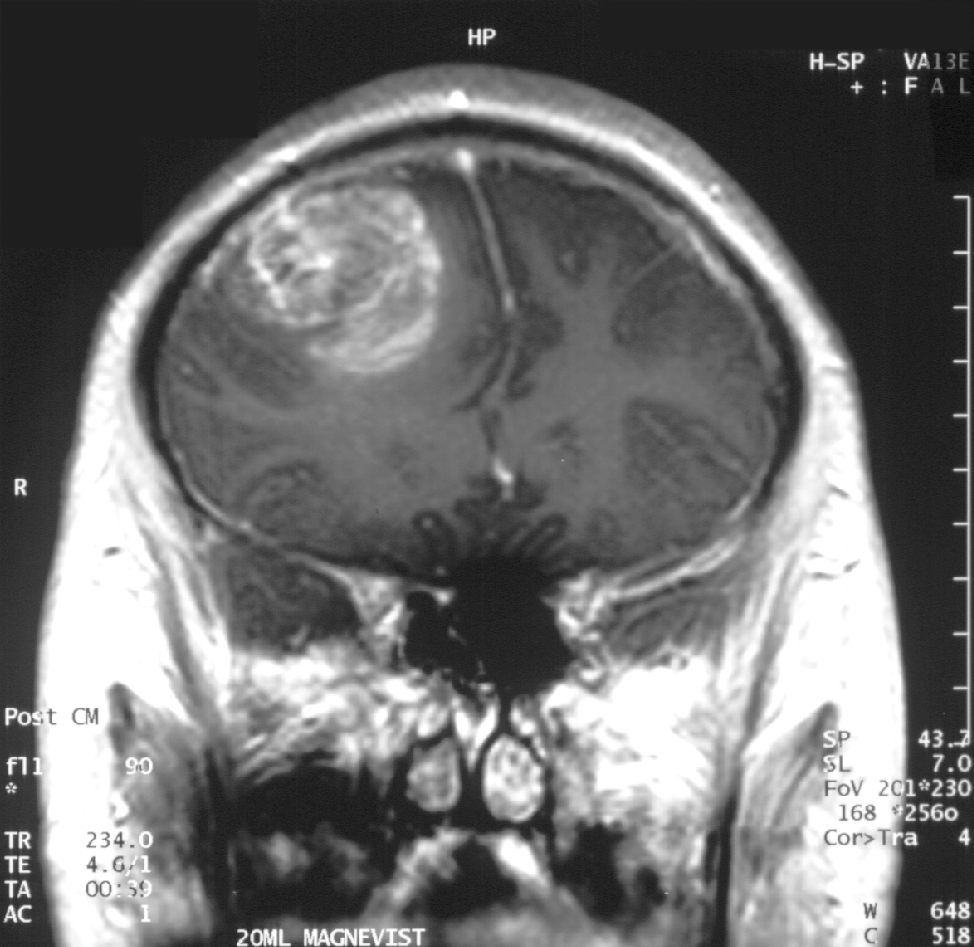
Glioblastoma is a malignant intrinsic brain tumor of neuroglial progenitor origin, classified by the World Health Organization as a grade 4 glioma and defined molecularly by isocitrate dehydrogenase (IDH) wild-type status in more than 90% of cases [9]D5.
Also Called / Synonyms
- Glioblastoma multiforme (GBM), the classic radiographic and histologic description
- IDH-wildtype glioblastoma (WHO grade 4), the current diagnostic designation
- Primary glioblastoma, historical term distinguishing de novo tumors from those that evolved from lower-grade gliomas (now classified as IDH-mutant astrocytoma, grade 4)
Key Terms Defined
- IDH-wildtype: absence of a mutation in the isocitrate dehydrogenase 1 or 2 genes; this molecular status defines glioblastoma and carries a distinctly worse prognosis than IDH-mutant tumors [9]D5.
- MGMT promoter methylation: methylation of the O⁶-methylguanine-DNA methyltransferase gene promoter, which predicts greater sensitivity to temozolomide and longer survival [25]B2b.
- Pseudoprogression: transient radiologic worsening within the first 12 weeks after chemoradiotherapy that reflects treatment effect rather than true tumor progression; seen more frequently in MGMT-methylated tumors [25]B2b.
Clinical Significance
Glioblastoma is the most common and most aggressive primary malignant brain tumor in adults, with a uniformly fatal outcome despite multimodality therapy [31]D5[38]B3b. It accounts for 61.5% of all adult gliomas (150,631 of 244,808 glioma diagnoses in the United States from 2000 to 2014) [29]B2c. The standard of care, maximal safe resection, involved-field radiotherapy, and concurrent plus adjuvant temozolomide, was defined in 2005 and has not been surpassed by any subsequent pharmacological intervention [9]D5[11]D5.
Age. Incidence rises steadily with age. Nearly 80% of cases occur in patients aged 45 years or older [29]B2c; approximately half of all patients are older than 65 years, and nearly one-quarter are older than 70 years [3]D5. The incidence in the elderly population is rising [3]D5.
Sex. Males are disproportionately affected. The incidence of glioblastoma is 60% higher in males than in females overall, a consistent finding across race and ethnicity groups [29]B2c[30]D5. Sex-biased differences extend to tumor biology and immunotherapy response, with male patients showing greater T-cell exhaustion [30]D5 and potentially differential benefit from checkpoint blockade [30]D5[32]D5.
Race and ethnicity. The incidence of glioblastoma is highest among non-Hispanic whites. Compared with this group, incidence is approximately 50% lower in Black (52% lower) and Asian or Pacific Islander (52% lower) populations, 58% lower in American Indians or Alaska Natives, and 30% lower in Hispanic whites [29]B2c. The reasons for these disparities remain incompletely understood and may reflect both genetic and socioeconomic factors.
Risk factors. Only two established risk factors account for a very small fraction of cases: rare genetic predisposition syndromes (e.g., Li-Fraumeni syndrome, ) and exposure to therapeutic cranial irradiation in childhood [9]D5[11]D5. No other environmental or lifestyle risk factors have been convincingly identified [9]D5.
Mortality. Despite aggressive therapy, median overall survival in unselected populations remains measured in months. In clinical trials, median survival ranges from 12 to 26 months depending on patient selection and treatment regimen, but population-based outcomes are substantially worse [1]C4[3]D5. No pharmacological intervention beyond temozolomide and tumor-treating fields has been shown to extend overall survival in newly diagnosed disease [8]A1a[11]D5[12]B2a[14]B2a.
The only established risk factors, genetic predisposition and childhood irradiation, are discussed in detail in the Risk Factors and Prevention section.
Pearl: Median overall survival remains poor despite multimodality therapy; no pharmacological intervention beyond temozolomide and tumor-treating fields has demonstrated an overall survival benefit in newly diagnosed disease.
| Race/Ethnicity | Proportion of Cases | Relative Incidence vs Non-Hispanic White |
|---|---|---|
| Non-Hispanic White | 83.6% | Reference |
| Hispanic White | 7.08% | ~30% lower |
| Black | 6.0% | ~52% lower |
| Asian/Pacific Islander | 2.4% | ~52% lower |
| American Indian/Alaska Native | 0.4% | ~58% lower |
Data from Ostrom et al, JAMA Oncology 2018 [29]B2c.
Risk Factors and Prevention
- ▸The only established risk factor from the provided evidence is germline TP53 R337H mutation, with a prevalence of 0.27% in southern Brazil and a low absolute risk of glioblastoma.
- ▸No modifiable risk factors or effective screening strategies are supported by the current literature; screening for glioblastoma is not recommended in the general population.
Despite extensive investigation, few risk factors for glioblastoma have been confirmed. The only established risk factor supported by the provided evidence is germline mutation in the gene, specifically the R337H founder mutation prevalent in southern Brazil [26]B2b.
Risk Factors
Germline TP53 mutations are associated with increased susceptibility to glioblastoma. In a newborn screening program in Paraná, Brazil, 461 of 171,649 screened newborns (0.27%) carried the TP53 R337H mutation [26]B2b. Among these carriers, one case of glioblastoma multiforme was diagnosed during surveillance [26]B2b. The absolute risk of developing glioblastoma in mutation carriers appears low, but the relative risk compared to non-carriers was not reported. Other hereditary syndromes, such as (which includes TP53 mutations), are known to predispose to glioblastoma, but the specific contribution of the R337H allele to glioblastoma risk in the general population remains undefined.
Environmental and lifestyle factors - including ionizing radiation, electromagnetic fields, or viral infections - are not discussed in the provided literature and cannot be addressed here. No seasonal variation in glioblastoma incidence has been reported.
| Factor | OR/RR | Evidence Level |
|---|---|---|
| Germline TP53 R337H mutation | Not reported (absolute risk low) | Level 2b (cohort study) [26]B2b |
Prevention
No effective primary prevention strategies for glioblastoma exist because the majority of cases are sporadic with no identifiable modifiable risk factor. Screening of the general population is not recommended by any major guideline; the low incidence (estimated 1-2 per 100,000) and lack of a validated screening tool make such an approach unfeasible. For individuals with known germline TP53 mutations, surveillance with brain imaging (e.g., MRI) may be considered on a case-by-case basis, though evidence for survival benefit is lacking [26]B2b.
Pearl: In the absence of established modifiable risk factors, prevention of glioblastoma is not currently possible; genetic counseling is reserved for families with multiple cases or known TP53 mutation syndromes.
Genetics and Hereditary Predisposition
- ▸Li-Fraumeni syndrome (TP53), Lynch/CMMRD (MLH1/MSH2/MSH6/PMS2), POLE/POLD1 deficiency, and NF1 are the major hereditary syndromes conferring GBM risk.
- ▸Hypermutant GBM from germline MMR or polymerase defects may respond durably to immune checkpoint inhibitors (nivolumab, pembrolizumab).
- ▸Common polymorphisms (EGF+61, IL4R, LIG4, HMGA2, RTEL1) modulate GBM risk and survival but are not yet used for clinical decision-making; ABCB1 variants lack predictive value for temozolomide response.
Beyond environmental and lifestyle exposures, inherited genetic variants and germline mutations in DNA repair, tumor-suppressor, and polymerase-proofreading genes confer substantial susceptibility to glioblastoma (GBM). Identification of a hereditary syndrome alters , enabling risk-reducing surveillance in at-risk relatives, guiding therapy selection (e.g., immune checkpoint inhibition for hypermutant tumors), and informing family counseling. The syndromes most strongly linked to GBM are those that disrupt genome integrity, particularly the TP53, mismatch repair, and RAS-MAPK pathways.
Hereditary Cancer Syndromes
Several autosomal-dominant and recessive syndromes carry elevated risk of GBM, with penetrance varying by gene and age. Table 1 summarizes the core syndromes and their associated GBM risk.
Li-Fraumeni syndrome (LFS), caused by germline TP53 mutations, is the best-characterized hereditary GBM predisposition [98]C4. GBM in LFS presents at a younger age (median 30- versus 65 years in sporadic cases). A systematic review of LFS-associated high-grade gliomas (HGGs) found that 64% of patients succumbed to disease, with a median overall survival of 17 months across studies [98]C4. The median time to recurrence was 7 months (IQR 2.0-7.0) [98]C4. In southern Brazil, neonatal screening for the founder TP53 R337H mutation identified 0.27% of newborns as carriers; among these, one child developed GBM, underscoring the need for surveillance from a young age [26]B2b. NCCN guidelines recommend TP53 germline testing in patients with GBM and a personal or family history suggestive of LFS (e.g., sarcoma, , breast cancer before age 45).
(LS) is caused by germline mutations in mismatch repair genes (MLH1, MSH2, MSH6, PMS2). Brain tumors occur in 2-8% of LS patients, with GBM being the most common histology [116]C4. Tumors often exhibit microsatellite instability-high (MSI-H) and ultra-high tumor mutational burden (TMB > 100 Mut/Mb), making them candidates for immune checkpoint inhibitors [99]B3b[100]C4[109]D5. Constitutional mismatch repair deficiency (CMMRD), biallelic MMR mutations, confers the highest risk, with GBM typically developing in childhood. Mean mutational load in CMMRD brain tumors is 17,740 ± 7,703 mutations per exome, significantly higher than sporadic pediatric gliomas [99]B3b. This hypermutant phenotype predicts response to , which produced durable radiologic responses in two siblings with recurrent multifocal CMMRD GBM [99]B3b. Similarly, a patient with a germline POLE mutation and hypermutant GBM experienced a brisk intratumoral lymphocyte infiltration and objective radiographic response to [100]C4[101]C4.
(NF1) is associated with GBM that appears clinically distinct, NF1-associated GBM may carry better outcomes. In case reports, long-term survivors (117 months and 25 months) have been described after standard Stupp protocol treatment [111]C4.
Common Genetic Polymorphisms and Risk
Beyond rare high-penetrance syndromes, common polymorphisms in inflammation, growth factor, and DNA repair genes modulate GBM risk and survival. Table 2 lists the most studied variants.
The EGF+61 G allele (rs4444903) increases GBM risk: GG genotype carriers have an OR of 2.03 ** compared with AA [112]B3b. The IL4R rs1805016 TT genotype was associated with ** reduced hazard of mortality within 1 year (HR 0.44, 95%) among high-grade glioma patients [37]B2b. Germline variants in double-strand break repair genes, LIG4 rs7325927, HMGA2 rs1563834, RTEL1 rs2297440, predict long-term (>3 years) versus short-term (≤1 year) survival [66]B3b. For example, patients ≥50 years with the LIG4 risk allele had a median survival of 1.2 years and the highest death risk (HR 17.53, 95% CI 4.27-71.97) [66]B3b. Conversely, ABCB1 polymorphisms (e.g., 1236C>T, 3435C>T) showed no robust association with temozolomide efficacy or overall survival in a meta-analysis of >400 patients, suggesting that P-glycoprotein-mediated efflux is likely overshadowed by MGMT methylation and IDH status [114]A1a.
Mendelian Randomization Evidence
Two-sample Mendelian randomization (MR) studies have identified novel causal links. There is a suggestive causal association between higher mitochondrial DNA copy number (mtDNA-CN) and GBM risk (**OR 1.42, 95% **), but not for lower-grade gliomas [107]B2c. MR analysis also identified causal molecular traits at novel loci: HBEGF expression (OR 1.36 for all glioma), CEP192 splicing (OR 4.40 for GBM), and FAIM splicing (OR 2.72-3.43) [102]B2c. Autoimmune disease MR found that decreases GBM risk (OR 0.04, 95% CI 0.03-0.04), while GBM lowers risk of celiac disease, suggesting an immune-mediated bidirectional relationship [115]B2c.
Clinical Implications
Germline testing for GBM predisposition should be considered in: (1) patients with early-onset GBM (age < 40 years) without known risk factors; (2) those with a family history of LFS-, LS-, or NF1-associated cancers; or (3) tumors displaying hypermutation or mismatch repair deficiency upon molecular profiling. In hypermutant GBM, referral for immune checkpoint inhibitor therapy (nivolumab or pembrolizumab) is warranted given durable responses in CMMRD and POLE-deficient cases [99]B3b[100]C4[101]C4. Cascade testing of at-risk family members enables surveillance MRI and cancer screening (e.g., , breast MRI), as endorsed by NCCN guidelines.
Table 1. Hereditary Syndromes Predisposing to Glioblastoma
| Syndrome | Gene(s) | Inheritance | Lifetime GBM Risk | Age of Onset | Key Features |
|---|---|---|---|---|---|
| Li-Fraumeni | TP53 | AD | ~5-15% | Childhood-40s | Multiple tumors (sarcoma, breast, adrenocortical), brain tumors in ~10% [26]B2b[98]C4 |
| Lynch syndrome | MLH1, MSH2, MSH6, PMS2 | AD | ~2-8% brain (GBM most common) | 30-50s | MSI-H, high TMB; colorectal, endometrial, other cancers [116]C4 |
| CMMRD | Biallelic MMR (MLH1, MSH2, MSH6, PMS2) | AR | Very high | Childhood | Ultra-hypermutant (mean 17,740 mutations), response to nivolumab [99]B3b |
| Polymerase-proofreading deficiency | POLE, POLD1 | AD | Moderate | 20-40s | Hypermutant, response to pembrolizumab [100]C4[101]C4 |
| NF1 | NF1 | AD | ~2-5% | Adults | Neurofibromas, optic gliomas; GBM may have better prognosis [111]C4 |
Table 2. Common Polymorphisms Associated with GBM Risk or Survival
| Gene | Variant (rs ID) | Effect | Odds Ratio / Hazard Ratio | Population | Study |
|---|---|---|---|---|---|
| EGF | rs4444903 G allele | Increased GBM risk | OR 2.03 (GG vs AA) for GBM | European | Costa et al. 2007 [112]B3b |
| LIG4 | rs7325927 V | Poor survival in older patients | HR 17.53 (95% CI 4.27-71.97) for death | US | Liu et al. 2010 [66]B3b |
| HMGA2 | rs1563834 V | Long-term survival >3 years | Median survival 7.8 years (with RTEL1 V) | US | Liu et al. 2010 [66]B3b |
| RTEL1 | rs2297440 V | Long-term survival | As above | US | Liu et al. 2010 [66]B3b |
| ABCB1 | 1236C>T, 3435C>T | No robust effect on TMZ response | Not significant (null) | Multi-ethnic | De Luca et al. 2026 [114]A1a |
Pearl: In any patient with GBM and age <40 years, unexplained family history, or a hypermutant tumor, order germline testing for TP53, mismatch repair genes, POLE/POLD1, and NF1, finding a syndrome opens targeted therapy (checkpoint inhibitors) and cascade surveillance for relatives.
Controversies and Guideline Disagreement
There is no major debate regarding which syndromes are causative, but the threshold for germline testing varies between guidelines. NCCN recommends TP53 testing for patients with GBM and any LFS-related tumor or family history meeting Chompret criteria. ESMO does not issue specific GBM-focused germline testing recommendations but does endorse MMR/PMS2 IHC and MSI testing for all CNS tumors. The optimal surveillance protocol for asymptomatic carriers of LFS or CMMRD is also unsettled (annual brain MRI vs. every 6 months), lacking prospective randomized data.
| Question | NCCN | ESMO | Strength | Implication |
|---|---|---|---|---|
| When to test for TP53 in GBM? | All patients meeting Chompret criteria or age <40 with family history | Not specified; suggests MSI/MMR testing first | Category 2A (NCCN) | Clinical judgment needed in borderline cases |
| Surveillance MRI interval for LFS carriers? | Annually brain MRI starting at age 18 | No specific recommendation | Weak | Institutional protocols vary |
Histopathology and Molecular Biology
- ▸Glioblastoma is defined by the combination of IDH-wildtype status with microvascular proliferation, necrosis, or molecular grade 4 features (TERT promoter mutation, EGFR amplification, +7/-10 signature).
- ▸Four transcriptional subtypes (Proneural, Neural, Classical, Mesenchymal) capture distinct driver alterations and microenvironmental interactions; the mesenchymal subtype is enriched for tumor-associated macrophages and confers radioresistance via NF-κB signaling.
- ▸MGMT promoter methylation is the single most important predictive biomarker for temozolomide sensitivity, with methylated tumors achieving median OS >33 months after maximal resection and chemoradiotherapy.
From the genetic landscape of predisposition, the histopathologic and molecular architecture of glioblastoma emerges as a complex interplay of cellular morphology, driver mutations, and transcriptional programs that together define prognosis and therapeutic vulnerability. The 2021 WHO classification of CNS tumors has cemented the primacy of molecular markers over histology alone: the diagnostic entity "glioblastoma, IDH-wildtype" now requires both IDH1/2 wild-type status and the presence of microvascular proliferation, necrosis, or molecular features of grade 4 (TERT promoter mutation, EGFR amplification, or +7/-10 chromosome signature) [121]D5[126]D5.
Histologic Hallmarks
Glioblastoma is a densely cellular astrocytic glioma with two obligate diagnostic features: microvascular proliferation (glomeruloid tufts or endothelial hyperplasia) and pseudopalisading necrosis, zones of coagulative necrosis rimmed by radially aligned, hypercellular tumor cells [126]D5. The tumor cells are pleomorphic, often with bizarre giant cells, and exhibit brisk mitotic activity. These histologic features correlate with the aggressive biology: pseudopalisading cells are hypoxic and upregulate hypoxia-inducible factors, driving VEGF secretion and neoangiogenesis, which in turn contributes to the characteristic contrast-enhancing appearance on MRI [144]D5.
Molecular Classification and Transcriptional Subtypes
Integrated genomic analysis by The Cancer Genome Atlas (TCGA) identified four robust gene-expression-based subtypes: Proneural, Neural, Classical, and Mesenchymal [134]C4. Each subtype is defined by distinct driver alterations:
- Classical: EGFR amplification (frequent), with homozygous deletion of CDKN2A and lack of TP53 mutations [134]C4.
- Mesenchymal: NF1 mutation or deletion, high expression of mesenchymal markers (CHI3L1, CD44), and enrichment for tumor-associated macrophage and microglia signatures [134]C4[137]D5. The mesenchymal subtype is associated with radioresistance, driven by NF-κB activation and TNF-α signaling from the tumor microenvironment [137]D5.
- Proneural: PDGFRA amplification or mutation, often with IDH1 mutations (though IDH-mutant gliomas are now classified separately), and enrichment for oligodendrocyte progenitor markers [134]C4.
- Neural: expression of neuron markers such as NEFL, SYP, and GABRA1, though its distinctness as a true subtype has been debated [134]C4.
Importantly, these subtypes are not fixed; recurrent tumors show a preferential shift toward the mesenchymal phenotype, suggesting therapy-driven microenvironmental remodeling rather than purely clonal evolution [135]B3b. Single-cell RNA sequencing has further revealed that individual tumors contain a mosaic of cells from multiple subtypes, with the mesenchymal state being particularly plastic and inducible by innate immune cells [131]D5[137]D5.
Key Driver Mutations and Pathways
Beyond the IDH1/2 dichotomy, three core signaling pathways are universally dysregulated in glioblastoma:
| Pathway | Key Alterations | Frequency | Functional Consequence |
|---|---|---|---|
| RTK/RAS/PI3K | EGFR amplification/mutation, PDGFRA amplification, PTEN loss, PIK3CA mutation | >90% | Constitutive growth signaling, evasion of apoptosis [134]C4 |
| p53 | TP53 mutation, MDM2 amplification, MDM4 amplification | ~87% | Loss of cell-cycle checkpoint, genomic instability [134]C4 |
| RB | RB1 deletion, CDKN2A/B loss, CDK4 amplification | ~79% | Unrestrained G1/S transition [134]C4 |
EGFR amplification occurs in ~40% of cases, often with the constitutively active variant EGFRvIII (deletion of exons 2-7), which drives pro-survival signaling through PI3K/AKT and RAS/MAPK [120]B2b[129]C4. However, EGFR amplification and NFKBIA deletion (encoding IκBα, a negative regulator of NF-κB) are mutually exclusive, with both events producing similar downstream NF-κB activation and equally poor prognosis [129]C4.
TERT promoter mutations (C228T, C250T) are present in >80% of IDH-wildtype glioblastomas, upregulating telomerase and conferring immortalization [126]D5. MGMT promoter methylation, which silences the DNA repair enzyme O⁶-methylguanine-DNA methyltransferase, is the most important predictive biomarker: methylated tumors are exquisitely sensitive to temozolomide, with median OS of 33.2 months in patients receiving gross total resection and chemoradiotherapy, versus 3.0 months for unmethylated biopsied tumors receiving supportive care alone [125]B2b.
Pediatric and H3-Mutant Glioblastoma
A distinct subset of pediatric and young-adult glioblastomas harbors recurrent mutations in H3F3A, encoding histone H3.3, at residues K27 (midline, ) or G34 (cerebral hemispheres) [133]C4[138]C4. H3.3 G34 mutations drive a unique transcriptional program involving upregulation of MYCN, and these tumors are mutually exclusive with IDH1 mutations [138]C4[133]C4. Global methylation profiling has defined six epigenetic subgroups, with H3.3 G34 tumors clustering separately from IDH-mutant and adult-type glioblastomas [138]C4.
Tumor Microenvironment and Immune Evasion
Glioblastoma is characterized by a profoundly immunosuppressive milieu. Tumor-associated macrophages (TAMs), both microglia-derived and monocyte-derived, dominate the infiltrate, with a shift toward M2-like (CD163+, CD206+) polarization that promotes angiogenesis, invasion, and T-cell exhaustion [144]D5[148]C4. Myeloid-derived suppressor cells (MDSCs) accumulate in the hypoxic core, further suppressing cytotoxic T-cell activity [144]D5. IDH-mutant tumors, in contrast, exhibit fewer suppressive myeloid cells, partly explaining their more favorable prognosis [148]C4.
The mesenchymal subtype is particularly reliant on NF-κB signaling, which can be activated by TNF-α from TAMs, creating a feed-forward loop that sustains the mesenchymal phenotype and radioresistance [137]D5. Emerging evidence from spatial transcriptomics reveals that the invasive leading edge is enriched for microglia-derived macrophages, while perivascular niches harbor monocyte-derived macrophages, each presenting distinct therapeutic vulnerabilities [144]D5.
Pearl: The routine integration of IDH1/2 mutational status, MGMT promoter methylation, and TERT promoter mutation is now mandatory for accurate glioblastoma classification and prognostication; the mesenchymal transcriptional subtype confers intrinsic radioresistance and may require alternative strategies beyond standard chemoradiation.
Clinical Presentation
- ▸Glioblastoma presents acutely over weeks to months with headache, seizures, and focal deficits; sensorimotor deficits (68%) and impaired mental status (47%) are the most common exam findings at baseline [185].
- ▸Seizure at presentation is influenced by genomic alterations: EGFR gain-of-function increases risk, TP53 loss-of-function decreases risk [213].
- ▸Impaired mental status and corticosteroid dependence at baseline identify patients with very limited survival (≤60 days) and warrant urgent palliative care involvement [185].
The molecular features described above, particularly IDH-wildtype status, the recurrent genomic landscape of EGFR amplification, and TERT promoter mutations, manifest in a clinical presentation that is typically acute and relentlessly progressive. Unlike lower-grade gliomas, which may present with indolent symptoms over years, glioblastoma declares itself over weeks to a few months, often through a combination of mass effect, peritumoral edema, and focal parenchymal infiltration.
Presenting Symptoms
Headache is the most common first symptom, often indistinguishable from but progressively worsening and sometimes associated with nausea or vomiting. Seizures occur at presentation in approximately 20-30% of patients; genomic profiling indicates that EGFR gain-of-function alterations increase the odds of seizures, while TP53 loss-of-function alterations reduce them [213]B3b. Focal neurological deficits, hemiparesis, aphasia, visual field cuts, are present in the majority. In a real-world cohort of patients referred for palliative radiotherapy, 68% had sensorimotor deficits and 47% had impaired mental status at baseline [185]B2b. Cognitive decline, personality change, and somnolence are common, particularly in elderly patients or those with dominant-hemisphere or bifrontal involvement.
Neurological Examination Findings
Motor findings include contralateral hemiparesis (pyramidal pattern), often with hyperreflexia and a Babinski sign. Sensory loss to pain and temperature, neglect, or extinction may accompany parietal lobe involvement. Cranial nerve deficits, most commonly central facial weakness or visual field defects (homonymous hemianopia from temporal or occipital involvement), are typical. Aphasia (expressive, receptive, or global) indicates dominant-hemisphere perisylvian involvement. Cognitive assessment reveals deficits in attention, executive function, and memory; the Mini-Mental State Examination score is often depressed. Increased intracranial pressure may manifest as papilledema on funduscopy, though this is less common in the era of early imaging. Corticosteroid dependence is a marker of symptomatic edema: 86% of patients in the palliative cohort required steroids at baseline [185]B2b.
Phenotypic Variants by Age and Presentation
| Age Group | Key Clinical Features | Frequency |
|---|---|---|
| Younger adults (<65 years) | More likely to present with focal deficit or seizure; better performance status at diagnosis | ~40% of cases |
| Older adults (≥65 years) | Cognitive decline, gait disturbance, impaired mental status more prominent; higher steroid use; lower KPS [185]B2b | ~60% of cases |
| Congenital (≤1 year) | Macrocephaly (27.7%), failure to thrive, seizures; distinct genetic etiology [182]C4 | Very rare |
Red Flags Requiring Urgent Action
Rapidly progressive neurological decline over days, new-onset seizures, or signs of impending herniation (Cushing reflex: bradycardia, , irregular respirations) demand immediate neuroimaging and neurosurgical consultation. Impaired mental status and corticosteroid use are independent predictors of very limited survival (≤60 days) in patients with progressive disease [185]B2b.
Atypical Presentations
Glioblastoma can masquerade as stroke (acute hemiparesis without headache), encephalitis (seizures, confusion, fever absent), or psychiatric illness (depression, apathy). Rarely, it presents as a collision tumor with concurrent , where refractory seizures and aphasia may be the initial symptoms [179]C4. In approximately 5% of cases, multifocal or gliomatosis-like growth produces bilateral or diffuse neurological signs without a dominant mass.
Pearl: In a patient over 60 with progressive headache, new focal deficit, or unexplained seizure, the combination of sensorimotor deficits and impaired mental status (present in >50% of patients) should prompt immediate MRI with contrast, do not await symptom resolution or a trial of migraine therapy.
Biopsy and Histologic Diagnosis
- ▸Gold-standard diagnosis requires histology showing microvascular proliferation and/or pseudopalisading necrosis in an IDH-wildtype, grade 4 glioma.
- ▸Multiple tissue samples from different radiological zones are recommended because intratumoral heterogeneity can affect molecular classification and MGMT status.
- ▸Mandatory molecular tests: IDH1/2 sequencing (to rule out IDH-mutant astrocytoma) and MGMT promoter methylation analysis.
Suspicion raised by clinical presentation and imaging mandates tissue acquisition for histologic and molecular confirmation. Definitive diagnosis of glioblastoma hinges on histopathologic examination of tumor tissue obtained by either surgical resection or stereotactic biopsy, with results integrated into the WHO 2021 classification framework.
Biopsy and Resection Considerations
Maximal safe resection is the preferred initial approach because it provides ample tissue for diagnosis, molecular profiling, and therapeutic planning, and carries a survival benefit. For tumors in deep-seated or eloquent regions, stereotactic biopsy is an acceptable alternative. Intratumoral heterogeneity is a hallmark of glioblastoma: almost half of tumors (39% in one series) harbor mixed methylation subtypes, and 16% show discordant MGMT promoter methylation status across different regions [227]C4. Multiple sampling from separate anatomic zones, contrast-enhancing core, non-enhancing periphery, and adjacent edema, should be obtained whenever feasible to capture the full molecular diversity and avoid misclassification [244]B2b.
Histologic Diagnosis
The gold-standard diagnostic test is histopathologic evaluation of tumor tissue with determination of IDH mutation status. Glioblastoma is defined as an IDH-wildtype, grade 4 diffuse glioma. Key histologic hallmarks include microvascular proliferation, pseudopalisading necrosis, and high mitotic activity (elevated Ki-67 index). Other features: nuclear atypia, cellular pleomorphism, and occasionally granular mitosis [240]D5. Immunohistochemistry should include:
- GFAP (positive) and OLIG2 (positive) to confirm glial lineage
- ATRX (retained nuclear expression) to exclude IDH-mutant astrocytoma
- IDH1 R132H immunostaining (negative in glioblastoma); negative staining should prompt IDH1/2 sequencing
- p53 (variable) and Ki-67 (typically >10%, often >20%) Tissue handling: Fresh tissue should be sent for frozen section intraoperative consultation, with a portion snap-frozen or placed in RNA-later for downstream molecular studies. The remainder should be formalin-fixed, paraffin-embedded for permanent histology and IHC.
Molecular Confirmation
All newly diagnosed glioblastoma specimens must undergo IDH1/2 sequencing to confirm wild-type status, positive IDH mutation reclassifies the tumor as IDH-mutant astrocytoma grade 4 [126]D5. Additional mandatory testing includes MGMT promoter methylation analysis (by methylation-specific PCR or pyrosequencing), which is both prognostic and predictive of temozolomide benefit [215]A1c. Optional but increasingly standard molecular markers that refine classification and guide targeted therapy include: TERT promoter mutation[181]B3b, EGFR amplification and EGFRvIII variant (assessed by FISH or next-generation sequencing) [226]B2b, and BRAF V600E when pleomorphic features are present (to identify BRAF-mutant tumors that may respond to BRAF/MEK inhibitors) [223]C4. Detection of the FGFR3-TACC3 fusion may also be relevant (e.g., in tumors with oligodendroglioma-like histology) [228]C4. Blood-based liquid biopsy (e.g., serum Dxcover platform) has shown 86% sensitivity for glioblastoma detection and 99% negative predictive value, but remains investigational for primary diagnosis [186]B2b.
Pearl: Mandatory molecular tests: IDH1/2 sequencing (to rule out IDH-mutant astrocytoma) and MGMT promoter methylation analysis.
Imaging
- ▸Postoperative MRI within 48 hours establishes the baseline; RANO 2.0 uses the postradiotherapy MRI as the new baseline for response assessment.
- ▸Pseudoprogression occurs in up to 20% of patients, is more common in MGMT-methylated tumors, and requires a confirmatory scan within 12 weeks to distinguish from true progression.
- ▸Advanced imaging (FET-PET, DBSI, habitat analysis) improves characterization of tumor biology but routine use for response assessment remains investigational.
Postoperative contrast-enhanced MRI within 48 hours establishes the baseline extent of resection and guides subsequent response assessment. The standard protocol includes pre- and post-gadolinium T1-weighted, T2-weighted, and fluid-attenuated inversion recovery (FLAIR) sequences, with diffusion-weighted imaging (DWI) and perfusion-weighted imaging (PWI) to assess cellularity, edema, and microvascular permeability. For response assessment, the updated RANO 2.0 criteria recommend using the postradiotherapy MRI (4-6 weeks after chemoradiation) as the new baseline rather than the postsurgical scan [23]A1c. The primary measurement is the maximum cross-sectional area of enhancing tumor; nonenhancing disease is no longer evaluated in IDH-wildtype glioblastoma except when assessing response to antiangiogenic agents [23]A1c.
Pseudoprogression and Treatment-Related Changes
Pseudoprogression, a transient increase in enhancement mimicking tumor progression, occurs in up to 20% of patients receiving temozolomide chemoradiotherapy and accounts for about half of all progressive lesions within the first 3 months after treatment [263]D5. It is significantly more common in patients with MGMT promoter methylation (91% of methylated vs 41% of unmethylated patients in one series) [25]B2b. The phenomenon likely reflects the desired tumor cell and endothelial cell killing by chemoradiotherapy, leading to increased permeability and edema. Clinically, pseudoprogression is often asymptomatic, but if symptomatic, surgery may be considered [263]D5. A confirmatory scan within 12 weeks of radiotherapy is required before declaring progression in newly diagnosed patients; beyond 12 weeks, confirmation is not mandatory [23]A1c[261]C4. Continuation of adjuvant temozolomide is recommended if the patient remains clinically stable [263]D5.
Advanced Imaging: PET and Physiologic MRI
Amino acid PET tracers, such as O-(2-[18F]fluoroethyl)-L-tyrosine (FET) and 3,4-dihydroxy-6-[18F]fluoro-L-phenylalanine (18F-DOPA), provide higher specificity than contrast-enhanced MRI for distinguishing recurrent glioblastoma from treatment-related changes. However, the GLIAA randomized trial found no benefit of FET-PET over MRI for target volume delineation in re-irradiation (median progression-free survival 4.0 vs;) [248]A1b. In older patients (≥65 years), 18F-DOPA PET-guided hypofractionated achieved 56% 12-month overall survival [253]C4. Novel MRI techniques, including diffusion basis spectrum imaging (DBSI) and multiparametric habitat analysis, enable noninvasive characterization of tumor microstructure and heterogeneity, with potential for predicting molecular subtypes (e.g., distinguishing molecular from histologic glioblastoma) and treatment response [275]C4[281]B3b. Time-dependent diffusion MRI can differentiate glioblastoma from with high accuracy (intracellular volume fraction AUC 0.901) [284]B3b. TSPO-PET detects remote neuroinflammation in the contralateral hemisphere, which is associated with poorer overall survival [268]B2b.
Imaging in Surgical and Radiotherapy Planning
Intraoperative MRI and 5-aminolevulinic acid fluorescence achieve comparable rates of complete resection (≈80%), with any residual contrast-enhancing tumor (0 cm³) being a negative prognostic factor for progression-free and overall survival [249]B2b. MRI-guided adaptive radiotherapy using a 5 mm clinical target volume margin (UNITED trial) resulted in a low marginal failure rate of 4% [252]C4. For surveillance, guidelines recommend MRI every 2-4 months, with frequency tailored to tumor grade, clinical status, and treatment phase.
Pearl: The hallmark of pseudoprogression is its occurrence within the first 12 weeks after chemoradiotherapy, particularly in MGMT-methylated tumors; a confirmatory scan is essential before altering therapy, and continuation of adjuvant temozolomide is recommended in clinically stable patients.
| Modality | Primary Use | Key Strength | Reference |
|---|---|---|---|
| Contrast-enhanced MRI | Baseline, response assessment, surveillance | Standard for RANO 2.0 criteria | [23]A1c |
| FET-PET | Recurrent disease vs. treatment effect | Higher specificity than MRI | [248]A1b |
| 18F-DOPA PET | Treatment planning in older patients | Identifies metabolically active tumor | [253]C4 |
| DBSI | Microstructural characterization | Distinguishes cellularity, necrosis, infiltration | [275]C4 |
| Habitat analysis | Molecular subtype discrimination | Uses multiparametric MRI to map heterogeneity | [281]B3b |
| TSPO-PET | Remote neuroinflammation | Prognostic biomarker for survival | [268]B2b |
Molecular Diagnostics and Biomarkers
- ▸MGMT promoter methylation is the only validated predictive biomarker for temozolomide; use pyrosequencing with a ≥11% cutoff for methylated status.
- ▸IDH wildtype status plus TERT promoter mutation, EGFR amplification, or +7/-10 copy-number changes is required for WHO grade 4 glioblastoma diagnosis.
- ▸CSF ctDNA analysis provides a reliable liquid biopsy for genotyping when tissue is unavailable, with 84% concordance to tumor.
Imaging identifies the suspicious lesion, but the definitive molecular characterization, required for classification, prognostication, and therapeutic planning, depends on analysis of tumor tissue or, increasingly, cerebrospinal fluid-derived circulating tumor DNA (ctDNA). The 2021 WHO Classification of CNS Tumors mandates molecular markers to define glioblastoma, shifting the diagnosis from purely histologic to an integrated histomolecular assignment.
Core Diagnostic Markers
Isocitrate dehydrogenase (IDH) status is the primary classifier: glioblastoma is now defined as IDH-wildtype (IDHwt) in adults, while IDH-mutant astrocytomas are graded separately [126]D5. IDH1 R132H immunohistochemistry captures over 90% of mutations; negative cases with radiographic or histologic suspicion require sequencing for non-canonical variants. IDHwt status triggers evaluation for other glioblastoma-defining alterations.
MGMT promoter methylation is the only clinically validated predictive biomarker for alkylating chemotherapy. A pyrosequencing-based cutoff of ≥11% mean methylation identifies a methylated (responsive) group, while ≤8% defines unmethylated (non-responsive) tumors; the intermediate 8%-11% zone is a gray area requiring cautious interpretation [324]B2b. Methylated MGMT is associated with longer survival in patients treated with temozolomide (median OS 21.7 vs for unmethylated in some series) and independently predicts benefit from the Stupp regimen [221]B2b. Testing is recommended by NCCN and CAP in all newly diagnosed glioblastomas to guide adjuvant temozolomide therapy.
TERT promoter mutations (C228T, C250T) occur in 70-80% of IDHwt glioblastomas and are a defining molecular alteration for the entity [198]C4. They activate telomerase and confer aggressive biology. Combined with chromosome 7 gain and 10 loss (+7/-10), TERTp mutation alone suffices for WHO grade 4 diagnosis in an IDHwt astrocytic tumor.
EGFR amplification is present in ~40% of glioblastomas and can be detected by NGS, FISH, or methylation array. While not yet linked to a standard targeted therapy (small-molecule inhibitors have shown limited efficacy), it helps confirm the diagnosis and is being evaluated as a trial-enrichment biomarker [297]C4. CDKN2A/B homozygous deletion is another hallmark, often coexisting with EGFR amplification and associated with worse prognosis [297]C4.
Recommended Testing Panels
NCCN and CAP endorse next-generation sequencing (NGS) panels that cover IDH1/2, TERTp, EGFR, PTEN, TP53, CDKN2A/B, and PIK3CA. DNA methylation profiling (850k array) can classify glioblastoma into molecular subtypes (RTK I/II, mesenchymal) with prognostic and potential therapeutic relevance [325]C4. The NRG-GBM-RPA model, integrating MGMT protein, c-Met, and age, improves outcome stratification over conventional clinical variables [221]B2b.
Liquid Biopsy
Cerebrospinal fluid (CSF) ctDNA is a reliable surrogate for tumor genotyping when tissue is unavailable or insufficient. In a prospective study, targeted NGS of CSF ctDNA detected mutations in 59% of patients (84% concordance with tissue), including EGFR amplification (42%), PTEN (37%), TP53 (32%), IDH1 (26%), and PIK3CA (21%) [166]B2b. Higher CSF ctDNA variant allele frequency correlates with shorter progression-free and overall survival [166]B2b. CSF sequencing can also detect TERTp mutations and copy-number profiles that enable molecular reclassification [306]C4[322]C4.
Plasma ctDNA is detectable in only 10-15% of patients with glioblastoma, limiting its utility for routine diagnosis [166]B2b. However, elevated plasma cell-free DNA levels are associated with worse survival and may reflect neutrophil-mediated NETosis, offering a dynamic but nonspecific marker [313]C4.
Emerging and Investigational Biomarkers
Programmed death-ligand 1 (PD-L1) amplification occurs in <1% of glioblastomas but can identify rare responders to immune checkpoint blockade [299]C4. Hepatocyte growth factor (HGF) and MET expression are being explored as predictors of anti-angiogenic therapy benefit [45]A1b. Transcriptional subtype, mesenchymal vs proneural, has been linked to immunotherapy response: mesenchymal tumors show improved survival after immune checkpoint blockade, while non-mesenchymal subtypes are enriched for escape mechanisms via CDKN2A loss and PDGFRA alterations [317]C4. Peripheral hematologic parameters (WBC, neutrophil-to-lymphocyte ratio) may aid in monitoring postoperative progression [321]C4.
Table: Key Molecular Biomarkers in Glioblastoma
| Biomarker | Method | Clinical Utility |
|---|---|---|
| IDH1/2 mutation | IHC, NGS | Diagnostic: IDHwt required for GBM definition [126]D5 |
| MGMT promoter methylation | Pyrosequencing | Predictive: guide temozolomide use; threshold ≥11% [324]B2b |
| TERT promoter mutation | NGS, Sanger | Diagnostic: defining alteration for IDHwt GBM [198]C4 |
| EGFR amplification | NGS, FISH | Diagnostic confirmation; trial enrollment [297]C4 |
| Chromosome +7/-10 | NGS, methylation array | Diagnostic: hallmark of IDHwt GBM; poor prognosis [318]C4 |
| CDKN2A/B loss | NGS | Prognostic: adverse outcome [297]C4 |
| ctDNA in CSF | NGS | Alternative genotyping when tissue unavailable [166]B2b |
| PD-L1 amplification | NGS, IHC | Rare but actionable for checkpoint blockade [299]C4 |
These molecular data directly inform the tumor's stage assignment under the integrated WHO classification system and guide the selection of systemic therapies, forming the bridge between imaging and the formal staging workup described in the following section.
Pearl: CSF ctDNA analysis provides a reliable liquid biopsy for genotyping when tissue is unavailable, with 84% concordance to tumor.
Staging
- ▸Glioblastoma lacks TNM staging; instead, prognostic staging integrates MRI findings (eloquent cortex, multifocality, volume), clinical status (KPS, age), and molecular markers (MGMT methylation, IDH1/2, BRAF V600E).
- ▸The RTOG RPA classification remains the standard pretreatment prognostic system; the Park recurrence scale (0-3 points) stratifies surgical decision-making at recurrence.
- ▸Postoperative MRI within 48 hours defines extent of resection, gross-total resection (no residual enhancement) is the strongest modifiable prognostic factor.
With the molecular profile established, the next step is to integrate imaging and clinical factors into a prognostic framework, the functional equivalent of staging for a tumor that lacks a formal classification. For glioblastoma, “staging” encompasses the anatomic extent of disease, the completeness of surgical resection, and validated prognostic indices that together dictate the intensity and modality of initial therapy.
Pre-treatment Imaging Staging
Preoperative MRI with and without contrast defines three independent staging parameters:
- Tumor location and eloquence: involvement of eloquent cortex (motor, sensory, language, visual areas) or deep nuclei substantially limits the feasibility of gross-total resection and independently predicts shorter survival after recurrence [61]C4.
- Multifocality: contrast-enhancing lesions in separate lobes or hemispheres indicate diffuse disease, associated with median overall survival <9 months and a reduced benefit from focal therapies.
- Tumor volume: a preoperative volume ≥50 cm³ is one of three factors in the validated Park recurrence surgery scale (see below) [61]C4.
Prognostic Staging Systems
RTOG RPA (Recursive Partitioning Analysis) remains the most widely referenced pretreatment prognostic staging system for newly diagnosed glioblastoma. It assigns patients to one of five classes based on age (≤50 vs. >50), Performance Status (KPS), Mini-Mental State Exam score, extent of resection, and neurologic function. Class III (age <50, KPS ≥90) carries a median survival of approximately 17 months; Class V (age >50, KPS <70) carries a median survival of approximately 5 months [128]B3b. Although developed before the molecular era, RPA continues to stratify patients for clinical trial eligibility and treatment intensity.
Park Scale for Recurrent Glioblastoma, a simple preoperative scale validated in 109 patients [61]C4:
| Variable | Points |
|---|---|
| Tumor involvement of eloquent/critical brain regions | 1 |
| KPS ≤ 80 | 1 |
| Tumor volume ≥ 50 cm³ | 1 |
Total score 0 (good) → median survival 10.8 months; 1-2 (intermediate) → 4.5 months; 3 (poor) → 1.0 months [61]C4. This scale guides the decision to offer repeat resection at recurrence.
Molecular Staging
Molecular markers now carry equal weight to clinical factors in defining prognosis and directing therapy. The most critical is MGMT promoter methylation status, a molecular stratifier that must be determined at diagnosis to select patients who benefit from adding temozolomide to radiotherapy. Long-term survivors (>36 months) with IDH1/2 wild-type glioblastoma nearly uniformly harbor MGMT promoter methylation; conversely, long-term survivors with IDH1/2 mutant tumors exhibit molecular features of lower-grade gliomas [343]B3b. IDH1/2 mutation itself defines a distinct clinical entity (IDH-mutant glioblastoma, WHO grade 4) with a more favorable prognosis (median survival ~26-31 months) and is now treated with lower-intensity adjuvant chemotherapy in some protocols [343]B3b. Rare BRAF V600E-mutant glioblastomas represent a separate actionable subgroup in which BRAF/MEK inhibition can produce durable responses [223]C4.
Post-operative Assessment: Extent of Resection
The post-contrast MRI performed within 48 hours of surgery constitutes the definitive staging of residual disease. Gross-total resection (no residual contrast enhancement) roughly doubles median survival compared with biopsy alone and is the benchmark for all subsequent response assessments. The RANO criteria for tumor response depend critically on this baseline MRI [339]D5.
Controversies and Guideline Disagreement
No prospective trials have compared different staging systems -to-head, and no single system has been universally adopted. The NCCN and ESMO guidelines both endorse RPA for patient stratification but differ on whether molecular classification should override clinical staging in trial eligibility. The Genomic Adjusted Radiation Dose (GARD) model proposes to individualize radiotherapy dose based on a gene-expression radiosensitivity signature, with low GARD values predicting poorer local control; this approach remains investigational and is not yet incorporated into staging guidelines [128]B3b.
| Staging Element | Tool / Factor | Clinical Impact |
|---|---|---|
| Anatomic extent | MRI: eloquent cortex, multifocality, volume | Limits resectability; affects recurrence surgery decision |
| Functional status | KPS, age, neurological function | Underpins RPA class; drives eligibility for aggressive therapy |
| Molecular profile | MGMT methylation, IDH1/2, BRAF V600E | Determines chemo-sensitivity and targeted therapy options |
| Residual disease | Postoperative MRI | Defines GTR vs STR; baseline for RANO criteria |
The integration of these staging parameters determines whether the patient proceeds to maximal safe resection followed by chemoradiation or alternative approaches, as detailed in the Overview.
Pearl: For newly diagnosed glioblastoma, the three most powerful independent stagifiers are age, KPS, and MGMT promoter methylation status, always confirm all three before counseling on prognosis or treatment intensity.
Management Overview
- ▸Maximal safe resection improves survival, with gross total resection target of 0 cm³ residual contrast enhancement.
- ▸Standard first-line therapy for newly diagnosed glioblastoma is radiotherapy (60 Gy) with concurrent and adjuvant temozolomide; tumor-treating fields can be added.
- ▸For elderly patients (≥65 years), hypofractionated radiotherapy (40 Gy/15 fractions) plus temozolomide is preferred; TMZ alone is an alternative for MGMT-methylated tumors.
- ▸At recurrence, options include lomustine, bevacizumab, regorafenib, and re-irradiation; no single agent has demonstrated a survival advantage over lomustine in phase III trials.
With the diagnosis and staging complete, treatment planning proceeds based on patient age, performance status, and MGMT promoter methylation status. The backbone of therapy for newly diagnosed glioblastoma remains maximal safe resection followed by radiotherapy with concurrent and adjuvant temozolomide, as established in the landmark EORTC-NCIC trial [356]A1b. Tumor-treating fields (TTFields) provide an additional option for eligible patients.
Step 1: Maximal Safe Resection
Surgical resection is the first therapeutic intervention. The goal is gross total resection (GTR) of contrast-enhancing tumor whenever safely achievable. A meta-analysis of 37 studies (41,117 patients) demonstrated that GTR compared with subtotal resection (STR) reduces 1-year mortality (RR 0.62; 95%; NNT = 9) and 2-year mortality (RR 0.84; 95% CI 0.79-0.89; NNT = 17) [6]B2a. The 2021 ASCO-SNO guideline recommends maximal safe resection [350]A1c (strong recommendation). Intraoperative MRI guidance and 5-aminolevulinic acid (5-ALA) fluorescence are equally effective for achieving complete resections (78% vs 81%, P = 0.79) [249]B2b. Any residual contrast-enhancing tumor (≥0 cm³) is a negative prognostic factor for progression-free survival (PFS) and overall survival (OS) [249]B2b.
Step 2: Postoperative Chemoradiation
Within 4-6 weeks of surgery, patients with good performance status ( Performance Status [KPS] ≥60) should receive involved-field radiotherapy (60 Gy in 30 fractions over 6 weeks) with concurrent temozolomide (TMZ) 75 mg/m² orally daily, 7 days per week [356]A1b. The EORTC-NCIC trial (N=573) demonstrated a significant survival benefit with combined therapy: 5-year OS 9.8% vs 1.9% with radiotherapy alone (HR 0.6; 95% CI 0.5-0.7; P<0.0001) [356]A1b. MGMT promoter methylation is the strongest predictor of benefit from TMZ (HR 0.56 for methylated vs unmethylated, P=0.02) [357]A1b.
For patients aged ≥65-70 years, hypofractionated radiotherapy (40 Gy in 15 fractions) plus concurrent and adjuvant TMZ is the standard of care. The Perry trial (N=562) showed median OS 9.3 months vs 7.6 months with radiotherapy alone (HR 0.67; 95% CI 0.56-0.80; P<0.001) [361]A1b. In patients with MGMT promoter-methylated tumors, median OS was 13.5 months vs 7.7 months (HR 0.53; 95% CI 0.38-0.73; P<0.001) [361]A1b. For patients with poor performance status or unmethylated MGMT, TMZ monotherapy (200 mg/m² days 1-5 every 28 days) is a reasonable alternative to radiotherapy [357]A1b [358]A1b.
Step 3: Adjuvant Therapy
After completion of chemoradiation, a 28-day break is followed by adjuvant TMZ (150-200 mg/m² orally on days 1-5 of each 28-day cycle) for 6 cycles [356]A1b. The ASCO-SNO guideline recommends 6 cycles, though longer treatment may be considered in selected patients [350]A1c (conditional recommendation).
Tumor-treating fields (TTFields) are FDA-approved for newly diagnosed glioblastoma and should be considered in eligible patients. The EF-14 trial (N=695) demonstrated improved median OS (20.9 months vs 16.0 months; HR 0.67; P<0.001) and PFS (6.7 months vs 4.0 months;; P<0.001) when TTFields were added to adjuvant TMZ [368]A1b. Health-related quality of life was not adversely affected except for itchy skin [368]A1b (strong recommendation per NCCN [388]A1c).
Step 4: of Recurrent Disease
Despite standard therapy, nearly all patients experience recurrence. Options depend on performance status, tumor location, and prior therapy. For patients with a first recurrence suitable for further treatment, the following systemic therapies are available:
- Lomustine (90-110 mg/m² orally every 6 weeks) is a standard alkylating agent, with median OS 8.6 months in the EORTC 26101 trial [360]A1b.
- (10 mg/kg IV every 2 weeks) is approved for recurrent glioblastoma. The BELOB trial reported 9-month OS of 59% (95% CI 43-72) with bevacizumab plus lomustine (90 mg/m²) [326]A1b. However, the phase III EORTC 26101 trial showed no OS benefit for bevacizumab plus lomustine vs lomustine alone (median OS 9.1 vs 8.6 months; HR 0.95; 95% CI 0.74-1.21; P=0.65) [360]A1b. Bevacizumab improves PFS and reduces steroid requirements [362]A1b [363]A1b.
- Re-irradiation with concurrent bevacizumab may be considered for selected patients with favorable prognostic factors. The NRG Oncology/RTOG1205 trial (N=170) showed improved PFS with re-irradiation (35 Gy/10 fractions) plus bevacizumab vs bevacizumab alone (6-month PFS 54.3% vs 29.1%; P=0.001) but no OS difference [351]A1b.
For patients with MGMT-methylated, IDH-mutant recurrent grade 3 astrocytoma, the STELLAR trial demonstrated significant OS benefit with eflornithine plus lomustine vs lomustine alone (median OS 34.9 vs 23.5 months; HR 0.64) [353]A1b.
Step 5: Palliative Care and Supportive Management
Palliative care should be integrated early, particularly for patients with poor performance status or progressive disease. Corticosteroids ( ) are the mainstay for symptom control of peritumoral edema, but doses should be minimized to avoid toxicity [350]A1c. Anticonvulsants are indicated only for patients with a history of seizures, not for prophylaxis [167]A1c.
Drug Dosing Table
| Drug | Indication | Dose | Regimen | Key adverse effects |
|---|---|---|---|---|
| Temozolomide | Newly diagnosed, concurrent | 75 mg/m² orally daily | 7 days/week during RT | Nausea, myelosuppression, fatigue |
| Temozolomide | Adjuvant | 150-200 mg/m² orally | Days 1-5 every 28 days for 6 cycles | Myelosuppression, lymphopenia |
| Lomustine | Recurrent | 90-110 mg/m² orally | Every 6 weeks | Thrombocytopenia, hepatotoxicity |
| Bevacizumab | Recurrent | 10 mg/kg IV | Every 2 weeks | , hemorrhage, thromboembolism |
| Recurrent | 160 mg orally daily | 3 weeks on, 1 week off | Hand-foot skin reaction, hypertension, fatigue |
Controversies and Guideline Disagreement
| Question | Position A | Position B | Strength | Implication |
|---|---|---|---|---|
| Role of bevacizumab in newly diagnosed GBM | ASCO-SNO 2021 [350]A1c and EANO 2014 [167]A1c recommend against bevacizumab | NCCN 2022 [388]A1c states bevacizumab is not recommended for first-line treatment | Strong | Bevacizumab should not be used in the upfront setting; no survival benefit in two phase III trials [362]A1b [363]A1b |
| Use of TTFields | ASCO-SNO 2021 [350]A1c and NCCN 2022 [388]A1c recommend TTFields as an option | EANO 2014 [167]A1c guideline does not include TTFields (published before 2014 EF-14 data) | Moderate | TTFields should be discussed with eligible patients; health insurance coverage varies |
| Optimal therapy for elderly patients | Perry trial [361]A1b supports hypofractionated RT + TMZ | Nordic trial [357]A1b and NOA-08 [358]A1b support TMZ alone for MGMT-methylated | Moderate | Choice depends on MGMT methylation status and performance status; both approaches are acceptable |
Pearl: The Stupp protocol (RT + concurrent and adjuvant TMZ) remains the cornerstone of therapy for newly diagnosed glioblastoma; TTFields provide a modest survival benefit and should be considered in eligible patients. Bevacizumab is not recommended in the upfront setting, and for elderly patients, hypofractionated RT plus TMZ is the standard of care, with TMZ alone as an alternative for MGMT-methylated tumors [356]A1b [361]A1b.
History and Evolution of Treatment
- ▸The EORTC-NCIC 26981 trial established radiotherapy with concurrent and adjuvant temozolomide as the standard of care for newly diagnosed glioblastoma, improving median survival from 12.1 to 14.6 months.
- ▸In elderly patients, short-course radiotherapy (40 Gy in 15 fractions) plus temozolomide prolongs survival compared with radiotherapy alone.
- ▸Bevacizumab, cilengitide, regorafenib, veliparib, and immune checkpoint inhibitors have all failed to improve overall survival in phase 3 trials for glioblastoma.
The current standard of care did not emerge from a single eureka moment but from a series of rigorously conducted randomized trials that progressively replaced earlier, less effective regimens. Before the temozolomide era, treatment for glioblastoma consisted of surgery followed by radiotherapy alone. Chemotherapy was controversial. The nitrosourea carmustine (BCNU) showed modest activity, but a landmark comparison of BCNU versus diaziquone in 251 patients with anaplastic gliomas found no significant survival difference between the two agents and confirmed that age and histology were the strongest outcome predictors, with median survival of only 37 weeks after randomization in patients older than 45 with glioblastoma [450]A1b. A decade later, the randomized phase III EORTC-NCIC 26981-22981/CE.3 trial changed practice globally. Between 2000 and 2002, 573 patients with newly diagnosed glioblastoma were randomly assigned to radiotherapy alone (60 Gy in 30 fractions) or radiotherapy with concomitant temozolomide 75 mg/m2 daily followed by up to six cycles of adjuvant temozolomide (150-200 mg/m2 on days 1-5 every 28 days). The result was unambiguous: median survival improved from 12.1 months to 14.6 months (HR 0.63; 95% CI, 0.52-0.75; P<0.001), and the 2-year survival rate rose from 10.4% to 26.5% [456]A1b. With 5-year follow-up, the benefit persisted: overall survival was 9.8% with temozolomide versus 1.9% with radiotherapy alone (HR 0.6; 95% CI, 0.5-0.7; P<0.0001) [356]A1b. Importantly, health-related quality of life was not adversely affected by the addition of temozolomide [453]A1b. MGMT promoter methylation emerged as the strongest predictive biomarker: patients with methylated tumors derived substantially greater benefit [356]A1b[455]B2b. This regimen, radiation with concurrent and adjuvant temozolomide, became the new standard, endorsed by ASCO, ESMO, and EANO guidelines [350]A1c[167]A1c[215]A1c.
Treatment Adaptation for Elderly Patients
Older patients were historically underrepresented in trials, but dedicated studies clarified their . The Nordic phase 3 trial (n=291 three-group randomisation) showed that in patients older than 60, temozolomide alone (200 mg/m2 on days 1-5 of 28-day cycles) produced median survival of 8.3 months versus 6.0 months with standard 6-week radiotherapy (; 95% CI, 0.52-0.93;) [357]A1b. Hypofractionated radiotherapy (34 Gy in 10 fractions) was non-inferior to standard radiotherapy. In patients older than 70, survival was better with either temozolomide or hypofractionated radiotherapy than with standard 6-week radiotherapy [357]A1b. The NOA-08 trial (n=373) confirmed that temozolomide alone (100 mg/m2 on days 1-7 of 1-week-on/1-week-off cycles) was non-inferior to radiotherapy (60 Gy) in patients older than 65 with malignant astrocytoma, with MGMT promoter methylation predicting benefit from temozolomide [358]A1b. The landmark ANOCEF trial established that even supportive care alone in elderly patients (age ≥70) yielded median survival of only 16.9 weeks, and radiotherapy (50 Gy) improved this to 29.1 weeks (HR 0.47; 95% CI, 0.29-0.76; P=0.002) without compromising quality of life [364]A1b. The Perry et al. trial (n=562, age ≥65) then showed that adding temozolomide to short-course radiotherapy (40 Gy in 15 fractions) improved median overall survival from 7.6 to 9.3 months (HR 0.67; 95% CI, 0.56-0.80; P<0.001), with the greatest benefit in MGMT-methylated patients (13.5 vs 7.7 months) [361]A1b. Consequently, hypofractionated radiotherapy plus temozolomide became a standard option for elderly patients with good performance status [350]A1c[215]A1c.
The Story: A Cautionary Tale
The antiangiogenic agent bevacizumab generated enormous excitement after phase 2 studies showed high response rates in recurrent glioblastoma [352]A1b. The pivotal phase II BELOB trial (n=153) reported 9-month overall survival of 59% for bevacizumab plus lomustine 90 mg/m2 versus 38% for bevacizumab alone and 43% for lomustine alone, suggesting a possible survival signal [326]A1b. However, the definitive phase III EORTC 26101 trial (n=437) proved that adding bevacizumab to lomustine at first progression did not improve overall survival: median OS was 9.1 months with combination versus 8.6 months with lomustine alone (HR 0.95; 95% CI, 0.74-1.21; P=0.65), despite a 2.7-month progression-free survival gain [360]A1b. Two large phase 3 trials in newly diagnosed disease, AVAglio (n=921) and RTOG 0825 (n=637), independently showed that upfront bevacizumab prolonged progression-free survival by 4-4.4 months but failed to improve overall survival and was associated with increased toxicity and worse quality of life over time [362]A1b[363]A1b. The ARTE trial in elderly patients found no survival benefit from adding bevacizumab to hypofractionated radiotherapy (median OS 12.1 vs 12.2 months) [349]A1b. As a result, bevacizumab is not recommended for newly diagnosed glioblastoma and its use in recurrent disease is not endorsed by ASCO-SNO guidelines [350]A1c[360]A1b.
Tumor-Treating Fields (TTFields)
The EF-14 phase 3 trial (n=695) randomly assigned patients after completion of chemoradiotherapy to receive maintenance temozolomide with or without TTFields, a device delivering low-intensity alternating electric fields. Median overall survival improved from 16.0 to, and median progression-free survival from 4.0 to 6.7 months [368]A1b. Health-related quality of life was not adversely affected except for increased itchy skin, and deterioration-free survival for global health was significantly longer with TTFields (4.8 vs 3.3 months) [368]A1b. TTFields received FDA approval and are included in ASCO guidelines as an option for newly diagnosed glioblastoma [350]A1c.
Failed and Abandoned Approaches
Several promising strategies failed to deliver in definitive trials. The integrin inhibitor cilengitide, despite encouraging phase 2 data, did not improve overall survival in MGMT-methylated glioblastoma in the CENTRIC phase 3 trial (median OS in both arms; HR 1.02; 95% CI, 0.81-1.29;) [327]A1b. The poly(ADP-ribose) polymerase inhibitor veliparib, when added to adjuvant temozolomide in MGMT-methylated patients, did not significantly extend overall survival (28.1 vs 24.8 months;) [366]A1b. The multikinase inhibitor initially showed promise in the phase 2 REGOMA trial (median OS 7.4 vs 5.6 months; HR 0.50; 95% CI, 0.33-0.75;) [359]A1b, but the phase II/III GBM AGILE platform trial found no overall survival benefit and increased toxicity, leading to its removal from NCCN guidelines [449]A1b. Immune checkpoint inhibitors also proved disappointing. showed comparable efficacy to bevacizumab in recurrent glioblastoma in CheckMate 143 (median OS 9.8 vs 10.0 months; HR 1.04; 95% CI, 0.83-1.30; P=0.76) [365]A1b, and the combination of plus nivolumab did not improve progression-free survival over temozolomide in newly diagnosed MGMT-unmethylated patients in NRG BN007 (median PFS 7.7 vs 8.5 months; HR 1.47; 70% CI, 1.19-1.83) [168]A1b. Vaccination strategies have shown signals but remain investigational: SurVaxM plus adjuvant temozolomide yielded median OS of 25.9 months in a phase 2a single-arm trial [1]C4, and DCVax-L achieved encouraging survival compared with external controls (nGBM median OS 19.3 vs 16.5 months; HR 0.80; P=0.002) [52]B2b, but these require validation in randomized phase 3 trials.
The Unfinished Search for Better Alternatives
Despite decades of investigation, no systemic therapy has surpassed temozolomide in the upfront setting for fit patients. The post-hoc CATNON analysis in IDH-wildtype glioblastoma suggested that temozolomide might not add benefit to radiotherapy alone in this molecular subtype (HR 1.19; 95% CI, 0.82-1.71) [370]A1b, though this finding requires prospective confirmation. Ongoing efforts focus on targeted therapies guided by molecular profiling [461]C4, novel drug delivery methods such as focused ultrasound [19]C4, metabolic approaches like the ketogenic diet [462]A1a, and re-irradiation strategies [351]A1b[248]A1b. The evolution of glioblastoma treatment is a sobering reminder that many biologically rational therapies fail to translate into survival gains. The Stupp protocol, established two decades ago, remains the unshakable backbone of frontline therapy.
Pearl: The Stupp protocol (radiation 60 Gy + concurrent and adjuvant temozolomide) has been the sole regimen to improve overall survival in newly diagnosed glioblastoma in a phase 3 trial; every subsequent attempt to add a second agent, bevacizumab, cilengitide, veliparib, regorafenib, or checkpoint inhibitors, has failed to extend survival beyond temozolomide alone.
| Trial (Year) | Population | Regimens | Key Outcome | Evidence |
|---|---|---|---|---|
| EORTC-NCIC 26981 (2005) [456]A1b | Newly diagnosed GBM, age ≤70 | RT (60 Gy) vs RT + concurrent/adjuvant TMZ | Median OS: 12.1 vs 14.6 months; HR 0.63 | Phase 3 |
| Nordic (2012) [357]A1b | Age ≥60 | TMZ alone vs hypofractionated RT (34 Gy) vs standard RT (60 Gy) | Median OS: TMZ 8.3 mo, hypofx RT 7.5 mo, std RT 6.0 mo | Phase 3 |
| Perry et al. (2017) [361]A1b | Age ≥65 | RT (40 Gy/15 fx) ± concurrent/adjuvant TMZ | Median OS: 7.6 vs 9.3 months; HR 0.67 | Phase 3 |
| AVAglio (2014) [362]A1b | Newly diagnosed GBM | RT+TMZ ± bevacizumab | Median PFS: 6.2 vs 10.6 mo; OS: no difference | Phase 3 |
| EORTC 26101 (2017) [360]A1b | First recurrent GBM | Lomustine ± bevacizumab | Median OS: 8.6 vs 9.1 mo; HR 0.95; no benefit | Phase 3 |
| CheckMate 143 (2017) [365]A1b | Recurrent GBM | Nivolumab vs bevacizumab | Median OS: 9.8 vs 10.0 mo; HR 1.04 | Phase 3 |
Prognosis and Prognostic Factors
- ▸MGMT promoter methylation is the strongest prognostic and predictive biomarker; combined MGMT/TERT stratification provides four-tier risk groups.
- ▸Gross total resection reduces 1-year mortality by 38% compared with subtotal resection (NNT 9); incomplete resection does not improve survival over biopsy alone.
- ▸Validated preoperative scales (RPA, NRG-GBM-RPA, recurrent surgery scale) aid clinical decision-making and trial stratification.
Despite decades of therapeutic intensification, the prognosis for glioblastoma remains sobering. Median overall survival (OS) with the Stupp protocol, maximal safe resection, radiotherapy with concurrent and adjuvant temozolomide, is 12 to 15 months in unselected patients (14.4 months for IDH-wildtype [298]B2b, 15.0 months in a prospective cohort [498]B2b). Long-term survival is rare: 2-year OS 27.2% (95% CI 22.2‑32.5) and 5-year OS 9.8% (95% CI 6.4‑14.0) with combined therapy, versus 10.9% and 1.9% with radiotherapy alone (HR 0.6, 95% CI 0.5‑0.7) [356]A1b. Among patients who receive aggressive treatment (resection plus chemoradiotherapy), median OS is approximately 15.6 months; those receiving any postoperative therapy have a median OS of 12.5 months, while surgery alone yields only 2.5 months [492]B2b. In the palliative setting, median OS after hypofractionated radiotherapy is 3.5 months [185]B2b.
Progression is nearly universal. Median progression-free survival (PFS) with standard therapy is 6.2 to 7.3 months in phase III trials [362]A1b[363]A1b. The 6-month PFS rate is approximately 45% for unselected patients [354]A1a. At recurrence, median OS drops to 7.4 to 9.3 months with salvage therapy [359]A1b[354]A1a.
Major Prognostic Factors
The strongest independent prognostic and predictive factor is MGMT promoter methylation, which identifies patients most likely to benefit from temozolomide and confers an adjusted HR for OS of 0.45 (95% CI 0.24‑0.87) [411]B3b. Conversely, TERT promoter mutation portends worse survival (aHR 2.93, 95% CI 1.46‑5.87) [411]B3b. IDH mutation (present in <5% of glioblastoma as currently defined) dramatically shifts prognosis: median OS 3.6 years for IDH-mutant versus 1.2 years for IDH-wildtype [298]B2b.
Extent of resection is consistently associated with survival. Gross total resection (GTR) reduces 1-year mortality by 38% compared with subtotal resection (RR 0.62; NNT 9) and 2-year mortality by 16% (RR 0.84; NNT 17) [6]B2a. Incomplete resection does not improve survival over biopsy alone (HR 0.85, p=0.31) [125]B2b. Age and Performance Status (KPS) remain foundational: age ≥70 years and KPS < 70 carry HRs of approximately 2.0 [349]A1b. Severe radiation-induced lymphopenia (grade ≥3) is an independent predictor of worse OS (HR 1.37) [491]B2b.
| Factor | Good Prognosis | Poor Prognosis |
|---|---|---|
| MGMT promoter | Methylated | Unmethylated |
| IDH1/2 | Mutant | Wildtype |
| TERT promoter | Wildtype | Mutated |
| Extent of resection | Gross total | Subtotal or biopsy |
| Age | <65 years | ≥70 years |
| KPS | ≥90 | ≤70 |
| RT‑induced lymphopenia | Absent | Grade ≥3 |
| Tumor location | Right prefrontal (HR 0.57) | Left eloquent areas (HR 1.69) [256]B3b |
Validated Prognostic Scores
The RTOG recursive partitioning analysis (RPA), incorporating age, KPS, extent of resection, and neurologic function, remains historically used. The NRG‑GBM‑RPA model refines this by adding MGMT protein expression, c‑Met protein level, and age, achieving greater separation of OS classes than clinical variables alone [221]B2b. For surgery at recurrence, a simple preoperative scale (0-3 points) assigns one point each for tumor involvement of eloquent cortex, KPS ≤80, and tumor volume ≥50 cm³; median OS is 10.8 months (0 points), 4.5 months (1-2 points), and 1.0 month (3 points) [61]C4.
Long-Term Sequelae and Quality of Life
Pseudoprogression, transient contrast enhancement mimicking true progression, occurs in up to 20% of patients after chemoradiotherapy and typically resolves without treatment change [263]D5. Tumor‑treating fields (TTFields) improve PFS and OS without detriment to global health‑related quality of life, except for itchy skin [368]A1b. In contrast, first‑line , while prolonging PFS, is associated with worse symptom burden, quality of life, and neurocognitive decline over time [363]A1b. Corticosteroid dependence is common; bevacizumab reduces steroid need but does not improve OS [397]B2b. Remote neuroinflammation detected by TSPO‑PET in the contralateral hemisphere correlates with shorter survival and persistent seizures [268]B2b.
Pearl: MGMT promoter methylation remains the single most actionable prognostic and predictive biomarker, it should guide both adjuvant chemotherapy decisions and patient counseling, with patients achieving a median OS of ~28 months when combined with maximal resection and chemoradiotherapy [366]A1b.
Special Populations
- ▸Elderly patients benefit from short-course radiotherapy (40 Gy/15 fractions) with concurrent temozolomide, with a 2.6-month median survival benefit over radiotherapy alone (hazard ratio 0.67).
- ▸MGMT promoter methylation is critical for guiding temozolomide-alone therapy in elderly patients.
- ▸Pediatric and pregnant populations lack robust trial data; management should be individualized within multidisciplinary teams.
Prognosis remains poor across all subgroups, but the therapeutic approach must be tailored for several populations in whom standard therapy carries unique risks or altered efficacy.
Pediatrics
Glioblastoma in children is rare, accounting for fewer than 5% of all glioblastomas. The molecular landscape differs from adults, with a higher prevalence of BRAF V600E mutations and fewer IDH mutations. Treatment is typically extrapolated from adult trials, but enrollment in clinical studies of novel therapies is strongly encouraged. Autologous HER2-specific chimeric antigen receptor (CAR)-modified virus-specific T cells have been safely administered to children with progressive HER2-positive glioblastoma, with some patients achieving stable disease [174]C4. Standard chemoradiotherapy with temozolomide is used, but age-adjusted dosing and careful monitoring for late neurocognitive effects are essential. MGMT promoter methylation retains prognostic value in this population.
Pregnancy
Glioblastoma during pregnancy is uncommon, and requires a multidisciplinary team including neuro-oncology, maternal-fetal medicine, and neonatology. Surgery can be performed in the second trimester with acceptable maternal and fetal risk. Temozolomide is contraindicated during the first trimester due to teratogenicity; radiotherapy is generally deferred until after delivery. Chemotherapy, if indicated, should be postponed or replaced with a safer alternative. Delivery planning is crucial, with early delivery considered if the tumor progresses or maternal status deteriorates. No prospective trials exist, and decisions must be individualized.
Elderly
Age ≥65 years is independently associated with shortened survival, partly due to extratumoral influences including senescence-related immune dysfunction [434]B2c. For fit elderly patients ( performance score ≥70), the standard of care is short-course radiotherapy (40 Gy in 15 fractions) with concurrent and adjuvant temozolomide. The Perry trial demonstrated a median overall survival of 9.3 months with this regimen versus 7.6 months with radiotherapy alone (hazard ratio [HR] 0.67; number needed to treat = 6 to prevent one death at 12 months) [361]A1b. For frail patients (KPS 50-70%), short-course radiotherapy alone (25 Gy in 5 fractions) is non-inferior to 40 Gy in 15 fractions, with median overall survival 7.9 months [503]A1b. Temozolomide alone (100 mg/m² on days 1-7 of 1 week on/1 week off) is non-inferior to radiotherapy alone in patients >65 years, with **median overall survival ** in those with MGMT promoter methylation [358]A1b. The addition of to hypofractionated radiotherapy does not improve overall survival [349]A1b. MGMT testing is critical to guide therapy selection in this group.
Immunocompromised
Data on glioblastoma in immunocompromised patients (e.g., HIV, organ transplant recipients) are sparse. Standard chemoradiotherapy protocols should be followed, with heightened vigilance for infections and drug interactions. Temozolomide has minimal CYP450 metabolism, reducing interaction risk. No dose modifications are established, but close monitoring of hematologic toxicity is warranted.
Pearl: For elderly patients with glioblastoma, short-course radiotherapy (40 Gy in 15 fractions) with concurrent temozolomide is the standard; MGMT methylation status guides the decision to use temozolomide alone as an alternative.
References
- [1]
Ahluwalia MS, Reardon DA, Abad AP et al.. “Phase IIa Study of SurVaxM Plus Adjuvant Temozolomide for Newly Diagnosed Glioblastoma.” Journal of clinical oncology : official journal of the American Society of Clinical Oncology (2022). PMID: 36521103 ↗
L4RCTCited in: Definition and Epidemiology, Clinical Presentation, Management Overview, History and Evolution of Treatment, Special Populations - [2]
Yazgan SC, Yekedüz E, Akkuş E et al.. “Venous thromboembolic event risk with PARP inhibitors in solid tumors: a systematic review and meta-analysis.” ESMO open (2025). PMID: 41027069 ↗
L1SR_OBSCited in: Definition and Epidemiology, Risk Factors and Prevention, Management Overview - [3]
Holdhoff M, Chamberlain MC. “Controversies in the treatment of elderly patients with newly diagnosed glioblastoma.” Journal of the National Comprehensive Cancer Network : JNCCN (2013). PMID: 24029128 ↗
L5REVIEW_NARRATIVECited in: Definition and Epidemiology, Management Overview, Prognosis and Prognostic Factors, Special Populations - [4]
Cloughesy TF, Wen PY, Robins HI et al.. “Phase II trial of tipifarnib in patients with recurrent malignant glioma either receiving or not receiving enzyme-inducing antiepileptic drugs: a North American Brain Tumor Consortium Study.” Journal of clinical oncology : official journal of the American Society of Clinical Oncology (2006). PMID: 16877733 ↗
L4TRIAL_NONRANDOMCited in: Definition and Epidemiology - [5]
MacDonald TJ, Stewart CF, Kocak M et al.. “Phase I clinical trial of cilengitide in children with refractory brain tumors: Pediatric Brain Tumor Consortium Study PBTC-012.” Journal of clinical oncology : official journal of the American Society of Clinical Oncology (2008). PMID: 18281665 ↗
L4TRIAL_NONRANDOMCited in: Definition and Epidemiology, Imaging - [6]
Brown TJ, Brennan MC, Li M et al.. “Association of the Extent of Resection With Survival in Glioblastoma: A Systematic Review and Meta-analysis.” JAMA oncology (2016). PMID: 27310651 ↗
L2SR_OBSCited in: Definition and Epidemiology, Management Overview, Prognosis and Prognostic Factors - [7]
Czech C, Chen A, Morgan KP et al.. “Response to Selpercatinib in a Patient With Recurrent Glioblastoma and RET Amplification.” Journal of the National Comprehensive Cancer Network : JNCCN (2022). PMID: 36075388 ↗
L4CASE_REPORTCited in: Definition and Epidemiology, Management Overview - [8]
Wei P, Jiang J, Xiao M et al.. “Efficacy and safety of tyrosine kinase inhibitor combination therapy for glioblastoma: a meta-analysis with trial sequential analysis of randomized controlled trials.” Frontiers in oncology (2026). PMID: 42088219 ↗
L1SR_MA_RCTCited in: Definition and Epidemiology - [9]
Le Rhun E, Preusser M, Roth P et al.. “Molecular targeted therapy of glioblastoma.” Cancer treatment reviews (2019). PMID: 31541850 ↗
L5REVIEW_NARRATIVECited in: Definition and Epidemiology, Management Overview - [10]
Weller M, Le Rhun E. “How did lomustine become standard of care in recurrent glioblastoma?” Cancer treatment reviews (2020). PMID: 32408220 ↗
L5REVIEW_NARRATIVECited in: Definition and Epidemiology, Management Overview - [11]
Weller M, Le Rhun E, Preusser M et al.. “How we treat glioblastoma.” ESMO open (2019). PMID: 31297242 ↗
L5REVIEW_NARRATIVECited in: Definition and Epidemiology, Clinical Presentation - [12]
Abuliezi N, Sun Y, Zhao J et al.. “Efficacy and safety of tumor treating fields (TTF) combined with chemotherapy versus chemotherapy only in the treatment of glioblastoma: a systematic review and meta-analysis.” Frontiers in medicine (2026). PMID: 42180742 ↗
L2SR_OBSCited in: Definition and Epidemiology, Clinical Presentation - [13]
de Sousa Bernardes L, de Oliveira Woehl L, de Oliveira JG et al.. “Assessment of venous thromboembolism in adult-type diffuse gliomas at a quaternary neuro-oncology center: a retrospective cross-sectional study and systematic review.” Neurosurgical review (2026). PMID: 42032381 ↗
L2SR_OBSCited in: Definition and Epidemiology, Special Populations - [14]
de Freitas Neto VA, Albuquerque JHN, de Carvalho Melikian L et al.. “Immune checkpoint inhibitors in combination with standard treatment versus standard treatment alone for newly diagnosed glioblastoma: a systematic review and meta-analysis.” Neurosurgical review (2026). PMID: 41843056 ↗
L2SR_OBSCited in: Definition and Epidemiology - [15]
Nowacka A, Śniegocki M, Atkins W et al.. “Awake Craniotomy Versus General Anesthesia for Resection of High-Grade Gliomas: A Systematic Review and Meta-Analysis.” Journal of clinical medicine (2026). PMID: 41753119 ↗
L2SR_OBSCited in: Definition and Epidemiology - [16]
Mc Carthy L, Andersen BM, Wen PY et al.. “Meta-analysis of treatment-emergent seizures in glioma vaccine trials.” Journal of neuro-oncology (2026). PMID: 41689733 ↗
L4SR_OBSCited in: Definition and Epidemiology - [17]
Bao Z, Xue Y, Liu Y et al.. “Vebreltinib for Previously Treated Astrocytoma, IDH-Mutant, Grade 4, and Glioblastoma, IDH Wild-Type with PTPRZ1-MET Fusion Gene: A Multicenter, Phase III Randomized, Open-Label Trial.” Cancer communications (London, England) (2026). PMID: 41821581 ↗
L1RCTCited in: Definition and Epidemiology - [18]
Arjeini Y, Khalili Dermani S, Sadeh S et al.. “Oncolytic viruses in brain cancer therapy: advances, challenges, and clinical trial outcomes.” Immunotherapy (2026). PMID: 42077101 ↗
L5TRIAL_NONRANDOMCited in: Definition and Epidemiology - [19]
Putra MAR, Ghozali SAS, Annisa MF. “Focused ultrasound-induced blood-brain barrier modulation for drug delivery in recurrent glioblastoma: A systematic review.” The Indian journal of medical research (2026). PMID: 42397830 ↗
L4SR_OBSCited in: Definition and Epidemiology, Management Overview, History and Evolution of Treatment - [20]
Kunz EM, Foster DT, Durrani A et al.. “Active immunization strategies in glioblastoma - clinical outcomes and effect modifiers for dendritic vaccines and adoptive cell therapies: a systematic review.” Journal of clinical neuroscience : official journal of the Neurosurgical Society of Australasia (2026). PMID: 41833230 ↗
L2SR_OBSCited in: Definition and Epidemiology - [21]
Akkara Y, Afreen R, Yong RL. “Health-related quality of life outcomes of surgery for diffuse glioma: A systematic review and pooled analysis.” Neuro-oncology practice (2025). PMID: 41798116 ↗
L2SR_OBSCited in: Definition and Epidemiology - [22]
Palla A, Perdikis B, Goff NK et al.. “Management of glioblastoma intramedullary spinal cord metastasis with advanced intraoperative techniques: a case series and systematic review.” Journal of clinical neuroscience : official journal of the Neurosurgical Society of Australasia (2026). PMID: 41734534 ↗
L4SR_OBSCited in: Definition and Epidemiology, Histopathology and Molecular Biology - [23]
Wen PY, van den Bent M, Youssef G et al.. “RANO 2.0: Update to the Response Assessment in Neuro-Oncology Criteria for High- and Low-Grade Gliomas in Adults.” Journal of clinical oncology : official journal of the American Society of Clinical Oncology (2023). PMID: 37774317 ↗
L1OTHERCited in: Definition and Epidemiology, Imaging, Management Overview - [24]
Broniscer A, Baker SJ, West AN et al.. “Clinical and molecular characteristics of malignant transformation of low-grade glioma in children.” Journal of clinical oncology : official journal of the American Society of Clinical Oncology (2007). PMID: 17308273 ↗
L2OTHERCited in: Definition and Epidemiology, Clinical Presentation, Biopsy and Histologic Diagnosis, Staging - [25]
Brandes AA, Franceschi E, Tosoni A et al.. “MGMT promoter methylation status can predict the incidence and outcome of pseudoprogression after concomitant radiochemotherapy in newly diagnosed glioblastoma patients.” Journal of clinical oncology : official journal of the American Society of Clinical Oncology (2008). PMID: 18445844 ↗
L2OTHERCited in: Definition and Epidemiology, Genetics and Hereditary Predisposition, Imaging - [26]
Custódio G, Parise GA, Kiesel Filho N et al.. “Impact of neonatal screening and surveillance for the TP53 R337H mutation on early detection of childhood adrenocortical tumors.” Journal of clinical oncology : official journal of the American Society of Clinical Oncology (2013). PMID: 23733769 ↗
L2OTHERCited in: Definition and Epidemiology, Risk Factors and Prevention, Genetics and Hereditary Predisposition - [27]
Mun EJ, Babiker HM, Weinberg U et al.. “Tumor-Treating Fields: A Fourth Modality in Cancer Treatment.” Clinical cancer research : an official journal of the American Association for Cancer Research (2017). PMID: 28765323 ↗
L5REVIEW_NARRATIVECited in: Definition and Epidemiology, Prognosis and Prognostic Factors - [28]
Park S, Kim D, Yoon HI et al.. “Optimal clinicogenetic criteria for post-operative re-irradiation in recurrent glioblastoma: KROG 21-02.” ESMO open (2026). PMID: 42258967 ↗
L3OTHERCited in: Definition and Epidemiology, Management Overview, Special Populations - [29]
Ostrom QT, Cote DJ, Ascha M et al.. “Adult Glioma Incidence and Survival by Race or Ethnicity in the United States From 2000 to 2014.” JAMA oncology (2018). PMID: 29931168 ↗
L2OTHERCited in: Definition and Epidemiology, Clinical Presentation, Special Populations - [30]
Lee J, Nicosia M, Hong ES et al.. “Sex-Biased T-cell Exhaustion Drives Differential Immune Responses in Glioblastoma.” Cancer discovery (2023). PMID: 37378557 ↗
L5OTHERCited in: Definition and Epidemiology - [31]
Gonzalez-Aponte MF, Damato AR, Simon T et al.. “Daily glucocorticoids promote glioblastoma growth and circadian synchrony to the host.” Cancer cell (2024). PMID: 39672168 ↗
L5OTHERCited in: Definition and Epidemiology - [32]
Abdelfattah N, Natarajan S, Tran HN et al.. “Male-biased Yap1-Cd276/B7-H3 axis for immune evasion in medulloblastoma.” Cancer cell (2026). PMID: 41650973 ↗
L5OTHERCited in: Definition and Epidemiology - [33]
Ceresa D, Alessandrini F, Lucchini S et al.. “Early clonal extinction in glioblastoma progression revealed by genetic barcoding.” Cancer cell (2023). PMID: 37541243 ↗
L5OTHERCited in: Definition and Epidemiology, History and Evolution of Treatment - [34]
Kim J, Lee IH, Cho HJ et al.. “Spatiotemporal Evolution of the Primary Glioblastoma Genome.” Cancer cell (2015). PMID: 26373279 ↗
L4OTHERCited in: Definition and Epidemiology, History and Evolution of Treatment - [35]
Goerig NL, Frey B, Korn K et al.. “Early Mortality of Brain Cancer Patients and its Connection to Cytomegalovirus Reactivation During Radiochemotherapy.” Clinical cancer research : an official journal of the American Association for Cancer Research (2020). PMID: 32060103 ↗
L2OTHERCited in: Definition and Epidemiology - [36]
Venugopal C, Hallett R, Vora P et al.. “Pyrvinium Targets CD133 in Human Glioblastoma Brain Tumor-Initiating Cells.” Clinical cancer research : an official journal of the American Association for Cancer Research (2015). PMID: 26152745 ↗
L5OTHERCited in: Definition and Epidemiology, Histopathology and Molecular Biology - [37]
Scheurer ME, Amirian E, Cao Y et al.. “Polymorphisms in the interleukin-4 receptor gene are associated with better survival in patients with glioblastoma.” Clinical cancer research : an official journal of the American Association for Cancer Research (2008). PMID: 18927306 ↗
L2OTHERCited in: Definition and Epidemiology, Genetics and Hereditary Predisposition, Staging - [38]
Heimberger AB, Abou-Ghazal M, Reina-Ortiz C et al.. “Incidence and prognostic impact of FoxP3+ regulatory T cells in human gliomas.” Clinical cancer research : an official journal of the American Association for Cancer Research (2008). PMID: 18698034 ↗
L3OTHERCited in: Definition and Epidemiology - [39]
van Nes J, Chan A, van Groningen T et al.. “A NOTCH3 transcriptional module induces cell motility in neuroblastoma.” Clinical cancer research : an official journal of the American Association for Cancer Research (2013). PMID: 23649002 ↗
L5OTHERCited in: Definition and Epidemiology, Histopathology and Molecular Biology - [40]
Sok JC, Coppelli FM, Thomas SM et al.. “Mutant epidermal growth factor receptor (EGFRvIII) contributes to head and neck cancer growth and resistance to EGFR targeting.” Clinical cancer research : an official journal of the American Association for Cancer Research (2006). PMID: 16951222 ↗
L4OTHERCited in: Definition and Epidemiology - [41]
Kuan CT, Wakiya K, Dowell JM et al.. “Glycoprotein nonmetastatic melanoma protein B, a potential molecular therapeutic target in patients with glioblastoma multiforme.” Clinical cancer research : an official journal of the American Association for Cancer Research (2006). PMID: 16609006 ↗
L4OTHERCited in: Definition and Epidemiology - [42]
Schulte A, Günther HS, Martens T et al.. “Glioblastoma stem-like cell lines with either maintenance or loss of high-level EGFR amplification, generated via modulation of ligand concentration.” Clinical cancer research : an official journal of the American Association for Cancer Research (2012). PMID: 22316604 ↗
L5OTHERCited in: Definition and Epidemiology - [43]
Chae SS, Kamoun WS, Farrar CT et al.. “Angiopoietin-2 interferes with anti-VEGFR2-induced vessel normalization and survival benefit in mice bearing gliomas.” Clinical cancer research : an official journal of the American Association for Cancer Research (2010). PMID: 20501615 ↗
L5OTHERCited in: Definition and Epidemiology - [44]
Rahman R, Trippa L, Lee EQ et al.. “Inaugural Results of the Individualized Screening Trial of Innovative Glioblastoma Therapy: A Phase II Platform Trial for Newly Diagnosed Glioblastoma Using Bayesian Adaptive Randomization.” Journal of clinical oncology : official journal of the American Society of Clinical Oncology (2023). PMID: 37722087 ↗
L1RCTCited in: Risk Factors and Prevention, Management Overview, History and Evolution of Treatment - [45]
Cloughesy T, Finocchiaro G, Belda-Iniesta C et al.. “Randomized, Double-Blind, Placebo-Controlled, Multicenter Phase II Study of Onartuzumab Plus Bevacizumab Versus Placebo Plus Bevacizumab in Patients With Recurrent Glioblastoma: Efficacy, Safety, and Hepatocyte Growth Factor and O6-Methylguanine-DNA Methyltransferase Biomarker Analyses.” Journal of clinical oncology : official journal of the American Society of Clinical Oncology (2016). PMID: 27918718 ↗
L1RCTCited in: Risk Factors and Prevention, Molecular Diagnostics and Biomarkers - [46]
Bregy A, Wong TM, Shah AH et al.. “Active immunotherapy using dendritic cells in the treatment of glioblastoma multiforme.” Cancer treatment reviews (2013). PMID: 23790634 ↗
L5SR_OBSCited in: Risk Factors and Prevention, Management Overview - [47]
Westphal M, Ylä-Herttuala S, Martin J et al.. “Adenovirus-mediated gene therapy with sitimagene ceradenovec followed by intravenous ganciclovir for patients with operable high-grade glioma (ASPECT): a randomised, open-label, phase 3 trial.” The Lancet. Oncology (2013). PMID: 23850491 ↗
L1RCTCited in: Risk Factors and Prevention - [48]
Okada H, Kalinski P, Ueda R et al.. “Induction of CD8+ T-cell responses against novel glioma-associated antigen peptides and clinical activity by vaccinations with {alpha}-type 1 polarized dendritic cells and polyinosinic-polycytidylic acid stabilized by lysine and carboxymethylcellulose in patients with recurrent malignant glioma.” Journal of clinical oncology : official journal of the American Society of Clinical Oncology (2010). PMID: 21149657 ↗
L4TRIAL_NONRANDOMCited in: Risk Factors and Prevention - [49]
Galanis E, Jaeckle KA, Maurer MJ et al.. “Phase II trial of vorinostat in recurrent glioblastoma multiforme: a north central cancer treatment group study.” Journal of clinical oncology : official journal of the American Society of Clinical Oncology (2009). PMID: 19307505 ↗
L4TRIAL_NONRANDOMCited in: Risk Factors and Prevention, Staging - [50]
Sampson JH, Heimberger AB, Archer GE et al.. “Immunologic escape after prolonged progression-free survival with epidermal growth factor receptor variant III peptide vaccination in patients with newly diagnosed glioblastoma.” Journal of clinical oncology : official journal of the American Society of Clinical Oncology (2010). PMID: 20921459 ↗
L4TRIAL_NONRANDOMCited in: Risk Factors and Prevention, Clinical Presentation, Imaging - [51]
Carson KA, Grossman SA, Fisher JD et al.. “Prognostic factors for survival in adult patients with recurrent glioma enrolled onto the new approaches to brain tumor therapy CNS consortium phase I and II clinical trials.” Journal of clinical oncology : official journal of the American Society of Clinical Oncology (2007). PMID: 17577040 ↗
L2TRIAL_NONRANDOMCited in: Risk Factors and Prevention, Histopathology and Molecular Biology, Clinical Presentation - [52]
Liau LM, Ashkan K, Brem S et al.. “Association of Autologous Tumor Lysate-Loaded Dendritic Cell Vaccination With Extension of Survival Among Patients With Newly Diagnosed and Recurrent Glioblastoma: A Phase 3 Prospective Externally Controlled Cohort Trial.” JAMA oncology (2023). PMID: 36394838 ↗
L2RCTCited in: Risk Factors and Prevention, Management Overview, History and Evolution of Treatment - [53]
Batich KA, Mitchell DA, Healy P et al.. “Once, Twice, Three Times a Finding: Reproducibility of Dendritic Cell Vaccine Trials Targeting Cytomegalovirus in Glioblastoma.” Clinical cancer research : an official journal of the American Association for Cancer Research (2020). PMID: 32719000 ↗
L5RCTCited in: Risk Factors and Prevention - [54]
Batich KA, Reap EA, Archer GE et al.. “Long-term Survival in Glioblastoma with Cytomegalovirus pp65-Targeted Vaccination.” Clinical cancer research : an official journal of the American Association for Cancer Research (2017). PMID: 28411277 ↗
L4TRIAL_NONRANDOMCited in: Risk Factors and Prevention, Clinical Presentation, History and Evolution of Treatment - [55]
Evans D, Voisey J, Gunter JH et al.. “Predictive value of EGFR amplification and EGFRvIII mutation in EGFR-targeted therapy for recurrent glioblastoma: a systematic review.” CNS oncology (2026). PMID: 42283227 ↗
L2SR_OBSCited in: Risk Factors and Prevention, Management Overview, Prognosis and Prognostic Factors - [56]
Walker ME, Doohan MA, Halkett GKB et al.. “Exercise Preferences, Barriers, Motivators, Facilitators, and Perceived Benefits in Adults With Brain Tumours-A Systematic Review.” Cancer medicine (2026). PMID: 41916731 ↗
L2SR_OBSCited in: Risk Factors and Prevention - [57]
Qazi MA, Vora P, Venugopal C et al.. “Intratumoral heterogeneity: pathways to treatment resistance and relapse in human glioblastoma.” Annals of oncology : official journal of the European Society for Medical Oncology (2017). PMID: 28407030 ↗
L5REVIEW_NARRATIVECited in: Risk Factors and Prevention, Molecular Diagnostics and Biomarkers, Management Overview, Prognosis and Prognostic Factors - [58]
Khasraw M, Holodny A, Goldlust SA et al.. “Intracranial hemorrhage in patients with cancer treated with bevacizumab: the Memorial Sloan-Kettering experience.” Annals of oncology : official journal of the European Society for Medical Oncology (2011). PMID: 21543627 ↗
L4OTHERCited in: Risk Factors and Prevention, Imaging, Management Overview, Special Populations - [59]
Joshi M, Nettekoven C, Kochs S et al.. “Conducting a randomized controlled clinical trial on palliative care in patients with glioblastoma - what are the challenges?” Supportive care in cancer : official journal of the Multinational Association of Supportive Care in Cancer (2026). PMID: 42043583 ↗
L4RCTCited in: Risk Factors and Prevention, History and Evolution of Treatment, Special Populations - [60]
Rudra Gupta T, Polley MC, Redd R et al.. “Treatment Effect Reanalysis of the Randomized Individual Screening Trial of Innovative Glioblastoma Therapy in Newly Diagnosed Glioblastoma With External Control Data.” Journal of clinical oncology : official journal of the American Society of Clinical Oncology (2026). PMID: 42172567 ↗
L2OTHERCited in: Risk Factors and Prevention - [61]
Park JK, Hodges T, Arko L et al.. “Scale to predict survival after surgery for recurrent glioblastoma multiforme.” Journal of clinical oncology : official journal of the American Society of Clinical Oncology (2010). PMID: 20644085 ↗
L4OTHERCited in: Risk Factors and Prevention, Staging, Prognosis and Prognostic Factors - [62]
Derr RL, Ye X, Islas MU et al.. “Association between hyperglycemia and survival in patients with newly diagnosed glioblastoma.” Journal of clinical oncology : official journal of the American Society of Clinical Oncology (2009). PMID: 19139429 ↗
L3OTHERCited in: Risk Factors and Prevention - [63]
Wang L, Wei Q, Wang LE et al.. “Survival prediction in patients with glioblastoma multiforme by human telomerase genetic variation.” Journal of clinical oncology : official journal of the American Society of Clinical Oncology (2006). PMID: 16575014 ↗
L3OTHERCited in: Risk Factors and Prevention - [64]
Gounder MM, Nayak L, Sahebjam S et al.. “Evaluation of the Safety and Benefit of Phase I Oncology Trials for Patients With Primary CNS Tumors.” Journal of clinical oncology : official journal of the American Society of Clinical Oncology (2015). PMID: 26282642 ↗
L4OTHERCited in: Risk Factors and Prevention - [65]
Polley MY, Lamborn KR, Chang SM et al.. “Conditional probability of survival in patients with newly diagnosed glioblastoma.” Journal of clinical oncology : official journal of the American Society of Clinical Oncology (2011). PMID: 21969507 ↗
L2OTHERCited in: Risk Factors and Prevention, Clinical Presentation - [66]
Liu Y, Shete S, Etzel CJ et al.. “Polymorphisms of LIG4, BTBD2, HMGA2, and RTEL1 genes involved in the double-strand break repair pathway predict glioblastoma survival.” Journal of clinical oncology : official journal of the American Society of Clinical Oncology (2010). PMID: 20368557 ↗
L3OTHERCited in: Risk Factors and Prevention, Genetics and Hereditary Predisposition - [67]
Hamidi S, Morsali S, Ghannadikhosh P et al.. “LAK to CIK continuum in glioma immunotherapy: a systematic review of efficacy and safety outcomes.” Journal of translational medicine (2026). PMID: 42332740 ↗
L5SR_OBSCited in: Risk Factors and Prevention - [68]
Mohme M, Neidert MC, Regli L et al.. “Immunological challenges for peptide-based immunotherapy in glioblastoma.” Cancer treatment reviews (2013). PMID: 24064197 ↗
L5REVIEW_NARRATIVECited in: Risk Factors and Prevention, Clinical Presentation, Management Overview - [69]
Spiró Z, El-Heliebi A, Mair MJ et al.. “Ex vivo drug screening on patient-derived tumor material to advance functional precision in oncology: an overview on current approaches and unresolved challenges.” Cancer treatment reviews (2025). PMID: 41475298 ↗
L5REVIEW_NARRATIVECited in: Risk Factors and Prevention - [70]
Wang D, Prager BC, Gimple RC et al.. “CRISPR Screening of CAR T Cells and Cancer Stem Cells Reveals Critical Dependencies for Cell-Based Therapies.” Cancer discovery (2020). PMID: 33328215 ↗
L5OTHERCited in: Risk Factors and Prevention - [71]
Qiu Z, Zhao L, Shen JZ et al.. “Transcription Elongation Machinery Is a Druggable Dependency and Potentiates Immunotherapy in Glioblastoma Stem Cells.” Cancer discovery (2021). PMID: 34615656 ↗
L5OTHERCited in: Risk Factors and Prevention, Management Overview - [72]
Azorín DD, Hoffmann DC, Hebach NR et al.. “Screening for Tumor Microtube-Targeting Drugs Identifies PKC Modulators as Multipotent Inhibitors of Glioblastoma Progression.” Cancer discovery (2026). PMID: 41065276 ↗
L5OTHERCited in: Risk Factors and Prevention, Management Overview - [73]
Chin YR, Yuan X, Balk SP et al.. “PTEN-deficient tumors depend on AKT2 for maintenance and survival.” Cancer discovery (2014). PMID: 24838891 ↗
L5OTHERCited in: Risk Factors and Prevention - [74]
Gargiulo G, Cesaroni M, Serresi M et al.. “In vivo RNAi screen for BMI1 targets identifies TGF-β/BMP-ER stress pathways as key regulators of neural- and malignant glioma-stem cell homeostasis.” Cancer cell (2013). PMID: 23680149 ↗
L5OTHERCited in: Risk Factors and Prevention - [75]
Fine HA. “New strategies in glioblastoma: exploiting the new biology.” Clinical cancer research : an official journal of the American Association for Cancer Research (2015). PMID: 25670220 ↗
L5REVIEW_NARRATIVECited in: Risk Factors and Prevention, History and Evolution of Treatment - [76]
Alexander BM, Ba S, Berger MS et al.. “Adaptive Global Innovative Learning Environment for Glioblastoma: GBM AGILE.” Clinical cancer research : an official journal of the American Association for Cancer Research (2017). PMID: 28814435 ↗
L5REVIEW_NARRATIVECited in: Risk Factors and Prevention, Molecular Diagnostics and Biomarkers - [77]
Nobashi TW, Mayer AT, Xiao Z et al.. “Whole-body PET Imaging of T-cell Response to Glioblastoma.” Clinical cancer research : an official journal of the American Association for Cancer Research (2021). PMID: 34548318 ↗
L5OTHERCited in: Risk Factors and Prevention, Imaging - [78]
Carrato C, Alameda F, Esteve-Codina A et al.. “Glioblastoma TCGA Mesenchymal and IGS 23 Tumors are Identifiable by IHC and have an Immune-phenotype Indicating a Potential Benefit from Immunotherapy.” Clinical cancer research : an official journal of the American Association for Cancer Research (2020). PMID: 32998960 ↗
L3OTHERCited in: Risk Factors and Prevention - [79]
Wang J, Weiss T, Neidert MC et al.. “Vaccination with Designed Neopeptides Induces Intratumoral, Cross-reactive CD4+ T-cell Responses in Glioblastoma.” Clinical cancer research : an official journal of the American Association for Cancer Research (2022). PMID: 36228153 ↗
L5OTHERCited in: Risk Factors and Prevention - [80]
Jin X, Jin X, Kim LJY et al.. “Inhibition of ID1-BMPR2 Intrinsic Signaling Sensitizes Glioma Stem Cells to Differentiation Therapy.” Clinical cancer research : an official journal of the American Association for Cancer Research (2017). PMID: 29208670 ↗
L5OTHERCited in: Risk Factors and Prevention, Histopathology and Molecular Biology - [81]
Wieland A, Trageser D, Gogolok S et al.. “Anticancer effects of niclosamide in human glioblastoma.” Clinical cancer research : an official journal of the American Association for Cancer Research (2013). PMID: 23908450 ↗
L5OTHERCited in: Risk Factors and Prevention - [82]
Kitagawa Y, Tanaka S, Kamiya M et al.. “A Novel Topical Fluorescent Probe for Detection of Glioblastoma.” Clinical cancer research : an official journal of the American Association for Cancer Research (2021). PMID: 34031057 ↗
L5OTHERCited in: Risk Factors and Prevention - [83]
Ma Y, Tang N, Thompson RC et al.. “InsR/IGF1R Pathway Mediates Resistance to EGFR Inhibitors in Glioblastoma.” Clinical cancer research : an official journal of the American Association for Cancer Research (2015). PMID: 26561558 ↗
L5OTHERCited in: Risk Factors and Prevention - [84]
Wick W, Wagener RJ. “Not Yet Another Negative Trial-ReACTing on Recent Glioblastoma Trials.” Clinical cancer research : an official journal of the American Association for Cancer Research (2020). PMID: 32034079 ↗
L5OTHERCited in: Risk Factors and Prevention - [85]
Fenstermaker RA, Figel SA, Qiu J et al.. “Survivin Monoclonal Antibodies Detect Survivin Cell Surface Expression and Inhibit Tumor Growth In Vivo.” Clinical cancer research : an official journal of the American Association for Cancer Research (2018). PMID: 29540489 ↗
L5OTHERCited in: Risk Factors and Prevention - [86]
Otani Y, Yoo JY, Chao S et al.. “Oncolytic HSV-Infected Glioma Cells Activate NOTCH in Adjacent Tumor Cells Sensitizing Tumors to Gamma Secretase Inhibition.” Clinical cancer research : an official journal of the American Association for Cancer Research (2020). PMID: 32139403 ↗
L5OTHERCited in: Risk Factors and Prevention - [87]
Saha S, Zhang Y, Gibert MK et al.. “Discovery and therapeutic delivery of microRNAs targeting deregulated glioblastoma pathways inhibits tumor growth in mice.” The Journal of clinical investigation (2026). PMID: 42378058 ↗
L5OTHERCited in: Risk Factors and Prevention - [88]
Ryoo M, Lee G, Jung J et al.. “Human Blood-Brain Tumor Barrier on a Chip to Investigate Personalized Treatment for Glioblastoma Patients.” Small (Weinheim an der Bergstrasse, Germany) (2026). PMID: 42364650 ↗
L5OTHERCited in: Risk Factors and Prevention - [89]
Dasgupta P. “In Vivo ORF Overexpression Screening Identifies CCN4 as a Regulator of Glioblastoma Growth Validated Across Multiple Models.” International journal of molecular sciences (2026). PMID: 42352948 ↗
L5OTHERCited in: Risk Factors and Prevention - [90]
Tan L, Hou T, Ying P et al.. “Integrative multi-omics and single-cell analysis identifies EGFR pathway activation and metabolic reprogramming as potential synthetic lethal vulnerabilities in resistance to the FGFR inhibitor AZD4547.” Journal of translational medicine (2026). PMID: 42351126 ↗
L5OTHERCited in: Risk Factors and Prevention - [91]
Wang C, Cheng X, Liu Z et al.. “BARD1 phase separation orchestrates a repair hub by enriching XRCC5 to drive chemoresistance in glioma.” Life sciences (2026). PMID: 42309254 ↗
L5OTHERCited in: Risk Factors and Prevention - [92]
Jungwirth G, Paul A, Wöllner A et al.. “Automated and personalized glioblastoma tumor organoid drug screening platform exposes sensitivity to proteasome and HDAC inhibitors.” NPJ precision oncology (2026). PMID: 42303761 ↗
L5OTHERCited in: Risk Factors and Prevention - [93]
Cao X, Fan Y, Wang J et al.. “From bioinformatics to bedside: PPBP drives glioblastoma progression under hypoxia via CXCR2/PI3K/Akt signaling and is targetable by Oenothein B.” Cancer cell international (2026). PMID: 42288839 ↗
L5OTHERCited in: Risk Factors and Prevention - [94]
Muñoz-González F, Bello M, Correa-Basurto J et al.. “Fungal Cordyceps Nucleosides and Analogs as Potential Anti-Glioblastoma PD-L1 Inhibitors: An In Silico Multiparameter Optimization (MPO) Design.” International journal of molecular sciences (2026). PMID: 42278549 ↗
L5OTHERCited in: Risk Factors and Prevention - [95]
Dong B, Zheng M, Feng S et al.. “Autologous tumor lysate vaccines enhance anti-glioma immunity and prolong survival in a GL261 glioblastoma mouse model.” Vaccine (2026). PMID: 42269283 ↗
L5OTHERCited in: Risk Factors and Prevention - [96]
Hübner J, Alsalkini M, McFleder R et al.. “Novel CAR T cell blend targeting PDPN and GD2 to overcome glioblastoma heterogeneity.” Journal for immunotherapy of cancer (2026). PMID: 42236120 ↗
L5OTHERCited in: Risk Factors and Prevention - [97]
Favero F, McGranahan N, Salm M et al.. “Glioblastoma adaptation traced through decline of an IDH1 clonal driver and macro-evolution of a double-minute chromosome.” Annals of oncology : official journal of the European Society for Medical Oncology (2015). PMID: 25732040 ↗
L4CASE_REPORTCited in: Genetics and Hereditary Predisposition, Management Overview, History and Evolution of Treatment, Prognosis and Prognostic Factors - [98]
Kite T, Yadlapalli V, Verma R et al.. “A systematic review of high-grade glioma associated with Li-Fraumeni syndrome.” Neurosurgical review (2025). PMID: 40063153 ↗
L4SR_OBSCited in: Genetics and Hereditary Predisposition - [99]
Bouffet E, Larouche V, Campbell BB et al.. “Immune Checkpoint Inhibition for Hypermutant Glioblastoma Multiforme Resulting From Germline Biallelic Mismatch Repair Deficiency.” Journal of clinical oncology : official journal of the American Society of Clinical Oncology (2016). PMID: 27001570 ↗
L3OTHERCited in: Genetics and Hereditary Predisposition, Imaging - [100]
Johanns TM, Miller CA, Dorward IG et al.. “Immunogenomics of Hypermutated Glioblastoma: A Patient with Germline POLE Deficiency Treated with Checkpoint Blockade Immunotherapy.” Cancer discovery (2016). PMID: 27683556 ↗
L4CASE_REPORTCited in: Genetics and Hereditary Predisposition - [101]
Snyder A, Wolchok JD. “Successful Treatment of a Patient with Glioblastoma and a Germline POLE Mutation: Where Next?” Cancer discovery (2016). PMID: 27807100 ↗
L4CASE_REPORTCited in: Genetics and Hereditary Predisposition - [102]
Thornton ZA, Andrews LJ, Zhao H et al.. “Brain multi-omic Mendelian randomisation to identify novel drug targets for gliomagenesis.” Human molecular genetics (2025). PMID: 39565278 ↗
L2SR_OBSCited in: Genetics and Hereditary Predisposition - [103]
Balcerac A, Cuzzubbo S, Bompaire F et al.. “Early onset radiation-induced leukoencephalopathy in patients treated for a glioblastoma by STUPP protocol and risk factors evaluation, an ancillary study of the phase III ASTER protocol.” Revue neurologique (2026). PMID: 41644378 ↗
L2TRIAL_NONRANDOMCited in: Genetics and Hereditary Predisposition - [104]
Ding Y, Hubert CG, Herman J et al.. “Cancer-Specific requirement for BUB1B/BUBR1 in human brain tumor isolates and genetically transformed cells.” Cancer discovery (2012). PMID: 23154965 ↗
L5OTHERCited in: Genetics and Hereditary Predisposition - [105]
Godek KM, Venere M, Wu Q et al.. “Chromosomal Instability Affects the Tumorigenicity of Glioblastoma Tumor-Initiating Cells.” Cancer discovery (2016). PMID: 27001151 ↗
L5OTHERCited in: Genetics and Hereditary Predisposition, History and Evolution of Treatment - [106]
Binder ZA, Thorne AH, Bakas S et al.. “Epidermal Growth Factor Receptor Extracellular Domain Mutations in Glioblastoma Present Opportunities for Clinical Imaging and Therapeutic Development.” Cancer cell (2018). PMID: 29990498 ↗
L2OTHERCited in: Genetics and Hereditary Predisposition, Imaging, Special Populations - [107]
He Q, Wang W, Xu D et al.. “Genetic association between mitochondrial DNA copy number and glioma risk: insights from causality.” BMC cancer (2024). PMID: 39574033 ↗
L2SR_OBSCited in: Genetics and Hereditary Predisposition - [108]
Kapteijn MY, Bakker N, Koekkoek JAF et al.. “Venous Thromboembolism in Patients with Glioblastoma: Molecular Mechanisms and Clinical Implications.” Thrombosis and haemostasis (2024). PMID: 39168144 ↗
L5REVIEW_NARRATIVECited in: Genetics and Hereditary Predisposition - [109]
Das A, Ercan AB, Tabori U. “An update on central nervous system tumors in germline replication-repair deficiency syndromes.” Neuro-oncology advances (2024). PMID: 39022642 ↗
L5REVIEW_NARRATIVECited in: Genetics and Hereditary Predisposition - [110]
Fang Y, Li X, Tian R. “Unlocking Glioblastoma Vulnerabilities with CRISPR-Based Genetic Screening.” International journal of molecular sciences (2024). PMID: 38891890 ↗
L5REVIEW_NARRATIVECited in: Genetics and Hereditary Predisposition - [111]
Garbin E, Nicolè L, Magrini S et al.. “Glioblastoma in NF1: A Unique Entity-A Literature Review Focusing on Surgical Implication and Our Experience.” Current oncology (Toronto, Ont.) (2025). PMID: 40277798 ↗
L4CASE_REPORTCited in: Genetics and Hereditary Predisposition - [112]
Costa BM, Ferreira P, Costa S et al.. “Association between functional EGF+61 polymorphism and glioma risk.” Clinical cancer research : an official journal of the American Association for Cancer Research (2007). PMID: 17473192 ↗
L3OTHERCited in: Genetics and Hereditary Predisposition - [113]
Lassman AB, Roberts-Rapp L, Sokolova I et al.. “Comparison of Biomarker Assays for EGFR: Implications for Precision Medicine in Patients with Glioblastoma.” Clinical cancer research : an official journal of the American Association for Cancer Research (2019). PMID: 30796037 ↗
L4OTHERCited in: Genetics and Hereditary Predisposition - [114]
De Luca F, Mannino D, Capra AP et al.. “ABCB1 Polymorphisms Influence on Temozolomide Resistance and Overall Survival in Glioblastoma Patients: A Systematic Review of Clinical Evidence.” Journal of cellular and molecular medicine (2026). PMID: 41957561 ↗
L1SR_OBSCited in: Genetics and Hereditary Predisposition - [115]
Deng N, Agila R, He Q et al.. “Comprehensive causal analysis between autoimmune diseases and glioma: A Mendelian randomization study.” Medicine (2025). PMID: 40068088 ↗
L2SR_OBSCited in: Genetics and Hereditary Predisposition - [116]
Zheng H, Zhang G, Jiang B et al.. “Medulloblastoma associated with Lynch syndrome: a case report of germline MLH1 variant and tumor molecular characterization.” Investigational new drugs (2025). PMID: 40388014 ↗
L4CASE_REPORTCited in: Genetics and Hereditary Predisposition - [117]
Scanlon MM, Shields MM, Perl DP et al.. “Chronic traumatic encephalopathy pathognomonic lesions occurring in isolation adjacent to infiltrative and non-infiltrative white matter lesions.” Journal of neuropathology and experimental neurology (2024). PMID: 38749058 ↗
L4CASE_REPORTCited in: Genetics and Hereditary Predisposition - [118]
Buckner JC, Ballman KV, Michalak JC et al.. “Phase III trial of carmustine and cisplatin compared with carmustine alone and standard radiation therapy or accelerated radiation therapy in patients with glioblastoma multiforme: North Central Cancer Treatment Group 93-72-52 and Southwest Oncology Group 9503 Trials.” Journal of clinical oncology : official journal of the American Society of Clinical Oncology (2006). PMID: 16921039 ↗
L1RCTCited in: Histopathology and Molecular Biology - [119]
Quinn JA, Jiang SX, Reardon DA et al.. “Phase II trial of temozolomide plus o6-benzylguanine in adults with recurrent, temozolomide-resistant malignant glioma.” Journal of clinical oncology : official journal of the American Society of Clinical Oncology (2009). PMID: 19204199 ↗
L4TRIAL_NONRANDOMCited in: Histopathology and Molecular Biology - [120]
Akhavan D, Pourzia AL, Nourian AA et al.. “De-repression of PDGFRβ transcription promotes acquired resistance to EGFR tyrosine kinase inhibitors in glioblastoma patients.” Cancer discovery (2013). PMID: 23533263 ↗
L2TRIAL_NONRANDOMCited in: Histopathology and Molecular Biology - [121]
van den Bent MJ, Smits M, Kros JM et al.. “Diffuse Infiltrating Oligodendroglioma and Astrocytoma.” Journal of clinical oncology : official journal of the American Society of Clinical Oncology (2017). PMID: 28640702 ↗
L5REVIEW_NARRATIVECited in: Histopathology and Molecular Biology, Clinical Presentation, Management Overview, Prognosis and Prognostic Factors - [122]
de Vries NA, Beijnen JH, van Tellingen O. “High-grade glioma mouse models and their applicability for preclinical testing.” Cancer treatment reviews (2009). PMID: 19767151 ↗
L5REVIEW_NARRATIVECited in: Histopathology and Molecular Biology, Molecular Diagnostics and Biomarkers, Prognosis and Prognostic Factors - [123]
Menezes D, Reis CR, Mamede I et al.. “Transcriptomic Profile of Glioblastoma Cells Infected with Zika Virus: A Systematic Review and Pathway Analysis.” Viruses (2026). PMID: 41754592 ↗
L1SR_OBSCited in: Histopathology and Molecular Biology - [124]
de Liyis BG, Oswari S, Kusdiansah M et al.. “Long-term outcomes of ventricular entry in high grade glioma resection: A meta-Analysis and meta regression.” Neurosurgical review (2026). PMID: 41619073 ↗
L1SR_OBSCited in: Histopathology and Molecular Biology - [125]
Kreth FW, Thon N, Simon M et al.. “Gross total but not incomplete resection of glioblastoma prolongs survival in the era of radiochemotherapy.” Annals of oncology : official journal of the European Society for Medical Oncology (2013). PMID: 24130262 ↗
L2OTHERCited in: Histopathology and Molecular Biology, Management Overview, Prognosis and Prognostic Factors, Special Populations - [126]
Huse JT, Aldape KD. “The evolving role of molecular markers in the diagnosis and management of diffuse glioma.” Clinical cancer research : an official journal of the American Association for Cancer Research (2014). PMID: 25398843 ↗
L5REVIEW_NARRATIVECited in: Histopathology and Molecular Biology, Clinical Presentation, Biopsy and Histologic Diagnosis, Molecular Diagnostics and Biomarkers - [127]
Mohan HM, Aherne CM, Rogers AC et al.. “Molecular pathways: the role of NR4A orphan nuclear receptors in cancer.” Clinical cancer research : an official journal of the American Association for Cancer Research (2012). PMID: 22566377 ↗
L5REVIEW_NARRATIVECited in: Histopathology and Molecular Biology - [128]
Scott JG, Berglund A, Schell MJ et al.. “A genome-based model for adjusting radiotherapy dose (GARD): a retrospective, cohort-based study.” The Lancet. Oncology (2016). PMID: 27993569 ↗
L3OTHERCited in: Histopathology and Molecular Biology, Molecular Diagnostics and Biomarkers, Staging, Prognosis and Prognostic Factors - [129]
Bredel M, Scholtens DM, Yadav AK et al.. “NFKBIA deletion in glioblastomas.” The New England journal of medicine (2010). PMID: 21175304 ↗
L4OTHERCited in: Histopathology and Molecular Biology, Prognosis and Prognostic Factors - [130]
Sullivan JP, Nahed BV, Madden MW et al.. “Brain tumor cells in circulation are enriched for mesenchymal gene expression.” Cancer discovery (2014). PMID: 25139148 ↗
L4OTHERCited in: Histopathology and Molecular Biology, Molecular Diagnostics and Biomarkers - [131]
Schmitt MJ, Company C, Dramaretska Y et al.. “Phenotypic Mapping of Pathologic Cross-Talk between Glioblastoma and Innate Immune Cells by Synthetic Genetic Tracing.” Cancer discovery (2020). PMID: 33361384 ↗
L5OTHERCited in: Histopathology and Molecular Biology, Molecular Diagnostics and Biomarkers, Staging, Prognosis and Prognostic Factors - [132]
Rodón L, Gonzàlez-Juncà A, Inda Mdel M et al.. “Active CREB1 promotes a malignant TGFβ2 autocrine loop in glioblastoma.” Cancer discovery (2014). PMID: 25084773 ↗
L5OTHERCited in: Histopathology and Molecular Biology, Prognosis and Prognostic Factors - [133]
Bjerke L, Mackay A, Nandhabalan M et al.. “Histone H3.3. mutations drive pediatric glioblastoma through upregulation of MYCN.” Cancer discovery (2013). PMID: 23539269 ↗
L4OTHERCited in: Histopathology and Molecular Biology - [134]
Verhaak RG, Hoadley KA, Purdom E et al.. “Integrated genomic analysis identifies clinically relevant subtypes of glioblastoma characterized by abnormalities in PDGFRA, IDH1, EGFR, and NF1.” Cancer cell (2010). PMID: 20129251 ↗
L4OTHERCited in: Histopathology and Molecular Biology, Prognosis and Prognostic Factors, Special Populations - [135]
Hoogstrate Y, Draaisma K, Ghisai SA et al.. “Transcriptome analysis reveals tumor microenvironment changes in glioblastoma.” Cancer cell (2023). PMID: 36898379 ↗
L3OTHERCited in: Histopathology and Molecular Biology, Biopsy and Histologic Diagnosis, History and Evolution of Treatment - [136]
Piyadasa H, Oberlton B, Ribi M et al.. “Multi-omic landscape of human gliomas from diagnosis to treatment and recurrence.” Cancer cell (2025). PMID: 41386224 ↗
L4OTHERCited in: Histopathology and Molecular Biology, Clinical Presentation, Molecular Diagnostics and Biomarkers, Management Overview - [137]
Bhat KPL, Balasubramaniyan V, Vaillant B et al.. “Mesenchymal differentiation mediated by NF-κB promotes radiation resistance in glioblastoma.” Cancer cell (2013). PMID: 23993863 ↗
L5OTHERCited in: Histopathology and Molecular Biology, Prognosis and Prognostic Factors - [138]
Sturm D, Witt H, Hovestadt V et al.. “Hotspot mutations in H3F3A and IDH1 define distinct epigenetic and biological subgroups of glioblastoma.” Cancer cell (2012). PMID: 23079654 ↗
L4OTHERCited in: Histopathology and Molecular Biology - [139]
Mazor T, Pankov A, Johnson BE et al.. “DNA Methylation and Somatic Mutations Converge on the Cell Cycle and Define Similar Evolutionary Histories in Brain Tumors.” Cancer cell (2015). PMID: 26373278 ↗
L3OTHERCited in: Histopathology and Molecular Biology, History and Evolution of Treatment - [140]
Cosset É, Ilmjärv S, Dutoit V et al.. “Glut3 Addiction Is a Druggable Vulnerability for a Molecularly Defined Subpopulation of Glioblastoma.” Cancer cell (2017). PMID: 29198914 ↗
L5OTHERCited in: Histopathology and Molecular Biology - [141]
Wu X, Ye X, Chen H et al.. “The translational roles of circular RNAs in cancers and their underlying molecular mechanisms.” Medical oncology (Northwood, London, England) (2026). PMID: 42363998 ↗
L5REVIEW_NARRATIVECited in: Histopathology and Molecular Biology - [142]
Dauleac C, Meyronet D, Ducray F et al.. “Magnetic Resonance Imaging Features in Intramedullary Tumors: A Pictorial Review.” Biomedicines (2026). PMID: 42351667 ↗
L5REVIEW_NARRATIVECited in: Histopathology and Molecular Biology - [143]
Hoti J, Tomanelli M. “Pharmacological strategies for glioblastoma: Current therapies, challenges, and emerging targets.” Critical reviews in oncology/hematology (2026). PMID: 42349576 ↗
L5REVIEW_NARRATIVECited in: Histopathology and Molecular Biology - [144]
Cheng Y, Zhao W, Xie M et al.. “Decoding myeloid heterogeneity in glioblastoma: spatial insights from transcriptomics.” Journal of translational medicine (2026). PMID: 41723505 ↗
L5REVIEW_NARRATIVECited in: Histopathology and Molecular Biology - [145]
Su YT, Chen R, Wang H et al.. “Novel Targeting of Transcription and Metabolism in Glioblastoma.” Clinical cancer research : an official journal of the American Association for Cancer Research (2017). PMID: 29254993 ↗
L5OTHERCited in: Histopathology and Molecular Biology - [146]
Woroniecka KI, Rhodin KE, Dechant C et al.. “4-1BB Agonism Averts TIL Exhaustion and Licenses PD-1 Blockade in Glioblastoma and Other Intracranial Cancers.” Clinical cancer research : an official journal of the American Association for Cancer Research (2019). PMID: 31871298 ↗
L5OTHERCited in: Histopathology and Molecular Biology - [147]
Shirahata M, Iwao-Koizumi K, Saito S et al.. “Gene expression-based molecular diagnostic system for malignant gliomas is superior to histological diagnosis.” Clinical cancer research : an official journal of the American Association for Cancer Research (2007). PMID: 18094416 ↗
L4OTHERCited in: Histopathology and Molecular Biology - [148]
Grewal EP, Richardson LGK, Sun J et al.. “Mutant IDH Modulates Suppressive Myeloid Populations in Malignant Glioma.” Clinical cancer research : an official journal of the American Association for Cancer Research (2024). PMID: 39042445 ↗
L4OTHERCited in: Histopathology and Molecular Biology - [149]
Sharif T, Dai C, Martell E et al.. “TAp73 Modifies Metabolism and Positively Regulates Growth of Cancer Stem-Like Cells in a Redox-Sensitive Manner.” Clinical cancer research : an official journal of the American Association for Cancer Research (2018). PMID: 30593514 ↗
L5OTHERCited in: Histopathology and Molecular Biology - [150]
Prabhu VV, Madhukar NS, Gilvary C et al.. “Dopamine Receptor D5 is a Modulator of Tumor Response to Dopamine Receptor D2 Antagonism.” Clinical cancer research : an official journal of the American Association for Cancer Research (2018). PMID: 30559168 ↗
L5OTHERCited in: Histopathology and Molecular Biology, Staging - [151]
Cheng Z, Gong Y, Ma Y et al.. “Inhibition of BET bromodomain targets genetically diverse glioblastoma.” Clinical cancer research : an official journal of the American Association for Cancer Research (2013). PMID: 23403638 ↗
L4OTHERCited in: Histopathology and Molecular Biology - [152]
Neale G, Su X, Morton CL et al.. “Molecular characterization of the pediatric preclinical testing panel.” Clinical cancer research : an official journal of the American Association for Cancer Research (2008). PMID: 18628472 ↗
L5OTHERCited in: Histopathology and Molecular Biology - [153]
Huang R, Vider J, Kovar JL et al.. “Integrin αvβ3-targeted IRDye 800CW near-infrared imaging of glioblastoma.” Clinical cancer research : an official journal of the American Association for Cancer Research (2012). PMID: 22914772 ↗
L5OTHERCited in: Histopathology and Molecular Biology - [154]
George J, Banik NL, Ray SK. “Combination of hTERT knockdown and IFN-gamma treatment inhibited angiogenesis and tumor progression in glioblastoma.” Clinical cancer research : an official journal of the American Association for Cancer Research (2009). PMID: 19934306 ↗
L5OTHERCited in: Histopathology and Molecular Biology - [155]
Hou W. “The Emerging Role of CACNA1E in Cancer: Molecular Mechanisms and Therapeutic Implications.” Journal of Cancer (2026). PMID: 42327581 ↗
L5REVIEW_NARRATIVECited in: Histopathology and Molecular Biology - [156]
Tomioka S, Kitazawa R, Haraguchi R et al.. “Spatial Transcriptomics Meets Histochemistry: Insights from Glioblastoma as a Model System.” Acta histochemica et cytochemica (2026). PMID: 41810324 ↗
L5REVIEW_NARRATIVECited in: Histopathology and Molecular Biology - [157]
Duprez H, Monfilliette A, Csanyi M et al.. “High-grade gliomas and Lynch syndrome: A retrospective descriptive study with a literature review.” Neuro-oncology practice (2025). PMID: 41798135 ↗
L4REVIEW_NARRATIVECited in: Histopathology and Molecular Biology - [158]
Reis J, Öchsner M, Neubauer A et al.. “Peritumoral brain zone oxygen extraction fraction is associated with tumor Ki-67 index in untreated glioblastoma.” Neuro-oncology advances (2026). PMID: 42428516 ↗
L4OTHERCited in: Histopathology and Molecular Biology - [159]
Moursi A, Barry A, Feugere L et al.. “Time-dependent cytokine landscapes in an ex vivo microfluidic glioblastoma platform.” Cancer immunology, immunotherapy : CII (2026). PMID: 42406074 ↗
L5OTHERCited in: Histopathology and Molecular Biology, Biopsy and Histologic Diagnosis - [160]
Li G, Yan X, Fang S. “A transcriptome-defined TAM-rich phenotype identifies a macrophage-enriched, hypoxia-linked immune contexture in glioblastoma: multi-cohort transcriptomic validation and local histopathological correlation.” Frontiers in immunology (2026). PMID: 42389535 ↗
L2OTHERCited in: Histopathology and Molecular Biology, Biopsy and Histologic Diagnosis, Molecular Diagnostics and Biomarkers - [161]
Edwards C, Richards T, Al-Hassi HO et al.. “HK2 knockdown is associated with context-dependent inflammatory and angiogenesis-related transcriptional programmes in glioblastoma cells.” Frontiers in immunology (2026). PMID: 42382743 ↗
L5OTHERCited in: Histopathology and Molecular Biology - [162]
Yang X, Kang X, Liang T et al.. “Intracranial-implanted coupled electrode tumor treating fields (ICE-TTF) enable efficient and directionally tunable electric-field delivery for glioma.” Brain stimulation (2026). PMID: 42309321 ↗
L5OTHERCited in: Histopathology and Molecular Biology - [163]
Kanamitsu H, Ishikawa E, Miki S et al.. “Association between time to surgery and survival in patients with initially diagnosed WHO 2021 grade 4 gliomas.” Neuro-oncology advances (2026). PMID: 42291749 ↗
L4OTHERCited in: Histopathology and Molecular Biology - [164]
Kumar S, Benavides-Serrato A, Saunders JT et al.. “PKA signaling modulates PRMT5/hnRNP A1-mediated IRES translation and dictates responses to mTOR inhibition in glioblastoma.” Journal of neuro-oncology (2026). PMID: 42247073 ↗
L5OTHERCited in: Histopathology and Molecular Biology - [165]
Kaur H, Das P, Camphausen K et al.. “CPSM: an R package for cancer patient survival risk model using transcriptomics and clinical data.” GigaScience (2026). PMID: 42233233 ↗
L5OTHERCited in: Histopathology and Molecular Biology - [166]
Cabezas-Camarero S, Pérez-Alfayate R, García-Barberán V et al.. “ctDNA detection in cerebrospinal fluid and plasma and mutational concordance with the primary tumor in a multicenter prospective study of patients with glioma.” Annals of oncology : official journal of the European Society for Medical Oncology (2025). PMID: 39978637 ↗
L2COHORTCited in: Clinical Presentation, Molecular Diagnostics and Biomarkers, Prognosis and Prognostic Factors, Special Populations - [167]
Weller M, van den Bent M, Hopkins K et al.. “EANO guideline for the diagnosis and treatment of anaplastic gliomas and glioblastoma.” The Lancet. Oncology (2014). PMID: 25079102 ↗
L1GUIDELINECited in: Clinical Presentation, Management Overview, History and Evolution of Treatment, Prognosis and Prognostic Factors, Special Populations - [168]
Lassman AB, Polley MC, Iwamoto FM et al.. “Dual Immune Check Point Blockade in MGMT-Unmethylated Newly Diagnosed Glioblastoma: NRG Oncology BN007, a Randomized Phase II/III Clinical Trial.” Journal of clinical oncology : official journal of the American Society of Clinical Oncology (2025). PMID: 40779733 ↗
L1RCTCited in: Clinical Presentation, Management Overview, History and Evolution of Treatment, Prognosis and Prognostic Factors, Special Populations - [169]
Gerritsen JKW, Zwarthoed RH, Kilgallon JL et al.. “Effect of awake craniotomy in glioblastoma in eloquent areas (GLIOMAP): a propensity score-matched analysis of an international, multicentre, cohort study.” The Lancet. Oncology (2022). PMID: 35569489 ↗
L2COHORTCited in: Clinical Presentation - [170]
Sathornsumetee S, Cao Y, Marcello JE et al.. “Tumor angiogenic and hypoxic profiles predict radiographic response and survival in malignant astrocytoma patients treated with bevacizumab and irinotecan.” Journal of clinical oncology : official journal of the American Society of Clinical Oncology (2008). PMID: 18182667 ↗
L4TRIAL_NONRANDOMCited in: Clinical Presentation, Biopsy and Histologic Diagnosis, Molecular Diagnostics and Biomarkers - [171]
Wick A, Felsberg J, Steinbach JP et al.. “Efficacy and tolerability of temozolomide in an alternating weekly regimen in patients with recurrent glioma.” Journal of clinical oncology : official journal of the American Society of Clinical Oncology (2007). PMID: 17664483 ↗
L4TRIAL_NONRANDOMCited in: Clinical Presentation, Imaging - [172]
Knisely JPS, Fine HA. “Reirradiation for Recurrent Glioblastoma: What We Know and What We Do Not.” Journal of clinical oncology : official journal of the American Society of Clinical Oncology (2022). PMID: 36260825 ↗
L5CASE_REPORTCited in: Clinical Presentation - [173]
Seoane J, De Mattos-Arruda L, Le Rhun E et al.. “Cerebrospinal fluid cell-free tumour DNA as a liquid biopsy for primary brain tumours and central nervous system metastases.” Annals of oncology : official journal of the European Society for Medical Oncology (2019). PMID: 30576421 ↗
L5REVIEW_NARRATIVECited in: Clinical Presentation, Biopsy and Histologic Diagnosis, Molecular Diagnostics and Biomarkers, Staging, Prognosis and Prognostic Factors - [174]
Ahmed N, Brawley V, Hegde M et al.. “HER2-Specific Chimeric Antigen Receptor-Modified Virus-Specific T Cells for Progressive Glioblastoma: A Phase 1 Dose-Escalation Trial.” JAMA oncology (2017). PMID: 28426845 ↗
L4TRIAL_NONRANDOMCited in: Clinical Presentation, Molecular Diagnostics and Biomarkers, Management Overview, Prognosis and Prognostic Factors, Special Populations - [175]
Alexander BM, Cloughesy TF. “Adult Glioblastoma.” Journal of clinical oncology : official journal of the American Society of Clinical Oncology (2017). PMID: 28640706 ↗
L5REVIEW_NARRATIVECited in: Clinical Presentation, Molecular Diagnostics and Biomarkers, Management Overview, Prognosis and Prognostic Factors - [176]
Tobochnik S, Regan MS, Dorotan MKC et al.. “Pilot Trial of Perampanel on Peritumoral Hyperexcitability in Newly Diagnosed High-grade Glioma.” Clinical cancer research : an official journal of the American Association for Cancer Research (2024). PMID: 39499201 ↗
L2TRIAL_NONRANDOMCited in: Clinical Presentation, Prognosis and Prognostic Factors, Special Populations - [177]
Laperriere N, Weller M, Stupp R et al.. “Optimal management of elderly patients with glioblastoma.” Cancer treatment reviews (2012). PMID: 22722053 ↗
L5REVIEW_NARRATIVECited in: Clinical Presentation, Management Overview, Special Populations - [178]
Ladak AM, Mirshahvalad SA, Farag A et al.. “Diagnostic and Prognostic Value of Hypoxia PET in Glioma: A Systematic Review and Meta-Analysis.” Cancers (2026). PMID: 42352433 ↗
L2SR_OBSCited in: Clinical Presentation - [179]
Alioğlu H, Alomari O, Abasova F et al.. “Concurrent de novo glioblastoma and meningiomatosis: a case report and systematic review of clinical, molecular, and topographical characteristics.” Neurological sciences : official journal of the Italian Neurological Society and of the Italian Society of Clinical Neurophysiology (2026). PMID: 42215822 ↗
L4SR_OBSCited in: Clinical Presentation, History and Evolution of Treatment, Special Populations - [180]
Berger TR, Wen PY, Lang-Orsini M et al.. “World Health Organization 2021 Classification of Central Nervous System Tumors and Implications for Therapy for Adult-Type Gliomas: A Review.” JAMA oncology (2022). PMID: 36006639 ↗
L5REVIEW_NARRATIVECited in: Clinical Presentation, Management Overview - [181]
Billard P, Guerriau C, Carpentier C et al.. “The TeloDIAG: how telomeric parameters can help in glioma rapid diagnosis and liquid biopsy approaches.” Annals of oncology : official journal of the European Society for Medical Oncology (2021). PMID: 34690007 ↗
L3OTHERCited in: Clinical Presentation, Biopsy and Histologic Diagnosis, Molecular Diagnostics and Biomarkers - [182]
Qadri HM, Irshad S, Chaudhry HF et al.. “Primary Intracranial High Grade Congenital Glial Lesions (PIHGCL): A systematic review of case reports from 1985 to 2025.” Child's nervous system : ChNS : official journal of the International Society for Pediatric Neurosurgery (2026). PMID: 42262588 ↗
L4SR_OBSCited in: Clinical Presentation, Management Overview - [183]
Pollack IF, Hamilton RL, Sobol RW et al.. “O6-methylguanine-DNA methyltransferase expression strongly correlates with outcome in childhood malignant gliomas: results from the CCG-945 Cohort.” Journal of clinical oncology : official journal of the American Society of Clinical Oncology (2006). PMID: 16849758 ↗
L2OTHERCited in: Clinical Presentation, Molecular Diagnostics and Biomarkers - [184]
Gentner B, Eoli M, Farina F et al.. “Tumor-targeted interferon-α gene therapy for glioblastoma: a phase 1 trial.” Nature medicine (2026). PMID: 42225991 ↗
L4TRIAL_NONRANDOMCited in: Clinical Presentation, Special Populations - [185]
Bock F, Hildebrandt G, Frerker B et al.. “Clinical Predictors of Survival After Palliative Radiotherapy for Glioblastoma in a Real-World Cohort Study.” Current oncology (Toronto, Ont.) (2026). PMID: 42346205 ↗
L2COHORTCited in: Clinical Presentation, Management Overview, Prognosis and Prognostic Factors - [186]
Brennan PM, Cameron JM, Eustace D et al.. “A multi-centre performance evaluation of a commercially developed liquid biopsy for the earlier detection of brain tumours.” ESMO open (2025). PMID: 41468686 ↗
L2OTHERCited in: Clinical Presentation, Biopsy and Histologic Diagnosis, Molecular Diagnostics and Biomarkers, Special Populations - [187]
Caccese M, Desideri I, Villani V et al.. “REGOMA-OSS: a large, Italian, multicenter, prospective, observational study evaluating the efficacy and safety of regorafenib in patients with recurrent glioblastoma.” ESMO open (2024). PMID: 38492275 ↗
L2OTHERCited in: Clinical Presentation, Management Overview, Prognosis and Prognostic Factors, Special Populations - [188]
Vanhauwaert D, Vanschoenbeek K, Silvermit G et al.. “Patterns and quality of therapeutic care for glioma: a population-based study in Belgium between 2016 and 2019.” ESMO open (2026). PMID: 41962311 ↗
L2OTHERCited in: Clinical Presentation, Management Overview, Special Populations - [189]
Brat DJ, Verhaak RG, Aldape KD et al.. “Comprehensive, Integrative Genomic Analysis of Diffuse Lower-Grade Gliomas.” The New England journal of medicine (2015). PMID: 26061751 ↗
L4OTHERCited in: Clinical Presentation, Prognosis and Prognostic Factors, Special Populations - [190]
Ye Z, Ai X, Yang K et al.. “Targeting Microglial Metabolic Rewiring Synergizes with Immune-Checkpoint Blockade Therapy for Glioblastoma.” Cancer discovery (2023). PMID: 36649564 ↗
L5OTHERCited in: Clinical Presentation, Management Overview - [191]
Wu L, Wu W, Zhang J et al.. “Natural Coevolution of Tumor and Immunoenvironment in Glioblastoma.” Cancer discovery (2022). PMID: 36122307 ↗
L4OTHERCited in: Clinical Presentation, History and Evolution of Treatment, Prognosis and Prognostic Factors - [192]
Wang LB, Karpova A, Gritsenko MA et al.. “Proteogenomic and metabolomic characterization of human glioblastoma.” Cancer cell (2021). PMID: 33577785 ↗
L4OTHERCited in: Clinical Presentation - [193]
Kim KH, Migliozzi S, Koo H et al.. “Integrated proteogenomic characterization of glioblastoma evolution.” Cancer cell (2024). PMID: 38215747 ↗
L4OTHERCited in: Clinical Presentation, History and Evolution of Treatment - [194]
Wang Q, Hu B, Hu X et al.. “Tumor Evolution of Glioma-Intrinsic Gene Expression Subtypes Associates with Immunological Changes in the Microenvironment.” Cancer cell (2017). PMID: 28697342 ↗
L4OTHERCited in: Clinical Presentation, History and Evolution of Treatment - [195]
Lad M, Beniwal AS, Jain S et al.. “Glioblastoma induces the recruitment and differentiation of dendritic-like "hybrid" neutrophils from skull bone marrow.” Cancer cell (2024). PMID: 39255776 ↗
L5OTHERCited in: Clinical Presentation - [196]
Kilian M, Sheinin R, Tan CL et al.. “MHC class II-restricted antigen presentation is required to prevent dysfunction of cytotoxic T cells by blood-borne myeloids in brain tumors.” Cancer cell (2023). PMID: 36638785 ↗
L5OTHERCited in: Clinical Presentation - [197]
Stead LF, Verhaak RGW. “Doomed from the TERT? A Two-Stage Model of Tumorigenesis in IDH-Wild-Type Glioblastoma.” Cancer cell (2019). PMID: 30991024 ↗
L5OTHERCited in: Clinical Presentation - [198]
Körber V, Yang J, Barah P et al.. “Evolutionary Trajectories of IDHWT Glioblastomas Reveal a Common Path of Early Tumorigenesis Instigated Years ahead of Initial Diagnosis.” Cancer cell (2019). PMID: 30905762 ↗
L4OTHERCited in: Clinical Presentation, Molecular Diagnostics and Biomarkers, History and Evolution of Treatment - [199]
Noushmehr H, Weisenberger DJ, Diefes K et al.. “Identification of a CpG island methylator phenotype that defines a distinct subgroup of glioma.” Cancer cell (2010). PMID: 20399149 ↗
L4OTHERCited in: Clinical Presentation - [200]
Abuliezi N, Zhao J, Sun Y et al.. “Reconceptualizing glioblastoma immunotherapy: a four-pillar framework to overcome multidimensional resistance.” Frontiers in medicine (2026). PMID: 42388505 ↗
L5REVIEW_NARRATIVECited in: Clinical Presentation - [201]
Aldiqs M, Aliev M, Gajjar TB et al.. “Diagnostic biomarkers, prognostic signatures, and therapeutic resistance: shedding light on the dual role of autophagy in glioblastoma.” Clinica chimica acta; international journal of clinical chemistry (2026). PMID: 42379463 ↗
L5REVIEW_NARRATIVECited in: Clinical Presentation - [202]
Inglot J, Bartusik-Aebisher D, Myśliwiec A et al.. “5-ALA in Oncology: Current Clinical Applications, Biological Limitations, and Emerging Translational Strategies.” Biomedicines (2026). PMID: 42351742 ↗
L5REVIEW_NARRATIVECited in: Clinical Presentation - [203]
Schreck KC, de la Fuente MI, Fat MJL et al.. “BRAF-altered glioma in adults and children: A Society for Neuro-Oncology (SNO) and European Society for Neuro-Oncology (EANO) consensus review on clinical management and future directions.” Neuro-oncology (2026). PMID: 42261252 ↗
L5REVIEW_NARRATIVECited in: Clinical Presentation - [204]
Kumari S, Misra J, Ravi K et al.. “Integrating Molecular Pathology, Tumor Microenvironment, and Novel Therapies to Overcome Resistance in Glioblastoma.” Journal of molecular neuroscience : MN (2026). PMID: 42257792 ↗
L5REVIEW_NARRATIVECited in: Clinical Presentation - [205]
Wang J, Peng B, Li T et al.. “Glioma-derived extracellular vesicles as drivers of immunotherapeutic resistance: mechanisms of immune reprogramming and metabolic intervention.” Frontiers in immunology (2026). PMID: 42253953 ↗
L5REVIEW_NARRATIVECited in: Clinical Presentation - [206]
Fermi V, Warta R, Wöllner A et al.. “Effective Reprogramming of Patient-Derived M2-Polarized Glioblastoma-Associated Microglia/Macrophages by Treatment with GW2580.” Clinical cancer research : an official journal of the American Association for Cancer Research (2023). PMID: 37682326 ↗
L5OTHERCited in: Clinical Presentation, Management Overview - [207]
Indraccolo S, Lombardi G, Fassan M et al.. “Genetic, Epigenetic, and Immunologic Profiling of MMR-Deficient Relapsed Glioblastoma.” Clinical cancer research : an official journal of the American Association for Cancer Research (2018). PMID: 30514778 ↗
L3OTHERCited in: Clinical Presentation, Molecular Diagnostics and Biomarkers - [208]
Miller KE, Cassady KA, Roth JC et al.. “Immune Activity and Response Differences of Oncolytic Viral Therapy in Recurrent Glioblastoma: Gene Expression Analyses of a Phase IB Study.” Clinical cancer research : an official journal of the American Association for Cancer Research (2022). PMID: 35105718 ↗
L2OTHERCited in: Clinical Presentation - [209]
Batool SM, Muralidharan K, Hsia T et al.. “Highly Sensitive EGFRvIII Detection in Circulating Extracellular Vesicle RNA of Glioma Patients.” Clinical cancer research : an official journal of the American Association for Cancer Research (2022). PMID: 35849415 ↗
L4OTHERCited in: Clinical Presentation - [210]
Holdhoff M, Guner G, Rodriguez FJ et al.. “Absence of Cytomegalovirus in Glioblastoma and Other High-grade Gliomas by Real-time PCR, Immunohistochemistry, and In Situ Hybridization.” Clinical cancer research : an official journal of the American Association for Cancer Research (2016). PMID: 28034905 ↗
L4OTHERCited in: Clinical Presentation, Biopsy and Histologic Diagnosis - [211]
Osti D, Del Bene M, Rappa G et al.. “Clinical Significance of Extracellular Vesicles in Plasma from Glioblastoma Patients.” Clinical cancer research : an official journal of the American Association for Cancer Research (2018). PMID: 30287549 ↗
L3OTHERCited in: Clinical Presentation - [212]
Stadlbauer A, Kinfe TM, Eyüpoglu I et al.. “Tissue Hypoxia and Alterations in Microvascular Architecture Predict Glioblastoma Recurrence in Humans.” Clinical cancer research : an official journal of the American Association for Cancer Research (2020). PMID: 33293375 ↗
L3OTHERCited in: Clinical Presentation - [213]
Lim-Fat MJ, Iorgulescu JB, Rahman R et al.. “Clinical and Genomic Predictors of Adverse Events in Newly Diagnosed Glioblastoma.” Clinical cancer research : an official journal of the American Association for Cancer Research (2024). PMID: 38252427 ↗
L3OTHERCited in: Clinical Presentation - [214]
Ladomersky E, Zhai L, Lauing KL et al.. “Advanced Age Increases Immunosuppression in the Brain and Decreases Immunotherapeutic Efficacy in Subjects with Glioblastoma.” Clinical cancer research : an official journal of the American Association for Cancer Research (2020). PMID: 32546647 ↗
L5OTHERCited in: Clinical Presentation - [215]
Sulman EP, Ismaila N, Armstrong TS et al.. “Radiation Therapy for Glioblastoma: American Society of Clinical Oncology Clinical Practice Guideline Endorsement of the American Society for Radiation Oncology Guideline.” Journal of clinical oncology : official journal of the American Society of Clinical Oncology (2016). PMID: 27893327 ↗
L1GUIDELINECited in: Biopsy and Histologic Diagnosis, History and Evolution of Treatment, Prognosis and Prognostic Factors - [216]
Sigmond J, Honeywell RJ, Postma TJ et al.. “Gemcitabine uptake in glioblastoma multiforme: potential as a radiosensitizer.” Annals of oncology : official journal of the European Society for Medical Oncology (2008). PMID: 18701427 ↗
L2TRIAL_NONRANDOMCited in: Biopsy and Histologic Diagnosis, Management Overview, Special Populations - [217]
Stupp R, Hegi ME, Neyns B et al.. “Phase I/IIa study of cilengitide and temozolomide with concomitant radiotherapy followed by cilengitide and temozolomide maintenance therapy in patients with newly diagnosed glioblastoma.” Journal of clinical oncology : official journal of the American Society of Clinical Oncology (2010). PMID: 20439646 ↗
L2TRIAL_NONRANDOMCited in: Biopsy and Histologic Diagnosis, Staging, Special Populations - [218]
Prados MD, Chang SM, Butowski N et al.. “Phase II study of erlotinib plus temozolomide during and after radiation therapy in patients with newly diagnosed glioblastoma multiforme or gliosarcoma.” Journal of clinical oncology : official journal of the American Society of Clinical Oncology (2008). PMID: 19075262 ↗
L2TRIAL_NONRANDOMCited in: Biopsy and Histologic Diagnosis - [219]
Wen PY, Touat M, Alexander BM et al.. “Buparlisib in Patients With Recurrent Glioblastoma Harboring Phosphatidylinositol 3-Kinase Pathway Activation: An Open-Label, Multicenter, Multi-Arm, Phase II Trial.” Journal of clinical oncology : official journal of the American Society of Clinical Oncology (2019). PMID: 30715997 ↗
L2TRIAL_NONRANDOMCited in: Biopsy and Histologic Diagnosis - [220]
Reardon DA, Akabani G, Coleman RE et al.. “Salvage radioimmunotherapy with murine iodine-131-labeled antitenascin monoclonal antibody 81C6 for patients with recurrent primary and metastatic malignant brain tumors: phase II study results.” Journal of clinical oncology : official journal of the American Society of Clinical Oncology (2006). PMID: 16382120 ↗
L2TRIAL_NONRANDOMCited in: Biopsy and Histologic Diagnosis - [221]
Bell EH, Pugh SL, McElroy JP et al.. “Molecular-Based Recursive Partitioning Analysis Model for Glioblastoma in the Temozolomide Era: A Correlative Analysis Based on NRG Oncology RTOG 0525.” JAMA oncology (2017). PMID: 28097324 ↗
L2RCTCited in: Biopsy and Histologic Diagnosis, Molecular Diagnostics and Biomarkers, History and Evolution of Treatment, Prognosis and Prognostic Factors - [222]
Stefan D, Lesueur P, Lequesne J et al.. “Olaparib, Temozolomide, and Concomitant Radiotherapy for Partially Resected or Biopsy-Only Glioblastoma First-Line Treatment: Results from the OLA-TMZ-RTE-01 Phase I Study.” Clinical cancer research : an official journal of the American Association for Cancer Research (2025). PMID: 39882966 ↗
L2TRIAL_NONRANDOMCited in: Biopsy and Histologic Diagnosis, Prognosis and Prognostic Factors, Special Populations - [223]
Schreck KC, Guajardo A, Lin DDM et al.. “Concurrent BRAF/MEK Inhibitors in BRAF V600-Mutant High-Grade Primary Brain Tumors.” Journal of the National Comprehensive Cancer Network : JNCCN (2018). PMID: 29632053 ↗
L4CASE_REPORTCited in: Biopsy and Histologic Diagnosis, Imaging, Staging, Management Overview, Prognosis and Prognostic Factors - [224]
Faury D, Nantel A, Dunn SE et al.. “Molecular profiling identifies prognostic subgroups of pediatric glioblastoma and shows increased YB-1 expression in tumors.” Journal of clinical oncology : official journal of the American Society of Clinical Oncology (2007). PMID: 17401009 ↗
L4OTHERCited in: Biopsy and Histologic Diagnosis - [225]
Kamoun WS, Ley CD, Farrar CT et al.. “Edema control by cediranib, a vascular endothelial growth factor receptor-targeted kinase inhibitor, prolongs survival despite persistent brain tumor growth in mice.” Journal of clinical oncology : official journal of the American Society of Clinical Oncology (2009). PMID: 19332720 ↗
L5OTHERCited in: Biopsy and Histologic Diagnosis, Imaging - [226]
Pelloski CE, Ballman KV, Furth AF et al.. “Epidermal growth factor receptor variant III status defines clinically distinct subtypes of glioblastoma.” Journal of clinical oncology : official journal of the American Society of Clinical Oncology (2007). PMID: 17538175 ↗
L2OTHERCited in: Biopsy and Histologic Diagnosis - [227]
Gempt J, Withake F, Aftahy AK et al.. “Methylation subgroup and molecular heterogeneity is a hallmark of glioblastoma: implications for biopsy targeting, classification and therapy.” ESMO open (2022). PMID: 36055049 ↗
L4OTHERCited in: Biopsy and Histologic Diagnosis, Management Overview - [228]
Gurrieri L, Riva N, Tomassini A et al.. “From a Polymorphous Low-Grade Neuroepithelial Tumor to a Glioblastoma in an Adult Patient with FGFR3-TACC3 Fusion: A Case Report and Literature Review of the Molecular Profile.” Current oncology (Toronto, Ont.) (2026). PMID: 41892193 ↗
L4CASE_REPORTCited in: Biopsy and Histologic Diagnosis - [229]
Geng F, Cheng X, Wu X et al.. “Inhibition of SOAT1 Suppresses Glioblastoma Growth via Blocking SREBP-1-Mediated Lipogenesis.” Clinical cancer research : an official journal of the American Association for Cancer Research (2016). PMID: 27281560 ↗
L5OTHERCited in: Biopsy and Histologic Diagnosis, Management Overview, Special Populations - [230]
Jain S, Griffith JI, Porath KA et al.. “Bystander Effects, Pharmacokinetics, and Linker-Payload Stability of EGFR-Targeting Antibody-Drug Conjugates Losatuxizumab Vedotin and Depatux-M in Glioblastoma Models.” Clinical cancer research : an official journal of the American Association for Cancer Research (2024). PMID: 38743766 ↗
L5OTHERCited in: Biopsy and Histologic Diagnosis - [231]
Pallini R, Ricci-Vitiani L, Banna GL et al.. “Cancer stem cell analysis and clinical outcome in patients with glioblastoma multiforme.” Clinical cancer research : an official journal of the American Association for Cancer Research (2008). PMID: 19088037 ↗
L2OTHERCited in: Biopsy and Histologic Diagnosis - [232]
Shi Y, Chen C, Yu SZ et al.. “miR-663 Suppresses Oncogenic Function of CXCR4 in Glioblastoma.” Clinical cancer research : an official journal of the American Association for Cancer Research (2015). PMID: 26023083 ↗
L5OTHERCited in: Biopsy and Histologic Diagnosis - [233]
Hadaczek P, Ozawa T, Soroceanu L et al.. “Cidofovir: a novel antitumor agent for glioblastoma.” Clinical cancer research : an official journal of the American Association for Cancer Research (2013). PMID: 24170543 ↗
L5OTHERCited in: Biopsy and Histologic Diagnosis - [234]
Esteve-Codina A, Alameda F, Carrato C et al.. “RNA sequencing and Immunohistochemistry Reveal ZFN7 as a Stronger Marker of Survival than Molecular Subtypes in G-CIMP-negative Glioblastoma.” Clinical cancer research : an official journal of the American Association for Cancer Research (2020). PMID: 33106291 ↗
L2OTHERCited in: Biopsy and Histologic Diagnosis - [235]
Goldhoff P, Warrington NM, Limbrick DD et al.. “Targeted inhibition of cyclic AMP phosphodiesterase-4 promotes brain tumor regression.” Clinical cancer research : an official journal of the American Association for Cancer Research (2008). PMID: 19047098 ↗
L5OTHERCited in: Biopsy and Histologic Diagnosis - [236]
DeLay M, Jahangiri A, Carbonell WS et al.. “Microarray analysis verifies two distinct phenotypes of glioblastomas resistant to antiangiogenic therapy.” Clinical cancer research : an official journal of the American Association for Cancer Research (2012). PMID: 22472177 ↗
L3OTHERCited in: Biopsy and Histologic Diagnosis - [237]
Hutterer M, Knyazev P, Abate A et al.. “Axl and growth arrest-specific gene 6 are frequently overexpressed in human gliomas and predict poor prognosis in patients with glioblastoma multiforme.” Clinical cancer research : an official journal of the American Association for Cancer Research (2008). PMID: 18172262 ↗
L2OTHERCited in: Biopsy and Histologic Diagnosis - [238]
Gonzalez Castro LN, Santagata S. “Antibody-drug conjugates for primary brain tumors.” Frontiers in oncology (2026). PMID: 42180101 ↗
L5REVIEW_NARRATIVECited in: Biopsy and Histologic Diagnosis - [239]
Cao X, Wen L, Weng N et al.. “Pan-cancer analysis identifies GPRIN1 as a prognostic biomarker and promoter of cell proliferation in pancreatic cancer.” Experimental and molecular pathology (2026). PMID: 42372374 ↗
L5OTHERCited in: Biopsy and Histologic Diagnosis - [240]
Barboza R, Wang X, Lin A et al.. “Chromosomal and immune dysregulation underlying granular mitosis in glioblastoma.” Brain pathology (Zurich, Switzerland) (2026). PMID: 42322094 ↗
L5OTHERCited in: Biopsy and Histologic Diagnosis - [241]
Wang C, Zhang F, Hao L et al.. “FAM135B suppresses glioblastoma angiogenesis via stabilizing the IKK complex and inactivating the NF-κB/IL-6 signaling pathway.” Journal of translational medicine (2026). PMID: 42260484 ↗
L5OTHERCited in: Biopsy and Histologic Diagnosis - [242]
Song L, Xiong P, Jike A et al.. “CircRAD18 promotes glioblastoma proliferation, migration and invasion via the miR‑1231/LUC7L2 axis.” International journal of molecular medicine (2026). PMID: 42138196 ↗
L5OTHERCited in: Biopsy and Histologic Diagnosis - [243]
Al Shboul S, Alrjoub M, Al Karsaneh OA et al.. “Integrated biomarker mapping reveals differential expression of senescence profiles in IDH-wild-type glioblastoma recurrent versus primary tumors.” Virchows Archiv : an international journal of pathology (2026). PMID: 42089920 ↗
L2OTHERCited in: Biopsy and Histologic Diagnosis - [244]
de Dios O, Romero J, de Los Ángeles Ramírez-González M et al.. “Patient-derived surgical samples reveal the cellular and molecular signatures of glioblastoma infiltration in distinct radiological zones.” Brain pathology (Zurich, Switzerland) (2026). PMID: 42083511 ↗
L2OTHERCited in: Biopsy and Histologic Diagnosis - [245]
Zhang X, Li L, Li L et al.. “Phase separation of TRNAU1AP protein sustains selenoprotein translation and promotes glioblastoma tumorigenesis.” Neuro-oncology (2026). PMID: 42080969 ↗
L5OTHERCited in: Biopsy and Histologic Diagnosis - [246]
Russo V, Russo M, Oliva MA et al.. “Overexpression of the Ubiquitin Ligase RNF182 Is Associated with High-Grade Gliomas.” Cancers (2026). PMID: 42073544 ↗
L5OTHERCited in: Biopsy and Histologic Diagnosis - [247]
Clarke JL, Iwamoto FM, Sul J et al.. “Randomized phase II trial of chemoradiotherapy followed by either dose-dense or metronomic temozolomide for newly diagnosed glioblastoma.” Journal of clinical oncology : official journal of the American Society of Clinical Oncology (2009). PMID: 19506159 ↗
L1RCTCited in: Imaging - [248]
Grosu AL, Weber WA, Graf E et al.. “O-(2-[18F]fluoroethyl)-L-tyrosine-PET-guided versus contrast-enhanced T1-weighted MRI-guided re-irradiation in patients with recurrent glioblastoma (GLIAA/NOA-10 ARO2013-01): a multicentre, open-label, randomised trial.” The Lancet. Oncology (2025). PMID: 41429128 ↗
L1RCTCited in: Imaging, History and Evolution of Treatment, Special Populations - [249]
Roder C, Stummer W, Coburger J et al.. “Intraoperative MRI-Guided Resection Is Not Superior to 5-Aminolevulinic Acid Guidance in Newly Diagnosed Glioblastoma: A Prospective Controlled Multicenter Clinical Trial.” Journal of clinical oncology : official journal of the American Society of Clinical Oncology (2023). PMID: 37335962 ↗
L2TRIAL_NONRANDOMCited in: Imaging, Management Overview - [250]
Mamelak AN, Rosenfeld S, Bucholz R et al.. “Phase I single-dose study of intracavitary-administered iodine-131-TM-601 in adults with recurrent high-grade glioma.” Journal of clinical oncology : official journal of the American Society of Clinical Oncology (2006). PMID: 16877732 ↗
L4TRIAL_NONRANDOMCited in: Imaging - [251]
Chinot OL, Barrié M, Fuentes S et al.. “Correlation between O6-methylguanine-DNA methyltransferase and survival in inoperable newly diagnosed glioblastoma patients treated with neoadjuvant temozolomide.” Journal of clinical oncology : official journal of the American Society of Clinical Oncology (2007). PMID: 17442989 ↗
L4TRIAL_NONRANDOMCited in: Imaging, Molecular Diagnostics and Biomarkers, Staging - [252]
Detsky JS, Chan AW, Moore-Palhares D et al.. “MRI-guided adaptive radiotherapy for high grade glioma (UNITED): a single-centre, single-arm, non-inferiority, phase 2 trial.” The Lancet. Oncology (2026). PMID: 42134380 ↗
L4TRIAL_NONRANDOMCited in: Imaging, History and Evolution of Treatment, Prognosis and Prognostic Factors, Special Populations - [253]
Vora S, Pafundi D, Voss M et al.. “Short-course hypofractionated proton beam therapy, incorporating 18F-DOPA PET and contrast-enhanced MRI targeting, for patients aged 65 years and older with newly diagnosed glioblastoma: a single-arm phase 2 trial.” The Lancet. Oncology (2024). PMID: 39571596 ↗
L4TRIAL_NONRANDOMCited in: Imaging, Management Overview - [254]
Cabrera AR, Cuneo KC, Vredenburgh JJ et al.. “Stereotactic radiosurgery and bevacizumab for recurrent glioblastoma multiforme.” Journal of the National Comprehensive Cancer Network : JNCCN (2012). PMID: 22679114 ↗
L4CASE_REPORTCited in: Imaging, Management Overview, Prognosis and Prognostic Factors - [255]
Batchelor TT, Sorensen AG, di Tomaso E et al.. “AZD2171, a pan-VEGF receptor tyrosine kinase inhibitor, normalizes tumor vasculature and alleviates edema in glioblastoma patients.” Cancer cell (2007). PMID: 17222792 ↗
L4TRIAL_NONRANDOMCited in: Imaging - [256]
Sanvito F, Raymond C, Telesca D et al.. “Framework for Statistical Parametric Mapping of the Interactions between Glioblastoma Location, Treatment, Prognostic Variables, and Survival Using a Phase III Trial.” Clinical cancer research : an official journal of the American Association for Cancer Research (2026). PMID: 41837753 ↗
L3RCTCited in: Imaging, History and Evolution of Treatment, Prognosis and Prognostic Factors - [257]
Rastogi A, Brugnara G, Foltyn-Dumitru M et al.. “Deep-learning-based reconstruction of undersampled MRI to reduce scan times: a multicentre, retrospective, cohort study.” The Lancet. Oncology (2024). PMID: 38423052 ↗
L3COHORTCited in: Imaging - [258]
Brown CE, Badie B, Barish ME et al.. “Bioactivity and Safety of IL13Rα2-Redirected Chimeric Antigen Receptor CD8+ T Cells in Patients with Recurrent Glioblastoma.” Clinical cancer research : an official journal of the American Association for Cancer Research (2015). PMID: 26059190 ↗
L4TRIAL_NONRANDOMCited in: Imaging, Management Overview, Prognosis and Prognostic Factors, Special Populations - [259]
Petronek MS, Monga V, Bodeker KL et al.. “Magnetic Resonance Imaging of Iron Metabolism with T2* Mapping Predicts an Enhanced Clinical Response to Pharmacologic Ascorbate in Patients with GBM.” Clinical cancer research : an official journal of the American Association for Cancer Research (2024). PMID: 37773633 ↗
L4TRIAL_NONRANDOMCited in: Imaging - [260]
Ahmadzadeh AM, Ashoobi MA, Broomand Lomer N et al.. “Radiomics and deep learning models for predicting glioma p53 status: A diagnostic accuracy systematic review and meta-analysis of magnetic resonance imaging studies.” Clinical imaging (2026). PMID: 42127565 ↗
L1SR_OBSCited in: Imaging - [261]
Youssef G, Rahman R, Bay C et al.. “Evaluation of Standard Response Assessment in Neuro-Oncology, Modified Response Assessment in Neuro-Oncology, and Immunotherapy Response Assessment in Neuro-Oncology in Newly Diagnosed and Recurrent Glioblastoma.” Journal of clinical oncology : official journal of the American Society of Clinical Oncology (2023). PMID: 37027809 ↗
L4OTHERCited in: Imaging - [262]
Ghosh S, Stewart J, Ruschin M et al.. “Influence of FLAIR inclusion on patterns-of-failure and outcomes in glioblastoma: results from the UNITED prospective adaptive radiotherapy trial.” Radiotherapy and oncology : journal of the European Society for Therapeutic Radiology and Oncology (2026). PMID: 42142536 ↗
L3TRIAL_NONRANDOMCited in: Imaging, Special Populations - [263]
Brandsma D, Stalpers L, Taal W et al.. “Clinical features, mechanisms, and management of pseudoprogression in malignant gliomas.” The Lancet. Oncology (2008). PMID: 18452856 ↗
L5REVIEW_NARRATIVECited in: Imaging, Prognosis and Prognostic Factors - [264]
Botti A, Sghedoni R, Orlandi M et al.. “A Pipeline for MRI-Guided dose painting by number radiation Therapy: GLIORAD - a phase I-II clinical trial in recurrent glioblastoma.” Physica medica : PM : an international journal devoted to the applications of physics to medicine and biology : official journal of the Italian Association of Biomedical Physics (AIFB) (2026). PMID: 41903279 ↗
L4TRIAL_NONRANDOMCited in: Imaging - [265]
Patnaik A, Rosen LS, Tolaney SM et al.. “Efficacy and Safety of Abemaciclib, an Inhibitor of CDK4 and CDK6, for Patients with Breast Cancer, Non-Small Cell Lung Cancer, and Other Solid Tumors.” Cancer discovery (2016). PMID: 27217383 ↗
L4OTHERCited in: Imaging, Staging, Management Overview, Prognosis and Prognostic Factors - [266]
Hormigo A, Gutin PH, Rafii S. “Tracking normalization of brain tumor vasculature by magnetic imaging and proangiogenic biomarkers.” Cancer cell (2007). PMID: 17222788 ↗
L5REVIEW_NARRATIVECited in: Imaging, Molecular Diagnostics and Biomarkers - [267]
Gao M, Liu Z, Zang H et al.. “A Histopathologic Correlation Study Evaluating Glymphatic Function in Brain Tumors by Multiparametric MRI.” Clinical cancer research : an official journal of the American Association for Cancer Research (2024). PMID: 38848042 ↗
L2OTHERCited in: Imaging, Special Populations - [268]
Bartos LM, Quach S, Zenatti V et al.. “Remote Neuroinflammation in Newly Diagnosed Glioblastoma Correlates with Unfavorable Clinical Outcome.” Clinical cancer research : an official journal of the American Association for Cancer Research (2024). PMID: 39150564 ↗
L2OTHERCited in: Imaging, Prognosis and Prognostic Factors, Special Populations - [269]
Cheng VWT, de Pennington N, Zakaria R et al.. “VCAM-1-targeted MRI Improves Detection of the Tumor-brain Interface.” Clinical cancer research : an official journal of the American Association for Cancer Research (2022). PMID: 35312755 ↗
L5OTHERCited in: Imaging - [270]
Feng Y, Haupt B, Huynh TT et al.. “Longitudinal Imaging Reveals Tumor Uptake and Prolonged Retention of Bispecific T Cell-Engaging Antibody in GBM via Passive and Active Mechanisms.” Clinical cancer research : an official journal of the American Association for Cancer Research (2025). PMID: 40512178 ↗
L5OTHERCited in: Imaging - [271]
Nie P, Kalidindi T, Nagle VL et al.. “Imaging of Cancer γ-Secretase Activity Using an Inhibitor-Based PET Probe.” Clinical cancer research : an official journal of the American Association for Cancer Research (2021). PMID: 34475100 ↗
L5OTHERCited in: Imaging, History and Evolution of Treatment - [272]
Veeravagu A, Liu Z, Niu G et al.. “Integrin alphavbeta3-targeted radioimmunotherapy of glioblastoma multiforme.” Clinical cancer research : an official journal of the American Association for Cancer Research (2008). PMID: 19010848 ↗
L5OTHERCited in: Imaging - [273]
Beer AJ, Haubner R, Sarbia M et al.. “Positron emission tomography using [18F]Galacto-RGD identifies the level of integrin alpha(v)beta3 expression in man.” Clinical cancer research : an official journal of the American Association for Cancer Research (2006). PMID: 16818691 ↗
L4OTHERCited in: Imaging - [274]
Harat M, Blok M, Miechowicz I et al.. “Safety and Efficacy of Irradiation Boost Based on 18F-FET-PET in Patients with Newly Diagnosed Glioblastoma.” Clinical cancer research : an official journal of the American Association for Cancer Research (2022). PMID: 35552391 ↗
L4OTHERCited in: Imaging - [275]
Ye Z, Price RL, Liu X et al.. “Diffusion Histology Imaging Combining Diffusion Basis Spectrum Imaging (DBSI) and Machine Learning Improves Detection and Classification of Glioblastoma Pathology.” Clinical cancer research : an official journal of the American Association for Cancer Research (2020). PMID: 32694155 ↗
L4OTHERCited in: Imaging - [276]
Nagle VL, Henry KE, Hertz CAJ et al.. “Imaging Tumor-Infiltrating Lymphocytes in Brain Tumors with [64Cu]Cu-NOTA-anti-CD8 PET.” Clinical cancer research : an official journal of the American Association for Cancer Research (2021). PMID: 33495310 ↗
L5OTHERCited in: Imaging - [277]
Li H, Liu Y, Sun Z et al.. “CASPR2 antibody-positive glioblastoma-associated pseudoparaneoplastic syndrome: a case report.” Frontiers in immunology (2026). PMID: 42220491 ↗
L4CASE_REPORTCited in: Imaging - [278]
Nielsen SH, Artzi SB, Skjøth-Rasmussen J et al.. “MR-Guided Laser Interstitial Thermal Therapy for Recurrent Glioblastoma: A Case Report With Novel Insights Into Histopathological Changes and Immunological Responses.” Neuropathology and applied neurobiology (2026). PMID: 41912359 ↗
L4CASE_REPORTCited in: Imaging - [279]
Altieri R, Ugga L, Bianconi A et al.. “Rethinking white matter-tumor interaction: a tractography based analysis of associations between fractional anisotropy and morphometry in the IFOF and arcuate fasciculus.” Journal of neuro-oncology (2026). PMID: 42412124 ↗
L4OTHERCited in: Imaging, Management Overview - [280]
Chen AY, Shah R, Shi W et al.. “Feasibility evaluation of tumor treating fields for brainstem gliomas.” Journal of neuro-oncology (2026). PMID: 42406140 ↗
L5OTHERCited in: Imaging, Management Overview - [281]
Choi M, Choi Y, Lee J et al.. “Distinguishing Molecular and Histologic Glioblastomas Using Multiparametric MRI-Based Habitat Analysis.” Korean journal of radiology (2026). PMID: 42388098 ↗
L3OTHERCited in: Imaging - [282]
Ebrahimi A, Salamat MR, Sharini H et al.. “Subcortical and Cerebellar Compensation for Motor Control in Medial Frontal Glioblastoma: A Task-Based Connectivity Study.” Brain topography (2026). PMID: 42265333 ↗
L3OTHERCited in: Imaging - [283]
Moshtaghi Kashanian N, Niroomand-Oscuii H, Dabiri S et al.. “Integrating immunohistochemical biomarkers into patient-specific reaction-diffusion models of glioblastoma growth.” Physics in medicine and biology (2026). PMID: 42259355 ↗
L5OTHERCited in: Imaging, Molecular Diagnostics and Biomarkers - [284]
Wu J, Lu J, Zhang X et al.. “Microstructure mapping with time-dependent diffusion MRI differentiates primary central nervous system lymphoma from glioblastoma.” Cancer imaging : the official publication of the International Cancer Imaging Society (2026). PMID: 42226306 ↗
L3OTHERCited in: Imaging - [285]
Hickman-Chow DA, Luckett PH, Olufawo M et al.. “Predicting progression-free survival in glioblastoma with neuroimaging and machine learning.” Journal of neuro-oncology (2026). PMID: 42209729 ↗
L2OTHERCited in: Imaging - [286]
Batchelor TT, Duda DG, di Tomaso E et al.. “Phase II study of cediranib, an oral pan-vascular endothelial growth factor receptor tyrosine kinase inhibitor, in patients with recurrent glioblastoma.” Journal of clinical oncology : official journal of the American Society of Clinical Oncology (2010). PMID: 20458050 ↗
L4TRIAL_NONRANDOMCited in: Molecular Diagnostics and Biomarkers - [287]
Nayak L, Molinaro AM, Peters K et al.. “Randomized Phase II and Biomarker Study of Pembrolizumab plus Bevacizumab versus Pembrolizumab Alone for Patients with Recurrent Glioblastoma.” Clinical cancer research : an official journal of the American Association for Cancer Research (2020). PMID: 33199490 ↗
L1RCTCited in: Molecular Diagnostics and Biomarkers, Management Overview, History and Evolution of Treatment, Prognosis and Prognostic Factors, Special Populations - [288]
Erdogan E, Klee EW, Thompson EA et al.. “Meta-analysis of oncogenic protein kinase Ciota signaling in lung adenocarcinoma.” Clinical cancer research : an official journal of the American Association for Cancer Research (2009). PMID: 19223491 ↗
L2SR_OBSCited in: Molecular Diagnostics and Biomarkers - [289]
Khassenova A, Seitkanova Z, Loskutova A et al.. “Diagnostic Potential of Circulating miRNAs in Glioma: A Systematic Review and Meta-Analysis.” International journal of molecular sciences (2026). PMID: 41751817 ↗
L3SR_OBSCited in: Molecular Diagnostics and Biomarkers - [290]
Touat M, Idbaih A, Sanson M et al.. “Glioblastoma targeted therapy: updated approaches from recent biological insights.” Annals of oncology : official journal of the European Society for Medical Oncology (2017). PMID: 28863449 ↗
L5REVIEW_NARRATIVECited in: Molecular Diagnostics and Biomarkers, Management Overview, Prognosis and Prognostic Factors - [291]
Hottinger AF, Homicsko K, Negretti L et al.. “Decision making and management of gliomas: practical considerations.” Annals of oncology : official journal of the European Society for Medical Oncology (2012). PMID: 22987986 ↗
L5OTHERCited in: Molecular Diagnostics and Biomarkers, Management Overview, Special Populations - [292]
Yan M, Parker BA, Schwab R et al.. “HER2 aberrations in cancer: implications for therapy.” Cancer treatment reviews (2014). PMID: 24656976 ↗
L5CASE_REPORTCited in: Molecular Diagnostics and Biomarkers, Management Overview - [293]
Riesterer O, Milas L, Ang KK. “Use of molecular biomarkers for predicting the response to radiotherapy with or without chemotherapy.” Journal of clinical oncology : official journal of the American Society of Clinical Oncology (2007). PMID: 17827456 ↗
L5REVIEW_NARRATIVECited in: Molecular Diagnostics and Biomarkers, Prognosis and Prognostic Factors - [294]
Paugh BS, Qu C, Jones C et al.. “Integrated molecular genetic profiling of pediatric high-grade gliomas reveals key differences with the adult disease.” Journal of clinical oncology : official journal of the American Society of Clinical Oncology (2010). PMID: 20479398 ↗
L4OTHERCited in: Molecular Diagnostics and Biomarkers - [295]
Lu-Emerson C, Duda DG, Emblem KE et al.. “Lessons from anti-vascular endothelial growth factor and anti-vascular endothelial growth factor receptor trials in patients with glioblastoma.” Journal of clinical oncology : official journal of the American Society of Clinical Oncology (2015). PMID: 25713439 ↗
L5OTHERCited in: Molecular Diagnostics and Biomarkers - [296]
Mair MJ, Pajenda S, Ilhan-Mutlu A et al.. “Soluble PD-L1 is associated with local and systemic inflammation markers in primary and secondary brain tumours.” ESMO open (2020). PMID: 33184096 ↗
L3OTHERCited in: Molecular Diagnostics and Biomarkers - [297]
Meola A, Segier B, Siegfried A et al.. “Identification of new prognostic molecular markers in glioblastoma: a single-center retrospective study.” The oncologist (2026). PMID: 41838417 ↗
L4COHORTCited in: Molecular Diagnostics and Biomarkers - [298]
Molinaro AM, Hervey-Jumper S, Morshed RA et al.. “Association of Maximal Extent of Resection of Contrast-Enhanced and Non-Contrast-Enhanced Tumor With Survival Within Molecular Subgroups of Patients With Newly Diagnosed Glioblastoma.” JAMA oncology (2020). PMID: 32027343 ↗
L2OTHERCited in: Molecular Diagnostics and Biomarkers, Management Overview, Prognosis and Prognostic Factors, Special Populations - [299]
Goodman AM, Piccioni D, Kato S et al.. “Prevalence of PDL1 Amplification and Preliminary Response to Immune Checkpoint Blockade in Solid Tumors.” JAMA oncology (2018). PMID: 29902298 ↗
L4OTHERCited in: Molecular Diagnostics and Biomarkers, Management Overview, Special Populations - [300]
Lamba N, Chukwueke UN, Smith TR et al.. “Socioeconomic Disparities Associated With MGMT Promoter Methylation Testing for Patients With Glioblastoma.” JAMA oncology (2020). PMID: 33090181 ↗
L2OTHERCited in: Molecular Diagnostics and Biomarkers, Special Populations - [301]
Seoane J, De Mattos-Arruda L. “Escaping out of the brain.” Cancer discovery (2014). PMID: 25367947 ↗
L5OTHERCited in: Molecular Diagnostics and Biomarkers - [302]
Chen P, Zhao D, Li J et al.. “Symbiotic Macrophage-Glioma Cell Interactions Reveal Synthetic Lethality in PTEN-Null Glioma.” Cancer cell (2019). PMID: 31185211 ↗
L5OTHERCited in: Molecular Diagnostics and Biomarkers, Management Overview - [303]
Snuderl M, Fazlollahi L, Le LP et al.. “Mosaic amplification of multiple receptor tyrosine kinase genes in glioblastoma.” Cancer cell (2011). PMID: 22137795 ↗
L4OTHERCited in: Molecular Diagnostics and Biomarkers, Special Populations - [304]
Vaubel RA, Tian S, Remonde D et al.. “Genomic and Phenotypic Characterization of a Broad Panel of Patient-Derived Xenografts Reflects the Diversity of Glioblastoma.” Clinical cancer research : an official journal of the American Association for Cancer Research (2019). PMID: 31852831 ↗
L5OTHERCited in: Molecular Diagnostics and Biomarkers, Staging, Management Overview, Prognosis and Prognostic Factors, Special Populations - [305]
Fan QW, Nicolaides TP, Weiss WA. “Inhibiting 4EBP1 in Glioblastoma.” Clinical cancer research : an official journal of the American Association for Cancer Research (2017). PMID: 28696243 ↗
L5REVIEW_NARRATIVECited in: Molecular Diagnostics and Biomarkers, Management Overview - [306]
Iser F, Hinz F, Hoffmann DC et al.. “Cerebrospinal Fluid cfDNA Sequencing for Classification of Central Nervous System Glioma.” Clinical cancer research : an official journal of the American Association for Cancer Research (2024). PMID: 38295147 ↗
L4OTHERCited in: Molecular Diagnostics and Biomarkers - [307]
Buerki RA, Chheda ZS, Okada H. “Immunotherapy of Primary Brain Tumors: Facts and Hopes.” Clinical cancer research : an official journal of the American Association for Cancer Research (2018). PMID: 29871908 ↗
L5REVIEW_NARRATIVECited in: Molecular Diagnostics and Biomarkers - [308]
Khasraw M, Reardon DA, Weller M et al.. “PD-1 Inhibitors: Do they have a Future in the Treatment of Glioblastoma?” Clinical cancer research : an official journal of the American Association for Cancer Research (2020). PMID: 32527943 ↗
L5REVIEW_NARRATIVECited in: Molecular Diagnostics and Biomarkers - [309]
Tu Y, Chen Z, Zhao P et al.. “Smoothened Promotes Glioblastoma Radiation Resistance Via Activating USP3-Mediated Claspin Deubiquitination.” Clinical cancer research : an official journal of the American Association for Cancer Research (2020). PMID: 31900278 ↗
L5OTHERCited in: Molecular Diagnostics and Biomarkers - [310]
Palanichamy K, Thirumoorthy K, Kanji S et al.. “Methionine and Kynurenine Activate Oncogenic Kinases in Glioblastoma, and Methionine Deprivation Compromises Proliferation.” Clinical cancer research : an official journal of the American Association for Cancer Research (2016). PMID: 26936918 ↗
L5OTHERCited in: Molecular Diagnostics and Biomarkers - [311]
Reddy SP, Britto R, Vinnakota K et al.. “Novel glioblastoma markers with diagnostic and prognostic value identified through transcriptome analysis.” Clinical cancer research : an official journal of the American Association for Cancer Research (2008). PMID: 18483363 ↗
L4OTHERCited in: Molecular Diagnostics and Biomarkers - [312]
Migliorini D, Dietrich PY, Stupp R et al.. “CAR T-Cell Therapies in Glioblastoma: A First Look.” Clinical cancer research : an official journal of the American Association for Cancer Research (2017). PMID: 29158268 ↗
L5OTHERCited in: Molecular Diagnostics and Biomarkers - [313]
Till JE, Seewald NJ, Yazdani Z et al.. “Corticosteroid-Dependent Association between Prognostic Peripheral Blood Cell-Free DNA Levels and Neutrophil-Mediated NETosis in Patients with Glioblastoma.” Clinical cancer research : an official journal of the American Association for Cancer Research (2025). PMID: 39887264 ↗
L4OTHERCited in: Molecular Diagnostics and Biomarkers, Prognosis and Prognostic Factors - [314]
Kang JL, Xu YJ, Zhao QT et al.. “Single-Cell Sequencing Reveals the Heterogeneity of Glioma and Identifies IGFBP2 as A Potential Therapeutic Target.” Oncology research (2026). PMID: 42358823 ↗
L5OTHERCited in: Molecular Diagnostics and Biomarkers - [315]
Pan J, Yuan X, Lin H et al.. “Machine learning models decipher environmental pollutant-driven core genes in glioblastoma: Biomarkers for diagnosis, recurrence, and prognosis.” Journal of environmental sciences (China) (2025). PMID: 42336529 ↗
L5OTHERCited in: Molecular Diagnostics and Biomarkers - [316]
Seifert AM, Richter S, Sagerer A et al.. “Comparison between molecular and histological IDH-wild-type glioblastoma and extensive subgroup analysis of IDH-wild-type astrocytic tumors without genomic glioblastoma-defining alterations.” Journal of neuro-oncology (2026). PMID: 42268435 ↗
L2OTHERCited in: Molecular Diagnostics and Biomarkers - [317]
Ghannam JY, Bryan J, Weiss J et al.. “Tumor transcriptional state predicts survival in immune-checkpoint-blockade-treated glioblastoma.” Nature cancer (2026). PMID: 42237038 ↗
L4OTHERCited in: Molecular Diagnostics and Biomarkers - [318]
Chiu FY, Yen Y. “Ethnic Disparities in Glioblastoma Markers: Impact of Chromosome 7 Gain and 10 Loss Alterations on Clinical Survival Outcomes.” Oncology research (2026). PMID: 42232603 ↗
L4OTHERCited in: Molecular Diagnostics and Biomarkers - [319]
Pastore EP, De Rango F. “A recurrent interferon, stress, and survival axis identifies a rare malignant programme across glioblastoma single-cell, spatial, and longitudinal cohorts.” Computers in biology and medicine (2026). PMID: 42214146 ↗
L5OTHERCited in: Molecular Diagnostics and Biomarkers - [320]
Wu X, Liu D, Geng H et al.. “A Synaptogenesis-Associated Histomorphologic Signature from H&E Whole-Slide Images Predicts Glioma Prognosis and Identifies EFNB2-Positive Malignant Cells as a Candidate Neuro-Glioma Communication Hub.” International journal of molecular sciences (2026). PMID: 42196284 ↗
L5OTHERCited in: Molecular Diagnostics and Biomarkers - [321]
Tzeng CC, Chung MW, Huang YC et al.. “Peripheral hematological landscapes as biomarkers for detecting postoperative progression in glioblastoma multiforme: a multivariable risk scoring approach.” Journal of neuro-oncology (2026). PMID: 42189415 ↗
L4OTHERCited in: Molecular Diagnostics and Biomarkers - [322]
Arjuna S, Pirhoushiaran M, Bueno A et al.. “CSF ctDNA analysis guides molecular reclassification of diffuse glioma patients.” Journal of neuro-oncology (2026). PMID: 42168657 ↗
L4OTHERCited in: Molecular Diagnostics and Biomarkers - [323]
Kim S, Abikenari M, Bergsneider B et al.. “Biomarkers for predicting immunotherapy response and resistance in glioblastoma.” Frontiers in immunology (2026). PMID: 42164498 ↗
L5REVIEW_NARRATIVECited in: Molecular Diagnostics and Biomarkers - [324]
Skarin N, Hallbeck M, Werlenius K et al.. “MGMT promoter methylation status for glioblastoma: defining the clinically relevant cut-off value for pyrosequencing.” Journal of neuro-oncology (2026). PMID: 42159893 ↗
L2OTHERCited in: Molecular Diagnostics and Biomarkers - [325]
Zeyen T, Decker A, Krause I et al.. “APTw CEST MRI in therapy-naive IDH-wildtype glioblastoma: insights into tumor heterogeneity and molecular subtypes.” Journal of neuro-oncology (2026). PMID: 42154346 ↗
L4OTHERCited in: Molecular Diagnostics and Biomarkers - [326]
Taal W, Oosterkamp HM, Walenkamp AM et al.. “Single-agent bevacizumab or lomustine versus a combination of bevacizumab plus lomustine in patients with recurrent glioblastoma (BELOB trial): a randomised controlled phase 2 trial.” The Lancet. Oncology (2014). PMID: 25035291 ↗
L1RCTCited in: Staging, Management Overview, History and Evolution of Treatment, Prognosis and Prognostic Factors - [327]
Stupp R, Hegi ME, Gorlia T et al.. “Cilengitide combined with standard treatment for patients with newly diagnosed glioblastoma with methylated MGMT promoter (CENTRIC EORTC 26071-22072 study): a multicentre, randomised, open-label, phase 3 trial.” The Lancet. Oncology (2014). PMID: 25163906 ↗
L1RCTCited in: Staging, History and Evolution of Treatment - [328]
Kaley T, Touat M, Subbiah V et al.. “BRAF Inhibition in BRAFV600-Mutant Gliomas: Results From the VE-BASKET Study.” Journal of clinical oncology : official journal of the American Society of Clinical Oncology (2018). PMID: 30351999 ↗
L4TRIAL_NONRANDOMCited in: Staging, Prognosis and Prognostic Factors - [329]
Vredenburgh JJ, Desjardins A, Herndon JE et al.. “Bevacizumab plus irinotecan in recurrent glioblastoma multiforme.” Journal of clinical oncology : official journal of the American Society of Clinical Oncology (2007). PMID: 17947719 ↗
L4TRIAL_NONRANDOMCited in: Staging, Prognosis and Prognostic Factors, Special Populations - [330]
Wick A, Bähr O, Schuler M et al.. “Phase I Assessment of Safety and Therapeutic Activity of BAY1436032 in Patients with IDH1-Mutant Solid Tumors.” Clinical cancer research : an official journal of the American Association for Cancer Research (2021). PMID: 33622704 ↗
L4TRIAL_NONRANDOMCited in: Staging - [331]
Allen BG, Bodeker KL, Smith MC et al.. “First-in-Human Phase I Clinical Trial of Pharmacologic Ascorbate Combined with Radiation and Temozolomide for Newly Diagnosed Glioblastoma.” Clinical cancer research : an official journal of the American Association for Cancer Research (2019). PMID: 31427282 ↗
L4TRIAL_NONRANDOMCited in: Staging - [332]
Reardon DA, Groves MD, Wen PY et al.. “A phase I/II trial of pazopanib in combination with lapatinib in adult patients with relapsed malignant glioma.” Clinical cancer research : an official journal of the American Association for Cancer Research (2013). PMID: 23363814 ↗
L4TRIAL_NONRANDOMCited in: Staging - [333]
Gordon MS, Robert F, Matei D et al.. “An open-label phase Ib dose-escalation study of TRC105 (anti-endoglin antibody) with bevacizumab in patients with advanced cancer.” Clinical cancer research : an official journal of the American Association for Cancer Research (2014). PMID: 25261556 ↗
L4TRIAL_NONRANDOMCited in: Staging - [334]
Pietrantonio F, Randon G, Romagnoli D et al.. “Biomarker-guided implementation of the old drug temozolomide as a novel treatment option for patients with metastatic colorectal cancer.” Cancer treatment reviews (2019). PMID: 31821983 ↗
L5REVIEW_NARRATIVECited in: Staging, Management Overview, Prognosis and Prognostic Factors - [335]
Christensen MV, Høgdall CK, Jochumsen KM et al.. “Annexin A2 and cancer: A systematic review.” International journal of oncology (2017). PMID: 29115416 ↗
L5SR_OBSCited in: Staging - [336]
Sandmann T, Bourgon R, Garcia J et al.. “Patients With Proneural Glioblastoma May Derive Overall Survival Benefit From the Addition of Bevacizumab to First-Line Radiotherapy and Temozolomide: Retrospective Analysis of the AVAglio Trial.” Journal of clinical oncology : official journal of the American Society of Clinical Oncology (2015). PMID: 26124478 ↗
L3OTHERCited in: Staging - [337]
Zhang Z, Shi H, Shao Y et al.. “Clinicopathologic and molecular characterization of primitive neuroectodermal tumors (PNET) in the female genital tract: a retrospective study of 8 cases.” Human pathology (2025). PMID: 40189027 ↗
L4COHORTCited in: Staging - [338]
Shen J, Liang C, Su X et al.. “Dysfunction and ceRNA network of the tumor suppressor miR-637 in cancer development and prognosis.” Biomarker research (2022). PMID: 36175921 ↗
L5REVIEW_NARRATIVECited in: Staging - [339]
Iv M, Bisdas S. “Neuroimaging in the Era of the Evolving WHO Classification of Brain Tumors, From the AJR Special Series on Cancer Staging.” AJR. American journal of roentgenology (2021). PMID: 33502214 ↗
L5REVIEW_NARRATIVECited in: Staging - [340]
Gessler DJ, Ferreira C, Dusenbery K et al.. “GammaTile®: Surgically targeted radiation therapy for glioblastomas.” Future oncology (London, England) (2020). PMID: 32618209 ↗
L5REVIEW_NARRATIVECited in: Staging - [341]
Ge JJ, Li C, Qi SP et al.. “Combining therapy with recombinant human endostatin and cytotoxic agents for recurrent disseminated glioblastoma: a retrospective study.” BMC cancer (2020). PMID: 31914946 ↗
L4COHORTCited in: Staging - [342]
Ladomersky E, Zhai L, Lenzen A et al.. “IDO1 Inhibition Synergizes with Radiation and PD-1 Blockade to Durably Increase Survival Against Advanced Glioblastoma.” Clinical cancer research : an official journal of the American Association for Cancer Research (2018). PMID: 29500275 ↗
L5OTHERCited in: Staging - [343]
Hartmann C, Hentschel B, Simon M et al.. “Long-term survival in primary glioblastoma with versus without isocitrate dehydrogenase mutations.” Clinical cancer research : an official journal of the American Association for Cancer Research (2013). PMID: 23918605 ↗
L3OTHERCited in: Staging - [344]
McConville P, Hambardzumyan D, Moody JB et al.. “Magnetic resonance imaging determination of tumor grade and early response to temozolomide in a genetically engineered mouse model of glioma.” Clinical cancer research : an official journal of the American Association for Cancer Research (2007). PMID: 17504989 ↗
L5OTHERCited in: Staging - [345]
Ponvilawan B, Bansal D, Modi K et al.. “Molecular Tumor Board-Directed Treatment for Patients with Advanced-Stage Solid Tumors: A Case-Control Real-World Study.” Current oncology (Toronto, Ont.) (2026). PMID: 42346204 ↗
L3CASE_CONTROLCited in: Staging, Management Overview - [346]
Zhu Y, Huang G, Li S et al.. “CircSMARCA5: A key circular RNA in various human diseases.” Frontiers in genetics (2022). PMID: 36081987 ↗
L5REVIEW_NARRATIVECited in: Staging - [347]
Pirlog R, Susman S, Iuga CA et al.. “Proteomic Advances in Glial Tumors through Mass Spectrometry Approaches.” Medicina (Kaunas, Lithuania) (2019). PMID: 31357616 ↗
L5REVIEW_NARRATIVECited in: Staging - [348]
Chauffert B, Feuvret L, Bonnetain F et al.. “Randomized phase II trial of irinotecan and bevacizumab as neo-adjuvant and adjuvant to temozolomide-based chemoradiation compared with temozolomide-chemoradiation for unresectable glioblastoma: final results of the TEMAVIR study from ANOCEF†.” Annals of oncology : official journal of the European Society for Medical Oncology (2014). PMID: 24723487 ↗
L1RCTCited in: Management Overview, History and Evolution of Treatment, Special Populations - [349]
Wirsching HG, Tabatabai G, Roelcke U et al.. “Bevacizumab plus hypofractionated radiotherapy versus radiotherapy alone in elderly patients with glioblastoma: the randomized, open-label, phase II ARTE trial.” Annals of oncology : official journal of the European Society for Medical Oncology (2018). PMID: 29648580 ↗
L1RCTCited in: Management Overview, History and Evolution of Treatment, Prognosis and Prognostic Factors, Special Populations - [350]
Mohile NA, Messersmith H, Gatson NT et al.. “Therapy for Diffuse Astrocytic and Oligodendroglial Tumors in Adults: ASCO-SNO Guideline.” Journal of clinical oncology : official journal of the American Society of Clinical Oncology (2021). PMID: 34898238 ↗
L1GUIDELINECited in: Management Overview, History and Evolution of Treatment, Prognosis and Prognostic Factors - [351]
Tsien CI, Pugh SL, Dicker AP et al.. “NRG Oncology/RTOG1205: A Randomized Phase II Trial of Concurrent Bevacizumab and Reirradiation Versus Bevacizumab Alone as Treatment for Recurrent Glioblastoma.” Journal of clinical oncology : official journal of the American Society of Clinical Oncology (2022). PMID: 36260832 ↗
L1RCTCited in: Management Overview, History and Evolution of Treatment - [352]
Friedman HS, Prados MD, Wen PY et al.. “Bevacizumab alone and in combination with irinotecan in recurrent glioblastoma.” Journal of clinical oncology : official journal of the American Society of Clinical Oncology (2009). PMID: 19720927 ↗
L1RCTCited in: Management Overview, History and Evolution of Treatment, Special Populations - [353]
Colman H, Lombardi G, Wong ET et al.. “STELLAR: Phase III, Randomized, Open-Label Study of Eflornithine Plus Lomustine Versus Lomustine Alone in Patients With Recurrent Grade 3 Astrocytoma.” Journal of clinical oncology : official journal of the American Society of Clinical Oncology (2025). PMID: 41325560 ↗
L1RCTCited in: Management Overview, History and Evolution of Treatment, Prognosis and Prognostic Factors, Special Populations - [354]
Wong ET, Gautam S, Malchow C et al.. “Bevacizumab for recurrent glioblastoma multiforme: a meta-analysis.” Journal of the National Comprehensive Cancer Network : JNCCN (2011). PMID: 21464145 ↗
L1SR_OBSCited in: Management Overview, Prognosis and Prognostic Factors, Special Populations - [355]
Rosenthal M, Clement PM, Campone M et al.. “Buparlisib plus carboplatin or lomustine in patients with recurrent glioblastoma: a phase Ib/II, open-label, multicentre, randomised study.” ESMO open (2020). PMID: 32665311 ↗
L1RCTCited in: Management Overview, History and Evolution of Treatment, Special Populations - [356]
Stupp R, Hegi ME, Mason WP et al.. “Effects of radiotherapy with concomitant and adjuvant temozolomide versus radiotherapy alone on survival in glioblastoma in a randomised phase III study: 5-year analysis of the EORTC-NCIC trial.” The Lancet. Oncology (2009). PMID: 19269895 ↗
L1RCTCited in: Management Overview, History and Evolution of Treatment, Prognosis and Prognostic Factors - [357]
Malmström A, Grønberg BH, Marosi C et al.. “Temozolomide versus standard 6-week radiotherapy versus hypofractionated radiotherapy in patients older than 60 years with glioblastoma: the Nordic randomised, phase 3 trial.” The Lancet. Oncology (2012). PMID: 22877848 ↗
L1RCTCited in: Management Overview, History and Evolution of Treatment, Prognosis and Prognostic Factors, Special Populations - [358]
Wick W, Platten M, Meisner C et al.. “Temozolomide chemotherapy alone versus radiotherapy alone for malignant astrocytoma in the elderly: the NOA-08 randomised, phase 3 trial.” The Lancet. Oncology (2012). PMID: 22578793 ↗
L1RCTCited in: Management Overview, History and Evolution of Treatment, Prognosis and Prognostic Factors, Special Populations - [359]
Lombardi G, De Salvo GL, Brandes AA et al.. “Regorafenib compared with lomustine in patients with relapsed glioblastoma (REGOMA): a multicentre, open-label, randomised, controlled, phase 2 trial.” The Lancet. Oncology (2018). PMID: 30522967 ↗
L1RCTCited in: Management Overview, History and Evolution of Treatment, Prognosis and Prognostic Factors, Special Populations - [360]
Wick W, Gorlia T, Bendszus M et al.. “Lomustine and Bevacizumab in Progressive Glioblastoma.” The New England journal of medicine (2017). PMID: 29141164 ↗
L1RCTCited in: Management Overview, History and Evolution of Treatment, Prognosis and Prognostic Factors, Special Populations - [361]
Perry JR, Laperriere N, O'Callaghan CJ et al.. “Short-Course Radiation plus Temozolomide in Elderly Patients with Glioblastoma.” The New England journal of medicine (2017). PMID: 28296618 ↗
L1RCTCited in: Management Overview, History and Evolution of Treatment, Special Populations - [362]
Chinot OL, Wick W, Mason W et al.. “Bevacizumab plus radiotherapy-temozolomide for newly diagnosed glioblastoma.” The New England journal of medicine (2014). PMID: 24552318 ↗
L1RCTCited in: Management Overview, History and Evolution of Treatment, Prognosis and Prognostic Factors, Special Populations - [363]
Gilbert MR, Dignam JJ, Armstrong TS et al.. “A randomized trial of bevacizumab for newly diagnosed glioblastoma.” The New England journal of medicine (2014). PMID: 24552317 ↗
L1RCTCited in: Management Overview, History and Evolution of Treatment, Prognosis and Prognostic Factors - [364]
Keime-Guibert F, Chinot O, Taillandier L et al.. “Radiotherapy for glioblastoma in the elderly.” The New England journal of medicine (2007). PMID: 17429084 ↗
L1RCTCited in: Management Overview, History and Evolution of Treatment, Special Populations - [365]
Reardon DA, Brandes AA, Omuro A et al.. “Effect of Nivolumab vs Bevacizumab in Patients With Recurrent Glioblastoma: The CheckMate 143 Phase 3 Randomized Clinical Trial.” JAMA oncology (2020). PMID: 32437507 ↗
L1RCTCited in: Management Overview, History and Evolution of Treatment, Prognosis and Prognostic Factors, Special Populations - [366]
Sarkaria JN, Ballman KV, Kizilbash SH et al.. “Efficacy of Adding Veliparib to Temozolomide for Patients With MGMT-Methylated Glioblastoma: A Randomized Clinical Trial.” JAMA oncology (2024). PMID: 39480453 ↗
L1RCTCited in: Management Overview, History and Evolution of Treatment, Prognosis and Prognostic Factors, Special Populations - [367]
Cloughesy TF, Petrecca K, Walbert T et al.. “Effect of Vocimagene Amiretrorepvec in Combination With Flucytosine vs Standard of Care on Survival Following Tumor Resection in Patients With Recurrent High-Grade Glioma: A Randomized Clinical Trial.” JAMA oncology (2020). PMID: 33119048 ↗
L1RCTCited in: Management Overview, History and Evolution of Treatment, Prognosis and Prognostic Factors, Special Populations - [368]
Taphoorn MJB, Dirven L, Kanner AA et al.. “Influence of Treatment With Tumor-Treating Fields on Health-Related Quality of Life of Patients With Newly Diagnosed Glioblastoma: A Secondary Analysis of a Randomized Clinical Trial.” JAMA oncology (2018). PMID: 29392280 ↗
L1RCTCited in: Management Overview, History and Evolution of Treatment, Prognosis and Prognostic Factors, Special Populations - [369]
Stupp R, Tosoni A, Bromberg JEC et al.. “Sagopilone (ZK-EPO, ZK 219477) for recurrent glioblastoma. A phase II multicenter trial by the European Organisation for Research and Treatment of Cancer (EORTC) Brain Tumor Group.” Annals of oncology : official journal of the European Society for Medical Oncology (2011). PMID: 21321091 ↗
L4TRIAL_NONRANDOMCited in: Management Overview, Prognosis and Prognostic Factors, Special Populations - [370]
Tesileanu CMS, Sanson M, Wick W et al.. “Temozolomide and Radiotherapy versus Radiotherapy Alone in Patients with Glioblastoma, IDH-wildtype: Post Hoc Analysis of the EORTC Randomized Phase III CATNON Trial.” Clinical cancer research : an official journal of the American Association for Cancer Research (2022). PMID: 35275197 ↗
L1RCTCited in: Management Overview, History and Evolution of Treatment - [371]
Kelly W, Diaz Duque AE, Michalek J et al.. “Phase II Investigation of TVB-2640 (Denifanstat) with Bevacizumab in Patients with First Relapse High-Grade Astrocytoma.” Clinical cancer research : an official journal of the American Association for Cancer Research (2023). PMID: 37093199 ↗
L1RCTCited in: Management Overview, History and Evolution of Treatment, Prognosis and Prognostic Factors - [372]
Kasenda B, König D, Manni M et al.. “Targeting immunoliposomes to EGFR-positive glioblastoma.” ESMO open (2022). PMID: 34998092 ↗
L4TRIAL_NONRANDOMCited in: Management Overview - [373]
Rudra Gupta T, Schwartz DE, Saha R et al.. “Informative censoring in externally controlled clinical trials: a potential source of bias.” ESMO open (2025). PMID: 39754980 ↗
L5TRIAL_NONRANDOMCited in: Management Overview - [374]
Wen PY, Rodon JA, Mason W et al.. “Phase I, open-label, multicentre study of buparlisib in combination with temozolomide or with concomitant radiation therapy and temozolomide in patients with newly diagnosed glioblastoma.” ESMO open (2020). PMID: 32661186 ↗
L4TRIAL_NONRANDOMCited in: Management Overview, Special Populations - [375]
Piha-Paul SA, De La Fuente M, Iwamoto F et al.. “Phase I study of ABM-1310 as monotherapy and in combination with cobimetinib for BRAF-mutated advanced solid tumors: safety, efficacy, and dose expansion.” ESMO open (2026). PMID: 41604813 ↗
L4TRIAL_NONRANDOMCited in: Management Overview, Special Populations - [376]
Weller M, Butowski N, Tran DD et al.. “Rindopepimut with temozolomide for patients with newly diagnosed, EGFRvIII-expressing glioblastoma (ACT IV): a randomised, double-blind, international phase 3 trial.” The Lancet. Oncology (2017). PMID: 28844499 ↗
L1TRIAL_NONRANDOMCited in: Management Overview, Prognosis and Prognostic Factors, Special Populations - [377]
Wen PY, Stein A, van den Bent M et al.. “Dabrafenib plus trametinib in patients with BRAFV600E-mutant low-grade and high-grade glioma (ROAR): a multicentre, open-label, single-arm, phase 2, basket trial.” The Lancet. Oncology (2021). PMID: 34838156 ↗
L4TRIAL_NONRANDOMCited in: Management Overview, Special Populations - [378]
Sonabend AM, Gould A, Amidei C et al.. “Repeated blood-brain barrier opening with an implantable ultrasound device for delivery of albumin-bound paclitaxel in patients with recurrent glioblastoma: a phase 1 trial.” The Lancet. Oncology (2023). PMID: 37142373 ↗
L4TRIAL_NONRANDOMCited in: Management Overview - [379]
Umemura Y, Orringer D, Junck L et al.. “Combined cytotoxic and immune-stimulatory gene therapy for primary adult high-grade glioma: a phase 1, first-in-human trial.” The Lancet. Oncology (2023). PMID: 37657463 ↗
L4TRIAL_NONRANDOMCited in: Management Overview, Special Populations - [380]
Woodworth GF, Anastasiadis P, Ozair A et al.. “Microbubble-enhanced transcranial focused ultrasound with temozolomide for patients with high-grade glioma (BT008NA): a multicentre, open-label, phase 1/2 trial.” The Lancet. Oncology (2025). PMID: 41308679 ↗
L4TRIAL_NONRANDOMCited in: Management Overview, Prognosis and Prognostic Factors, Special Populations - [381]
Fares J, Ahmed AU, Ulasov IV et al.. “Neural stem cell delivery of an oncolytic adenovirus in newly diagnosed malignant glioma: a first-in-human, phase 1, dose-escalation trial.” The Lancet. Oncology (2021). PMID: 34214495 ↗
L4TRIAL_NONRANDOMCited in: Management Overview, Special Populations - [382]
Spinazzi EF, Argenziano MG, Upadhyayula PS et al.. “Chronic convection-enhanced delivery of topotecan for patients with recurrent glioblastoma: a first-in-patient, single-centre, single-arm, phase 1b trial.” The Lancet. Oncology (2022). PMID: 36243020 ↗
L4TRIAL_NONRANDOMCited in: Management Overview - [383]
Choi BD, Gerstner ER, Frigault MJ et al.. “Intraventricular CARv3-TEAM-E T Cells in Recurrent Glioblastoma.” The New England journal of medicine (2024). PMID: 38477966 ↗
L4TRIAL_NONRANDOMCited in: Management Overview - [384]
Brown CE, Alizadeh D, Starr R et al.. “Regression of Glioblastoma after Chimeric Antigen Receptor T-Cell Therapy.” The New England journal of medicine (2016). PMID: 28029927 ↗
L4TRIAL_NONRANDOMCited in: Management Overview - [385]
Desjardins A, Gromeier M, Herndon JE et al.. “Recurrent Glioblastoma Treated with Recombinant Poliovirus.” The New England journal of medicine (2018). PMID: 29943666 ↗
L4TRIAL_NONRANDOMCited in: Management Overview, History and Evolution of Treatment, Special Populations - [386]
Saxena M, Marron TU, Kodysh J et al.. “PGV001, a Multi-Peptide Personalized Neoantigen Vaccine Platform: Phase I Study in Patients with Solid and Hematologic Malignancies in the Adjuvant Setting.” Cancer discovery (2025). PMID: 40094414 ↗
L4TRIAL_NONRANDOMCited in: Management Overview - [387]
Giordano FA, Ganslandt O, Münter MW et al.. “Dose escalation with intraoperative radiotherapy in newly diagnosed glioblastoma (INTRAGO-II): an open-label, multicentre, randomised, controlled, phase 3 trial.” The Lancet. Oncology (2026). PMID: 42372746 ↗
L1RCTCited in: Management Overview, History and Evolution of Treatment, Prognosis and Prognostic Factors, Special Populations - [388]
Horbinski C, Nabors LB, Portnow J et al.. “NCCN Guidelines® Insights: Central Nervous System Cancers, Version 2.2022.” Journal of the National Comprehensive Cancer Network : JNCCN (2023). PMID: 36634606 ↗
L1OTHERCited in: Management Overview - [389]
Wong ET, Brem S. “Antiangiogenesis treatment for glioblastoma multiforme: challenges and opportunities.” Journal of the National Comprehensive Cancer Network : JNCCN (2008). PMID: 18492463 ↗
L5REVIEW_NARRATIVECited in: Management Overview - [390]
Reardon DA, Turner S, Peters KB et al.. “A review of VEGF/VEGFR-targeted therapeutics for recurrent glioblastoma.” Journal of the National Comprehensive Cancer Network : JNCCN (2011). PMID: 21464146 ↗
L5REVIEW_NARRATIVECited in: Management Overview, Prognosis and Prognostic Factors - [391]
Whelan HT. “High-grade glioma/glioblastoma multiforme: is there a role for photodynamic therapy?” Journal of the National Comprehensive Cancer Network : JNCCN (2012). PMID: 23055212 ↗
L5OTHERCited in: Management Overview, Prognosis and Prognostic Factors - [392]
Campos J, Schreiber M, Barrington N et al.. “Focused ultrasound-mediated blood-brain barrier opening to enhance temozolomide delivery in glioblastoma: a systematic review of preclinical and early clinical evidence.” Neurosurgical review (2026). PMID: 42399440 ↗
L4SR_OBSCited in: Management Overview - [393]
Reyes JS, Snyder MH, Roguski M et al.. “AI for prognosis and treatment stratification in glioblastoma neurosurgery: a systematic review.” Journal of neuro-oncology (2026). PMID: 42319645 ↗
L2SR_OBSCited in: Management Overview, Prognosis and Prognostic Factors - [394]
White K, Connor K, Meylan M et al.. “Identification, validation and biological characterisation of novel glioblastoma tumour microenvironment subtypes: implications for precision immunotherapy.” Annals of oncology : official journal of the European Society for Medical Oncology (2022). PMID: 36494005 ↗
L4OTHERCited in: Management Overview - [395]
White K, Connor K, Clerkin J et al.. “New hints towards a precision medicine strategy for IDH wild-type glioblastoma.” Annals of oncology : official journal of the European Society for Medical Oncology (2020). PMID: 32918998 ↗
L5REVIEW_NARRATIVECited in: Management Overview - [396]
Spiteri I, Caravagna G, Cresswell GD et al.. “Evolutionary dynamics of residual disease in human glioblastoma.” Annals of oncology : official journal of the European Society for Medical Oncology (2019). PMID: 30452544 ↗
L4OTHERCited in: Management Overview, History and Evolution of Treatment - [397]
Gramatzki D, Roth P, Rushing EJ et al.. “Bevacizumab may improve quality of life, but not overall survival in glioblastoma: an epidemiological study.” Annals of oncology : official journal of the European Society for Medical Oncology (2018). PMID: 29617713 ↗
L2OTHERCited in: Management Overview, Prognosis and Prognostic Factors, Special Populations - [398]
Barault L, Amatu A, Bleeker FE et al.. “Digital PCR quantification of MGMT methylation refines prediction of clinical benefit from alkylating agents in glioblastoma and metastatic colorectal cancer.” Annals of oncology : official journal of the European Society for Medical Oncology (2015). PMID: 26113646 ↗
L4OTHERCited in: Management Overview, Prognosis and Prognostic Factors - [399]
Sampson JH, Maus MV, June CH. “Immunotherapy for Brain Tumors.” Journal of clinical oncology : official journal of the American Society of Clinical Oncology (2017). PMID: 28640704 ↗
L5REVIEW_NARRATIVECited in: Management Overview - [400]
Wu B, Zhang Z, Ma H et al.. “Postoperative anlotinib plus radiotherapy in patients with newly diagnosed, unmethylated O6-methylguanine-DNA methyltransferase glioblastoma: A single-arm, phase 2 study.” Cancer (2026). PMID: 42339996 ↗
L4TRIAL_NONRANDOMCited in: Management Overview, Prognosis and Prognostic Factors, Special Populations - [401]
Garcia J, Hurwitz HI, Sandler AB et al.. “Bevacizumab (Avastin®) in cancer treatment: A review of 15 years of clinical experience and future outlook.” Cancer treatment reviews (2020). PMID: 32335505 ↗
L5REVIEW_NARRATIVECited in: Management Overview - [402]
Grothey A, Blay JY, Pavlakis N et al.. “Evolving role of regorafenib for the treatment of advanced cancers.” Cancer treatment reviews (2020). PMID: 32199197 ↗
L5REVIEW_NARRATIVECited in: Management Overview - [403]
Lefranc F, Le Rhun E, Kiss R et al.. “Glioblastoma quo vadis: Will migration and invasiveness reemerge as therapeutic targets?” Cancer treatment reviews (2018). PMID: 30032756 ↗
L5REVIEW_NARRATIVECited in: Management Overview - [404]
Johannessen TC, Bjerkvig R, Tysnes BB. “DNA repair and cancer stem-like cells--potential partners in glioma drug resistance?” Cancer treatment reviews (2008). PMID: 18501520 ↗
L5REVIEW_NARRATIVECited in: Management Overview - [405]
Simonelli M, Persico P, Perrino M et al.. “Checkpoint inhibitors as treatment for malignant gliomas: "A long way to the top".” Cancer treatment reviews (2018). PMID: 29966936 ↗
L5REVIEW_NARRATIVECited in: Management Overview, Prognosis and Prognostic Factors - [406]
Tatar Z, Thivat E, Planchat E et al.. “Temozolomide and unusual indications: review of literature.” Cancer treatment reviews (2012). PMID: 22818211 ↗
L5REVIEW_NARRATIVECited in: Management Overview - [407]
Halatsch ME, Schmidt U, Behnke-Mursch J et al.. “Epidermal growth factor receptor inhibition for the treatment of glioblastoma multiforme and other malignant brain tumours.” Cancer treatment reviews (2006). PMID: 16488082 ↗
L5REVIEW_NARRATIVECited in: Management Overview - [408]
Chargari C, Feuvret L, Bauduceau O et al.. “Treatment of elderly patients with glioblastoma: from clinical evidence to molecular highlights.” Cancer treatment reviews (2012). PMID: 22289687 ↗
L5REVIEW_NARRATIVECited in: Management Overview, Prognosis and Prognostic Factors, Special Populations - [409]
Doucet L, Cailleteau A, Vaugier L et al.. “Association between post-operative hPG80 (circulating progastrin) detectable level and worse prognosis in glioblastoma.” ESMO open (2023). PMID: 37713930 ↗
L3OTHERCited in: Management Overview, Prognosis and Prognostic Factors - [410]
Karschnia P, Smits M, Reifenberger G et al.. “A framework for standardised tissue sampling and processing during resection of diffuse intracranial glioma: joint recommendations from four RANO groups.” The Lancet. Oncology (2023). PMID: 37922934 ↗
L5REVIEW_NARRATIVECited in: Management Overview - [411]
Cengiz A, Yıldızhan S, Rakip U et al.. “Independent associations of MGMT promoter methylation and TERT promoter mutation with overall survival in glioblastoma: a single-center retrospective cohort study.” Neurological sciences : official journal of the Italian Neurological Society and of the Italian Society of Clinical Neurophysiology (2026). PMID: 42324391 ↗
L3COHORTCited in: Management Overview, Prognosis and Prognostic Factors, Special Populations - [412]
Wu YM, Su F, Kalyana-Sundaram S et al.. “Identification of targetable FGFR gene fusions in diverse cancers.” Cancer discovery (2013). PMID: 23558953 ↗
L4OTHERCited in: Management Overview - [413]
Chen P, Hsu WH, Chang A et al.. “Circadian Regulator CLOCK Recruits Immune-Suppressive Microglia into the GBM Tumor Microenvironment.” Cancer discovery (2020). PMID: 31919052 ↗
L5OTHERCited in: Management Overview - [414]
Wang AZ, Mashimo BL, Schaettler MO et al.. “Glioblastoma-Infiltrating CD8+ T Cells Are Predominantly a Clonally Expanded GZMK+ Effector Population.” Cancer discovery (2024). PMID: 38416133 ↗
L4OTHERCited in: Management Overview - [415]
Dong Z, Zhang G, Qu M et al.. “Targeting Glioblastoma Stem Cells through Disruption of the Circadian Clock.” Cancer discovery (2019). PMID: 31455674 ↗
L5OTHERCited in: Management Overview - [416]
Fine HA. “Glioblastoma: Not Just Another Cancer.” Cancer discovery (2024). PMID: 38571415 ↗
L5OTHERCited in: Management Overview - [417]
Chen L, Qi Q, Jiang X et al.. “Phosphocreatine Promotes Epigenetic Reprogramming to Facilitate Glioblastoma Growth Through Stabilizing BRD2.” Cancer discovery (2024). PMID: 38563585 ↗
L5OTHERCited in: Management Overview - [418]
Vogt PK, Hart JR. “PI3K and STAT3: a new alliance.” Cancer discovery (2011). PMID: 22348200 ↗
L5REVIEW_NARRATIVECited in: Management Overview - [419]
. “CSF1R Inhibitor Prevents Glioblastoma Recurrence.” Cancer discovery (2020). PMID: 32826234 ↗
L5OTHERCited in: Management Overview - [420]
Wang W, Li T, Cheng Y et al.. “Identification of hypoxic macrophages in glioblastoma with therapeutic potential for vasculature normalization.” Cancer cell (2024). PMID: 38640932 ↗
L4OTHERCited in: Management Overview - [421]
Shanley M, Daher M, Dou J et al.. “Interleukin-21 engineering enhances NK cell activity against glioblastoma via CEBPD.” Cancer cell (2024). PMID: 39137729 ↗
L5OTHERCited in: Management Overview - [422]
Ramachandran M, Vaccaro A, van de Walle T et al.. “Tailoring vascular phenotype through AAV therapy promotes anti-tumor immunity in glioma.” Cancer cell (2023). PMID: 37172581 ↗
L5OTHERCited in: Management Overview - [423]
Chryplewicz A, Scotton J, Tichet M et al.. “Cancer cell autophagy, reprogrammed macrophages, and remodeled vasculature in glioblastoma triggers tumor immunity.” Cancer cell (2022). PMID: 36113478 ↗
L5OTHERCited in: Management Overview - [424]
Watson SS, Zomer A, Fournier N et al.. “Fibrotic response to anti-CSF-1R therapy potentiates glioblastoma recurrence.” Cancer cell (2024). PMID: 39255775 ↗
L5OTHERCited in: Management Overview - [425]
Mayr L, Neyazi S, Schwark K et al.. “Effective targeting of PDGFRA-altered high-grade glioma with avapritinib.” Cancer cell (2025). PMID: 40086436 ↗
L4OTHERCited in: Management Overview, Prognosis and Prognostic Factors - [426]
Jeon HM, Kim JY, Cho HJ et al.. “Tissue factor is a critical regulator of radiation therapy-induced glioblastoma remodeling.” Cancer cell (2023). PMID: 37451272 ↗
L5OTHERCited in: Management Overview - [427]
Yang Y, Yang C, Chen X et al.. “Long-range cholinergic input promotes glioblastoma progression.” Cancer cell (2025). PMID: 40829591 ↗
L5OTHERCited in: Management Overview - [428]
Wang Z, Sun D, Chen YJ et al.. “Cell Lineage-Based Stratification for Glioblastoma.” Cancer cell (2020). PMID: 32649888 ↗
L5OTHERCited in: Management Overview - [429]
Waitkus MS, Diplas BH, Yan H. “Biological Role and Therapeutic Potential of IDH Mutations in Cancer.” Cancer cell (2018). PMID: 29805076 ↗
L5REVIEW_NARRATIVECited in: Management Overview - [430]
Huntington ND. “When playing the NK cell therapy card in glioblastoma, you can't beat interleukin-21.” Cancer cell (2024). PMID: 39137725 ↗
L5OTHERCited in: Management Overview - [431]
Mo W, Lu W, Zhang N. “Engineered enhancers: Using tumor switches for precision therapy.” Cancer cell (2026). PMID: 42167228 ↗
L5OTHERCited in: Management Overview - [432]
. “Phenotype Switching in Glioblastoma Promotes Therapy Escape.” Cancer discovery (2023). PMID: 36637349 ↗
L5OTHERCited in: Management Overview - [433]
Batchelor TT, Reardon DA, de Groot JF et al.. “Antiangiogenic therapy for glioblastoma: current status and future prospects.” Clinical cancer research : an official journal of the American Association for Cancer Research (2014). PMID: 25398844 ↗
L5REVIEW_NARRATIVECited in: Management Overview - [434]
Johnson M, Bell A, Lauing KL et al.. “Advanced Age in Humans and Mouse Models of Glioblastoma Show Decreased Survival from Extratumoral Influence.” Clinical cancer research : an official journal of the American Association for Cancer Research (2023). PMID: 37725593 ↗
L2OTHERCited in: Management Overview, Special Populations - [435]
Fecci PE, Heimberger AB, Sampson JH. “Immunotherapy for primary brain tumors: no longer a matter of privilege.” Clinical cancer research : an official journal of the American Association for Cancer Research (2014). PMID: 25398845 ↗
L5REVIEW_NARRATIVECited in: Management Overview, Prognosis and Prognostic Factors - [436]
Meister H, Look T, Roth P et al.. “Multifunctional mRNA-Based CAR T Cells Display Promising Antitumor Activity Against Glioblastoma.” Clinical cancer research : an official journal of the American Association for Cancer Research (2022). PMID: 36037304 ↗
L5OTHERCited in: Management Overview - [437]
Choi BD, Maus MV, June CH et al.. “Immunotherapy for Glioblastoma: Adoptive T-cell Strategies.” Clinical cancer research : an official journal of the American Association for Cancer Research (2018). PMID: 30446589 ↗
L5REVIEW_NARRATIVECited in: Management Overview - [438]
Blandin AF, Giglio R, Graham MS et al.. “ALK Amplification and Rearrangements Are Recurrent Targetable Events in Congenital and Adult Glioblastoma.” Clinical cancer research : an official journal of the American Association for Cancer Research (2023). PMID: 36780194 ↗
L4OTHERCited in: Management Overview - [439]
Beichert J, Hoffmann DC, Winkler F et al.. “Innovative Therapeutic Strategies Targeting the Network Architecture of Glioblastoma.” Clinical cancer research : an official journal of the American Association for Cancer Research (2025). PMID: 40378061 ↗
L5REVIEW_NARRATIVECited in: Management Overview - [440]
Şahinoğlu E, Akarsu M, Yalçın S et al.. “Successful oral desensitization to temozolomide in a patient with immediate hypersensitivity reaction.” Cancer chemotherapy and pharmacology (2026). PMID: 42412234 ↗
L4CASE_REPORTCited in: Management Overview - [441]
Reyes JS, Niranjan A, Hadjipanayis CG. “Therapeutic Hybrid Intelligence with Neural and Knowledge-based Expert Reasoning for SRS (THINKERS): an AI model for GBM.” Journal of neuro-oncology (2026). PMID: 42423808 ↗
L3OTHERCited in: Management Overview - [442]
Nayab A, Mughal N, Angez M et al.. “EGFR inhibition down-regulates MGMT and enhances responsiveness to temozolomide in glioblastoma.” Science translational medicine (2026). PMID: 42418561 ↗
L5OTHERCited in: Management Overview - [443]
Ghaith HS, Zaidan SK, McIntyre MK et al.. “Divided care, diminished outcomes? The impact of care fragmentation on survival in glioblastoma.” Journal of neuro-oncology (2026). PMID: 42410166 ↗
L2OTHERCited in: Management Overview - [444]
Zhang F, Wang Y, Wang Q et al.. “Magnetic Nanoparticles as a Theranostic Platform in Brain Tumor Treatment: Surmounting the Bench-to-Bedside Barriers.” International journal of nanomedicine (2026). PMID: 42403540 ↗
L5REVIEW_NARRATIVECited in: Management Overview - [445]
Sharpe MA, Baskin AM, Teh BS et al.. “Optimizing the Stupp protocol for treatment of glioblastoma: eliminating age bias, enhancing treatment timing, use of stereotactically-guided sequential boost, and dexamethasone dosing.” Journal of neuro-oncology (2026). PMID: 42397615 ↗
L3OTHERCited in: Management Overview - [446]
Sharma A, Agrawal D, Natanasabapathi G et al.. “Real-time confocal imaging for evaluation of dose-dependent effects of gamma knife radiosurgery on U87 glioblastoma cell line.” Journal of neuro-oncology (2026). PMID: 42390647 ↗
L5OTHERCited in: Management Overview - [447]
Cheng C, Wang Y, Wen Y et al.. “Targeting the Tumor Immune Ecosystem in Glioblastoma: Challenges and Innovations in Immunotherapy.” BioFactors (Oxford, England) (2026). PMID: 42383800 ↗
L5REVIEW_NARRATIVECited in: Management Overview - [448]
Roa W, Brasher PM, Bauman G et al.. “Abbreviated course of radiation therapy in older patients with glioblastoma multiforme: a prospective randomized clinical trial.” Journal of clinical oncology : official journal of the American Society of Clinical Oncology (2004). PMID: 15051755 ↗
L1RCTCited in: History and Evolution of Treatment - [449]
Wen PY, Berry DA, Buxton MB et al.. “Evaluation of Regorafenib in Newly Diagnosed and Recurrent Glioblastoma: GBM AGILE Phase II/III Bayesian Randomized Platform Trial.” Journal of clinical oncology : official journal of the American Society of Clinical Oncology (2026). PMID: 41980234 ↗
L1RCTCited in: History and Evolution of Treatment, Special Populations - [450]
Schold SC, Herndon JE, Burger PC et al.. “Randomized comparison of diaziquone and carmustine in the treatment of adults with anaplastic glioma.” Journal of clinical oncology : official journal of the American Society of Clinical Oncology (1993). PMID: 8418246 ↗
L1RCTCited in: History and Evolution of Treatment - [451]
Finlay JL, Boyett JM, Yates AJ et al.. “Randomized phase III trial in childhood high-grade astrocytoma comparing vincristine, lomustine, and prednisone with the eight-drugs-in-1-day regimen. Childrens Cancer Group.” Journal of clinical oncology : official journal of the American Society of Clinical Oncology (1995). PMID: 7799011 ↗
L1RCTCited in: History and Evolution of Treatment - [452]
Gertler SZ, MacDonald D, Goodyear M et al.. “NCIC-CTG phase II study of gemcitabine in patients with malignant glioma (IND.94).” Annals of oncology : official journal of the European Society for Medical Oncology (2000). PMID: 10811498 ↗
L4TRIAL_NONRANDOMCited in: History and Evolution of Treatment - [453]
Taphoorn MJ, Stupp R, Coens C et al.. “Health-related quality of life in patients with glioblastoma: a randomised controlled trial.” The Lancet. Oncology (2005). PMID: 16321761 ↗
L1RCTCited in: History and Evolution of Treatment - [454]
Weller J, Tzaridis T, Mack F et al.. “Health-related quality of life and neurocognitive functioning with lomustine-temozolomide versus temozolomide in patients with newly diagnosed, MGMT-methylated glioblastoma (CeTeG/NOA-09): a randomised, multicentre, open-label, phase 3 trial.” The Lancet. Oncology (2019). PMID: 31488360 ↗
L1RCTCited in: History and Evolution of Treatment, Special Populations - [455]
Gorlia T, van den Bent MJ, Hegi ME et al.. “Nomograms for predicting survival of patients with newly diagnosed glioblastoma: prognostic factor analysis of EORTC and NCIC trial 26981-22981/CE.3.” The Lancet. Oncology (2007). PMID: 18082451 ↗
L2RCTCited in: History and Evolution of Treatment - [456]
Stupp R, Mason WP, van den Bent MJ et al.. “Radiotherapy plus concomitant and adjuvant temozolomide for glioblastoma.” The New England journal of medicine (2005). PMID: 15758009 ↗
L1RCTCited in: History and Evolution of Treatment - [457]
Pan H, Renaud L, Chaligne R et al.. “Discovery of Candidate DNA Methylation Cancer Driver Genes.” Cancer discovery (2021). PMID: 33972312 ↗
L5RCTCited in: History and Evolution of Treatment - [458]
Kessler T, Schrimpf D, Doerner L et al.. “Prognostic Markers of DNA Methylation and Next-Generation Sequencing in Progressive Glioblastoma from the EORTC-26101 Trial.” Clinical cancer research : an official journal of the American Association for Cancer Research (2023). PMID: 37494539 ↗
L2RCTCited in: History and Evolution of Treatment, Prognosis and Prognostic Factors - [459]
Wen PY, Reardon DA, Armstrong TS et al.. “A Randomized Double-Blind Placebo-Controlled Phase II Trial of Dendritic Cell Vaccine ICT-107 in Newly Diagnosed Patients with Glioblastoma.” Clinical cancer research : an official journal of the American Association for Cancer Research (2019). PMID: 31320597 ↗
L1RCTCited in: History and Evolution of Treatment - [460]
Wirsching HG, Roelcke U, Weller J et al.. “MRI and 18FET-PET Predict Survival Benefit from Bevacizumab Plus Radiotherapy in Patients with Isocitrate Dehydrogenase Wild-type Glioblastoma: Results from the Randomized ARTE Trial.” Clinical cancer research : an official journal of the American Association for Cancer Research (2020). PMID: 32967939 ↗
L3RCTCited in: History and Evolution of Treatment - [461]
Chen J, Oberheim Bush NA, Grabowsky JA et al.. “A Genomically Tailored Multiagent Precision Medicine Clinical Trial for Adults with Recurrent Glioblastoma.” Clinical cancer research : an official journal of the American Association for Cancer Research (2026). PMID: 41649856 ↗
L4TRIAL_NONRANDOMCited in: History and Evolution of Treatment - [462]
Firdous J, Asif AE, Haris HM et al.. “Efficacy and safety of ketogenic diet in glioblastoma: an updated systematic review and meta-analysis.” Neurological sciences : official journal of the Italian Neurological Society and of the Italian Society of Clinical Neurophysiology (2026). PMID: 42032215 ↗
L1SR_OBSCited in: History and Evolution of Treatment, Prognosis and Prognostic Factors - [463]
Barrié M, Couprie C, Dufour H et al.. “Temozolomide in combination with BCNU before and after radiotherapy in patients with inoperable newly diagnosed glioblastoma multiforme.” Annals of oncology : official journal of the European Society for Medical Oncology (2005). PMID: 15857844 ↗
L4OTHERCited in: History and Evolution of Treatment - [464]
Yang JY, Hung MC. “A new fork for clinical application: targeting forkhead transcription factors in cancer.” Clinical cancer research : an official journal of the American Association for Cancer Research (2009). PMID: 19188143 ↗
L5REVIEW_NARRATIVECited in: History and Evolution of Treatment - [465]
Kurihara H, Narita Y, Ito K et al.. “First-in-human phase I study of hypoxia-targeting 64Cu-ATSM radioligand therapy in patients with malignant brain tumors (STAR-64).” ESMO open (2026). PMID: 42431136 ↗
L4OTHERCited in: History and Evolution of Treatment - [466]
Kim HJ, Kim KW, Cha DH et al.. “Precancerous Cells Initiate Glioblastoma Evolution and Contribute to Intratumoral Heterogeneity.” Cancer discovery (2025). PMID: 40233712 ↗
L5OTHERCited in: History and Evolution of Treatment - [467]
Noorani I, Haughey M, Luebeck J et al.. “Extrachromosomal DNA-Driven Oncogene Spatial Heterogeneity and Evolution in Glioblastoma.” Cancer discovery (2025). PMID: 40920091 ↗
L5OTHERCited in: History and Evolution of Treatment - [468]
Ye H, McDonald TO, Elghaish R et al.. “A pan-cancer single-cell analysis of intratumoral copy number diversity and evolution.” Cancer discovery (2026). PMID: 42258702 ↗
L5OTHERCited in: History and Evolution of Treatment - [469]
Gini B, Mischel PS. “Greater than the sum of its parts: single-nucleus sequencing identifies convergent evolution of independent EGFR mutants in GBM.” Cancer discovery (2014). PMID: 25092745 ↗
L5OTHERCited in: History and Evolution of Treatment - [470]
Liu J, Cao S, Imbach KJ et al.. “Multi-scale signaling and tumor evolution in high-grade gliomas.” Cancer cell (2024). PMID: 38981438 ↗
L5OTHERCited in: History and Evolution of Treatment, Prognosis and Prognostic Factors - [471]
Yu KKH, Abou-Mrad Z, Törkenczy K et al.. “Characterization of a pathogenic subpopulation of human glioma associated macrophages linked to glioma progression.” Cancer cell (2026). PMID: 41529664 ↗
L5OTHERCited in: History and Evolution of Treatment - [472]
Pàez-Ribes M, Allen E, Hudock J et al.. “Antiangiogenic therapy elicits malignant progression of tumors to increased local invasion and distant metastasis.” Cancer cell (2009). PMID: 19249680 ↗
L5OTHERCited in: History and Evolution of Treatment - [473]
Seandel M, Butler J, Lyden D et al.. “A catalytic role for proangiogenic marrow-derived cells in tumor neovascularization.” Cancer cell (2008). PMID: 18328420 ↗
L5OTHERCited in: History and Evolution of Treatment - [474]
Mir SE, De Witt Hamer PC, Krawczyk PM et al.. “In silico analysis of kinase expression identifies WEE1 as a gatekeeper against mitotic catastrophe in glioblastoma.” Cancer cell (2010). PMID: 20832752 ↗
L5OTHERCited in: History and Evolution of Treatment - [475]
Kueckelhaus J, Jeising S, Young JS et al.. “Contemporary surgical strategies for resection of intracranial gliomas.” Neurotherapeutics : the journal of the American Society for Experimental NeuroTherapeutics (2026). PMID: 42407228 ↗
L5REVIEW_NARRATIVECited in: History and Evolution of Treatment - [476]
Yang PW, Xu XY, Jiao JY et al.. “Role of methionine metabolism in cancer: recent advances in molecular mechanisms and therapeutic implications.” Experimental hematology & oncology (2026). PMID: 42402595 ↗
L5REVIEW_NARRATIVECited in: History and Evolution of Treatment - [477]
Jiang H, Zhao W, Zhou H et al.. “Decoding glioblastoma evolution and heterogeneity through mechanistic modeling: implications for clinical translation.” Journal of experimental & clinical cancer research : CR (2026). PMID: 42374477 ↗
L5REVIEW_NARRATIVECited in: History and Evolution of Treatment - [478]
Watanabe S, Nonaka T, Yamada M et al.. “Efficacy Endpoint Standardization in Adult Primary CNS Tumor Trials: Integrating Regulatory Science and Clinical Perspectives in the RANO 2.0 Era.” Cancers (2026). PMID: 42352407 ↗
L5REVIEW_NARRATIVECited in: History and Evolution of Treatment - [479]
Wang L, Zhen T, Liu H et al.. “Rewiring cell death and evading repair: Evolution of temozolomide and emerging strategies against resistant glioblastoma.” European journal of medicinal chemistry (2026). PMID: 42314466 ↗
L5REVIEW_NARRATIVECited in: History and Evolution of Treatment - [480]
Fatima SW. “Cellular plasticity and epigenetic instability in cancer: Mechanistic insights and functional dissection with CRISPR-based epigenome editing.” Cancer letters (2026). PMID: 42297231 ↗
L5REVIEW_NARRATIVECited in: History and Evolution of Treatment - [481]
Trillo Aliaga P, Spada F, Peveri G et al.. “Should temozolomide be used on the basis of O6-methylguanine DNA methyltransferase status in patients with advanced neuroendocrine tumors? A systematic review and meta-analysis.” Cancer treatment reviews (2021). PMID: 34332293 ↗
L1SR_OBSCited in: Prognosis and Prognostic Factors - [482]
Kubben PL, ter Meulen KJ, Schijns OE et al.. “Intraoperative MRI-guided resection of glioblastoma multiforme: a systematic review.” The Lancet. Oncology (2011). PMID: 21868286 ↗
L2SR_OBSCited in: Prognosis and Prognostic Factors - [483]
Rahman R, Ventz S, McDunn J et al.. “Leveraging external data in the design and analysis of clinical trials in neuro-oncology.” The Lancet. Oncology (2021). PMID: 34592195 ↗
L5TRIAL_NONRANDOMCited in: Prognosis and Prognostic Factors - [484]
Tomassen ML, Pronk CE, Deutsch E et al.. “The survival impact of combining radiotherapy and immune checkpoint inhibitors in patients with solid tumors: A systematic review and living meta-analysis of randomized controlled trials.” European journal of cancer (Oxford, England : 1990) (2026). PMID: 42208279 ↗
L1SR_MA_RCTCited in: Prognosis and Prognostic Factors - [485]
Lassman AB, Wen PY, van den Bent MJ et al.. “A Phase II Study of the Efficacy and Safety of Oral Selinexor in Recurrent Glioblastoma.” Clinical cancer research : an official journal of the American Association for Cancer Research (2021). PMID: 34728525 ↗
L4TRIAL_NONRANDOMCited in: Prognosis and Prognostic Factors, Special Populations - [486]
Iwamoto FM, Tanguturi SK, Nayak L et al.. “Re-Irradiation Plus Pembrolizumab: A Phase II Study for Patients with Recurrent Glioblastoma.” Clinical cancer research : an official journal of the American Association for Cancer Research (2025). PMID: 39513953 ↗
L4TRIAL_NONRANDOMCited in: Prognosis and Prognostic Factors, Special Populations - [487]
Lee EQ, Alexander BM, Romo CG et al.. “Phase I Study of Adavosertib with Radiotherapy and Temozolomide in Newly Diagnosed Glioblastoma and Intratumoral Drug Levels in Recurrent Glioblastoma.” Clinical cancer research : an official journal of the American Association for Cancer Research (2025). PMID: 39820282 ↗
L4TRIAL_NONRANDOMCited in: Prognosis and Prognostic Factors, Special Populations - [488]
Akkara Y, Hon JJ, Rehman S et al.. “The role of preoperative thrombocytic factors on survival in patients with glioblastoma: a meta-analysis and synopsis of the literature.” Neurosurgical review (2026). PMID: 42174189 ↗
L2SR_OBSCited in: Prognosis and Prognostic Factors - [489]
Sanikommu S, Santos AN, Dawoud B et al.. “Fluorescence-guided versus non-fluorescence-guided resection in high-grade glioma: a systematic review and meta-analysis of survival outcomes.” Neurosurgical review (2026). PMID: 42020844 ↗
L2SR_OBSCited in: Prognosis and Prognostic Factors - [490]
Schaich M, Kestel L, Pfirrmann M et al.. “A MDR1 (ABCB1) gene single nucleotide polymorphism predicts outcome of temozolomide treatment in glioblastoma patients.” Annals of oncology : official journal of the European Society for Medical Oncology (2008). PMID: 18687982 ↗
L2OTHERCited in: Prognosis and Prognostic Factors, Special Populations - [491]
Friedes C, Berger M, Linkowski L et al.. “Clinical, molecular, and immunologic determinants of survival in WHO-defined IDH-wildtype glioblastoma treated with radiotherapy: a large real-world cohort study.” Journal of neuro-oncology (2026). PMID: 42033515 ↗
L2COHORTCited in: Prognosis and Prognostic Factors - [492]
Mauricaite R, Calvez KL, Robinson SD et al.. “Variation in rates of post-operative oncological treatment for patients with glioblastoma in England: a comprehensive multi-year National cohort study from the GlioCova project.” Journal of neuro-oncology (2026). PMID: 42033514 ↗
L2COHORTCited in: Prognosis and Prognostic Factors - [493]
Amatya B, Yang L, Haidar L et al.. “Antidepressant therapy in the management of glioblastoma multiforme: A systematic review and meta-analysis.” Clinical neurology and neurosurgery (2026). PMID: 42143537 ↗
L2SR_OBSCited in: Prognosis and Prognostic Factors - [494]
Eyler CE, Rich JN. “Survival of the fittest: cancer stem cells in therapeutic resistance and angiogenesis.” Journal of clinical oncology : official journal of the American Society of Clinical Oncology (2008). PMID: 18539962 ↗
L5REVIEW_NARRATIVECited in: Prognosis and Prognostic Factors - [495]
Kovic B, Xie F. “Economic Evaluation of Bevacizumab for the First-Line Treatment of Newly Diagnosed Glioblastoma Multiforme.” Journal of clinical oncology : official journal of the American Society of Clinical Oncology (2015). PMID: 26014296 ↗
L2REVIEW_NARRATIVECited in: Prognosis and Prognostic Factors - [496]
de Lima DC, Schönthal AH, da Fonseca COP et al.. “Protocol for a pilot-randomized trial in newly diagnosed glioblastoma: standard care with or without daily intranasal perillyl alcohol.” Future oncology (London, England) (2026). PMID: 42015796 ↗
L5TRIAL_NONRANDOMCited in: Prognosis and Prognostic Factors, Special Populations - [497]
Mair MJ, Geurts M, van den Bent MJ et al.. “A basic review on systemic treatment options in WHO grade II-III gliomas.” Cancer treatment reviews (2020). PMID: 33227622 ↗
L5REVIEW_NARRATIVECited in: Prognosis and Prognostic Factors - [498]
Giunco S, Padovan M, Angelini C et al.. “Prognostic role and interaction of TERT promoter status, telomere length and MGMT promoter methylation in newly diagnosed IDH wild-type glioblastoma patients.” ESMO open (2023). PMID: 37230028 ↗
L2OTHERCited in: Prognosis and Prognostic Factors - [499]
Lim JS, Turner NC, Yap TA. “CDK4/6 Inhibitors: Promising Opportunities beyond Breast Cancer.” Cancer discovery (2016). PMID: 27371575 ↗
L5OTHERCited in: Prognosis and Prognostic Factors - [500]
. “PD-1 Blockade in GBM: Uncovering Response Clues.” Cancer discovery (2019). PMID: 30979702 ↗
L5OTHERCited in: Prognosis and Prognostic Factors - [501]
Genovese G, Ergun A, Shukla SA et al.. “microRNA regulatory network inference identifies miR-34a as a novel regulator of TGF-β signaling in glioblastoma.” Cancer discovery (2012). PMID: 22750848 ↗
L5OTHERCited in: Prognosis and Prognostic Factors - [502]
Villa GR, Hulce JJ, Zanca C et al.. “An LXR-Cholesterol Axis Creates a Metabolic Co-Dependency for Brain Cancers.” Cancer cell (2016). PMID: 27746144 ↗
L5OTHERCited in: Prognosis and Prognostic Factors - [503]
Roa W, Kepka L, Kumar N et al.. “International Atomic Energy Agency Randomized Phase III Study of Radiation Therapy in Elderly and/or Frail Patients With Newly Diagnosed Glioblastoma Multiforme.” Journal of clinical oncology : official journal of the American Society of Clinical Oncology (2015). PMID: 26392096 ↗
L1RCTCited in: Special Populations - [504]
Wick W, Puduvalli VK, Chamberlain MC et al.. “Phase III study of enzastaurin compared with lomustine in the treatment of recurrent intracranial glioblastoma.” Journal of clinical oncology : official journal of the American Society of Clinical Oncology (2010). PMID: 20124186 ↗
L1RCTCited in: Special Populations - [505]
Omuro A, Beal K, McNeill K et al.. “Multicenter Phase IB Trial of Carboxyamidotriazole Orotate and Temozolomide for Recurrent and Newly Diagnosed Glioblastoma and Other Anaplastic Gliomas.” Journal of clinical oncology : official journal of the American Society of Clinical Oncology (2018). PMID: 29683790 ↗
L4TRIAL_NONRANDOMCited in: Special Populations - [506]
Happold C, Gorlia T, Chinot O et al.. “Does Valproic Acid or Levetiracetam Improve Survival in Glioblastoma? A Pooled Analysis of Prospective Clinical Trials in Newly Diagnosed Glioblastoma.” Journal of clinical oncology : official journal of the American Society of Clinical Oncology (2016). PMID: 26786929 ↗
L2TRIAL_NONRANDOMCited in: Special Populations - [507]
Tabernero J, Bahleda R, Dienstmann R et al.. “Phase I Dose-Escalation Study of JNJ-42756493, an Oral Pan-Fibroblast Growth Factor Receptor Inhibitor, in Patients With Advanced Solid Tumors.” Journal of clinical oncology : official journal of the American Society of Clinical Oncology (2015). PMID: 26324363 ↗
L4TRIAL_NONRANDOMCited in: Special Populations - [508]
Willis KD, Forst DA, Horick N et al.. “Improved coping and self-efficacy drive improvements in mood among caregivers of patients with primary malignant brain tumors: Results from a randomized controlled trial.” Neuro-oncology (2026). PMID: 42010935 ↗
L1RCTCited in: Special Populations - [509]
Migliozzi S, Adabbo B, Garofano L et al.. “Restraint of cancer cell plasticity by spatial homotypic clustering.” Cancer cell (2025). PMID: 40972572 ↗
L5OTHERCited in: Special Populations