On this page
Quick Reference
Overview and Recommendations
Background
- •Graves disease is an autoimmune disorder in which thyrotropin receptor antibodies (TRAb) mimic TSH, driving unregulated thyroid hormone synthesis and release, the quintessential cause of primary hyperthyroidism. It accounts for approximately 70% of hyperthyroidism cases in iodine-sufficient regions, with a global prevalence of 0.2-1.3%.
- •Annual incidence in Sweden is 21.0 per 100,000 with a female-to-male ratio of 4.2:1; pediatric incidence in the US is 3.33 per 100,000, highest among adolescents. Incidence doubled in the UK over two decades (2000-2019), a trend not explained by diagnostic changes alone.
- •TRAb binds to the TSHR on thyrocytes, constitutively activating Gs-adenylyl cyclase-cAMP signaling and bypassing normal negative feedback. The same receptor is expressed on orbital fibroblasts and preadipocytes, where TSHR-IGF-1R complex signaling triggers inflammation and remodeling underlying Graves orbitopathy (TED).
- •Key clinical variants include classic GD with diffuse goiter, Graves orbitopathy (TED) in up to 50% of patients, Graves dermopathy (<5%), and rare forms such as IgG4-related GD, Marine-Lenhart syndrome, and alemtuzumab-induced GD. Up to two-thirds develop at least mild TED, which significantly impacts quality of life.
- •Genetic susceptibility (HLA-DR, CTLA-4), female sex, smoking, iodine excess, and environmental triggers (e.g., viral infections, postpartum state) cooperate to break immune tolerance. Smoking is the strongest modifiable risk factor and doubles the risk of relapse and TED progression.
Evaluation
- •Suspect Graves disease in any patient with symptoms of hypermetabolism: weight loss despite increased appetite, heat intolerance, palpitations, fine tremor, hyperdefecation, irritability, and proximal muscle weakness. Elderly patients may present with atrial fibrillation, dyspnea, or apathetic hyperthyroidism.
- •Ask about family history of autoimmune disease (thyroid, type 1 diabetes, Addison's), smoking status, recent viral illness or vaccination, pregnancy planning, and prior thyroid or autoimmune conditions.
- •Examine for a symmetrically enlarged, firm thyroid with a palpable bruit (hypervascularity). Look for ocular signs of TED: lid retraction (Dalrymple sign), lid lag (von Graefe sign), proptosis, conjunctival injection, periorbital edema, and assess extraocular movements for diplopia.
- •Examine the skin: warm, moist skin, pretibial myxedema (pink or brown indurated plaques on shins), and rarely acropachy (digital clubbing). Check for fine resting tremor, hyperreflexia with rapid relaxation, and proximal myopathy.
- •Order TSH as the first-line screening test. If suppressed (<0.4 mIU/L), measure free T4 and free T3 from the same sample. Overt hyperthyroidism is defined by suppressed TSH with elevated FT4 and/or FT3.
- •Confirm etiology with TRAb measurement using a second- or third-generation immunoassay. A positive TRAb (>6 IU/L in most assays) confirms Graves disease with >95% sensitivity and ~100% specificity when hyperthyroidism is present, and obviates the need for thyroid scintigraphy in most patients.
- •If TRAb is negative, perform thyroid ultrasound to assess goiter size, vascularity ("thyroid inferno" on color Doppler), and rule out nodules. Scintigraphy (⁹⁹ᵐTc or ¹²³I) is reserved for TRAb-negative cases to distinguish high-uptake GD from low-uptake thyroiditis or focal toxic nodule.
- •At diagnosis, document baseline severity: FT4 ≥40 pmol/L, TBII >6 U/L, goiter ≥WHO grade 2 predict higher relapse risk. Assess for TED using the Clinical Activity Score (CAS): ≥4 indicates active disease and warrants ophthalmology referral.
- •Consider additional testing: TPOAb (elevated in ~80%, supportive but not diagnostic), electrocardiogram to screen for atrial fibrillation, and baseline CBC/LFT before starting antithyroid drugs. In pregnancy, use ultrasound + TRAb (scintigraphy contraindicated).
- •Red flags for thyroid storm: fever >38.5°C, tachycardia >140/min, altered mental status, GI symptoms. Suspect dysthyroid optic neuropathy if acute vision loss or color desaturation, requires emergent ophthalmic assessment.
Management
- •Initiate methimazole (MMI) as first-line antithyroid drug (ATD) at 10-40 mg PO once daily, titrated to FT4 within 4-8 weeks, then reduce to maintenance 2.5-10 mg daily. Propylthiouracil (PTU) 100-300 mg daily in 3 divided doses is reserved for first-trimester pregnancy or MMI intolerance.
- •Add beta-blocker for symptom control: propranolol 20-40 mg every 6-8 hours or atenolol 25-100 mg daily until euthyroid. Titrate to heart rate <90 bpm.
- •Standard ATD course is 12-18 months; withdraw if euthyroid with normalized TRAb. Relapse occurs in ~50% after withdrawal. Long-term ATD (≥5 years) is safe and effective, with remission rates approaching 75%, discuss this option especially in young adults with moderate disease who wish to avoid lifelong hypothyroidism.
- •For relapse after ATD withdrawal, options include a second course (especially with low-dose taper to MMI 2.5 mg every other day and high-normal TSH at withdrawal yields higher remission) or proceed to definitive therapy.
- •Radioactive iodine (RAI, ¹³¹I 10-15 mCi) achieves euthyroidism/hypothyroidism in 50-90% within 6-12 months. Counsel lifelong levothyroxine replacement. Mandatory steroid prophylaxis (prednisone 0.4-0.5 mg/kg/day tapered over 3 months) if given with mild active TED or risk factors (smoking, high TRAb).
- •Total thyroidectomy is recommended for large goiter (≥80 g), compressive symptoms, moderate-to-severe TED, or when RAI is contraindicated. Preoperative preparation: achieve euthyroidism with ATD, then Lugol's iodine 5-10 drops daily for 10 days to reduce vascularity. Perform by high-volume surgeon.
- •For active moderate-to-severe TED: first-line teprotumumab (10 mg/kg first IV dose, then 20 mg/kg every 3 weeks for 8 total infusions). Alternatives: intravenous glucocorticoids ± mycophenolate, or tocilizumab 8 mg/kg IV every 4 weeks for 4 doses in glucocorticoid-resistant cases.
- •Thyroid storm management: simultaneous blockade of four pathways, beta blocker (propranolol), antithyroid drug (MMI or PTU loading), corticosteroid (hydrocortisone 100 mg IV q8h or dexamethasone), and iodine (SSKI or Lugol's) given at least 1 hour after ATD loading. Admit to ICU; monitor HR, temperature, mental status, and end-organ function hourly.
- •Monitor: check FT4, TSH, CBC, LFT at 4-6 week intervals during ATD titration. After RAI or surgery, check thyroid function at 4-6 weeks then every 3-6 months; start levothyroxine 1.6 μg/kg daily if hypothyroid, targeting TSH 0.5-2.5 mIU/L.
- •Avoid: giving iodine before ATD loading in storm; using RAI without steroid prophylaxis in active TED; using methimazole in first trimester without switching to PTU; attempting surgery without achieving euthyroidism.
Board Review — High Yield
- •TRAb (TSH receptor antibody), hallmark of Graves disease; present in >95% of untreated patients; levels predict relapse and neonatal risk.
- •Thyroid inferno, diffuse increased vascularity on color Doppler ultrasound; classic for Graves disease.
- •Clinical Activity Score (CAS) ≥4, indicates active Graves orbitopathy; threshold for initiating immunosuppression (teprotumumab or corticosteroids).
- •Methimazole 10-40 mg daily, first-line antithyroid drug; PTU reserved for first-trimester pregnancy due to teratogenicity concerns.
- •Block-replace vs titration, titration preferred due to fewer adverse events; no difference in remission rates.
- •Thyroid storm, life-threatening emergency; treat with beta blocker + ATD + corticosteroid + iodine (after ATD) simultaneously.
- •Smoking, strongest modifiable risk factor for both relapse and progression of Graves orbitopathy; counsel cessation.
- •Long-term ATD (≥5 years), safe alternative to definitive therapy with remission rates approaching 75%; major complication rate only 1.5%.
- •Teprotumumab, first-line for moderate-to-severe active TED; proptosis response ~69% vs 20% placebo; given as IV infusion every 3 weeks x 8 doses.
- •Postpartum Graves disease, de novo GD can present in first year after delivery; ATD choice: PTU in first trimester then switch to MMI.
Deep Dive — Evidence Details
Definition, Classification and Axis Nomenclature
- ▸Graves disease is defined as primary hyperthyroidism (suppressed TSH, elevated thyroid hormones) driven by TSH-receptor autoantibodies.
- ▸Clinical variants include Graves orbitopathy (active/inactive, mild/severe), dermopathy, IgG4-related disease, and rare associations like thymoma or PTL.
- ▸Standardized terminology (overt/subclinical, refractory, remission) is essential for interpreting treatment outcomes across the literature.
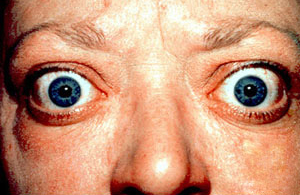
Graves disease (GD) is an autoimmune disorder in which thyrotropin receptor antibodies (TRAb) mimic TSH, driving unregulated thyroid hormone synthesis and release, a classic primary hyperthyroidism (excess of thyroid hormone from the gland itself, with suppressed TSH).
Also Called
GD, Basedow disease, Parry disease, Flajani disease, toxic diffuse goiter, autoimmune hyperthyroidism.
Axis Vocabulary
Every later section uses these terms consistently:
- Primary hyperthyroidism: excess T4/T4 from the thyroid → suppressed TSH. GD is the quintessential cause.
- Overt hyperthyroidism: low TSH + elevated free T4 and/or T3.
- Subclinical hyperthyroidism: low TSH with normal free T4/T3, a milder biochemical stage that can precede or follow overt disease.
- Graves orbitopathy (GO) / thyroid eye disease (TED): the orbital manifestation. Active TED (Clinical Activity Score ≥3) vs inactive TED (CAS <3); mild, moderate-to-severe, and sight-threatening tiers follow EUGOGO criteria [9]D5[12]D5.
- Graves dermopathy (pretibial myxedema): lymphocytic infiltration of the skin, usually over the shins.
- Refractory GD: persistent TRAb positivity and recurrent hyperthyroidism despite ≥12 months of antithyroid drug therapy [14]B2b.
- Remission (pediatric GD literature): euthyroidism for ≥1 year after stopping antithyroid drugs; the pooled remission rate after 1.5-2.5 years of methimazole is 23.7% [2]B2a.
Clinical Variants
| Variant | Key distinguishing feature | Associated marker/subtype |
|---|---|---|
| Classic GD (thyrotoxic) | Diffuse goiter, hyperthyroidism | TRAb, TPOAb in ~50%, TgAb |
| Graves orbitopathy (TED) | Orbital inflammation, proptosis, diplopia | IGF1R autoantibodies (14% of GO patients, likely not pathogenic) [7]B3b |
| Graves dermopathy | Pretibial plaques or nodules | Lymphocytic infiltration |
| IgG4-related GD | Elevated serum IgG4, more fibrotic histology | IgG4 >135 mg/dL [11]D5 |
| GD with thymoma | Anterior neck mass outside thyroid | Ectopic cervical thymoma (first reported in GD [1]C4) |
| GD with primary (PTL) | Rapidly enlarging goiter, rarely in GD (1.8% of PTL cases) | All GD-PTL patients were TPOAb/TgAb positive [4]B2b |
| Post-vaccination GD | Onset days after SARS-CoV-2 vaccination | Meeting ASIA criteria [5]C4 |
| Pediatric GD | Female predominance (5.04 vs 1.67/100,000 incidence), highest in adolescents [8]B2b | Higher remission failure rate [2]B2a |
Clinical significance: GD is the leading cause of hyperthyroidism in children (incidence 3.33/100,000 in the US [8]B2b), and up to two-thirds of patients develop at least mild TED [9]D5, which carries significant QoL burden. Rare but serious associations include PTL [4]B2b and thymoma [1]C4.
The next section examines the hypothalamic-pituitary-thyroid axis itself, how TRAb disrupts feedback, the biochemical signature of untreated GD, and the immunologic cascade that drives both thyroid and extrathyroidal inflammation.
Pearl: Standardized terminology (overt/subclinical, refractory, remission) is essential for interpreting treatment outcomes across the literature.
Axis Physiology, Pathophysiology and Biochemical Signature
- ▸Stimulatory TSH receptor antibodies (TSAb) are the direct cause of hyperthyroidism in Graves disease, constitutively activating the TSHR on thyrocytes.
- ▸The TSHR-IGF-1R complex on orbital fibroblasts links thyroid and orbital disease; TSAb upregulates both receptors via enhanced recycling.
- ▸A suppressed TSH, elevated FT4, and positive TRAb (>6 IU/L) constitute the diagnostic biochemical signature.
Normal HPT Axis
The hypothalamic-pituitary-thyroid (HPT) axis maintains euthyroid state through a classic negative-feedback loop. Thyrotropin-releasing hormone (TRH) from the hypothalamus stimulates pituitary thyrotrophs to secrete thyroid-stimulating hormone (TSH), which binds to the TSH receptor (TSHR) on thyrocytes. TSHR activation through the Gs-adenylyl cyclase-cAMP pathway drives thyroid hormone synthesis and secretion of thyroxine (T4) and triiodothyronine (T3). Circulating T4 is converted to the more active T3 by deiodinases in peripheral tissues. Elevated T4 and T3 suppress TRH and TSH secretion, completing the feedback arc [42]D5.
The Autoimmune Breakdown
In Graves disease, this homeostatic axis is disrupted by a specific class of autoantibodies: stimulatory TSH receptor antibodies (TSAb). These immunoglobulins bind to the leucine-rich repeat region of the TSHR ectodomain and constitutively activate the receptor, mimicking TSH without negative regulation [35]D5. The consequence is unchecked thyroid follicular cell hyperplasia and hypersecretion of T4 and T3, establishing the biochemical signature of hyperthyroidism.
The TSHR is unique among glycoprotein hormone receptors in undergoing intramolecular cleavage into an A-subunit (ectodomain) and a B-subunit (transmembrane/cytosolic). The A-subunit is shed from the cell surface and is considered the primary autoantigen driving the autoimmune response [49]D5. Genetic susceptibility, loss of central tolerance, and environmental triggers (e.g., smoking, iodine excess, viral infections) cooperate to break tolerance to the TSHR [50]D5. The resulting TSAb repertoire is heterogeneous, encompassing both stimulating and blocking antibodies; the balance of these activities ultimately determines thyroid functional status [34]D5.
TSHR is not restricted to the thyroid. It is also expressed on orbital fibroblasts, preadipocytes, and fibrocytes. Binding of TSAb to these cells initiates a cascade of inflammation, proliferation, and extracellular matrix remodeling that underlies Graves orbitopathy [37]D5. The TSHR forms a physical and functional signaling complex with the insulin-like growth factor-1 receptor (IGF-1R) on these target cells. TSAb binding enhances both TSHR and IGF-1R expression through receptor recycling, amplifying the pathogenic signal [48]D5[59]D5. Activated orbital fibroblasts secrete chemokines such as CXCL10, recruiting T lymphocytes and perpetuating local autoimmune inflammation [51]D5.
Emerging evidence implicates the gut microbiome in the loss of tolerance. Patients with Graves disease exhibit a higher Firmicutes-to-Bacteroidetes ratio, and certain bacterial taxa (e.g., Clostridiales) correlate with persistent TRAb positivity [31]B3b. Reduced short-chain fatty acid production may impair regulatory T-cell function, further promoting autoimmunity [60]D5.
Biochemical Signature
The laboratory hallmark of Graves disease is a suppressed TSH (<0.01 mIU/L) with elevated free T4 (FT4) and often elevated total or free T3. In some patients, especially younger individuals, a T3-predominant pattern occurs, normal FT4 but elevated T3, which may require higher doses of antithyroid drugs and closer monitoring [41]B2b. The definitive diagnostic test is detection of thyrotropin receptor antibodies (TRAb) in serum, specifically the stimulatory variety (TSAb). TRAb positivity is present in over 95% of untreated cases and distinguishes Graves disease from other causes of hyperthyroidism such as toxic nodular goiter or thyroiditis [42]D5[44]D5. Persistent TRAb positivity after treatment predicts relapse and is associated with more severe disease [40]D5.
Pearl: The triad of suppressed TSH, elevated free T4, and a TRAb level >6 IU/L confirms Graves disease and differentiates it from other forms of hyperthyroidism; TRAb can be detected before overt hormone elevation and is the diagnostic cornerstone [42]D5[44]D5.
Epidemiology, Etiology and Risk Factors
- ▸Graves disease incidence is rising globally (2-fold increase in the UK from 2000-2019) and accounts for ~70% of hyperthyroidism [65][42].
- ▸Female sex, smoking, high TRAb levels, enlarged thyroid volume, and air pollution (PM2.5) are established risk factors for GD or its relapse [63][13].
- ▸COVID-19 vaccination does not increase GD risk; statin use within 1 year of GD diagnosis reduces the risk of developing moderate-to-severe orbitopathy by 61% [64][73].
The autoimmune cascade described above does not strike uniformly. Its clinical expression depends on a complex interplay of genetic susceptibility, environmental triggers, and demographic factors that together determine who develops Graves disease and how it behaves.
Incidence and Prevalence
Graves disease (GD) is the most common cause of hyperthyroidism, accounting for approximately 70% of cases in iodine-sufficient regions [42]D5[79]D5. The global prevalence of hyperthyroidism is 0.2-1.3% [42]D5. Annual incidence of GD in Sweden is 21.0 per 100,000 inhabitants, with a female-to-male ratio of 4.2:1 [76]B2b. In the UK, the age- and sex-standardised incidence of GD increased 2.07-fold between 2000-2002 and 2017-2019 (incidence rate ratio 2.07, 95%) [65]B2b. Pediatric GD incidence in the United States is 3.33 per 100,000 per year, highest among adolescents aged 13-17 years (5.72 per 100,000) and female patients (5.04 vs. 1.67 per 100,000 for males); this rate has remained stable from 2007 to 2022 [8]B2b. Graves orbitopathy (GO) has an annual adjusted incidence of 16 per 100,000 in women and 3 per 100,000 in men [78]D5.
Temporal Trends
GD incidence is rising in several populations. The UK cohort documented a doubling over 20 years, a trend not explained by diagnostic changes alone [65]B2b. In contrast, pediatric GD incidence in the US has not significantly changed (p = 0.39) [8]B2b. Correction of iodine deficiency can transiently increase hyperthyroidism due to nodular autonomy but does not affect GD risk per se [77]D5.
Risk Factors
| Risk Factor | Measure of Association (95% CI) | Evidence Level |
|---|---|---|
| Female sex | RR ~4.2 vs. male [76]B2b | 2b |
| Family history of autoimmune disease | SIR 1.86 for GD in relatives of type 1 diabetes probands [81]B3b; 9% of Addison disease patients have GD [70]B2b | 3b |
| Smoking | Significant predictor of GD relapse and GO risk [63]B2a[17]A1c | 2a |
| High TRAb/TBII at diagnosis | Predicts relapse after antithyroid drug withdrawal [63]B2a[71]B2b | 2a |
| Enlarged thyroid volume / goiter | Predicts relapse [63]B2a | 2a |
| Iodine excess | Higher odds of overt hyperthyroidism [72]B2c | 2c |
| Air pollution (PM2.5, SO2) | HR 1.29 (1.05-1.57) for GD in girls exposed to highest PM2.5 quartile [13]B2b | 2b |
| HR 1.27 (1.04-1.56) for incident GD [87]B3b | 3b | |
| vaccination | No association; OR 1.15 (0.92-1.43) [64]B3b | 3b |
| Statin use (protective against GO) | aHR 0.79 (0.63-0.99) for GO; 0.66 (0.47-0.94) if started within 1 year of GD diagnosis [3]B2b[73]B2b | 2b |
| Prior hypothyroidism (post-hypo-GD) | ~10% of new GD cases; milder disease but high relapse into hypothyroidism [69]B2b | 2b |
Special Considerations
Postpartum period: While (incidence 5.4% [66]D5) is distinct from GD, the postpartum state is a well-recognised trigger for autoimmune thyroid disease, and de novo GD can present in the first year after delivery [75]D5.
Drug-induced triggers: The DRESS syndrome (drug reaction with eosinophilia and systemic symptoms) can precipitate GD; in one registry, 2 of 61 DRESS survivors developed Graves disease [85]B3b. Immune checkpoint inhibitors also cause thyrotoxicosis, often a destructive thyroiditis that may unmask underlying GD [42]D5.
Seasonal variation: Data from the UK cohort suggest seasonal variation in onset of some autoimmune diseases, but specific seasonal patterns for GD have not been consistently demonstrated in the available studies [65]B2b.
These epidemiological patterns and risk factors shape the clinician's index of suspicion. When a patient fitting this demographic profile presents with symptoms of hypermetabolism, the next step is a careful assessment of clinical presentation.
Pearl: A female patient aged 30-50 years who smokes and has a family history of autoimmune disease carries a substantially elevated pretest probability of Graves disease, a 2-fold increase in GD incidence over the past two decades means this presentation is becoming more common [65]B2b.
Clinical Presentation
- ▸Clinical presentation is influenced by age, sex, and prior thyroid status; post-COVID vaccination and post-hypothyroid phenotypes show distinct features.
- ▸Thyroid eye disease occurs in up to 50% of patients; pediatric TED is generally milder but requires monitoring for proptosis and diplopia.
- ▸Severe thyrotoxicosis can present as thyroid storm, Takotsubo cardiomyopathy, cholestasis, or periodic paralysis, recognition is critical.
The same autoimmune attack against the TSH receptor that drives biochemical hyperthyroidism produces a predictable clinical signature: a hypermetabolic state, diffuse goiter, and, in roughly half of patients, ocular involvement [78]D5. Presentation is shaped by age, sex, and prior thyroid status [69]B2b[94]B3b[96]B3b[97]B2b. Young adults tend toward florid thyrotoxicosis with high T3:T4 ratios, whereas older patients often present with more subtle cardiovascular or neuropsychiatric complaints [97]B2b.
Presenting Symptoms
Symptoms evolve over weeks to months, classically weight loss despite increased appetite, heat intolerance, palpitations, fine tremor, hyperdefecation, and irritability. Menstrual irregularity (oligomenorrhea or amenorrhea) is common in reproductive-aged women. Fatigue and proximal muscle weakness, particularly difficulty climbing stairs or rising from a chair, may be prominent. In the elderly, , dyspnea on exertion, or apathetic hyperthyroidism (lethargy, depression) may dominate [98]C4.
Examination Findings
The thyroid is symmetrically enlarged, firm, and often has a palpable bruit (hypervascularity). Ocular signs, lid lag (von Graefe sign), lid retraction (Dalrymple sign), proptosis, conjunctival injection, and periorbital edema, define Graves orbitopathy. Neurologic findings include a fine resting tremor, hyperreflexia with rapid relaxation, and proximal myopathy. Tachycardia with a widened pulse pressure and warm, moist skin reflect peripheral vasodilation. Pretibial myxedema (pink or brown indurated plaques on the shins) is present in <5% of patients and indicates extrathyroidal disease. Acropachy (digital clubbing) is rarer still.
Phenotypic Variants
| Variant | Key Features | Context |
|---|---|---|
| Classical Graves disease | Diffuse goiter, orbitopathy in ~50%, pretibial myxedema <5% | Most common cause of hyperthyroidism in iodine-sufficient areas |
| Post-COVID vaccination early-onset GD | Older age (median 51 yrs), male predominance (40%), rapid antibody decline with methimazole | ~30% of new GD in one 2021 series [94]B3b |
| GD after prior hypothyroidism (post-hypo-GD) | Older, predominantly female, milder thyrotoxicosis, high rate of relapse into hypothyroidism | ~10% of new GD [69]B2b |
| GD in | Earlier onset (mean 9.9 yrs), near-equal sex ratio, less severe course, higher remission | Distinct pediatric phenotype [96]B3b |
| Marine-Lenhart syndrome | GD with coexisting hyperfunctioning nodule (“hot nodule”) | Rare; may harbor thyroid malignancy [104]C4 |
| Alemtuzumab-induced GD/TAO | Onset 2-5 years after therapy, fluctuating thyroid function, need for definitive therapy | GD in 25% of alemtuzumab users; TAO in 6% [100]A1a[101]B2a |
Red Flags
: Fever >38.5°C, tachycardia >140/min, altered mental status, and symptoms, a medical emergency. Takotsubo cardiomyopathy may mimic acute coronary syndrome with chest pain, elevated troponin, and apical ballooning on ventriculogram [91]C4. Dysthyroid optic neuropathy: acute vision loss, color desaturation, relative afferent pupillary defect requires immediate ophthalmic assessment. Cholestasis: severe jaundice with markedly elevated alkaline phosphatase can be the presenting manifestation and is reversible with euthyroidism [93]C4. Thyrotoxic (hypokalemia, proximal limb weakness) is a rare but life-threatening presentation seen more frequently in Asian men [98]C4.
Atypical Presentations
The transition from hypothyroidism to GD (post-hypo-GD) may be misdiagnosed as over-replacement if prior records are unavailable [69]B2b. Simultaneous and GD presents with neck pain, high ESR, and a low radioactive iodine uptake despite positive TRAb [90]C4. GD may also manifest as part of Carney complex (spotty skin pigmentation, cardiac myxoma) [102]C4 or after immune reconstitution in HIV patients on HAART [89]C4.
Pearl: Graves disease should be suspected in any patient with hyperthyroidism and symmetric ocular signs; the absence of orbitopathy does not rule it out but makes nodular thyroid disease or thyroiditis more likely.
Diagnosis and Workup: Paired Hormones, Dynamic Testing and Localization
- ▸GD diagnosis requires biochemical confirmation of overt hyperthyroidism (suppressed TSH, elevated FT4 and/or FT3) followed by serologic confirmation with a sensitive TRAb assay, which is positive in 95-99% of untreated patients.
- ▸A positive TRAb is sufficient to diagnose GD and usually makes thyroid scintigraphy unnecessary; imaging is reserved for TRAb-negative cases, suspicion of nodular disease, or pregnancy.
- ▸CT-free SPECT using artificial intelligence provides diagnostic accuracy equivalent to conventional SPECT/CT for GD with lower radiation exposure and faster analysis time.
When the clinical picture of thyrotoxicosis with a diffuse, non-tender goiter emerges, the diagnostic pathway moves directly to biochemical confirmation and serological etiologic testing. The goal is to confirm hyperthyroidism, identify Graves disease (GD) as the cause, and exclude mimics such as thyroiditis, toxic nodular goiter, and factitious thyrotoxicosis.
Biochemical Diagnosis
Overt hyperthyroidism is defined by a suppressed TSH (typically <0.01 mIU/L) accompanied by elevated free thyroxine (FT4) and/or total or free triiodothyronine (FT3) [42]D5[44]D5. Subclinical hyperthyroidism (TSH <0.4 mIU/L with normal FT4/FT3) may warrant further workup if TSH is persistently low, but GD rarely presents in this form. The TSH is the first-line screening test; if abnormal, FT4 and FT3 should be measured from the same sample [61]A1c. Because thyrotoxicosis can be caused by thyroiditis (destruction with low uptake) or by exogenous thyroid hormone, biochemical confirmation alone is insufficient to label the patient as having GD.
Serological Confirmation: TSH-Receptor Antibodies (TRAb)
Thyrotropin receptor antibodies are the hallmark of GD and are detectable in 95-99% of untreated patients using second- or third-generation immunoassays [27]D5[61]A1c[105]A1c. A positive TRAb confirms the autoimmune origin of hyperthyroidism and obviates the need for thyroid scintigraphy in most patients [30]D5[44]D5. TRAb measurement is the gold-standard etiologic test for GD [61]A1c[112]D5. Assay sensitivity has increased over the past decade; automated chemiluminescent assays currently achieve a specificity approaching 100% for GD when hyperthyroidism is present [27]D5. Thyroid peroxidase antibodies (TPOAb) are also elevated in approximately 80% of GD patients but are not diagnostic; their presence adds supporting evidence of autoimmunity [121]C4. TRAb levels correlate with disease severity and are predictive of relapse and of neonatal risk in pregnancy [23]B2b[39]B2b[41]B2b. A negative TRAb does not completely exclude GD; in such cases, thyroid imaging is necessary to differentiate GD from other causes of thyrotoxicosis.
Imaging
Thyroid ultrasound is a sensitive, radiation-free tool that confirms a diffusely enlarged, hypoechoic gland with increased vascularity on color Doppler (the "thyroid inferno") [27]D5[42]D5. It also detects discrete nodules that may require further evaluation. In TRAb-positive patients, ultrasound is not mandatory but is often performed to document goiter size and morphology.
Thyroid scintigraphy (⁹⁹ᵐTc-pertechnetate or ¹²³I) was traditionally the definitive test for GD, showing diffuse, homogeneous, elevated uptake [44]D5. A recent prospective multicenter trial (N=152) demonstrated that CT-free SPECT using artificial intelligence had diagnostic accuracy of 86.2% for GD, noninferior to conventional SPECT/CT (85.5%), while reducing radiation exposure by 33.5% (from 3.34 to 2.22 mSv) and decreasing analysis time from 4 minutes to 40 seconds [117]B2b. Today, scintigraphy is reserved for TRAb-negative cases, when the diagnosis is uncertain, or when multinodular goiter or toxic adenoma is suspected [42]D5[44]D5. In pregnancy, scintigraphy is contraindicated; ultrasound and TRAb suffice for diagnosis.
Dynamic Testing
The T3 suppression test and the TRH stimulation test are now largely of historical interest. They may be considered in the rare patient with equivocal TRAb and inconclusive imaging, but they are not part of modern routine practice [61]A1c. Their detailed methodology is beyond the scope of this overview.
Diagnostic Algorithm
Step 1: Measure TSH. If TSH is suppressed (<0.4 mIU/L), measure FT4 and FT3. Overt hyperthyroidism is defined by suppressed TSH and elevated FT4 and/or FT3 [44]D5[61]A1c.
Step 2: If overt hyperthyroidism is confirmed, order TRAb by a sensitive assay. A positive result confirms GD. If TRAb is negative, proceed to Step 3.
Step 3: Perform thyroid ultrasound to assess goiter size and rule out nodules. If the clinical picture remains ambiguous, obtain thyroid scintigraphy (⁹⁹ᵐTc or ¹²³I) to distinguish the diffuse high uptake of GD from the low uptake of thyroiditis or the focal uptake of a toxic nodule [42]D5[44]D5.
Step 4: At diagnosis, also perform a baseline clinical assessment for (eyelid retraction, proptosis, diplopia, corneal involvement) [61]A1c. A formal clinical activity score (CAS) should be documented if orbital involvement is suspected [17]A1c[61]A1c. TRAb levels should be assessed in every patient planning pregnancy or in early gestation [16]A1c[23]B2b.
First-Line Treatment at Diagnosis
Once GD is diagnosed, first-line is a thionamide antithyroid drug: (MMI) 10-40 mg daily (or ) in non-pregnant adults, started at a dose proportional to FT4 elevation, typically 10-20 mg once daily for mild to moderate disease [61]A1c[105]A1c. (PTU) is reserved for the first trimester of pregnancy or for patients intolerant to MMI [61]A1c[109]D5. Beta-blockers (e.g., 20-40 mg every 6-8 hours or 25-100 mg daily) are added for symptom control until euthyroidism is achieved [61]A1c. Radioactive iodine and are definitive options discussed in the management section.
Controversies and Guideline Disagreement
A minor disagreement exists regarding the necessity of thyroid imaging (ultrasound or scintigraphy) in TRAb-positive patients. The 2016 ATA guidelines consider a positive TRAb sufficient to diagnose GD without imaging [61]A1c, whereas some European endocrine centers still perform baseline ultrasound to document goiter size and exclude coincident nodules. This divergence has minimal clinical impact; both approaches are reasonable.
Pearl: CT-free SPECT using artificial intelligence provides diagnostic accuracy equivalent to conventional SPECT/CT for GD with lower radiation exposure and faster analysis time.
Severity, Staging and Risk Stratification
- ▸Relapse risk after a 12-18 month ATD course is approximately 50%; independent predictors include age <40 years, FT4 ≥40 pmol/L, TBII >6 U/L, and goiter ≥WHO grade 2.
- ▸GO severity is graded as mild, moderate-to-severe, or sight-threatening (EUGOGO), with activity assessed by CAS ≥4; a critical 6-month therapeutic window exists for optimal immunosuppressive response.
- ▸Smoking, elevated TBII, hypercholesterolemia, and absence of statin use are modifiable risk factors for GO progression.
Once the diagnosis of Graves disease is confirmed, the next step is to stratify disease severity and risk to guide treatment intensity, surveillance frequency, and the choice of definitive therapy. This stratification spans the hyperthyroid state itself, the risk of relapse after antithyroid drug (ATD) withdrawal, and the presence and activity of extrathyroidal manifestations, particularly Graves orbitopathy (GO).
Initial Hyperthyroidism Severity and Relapse Risk
Initial disease severity predicts the trajectory of biochemical control. The 2016 ATA guidelines recommend that patients with FT4 concentrations 40 pmol/L or higher, TSH-binding inhibitory immunoglobulins (TBII) >6 U/L, or goiter size ≥WHO grade 2 before starting ATD are at highest risk of relapse [42]D5[61]A1c. A retrospective cohort of 152 patients found that severe initial thyrotoxicosis (higher FT4) was positively associated with a greater percentage dose reduction of methimazole per encounter (P = 0.012) and a higher proportion of hypothyroid encounters, indicating more labile control after the first 6 months than patients with milder disease [124]B3b. After 6 months, however, initial severity no longer correlated with methimazole dose [124]B3b.
Relapse after a standard 12-18 month ATD course occurs in approximately 50% of patients, with cumulative relapse rates of 22.6% at 6 months, 30.2% at 1 year, 36.9% at 3 years, and 41.5% at 5 years in a Swedish population-based study [131]C4. Independent predictors of relapse include younger age (<40 years), the presence of goiter, and high TBII titers [42]D5[131]C4. A second course of ATD can achieve remission in about **** of patients, with a low-dose taper to 2.5 mg every other day and a high-normal TSH at withdrawal improving the likelihood of durable remission [122]A1b. Withdrawal decisions should be guided by both TSI and TRAb: relapse is more frequent when TSI remains positive at withdrawal (54.84% vs 35.42%, P < 0.05), and discontinuing after both antibodies are negative is associated with better outcomes [71]B2b.
Graves Orbitopathy Severity and Activity
GO is the most common extrathyroidal manifestation and requires its own severity and activity staging. The EUGOGO/European Group on Graves' Orbitopathy classification divides GO into three severity categories:
| Category | Findings | Implication |
|---|---|---|
| Mild | Lid retraction <2 mm, soft tissue involvement, proptosis <3 mm above normal, no diplopia | Risk factor control, selenium (if deficient), local measures |
| Moderate-to-severe | Proptosis ≥3 mm, inconstant or constant diplopia, moderate soft tissue involvement | Immunosuppression (i.v. glucocorticoids ± , teprotumumab) |
| Sight-threatening | Optic neuropathy, corneal ulceration | High-dose i.v. , urgent orbital decompression if unresponsive |
Activity is assessed by the CAS (Clinical Activity Score, 7 items for spontaneous pain, gaze-evoked pain, redness, swelling, etc.). A CAS ≥4 indicates active disease and is the threshold for initiating immunosuppressive therapy [17]A1c[61]A1c. The 2021 EUGOGO guidelines emphasize that treatment efficacy is time-dependent; a meta-analysis of 26 studies confirmed a critical window of 6 months from GO onset, during which interventions (corticosteroids, teprotumumab) produce the greatest improvements in CAS, proptosis, and diplopia [123]A1a. After 6 months, the same treatments yield diminished responses [123]A1a.
Risk Factors for Progression to GO
Several modifiable and non-modifiable factors increase the risk of developing or worsening GO. Smoking is the strongest modifiable risk factor and is associated with more severe GO and a higher risk of progression after radioactive iodine treatment [17]A1c. Statin use appears protective: in a nationwide Asian cohort of 102,858 patients with GD, statin users had a lower risk of developing GO (adjusted HR 0.64, 95% CI 0.51-0.79 after inverse probability weighting) [3]B2b. TBII concentration ≥10 IU/L and are also independent risk factors [17]A1c[21]A1a. The gut microbiome may contribute; the INDIGO study found that Bacteroides levels correlated positively with TSH and negatively with FT4, and that the presence of Clostridiales at diagnosis was associated with persistence of TRAb >200 days after starting ATD, potentially identifying patients at risk of relapse [31]B3b.
Pearl: The combination of age <40 years, FT4 ≥40 pmol/L, TBII >6 U/L, and goiter ≥WHO grade 2 at diagnosis identifies the patient at highest risk of relapse after ATD withdrawal; consider prolonged low-dose ATD (5-10 years) or early definitive therapy in this group [42]D5.
Acute Management and Endocrine Emergencies
- ▸Thyroid storm mortality remains 5 to 25% and demands immediate, simultaneous initiation of beta blockade, antithyroid drugs, corticosteroids, and delayed iodine [68].
- ▸Iopanoic acid 500 mg daily and lithium (target serum 0.6 to 1.0 mmol/L) are effective second-line options for refractory thyrotoxicosis when first-line therapy is insufficient [143, 145].
- ▸Acute cardiovascular (Takotsubo cardiomyopathy, AMI) and hepatic (cholestasis) presentations can be the first manifestation of Graves disease and resolve with treatment of hyperthyroidism [91, 93, 139].
From severity staging, the transition to emergency occurs when clinical decompensation is recognized, the patient with tachycardia, hyperthermia, altered mentation, and organ dysfunction requires immediate, protocol-driven intervention for .
Thyroid Storm: Recognition and Triage
Thyroid storm is a life-threatening hypermetabolic state with mortality of 5 to 25% from cardiovascular collapse or multiorgan failure [68]D5. Incidence is 0.2 to 1.1 per 100,000 (general) and 4.8 to 6.3 per 100,000 (hospitalized) [68]D5. Diagnosis is clinical, supported by scoring systems; no single threshold defines storm [68]D5. Triggers include infection, surgery, trauma, abrupt ATD discontinuation, stress, and iodine exposure [68]D5.
Key features: hyperthermia, tachyarrhythmia (heart rate >120 bpm, often ), altered mental status, symptoms, and profuse sweating [68]D5[137]C4. Multiorgan dysfunction, , acute kidney injury, , DIC, heart failure, pulmonary edema, can develop within hours [137]C4. Any suspect case requires immediate ICU-level care.
Step 1: First-Line Pharmacotherapy
Management simultaneously targets four pathways [68]D5:
Beta blockade, is preferred for its beta-1 and beta-2 blockade and inhibition of peripheral T4-to-T3 conversion. Titrate to heart rate below 90 bpm.
Antithyroid drugs, is first-line due to lower hepatotoxicity. (PTU) provides additional peripheral T4-to-T3 inhibition and is preferred in the first trimester of pregnancy but carries a boxed warning for fulminant hepatic necrosis.
Corticosteroids, or reduces peripheral T4-to-T3 conversion and supports adrenal function.
Iodine, (SSKI) or is given at least one hour after the ATD loading dose to avoid providing substrate for new hormone synthesis [68]D5.
| Drug | Role | Dose (from evidence) | Key outcome |
|---|---|---|---|
| Propranolol | Beta blockade | Per standard protocol | Blocks adrenergic excess; reduces T4-to-T3 conversion |
| Methimazole | First-line ATD | Per standard protocol | Blocks thyroid hormone synthesis |
| Propylthiouracil | Alternative ATD (first trimester) | Per standard protocol | Blocks synthesis + peripheral T4-to-T3 conversion |
| Hydrocortisone | Corticosteroid | Per standard protocol | Reduces T4-to-T3 conversion; adrenal support |
| SSKI / Lugol's solution | Iodine | Give 1 hour after ATD loading | Inhibits hormone release (Wolff-Chaikoff effect) |
| Iopanoic acid | Refractory disease | 500 mg PO once daily [145]C4 | 55% decrease in FT3 (SEM 4.5%); enables [145]C4 |
| Lithium carbonate | Bridging / refractory | Target serum 0.6 to 1.0 mmol/L [143]C4 | Higher euthyroidism (30.4% vs 13.0%); no thyroid storm [143]C4 |
Step 2: Second-Line and Refractory Disease
Iopanoic acid (IOPA), an oral iodinated contrast agent. In 12 patients with refractory thyrotoxicosis, 500 mg orally once daily produced a mean 55% decrease in FT3 (SEM 4.5%) and enabled uneventful thyroidectomy in 11 of 12 [145]C4. No attributable side effects [145]C4. Limited availability restricts use.
Lithium carbonate, blocks thyroid hormone release. In 146 patients, lithium (target serum 0.6 to 1.0 mmol/L) from ATD withdrawal until 7 days post-RAI was associated with higher euthyroidism (30.4% vs 13.0%, P = 0.009) and lower hypothyroidism (54.3% vs 77.0%, P = 0.005); no thyroid storm occurred versus 3.0% in standard care [143]C4.
is reserved for extreme, refractory cases with progressive multiorgan failure despite maximal medical therapy [137]C4.
Step 3: Monitoring and Transition
Monitor heart rate, temperature, mental status, and end-organ function hourly. Check thyroid function every 24 to 48 hours. Titrate beta blockers to heart rate below 90 bpm. Continue ATDs at high doses until clinical improvement. Transition to definitive therapy once the patient is euthyroid and the trigger is addressed.
Other Acute Presentations
can be the presenting manifestation of thyroid storm, with cardiac function normalizing after treatment of thyrotoxicosis [91]C4. Acute myocardial infarction can occur in thyrotoxicosis without coronary disease [139]C4. Severe has been reported as a presenting feature of Graves disease, resolving with methimazole therapy [93]C4.
What NOT to Do
Do not give iodine before ATDs [68]D5. Do not continue methimazole if acute pancreatitis develops, MMI-induced pancreatitis, characterized by fever and left upper quadrant pain with elevated lipase, resolves upon drug cessation [138]C4.
Controversies and Guideline Disagreement
No major guideline disagreements identified for thyroid storm management in the reviewed evidence.
Pearl: In suspected thyroid storm, start all four interventions, beta blocker, antithyroid drug, corticosteroid, and (after a one-hour delay) iodine, simultaneously upon clinical suspicion; do not wait for confirmatory labs [68]D5.
Long-term Management: Treat-to-Target (Replacement, Suppression, Definitive)
- ▸Long-term ATD (≥5 years) yields higher remission rates than the standard 12-18 month course and is a safe alternative to RAI or surgery.
- ▸RAI is associated with a 94% increased risk of GO worsening without steroid prophylaxis; steroid coverage is mandatory in patients with risk factors.
- ▸Total thyroidectomy is the definitive therapy of choice for patients with large goiters or moderate-to-severe GO; preoperative TSH should be kept <10 μIU/mL to reduce operative difficulty.
- ▸Teprotumumab is a first-line biologic for active moderate-to-severe GO, with sustained proptosis and diplopia improvement at 72 weeks.
Once the acute thyrotoxic crisis is controlled, the clinician selects a strategy to durably maintain euthyroidism. The three pillars, antithyroid drugs (ATD), radioactive iodine (RAI), and total , each aim at a distinct biochemical target: suppression of hormone synthesis (ATD), ablation of thyroid tissue (RAI), or surgical removal (thyroidectomy). The choice hinges on disease severity, goiter size, TRAb level, presence of Graves orbitopathy (GO), age, and patient preference [61]A1c (1c).
Step 1: Initial Assessment and Risk Stratification
Before committing to a modality, assess factors that predict relapse after ATD withdrawal. A meta-analysis of 54 trials (N=7595) identified orbitopathy, smoking, sonographic thyroid volume, goiter size, fT4, tT3, TRAb, and TBII as significant predictors of relapse; male sex, age, and initial tT4 were not [63]B2a (2a). The ATA 2016 guideline recommends that patients with high TRAb, large goiter, or young age be counseled that definitive therapy (RAI or surgery) yields higher long-term remission rates [61]A1c (1c). For patients with moderate-to-severe active GO, ATD is preferred; RAI is relatively contraindicated unless steroid prophylaxis is given [67]D5 (5).
Step 2: First-Line Antithyroid Drug Therapy
Methimazole (MMI) 10-40 mg daily is the ATD of choice; propylthiouracil (PTU) is reserved for first-trimester pregnancy or MMI allergy [61]A1c (1c). The initial dose is titrated to normal fT4 and fT3 within 4-8 weeks, then reduced to a maintenance dose of 2.5-10 mg daily. The standard course is 12-18 months, after which ATD is withdrawn if the patient is euthyroid and TRAb has normalized [61]A1c (1c). However, relapse after a 12-18 month course occurs in approximately 50% of patients [42]D5 (5). Long-term ATD (LT-ATD) for ≥5 years is a safe and effective alternative; a 2024 review reports that serum TRAb may not decrease permanently before 5-6 years of treatment, and remission rates with LT-ATD reach ~75% [25]D5 (5). In a prospective study of recurrent GD, a second course of MTI with a taper to 2.5 mg every other day yielded a remission rate vs 66.7% with standard taper (P=0.024) [122]A1b (1b).
| Drug | Starting dose | Target / maintenance dose | Renal adjustment | Hepatic adjustment | Key monitoring |
|---|---|---|---|---|---|
| Methimazole | 10-40 mg PO daily | 2.5-10 mg daily | None | Reduce dose in severe hepatic impairment | CBC, LFT, fT4, TSH at 4-6 wk intervals |
| Propylthiouracil | 100-300 mg PO daily in 3 divided doses | 50-150 mg daily | None | Avoid in active liver disease | CBC, LFT, fT4, TSH; monitor for hepatotoxicity |
Treatment Failure Protocol: If hyperthyroidism persists after 4-6 weeks of adequate ATD dose, assess adherence and consider increased dose or switch to definitive therapy. For relapse after ATD withdrawal, options include a second course of ATD (especially if low-dose taper is used) [122]A1b (1b), or proceeding to RAI/surgery [61]A1c (1c).
Step 3: Definitive Therapy - Radioactive Iodine
RAI (¹³¹I) is indicated for patients with relapsed GD, those who prefer a single treatment, or when ATD is contraindicated. A single dose of 10-15 mCi (370-555 MBq) achieves euthyroidism or hypothyroidism in 50-90% of patients within 6-12 months [154]D5 (5). Hypothyroidism is the expected outcome; the ATA 2016 guideline advises that patients be counseled that lifelong replacement will be needed [61]A1c (1c). Steroid prophylaxis (low-dose ) is mandatory if RAI is given to patients with mild active GO or risk factors for progression [67]D5 (5). In a linked-record cohort, patients with resolved hyperthyroidism after RAI had lower mortality than those on ATD (HR 0.50, 95%), while persistent hyperthyroidism after RAI was associated with increased mortality [24]B2b (2b). Early transient hypothyroidism (ETH) within 6 months of RAI is a strong predictor of permanent hypothyroidism; absence of ETH signals risk of treatment failure (for persistent hyperthyroidism) [157]B2b (2b).
Lithium bridging before RAI has been proposed for severe disease; a retrospective cohort showed higher euthyroidism rates at 6 months (30.4% vs 13.0%) with lithium (serum 0.6-1.0 mmol/L) from ATD withdrawal to 7 days post-RAI [143]C4 (4). This is not yet standard of care.
Step 4: Definitive Therapy - Total Thyroidectomy
Total thyroidectomy is recommended for patients with large goiter (≥80 g), compressive symptoms, moderate-to-severe GO, or when RAI is contraindicated [61]A1c (1c). Preoperative preparation requires euthyroidism with ATD followed by Lugol's iodine (5-10 drops daily for 10 days) to reduce gland vascularity [61]A1c (1c). A retrospective cohort found that preoperative TSH ≥10 μIU/mL is independently associated with greater blood loss (β=53 mL, P<0.001) and longer operative time (aOR 2.29 for time ≥120 min) [156]B2b (2b). Surgery should be performed by a high-volume thyroid surgeon to minimize complications: recurrent laryngeal nerve injury (1-2%) and permanent (1-2%) [52]A1a (1a). Intraoperative neuromonitoring (IONM) does not clearly reduce nerve palsy rates compared to visual identification alone [155]A1a (1a).
Step 5: Monitoring and Titration After Definitive Therapy
After RAI, check thyroid function at 4-6 weeks, then every 3-6 months until stable. Once hypothyroidism develops, start levothyroxine at 1.6 μg/kg daily, titrating to TSH 0.5-2.5 mIU/L. After total thyroidectomy, initiate levothyroxine immediately at 1.6-2.0 μg/kg daily; check TSH at 6-8 weeks and adjust. Target: TSH 0.5-2.5 mIU/L for most patients; 0.1-0.5 mIU/L in patients with history of thyroid cancer [61]A1c (1c).
Emerging and Second-Line Therapies
For patients with active moderate-to-severe GO, teprotumumab (10 mg/kg first IV infusion, then 20 mg/kg every 3 weeks for 8 doses) is now recommended as first-line by ATA and EUGOGO [46]D5 (5). In pooled analysis, proptosis response was 69% vs 20% with placebo (P<0.001); improvements were sustained at 72 weeks [22]A1b (1b), [20]B2b (2b). 8 mg/kg IV every 4 weeks for 4 doses is effective in glucocorticoid-resistant GO, with CAS improvement in 75-100% and proptosis reduction in ~59% [55]B2b (2b). has shown mixed results and is not recommended as first-line [53]A1a (1a). ( ) of the thyroid is a novel option for selected patients with relapsed GD and small glands (<20 mL); single-session RFA achieved 56.7% remission at 24 months in a prospective study [134]C4 (4).
What NOT to Do
- Do not use ATD alone for toxic nodular goiter - relapse rate is nearly 100% after discontinuation [79]D5 (5).
- Do not administer RAI without steroid prophylaxis in patients with active GO - risk of worsening GO (RR 1.94, 95% CI 1.40-2.70) [118]A1a (1a).
- Do not use ATD in pregnancy without first-trimester PTU - methimazole is teratogenic [75]D5 (5).
- Do not attempt surgery without achieving euthyroidism - increased risk of [61]A1c (1c).
Controversies and Guideline Disagreement
| Question | Position A | Position B | Strength | Implication |
|---|---|---|---|---|
| Optimal ATD duration | ATA 2016 - 12-18 months, then reassess [61]A1c | Endocrine Society 2024 - LT-ATD (≥5 years) is safe and effective, with higher remission rates [25]D5 | Moderate | Clinicians should discuss LT-ATD as an option; longer treatment may be preferred in patients with high relapse risk. |
| RAI vs surgery for GO | ATA 2016 - RAI can be used with steroid prophylaxis in mild GO [61]A1c | EUGOGO 2021 - ATD recommended in moderate-to-severe active GO; RAI generally avoided [17]A1c | Strong | In active GO, RAI is contraindicated; in mild GO, shared decision-making with steroid coverage. |
| Teprotumumab first-line | ATA/EUGOGO - recommended for moderate-to-severe active GO with proptosis/diplopia [46]D5 | NICE 2023 - not yet appraised; cost limits widespread use | Moderate | Teprotumumab is a powerful option but access may be restricted by cost. |
Pearl: Long-term antithyroid drug therapy (≥5 years) is a safe, effective alternative to definitive therapy, with remission rates approaching 75% in selected patients; discuss this option particularly in young adults with moderate disease who wish to avoid lifelong hypothyroidism [25]D5 (5).
History and Evolution of Treatment
- ▸Treatment of Graves hyperthyroidism evolved from surgery-only to a three-pillar approach after landmark trials compared ATD, RAI, and surgery.
- ▸Ophthalmopathy worsening after RAI (≈15%) can be prevented by prophylactic glucocorticoids.
- ▸Teprotumumab transformed TED management, achieving proptosis reduction in ≈70% of patients.
The preceding section outlined a treat-to-target framework using (ATDs), (RAI), or surgery, but this triad emerged only through a series of randomized trials beginning in the 1980s that tested each modality against the others.
The Pre-Pharmacologic Era and the First Medical Therapies
Before the 1940s, subtotal was the only effective treatment for Graves' hyperthyroidism, carrying substantial surgical risk. The introduction of the thionamide drugs, first in 1943, then methimazole and propylthiouracil, offered a non-surgical option. Simultaneously, RAI became available in the 1940s, providing a third pillar. For decades, clinicians chose among these empirically.
Landmark Comparative Trials
The first major prospective randomized trial compared ATDs, surgery, and RAI in 179 patients [164]A1b. Relapse rates were highest with medical therapy (34%-42%), intermediate with RAI (21%), and lowest with surgery (3%-8%) over 48 months of follow-up [164]A1b. A critical finding was the worsening of pre-existing Graves' ophthalmopathy after RAI. Bartalena et al. demonstrated that ophthalmopathy developed or worsened in 15% of patients after RAI alone but could be prevented by a 3-month course of (0.4-0.5 mg/kg/day, tapered) [168]A1b. Tallstedt et al. confirmed that RAI carried a significantly higher risk of new or worsening eye disease compared with medical therapy or surgery (33% vs 10%-16%) [170]A1b. These trials established that RAI should be used cautiously in patients with active eye disease and that steroid prophylaxis is mandatory when RAI is selected in that setting [171]A1b.
Duration of Antithyroid Drug Therapy
Allannic et al. prospectively randomized patients to ATD for 6 months versus 18 months [163]A1b. The longer course yielded a higher remission rate: 61.8% vs 41.7% at 2 years after withdrawal (P < 0.05), establishing that ATD treatment should continue for 12-18 months [163]A1b. A second course of ATD after relapse also proved effective, with achieving long-term remission, particularly when the dose was tapered to 2.5 mg every other day and TSH at withdrawal was high-normal [122]A1b.
Adjunctive Strategies That Did Not Endure
Adding (L-T4) to ATD to suppress TSH was initially reported to reduce TRAb levels and prevent recurrence [169]A1b. However, a larger trial by McIver et al. found no difference in relapse rates with or without L-T4 (recurrence in 8 of 22 vs 8 of 31; P = NS) [172]A1b. Combined thyroid hormone suppression is now not recommended. Selenium supplementation also failed in two randomized trials. Kahaly et al. reported no effect on response or relapse rates at 24 weeks [162]A1b, and the GRASS trial (n = 430) confirmed that selenium 200 µg/day had no benefit on remission (OR 1.0, 95% CI 0.7-1.5) or quality of life [194]A1b.
Emerging Medical Strategies
Low-dose (10 mg/week) added to methimazole improved ATD discontinuation rates: 55.6% vs 38.9% at month 18 in a randomized trial [149]A1b. TRAb decline was significantly faster in the combination group [149]A1b. ( ) of the entire thyroid gland achieved 56.7% remission at 24 months in selected patients with relapsed GD and small thyroid volumes, with 100% remission if total thyroid volume <20 mL [134]C4. These approaches remain investigational.
Targeted Therapy for Thyroid Eye Disease
The most transformative advance has been , an IGF-1 receptor inhibitor. In the first phase 3 trial, 69% of teprotumumab-treated patients achieved the composite endpoint (≥2 mm proptosis reduction and ≥2-point CAS decrease) vs 20% with placebo (P < 0.001), with responses evident by week 6 [22]A1b. Pooled analysis confirmed a mean proptosis reduction of -2.41 mm vs -0.92 mm with placebo in chronic/low-activity disease [18]A1b[21]A1a. Teprotumumab is now first-line for active moderate-to-severe TED [17]A1c. Other biologics, and , have shown variable benefit; a systematic review found teprotumumab and tocilizumab most consistently reduced CAS [191]A1a.
Vaccine- and Drug-Induced Graves Disease
Case reports have documented new-onset or worsening TED after mRNA SARS-CoV-2 vaccination, typically in patients with underlying autoimmune thyroid disease, with some progressing to dysthyroid optic neuropathy [173]C4[197]D5. Similarly, alemtuzumab therapy for multiple sclerosis frequently triggers GD, which can present during pregnancy and requires careful multidisciplinary [196]C4.
These treatment responses may be modulated by genetic context, a topic explored in the next section.
Pearl: Teprotumumab transformed TED management, achieving proptosis reduction in ≈70% of patients.
| Trial (Year) | Intervention | Key Finding | [Ref] |
|---|---|---|---|
| Törring et al. (1996) | ATD vs surgery vs RAI | Lowest relapse with surgery (3-8%); RAI 21%; ATD 34-42% | [164]A1b |
| Bartalena et al. (1998) | RAI ± prednisone | Ophthalmopathy worsened in 15% after RAI; prevented by steroids | [168]A1b |
| Allannic et al. (1990) | ATD 6 vs 18 months | 18-month course: 61.8% remission vs 41.7% | [163]A1b |
| Hashizume et al. (1991) / McIver et al. (1996) | ATD ± L-thyroxine | Initial benefit not reproduced; T4 co-administration not recommended | [169]A1b[172]A1b |
| Smith et al. (2017) | Teprotumumab vs placebo | 69% vs 20% composite response at week 24 | [22]A1b |
| Kahaly et al. (2017) / GRASS (2026) | Selenium vs placebo | No effect on remission or QoL | [162]A1b[194]A1b |
| Xie et al. (2025) | Methotrexate + MMI vs MMI | Higher discontinuation: 55.6% vs 38.9% at month 18 | [149]A1b |
Multiglandular Syndromes, Genetic Context and Co-Axis Effects
- ▸Graves disease is a core component of autoimmune polyendocrine syndromes (APS type 2 and 3), most frequently co-occurring with Hashimoto's thyroiditis, type 1 diabetes, and Addison's disease.
- ▸Monogenic forms include TSHR activating mutations (hereditary nonautoimmune hyperthyroidism), THRB mutations (resistance to thyroid hormone), and MCT8 deficiency (Allan-Herndon-Dudley syndrome); Down's syndrome confers a distinct Graves phenotype.
- ▸SARS-CoV-2 mRNA vaccination triggers new-onset or relapsed Graves disease in about one-third of incident cases in the post-vaccine era, often with a milder course.
- ▸Screening for adrenal and pancreatic autoimmunity is warranted at Graves diagnosis, particularly in patients with family history of polyendocrine disease.
Treatment advances have reshaped Graves disease outcomes, but the disease rarely presents in isolation, it is a cornerstone of autoimmune polyendocrine syndromes and carries a genetic burden that spans multiple axes.
Autoimmune Polyendocrine Syndromes
Graves disease is the second most common component of autoimmune polyendocrine syndrome (APS), present in 26.8% of 380 APS patients, after Hashimoto's thyroiditis (67.4%) [204]B3b. APS type 2 (Addison's disease + autoimmune thyroid disease + type 1 diabetes) and type 3 (autoimmune thyroid disease + another autoimmune disease, excluding Addison's and ) frequently include Graves. In autoimmune Addison's disease, 48% have autoimmune thyroid disease, and 9% have Graves disease; of those, 21% develop autoimmune hypothyroidism after remission [70]B2b. First-degree relatives of Addison's patients carry increased thyroid autoantibodies (TPO 28.3%, Tg 19.5%) and 8% develop Graves disease [208]B3b. Among type 1 diabetes patients, additional autoimmune diseases occur in 5.4% of 107,457 individuals; those with Graves disease show higher neuropathy (2.1% vs 0.8%) and lower microalbuminuria (10.6% vs 15.5%) compared with isolated type 1 diabetes [207]B2c. In systemic lupus erythematosus, 11% of patients meet criteria for autoimmune polyendocrine syndrome, with Graves disease in 6 of 47 cases [211]B3b. Stiff-person syndrome spectrum disorder carries a 25.1% frequency of autoimmune thyroid disease, including Graves disease at 7.3% [45]B2a.
Genetic Susceptibility and Monogenic Forms
A FoxD3 promoter variant (rs78645479) is associated with and elevated thyroid autoantibodies, suggesting a role in thyroid immunoregulation [205]B3b. Germline activating mutations in the TSH receptor (TSHR) cause hereditary nonautoimmune hyperthyroidism; the E575K mutation demonstrates weak constitutive cAMP pathway activation and familial subclinical hyperthyroidism [202]C4. THRB gene mutations (e.g., G251V) cause resistance to thyroid hormone beta, often coexisting with pituitary incidentaloma and familial Graves disease [201]C4. MCT8 deficiency (Allan-Herndon-Dudley syndrome) produces severe peripheral thyrotoxicosis with intellectual disability; treatment with the T3 analogue Triac (tiratricol) reduces serum T3 concentrations [151]C4. Down's syndrome patients with Graves disease have earlier onset (mean 9.9 vs 11.5 years), no female predominance, and better response to methimazole (46.4% vs 26.7% persistent remission) [96]B3b.
Triggered Autoimmunity: Vaccination, Infection, and Immune Reconstitution
SARS-CoV-2 mRNA vaccination triggers new-onset or relapsed Graves disease within a median 17 days (range 5-63), meeting criteria for autoimmune/inflammatory syndrome induced by adjuvants (ASIA) [136]C4[5]C4. In one series, 31.2% of new Graves cases in 2021 followed vaccination within 4 weeks; these patients were older (median 51 vs 35 years), more often male (40% vs 13.6%), and had better biochemical response to methimazole at 3 months [94]B3b. Post- infection, Graves disease and other thyroid disorders can persist or recur [144]B2a. After hematopoietic stem cell transplantation, immune reconstitution inflammatory syndrome (IRIS) produces aggressive Graves disease within a median 22 months (range 16-28) in children, often with rapid transition from hypothyroidism to hyperthyroidism [199]C4.
Co-Axis Effects and Screening Implications
Graves disease increases the risk of gestational diabetes mellitus (aRR 1.37, 95%) [86]B3b. Higher cardiovascular health, as measured by Life's Essential 8, is associated with reduced risk of incident Graves disease (HR 0.68, 95%) [209]B2b. Cognitive impairment in Graves disease shows gender disparities, though mechanisms remain understudied [210]B2a. Severe cutaneous adverse reactions (SCARs) markedly increase the risk of subsequent autoimmune disease, including Graves disease (aHR 15.5 for any autoimmune disease) [212]B3b. Takotsubo cardiomyopathy can present during [91]C4, and myositis with elevated creatine kinase may occur after correction of thyrotoxicosis [203]C4.
Pearl: In any patient with newly diagnosed Graves disease, screen for autoimmune Addison's disease (morning cortisol, ACTH) and type 1 diabetes (fasting glucose, HbA1c), especially if family history of polyendocrine autoimmunity is present, as unrecognized adrenal insufficiency can be unmasked by thyroid hormone therapy [70]B2b[208]B3b.
| Condition | Prevalence of Graves / Co-occurrence | Key Finding | Reference |
|---|---|---|---|
| Autoimmune polyendocrine syndrome (APS) | 26.8% of APS patients | Second most common component after Hashimoto's thyroiditis | [204]B3b |
| Autoimmune Addison's disease | 9% of AAD patients | 21% develop hypothyroidism after remission | [70]B2b |
| Type 1 diabetes | 5.4% have additional autoimmune disease | Higher neuropathy, lower microalbuminuria in Graves subgroup | [207]B2c |
| Systemic lupus erythematosus | 6/47 (12.8%) of APS-positive SLE patients | No difference in disease activity | [211]B3b |
| Stiff-person syndrome spectrum disorder | 7.3% of SPSD patients | Overall autoimmune thyroid disease 25.1% | [45]B2a |
| First-degree relatives of Addison's disease | 8% develop Graves disease | 28.3% have TPO antibodies | [208]B3b |
Complications and Long-term Sequelae
- ▸Thyroid storm carries 5-25% mortality and requires immediate, coordinated ICU care with thionamides, beta blockade, and corticosteroids.
- ▸Persistent subclinical hyperthyroidism (TSH < 0.1 mU/L) after treatment is associated with excess cardiovascular mortality (HR 1.55) and should be avoided by careful dose titration.
- ▸Graves disease increases the risk of thyroid and breast cancer, especially within the first three years; appropriate surveillance is warranted.
Having considered the genetic and syndromic context in which Graves disease arises, attention now turns to the complications that attend the disease itself, its treatments, and the chronic autoimmune state. These span acute, life-threatening crises to insidious long-term organ damage and secondary autoimmunity.
Acute and life-threatening complications
is the most feared acute complication, with a mortality of 5% to 25% despite intensive therapy [68]D5. It manifests as hyperthermia, tachyarrhythmia, cardiac failure, and hepatic dysfunction, often precipitated by infection, surgery, or abrupt withdrawal of antithyroid drugs [68]D5. occurs in 10% to 25% of patients with overt hyperthyroidism and is an independent driver of stroke and heart failure [42]D5[219]D5. Respiratory failure can ensue from high-output cardiac failure or aspiration; clinical monitoring of respiratory effort and oxygen saturation is mandatory, and declining forced vital capacity may warrant non-invasive ventilation or intubation [68]D5. Autonomic instability with severe tachycardia, alternating with hypotension, and ileus or urinary retention should be managed with titrated beta blockade (typically propranolol) and intravenous fluids [68]D5.
Long-term cardiovascular and mortality risks
Graves disease carries a sustained increase in all-cause mortality compared with the general population, driven largely by cardiovascular events [24]B2b. Persistently low TSH at one year after treatment confers additional mortality (HR 1.55, 95% CI 1.08-2.24) [24]B2b. Patients with Graves orbitopathy also have elevated mortality (HR 1.23, 95%) [222]B3b. Subclinical hyperthyroidism (TSH < 0.1 mU/L) in older adults increases the risk of atrial fibrillation and bone loss in postmenopausal women [219]D5.
Cancer risk
In a nationwide cohort, patients with Graves disease had a 1.37-fold higher incidence of cancer overall (incidence 4.92 per 1000 person-years). The hazard was greatest for thyroid cancer (HR 10.4) and breast cancer (HR 1.58), with the highest risk in the first three years after diagnosis [217]B3b.
Pregnancy and neonatal complications
Untreated Graves disease in pregnancy increases the risk of miscarriage (15.4% vs. 3.7%), gestational hypertension (19.2% vs. 3.3%), and premature delivery (30.8% vs. 7.7%) [218]B2b. Positive TRAb in the first trimester is an independent risk factor for miscarriage (OR 5.23, 95%) [218]B2b. Neonates of TRAb-positive mothers require monitoring: FT4 elevation between days 3 and 7 predicts neonatal hyperthyroidism [23]B2b.
Treatment-related complications
Antithyroid drugs cause adverse effects in 13% of patients, more with methimazole (dermatologic) than propylthiouracil (hepatic) [213]A1a. Aplastic anemia, though rare, carries a significant mortality [125]C4. Long-term ATD therapy (≥ 24 months) has a complication rate of 19.1% (major: 1.5%) and a remission rate of 57% [215]A1a. Surgical complications in pediatric Graves disease include permanent (0.6%) and temporary recurrent laryngeal nerve palsy (5.1%) after total [132]B2a. Preoperative calcium and magnesium supplementation may reduce post-thyroidectomy symptoms [195]A1b. Radioiodine carries a low but debated cancer risk [220]D5 and can worsen or unmask Graves ophthalmopathy (RR 1.94 vs. methimazole) [118]A1a.
Associated autoimmune conditions
Graves disease frequently coexists with other autoimmune disorders: in autoimmune polyglandular syndrome it is the cornerstone in 26.8% of cases [204]B3b. It is also seen in 7.3% of stiff-person syndrome patients [45]B2a and can be triggered by alemtuzumab (41% of treated MS patients) [111]B3b, infection [98]C4, and DRESS syndrome [85]B3b. increases Graves disease risk (HR 1.27) [87]B3b, and Helicobacter pylori infection may contribute (OR 4.35) [216]B3a.
Complication overview
| Complication | Approximate frequency in GD | Prevention | |
|---|---|---|---|
| Thyroid storm | 0.2-1.1 per 100,000 general population; 4.8-6.3 per 100,000 hospitalized | Avoid precipitants; ensure medication adherence | Thionamides, beta blockers, iodine (after thionamides), corticosteroids, supportive ICU care [68]D5 |
| Atrial fibrillation | 10-25% in overt hyperthyroidism | Rapid normalization of thyroid hormones | Beta blockers or rate control; anticoagulation per CHA₂DS₂-VASc [42]D5[219]D5 |
| Thyroid cancer (within 3 years) | 16-fold hazard vs. non-GD | Consider definitive treatment if nodule suspicious | Surgical resection; risk-stratified follow-up [217]B3b |
| Premature delivery (untreated GD) | 30.8% | Optimize thyroid control before conception; monitor TRAb | ATD therapy (PTU in first trimester) [218]B2b |
| ATD adverse effects | 13% overall; 1.5% major | Baseline CBC and LFT; counseling on symptoms | Drug cessation for agranulocytosis, hepatotoxicity; switch therapy [213]A1a[125]C4 |
| Permanent hypoparathyroidism (post-TT) | 0.6% in pediatric series | Meticulous surgical technique; identify parathyroids | Calcium and vitamin D supplementation [132]B2a |
Pearl: The strongest modifiable predictor of long-term mortality in Graves disease is persistent TSH suppression after treatment, even in the absence of overt hyperthyroidism, a TSH < 0.1 mU/L at one year doubles the risk of death, underscoring the need for dose-titration of antithyroid drugs or adequate thyroid hormone replacement post-ablative therapy [24]B2b.
Prognosis, Natural History and Prevention
- ▸Long-term ATD (≥5 years) achieves remission in ~57% of adults, with an annual remission rate of 16% per year of treatment.
- ▸RAI is associated with a 20% risk of new or worsening GO; steroid prophylaxis reduces this risk in high-risk patients.
- ▸Family cascade screening is not standardized, but pregnant women with current or past Graves disease require TRAb monitoring and fetal surveillance.
While the preceding section detailed the complications of untreated or inadequately treated Graves disease, the natural history of the condition itself, and the factors that shape it, deserves independent attention. Prognosis is not fixed; it is modified by treatment choice, duration, and individual risk factors.
Natural History and Remission Rates
Without treatment, hyperthyroidism persists indefinitely; spontaneous remission is rare. With antithyroid drugs (ATD), remission after a conventional 12-18 month course occurs in approximately 50% of patients [42]D5. Long-term ATD treatment (≥5 years) substantially improves outcomes: a meta-analysis reported a pooled remission rate of 57% (95% CI 45-68%), with higher rates in adults (61%) than in non-adults (53%) [215]A1a. The annual remission rate per year of treatment is 16% (CI 10-27%) [215]A1a. In children, the overall remission rate after methimazole is lower at 28.8% (intention-to-treat), but longer treatment (up to 9 years) yields rates as high as 75% in small studies [2]B2a.
Radioiodine (RAI) reliably induces hypothyroidism but does not eliminate TSH-receptor autoimmunity: TRAb disappears in only a minority of patients, and RAI is associated with a ~20% risk of new or worsening Graves orbitopathy (GO) versus ~5% with ATD [234]D5. Steroid prophylaxis reduces this risk. Surgery achieves TRAb remission rates similar to ATD (70-80% at 18 months) [19]A1b, and total is more effective than subtotal (2% vs 13% recurrence in children) [132]B2a. ( ) in selected patients with small glands (<20 mL) achieved 100% remission at 24 months; overall, 56.7% of patients achieved remission [134]C4.
Prognostic Factors
Relapse risk is consistently predicted by** younger age (<40 years)**, FT4 ≥40 pmol/L, TRAb >6 U/L, and goiter ≥WHO grade 2 at diagnosis [42]D5. Smoking reduces the likelihood of remission (meta-regression, p<0.05) and amplifies GO risk [215]A1a[234]D5. At ATD withdrawal, positive TSI or TRAb strongly predicts relapse (54.8% vs 35.4% in TSI-positive vs TSI-negative) [71]B2b; discontinuing ATD when both antibodies are negative is optimal. A high or high-normal TSH at withdrawal also associates with sustained remission [122]A1b. Persistently low TSH at 1 year after any therapy is independently linked to increased all-cause mortality [24]B2b.
Prevention Strategies
Preventing relapse is the central goal. Long-term ATD (5-10 years) is the most studied strategy, with a favorable safety profile (major complications in 1.5%) [25]D5[215]A1a. For patients who relapse after a first course, a second course of ATD can achieve remission in **** of patients, especially if the maintenance dose is tapered to 2.5 mg every other day and TSH is high-normal at withdrawal [122]A1b. Adjunctive therapies with trial evidence include intrathyroid injection (7.4% vs 51% relapse) [228]A1b and in young people (48% remission at 24 months) [229]C4. The FcRn blocker batoclimab normalized thyroid hormones within 1 week and maintained remission 23 months off therapy in a single case [232]C4.
Preventing orbitopathy is critical. In patients undergoing RAI, oral steroid prophylaxis is recommended for those with preexisting GO or with risk factors (smoking, high TRAb, severe hyperthyroidism) [234]D5. Statin use in Graves patients is associated with a 21-36% reduction in GO risk (adjusted HR 0.79 in matched analysis) [3]B2b. Selenium supplementation does not improve remission or quality of life (GRASS trial: OR 1.0, 95% CI 0.7-1.5) [194]A1b.
Screening and family cascade. First-degree relatives of patients with Graves disease have an increased risk of autoimmune thyroid disease, but no formal screening program is established. In pregnancy, all women with current or past Graves disease should have TRAb measured in the first trimester; if TRAb is elevated, fetal monitoring (ultrasound, heart rate) and neonatal thyroid function testing are indicated [26]D5. Offspring of mothers with Graves disease have a higher risk of type 1 diabetes (aOR 1.85, 95%) [237]B3b, a finding that may support targeted screening in appropriate clinical settings. Genetic susceptibility testing (HLA-DR, CTLA-4) remains investigational [233]D5.
Controversies and Guideline Disagreement
| Question | Position A | Position B | Strength | Implication |
|---|---|---|---|---|
| Block-replace vs titration ATD regimen | Titration preferred due to fewer adverse events | Both regimens produce similar remission rates | Weak; no RCT superiority | Clinician choice; block-replace acceptable in selected patients [231]D5 |
| Definitive therapy in children: surgery vs RAI | Surgery more effective (RR 0.89 for cure); total thyroidectomy preferred | RAI is an option when surgery is unavailable | Moderate; meta-analysis [132]B2a | Shared decision-making; access to experienced pediatric surgeon is key |
| Universal steroid prophylaxis with RAI for GO | Yes, for all patients with risk factors | Not universal; reserve for preexisting GO or high TRAb | Strong for high-risk; weak for low-risk [234]D5 | Individualize; smokers and high TRAb warrant prophylaxis |
Pearl: The single most modifiable factor improving prognosis in Graves disease is achieving and maintaining euthyroidism, each year of euthyroid state increases remission probability by approximately 16% [215]A1a.
| Treatment | Duration | Remission Rate | Key Factors |
|---|---|---|---|
| ATD (conventional) | 12-18 months | ~50% | Higher in adults, lower in children (28.8%) [2]B2a[42]D5 |
| ATD (long-term) | ≥5 years | 57% (45-68%) | 61% adults, 53% non-adults; smoking reduces remission [215]A1a |
| RAI | Single dose | Hypothyroidism in >80%; TRAb remission in <30% | GO risk 20%; steroid prophylaxis reduces risk [19]A1b[234]D5 |
| Surgery | Total thyroidectomy | Cure rate 98% (vs 87% subtotal) | Permanent hypoparathyroidism 0.6%; RLN palsy 5.1% (temporary) [132]B2a |
| RFA (selected) | Single session | 56.7% at 24 months | 100% if thyroid volume <20 mL [134]C4 |
| Second-course ATD | 12-18 months | 75.8% | Higher if TSH high-normal at withdrawal [122]A1b |
Special Populations, Pregnancy and Fertility
- ▸Pediatric Graves' disease has low remission rates (~28.8%) with methimazole; longer treatment may improve but definitive therapy (thyroidectomy > RAI) is often needed.
- ▸In pregnancy, PTU is first-line in the first trimester; third-trimester TRAb >3.7× ULN mandates intensive fetal monitoring, and neonatal FT4 must be checked between days 3-7.
- ▸Elderly patients often present with atypical symptoms and require lower ATD starting doses; immunocompromised patients (e.g., alemtuzumab) have a high rate of fluctuating, alternating hyper- and hypothyroidism.
These natural history patterns are profoundly altered by age, pregnancy, and immune status, each demanding tailored diagnostic and therapeutic approaches.
Pediatrics
Pediatric Graves' disease accounts for 10-15% of childhood thyroid disorders [241]D5. Incidence is 3.33 per 100,000 in the US, highest in adolescents (5.72 per 100,000) and females [8]B2b. Children often present with insidious symptoms: declining school performance, poor concentration, and irritability [241]D5. T3-predominant Graves' disease occurs in 13% of children, requiring higher ATD doses and close fT3 monitoring [41]B2b. Remission rates with methimazole are low: 28.8% overall after 1.5-2.5 years [2]B2a. Longer treatment (5-6 years) may raise remission to 43.7% [2]B2a. Adverse events occur in 17.6%, major side effects in 1.1% [2]B2a. For children who do not remit, definitive therapy is considered. A meta-analysis of 1861 children found that had a higher cure rate than RAI (RR 0.89 for cure with RAI) ; total thyroidectomy (2% recurrence) was superior to subtotal (13%) [132]B2a. Hypothyroidism rates were similar [132]B2a. RAI remains an option, especially in older children, but larger doses reduce cancer risk [141]D5. Pediatric TED is usually mild but can require intervention; decompression reduces proptosis by 4.69 mm [99]A1a.
Pregnancy, Preconception, and Lactation
Graves' disease affects 0.3% of pregnancies [240]B3b. Preconception counseling is essential: women should delay pregnancy at least 6 months after RAI to ensure stable euthyroidism [109]D5. Antithyroid drug (ATD) choice is critical: propylthiouracil (PTU) is preferred in the first trimester due to lower teratogenicity compared to methimazole (MMI) [109]D5, [27]D5. For women already on MMI, switch to PTU upon pregnancy confirmation [75]D5. However, in women with well-controlled hyperthyroidism on low-dose ATD, drug withdrawal in early pregnancy may be considered if TSH is normal and TRAb negative; subnormal TSH (OR 5.12) and positive TRAb (OR 3.79) predict rebound [243]B2b. The combination of both yields an OR of 33.33 for rebound [243]B2b. Rebound hyperthyroidism increases adverse pregnancy outcomes (55% vs 9.3%) [243]B2b. Maternal TRAb should be measured in the third trimester; levels >3.7 times the upper limit of normal (≥4.4 U/L) warrant intensive fetal monitoring [239]B2a. Neonatal surveillance: cord blood TRAb, TSH, FT4 at birth, and repeat FT4 between days 3-7 [23]B2b, [39]B2b. FT4 elevation on days 3-7, but not at birth, predicts neonatal hyperthyroidism [23]B2b. Graves' disease in pregnancy is associated with increased risk of gestational (OR 3.53), cesarean section (OR 1.46), preterm rupture of membranes (OR 4.3), and small-for-gestational-age (OR 1.54) [240]B3b, and gestational diabetes (aRR 1.37) [86]B3b. Lactation: ATDs (PTU, MMI) are safe in low doses, but MMI is preferred due to PTU hepatotoxicity concerns [116]D5, [27]D5.
Elderly
Elderly patients with Graves' disease often present with weight loss, , or heart failure rather than classic hyperadrenergic symptoms [27]D5. Antithyroid drugs are first-line, with lower starting doses (e.g., MMI 5-10 mg/day) to avoid overtreatment and iatrogenic hypothyroidism. Definitive therapy (RAI or surgery) is reserved for those who fail or cannot tolerate ATD, but requires careful assessment of comorbidities and surgical risk [27]D5. No specific trials exist for elderly Graves' disease; follows general principles with emphasis on cardiovascular stability.
Immunocompromised Patients
Alemtuzumab therapy for multiple sclerosis induces Graves' disease in 41% of treated patients [111]B3b. This form is atypical: alternating hyper- and hypothyroidism occurs in 41% of cases, and many patients have fluctuating TRAb levels [111]B3b. Remission (undetectable TRAb, ATD discontinuation) occurs in 40% after median 22 months; 44% have active disease at median 39 months [111]B3b. TED develops in 16%, usually mild [111]B3b. Pregnancies in these patients are uncomplicated [111]B3b. Vitamin D supplementation does not improve Graves' disease outcomes [238]A1b.
Controversies and Guideline Disagreement
| Question | Position A | Position B | Evidence |
|---|---|---|---|
| Definitive therapy in pediatric GD | Prolonged ATD (5-6 years) to increase remission to 43.7% [2]B2a | Thyroidectomy is more effective than RAI (RR 0.89 for cure) [132]B2a | Low certainty; patient preference and access matter |
| First-trimester ATD: PTU vs MMI | PTU favored due to less severe teratogenicity [109]D5 | MMI is acceptable if PTU unavailable; risk is low [27]D5 | Consensus: PTU first-line |
Pearl: In pregnant women with Graves' disease, the combination of subnormal TSH and positive TRAb at ATD withdrawal predicts a 33-fold higher risk of rebound hyperthyroidism, which in turn increases adverse pregnancy outcomes from 9% to 55%.
References
- [1]
Nemiroff S, Chai R, Fan J et al.. “Ectopic Cervical Thymoma in a Patient Diagnosed With Graves Disease: A Systematic Literature Review.” The Journal of clinical endocrinology and metabolism (2024). PMID: 37897424 ↗
L4SR_OBSCited in: Definition, Classification and Axis Nomenclature - [2]
van Lieshout JM, Mooij CF, van Trotsenburg ASP et al.. “Methimazole-induced remission rates in pediatric Graves' disease: a systematic review.” European journal of endocrinology (2021). PMID: 34061770 ↗
L2SR_OBSCited in: Definition, Classification and Axis Nomenclature, Long-term Management: Treat-to-Target (Replacement, Suppression, Definitive), Prognosis, Natural History and Prevention, Special Populations, Pregnancy and Fertility - [3]
Chou YT, Lai CC, Li CY et al.. “Statin Use and the Risk of Graves' Orbitopathy: A Nationwide Population-Based Cohort Study.” Thyroid : official journal of the American Thyroid Association (2025). PMID: 39804287 ↗
L2COHORTCited in: Definition, Classification and Axis Nomenclature, Epidemiology, Etiology and Risk Factors, Severity, Staging and Risk Stratification, Long-term Management: Treat-to-Target (Replacement, Suppression, Definitive), Prognosis, Natural History and Prevention - [4]
Suzuki N, Watanabe N, Noh JY et al.. “The Relationship Between Primary Thyroid Lymphoma and Various Types of Thyroid Autoimmunity: A Retrospective Cohort Study of 498 Cases, Including 9 Cases with Graves' Disease.” Thyroid : official journal of the American Thyroid Association (2022). PMID: 35229626 ↗
L2COHORTCited in: Definition, Classification and Axis Nomenclature, Clinical Presentation - [5]
Vera-Lastra O, Ordinola Navarro A, Cruz Domiguez MP et al.. “Two Cases of Graves' Disease Following SARS-CoV-2 Vaccination: An Autoimmune/Inflammatory Syndrome Induced by Adjuvants.” Thyroid : official journal of the American Thyroid Association (2021). PMID: 33858208 ↗
L4CASE_REPORTCited in: Definition, Classification and Axis Nomenclature, Acute Management and Endocrine Emergencies, Multiglandular Syndromes, Genetic Context and Co-Axis Effects - [6]
Smith TJ, Holt RJ, Fu Q et al.. “Assessment of Hearing Dysfunction in Patients With Graves' Disease and Thyroid Eye Disease Without or With Teprotumumab.” The Journal of clinical endocrinology and metabolism (2025). PMID: 39138817 ↗
L2OTHERCited in: Definition, Classification and Axis Nomenclature, Acute Management and Endocrine Emergencies - [7]
Minich WB, Dehina N, Welsink T et al.. “Autoantibodies to the IGF1 receptor in Graves' orbitopathy.” The Journal of clinical endocrinology and metabolism (2012). PMID: 23264397 ↗
L3OTHERCited in: Definition, Classification and Axis Nomenclature - [8]
Polkampally S, Halagur AS, Green A et al.. “Incidence of Pediatric Graves' Disease in the United States: An Epidemiological Analysis of 2007-2022 Outpatient Insurance Claims.” Thyroid : official journal of the American Thyroid Association (2025). PMID: 40982291 ↗
L2OTHERCited in: Definition, Classification and Axis Nomenclature, Epidemiology, Etiology and Risk Factors, Special Populations, Pregnancy and Fertility - [9]
Burlacu MC, Bednarczuk T, Lee V et al.. “Mild Thyroid Eye Disease-The Most Common yet the Least Studied Presentation of Thyroid Eye Disease.” Thyroid : official journal of the American Thyroid Association (2026). PMID: 42370743 ↗
L5REVIEW_NARRATIVECited in: Definition, Classification and Axis Nomenclature, Diagnosis and Workup: Paired Hormones, Dynamic Testing and Localization, Severity, Staging and Risk Stratification, History and Evolution of Treatment - [10]
Edmunds MR, Denniston AK, Boelaert K et al.. “Patient information in Graves' disease and thyroid-associated ophthalmopathy: readability assessment of online resources.” Thyroid : official journal of the American Thyroid Association (2013). PMID: 24040878 ↗
L4OTHERCited in: Definition, Classification and Axis Nomenclature - [11]
Rotondi M, Carbone A, Coperchini F et al.. “DIAGNOSIS OF ENDOCRINE DISEASE: IgG4-related thyroid autoimmune disease.” European journal of endocrinology (2019). PMID: 30889549 ↗
L5REVIEW_NARRATIVECited in: Definition, Classification and Axis Nomenclature, Epidemiology, Etiology and Risk Factors, Clinical Presentation, Diagnosis and Workup: Paired Hormones, Dynamic Testing and Localization - [12]
Toro-Tobon D, Stan MN. “The evolving landscape of thyroid eye disease: present and future.” European journal of endocrinology (2025). PMID: 40794607 ↗
L5REVIEW_NARRATIVECited in: Definition, Classification and Axis Nomenclature, Axis Physiology, Pathophysiology and Biochemical Signature, Severity, Staging and Risk Stratification, Long-term Management: Treat-to-Target (Replacement, Suppression, Definitive) - [13]
Choi JE, Oh J, Song DK et al.. “Air pollution and risk of autoimmune thyroid diseases in children and adolescents: Findings from a nationwide cohort study in Korea.” Ecotoxicology and environmental safety (2026). PMID: 41601047 ↗
L2COHORTCited in: Definition, Classification and Axis Nomenclature, Epidemiology, Etiology and Risk Factors, Severity, Staging and Risk Stratification - [14]
Wang X, Li T, Li Y et al.. “Enhanced predictive validity of integrative models for refractory hyperthyroidism considering baseline and early therapy characteristics: a prospective cohort study.” Journal of translational medicine (2024). PMID: 38553734 ↗
L2COHORTCited in: Definition, Classification and Axis Nomenclature - [15]
Chatproedprai S, Tiasiri N, Chantawarangkul K et al.. “Pediatric drug reaction with eosinophilia and systemic symptoms: A 12-year retrospective study in a tertiary center.” The Journal of dermatology (2024). PMID: 38214543 ↗
L4COHORTCited in: Definition, Classification and Axis Nomenclature - [16]
Korevaar TIM, Leung AM, Alexander EK et al.. “American Thyroid Association 2026 Guidelines for Thyroid Disease in Preconception, Pregnancy, and Postpartum.” Thyroid : official journal of the American Thyroid Association (2026). PMID: 42219800 ↗
L1GUIDELINECited in: Axis Physiology, Pathophysiology and Biochemical Signature, Diagnosis and Workup: Paired Hormones, Dynamic Testing and Localization, Severity, Staging and Risk Stratification, History and Evolution of Treatment, Special Populations, Pregnancy and Fertility - [17]
Bartalena L, Kahaly GJ, Baldeschi L et al.. “The 2021 European Group on Graves' orbitopathy (EUGOGO) clinical practice guidelines for the medical management of Graves' orbitopathy.” European journal of endocrinology (2021). PMID: 34297684 ↗
L1GUIDELINECited in: Axis Physiology, Pathophysiology and Biochemical Signature, Epidemiology, Etiology and Risk Factors, Diagnosis and Workup: Paired Hormones, Dynamic Testing and Localization, Severity, Staging and Risk Stratification, Long-term Management: Treat-to-Target (Replacement, Suppression, Definitive), History and Evolution of Treatment - [18]
Douglas RS, Couch S, Wester ST et al.. “Efficacy and Safety of Teprotumumab in Patients With Thyroid Eye Disease of Long Duration and Low Disease Activity.” The Journal of clinical endocrinology and metabolism (2023). PMID: 37925673 ↗
L1RCTCited in: Axis Physiology, Pathophysiology and Biochemical Signature, Acute Management and Endocrine Emergencies, Long-term Management: Treat-to-Target (Replacement, Suppression, Definitive), History and Evolution of Treatment - [19]
Laurberg P, Wallin G, Tallstedt L et al.. “TSH-receptor autoimmunity in Graves' disease after therapy with anti-thyroid drugs, surgery, or radioiodine: a 5-year prospective randomized study.” European journal of endocrinology (2008). PMID: 18166819 ↗
L1RCTCited in: Axis Physiology, Pathophysiology and Biochemical Signature, History and Evolution of Treatment, Prognosis, Natural History and Prevention - [20]
Kahaly GJ, Subramanian PS, Conrad E et al.. “Long-Term Efficacy of Teprotumumab in Thyroid Eye Disease: Follow-Up Outcomes in Three Clinical Trials.” Thyroid : official journal of the American Thyroid Association (2024). PMID: 38824618 ↗
L2TRIAL_NONRANDOMCited in: Axis Physiology, Pathophysiology and Biochemical Signature, Clinical Presentation, Long-term Management: Treat-to-Target (Replacement, Suppression, Definitive) - [21]
Kahaly GJ, Douglas RS, Holt RJ et al.. “Teprotumumab for patients with active thyroid eye disease: a pooled data analysis, subgroup analyses, and off-treatment follow-up results from two randomised, double-masked, placebo-controlled, multicentre trials.” The lancet. Diabetes & endocrinology (2021). PMID: 33865501 ↗
L1RCTCited in: Axis Physiology, Pathophysiology and Biochemical Signature, Diagnosis and Workup: Paired Hormones, Dynamic Testing and Localization, Severity, Staging and Risk Stratification, Long-term Management: Treat-to-Target (Replacement, Suppression, Definitive), History and Evolution of Treatment - [22]
Smith TJ, Kahaly GJ, Ezra DG et al.. “Teprotumumab for Thyroid-Associated Ophthalmopathy.” The New England journal of medicine (2017). PMID: 28467880 ↗
L1RCTCited in: Axis Physiology, Pathophysiology and Biochemical Signature, Long-term Management: Treat-to-Target (Replacement, Suppression, Definitive), History and Evolution of Treatment - [23]
Besançon A, Beltrand J, Le Gac I et al.. “Management of neonates born to women with Graves' disease: a cohort study.” European journal of endocrinology (2014). PMID: 24670885 ↗
L2COHORTCited in: Axis Physiology, Pathophysiology and Biochemical Signature, Diagnosis and Workup: Paired Hormones, Dynamic Testing and Localization, Long-term Management: Treat-to-Target (Replacement, Suppression, Definitive), Complications and Long-term Sequelae, Special Populations, Pregnancy and Fertility - [24]
Okosieme OE, Taylor PN, Evans C et al.. “Primary therapy of Graves' disease and cardiovascular morbidity and mortality: a linked-record cohort study.” The lancet. Diabetes & endocrinology (2019). PMID: 30827829 ↗
L2COHORTCited in: Axis Physiology, Pathophysiology and Biochemical Signature, Diagnosis and Workup: Paired Hormones, Dynamic Testing and Localization, Long-term Management: Treat-to-Target (Replacement, Suppression, Definitive), History and Evolution of Treatment, Complications and Long-term Sequelae, Prognosis, Natural History and Prevention - [25]
Azizi F, Mehran L, Abdi H et al.. “Approach to the Patient Considering Long-term Antithyroid Drug Therapy for Graves' Disease.” The Journal of clinical endocrinology and metabolism (2024). PMID: 39018185 ↗
L5CASE_REPORTCited in: Axis Physiology, Pathophysiology and Biochemical Signature, Long-term Management: Treat-to-Target (Replacement, Suppression, Definitive), Prognosis, Natural History and Prevention - [26]
Léger J, Delcour C, Carel JC. “Fetal and Neonatal Thyroid Dysfunction.” The Journal of clinical endocrinology and metabolism (2022). PMID: 34636892 ↗
L5CASE_REPORTCited in: Axis Physiology, Pathophysiology and Biochemical Signature, Diagnosis and Workup: Paired Hormones, Dynamic Testing and Localization, Severity, Staging and Risk Stratification, Long-term Management: Treat-to-Target (Replacement, Suppression, Definitive), History and Evolution of Treatment, Prognosis, Natural History and Prevention - [27]
Kahaly GJ. “Management of Graves Thyroidal and Extrathyroidal Disease: An Update.” The Journal of clinical endocrinology and metabolism (2020). PMID: 32929476 ↗
L5REVIEW_NARRATIVECited in: Axis Physiology, Pathophysiology and Biochemical Signature, Clinical Presentation, Diagnosis and Workup: Paired Hormones, Dynamic Testing and Localization, Long-term Management: Treat-to-Target (Replacement, Suppression, Definitive), Complications and Long-term Sequelae, Special Populations, Pregnancy and Fertility - [28]
Barbesino G, Salvi M, Freitag SK. “Future Projections in Thyroid Eye Disease.” The Journal of clinical endocrinology and metabolism (2022). PMID: 36346684 ↗
L5REVIEW_NARRATIVECited in: Axis Physiology, Pathophysiology and Biochemical Signature, Acute Management and Endocrine Emergencies, Long-term Management: Treat-to-Target (Replacement, Suppression, Definitive) - [29]
Stan MN, Toro-Tobon D. “Graves' disease: a new era of pathophysiology-guided therapeutics.” The Journal of clinical endocrinology and metabolism (2026). PMID: 41530911 ↗
L5REVIEW_NARRATIVECited in: Axis Physiology, Pathophysiology and Biochemical Signature, Long-term Management: Treat-to-Target (Replacement, Suppression, Definitive), Prognosis, Natural History and Prevention - [30]
Villagelin D, Cooper DS, Burch HB. “A 2023 International Survey of Clinical Practice Patterns in the Management of Graves Disease: A Decade of Change.” The Journal of clinical endocrinology and metabolism (2024). PMID: 38577717 ↗
L5OTHERCited in: Axis Physiology, Pathophysiology and Biochemical Signature, Diagnosis and Workup: Paired Hormones, Dynamic Testing and Localization, Special Populations, Pregnancy and Fertility - [31]
Biscarini F, Masetti G, Muller I et al.. “Gut Microbiome Associated With Graves Disease and Graves Orbitopathy: The INDIGO Multicenter European Study.” The Journal of clinical endocrinology and metabolism (2023). PMID: 36683389 ↗
L3OTHERCited in: Axis Physiology, Pathophysiology and Biochemical Signature, Diagnosis and Workup: Paired Hormones, Dynamic Testing and Localization, Severity, Staging and Risk Stratification - [32]
Bao Y, Kim D, Cho YH et al.. “Cre-loxP System-Based Mouse Model for Investigating Graves' Disease and Associated Orbitopathy.” Thyroid : official journal of the American Thyroid Association (2023). PMID: 37624749 ↗
L5OTHERCited in: Axis Physiology, Pathophysiology and Biochemical Signature, Diagnosis and Workup: Paired Hormones, Dynamic Testing and Localization - [33]
Sawin CT, Cooper DS. “The Origin of Antithyroid Drugs.” Thyroid : official journal of the American Thyroid Association (2023). PMID: 37594736 ↗
L5OTHERCited in: Axis Physiology, Pathophysiology and Biochemical Signature, Long-term Management: Treat-to-Target (Replacement, Suppression, Definitive) - [34]
Xiang P, Latif R, Davies TF. “The Thyrotropin Receptor Antibody Reactome Determines Thyroid and Retro-orbital Responsiveness.” Thyroid : official journal of the American Thyroid Association (2025). PMID: 40654270 ↗
L5OTHERCited in: Axis Physiology, Pathophysiology and Biochemical Signature, Diagnosis and Workup: Paired Hormones, Dynamic Testing and Localization - [35]
Rapoport B, McLachlan SM. “The thyrotropin receptor in Graves' disease.” Thyroid : official journal of the American Thyroid Association (2007). PMID: 17822379 ↗
L5REVIEW_NARRATIVECited in: Axis Physiology, Pathophysiology and Biochemical Signature - [36]
McLachlan SM, Alpi K, Rapoport B. “Review and hypothesis: does Graves' disease develop in non-human great apes?” Thyroid : official journal of the American Thyroid Association (2011). PMID: 22066476 ↗
L5REVIEW_NARRATIVECited in: Axis Physiology, Pathophysiology and Biochemical Signature, Diagnosis and Workup: Paired Hormones, Dynamic Testing and Localization, History and Evolution of Treatment - [37]
Lehmann GM, Feldon SE, Smith TJ et al.. “Immune mechanisms in thyroid eye disease.” Thyroid : official journal of the American Thyroid Association (2008). PMID: 18752427 ↗
L5REVIEW_NARRATIVECited in: Axis Physiology, Pathophysiology and Biochemical Signature - [38]
Piekiełko-Witkowska A, Elisei R, Leger J et al.. “EndoCompass project: research roadmap for thyroid endocrinology.” European journal of endocrinology (2025). PMID: 41104474 ↗
L5OTHERCited in: Axis Physiology, Pathophysiology and Biochemical Signature, Long-term Management: Treat-to-Target (Replacement, Suppression, Definitive), Prognosis, Natural History and Prevention - [39]
Benlarbi H, Simon D, Rosenblatt J et al.. “Prevalence and course of thyroid dysfunction in neonates at high risk of Graves' disease or with non-autoimmune hyperthyroidism.” European journal of endocrinology (2021). PMID: 33465046 ↗
L2OTHERCited in: Axis Physiology, Pathophysiology and Biochemical Signature, Epidemiology, Etiology and Risk Factors, Diagnosis and Workup: Paired Hormones, Dynamic Testing and Localization, Special Populations, Pregnancy and Fertility - [40]
Laurberg P. “Remission of Graves' disease during anti-thyroid drug therapy. Time to reconsider the mechanism?” European journal of endocrinology (2006). PMID: 17132745 ↗
L5REVIEW_NARRATIVECited in: Axis Physiology, Pathophysiology and Biochemical Signature, Long-term Management: Treat-to-Target (Replacement, Suppression, Definitive), Prognosis, Natural History and Prevention - [41]
Harvengt J, Boizeau P, Chevenne D et al.. “Triiodothyronine-predominant Graves' disease in childhood: detection and therapeutic implications.” European journal of endocrinology (2015). PMID: 25766047 ↗
L2OTHERCited in: Axis Physiology, Pathophysiology and Biochemical Signature, Diagnosis and Workup: Paired Hormones, Dynamic Testing and Localization, Special Populations, Pregnancy and Fertility - [42]
Wiersinga WM, Poppe KG, Effraimidis G. “Hyperthyroidism: aetiology, pathogenesis, diagnosis, management, complications, and prognosis.” The lancet. Diabetes & endocrinology (2023). PMID: 36848916 ↗
L5REVIEW_NARRATIVECited in: Axis Physiology, Pathophysiology and Biochemical Signature, Epidemiology, Etiology and Risk Factors, Diagnosis and Workup: Paired Hormones, Dynamic Testing and Localization, Severity, Staging and Risk Stratification, Acute Management and Endocrine Emergencies, Long-term Management: Treat-to-Target (Replacement, Suppression, Definitive), Complications and Long-term Sequelae, Prognosis, Natural History and Prevention - [43]
Wiersinga WM. “Advances in treatment of active, moderate-to-severe Graves' ophthalmopathy.” The lancet. Diabetes & endocrinology (2016). PMID: 27346786 ↗
L5REVIEW_NARRATIVECited in: Axis Physiology, Pathophysiology and Biochemical Signature, Long-term Management: Treat-to-Target (Replacement, Suppression, Definitive) - [44]
Chaker L, Cooper DS, Walsh JP et al.. “Hyperthyroidism.” Lancet (London, England) (2024). PMID: 38278171 ↗
L5REVIEW_NARRATIVECited in: Axis Physiology, Pathophysiology and Biochemical Signature, Diagnosis and Workup: Paired Hormones, Dynamic Testing and Localization, Long-term Management: Treat-to-Target (Replacement, Suppression, Definitive) - [45]
Hu Y, Wen M, Wen L et al.. “Comorbid autoimmune disease in stiff-person syndrome spectrum disorder: a systematic review and meta-analysis.” Journal of neurology (2026). PMID: 42390536 ↗
L2SR_OBSCited in: Axis Physiology, Pathophysiology and Biochemical Signature, Multiglandular Syndromes, Genetic Context and Co-Axis Effects, Complications and Long-term Sequelae, Prognosis, Natural History and Prevention - [46]
Ugradar S, Malkhasyan E, Douglas RS. “Teprotumumab for the Treatment of Thyroid Eye Disease.” Endocrine reviews (2024). PMID: 38838219 ↗
L5REVIEW_NARRATIVECited in: Axis Physiology, Pathophysiology and Biochemical Signature, Acute Management and Endocrine Emergencies, Long-term Management: Treat-to-Target (Replacement, Suppression, Definitive) - [47]
Lane LC, Cheetham TD, Perros P et al.. “New Therapeutic Horizons for Graves' Hyperthyroidism.” Endocrine reviews (2020). PMID: 32845332 ↗
L5REVIEW_NARRATIVECited in: Axis Physiology, Pathophysiology and Biochemical Signature, Long-term Management: Treat-to-Target (Replacement, Suppression, Definitive) - [48]
Smith TJ, Janssen JAMJL. “Insulin-like Growth Factor-I Receptor and Thyroid-Associated Ophthalmopathy.” Endocrine reviews (2019). PMID: 30215690 ↗
L5REVIEW_NARRATIVECited in: Axis Physiology, Pathophysiology and Biochemical Signature, Severity, Staging and Risk Stratification, Long-term Management: Treat-to-Target (Replacement, Suppression, Definitive) - [49]
Rapoport B, McLachlan SM. “TSH Receptor Cleavage Into Subunits and Shedding of the A-Subunit; A Molecular and Clinical Perspective.” Endocrine reviews (2016). PMID: 26799472 ↗
L5REVIEW_NARRATIVECited in: Axis Physiology, Pathophysiology and Biochemical Signature - [50]
McLachlan SM, Rapoport B. “Breaking tolerance to thyroid antigens: changing concepts in thyroid autoimmunity.” Endocrine reviews (2013). PMID: 24091783 ↗
L5REVIEW_NARRATIVECited in: Axis Physiology, Pathophysiology and Biochemical Signature, Clinical Presentation, Long-term Management: Treat-to-Target (Replacement, Suppression, Definitive) - [51]
Rotondi M, Chiovato L, Romagnani S et al.. “Role of chemokines in endocrine autoimmune diseases.” Endocrine reviews (2007). PMID: 17475924 ↗
L5REVIEW_NARRATIVECited in: Axis Physiology, Pathophysiology and Biochemical Signature - [52]
Liu ZW, Masterson L, Fish B et al.. “Thyroid surgery for Graves' disease and Graves' ophthalmopathy.” The Cochrane database of systematic reviews (2015). PMID: 26606533 ↗
L1SR_OBSCited in: Axis Physiology, Pathophysiology and Biochemical Signature, Clinical Presentation, Diagnosis and Workup: Paired Hormones, Dynamic Testing and Localization, Long-term Management: Treat-to-Target (Replacement, Suppression, Definitive), Complications and Long-term Sequelae - [53]
Kang S, Hamed Azzam S, Minakaran N et al.. “Rituximab for thyroid-associated ophthalmopathy.” The Cochrane database of systematic reviews (2022). PMID: 35709102 ↗
L1SR_OBSCited in: Axis Physiology, Pathophysiology and Biochemical Signature, Severity, Staging and Risk Stratification, Long-term Management: Treat-to-Target (Replacement, Suppression, Definitive), Multiglandular Syndromes, Genetic Context and Co-Axis Effects - [54]
Minakaran N, Ezra DG. “Rituximab for thyroid-associated ophthalmopathy.” The Cochrane database of systematic reviews (2013). PMID: 23728689 ↗
L1SR_OBSCited in: Axis Physiology, Pathophysiology and Biochemical Signature, Long-term Management: Treat-to-Target (Replacement, Suppression, Definitive) - [55]
Rymuza J, Kuś A, Nedeljković Beleslin B et al.. “Tocilizumab in Active, Moderate-to-Severe, Glucocorticoid-Resistant Thyroid Eye Disease: An Open-Label Prospective Study in Two Independent Cohorts.” Thyroid : official journal of the American Thyroid Association (2026). PMID: 42117357 ↗
L2COHORTCited in: Axis Physiology, Pathophysiology and Biochemical Signature, Long-term Management: Treat-to-Target (Replacement, Suppression, Definitive) - [56]
Lishinsky-Fischer N, Pollack R, Gur Z. “Teprotumumab-Associated Hyperglycemia: A Large-Scale Multinational Cohort Study.” Thyroid : official journal of the American Thyroid Association (2026). PMID: 41954033 ↗
L2COHORTCited in: Axis Physiology, Pathophysiology and Biochemical Signature, Epidemiology, Etiology and Risk Factors, Prognosis, Natural History and Prevention - [57]
Park JY, Yoo SW, Kim SS et al.. “Hyperfunctioning distant metastases in high-grade differentiated thyroid carcinoma arising from HRAS-mutated follicular thyroid carcinoma: a case report and literature review.” Frontiers in endocrinology (2026). PMID: 41993975 ↗
L4CASE_REPORTCited in: Axis Physiology, Pathophysiology and Biochemical Signature - [58]
Hamadi D, Saad-Omer S, Toro-Tobon D et al.. “Beyond the Eyes: Is Teprotumumab Effective for Thyroid Dermopathy?” Thyroid : official journal of the American Thyroid Association (2026). PMID: 41791882 ↗
L4CASE_REPORTCited in: Axis Physiology, Pathophysiology and Biochemical Signature - [59]
Xiang P, Mezei M, Latif R et al.. “Stimulating Thyrotropin Receptor Antibodies Enhance the Expression of Both Thyrotropin Receptors and Insulin-Like Growth Factor 1 Receptors in Fibroblasts.” Thyroid : official journal of the American Thyroid Association (2026). PMID: 42374926 ↗
L5OTHERCited in: Axis Physiology, Pathophysiology and Biochemical Signature - [60]
Shen S, Zhang J, Qi X. “The role of short-chain fatty acids as key mediators of gut microbiota - host crosstalk in thyroid diseases.” Autoimmunity reviews (2026). PMID: 42320851 ↗
L5REVIEW_NARRATIVECited in: Axis Physiology, Pathophysiology and Biochemical Signature, History and Evolution of Treatment - [61]
Ross DS, Burch HB, Cooper DS et al.. “2016 American Thyroid Association Guidelines for Diagnosis and Management of Hyperthyroidism and Other Causes of Thyrotoxicosis.” Thyroid : official journal of the American Thyroid Association (2016). PMID: 27521067 ↗
L1GUIDELINECited in: Epidemiology, Etiology and Risk Factors, Diagnosis and Workup: Paired Hormones, Dynamic Testing and Localization, Severity, Staging and Risk Stratification, Long-term Management: Treat-to-Target (Replacement, Suppression, Definitive), History and Evolution of Treatment - [62]
Liu J, Sun W, Dong W et al.. “Risk factors for post-thyroidectomy haemorrhage: a meta-analysis.” European journal of endocrinology (2017). PMID: 28179452 ↗
L2SR_OBSCited in: Epidemiology, Etiology and Risk Factors, Long-term Management: Treat-to-Target (Replacement, Suppression, Definitive) - [63]
Struja T, Fehlberg H, Kutz A et al.. “Can we predict relapse in Graves' disease? Results from a systematic review and meta-analysis.” European journal of endocrinology (2016). PMID: 27780830 ↗
L2SR_OBSCited in: Epidemiology, Etiology and Risk Factors, Long-term Management: Treat-to-Target (Replacement, Suppression, Definitive) - [64]
Gorshtein A, Turjeman A, Duskin-Bitan H et al.. “Graves' Disease Following COVID-19 Vaccination: A Population-based, Matched Case-control Study.” The Journal of clinical endocrinology and metabolism (2024). PMID: 37815523 ↗
L3CASE_CONTROLCited in: Epidemiology, Etiology and Risk Factors, Diagnosis and Workup: Paired Hormones, Dynamic Testing and Localization - [65]
Conrad N, Misra S, Verbakel JY et al.. “Incidence, prevalence, and co-occurrence of autoimmune disorders over time and by age, sex, and socioeconomic status: a population-based cohort study of 22 million individuals in the UK.” Lancet (London, England) (2023). PMID: 37156255 ↗
L2COHORTCited in: Epidemiology, Etiology and Risk Factors, Diagnosis and Workup: Paired Hormones, Dynamic Testing and Localization, Multiglandular Syndromes, Genetic Context and Co-Axis Effects - [66]
Stagnaro-Green A. “Approach to the patient with postpartum thyroiditis.” The Journal of clinical endocrinology and metabolism (2012). PMID: 22312089 ↗
L5CASE_REPORTCited in: Epidemiology, Etiology and Risk Factors, Clinical Presentation, Special Populations, Pregnancy and Fertility - [67]
Bartalena L, Smith TJ. “Treatment of Hyperthyroidism in Graves' Disease Complicated by Thyroid Eye Disease.” The Journal of clinical endocrinology and metabolism (2025). PMID: 39787151 ↗
L5REVIEW_NARRATIVECited in: Epidemiology, Etiology and Risk Factors, Long-term Management: Treat-to-Target (Replacement, Suppression, Definitive) - [68]
Kopp PA, Giordani I, Feldt-Rasmussen U et al.. “Approach to the patient with thyroid storm.” The Journal of clinical endocrinology and metabolism (2026). PMID: 41655224 ↗
L5REVIEW_NARRATIVECited in: Epidemiology, Etiology and Risk Factors, Diagnosis and Workup: Paired Hormones, Dynamic Testing and Localization, Acute Management and Endocrine Emergencies, Complications and Long-term Sequelae - [69]
Nakhleh A, Robenshtok E, Adler L et al.. “Clinical Characteristics and Outcomes of Graves' Disease in Individuals with Prior Hypothyroidism.” The Journal of clinical endocrinology and metabolism (2026). PMID: 40709412 ↗
L2OTHERCited in: Epidemiology, Etiology and Risk Factors, Clinical Presentation, Diagnosis and Workup: Paired Hormones, Dynamic Testing and Localization - [70]
Meling Stokland AE, Ueland G, Lima K et al.. “Autoimmune Thyroid Disorders in Autoimmune Addison Disease.” The Journal of clinical endocrinology and metabolism (2022). PMID: 35226748 ↗
L2OTHERCited in: Epidemiology, Etiology and Risk Factors, Diagnosis and Workup: Paired Hormones, Dynamic Testing and Localization, Multiglandular Syndromes, Genetic Context and Co-Axis Effects, Prognosis, Natural History and Prevention - [71]
Peng R, Xie P, Jin Z et al.. “Significance of Thyroid-Stimulating Immunoglobulin and Thyrotropin Receptor Antibody in Graves Disease.” The Journal of clinical endocrinology and metabolism (2025). PMID: 39715350 ↗
L2OTHERCited in: Epidemiology, Etiology and Risk Factors, Clinical Presentation, Severity, Staging and Risk Stratification, History and Evolution of Treatment, Prognosis, Natural History and Prevention - [72]
Li Y, Teng D, Ba J et al.. “Efficacy and Safety of Long-Term Universal Salt Iodization on Thyroid Disorders: Epidemiological Evidence from 31 Provinces of Mainland China.” Thyroid : official journal of the American Thyroid Association (2020). PMID: 32075540 ↗
L2OTHERCited in: Epidemiology, Etiology and Risk Factors - [73]
Chou YT, Lai CC, Li CY et al.. “Early Statin Use Following Diagnosis of Graves' Disease Is Associated with a Reduced Risk of Moderate-to-Severe Graves' Orbitopathy in Middle-Aged Adults: Evidence from a Nationwide Taiwanese Cohort.” Thyroid : official journal of the American Thyroid Association (2025). PMID: 40803364 ↗
L2OTHERCited in: Epidemiology, Etiology and Risk Factors, Diagnosis and Workup: Paired Hormones, Dynamic Testing and Localization, Long-term Management: Treat-to-Target (Replacement, Suppression, Definitive) - [74]
Khamisi S, Udumyan R, Sjölin G et al.. “Fracture Incidence in Graves' Disease: A Population-Based Study.” Thyroid : official journal of the American Thyroid Association (2023). PMID: 37725590 ↗
L2OTHERCited in: Epidemiology, Etiology and Risk Factors - [75]
Laurberg P, Andersen SL. “ENDOCRINOLOGY IN PREGNANCY: Pregnancy and the incidence, diagnosing and therapy of Graves' disease.” European journal of endocrinology (2016). PMID: 27280373 ↗
L5REVIEW_NARRATIVECited in: Epidemiology, Etiology and Risk Factors, Long-term Management: Treat-to-Target (Replacement, Suppression, Definitive), Special Populations, Pregnancy and Fertility - [76]
Abraham-Nordling M, Byström K, Törring O et al.. “Incidence of hyperthyroidism in Sweden.” European journal of endocrinology (2011). PMID: 21908653 ↗
L2OTHERCited in: Epidemiology, Etiology and Risk Factors, Diagnosis and Workup: Paired Hormones, Dynamic Testing and Localization - [77]
Zimmermann MB, Boelaert K. “Iodine deficiency and thyroid disorders.” The lancet. Diabetes & endocrinology (2015). PMID: 25591468 ↗
L5REVIEW_NARRATIVECited in: Epidemiology, Etiology and Risk Factors - [78]
Bahn RS. “Graves' ophthalmopathy.” The New England journal of medicine (2010). PMID: 20181974 ↗
L5REVIEW_NARRATIVECited in: Epidemiology, Etiology and Risk Factors, Clinical Presentation, History and Evolution of Treatment - [79]
De Leo S, Lee SY, Braverman LE. “Hyperthyroidism.” Lancet (London, England) (2016). PMID: 27038492 ↗
L5REVIEW_NARRATIVECited in: Epidemiology, Etiology and Risk Factors, Acute Management and Endocrine Emergencies, Long-term Management: Treat-to-Target (Replacement, Suppression, Definitive), Multiglandular Syndromes, Genetic Context and Co-Axis Effects, Special Populations, Pregnancy and Fertility - [80]
Franklyn JA, Boelaert K. “Thyrotoxicosis.” Lancet (London, England) (2012). PMID: 22394559 ↗
L5REVIEW_NARRATIVECited in: Epidemiology, Etiology and Risk Factors, Long-term Management: Treat-to-Target (Replacement, Suppression, Definitive), Prognosis, Natural History and Prevention - [81]
Hemminki K, Li X, Sundquist J et al.. “Familial association between type 1 diabetes and other autoimmune and related diseases.” Diabetologia (2009). PMID: 19543881 ↗
L3OTHERCited in: Epidemiology, Etiology and Risk Factors - [82]
Ma Y, Wang Y, Mao YM et al.. “The relationship between digit ratio (2D:4D) and autoimmune diseases: A systematic review and meta-analysis.” Early human development (2026). PMID: 42034071 ↗
L1SR_OBSCited in: Epidemiology, Etiology and Risk Factors - [83]
Ma C, Kuang A, Xie J et al.. “Radioiodine treatment for pediatric Graves' disease.” The Cochrane database of systematic reviews (2008). PMID: 18646146 ↗
L1SR_OBSCited in: Epidemiology, Etiology and Risk Factors, Long-term Management: Treat-to-Target (Replacement, Suppression, Definitive), Complications and Long-term Sequelae, Special Populations, Pregnancy and Fertility - [84]
Horsdal HT, Heitmann B, Boelt SG et al.. “Neonatal vitamin D levels and autoimmune disorders: a Danish population-based cohort study.” European journal of epidemiology (2026). PMID: 42418142 ↗
L3COHORTCited in: Epidemiology, Etiology and Risk Factors - [85]
Lipinski A, Paulmann M, Müller S et al.. “"Drug Reaction with Eosinophilia and Systemic Symptoms" (DRESS): Long-term Outcomes Based on Severity - A Cohort Study.” Acta dermato-venereologica (2026). PMID: 42328995 ↗
L3COHORTCited in: Epidemiology, Etiology and Risk Factors, Diagnosis and Workup: Paired Hormones, Dynamic Testing and Localization, Severity, Staging and Risk Stratification, Acute Management and Endocrine Emergencies, Complications and Long-term Sequelae - [86]
Singh M, Subramanian A, Wambua S et al.. “Autoimmune diseases and risk of adverse pregnancy outcomes: a population-based cohort study of five million pregnancies in the UK.” BMC medicine (2026). PMID: 42169116 ↗
L3COHORTCited in: Epidemiology, Etiology and Risk Factors, Multiglandular Syndromes, Genetic Context and Co-Axis Effects, Special Populations, Pregnancy and Fertility - [87]
Shih YH, Lu CH, Lung CC. “Risk of thyroid disorders after diagnosis of endometriosis: A 20-year retrospective cohort study.” Maturitas (2026). PMID: 41520457 ↗
L3COHORTCited in: Epidemiology, Etiology and Risk Factors, History and Evolution of Treatment, Complications and Long-term Sequelae - [88]
Scappaticcio L, Longo M, Maiorino MI et al.. “Abnormal Liver Blood Tests in Patients with Hyperthyroidism: Systematic Review and Meta-Analysis.” Thyroid : official journal of the American Thyroid Association (2021). PMID: 33327837 ↗
L1SR_OBSCited in: Clinical Presentation - [89]
Edmunds MR, Mellington F, Ford RL et al.. “Clinical challenges of thyroid eye disease in HIV-positive patients on highly active antiretroviral therapy.” The Journal of clinical endocrinology and metabolism (2015). PMID: 25584718 ↗
L4CASE_REPORTCited in: Clinical Presentation, Severity, Staging and Risk Stratification - [90]
Hoang TD, Mai VQ, Clyde PW et al.. “Simultaneous occurrence of subacute thyroiditis and Graves' disease.” Thyroid : official journal of the American Thyroid Association (2011). PMID: 22136271 ↗
L4CASE_REPORTCited in: Clinical Presentation - [91]
Eliades M, El-Maouche D, Choudhary C et al.. “Takotsubo cardiomyopathy associated with thyrotoxicosis: a case report and review of the literature.” Thyroid : official journal of the American Thyroid Association (2013). PMID: 23560557 ↗
L4CASE_REPORTCited in: Clinical Presentation, Acute Management and Endocrine Emergencies, Multiglandular Syndromes, Genetic Context and Co-Axis Effects - [92]
Yamauchi I, Sakane Y, Fukuda Y et al.. “Clinical Features of Nivolumab-Induced Thyroiditis: A Case Series Study.” Thyroid : official journal of the American Thyroid Association (2017). PMID: 28537531 ↗
L4CASE_REPORTCited in: Clinical Presentation - [93]
Regelmann MO, Miloh T, Arnon R et al.. “Graves' disease presenting with severe cholestasis.” Thyroid : official journal of the American Thyroid Association (2012). PMID: 22458973 ↗
L4CASE_REPORTCited in: Clinical Presentation, Acute Management and Endocrine Emergencies - [94]
di Filippo L, Castellino L, Allora A et al.. “Distinct Clinical Features of Post-COVID-19 Vaccination Early-onset Graves' Disease.” The Journal of clinical endocrinology and metabolism (2022). PMID: 36130234 ↗
L3OTHERCited in: Clinical Presentation, Multiglandular Syndromes, Genetic Context and Co-Axis Effects - [95]
Yin Q, Zhu T, Song D et al.. “Soluble Immune Checkpoints Associated With Disease Activity and Treatment Response in GD and TED.” The Journal of clinical endocrinology and metabolism (2025). PMID: 39475457 ↗
L2OTHERCited in: Clinical Presentation - [96]
De Luca F, Corrias A, Salerno M et al.. “Peculiarities of Graves' disease in children and adolescents with Down's syndrome.” European journal of endocrinology (2009). PMID: 19955260 ↗
L3OTHERCited in: Clinical Presentation, History and Evolution of Treatment, Multiglandular Syndromes, Genetic Context and Co-Axis Effects - [97]
Carlé A, Knudsen N, Pedersen IB et al.. “Determinants of serum T4 and T3 at the time of diagnosis in nosological types of thyrotoxicosis: a population-based study.” European journal of endocrinology (2013). PMID: 23935127 ↗
L2OTHERCited in: Clinical Presentation - [98]
Messova AM, Ganiyeva I, Abdrakhmanova ST et al.. “Autoimmune Thyroid Diseases After COVID-19 Infection: A Systematic Review of Clinical Manifestation and Outcomes.” International journal of environmental research and public health (2026). PMID: 42354220 ↗
L4SR_OBSCited in: Clinical Presentation, Diagnosis and Workup: Paired Hormones, Dynamic Testing and Localization, Long-term Management: Treat-to-Target (Replacement, Suppression, Definitive), Complications and Long-term Sequelae - [99]
Lai AC, Yu CW, Golrokhian-Sani AA et al.. “Management and presentation of pediatric thyroid eye disease: A systematic review and meta-analysis.” European journal of ophthalmology (2026). PMID: 41989129 ↗
L1SR_OBSCited in: Clinical Presentation, Special Populations, Pregnancy and Fertility - [100]
Tran E, Hadi A, Nair G et al.. “Incidence of Alemtuzumab-Induced Thyroid-Associated Orbitopathy: A Systematic Review and Meta-Analysis.” Ophthalmic plastic and reconstructive surgery (2025). PMID: 41082928 ↗
L1SR_OBSCited in: Clinical Presentation - [101]
Patera B, Zaffaroni A, Louka S et al.. “Graves' orbitopathy following Alemtuzumab treatment for multiple sclerosis: a systematic review and real-world insights.” Thyroid research (2025). PMID: 41345962 ↗
L2SR_OBSCited in: Clinical Presentation - [102]
Pan D, Ding S, Fang S et al.. “Case Report: Hyperthyroidism in a patient with spotty skin pigmentation and atrial myxoma (Carney complex): coincidence, association or cause?” Frontiers in cardiovascular medicine (2026). PMID: 41982221 ↗
L4CASE_REPORTCited in: Clinical Presentation, Diagnosis and Workup: Paired Hormones, Dynamic Testing and Localization - [103]
Zhang X, Hamal K, Liu D. “Pretibial myxedema-like lesions in a 74-Year-old male with lepromatous leprosy and type 2 lepra reaction.” BMC infectious diseases (2026). PMID: 41882550 ↗
L4CASE_REPORTCited in: Clinical Presentation, Diagnosis and Workup: Paired Hormones, Dynamic Testing and Localization - [104]
Zhuang Y, Lin W, Cai Q et al.. “Marine-Lenhart syndrome combined with papillary thyroid carcinoma: a case report.” Frontiers in endocrinology (2026). PMID: 41809533 ↗
L4CASE_REPORTCited in: Clinical Presentation - [105]
Bahn Chair RS, Burch HB, Cooper DS et al.. “Hyperthyroidism and other causes of thyrotoxicosis: management guidelines of the American Thyroid Association and American Association of Clinical Endocrinologists.” Thyroid : official journal of the American Thyroid Association (2011). PMID: 21510801 ↗
L1GUIDELINECited in: Diagnosis and Workup: Paired Hormones, Dynamic Testing and Localization, Severity, Staging and Risk Stratification, Long-term Management: Treat-to-Target (Replacement, Suppression, Definitive), History and Evolution of Treatment - [106]
Sun L, Goh HJ, Verma S et al.. “Metabolic effects of brown fat in transitioning from hyperthyroidism to euthyroidism.” European journal of endocrinology (2021). PMID: 34342595 ↗
L2TRIAL_NONRANDOMCited in: Diagnosis and Workup: Paired Hormones, Dynamic Testing and Localization - [107]
Salvi M, Vannucchi G, Campi I et al.. “Treatment of Graves' disease and associated ophthalmopathy with the anti-CD20 monoclonal antibody rituximab: an open study.” European journal of endocrinology (2007). PMID: 17218723 ↗
L2TRIAL_NONRANDOMCited in: Diagnosis and Workup: Paired Hormones, Dynamic Testing and Localization, Severity, Staging and Risk Stratification - [108]
Abraham-Nordling M, Lönn S, Wallin G et al.. “Hyperthyroidism and suicide: a retrospective cohort study in Sweden.” European journal of endocrinology (2009). PMID: 19131505 ↗
L3COHORTCited in: Diagnosis and Workup: Paired Hormones, Dynamic Testing and Localization, History and Evolution of Treatment, Complications and Long-term Sequelae - [109]
Lee SY, Pearce EN. “Testing, Monitoring, and Treatment of Thyroid Dysfunction in Pregnancy.” The Journal of clinical endocrinology and metabolism (2021). PMID: 33349844 ↗
L5CASE_REPORTCited in: Diagnosis and Workup: Paired Hormones, Dynamic Testing and Localization, Long-term Management: Treat-to-Target (Replacement, Suppression, Definitive), Special Populations, Pregnancy and Fertility - [110]
Laurberg P, Bournaud C, Karmisholt J et al.. “Management of Graves' hyperthyroidism in pregnancy: focus on both maternal and foetal thyroid function, and caution against surgical thyroidectomy in pregnancy.” European journal of endocrinology (2008). PMID: 18849306 ↗
L5CASE_REPORTCited in: Diagnosis and Workup: Paired Hormones, Dynamic Testing and Localization, Prognosis, Natural History and Prevention, Special Populations, Pregnancy and Fertility - [111]
Ueland GÅ, Ueland HO, Stokland AM et al.. “Prevalence, Risk Factors, and Clinical and Biochemical Characteristics of Alemtuzumab-Induced Graves Disease.” The Journal of clinical endocrinology and metabolism (2024). PMID: 37708353 ↗
L3OTHERCited in: Diagnosis and Workup: Paired Hormones, Dynamic Testing and Localization, Complications and Long-term Sequelae, Special Populations, Pregnancy and Fertility - [112]
Daniels GH, Ross DS. “Radioactive Iodine: A Living History.” Thyroid : official journal of the American Thyroid Association (2023). PMID: 37307104 ↗
L5OTHERCited in: Diagnosis and Workup: Paired Hormones, Dynamic Testing and Localization, Long-term Management: Treat-to-Target (Replacement, Suppression, Definitive) - [113]
Haider U, Richards P, Gianoukakis AG. “Thymic Hyperplasia Associated with Graves' Disease: Pathophysiology and Proposed Management Algorithm.” Thyroid : official journal of the American Thyroid Association (2017). PMID: 28578595 ↗
L5REVIEW_NARRATIVECited in: Diagnosis and Workup: Paired Hormones, Dynamic Testing and Localization - [114]
Stan MN, Bahn RS. “Risk factors for development or deterioration of Graves' ophthalmopathy.” Thyroid : official journal of the American Thyroid Association (2010). PMID: 20578901 ↗
L5REVIEW_NARRATIVECited in: Diagnosis and Workup: Paired Hormones, Dynamic Testing and Localization - [115]
van Megen KM, Spindler MP, Keij FM et al.. “Relapsing/remitting type 1 diabetes.” Diabetologia (2017). PMID: 28835984 ↗
L4CASE_REPORTCited in: Diagnosis and Workup: Paired Hormones, Dynamic Testing and Localization, Long-term Management: Treat-to-Target (Replacement, Suppression, Definitive) - [116]
Cooper DS, Laurberg P. “Hyperthyroidism in pregnancy.” The lancet. Diabetes & endocrinology (2013). PMID: 24622372 ↗
L5REVIEW_NARRATIVECited in: Diagnosis and Workup: Paired Hormones, Dynamic Testing and Localization, Long-term Management: Treat-to-Target (Replacement, Suppression, Definitive), Special Populations, Pregnancy and Fertility - [117]
Chung HW, Cho SG, Oh D et al.. “CT-Free Quantitative Thyroid SPECT Based on Artificial Intelligence: A Prospective Multicenter Noninferiority Clinical Trial.” Thyroid : official journal of the American Thyroid Association (2026). PMID: 41944102 ↗
L2TRIAL_NONRANDOMCited in: Diagnosis and Workup: Paired Hormones, Dynamic Testing and Localization, History and Evolution of Treatment - [118]
Ma C, Xie J, Wang H et al.. “Radioiodine therapy versus antithyroid medications for Graves' disease.” The Cochrane database of systematic reviews (2016). PMID: 26891370 ↗
L1SR_OBSCited in: Diagnosis and Workup: Paired Hormones, Dynamic Testing and Localization, Long-term Management: Treat-to-Target (Replacement, Suppression, Definitive), Complications and Long-term Sequelae, Prognosis, Natural History and Prevention - [119]
Hussain A, Noor A, Saadullah M et al.. “Pre- and Post-Radioactive Iodine Therapy Hormonal Changes and Clinical Outcomes in Hyperthyroid Patients: A Retrospective Cohort Study.” Pakistan journal of medical sciences (2026). PMID: 42369934 ↗
L3COHORTCited in: Diagnosis and Workup: Paired Hormones, Dynamic Testing and Localization, Long-term Management: Treat-to-Target (Replacement, Suppression, Definitive) - [120]
Oron T, Yackobovitch-Gavan M, Lazar L et al.. “Trends in Management and Outcomes of Pediatric Hyperthyroidism Over Two Decades.” Thyroid : official journal of the American Thyroid Association (2026). PMID: 42347684 ↗
L3OTHERCited in: Diagnosis and Workup: Paired Hormones, Dynamic Testing and Localization, Long-term Management: Treat-to-Target (Replacement, Suppression, Definitive) - [121]
Burman KD, Schmeltz LR, Momoyama Y et al.. “Analytical and clinical performance of the updated Elecsys Anti-TPO II assay for the detection of antibodies against thyroid peroxidase to aid in the diagnosis of autoimmune thyroid diseases.” Clinical chemistry and laboratory medicine (2026). PMID: 42259764 ↗
L4OTHERCited in: Diagnosis and Workup: Paired Hormones, Dynamic Testing and Localization - [122]
Liu X, Qiang W, Liu X et al.. “A second course of antithyroid drug therapy for recurrent Graves' disease: an experience in endocrine practice.” European journal of endocrinology (2014). PMID: 25468954 ↗
L1RCTCited in: Severity, Staging and Risk Stratification, Long-term Management: Treat-to-Target (Replacement, Suppression, Definitive), History and Evolution of Treatment, Prognosis, Natural History and Prevention - [123]
Alves Junior JM, Bernardo W, Villagelin D. “Effectiveness of Different Treatment Modalities in Initial and Chronic Phases of Thyroid Eye Disease: A Systematic Review With Meta-analysis.” The Journal of clinical endocrinology and metabolism (2024). PMID: 39076015 ↗
L1SR_OBSCited in: Severity, Staging and Risk Stratification, Long-term Management: Treat-to-Target (Replacement, Suppression, Definitive) - [124]
Smith AH, Priscu A, Morkos M. “Initial Disease Severity and Methimazole Titration for Graves' Disease: A Retrospective Longitudinal Cohort Study.” The Journal of clinical endocrinology and metabolism (2026). PMID: 41886602 ↗
L3COHORTCited in: Severity, Staging and Risk Stratification - [125]
Thomas D, Moisidis A, Tsiakalos A et al.. “Antithyroid drug-induced aplastic anemia.” Thyroid : official journal of the American Thyroid Association (2008). PMID: 18816182 ↗
L4CASE_REPORTCited in: Severity, Staging and Risk Stratification, Complications and Long-term Sequelae - [126]
Fallahi P, Ferrari SM, Ragusa F et al.. “Th1 Chemokines in Autoimmune Endocrine Disorders.” The Journal of clinical endocrinology and metabolism (2020). PMID: 31863667 ↗
L5REVIEW_NARRATIVECited in: Severity, Staging and Risk Stratification - [127]
Degen H, Gavvovidis I, Blankenstein T et al.. “Thyrotropin Receptor-Specific Lymphocytes in Adenovirus-TSHR-Immunized Native and Human Leukocyte Antigen-DR3-Transgenic Mice and in Graves' Disease Patient Blood.” Thyroid : official journal of the American Thyroid Association (2021). PMID: 33208049 ↗
L5OTHERCited in: Severity, Staging and Risk Stratification - [128]
Vassallo E, Péporté A, McQueen A et al.. “ESR Essentials: thyroid imaging-practice recommendations by the European Society of Head and Neck Radiology.” European radiology (2025). PMID: 41258456 ↗
L1GUIDELINECited in: Severity, Staging and Risk Stratification - [129]
Léger J, Carel JC. “MANAGEMENT OF ENDOCRINE DISEASE: Arguments for the prolonged use of antithyroid drugs in children with Graves' disease.” European journal of endocrinology (2017). PMID: 28381452 ↗
L5REVIEW_NARRATIVECited in: Severity, Staging and Risk Stratification, Prognosis, Natural History and Prevention, Special Populations, Pregnancy and Fertility - [130]
Matsumoto C, Ito M, Yamada H et al.. “Genes that characterize T3-predominant Graves' thyroid tissues.” European journal of endocrinology (2013). PMID: 23109646 ↗
L5OTHERCited in: Severity, Staging and Risk Stratification - [131]
Mohlin E, Filipsson Nyström H, Eliasson M. “Long-term prognosis after medical treatment of Graves' disease in a northern Swedish population 2000-2010.” European journal of endocrinology (2014). PMID: 24366943 ↗
L4OTHERCited in: Severity, Staging and Risk Stratification - [132]
He GS, Ling Chia JL, Hao TT et al.. “Outcomes of Surgery Versus Radioactive Iodine as Definitive Therapy in Pediatric Graves' Disease: A Systematic Review and Meta-Analysis of Cohort Studies.” World journal of surgery (2026). PMID: 41665506 ↗
L2SR_OBSCited in: Severity, Staging and Risk Stratification, Complications and Long-term Sequelae, Prognosis, Natural History and Prevention, Special Populations, Pregnancy and Fertility - [133]
Shibi Anilkumar A, Ajay N, Veerabathiran R. “Genetic Risk Factors in Autoimmune Thyroid Diseases: An Umbrella Review of Meta-Analyses and Evidence Credibility.” Immunological investigations (2026). PMID: 42003381 ↗
L5SR_OBSCited in: Severity, Staging and Risk Stratification - [134]
Fung MHM, Luk Y, Yuen KKW et al.. “The Two-Year Results of Using Radiofrequency Ablation as a Novel Treatment for Persistent or Relapsed Graves' Disease: A Prospective Study.” Thyroid : official journal of the American Thyroid Association (2024). PMID: 38836419 ↗
L4TRIAL_NONRANDOMCited in: Acute Management and Endocrine Emergencies, Long-term Management: Treat-to-Target (Replacement, Suppression, Definitive), History and Evolution of Treatment, Complications and Long-term Sequelae, Prognosis, Natural History and Prevention, Special Populations, Pregnancy and Fertility - [135]
Xiong X, Wong CKH, Au ICH et al.. “Safety of Inactivated and mRNA COVID-19 Vaccination Among Patients Treated for Hypothyroidism: A Population-Based Cohort Study.” Thyroid : official journal of the American Thyroid Association (2022). PMID: 35216517 ↗
L4COHORTCited in: Acute Management and Endocrine Emergencies - [136]
Chee YJ, Liew H, Hoi WH et al.. “SARS-CoV-2 mRNA Vaccination and Graves' Disease: A Report of 12 Cases and Review of the Literature.” The Journal of clinical endocrinology and metabolism (2022). PMID: 35235663 ↗
L4CASE_REPORTCited in: Acute Management and Endocrine Emergencies, Multiglandular Syndromes, Genetic Context and Co-Axis Effects - [137]
Chong HW, See KC, Phua J. “Thyroid storm with multiorgan failure.” Thyroid : official journal of the American Thyroid Association (2010). PMID: 20146655 ↗
L4CASE_REPORTCited in: Acute Management and Endocrine Emergencies - [138]
Yang M, Qu H, Deng HC. “Acute pancreatitis induced by methimazole in a patient with Graves' disease.” Thyroid : official journal of the American Thyroid Association (2011). PMID: 22136208 ↗
L4CASE_REPORTCited in: Acute Management and Endocrine Emergencies - [139]
Kim HJ, Jung TS, Hahm JR et al.. “Thyrotoxicosis-induced acute myocardial infarction due to painless thyroiditis.” Thyroid : official journal of the American Thyroid Association (2011). PMID: 21875344 ↗
L4CASE_REPORTCited in: Acute Management and Endocrine Emergencies - [140]
Ueland HO, Ulvik A, Løvås K et al.. “Systemic Activation of the Kynurenine Pathway in Graves Disease With and Without Ophthalmopathy.” The Journal of clinical endocrinology and metabolism (2023). PMID: 36611247 ↗
L3OTHERCited in: Acute Management and Endocrine Emergencies - [141]
Rivkees SA, Dinauer C. “An optimal treatment for pediatric Graves' disease is radioiodine.” The Journal of clinical endocrinology and metabolism (2007). PMID: 17341574 ↗
L5REVIEW_NARRATIVECited in: Acute Management and Endocrine Emergencies, Special Populations, Pregnancy and Fertility - [142]
Oğuz SH, Şendur SN, İremli BG et al.. “SARS-CoV-2 Vaccine-induced Thyroiditis: Safety of Revaccinations and Clinical Follow-up.” The Journal of clinical endocrinology and metabolism (2022). PMID: 35100622 ↗
L4OTHERCited in: Acute Management and Endocrine Emergencies - [143]
Gao X, Chang W, Sun K et al.. “Lithium carbonate bridging and outcomes of radioiodine therapy in severe Graves' disease: a retrospective cohort study.” Frontiers in endocrinology (2026). PMID: 42181214 ↗
L4COHORTCited in: Acute Management and Endocrine Emergencies, Long-term Management: Treat-to-Target (Replacement, Suppression, Definitive) - [144]
Hommos L, Gohil H, Rob M et al.. “Long-Term Thyroid Complications Post-COVID-19: A Systematic Review.” Microorganisms (2026). PMID: 41900303 ↗
L2SR_OBSCited in: Acute Management and Endocrine Emergencies, History and Evolution of Treatment, Multiglandular Syndromes, Genetic Context and Co-Axis Effects, Prognosis, Natural History and Prevention - [145]
Newman C, Saqlain M, Mohammed IA et al.. “Iopanoic acid rapidly restores euthyroidism in refractory thyrotoxicosis pre-thyroidectomy: a retrospective study.” European thyroid journal (2026). PMID: 41738978 ↗
L4COHORTCited in: Acute Management and Endocrine Emergencies, Special Populations, Pregnancy and Fertility - [146]
Jiang Y, Pang R, Dai S et al.. “Relapsing Guillain-Barré syndrome associated with Graves' disease and papillary thyroid carcinoma: a case report and literature review.” Frontiers in immunology (2026). PMID: 42233015 ↗
L4CASE_REPORTCited in: Acute Management and Endocrine Emergencies - [147]
Gigliotti BJ, Chauhan D, Ma J et al.. “Epidemiology and Risk Factors of Hyperglycemic Events and Complications Among Patients With Graves' Disease or Thyroid Eye Disease in the United States.” Endocrine practice : official journal of the American College of Endocrinology and the American Association of Clinical Endocrinologists (2026). PMID: 41713693 ↗
L4OTHERCited in: Acute Management and Endocrine Emergencies - [148]
Adegboye C, Dasuri VS, Makogonov N et al.. “Immunoglobulin therapy for the fetus and neonate.” Archives of disease in childhood. Fetal and neonatal edition (2026). PMID: 41672754 ↗
L5REVIEW_NARRATIVECited in: Acute Management and Endocrine Emergencies - [149]
Xie P, Shen L, Peng R et al.. “Effects of Low-dose Methotrexate With Methimazole in Patients With Graves' Disease: Results of a Randomized Clinical Trial.” The Journal of clinical endocrinology and metabolism (2025). PMID: 38994582 ↗
L1RCTCited in: Long-term Management: Treat-to-Target (Replacement, Suppression, Definitive), History and Evolution of Treatment - [150]
Struja T, Guebelin L, Kutz A et al.. “Does Immunosuppressive Therapy Improve Outcomes in Graves' Disease? A Systematic Review and Meta-Analysis.” Thyroid : official journal of the American Thyroid Association (2016). PMID: 26953215 ↗
L1SR_OBSCited in: Long-term Management: Treat-to-Target (Replacement, Suppression, Definitive) - [151]
Groeneweg S, Peeters RP, Moran C et al.. “Effectiveness and safety of the tri-iodothyronine analogue Triac in children and adults with MCT8 deficiency: an international, single-arm, open-label, phase 2 trial.” The lancet. Diabetes & endocrinology (2019). PMID: 31377265 ↗
L4TRIAL_NONRANDOMCited in: Long-term Management: Treat-to-Target (Replacement, Suppression, Definitive), Multiglandular Syndromes, Genetic Context and Co-Axis Effects, Complications and Long-term Sequelae - [152]
Gillard P, Huurman V, Van der Auwera B et al.. “Graves hyperthyroidism after stopping immunosuppressive therapy in type 1 diabetic Islet cell recipients with pretransplant TPO autoantibodies.” Diabetes care (2009). PMID: 19549735 ↗
L4OTHERCited in: Long-term Management: Treat-to-Target (Replacement, Suppression, Definitive), History and Evolution of Treatment - [153]
Fenneman AC, Bruinstroop E, Nieuwdorp M et al.. “A Comprehensive Review of Thyroid Hormone Metabolism in the Gut and Its Clinical Implications.” Thyroid : official journal of the American Thyroid Association (2023). PMID: 36322786 ↗
L5REVIEW_NARRATIVECited in: Long-term Management: Treat-to-Target (Replacement, Suppression, Definitive) - [154]
Bonnema SJ, Hegedüs L. “Radioiodine therapy in benign thyroid diseases: effects, side effects, and factors affecting therapeutic outcome.” Endocrine reviews (2012). PMID: 22961916 ↗
L5REVIEW_NARRATIVECited in: Long-term Management: Treat-to-Target (Replacement, Suppression, Definitive) - [155]
Cirocchi R, Arezzo A, D'Andrea V et al.. “Intraoperative neuromonitoring versus visual nerve identification for prevention of recurrent laryngeal nerve injury in adults undergoing thyroid surgery.” The Cochrane database of systematic reviews (2019). PMID: 30659577 ↗
L1SR_OBSCited in: Long-term Management: Treat-to-Target (Replacement, Suppression, Definitive), Complications and Long-term Sequelae, Prognosis, Natural History and Prevention - [156]
Sasaki T, Kihara M, Fujishima M et al.. “Markedly Elevated Preoperative Thyroid-Stimulating Hormone Levels and Greater Operative Difficulty in Graves' Disease: A Single-Center Cohort Study.” Thyroid : official journal of the American Thyroid Association (2026). PMID: 42126184 ↗
L2COHORTCited in: Long-term Management: Treat-to-Target (Replacement, Suppression, Definitive), Complications and Long-term Sequelae, Special Populations, Pregnancy and Fertility - [157]
Yin P, Wu J, Zhao H et al.. “Early Transient Hypothyroidism Is Associated With Long-Term Outcomes of 131I Treatment in Graves' Disease: A Retrospective Cohort Study.” Clinical endocrinology (2026). PMID: 42098592 ↗
L2COHORTCited in: Long-term Management: Treat-to-Target (Replacement, Suppression, Definitive) - [158]
Negeri B, Merdassa E, Fite MB et al.. “Time to euthyroidism and its predictors among thyrotoxicosis patients on antithyroid drugs at tertiary hospitals, Western Oromia, Ethiopia: a retrospective cohort study.” Thyroid research (2026). PMID: 42243972 ↗
L2COHORTCited in: Long-term Management: Treat-to-Target (Replacement, Suppression, Definitive) - [159]
Airaudo O, Luscan R, Aidan P et al.. “Pediatric robotic thyroid surgery and scar-related quality of life: A retrospective cohort of 40 patients.” Journal of pediatric surgery (2026). PMID: 42349544 ↗
L2OTHERCited in: Long-term Management: Treat-to-Target (Replacement, Suppression, Definitive) - [160]
Chen Q, Deng Z, Deng Q et al.. “Construction and clinical application of a predictive model for the efficacy of ¹³¹I therapy in refractory Graves' disease in children and adolescents.” EJNMMI research (2026). PMID: 42337195 ↗
L2OTHERCited in: Long-term Management: Treat-to-Target (Replacement, Suppression, Definitive) - [161]
Marcocci C, Bartalena L, Bogazzi F et al.. “Relationship between Graves' ophthalmopathy and type of treatment of Graves' hyperthyroidism.” Thyroid : official journal of the American Thyroid Association (1992). PMID: 1525588 ↗
L5RCTCited in: History and Evolution of Treatment - [162]
Kahaly GJ, Riedl M, König J et al.. “Double-Blind, Placebo-Controlled, Randomized Trial of Selenium in Graves Hyperthyroidism.” The Journal of clinical endocrinology and metabolism (2017). PMID: 29092078 ↗
L1RCTCited in: History and Evolution of Treatment - [163]
Allannic H, Fauchet R, Orgiazzi J et al.. “Antithyroid drugs and Graves' disease: a prospective randomized evaluation of the efficacy of treatment duration.” The Journal of clinical endocrinology and metabolism (1990). PMID: 1689737 ↗
L1RCTCited in: History and Evolution of Treatment - [164]
Törring O, Tallstedt L, Wallin G et al.. “Graves' hyperthyroidism: treatment with antithyroid drugs, surgery, or radioiodine--a prospective, randomized study. Thyroid Study Group.” The Journal of clinical endocrinology and metabolism (1996). PMID: 8768863 ↗
L1RCTCited in: History and Evolution of Treatment - [165]
Raber W, Kmen E, Waldhäusl W et al.. “Medical therapy of Graves' disease: effect on remission rates of methimazole alone and in combination with triiodothyronine.” European journal of endocrinology (2000). PMID: 10664518 ↗
L1RCTCited in: History and Evolution of Treatment - [166]
Nedrebo BG, Holm PI, Uhlving S et al.. “Predictors of outcome and comparison of different drug regimens for the prevention of relapse in patients with Graves' disease.” European journal of endocrinology (2002). PMID: 12444889 ↗
L1RCTCited in: History and Evolution of Treatment - [167]
Taïeb D, Bournaud C, Eberle MC et al.. “Quality of life, clinical outcomes and safety of early prophylactic levothyroxine administration in patients with Graves' hyperthyroidism undergoing radioiodine therapy: a randomized controlled study.” European journal of endocrinology (2016). PMID: 26772985 ↗
L1RCTCited in: History and Evolution of Treatment, Complications and Long-term Sequelae - [168]
Bartalena L, Marcocci C, Bogazzi F et al.. “Relation between therapy for hyperthyroidism and the course of Graves' ophthalmopathy.” The New England journal of medicine (1998). PMID: 9420337 ↗
L1RCTCited in: History and Evolution of Treatment - [169]
Hashizume K, Ichikawa K, Sakurai A et al.. “Administration of thyroxine in treated Graves' disease. Effects on the level of antibodies to thyroid-stimulating hormone receptors and on the risk of recurrence of hyperthyroidism.” The New England journal of medicine (1991). PMID: 1900575 ↗
L1RCTCited in: History and Evolution of Treatment - [170]
Tallstedt L, Lundell G, Tørring O et al.. “Occurrence of ophthalmopathy after treatment for Graves' hyperthyroidism. The Thyroid Study Group.” The New England journal of medicine (1992). PMID: 1489388 ↗
L1RCTCited in: History and Evolution of Treatment - [171]
Bartalena L, Marcocci C, Bogazzi F et al.. “Use of corticosteroids to prevent progression of Graves' ophthalmopathy after radioiodine therapy for hyperthyroidism.” The New England journal of medicine (1989). PMID: 2811943 ↗
L1RCTCited in: History and Evolution of Treatment - [172]
McIver B, Rae P, Beckett G et al.. “Lack of effect of thyroxine in patients with Graves' hyperthyroidism who are treated with an antithyroid drug.” The New England journal of medicine (1996). PMID: 8531998 ↗
L1RCTCited in: History and Evolution of Treatment - [173]
Mohamed A, Tzoulis P, Kossler AL et al.. “New Onset or Deterioration of Thyroid Eye Disease After mRNA SARS-CoV-2 Vaccines: Report of 2 Cases and Literature Review.” The Journal of clinical endocrinology and metabolism (2023). PMID: 36251747 ↗
L4CASE_REPORTCited in: History and Evolution of Treatment, Prognosis, Natural History and Prevention - [174]
Wilkin TJ, Gunn A, Isles TE et al.. “Short-term triiodothyronine in prevention of temporary hypothyroidism after subtotal thyroidectomy for Graves' disease.” Lancet (London, England) (1979). PMID: 87965 ↗
L2RCTCited in: History and Evolution of Treatment - [175]
Markou K, Georgopoulos N, Kyriazopoulou V et al.. “Iodine-Induced hypothyroidism.” Thyroid : official journal of the American Thyroid Association (2001). PMID: 11396709 ↗
L5REVIEW_NARRATIVECited in: History and Evolution of Treatment - [176]
Zimmerman D. “Fetal and neonatal hyperthyroidism.” Thyroid : official journal of the American Thyroid Association (1999). PMID: 10447021 ↗
L5REVIEW_NARRATIVECited in: History and Evolution of Treatment - [177]
Wiersinga WM, Bartalena L. “Epidemiology and prevention of Graves' ophthalmopathy.” Thyroid : official journal of the American Thyroid Association (2002). PMID: 12487767 ↗
L5REVIEW_NARRATIVECited in: History and Evolution of Treatment - [178]
Smith TJ. “Controversies Surrounding IGF-I Receptor Involvement in Thyroid-Associated Ophthalmopathy.” Thyroid : official journal of the American Thyroid Association (2025). PMID: 39909461 ↗
L5REVIEW_NARRATIVECited in: History and Evolution of Treatment - [179]
Wartofsky L. “Has the use of antithyroid drugs for Graves' disease become obsolete?” Thyroid : official journal of the American Thyroid Association (1993). PMID: 7509673 ↗
L5REVIEW_NARRATIVECited in: History and Evolution of Treatment - [180]
Sklenar I, Wilkin TJ, Diaz JL et al.. “Spontaneous hypoglycemia associated with autoimmunity specific to human insulin.” Diabetes care (1987). PMID: 3556103 ↗
L4CASE_REPORTCited in: History and Evolution of Treatment - [181]
Wilkin TJ. “Receptor autoimmunity in endocrine disorders.” The New England journal of medicine (1990). PMID: 2170843 ↗
L5REVIEW_NARRATIVECited in: History and Evolution of Treatment - [182]
Bohbot NL, Young J, Orgiazzi J et al.. “Interferon-alpha-induced hyperthyroidism: a three-stage evolution from silent thyroiditis towards Graves' disease.” European journal of endocrinology (2006). PMID: 16498048 ↗
L4CASE_REPORTCited in: History and Evolution of Treatment - [183]
Siddiqi A, Monson JP, Wood DF et al.. “Serum cytokines in thyrotoxicosis.” The Journal of clinical endocrinology and metabolism (1999). PMID: 10022397 ↗
L2OTHERCited in: History and Evolution of Treatment - [184]
Kim HJ, Hong G, Hwang J et al.. “Familial Risk of Graves Disease Among First-Degree Relatives and Interaction With Smoking: A Population-Based Study.” The Journal of clinical endocrinology and metabolism (2023). PMID: 36808421 ↗
L2OTHERCited in: History and Evolution of Treatment - [185]
Saleh L, Schreurs MWJ, Boersma E et al.. “Maternal TSH-receptor antibodies predict fetal/neonatal hyperthyroidism in pregnancies with a history of Graves' disease.” The Journal of clinical endocrinology and metabolism (2026). PMID: 41846542 ↗
L2OTHERCited in: History and Evolution of Treatment - [186]
Uldall-Torp NM, Pedersen IB, Carlé A et al.. “Antithyroid drug treatment in pregnancy: A first report from the Danish PRETHYR multicenter study.” The Journal of clinical endocrinology and metabolism (2026). PMID: 41790746 ↗
L2OTHERCited in: History and Evolution of Treatment, Complications and Long-term Sequelae - [187]
Rees Smith B, McLachlan SM, Furmaniak J. “Autoantibodies to the thyrotropin receptor.” Endocrine reviews (1988). PMID: 3286231 ↗
L5REVIEW_NARRATIVECited in: History and Evolution of Treatment - [188]
Carlé A, Pedersen IB, Knudsen N et al.. “Epidemiology of subtypes of hyperthyroidism in Denmark: a population-based study.” European journal of endocrinology (2011). PMID: 21357288 ↗
L2OTHERCited in: History and Evolution of Treatment - [189]
Vos XG, Smit N, Endert E et al.. “Variation in phenotypic appearance of Graves' disease: effect of genetic anticipation and duration of complaints.” European journal of endocrinology (2009). PMID: 19423562 ↗
L4OTHERCited in: History and Evolution of Treatment - [190]
Shahbazian HB, Sarvghadi F, Azizi F. “Prevalence and characteristics of postpartum thyroid dysfunction in Tehran.” European journal of endocrinology (2001). PMID: 11580995 ↗
L4OTHERCited in: History and Evolution of Treatment - [191]
Yeung A, Siddiqui MS, Mirtorabi N et al.. “Immunomodulators in Graves' ophthalmopathy: a systematic review.” Frontiers in endocrinology (2026). PMID: 41743555 ↗
L1SR_OBSCited in: History and Evolution of Treatment - [192]
Momotani N, Noh J, Oyanagi H et al.. “Antithyroid drug therapy for Graves' disease during pregnancy. Optimal regimen for fetal thyroid status.” The New England journal of medicine (1986). PMID: 2423874 ↗
L2OTHERCited in: History and Evolution of Treatment - [193]
Shine B, Fells P, Edwards OM et al.. “Association between Graves' ophthalmopathy and smoking.” Lancet (London, England) (1990). PMID: 1971331 ↗
L3OTHERCited in: History and Evolution of Treatment - [194]
Cramon PK, Winther KH, Boesen VB et al.. “Selenium supplementation in individuals with newly diagnosed Graves' hyperthyroidism: a double-blind, multi-centre RCT.” European thyroid journal (2026). PMID: 41384622 ↗
L1RCTCited in: History and Evolution of Treatment, Prognosis, Natural History and Prevention - [195]
Tabriz N, Fried D, Uslar V et al.. “Impact of Preoperative Calcium and Magnesium Supplementation on Quality of Life and Hypocalcemia Post-Thyroidectomy.” Endocrinology, diabetes & metabolism (2026). PMID: 41319240 ↗
L1RCTCited in: History and Evolution of Treatment, Complications and Long-term Sequelae - [196]
Teliti M, Gallo M, Costa P et al.. “Management of alemtuzumab-induced Graves' disease in pregnancy: a case report and literature review.” Frontiers in immunology (2025). PMID: 41607779 ↗
L4CASE_REPORTCited in: History and Evolution of Treatment - [197]
Murugan AK, Alzahrani AS. “COVID-19 vaccine-induced autoimmune hyperthyroidism: Graves' disease.” Frontiers in immunology (2025). PMID: 41415293 ↗
L5REVIEW_NARRATIVECited in: History and Evolution of Treatment - [198]
Li S, Xu Q, Wang S et al.. “Recent advances of trace elements in autoimmune thyroid disease.” Frontiers in immunology (2025). PMID: 41383597 ↗
L5REVIEW_NARRATIVECited in: History and Evolution of Treatment - [199]
Sinha A, Abinun M, Gennery AR et al.. “Graves' immune reconstitution inflammatory syndrome in childhood.” Thyroid : official journal of the American Thyroid Association (2013). PMID: 23556479 ↗
L4CASE_REPORTCited in: Multiglandular Syndromes, Genetic Context and Co-Axis Effects - [200]
Teale E, Gouldesbrough DR, Peacey SR. “Graves' disease and coexisting struma ovarii: struma expression of thyrotropin receptors and the presence of thyrotropin receptor stimulating antibodies.” Thyroid : official journal of the American Thyroid Association (2006). PMID: 16910883 ↗
L4CASE_REPORTCited in: Multiglandular Syndromes, Genetic Context and Co-Axis Effects - [201]
Sriphrapradang C, Srichomkwun P, Refetoff S et al.. “A Novel Thyroid Hormone Receptor Beta Gene Mutation (G251V) in a Thai Patient with Resistance to Thyroid Hormone Coexisting with Pituitary Incidentaloma.” Thyroid : official journal of the American Thyroid Association (2016). PMID: 27758132 ↗
L4CASE_REPORTCited in: Multiglandular Syndromes, Genetic Context and Co-Axis Effects - [202]
Nishihara E, Chen CR, Higashiyama T et al.. “Subclinical nonautoimmune hyperthyroidism in a family segregates with a thyrotropin receptor mutation with weakly increased constitutive activity.” Thyroid : official journal of the American Thyroid Association (2010). PMID: 20929407 ↗
L4CASE_REPORTCited in: Multiglandular Syndromes, Genetic Context and Co-Axis Effects - [203]
Shaheen D, Kim CS. “Myositis associated with the decline of thyroid hormone levels in thyrotoxicosis: a syndrome?” Thyroid : official journal of the American Thyroid Association (2009). PMID: 19916866 ↗
L4CASE_REPORTCited in: Multiglandular Syndromes, Genetic Context and Co-Axis Effects - [204]
Pham-Dobor G, Kaltenecker P, Temesfoi V et al.. “Systematic Analysis and Network Mapping of Disease Associations in Autoimmune Polyglandular Syndrome.” The Journal of clinical endocrinology and metabolism (2025). PMID: 39378147 ↗
L3OTHERCited in: Multiglandular Syndromes, Genetic Context and Co-Axis Effects, Complications and Long-term Sequelae - [205]
Schunter JA, Löffler D, Wiesner T et al.. “A novel FoxD3 Variant Is Associated With Vitiligo and Elevated Thyroid Auto-Antibodies.” The Journal of clinical endocrinology and metabolism (2015). PMID: 26267147 ↗
L3OTHERCited in: Multiglandular Syndromes, Genetic Context and Co-Axis Effects - [206]
Smith TJ. “Potential Roles of CD34+ Fibrocytes Masquerading as Orbital Fibroblasts in Thyroid-Associated Ophthalmopathy.” The Journal of clinical endocrinology and metabolism (2019). PMID: 30445529 ↗
L5REVIEW_NARRATIVECited in: Multiglandular Syndromes, Genetic Context and Co-Axis Effects - [207]
Prinz N, Tittel SR, Bachran R et al.. “Characteristics of Patients with Type 1 Diabetes and Additional Autoimmune Disease in the DPV Registry.” The Journal of clinical endocrinology and metabolism (2021). PMID: 34061946 ↗
L2OTHERCited in: Multiglandular Syndromes, Genetic Context and Co-Axis Effects - [208]
Fichna M, Małecki PP, Młodzikowska M et al.. “Increased risk of endocrine autoimmunity in first-degree relatives of patients with autoimmune Addison's disease.” European journal of endocrinology (2020). PMID: 32487775 ↗
L3OTHERCited in: Multiglandular Syndromes, Genetic Context and Co-Axis Effects - [209]
Lin L, Shan Y, Lei F et al.. “Cardiovascular Health, Genetic Susceptibility, and the Risk of Incident Autoimmune Disorders in the UK Biobank: A Prospective Cohort Study.” Journal of the American Heart Association (2025). PMID: 40371604 ↗
L2COHORTCited in: Multiglandular Syndromes, Genetic Context and Co-Axis Effects - [210]
Ouled Toumi R, Kassaw C, Demareva V. “Gender disparities in cognitive impairment across neurological autoimmune disorders: a systematic review.” Frontiers in neurology (2025). PMID: 40337166 ↗
L2SR_OBSCited in: Multiglandular Syndromes, Genetic Context and Co-Axis Effects - [211]
Piovani E, Gozzoli GI, Della Pina SEL et al.. “A case-control study on autoimmune polyendocrine syndromes in patients with systemic lupus erythematosus.” Rheumatology (Oxford, England) (2025). PMID: 40495344 ↗
L3CASE_CONTROLCited in: Multiglandular Syndromes, Genetic Context and Co-Axis Effects - [212]
Lin TM, Chang YS, Shen YC et al.. “Severe cutaneous adverse reactions and risk of autoimmune disease, including psoriasis and inflammatory bowel disease: a cohort study.” Clinical and experimental dermatology (2025). PMID: 40721277 ↗
L3COHORTCited in: Multiglandular Syndromes, Genetic Context and Co-Axis Effects - [213]
Sundaresh V, Brito JP, Wang Z et al.. “Comparative effectiveness of therapies for Graves' hyperthyroidism: a systematic review and network meta-analysis.” The Journal of clinical endocrinology and metabolism (2013). PMID: 23824415 ↗
L1SR_OBSCited in: Complications and Long-term Sequelae - [214]
Banga JP, Nielsen CH, Gilbert JA et al.. “Application of new therapies in Graves' disease and thyroid-associated ophthalmopathy: animal models and translation to human clinical trials.” Thyroid : official journal of the American Thyroid Association (2008). PMID: 18752425 ↗
L5TRIAL_NONRANDOMCited in: Complications and Long-term Sequelae - [215]
Azizi F, Malboosbaf R. “Long-Term Antithyroid Drug Treatment: A Systematic Review and Meta-Analysis.” Thyroid : official journal of the American Thyroid Association (2017). PMID: 28699478 ↗
L1SR_OBSCited in: Complications and Long-term Sequelae, Prognosis, Natural History and Prevention - [216]
Shi WJ, Liu W, Zhou XY et al.. “Associations of Helicobacter pylori infection and cytotoxin-associated gene A status with autoimmune thyroid diseases: a meta-analysis.” Thyroid : official journal of the American Thyroid Association (2013). PMID: 23544831 ↗
L3SR_OBSCited in: Complications and Long-term Sequelae - [217]
Chen YK, Lin CL, Chang YJ et al.. “Cancer risk in patients with Graves' disease: a nationwide cohort study.” Thyroid : official journal of the American Thyroid Association (2013). PMID: 23421548 ↗
L3COHORTCited in: Complications and Long-term Sequelae - [218]
Xu Y, Li C, Wang W et al.. “Gestational and Postpartum Complications in Patients with First Trimester Thyrotoxicosis: A Prospective Multicenter Cohort Study from Northeast China.” Thyroid : official journal of the American Thyroid Association (2023). PMID: 37051708 ↗
L2COHORTCited in: Complications and Long-term Sequelae - [219]
Cooper DS. “Approach to the patient with subclinical hyperthyroidism.” The Journal of clinical endocrinology and metabolism (2007). PMID: 17209221 ↗
L5CASE_REPORTCited in: Complications and Long-term Sequelae - [220]
Kim BW. “Does Radioactive Iodine Therapy for Hyperthyroidism Cause Cancer?” The Journal of clinical endocrinology and metabolism (2022). PMID: 34555150 ↗
L5REVIEW_NARRATIVECited in: Complications and Long-term Sequelae - [221]
Donovan PJ, McLeod DS, Little R et al.. “Cost-utility analysis comparing radioactive iodine, anti-thyroid drugs and total thyroidectomy for primary treatment of Graves' disease.” European journal of endocrinology (2016). PMID: 27634939 ↗
L5OTHERCited in: Complications and Long-term Sequelae - [222]
Schwensen CF, Brandt F, Hegedüs L et al.. “Mortality in Graves' orbitopathy is increased and influenced by gender, age and pre-existing morbidity: a nationwide Danish register study.” European journal of endocrinology (2017). PMID: 28258132 ↗
L3OTHERCited in: Complications and Long-term Sequelae - [223]
O'Sullivan AJ, Lewis M, Diamond T. “Amiodarone-induced thyrotoxicosis: left ventricular dysfunction is associated with increased mortality.” European journal of endocrinology (2006). PMID: 16556715 ↗
L3OTHERCited in: Complications and Long-term Sequelae - [224]
Mirallié E, Borel F, Tresallet C et al.. “Impact of total thyroidectomy on quality of life at 6 months: the prospective ThyrQoL multicentre trial.” European journal of endocrinology (2020). PMID: 31804967 ↗
L2OTHERCited in: Complications and Long-term Sequelae - [225]
Pazaitou-Panayiotou K, Perros P, Boudina M et al.. “Mortality from thyroid cancer in patients with hyperthyroidism: the Theagenion Cancer Hospital experience.” European journal of endocrinology (2008). PMID: 18819945 ↗
L4OTHERCited in: Complications and Long-term Sequelae - [226]
Haroon AM, Ghani A, Ayesh AR et al.. “The effect of iodine solution in total thyroidectomy for patients with Graves disease: A meta-analysis.” Surgery (2025). PMID: 41351925 ↗
L2SR_OBSCited in: Complications and Long-term Sequelae, Special Populations, Pregnancy and Fertility - [227]
Krassas GE, Poppe K, Glinoer D. “Thyroid function and human reproductive health.” Endocrine reviews (2010). PMID: 20573783 ↗
L5REVIEW_NARRATIVECited in: Complications and Long-term Sequelae, Special Populations, Pregnancy and Fertility - [228]
Mao XM, Li HQ, Li Q et al.. “Prevention of relapse of Graves' disease by treatment with an intrathyroid injection of dexamethasone.” The Journal of clinical endocrinology and metabolism (2009). PMID: 19850691 ↗
L1RCTCited in: Prognosis, Natural History and Prevention - [229]
Cheetham TD, Cole M, Abinun M et al.. “Adjuvant Rituximab-Exploratory Trial in Young People With Graves Disease.” The Journal of clinical endocrinology and metabolism (2022). PMID: 34687316 ↗
L4TRIAL_NONRANDOMCited in: Prognosis, Natural History and Prevention - [230]
Rochau U, Qerimi Rushaj V, Schaffner M et al.. “Decision-Analytic Modeling Studies in Prevention and Treatment of Iodine Deficiency and Thyroid Disorders: A Systematic Overview.” Thyroid : official journal of the American Thyroid Association (2020). PMID: 31964247 ↗
L5SR_OBSCited in: Prognosis, Natural History and Prevention - [231]
Razvi S, Vaidya B, Perros P et al.. “What is the evidence behind the evidence-base? The premature death of block-replace antithyroid drug regimens for Graves' disease.” European journal of endocrinology (2006). PMID: 16728536 ↗
L5SR_OBSCited in: Prognosis, Natural History and Prevention - [232]
Kahaly GJ, Wolf J, Luffy M et al.. “Euthyroidism and Long-Term Remission of Graves' Hyperthyroidism Following Treatment With an FcRn Blocker: A Case Report.” Thyroid : official journal of the American Thyroid Association (2026). PMID: 41684304 ↗
L4CASE_REPORTCited in: Prognosis, Natural History and Prevention - [233]
Tomer Y. “Genetic susceptibility to autoimmune thyroid disease: past, present, and future.” Thyroid : official journal of the American Thyroid Association (2010). PMID: 20604685 ↗
L5REVIEW_NARRATIVECited in: Prognosis, Natural History and Prevention - [234]
Ponto KA, Zang S, Kahaly GJ. “The tale of radioiodine and Graves' orbitopathy.” Thyroid : official journal of the American Thyroid Association (2010). PMID: 20578895 ↗
L5REVIEW_NARRATIVECited in: Prognosis, Natural History and Prevention - [235]
Moreno Watashi D, Sehgal A, Tejada Frisancho F et al.. “Efficacy and Safety of Adjunctive Bile Acid Sequestrant Therapy for Thyrotoxicosis: A Systematic Review and Meta-Analysis of Randomized Controlled Trials.” Thyroid : official journal of the American Thyroid Association (2025). PMID: 41467975 ↗
L1SR_MA_RCTCited in: Prognosis, Natural History and Prevention - [236]
Suzuki K, Kobayashi T, Izuchi T et al.. “Increased risk of hyperthyroidism induced by immune checkpoint inhibitors in patients with existing or prior Graves' disease: a nested prospective cohort study with propensity score matching.” Frontiers in endocrinology (2025). PMID: 41404503 ↗
L3COHORTCited in: Prognosis, Natural History and Prevention - [237]
Yen HC, Lin CH, Lin MC. “Maternal Autoimmune Disease and Childhood-Onset Type 1 Diabetes: A Nationwide Population-Based Nested Case-Control Study.” Pediatric diabetes (2026). PMID: 41573056 ↗
L3CASE_CONTROLCited in: Prognosis, Natural History and Prevention - [238]
Grove-Laugesen D, Ebbehoj E, Watt T et al.. “Effect of Vitamin D Supplementation on Graves' Disease: The DAGMAR Trial.” Thyroid : official journal of the American Thyroid Association (2023). PMID: 37218433 ↗
L1RCTCited in: Special Populations, Pregnancy and Fertility - [239]
van Dijk MM, Smits IH, Fliers E et al.. “Maternal Thyrotropin Receptor Antibody Concentration and the Risk of Fetal and Neonatal Thyrotoxicosis: A Systematic Review.” Thyroid : official journal of the American Thyroid Association (2018). PMID: 29325496 ↗
L2SR_OBSCited in: Special Populations, Pregnancy and Fertility - [240]
Cohen-Sela E, Brener A, Raviv O et al.. “Outcomes in Maternal Graves' Disease: A Population-Based Mother-Infant Dyad Cohort Study.” Thyroid : official journal of the American Thyroid Association (2023). PMID: 38009210 ↗
L3COHORTCited in: Special Populations, Pregnancy and Fertility - [241]
Bauer AJ. “Approach to the pediatric patient with Graves' disease: when is definitive therapy warranted?” The Journal of clinical endocrinology and metabolism (2011). PMID: 21378220 ↗
L5CASE_REPORTCited in: Special Populations, Pregnancy and Fertility - [242]
Uldall Torp NM, Bruun NH, Christensen PA et al.. “Thyrotropin Receptor Antibodies in Early Pregnancy.” The Journal of clinical endocrinology and metabolism (2022). PMID: 35737956 ↗
L2OTHERCited in: Special Populations, Pregnancy and Fertility - [243]
Hou X, Guan H, Sun S et al.. “Outcomes of Early-Pregnancy Antithyroid Drug Withdrawal in Graves' Disease: A Preliminary Prospective Follow-Up Study.” Thyroid : official journal of the American Thyroid Association (2022). PMID: 35651276 ↗
L2OTHERCited in: Special Populations, Pregnancy and Fertility - [244]
McLachlan SM, Rapoport B. “Thyrotropin-blocking autoantibodies and thyroid-stimulating autoantibodies: potential mechanisms involved in the pendulum swinging from hypothyroidism to hyperthyroidism or vice versa.” Thyroid : official journal of the American Thyroid Association (2013). PMID: 23025526 ↗
L5REVIEW_NARRATIVECited in: Special Populations, Pregnancy and Fertility - [245]
Le Moal J, Chesneau J, Goria S et al.. “Spatiotemporal variation of childhood hyperthyroidism: a 10-year nationwide study.” European journal of endocrinology (2022). PMID: 36074933 ↗
L2OTHERCited in: Special Populations, Pregnancy and Fertility - [246]
Yamashita H, Yoshimoto K, Okamura M et al.. “Perioperative endocrine dynamics in euthyroid versus hyperthyroid patients with Graves' disease undergoing total thyroidectomy: a prospective cohort study.” BMC surgery (2026). PMID: 41904519 ↗
L2COHORTCited in: Special Populations, Pregnancy and Fertility