On this page
Quick Reference
Overview and Recommendations
Background
- •Nephrotic syndrome affects approximately 2-4 per 100,000 adults annually, with a higher incidence in children (1.15-16.9 per 100,000). It is a leading indication for kidney biopsy, accounting for ~30% of native biopsies. The syndrome carries significant morbidity from edema, infection, and thromboembolism, and untreated 5-year mortality can exceed 50% in certain subtypes.
- •The three dominant mechanistic axes are autoantibody-mediated podocytopathy (anti-PLA2R in , anti-nephrin in ), circulating permeability factors (primary ), and monogenic podocyte defects (NPHS2, TRPC6, APOL1). All converge on foot-process effacement and slit-diaphragm disruption.
- •Primary glomerulopathies are classified by histology: (MCD), normal light microscopy with diffuse foot-process effacement; (FSGS), segmental sclerosis with Columbia subtypes; (MN), subepithelial immune deposits with PLA2R antigen in 70-80%; and (MPGN), mesangial proliferation with double contours.
- •Secondary causes include , lupus nephritis, infections (hepatitis B/C, HIV), drugs (NSAIDs, pamidronate, immune checkpoint inhibitors), and malignancies. The pretest probability is dominated by age, ethnicity, and geography: MCD in young children, FSGS in African Americans (APOL1-driven), and MN in older white adults.
- •The paradigm shift in management includes the use of anti-CD20 therapy ( ) as first-line for MN and steroid-dependent nephrotic syndrome, and the addition of to RAAS blockade for nephroprotection. Genetic testing is now recommended for steroid-resistant nephrotic syndrome before age 25, identifying a monogenic cause in ~30%.
Evaluation
- •Suspect nephrotic syndrome in any patient presenting with periorbital or dependent edema, foamy urine, and weight gain over days to weeks. Ask about onset tempo (acute in MCD, insidious in MN/FSGS), preceding infections, drug exposures, family history of kidney disease, and systemic symptoms (rash, arthritis, fever) suggesting secondary causes.
- •Examine for pitting edema (periorbital, presacral, scrotal/labial), ascites, pleural effusions, and signs of thromboembolism (unilateral leg swelling, dyspnea, flank pain). Blood pressure is often low in the "underfill" state but may be elevated in secondary causes.
- •Order a first-morning urine protein-to-creatinine ratio (UPCR), a ratio ≥3.0-3.5 g/g confirms nephrotic-range proteinuria. A 24-hour urine collection for protein ≥3.5 g/1.73 m² is the gold standard but not always necessary.
- •Measure serum albumin (<3.0 g/dL confirms hypoalbuminemia), creatinine/eGFR, and a lipid panel (elevated total cholesterol and triglycerides). Check complement C3/C4, low levels suggest lupus nephritis, infection-related GN, or C3 glomerulopathy.
- •Order anti-PLA2R antibody testing in all adults with suspected membranous nephropathy. A titer >14 RU/mL has >95% specificity for primary MN and can obviate the need for biopsy in elderly or high-risk patients.
- •Perform a full serologic panel for secondary causes: ANA, anti-dsDNA, ANCA, anti-GBM, hepatitis B/C, HIV, serum protein electrophoresis with free light chains, and cryoglobulins. Tailor based on clinical context.
- •Obtain a renal ultrasound to exclude obstruction, assess kidney size, and evaluate for renal vein thrombosis with Doppler (especially in MN with heavy proteinuria).
- •Indications for kidney biopsy: all adults with nephrotic syndrome except those with a clear secondary cause or positive anti-PLA2R with typical presentation. In children, biopsy is reserved for steroid-resistant nephrotic syndrome (SRNS), frequent relapses on CNI, or atypical features.
- •Biopsy must be processed for light microscopy, immunofluorescence (IgG, IgA, IgM, C3, C1q, kappa/lambda, PLA2R), and electron microscopy. Key patterns: MCD (normal LM, negative IF, foot-process effacement on EM), FSGS (segmental sclerosis, IgM/C3 in sclerotic segments), MN (thickened GBM, granular IgG, subepithelial deposits).
- •In FSGS, differentiate primary (diffuse foot-process effacement) from secondary (segmental effacement, adaptive changes) and genetic forms. Consider genetic testing for SRNS in children and selected adults, especially if onset before age 25 or family history.
- •In MN that is PLA2R-negative, test for THSD7A, NELL1, EXT1/2, and other antigens by mass spectrometry if available. Rule out malignancy (colon, lung, prostate) per guidelines.
- •Also consider: urine sediment for oval fat bodies and fatty casts; serum albumin <2.0 g/dL increases thromboembolic risk; and in children, assess for congenital nephrotic syndrome if onset in first 3 months.
Management
- •Initiate supportive nephroprotection in all patients with proteinuria >0.5 g/day: start an ACE inhibitor or ARB (e.g., 10-40 mg daily or 50-100 mg daily), titrated to maximum tolerated dose. Add an SGLT2 inhibitor ( 10 mg daily or 10 mg daily) once eGFR ≥20 mL/min/1.73 m². Target proteinuria <0.5 g/day.
- •For minimal change disease (MCD) in adults: start 1 mg/kg/day (max 80 mg) for 4-16 weeks. In children: prednisolone 2 mg/kg/day (max 60 mg) for 4-6 weeks, then alternate-day taper. Over 80% achieve remission.
- •For steroid-dependent or frequently relapsing MCD: add a steroid-sparing agent. First-line is 375 mg/m² (single dose or two doses 2 weeks apart). Alternatives: 0.05-0.1 mg/kg/day (trough 5-10 ng/mL) or 2 mg/kg/day for 8-12 weeks.
- •For primary focal segmental glomerulosclerosis (FSGS): start prednisone 1 mg/kg/day for 4-16 weeks. If no remission, switch to a calcineurin inhibitor: 3-5 mg/kg/day (trough 100-150 ng/mL) or tacrolimus 0.05-0.1 mg/kg/day (trough 5-10 ng/mL). Rituximab has limited evidence but may be tried in CNI-resistant cases.
- •For membranous nephropathy (MN): first-line therapy is 1 g IV on days 1 and 15. If rituximab is contraindicated or ineffective, use cyclical
- corticosteroids (STARMEN protocol: alternating monthly cycles of cyclophosphamide 2.5 mg/kg/day PO for 3 months and prednisone). Alternative: tacrolimus for up to 12 months.
- •For IgA nephropathy with nephrotic-range proteinuria: optimize RAAS blockade and SGLT2 inhibition. If proteinuria remains >0.75 g/d despite maximal supportive care, consider corticosteroids ( 0.8 mg/kg/day, taper) or targeted-release budesonide 9 mg daily for 9 months.
- •In steroid-resistant nephrotic syndrome (SRNS): perform genetic testing before escalating immunosuppression. Patients with monogenic causes (NPHS1, NPHS2, WT1, TRPC6) do not benefit from immunosuppression; manage with supportive care and early transplant evaluation.
- •Anti-thrombotic prophylaxis: consider prophylactic anticoagulation in adults with membranous nephropathy and serum albumin <2.5 g/dL. Use 40 mg SC daily or (target INR 2-3). DOACs have lower bleeding risk but higher thrombotic events; use with caution.
- •Manage edema with sodium restriction (<2 g/day) and loop diuretics ( 20-80 mg daily, titrated to urine output). For diuretic resistance, add a thiazide ( 2.5-5 mg daily) or consider ultrafiltration.
- •Monitor for complications: check serum potassium, creatinine, and albumin monthly during induction. For patients on CNIs, monitor trough levels every 3 months. For rituximab, check CD19 count and IgG levels; consider IVIG if IgG <400 mg/dL and recurrent infections.
- •Vaccinate against pneumococcus (PCV20 or PPSV23), influenza annually, and COVID-19. Live vaccines (MMR, varicella) are safe during moderate corticosteroid therapy (<2 mg/kg/day or <20 mg/day prednisone).
- •What NOT to do: avoid NSAIDs in all nephrotic patients due to risk of AKI and sodium retention. Do not use albumin routinely for diuresis. Do not start finerenone in non-diabetic nephrotic syndrome. Avoid non-dihydropyridine CCBs (diltiazem, verapamil) as they worsen proteinuria.
- •When to refer: refer to nephrology for kidney biopsy, initiation of immunosuppression, and management of complications. Refer for transplant evaluation when eGFR <30 mL/min/1.73 m² or within 1 year of expected dialysis start.
- •For post-transplant recurrence of FSGS: start plasmapheresis (1.5 plasma volume exchanges, 3-5 sessions/week) and high-dose cyclosporine. Add rituximab 375 mg/m² weekly ×4 if refractory.
- •Discharge criteria for hospitalized patients: stable fluid balance with oral diuretics, no acute complications (thromboembolism, infection, AKI), and clear follow-up plan with nephrology within 1-2 weeks.
Board Review — High Yield
- •Minimal change disease, most common cause in children, steroid-sensitive, diffuse foot-process effacement on EM.
- •Anti-PLA2R antibodies, present in 70% of membranous nephropathy; titer correlates with disease activity and guides therapy.
- •APOL1 risk variants, increase risk of FSGS and HIV-associated nephropathy in African Americans; odds ratio 5-10.
- •Rituximab, first-line for membranous nephropathy and steroid-dependent nephrotic syndrome; reduces relapse rate by 73% (NNT=2).
- •Thromboembolism, highest risk in membranous nephropathy with albumin <2.5 g/dL; consider prophylactic anticoagulation.
- •Genetic testing, indicated in steroid-resistant nephrotic syndrome before age 25; 30% have monogenic cause (NPHS2, WT1, TRPC6).
- •KDIGO proteinuria target, <0.5 g/d for IgA nephropathy; <1.5 g/g for FSGS.
- •Congenital nephrotic syndrome, Finnish type due to NPHS1 mutation; presents in first 3 months; requires early nephrectomy and dialysis.
Deep Dive — Evidence Details
Definition, Classification and Nomenclature
- ▸Nephrotic syndrome is defined by proteinuria ≥3.5 g/d, hypoalbuminemia <3.0 g/dL, edema, and hyperlipidemia.
- ▸Classification into primary (idiopathic) and secondary causes guides diagnostic workup and management.
- ▸Histologic variants (e.g., FSGS Columbia classification) have distinct prognostic and therapeutic implications.
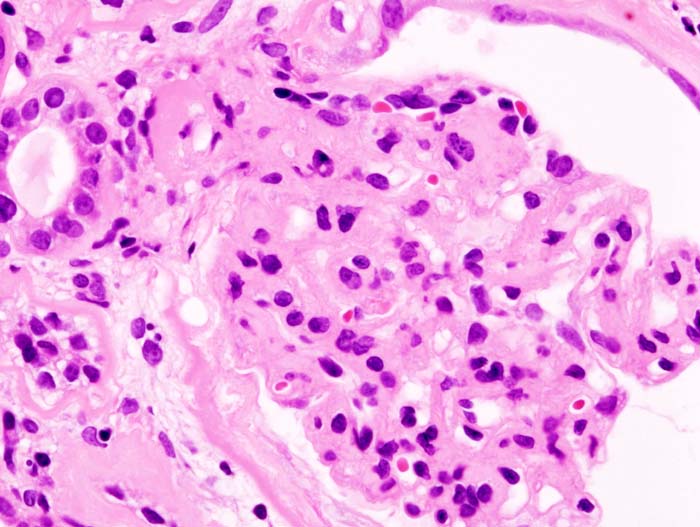
Nephrotic syndrome is a clinical syndrome defined by the tetrad of massive proteinuria (≥3.5 g/24 h in adults or ≥40 mg/m²/h in children), hypoalbuminemia (<3.0 g/dL), edema, and hyperlipidemia [8]C4[24]D5. The term "nephrosis" is an older synonym, and "idiopathic nephrotic syndrome" (INS) is used when no secondary cause is identified. was historically called "lipoid nephrosis."
Key Definitions
Primary nephrotic syndrome arises from intrinsic glomerular diseases (e.g., minimal change disease [MCD], focal segmental glomerulosclerosis [FSGS], [MN]), while secondary nephrotic syndrome results from systemic conditions such as diabetes, amyloidosis, systemic lupus erythematosus, infections, or drugs [11]D5[18]D5. Remission is defined as reduction of proteinuria to subnephrotic levels (complete: <0.3 g/d; partial: ≥50% reduction and <3.5 g/d) [13]D5. Relapse is recurrence of nephrotic-range proteinuria after remission. Frequent relapser and steroid-dependent are defined by the frequency of relapses or dependence on corticosteroids to maintain remission [10]D5.
Classification by Etiology
Nephrotic syndrome is classified by underlying cause. Primary glomerulopathies are the most common, and their histologic subtypes carry distinct prognostic and therapeutic implications.
| Disease | Key Histologic Feature | Associated Marker/Subtype |
|---|---|---|
| Minimal Change Disease (MCD) | Normal light microscopy; diffuse foot process effacement on electron microscopy (EM) | None; typically steroid-sensitive |
| Focal Segmental Glomerulosclerosis (FSGS) | Segmental sclerosis; Columbia classification variants: collapsing, cellular, tip, perihilar, not otherwise specified (NOS) [5]B3b[6]B3b | Permeability factors (e.g., suPAR); genetic forms (e.g., podocin mutations) |
| Membranous Nephropathy (MN) | Subepithelial immune deposits; PLA2R antigen in 70-80% | Anti-PLA2R antibodies; segmental variant [4]C4 |
| Membranoproliferative GN (MPGN) | Mesangial proliferation, double contours; immune complex or complement-mediated | C3 nephritic factor, monoclonal gammopathy |
| IgM Nephropathy | Dominant mesangial IgM deposits (≥2+ intensity) [1]C4[27]C4 | Controversial entity; overlaps with MCD/FSGS |
| Amyloidosis (AL, AA, hereditary) | Congo red-positive fibrils; proteomic typing required [7]C4[18]D5 | Light chains (AL), serum amyloid A (AA), ApoCII, etc. |
Secondary causes include , lupus nephritis, infections (hepatitis B/C, HIV), drugs (NSAIDs, pamidronate), and malignancies [11]D5[18]D5.
Clinical Significance
Nephrotic syndrome is a leading indication for renal biopsy, accounting for 32.6% of native biopsies in a large Chinese cohort [29]B2b. It carries significant risk of complications, including acute kidney injury (occurring in 58.6% of hospitalized children [16]B3b), infection, and thromboembolism.
Controversies and Guideline Disagreement
| Question | Position A | Position B | Strength | Implication |
|---|---|---|---|---|
| Is IgM nephropathy a distinct entity? | Yes, defined by dominant mesangial IgM with EM deposits [1]C4 | No, it is part of the podocytopathy spectrum (MCD/FSGS) [27]C4 | Weak; no consensus | Affects diagnostic criteria and treatment approach |
| Are MCD and idiopathic FSGS the same disease? | Yes, they represent a continuum of podocyte injury [26]D5 | No, they are separate entities with different outcomes | Moderate; evidence from genetics and natural history | May unify treatment strategies |
| Should nephrotic syndrome definition be modified for diabetic kidney disease? | Use same thresholds (protein >3.5 g/d) [8]C4 | Use albuminuria-based criteria (UACR >2200 mg/g) | Weak; limited data | Affects clinical trial enrollment |
Pearl: Nephrotic syndrome is defined by the classic tetrad of proteinuria ≥3.5 g/d, hypoalbuminemia <3.0 g/dL, edema, and hyperlipidemia; classification into primary versus secondary causes and recognition of histologic variants (e.g., FSGS Columbia subtypes) are essential for guiding workup, treatment, and prognosis [8]C4[11]D5[24]D5.
| Disease | Key Histologic Feature | Associated Marker/Subtype |
|---|---|---|
| Minimal Change Disease (MCD) | Normal light microscopy; diffuse foot process effacement on EM | None; typically steroid-sensitive |
| Focal Segmental Glomerulosclerosis (FSGS) | Segmental sclerosis; variants: collapsing, cellular, tip, perihilar, NOS [5]B3b[6]B3b | Permeability factors (e.g., suPAR); genetic forms |
| Membranous Nephropathy (MN) | Subepithelial immune deposits; PLA2R antigen in 70-80% | Anti-PLA2R antibodies; segmental variant [4]C4 |
| Membranoproliferative GN (MPGN) | Mesangial proliferation, double contours | C3 nephritic factor, monoclonal gammopathy |
| IgM Nephropathy | Dominant mesangial IgM deposits (≥2+ intensity) [1]C4[27]C4 | Controversial entity; overlaps with MCD/FSGS |
| Amyloidosis (AL, AA, hereditary) | Congo red-positive fibrils; proteomic typing [7]C4[18]D5 | Light chains, SAA, ApoCII, etc. |
Pathophysiology and Mechanism
- ▸Nephrotic syndrome results from three distinct pathogenic axes: autoantibody-mediated targeting of podocyte antigens (anti-PLA2R in MN, anti-nephrin in MCD/primary FSGS), circulating permeability factors (in primary FSGS), and monogenic podocyte defects (NPHS2, TRPC6, APOL1, etc.).
- ▸Common variants like HLA-DQA1 (MN risk) and APOL1 G1/G2 (FSGS risk in African ancestry) modulate susceptibility, while more than 80 single-gene causes explain ~30% of childhood SRNS. Identification of the specific mechanism dictates personalized therapy and predicts transplant recurrence risk.
The nephrotic syndrome arises from a breakdown of the glomerular filtration barrier (GFB), a tri-layered structure composed of fenestrated endothelium, the glomerular basement membrane (GBM), and, most critically, podocyte foot processes interconnected by slit diaphragms [54]D5[101]D5. Injury to any component can initiate the final common pathway: effacement of podocyte foot processes and loss of slit diaphragm integrity, leading to massive proteinuria [67]D5[99]D5. Three dominant but distinct mechanistic axes drive this injury across the spectrum of podocytopathies: autoantibody-mediated attack, circulating permeability factors, and monogenic podocyte defects.
Autoantibody-Mediated Podocytopathy
Primary (MN) is the prototypical autoimmune podocytopathy. In approximately 70-80% of cases, circulating IgG4 autoantibodies target the M-type phospholipase A2 receptor (PLA2R) on the podocyte surface [47]D5[58]D5[72]D5[77]D5. Antibody binding to PLA2R, a 180-kDa transmembrane glycoprotein, leads to in situ immune-complex formation along the subepithelial aspect of the GBM [58]D5[88]D5. These deposits activate complement, generating the membrane attack complex C5b-9, which disrupts podocyte architecture and drives foot-process effacement [72]D5[88]D5. A smaller subset of patients harbor antibodies against thrombospondin type-1 domain-containing 7A (THSD7A), neural epidermal growth factor-like 1 protein (NELL1), semaphorin 3B, or protocadherin FAT1 (after hematopoietic stem cell transplant) [43]C4[61]D5[84]C4[106]C4. Recently, dual-antigen MN, e.g., NELL1 + CNTN1, has been confirmed by laser microdissection mass spectrometry, challenging the prior notion of mutual exclusivity [48]C4. Serologic anti-PLA2R titers correlate with disease activity and predict remission or relapse, making them indispensable for monitoring [34]B2b[56]D5.
In (MCD) and a subset of primary FSGS, the discovery of autoantibodies targeting nephrin, the core slit-diaphragm protein, has transformed the pathogenic paradigm [60]B3b[70]B3b. Anti-nephrin IgG is found in approximately 68% of children with steroid-sensitive nephrotic syndrome and 29% of adults with MCD [49]B2b[70]B3b[78]D5. These antibodies bind the extracellular domain of nephrin, triggering its phosphorylation, activating the small GTPase Cdc42 via ephrin-B1/Par6 release, and ultimately disrupting the slit-diaphragm complex [63]D5[67]D5. The result is rapid foot-process effacement and proteinuria, recapitulated in rodent models by passive antibody transfer [60]B3b[63]D5[70]B3b. B-cell depletion with induces remission in parallel with falling anti-nephrin titers, confirming a causal role [46]D5[70]B3b[85]C4.
Circulating Permeability Factors and Immune Dysregulation
Primary FSGS, particularly its post-transplant recurrent form, is driven by a circulating permeability factor of uncertain identity [11]D5[36]D5. Evidence includes the rapid recurrence of proteinuria (<48 hours) after transplantation and the response to plasmapheresis or immunoadsorption [36]D5[107]B3b. Putative candidates include soluble urokinase-type plasminogen activator receptor (suPAR), which activates podocyte β3-integrin via formyl peptide receptors, and cardiotrophin-like cytokine-1 (CLC-1) [36]D5[107]B3b[108]C4. In MCD, T-cell dysregulation, particularly a Th2 shift with elevated IL-13, and altered IgM glycosylation (hyposialylation) may increase podocyte vulnerability by reducing sialic-acid-dependent charge barrier and triggering complement activation [57]D5[117]B3b. The B-cell compartment is also central: oligoclonal B-cell expansions and dysregulated regulatory B cells have been documented during active disease [46]D5.
Monogenic Podocytopathies
A single-gene cause is identified in approximately 29.5% of children presenting with steroid-resistant nephrotic syndrome (SRNS) before age 25, and in a smaller fraction of adult-onset cases [62]B2b[82]B2b. Over 80 genes have been implicated to date [93]D5[116]D5. Most encode structural or regulatory proteins of the podocyte: NPHS1 (nephrin), NPHS2 (podocin), WT1, LAMB2, TRPC6 (a cation channel), MYO1E (myosin 1E), MAGI2, TBC1D8B, and FLNB (filamin B) among others [41]C4[59]D5[69]C4[71]C4[93]D5[94]B3b[113]C4[120]B3b[116]D5. The pathogenic mechanisms converge on cytoskeletal disorganization, impaired slit-diaphragm assembly, altered mechanotransduction, and defective endocytic recycling of nephrin [99]D5[101]D5[116]D5. Notable genotype-phenotype correlations exist: the R229Q NPHS2 variant (allele frequency 3.7% in Europeans) only manifests as disease when paired with a second pathogenic mutation in exons 7 or 8, often with adult onset [59]D5. Conversely, biallelic truncating NPHS2 mutations cause congenital nephrotic syndrome that is resistant to immunosuppression [59]D5[62]B2b. FSGS due to TRPC6 gain-of-function mutations shows variable penetrance, with some carriers remaining asymptomatic into adulthood [94]B3b[109]B3b. The APOL1 G1/G2 risk alleles, common in individuals of sub-Saharan African ancestry, confer a significant risk for non-monogenic FSGS and hypertensive nephropathy through a gain-of-toxic-function mechanism involving podocyte cation channel dysregulation [74]D5.
Downstream Consequences of Barrier Dysfunction
Once the GFB is breached, albumin and other macromolecules flood the tubular lumen. Proximal tubular overload exceeds the reabsorptive capacity of the megalin-cubilin complex, leading to tubulointerstitial injury and progressive CKD [53]D5[68]D5. The filtered filtrate also activates the epithelial sodium channel (ENaC) in the collecting duct, possibly via serine proteases, driving sodium retention and edema formation independent of intravascular volume [45]D5. Hypoalbuminemia reduces plasma oncotic pressure, further shifting fluid to the interstitium [45]D5. Hyperlipidemia results from both increased hepatic synthesis (driven by low oncotic pressure, via angiopoietin-like 4) and decreased clearance of lipoproteins [64]D5[95]D5. The acquired hypercoagulable state is multifactorial: urinary loss of antithrombin III, decreased free protein S and protein C, elevated von Willebrand factor, and enhanced platelet aggregation collectively increase thromboembolic risk, particularly in MN, where the incidence climbs to 37% in adults [35]B2a[76]D5. Elevated FGF23 levels, independent of phosphate homeostasis, contribute to cardiac hypertrophy in nephrotic models [95]D5.
Genetic Susceptibility Modifiers
Beyond monogenic causes, common genetic variants modulate disease risk. HLA-DQA1 polymorphisms are strongly associated with PLA2R-related MN, implicating altered antigen presentation [47]D5[72]D5. In children, variants in NPHS1 and TRPC6 synergize to increase the risk of post-transplant FSGS recurrence [109]B3b. Circadian clock genes rhythmically regulate GBM turnover and podocyte glucocorticoid receptor signaling; disruption of this rhythm may affect disease flare timing and steroid responsiveness [55]D5.
Pearl: The three mechanistic axes of nephrotic syndrome, autoantibody-mediated (anti-PLA2R, anti-nephrin), circulating-factor-driven (primary FSGS), and monogenic (NPHS2, TRPC6, APOL1), converge on podocyte foot-process effacement as the final common pathway; identifying the specific mechanism is essential because it dictates targeted therapy (e.g., rituximab for anti-nephrin disease, plasmapheresis for recurrent FSGS) and predicts transplant recurrence risk [36]D5[56]D5[70]B3b[74]D5.
| Mechanism | Prototype Disease | Key Target/Mediator | Diagnostic Biomarker | Therapeutic Implication |
|---|---|---|---|---|
| Autoantibody-mediated | Membranous nephropathy (MN) | PLA2R (70-80%), THSD7A (3-5%), NELL1, FAT1 | Serum anti-PLA2R IgG4; biopsy PLA2R staining | Rituximab, calcineurin inhibitors; anti-PLA2R titer monitors response [47]D5[56]D5[72]D5 |
| Autoantibody-mediated | Minimal change disease (MCD) / Primary FSGS | Nephrin | Serum anti-nephrin IgG | Rituximab; anti-nephrin titer guides relapse risk [46]D5[70]B3b[78]D5 |
| Circulating permeability factor | Primary FSGS (especially post-transplant) | suPAR, CLC-1 (candidates) | None validated; recurrence pattern | Plasmapheresis; immunoadsorption [36]D5[107]B3b |
| Monogenic podocyte defect | Steroid-resistant nephrotic syndrome (SRNS) | Podocin, nephrin, TRPC6, MYO1E, FLNB, etc. | Gene panel sequencing | CNIs may help some; immunosuppression ineffective in truncating mutations [62]B2b[82]B2b[93]D5 |
| Genetic risk variant | FSGS (African ancestry) | APOL1 G1/G2 | APOL1 genotyping | ? Novel APOL1 inhibitors in trials [74]D5 |
Epidemiology, Etiology and Risk Factors
- ▸Incidence of childhood nephrotic syndrome ranges from 1.15 to 16.9 per 100,000, with South Asian children at 6.6-fold higher risk than European children [87, 159].
- ▸Monogenic causes are identified in 29.5% of steroid-resistant nephrotic syndrome presenting before age 25, and APOL1 high-risk genotypes confer an OR of 5-10 for FSGS in African ancestry individuals [62, 131].
- ▸Environmental triggers include post-streptococcal infection (67% of APSGN), bevacizumab (RR 4.79), and COVID-19 vaccination (case reports of MCD) [42, 89, 123].
The annual incidence of idiopathic ranges from 1.15 to 16.9 per 100,000, varying markedly by ethnicity and region [87]D5. In adults, primary nephrotic syndrome is less common, with (MN) accounting for approximately 30% of cases in non-diabetic white adults [72]D5[134]D5. The overall incidence of primary is estimated at 2-4 per 100,000 per year, though population-based data remain limited [150]B2b.
Demographic Distribution
Incidence peaks in early childhood (age 2-6 years) for (MCD), which constitutes 70-90% of cases in this age group [73]D5. South Asian children have a disproportionately high incidence (incidence rate ratio 6.61; 95% CI 3.16-15.1) compared with European children [159]D5. African American children are at increased risk for (FSGS), driven largely by APOL1 high-risk genotypes [138]D5[143]B3b. In adults, MN is the most common cause of nephrotic syndrome in non-diabetic white individuals, while FSGS predominates in African American populations [74]D5[134]D5.
Temporal Trends
The incidence of childhood nephrotic syndrome has increased over recent decades, from 1.99 per 100,000 in 2001 to 4.71 per 100,000 in 2011 in one Canadian cohort [159]D5. Similarly, the diagnosis of in patients ≥65 years has risen significantly, reflecting both increased biopsy rates and true epidemiological shifts [156]D5.
Risk Factors
Genetic factors play a major role. Monogenic causes are identified in 29.5% of (SRNS) presenting before age 25 years [62]B2b. APOL1 risk variants (G1/G2) confer an odds ratio of 5-10 for FSGS in individuals of African ancestry [131]B2b[138]D5. HLA-DQA1 and HLA-DQB1 variants are strongly associated with steroid-sensitive nephrotic syndrome (SSNS) (OR 2.11; 95% CI 1.56-2.86) [149]B3b. Polygenic risk scores incorporating HLA class II alleles further stratify corticosteroid response [135]B3b. Anti-nephrin autoantibodies are detected in 43% of adult Chinese patients with MCD or primary FSGS, suggesting an autoimmune etiology in a substantial subset [128]B2b.
Environmental triggers include infections: acute post-streptococcal glomerulonephritis remains a leading cause in low- and middle-income countries, with 67% of cases preceded by streptococcal infection [89]D5. HIV-associated nephropathy (collapsing glomerulopathy) is strongly linked to APOL1 high-risk genotypes [131]B2b. Drug-induced nephrotic syndrome is well-documented: increases the risk of high-grade proteinuria (RR 4.79; 95% CI 2.71-8.46) [123]A1a, and immune checkpoint inhibitors can trigger MCD or FSGS [127]C4. The Pfizer-BioNTech vaccine has been associated with new-onset MCD [42]C4. Occupational exposure to organic solvents and heavy metals is a risk factor for MN (OR not quantified) [157]D5.
| Risk Factor | Odds Ratio / Relative Risk | Evidence Level |
|---|---|---|
| APOL1 high-risk genotype (G1/G2) | OR 5-10 for FSGS | 2b [131]B2b[138]D5 |
| HLA-DQA1/DQB1 variants (rs1129740, rs9273349) | OR 2.11 (95% CI 1.56-2.86) | 3b [149]B3b |
| Monogenic SRNS (any of >30 genes) | 29.5% prevalence in SRNS <25 yr | 2b [62]B2b |
| Bevacizumab therapy | RR 4.79 (95% CI 2.71-8.46) | 1a [123]A1a |
| Post-streptococcal infection | 67% of APSGN cases preceded by infection | 5 [89]D5 |
| South Asian ethnicity (children) | IRR 6.61 (95% CI 3.16-15.1) | 2b [159]D5 |
Special Populations
(Finnish type) has an incidence of 0.5 per 100,000 live births, with biallelic NPHS1 mutations in 65% of cases [162]D5. Pregnancy can unmask or exacerbate nephrotic syndrome; kidney biopsy during pregnancy is performed most commonly for nephrotic syndrome without AKI (40.8% of indications) [165]D5. Post-transplant recurrence of FSGS occurs in up to 30% of patients, with risk factors including younger age, rapid progression to ESRD, and specific genetic variants (TRPC6, NPHS1) [3]D5[109]B3b. Recurrent MN is seen in 42% of allografts on surveillance biopsy [176]B2b.
Pearl: The pretest probability of nephrotic syndrome is dominated by age, ethnicity, and geography: MCD in young children, FSGS in African Americans, and MN in older white adults; genetic testing for APOL1 and monogenic causes should be prioritized in high-risk populations [62]B2b[138]D5[159]D5.
Clinical Presentation
- ▸Nephrotic syndrome typically presents with periorbital edema that progresses to dependent edema and anasarca; onset may be rapid (days) in minimal change disease or insidious (weeks to months) in membranous nephropathy and FSGS.
- ▸Hematuria is present in a minority of patients and should prompt consideration of IgA nephropathy, lupus nephritis, or post-streptococcal glomerulonephritis rather than a pure podocytopathy.
- ▸Thromboembolic complications (renal vein thrombosis, pulmonary embolism) are common and may be the presenting feature, especially in membranous nephropathy with severe hypoalbuminemia.
Presenting Symptoms
The patient with nephrotic syndrome typically presents with a constellation of symptoms driven by massive proteinuria and its downstream effects. The cardinal symptom is edema, which often begins insidiously as periorbital puffiness in the morning and progresses to dependent edema of the ankles and sacrum as the day advances [45]D5[64]D5. In children, periorbital edema may be the first sign noticed by parents, while adults often report leg swelling and weight gain. The edema can become generalized (anasarca) over days to weeks, with a nadir of symptom severity typically reached within 2-4 weeks of onset in acute presentations such as (MCD) [73]D5. Patients may also note foamy urine (frothy urine) due to proteinuria, though this is not always volunteered. Fatigue, malaise, and a sense of abdominal fullness from are common. Oliguria may occur but is not universal. Importantly, the onset timeline varies by etiology: MCD often presents acutely over days, whereas (MN) and focal segmental glomerulosclerosis (FSGS) tend to have a more gradual course over weeks to months [72]D5[11]D5.
Physical Examination Findings
On examination, the hallmark is pitting edema that is symmetric, dependent, and may be massive. Assess for periorbital edema (especially in the morning), presacral edema in bedridden patients, and scrotal or labial edema in severe cases. Ascites is detected by shifting dullness or fluid wave, and pleural effusions (often bilateral) may cause dullness to percussion and diminished breath sounds at the lung bases. Blood pressure is variable: many patients are normotensive or hypotensive due to intravascular volume depletion, but can occur, especially in secondary causes like diabetic nephropathy or lupus nephritis [177]A1c. Jugular venous pressure is typically low in the "underfill" state of nephrotic syndrome, but may be elevated if there is concomitant heart failure or fluid overload from renal impairment. Skin examination may reveal xerosis, pallor from anemia, or signs of hyperlipidemia such as xanthelasma or arcus corneae (though these are late findings). Thromboembolic signs should be sought: unilateral leg swelling (deep vein thrombosis), acute dyspnea or pleuritic pain (pulmonary embolism), or flank pain with hematuria ( ). Signs of infection (e.g., , peritonitis) are important because nephrotic patients are immunocompromised due to urinary loss of immunoglobulins and complement factors [177]A1c[184]A1c.
Phenotypic Variants
| Variant | Key Features | Frequency |
|---|---|---|
| Minimal Change Disease (MCD) | Acute onset (days to weeks), highly selective proteinuria (mostly albumin), excellent response to steroids, often in children but also adults [73]D5[183]A1b | ~15% of adult NS, ~70-90% of childhood NS |
| Focal Segmental Glomerulosclerosis (FSGS) | Insidious onset, non-selective proteinuria, often with hematuria and hypertension, progressive course, may be primary, genetic, or secondary [11]D5[13]D5 | ~20-30% of adult NS, increasing in African Americans |
| Membranous Nephropathy (MN) | Gradual onset, non-selective proteinuria, often with microscopic hematuria, associated with anti-PLA2R antibodies in ~70% [72]D5[47]D5 | ~25-30% of adult NS, most common cause in white adults |
| May present with nephrotic-range proteinuria but typically with hematuria (often macroscopic), hypertension, and progressive CKD [156]D5 | Variable; common cause of glomerulonephritis worldwide | |
| Congenital Nephrotic Syndrome | Onset in utero or first 3 months of life, severe proteinuria, often genetic (e.g., NPHS1, NPHS2), poor prognosis without early intervention [184]A1c[192]C4 | Rare |
| Secondary Causes | Associated with systemic diseases (lupus, diabetes, amyloidosis, infections, drugs, malignancies) [18]D5[187]C4[188]C4[190]C4[201]C4[206]D5 | ~20% of adult NS |
Red Flags
Certain symptoms require urgent evaluation:
- Acute dyspnea, pleuritic chest pain, or hemoptysis → suspect pulmonary embolism; nephrotic syndrome carries a 3-5 fold increased risk of venous thromboembolism [177]A1c.
- Unilateral leg swelling with pain → deep vein thrombosis.
- Flank pain with hematuria → renal vein thrombosis.
- Fever, chills, or abdominal pain → or cellulitis; infection risk is highest in children with relapsing disease [184]A1c.
- Rapidly progressive edema with respiratory compromise → massive pleural effusions or ascites causing diaphragmatic splinting; consider urgent drainage.
- Neurologic symptoms (headache, visual changes, seizures) → hypertensive encephalopathy or cerebral edema, especially in patients with severe hypoalbuminemia (<15 g/L) [216]C4.
Atypical Presentations
Nephrotic syndrome may present without obvious edema in early stages, especially in patients with preserved serum albumin >25 g/L. Some patients present with incidental proteinuria on routine urinalysis. Hematuria (microscopic or macroscopic) is present in a minority and should prompt consideration of IgA nephropathy, lupus nephritis, or post-streptococcal glomerulonephritis [75]B2b[89]D5. Acute kidney injury can be the presenting feature in MCD (especially in older adults) or in crescentic glomerulonephritis superimposed on a podocytopathy [73]D5. Thromboembolism may be the first manifestation, particularly renal vein thrombosis presenting with flank pain and hematuria, or pulmonary embolism without prior edema [177]A1c. Recurrent infections (e.g., peritonitis, pneumonia) can be the presenting complaint in children with steroid-sensitive nephrotic syndrome due to urinary loss of IgG and complement factors [184]A1c. Hypertension out of proportion to edema may suggest secondary causes such as lupus nephritis or diabetic nephropathy [177]A1c.
Pearl: The classic triad of periorbital edema, foamy urine, and weight gain should prompt immediate urinalysis; nephrotic-range proteinuria (>3.5 g/24 h) with hypoalbuminemia confirms the syndrome, but the tempo of onset and presence of hematuria or hypertension help narrow the differential to MCD (acute, no hematuria) versus MN or FSGS (insidious, often with hematuria) [73]D5[72]D5[11]D5.
Diagnosis and Workup
- ▸Diagnosis rests on the triad of nephrotic-range proteinuria (UPCR ≥3.0-3.5 g/g), hypoalbuminemia (<3.0 g/dL), and edema.
- ▸Anti-PLA2R antibody is the key noninvasive serologic test for primary membranous nephropathy (specificity >95%); a positive result may obviate biopsy in selected adults.
- ▸Kidney biopsy remains the gold standard for histologic classification, and genetic testing for podocyte gene mutations is indicated in children with steroid-resistant nephrotic syndrome and in adults with early-onset or syndromic presentations.
The diagnosis of nephrotic syndrome is established at the bedside by the triad of nephrotic-range proteinuria (≥3.5 g/24 h in adults or a urine protein-to-creatinine ratio [UPCR] ≥3.0-3.5 g/g) , hypoalbuminemia (serum albumin <3.0 g/dL), and edema [177]A1c. A first-morning urine sample should be sent for UPCR; if the ratio is ≥3.0 g/g, the 24-hour urine collection is confirmatory but not essential for the diagnosis. The eGFR may be normal or reduced, and the serum creatinine may be modestly elevated in up to 20-30% of adult patients due to foot-process effacement impairing filtration [52]D5.
Urinalysis and Sediment
A standard urinalysis reveals 3-4+ protein on dipstick. Phase-contrast microscopy of the urinary sediment is essential [222]D5. Typical findings include oval fat bodies (lipid-laden tubular cells), fatty casts (maltese-cross pattern under polarized light), and waxy casts. Microscopic hematuria is common (10-50% of cases) but red cell casts are uncommon; their presence suggests a proliferative glomerulonephritis rather than a pure podocytopathy [75]B2b.
Quantifying Proteinuria
The gold-standard diagnostic test is the 24-hour urine protein excretion of ≥3.5 g/1.73 m² body surface area [205]D5. In practice, a random spot UPCR ≥3.0-3.5 g/g (or ≥300 mg/mmol) correlates with nephrotic-range proteinuria in both adults and children [177]A1c. The UPCR is more convenient and is preferred for serial monitoring. A urine albumin-to-creatinine ratio (UACR) can be used, but total protein measurement is the standard because tubular proteins may contribute.
Serum Markers and Autoantibodies
Serum albumin is measured to confirm hypoalbuminemia (<3.0 g/dL). A lipid panel shows elevated total cholesterol and triglycerides [177]A1c. Complement levels (C3, C4) are helpful: low complement suggests lupus nephritis, infection-related GN, or C3 glomerulopathy [187]C4.
Anti-PLA2R antibody testing is central to the workup of (MN). A positive serum anti-PLA2R antibody (by ELISA or immunofluorescence) has a specificity >95% for primary MN and a sensitivity of approximately 70% [47]D5[181]B2a. The antibody titer correlates with disease activity [181]B2a. Anti-THSD7A antibody (in 1-5% of primary MN) and anti-nephrin antibodies (in MCD and primary FSGS) are gaining clinical utility [70]B3b[196]D5[128]B2b. Anti-nephrin IgG is found in 30% of adults with MCD and may identify a subset responsive to steroid-sparing agents [49]B2b[128]B2b.
A full serologic panel for secondary causes is indicated when the presentation is atypical or age- or ethnicity-driven:
| Test | Indication | Finding | Reference |
|---|---|---|---|
| ANA, anti-dsDNA | Lupus nephritis | Positive | [187]C4 |
| ANCA (MPO/PR3) | ANCA vasculitis | Positive | [177]A1c |
| Anti-GBM antibody | Anti-GBM disease | Positive | [177]A1c |
| Hepatitis B, C, HIV serologies | Infection-related MN/MPGN | Positive | [177]A1c[219]A1c |
| Serum protein electrophoresis, free light chains | AL amyloidosis, myeloma | Monoclonal spike | [223]D5[206]D5 |
| Cryoglobulins | Mixed cryoglobulinemia | Positive | [187]C4 |
| Anti-streptolysin O, anti-DNAse B | Post-streptococcal GN | Elevated titers | [89]D5 |
Imaging
Renal ultrasound is routine for all patients to exclude obstruction, assess renal size (small echogenic kidneys suggest chronic disease), and rule out with Doppler, especially in MN or heavy proteinuria where the incidence is 10-20% [177]A1c. No other imaging is diagnostic of the underlying glomerulopathy.
Kidney Biopsy
The renal biopsy is the definitive diagnostic reference standard for establishing the histopathologic diagnosis [177]A1c. Biopsy is indicated in all adults with nephrotic syndrome except when a clear secondary cause (e.g., advanced diabetes with retinopathy) or positive anti-PLA2R antibody with typical presentation is present [47]D5[181]B2a. In children, biopsy is reserved for steroid-resistant nephrotic syndrome (SRNS), frequent relapses on CNI, or atypical features [177]A1c[178]A1c.
Biopsy must be read by light microscopy (LM), immunofluorescence (IF), and electron microscopy (EM). Table 2 summarizes the key histologic patterns:
| Pattern | Light Microscopy | IF | EM | Key Serology |
|---|---|---|---|---|
| (MCD) | Normal glomeruli | Negative | Diffuse foot-process effacement | Anti-nephrin+ (30%) |
| Focal Segmental Glomerulosclerosis (FSGS) | Segmental sclerosis | IgM/C3 in sclerotic segments | Segmental foot-process effacement | Negative |
| Membranous Nephropathy (MN) | Thickened GBM, spikes | Granular IgG (PLA2R+) | Subepithelial deposits | Anti-PLA2R+ (70%) |
| Membranoproliferative GN (MPGN) | Mesangial hypercellularity, double contours | C3 ± IgG | Subendothelial/mesangial deposits | C3 low, ± cryoglobulins |
| Lupus Nephritis (LN) | Variable (class I-VI) | Full-house pattern (IgG, IgM, IgA, C3, C1q) | Tubuloreticular inclusions | ANA+, anti-dsDNA+ |
| C3 Glomerulopathy | MPGN-like or DDD | Dominant C3 | Dense deposits in DDD | Low C3, C3 nephritic factor |
| AL Amyloidosis | Nodular mesangial sclerosis | Congo red+, apple-green birefringence | Randomly oriented fibrils 8-12 nm | Monoclonal light chain |
Diagnostic Algorithm
A practical approach to the nephrotic syndrome workup proceeds stepwise:
- Confirm nephrotic syndrome with UPCR ≥3.0-3.5 g/g and serum albumin <3.0 g/dL.
- Exclude secondary causes with history (drugs, infections, malignancy) and initial serologies (ANA, ANCA, anti-GBM, hepatitis B/C, HIV, SPEP, cryoglobulins).
- Check anti-PLA2R antibody in adults. If positive >14 RU/mL, diagnosis of primary MN is highly likely and biopsy may be deferred in elderly or high-risk patients [181]B2a[47]D5. If negative, proceed to kidney biopsy.
- Perform kidney biopsy in all adults with negative serologies or atypical features (rapidly progressive GN, nephritic sediment, extrarenal symptoms).
- Run IF for C3, IgG, IgA, IgM, C1q, fibrin, kappa/lambda light chains, and PLA2R antigen. EM for foot-process effacement and deposits.
- Interpret the histologic pattern per Table 2.
- If FSGS pattern, differentiate primary (diffuse foot-process effacement) from secondary (segmental effacement, adaptive changes) and genetic (family history, early onset, syndromic features) [11]D5[93]D5. Consider genetic testing for SRNS in children and selected adults [93]D5[155]D5.
- If MN pattern and PLA2R-negative, test for THSD7A, NELL1, EXT1/2, and other antigens by mass spectrometry if available [61]D5[207]D5. Rule out malignancy (colon, lung, prostate) per guidelines [232]D5.
- If no deposit on IF, consider podocytopathies (MCD, FSGS) or C3 glomerulopathy with dominant C3.
- If AL amyloid is suspected, perform Congo red staining and light chain subtyping on biopsy [18]D5[206]D5.
Genetic Testing
Genetic testing is recommended for children with SRNS, presenting before age 25, or with a family history. A panel of >30 podocyte genes (NPHS1, NPHS2, WT1, TRPC6, etc.) yields a monogenic cause in 30% of pediatric SRNS [93]D5[155]D5[137]D5. In adults, testing is reserved for SRNS with early onset or syndromic features [208]D5[199]A1c[209]D5. The presence of a pathogenic variant confers steroid resistance and may guide treatment (e.g., avoidance of immunosuppression, use of CoQ10 supplementation for COQ2/COQ6/COQ8B mutations) [179]C4[93]D5.
Pearl: The combination of a positive anti-PLA2R antibody (≥14 RU/mL) with nephrotic syndrome has a post-test probability for primary MN >95%, and in elderly or high-risk patients, a kidney biopsy may be deferred, allowing prompt initiation of immunosuppression [34]B2b[181]B2a[47]D5.
Staging and Risk Stratification (KDIGO)
- ▸KDIGO CKD heat-map (eGFR × albuminuria) assigns nephrotic-range proteinuria to the highest-risk category (A3), driving aggressive management.
- ▸Disease-specific tools (IgAN Prediction Tool, anti-PLA2R titer, Columbia FSGS classification) refine prognosis beyond generic staging.
- ▸Pediatric nephrotic syndrome staging (SSNS, SRNS, FRNS, SDNS) is defined by glucocorticoid response and guides step-up immunosuppression.
KDIGO staging provides the universal language for severity assessment across all forms of nephrotic syndrome, linking proteinuria thresholds, GFR categories, and disease-specific risk scores to guide treatment intensity and monitoring frequency [177]A1c.
CKD Staging: The GFR-Albuminuria Heat-Map
The foundation of risk stratification in nephrotic syndrome is the KDIGO chronic kidney disease (CKD) classification, which combines estimated GFR (eGFR) categories (G1-G5) with albuminuria categories (A1-A3) into a prognostic heat-map [177]A1c. Patients with nephrotic-range proteinuria (≥3.5 g/24 h or urine protein-to-creatinine ratio ≥3.5 g/g) fall into category A3 (severely increased albuminuria). The heat-map assigns a risk of progression to kidney failure: green (low risk), yellow (moderately increased risk), orange (high risk), and red (very high risk) [177]A1c. For example, a patient with eGFR 45 mL/min/1.73 m² (G3a) and nephrotic-range proteinuria (A3) is in the orange (high-risk) zone, warranting aggressive blood pressure control, renin-angiotensin system blockade, and consideration of immunosuppression [177]A1c. The 2025 KDIGO IgAN guideline further tightens the proteinuria target to <0.5 g/d, ideally <0.3 g/d, reflecting the recognition that even sub-nephrotic proteinuria drives progression [32]A1c.
Disease-Specific Risk Scores
Beyond the generic heat-map, disease-specific tools refine prognosis:
- (IgAN): The International IgAN Prediction Tool (available online) uses eGFR, proteinuria, blood pressure, MEST-C score, and age at biopsy to estimate the 5-year risk of a 50% decline in eGFR or ESRD [32]A1c. The 2025 KDIGO guideline recommends using this tool to decide on immunosuppressive therapy, especially for patients with proteinuria >0.75 g/d despite maximal supportive care [32]A1c.
- (MN): The anti-PLA2R antibody titer correlates with disease activity and risk of progression. A titer >150 RU/mL at diagnosis predicts a lower likelihood of spontaneous remission and a higher risk of ESRD [251]D5. The Toronto risk score (based on proteinuria, eGFR, and slope of eGFR decline) also stratifies patients into low-, medium-, and high-risk categories for progression [102]D5.
- Focal Segmental Glomerulosclerosis (FSGS): The Columbia histologic classification (collapsing, cellular, tip, perihilar, NOS) carries prognostic significance: collapsing FSGS has the worst renal survival, with 5-year ESRD rates exceeding 50% [6]B3b. Response to immunosuppression (complete or partial remission) is the strongest modifiable predictor of long-term outcome [6]B3b.
Pediatric Nephrotic Syndrome Staging
In children, KDIGO 2025 defines staging based on response to glucocorticoids [178]A1c:
| Category | Definition |
|---|---|
| Steroid-sensitive nephrotic syndrome (SSNS) | Complete remission within 4 weeks of daily /prednisolone 60 mg/m²/day (or 2 mg/kg/day) [178]A1c |
| Steroid-resistant nephrotic syndrome (SRNS) | Failure to achieve remission after 8 weeks of glucocorticoid therapy [178]A1c |
| Frequent relapsing nephrotic syndrome (FRNS) | ≥2 relapses within 6 months of initial response, or ≥4 relapses in any 12-month period [178]A1c |
| Steroid-dependent nephrotic syndrome (SDNS) | Two consecutive relapses during corticosteroid tapering or within 14 days of discontinuation [178]A1c |
These definitions drive the treatment algorithm: SSNS with frequent relapses or steroid dependence triggers glucocorticoid-sparing agents (e.g., , calcineurin inhibitors, ) [178]A1c[220]D5. The 2025 guideline also incorporates genetic testing for SRNS, as monogenic causes are found in 29.5% of children with SRNS and predict poor response to immunosuppression [62]B2b[178]A1c.
AKI Staging in Nephrotic Syndrome
Acute kidney injury (AKI) complicates nephrotic syndrome, particularly in with severe edema or during infections. KDIGO AKI staging (stage 1: SCr increase ≥0.3 mg/dL or 1.5-1.9× baseline; stage 2: 2.0-2.9×; stage 3: ≥3.0× or RRT) is applied to guide fluid and avoid nephrotoxic insults [177]A1c. In children, AKI is often prerenal due to hypovolemia, but can progress to [244]C4.
Pearl: KDIGO staging integrates GFR, albuminuria, and disease-specific risk scores to stratify nephrotic syndrome patients into prognostic categories that directly inform immunosuppressive therapy intensity and monitoring intervals [32]A1c[177]A1c.
| eGFR Category (mL/min/1.73 m²) | A1 (Normal to mildly increased) | A2 (Moderately increased) | A3 (Severely increased, including nephrotic-range) |
|---|---|---|---|
| G1 (≥90) | Low risk | Moderately increased risk | High risk |
| G2 (60-89) | Low risk | Moderately increased risk | High risk |
| G3a (45-59) | Moderately increased risk | High risk | Very high risk |
| G3b (30-44) | High risk | Very high risk | Very high risk |
| G4 (15-29) | Very high risk | Very high risk | Very high risk |
| G5 (<15) | Very high risk | Very high risk | Very high risk |
Adapted from KDIGO 2012 CKD guideline, as referenced in KDIGO 2021 Glomerular Disease Guideline [177]A1c.
| Category | Definition |
|---|---|
| Steroid-sensitive (SSNS) | Complete remission within 4 weeks of daily prednisone/prednisolone 60 mg/m²/day (or 2 mg/kg/day) [178]A1c |
| Steroid-resistant (SRNS) | Failure to achieve remission after 8 weeks of glucocorticoid therapy [178]A1c |
| Frequent relapsing (FRNS) | ≥2 relapses within 6 months of initial response, or ≥4 relapses in any 12-month period [178]A1c |
| Steroid-dependent (SDNS) | Two consecutive relapses during corticosteroid tapering or within 14 days of discontinuation [178]A1c |
Acute Management
- ▸AKI occurs in 58.6% of hospitalized children with nephrotic syndrome; early recognition and avoidance of nephrotoxins are critical [16].
- ▸Emergent dialysis (AEIOU criteria) is indicated for refractory fluid overload, hyperkalemia, acidosis, or uremia.
- ▸RPGN requires pulse methylprednisolone followed by cyclophosphamide or rituximab; tacrolimus is a rescue option for refractory minimal change disease with acute renal failure [282].
Step 1: Initial Assessment and Severity Classification
Acute decompensation in nephrotic syndrome demands immediate triage for four life-threatening axes: fluid overload with pulmonary edema, severe hyperkalemia (potassium >6.5 mEq/L with ECG changes), severe metabolic acidosis (pH <7.1), and symptomatic uremia (pericarditis, encephalopathy). A fifth axis, rapidly progressive glomerulonephritis (RPGN), must be suspected when nephrotic-range proteinuria is accompanied by an active urine sediment (dysmorphic RBCs, RBC casts) and a rapid rise in serum creatinine [222]D5 (4). The AEIOU criteria define the threshold for emergent dialysis:
- Acidosis (pH <7.1)
- Electrolyte disturbance (K+ >6.5 mEq/L refractory to medical therapy)
- Intoxication (e.g., salicylates, lithium)
- Overload (pulmonary edema unresponsive to diuretics)
- Uremia (symptoms or pericarditis)
Severity is stratified as mild (no urgent intervention needed), moderate (requires medical therapy), or severe (meets AEIOU criteria). AKI occurs in 58.6% of hospitalized children with nephrotic syndrome and in 18% of a prospective pediatric cohort, with 2% requiring kidney replacement therapy [16]B3b (3b), [277]B2b (2b).
Figure 1: Acute algorithm for nephrotic syndrome emergencies.
Step 2: First-Line Interventions
Fluid overload: Administer IV 1-2 mg/kg (max 80 mg) as a bolus, repeated every 6-12 hours based on urine output. If response is inadequate, consider bumetanide 0.5-1 mg IV or 10-20 mg IV. Monitor weight, urine output, and electrolytes. In children, AKI is often precipitated by infection or nephrotoxic medications; avoid NSAIDs and aminoglycosides [16]B3b (3b).
Hyperkalemia: First, protect the heart with IV calcium gluconate 10% 10-20 mL (or calcium chloride 5-10 mL) over 2-5 minutes if ECG shows widened QRS or peaked T waves. Then shift potassium intracellularly with regular insulin 10 units IV + 50% dextrose 50 mL (or 0.5 g/kg in children), followed by albuterol nebulized 10-20 mg. Loop diuretics (furosemide 40-80 mg IV) enhance renal excretion. Sodium bicarbonate is reserved for concurrent metabolic acidosis (pH <7.1). Potassium-binding resins (patiromer, sodium zirconium cyclosilicate) are adjuncts but not first-line in emergencies.
Metabolic acidosis: Administer sodium bicarbonate 50-100 mEq IV over 30-60 minutes if pH <7.1, but use caution in fluid-overloaded patients. Bicarbonate may worsen hypernatremia and volume status; dialysis is preferred if acidosis persists.
RPGN: Initiate pulse 500-1000 mg IV daily for 3 consecutive days, followed by oral 1 mg/kg/day (max 60 mg). In biopsy-proven RPGN (e.g., crescentic glomerulonephritis), add 500-750 mg/m² IV monthly or 375 mg/m² weekly ×4 doses [285]C4 (4). Rituximab has shown efficacy in nephrotic syndrome with AKI, achieving complete remission in 65% of patients at 6 months [285]C4 (4).
Step 3: Second-Line Interventions
Diuretic-resistant fluid overload: If urine output remains <0.5 mL/kg/h after two doses of loop diuretic, proceed to ultrafiltration via hemodialysis or peritoneal dialysis (PD). PD is feasible in nephrotic syndrome patients with ESRD, with comparable survival to non-nephrotic controls [278]B3b (3b). In children under 2 years with congenital nephrotic syndrome, PD is the modality of choice [284]C4 (4).
Refractory hyperkalemia or acidosis: Emergent hemodialysis is indicated if potassium remains >6.5 mEq/L after medical therapy or if pH <7.1 persists despite bicarbonate.
Steroid-resistant RPGN: For patients who fail to respond to pulse steroids within 7-10 days, escalate to cyclophosphamide or rituximab as above. In with acute renal failure, (target trough 3-6 ng/mL) has been used as rescue therapy, achieving remission in 77% of patients [282]C4 (4).
Step 4: Monitoring and Titration
- Fluid status: Daily weight, strict intake/output, and clinical assessment for edema and pulmonary crackles.
- Electrolytes: Serum potassium, bicarbonate, and creatinine every 6-12 hours during acute phase.
- Diuretic response: Urine sodium <20 mEq/L suggests diuretic resistance; consider higher doses or combination therapy (loop + thiazide).
- Immunosuppression: Monitor for leukopenia (cyclophosphamide), infusion reactions (rituximab), and infections. Check CD19 count if using rituximab.
- Dialysis adequacy: For PD, monitor ultrafiltration volume and serum albumin; hypoalbuminemia may reduce ultrafiltration [278]B3b (3b).
Step 5: Resolution and Transition
Once acute complications resolve (e.g., potassium <5.5 mEq/L, pH >7.3, urine output >1 mL/kg/h, no pulmonary edema), transition to long-term management. Discontinue acute interventions: stop bicarbonate when pH >7.3, taper diuretics to oral maintenance, and convert IV steroids to oral prednisone. For RPGN, continue immunosuppression per underlying etiology (covered in Section 9: Long-term and Definitive Management).
Drug Comparison Table: Acute Interventions
| Intervention | Indication | Dose | Key Monitoring | Evidence Level |
|---|---|---|---|---|
| Furosemide IV | Fluid overload | 1-2 mg/kg (max 80 mg) | Urine output, K+, Cr | 3b [16]B3b |
| Calcium gluconate IV | Hyperkalemia with ECG changes | 10-20 mL of 10% solution | ECG, Ca2+ | 5 (standard) |
| Insulin + dextrose | Hyperkalemia | 10 U insulin + 50 mL D50W | Glucose q1h | 5 (standard) |
| Sodium bicarbonate | Metabolic acidosis pH <7.1 | 50-100 mEq IV | pH, Na+, volume status | 5 (standard) |
| Pulse methylprednisolone | RPGN | 500-1000 mg IV ×3 days | Glucose, BP, infection | 4 [285]C4 |
| Rituximab | RPGN / refractory NS | 375 mg/m² IV weekly ×4 | CD19, infusion reactions | 4 [285]C4 |
| Tacrolimus | Refractory MCNS with ARF | 1 mg/day (trough 3-6 ng/mL) | Trough level, Cr, K+ | 4 [282]C4 |
What NOT to Do
- Do NOT use NSAIDs for pain or fever in nephrotic syndrome; they reduce renal perfusion and worsen AKI [16]B3b (3b).
- Do NOT administer albumin routinely for diuresis; evidence does not support benefit and may increase volume overload.
- Do NOT delay dialysis in patients meeting AEIOU criteria; medical therapy alone is insufficient.
- Do NOT use aminoglycoside unless no alternative; they are nephrotoxic and accumulate in AKI [16]B3b (3b).
Controversies and Guideline Disagreement
| Question | Position A | Position B | Strength | Implication |
|---|---|---|---|---|
| Role of rituximab in acute RPGN | KDIGO 2021 recommends rituximab as first-line for ANCA-associated vasculitis with RPGN | Some centers still use cyclophosphamide as first-line due to cost and availability | Moderate (different resource settings) | Rituximab is preferred in high-resource settings; cyclophosphamide remains effective and cheaper |
| Use of sodium bicarbonate in metabolic acidosis | KDIGO suggests bicarbonate if pH <7.1 | NICE recommends against routine bicarbonate due to hypernatremia and volume overload | Mild (wording differences) | Bicarbonate is reserved for severe acidosis; dialysis is preferred if refractory |
Pearl: Acute management of nephrotic syndrome prioritizes life-threatening complications, fluid overload, hyperkalemia, and RPGN, using a stepwise approach with diuretics, potassium-shifting agents, and pulse steroids, with early dialysis reserved for AEIOU criteria; AKI occurs in over half of hospitalized children and mandates avoidance of nephrotoxins [16]B3b[277]B2b.
| Criterion | Threshold |
|---|---|
| Acidosis | pH <7.1 |
| Electrolyte disturbance | K+ >6.5 mEq/L refractory to medical therapy |
| Intoxication | Dialyzable toxin (e.g., salicylate, lithium) |
| Overload | Pulmonary edema unresponsive to diuretics |
| Uremia | Pericarditis, encephalopathy, or bleeding |
Long-term and Definitive Management
- ▸Supportive nephroprotection with RAAS blockade and SGLT2 inhibition is the foundation of long-term management, targeting proteinuria <0.5 g/day.
- ▸Disease-specific immunosuppression is guided by histology: rituximab is first-line for membranous nephropathy, while prednisone remains first-line for MCD and FSGS.
- ▸Rituximab 375 mg/m² is the preferred steroid-sparing agent for relapsing/steroid-dependent disease, but carries a 16% risk of hypogammaglobulinemia.
After acute stabilization and diagnosis, the of nephrotic syndrome shifts to a dual-track strategy: disease-specific immunosuppression aimed at the underlying glomerulopathy and nephroprotective supportive therapy to slow kidney disease progression and prevent complications. The KDIGO 2021/2025 guidelines provide a stepwise framework that prioritizes safety, sequential escalation, and careful monitoring of drug levels and toxicity [177]A1c[32]A1c.
Step 1: Start Supportive Nephroprotection, RAAS Blockade and SGLT2 Inhibition
Start a renin-angiotensin-aldosterone system (RAAS) blocker (ACEi or ARB) in all patients with proteinuria >0.5 g/day, titrated to the maximum tolerated dose [177]A1c. The KDIGO 2025 IgAN guideline sets a proteinuria target of <0.5 g/day, ideally <0.3 g/day, alongside a stable eGFR [32]A1c. Add an SGLT2 inhibitor (e.g., 10 mg daily or 10 mg daily) once eGFR is ≥20 mL/min/1.73 m², regardless of diabetes status [177]A1c[303]D5. The nephroprotective effect is additive: RAAS blockade reduces intraglomerular pressure, while SGLT2 inhibitors further lower intraglomerular and reduce albuminuria by approximately 30-40% [303]D5. Monitor potassium and creatinine within 2-4 weeks of initiation.
Do NOT start a nonsteroidal mineralocorticoid receptor antagonist (e.g., finerenone) in nephrotic syndrome unless is the primary cause, data in non-diabetic glomerular disease remain insufficient [177]A1c.
Step 2: Disease-Specific Immunosuppression, by Histologic Diagnosis
Immunosuppressive therapy is dictated by the biopsy-proven lesion and the patient's response to glucocorticoids. The following table summarizes first- and second-line regimens:
| Histology | First-line therapy | Alternative / second-line | Key evidence | Starting dose |
|---|---|---|---|---|
| (MCD) | 1 mg/kg/day (max 80 mg) for 4-16 weeks [308]D5[183]A1b | 0.05-0.1 mg/kg/day (trough 5-10 ng/mL) [183]A1b; 375 mg/m² (1-2 doses) [298]C4[121]B2b | RCT: tacrolimus monotherapy non-inferior to prednisone for initial remission in adults [183]A1b; off-on trial: rituximab reduced relapse rate from 2.0 to 0.3 relapses/year [298]C4 | Prednisone 1 mg/kg/day PO; tacrolimus 0.05-0.1 mg/kg/day PO in two divided doses |
| Focal Segmental Glomerulosclerosis (FSGS) | Prednisone 1 mg/kg/day for 4-16 weeks [13]D5[74]D5 | Calcineurin inhibitor ( 3-5 mg/kg/day or tacrolimus); rituximab (limited evidence) [250]B3b[322]D5 | RCT: rituximab showed no benefit in CNI-resistant pediatric FSGS [250]B3b; 20% of CNI-resistant cases achieve remission with rituximab [250]B3b | Prednisone 1 mg/kg/day PO; cyclosporine 3-5 mg/kg/day PO (trough 100-150 ng/mL) |
| (MN) | Rituximab 1 g IV on days 1 and 15 [239]A1b[104]D5 | Cyclical + corticosteroids (STARMEN protocol [293]A1b); Tacrolimus for up to 12 months [102]D5; Obinutuzumab for rituximab-resistant/intolerant [186]C4[316]B3b | RCT: rituximab induced remission in 35% at 6 months vs 21% with conservative therapy [239]A1b; STARMEN: alternating cyclophosphamide-steroids similar to sequential tacrolimus-rituximab [293]A1b; anti-PLA2R titer-guided therapy reduces exposure [34]B2b | Rituximab 1 g IV, repeat at 6 months if anti-PLA2R persists [104]D5; cyclophosphamide 2.5 mg/kg/day PO for 3 months [293]A1b |
| (IgAN), nephrotic-range proteinuria | RAAS blockade + SGLT2 inhibitor + consider corticosteroids ( 0.8 mg/kg/day, taper) [226]D5[300]D5 | Targeted-release budesonide (TRF-budesonide) 9 mg/day; mofetil (not first line); Rituximab (limited) [328]C4 | KDIGO 2025 targets proteinuria <0.5 g/day [32]A1c; TRF-budesonide reduces proteinuria by 30% vs placebo [32]A1c; MMF not recommended in European ancestry [226]D5 | TRF-budesonide 9 mg PO daily for 9 months |
| First-line agents are bolded. All immunosuppression is guided by histology, anti-PLA2R titers (in MN), and genetic testing (in steroid-resistant cases) [49]B2b[94]B3b. |
In steroid-resistant nephrotic syndrome (SRNS): perform genetic testing for podocyte gene mutations (NPHS1, NPHS2, WT1, TRPC6) before escalating immunosuppression [129]B3b[113]C4. Patients with genetic SRNS do NOT benefit from steroid-sparing immunosuppression and should transition to supportive care [49]B2b. Anti-nephrin antibody positivity may identify a subset of SRNS that responds to second-line immunosuppression [49]B2b[191]B2b[128]B2b.
Step 3: Managing Refractory and Relapsing Disease, Anti-CD20 Therapy
For patients who relapse frequently or are steroid-dependent, rituximab is the preferred steroid-sparing agent across all histologic subtypes [296]A1b[322]D5. Key efficacy data:
- In children with steroid-dependent nephrotic syndrome, a single dose of rituximab 375 mg/m² prolonged relapse-free survival vs placebo (median 15 months vs 4 months; HR 0.27, 95% CI 0.14-0.53; NNT = 2 to prevent one relapse) [296]A1b (1b).
- In adults with MCD/FSGS, rituximab reduced annual relapse rate from 2.0 to 0.3 (p<0.001) and allowed discontinuation of other immunosuppressants in 90% [298]C4 (4).
- Maintenance rituximab (repeated every 6 months or based on B-cell recovery) extends remission duration [121]B2b[194]B2b. Risk of hypogammaglobulinemia: pooled incidence 16% (95% CI, 8-26%) in a meta-analysis of children; severe infections occurred in 3.6% [145]A1a (1a).
- Obinutuzumab (1000 mg IV, two doses 2 weeks apart) is an option in rituximab-resistant or intolerant MN, with complete or partial remission in 60-70% of patients [186]C4[316]B3b (4).
Treatment Failure Protocol:
- No remission after 16 weeks of first-line therapy → switch to second-line agent (e.g., from prednisone to CNI in MCD; from rituximab to cyclophosphamide in MN).
- Loss of response while on a CNI → check trough levels (target 5-10 ng/mL for tacrolimus); add rituximab or switch to alternative class.
- Relapse after anti-CD20 therapy → repeat course if B cells have recovered; consider switch to ofatumumab or obinutuzumab [306]A1b[310]C4.
Step 4: Dose Adjustment for Kidney Function
All immunosuppressive doses require adjustment for eGFR:
| Drug | eGFR guidance |
|---|---|
| Cyclophosphamide | Reduce by 25% if eGFR 30-50; avoid if eGFR <30 |
| Mycophenolate mofetil | Max 2 g/day if eGFR <30 |
| Tacrolimus | Start at 0.05 mg/kg/day if eGFR <30; monitor trough q2 weeks |
| Rituximab | No adjustment needed; holds as single-agent safety [239]A1b |
| TRF-budesonide | No adjustment; minimal systemic absorption |
Step 5: Anti-thrombotic Prophylaxis, When and How
Patients with nephrotic syndrome are at high risk of venous thromboembolism (VTE), especially those with membranous nephropathy (37% lifetime risk) and serum albumin <2.5 g/dL [76]D5. The KDIGO 2021 guideline suggests prophylactic anticoagulation in adults with MN and albumin <2.5 g/dL and no bleeding risk [177]A1c. A recent meta-analysis of DOACs vs standard therapy (heparins/coumarins) found a superior safety profile: lower major bleeding risk (RR 0.49, 95% CI 0.25-0.97) but higher thrombotic events (RR 1.41, 95% CI 0.84-2.37) [314]B2a (2a). Do NOT routinely use DOACs for prophylaxis until dedicated RCTs confirm net benefit. (target INR 2-3) or low-molecular-weight (e.g., 40 mg SC daily) remain first-line options for primary prophylaxis [76]D5[314]B2a. For treatment of established VTE, continue anticoagulation for at least 6-12 months or until remission of proteinuria [76]D5.
Step 6: Monitoring and Titration
Set a structured monitoring schedule:
- Monthly during induction: proteinuria (UPCR or 24-hour), serum albumin, creatinine, eGFR, potassium.
- Drug levels (CNI trough, rituximab B-cell count) every 3 months.
- Anti-PLA2R titer in membranous nephropathy every 3 months; a >50% reduction predicts remission [34]B2b.
- Infection prophylaxis: pneumococcal vaccine (PCV20 or PPSV23), annual influenza, live vaccines only after steroids <2 mg/kg/day [320]A1b.
Controversies and Guideline Disagreement
| Question | Position A | Position B | Strength | Implication |
|---|---|---|---|---|
| Role of Rituximab in SRNS | KDIGO 2021 recommends rituximab only after CNI failure [177]A1c | Many centers use rituximab earlier, based on anti-nephrin positivity [49]B2b | Moderate (different thresholds for escalation) | Early rituximab may benefit antibody-positive SRNS; await confirmatory trials |
| First-line in Membranous Nephropathy | KDIGO 2021 lists rituximab and cyclophosphamide-steroids as equal first-line [177]A1c | ESMO/NCCN prefer rituximab to avoid alkylating agent toxicity | Moderate (preference-based) | Rituximab preferred in patients with preserved eGFR and no contraindications |
| DOAC vs warfarin for VTE prophylaxis | Meta-analysis suggests DOACs have lower bleeding risk [314]B2a | KDIGO 2021 does not endorse DOACs for prophylaxis [177]A1c | Strong (guideline vs evidence) | Warfarin remains standard; DOAC use requires shared decision-making |
Pearl: In steroid-dependent nephrotic syndrome, rituximab 375 mg/m² reduces relapse rate by 73% (NNT = 2), but monitor for hypogammaglobulinemia; in membranous nephropathy, anti-PLA2R titer-guided therapy allows personalized tapering and reduces over-treatment [296]A1b[34]B2b.
| Histology | First-line therapy | Alternative / second-line | Key evidence | Starting dose |
|---|---|---|---|---|
| Minimal Change Disease (MCD) | Prednisone 1 mg/kg/day (max 80 mg) for 4-16 weeks | Tacrolimus 0.05-0.1 mg/kg/day (trough 5-10 ng/mL); Rituximab 375 mg/m² (1-2 doses) | RCT: tacrolimus monotherapy non-inferior to prednisone for initial remission in adults [183]A1b; off-on trial: rituximab reduced relapse rate from 2.0 to 0.3 relapses/year [298]C4 | Prednisone 1 mg/kg/day PO; tacrolimus 0.05-0.1 mg/kg/day PO in two divided doses |
| Focal Segmental Glomerulosclerosis (FSGS) | Prednisone 1 mg/kg/day for 4-16 weeks | Calcineurin inhibitor (cyclosporine 3-5 mg/kg/day or tacrolimus); rituximab (limited evidence) | RCT: rituximab showed no benefit in CNI-resistant pediatric FSGS [250]B3b; 20% of CNI-resistant cases achieve remission with rituximab [250]B3b | Prednisone 1 mg/kg/day PO; cyclosporine 3-5 mg/kg/day PO (trough 100-150 ng/mL) |
| Membranous Nephropathy (MN) | Rituximab 1 g IV on days 1 and 15 | Cyclical cyclophosphamide + corticosteroids (STARMEN protocol); Tacrolimus for up to 12 months; Obinutuzumab for rituximab-resistant/intolerant | RCT: rituximab induced remission in 35% at 6 months vs 21% with conservative therapy [239]A1b; STARMEN: alternating cyclophosphamide-steroids similar to sequential tacrolimus-rituximab [293]A1b; anti-PLA2R titer-guided therapy reduces exposure [34]B2b | Rituximab 1 g IV, repeat at 6 months if anti-PLA2R persists; cyclophosphamide 2.5 mg/kg/day PO for 3 months |
| IgA Nephropathy (IgAN), nephrotic-range proteinuria | RAAS blockade + SGLT2 inhibitor + consider corticosteroids (methylprednisolone 0.8 mg/kg/day, taper) | Targeted-release budesonide (TRF-budesonide) 9 mg/day; Mycophenolate mofetil (not first line); Rituximab (limited) | KDIGO 2025 targets proteinuria <0.5 g/day [32]A1c; TRF-budesonide reduces proteinuria by 30% vs placebo [32]A1c; MMF not recommended in European ancestry [226]D5 | TRF-budesonide 9 mg PO daily for 9 months |
Renal Replacement Therapy, Transplantation and Electrolyte/Acid-Base Management
- ▸Kidney transplantation is the definitive therapy for ESKD from nephrotic syndrome, but recurrence occurs in 30-50% of idiopathic FSGS and 42% of membranous nephropathy cases.
- ▸Pre-transplant genetic testing (e.g., NPHS2, WT1) identifies monogenic causes that rarely recur, enabling risk stratification and family counseling.
- ▸Electrolyte disturbances in nephrotic syndrome, hyperkalemia, hyponatremia, metabolic acidosis, and hypothyroidism, require systematic monitoring and targeted management.
Progression to end-stage kidney disease (ESKD) occurs in 30-50% of adults with nephrotic syndrome and a smaller proportion of children, necessitating renal replacement therapy. Kidney transplantation offers the best long-term survival and quality of life, but disease recurrence in the allograft remains a significant challenge, particularly for idiopathic focal segmental glomerulosclerosis (FSGS) and .
Renal Replacement Therapy
Indications for initiating dialysis in nephrotic syndrome include refractory volume overload despite high-dose diuretics, uremic symptoms, hyperkalemia, or metabolic acidosis. Peritoneal dialysis (PD) is often preferred in children with congenital nephrotic syndrome, as it avoids vascular access and hemodynamic instability, though hernias and peritonitis are common in infants [284]C4. In adults, hemodialysis (HD) is more frequently used. The hypercoagulable state of nephrotic syndrome complicates anticoagulation for continuous kidney replacement therapy (CKRT): a retrospective study of 251 CKRT sessions found that adding low-molecular-weight (LMWH) to regional citrate anticoagulation (RCA) prolonged filter lifespan compared with RCA alone (mean 42 vs 31 hours; P<0.01) without increasing bleeding [360]B2b. Diuretic resistance is common; loop diuretics remain first-line, but sequential nephron blockade with thiazides or amiloride may be needed [303]D5. Ultrafiltration goals should account for the reduced plasma oncotic pressure that limits fluid mobilization.
Kidney Transplantation
Transplantation is the definitive therapy for ESKD from nephrotic syndrome. Pre-transplant genetic testing is critical: monogenic causes (e.g., NPHS2, WT1, NUP107) rarely recur, whereas idiopathic FSGS recurs in 30-50% of recipients, often within days to weeks [3]D5[276]C4[365]D5. The PodoNet registry showed that children with initial steroid sensitivity who later become steroid-resistant have a higher recurrence risk than those with primary steroid resistance [276]C4. Whole-exome sequencing identifies a genetic cause in 32.7% of pediatric transplant recipients, guiding recurrence prediction and family counseling [342]B2b.
Recurrence of FSGS presents with nephrotic-range proteinuria and podocyte foot-process effacement. includes plasmapheresis (1.5 plasma volume exchanges, 3-5 sessions per week) and high-dose ; (375 mg/m² weekly × 4) has shown variable efficacy [350]C4. Abatacept (B7-1 blockade) failed to induce remission in a prospective trial of nine patients [337]C4. For refractory cases, immunoadsorption or the deoxyspergualin derivative LF15-0195 has been used experimentally [344]B2b. Recurrence of membranous nephropathy occurs in 42% of recipients by surveillance biopsy, often with detectable anti-PLA2R antibodies [176]B2b[352]C4. Neural EGFL-like-1 (NELL1)-positive MN can also recur or arise de novo [84]C4[349]C4. Management includes optimizing renin-angiotensin blockade and, if proteinuria persists, rituximab or -based regimens [85]C4.
Desensitization for highly sensitized patients (cPRA >99.9%) is evolving: anti-CD19 CAR-T cell therapy reduced panel-reactive antibodies and prevented FSGS recurrence in one case [362]C4, and -based regimens have been used with limited success [330]C4. Post-transplant complications include de novo collapsing glomerulopathy associated with donor APOL1 high-risk genotypes (53% of affected grafts) [333]B3b, and opportunistic infections such as encephalopathy in unvaccinated children [161]C4.
Electrolyte and Acid-Base Management
Nephrotic syndrome disrupts multiple electrolyte and acid-base axes. Hyperkalemia is common due to reduced GFR, use of ACE inhibitors or ARBs, and occasionally from autonomic dysfunction or drug effect [332]C4. Management includes dietary restriction, loop diuretics, and sodium polystyrene sulfonate or patiromer. Hyponatremia is usually dilutional from impaired water excretion in edematous states; treatment focuses on fluid restriction and addressing the underlying volume overload. Metabolic acidosis develops as CKD progresses; bicarbonate supplementation (0.5-1.0 mEq/kg/day) is indicated when serum bicarbonate falls below 22 mmol/L. CKD-mineral and bone disorder (CKD-MBD) requires monitoring of calcium, phosphate, and PTH; vitamin D analogs and phosphate binders are used per KDIGO guidelines. Hypothyroidism occurs from urinary loss of thyroid-binding globulin in massive proteinuria; free T4 and TSH should be checked annually, and replacement initiated if TSH >10 mIU/L [340]C4. Dyslipidemia is managed with , which reduce cardiovascular risk and may slow CKD progression [341]D5; PCSK9 levels are elevated in nephrotic syndrome, providing a rationale for in refractory [141]C4.
Pearl: Kidney transplantation is the optimal renal replacement therapy for ESKD from nephrotic syndrome, but recurrence risk is high in idiopathic FSGS and membranous nephropathy; pre-transplant genetic testing and post-transplant surveillance for proteinuria and anti-PLA2R antibodies are essential to guide early intervention [3]D5[176]B2b[342]B2b.
| Disease | Recurrence Rate | Key Risk Factors | First-Line Management | Refractory Options |
|---|---|---|---|---|
| Idiopathic FSGS | 30-50% | Prior recurrence, initial steroid sensitivity, non-genetic cause | Plasmapheresis + high-dose cyclosporine | Rituximab, immunoadsorption, LF15-0195 [3]D5[344]B2b[350]C4 |
| Membranous nephropathy (PLA2R+) | ~42% | High anti-PLA2R titers at transplant | Optimize RAAS blockade; rituximab if persistent | Cyclophosphamide, calcineurin inhibitors [85]C4[176]B2b[352]C4 |
| NELL1+ MN | Rare (recurrent or de novo) | Unknown; possibly transplant-related | Same as PLA2R+ MN | , [84]C4[349]C4 |
| Minimal change disease | <10% | , | Corticosteroids | , |
| Genetic FSGS (NPHS2, WT1) | <5% | Homozygous truncating mutations | No specific therapy; low recurrence | , [276]C4[342]B2b |
Complications
- ▸Venous thromboembolism occurs in 26.7% of adults with nephrotic syndrome; prophylactic LMWH is indicated when serum albumin <2.0 g/dL, especially in membranous nephropathy.
- ▸Early rehabilitation within 2 days of admission improves ADL without increasing AKI or VTE risk [171].
- ▸Avoid NSAIDs for pain; use acetaminophen or opioids with renal dose adjustment.
Nephrotic syndrome predisposes patients to a stereotyped cascade of systemic complications that demand proactive surveillance and protocolized . The following subsections outline the ICU/ward playbook for the most consequential complications, with specific thresholds, agent doses, and prevention strategies.
DVT/PE Prophylaxis
Venous thromboembolism (VTE) is the most life-threatening complication, occurring in 26.7% of adults and 2.8% of children with nephrotic syndrome [76]D5. Risk is highest in (37% of adults) and correlates with serum albumin <2.0 g/dL [76]D5[147]D5. Prophylactic anticoagulation is recommended when albumin falls below 2.0-2.5 g/dL, especially in membranous nephropathy, after balancing bleeding risk [147]D5. Low-molecular-weight (LMWH) is the preferred agent: 40 mg subcutaneously once daily (or 0.5 mg/kg once daily in patients with eGFR <30 mL/min). Unfractionated heparin (UFH) 5000 units subcutaneously twice daily is an alternative. Direct oral anticoagulants (DOACs) are emerging but a meta-analysis of 5 cohort studies (399 patients) found that DOACs were associated with a higher risk of thrombotic events but a superior safety profile with reduced overall bleeding; major bleeding risk was comparable between DOACs and standard-of-care [314]B2a. DOACs should be used with caution and only after careful risk assessment [368]D5.
Respiratory Monitoring
Pulmonary edema from volume overload or pleural effusion is common in severe nephrotic syndrome. Monitor forced vital capacity (FVC) and oxygen saturation daily. Intubation criteria follow standard ICU thresholds:
| Parameter | Threshold for Intubation |
|---|---|
| FVC | <15 mL/kg |
| PaO₂/FiO₂ | <200 mm Hg |
| pH <7.25 with PaCO₂ >50 mm Hg | |
| Work of breathing | Accessory muscle use, paradoxical breathing |
Early noninvasive ventilation (CPAP/BiPAP) can be used for pulmonary edema while diuresis is achieved [45]D5.
Autonomic Complications
Electrolyte disturbances from aggressive diuresis, particularly hypokalemia (K⁺ <3.5 mEq/L) and hypomagnesemia (Mg²⁺ <1.8 mg/dL), can precipitate arrhythmias, including and ventricular ectopy [303]D5. Correct electrolytes aggressively: potassium repletion at 10-20 mEq/h intravenously (max 40 mEq/h with cardiac monitoring), magnesium sulfate 2-4 g IV for severe deficiency. Blood pressure instability may occur from intravascular volume depletion; hold diuretics if systolic BP <90 mm Hg. Ileus and urinary retention are less common but can result from severe edema or opioid use; monitor bowel sounds and bladder scans.
Pain Management
Avoid nonsteroidal anti-inflammatory drugs (NSAIDs) due to risk of acute kidney injury and sodium retention. First-line: acetaminophen 650-1000 mg orally every 6 hours (max 4 g/day). For moderate-to-severe pain, use opioids with dose adjustment for renal function: 0.5-1 mg IV every 4-6 hours or 25-50 mcg IV every 2-4 hours. is avoided in renal impairment due to accumulation of active metabolites.
Rehabilitation
Early mobilization is safe and beneficial. A retrospective cohort study using a nationwide Japanese database found that early initiation of rehabilitation (within 2 days of admission) was associated with improved activities of daily living (ADL) and no increased risk of acute kidney injury or VTE [171]B2b. Modalities include physical therapy for ambulation and strength training, and occupational therapy for self-care tasks. Start as soon as hemodynamic stability and edema control permit.
Hospital-Acquired Complications
Prevent pneumonia with oral care, -of-bed elevation, and early mobilization. Pressure injuries are prevented with frequent repositioning every 2 hours and use of pressure-relieving mattresses. Urinary tract infections are minimized by avoiding indwelling catheters; if necessary, remove within 24 hours. Infection risk is heightened due to urinary loss of immunoglobulins and immunosuppressive therapy [87]D5; vaccinate against pneumococcus, influenza, and , and consider prophylactic (e.g., ) during high-dose corticosteroid therapy.
Complication Table
| Complication | Frequency | Prevention | Management |
|---|---|---|---|
| Venous thromboembolism | 26.7% adults, 2.8% children [76]D5 | LMWH/UFH if albumin <2.0 g/dL | Anticoagulation; DOACs with caution [314]B2a |
| Infection | Leading cause of morbidity [87]D5 | Vaccination, prophylactic antibiotics | Prompt antibiotics; IVIG if hypogammaglobulinemia [163]D5 |
| Acute kidney injury | 20-30% of adults with MCD [52]D5 | Avoid nephrotoxins, maintain euvolemia | Supportive care; treat underlying cause |
| Hyperlipidemia | Universal [301]D5 | , , | Lipid-lowering therapy [321]D5 |
| Diuretic resistance | Common in severe NS [38]D5 | Sodium restriction, combination diuretics | IV loop diuretic + thiazide/metolazone [303]D5 |
Pearl: Thromboembolism is the most life-threatening complication, with membranous nephropathy carrying the highest risk; prophylactic anticoagulation should be considered when serum albumin falls below 2.0 g/dL, balancing bleeding risk [76]D5[147]D5.
| Parameter | Threshold for Intubation |
|---|---|
| FVC | <15 mL/kg |
| PaO₂/FiO₂ | <200 mm Hg |
| Respiratory acidosis | pH <7.25 with PaCO₂ >50 mm Hg |
| Work of breathing | Accessory muscle use, paradoxical breathing |
Prognosis and Natural History
- ▸Prognosis varies widely by histology: MCD has >95% 10-year kidney survival, while monogenic forms have <20%.
- ▸Sustained proteinuria >1 g/d and eGFR decline >3 mL/min/1.73m² per year are the strongest predictors of progression.
- ▸Early proteinuria control to <0.5 g/d is associated with a 50% reduction in ESKD risk across all diagnoses.
Prognosis in nephrotic syndrome varies dramatically by histologic diagnosis, with 10-year kidney survival ranging from >95% in (MCD) to <20% in monogenic forms [381]B2b. The natural history is defined by the interplay between proteinuria control, histologic injury, and the underlying disease mechanism.
Natural History by Histologic Diagnosis
Minimal Change Disease (MCD). Over 80% of adults and >90% of children achieve complete remission with glucocorticoids [73]D5[304]B2b. However, relapse occurs in 50-70% of patients, and steroid dependence develops in a substantial subset [304]B2b. Progression to kidney failure is rare (<5% at 10 years) but not zero, particularly in patients with frequent relapses or those who develop acute kidney injury (AKI), a complication seen in 20-30% of adults, especially those >50 years old with severe hypoalbuminemia [52]D5[381]B2b.
Focal Segmental Glomerulosclerosis (FSGS). FSGS carries a more aggressive course. Spontaneous remission is uncommon (<10%). Achieving proteinuria <1.5 g/g is associated with favorable kidney outcomes at 10 years; failure to reach this threshold predicts a high risk of progression to ESKD [381]B2b[182]D5. The 5-year kidney survival is approximately 60-70% in treatment-responsive patients but falls to <30% in those with persistent nephrotic-range proteinuria [381]B2b.
(MN). Spontaneous remission occurs in 40-50% of patients within 2-5 years, typically those with low anti-PLA2R titers and non-nephrotic proteinuria [102]D5[77]D5. Persistent nephrotic syndrome carries a 30-40% risk of ESKD over 10 years [230]D5. Anti-PLA2R antibody levels predict outcomes: a decline >50% within 6 months of treatment correlates with remission [34]B2b.
(IgAN). Approximately 25-30% of patients progress to ESKD within 20 years of diagnosis [300]D5. Proteinuria >1 g/d and reduced eGFR at biopsy are the strongest predictors. The KDIGO 2025 guideline targets proteinuria <0.5 g/d to improve long-term outcomes [32]A1c.
Genetic/Monogenic Nephrotic Syndrome. Patients with pathogenic variants in NPHS1, NPHS2, WT1, TRPC6, or COQ2/COQ6/COQ8B have a very high risk of rapid progression to ESKD, often within 5-10 years of onset, and show poor response to immunosuppression [381]B2b[129]B3b[94]B3b[179]C4.
Predictors of Progression
| Predictor | Threshold | Evidence |
|---|---|---|
| Proteinuria | Sustained >1 g/d (or >1.5 g/g in FSGS) | [381]B2b |
| eGFR slope | Decline >3 mL/min/1.73m² per year | [381]B2b |
| Histology | Tubulointerstitial fibrosis >25%, glomerular sclerosis | [225]B2b |
| Anti-PLA2R titer | Persistently high >200 RU/mL | [34]B2b |
| Hematuria | Persistent microscopic hematuria in podocytopathies | [75]B2b |
| Age at onset | Older age (>50 years) in MCD and IgAN | [52]D5[156]D5 |
Early control of proteinuria is the most modifiable predictor: achieving proteinuria <0.5 g/d within 12 months of treatment reduces the risk of ESKD by approximately 50% across all diagnoses [381]B2b.
Long-Term Outcomes
Five-year kidney survival varies by diagnosis: MCD >95%, MN 80-90%, FSGS 60-70%, IgAN 70-80%, and genetic forms <30% [381]B2b[300]D5. Mortality is driven by cardiovascular events and infections, particularly in patients with persistent nephrotic syndrome and those on long-term immunosuppression [321]D5.
Pearl: The single most important modifiable prognostic factor across all causes of nephrotic syndrome is early and sustained reduction of proteinuria to <0.5 g/d, which halves the risk of progression to kidney failure [381]B2b.
Special Populations and Prevention
- ▸Pediatric nephrotic syndrome is predominantly steroid-sensitive; rituximab is first-line for frequently relapsing disease, and genetic testing is mandatory in steroid-resistant cases.
- ▸Pregnancy requires preconception remission, avoidance of teratogenic immunosuppressants, and low-dose aspirin for preeclampsia prevention.
- ▸Elderly patients have higher rates of secondary membranous nephropathy and malignancy; rituximab is preferred over cyclophosphamide, and calcineurin inhibitor doses should be reduced by 50%.
- ▸Post-transplant FSGS recurrence is managed with plasmapheresis and rituximab; surveillance biopsies detect recurrent membranous nephropathy early.
of nephrotic syndrome requires distinct modifications across special populations, where age, pregnancy, and immune status alter drug pharmacokinetics, disease behavior, and risk-benefit calculations.
Pediatrics
Children with nephrotic syndrome differ fundamentally from adults in etiology, treatment response, and prognosis. Steroid-sensitive nephrotic syndrome (SSNS) accounts for 80-90% of pediatric cases, and initial therapy remains prednisolone 2 mg/kg/day (max 60 mg) for 4-6 weeks followed by alternate-day tapering [177]A1c[178]A1c. The KDIGO 2025 guideline emphasizes that a kidney biopsy is not required before starting steroids in typical presentations [178]A1c. For frequently relapsing or steroid-dependent disease, 375 mg/m² (single dose) is first-line, achieving relapse-free survival in 60-70% at 12 months [296]A1b[387]B2b. Age at treatment matters: children >9.8 years have a 56% lower relapse risk after rituximab (HR 0.44, 95% CI 0.26-0.70) [302]B2b. mofetil (MMF) 800-1200 mg/m²/day is an alternative steroid-sparing agent, especially after rituximab to prolong remission [294]A1b. In steroid-resistant nephrotic syndrome (SRNS), genetic testing is recommended because 29.5% have a monogenic cause (e.g., NPHS2, WT1) [62]B2b[137]D5; such children rarely benefit from immunosuppression and should be managed with angiotensin blockade and early transplant evaluation [86]D5. Live attenuated vaccines (MMR, varicella) are safe during moderate corticosteroid therapy (<2 mg/kg/day or <20 mg/day ) and should not be delayed [320]A1b. Pearl: In pediatric SSNS, rituximab is the preferred steroid-sparing agent, and age >9.8 years predicts longer remission; genetic testing is mandatory in SRNS to avoid futile immunosuppression [62]B2b[302]B2b.
Pregnancy
Pregnancy in women with nephrotic syndrome carries high risks for both mother and fetus. Preconception counseling is essential: disease should be in remission for ≥6 months before conception [376]D5. During pregnancy, proteinuria physiologically increases, making diagnosis of relapse challenging; a >2-fold rise from baseline with new hypoalbuminemia suggests true flare [376]D5. Labetalol and nifedipine are preferred antihypertensives; ACE inhibitors and ARBs are contraindicated due to fetotoxicity [376]D5. For immunosuppression, prednisolone (≤15 mg/day) and calcineurin inhibitors ( , ) are safe; mycophenolate and are teratogenic and must be stopped ≥6 weeks before conception [376]D5. Rituximab should be avoided in the second and third trimesters because it causes neonatal B-cell depletion [388]C4. Low-dose (100 mg/day) from 12 weeks reduces preeclampsia risk [376]D5. Delivery planning: aim for ≥37 weeks; cesarean section for obstetric indications only. is safe with prednisolone, calcineurin inhibitors, and rituximab (minimal transfer) [388]C4. Pearl: Pregnancy in nephrotic syndrome requires tight BP control, avoidance of ACEi/ARBs and mycophenolate, and low-dose aspirin for preeclampsia prevention; disease remission before conception is the strongest predictor of favorable outcome [376]D5.
Elderly
Nephrotic syndrome in patients ≥65 years presents unique challenges. is the most common cause, often with PLA2R antibodies [37]B2b[124]A1b. Elderly patients have higher rates of secondary causes (malignancy, amyloidosis, drug-induced), a thorough workup including age-appropriate cancer screening is mandatory [156]D5. Comorbidity interactions are critical: and diabetes are prevalent, and nephrotic-range proteinuria accelerates CKD progression. ACE inhibitors or ARBs are first-line for proteinuria reduction, but monitor for hyperkalemia and acute kidney injury [156]D5. Immunosuppression carries increased infection risk; for membranous nephropathy, rituximab (two doses of 1 g, 2 weeks apart) is preferred over cyclophosphamide due to lower toxicity [34]B2b[218]C4. Calcineurin inhibitors require careful dosing because of age-related decline in CYP3A4 activity, start at 50% of standard dose and titrate to trough levels (tacrolimus 5-7 ng/mL) [183]A1b. Prednisolone doses should not exceed 0.5 mg/kg/day to avoid severe glucocorticoid toxicity [153]A1b. Pearl: In elderly patients, prioritize secondary cause exclusion, use rituximab over cyclophosphamide, and reduce calcineurin inhibitor doses by 50% to mitigate toxicity [34]B2b[156]D5.
Immunocompromised (Including Transplant Recipients)
Immunocompromised patients, those with HIV, on chronic immunosuppression, or post-transplant, require heightened vigilance. Post-transplant recurrence of FSGS occurs in 30-50% of recipients, often within days to weeks, presenting with massive proteinuria [3]D5[350]C4. Plasmapheresis (1.5 plasma volume exchanges, 3-5 sessions/week) is first-line, with rituximab 375 mg/m² added for refractory cases [3]D5[350]C4. Recurrence of membranous nephropathy occurs in 42% of grafts, detected by surveillance biopsy even without proteinuria [176]B2b. Anti-CD20 therapy (rituximab or obinutuzumab) is effective for post-transplant recurrence of MN [316]B3b. In patients with NPHS2 mutations, recurrence is rare but can occur due to anti-podocin antibodies [83]C4. Infection prophylaxis is paramount: (single strength daily) for Pneumocystis, valganciclovir for CMV in high-risk (D+/R-) transplants, and live vaccines are contraindicated after transplantation [161]C4. Drug-induced nephrotic syndrome (e.g., , BRAF inhibitors) should be considered in cancer patients; discontinuation usually leads to resolution [39]C4[40]C4. Pearl: Post-transplant FSGS recurrence requires prompt plasmapheresis and rituximab; surveillance biopsies detect recurrent MN early, and infection prophylaxis is mandatory in all immunocompromised patients [3]D5[176]B2b.
Pearl: Special populations demand tailored approaches: in pediatrics, rituximab is first-line for steroid-dependent disease; in pregnancy, avoid ACEi/ARBs and mycophenolate; in the elderly, reduce immunosuppressive doses and screen for secondary causes; in immunocompromised patients, prioritize infection prophylaxis and early treatment of post-transplant recurrence [3]D5[86]D5[156]D5[376]D5.
References
- [1]
Connor TM, Aiello V, Griffith M et al.. “The natural history of immunoglobulin M nephropathy in adults.” Nephrology, dialysis, transplantation : official publication of the European Dialysis and Transplant Association - European Renal Association (2017). PMID: 27190379 ↗
L4TRIAL_NONRANDOMCited in: Definition, Classification and Nomenclature - [2]
Di Paolo S, Fiorentino M, De Nicola L et al.. “Indications for renal biopsy in patients with diabetes. Joint position statement of the Italian Society of Nephrology and the Italian Diabetes Society.” Nutrition, metabolism, and cardiovascular diseases : NMCD (2020). PMID: 33239162 ↗
L5GUIDELINECited in: Definition, Classification and Nomenclature - [3]
Raina R, Jothi S, Haffner D et al.. “Post-transplant recurrence of focal segmental glomerular sclerosis: consensus statements.” Kidney international (2023). PMID: 38142038 ↗
L5REVIEW_NARRATIVECited in: Definition, Classification and Nomenclature, Epidemiology, Etiology and Risk Factors, Clinical Presentation, Diagnosis and Workup, Renal Replacement Therapy, Transplantation and Electrolyte/Acid-Base Management, Complications, Special Populations and Prevention - [4]
Kudose S, Santoriello D, Debiec H et al.. “The clinicopathologic spectrum of segmental membranous glomerulopathy.” Kidney international (2020). PMID: 32599086 ↗
L4OTHERCited in: Definition, Classification and Nomenclature - [5]
Thomas DB, Franceschini N, Hogan SL et al.. “Clinical and pathologic characteristics of focal segmental glomerulosclerosis pathologic variants.” Kidney international (2006). PMID: 16518352 ↗
L3OTHERCited in: Definition, Classification and Nomenclature - [6]
Stokes MB, Valeri AM, Markowitz GS et al.. “Cellular focal segmental glomerulosclerosis: Clinical and pathologic features.” Kidney international (2006). PMID: 17021605 ↗
L3OTHERCited in: Definition, Classification and Nomenclature, Staging and Risk Stratification (KDIGO) - [7]
Nasr SH, Dasari S, Hasadsri L et al.. “Novel Type of Renal Amyloidosis Derived from Apolipoprotein-CII.” Journal of the American Society of Nephrology : JASN (2016). PMID: 27297947 ↗
L4CASE_REPORTCited in: Definition, Classification and Nomenclature - [8]
Stoycheff N, Stevens LA, Schmid CH et al.. “Nephrotic syndrome in diabetic kidney disease: an evaluation and update of the definition.” American journal of kidney diseases : the official journal of the National Kidney Foundation (2009). PMID: 19556043 ↗
L4OTHERCited in: Definition, Classification and Nomenclature - [9]
Levey AS, Cattran D, Friedman A et al.. “Proteinuria as a surrogate outcome in CKD: report of a scientific workshop sponsored by the National Kidney Foundation and the US Food and Drug Administration.” American journal of kidney diseases : the official journal of the National Kidney Foundation (2009). PMID: 19577347 ↗
L5OTHERCited in: Definition, Classification and Nomenclature - [10]
Pasini A, Benetti E, Conti G et al.. “The Italian Society for Pediatric Nephrology (SINePe) consensus document on the management of nephrotic syndrome in children: Part I - Diagnosis and treatment of the first episode and the first relapse.” Italian journal of pediatrics (2017). PMID: 28427453 ↗
L5SR_OBSCited in: Definition, Classification and Nomenclature - [11]
De Vriese AS, Sethi S, Nath KA et al.. “Differentiating Primary, Genetic, and Secondary FSGS in Adults: A Clinicopathologic Approach.” Journal of the American Society of Nephrology : JASN (2018). PMID: 29321142 ↗
L5REVIEW_NARRATIVECited in: Definition, Classification and Nomenclature, Pathophysiology and Mechanism, Clinical Presentation, Diagnosis and Workup - [12]
Sealfon R, Mariani L, Avila-Casado C et al.. “Molecular Characterization of Membranous Nephropathy.” Journal of the American Society of Nephrology : JASN (2022). PMID: 35477557 ↗
L2OTHERCited in: Definition, Classification and Nomenclature, Pathophysiology and Mechanism - [13]
Korbet SM. “Treatment of primary FSGS in adults.” Journal of the American Society of Nephrology : JASN (2012). PMID: 22997260 ↗
L5REVIEW_NARRATIVECited in: Definition, Classification and Nomenclature, Clinical Presentation, Diagnosis and Workup, Long-term and Definitive Management - [14]
Denburg MR, Razzaghi H, Bailey LC et al.. “Using Electronic Health Record Data to Rapidly Identify Children with Glomerular Disease for Clinical Research.” Journal of the American Society of Nephrology : JASN (2019). PMID: 31732612 ↗
L2OTHERCited in: Definition, Classification and Nomenclature, Renal Replacement Therapy, Transplantation and Electrolyte/Acid-Base Management - [15]
Wiggins RC, Alpers CE, Holzman LB et al.. “Glomerular disease: looking beyond pathology.” Clinical journal of the American Society of Nephrology : CJASN (2014). PMID: 24700796 ↗
L5OTHERCited in: Definition, Classification and Nomenclature - [16]
Rheault MN, Zhang L, Selewski DT et al.. “AKI in Children Hospitalized with Nephrotic Syndrome.” Clinical journal of the American Society of Nephrology : CJASN (2015). PMID: 26450933 ↗
L3OTHERCited in: Definition, Classification and Nomenclature, Acute Management - [17]
Sharma A, Govindan P, Toukatly M et al.. “Heroin Use Is Associated with AA-Type Kidney Amyloidosis in the Pacific Northwest.” Clinical journal of the American Society of Nephrology : CJASN (2018). PMID: 29907621 ↗
L3OTHERCited in: Definition, Classification and Nomenclature - [18]
Allinovi M, Trivioli G, Gaudio C et al.. “The evolving spectrum of kidney amyloidosis: advances in diagnosis, typing and treatment.” Nephrology, dialysis, transplantation : official publication of the European Dialysis and Transplant Association - European Renal Association (2025). PMID: 40036358 ↗
L5REVIEW_NARRATIVECited in: Definition, Classification and Nomenclature, Clinical Presentation, Diagnosis and Workup, Prognosis and Natural History - [19]
Mariani LH, Kretzler M. “Pro: 'The usefulness of biomarkers in glomerular diseases'. The problem: moving from syndrome to mechanism--individual patient variability in disease presentation, course and response to therapy.” Nephrology, dialysis, transplantation : official publication of the European Dialysis and Transplant Association - European Renal Association (2015). PMID: 25994659 ↗
L5REVIEW_NARRATIVECited in: Definition, Classification and Nomenclature - [20]
Wu Q, Tanaka H, Hirukawa T et al.. “Characterization and quantification of proliferating cell patterns in endocapillary proliferation.” Nephrology, dialysis, transplantation : official publication of the European Dialysis and Transplant Association - European Renal Association (2012). PMID: 22431704 ↗
L4OTHERCited in: Definition, Classification and Nomenclature - [21]
Deegens JK, Steenbergen EJ, Borm GF et al.. “Pathological variants of focal segmental glomerulosclerosis in an adult Dutch population--epidemiology and outcome.” Nephrology, dialysis, transplantation : official publication of the European Dialysis and Transplant Association - European Renal Association (2007). PMID: 17704112 ↗
L3OTHERCited in: Definition, Classification and Nomenclature - [22]
Arias LF, Franco-Alzate C, Rojas SL. “Tip variant of focal segmental glomerulosclerosis: outcome and comparison to 'not otherwise specified' variant.” Nephrology, dialysis, transplantation : official publication of the European Dialysis and Transplant Association - European Renal Association (2010). PMID: 21068139 ↗
L3OTHERCited in: Definition, Classification and Nomenclature - [23]
Vardaki K, Maniadaki I, Galanakis E et al.. “Steroid-induced adrenal insufficiency in children with nephrotic syndrome: a systematic review.” Pediatric nephrology (Berlin, Germany) (2026). PMID: 41706127 ↗
L5SR_OBSCited in: Definition, Classification and Nomenclature - [24]
Saleem MA. “Molecular stratification of idiopathic nephrotic syndrome.” Nature reviews. Nephrology (2019). PMID: 31654044 ↗
L5REVIEW_NARRATIVECited in: Definition, Classification and Nomenclature, Pathophysiology and Mechanism - [25]
Stokman MF, Renkema KY, Giles RH et al.. “The expanding phenotypic spectra of kidney diseases: insights from genetic studies.” Nature reviews. Nephrology (2016). PMID: 27374918 ↗
L5REVIEW_NARRATIVECited in: Definition, Classification and Nomenclature, Clinical Presentation, Diagnosis and Workup - [26]
Maas RJ, Deegens JK, Smeets B et al.. “Minimal change disease and idiopathic FSGS: manifestations of the same disease.” Nature reviews. Nephrology (2016). PMID: 27748392 ↗
L5REVIEW_NARRATIVECited in: Definition, Classification and Nomenclature, Pathophysiology and Mechanism, Diagnosis and Workup - [27]
Ozcan SG, Ersoy Y, Karalı O et al.. “IgM nephropathy is a controversial entity: a distinct nephropathy or part of the podocytopathy spectrum? A systematic review of the literature.” BMC nephrology (2026). PMID: 41981519 ↗
L4SR_OBSCited in: Definition, Classification and Nomenclature, Clinical Presentation - [28]
Ma Y, Li T, Li X. “Waldenström macroglobulinemia complicated with AL λ - type amyloid nephropathy: a case report and literature review.” Frontiers in medicine (2026). PMID: 42063792 ↗
L4CASE_REPORTCited in: Definition, Classification and Nomenclature - [29]
Dong R, Sun J, Guo M et al.. “Trends, pathological classification of renal diseases proved by biopsy: A 10-year retrospective cohort study in an East Chinese Tertiary Center.” Medicine (2026). PMID: 42116397 ↗
L2COHORTCited in: Definition, Classification and Nomenclature, Clinical Presentation, Diagnosis and Workup - [30]
Xia X, Sun S, Wang J et al.. “Surface-enhanced Raman spectroscopy-based liquid biopsy for diagnosis and classification of lupus nephritis using urine biomarkers.” Frontiers in immunology (2026). PMID: 42164487 ↗
L3OTHERCited in: Definition, Classification and Nomenclature - [31]
Nuccitelli R, Toutoungis A, Martinelli E et al.. “Opportunities and challenges in recurrent diffuse podocytopathy post-transplantation: the critical value of the definition.” Frontiers in immunology (2026). PMID: 41659865 ↗
L5REVIEW_NARRATIVECited in: Definition, Classification and Nomenclature, Renal Replacement Therapy, Transplantation and Electrolyte/Acid-Base Management - [32]
Floege J, Barratt J, Cook HT et al.. “Executive summary of the KDIGO 2025 Clinical Practice Guideline for the Management of Immunoglobulin A Nephropathy (IgAN) and Immunoglobulin A Vasculitis (IgAV).” Kidney international (2025). PMID: 40975525 ↗
L1GUIDELINECited in: Pathophysiology and Mechanism, Clinical Presentation, Diagnosis and Workup, Staging and Risk Stratification (KDIGO), Long-term and Definitive Management, Complications, Prognosis and Natural History - [33]
Robinson CH, Ogome BJ, Selvathesan N et al.. “Kidney function and mortality in childhood nephrotic syndrome.” Nephrology, dialysis, transplantation : official publication of the European Dialysis and Transplant Association - European Renal Association (2025). PMID: 40600975 ↗
L2SR_OBSCited in: Pathophysiology and Mechanism, Epidemiology, Etiology and Risk Factors, Complications, Special Populations and Prevention - [34]
Ruggenenti P, Reinhard L, Ruggiero B et al.. “Anti-Phospholipase A2 Receptor 1 and Anti-Cysteine Rich Antibodies, Domain Recognition and Rituximab Efficacy in Membranous Nephropathy: A Prospective Cohort Study.” American journal of kidney diseases : the official journal of the National Kidney Foundation (2023). PMID: 38151224 ↗
L2COHORTCited in: Pathophysiology and Mechanism, Clinical Presentation, Diagnosis and Workup, Long-term and Definitive Management, Prognosis and Natural History, Special Populations and Prevention - [35]
Abdelghani E, Waller AP, Wolfgang KJ et al.. “Exploring the Role of Antithrombin in Nephrotic Syndrome-Associated Hypercoagulopathy: A Multi-Cohort Study and Meta-Analysis.” Clinical journal of the American Society of Nephrology : CJASN (2023). PMID: 36754010 ↗
L2SR_OBSCited in: Pathophysiology and Mechanism, Complications, Special Populations and Prevention - [36]
Zand L, Glassock RJ, De Vriese AS et al.. “What are we missing in the clinical trials of focal segmental glomerulosclerosis?” Nephrology, dialysis, transplantation : official publication of the European Dialysis and Transplant Association - European Renal Association (2017). PMID: 28391338 ↗
L5TRIAL_NONRANDOMCited in: Pathophysiology and Mechanism - [37]
Miao J, Zand J, Vaughan L et al.. “Clinical phenotypes and renal outcomes in PLA2R-associated membranous nephropathy: a multi-center cohort study with unsupervised cluster analysis.” Nephrology, dialysis, transplantation : official publication of the European Dialysis and Transplant Association - European Renal Association (2025). PMID: 40577236 ↗
L2COHORTCited in: Pathophysiology and Mechanism, Epidemiology, Etiology and Risk Factors, Special Populations and Prevention - [38]
Hoorn EJ, Ellison DH. “Diuretic Resistance.” American journal of kidney diseases : the official journal of the National Kidney Foundation (2016). PMID: 27814935 ↗
L5CASE_REPORTCited in: Pathophysiology and Mechanism, Clinical Presentation, Long-term and Definitive Management, Complications - [39]
George BA, Zhou XJ, Toto R. “Nephrotic syndrome after bevacizumab: case report and literature review.” American journal of kidney diseases : the official journal of the National Kidney Foundation (2007). PMID: 17261417 ↗
L4CASE_REPORTCited in: Pathophysiology and Mechanism, Clinical Presentation, Diagnosis and Workup, Special Populations and Prevention - [40]
Perico L, Mandalà M, Schieppati A et al.. “BRAF Signaling Pathway Inhibition, Podocyte Injury, and Nephrotic Syndrome.” American journal of kidney diseases : the official journal of the National Kidney Foundation (2017). PMID: 28242136 ↗
L4CASE_REPORTCited in: Pathophysiology and Mechanism, Special Populations and Prevention - [41]
Fang Z, Zhang C, Jin Y et al.. “Adult-Onset Focal Segmental Glomerulosclerosis With Steroid-Dependent Nephrotic Syndrome Caused by a Novel TBC1D8B Variant: A Case Report and Literature Review.” American journal of kidney diseases : the official journal of the National Kidney Foundation (2022). PMID: 35970429 ↗
L4CASE_REPORTCited in: Pathophysiology and Mechanism, Prognosis and Natural History - [42]
Lebedev L, Sapojnikov M, Wechsler A et al.. “Minimal Change Disease Following the Pfizer-BioNTech COVID-19 Vaccine.” American journal of kidney diseases : the official journal of the National Kidney Foundation (2021). PMID: 33839200 ↗
L4CASE_REPORTCited in: Pathophysiology and Mechanism, Epidemiology, Etiology and Risk Factors, Long-term and Definitive Management - [43]
Zhang Z, Gong T, Rennke HG et al.. “Duodenal Schwannoma as a Rare Association With Membranous Nephropathy: A Case Report.” American journal of kidney diseases : the official journal of the National Kidney Foundation (2018). PMID: 30454884 ↗
L4CASE_REPORTCited in: Pathophysiology and Mechanism, Special Populations and Prevention - [44]
Sala G, Badalamenti S, Ponticelli C. “The Renal Connexome and Possible Roles of Connexins in Kidney Diseases.” American journal of kidney diseases : the official journal of the National Kidney Foundation (2015). PMID: 26613807 ↗
L5CASE_REPORTCited in: Pathophysiology and Mechanism - [45]
Siddall EC, Radhakrishnan J. “The pathophysiology of edema formation in the nephrotic syndrome.” Kidney international (2012). PMID: 22718186 ↗
L5REVIEW_NARRATIVECited in: Pathophysiology and Mechanism, Epidemiology, Etiology and Risk Factors, Clinical Presentation, Diagnosis and Workup, Complications - [46]
Al-Aubodah TA, Piccirillo CA, Trachtman H et al.. “The autoimmune architecture of childhood idiopathic nephrotic syndrome.” Kidney international (2024). PMID: 39571906 ↗
L5REVIEW_NARRATIVECited in: Pathophysiology and Mechanism, Epidemiology, Etiology and Risk Factors, Long-term and Definitive Management, Prognosis and Natural History, Special Populations and Prevention - [47]
van de Logt AE, Fresquet M, Wetzels JF et al.. “The anti-PLA2R antibody in membranous nephropathy: what we know and what remains a decade after its discovery.” Kidney international (2019). PMID: 31611068 ↗
L5REVIEW_NARRATIVECited in: Pathophysiology and Mechanism, Clinical Presentation, Diagnosis and Workup - [48]
Nasr SH, Caza TN, Larsen CP et al.. “Dual-antigen membranous nephropathy.” Kidney international (2025). PMID: 41197955 ↗
L4OTHERCited in: Pathophysiology and Mechanism, Clinical Presentation, Diagnosis and Workup, Special Populations and Prevention - [49]
Hengel FE, Dehde S, Yilmaz A et al.. “Anti-nephrin autoantibodies in steroid-resistant nephrotic syndrome may inform treatment strategy.” Kidney international (2025). PMID: 39922375 ↗
L2OTHERCited in: Pathophysiology and Mechanism, Epidemiology, Etiology and Risk Factors, Diagnosis and Workup, Long-term and Definitive Management, Special Populations and Prevention - [50]
Nasr SH, Kudose S, Javaugue V et al.. “Pathological characteristics of light chain crystalline podocytopathy.” Kidney international (2022). PMID: 36581019 ↗
L4OTHERCited in: Pathophysiology and Mechanism, Prognosis and Natural History - [51]
Tomas NM, Schnarre A, Dehde S et al.. “Introduction of a novel chimeric active immunization mouse model of PLA2R1-associated membranous nephropathy.” Kidney international (2023). PMID: 37598854 ↗
L5OTHERCited in: Pathophysiology and Mechanism, Special Populations and Prevention - [52]
Meyrier A, Niaudet P. “Acute kidney injury complicating nephrotic syndrome of minimal change disease.” Kidney international (2018). PMID: 29980292 ↗
L5REVIEW_NARRATIVECited in: Pathophysiology and Mechanism, Diagnosis and Workup, Complications, Prognosis and Natural History - [53]
Skeby CK, Hummelgaard S, Gustafsen C et al.. “Proprotein convertase subtilisin/kexin type 9 targets megalin in the kidney proximal tubule and aggravates proteinuria in nephrotic syndrome.” Kidney international (2023). PMID: 37406929 ↗
L5OTHERCited in: Pathophysiology and Mechanism, Diagnosis and Workup, Complications - [54]
Torban E, Braun F, Wanner N et al.. “From podocyte biology to novel cures for glomerular disease.” Kidney international (2019). PMID: 31420194 ↗
L5REVIEW_NARRATIVECited in: Pathophysiology and Mechanism - [55]
Preston R, Chrisp R, Dudek M et al.. “The glomerular circadian clock temporally regulates basement membrane dynamics and the podocyte glucocorticoid response.” Kidney international (2024). PMID: 39515644 ↗
L5OTHERCited in: Pathophysiology and Mechanism - [56]
Alsharhan L, Beck LH. “Membranous Nephropathy: Core Curriculum 2021.” American journal of kidney diseases : the official journal of the National Kidney Foundation (2021). PMID: 33487481 ↗
L5REVIEW_NARRATIVECited in: Pathophysiology and Mechanism, Long-term and Definitive Management, Complications - [57]
Abdel-Hafez M, Shimada M, Lee PY et al.. “Idiopathic nephrotic syndrome and atopy: is there a common link?” American journal of kidney diseases : the official journal of the National Kidney Foundation (2009). PMID: 19556042 ↗
L5REVIEW_NARRATIVECited in: Pathophysiology and Mechanism, Complications - [58]
Francis JM, Beck LH, Salant DJ. “Membranous Nephropathy: A Journey From Bench to Bedside.” American journal of kidney diseases : the official journal of the National Kidney Foundation (2016). PMID: 27085376 ↗
L5REVIEW_NARRATIVECited in: Pathophysiology and Mechanism - [59]
Rood IM, Deegens JKJ, Lugtenberg D et al.. “Nephrotic Syndrome With Mutations in NPHS2: The Role of R229Q and Implications for Genetic Counseling.” American journal of kidney diseases : the official journal of the National Kidney Foundation (2018). PMID: 30241959 ↗
L5OTHERCited in: Pathophysiology and Mechanism - [60]
Watts AJB, Keller KH, Lerner G et al.. “Discovery of Autoantibodies Targeting Nephrin in Minimal Change Disease Supports a Novel Autoimmune Etiology.” Journal of the American Society of Nephrology : JASN (2021). PMID: 34732507 ↗
L3OTHERCited in: Pathophysiology and Mechanism, Epidemiology, Etiology and Risk Factors, Special Populations and Prevention - [61]
Sethi S. “New 'Antigens' in Membranous Nephropathy.” Journal of the American Society of Nephrology : JASN (2020). PMID: 33380523 ↗
L5REVIEW_NARRATIVECited in: Pathophysiology and Mechanism, Clinical Presentation, Diagnosis and Workup - [62]
Sadowski CE, Lovric S, Ashraf S et al.. “A single-gene cause in 29.5% of cases of steroid-resistant nephrotic syndrome.” Journal of the American Society of Nephrology : JASN (2014). PMID: 25349199 ↗
L2OTHERCited in: Pathophysiology and Mechanism, Epidemiology, Etiology and Risk Factors, Staging and Risk Stratification (KDIGO), Special Populations and Prevention - [63]
Zhang Y, Fukusumi Y, Yasuda H et al.. “Cdc42 Activation in Antinephrin Antibody-Induced Nephropathy.” Journal of the American Society of Nephrology : JASN (2025). PMID: 40459930 ↗
L5OTHERCited in: Pathophysiology and Mechanism - [64]
Macé C, Chugh SS. “Nephrotic syndrome: components, connections, and angiopoietin-like 4-related therapeutics.” Journal of the American Society of Nephrology : JASN (2014). PMID: 24854282 ↗
L5REVIEW_NARRATIVECited in: Pathophysiology and Mechanism, Clinical Presentation, Long-term and Definitive Management - [65]
Anders HJ, Steiger S, Romagnani P. “How to Cure Autoimmune GN and Podocytopathies.” Journal of the American Society of Nephrology : JASN (2025). PMID: 41071671 ↗
L5REVIEW_NARRATIVECited in: Pathophysiology and Mechanism - [66]
Das MK, Webb A, Yarram M et al.. “RNA Alternative Splicing and Polyadenylation and Regulation of the Glomerular Filtration Barrier.” Journal of the American Society of Nephrology : JASN (2025). PMID: 40397520 ↗
L5OTHERCited in: Pathophysiology and Mechanism - [67]
Schell C, Huber TB. “The Evolving Complexity of the Podocyte Cytoskeleton.” Journal of the American Society of Nephrology : JASN (2017). PMID: 28864466 ↗
L5REVIEW_NARRATIVECited in: Pathophysiology and Mechanism - [68]
Dickson LE, Wagner MC, Sandoval RM et al.. “The proximal tubule and albuminuria: really!” Journal of the American Society of Nephrology : JASN (2014). PMID: 24408874 ↗
L5REVIEW_NARRATIVECited in: Pathophysiology and Mechanism, Clinical Presentation, Diagnosis and Workup, Staging and Risk Stratification (KDIGO) - [69]
Bierzynska A, Soderquest K, Dean P et al.. “MAGI2 Mutations Cause Congenital Nephrotic Syndrome.” Journal of the American Society of Nephrology : JASN (2016). PMID: 27932480 ↗
L4OTHERCited in: Pathophysiology and Mechanism - [70]
Hengel FE, Dehde S, Lassé M et al.. “Autoantibodies Targeting Nephrin in Podocytopathies.” The New England journal of medicine (2024). PMID: 38804512 ↗
L3OTHERCited in: Pathophysiology and Mechanism, Epidemiology, Etiology and Risk Factors, Diagnosis and Workup, Special Populations and Prevention - [71]
Mele C, Iatropoulos P, Donadelli R et al.. “MYO1E mutations and childhood familial focal segmental glomerulosclerosis.” The New England journal of medicine (2011). PMID: 21756023 ↗
L4OTHERCited in: Pathophysiology and Mechanism, Special Populations and Prevention - [72]
Couser WG. “Primary Membranous Nephropathy.” Clinical journal of the American Society of Nephrology : CJASN (2017). PMID: 28550082 ↗
L5REVIEW_NARRATIVECited in: Pathophysiology and Mechanism, Epidemiology, Etiology and Risk Factors, Clinical Presentation, Diagnosis and Workup, Long-term and Definitive Management, Complications, Prognosis and Natural History - [73]
Vivarelli M, Massella L, Ruggiero B et al.. “Minimal Change Disease.” Clinical journal of the American Society of Nephrology : CJASN (2016). PMID: 27940460 ↗
L5REVIEW_NARRATIVECited in: Pathophysiology and Mechanism, Epidemiology, Etiology and Risk Factors, Clinical Presentation, Long-term and Definitive Management, Prognosis and Natural History, Special Populations and Prevention - [74]
Rosenberg AZ, Kopp JB. “Focal Segmental Glomerulosclerosis.” Clinical journal of the American Society of Nephrology : CJASN (2017). PMID: 28242845 ↗
L5REVIEW_NARRATIVECited in: Pathophysiology and Mechanism, Epidemiology, Etiology and Risk Factors, Long-term and Definitive Management, Complications - [75]
Marchel D, Trachtman H, Larkina M et al.. “The Significance of Hematuria in Podocytopathies.” Clinical journal of the American Society of Nephrology : CJASN (2023). PMID: 37733352 ↗
L2OTHERCited in: Pathophysiology and Mechanism, Epidemiology, Etiology and Risk Factors, Clinical Presentation, Diagnosis and Workup, Complications, Prognosis and Natural History, Special Populations and Prevention - [76]
Kerlin BA, Ayoob R, Smoyer WE. “Epidemiology and pathophysiology of nephrotic syndrome-associated thromboembolic disease.” Clinical journal of the American Society of Nephrology : CJASN (2012). PMID: 22344511 ↗
L5REVIEW_NARRATIVECited in: Pathophysiology and Mechanism, Epidemiology, Etiology and Risk Factors, Staging and Risk Stratification (KDIGO), Long-term and Definitive Management, Complications, Special Populations and Prevention - [77]
Ponticelli C, Glassock RJ. “Glomerular diseases: membranous nephropathy--a modern view.” Clinical journal of the American Society of Nephrology : CJASN (2013). PMID: 23813556 ↗
L5REVIEW_NARRATIVECited in: Pathophysiology and Mechanism, Epidemiology, Etiology and Risk Factors, Clinical Presentation, Diagnosis and Workup, Long-term and Definitive Management, Prognosis and Natural History - [78]
Liaukouskaya N, Hengel FE, Mühlig A et al.. “A New Hope for Treating Podocytopathies: Emerging Role of Anti-Nephrin Antibody.” Clinical journal of the American Society of Nephrology : CJASN (2026). PMID: 41563842 ↗
L5OTHERCited in: Pathophysiology and Mechanism, Epidemiology, Etiology and Risk Factors - [79]
Oosterveld MJ, Garrelfs MR, Hoppe B et al.. “Eculizumab in Pediatric Dense Deposit Disease.” Clinical journal of the American Society of Nephrology : CJASN (2015). PMID: 26316621 ↗
L4OTHERCited in: Pathophysiology and Mechanism, Diagnosis and Workup - [80]
Ghiggeri GM, Seitz-Polski B, Justino J et al.. “Multi-Autoantibody Signature and Clinical Outcome in Membranous Nephropathy.” Clinical journal of the American Society of Nephrology : CJASN (2020). PMID: 33257410 ↗
L2OTHERCited in: Pathophysiology and Mechanism - [81]
Gipson DS, Troost JP, Lafayette RA et al.. “Complete Remission in the Nephrotic Syndrome Study Network.” Clinical journal of the American Society of Nephrology : CJASN (2015). PMID: 26656320 ↗
L2OTHERCited in: Pathophysiology and Mechanism, Prognosis and Natural History - [82]
Trautmann A, Bodria M, Ozaltin F et al.. “Spectrum of steroid-resistant and congenital nephrotic syndrome in children: the PodoNet registry cohort.” Clinical journal of the American Society of Nephrology : CJASN (2015). PMID: 25635037 ↗
L2OTHERCited in: Pathophysiology and Mechanism, Renal Replacement Therapy, Transplantation and Electrolyte/Acid-Base Management - [83]
Becker-Cohen R, Bruschi M, Rinat C et al.. “Recurrent nephrotic syndrome in homozygous truncating NPHS2 mutation is not due to anti-podocin antibodies.” American journal of transplantation : official journal of the American Society of Transplantation and the American Society of Transplant Surgeons (2006). PMID: 17109732 ↗
L4CASE_REPORTCited in: Pathophysiology and Mechanism, Clinical Presentation, Diagnosis and Workup, Renal Replacement Therapy, Transplantation and Electrolyte/Acid-Base Management, Special Populations and Prevention - [84]
Kenan A, Kurien AA, Gonzalez M et al.. “Neural epidermal growth factor-like 1 protein-positive membranous nephropathy in renal allografts: A series of 6 patients.” American journal of transplantation : official journal of the American Society of Transplantation and the American Society of Transplant Surgeons (2024). PMID: 39613189 ↗
L4CASE_REPORTCited in: Pathophysiology and Mechanism, Diagnosis and Workup, Renal Replacement Therapy, Transplantation and Electrolyte/Acid-Base Management, Prognosis and Natural History - [85]
Gallon L, Chhabra D. “Anti-CD20 monoclonal antibody (rituximab) for the treatment of recurrent idiopathic membranous nephropathy in a renal transplant patient.” American journal of transplantation : official journal of the American Society of Transplantation and the American Society of Transplant Surgeons (2006). PMID: 17294527 ↗
L4CASE_REPORTCited in: Pathophysiology and Mechanism, Clinical Presentation, Diagnosis and Workup, Long-term and Definitive Management, Renal Replacement Therapy, Transplantation and Electrolyte/Acid-Base Management, Prognosis and Natural History - [86]
Vivarelli M, Gibson K, Sinha A et al.. “Childhood nephrotic syndrome.” Lancet (London, England) (2023). PMID: 37659779 ↗
L5REVIEW_NARRATIVECited in: Pathophysiology and Mechanism, Long-term and Definitive Management, Special Populations and Prevention - [87]
Noone DG, Iijima K, Parekh R. “Idiopathic nephrotic syndrome in children.” Lancet (London, England) (2018). PMID: 29910038 ↗
L5REVIEW_NARRATIVECited in: Pathophysiology and Mechanism, Epidemiology, Etiology and Risk Factors, Long-term and Definitive Management, Complications, Special Populations and Prevention - [88]
Ronco P, Debiec H. “Pathophysiological advances in membranous nephropathy: time for a shift in patient's care.” Lancet (London, England) (2015). PMID: 26090644 ↗
L5REVIEW_NARRATIVECited in: Pathophysiology and Mechanism - [89]
Dhakal AK, Shrestha D, Preston R et al.. “Acute post-streptococcal glomerulonephritis in children-treatment standard.” Nephrology, dialysis, transplantation : official publication of the European Dialysis and Transplant Association - European Renal Association (2025). PMID: 40650562 ↗
L5REVIEW_NARRATIVECited in: Pathophysiology and Mechanism, Epidemiology, Etiology and Risk Factors, Clinical Presentation, Diagnosis and Workup, Acute Management, Complications, Special Populations and Prevention - [90]
Schönenberger E, Ehrich JH, Haller H et al.. “The podocyte as a direct target of immunosuppressive agents.” Nephrology, dialysis, transplantation : official publication of the European Dialysis and Transplant Association - European Renal Association (2010). PMID: 20937691 ↗
L5REVIEW_NARRATIVECited in: Pathophysiology and Mechanism, Long-term and Definitive Management - [91]
Broek MVD, Smeets B, Schreuder MF et al.. “The podocyte as a direct target of glucocorticoids in nephrotic syndrome.” Nephrology, dialysis, transplantation : official publication of the European Dialysis and Transplant Association - European Renal Association (2022). PMID: 33515261 ↗
L5REVIEW_NARRATIVECited in: Pathophysiology and Mechanism, Long-term and Definitive Management, Prognosis and Natural History - [92]
Rohner K, Marlais M, Ahn YH et al.. “Outcome of immunosuppression in children with IgA vasculitis-related nephritis.” Nephrology, dialysis, transplantation : official publication of the European Dialysis and Transplant Association - European Renal Association (2024). PMID: 38211969 ↗
L3OTHERCited in: Pathophysiology and Mechanism, Clinical Presentation, Diagnosis and Workup, Long-term and Definitive Management, Complications, Prognosis and Natural History, Special Populations and Prevention - [93]
Lovric S, Ashraf S, Tan W et al.. “Genetic testing in steroid-resistant nephrotic syndrome: when and how?” Nephrology, dialysis, transplantation : official publication of the European Dialysis and Transplant Association - European Renal Association (2015). PMID: 26507970 ↗
L5REVIEW_NARRATIVECited in: Pathophysiology and Mechanism, Epidemiology, Etiology and Risk Factors, Clinical Presentation, Diagnosis and Workup - [94]
McAnallen SM, Elhassan EAE, Stoneman S et al.. “Genotype-phenotype correlations and clinical outcomes of genetic TRPC6 podocytopathies.” Nephrology, dialysis, transplantation : official publication of the European Dialysis and Transplant Association - European Renal Association (2025). PMID: 40388293 ↗
L3OTHERCited in: Pathophysiology and Mechanism, Diagnosis and Workup, Long-term and Definitive Management, Complications, Prognosis and Natural History - [95]
Fajol A, Li Q, Thomas SM et al.. “Nephrotic syndrome in mice elevates FGF23 levels and leads to cardiac hypertrophy in the absence of hyperphosphatemia.” Nephrology, dialysis, transplantation : official publication of the European Dialysis and Transplant Association - European Renal Association (2025). PMID: 41427917 ↗
L5OTHERCited in: Pathophysiology and Mechanism - [96]
Ollero M, Sahali D. “Inhibition of the VEGF signalling pathway and glomerular disorders.” Nephrology, dialysis, transplantation : official publication of the European Dialysis and Transplant Association - European Renal Association (2014). PMID: 25480873 ↗
L5REVIEW_NARRATIVECited in: Pathophysiology and Mechanism - [97]
Tian X, Ishibe S. “Targeting the podocyte cytoskeleton: from pathogenesis to therapy in proteinuric kidney disease.” Nephrology, dialysis, transplantation : official publication of the European Dialysis and Transplant Association - European Renal Association (2016). PMID: 26968197 ↗
L5REVIEW_NARRATIVECited in: Pathophysiology and Mechanism - [98]
Greenbaum LA, Benndorf R, Smoyer WE. “Childhood nephrotic syndrome--current and future therapies.” Nature reviews. Nephrology (2012). PMID: 22688744 ↗
L5REVIEW_NARRATIVECited in: Pathophysiology and Mechanism, Long-term and Definitive Management, Special Populations and Prevention - [99]
Perico L, Conti S, Benigni A et al.. “Podocyte-actin dynamics in health and disease.” Nature reviews. Nephrology (2016). PMID: 27573725 ↗
L5REVIEW_NARRATIVECited in: Pathophysiology and Mechanism - [100]
Novelli R, Benigni A, Remuzzi G. “The role of B7-1 in proteinuria of glomerular origin.” Nature reviews. Nephrology (2018). PMID: 29959373 ↗
L5REVIEW_NARRATIVECited in: Pathophysiology and Mechanism, Long-term and Definitive Management - [101]
Brinkkoetter PT, Ising C, Benzing T. “The role of the podocyte in albumin filtration.” Nature reviews. Nephrology (2013). PMID: 23609563 ↗
L5REVIEW_NARRATIVECited in: Pathophysiology and Mechanism, Clinical Presentation, Diagnosis and Workup, Staging and Risk Stratification (KDIGO) - [102]
Hofstra JM, Fervenza FC, Wetzels JF. “Treatment of idiopathic membranous nephropathy.” Nature reviews. Nephrology (2013). PMID: 23820815 ↗
L5REVIEW_NARRATIVECited in: Pathophysiology and Mechanism, Clinical Presentation, Diagnosis and Workup, Staging and Risk Stratification (KDIGO), Long-term and Definitive Management, Prognosis and Natural History - [103]
Karras A. “What nephrologists need to know about hemophagocytic syndrome.” Nature reviews. Nephrology (2009). PMID: 19424103 ↗
L5REVIEW_NARRATIVECited in: Pathophysiology and Mechanism, Complications - [104]
Ruggenenti P, Fervenza FC, Remuzzi G. “Treatment of membranous nephropathy: time for a paradigm shift.” Nature reviews. Nephrology (2017). PMID: 28669992 ↗
L5REVIEW_NARRATIVECited in: Pathophysiology and Mechanism, Long-term and Definitive Management, Prognosis and Natural History - [105]
Rees A, Kain R. “Nephrotic syndrome: a watershed in the understanding of membranous nephropathy.” Nature reviews. Nephrology (2009). PMID: 19855424 ↗
L5OTHERCited in: Pathophysiology and Mechanism - [106]
Nackenhorst MC, Milovanovic D, Schmidt A et al.. “Protocadherin FAT1-associated membranous nephropathy after hematopoietic stem cell transplantation-a cohort study with clinico-pathological correlations.” Clinical kidney journal (2026). PMID: 42022276 ↗
L4COHORTCited in: Pathophysiology and Mechanism, Prognosis and Natural History - [107]
Mattinzoli D, Ikehata M, D'Alonzo D et al.. “Potential targeting of urokinase-type plasminogen activator receptor-formyl peptide receptor signaling to prevent recurrence in posttransplant primary podocytopathies.” American journal of transplantation : official journal of the American Society of Transplantation and the American Society of Transplant Surgeons (2025). PMID: 40517817 ↗
L3OTHERCited in: Pathophysiology and Mechanism, Renal Replacement Therapy, Transplantation and Electrolyte/Acid-Base Management - [108]
Mannami M, Mannami R, Mitsuhata N et al.. “Last resort for renal transplant recipients, 'restored kidneys' from living donors/patients.” American journal of transplantation : official journal of the American Society of Transplantation and the American Society of Transplant Surgeons (2008). PMID: 18318781 ↗
L4OTHERCited in: Pathophysiology and Mechanism, Renal Replacement Therapy, Transplantation and Electrolyte/Acid-Base Management, Prognosis and Natural History, Special Populations and Prevention - [109]
Sun ZJ, Ng KH, Liao P et al.. “Genetic Interactions Between TRPC6 and NPHS1 Variants Affect Posttransplant Risk of Recurrent Focal Segmental Glomerulosclerosis.” American journal of transplantation : official journal of the American Society of Transplantation and the American Society of Transplant Surgeons (2015). PMID: 26147534 ↗
L3OTHERCited in: Pathophysiology and Mechanism, Epidemiology, Etiology and Risk Factors, Diagnosis and Workup, Renal Replacement Therapy, Transplantation and Electrolyte/Acid-Base Management, Prognosis and Natural History, Special Populations and Prevention - [110]
Krishna J, Khan Z, Chandra Y et al.. “Unveiling glomerulonephritis in the Pacific: a Fijian cohort study.” Journal of nephrology (2026). PMID: 41837788 ↗
L2COHORTCited in: Pathophysiology and Mechanism, Epidemiology, Etiology and Risk Factors, Diagnosis and Workup, Special Populations and Prevention - [111]
Zhang YZ, Yu R, Liu XM et al.. “Obinutuzumab for the treatment of podocytopathy with concurrent suspected but unconfirmed B-cell lymphoproliferative disorder: a case report and literature review.” Frontiers in immunology (2026). PMID: 42051494 ↗
L4CASE_REPORTCited in: Pathophysiology and Mechanism, Diagnosis and Workup, Acute Management, Long-term and Definitive Management, Prognosis and Natural History - [112]
Shen B, Peng C, Xiao W. “Evolution of idiopathic membranous nephropathy to class v lupus nephritis: a case report and literature review.” Frontiers in medicine (2026). PMID: 41948588 ↗
L4CASE_REPORTCited in: Pathophysiology and Mechanism - [113]
Angioi A, Piras D, Lepori N et al.. “Steroid-Resistant Focal Segmental Glomerulosclerosis with Alport-like Glomerular Basement Membrane Lesions Due to a MYO1E Mutation: A Pediatric Case Report.” International journal of molecular sciences (2026). PMID: 41898697 ↗
L4CASE_REPORTCited in: Pathophysiology and Mechanism, Long-term and Definitive Management - [114]
Morello W, Armaroli G, Milani D et al.. “ReNU Syndrome due to a de novo RNU4-2 Variant as a Novel Genetic Cause of Proteinuria.” Kidney medicine (2025). PMID: 41623289 ↗
L4CASE_REPORTCited in: Pathophysiology and Mechanism - [115]
Li L, Wu M, Yang X et al.. “Evaluation of thyroid dysfunction in patients with primary nephrotic syndrome: A single-center retrospective cohort study.” Clinical nephrology (2026). PMID: 41879483 ↗
L2COHORTCited in: Pathophysiology and Mechanism, Diagnosis and Workup, Complications - [116]
Varner JD, Lane BM, Gbadegesin RA. “Genetic Nephrotic Syndrome in Children and Adolescents: An Update.” Advances in kidney disease and health (2026). PMID: 42331440 ↗
L5REVIEW_NARRATIVECited in: Pathophysiology and Mechanism - [117]
Spinelli S, Gaudiano S, Garbarino A et al.. “IgM Hyposialylation Modulates Podocyte Vulnerability in Patients With Idiopathic Nephrotic Syndrome.” Kidney international reports (2026). PMID: 42318532 ↗
L3OTHERCited in: Pathophysiology and Mechanism - [118]
Burbelo PD, Howard L, Caza TN et al.. “Quantitative Serological Detection of NELL1 Autoantibodies in Membranous Nephropathy.” Kidney international (2026). PMID: 42315018 ↗
L3OTHERCited in: Pathophysiology and Mechanism - [119]
Li J, Liu X, Feng H. “Mechanisms of salvianolic acids in kidney disease therapy: advances and perspectives.” Frontiers in pharmacology (2026). PMID: 42222162 ↗
L5REVIEW_NARRATIVECited in: Pathophysiology and Mechanism - [120]
Gan Y, Yang X, Chan H et al.. “Biallelic pathogenic variants in FLNB are associated with paediatric steroid-resistant nephrotic syndrome via podocyte cytoskeletal dysfunction.” Journal of medical genetics (2026). PMID: 42209213 ↗
L3OTHERCited in: Pathophysiology and Mechanism - [121]
Laslandes M, Lorent M, Brilland B et al.. “Response to Rituximab as a Maintenance Therapy in Adult Idiopathic Nephrotic Syndrome: A French Multicenter Cohort Study.” American journal of kidney diseases : the official journal of the National Kidney Foundation (2025). PMID: 41360256 ↗
L2COHORTCited in: Epidemiology, Etiology and Risk Factors, Long-term and Definitive Management, Prognosis and Natural History - [122]
Debiec H, Dossier C, Letouzé E et al.. “Transethnic, Genome-Wide Analysis Reveals Immune-Related Risk Alleles and Phenotypic Correlates in Pediatric Steroid-Sensitive Nephrotic Syndrome.” Journal of the American Society of Nephrology : JASN (2018). PMID: 29903748 ↗
L1SR_OBSCited in: Epidemiology, Etiology and Risk Factors, Long-term and Definitive Management, Prognosis and Natural History, Special Populations and Prevention - [123]
Wu S, Kim C, Baer L et al.. “Bevacizumab increases risk for severe proteinuria in cancer patients.” Journal of the American Society of Nephrology : JASN (2010). PMID: 20538785 ↗
L1SR_OBSCited in: Epidemiology, Etiology and Risk Factors, Clinical Presentation, Diagnosis and Workup, Staging and Risk Stratification (KDIGO) - [124]
Hoxha E, Thiele I, Zahner G et al.. “Phospholipase A2 receptor autoantibodies and clinical outcome in patients with primary membranous nephropathy.” Journal of the American Society of Nephrology : JASN (2014). PMID: 24610926 ↗
L1SR_OBSCited in: Epidemiology, Etiology and Risk Factors, Special Populations and Prevention - [125]
Guo M, Sun T, Zhao R et al.. “Efficacy and safety of Bailing Capsule for the treatment of adult primary nephrotic syndrome: a systematic review and meta-analysis of randomized controlled trials.” Frontiers in pharmacology (2026). PMID: 42110559 ↗
L1SR_MA_RCTCited in: Epidemiology, Etiology and Risk Factors - [126]
Ronsin C, Georges M, Chapelet-Debout A et al.. “ANCA-Negative Pauci-immune Necrotizing Glomerulonephritis: A Case Series and a New Clinical Classification.” American journal of kidney diseases : the official journal of the National Kidney Foundation (2021). PMID: 34119564 ↗
L4CASE_REPORTCited in: Epidemiology, Etiology and Risk Factors - [127]
Kitchlu A, Fingrut W, Avila-Casado C et al.. “Nephrotic Syndrome With Cancer Immunotherapies: A Report of 2 Cases.” American journal of kidney diseases : the official journal of the National Kidney Foundation (2017). PMID: 28648302 ↗
L4CASE_REPORTCited in: Epidemiology, Etiology and Risk Factors, Long-term and Definitive Management - [128]
Shu Y, Huang J, Jiang L et al.. “Anti-nephrin antibodies in adult Chinese patients with minimal change disease and primary focal segmental glomerulosclerosis.” Kidney international (2025). PMID: 40147632 ↗
L2OTHERCited in: Epidemiology, Etiology and Risk Factors, Clinical Presentation, Diagnosis and Workup, Long-term and Definitive Management, Prognosis and Natural History - [129]
Lipska BS, Ranchin B, Iatropoulos P et al.. “Genotype-phenotype associations in WT1 glomerulopathy.” Kidney international (2014). PMID: 24402088 ↗
L3OTHERCited in: Epidemiology, Etiology and Risk Factors, Long-term and Definitive Management, Complications, Prognosis and Natural History - [130]
Thaunat O, Delahousse M, Fakhouri F et al.. “Nephrotic syndrome associated with hemophagocytic syndrome.” Kidney international (2006). PMID: 16557222 ↗
L4OTHERCited in: Epidemiology, Etiology and Risk Factors, Long-term and Definitive Management, Complications - [131]
Neves PD, Watanabe A, Watanabe EH et al.. “Idiopathic collapsing glomerulopathy is associated with APOL1 high-risk genotypes or Mendelian variants in most affected individuals in a highly admixed population.” Kidney international (2023). PMID: 38143038 ↗
L2OTHERCited in: Epidemiology, Etiology and Risk Factors - [132]
Wongboonsin J, Gibson KM, Ke J et al.. “Nephrotic syndrome genomic discovery in the Mass General Brigham Biobank identifies monoallelic MEFV variants as a risk factor for focal segmental glomerulosclerosis.” Kidney international (2025). PMID: 41453490 ↗
L3OTHERCited in: Epidemiology, Etiology and Risk Factors - [133]
Brown EJ, Pollak MR, Barua M. “Genetic testing for nephrotic syndrome and FSGS in the era of next-generation sequencing.” Kidney international (2014). PMID: 24599252 ↗
L5REVIEW_NARRATIVECited in: Epidemiology, Etiology and Risk Factors - [134]
Cattran DC, Brenchley PE. “Membranous nephropathy: integrating basic science into improved clinical management.” Kidney international (2017). PMID: 28065518 ↗
L5REVIEW_NARRATIVECited in: Epidemiology, Etiology and Risk Factors - [135]
Tu T, Ochoa A, Sood A et al.. “Polygenic risk scores and HLA class II variants are biomarkers of corticosteroid response in childhood nephrotic syndrome.” Kidney international (2026). PMID: 41748071 ↗
L3OTHERCited in: Epidemiology, Etiology and Risk Factors, Staging and Risk Stratification (KDIGO) - [136]
Cruz NM, Freedman BS. “CRISPR Gene Editing in the Kidney.” American journal of kidney diseases : the official journal of the National Kidney Foundation (2018). PMID: 29606501 ↗
L5REVIEW_NARRATIVECited in: Epidemiology, Etiology and Risk Factors, Staging and Risk Stratification (KDIGO), Renal Replacement Therapy, Transplantation and Electrolyte/Acid-Base Management - [137]
Watanabe A, Feltran LS, Sampson MG. “Genetics of Nephrotic Syndrome Presenting in Childhood: Core Curriculum 2019.” American journal of kidney diseases : the official journal of the National Kidney Foundation (2019). PMID: 30955946 ↗
L5REVIEW_NARRATIVECited in: Epidemiology, Etiology and Risk Factors, Diagnosis and Workup, Special Populations and Prevention - [138]
Varner JD, Matory A, Gbadegesin RA. “Genetic Basis of Health Disparity in Childhood Nephrotic Syndrome.” American journal of kidney diseases : the official journal of the National Kidney Foundation (2018). PMID: 30343718 ↗
L5REVIEW_NARRATIVECited in: Epidemiology, Etiology and Risk Factors, Staging and Risk Stratification (KDIGO) - [139]
Sadeghi-Alavijeh O, Chan MMY, Tzoumkas K et al.. “Quantifying APOL1, Human Leukocyte Antigen, and Other Genetic Contributions to Unexplained Kidney Failure.” American journal of kidney diseases : the official journal of the National Kidney Foundation (2025). PMID: 40967557 ↗
L3OTHERCited in: Epidemiology, Etiology and Risk Factors - [140]
Hodgin JB, Mariani LH, Zee J et al.. “Quantification of Glomerular Structural Lesions: Associations With Clinical Outcomes and Transcriptomic Profiles in Nephrotic Syndrome.” American journal of kidney diseases : the official journal of the National Kidney Foundation (2021). PMID: 34864148 ↗
L2OTHERCited in: Epidemiology, Etiology and Risk Factors, Diagnosis and Workup, Long-term and Definitive Management, Complications, Prognosis and Natural History - [141]
Jin K, Park BS, Kim YW et al.. “Plasma PCSK9 in nephrotic syndrome and in peritoneal dialysis: a cross-sectional study.” American journal of kidney diseases : the official journal of the National Kidney Foundation (2013). PMID: 24315769 ↗
L4OTHERCited in: Epidemiology, Etiology and Risk Factors, Acute Management, Renal Replacement Therapy, Transplantation and Electrolyte/Acid-Base Management - [142]
Ishigami J, Padula WV, Grams ME et al.. “Cost-effectiveness of Pneumococcal Vaccination Among Patients With CKD in the United States.” American journal of kidney diseases : the official journal of the National Kidney Foundation (2019). PMID: 30898360 ↗
L2OTHERCited in: Epidemiology, Etiology and Risk Factors, Prognosis and Natural History - [143]
Durand A, Winkler CA, Vince N et al.. “Identification of Novel Genetic Risk Factors for Focal Segmental Glomerulosclerosis in Children: Results From the Chronic Kidney Disease in Children (CKiD) Cohort.” American journal of kidney diseases : the official journal of the National Kidney Foundation (2023). PMID: 36623684 ↗
L3OTHERCited in: Epidemiology, Etiology and Risk Factors - [144]
Kamei K, Takahashi M, Fuyama M et al.. “Rituximab-associated agranulocytosis in children with refractory idiopathic nephrotic syndrome: case series and review of literature.” Nephrology, dialysis, transplantation : official publication of the European Dialysis and Transplant Association - European Renal Association (2014). PMID: 25085238 ↗
L4CASE_REPORTCited in: Epidemiology, Etiology and Risk Factors, Special Populations and Prevention - [145]
Chung J, Chung Z, Yu A et al.. “Rituximab-induced hypogammaglobulinemia in childhood nephrotic syndrome: a systematic review and meta-analysis.” European journal of pediatrics (2026). PMID: 41843217 ↗
L1SR_OBSCited in: Epidemiology, Etiology and Risk Factors, Long-term and Definitive Management, Special Populations and Prevention - [146]
Trevisan R, Dodesini AR, Lepore G. “Lipids and renal disease.” Journal of the American Society of Nephrology : JASN (2006). PMID: 16565240 ↗
L5REVIEW_NARRATIVECited in: Epidemiology, Etiology and Risk Factors, Clinical Presentation, Diagnosis and Workup, Long-term and Definitive Management, Complications, Prognosis and Natural History - [147]
Glassock RJ. “Prophylactic anticoagulation in nephrotic syndrome: a clinical conundrum.” Journal of the American Society of Nephrology : JASN (2007). PMID: 17599972 ↗
L5REVIEW_NARRATIVECited in: Epidemiology, Etiology and Risk Factors, Complications - [148]
Goodwin Davies AJ, Xiao R, Razzaghi H et al.. “Skeletal Outcomes in Children and Young Adults with Glomerular Disease.” Journal of the American Society of Nephrology : JASN (2022). PMID: 36171052 ↗
L2OTHERCited in: Epidemiology, Etiology and Risk Factors - [149]
Gbadegesin RA, Adeyemo A, Webb NJ et al.. “HLA-DQA1 and PLCG2 Are Candidate Risk Loci for Childhood-Onset Steroid-Sensitive Nephrotic Syndrome.” Journal of the American Society of Nephrology : JASN (2014). PMID: 25349203 ↗
L3OTHERCited in: Epidemiology, Etiology and Risk Factors - [150]
Go AS, Tan TC, Chertow GM et al.. “Primary Nephrotic Syndrome and Risks of ESKD, Cardiovascular Events, and Death: The Kaiser Permanente Nephrotic Syndrome Study.” Journal of the American Society of Nephrology : JASN (2021). PMID: 34362836 ↗
L2OTHERCited in: Epidemiology, Etiology and Risk Factors - [151]
Niculovic KM, Blume L, Wedekind H et al.. “Podocyte-Specific Sialylation-Deficient Mice Serve as a Model for Human FSGS.” Journal of the American Society of Nephrology : JASN (2019). PMID: 31040189 ↗
L5OTHERCited in: Epidemiology, Etiology and Risk Factors - [152]
Chen M, Yu F, Wang SX et al.. “Antineutrophil cytoplasmic autoantibody-negative Pauci-immune crescentic glomerulonephritis.” Journal of the American Society of Nephrology : JASN (2007). PMID: 17215440 ↗
L5OTHERCited in: Epidemiology, Etiology and Risk Factors - [153]
Kristensen T, Tougaard B, Thuesen AD et al.. “A randomized controlled non-inferiority trial examined lower dose prednisolone and activated vitamin D in adult minimal change podocytopathy.” Kidney international (2026). PMID: 41905593 ↗
L1RCTCited in: Epidemiology, Etiology and Risk Factors, Diagnosis and Workup, Long-term and Definitive Management, Prognosis and Natural History, Special Populations and Prevention - [154]
Ozimek A, Wasiak W, Albrecht P et al.. “Celiac Disease in Children with Idiopathic Nephrotic Syndrome-A Retrospective Cohort Study.” Journal of clinical medicine (2026). PMID: 41517577 ↗
L3COHORTCited in: Epidemiology, Etiology and Risk Factors - [155]
Warejko JK, Tan W, Daga A et al.. “Whole Exome Sequencing of Patients with Steroid-Resistant Nephrotic Syndrome.” Clinical journal of the American Society of Nephrology : CJASN (2017). PMID: 29127259 ↗
L5OTHERCited in: Epidemiology, Etiology and Risk Factors, Clinical Presentation, Diagnosis and Workup, Special Populations and Prevention - [156]
Sevillano AM, Diaz M, Caravaca-Fontán F et al.. “IgA Nephropathy in Elderly Patients.” Clinical journal of the American Society of Nephrology : CJASN (2019). PMID: 31311818 ↗
L5OTHERCited in: Epidemiology, Etiology and Risk Factors, Clinical Presentation, Diagnosis and Workup, Prognosis and Natural History, Special Populations and Prevention - [157]
Cremoni M, Agbekodo S, Teisseyre M et al.. “Toxic Occupational Exposures and Membranous Nephropathy.” Clinical journal of the American Society of Nephrology : CJASN (2022). PMID: 36283759 ↗
L5OTHERCited in: Epidemiology, Etiology and Risk Factors - [158]
Ku E, Hsu RK, McCulloch CE et al.. “Incidence and Risk Factors for Dialysis Reinitiation among Patients with a History of Dialysis Dependency.” Clinical journal of the American Society of Nephrology : CJASN (2022). PMID: 35953103 ↗
L5OTHERCited in: Epidemiology, Etiology and Risk Factors, Acute Management, Renal Replacement Therapy, Transplantation and Electrolyte/Acid-Base Management - [159]
Banh THM, Hussain-Shamsy N, Patel V et al.. “Ethnic Differences in Incidence and Outcomes of Childhood Nephrotic Syndrome.” Clinical journal of the American Society of Nephrology : CJASN (2016). PMID: 27445165 ↗
L5OTHERCited in: Epidemiology, Etiology and Risk Factors - [160]
Huang F, Fu C, Liu M et al.. “Comparative efficacy and safety of rituximab versus cyclophosphamide with steroids in primary membranous nephropathy: a systematic review and meta-analysis.” BMC nephrology (2026). PMID: 41840498 ↗
L2SR_OBSCited in: Epidemiology, Etiology and Risk Factors, Long-term and Definitive Management - [161]
Turner A, Jeyaratnam D, Haworth F et al.. “Measles-associated encephalopathy in children with renal transplants.” American journal of transplantation : official journal of the American Society of Transplantation and the American Society of Transplant Surgeons (2006). PMID: 16686771 ↗
L4CASE_REPORTCited in: Epidemiology, Etiology and Risk Factors, Diagnosis and Workup, Renal Replacement Therapy, Transplantation and Electrolyte/Acid-Base Management, Complications, Prognosis and Natural History, Special Populations and Prevention - [162]
Bérody S, Heidet L, Gribouval O et al.. “Treatment and outcome of congenital nephrotic syndrome.” Nephrology, dialysis, transplantation : official publication of the European Dialysis and Transplant Association - European Renal Association (2019). PMID: 29474669 ↗
L5OTHERCited in: Epidemiology, Etiology and Risk Factors, Long-term and Definitive Management, Complications, Prognosis and Natural History - [163]
Hirano D, Fujimaru T, Sako M et al.. “Recovery from rituximab-associated persistent hypogammaglobulinaemia in children with nephrotic syndrome.” Nephrology, dialysis, transplantation : official publication of the European Dialysis and Transplant Association - European Renal Association (2025). PMID: 39419779 ↗
L5OTHERCited in: Epidemiology, Etiology and Risk Factors, Complications, Special Populations and Prevention - [164]
Sethi S, Glassock RJ, Fervenza FC. “Focal segmental glomerulosclerosis: towards a better understanding for the practicing nephrologist.” Nephrology, dialysis, transplantation : official publication of the European Dialysis and Transplant Association - European Renal Association (2014). PMID: 24589721 ↗
L5REVIEW_NARRATIVECited in: Epidemiology, Etiology and Risk Factors, Diagnosis and Workup - [165]
Imbert C, Guettrot-Imbert G, Bruno J et al.. “Kidney biopsy during pregnancy: indications, complications, results and therapeutic impact.” Nephrology, dialysis, transplantation : official publication of the European Dialysis and Transplant Association - European Renal Association (2026). PMID: 42148809 ↗
L5OTHERCited in: Epidemiology, Etiology and Risk Factors - [166]
Sinha A, Bhatia D, Gulati A et al.. “Efficacy and safety of rituximab in children with difficult-to-treat nephrotic syndrome.” Nephrology, dialysis, transplantation : official publication of the European Dialysis and Transplant Association - European Renal Association (2014). PMID: 25121488 ↗
L5OTHERCited in: Epidemiology, Etiology and Risk Factors - [167]
Doe JY, Funk M, Mengel M et al.. “Nephrotic syndrome in African children: lack of evidence for 'tropical nephrotic syndrome'?” Nephrology, dialysis, transplantation : official publication of the European Dialysis and Transplant Association - European Renal Association (2005). PMID: 16326742 ↗
L5OTHERCited in: Epidemiology, Etiology and Risk Factors, Staging and Risk Stratification (KDIGO) - [168]
Schapiro D, Daga A, Lawson JA et al.. “Panel sequencing distinguishes monogenic forms of nephritis from nephrosis in children.” Nephrology, dialysis, transplantation : official publication of the European Dialysis and Transplant Association - European Renal Association (2019). PMID: 30295827 ↗
L5OTHERCited in: Epidemiology, Etiology and Risk Factors - [169]
Hussain A, John S, Thomas K et al.. “Indwelling Pleural Catheter as a Safe and Convenient Alternative to Serial Thoracentesis for the Management of Hepatic Hydrothorax: A Retrospective Propensity-Matched Cohort Study.” Journal of bronchology & interventional pulmonology (2026). PMID: 42307745 ↗
L3COHORTCited in: Epidemiology, Etiology and Risk Factors, Complications, Special Populations and Prevention - [170]
Phuphatrakun P, Khantee P, Sukkhum S et al.. “Clinical characteristics and antibiotic susceptibility of non-typhoidal Salmonella in immunocompromised children: a 15-year retrospective study in Thailand.” Journal of tropical pediatrics (2026). PMID: 42275632 ↗
L3COHORTCited in: Epidemiology, Etiology and Risk Factors, Long-term and Definitive Management, Special Populations and Prevention - [171]
Shinkawa K, Yoshida S, Nakao YM et al.. “Epidemiology of rehabilitation practices for inpatients with nephrotic syndrome: a retrospective cohort study using an administrative database.” Clinical and experimental nephrology (2026). PMID: 41733781 ↗
L3COHORTCited in: Epidemiology, Etiology and Risk Factors, Diagnosis and Workup, Complications - [172]
Meena P, Kumar N, Panda SK et al.. “A multicenter prospective real-world cohort study of direct oral anticoagulant use for venous thromboembolism prophylaxis in nephrotic syndrome.” BMC nephrology (2026). PMID: 41703478 ↗
L3COHORTCited in: Epidemiology, Etiology and Risk Factors - [173]
Wang J, Peng K, Li G et al.. “Monoclonal gammopathy of renal significance in western China: A large cohort study dominated by amyloidosis with distinct clinical outcomes.” Clinics (Sao Paulo, Brazil) (2026). PMID: 41671647 ↗
L3COHORTCited in: Epidemiology, Etiology and Risk Factors - [174]
Li X, Yao G, Sun Y et al.. “Rituximab monotherapy versus glucocorticoid therapy for adult minimal change disease: a retrospective study on noninferiority.” Frontiers in nephrology (2025). PMID: 41446027 ↗
L3COHORTCited in: Epidemiology, Etiology and Risk Factors - [175]
Vivante A, Hildebrandt F. “Exploring the genetic basis of early-onset chronic kidney disease.” Nature reviews. Nephrology (2016). PMID: 26750453 ↗
L5REVIEW_NARRATIVECited in: Epidemiology, Etiology and Risk Factors, Clinical Presentation, Diagnosis and Workup, Special Populations and Prevention - [176]
Dabade TS, Grande JP, Norby SM et al.. “Recurrent idiopathic membranous nephropathy after kidney transplantation: a surveillance biopsy study.” American journal of transplantation : official journal of the American Society of Transplantation and the American Society of Transplant Surgeons (2008). PMID: 18444918 ↗
L2OTHERCited in: Epidemiology, Etiology and Risk Factors, Diagnosis and Workup, Renal Replacement Therapy, Transplantation and Electrolyte/Acid-Base Management, Special Populations and Prevention - [177]
Rovin BH, Adler SG, Barratt J et al.. “Executive summary of the KDIGO 2021 Guideline for the Management of Glomerular Diseases.” Kidney international (2021). PMID: 34556300 ↗
L1GUIDELINECited in: Clinical Presentation, Diagnosis and Workup, Staging and Risk Stratification (KDIGO), Long-term and Definitive Management, Special Populations and Prevention - [178]
Floege J, Gibson KL, Vivarelli M et al.. “Executive summary of the KDIGO 2025 Clinical Practice Guideline for the Management of Nephrotic Syndrome in Children.” Kidney international (2025). PMID: 40254362 ↗
L1GUIDELINECited in: Clinical Presentation, Diagnosis and Workup, Staging and Risk Stratification (KDIGO), Long-term and Definitive Management, Prognosis and Natural History, Special Populations and Prevention - [179]
Drovandi S, Lipska-Ziętkiewicz BS, Ozaltin F et al.. “Variation of the clinical spectrum and genotype-phenotype associations in Coenzyme Q10 deficiency associated glomerulopathy.” Kidney international (2022). PMID: 35483523 ↗
L4SR_OBSCited in: Clinical Presentation, Diagnosis and Workup, Prognosis and Natural History - [180]
Beck LH, Ayoub I, Caster D et al.. “KDOQI US Commentary on the 2021 KDIGO Clinical Practice Guideline for the Management of Glomerular Diseases.” American journal of kidney diseases : the official journal of the National Kidney Foundation (2023). PMID: 37341661 ↗
L5GUIDELINECited in: Clinical Presentation, Diagnosis and Workup, Staging and Risk Stratification (KDIGO) - [181]
Ragy O, Abass W, Kanigicherla DAK et al.. “PLA2R autoantibodies, a multifaceted biomarker in nephrotic syndrome and membranous nephropathy.” Nephrology, dialysis, transplantation : official publication of the European Dialysis and Transplant Association - European Renal Association (2025). PMID: 39820570 ↗
L2SR_OBSCited in: Clinical Presentation, Diagnosis and Workup - [182]
Mariani LH, Trachtman H, Thompson A et al.. “Proteinuria as an End Point in Clinical Trials of Focal Segmental Glomerulosclerosis.” American journal of kidney diseases : the official journal of the National Kidney Foundation (2024). PMID: 39455047 ↗
L5TRIAL_NONRANDOMCited in: Clinical Presentation, Diagnosis and Workup, Long-term and Definitive Management, Complications, Prognosis and Natural History - [183]
Medjeral-Thomas NR, Lawrence C, Condon M et al.. “Randomized, Controlled Trial of Tacrolimus and Prednisolone Monotherapy for Adults with De Novo Minimal Change Disease: A Multicenter, Randomized, Controlled Trial.” Clinical journal of the American Society of Nephrology : CJASN (2020). PMID: 31953303 ↗
L1RCTCited in: Clinical Presentation, Diagnosis and Workup, Long-term and Definitive Management, Prognosis and Natural History, Special Populations and Prevention - [184]
Boyer O, Schaefer F, Haffner D et al.. “Management of congenital nephrotic syndrome: consensus recommendations of the ERKNet-ESPN Working Group.” Nature reviews. Nephrology (2021). PMID: 33514942 ↗
L1GUIDELINECited in: Clinical Presentation, Diagnosis and Workup, Complications - [185]
Ravani P, Bertelli E, Gill S et al.. “Clinical trials in minimal change disease.” Nephrology, dialysis, transplantation : official publication of the European Dialysis and Transplant Association - European Renal Association (2017). PMID: 28391333 ↗
L5TRIAL_NONRANDOMCited in: Clinical Presentation, Diagnosis and Workup, Long-term and Definitive Management, Complications, Prognosis and Natural History - [186]
Podestà MA, Trillini M, Portalupi V et al.. “Ofatumumab in Rituximab-Resistant and Rituximab-Intolerant Patients With Primary Membranous Nephropathy: A Case Series.” American journal of kidney diseases : the official journal of the National Kidney Foundation (2023). PMID: 37777061 ↗
L4CASE_REPORTCited in: Clinical Presentation, Diagnosis and Workup, Long-term and Definitive Management, Prognosis and Natural History - [187]
Anand A, Krishna GG, Sibley RK et al.. “Sjögren Syndrome and Cryoglobulinemic Glomerulonephritis.” American journal of kidney diseases : the official journal of the National Kidney Foundation (2015). PMID: 25661680 ↗
L4CASE_REPORTCited in: Clinical Presentation, Diagnosis and Workup, Complications, Prognosis and Natural History - [188]
Honda D, Okunaga I, Omote D et al.. “Anti-Neuron-Derived Neurotrophic Factor Antibodies in Secondary Membranous Nephropathy Caused by Syphilis: A Case Report.” American journal of kidney diseases : the official journal of the National Kidney Foundation (2024). PMID: 38522728 ↗
L4CASE_REPORTCited in: Clinical Presentation, Diagnosis and Workup, Long-term and Definitive Management, Complications, Prognosis and Natural History - [189]
Alexander MP, Dasari S, Vrana JA et al.. “Congophilic Fibrillary Glomerulonephritis: A Case Series.” American journal of kidney diseases : the official journal of the National Kidney Foundation (2018). PMID: 29866458 ↗
L4CASE_REPORTCited in: Clinical Presentation, Special Populations and Prevention - [190]
Onwuzuligbo O, Hendricks AR, Hassler J et al.. “Mercury Intoxication as a Rare Cause of Membranous Nephropathy in a Child.” American journal of kidney diseases : the official journal of the National Kidney Foundation (2018). PMID: 30041877 ↗
L4CASE_REPORTCited in: Clinical Presentation, Diagnosis and Workup, Staging and Risk Stratification (KDIGO), Long-term and Definitive Management, Complications, Prognosis and Natural History - [191]
Raglianti V, Angelotti ML, Cirillo L et al.. “Anti-slit diaphragm antibodies on kidney biopsy identify pediatric patients with steroid-resistant nephrotic syndrome responsive to second-line immunosuppressants.” Kidney international (2024). PMID: 39368741 ↗
L2OTHERCited in: Clinical Presentation, Diagnosis and Workup, Long-term and Definitive Management, Special Populations and Prevention - [192]
Has C, Spartà G, Kiritsi D et al.. “Integrin α3 mutations with kidney, lung, and skin disease.” The New England journal of medicine (2012). PMID: 22512483 ↗
L4CASE_REPORTCited in: Clinical Presentation, Diagnosis and Workup - [193]
Huang Y, Li W, Wang Y et al.. “Clinical characteristics, diagnosis, treatment, and prognosis of rituximab-induced serum sickness: a retrospective analysis of 39 reported cases.” Frontiers in immunology (2026). PMID: 42051532 ↗
L4SR_OBSCited in: Clinical Presentation, Diagnosis and Workup, Long-term and Definitive Management, Special Populations and Prevention - [194]
Chan EY, Yu ELM, Angeletti A et al.. “Long-Term Efficacy and Safety of Repeated Rituximab to Maintain Remission in Idiopathic Childhood Nephrotic Syndrome: An International Study.” Journal of the American Society of Nephrology : JASN (2022). PMID: 35354600 ↗
L2OTHERCited in: Clinical Presentation, Long-term and Definitive Management, Prognosis and Natural History, Special Populations and Prevention - [195]
Savige J, Huang M. “Autosomal Dominant Alport syndrome.” Journal of the American Society of Nephrology : JASN (2026). PMID: 42172079 ↗
L5OTHERCited in: Clinical Presentation - [196]
De Vriese AS, Glassock RJ, Nath KA et al.. “A Proposal for a Serology-Based Approach to Membranous Nephropathy.” Journal of the American Society of Nephrology : JASN (2016). PMID: 27777266 ↗
L5REVIEW_NARRATIVECited in: Clinical Presentation, Diagnosis and Workup, Renal Replacement Therapy, Transplantation and Electrolyte/Acid-Base Management - [197]
Chen HR, Tang H, Zhang M et al.. “Alfacalcidol plus calcium versus cholecalciferol in glucocorticoid-exposed children with nephrotic syndrome: a randomized controlled trial.” Clinical kidney journal (2026). PMID: 41948115 ↗
L1RCTCited in: Clinical Presentation, Prognosis and Natural History - [198]
Hladunewich MA, Steinberg G, Karumanchi SA et al.. “Angiogenic factor abnormalities and fetal demise in a twin pregnancy.” Nature reviews. Nephrology (2009). PMID: 19855426 ↗
L4CASE_REPORTCited in: Clinical Presentation, Diagnosis and Workup, Special Populations and Prevention - [199]
Savige J, Lipska-Zietkiewicz BS, Watson E et al.. “Guidelines for Genetic Testing and Management of Alport Syndrome.” Clinical journal of the American Society of Nephrology : CJASN (2021). PMID: 34930753 ↗
L1OTHERCited in: Clinical Presentation, Diagnosis and Workup - [200]
McCarthy ET, Sharma M, Savin VJ. “Circulating permeability factors in idiopathic nephrotic syndrome and focal segmental glomerulosclerosis.” Clinical journal of the American Society of Nephrology : CJASN (2010). PMID: 20966123 ↗
L5REVIEW_NARRATIVECited in: Clinical Presentation, Diagnosis and Workup, Renal Replacement Therapy, Transplantation and Electrolyte/Acid-Base Management, Complications - [201]
Li SJ, Zhang SH, Chen HP et al.. “Mercury-induced membranous nephropathy: clinical and pathological features.” Clinical journal of the American Society of Nephrology : CJASN (2010). PMID: 20089494 ↗
L4OTHERCited in: Clinical Presentation - [202]
Hildebrandt F. “Genetic kidney diseases.” Lancet (London, England) (2010). PMID: 20382325 ↗
L5REVIEW_NARRATIVECited in: Clinical Presentation, Diagnosis and Workup - [203]
Sethi S, Fervenza FC. “Membranous nephropathy-diagnosis and identification of target antigens.” Nephrology, dialysis, transplantation : official publication of the European Dialysis and Transplant Association - European Renal Association (2024). PMID: 37863839 ↗
L5REVIEW_NARRATIVECited in: Clinical Presentation, Diagnosis and Workup - [204]
Raglianti V, Angelotti ML, De Chiara L et al.. “Anti-nephrin, anti-podocin and anti-Kirrel1 antibodies: biological challenges and clinical implications.” Nephrology, dialysis, transplantation : official publication of the European Dialysis and Transplant Association - European Renal Association (2026). PMID: 40815258 ↗
L5REVIEW_NARRATIVECited in: Clinical Presentation, Diagnosis and Workup, Prognosis and Natural History - [205]
Glassock RJ, Fervenza FC, Hebert L et al.. “Nephrotic syndrome redux.” Nephrology, dialysis, transplantation : official publication of the European Dialysis and Transplant Association - European Renal Association (2014). PMID: 24723546 ↗
L5OTHERCited in: Clinical Presentation, Diagnosis and Workup - [206]
Ryšavá R. “AL amyloidosis: advances in diagnostics and treatment.” Nephrology, dialysis, transplantation : official publication of the European Dialysis and Transplant Association - European Renal Association (2019). PMID: 30299492 ↗
L5REVIEW_NARRATIVECited in: Clinical Presentation, Diagnosis and Workup, Prognosis and Natural History - [207]
Sethi S, Fervenza FC. “Antigens in membranous nephropathy: discovery and clinical implications.” Nature reviews. Nephrology (2025). PMID: 40691733 ↗
L5REVIEW_NARRATIVECited in: Clinical Presentation, Diagnosis and Workup - [208]
Groopman EE, Rasouly HM, Gharavi AG. “Genomic medicine for kidney disease.” Nature reviews. Nephrology (2018). PMID: 29307893 ↗
L5REVIEW_NARRATIVECited in: Clinical Presentation, Diagnosis and Workup - [209]
Gbadegesin RA, Winn MP, Smoyer WE. “Genetic testing in nephrotic syndrome--challenges and opportunities.” Nature reviews. Nephrology (2013). PMID: 23321566 ↗
L5REVIEW_NARRATIVECited in: Clinical Presentation, Diagnosis and Workup, Renal Replacement Therapy, Transplantation and Electrolyte/Acid-Base Management, Prognosis and Natural History, Special Populations and Prevention - [210]
Gong R. “The renaissance of corticotropin therapy in proteinuric nephropathies.” Nature reviews. Nephrology (2011). PMID: 22143333 ↗
L5REVIEW_NARRATIVECited in: Clinical Presentation, Diagnosis and Workup, Long-term and Definitive Management, Complications, Prognosis and Natural History - [211]
Ussowicz M, Jarmużek W, Rutynowska-Pronicka O et al.. “Case Report: Hyperinflammatory toxicities after Epstein-Barr virus-associated post-transplant lymphoproliferative disorder and hemophagocytic lymphohistiocytosis in a pediatric kidney transplant recipient.” Frontiers in immunology (2026). PMID: 42358947 ↗
L4CASE_REPORTCited in: Clinical Presentation, Diagnosis and Workup, Renal Replacement Therapy, Transplantation and Electrolyte/Acid-Base Management, Complications - [212]
Fang Y, Kang X, He A et al.. “Case report and literature review: neuropsychiatric systemic lupus erythematosus presenting as massive intracerebral hemorrhage.” Frontiers in immunology (2026). PMID: 42344911 ↗
L4CASE_REPORTCited in: Clinical Presentation, Diagnosis and Workup, Long-term and Definitive Management, Complications - [213]
Huang W, Xu Y, Jin X et al.. “Severe anaphylactic shock reaction upon rituximab rechallenge in membranous nephropathy: a case report and literature review.” Frontiers in pharmacology (2026). PMID: 42292807 ↗
L4CASE_REPORTCited in: Clinical Presentation, Prognosis and Natural History - [214]
Reznik EV, Iarovoi MD, Romanova TS et al.. “Prolonged Infections and Inflammatory Diseases in Common Variable Immune Deficiency as a Cause of AA Amyloidosis.” Journal of clinical medicine (2026). PMID: 42278892 ↗
L4CASE_REPORTCited in: Clinical Presentation - [215]
Zhang X, Niu D, Chen R et al.. “Autoimmune nodopathy associated with Sjögren's disease and nephrotic syndrome: a case report and literature review.” Frontiers in immunology (2026). PMID: 42245643 ↗
L4CASE_REPORTCited in: Clinical Presentation, Diagnosis and Workup, Complications - [216]
Huang H, Li Y, Li Y et al.. “Fulminant cerebral edema in the setting of acute dengue fever after mechanical thrombectomy in a patient with massive stroke and severe hypoalbuminemia: a case report.” Frontiers in medicine (2026). PMID: 42221120 ↗
L4CASE_REPORTCited in: Clinical Presentation - [217]
Miller S, Pallan S, Gangji AS et al.. “Mercury-associated nephrotic syndrome: a case report and systematic review of the literature.” American journal of kidney diseases : the official journal of the National Kidney Foundation (2013). PMID: 23602193 ↗
L1SR_OBSCited in: Diagnosis and Workup - [218]
Ruggenenti P, Cravedi P, Chianca A et al.. “Rituximab in idiopathic membranous nephropathy.” Journal of the American Society of Nephrology : JASN (2012). PMID: 22822077 ↗
L4TRIAL_NONRANDOMCited in: Diagnosis and Workup, Complications, Special Populations and Prevention - [219]
Meena J, Sinha A, Krishnasamy S et al.. “AsPNA Clinical Practice Guidelines for the management of infection-related glomerulonephritis.” Pediatric nephrology (Berlin, Germany) (2026). PMID: 41627401 ↗
L1GUIDELINECited in: Diagnosis and Workup, Long-term and Definitive Management, Complications, Special Populations and Prevention - [220]
Wang CS, Gbadegesin R. “KDOQI US Commentary on the KDIGO 2025 Clinical Practice Guideline for the Management of Nephrotic Syndrome in Children.” American journal of kidney diseases : the official journal of the National Kidney Foundation (2026). PMID: 41577383 ↗
L5GUIDELINECited in: Diagnosis and Workup, Staging and Risk Stratification (KDIGO), Special Populations and Prevention - [221]
Basford AW, Lewis J, Dwyer JP et al.. “Membranous nephropathy with crescents.” Journal of the American Society of Nephrology : JASN (2011). PMID: 21903992 ↗
L5CASE_REPORTCited in: Diagnosis and Workup, Complications - [222]
Cavanaugh C, Perazella MA. “Urine Sediment Examination in the Diagnosis and Management of Kidney Disease: Core Curriculum 2019.” American journal of kidney diseases : the official journal of the National Kidney Foundation (2018). PMID: 30249419 ↗
L5REVIEW_NARRATIVECited in: Diagnosis and Workup, Acute Management - [223]
Hogan JJ, Alexander MP, Leung N. “Dysproteinemia and the Kidney: Core Curriculum 2019.” American journal of kidney diseases : the official journal of the National Kidney Foundation (2019). PMID: 31331759 ↗
L5REVIEW_NARRATIVECited in: Diagnosis and Workup, Long-term and Definitive Management, Complications - [224]
Sethi S, Madden BJ, Debiec H et al.. “Exostosin 1/Exostosin 2-Associated Membranous Nephropathy.” Journal of the American Society of Nephrology : JASN (2019). PMID: 31061139 ↗
L3OTHERCited in: Diagnosis and Workup, Staging and Risk Stratification (KDIGO), Long-term and Definitive Management, Complications, Prognosis and Natural History - [225]
Zee J, Liu Q, Smith AR et al.. “Kidney Biopsy Features Most Predictive of Clinical Outcomes in the Spectrum of Minimal Change Disease and Focal Segmental Glomerulosclerosis.” Journal of the American Society of Nephrology : JASN (2022). PMID: 35581011 ↗
L2OTHERCited in: Diagnosis and Workup, Long-term and Definitive Management, Complications, Prognosis and Natural History - [226]
Floege J, Eitner F. “Current therapy for IgA nephropathy.” Journal of the American Society of Nephrology : JASN (2011). PMID: 21903997 ↗
L5REVIEW_NARRATIVECited in: Diagnosis and Workup, Long-term and Definitive Management, Renal Replacement Therapy, Transplantation and Electrolyte/Acid-Base Management, Complications - [227]
Brukamp K, Doyle AM, Bloom RD et al.. “Nephrotic syndrome after hematopoietic cell transplantation: do glomerular lesions represent renal graft-versus-host disease?” Clinical journal of the American Society of Nephrology : CJASN (2006). PMID: 17699273 ↗
L5REVIEW_NARRATIVECited in: Diagnosis and Workup - [228]
Moutzouris DA, Herlitz L, Appel GB et al.. “Renal biopsy in the very elderly.” Clinical journal of the American Society of Nephrology : CJASN (2009). PMID: 19443626 ↗
L3OTHERCited in: Diagnosis and Workup - [229]
Kardaş RC, Yıldırım D, Kaya B et al.. “Glomerulonephritis in Takayasu arteritis is dominated by mesangial and AA amyloid lesions and often arises during remission: a case-based review.” Rheumatology international (2026). PMID: 42283880 ↗
L4SR_OBSCited in: Diagnosis and Workup, Complications, Prognosis and Natural History - [230]
Cattran D, Brenchley P. “Membranous nephropathy: thinking through the therapeutic options.” Nephrology, dialysis, transplantation : official publication of the European Dialysis and Transplant Association - European Renal Association (2017). PMID: 28391348 ↗
L5REVIEW_NARRATIVECited in: Diagnosis and Workup, Long-term and Definitive Management, Complications, Prognosis and Natural History - [231]
Hofstra JM, Willems JL, Wetzels JF. “Estimated glomerular filtration rate in the nephrotic syndrome.” Nephrology, dialysis, transplantation : official publication of the European Dialysis and Transplant Association - European Renal Association (2010). PMID: 20660475 ↗
L3OTHERCited in: Diagnosis and Workup - [232]
Lien YH, Lai LW. “Pathogenesis, diagnosis and management of paraneoplastic glomerulonephritis.” Nature reviews. Nephrology (2010). PMID: 21151207 ↗
L5REVIEW_NARRATIVECited in: Diagnosis and Workup, Complications - [233]
Koshida T, Gohda T, Murakoshi M et al.. “A Case of Minimal Change Disease Superimposed on Stable Membranous Nephropathy Following the Third Dose of COVID-19 mRNA Vaccine in a Patient With Type 2 Diabetes.” Nephrology (Carlton, Vic.) (2026). PMID: 42047308 ↗
L4CASE_REPORTCited in: Diagnosis and Workup - [234]
Yamada K, Kijiya M, Koshida T et al.. “Minimal Change Nephrotic Syndrome Complicated by Classical Hodgkin Lymphoma During Prolonged Rituximab Maintenance Therapy: A Case Report.” Nephrology (Carlton, Vic.) (2026). PMID: 41987000 ↗
L4CASE_REPORTCited in: Diagnosis and Workup, Long-term and Definitive Management - [235]
Floege J, Ayoub I, Brix SR et al.. “Targeting B cells in immune-mediated kidney diseases: conclusions from a Kidney Disease: Improving Global Outcomes (KDIGO) Controversies Conference.” Kidney international (2026). PMID: 42034308 ↗
L1GUIDELINECited in: Staging and Risk Stratification (KDIGO), Prognosis and Natural History - [236]
Samuel S, Bitzan M, Zappitelli M et al.. “Canadian Society of Nephrology Commentary on the 2012 KDIGO clinical practice guideline for glomerulonephritis: management of nephrotic syndrome in children.” American journal of kidney diseases : the official journal of the National Kidney Foundation (2014). PMID: 24423782 ↗
L5GUIDELINECited in: Staging and Risk Stratification (KDIGO), Special Populations and Prevention - [237]
Cybulsky AV, Walsh M, Knoll G et al.. “Canadian Society of Nephrology Commentary on the 2012 KDIGO clinical practice guideline for glomerulonephritis: management of glomerulonephritis in adults.” American journal of kidney diseases : the official journal of the National Kidney Foundation (2014). PMID: 24423780 ↗
L5GUIDELINECited in: Staging and Risk Stratification (KDIGO) - [238]
Robinson CH, Aman N, Banh THM et al.. “Challenging Clinical Practice Guideline Definitions in Childhood Nephrotic Syndrome.” Clinical journal of the American Society of Nephrology : CJASN (2025). PMID: 41091558 ↗
L3GUIDELINECited in: Staging and Risk Stratification (KDIGO), Prognosis and Natural History - [239]
Dahan K, Debiec H, Plaisier E et al.. “Rituximab for Severe Membranous Nephropathy: A 6-Month Trial with Extended Follow-Up.” Journal of the American Society of Nephrology : JASN (2016). PMID: 27352623 ↗
L1RCTCited in: Staging and Risk Stratification (KDIGO), Long-term and Definitive Management, Prognosis and Natural History - [240]
Magnasco A, Ravani P, Edefonti A et al.. “Rituximab in children with resistant idiopathic nephrotic syndrome.” Journal of the American Society of Nephrology : JASN (2012). PMID: 22581994 ↗
L1RCTCited in: Staging and Risk Stratification (KDIGO) - [241]
Ravani P, Magnasco A, Edefonti A et al.. “Short-term effects of rituximab in children with steroid- and calcineurin-dependent nephrotic syndrome: a randomized controlled trial.” Clinical journal of the American Society of Nephrology : CJASN (2011). PMID: 21566104 ↗
L1RCTCited in: Staging and Risk Stratification (KDIGO) - [242]
Hofstra JM, Branten AJ, Wirtz JJ et al.. “Early versus late start of immunosuppressive therapy in idiopathic membranous nephropathy: a randomized controlled trial.” Nephrology, dialysis, transplantation : official publication of the European Dialysis and Transplant Association - European Renal Association (2009). PMID: 19666912 ↗
L1RCTCited in: Staging and Risk Stratification (KDIGO) - [243]
Senthil Nayagam L, Ganguli A, Rathi M et al.. “Mycophenolate mofetil or standard therapy for membranous nephropathy and focal segmental glomerulosclerosis: a pilot study.” Nephrology, dialysis, transplantation : official publication of the European Dialysis and Transplant Association - European Renal Association (2007). PMID: 17989103 ↗
L1RCTCited in: Staging and Risk Stratification (KDIGO) - [244]
Kapur G, Valentini RP, Imam AA et al.. “Treatment of severe edema in children with nephrotic syndrome with diuretics alone--a prospective study.” Clinical journal of the American Society of Nephrology : CJASN (2009). PMID: 19406963 ↗
L4TRIAL_NONRANDOMCited in: Staging and Risk Stratification (KDIGO) - [245]
Ballarin J, Poveda R, Ara J et al.. “Treatment of idiopathic membranous nephropathy with the combination of steroids, tacrolimus and mycophenolate mofetil: results of a pilot study.” Nephrology, dialysis, transplantation : official publication of the European Dialysis and Transplant Association - European Renal Association (2007). PMID: 17595183 ↗
L4TRIAL_NONRANDOMCited in: Staging and Risk Stratification (KDIGO) - [246]
Bose B, Carter SA, Abdy ME et al.. “CARI Guidelines Commentary on the KDIGO Clinical Practice Guideline for the Management of Glomerular Diseases.” Nephrology (Carlton, Vic.) (2025). PMID: 40955731 ↗
L5GUIDELINECited in: Staging and Risk Stratification (KDIGO) - [247]
Li J, Umakanathan M, P'ng CH et al.. “Cryoglobulinemic Glomerulonephritis Associated With Nodal and Renal Infiltration by T-Cell Lymphoma of T-Follicular Helper Phenotype: A Case Report.” American journal of kidney diseases : the official journal of the National Kidney Foundation (2018). PMID: 29784613 ↗
L4CASE_REPORTCited in: Staging and Risk Stratification (KDIGO) - [248]
Gallan AJ, Alexander E, Reid P et al.. “Renal Vasculitis and Pauci-immune Glomerulonephritis Associated With Immune Checkpoint Inhibitors.” American journal of kidney diseases : the official journal of the National Kidney Foundation (2019). PMID: 31204194 ↗
L4CASE_REPORTCited in: Staging and Risk Stratification (KDIGO) - [249]
Khalighi MA, Gallan AJ, Chang A et al.. “Collapsing Glomerulopathy in Lambda Light Chain Amyloidosis: A Report of 2 Cases.” American journal of kidney diseases : the official journal of the National Kidney Foundation (2018). PMID: 29908693 ↗
L4CASE_REPORTCited in: Staging and Risk Stratification (KDIGO), Acute Management, Renal Replacement Therapy, Transplantation and Electrolyte/Acid-Base Management - [250]
Chan EY, Sinha A, Yu ELM et al.. “An international, multi-center study evaluated rituximab therapy in childhood steroid-resistant nephrotic syndrome.” Kidney international (2024). PMID: 39395629 ↗
L3OTHERCited in: Staging and Risk Stratification (KDIGO), Long-term and Definitive Management, Prognosis and Natural History, Special Populations and Prevention - [251]
Lerner GB, Virmani S, Henderson JM et al.. “A conceptual framework linking immunology, pathology, and clinical features in primary membranous nephropathy.” Kidney international (2021). PMID: 33857571 ↗
L5REVIEW_NARRATIVECited in: Staging and Risk Stratification (KDIGO), Complications - [252]
Asfahani RI, Tahoun MM, Miller-Hodges EV et al.. “Activation of podocyte Notch mediates early Wt1 glomerulopathy.” Kidney international (2018). PMID: 29398135 ↗
L2OTHERCited in: Staging and Risk Stratification (KDIGO) - [253]
Weyer K, Andersen PK, Schmidt K et al.. “Abolishment of proximal tubule albumin endocytosis does not affect plasma albumin during nephrotic syndrome in mice.” Kidney international (2017). PMID: 29032953 ↗
L2OTHERCited in: Staging and Risk Stratification (KDIGO) - [254]
Zhao F, Zhu JY, Richman A et al.. “Mutations in NUP160 Are Implicated in Steroid-Resistant Nephrotic Syndrome.” Journal of the American Society of Nephrology : JASN (2019). PMID: 30910934 ↗
L3CASE_REPORTCited in: Staging and Risk Stratification (KDIGO) - [255]
Amann K, Bogdan C, Harrer T et al.. “Renal leishmaniasis as unusual cause of nephrotic syndrome in an HIV patient.” Journal of the American Society of Nephrology : JASN (2012). PMID: 22282598 ↗
L4CASE_REPORTCited in: Staging and Risk Stratification (KDIGO) - [256]
Lorenzen J, Shah R, Biser A et al.. “The role of osteopontin in the development of albuminuria.” Journal of the American Society of Nephrology : JASN (2008). PMID: 18443355 ↗
L2OTHERCited in: Staging and Risk Stratification (KDIGO) - [257]
Kerlin BA, Waller AP, Sharma R et al.. “Disease Severity Correlates with Thrombotic Capacity in Experimental Nephrotic Syndrome.” Journal of the American Society of Nephrology : JASN (2015). PMID: 25855774 ↗
L2OTHERCited in: Staging and Risk Stratification (KDIGO), Complications - [258]
Huang J, Yang Y, Wang Y et al.. “Effectiveness and safety of rituximab monotherapy versus conventional regimens for adult idiopathic membranous nephropathy: real-world retrospective study.” Frontiers in immunology (2025). PMID: 41306981 ↗
L3COHORTCited in: Staging and Risk Stratification (KDIGO) - [259]
Yu S, Tang W, Zhang D et al.. “Machine learning model for predicting severe infection in children with idiopathic nephrotic syndrome: multicenter retrospective study.” Italian journal of pediatrics (2025). PMID: 41291834 ↗
L2COHORTCited in: Staging and Risk Stratification (KDIGO) - [260]
Kelddal S, Tofig BJ, Hvas AM et al.. “Edema and Outcome in Patients with Nephrotic-Range Albuminuria and Hypoalbuminemia: A Danish Multicenter Cohort Study.” American journal of nephrology (2025). PMID: 40043694 ↗
L2COHORTCited in: Staging and Risk Stratification (KDIGO) - [261]
Glenn DA, Henderson CD, O'Shaughnessy M et al.. “Infection-Related Acute Care Events among Patients with Glomerular Disease.” Clinical journal of the American Society of Nephrology : CJASN (2020). PMID: 33082200 ↗
L2OTHERCited in: Staging and Risk Stratification (KDIGO) - [262]
Medjeral-Thomas N, Ziaj S, Condon M et al.. “Retrospective analysis of a novel regimen for the prevention of venous thromboembolism in nephrotic syndrome.” Clinical journal of the American Society of Nephrology : CJASN (2013). PMID: 24334865 ↗
L3OTHERCited in: Staging and Risk Stratification (KDIGO) - [263]
Santín S, Tazón-Vega B, Silva I et al.. “Clinical value of NPHS2 analysis in early- and adult-onset steroid-resistant nephrotic syndrome.” Clinical journal of the American Society of Nephrology : CJASN (2010). PMID: 20947785 ↗
L3OTHERCited in: Staging and Risk Stratification (KDIGO), Renal Replacement Therapy, Transplantation and Electrolyte/Acid-Base Management - [264]
Gigante M, Caridi G, Montemurno E et al.. “TRPC6 mutations in children with steroid-resistant nephrotic syndrome and atypical phenotype.” Clinical journal of the American Society of Nephrology : CJASN (2011). PMID: 21734084 ↗
L3OTHERCited in: Staging and Risk Stratification (KDIGO) - [265]
Kengne-Wafo S, Massella L, Diomedi-Camassei F et al.. “Risk factors for cyclosporin A nephrotoxicity in children with steroid-dependant nephrotic syndrome.” Clinical journal of the American Society of Nephrology : CJASN (2009). PMID: 19628686 ↗
L2OTHERCited in: Staging and Risk Stratification (KDIGO) - [266]
Zoccali C, Provenzano PF, Tripepi G et al.. “Reliability of GFR Estimated by Creatinine-Based Formulas in Moderate-to-Severe Proteinuria.” Clinical journal of the American Society of Nephrology : CJASN (2024). PMID: 39446487 ↗
L2OTHERCited in: Staging and Risk Stratification (KDIGO) - [267]
Hladunewich MA, Beanlands H, Herreshoff E et al.. “Provider perspectives on treatment decision-making in nephrotic syndrome.” Nephrology, dialysis, transplantation : official publication of the European Dialysis and Transplant Association - European Renal Association (2017). PMID: 28391336 ↗
L5OTHERCited in: Staging and Risk Stratification (KDIGO) - [268]
Mubarak M, Kazi JI, Lanewala A et al.. “Pathology of idiopathic nephrotic syndrome in children: are the adolescents different from young children?” Nephrology, dialysis, transplantation : official publication of the European Dialysis and Transplant Association - European Renal Association (2011). PMID: 21551090 ↗
L3OTHERCited in: Staging and Risk Stratification (KDIGO) - [269]
Caro J, Gutiérrez-Solís E, Rojas-Rivera J et al.. “Predictors of response and relapse in patients with idiopathic membranous nephropathy treated with tacrolimus.” Nephrology, dialysis, transplantation : official publication of the European Dialysis and Transplant Association - European Renal Association (2014). PMID: 25274748 ↗
L2OTHERCited in: Staging and Risk Stratification (KDIGO) - [270]
Hobbs DJ, Barletta GM, Rajpal JS et al.. “Severe paediatric systemic lupus erythematosus nephritis--a single-centre experience.” Nephrology, dialysis, transplantation : official publication of the European Dialysis and Transplant Association - European Renal Association (2009). PMID: 19755473 ↗
L3OTHERCited in: Staging and Risk Stratification (KDIGO) - [271]
Andersen RF, Nørgaard H, Hagstrøm S et al.. “High plasma aldosterone is associated with a risk of reversible decreased eGFR in childhood idiopathic nephrotic syndrome.” Nephrology, dialysis, transplantation : official publication of the European Dialysis and Transplant Association - European Renal Association (2013). PMID: 23322739 ↗
L2OTHERCited in: Staging and Risk Stratification (KDIGO) - [272]
Li X, Li H, Chen J et al.. “Tacrolimus as a steroid-sparing agent for adults with steroid-dependent minimal change nephrotic syndrome.” Nephrology, dialysis, transplantation : official publication of the European Dialysis and Transplant Association - European Renal Association (2007). PMID: 17911091 ↗
L2OTHERCited in: Staging and Risk Stratification (KDIGO) - [273]
Prasad GV, Vincent L, Hamilton R et al.. “Minimal change disease in association with fire coral (Millepora species) exposure.” American journal of kidney diseases : the official journal of the National Kidney Foundation (2006). PMID: 16377375 ↗
L4CASE_REPORTCited in: Acute Management - [274]
Niang A, Niang SE, Ka el HF et al.. “Collapsing glomerulopathy and haemophagocytic syndrome related to malaria: a case report.” Nephrology, dialysis, transplantation : official publication of the European Dialysis and Transplant Association - European Renal Association (2008). PMID: 18676345 ↗
L4CASE_REPORTCited in: Acute Management, Renal Replacement Therapy, Transplantation and Electrolyte/Acid-Base Management - [275]
Kudose S, Santoriello D, Bomback AS et al.. “Longitudinal Outcomes of COVID-19-Associated Collapsing Glomerulopathy and Other Podocytopathies.” Journal of the American Society of Nephrology : JASN (2021). PMID: 34670811 ↗
L3OTHERCited in: Acute Management, Renal Replacement Therapy, Transplantation and Electrolyte/Acid-Base Management - [276]
Ding WY, Koziell A, McCarthy HJ et al.. “Initial steroid sensitivity in children with steroid-resistant nephrotic syndrome predicts post-transplant recurrence.” Journal of the American Society of Nephrology : JASN (2014). PMID: 24511128 ↗
L4OTHERCited in: Acute Management, Renal Replacement Therapy, Transplantation and Electrolyte/Acid-Base Management - [277]
Ghosh S, Akhtar S, Pradhan SK et al.. “Incidence and risk factors of acute kidney injury among childhood nephrotic syndrome: a prospective cohort study.” European journal of pediatrics (2023). PMID: 36920554 ↗
L2COHORTCited in: Acute Management - [278]
Zhou SJ, Cong YK, Han QF et al.. “Peritoneal dialysis outcomes in patients with nephrotic syndrome: a propensity score-matched cohort study.” Renal failure (2020). PMID: 32686569 ↗
L3COHORTCited in: Acute Management - [279]
Amoura A, Moktefi A, Halfon M et al.. “Malaria, Collapsing Glomerulopathy, and Focal and Segmental Glomerulosclerosis.” Clinical journal of the American Society of Nephrology : CJASN (2020). PMID: 32444394 ↗
L4OTHERCited in: Acute Management, Renal Replacement Therapy, Transplantation and Electrolyte/Acid-Base Management, Complications - [280]
Lehnhardt A, Karnatz C, Ahlenstiel-Grunow T et al.. “Clinical and molecular characterization of patients with heterozygous mutations in wilms tumor suppressor gene 1.” Clinical journal of the American Society of Nephrology : CJASN (2015). PMID: 25818337 ↗
L4OTHERCited in: Acute Management, Renal Replacement Therapy, Transplantation and Electrolyte/Acid-Base Management - [281]
Laurin LP, Gasim AM, Derebail VK et al.. “Renal Survival in Patients with Collapsing Compared with Not Otherwise Specified FSGS.” Clinical journal of the American Society of Nephrology : CJASN (2016). PMID: 27445167 ↗
L3OTHERCited in: Acute Management, Renal Replacement Therapy, Transplantation and Electrolyte/Acid-Base Management - [282]
Li X, Xu N, Li H et al.. “Tacrolimus as rescue therapy for adult-onset refractory minimal change nephrotic syndrome with reversible acute renal failure.” Nephrology, dialysis, transplantation : official publication of the European Dialysis and Transplant Association - European Renal Association (2013). PMID: 23787554 ↗
L4OTHERCited in: Acute Management - [283]
van Rensburg BW, van Staden AM, Rossouw GJ et al.. “The profile of adult nephrology patients admitted to the Renal Unit of the Universitas Tertiary Hospital in Bloemfontein, South Africa from 1997 to 2006.” Nephrology, dialysis, transplantation : official publication of the European Dialysis and Transplant Association - European Renal Association (2009). PMID: 19875380 ↗
L4OTHERCited in: Acute Management, Renal Replacement Therapy, Transplantation and Electrolyte/Acid-Base Management - [284]
Laakkonen H, Hölttä T, Lönnqvist T et al.. “Peritoneal dialysis in children under two years of age.” Nephrology, dialysis, transplantation : official publication of the European Dialysis and Transplant Association - European Renal Association (2008). PMID: 18308772 ↗
L4OTHERCited in: Acute Management, Renal Replacement Therapy, Transplantation and Electrolyte/Acid-Base Management - [285]
Xu Y, Huang Y, Zhang C et al.. “Efficacy and safety of rituximab for primary nephrotic syndrome with acute kidney injury: A two-center prospective cohort study.” Clinical immunology (Orlando, Fla.) (2022). PMID: 36563945 ↗
L4COHORTCited in: Acute Management - [286]
Osei GN, Worae E, Ghartey BEA et al.. “Exploration of the pattern, clinical presentation and outcome of children with renal diseases: A 14-year retrospective study at a teaching hospital in Ghana.” PloS one (2025). PMID: 40279316 ↗
L4COHORTCited in: Acute Management, Renal Replacement Therapy, Transplantation and Electrolyte/Acid-Base Management - [287]
Nagata T, Nakagawa K, Tsurumi F et al.. “A case of novel NFKB2 variant with hypertensive emergency and nephrotic syndrome leading to CKD 5D.” Pediatric nephrology (Berlin, Germany) (2024). PMID: 38587560 ↗
L4CASE_REPORTCited in: Acute Management, Renal Replacement Therapy, Transplantation and Electrolyte/Acid-Base Management - [288]
Jiang Y, Liang Y, Fu Q et al.. “Clinical Characteristics of 30 Cases of Childhood Haemolytic Uremic Syndrome in a Single Centre.” Nephrology (Carlton, Vic.) (2026). PMID: 41793014 ↗
L4OTHERCited in: Acute Management, Renal Replacement Therapy, Transplantation and Electrolyte/Acid-Base Management - [289]
Zhang Y, Deng Q, Xu Y et al.. “ROS-responsive cellular vesicles with ferroptosis-targeting siACMSD delivery for acute kidney injury therapy.” Theranostics (2026). PMID: 41356196 ↗
L5OTHERCited in: Acute Management - [290]
Chen W, Zhang K, Cui H et al.. “Baicalin-2-ethoxyethyl ester alleviates gentamicin-induced acute kidney injury via NF-κB signaling pathway.” Biomedicine & pharmacotherapy = Biomedecine & pharmacotherapie (2024). PMID: 38377733 ↗
L5OTHERCited in: Acute Management - [291]
Alhasan K, Alsalmi AA, Almaiman W et al.. “Insight into prevalence, etiology, and modalities of pediatric chronic dialysis: a comprehensive nationwide analysis.” Pediatric nephrology (Berlin, Germany) (2023). PMID: 38091245 ↗
L4OTHERCited in: Acute Management - [292]
Bagang N, Gupta K, Singh G et al.. “Protease-activated receptors in kidney diseases: A comprehensive review of pathological roles, therapeutic outcomes and challenges.” Chemico-biological interactions (2023). PMID: 37011708 ↗
L5REVIEW_NARRATIVECited in: Acute Management - [293]
Fernández-Juárez G, Rojas-Rivera J, Logt AV et al.. “The STARMEN trial indicates that alternating treatment with corticosteroids and cyclophosphamide is superior to sequential treatment with tacrolimus and rituximab in primary membranous nephropathy.” Kidney international (2020). PMID: 33166580 ↗
L1RCTCited in: Long-term and Definitive Management, Prognosis and Natural History - [294]
Iijima K, Sako M, Oba M et al.. “Mycophenolate Mofetil after Rituximab for Childhood-Onset Complicated Frequently-Relapsing or Steroid-Dependent Nephrotic Syndrome.” Journal of the American Society of Nephrology : JASN (2021). PMID: 34880074 ↗
L1RCTCited in: Long-term and Definitive Management, Special Populations and Prevention - [295]
Khan T, Akhtar S, Mukherjee D et al.. “Single- versus Divided-Dose Prednisolone for the First Episode of Nephrotic Syndrome in Children: An Open-Label RCT.” Clinical journal of the American Society of Nephrology : CJASN (2023). PMID: 37335578 ↗
L1RCTCited in: Long-term and Definitive Management, Prognosis and Natural History, Special Populations and Prevention - [296]
Iijima K, Sako M, Nozu K et al.. “Rituximab for childhood-onset, complicated, frequently relapsing nephrotic syndrome or steroid-dependent nephrotic syndrome: a multicentre, double-blind, randomised, placebo-controlled trial.” Lancet (London, England) (2014). PMID: 24965823 ↗
L1RCTCited in: Long-term and Definitive Management, Prognosis and Natural History, Special Populations and Prevention - [297]
Chen J, Li R, Guo H et al.. “Intravenous methylprednisolone for nephrotic syndrome with minimal change lesions in adults: a randomized controlled trial.” Nephrology, dialysis, transplantation : official publication of the European Dialysis and Transplant Association - European Renal Association (2025). PMID: 39333014 ↗
L1RCTCited in: Long-term and Definitive Management, Complications, Prognosis and Natural History - [298]
Ruggenenti P, Ruggiero B, Cravedi P et al.. “Rituximab in steroid-dependent or frequently relapsing idiopathic nephrotic syndrome.” Journal of the American Society of Nephrology : JASN (2014). PMID: 24480824 ↗
L4TRIAL_NONRANDOMCited in: Long-term and Definitive Management, Complications, Prognosis and Natural History, Special Populations and Prevention - [299]
Benson MD. “LECT2 amyloidosis.” Kidney international (2010). PMID: 20393490 ↗
L5OTHERCited in: Long-term and Definitive Management - [300]
Barratt J, Feehally J. “Treatment of IgA nephropathy.” Kidney international (2006). PMID: 16641928 ↗
L5REVIEW_NARRATIVECited in: Long-term and Definitive Management, Complications, Prognosis and Natural History - [301]
Vaziri ND. “Disorders of lipid metabolism in nephrotic syndrome: mechanisms and consequences.” Kidney international (2016). PMID: 27165836 ↗
L5REVIEW_NARRATIVECited in: Long-term and Definitive Management, Complications - [302]
Colucci M, Angeletti A, Zotta F et al.. “Age and memory B cells at baseline are associated with risk of relapse and memory B-cell reappearance following anti-CD20 treatment in pediatric frequently-relapsing/steroid-dependent nephrotic syndrome.” Kidney international (2023). PMID: 37385541 ↗
L2OTHERCited in: Long-term and Definitive Management, Prognosis and Natural History, Special Populations and Prevention - [303]
Novak JE, Ellison DH. “Diuretics in States of Volume Overload: Core Curriculum 2022.” American journal of kidney diseases : the official journal of the National Kidney Foundation (2022). PMID: 35190215 ↗
L5REVIEW_NARRATIVECited in: Long-term and Definitive Management, Renal Replacement Therapy, Transplantation and Electrolyte/Acid-Base Management, Complications - [304]
Chen DP, Helmuth ME, Smith AR et al.. “Age of Onset and Disease Course in Biopsy-Proven Minimal Change Disease: An Analysis From the Cure Glomerulonephropathy Network.” American journal of kidney diseases : the official journal of the National Kidney Foundation (2023). PMID: 36608921 ↗
L2OTHERCited in: Long-term and Definitive Management, Complications, Prognosis and Natural History - [305]
Wang C, Jiang Y, Song Y et al.. “Identification of IL7R as a key genetic risk locus in childhood steroid-sensitive nephrotic syndrome and IgA nephropathy.” Frontiers in immunology (2026). PMID: 42292351 ↗
L1SR_OBSCited in: Long-term and Definitive Management - [306]
Ravani P, Colucci M, Bruschi M et al.. “Human or Chimeric Monoclonal Anti-CD20 Antibodies for Children with Nephrotic Syndrome: A Superiority Randomized Trial.” Journal of the American Society of Nephrology : JASN (2021). PMID: 34544820 ↗
L1OTHERCited in: Long-term and Definitive Management, Prognosis and Natural History, Special Populations and Prevention - [307]
Qiu Z, Pang X, Xiang Q et al.. “The Crosstalk between Nephropathy and Coagulation Disorder: Pathogenesis, Treatment, and Dilemmas.” Journal of the American Society of Nephrology : JASN (2023). PMID: 37487015 ↗
L5REVIEW_NARRATIVECited in: Long-term and Definitive Management, Complications - [308]
Hogan J, Radhakrishnan J. “The treatment of minimal change disease in adults.” Journal of the American Society of Nephrology : JASN (2013). PMID: 23431071 ↗
L5REVIEW_NARRATIVECited in: Long-term and Definitive Management - [309]
Chan EY, Yap DY, Colucci M et al.. “Use of Rituximab in Childhood Idiopathic Nephrotic Syndrome.” Clinical journal of the American Society of Nephrology : CJASN (2023). PMID: 36456193 ↗
L5REVIEW_NARRATIVECited in: Long-term and Definitive Management, Prognosis and Natural History, Special Populations and Prevention - [310]
Dossier C, Bonneric S, Baudouin V et al.. “Obinutuzumab in Frequently Relapsing and Steroid-Dependent Nephrotic Syndrome in Children.” Clinical journal of the American Society of Nephrology : CJASN (2023). PMID: 37678236 ↗
L4OTHERCited in: Long-term and Definitive Management, Prognosis and Natural History, Special Populations and Prevention - [311]
Campbell RE, Thurman JM. “The Immune System and Idiopathic Nephrotic Syndrome.” Clinical journal of the American Society of Nephrology : CJASN (2022). PMID: 36198505 ↗
L5REVIEW_NARRATIVECited in: Long-term and Definitive Management, Complications - [312]
Ravani P, Bonanni A, Rossi R et al.. “Anti-CD20 Antibodies for Idiopathic Nephrotic Syndrome in Children.” Clinical journal of the American Society of Nephrology : CJASN (2015). PMID: 26585985 ↗
L5REVIEW_NARRATIVECited in: Long-term and Definitive Management, Prognosis and Natural History - [313]
Sanchez-Rodriguez E, Southard CT, Kiryluk K. “GWAS-Based Discoveries in IgA Nephropathy, Membranous Nephropathy, and Steroid-Sensitive Nephrotic Syndrome.” Clinical journal of the American Society of Nephrology : CJASN (2020). PMID: 32680915 ↗
L5REVIEW_NARRATIVECited in: Long-term and Definitive Management - [314]
Shi L, Jiang M, Zhang X et al.. “Efficacy and Safety of Direct Oral Anticoagulants Versus Standard Anticoagulation for Thromboprophylaxis in Nephrotic Syndrome: A Systematic Review and Meta-Analysis.” Clinical and applied thrombosis/hemostasis : official journal of the International Academy of Clinical and Applied Thrombosis/Hemostasis (2026). PMID: 41949434 ↗
L2SR_OBSCited in: Long-term and Definitive Management, Complications - [315]
Bohorquez H, Velez JCQ, Lusco M et al.. “Hepatitis C-associated focal proliferative glomerulonephritis in an aviremic recipient of a hepatitis C-positive antibody donor liver.” American journal of transplantation : official journal of the American Society of Transplantation and the American Society of Transplant Surgeons (2021). PMID: 33721396 ↗
L4CASE_REPORTCited in: Long-term and Definitive Management, Complications - [316]
Xu M, Wang Y, Wu M et al.. “Obinutuzumab versus rituximab for the treatment of refractory primary membranous nephropathy.” Nephrology, dialysis, transplantation : official publication of the European Dialysis and Transplant Association - European Renal Association (2025). PMID: 39400696 ↗
L3OTHERCited in: Long-term and Definitive Management, Prognosis and Natural History, Special Populations and Prevention - [317]
Schmit D, Fliser D, Speer T. “Proprotein convertase subtilisin/kexin type 9 in kidney disease.” Nephrology, dialysis, transplantation : official publication of the European Dialysis and Transplant Association - European Renal Association (2019). PMID: 31190079 ↗
L5REVIEW_NARRATIVECited in: Long-term and Definitive Management, Complications - [318]
Coppo R. “Proteasome inhibitors in progressive renal diseases.” Nephrology, dialysis, transplantation : official publication of the European Dialysis and Transplant Association - European Renal Association (2014). PMID: 24493867 ↗
L5REVIEW_NARRATIVECited in: Long-term and Definitive Management, Complications - [319]
Busuioc RM, Covic A, Kanbay M et al.. “Protein convertase subtilisin/kexin type 9 biology in nephrotic syndrome: implications for use as therapy.” Nephrology, dialysis, transplantation : official publication of the European Dialysis and Transplant Association - European Renal Association (2020). PMID: 31157893 ↗
L5REVIEW_NARRATIVECited in: Long-term and Definitive Management - [320]
Mathew G, Madhavan R, Kompithra RZ et al.. “Safety and immunogenicity of live attenuated vaccines during corticosteroid therapy in children with nephrotic syndrome: protocol for an open-label, non-inferiority, randomised controlled trial (VACCINES trial: VAccines in Children on CorticosteroIds for NEphrotic Syndrome).” BMJ open (2026). PMID: 42091157 ↗
L1TRIAL_NONRANDOMCited in: Long-term and Definitive Management, Special Populations and Prevention - [321]
Agrawal S, Zaritsky JJ, Fornoni A et al.. “Dyslipidaemia in nephrotic syndrome: mechanisms and treatment.” Nature reviews. Nephrology (2017). PMID: 29176657 ↗
L5REVIEW_NARRATIVECited in: Long-term and Definitive Management, Complications, Prognosis and Natural History - [322]
Sinha A, Bagga A. “Rituximab therapy in nephrotic syndrome: implications for patients' management.” Nature reviews. Nephrology (2013). PMID: 23338210 ↗
L5REVIEW_NARRATIVECited in: Long-term and Definitive Management, Prognosis and Natural History - [323]
Sica DA. “Diuretic use in renal disease.” Nature reviews. Nephrology (2011). PMID: 22183505 ↗
L5REVIEW_NARRATIVECited in: Long-term and Definitive Management - [324]
Lemley KV, Mak RH. “Nephrotic syndrome: Efficacy of rituximab in challenging nephrotic syndrome.” Nature reviews. Nephrology (2015). PMID: 25752834 ↗
L5OTHERCited in: Long-term and Definitive Management - [325]
Fervenza FC, Sethi S. “Glomerular disease in 2014: advances in basic science and translational medicine.” Nature reviews. Nephrology (2015). PMID: 25584803 ↗
L5OTHERCited in: Long-term and Definitive Management - [326]
Atay İ, Eroz E, Korucu B et al.. “Obinutuzumab for membranous nephropathy: a systematic review using pooled case-level extraction analysis.” Acta clinica Belgica (2026). PMID: 41852044 ↗
L4SR_OBSCited in: Long-term and Definitive Management - [327]
Ma X, Li J, Yang X et al.. “Efficacy and safety of tacrolimus combined with low-dose glucocorticoids vs. high-dose glucocorticoids in initial treatment of adult-onset minimal change disease: a retrospective cohort study.” PeerJ (2026). PMID: 42004695 ↗
L2COHORTCited in: Long-term and Definitive Management, Prognosis and Natural History - [328]
Cheng Y, Fu Q, Cui X et al.. “The successful use of rituximab in children with IgA nephropathy and minimal change-like lesions: a case series.” Renal failure (2026). PMID: 42336628 ↗
L4CASE_REPORTCited in: Long-term and Definitive Management, Complications, Prognosis and Natural History - [329]
Benz MR, Sander A, Ehren R et al.. “Mycophenolate mofetil versus prednisone for the initial treatment of idiopathic steroid-sensitive nephrotic syndrome in children in Germany (INTENT): a multicentre, open-label, randomised, controlled, parallel-group, non-inferiority, phase 3 trial.” The Lancet. Child & adolescent health (2026). PMID: 41856160 ↗
L1RCTCited in: Long-term and Definitive Management - [330]
Leon J, Aubert O, Devriese M et al.. “B-cell maturation antigen-Targeted T-cell Engager Therapy Combined with B-cell Depletion for Treatment of Refractory HLA Sensitization.” Kidney international (2026). PMID: 41692345 ↗
L4CASE_REPORTCited in: Long-term and Definitive Management, Renal Replacement Therapy, Transplantation and Electrolyte/Acid-Base Management - [331]
Hamroun A, Gibier JB, Maanaoui M et al.. “Successful Reuse of Kidney Graft After Early Recurrence of Primary Focal and Segmental Glomerulosclerosis.” American journal of kidney diseases : the official journal of the National Kidney Foundation (2021). PMID: 34118304 ↗
L4CASE_REPORTCited in: Renal Replacement Therapy, Transplantation and Electrolyte/Acid-Base Management - [332]
Hommos M, Sinkey C, Haynes WG et al.. “Membranous nephropathy with renal salt wasting: role of neurohumoral factors in sodium retention.” American journal of kidney diseases : the official journal of the National Kidney Foundation (2012). PMID: 22516683 ↗
L4CASE_REPORTCited in: Renal Replacement Therapy, Transplantation and Electrolyte/Acid-Base Management - [333]
Santoriello D, Husain SA, De Serres SA et al.. “Donor APOL1 high-risk genotypes are associated with increased risk and inferior prognosis of de novo collapsing glomerulopathy in renal allografts.” Kidney international (2018). PMID: 30287079 ↗
L3OTHERCited in: Renal Replacement Therapy, Transplantation and Electrolyte/Acid-Base Management - [334]
Said SM, Sethi S, Valeri AM et al.. “Characterization and outcomes of renal leukocyte chemotactic factor 2-associated amyloidosis.” Kidney international (2014). PMID: 24451324 ↗
L3OTHERCited in: Renal Replacement Therapy, Transplantation and Electrolyte/Acid-Base Management - [335]
Kopp JB. “Global glomerulosclerosis in primary nephrotic syndrome: including age as a variable to predict renal outcomes.” Kidney international (2018). PMID: 29680021 ↗
L5OTHERCited in: Renal Replacement Therapy, Transplantation and Electrolyte/Acid-Base Management - [336]
Fila M, Debiec H, Perrochia H et al.. “Recurrence of Anti-Semaphorin 3B-Mediated Membranous Nephropathy after Kidney Transplantation.” Journal of the American Society of Nephrology : JASN (2022). PMID: 35017170 ↗
L4CASE_REPORTCited in: Renal Replacement Therapy, Transplantation and Electrolyte/Acid-Base Management, Special Populations and Prevention - [337]
Delville M, Baye E, Durrbach A et al.. “B7-1 Blockade Does Not Improve Post-Transplant Nephrotic Syndrome Caused by Recurrent FSGS.” Journal of the American Society of Nephrology : JASN (2015). PMID: 26701979 ↗
L4CASE_REPORTCited in: Renal Replacement Therapy, Transplantation and Electrolyte/Acid-Base Management - [338]
Bruneau S, Le Berre L, Hervé C et al.. “Potential role of soluble ST2 protein in idiopathic nephrotic syndrome recurrence following kidney transplantation.” American journal of kidney diseases : the official journal of the National Kidney Foundation (2009). PMID: 19520469 ↗
L3OTHERCited in: Renal Replacement Therapy, Transplantation and Electrolyte/Acid-Base Management - [339]
Kowalewska J, Smith KD, Hudkins KL et al.. “Membranous glomerulopathy with spherules: an uncommon variant with obscure pathogenesis.” American journal of kidney diseases : the official journal of the National Kidney Foundation (2006). PMID: 16731293 ↗
L4OTHERCited in: Renal Replacement Therapy, Transplantation and Electrolyte/Acid-Base Management - [340]
Dagan A, Cleper R, Krause I et al.. “Hypothyroidism in children with steroid-resistant nephrotic syndrome.” Nephrology, dialysis, transplantation : official publication of the European Dialysis and Transplant Association - European Renal Association (2011). PMID: 22167590 ↗
L4CASE_REPORTCited in: Renal Replacement Therapy, Transplantation and Electrolyte/Acid-Base Management - [341]
D'Amico G. “Statins and renal diseases: from primary prevention to renal replacement therapy.” Journal of the American Society of Nephrology : JASN (2006). PMID: 16565241 ↗
L5REVIEW_NARRATIVECited in: Renal Replacement Therapy, Transplantation and Electrolyte/Acid-Base Management, Complications - [342]
Mann N, Braun DA, Amann K et al.. “Whole-Exome Sequencing Enables a Precision Medicine Approach for Kidney Transplant Recipients.” Journal of the American Society of Nephrology : JASN (2019). PMID: 30655312 ↗
L2OTHERCited in: Renal Replacement Therapy, Transplantation and Electrolyte/Acid-Base Management - [343]
van den Brand JA, van Dijk PR, Hofstra JM et al.. “Long-term outcomes in idiopathic membranous nephropathy using a restrictive treatment strategy.” Journal of the American Society of Nephrology : JASN (2013). PMID: 24029426 ↗
L2OTHERCited in: Renal Replacement Therapy, Transplantation and Electrolyte/Acid-Base Management - [344]
Le Berre L, Bruneau S, Naulet J et al.. “Induction of T regulatory cells attenuates idiopathic nephrotic syndrome.” Journal of the American Society of Nephrology : JASN (2008). PMID: 19020006 ↗
L2OTHERCited in: Renal Replacement Therapy, Transplantation and Electrolyte/Acid-Base Management - [345]
Landini S, Mazzinghi B, Becherucci F et al.. “Reverse Phenotyping after Whole-Exome Sequencing in Steroid-Resistant Nephrotic Syndrome.” Clinical journal of the American Society of Nephrology : CJASN (2019). PMID: 31831576 ↗
L3OTHERCited in: Renal Replacement Therapy, Transplantation and Electrolyte/Acid-Base Management - [346]
Mason AE, Sen ES, Bierzynska A et al.. “Response to First Course of Intensified Immunosuppression in Genetically Stratified Steroid Resistant Nephrotic Syndrome.” Clinical journal of the American Society of Nephrology : CJASN (2020). PMID: 32317330 ↗
L3OTHERCited in: Renal Replacement Therapy, Transplantation and Electrolyte/Acid-Base Management - [347]
Letavernier E, Bruneval P, Mandet C et al.. “High sirolimus levels may induce focal segmental glomerulosclerosis de novo.” Clinical journal of the American Society of Nephrology : CJASN (2007). PMID: 17699432 ↗
L4OTHERCited in: Renal Replacement Therapy, Transplantation and Electrolyte/Acid-Base Management - [348]
Delplanque M, Savey L, Cognard N et al.. “Pregnancy occurring in AA amyloidosis: a series of 27 patients including 3 new French cases.” Journal of nephrology (2024). PMID: 39266930 ↗
L4SR_OBSCited in: Renal Replacement Therapy, Transplantation and Electrolyte/Acid-Base Management - [349]
Münch J, Krüger BM, Weimann A et al.. “Posttransplant nephrotic syndrome resulting from NELL1-positive membranous nephropathy.” American journal of transplantation : official journal of the American Society of Transplantation and the American Society of Transplant Surgeons (2021). PMID: 33866674 ↗
L4CASE_REPORTCited in: Renal Replacement Therapy, Transplantation and Electrolyte/Acid-Base Management, Prognosis and Natural History - [350]
Yabu JM, Ho B, Scandling JD et al.. “Rituximab failed to improve nephrotic syndrome in renal transplant patients with recurrent focal segmental glomerulosclerosis.” American journal of transplantation : official journal of the American Society of Transplantation and the American Society of Transplant Surgeons (2007). PMID: 17979998 ↗
L4CASE_REPORTCited in: Renal Replacement Therapy, Transplantation and Electrolyte/Acid-Base Management, Complications, Prognosis and Natural History, Special Populations and Prevention - [351]
Freedman BI, Nagaraj SK, Lin JJ et al.. “Potential donor-recipient MYH9 genotype interactions in posttransplant nephrotic syndrome after pediatric kidney transplantation.” American journal of transplantation : official journal of the American Society of Transplantation and the American Society of Transplant Surgeons (2009). PMID: 19764949 ↗
L4CASE_REPORTCited in: Renal Replacement Therapy, Transplantation and Electrolyte/Acid-Base Management, Special Populations and Prevention - [352]
Blosser CD, Ayalon R, Nair R et al.. “Very early recurrence of anti-Phospholipase A2 receptor-positive membranous nephropathy after transplantation.” American journal of transplantation : official journal of the American Society of Transplantation and the American Society of Transplant Surgeons (2012). PMID: 22390840 ↗
L4CASE_REPORTCited in: Renal Replacement Therapy, Transplantation and Electrolyte/Acid-Base Management - [353]
van den Berge BT, van den Broek M, Di Giovanni G et al.. “Personalized disease recurrence modeling using iPSC-derived podocytes in patients with idiopathic nephrotic syndrome.” Nephrology, dialysis, transplantation : official publication of the European Dialysis and Transplant Association - European Renal Association (2025). PMID: 40036883 ↗
L4OTHERCited in: Renal Replacement Therapy, Transplantation and Electrolyte/Acid-Base Management - [354]
Park E, Ahn YH, Kang HG et al.. “NUP107 mutations in children with steroid-resistant nephrotic syndrome.” Nephrology, dialysis, transplantation : official publication of the European Dialysis and Transplant Association - European Renal Association (2017). PMID: 27190346 ↗
L4OTHERCited in: Renal Replacement Therapy, Transplantation and Electrolyte/Acid-Base Management - [355]
McQuarrie EP, Stirling CM, Geddes CC. “Idiopathic membranous nephropathy and nephrotic syndrome: outcome in the era of evidence-based therapy.” Nephrology, dialysis, transplantation : official publication of the European Dialysis and Transplant Association - European Renal Association (2011). PMID: 21558430 ↗
L2OTHERCited in: Renal Replacement Therapy, Transplantation and Electrolyte/Acid-Base Management - [356]
Le Berre L, Bruneau S, Renaudin K et al.. “Development of initial idiopathic nephrotic syndrome and post-transplantation recurrence: evidence of the same biological entity.” Nephrology, dialysis, transplantation : official publication of the European Dialysis and Transplant Association - European Renal Association (2010). PMID: 20935016 ↗
L5OTHERCited in: Renal Replacement Therapy, Transplantation and Electrolyte/Acid-Base Management - [357]
Morgan C, Sis B, Pinsk M et al.. “Renal interstitial fibrosis in children treated with FK506 for nephrotic syndrome.” Nephrology, dialysis, transplantation : official publication of the European Dialysis and Transplant Association - European Renal Association (2011). PMID: 21303962 ↗
L4OTHERCited in: Renal Replacement Therapy, Transplantation and Electrolyte/Acid-Base Management - [358]
Pardon A, Audard V, Caillard S et al.. “Risk factors and outcome of focal and segmental glomerulosclerosis recurrence in adult renal transplant recipients.” Nephrology, dialysis, transplantation : official publication of the European Dialysis and Transplant Association - European Renal Association (2005). PMID: 16364987 ↗
L2OTHERCited in: Renal Replacement Therapy, Transplantation and Electrolyte/Acid-Base Management - [359]
Canaud G, Dion D, Zuber J et al.. “Recurrence of nephrotic syndrome after transplantation in a mixed population of children and adults: course of glomerular lesions and value of the Columbia classification of histological variants of focal and segmental glomerulosclerosis (FSGS).” Nephrology, dialysis, transplantation : official publication of the European Dialysis and Transplant Association - European Renal Association (2009). PMID: 19773419 ↗
L2OTHERCited in: Renal Replacement Therapy, Transplantation and Electrolyte/Acid-Base Management - [360]
Wang D, Yang M, Li S et al.. “Efficacy and safety of low-molecular-weight-heparin plus citrate in nephrotic syndrome during continuous kidney replacement therapy: retrospective study.” PeerJ (2025). PMID: 40028212 ↗
L2COHORTCited in: Renal Replacement Therapy, Transplantation and Electrolyte/Acid-Base Management - [361]
Hervé C, Le Berre L, Miqueu P et al.. “Blood T-cell repertoire in idiopathic nephrotic syndrome recurrence following kidney transplantation.” American journal of transplantation : official journal of the American Society of Transplantation and the American Society of Transplant Surgeons (2006). PMID: 16930396 ↗
L2OTHERCited in: Renal Replacement Therapy, Transplantation and Electrolyte/Acid-Base Management, Special Populations and Prevention - [362]
Guzzo I, Becilli M, Cappoli A et al.. “Anti-CD19 chimeric antigen receptor T-cell therapy in a highly sensitized patient with focal and segmental glomerulosclerosis.” Pediatric nephrology (Berlin, Germany) (2025). PMID: 40668377 ↗
L4CASE_REPORTCited in: Renal Replacement Therapy, Transplantation and Electrolyte/Acid-Base Management - [363]
Plonsky Toder M, Pollack S, Tibi R et al.. “Expanded CRB2-related disease phenotype: multisystem involvement and post-transplant complications in monozygotic twins.” Pediatric nephrology (Berlin, Germany) (2025). PMID: 40456931 ↗
L4CASE_REPORTCited in: Renal Replacement Therapy, Transplantation and Electrolyte/Acid-Base Management - [364]
Pei Y, Jiang M, Zhilang L et al.. “Exploring genotype-phenotype correlation in nucleoporin nephropathy.” Pediatric research (2025). PMID: 40128592 ↗
L4CASE_REPORTCited in: Renal Replacement Therapy, Transplantation and Electrolyte/Acid-Base Management - [365]
Oatley Z, Jaber D, Rayarakula N et al.. “Recurrence of focal segmental glomerulosclerosis: An updated review of pathophysiology, biomarkers, and therapeutic strategies.” Cell transplantation (2026). PMID: 41906863 ↗
L5REVIEW_NARRATIVECited in: Renal Replacement Therapy, Transplantation and Electrolyte/Acid-Base Management - [366]
Wang Y, Chen D, Hu R et al.. “Clinicopathological Characteristics of Light and Heavy Chain Deposition Disease: A Case Series.” American journal of kidney diseases : the official journal of the National Kidney Foundation (2024). PMID: 38750878 ↗
L4CASE_REPORTCited in: Complications, Special Populations and Prevention - [367]
Said SM, Leung N, Sethi S et al.. “Myeloproliferative neoplasms cause glomerulopathy.” Kidney international (2011). PMID: 21654720 ↗
L4OTHERCited in: Complications - [368]
Derebail VK, Rheault MN, Kerlin BA. “Role of direct oral anticoagulants in patients with kidney disease.” Kidney international (2019). PMID: 32107019 ↗
L5REVIEW_NARRATIVECited in: Complications - [369]
Royal V, Zee J, Liu Q et al.. “Ultrastructural Characterization of Proteinuric Patients Predicts Clinical Outcomes.” Journal of the American Society of Nephrology : JASN (2020). PMID: 32086276 ↗
L2OTHERCited in: Complications - [370]
Fofi C, Barberi S, Stoppacciaro A et al.. “Focal segmental glomerulosclerosis as a complication of graft-versus-host disease.” Nature reviews. Nephrology (2009). PMID: 19322189 ↗
L4CASE_REPORTCited in: Complications - [371]
Motwani SS, Herlitz L, Monga D et al.. “Paraprotein-Related Kidney Disease: Glomerular Diseases Associated with Paraproteinemias.” Clinical journal of the American Society of Nephrology : CJASN (2016). PMID: 27526706 ↗
L5REVIEW_NARRATIVECited in: Complications - [372]
Schrier RW, Masoumi A, Elhassan E. “Aldosterone: role in edematous disorders, hypertension, chronic renal failure, and metabolic syndrome.” Clinical journal of the American Society of Nephrology : CJASN (2010). PMID: 20448074 ↗
L5REVIEW_NARRATIVECited in: Complications - [373]
Jaffe JA, Kimmel PL. “Chronic nephropathies of cocaine and heroin abuse: a critical review.” Clinical journal of the American Society of Nephrology : CJASN (2006). PMID: 17699270 ↗
L5REVIEW_NARRATIVECited in: Complications - [374]
Hu W, Chen Y, Wang S et al.. “Clinical-Morphological Features and Outcomes of Lupus Podocytopathy.” Clinical journal of the American Society of Nephrology : CJASN (2016). PMID: 26983707 ↗
L2OTHERCited in: Complications - [375]
Wang Q, Basharat B, Sun K et al.. “Lupus podocytopathy: A systematic review of clinical evidence from cases and cohorts.” Lupus (2026). PMID: 41526329 ↗
L2SR_OBSCited in: Complications - [376]
Hladunewich MA, Bramham K, Jim B et al.. “Managing glomerular disease in pregnancy.” Nephrology, dialysis, transplantation : official publication of the European Dialysis and Transplant Association - European Renal Association (2017). PMID: 28391337 ↗
L5REVIEW_NARRATIVECited in: Complications, Special Populations and Prevention - [377]
Mu C, Zhang Y, Liang Y et al.. “Comorbidity characteristics and impact in patients with acute pulmonary thromboembolism: a retrospective study.” BMC pulmonary medicine (2025). PMID: 41331605 ↗
L4COHORTCited in: Complications - [378]
Ruggenenti P, Daina E, Gennarini A et al.. “C5 Convertase Blockade in Membranoproliferative Glomerulonephritis: A Single-Arm Clinical Trial.” American journal of kidney diseases : the official journal of the National Kidney Foundation (2019). PMID: 30929851 ↗
L4TRIAL_NONRANDOMCited in: Prognosis and Natural History, Special Populations and Prevention - [379]
Gauckler P, Matyjek A, Kapsia S et al.. “Long-Term Outcomes of Rituximab-Treated Adult Patients with Podocytopathies.” Journal of the American Society of Nephrology : JASN (2024). PMID: 39431468 ↗
L4OTHERCited in: Prognosis and Natural History - [380]
Scolari F, Delbarba E, Santoro D et al.. “Rituximab or Cyclophosphamide in the Treatment of Membranous Nephropathy: The RI-CYCLO Randomized Trial.” Journal of the American Society of Nephrology : JASN (2021). PMID: 33649098 ↗
L1OTHERCited in: Prognosis and Natural History - [381]
Pitcher D, Braddon F, Hendry B et al.. “Long-Term Outcomes in Nephrotic Syndrome by Kidney Biopsy Diagnosis and Proteinuria.” Journal of the American Society of Nephrology : JASN (2025). PMID: 40244693 ↗
L2OTHERCited in: Prognosis and Natural History - [382]
Hingorani S. “Chronic kidney disease in long-term survivors of hematopoietic cell transplantation: epidemiology, pathogenesis, and treatment.” Journal of the American Society of Nephrology : JASN (2006). PMID: 16723390 ↗
L5REVIEW_NARRATIVECited in: Prognosis and Natural History - [383]
Sinha A, Mathew G, Arushi A et al.. “Sequential rituximab therapy sustains remission of nephrotic syndrome but carries high risk of adverse effects.” Nephrology, dialysis, transplantation : official publication of the European Dialysis and Transplant Association - European Renal Association (2023). PMID: 36071552 ↗
L4OTHERCited in: Prognosis and Natural History - [384]
Arora S, Rojas-Rivera JE, Chung MS et al.. “Clinical Remission as a Function of Exposure to Cyclophosphamide in Patients with Primary Membranous Nephropathy: A One-Year Cohort Study.” Glomerular diseases (2026). PMID: 42294511 ↗
L3COHORTCited in: Prognosis and Natural History - [385]
Xue D, Ma X, Li X et al.. “Obinutuzumab for refractory minimal change disease in obese patients: a case series.” Frontiers in medicine (2026). PMID: 42221131 ↗
L4CASE_REPORTCited in: Prognosis and Natural History - [386]
De Saint Gilles D, Rafat C, Devaux JJ et al.. “Recurrent Neuro-Renal Syndrome With Acute Kidney Injury From Anti-Pan-Neurofascin Antibody Resurgence: A Case Report.” Kidney medicine (2026). PMID: 42206208 ↗
L4CASE_REPORTCited in: Prognosis and Natural History - [387]
Robinson CH, Heath A, Greenbaum LA et al.. “Steroid-sparing drugs in children and young adults with nephrotic syndrome: a target trial emulation.” Nephrology, dialysis, transplantation : official publication of the European Dialysis and Transplant Association - European Renal Association (2026). PMID: 41042242 ↗
L2RCTCited in: Special Populations and Prevention - [388]
Sachdeva M, Beck LH, Miller I et al.. “Phospholipase A2 Receptor Antibody-Positive Pregnancy: A Case Report.” American journal of kidney diseases : the official journal of the National Kidney Foundation (2020). PMID: 32093980 ↗
L4CASE_REPORTCited in: Special Populations and Prevention - [389]
Debiec H, Lefeu F, Kemper MJ et al.. “Early-childhood membranous nephropathy due to cationic bovine serum albumin.” The New England journal of medicine (2011). PMID: 21631322 ↗
L3OTHERCited in: Special Populations and Prevention - [390]
Wang C, Qu W, Chen Q et al.. “Primary nephrotic syndrome relapse within 1 year after glucocorticoid therapy in children is associated with gut microbiota composition at syndrome onset.” Nephrology, dialysis, transplantation : official publication of the European Dialysis and Transplant Association - European Renal Association (2023). PMID: 36815457 ↗
L2OTHERCited in: Special Populations and Prevention - [391]
Dossier C, Sellier-Leclerc AL, Simon T et al.. “Obinutuzumab versus Rituximab to maintain remission in children with steroid-dependent and frequently relapsing nephrotic syndrome: the OBIRINS study protocol, a double-blind randomised controlled trial.” BMJ open (2025). PMID: 41448676 ↗
L1TRIAL_NONRANDOMCited in: Special Populations and Prevention