On this page
Quick Reference
Overview and Recommendations
Background
- •Peptic ulcer disease (PUD) is a mucosal defect in the stomach or duodenum that penetrates the muscularis mucosae. It affects 5-10% of the population during their lifetime, with an annual incidence of 0.1-0.3%. The disease is classified by location as gastric ulcer (GU) or duodenal ulcer (DU), DU is almost universally associated with , while GU has a more heterogeneous etiology including NSAIDs and mandates biopsy to exclude .
- •Two dominant pathogenic drivers, H. pylori infection and NSAID use, account for the majority of cases. H. pylori colonizes the gastric mucus layer and employs virulence factors (GGT, heat shock proteins) that damage epithelium and subvert host defenses. NSAIDs injure mucosa both systemically (COX-1 inhibition reducing cytoprotective prostaglandins) and topically (uncoupling oxidative phosphorylation). The relative contribution of H. pylori is estimated at 57% globally, corresponding to 3.5 million potentially preventable cases annually.
- •The host immune response determines clinical outcome: patients who develop ulceration have a 2.4-fold reduced regulatory T-cell response compared to those with asymptomatic colonization, unleashing unchecked Th1/Th2-mediated inflammation. This immune deficit explains why only a minority of H. pylori-colonized individuals progress to ulcer disease.
- •Temporal trends show declining hospitalization rates across OECD countries (average annual percent change -3.8% for incidence, -4.4% for mortality), driven by H. pylori eradication and PPI use. However, increasing use of low-dose aspirin and NSAIDs in an aging population partially offsets this decline. The 2022 UK audit reports overall in-hospital mortality for PUD bleeding at 8.8%, down from 10% in 2007.
- •Key variants include H. pylori-associated (decreasing in the West), NSAID-induced (often silent until bleeding), idiopathic (up to 25% of series, increasing proportion), and complicated PUD (bleeding, perforation, obstruction). The Forrest classification stratifies bleeding ulcers endoscopically into six categories (Ia-III) that predict rebleeding risk and guide hemostatic therapy.
Evaluation
- •Suspect PUD in any patient with epigastric pain (burning or gnawing), dyspepsia, or alarm features (dysphagia, weight loss, GI bleeding, anemia). Duodenal ulcers typically cause pain 2-3 hours after meals and at night, relieved by food; gastric ulcers often worsen with eating. However, up to one-third of ulcers, especially in older adults and NSAID users, are asymptomatic until a complication occurs.
- •Ask about NSAID/aspirin use (including over-the-counter), H. pylori exposure history, smoking, alcohol, and prior ulcer disease. Document use of anticoagulants ( , ) and antiplatelet agents, as these increase bleeding risk and influence management.
- •Examine for epigastric tenderness, but recognize its limited sensitivity/specificity. Actively seek signs of complicated disease: pallor, tachycardia, orthostatic hypotension, melena on digital rectal exam, coffee-ground emesis (bleeding); gastric distension and succussion splash (obstruction); peritoneal signs with rigidity and rebound (perforation).
- •Order (EGD) as the gold-standard diagnostic test. It provides direct visualization of the ulcer, assessment of stigmata of recent hemorrhage using the Forrest classification (Ia: spurting, Ib: oozing, IIa: visible vessel, IIb: adherent clot, IIc: flat spot, III: clean base), and opportunity for biopsy and hemostatic therapy.
- •In every patient with PUD, test for H. pylori at the time of endoscopy using biopsy-based rapid urease test or histology. If endoscopy is not performed or biopsies are omitted, use noninvasive testing: stool antigen test or . Serology is not recommended for initial diagnosis in active bleeding. Alarmingly, 19% of hospitalized patients with bleeding PUD are not tested within 60 days, failure to test is associated with 51% higher risk of rebleeding or death at 1 year.
- •All gastric ulcers must undergo biopsy to exclude malignancy; duodenal ulcers rarely require biopsy unless atypical (e.g., post-bulbar, multiple, or refractory).
- •If perforation is suspected, obtain upright chest radiograph or abdominal CT to detect free air. Point-of-care ultrasound has moderate sensitivity (66%) and high specificity (85%) for pneumoperitoneum.
- •Laboratory studies include (anemia), BUN-to-creatinine ratio >30 suggests upper GI bleed, coagulation studies, liver enzymes, and type and crossmatch if active bleeding. Stool antigen for H. pylori is preferred if biopsies were not taken.
- •Risk stratify using validated scores: the (GBS) at presentation predicts need for intervention, GBS = 0 identifies very-low-risk patients suitable for outpatient management. The (full, after endoscopy) predicts mortality; Rockall ≥5 defines high-risk group for prophylactic transarterial embolization.
- •Also consider differential diagnoses: non-ulcer dyspepsia, gastroesophageal reflux disease, gastritis, gastric cancer, pancreatitis, biliary colic, and Zollinger-Ellison syndrome (suspect with multiple ulcers, atypical location, diarrhea, hypergastrinemia).
Management
- •For acute bleeding PUD, initiate resuscitation immediately: secure airway if hematemesis or altered mental status, obtain large-bore IV access, and give crystalloids. Use a restrictive transfusion strategy (target Hb >70 g/L in most patients; >80-90 g/L with significant comorbidities or ongoing bleeding).
- •Administer high-dose intravenous PPI as soon as ulcer bleeding is suspected (e.g., 80 mg bolus followed by 8 mg/hour continuous infusion, or 80 mg bolus then 8 mg/hour). This reduces the need for endoscopic therapy and downstages bleeding stigmata.
- •Perform urgent EGD within 24 hours of presentation for hemodynamically stable patients with overt bleeding. For high-risk stigmata (Forrest Ia, Ib, IIa, IIb), deliver endoscopic hemostasis using combination therapy: injection of dilute epinephrine (1:10,000) plus thermal coagulation or hemoclip placement. For adherent clots (IIb), endoscopic therapy reduces rebleeding risk (RR 0.40).
- •After successful hemostasis, continue high-dose IV PPI for 72 hours (e.g., esomeprazole 8 mg/hour or pantoprazole 8 mg/hour). Then transition to oral PPI once daily (e.g., omeprazole 20 mg, pantoprazole 40 mg) for at least 8 weeks.
- •Do not perform routine second-look endoscopy: a meta-analysis of 9 RCTs showed no significant benefit in rebleeding, surgery, or mortality compared with single endoscopic hemostasis.
- •For H. pylori-positive PUD, eradicate the infection. First-line therapy in areas with <15% clarithromycin resistance: triple therapy with PPI (e.g., omeprazole 20 mg BID or lansoprazole 30 mg BID) + clarithromycin 500 mg BID + amoxicillin 1 g BID (or metronidazole 500 mg BID if penicillin-allergic) for 14 days. In settings with high clarithromycin resistance, use bismuth quadruple therapy: PPI + bismuth subsalicylate 262 mg QID + metronidazole 250 mg QID + tetracycline 500 mg QID for 10-14 days. Concomitant therapy (PPI + amoxicillin + clarithromycin + metronidazole for 10 days) is an alternative.
- •Confirm H. pylori eradication ≥4 weeks after completing therapy using urea breath test or stool antigen test; the patient must be off PPIs and antibiotics for at least 2 weeks before testing. Without confirmation, persistent infection, the most common cause of recurrent ulcer, goes undetected.
- •Discontinue NSAIDs if possible. If NSAID therapy is required (e.g., for cardiovascular prevention with aspirin), coprescribe a PPI (e.g., 20 mg daily with aspirin 100 mg daily). In patients with aspirin-related ulcers, continuing aspirin with a PPI is as effective as switching to (healing rate >86% at 12 weeks).
- •For idiopathic PUD (H. pylori-negative, NSAID-negative), initiate maintenance PPI therapy indefinitely (e.g., omeprazole 20 mg daily). Consider testing for with fasting gastrin level and gastric acid analysis.
- •Avoid NSAIDs, aspirin (unless necessary for cardiovascular protection), and non-dihydropyridine CCBs (diltiazem, verapamil) as they may exacerbate symptoms or increase bleeding risk. Use acetaminophen for analgesia.
- •When to refer: to surgery or interventional radiology if endoscopic hemostasis fails (persistent bleeding, perforation). For benign , refer for endoscopic balloon dilation (EBD) as initial intervention (clinical success 78-92%). Graham patch repair for perforation (laparoscopic preferred).
- •Discharge criteria: hemodynamic stability, no clinical evidence of rebleeding, tolerating oral intake, and risk stratification suitable for outpatient management (GBS = 0). Arrange H. pylori eradication therapy and confirmatory testing in 4 weeks. Schedule follow-up endoscopy for gastric ulcers to confirm healing and exclude malignancy.
- •For patients on anti-thrombotic therapy, resume anticoagulants and antiplatelets as soon as hemostasis is secure (usually 1-7 days post-bleed), guided by thrombotic vs. bleeding risk. Coprescribe PPI indefinitely during anti-thrombotic therapy.
- •In elderly patients, be vigilant for PPI overuse: deprescribe when no definitive indication (e.g., healed ulcer after eradication with no ongoing NSAID/aspirin use). Median PPI overuse duration is 346 days beyond the approved 8-week course.
- •For pediatric PUD, use weight-based PPI, amoxicillin, and clarithromycin; bismuth quadruple therapy in older children. Check antibiotic susceptibility due to high primary clarithromycin resistance (20%). Surgery required in 87% of perforated cases.
Board Review — High Yield
- •Forrest classification, Stratifies bleeding ulcer stigmata from Ia (spurting) to III (clean base); high-risk (Ia-IIb) require endoscopic hemostasis; rebleeding risk <5% for clean base.
- •Glasgow-Blatchford score = 0, Identifies patients who can be safely discharged without endoscopy; predicts <1% risk of needing intervention.
- •H. pylori eradication, Reduces ulcer recurrence from >80% to <5%; confirm cure with urea breath test ≥4 weeks after therapy off PPI/antibiotics.
- •Delay in H. pylori eradication, Each additional day beyond 7 days from diagnosis increases hazard of recurrent ulcer (HR 1.17 at 8-30 days, HR 3.55 at >1 year).
- •All gastric ulcers must be biopsied, To exclude gastric adenocarcinoma; duodenal ulcers rarely require biopsy unless atypical.
- •NSAID/aspirin + PPI, In patients requiring anti-thrombotic therapy and with prior PUD, coprescribe PPI to prevent rebleeding; continuing aspirin with PPI is non-inferior to switching to clopidogrel.
- •Cirrhosis + PUD bleeding, 90-day mortality 25.3% vs 18.3% without liver disease; triples adjusted mortality rate.
- •Endoscopic hemostasis for adherent clots, Reduces rebleeding by 60% (RR 0.40) compared to medical management alone.
- •Second-look endoscopy not recommended, No significant reduction in rebleeding, need for surgery, or mortality vs. single definitive hemostasis (meta-analysis, 9 RCTs).
- •Potassium-competitive acid blockers (P-CABs), Faster, more consistent acid suppression but not first-line due to cost and limited long-term safety data; reserved for PPI-refractory cases or resistance-adapted regimens.
Deep Dive — Evidence Details
Definition, Classification & Nomenclature
- ▸PUD is a mucosal breach extending through the muscularis mucosae, classified by location (gastric vs duodenal) and complication status (uncomplicated vs complicated).
- ▸The Forrest classification stratifies bleeding ulcers: high-risk stigmata (Ia, Ib, IIa, IIb) require endoscopic therapy; clean-base ulcers (III) do not [12].
- ▸All gastric ulcers must be biopsied to exclude malignancy; duodenal ulcers rarely require biopsy unless atypical [10].
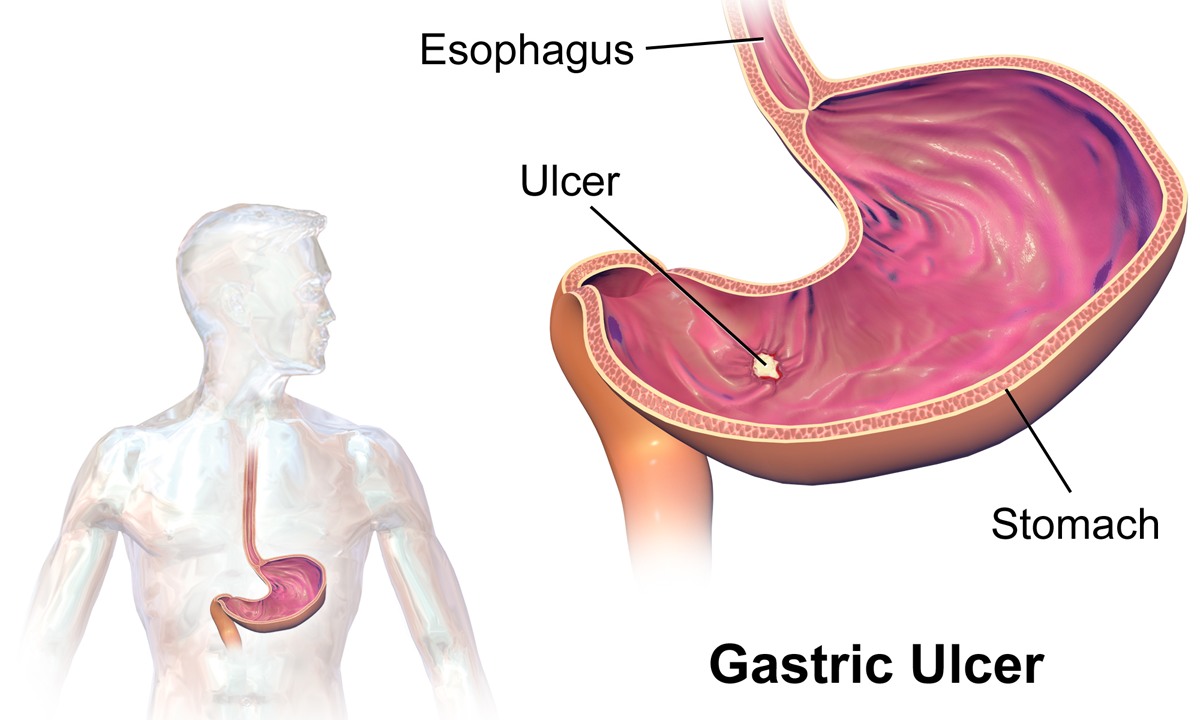
Peptic ulcer disease (PUD) is a breach in the gastric or duodenal mucosa that extends through the muscularis mucosae. Also termed peptic ulcer, it is specified by location as a gastric ulcer (GU) or duodenal ulcer (DU). PUD carries a lifetime prevalence of 5-10% and an annual incidence of 0.1-0.3% [4]A1c. Complicated PUD (CPU), defined by bleeding, perforation, or obstruction, occurs in 10-20% of patients and drives the majority of morbidity and mortality [4]A1c. The incidence of uncomplicated PUD is approximately 0.90 per 1000 person-years; bleeding and perforation complicate about 0.57 and 0.10 per 1000 person-years, respectively [8]B2a.
Classification by Anatomic Location
Gastric and duodenal ulcers differ in etiology and malignant potential. DU is almost universally associated with infection; GU has a more heterogeneous cause, including use and, importantly, , warranting mandatory biopsy of all gastric ulcers [10]A1c[4]A1c.
Classification by Complication Status
Uncomplicated PUD presents with pain or dyspepsia; complicated PUD manifests as upper bleeding (most common), acute perforation, or [4]A1c.
Endoscopic Classification of Bleeding Ulcers
The Forrest classification stratifies endoscopic stigmata of recent hemorrhage and guides the need for hemostatic therapy [11]A1a[12]A1a.
| Forrest Class | Endoscopic Finding |
|---|---|
| Ia | Spurting hemorrhage |
| Ib | Oozing hemorrhage |
| IIa | Non-bleeding visible vessel |
| IIb | Adherent clot |
| III | Clean base |
Lesions classified as Forrest Ia, Ib, IIa, and IIb are designated high-risk and require endoscopic hemostasis; clean-based ulcers (Forrest III) have a low risk of rebleeding and do not require intervention [12]A1a. This classification is central to the acute discussed later.
The next section details the and by which acid, pepsin, , and disrupt mucosal defense, explaining why these distinct classifications demand tailored therapeutic strategies.
Pearl: All gastric ulcers must be biopsied to exclude malignancy; duodenal ulcers rarely require biopsy unless atypical [10]A1c.
| Forrest Class | Endoscopic Finding |
|---|---|
| Ia | Spurting hemorrhage |
| Ib | Oozing hemorrhage |
| IIa | Non-bleeding visible vessel |
| IIb | Adherent clot |
| III | Clean base |
Pathophysiology & Mechanism
- ▸H. pylori GGT generates H2O2, activates NF-κB, upregulates IL-8, and causes oxidative DNA damage, a key virulence mechanism.
- ▸An inadequate regulatory T cell response (2.4-fold reduction in IL-10+ Tregs) unleashes Th1/Th2 inflammation, driving ulcer formation.
- ▸NSAIDs impair mucosal protection via COX inhibition and direct injury; the semaphorin-plexin-Rasal1 pathway that normally suppresses gastrin represents a novel protective axis.
- ▸Obesity, MMP-9 polymorphisms, and uremic factors contribute to ulcer risk through mechanisms independent of H. pylori and NSAIDs.
From the classification of gastric versus duodenal ulcers, the pathogenesis of each stems from a final common pathway of mucosal injury exceeding repair capacity, but the initiating insults differ. The two dominant drivers, Helicobacter pylori infection and nonsteroidal anti-inflammatory drug (NSAID) use, operate through distinct but overlapping mechanisms that converge on epithelial disruption, inflammation, and impaired healing.
H. pylori Virulence Factors
H. pylori colonizes the gastric mucus layer and deploys an array of virulence factors that directly damage epithelium and subvert host defenses. Gamma-glutamyl transpeptidase (GGT) is a key pathogenic factor: purified H. pylori GGT generates hydrogen peroxide in gastric epithelial cells, leading to activation of nuclear factor-κB (NF-κB) and up-regulation of interleukin-8 (IL-8) production, with consequent oxidative DNA damage (elevated 8-OH-dG levels) [15]D5. Clinical isolates from patients with peptic ulcer disease (PUD) show significantly higher GGT activity than isolates from nonulcer dyspepsia patients (P<0.001) [15]D5. Additionally, bacterial heat shock proteins (GroEL, DnaK) assist survival in acidic and oxidative stress, promote adhesion to gastric epithelium, modulate immune responses, and support biofilm formation, thereby sustaining chronic infection [22]D5.
Host Immune Response and the Regulatory T Cell Deficit
A critical determinant of whether H. pylori infection leads to ulceration is the quality of the host adaptive immune response. In infected individuals without ulcers, H. pylori induces a robust regulatory T cell (Treg) response characterized by high levels of IL-10-secreting CD4+CD25hi Tregs, likely promoting bacterial persistence without mucosal destruction. In patients who develop PUD, this regulatory response is 2.4-fold reduced (P=0.05), while Th1 and Th2 responses are increased 3.2-fold and 6.1-fold, respectively [16]B3b. In vitro, IL-10 inhibits IL-8 expression and NF-κB activation induced by H. pylori in gastric epithelial cells, but also paradoxically enhances H. pylori growth in co-culture [16]B3b. Thus, an inadequate Treg response unleashes unchecked Th1/Th2-mediated inflammation that drives ulcer formation. Eradication of H. pylori reverses the gastric epithelial transcriptome, IL-8, chemokine ligand 3, beta defensin, and somatostatin are among 98 differentially expressed genes identified by laser capture microdissection [17]C4, confirming the dynamic nature of host-pathogen interaction.
NSAID-Induced Mucosal Injury
NSAIDs damage the gastroduodenal mucosa through two complementary routes. Systemically, inhibition of cyclooxygenase-1 (COX-1) and COX-2 reduces synthesis of cytoprotective prostaglandins, impairing mucus secretion, bicarbonate production, mucosal blood flow, and epithelial restitution. Topically, NSAIDs uncouple oxidative phosphorylation and disrupt the phospholipid layer of the gastric mucus barrier, causing direct cellular injury. A recent mechanistic study identified a semaphorin-plexin-Rasal1 signaling pathway in gastric G cells that normally inhibits gastrin expression by inactivating R-Ras via the RasGAP protein Rasal1 [27]D5. NSAIDs may interfere with this protective signaling; conversely, administration of recombinant semaphorin 4D alleviated NSAID-induced PUD in mice, suggesting a pharmacologically targetable axis that limits gastric acid hypersecretion [27]D5.
Other Contributing Mechanisms
Obesity, both general (BMI ≥30 kg/m²) and central (waist-to-hip ratio ≥1.00), is independently associated with increased risk of gastric ulcer (HR 1.83 and 1.88, respectively), particularly H. pylori-negative ulcers [18]B2b. Proposed mechanisms include systemic inflammation, alterations in the gastric microbiome, and impaired epithelial barrier function. The gastric microbiome itself shifts in PUD: diversity declines and specific taxa, Ruminococcus_2, Agathobacter, Alistipes, Helicobacter, Bacteroides, Faecalibacterium, become enriched, with concurrent changes in metabolites and metabolic pathways [26]C4. Genetic susceptibility also plays a role: functionally significant polymorphisms of the MMP-9 gene (e.g., allele G of rs17576) increase PUD risk (ORadj 1.31), and the haplotype CG of rs3918249-rs17576 specifically raises risk of H. pylori-positive PUD (ORadj 1.49) [29]B3b. In patients with end-stage renal disease, ulcer recurrence after successful H. pylori eradication is 25% versus 3% in non-uremic patients (OR 10.0), highlighting the contribution of non-H. pylori, non-NSAID factors such as uremic toxins and altered mucosal healing [20]B2b.
These pathogenic pathways, microbial virulence, immune dysregulation, prostaglandin depletion, mucosal barrier failure, and systemic inflammation, set the stage for the epidemiological patterns and risk factor profiles discussed in the next section.
Pearl: In H. pylori-positive PUD, inadequate regulatory T cell activity, not simply the presence of the bacterium, determines whether infection progresses to ulceration; this immune deficit may explain why only a minority of colonized individuals develop ulcers.
Epidemiology, Etiology & Risk Factors
- ▸Annual incidence of physician-diagnosed PUD is 0.10-0.19%; prevalence is 0.12-1.50% in Western populations but as high as 17.2% in some Asian cohorts.
- ▸H. pylori infection (especially cagA-positive strains) carries the strongest risk: HR 18.4 for duodenal ulcer and 2.9 for gastric ulcer.
- ▸Hospitalization rates for PUD have declined by ~3.9% per year globally, but the decline is slowing, likely due to aging populations and increased NSAID/aspirin use.
The interplay between H. pylori infection, NSAID use, and host factors determines the population burden of peptic ulcer disease (PUD) and its complications. Annual incidence of physician-diagnosed PUD is 0.10-0.19%, with a 1‑year prevalence of 0.12-1.50% [39]B2a. In a Shanghai population-based endoscopic survey, prevalence reached 17.2%, substantially higher than in Western populations, and 92.6% of those with PUD were H. pylori‑positive [51]C4. The proportion of PUD attributable to H. pylori globally is 57% (95% CI 44-68%), corresponding to 3.5 million potentially preventable cases each year [30]B2a.
Temporal Trends
Hospitalization rates for PUD have declined consistently across 36 OECD countries since 2000, with an average annual percent change of - (95% CI -4.4 to -3.3) and mortality falling by - per year [48]B2c. In Taiwan, admissions for bleeding gastric ulcer decreased from 116.9 to 61.1 per 100,000 between 1997 and 2006, coinciding with a 202% increase in H. pylori eradication therapy and a 1071% increase in proton pump inhibitor use [35]B2b. In the United States, PUD-related hospitalizations fell 25.8% from 2005 to 2014, though the rate of decline slowed after 2008 [50]B2c. The decline is driven largely by a reduction in H. pylori‑associated ulcer disease, but increasing use of low‑dose and NSAIDs in an aging population has partially offset this trend [58]D5.
Risk Factors
| Risk Factor | Odds Ratio / Hazard Ratio | Evidence Level |
|---|---|---|
| H. pylori (cagA‑positive) - gastric ulcer | HR 2.9 (95% CI 1.5-5.5) [36]B2b | 2b |
| NSAID use | HR 2.39 (95% CI 1.9-3.0) [14]B3b | 3b |
| Chronic liver disease - post‑bleeding mortality | MRR 2.38 (95% CI 2.02-2.80) [42]B2b | 2b |
H. pylori infection remains the dominant modifiable risk factor; its eradication reduces ulcer recurrence in a time‑dependent manner. Delaying eradication beyond 7 days from ulcer diagnosis increases the hazard of recurrent ulcer by 1.17‑fold (8-30 days) to 3.55‑fold (>1 year) [38]B2b.
Special Populations
Patients with chronic liver disease, particularly cirrhosis, carry a 90‑day mortality of 25.3% after peptic ulcer bleeding compared with 18.3% in those without liver disease [42]B2b. Inflammatory bowel disease is associated with increased PUD risk even before IBD diagnosis (RR elevated) [63]B3b. COVID‑19 patients with bleeding most commonly have gastric or duodenal ulcers (80% of upper GI bleeds) [37]B3b.
Controversies and Guideline Disagreement
| Question | Position A | Position B | Strength | Implication |
|---|---|---|---|---|
| Should H. pylori screen‑and‑treat be implemented at population level? | Yes - prevents 3.5 million PUD cases globally [30]B2a | No - 13‑year RCT in low‑prevalence area showed no significant reduction in PUD incidence (OR 0.88, 0.70-1.11) [31]A1b | 1b vs 2a | Benefit likely depends on baseline prevalence; population screening may be cost‑effective only in high‑prevalence regions. |
Pearl: In any patient with peptic ulcer disease, the single most impactful action is timely H. pylori testing and eradication, delay beyond 7 days progressively increases the risk of ulcer recurrence and complicated ulcer [38]B2b.
Clinical Presentation
- ▸Epigastric pain is the dominant symptom, but its absence, especially in the elderly and NSAID users, does not exclude ulcer disease; up to one-third of ulcers are clinically silent until a complication arises.
- ▸Physical examination is often normal in uncomplicated disease; the clinician must actively seek signs of bleeding (melena, orthostasis), perforation (peritonitis), or obstruction (succussion splash).
- ▸Hemodynamic instability (OR 7.31) and delayed presentation >24 hours (OR 4.00) are the strongest predictors of mortality in bleeding and perforated ulcers, respectively.
The transition from risk factor to mucosal injury often occurs silently, with the clinical presentation determined by the depth, location, and chronicity of the ulcer. Pain is the dominant symptom, but its absence does not exclude disease, up to one-third of peptic ulcers, particularly in older adults and NSAID users, remain asymptomatic until a complication such as bleeding or perforation supervenes [57]D5.
Presenting Symptoms
Epigastric pain is classically described as a burning or gnawing sensation, though many patients report a vague, aching discomfort. The relationship to meals helps distinguish location: duodenal ulcers typically cause pain 2-3 hours after eating and at night, relieved by food or antacids, whereas gastric ulcers often worsen with eating and may be associated with early satiety, nausea, or weight loss. Dyspeptic symptoms, bloating, belching, and heartburn, frequently coexist but are poor predictors of endoscopic findings [47]D5. Symptoms alone cannot reliably differentiate ulcer from non-ulcer dyspepsia, and alarm features (dysphagia, weight loss, GI bleeding, anemia) have limited sensitivity for underlying malignancy [75]C4.
Physical Examination Findings
Epigastric tenderness to deep palpation is the most common sign, but it is neither sensitive nor specific. In uncomplicated disease, the examination is often unremarkable. The clinician must actively seek signs of complications:
- Bleeding: pallor, tachycardia, orthostatic hypotension, melena on digital rectal examination, or coffee-ground emesis. Hemoglobin < 70 g/L at presentation independently predicts mortality (adjusted OR 1.56, 95% CI 1.15-2.11) [72]C4.
- Obstruction: gastric distension, succussion splash, and projectile vomiting of undigested food.
Phenotypic Variants
| Variant | Key Features | Frequency |
|---|---|---|
| Duodenal ulcer | Nocturnal pain, relieved by food; usually benign | 70-80% of PUD |
| Gastric ulcer | Pain worsened by food; requires biopsy to exclude malignancy | 20-30% |
| H. pylori-associated | Younger age, often recurrent; responds to eradication | Decreasing in West [81]B3b |
| NSAID-induced | Older age, often silent until bleeding; higher risk of complications | 7% of AUGIB [72]C4 |
| Idiopathic (IPUD) | Increasing proportion; associated with older age, male sex, polypharmacy [81]B3b | Up to 25% of PUD in some series |
| Perforated peptic ulcer (PPU) | Sudden severe epigastric pain, peritoneal signs, hypotension | 2-10% of PUD patients [68]C4 |
Red Flags
Any of the following requires urgent evaluation and hospitalization: hematemesis or melena, hemodynamic instability (tachycardia, systolic BP < 90 mmHg), signs of peritonitis, or evidence of . Hemodynamic instability is the strongest predictor of death in in-hospital nonvariceal bleeding (OR 7.31) [74]B2b.
Atypical Presentations
- Silent ulcer: Presents only with iron deficiency anemia or a low hemoglobin found on routine labs. This is common in older adults and those on NSAIDs or anticoagulants [57]D5.
- Zollinger-Ellison syndrome (ZES): Suspect when multiple ulcers, ulcers in atypical locations (e.g., post-bulbar), or refractory to PPI therapy. Diarrhea and hypergastrinemia are hallmark features [78]C4.
- Pediatric PUD: Rare but can present with shock and upper GI bleeding; endoscopy remains the key diagnostic step [80]C4.
- Perforation in the elderly: May present with minimal abdominal signs due to reduced peritoneal response; a high index of suspicion is needed.
Pearl: In any patient with upper GI bleeding or unexplained iron deficiency anemia, always perform a rectal examination for melena, it is the quickest, most accessible sign of a bleeding peptic ulcer, and its presence should prompt urgent endoscopy.
| Finding | Associated Outcome | Odds Ratio (95% CI) | Source |
|---|---|---|---|
| Hemodynamic instability (NVUGIB) | In-hospital mortality | 7.31 (2.71-19.65) | [74]B2b |
| Pre-operative hypotension (PPU) | Postoperative complications | 4.81 (1.75-13.20) | [77]A1a |
| Delayed presentation >24 h (PPU) | Postoperative complications | 4.00 (1.79-8.95) | [77]A1a |
| Hemoglobin ≤70 g/L at presentation | In-hospital mortality | aOR 1.56 (1.15-2.11) | [72]C4 |
Diagnosis & Workup: Endoscopy, Imaging, and Essential Laboratory Studies
- ▸Upper endoscopy with biopsy for H. pylori is the gold standard for diagnosing peptic ulcer disease.
- ▸H. pylori testing is mandatory in all PUD patients; failure to test independently increases the risk of recurrent bleeding and death by 51%.
- ▸CT angiography has poor sensitivity (20%) for acute GI bleeding and should not be used as the initial diagnostic test.
After clinical presentation raises the suspicion of peptic ulcer disease, definitive diagnosis requires endoscopic visualization. (esophagogastroduodenoscopy, EGD) is the gold-standard test, providing direct inspection of the gastric and duodenal mucosa, identification of ulcer stigmata, and the opportunity for tissue biopsy and therapeutic intervention.
Upper Endoscopy, The Gold Standard
High-quality upper endoscopy demands adequate mucosal cleansing, insufflation, and inspection in both anterograde and retroflexed views using a high-definition white-light system [5]A1c. At endoscopy, the ulcer is characterized by its location, size, and stigmata of recent hemorrhage. The Forrest classification stratifies stigmata into active spurting bleeding (Ia), oozing (Ib), nonbleeding visible vessel (IIa), adherent clot (IIb), flat pigmented spot (IIc), and clean base (III); these categories guide the need for endoscopic hemostasis and predict rebleeding risk. For ulcers with active bleeding or a nonbleeding visible vessel, endoscopic therapy (injection, thermal, or mechanical) is indicated [85]D5. Even for ulcers with an adherent clot, endoscopic hemostatic treatment significantly reduces recurrent bleeding compared with medical alone (risk ratio [RR] 0.40) [62]A1a. Routine second-look endoscopy is not superior to single endoscopy with complete hemostasis in preventing rebleeding (95% CI 0.51-1.23) or mortality (RR 0.69) [82]A1a. Thus, a single high-quality endoscopy with definitive hemostasis suffices.
Helicobacter pylori Testing
Every patient with PUD must be tested for H. pylori, preferably at the time of endoscopy. Biopsy-based tests include rapid urease testing and histology with special stains; culture and polymerase chain reaction are reserved for refractory cases. If endoscopy is not performed or biopsies are omitted (e.g., due to anticoagulation), noninvasive options, stool antigen test or urea breath test, are valid. Serology is less accurate in active bleeding and is not recommended for initial diagnosis. Alarmingly, 19% of hospitalized patients with bleeding PUD are not tested within 60 days; intensive care unit admission is the strongest predictor of missed testing (adjusted odds ratio 0.42, 95% CI 0.27-0.66 for testing) [88]B2b. Failure to test and treat H. pylori is independently associated with a 51% reduction in the composite outcome of rebleeding or death at 1 year (adjusted hazard ratio 0.49, 95%) [88]B2b. H. pylori and NSAID use are independent and synergistic risk factors: the odds ratio for uncomplicated ulcer in H. pylori-positive NSAID users versus H. pylori-negative non-users is 17.54 (95% CI not calculable from reported data) [84]A1a.
Imaging
Cross-sectional imaging has a limited role in the primary diagnosis of uncomplicated PUD. For acute upper GI bleeding, CT angiography (CTA) has very poor sensitivity (20%) for identifying the bleeding source and should not be used as an initial diagnostic test [91]B2b. When perforation is suspected, an upright chest radiograph or abdominal CT detects free air. Point-of-care ultrasound can identify pneumoperitoneum with moderate sensitivity (66%) and high specificity (85%), similar to plain radiography [90]C4. The ACR Appropriateness Criteria note that right upper quadrant pain may be due to peptic ulcer disease, and CT or ultrasound may be helpful when cholecystitis or other biliary pathology is the leading consideration [86]A1c.
Laboratory Studies
may reveal anemia from chronic blood loss. A blood urea nitrogen-to-creatinine ratio >30 suggests upper GI hemorrhage. Coagulation studies and platelet count inform bleeding risk. Liver enzymes and serum albumin aid in assessing cirrhosis, which alters management. Stool antigen for H. pylori is preferred if biopsies were not taken. In patients presenting with acute bleeding, type and crossmatch should be obtained.
Diagnostic Algorithm
The workup follows a stepwise approach:
- Clinical assessment, evaluate for alarm symptoms (hematemesis, melena, syncope, hemodynamic instability) and risk factors (NSAID/ use, H. pylori, older age).
- Hemodynamic stabilization, initiate resuscitation if bleeding is suspected.
- Urgent EGD (within 24 hours for hemodynamically stable patients with overt bleeding), identify ulcer, define Forrest class, perform endoscopic hemostasis for high-risk stigmata, and obtain biopsies for H. pylori.
- For suspected perforation, obtain upright chest X-ray or abdominal CT; proceed with surgical consultation.
- Post-endoscopy, if biopsies were not taken, complete H. pylori testing using stool antigen or urea breath test within 60 days.
Risk stratification using validated scores (e.g., Glasgow-Blatchford, Rockall) refines the urgency of endoscopy and is covered in the next section.
Pearl: In any patient with PUD, confirm H. pylori status via biopsy or noninvasive testing within 60 days; untreated infection is associated with a more than 50% higher risk of recurrent bleeding or death within one year [88]B2b.
| Modality | Role | Key Performance / Notes |
|---|---|---|
| Upper endoscopy (EGD) | Gold standard for diagnosis and staging | Direct visualization, biopsy for H. pylori, therapeutic hemostasis; high-definition white-light system recommended [5]A1c |
| Biopsy rapid urease test | Detection of H. pylori | Performed during EGD; sensitivity >90% (not calculable from provided refs) |
| Stool antigen test | Noninvasive H. pylori detection | Preferred when biopsies not obtained; valid post-bleeding |
| Urea breath test | Noninvasive confirmation of eradication | Requires patient cooperation; false positives with recent PPI use |
| CT angiography | Acute GI bleeding localization | Sensitivity only 20%; not recommended as initial test [91]B2b |
| Upright chest X-ray / abdominal CT | Suspected perforation | Detects free air; CT more sensitive |
| Point-of-care ultrasound (POCUS) | Pneumoperitoneum detection | Sensitivity 66%, specificity 85% [90]C4 |
Severity, Staging & Risk Stratification (GI Scores)
- ▸Endoscopic stigmata (Forrest classification) stratify immediate rebleeding risk and dictate need for endoscopic therapy.
- ▸The Glasgow-Blatchford score is the preferred pre-endoscopy tool to identify patients who can be discharged without endoscopy.
- ▸The full Rockall score after endoscopy predicts in-hospital mortality and defines high-risk patients (≥5) for potential prophylactic embolization.
- ▸Machine-learning models (IPU-ML) and a gastric cancer nomogram refine long-term risk prediction in specific PUD populations.
Once endoscopy confirms an ulcer, the endoscopic stigmata and clinical parameters jointly define the patient's bleeding risk and prognosis. Three validated systems, the Forrest classification, the Rockall score, and the Glasgow-Blatchford score (GBS), guide triage, endoscopy timing, and escalation of care.
Endoscopic Stigmata: The Forrest Classification
The Forrest classification stratifies the appearance of a bleeding ulcer at endoscopy and predicts the risk of further bleeding without intervention. Active spurting (Ia) carries a rebleeding rate of approximately 90% if untreated, whereas a clean base (III) carries a risk below 5%. Patients with high-risk stigmata (Forrest Ia-IIb: active bleeding, non-bleeding visible vessel, or adherent clot) are candidates for immediate endoscopic hemostasis. The high-risk definition also includes a Rockall score ≥5, a threshold used in trials to select patients for prophylactic transarterial embolization after successful endoscopic therapy [111]B2a.
Clinical Risk Scores: Rockall and Glasgow-Blatchford
| Score | Components | Timing | Primary Use |
|---|---|---|---|
| Rockall (full) | Age, shock, comorbidity, endoscopic diagnosis, stigmata | After endoscopy | Predicts mortality |
| Clinical Rockall | Age, shock, comorbidity (no endoscopy) | At presentation | Early risk stratification |
| Glasgow-Blatchford (GBS) | BUN, Hb, SBP, HR, melena, syncope, liver disease, heart failure | At presentation | Predicts need for intervention (transfusion, endoscopy, surgery) |
The GBS is particularly useful for identifying very-low-risk patients who can be discharged without endoscopy: a GBS of 0 predicts <1% risk of needing an intervention. In the 2007 UK audit, overall in-hospital mortality for acute upper GI bleeding was 10%, rising to 26% in patients who bled while already hospitalized, underscoring the importance of comorbidity burden captured by both scores [73]C4.
Prediction of Rebleeding and Long-Term Risk
For patients with a history of idiopathic (H. pylori-negative, NSAID-negative) ulcer bleeding, a machine-learning model (IPU-ML) incorporating six parameters, age, baseline hemoglobin, and presence of gastric ulcer, diseases, malignancies, and infections, identifies those at low risk of recurrence. At a cutoff of 0.20, the model achieves an area under the receiver operating characteristic curve of 0.775 in an independent validation cohort, with a negative predictive value of 91.1% for rebleeding within one year [100]B2b. Blood group B appears protective (OR 0.20 for rebleeding vs non-B), a variable not yet integrated into routine scores [107]B3b.
Separately, a nomogram developed from 278,898 PUD patients predicts the 1- and 2-year risk of gastric cancer (concordance index 0.78). Factors include age, sex, ulcer site, complications, H. pylori eradication therapy, NSAID use, and surveillance endoscopy. The model produces quartiles of risk: from the lowest to the highest quartile, 1-year cumulative incidences range from 7.4 to 86.6 per 10,000 [54]B3b.
These scoring tools directly inform the urgency and intensity of acute , the subject of the next section.
Pearl: The Glasgow-Blatchford score outperforms the Rockall score in identifying patients who can be safely managed as outpatients (GBS = 0), while the full Rockall score better predicts mortality. A Rockall score ≥5 defines the high-risk group most likely to benefit from prophylactic transarterial embolization after endoscopic hemostasis [111]B2a.
Acute Management
- ▸Acute management of bleeding peptic ulcer follows a structured pathway: resuscitation, pre-endoscopic PPI, urgent endoscopy with hemostasis, and post-endoscopic monitoring.
- ▸Routine second-look endoscopy does not reduce rebleeding, surgery, or mortality, and should not be performed after successful initial hemostasis.
- ▸Hemostatic spray is an effective rescue therapy for difficult bleeding, especially when combined with other endoscopic modalities.
After risk stratification assigns a patient to a high-risk category (Glasgow-Blatchford ≥12 or Rockall ≥5), the acute of bleeding peptic ulcer follows a time-critical pathway built on four pillars: resuscitation, pre-endoscopic pharmacotherapy, endoscopic hemostasis, and post-endoscopic monitoring [4]A1c.
Step 1: Resuscitation and Triage
Resuscitation begins with securing the airway in patients with hematemesis or altered mental status, followed by large-bore intravenous access and volume resuscitation with crystalloids [4]A1c[116]D5. Blood transfusion is administered as needed, using a restrictive strategy. The (WSES) guidelines emphasize that prompt hemodynamic stabilization is the foundation for safe endoscopic intervention [4]A1c. After stabilization, the patient is triaged to an appropriate setting, intensive care unit for those with ongoing bleeding, hemodynamic instability, or significant comorbidities; ward-level care for stable high-risk patients [4]A1c.
Step 2: Pre-Endoscopic Medical Therapy
High-dose intravenous proton pump inhibitor (PPI) therapy is initiated as soon as the diagnosis of ulcer bleeding is suspected. The (AGA) clinical practice update recommends early administration of IV PPI to reduce the need for endoscopic therapy and to downstage the ulcer's bleeding stigmata [116]D5. This approach is supported by the WSES guidelines, which advocate for PPI therapy before endoscopy in patients with suspected bleeding peptic ulcer [4]A1c.
Step 3: Endoscopic Hemostasis
Urgent endoscopy is performed after hemodynamic stabilization. The AGA best practice advice states that endoscopic therapy should achieve hemostasis in the majority of patients with non-variceal upper bleeding [116]D5. For ulcers with active bleeding or nonbleeding visible vessels (Forrest Ia, Ib, IIa), the WSES guidelines endorse endoscopic treatment using thermal coagulation, hemoclips, or injection therapy [4]A1c. Hemostatic spray (TC-325) is a noncontact option for cases of massive bleeding with poor visualization, for salvage therapy, or for diffuse bleeding from malignancy; in a multicenter registry of 202 patients with peptic ulcer bleeding, immediate hemostasis was achieved in 88% (178/202), though rebleeding occurred in 17% (26/154) and 7-day all-cause mortality was 12% (21/175) [121]C4. Combination therapy of hemostatic spray with other endoscopic modalities was associated with lower 30-day mortality (16%) compared with monotherapy or rescue therapy [121]C4.
Step 4: Post-Endoscopic Monitoring and Prevention of Rebleeding
After successful endoscopic hemostasis, patients receive high-dose IV PPI for 72 hours to prevent rebleeding, then transition to oral PPI [4]A1c[116]D5. Routine second-look endoscopy is not recommended. A meta-analysis of 9 randomized controlled trials (1452 patients) found no significant difference in recurrent bleeding, need for surgery, or mortality between patients who underwent planned second-look endoscopy and those who did not [82]A1a. The quality of evidence ranged from low to moderate, supporting single endoscopy with complete hemostasis as the standard [82]A1a.
Controversies and Guideline Disagreement
No major guideline disagreements were identified for the acute management of bleeding peptic ulcer in the reviewed evidence. The WSES guidelines [4]A1c and the AGA clinical practice update [116]D5 provide consistent recommendations regarding resuscitation, pre-endoscopic PPI therapy, and the timing of endoscopic intervention. The role of second-look endoscopy is settled by the meta-analysis showing no benefit [82]A1a.
Pearl: In acute peptic ulcer bleeding, high-dose IV PPI initiated before endoscopy reduces the need for endoscopic therapy, and routine second-look endoscopy is not supported by evidence, a single well-performed endoscopic hemostasis is sufficient [82]A1a[116]D5.
Long-term & Definitive Medical Management
- ▸H. pylori eradication heals duodenal ulcers and reduces recurrence risk; early eradication (within 1 year) also decreases gastric cancer risk (HR 0.77).
- ▸After successful eradication and NSAID withdrawal, most patients do not require long-term PPI; exceptions include idiopathic PUD, ESRD, and those requiring ongoing anti-thrombotic therapy.
- ▸In patients on anti-thrombotic therapy and a history of PUD, coprescribing a PPI reduces GI bleeding risk by >90% (OR 0.068).
The transition from acute hemostasis to definitive therapy hinges on three decisions: eradicate Helicobacter pylori, discontinue NSAIDs, and determine the need for long-term acid suppression. Each choice directly determines ulcer healing rates, recurrence risk, and the likelihood of ulcer-related complications over the subsequent months to years.
H. pylori Eradication: Regimens and Confirmatory Testing
Eradication therapy is the cornerstone of definitive for H. pylori-positive peptic ulcer disease (PUD). A Cochrane meta-analysis of 55 trials confirmed that eradication therapy heals duodenal ulcers more effectively than ulcer-healing drugs alone (RR of ulcer persisting 0.66, 95% CI 0.58-0.76) and markedly reduces recurrence [67]A1a (1a). The standard -based triple regimen (PPI + clarithromycin 500 mg b.d. + 1 g b.d. for 7-14 days) achieves a mean intention-to-treat cure rate of only 80% (95% CI 77-82%) in settings with moderate clarithromycin resistance [123]D5 (1b). Alternative first-line options include non-bismuth quadruple “concomitant” therapy (PPI + amoxicillin + clarithromycin + for 10 days), which yielded a non-significant 5% absolute advantage over sequential therapy (87% vs 81% ITT, OR 1.5, 95% CI 0.9-2.8) [114]A1b (1b). For patients with confirmed clarithromycin resistance by polymerase chain reaction, bismuth-based quadruple therapy (BQT) is effective: 7-day BQT achieved 79.0% ITT eradication and 14-day BQT 87.2% (p = 0.170), with no difference in adverse events [118]A1b (1b). Adding licorice to standard triple therapy improved eradication from 62.5% to 83.3% (p < 0.05) in a small randomized trial, but this has not been replicated in larger studies [130]A1b (1b).
Confirmatory testing must be performed ≥4 weeks after completing therapy, using a or stool antigen test, with the patient off PPIs and for at least 2 weeks. Without confirmation, persistent infection, the most common cause of recurrent ulcer, goes undetected.
Maintenance Acid Suppression: When and for How Long?
After successful H. pylori eradication and withdrawal of NSAIDs, many patients do not require ongoing antisecretory therapy. In the Cochrane analysis, eradication reduced duodenal ulcer recurrence rates to <5% in the absence of further NSAID use or reinfection [67]A1a[132]A1a. Exceptions to this rule are critical:
- Idiopathic PUD: After excluding H. pylori, NSAIDs, and other causes (e.g., acid hypersecretion, non-H. pylori helicobacters), idiopathic ulcers often require indefinite (PPI) maintenance. Non-Helicobacter pylori Helicobacter (NHPH) species are found in 29.1% of H. pylori-negative patients with gastritis or PUD and may be treated with standard eradication regimens [65]C4 (4).
- (GOO): In a cohort of 23 patients, 74% required long-term antisecretory therapy after endoscopic balloon dilation, mainly due to idiopathic PUD, reflux esophagitis, or continued use [93]B2b (2b).
When maintenance therapy is indicated, standard-dose PPI (e.g., omeprazole 20 mg daily) is appropriate. Potassium-competitive acid blockers (P-CABs) have a faster onset and more sustained acid control, but the AGA 2024 clinical practice update advises against their routine use as first-line therapy due to higher cost and a lack of proven clinical superiority over double-dose PPIs [1]A1c (1c). They may be reserved for patients with documented acid-related reflux who fail twice-daily PPI [1]A1c.
Deprescribing PPI in long-term users: A Cochrane review (6 trials, n=1758) found low-quality evidence that on-demand PPI use may be acceptable in patients with nonerosive reflux disease or mild esophagitis, but it did not enroll patients with healed PUD [133]A1a (1a). For patients with healed, uncomplicated ulcers who have completed eradication and stopped NSAIDs, a trial of PPI discontinuation is reasonable with scheduled follow-up.
Managing Patients Concomitantly on Anti-thrombotic Therapy
Many patients with PUD require ongoing antiplatelet or anticoagulant therapy. The evidence strongly supports a “coprescribe a PPI” strategy:
- Aspirin alone: In patients with aspirin-related symptomatic ulcers, rabeprazole 20 mg/day plus aspirin 100 mg/day healed ulcers in 90% of patients at 12 weeks, statistically non-inferior to switching to 75 mg/day plus rabeprazole (86.2%) [115]A1b (1b). Continuing aspirin with a PPI is therefore an effective first choice when aspirin is needed for cardiovascular prevention.
Practice point: In patients with a history of PUD who require any antithrombotic regimen, a PPI should be coprescribed for the duration of antithrombotic therapy. The benefit, preventing one bleeding event per 40-50 patients treated (NNT estimated from [124]C4 but absolute numbers not available), far outweighs the small risks of long-term PPI use.
Special Populations: Lifestyle and Preventive Strategies
- Early eradication reduces gastric cancer risk: In a nationwide Taiwanese cohort (80,255 patients), early H. pylori eradication (within 1 year of PUD diagnosis) was associated with a standardized incidence ratio (SIR) of gastric cancer similar to the general population (SIR 1.05), whereas late eradication carried an increased risk (SIR 1.36) [44]B2b (2b). Early eradication was an independent protective factor (HR 0.77), especially in gastric ulcer patients [44]B2b. Population-based mass eradication in Taiwan reduced PUD incidence by 67.4% (95% CI 52.2%-77.8%) and gastric atrophy by 77.2% [45]B2b (2b).
- NSAID and aspirin avoidance: All patients with PUD should be advised to avoid NSAIDs if possible. If an NSAID is necessary, the lowest effective dose should be used with a PPI. Frequent NSAID use was independently protective against gastric cancer in one study (HR 0.65), likely due to detection bias from more medical contact [44]B2b.
Treatment Failure Protocol: Persistent or Recurrent Ulcer
If an ulcer does not heal after 8-12 weeks of PPI therapy, or if it recurs after healing:
- Confirm H. pylori eradication status with a urea breath test; if positive, retreat with a regimen that avoids clarithromycin (e.g., bismuth quadruple therapy or -based therapy).
- Re-evaluate NSAID/aspirin use (including over-the-counter or topical NSAIDs).
- Consider non-H. pylori helicobacters (NHPH) by PCR on gastric biopsies [65]C4.
- Exclude Zollinger-Ellison syndrome with fasting gastrin level and gastric acid analysis.
- Consider surreptitious ASA use or cocaine (which can cause ulceration).
Pearl: After H. pylori eradication, confirm cure with a urea breath test at least 4 weeks off PPI and antibiotics; failure to verify eradication is the single most common cause of persistent or recurrent ulcer [67]A1a[114]A1b.
| Regimen | Duration | Components | ITT eradication rate | Key Evidence |
|---|---|---|---|---|
| Clarithromycin-based triple therapy | 7-14 days | PPI BID + clarithromycin 500 mg BID + amoxicillin 1 g BID | 80% (95% CI 77-82%) | [123]D5 (1b) |
| Concomitant (non-bismuth quadruple) therapy | 10 days | PPI BID + amoxicillin 1 g BID + clarithromycin 500 mg BID + metronidazole 500 mg BID | 87% | [114]A1b (1b) |
| Bismuth quadruple therapy (first-line for clarithromycin-resistant) | 7-14 days | PPI BID + bismuth subsalicylate 262 mg QID + metronidazole 250 mg QID + tetracycline 500 mg QID | 79-93% (7-day ITT 79%, 14-day ITT 87.2%) | [118]A1b (1b) |
| Indication | Rationale | Recommended Duration |
|---|---|---|
| Idiopathic PUD | No identifiable cause; high recurrence risk | Indefinite PPI |
| End-stage renal disease | 28% recurrence at 2 years despite successful H. pylori eradication | Indefinite PPI |
| Continued need for NSAID/aspirin | Ulcer risk persists while drug is taken | For as long as NSAID/aspirin is used |
| Dual antiplatelet or anticoagulant + antiplatelet | PPI coprescription reduces GI bleeding (OR 0.068) | Duration of anti-thrombotic therapy |
| Gastric outlet obstruction | 74% need maintenance after endoscopic dilation [93]B2b | Indefinite PPI |
| H. pylori-negative, NSAID-negative ulcer | Exclude hypersecretion, NHPH; indefinite PPI if no other cause found | Indefinite PPI |
Endoscopic & Procedural Management
- ▸Endoscopic hemostasis is first-line for Forrest Ia-IIb bleeding ulcers; combination therapy (injection + thermal/clip) is superior to monotherapy.
- ▸For adherent clots, endoscopic treatment reduces rebleeding risk (RR 0.40) but does not affect mortality or need for surgery.
- ▸EBD for PUD-related GOO has clinical success >90% with low perforation risk; PPI use independently predicts success.
- ▸Hemostatic powders are effective salvage therapy for refractory bleeding with short-term success ~81%.
While long-term medical therapy addresses the underlying etiology, endoscopic and procedural interventions are required for the acute of bleeding ulcers and for complications such as (GOO). The Japanese Society of Gastroenterology (JSGE) 2015 guidelines recommend endoscopic hemostasis as first-line therapy for ulcer bleeding, reserving surgery or interventional radiology (IR) for failures [117]A1c.
Endoscopic Hemostasis for Bleeding Peptic Ulcers
Endoscopic therapy is indicated for ulcers with active bleeding (spurting or oozing), a nonbleeding visible vessel, or an adherent clot, corresponding to Forrest class Ia-IIb. Combination therapy (e.g., injection of dilute epinephrine followed by thermal coaptation or mechanical clip placement) achieves better hemostasis than injection alone. For ulcers with adherent clots, a systematic review and meta-analysis of 7 RCTs (N=268) demonstrated a significant reduction in recurrent bleeding with endoscopic hemostatic treatment compared with medical management alone (RR 0.40); however, no difference in mortality (RR 0.90) or need for surgery was observed [62]A1a. After successful endoscopic hemostasis, early oral feeding (starting day 1) does not increase rebleeding and significantly shortens hospital stay (P<0.001), enabling earlier discharge [135]A1b.
Hemostatic Powders
For refractory or difficult-to-access bleeding, hemostatic powders such as Hemospray® and Endoclot™ offer a “touch-free” rescue option. In a prospective cohort (N=154) of predominantly upper GI bleeding (89%, including 35% PUD), short-term (≤72 h) hemostatic success was 81% and long-term (≤30 d) success was 67%, with an overall rebleeding rate of 27% [140]B2b. No significant difference in efficacy was found between the two agents; both can be applied as salvage or primary therapy [140]B2b.
Endoscopic Balloon Dilation for Gastric Outlet Obstruction
Benign GOO from PUD is increasingly managed with endoscopic balloon dilation (EBD) rather than surgery. In a large retrospective series (N=264, 26% PUD-related), overall clinical success of EBD was 92%, requiring a mean of 5.4 sessions, with a perforation rate of 3.4% [92]C4. A more recent cohort (N=86, 45% PUD) reported technical success of 97.4% and clinical success of 77.8% after index dilation for PUD-related GOO [138]B2b. Proximal strictures were more common in females, and PPI usage was associated with 3.6 times higher clinical success (P=0.04) [138]B2b. EBD should be the initial intervention due to its low risk profile and high success rates; surgery is reserved for refractory cases [138]B2b.
Indications for Surgery and Interventional Radiology
When endoscopic hemostasis fails or is not feasible (e.g., massive bleeding, perforation), surgical or IR options are indicated. The 2007 UK audit recorded rates of 1.9% undergoing surgery and 1.2% receiving IR for acute upper GI bleeding (AUGIB) [73]C4. For perforated ulcers, Graham patch repair (open or laparoscopic) is the standard; for refractory bleeding, oversewing of the bleeding vessel via duodenotomy with ligation of the gastroduodenal artery may be lifesaving [139]D5. and antrectomy with Roux-en-Y reconstruction is reserved for complex cases [139]D5. The acute care surgeon must be prepared for these infrequent but critical operations [139]D5.
Controversies and Guideline Disagreement
No major guideline disagreements were identified for this topic in the reviewed evidence. The JSGE [117]A1c, AGA [5]A1c, and other international guidelines consistently recommend endoscopic hemostasis as first-line for Forrest Ia-IIb ulcers and EBD for benign GOO, with surgery/IR reserved for failures.
| Technique | Indication | Success rate | Key evidence |
|---|---|---|---|
| Combination injection + thermal/clip | Forrest Ia-IIb ulcers | >90% initial hemostasis | [117]A1c |
| Hemostatic powders (Hemospray, Endoclot) | Refractory / difficult bleeding | ST 81%, LT 67% [140]B2b | [140]B2b (2b) |
| Endoscopic balloon dilation | Benign GOO (PUD-related) | Technical 97-100%, clinical 78-92% [92]C4[138]B2b | [92]C4[138]B2b (2b-4) |
Pearl: For bleeding ulcers with adherent clots, endoscopic therapy reduces rebleeding risk by 60% (RR 0.40) and is recommended over medical management alone; for benign GOO, EBD successfully resolves obstruction in >90% of PUD-related cases and should be the initial procedural choice [62]A1a[92]C4[138]B2b.
History and Evolution of Treatment
- ▸The shift from acid suppression to H. pylori eradication transformed peptic ulcer disease from a chronic relapsing condition to a curable infection in most patients.
- ▸Clarithromycin resistance forced the evolution from triple to quadruple therapy, now the standard first-line regimen when susceptibility is unknown.
- ▸P-CABs provide faster, more consistent acid inhibition but are not yet first-line due to cost and lack of long-term safety data; they are reserved for PPI-refractory cases or as part of resistance-adapted regimens.
While endoscopic innovations have refined acute hemostasis, the broader story of peptic ulcer disease over the past half-century is one of fundamental shifts in understanding and therapy, from empiric acid suppression to targeted eradication of an infectious cause, and now to precision acid blockade.
The Era of Empiric Acid Suppression
Before the 1970s, treatment relied on antacids, dietary modifications, and surgery. Heavy proprietary antacid users, 5% of adults consuming >6 doses per week, had reflux esophagitis in 84% of cases, not functional disease [153]C4. Bed rest and bland diets were dogma but lacked evidence. Surgery, , antrectomy, or Billroth reconstruction, was common for refractory or complicated ulcers. The discovery of histamine H2-receptor antagonists (H2RAs) transformed the field. Cimetidine, then ranitidine 150 mg nightly, healed ulcers rapidly and reduced recurrence during continuous therapy: >80% of duodenal ulcer patients remained free of symptomatic recurrence over nine years, with <2% suffering hemorrhage [191]D5. Yet the natural history was not altered, within six months of stopping H2RAs, 50% of patients relapsed [191]D5. Long-term maintenance therapy, often for >10 years, became standard for those at high risk [162]D5. Proton pump inhibitors (PPIs), beginning with omeprazole, achieved faster healing and superior acid suppression. In patients with Zollinger-Ellison syndrome, omeprazole had a mean elimination half-life of 2.3 hours but provided 34-35 hours of acid control, making it feasible for intermittent intravenous dosing [148]C4. The shift from H2RAs to PPIs for ulcer healing and bleeding was cemented by the 2000s: in a population-based study comparing 1983-1985 to 2002-2004, the rebleeding rate fell from 32.5% to 7.4% as endoscopic therapy and PPI use expanded [59]B2b.
The Helicobacter pylori Revolution
The landmark isolation of Campylobacter pylori (later Helicobacter pylori) by Warren and Marshall in 1982 upended decades of acid-centric thinking. Initial skepticism was palpable, as late as 1987, the pathogenetic significance was considered an "unanswered question" [167]D5. By 1992, a model emerged in which H. pylori secreted mediators of inflammation that disturbed gastrin-acid homeostasis [168]D5. The proof of causation came from eradication studies: bismuth-based triple therapy achieved 96% eradication with , oxytetracycline, and ranitidine [152]A1b; adding omeprazole to triple therapy boosted cure from 83% to 98% and reduced side effects [159]A1b. The Maastricht Consensus in 1997 declared that eradication was indicated in all H. pylori-positive peptic ulcer patients [144]D5. The impact was dramatic: successful eradication reduced annual ulcer recurrence from ~80% to <5%, and in patients with prior bleeding, rebleeding fell from 33% to 0% in one small randomized trial [160]C4. The Swedish population-based cohort showed that delays in eradication beyond 7 days from diagnosis raised the hazard of recurrent ulcer, from HR 1.17 at 8-30 days to HR 3.55 at >365 days, and the same pattern held for complicated ulcer and even gastric cancer [38]B2b. For nonulcer dyspepsia, eradication produced only a 10% relative risk reduction in symptoms, with a number needed to treat of 14 [185]A1a, and community screening offered no long-term benefit over usual care after 13 years [31]A1b.
Emergence of Resistance and Quadruple Therapy
resistance eroded the efficacy of standard PPI triple therapy. The ACG 2017 guideline restricted clarithromycin triple therapy to patients with no previous macrolide exposure in low-resistance areas, favoring bismuth quadruple therapy (BQT) or concomitant therapy (PPI, clarithromycin, , metronidazole) for 10-14 days [146]A1c. The ACG 2024 guideline now recommends BQT for 14 days as first-line when antibiotic susceptibility is unknown, with triple therapy or P-CAB dual therapy as alternatives [145]A1c. In regions with high resistance, bismuth quadruple and concomitant therapies achieve >75% eradication, with comparable efficacy [206]B2b.
The P-CAB Era
Potassium-competitive acid blockers (P-CABs), such as vonoprazan, offer faster, more consistent acid suppression than PPIs. The 2024 AGA expert review advises against P-CABs as first-line therapy in most acid-related conditions due to cost and limited long-term safety data, but they may have a role in patients who fail twice-daily PPIs [1]A1c. In settings with high clarithromycin resistance, P-CAB-based dual therapy (vonoprazan plus amoxicillin) represents a promising empiric alternative [145]A1c[176]A1c.
What Was Abandoned, and Why
Surgery for uncomplicated PUD has been nearly eliminated. Elective vagotomy and , once common, are reserved for complications such as refractory . Long-term H2RA maintenance therapy has been replaced by H. pylori eradication therapy, which offers a cure rather than suppression. Bismuth triple therapy, though effective, has been supplanted by PPI-based quadruple regimens with better tolerability. The use of prostaglandin analogues (misoprostol) for ulcer prevention declined after PPIs proved more tolerable and effective. Table 1 summarizes the major therapeutic eras.
Pearl: P-CABs provide faster, more consistent acid inhibition but are not yet first-line due to cost and lack of long-term safety data; they are reserved for PPI-refractory cases or as part of resistance-adapted regimens.
| Era | Key Therapy | Mechanism | Limitations / Outcome |
|---|---|---|---|
| Pre-1970s | Antacids, diet, surgery | Neutralize acid, reduce acid output | Poor symptom control; high morbidity from surgery |
| 1970s-1980s | H2RA (cimetidine, ranitidine) | Competitive H2-receptor blockade | Rapid healing but 50% relapse within 6 months off therapy; required indefinite maintenance |
| 1990s | PPI (omeprazole) + H. pylori eradication | Irreversible proton pump inhibition + antibiotic cure | >90% healing; ulcer recurrence <5% after eradication; eradication delays increase complication risk |
| 2000s | Quadruple therapy (BQT, concomitant) | PPI + bismuth + 2 antibiotics | Overcomes clarithromycin resistance; >85% eradication in most populations |
| 2020s | P-CABs (vonoprazan) + tailored antibiotics | Potent, rapid acid suppression independent of CYP2C19 | Role in PPI failures and dual therapy; long-term safety unknown; reserved as alternative first-line |
Complications
- ▸Laparoscopic repair of perforated PUD reduces mortality, total complications, wound infections, and ileus compared with open repair [95].
- ▸Rates of rebleeding (9.7%) and perforation (2-10%) have declined but remain clinically significant, particularly in patients with ESRD, cirrhosis, or NSAID use [72][68][212].
Evolution in endoscopic technique and acid suppression has reshaped PUD , but complications, chiefly bleeding, perforation, and their systemic consequences, remain the principal drivers of morbidity and mortality. Acute upper bleeding (UGIB) is the most common complication, accounting for 32% of all UGIB cases in the 2022 UK audit [72]C4. Overall in-hospital mortality for PUD bleeding has declined to 8.8%, but remains substantial, particularly in specific subgroups [72]C4. Perforation complicates 2-10% of PUD cases and is a surgical emergency [68]C4. is less frequent but causes persistent vomiting and metabolic derangement.
Acute Bleeding
Endoscopic hemostasis combined with high-dose proton pump inhibitor (PPI) therapy achieves initial hemostasis in >90% of high-risk ulcers [85]D5. Rebleeding occurs in 9.7% of patients after successful initial hemostasis [72]C4. Predictors of rebleeding include end-stage renal disease (ESRD; OR 3.8), high-risk stigmata (Forrest Ia-IIb), and failed endoscopic therapy [212]B2b. Routine second-look endoscopy does not reduce rebleeding, mortality, or need for surgery compared with a single complete endoscopic hemostasis [82]A1a.
Perforation
Duodenal perforations account for >90% of cases [68]C4. Laparoscopic repair significantly reduces mortality (RR 0.37), total complications (RR 0.57), wound complications (RR 0.36), and ileus (RR 0.43) compared with open repair [95]A1a. Respiratory complications, while not statistically different between laparoscopic and open approaches (RR 0.68), remain a clinical concern [95]A1a. Postoperative leak or abdominal collection rates are similar across approaches [95]A1a.
Special High-Risk Groups
Patients with chronic liver disease face markedly worse outcomes: 90‑day mortality of 25.3% in cirrhosis versus 18.3% without (adjusted MRR 2.38) [42]B2b. ESRD dialysis patients have an odds ratio of 3.8 for rebleeding and require longer hospitalization (34 vs. 16.6 days) [212]B2b. , present in 32.6% of UGIB patients, is independently associated with a composite adverse outcome (45.9% vs. 24.8%) and higher in‑hospital mortality (9.5% vs. 1.3%) [41]B2b.
Respiratory and Autonomic Sequelae
After perforation surgery, postoperative ileus is reduced by laparoscopic repair (RR 0.43) [95]A1a. Respiratory complications require close monitoring, particularly in patients with pre‑operative hypotension or delayed presentation (AOR 32.33 for morbidity) [68]C4. No specific FVC threshold or intubation criteria have been validated in PUD-specific studies; standard critical care guidelines apply.
Venous Thromboembolism Prophylaxis
Hospitalized PUD patients, especially those undergoing surgery or with prolonged immobility, are at increased thromboembolic risk. Pharmacologic prophylaxis (e.g., low‑molecular‑weight ) should be initiated after hemostasis is secure, per institutional protocols. No PUD-specific dosing trial was identified in the reviewed evidence.
Pain Management
Visceral pain from ulceration is best managed with acid suppression (PPI or potassium‑competitive acid blocker). Avoid NSAIDs in all PUD patients due to bleeding risk [143]A1c. Acetaminophen is the preferred analgesic; doses should not exceed standard limits. Specific analgesic regimens have not been rigorously studied in PUD trials.
Hospital-Acquired Complications
Wound infections after perforation surgery are lower with laparoscopic repair (RR 0.36) [95]A1a. Catheter‑associated urinary tract infections and pressure injuries are managed per standard hospital protocols; their prevention in PUD patients has not been specifically addressed in published trials.
| Complication | Frequency (Source) | Prevention | Management |
|---|---|---|---|
| Recurrent bleeding after PUD UGIB | 9.7% (2022 UK audit) [72]C4 | Complete endoscopic hemostasis; high-dose PPI [85]D5 | Repeat endoscopy; over‑the‑scope clip or hemostatic powder for refractory bleeding [116]D5 |
| Perforation | 2-10% of PUD; decreasing incidence [68]C4[210]B2c | H. pylori eradication; NSAID avoidance; early symptom evaluation | Emergency surgical repair (laparoscopic preferred if expertise available) [95]A1a |
| Mortality (in‑hospital) | 8.8% overall; 25.3% with cirrhosis [42]B2b[72]C4 | Risk stratification; timely endoscopy (within 24 h); restrictive transfusion [72]C4 | ICU care; manage comorbidities; correct coagulopathy |
| Wound infection post‑surgery | Lower with laparoscopic (RR 0.36) [95]A1a | Perioperative ; sterile technique | Standard wound care; culture‑directed antibiotics |
Pearl: The combination of cirrhosis and peptic ulcer bleeding confers a 90‑day mortality of, these patients warrant intensive pre‑endoscopic resuscitation and close post‑procedure monitoring [42]B2b.
Prognosis & Natural History
- ▸H. pylori eradication reduces ulcer recurrence from >80% to <10%, fundamentally altering natural history [67,132].
- ▸In-hospital mortality for bleeding PUD is 8-10% but rises to 25% in cirrhosis and 26% in inpatients [73,42].
- ▸Predictors of poor prognosis include large ulcer >10 mm, active bleeding, shock, chronic liver disease, ESRD, and weekend admission [74,212,115,89].
Having examined the acute and chronic complications of peptic ulcer disease, the natural history of the underlying disease varies dramatically depending on etiology, treatment, and host factors. Untreated -positive ulcers follow a relapsing-remitting course: without eradication, recurrence rates exceed 80% within one year [67]A1a[132]A1a. Eradication therapy fundamentally alters this trajectory, ulcer recurrence falls to less than 10% after successful H. pylori clearance, and duodenal ulcer healing is superior with eradication versus ulcer-healing drug alone (RR 0.66; 95% CI 0.58-0.76) [132]A1a. For gastric ulcers, eradication similarly reduces relapse, though healing rates are comparable to acid suppression alone in the short term [132]A1a.
Trajectory of Bleeding Peptic Ulcers
Bleeding remains the most consequential driver of prognosis. Overall in-hospital mortality for peptic ulcer bleeding in contemporary UK audits is 8.8% (2022), down from 10% in 2007 [72]C4[73]C4. Rebleeding rates have improved from 13.3% to 9.7% over the same period [73]C4[72]C4. In a landmark Italian study spanning 1983-2004, rebleeding fell from 32.5% to 7.4% and emergency surgery from 10.2% to 2.0%, while age-standardized ulcer bleeding mortality declined 56.5% (from 17.1 to 8.2 per 100,000) [59]B2b. Swedish data confirm a halving of incidence but a stable 30-day mortality below 4% [213]B2c. These gains reflect widespread endoscopic hemostasis, PPI therapy, and H. pylori eradication [59]B2b.
Impact of Eradication Therapy
Mass H. pylori eradication in a Taiwanese community reduced peptic ulcer incidence by 67.4% (95% CI 52.2%-77.8%), with a re-infection rate of only 1% per person-year [45]B2b. Pooled Spanish data show standard triple therapy achieves eradication in approximately 80% (95% CI 77%-82%) by intention-to-treat [123]D5. Concomitant therapy (87% ITT) may offer a small advantage over sequential therapy (81%) [114]A1b. For -resistant strains, bismuth quadruple therapy for 7-14 days yields an ITT eradication rate of 83% (95% CI 77%-89%) [118]A1b.
Long-Term Mortality and Predictors of Poor Outcome
Hospitalized peptic ulcer patients have a standardized mortality ratio of 2.53 over a mean 4.9-year follow-up, with 3.7% dying within 30 days and 11.8% within one year [64]B3b. Survival is worse for perforated (HR 2.06) and bleeding ulcers (HR 1.32) compared to uncomplicated disease [64]B3b. Chronic liver disease markedly worsens prognosis: cirrhosis confers a 90-day MRR of 2.38 (95% CI 2.02-2.80) [42]B2b. Patients with end-stage renal disease on dialysis have an odds ratio of 3.8 for rebleeding (95% CI 1.4-10.5) compared to those with normal renal function [212]B2b. Weekend admission independently increases mortality (aOR 1.08; 95% CI 1.02-1.15) [89]B2c. In-hospital bleeding (aOR 2.44), hemodynamic instability (aOR 7.31), severe comorbidity, and large ulcer size >10 mm (OR 6.29) further predict failure and death [74]B2b[115]A1b. , present in 32.6% of UGIB patients, is independently associated with a composite of adverse outcomes including higher mortality (9.5% vs 1.3%) and rebleeding (17.6% vs 7.8%) [41]B2b.
Perforated Ulcer and Other Trajectories
For perforated peptic ulcer, in-hospital mortality in modern series is approximately 5.5% [68]C4. Laparoscopic repair reduces mortality (RR 0.37; 95% CI 0.15-0.93) and total complications (RR 0.57) compared to open surgery [95]A1a. With meticulous etiology-driven , H. pylori eradication, NSAID cessation, and antisecretory therapy, even carries a favorable long-term outcome: one series reported sustained symptomatic remission over a median 43 months in 23 patients [93]B2b. However, maintenance acid suppression remains necessary in most cases, particularly for idiopathic ulcers (26% of that cohort) [93]B2b.
Controversies and Guideline Disagreement
| Question | Position A | Position B | Strength | Implication |
|---|
Pearl: The single strongest predictor of a benign long-term trajectory is successful H. pylori eradication, recurrence plummets from >80% to <10% [67]A1a[132]A1a, but persistent mortality risks (cirrhosis, ESRD, in-hospital bleeding, advanced age) demand aggressive comorbidity management, not just ulcer healing.
| Outcome | 1983-1985 [59]B2b | 2002-2004 [59]B2b | 2007 UK [73]C4 | 2022 UK [72]C4 |
|---|---|---|---|---|
| Rebleeding rate | 32.5% | 7.4% | 13% | 9.7% |
| Emergency surgery | 10.2% | 2.0% | 1.9% | 3.3% (salvage) |
| In-hospital mortality | 17.1/100,000 (age-std) | 8.2/100,000 | 10% overall (7% new, 26% inpatients) | 8.8% overall |
| Endoscopic therapy use | 0% | 39.3% | 23% | 27% |
Special Populations
- ▸In pregnancy, bismuth and tetracycline are contraindicated; PPIs and H2RAs are safe.
- ▸Children with perforated PUD are predominantly male, duodenal, and require surgical repair in 86.6% of cases.
- ▸ESRD patients have a 3.8-fold higher rebleeding odds and require aggressive acid suppression.
- ▸Elderly patients have high rates of PPI overuse beyond 8 weeks; deprescribing should be considered.
The prognostic findings discussed above highlight that outcomes depend heavily on host factors. This section addresses how diagnosis and must be tailored in four special populations where the standard approach is unsafe or altered.
Pediatrics
Children with peptic ulcer disease (PUD) present differently: perforated peptic ulcers are more common in males (74.8%) and predominantly duodenal (73%) [217]B2a. Primary clarithromycin resistance in European children is 20%, rising to 42% after treatment failure, necessitating susceptibility testing before first-line therapy [46]C4. Eradication regimens use weight-based doses of (PPI), , and ; bismuth-based quadruple therapy is an alternative in older children. Surgery is required in 86.6% of perforated cases, with simple suturing and omental patch being standard [217]B2a.
Pregnancy
Untreated PUD complications (bleeding, perforation) pose greater maternal-fetal risk than pharmacotherapy. ( , ) are category B and considered safe throughout pregnancy; ( , ) are also category B. is contraindicated due to salicylate absorption, and is contraindicated in the second and third trimesters. Endoscopy is safe during pregnancy when indicated for severe bleeding, with fetal monitoring. eradication should be deferred until postpartum unless urgently needed.
Elderly
Age ≥75 years is a strong independent risk factor for bleeding (OR 4.16 vs age 55-64) [34]B2b. Comorbidities and polypharmacy are prevalent: 35% of elderly patients with PUD receive PPIs beyond the approved 8-week duration (median overuse 346 days) [69]B3b. Inpatient PUD diagnosis (aHR 1.32), NSAID use (aHR 1.26), and anticoagulant use (aHR 1.25) are the strongest predictors of prolonged PPI overuse [69]B3b. PPI prophylaxis is recommended for elderly patients on NSAIDs or antiplatelet agents. Chronic liver disease, particularly cirrhosis, triples 90-day mortality after PUD bleeding (MRR 2.38; 95% CI 2.02-2.80) [42]B2b.
Immunocompromised Patients
Chronic kidney disease (CKD) and end-stage renal disease (ESRD) markedly worsen outcomes. ESRD patients on dialysis have a 3.8-fold increased odds of rebleeding after PUD bleeding (OR 3.8; 95% CI 1.4-10.5) and require more transfusions (mean 6.3 vs 3.6 units) [212]B2b. In patients with cirrhosis, 90-day mortality after PUD bleeding reaches 25.3% [42]B2b. Management in these groups should include aggressive acid suppression (high-dose PPI), lower threshold for endoscopic therapy, and careful periprocedural management of anticoagulation and coagulopathy.
Pearl: In elderly patients with PUD, PPI overuse beyond 8 weeks is common and strongly associated with frailty and NSAID/anticoagulant use; a deprescribing attempt should be made when no definitive indication for ongoing PPI remains [69]B3b.
Prevention, Screening & Surveillance
- ▸Population-based H. pylori screening reduces PUD incidence by 67.4% in high-prevalence regions but shows no benefit in low-prevalence settings [45][31].
- ▸After H. pylori eradication, annual endoscopic surveillance is warranted because gastric cancer risk persists at 0.21%/year for >10 years [220].
- ▸A validated nomogram using age, sex, ulcer site, and NSAID use stratifies 1-2 year gastric cancer risk after PUD diagnosis (c-index 0.78) [54].
Beyond these special populations, the broader goal of PUD is prevention, both primary prevention in at-risk individuals and secondary prevention of recurrence and complications. Prevention strategies are anchored to H. pylori eradication, NSAID risk mitigation, and targeted endoscopic surveillance.
Primary Prevention Strategies
Primary prevention focuses on two modifiable drivers: H. pylori infection and NSAID/ use. Population-based H. pylori screening and eradication has shown mixed results. In a Taiwanese community study, mass eradication reduced H. pylori prevalence by 78.7% (95% CI 76.8-80.7%) and decreased PUD incidence by 67.4% (95% CI 52.2-77.8%), though at the expense of increased esophagitis (6%) [45]B2b. However, a Danish randomized trial with 13-year follow-up found no significant reduction in PUD incidence (adjusted OR 0.88) or dyspepsia in a low-prevalence setting [31]A1b. Thus, population screening is recommended only in regions with high H. pylori prevalence and gastric cancer burden [221]D5. For patients requiring chronic NSAIDs or low-dose aspirin, primary prophylaxis with a PPI is recommended for those at highest risk, prior PUD, age >65, concomitant anticoagulation, or multiple NSAID use [57]D5. In critically ill patients with multiple risk factors, prophylactic acid suppression reduces stress-related ulcer bleeding [219]D5.
Secondary Prevention (Preventing Recurrence)
The cornerstone of secondary prevention is H. pylori eradication. In a prospective cohort of 1,222 PUD patients followed for a mean of 9.9 years (up to 17.4 years), successful eradication reduced gastric cancer incidence from 0.45%/year to 0.21%/year (p=0.049); NNT = 417 per year to prevent one gastric cancer [220]B2b. Eradication also prevents ulcer recurrence. For patients who cannot discontinue NSAIDs, long-term PPI maintenance therapy is indicated [57]D5. Lifestyle measures, smoking cessation, alcohol moderation, and avoidance of NSAIDs when possible, further reduce recurrence risk [223]D5.
Screening Recommendations
H. pylori screening is recommended for patients with active PUD, a history of PUD requiring long-term NSAID/aspirin therapy, gastric , or unexplained iron deficiency anemia [221]D5. The urea breath test is the first-choice noninvasive diagnostic method [221]D5. After H. pylori eradication, annual endoscopic surveillance is advised for patients with gastric ulcer or atrophic gastritis, given the persistent risk of gastric cancer even >10 years after cure [220]B2b. A validated nomogram incorporating age, sex, ulcer site, complications, H. pylori eradication, NSAID use, and surveillance endoscopy can stratify 1- and 2-year gastric cancer risk after PUD diagnosis (concordance index 0.78) [54]B3b. Patients with atrophic gastritis and a history of PUD have a 5-year cumulative incidence of of 3% and of gastric neuroendocrine tumors of 6% [224]B2b. High-quality with high-definition white-light and image enhancement is essential for surveillance [5]A1c.
Vaccine-Related Considerations
No H. pylori vaccine is currently available for clinical use. Research continues, but current prevention relies entirely on test-and-treat strategies and risk-factor modification [57]D5.
Patient Education Points
Patients should be counseled on the importance of completing H. pylori eradication therapy, avoiding NSAIDs and aspirin unless prescribed, recognizing alarm symptoms (hematemesis, melena, severe epigastric pain), and adhering to surveillance endoscopy when indicated [223]D5.
Pearl: After successful H. pylori eradication in PUD patients, the risk of gastric cancer persists for over a decade (0.21%/year), mandating annual endoscopic surveillance, especially in those with gastric ulcer, atrophic gastritis, or a high nomogram score [220]B2b[54]B3b.
| Strategy | Population | Intervention | Evidence |
|---|---|---|---|
| Primary prevention | High H. pylori prevalence region | Population screening + eradication | PUD reduction 67.4% [45]B2b |
| Primary prevention | Chronic NSAID/aspirin user with risk factors | PPI co-therapy | Guideline recommendation [57]D5 |
| Secondary prevention | H. pylori-positive PUD | Eradication therapy | Gastric cancer reduction from 0.45%/yr to 0.21%/yr [220]B2b |
| Secondary prevention | NSAID-requiring PUD patient | Long-term PPI maintenance | Prevents recurrence [57]D5 |
| Surveillance | Post-eradication gastric ulcer or atrophic gastritis | Annual high-definition upper endoscopy | 5-yr AC incidence 3% [224]B2b |
References
- [1]
Patel A, Laine L, Moayyedi P et al.. “AGA Clinical Practice Update on Integrating Potassium-Competitive Acid Blockers Into Clinical Practice: Expert Review.” Gastroenterology (2024). PMID: 39269391 ↗
L1GUIDELINECited in: Definition, Classification & Nomenclature, Long-term & Definitive Medical Management, History and Evolution of Treatment, Complications, Prognosis & Natural History, Special Populations & Pregnancy - [2]
Malfertheiner P, Megraud F, O'Morain C et al.. “Current concepts in the management of Helicobacter pylori infection: the Maastricht III Consensus Report.” Gut (2006). PMID: 17170018 ↗
L1OTHERCited in: Definition, Classification & Nomenclature, Special Populations & Pregnancy - [3]
Vakil N, Halling K, Ohlsson L et al.. “Symptom overlap between postprandial distress and epigastric pain syndromes of the Rome III dyspepsia classification.” The American journal of gastroenterology (2013). PMID: 23567354 ↗
L4OTHERCited in: Definition, Classification & Nomenclature, Diagnosis & Workup (Endoscopy, Imaging & Severity Labs), Special Populations & Pregnancy - [4]
Tarasconi A, Coccolini F, Biffl WL et al.. “Perforated and bleeding peptic ulcer: WSES guidelines.” World journal of emergency surgery : WJES (2020). PMID: 31921329 ↗
L1GUIDELINECited in: Definition, Classification & Nomenclature, Acute Management - [5]
Nagula S, Parasa S, Laine L et al.. “AGA Clinical Practice Update on High-Quality Upper Endoscopy: Expert Review.” Clinical gastroenterology and hepatology : the official clinical practice journal of the American Gastroenterological Association (2024). PMID: 38385942 ↗
L1REVIEW_NARRATIVECited in: Definition, Classification & Nomenclature, Diagnosis & Workup (Endoscopy, Imaging & Severity Labs), Endoscopic & Procedural Management, Prevention, Screening & Surveillance - [6]
Yang J, Yang H, Dai Y et al.. “Evidence construction of Chinese herbal formulae for the treatment of H. pylori positive peptic ulcer: A Bayesian network Meta-analysis.” Phytomedicine : international journal of phytotherapy and phytopharmacology (2022). PMID: 35905565 ↗
L1SR_OBSCited in: Definition, Classification & Nomenclature - [7]
Montedori A, Abraha I, Chiatti C et al.. “Validity of peptic ulcer disease and upper gastrointestinal bleeding diagnoses in administrative databases: a systematic review protocol.” BMJ open (2016). PMID: 27633635 ↗
L5SR_OBSCited in: Definition, Classification & Nomenclature, Severity, Staging & Risk Stratification (GI Scores) - [8]
Lin KJ, García Rodríguez LA, Hernández-Díaz S. “Systematic review of peptic ulcer disease incidence rates: do studies without validation provide reliable estimates?” Pharmacoepidemiology and drug safety (2011). PMID: 21626606 ↗
L2SR_OBSCited in: Definition, Classification & Nomenclature - [9]
Tielemans MM, Eikendal T, Jansen JB et al.. “Identification of NSAID users at risk for gastrointestinal complications: a systematic review of current guidelines and consensus agreements.” Drug safety (2010). PMID: 20486727 ↗
L5SR_OBSCited in: Definition, Classification & Nomenclature - [10]
Cheung DY, Jung HY, Song HJ et al.. “[Guidelines of treatment for non-bleeding peptic ulcer disease].” The Korean journal of gastroenterology = Taehan Sohwagi Hakhoe chi (2009). PMID: 19934610 ↗
L1GUIDELINECited in: Definition, Classification & Nomenclature - [11]
Vergara M, Calvet X, Gisbert JP. “Epinephrine injection versus epinephrine injection and a second endoscopic method in high risk bleeding ulcers.” The Cochrane database of systematic reviews (2007). PMID: 17443601 ↗
L1SR_OBSCited in: Definition, Classification & Nomenclature, Complications, Prognosis & Natural History - [12]
Vergara M, Bennett C, Calvet X et al.. “Epinephrine injection versus epinephrine injection and a second endoscopic method in high-risk bleeding ulcers.” The Cochrane database of systematic reviews (2014). PMID: 25308912 ↗
L1SR_OBSCited in: Definition, Classification & Nomenclature, Complications, Prognosis & Natural History - [13]
Leone A, De la Fuente-Arrillaga C, Mas MV et al.. “Association between the consumption of ultra-processed foods and the incidence of peptic ulcer disease in the SUN project: a Spanish prospective cohort study.” European journal of nutrition (2024). PMID: 38809325 ↗
L2COHORTCited in: Definition, Classification & Nomenclature, Diagnosis & Workup (Endoscopy, Imaging & Severity Labs) - [14]
Seika P, Chang J, Hong SM et al.. “Glucagon-like Peptide-1 Receptor Agonists Are Associated With a Lower Risk of Peptic Ulcer Disease: A Nationwide Cohort Study.” Clinical gastroenterology and hepatology : the official clinical practice journal of the American Gastroenterological Association (2025). PMID: 40865627 ↗
L3COHORTCited in: Pathophysiology & Mechanism, Epidemiology, Etiology & Risk Factors, Severity, Staging & Risk Stratification (GI Scores), Special Populations & Pregnancy - [15]
Gong M, Ling SS, Lui SY et al.. “Helicobacter pylori gamma-glutamyl transpeptidase is a pathogenic factor in the development of peptic ulcer disease.” Gastroenterology (2010). PMID: 20347814 ↗
L5OTHERCited in: Pathophysiology & Mechanism - [16]
Robinson K, Kenefeck R, Pidgeon EL et al.. “Helicobacter pylori-induced peptic ulcer disease is associated with inadequate regulatory T cell responses.” Gut (2008). PMID: 18467372 ↗
L3OTHERCited in: Pathophysiology & Mechanism, Special Populations & Pregnancy - [17]
Resnick MB, Sabo E, Meitner PA et al.. “Global analysis of the human gastric epithelial transcriptome altered by Helicobacter pylori eradication in vivo.” Gut (2006). PMID: 16641130 ↗
L4OTHERCited in: Pathophysiology & Mechanism, Special Populations & Pregnancy - [18]
Boylan MR, Khalili H, Huang ES et al.. “Measures of adiposity are associated with increased risk of peptic ulcer.” Clinical gastroenterology and hepatology : the official clinical practice journal of the American Gastroenterological Association (2014). PMID: 24681076 ↗
L2OTHERCited in: Pathophysiology & Mechanism, Epidemiology, Etiology & Risk Factors, Diagnosis & Workup (Endoscopy, Imaging & Severity Labs), Severity, Staging & Risk Stratification (GI Scores), Special Populations & Pregnancy - [19]
Malfertheiner P, Chan FK, McColl KE. “Peptic ulcer disease.” Lancet (London, England) (2009). PMID: 19683340 ↗
L5REVIEW_NARRATIVECited in: Pathophysiology & Mechanism, Epidemiology, Etiology & Risk Factors, Diagnosis & Workup (Endoscopy, Imaging & Severity Labs), Severity, Staging & Risk Stratification (GI Scores), Prognosis & Natural History - [20]
Tseng GY, Lin HJ, Fang CT et al.. “Recurrence of peptic ulcer in uraemic and non-uraemic patients after Helicobacter pylori eradication: a 2-year study.” Alimentary pharmacology & therapeutics (2007). PMID: 17767477 ↗
L2OTHERCited in: Pathophysiology & Mechanism, Long-term & Definitive Medical Management - [21]
Moleriu LC, Lupusoru R, Marin RC et al.. “Food as Friend or Foe: A Decadal Narrative Review of Dietary Patterns as Determinants of Gastrointestinal Pathophysiology and Clinical Outcomes (2015-2025).” International journal of molecular sciences (2026). PMID: 41898696 ↗
L5REVIEW_NARRATIVECited in: Pathophysiology & Mechanism - [22]
Manna OM, Caruso Bavisotto C, Gratie MI et al.. “The Role of Helicobacter pylori Heat Shock Proteins in Gastric Diseases' Pathogenesis.” International journal of molecular sciences (2025). PMID: 40507876 ↗
L5REVIEW_NARRATIVECited in: Pathophysiology & Mechanism - [23]
Hind J, Bilal A, Rania I et al.. “Assessment of Helicobacter pylori infection in Lebanon: Endoscopic and histopathological findings.” Journal of infection and public health (2025). PMID: 39824048 ↗
L4OTHERCited in: Pathophysiology & Mechanism - [24]
Candelli M, Franza L, Cianci R et al.. “The Interplay between Helicobacter pylori and Gut Microbiota in Non-Gastrointestinal Disorders: A Special Focus on Atherosclerosis.” International journal of molecular sciences (2023). PMID: 38139349 ↗
L5REVIEW_NARRATIVECited in: Pathophysiology & Mechanism - [25]
Elghannam MT, Hassanien MH, Ameen YA et al.. “Helicobacter pylori and oral-gut microbiome: clinical implications.” Infection (2023). PMID: 37917397 ↗
L5REVIEW_NARRATIVECited in: Pathophysiology & Mechanism - [26]
Wang C, Yu X, Lin H et al.. “Integrating microbiome and metabolome revealed microbe-metabolism interactions in the stomach of patients with different severity of peptic ulcer disease.” Frontiers in immunology (2023). PMID: 36969184 ↗
L4OTHERCited in: Pathophysiology & Mechanism - [27]
Xu R, Höß C, Swiercz JM et al.. “A semaphorin-plexin-Rasal1 signaling pathway inhibits gastrin expression and protects against peptic ulcers.” Science translational medicine (2022). PMID: 35857828 ↗
L5OTHERCited in: Pathophysiology & Mechanism - [28]
Merlotti D, Mingiano C, Valenti R et al.. “Bone Fragility in Gastrointestinal Disorders.” International journal of molecular sciences (2022). PMID: 35269854 ↗
L5REVIEW_NARRATIVECited in: Pathophysiology & Mechanism - [29]
Minyaylo O, Ponomarenko I, Reshetnikov E et al.. “Functionally significant polymorphisms of the MMP-9 gene are associated with peptic ulcer disease in the Caucasian population of Central Russia.” Scientific reports (2021). PMID: 34188075 ↗
L3TRIAL_NONRANDOMCited in: Pathophysiology & Mechanism - [30]
Mülder DT, O'Mahony JF, Kapteijn N et al.. “The Disease Burden of Helicobacter pylori Beyond Gastric Cancer: Quantifying the Forgotten Potential Benefits of Mass Eradication.” Gastroenterology (2025). PMID: 41236450 ↗
L2SR_OBSCited in: Epidemiology, Etiology & Risk Factors, Severity, Staging & Risk Stratification (GI Scores) - [31]
Bomme M, Hansen JM, Wildner-Christensen M et al.. “Effects of Community Screening for Helicobacter pylori: 13-Year Follow-Up Evaluation of a Randomized Controlled Trial.” Clinical gastroenterology and hepatology : the official clinical practice journal of the American Gastroenterological Association (2017). PMID: 28606845 ↗
L1RCTCited in: Epidemiology, Etiology & Risk Factors, Acute Management, Long-term & Definitive Medical Management, History and Evolution of Treatment, Special Populations & Pregnancy, Prevention, Screening & Surveillance - [32]
Yaghoobi M, Farrokhyar F, Yuan Y et al.. “Is there an increased risk of GERD after Helicobacter pylori eradication?: a meta-analysis.” The American journal of gastroenterology (2010). PMID: 20087334 ↗
L2SR_OBSCited in: Epidemiology, Etiology & Risk Factors, Diagnosis & Workup (Endoscopy, Imaging & Severity Labs), Severity, Staging & Risk Stratification (GI Scores), Long-term & Definitive Medical Management, Special Populations & Pregnancy - [33]
Hammer J. “Identification of Individuals with Functional Dyspepsia With a Simple, Minimally Invasive Test: A Single Center Cohort Study of the Oral Capsaicin Test.” The American journal of gastroenterology (2018). PMID: 29533398 ↗
L2COHORTCited in: Epidemiology, Etiology & Risk Factors, Diagnosis & Workup (Endoscopy, Imaging & Severity Labs), Long-term & Definitive Medical Management - [34]
Forbes N, Yi Q, Moayyedi P et al.. “Incidence and predictors of major gastrointestinal bleeding in patients on aspirin, low-dose rivaroxaban, or the combination: Secondary analysis of the COMPASS randomised controlled trial.” Alimentary pharmacology & therapeutics (2024). PMID: 38952045 ↗
L2RCTCited in: Epidemiology, Etiology & Risk Factors, Acute Management, Long-term & Definitive Medical Management, History and Evolution of Treatment, Complications, Special Populations & Pregnancy - [35]
Wu CY, Wu CH, Wu MS et al.. “A nationwide population-based cohort study shows reduced hospitalization for peptic ulcer disease associated with H pylori eradication and proton pump inhibitor use.” Clinical gastroenterology and hepatology : the official clinical practice journal of the American Gastroenterological Association (2009). PMID: 19264578 ↗
L2COHORTCited in: Epidemiology, Etiology & Risk Factors, Complications, Special Populations & Pregnancy - [36]
Schöttker B, Adamu MA, Weck MN et al.. “Helicobacter pylori infection is strongly associated with gastric and duodenal ulcers in a large prospective study.” Clinical gastroenterology and hepatology : the official clinical practice journal of the American Gastroenterological Association (2012). PMID: 22230167 ↗
L2COHORTCited in: Epidemiology, Etiology & Risk Factors, Severity, Staging & Risk Stratification (GI Scores), History and Evolution of Treatment, Special Populations & Pregnancy - [37]
Martin TA, Wan DW, Hajifathalian K et al.. “Gastrointestinal Bleeding in Patients With Coronavirus Disease 2019: A Matched Case-Control Study.” The American journal of gastroenterology (2020). PMID: 32796176 ↗
L3CASE_CONTROLCited in: Epidemiology, Etiology & Risk Factors, Diagnosis & Workup (Endoscopy, Imaging & Severity Labs), Acute Management, Long-term & Definitive Medical Management, Complications, Special Populations & Pregnancy - [38]
Sverdén E, Brusselaers N, Wahlin K et al.. “Time latencies of Helicobacter pylori eradication after peptic ulcer and risk of recurrent ulcer, ulcer adverse events, and gastric cancer: a population-based cohort study.” Gastrointestinal endoscopy (2017). PMID: 29233672 ↗
L2COHORTCited in: Epidemiology, Etiology & Risk Factors, History and Evolution of Treatment, Special Populations & Pregnancy - [39]
Sung JJ, Kuipers EJ, El-Serag HB. “Systematic review: the global incidence and prevalence of peptic ulcer disease.” Alimentary pharmacology & therapeutics (2009). PMID: 19220208 ↗
L2SR_OBSCited in: Epidemiology, Etiology & Risk Factors, Special Populations & Pregnancy - [40]
El-Serag H, Hill C, Jones R. “Systematic review: the epidemiology of gastro-oesophageal reflux disease in primary care, using the UK General Practice Research Database.” Alimentary pharmacology & therapeutics (2008). PMID: 19035977 ↗
L2SR_OBSCited in: Epidemiology, Etiology & Risk Factors, Prognosis & Natural History - [41]
Hui S, Lim A, Koh E et al.. “Prevalence and prognostic significance of vitamin C deficiency in patients with acute upper gastrointestinal bleeding: a prospective cohort study.” Alimentary pharmacology & therapeutics (2022). PMID: 36514851 ↗
L2COHORTCited in: Epidemiology, Etiology & Risk Factors, Complications, Prognosis & Natural History - [42]
Holland-Bill L, Christiansen CF, Gammelager H et al.. “Chronic liver disease and 90-day mortality in 21,359 patients following peptic ulcer bleeding--a Nationwide Cohort Study.” Alimentary pharmacology & therapeutics (2015). PMID: 25588862 ↗
L2COHORTCited in: Epidemiology, Etiology & Risk Factors, History and Evolution of Treatment, Complications, Prognosis & Natural History, Special Populations & Pregnancy - [43]
Bao Y, Spiegelman D, Li R et al.. “History of peptic ulcer disease and pancreatic cancer risk in men.” Gastroenterology (2009). PMID: 19818786 ↗
L2OTHERCited in: Epidemiology, Etiology & Risk Factors, History and Evolution of Treatment, Special Populations & Pregnancy - [44]
Wu CY, Kuo KN, Wu MS et al.. “Early Helicobacter pylori eradication decreases risk of gastric cancer in patients with peptic ulcer disease.” Gastroenterology (2009). PMID: 19664631 ↗
L2OTHERCited in: Epidemiology, Etiology & Risk Factors, Long-term & Definitive Medical Management, Special Populations & Pregnancy - [45]
Lee YC, Chen TH, Chiu HM et al.. “The benefit of mass eradication of Helicobacter pylori infection: a community-based study of gastric cancer prevention.” Gut (2012). PMID: 22698649 ↗
L2OTHERCited in: Epidemiology, Etiology & Risk Factors, Long-term & Definitive Medical Management, Prognosis & Natural History, Special Populations & Pregnancy, Prevention, Screening & Surveillance - [46]
Koletzko S, Richy F, Bontems P et al.. “Prospective multicentre study on antibiotic resistance of Helicobacter pylori strains obtained from children living in Europe.” Gut (2006). PMID: 16603633 ↗
L4OTHERCited in: Epidemiology, Etiology & Risk Factors, Prognosis & Natural History, Special Populations & Pregnancy - [47]
Vakil N. “Dyspepsia, peptic ulcer, and H. pylori: a remembrance of things past.” The American journal of gastroenterology (2010). PMID: 20203639 ↗
L5OTHERCited in: Epidemiology, Etiology & Risk Factors, Clinical Presentation, Diagnosis & Workup (Endoscopy, Imaging & Severity Labs), Complications - [48]
Azhari H, King JA, Coward S et al.. “The Global Incidence of Peptic Ulcer Disease Is Decreasing Since the Turn of the 21st Century: A Study of the Organisation for Economic Co-Operation and Development (OECD).” The American journal of gastroenterology (2022). PMID: 35973143 ↗
L2OTHERCited in: Epidemiology, Etiology & Risk Factors, Prognosis & Natural History - [49]
Ruigómez A, García Rodríguez LA, Wallander MA et al.. “Esophageal stricture: incidence, treatment patterns, and recurrence rate.” The American journal of gastroenterology (2006). PMID: 17227515 ↗
L2OTHERCited in: Epidemiology, Etiology & Risk Factors, History and Evolution of Treatment, Complications, Prognosis & Natural History, Special Populations & Pregnancy - [50]
Guo H, Lam AY, Shaheen AA et al.. “Urban-Rural Disparities and Temporal Trends in Peptic Ulcer Disease Epidemiology, Treatment, and Outcomes in the United States.” The American journal of gastroenterology (2021). PMID: 33105195 ↗
L2OTHERCited in: Epidemiology, Etiology & Risk Factors, Clinical Presentation, Diagnosis & Workup (Endoscopy, Imaging & Severity Labs), Acute Management, Prognosis & Natural History, Special Populations & Pregnancy - [51]
Li Z, Zou D, Ma X et al.. “Epidemiology of peptic ulcer disease: endoscopic results of the systematic investigation of gastrointestinal disease in China.” The American journal of gastroenterology (2010). PMID: 20736940 ↗
L4OTHERCited in: Epidemiology, Etiology & Risk Factors, Diagnosis & Workup (Endoscopy, Imaging & Severity Labs), Special Populations & Pregnancy - [52]
Peng S, Xiong LS, Xiao YL et al.. “Prompt upper endoscopy is an appropriate initial management in uninvestigated chinese patients with typical reflux symptoms.” The American journal of gastroenterology (2010). PMID: 20354508 ↗
L4OTHERCited in: Epidemiology, Etiology & Risk Factors, Clinical Presentation, Diagnosis & Workup (Endoscopy, Imaging & Severity Labs), Prognosis & Natural History - [53]
Lin KD, Chiu GF, Waljee AK et al.. “Effects of Anti-Helicobacter pylori Therapy on Incidence of Autoimmune Diseases, Including Inflammatory Bowel Diseases.” Clinical gastroenterology and hepatology : the official clinical practice journal of the American Gastroenterological Association (2018). PMID: 30580094 ↗
L3OTHERCited in: Epidemiology, Etiology & Risk Factors, Prognosis & Natural History, Special Populations & Pregnancy - [54]
Lee TY, Wang CB, Chen TT et al.. “A tool to predict risk for gastric cancer in patients with peptic ulcer disease on the basis of a nationwide cohort.” Clinical gastroenterology and hepatology : the official clinical practice journal of the American Gastroenterological Association (2014). PMID: 25083561 ↗
L3OTHERCited in: Epidemiology, Etiology & Risk Factors, Severity, Staging & Risk Stratification (GI Scores), Prognosis & Natural History, Special Populations & Pregnancy, Prevention, Screening & Surveillance - [55]
Wu JC, Cheung CM, Wong VW et al.. “Distinct clinical characteristics between patients with nonerosive reflux disease and those with reflux esophagitis.” Clinical gastroenterology and hepatology : the official clinical practice journal of the American Gastroenterological Association (2007). PMID: 17481961 ↗
L4OTHERCited in: Epidemiology, Etiology & Risk Factors, Diagnosis & Workup (Endoscopy, Imaging & Severity Labs) - [56]
van Oijen MG, Dieleman JP, Laheij RJ et al.. “Peptic ulcerations are related to systemic rather than local effects of low-dose aspirin.” Clinical gastroenterology and hepatology : the official clinical practice journal of the American Gastroenterological Association (2008). PMID: 18242146 ↗
L3OTHERCited in: Epidemiology, Etiology & Risk Factors, Prognosis & Natural History - [57]
Almadi MA, Lu Y, Alali AA et al.. “Peptic ulcer disease.” Lancet (London, England) (2024). PMID: 38885678 ↗
L5REVIEW_NARRATIVECited in: Epidemiology, Etiology & Risk Factors, Clinical Presentation, Complications, Special Populations & Pregnancy, Prevention, Screening & Surveillance - [58]
Lanas A, Chan FKL. “Peptic ulcer disease.” Lancet (London, England) (2017). PMID: 28242110 ↗
L5REVIEW_NARRATIVECited in: Epidemiology, Etiology & Risk Factors, Long-term & Definitive Medical Management, Special Populations & Pregnancy - [59]
Loperfido S, Baldo V, Piovesana E et al.. “Changing trends in acute upper-GI bleeding: a population-based study.” Gastrointestinal endoscopy (2009). PMID: 19409558 ↗
L2OTHERCited in: Epidemiology, Etiology & Risk Factors, Diagnosis & Workup (Endoscopy, Imaging & Severity Labs), History and Evolution of Treatment, Complications, Prognosis & Natural History, Special Populations & Pregnancy - [60]
Pais SA, Al-Haddad M, Mohamadnejad M et al.. “EUS for pancreatic neuroendocrine tumors: a single-center, 11-year experience.” Gastrointestinal endoscopy (2010). PMID: 20304401 ↗
L4OTHERCited in: Epidemiology, Etiology & Risk Factors, Clinical Presentation, Diagnosis & Workup (Endoscopy, Imaging & Severity Labs) - [61]
Wang WX, Li RJ, Li XF. “Efficacy and Safety of Potassium-Competitive Acid Blockers vs Proton Pump Inhibitors for Peptic Ulcer Disease or Postprocedural Artificial Ulcers: A Systematic Review and Meta-analysis.” Clinical and translational gastroenterology (2024). PMID: 39072507 ↗
L1SR_OBSCited in: Epidemiology, Etiology & Risk Factors, Diagnosis & Workup (Endoscopy, Imaging & Severity Labs), Complications, Prognosis & Natural History - [62]
Tassone D, Kazi S, Lee T et al.. “Systematic review and meta-analysis of endoscopic versus medical management of peptic ulcers with adherent clots.” Journal of gastroenterology and hepatology (2024). PMID: 38818853 ↗
L1SR_OBSCited in: Epidemiology, Etiology & Risk Factors, Diagnosis & Workup (Endoscopy, Imaging & Severity Labs), Endoscopic & Procedural Management, Complications, Prognosis & Natural History - [63]
Bernstein CN, Nugent Z, Shaffer S et al.. “Comorbidity before and after a diagnosis of inflammatory bowel disease.” Alimentary pharmacology & therapeutics (2021). PMID: 34156724 ↗
L3OTHERCited in: Epidemiology, Etiology & Risk Factors, Prognosis & Natural History - [64]
Malmi H, Kautiainen H, Virta LJ et al.. “Increased short- and long-term mortality in 8146 hospitalised peptic ulcer patients.” Alimentary pharmacology & therapeutics (2016). PMID: 27240732 ↗
L3OTHERCited in: Epidemiology, Etiology & Risk Factors, Complications, Prognosis & Natural History, Special Populations & Pregnancy - [65]
Taillieu E, De Witte C, De Schepper H et al.. “Clinical significance and impact of gastric non-Helicobacter pylori Helicobacter species in gastric disease.” Alimentary pharmacology & therapeutics (2023). PMID: 36975151 ↗
L4OTHERCited in: Epidemiology, Etiology & Risk Factors, Diagnosis & Workup (Endoscopy, Imaging & Severity Labs), Long-term & Definitive Medical Management, Prognosis & Natural History, Special Populations & Pregnancy - [66]
Chen WC, Lin KH, Huang YT et al.. “The risk of lower gastrointestinal bleeding in low-dose aspirin users.” Alimentary pharmacology & therapeutics (2017). PMID: 28449186 ↗
L3OTHERCited in: Epidemiology, Etiology & Risk Factors, Complications - [67]
Ford AC, Gurusamy KS, Delaney B et al.. “Eradication therapy for peptic ulcer disease in Helicobacter pylori-positive people.” The Cochrane database of systematic reviews (2016). PMID: 27092708 ↗
L1SR_OBSCited in: Epidemiology, Etiology & Risk Factors, Long-term & Definitive Medical Management, Prognosis & Natural History, Special Populations & Pregnancy - [68]
Burale A, Beyene B, Ahmed M et al.. “Magnitude, outcome, and predictors of mortality in perforated peptic ulcer disease: a retrospective study in Jigjiga town, Ethiopia.” World journal of emergency surgery : WJES (2025). PMID: 40556000 ↗
L4COHORTCited in: Epidemiology, Etiology & Risk Factors, Clinical Presentation, Complications, Prognosis & Natural History, Special Populations & Pregnancy - [69]
Villars JA, Anderson TS, Yabes JG et al.. “Proton Pump Inhibitor Use Exceeding the U.S. Food and Drug Administration Approved Treatment Duration for Patients With Peptic Ulcer Disease: A Retrospective Cohort Study.” Pharmacoepidemiology and drug safety (2025). PMID: 40296703 ↗
L3COHORTCited in: Epidemiology, Etiology & Risk Factors, Special Populations & Pregnancy - [70]
Anderesen CK, Al-Najami I, Liu W et al.. “Risk of Gastrointestinal Diseases in Osteogenesis Imperfecta: A Nationwide, Register-Based Cohort Study.” Calcified tissue international (2025). PMID: 39751887 ↗
L3COHORTCited in: Epidemiology, Etiology & Risk Factors, Special Populations & Pregnancy - [71]
Kang DW, Lee JW, Park MY et al.. “Impact of Helicobacter pylori eradication on age-specific risk of incident dementia in patients with peptic ulcer disease: a nationwide population-based cohort study.” GeroScience (2024). PMID: 39129052 ↗
L3COHORTCited in: Epidemiology, Etiology & Risk Factors - [72]
Nigam GB, Oakland K, Hearnshaw S et al.. “Acute upper gastrointestinal bleeding in the UK: 2022 audit update.” Gut (2026). PMID: 41260910 ↗
L4OTHERCited in: Clinical Presentation, Complications, Prognosis & Natural History, Special Populations & Pregnancy - [73]
Hearnshaw SA, Logan RF, Lowe D et al.. “Acute upper gastrointestinal bleeding in the UK: patient characteristics, diagnoses and outcomes in the 2007 UK audit.” Gut (2011). PMID: 21490373 ↗
L4OTHERCited in: Clinical Presentation, Diagnosis & Workup (Endoscopy, Imaging & Severity Labs), Severity, Staging & Risk Stratification (GI Scores), Endoscopic & Procedural Management, Complications, Prognosis & Natural History, Special Populations & Pregnancy - [74]
Marmo R, Koch M, Cipolletta L et al.. “Predicting mortality in patients with in-hospital nonvariceal upper GI bleeding: a prospective, multicenter database study.” Gastrointestinal endoscopy (2013). PMID: 24219820 ↗
L2OTHERCited in: Clinical Presentation, Diagnosis & Workup (Endoscopy, Imaging & Severity Labs), History and Evolution of Treatment, Complications, Prognosis & Natural History, Special Populations & Pregnancy - [75]
Phull PS, Salmon CA, Park KG et al.. “Age threshold for endoscopy and risk of missing upper gastrointestinal malignancy--data from the Scottish audit of gastric and oesophageal cancer.” Alimentary pharmacology & therapeutics (2006). PMID: 16393301 ↗
L4OTHERCited in: Clinical Presentation, Diagnosis & Workup (Endoscopy, Imaging & Severity Labs), Endoscopic & Procedural Management - [76]
Dadfar A, Edna TH. “Epidemiology of perforating peptic ulcer: A population-based retrospective study over 40 years.” World journal of gastroenterology (2020). PMID: 32994689 ↗
L2COHORTCited in: Clinical Presentation - [77]
Endeshaw D, Adal O, Tareke AA et al.. “Unfavorable outcomes and their predictors in patients treated for perforated peptic ulcer disease in Ethiopia: systematic review and meta-analysis.” BMC gastroenterology (2025). PMID: 40221691 ↗
L1SR_OBSCited in: Clinical Presentation, Diagnosis & Workup (Endoscopy, Imaging & Severity Labs) - [78]
Daniels LM, Khalili M, Morano WF et al.. “Case report: optimal tumor cytoreduction and octreotide with durable disease control in a patient with MEN-1 and Zollinger-Ellison syndrome-over a decade of follow-up.” World journal of surgical oncology (2019). PMID: 31818296 ↗
L4CASE_REPORTCited in: Clinical Presentation - [79]
Sumarsono A, Brown TJ, Atkin SD et al.. “A 57-Year-Old Man With Subacute Progressive Hemoptysis and Fevers.” Chest (2018). PMID: 30526987 ↗
L4CASE_REPORTCited in: Clinical Presentation - [80]
Rao KA, Al-Hakim R, Scagnelli T et al.. “Gastroduodenal artery coiling to curb upper gastrointestinal bleeding.” Journal of pediatric surgery (2017). PMID: 28756909 ↗
L4CASE_REPORTCited in: Clinical Presentation - [81]
Dore MP, Soro S, Niolu C et al.. “Clinical features and natural history of idiopathic peptic ulcers: a retrospective case-control study.” Scandinavian journal of gastroenterology (2019). PMID: 31630582 ↗
L3CASE_CONTROLCited in: Clinical Presentation - [82]
Kamal F, Khan MA, Lee-Smith W et al.. “Role of routine second-look endoscopy in patients with acute peptic ulcer bleeding: meta-analysis of randomized controlled trials.” Gastrointestinal endoscopy (2021). PMID: 33417896 ↗
L1SR_MA_RCTCited in: Diagnosis & Workup (Endoscopy, Imaging & Severity Labs), Acute Management, Complications, Prognosis & Natural History - [83]
Arvanitakis M, Gkolfakis P, Despott EJ et al.. “Endoscopic management of enteral tubes in adult patients - Part 1: Definitions and indications. European Society of Gastrointestinal Endoscopy (ESGE) Guideline.” Endoscopy (2020). PMID: 33260229 ↗
L1GUIDELINECited in: Diagnosis & Workup (Endoscopy, Imaging & Severity Labs), History and Evolution of Treatment, Complications, Special Populations & Pregnancy - [84]
Papatheodoridis GV, Sougioultzis S, Archimandritis AJ. “Effects of Helicobacter pylori and nonsteroidal anti-inflammatory drugs on peptic ulcer disease: a systematic review.” Clinical gastroenterology and hepatology : the official clinical practice journal of the American Gastroenterological Association (2006). PMID: 16469671 ↗
L1SR_OBSCited in: Diagnosis & Workup (Endoscopy, Imaging & Severity Labs), Complications - [85]
Shung DL, Laine L. “Review article: Upper gastrointestinal bleeding - review of current evidence and implications for management.” Alimentary pharmacology & therapeutics (2024). PMID: 38517201 ↗
L5SR_OBSCited in: Diagnosis & Workup (Endoscopy, Imaging & Severity Labs), Complications, Special Populations & Pregnancy - [86]
Russo GK, Zaheer A, Kamel IR et al.. “ACR Appropriateness Criteria® Right Upper Quadrant Pain: 2022 Update.” Journal of the American College of Radiology : JACR (2023). PMID: 37236744 ↗
L1GUIDELINECited in: Diagnosis & Workup (Endoscopy, Imaging & Severity Labs) - [87]
Gavriilidis P, Schena CA, Di Saverio S et al.. “Alternative treatments to treat perforated peptic ulcer: a systematic review and network meta-analysis of randomized controlled trials.” World journal of emergency surgery : WJES (2025). PMID: 40217342 ↗
L1SR_MA_RCTCited in: Diagnosis & Workup (Endoscopy, Imaging & Severity Labs), Acute Management, History and Evolution of Treatment, Prognosis & Natural History - [88]
Hung KW, Knotts RM, Faye AS et al.. “Factors Associated With Adherence to Helicobacter pylori Testing During Hospitalization for Bleeding Peptic Ulcer Disease.” Clinical gastroenterology and hepatology : the official clinical practice journal of the American Gastroenterological Association (2019). PMID: 31352090 ↗
L2OTHERCited in: Diagnosis & Workup (Endoscopy, Imaging & Severity Labs), Complications - [89]
Shaheen AA, Kaplan GG, Myers RP. “Weekend versus weekday admission and mortality from gastrointestinal hemorrhage caused by peptic ulcer disease.” Clinical gastroenterology and hepatology : the official clinical practice journal of the American Gastroenterological Association (2008). PMID: 18849015 ↗
L2OTHERCited in: Diagnosis & Workup (Endoscopy, Imaging & Severity Labs), Complications, Prognosis & Natural History, Special Populations & Pregnancy - [90]
Sanghvi A, Tanigawa M, Danta M et al.. “Emergency physician ultrasound diagnosis of pneumoperitoneum in intraoperative patients with peritoneal insufflation.” The American journal of emergency medicine (2025). PMID: 39862481 ↗
L4RCTCited in: Diagnosis & Workup (Endoscopy, Imaging & Severity Labs), Acute Management, Long-term & Definitive Medical Management, History and Evolution of Treatment - [91]
Erno J, Gregoski MJ, Rockey DC. “Diagnostic utility of CT angiography compared with endoscopy in patients with acute GI hemorrhage.” Gastrointestinal endoscopy (2023). PMID: 37804874 ↗
L2OTHERCited in: Diagnosis & Workup (Endoscopy, Imaging & Severity Labs), Complications - [92]
Kochhar R, Malik S, Gupta P et al.. “Etiological spectrum and response to endoscopic balloon dilation in patients with benign gastric outlet obstruction.” Gastrointestinal endoscopy (2018). PMID: 30017869 ↗
L4OTHERCited in: Diagnosis & Workup (Endoscopy, Imaging & Severity Labs), Endoscopic & Procedural Management, Prognosis & Natural History - [93]
Cherian PT, Cherian S, Singh P. “Long-term follow-up of patients with gastric outlet obstruction related to peptic ulcer disease treated with endoscopic balloon dilatation and drug therapy.” Gastrointestinal endoscopy (2007). PMID: 17640640 ↗
L2OTHERCited in: Diagnosis & Workup (Endoscopy, Imaging & Severity Labs), Long-term & Definitive Medical Management, History and Evolution of Treatment, Prognosis & Natural History, Special Populations & Pregnancy - [94]
Chen VK, Marks JM, Wong RC et al.. “Creation of an effective and reproducible nonsurvival porcine model that simulates actively bleeding peptic ulcers.” Gastrointestinal endoscopy (2008). PMID: 18620348 ↗
L5OTHERCited in: Diagnosis & Workup (Endoscopy, Imaging & Severity Labs), Endoscopic & Procedural Management, Complications - [95]
Sokhal BS, Mohamedahmed A, Zaman S et al.. “Laparoscopic versus open repair for peptic ulcer perforation: a systematic review, meta-analysis and trial sequential analysis of randomised controlled trials. Time to conclude!” Annals of the Royal College of Surgeons of England (2024). PMID: 39361132 ↗
L1SR_MA_RCTCited in: Diagnosis & Workup (Endoscopy, Imaging & Severity Labs), Complications, Prognosis & Natural History - [96]
Chen D, Zhang Y, Huang T et al.. “Depression and risk of gastrointestinal disorders: a comprehensive two-sample Mendelian randomization study of European ancestry.” Psychological medicine (2023). PMID: 37183395 ↗
L2SR_OBSCited in: Diagnosis & Workup (Endoscopy, Imaging & Severity Labs) - [97]
Thirumurthi S, Desilva R, Castillo DL et al.. “Identification of Helicobacter pylori infected patients, using administrative data.” Alimentary pharmacology & therapeutics (2008). PMID: 18761703 ↗
L2OTHERCited in: Diagnosis & Workup (Endoscopy, Imaging & Severity Labs), Severity, Staging & Risk Stratification (GI Scores) - [98]
Malfertheiner P, Fass R, Quigley EM et al.. “Review article: from gastrin to gastro-oesophageal reflux disease--a century of acid suppression.” Alimentary pharmacology & therapeutics (2006). PMID: 16556170 ↗
L5REVIEW_NARRATIVECited in: Diagnosis & Workup (Endoscopy, Imaging & Severity Labs), Endoscopic & Procedural Management, History and Evolution of Treatment, Complications, Special Populations & Pregnancy - [99]
Zhao Y, Zou D, Wang R et al.. “Dyspepsia and irritable bowel syndrome in China: a population-based endoscopy study of prevalence and impact.” Alimentary pharmacology & therapeutics (2010). PMID: 20497141 ↗
L2OTHERCited in: Diagnosis & Workup (Endoscopy, Imaging & Severity Labs) - [100]
Wong GL, Ma AJ, Deng H et al.. “Machine learning model to predict recurrent ulcer bleeding in patients with history of idiopathic gastroduodenal ulcer bleeding.” Alimentary pharmacology & therapeutics (2019). PMID: 30761584 ↗
L2OTHERCited in: Diagnosis & Workup (Endoscopy, Imaging & Severity Labs), Severity, Staging & Risk Stratification (GI Scores), History and Evolution of Treatment - [101]
Musumba C, Jorgensen A, Sutton L et al.. “The relative contribution of NSAIDs and Helicobacter pylori to the aetiology of endoscopically-diagnosed peptic ulcer disease: observations from a tertiary referral hospital in the UK between 2005 and 2010.” Alimentary pharmacology & therapeutics (2012). PMID: 22554233 ↗
L4OTHERCited in: Diagnosis & Workup (Endoscopy, Imaging & Severity Labs) - [102]
Sanabria A, Villegas MI, Morales Uribe CH. “Laparoscopic repair for perforated peptic ulcer disease.” The Cochrane database of systematic reviews (2013). PMID: 23450555 ↗
L1SR_OBSCited in: Diagnosis & Workup (Endoscopy, Imaging & Severity Labs), Prognosis & Natural History - [103]
Salman MA, Issa M, Salman A et al.. “Surgical Management of Perforated Peptic Ulcer: A Comparative Meta-analysis of Laparoscopic Versus Open Surgery.” Surgical laparoscopy, endoscopy & percutaneous techniques (2022). PMID: 36044274 ↗
L2SR_OBSCited in: Diagnosis & Workup (Endoscopy, Imaging & Severity Labs) - [104]
Duru O, Santoni G, Holmberg D et al.. “Long term use of proton pump inhibitors and risk of stomach cancer: population based case-control study in five Nordic countries.” BMJ (Clinical research ed.) (2026). PMID: 41565320 ↗
L3CASE_CONTROLCited in: Diagnosis & Workup (Endoscopy, Imaging & Severity Labs), Special Populations & Pregnancy - [105]
Nguyen LH, Lochhead P, Joshi AD et al.. “No Significant Association Between Proton Pump Inhibitor Use and Risk of Stroke After Adjustment for Lifestyle Factors and Indication.” Gastroenterology (2017). PMID: 29269313 ↗
L2OTHERCited in: Severity, Staging & Risk Stratification (GI Scores), Complications, Prognosis & Natural History, Special Populations & Pregnancy - [106]
Archampong TN, Asmah RH, Richards CJ et al.. “Gastro-duodenal disease in Africa: Literature review and clinical data from Accra, Ghana.” World journal of gastroenterology (2019). PMID: 31341360 ↗
L5SR_OBSCited in: Severity, Staging & Risk Stratification (GI Scores) - [107]
Taylor S, Chen L, Dutt K et al.. “Blood Group B May Reduce Risk of Rebleeding in Patients With Upper Gastrointestinal Haemorrhage due to Peptic Ulcer Disease.” Alimentary pharmacology & therapeutics (2025). PMID: 39789778 ↗
L3OTHERCited in: Severity, Staging & Risk Stratification (GI Scores) - [108]
Chen CM, Huang WT, Chang LJ et al.. “Peptic Ulcer Disease is Associated with Increased Risk of Chronic Urticaria Independent of Helicobacter pylori Infection: A Population-Based Cohort Study.” American journal of clinical dermatology (2021). PMID: 32915422 ↗
L2COHORTCited in: Severity, Staging & Risk Stratification (GI Scores) - [109]
Chen CH, Lin CL, Kao CH. “Subtotal Gastrectomy With Billroth II Anastomosis Is Associated With a Low Risk of Ischemic Stroke in Peptic Ulcer Disease Patients: A Nationwide Population-Based Study.” Medicine (2016). PMID: 27100454 ↗
L2RCTCited in: Severity, Staging & Risk Stratification (GI Scores) - [110]
Wu CH, Tung YC, Chai CY et al.. “Increased Risk of Osteoporosis in Patients With Peptic Ulcer Disease: A Nationwide Population-Based Study.” Medicine (2016). PMID: 27100415 ↗
L2RCTCited in: Severity, Staging & Risk Stratification (GI Scores) - [111]
Chang JHE, Lye TJY, Zhu HZ et al.. “Systematic Review and Meta-Analysis of Prophylactic Transarterial Embolization for High-Risk Bleeding Peptic Ulcer Disease.” Journal of vascular and interventional radiology : JVIR (2021). PMID: 33526343 ↗
L2SR_OBSCited in: Severity, Staging & Risk Stratification (GI Scores) - [112]
Li Q, Liu J, Gong Y et al.. “Serum VacA antibody is associated with risks of peptic ulcer and gastric cancer: A meta-analysis.” Microbial pathogenesis (2016). PMID: 27568203 ↗
L2SR_OBSCited in: Severity, Staging & Risk Stratification (GI Scores) - [113]
Chen TL, Lin MC, Wang JH et al.. “Seborrheic dermatitis and risk of incident peptic ulcer disease: A nationwide population-based cohort study.” The Australasian journal of dermatology (2021). PMID: 34370301 ↗
L2COHORTCited in: Severity, Staging & Risk Stratification (GI Scores) - [114]
McNicholl AG, Marin AC, Molina-Infante J et al.. “Randomised clinical trial comparing sequential and concomitant therapies for Helicobacter pylori eradication in routine clinical practice.” Gut (2013). PMID: 23665990 ↗
L1RCTCited in: Acute Management, Long-term & Definitive Medical Management, History and Evolution of Treatment, Prognosis & Natural History, Special Populations & Pregnancy - [115]
Luo JC, Huang KW, Leu HB et al.. “Randomised clinical trial: rabeprazole plus aspirin is not inferior to rabeprazole plus clopidogrel for the healing of aspirin-related peptic ulcer.” Alimentary pharmacology & therapeutics (2011). PMID: 21726257 ↗
L1RCTCited in: Acute Management, Long-term & Definitive Medical Management, Prognosis & Natural History - [116]
Mullady DK, Wang AY, Waschke KA. “AGA Clinical Practice Update on Endoscopic Therapies for Non-Variceal Upper Gastrointestinal Bleeding: Expert Review.” Gastroenterology (2020). PMID: 32574620 ↗
L5REVIEW_NARRATIVECited in: Acute Management, History and Evolution of Treatment, Complications - [117]
Satoh K, Yoshino J, Akamatsu T et al.. “Evidence-based clinical practice guidelines for peptic ulcer disease 2015.” Journal of gastroenterology (2016). PMID: 26879862 ↗
L1GUIDELINECited in: Acute Management, Endoscopic & Procedural Management - [118]
Lim CH, Oh JH. “Bismuth-Based Quadruple Therapy as First-Line Treatment for Clarithromycin-Resistant Helicobacter pylori Infection: A Prospective Randomized Comparison of 7- and 14-Day Treatment Regimens.” Gut and liver (2024). PMID: 38712395 ↗
L1RCTCited in: Acute Management, Long-term & Definitive Medical Management, Prognosis & Natural History - [119]
Park SM, Jeong H, Jung MH et al.. “Rationale and Design for a Randomized Comparison of Efficacy and Safety between Aspirin and Clopidogrel in Atrial Fibrillation Patients with Low Stroke Risk: CESAC-AF trial.” Contemporary clinical trials (2017). PMID: 28642210 ↗
L5RCTCited in: Acute Management, Long-term & Definitive Medical Management - [120]
Metanat HA, Valizadeh SM, Fakheri H et al.. “Comparison Between 10- and 14-Day Hybrid Regimens for Helicobacter pylori Eradication: A Randomized Clinical Trial.” Helicobacter (2015). PMID: 25752357 ↗
L1RCTCited in: Acute Management - [121]
Hussein M, Alzoubaidi D, Lopez MF et al.. “Hemostatic spray powder TC-325 in the primary endoscopic treatment of peptic ulcer-related bleeding: multicenter international registry.” Endoscopy (2020). PMID: 32459000 ↗
L4OTHERCited in: Acute Management, Complications, Prognosis & Natural History - [122]
Joseph P, Roshandel G, Gao P et al.. “Fixed-dose combination therapies with and without aspirin for primary prevention of cardiovascular disease: an individual participant data meta-analysis.” Lancet (London, England) (2021). PMID: 34469765 ↗
L1SR_OBSCited in: Long-term & Definitive Medical Management, Complications, Prognosis & Natural History, Prevention, Screening & Surveillance - [123]
Gisbert JP, Calvet X. “Review article: the effectiveness of standard triple therapy for Helicobacter pylori has not changed over the last decade, but it is not good enough.” Alimentary pharmacology & therapeutics (2011). PMID: 22017749 ↗
L5SR_OBSCited in: Long-term & Definitive Medical Management, Prognosis & Natural History, Special Populations & Pregnancy - [124]
Ng FH, Wong SY, Lam KF et al.. “Gastrointestinal bleeding in patients receiving a combination of aspirin, clopidogrel, and enoxaparin in acute coronary syndrome.” The American journal of gastroenterology (2008). PMID: 18177451 ↗
L4OTHERCited in: Long-term & Definitive Medical Management, Complications, Prognosis & Natural History, Special Populations & Pregnancy - [125]
Akagi T, Yasuda K, Tajima M et al.. “Sodium alginate as an ideal submucosal injection material for endoscopic submucosal resection: preliminary experimental and clinical study.” Gastrointestinal endoscopy (2011). PMID: 22032316 ↗
L4OTHERCited in: Long-term & Definitive Medical Management, Endoscopic & Procedural Management, Special Populations & Pregnancy - [126]
Tofigh AM, Family S. “Primary versus delayed primary skin closure in operated patients due to perforated peptic ulcer disease: a randomized controlled clinical trial.” Langenbeck's archives of surgery (2022). PMID: 35088142 ↗
L1RCTCited in: Long-term & Definitive Medical Management - [127]
Singh G, Haileselassie Y, Briscoe L et al.. “The effect of gastric acid suppression on probiotic colonization in a double blinded randomized clinical trial.” Clinical nutrition ESPEN (2021). PMID: 35063245 ↗
L1RCTCited in: Long-term & Definitive Medical Management - [128]
Karadaş A, Doğan NÖ, Pinar SG et al.. “A randomized controlled trial of the effects of local tranexamic acid on mortality, rebleeding, and recurrent endoscopy need in patients with upper gastrointestinal hemorrhage.” European journal of gastroenterology & hepatology (2020). PMID: 31567714 ↗
L1RCTCited in: Long-term & Definitive Medical Management - [129]
Tarhini M, Fayyad-Kazan M, Fayyad-Kazan H et al.. “First-line treatment of Helicobacter pylori in Lebanon: Comparison of bismuth-containing quadruple therapy versus 14-days sequential therapy.” Microbial pathogenesis (2018). PMID: 29428426 ↗
L2RCTCited in: Long-term & Definitive Medical Management - [130]
Hajiaghamohammadi AA, Zargar A, Oveisi S et al.. “To evaluate of the effect of adding licorice to the standard treatment regimen of Helicobacter pylori.” The Brazilian journal of infectious diseases : an official publication of the Brazilian Society of Infectious Diseases (2016). PMID: 27614124 ↗
L1RCTCited in: Long-term & Definitive Medical Management - [131]
Ruszniewski P, Soufflet C, Barthélémy P. “Nonsteroidal anti-inflammatory drug use as a risk factor for gastro-oesophageal reflux disease: an observational study.” Alimentary pharmacology & therapeutics (2008). PMID: 18671778 ↗
L4OTHERCited in: Long-term & Definitive Medical Management - [132]
Ford AC, Delaney BC, Forman D et al.. “Eradication therapy for peptic ulcer disease in Helicobacter pylori positive patients.” The Cochrane database of systematic reviews (2006). PMID: 16625592 ↗
L1SR_OBSCited in: Long-term & Definitive Medical Management, Prognosis & Natural History, Special Populations & Pregnancy - [133]
Boghossian TA, Rashid FJ, Thompson W et al.. “Deprescribing versus continuation of chronic proton pump inhibitor use in adults.” The Cochrane database of systematic reviews (2017). PMID: 28301676 ↗
L1SR_OBSCited in: Long-term & Definitive Medical Management, Special Populations & Pregnancy - [134]
Shimomura A, Nagata N, Shimbo T et al.. “New predictive model for acute gastrointestinal bleeding in patients taking oral anticoagulants: A cohort study.” Journal of gastroenterology and hepatology (2018). PMID: 28544091 ↗
L2COHORTCited in: Long-term & Definitive Medical Management - [135]
Khoshbaten M, Ghaffarifar S, Jabbar Imani A et al.. “Effects of early oral feeding on relapse and symptoms of upper gastrointestinal bleeding in peptic ulcer disease.” Digestive endoscopy : official journal of the Japan Gastroenterological Endoscopy Society (2012). PMID: 23362880 ↗
L1RCTCited in: Endoscopic & Procedural Management - [136]
Veres G, Korponay-Szabó I, Maka E et al.. “Duodenal ulceration in a patient with celiac disease and plasminogen I deficiency: coincidence or cofactors?” Pediatrics (2011). PMID: 21969282 ↗
L4CASE_REPORTCited in: Endoscopic & Procedural Management - [137]
Osundina MA, Alimi HA, Badmos TA et al.. “Correlation between upper gastrointestinal endoscopic findings and Helicobacter pylori detection in gastric biopsy specimens: a retrospective study.” The Pan African medical journal (2026). PMID: 42027378 ↗
L4COHORTCited in: Endoscopic & Procedural Management - [138]
Chittajallu V, Omar YA, Simons-Linares CR et al.. “Endoscopic balloon dilation management for benign duodenal stenosis.” Surgical endoscopy (2023). PMID: 36624215 ↗
L2OTHERCited in: Endoscopic & Procedural Management - [139]
Hudnall A, Bardes JM, Coleman K et al.. “The surgical management of complicated peptic ulcer disease: An EAST video presentation.” The journal of trauma and acute care surgery (2022). PMID: 35358158 ↗
L5OTHERCited in: Endoscopic & Procedural Management - [140]
Vitali F, Naegel A, Atreya R et al.. “Comparison of Hemospray® and Endoclot™ for the treatment of gastrointestinal bleeding.” World journal of gastroenterology (2019). PMID: 30983819 ↗
L2OTHERCited in: Endoscopic & Procedural Management - [141]
Storm AC, Ryou M. “Advances in the endoscopic management of gastric outflow disorders.” Current opinion in gastroenterology (2017). PMID: 28984645 ↗
L5REVIEW_NARRATIVECited in: Endoscopic & Procedural Management - [142]
Holtmann G, Talley NJ. “Functional dyspepsia.” Current opinion in gastroenterology (2015). PMID: 26444826 ↗
L5REVIEW_NARRATIVECited in: Endoscopic & Procedural Management - [143]
Szeto CC, Sugano K, Wang JG et al.. “Non-steroidal anti-inflammatory drug (NSAID) therapy in patients with hypertension, cardiovascular, renal or gastrointestinal comorbidities: joint APAGE/APLAR/APSDE/APSH/APSN/PoA recommendations.” Gut (2020). PMID: 31937550 ↗
L1GUIDELINECited in: History and Evolution of Treatment, Complications - [144]
. “Current European concepts in the management of Helicobacter pylori infection. The Maastricht Consensus Report. European Helicobacter Pylori Study Group.” Gut (1997). PMID: 9274464 ↗
L5GUIDELINECited in: History and Evolution of Treatment - [145]
Chey WD, Howden CW, Moss SF et al.. “ACG Clinical Guideline: Treatment of Helicobacter pylori Infection.” The American journal of gastroenterology (2024). PMID: 39626064 ↗
L1GUIDELINECited in: History and Evolution of Treatment - [146]
Chey WD, Leontiadis GI, Howden CW et al.. “ACG Clinical Guideline: Treatment of Helicobacter pylori Infection.” The American journal of gastroenterology (2017). PMID: 28071659 ↗
L1GUIDELINECited in: History and Evolution of Treatment - [147]
Fich A, Arber N, Sestieri M et al.. “Effect of misoprostol and cimetidine on gastric cell labeling index.” Gastroenterology (1985). PMID: 3924719 ↗
L2RCTCited in: History and Evolution of Treatment - [148]
Vinayek R, Amantea MA, Maton PN et al.. “Pharmacokinetics of oral and intravenous omeprazole in patients with the Zollinger-Ellison syndrome.” Gastroenterology (1991). PMID: 2044903 ↗
L4RCTCited in: History and Evolution of Treatment - [149]
Goggin PM, Marrero JM, Spychal RT et al.. “Surface hydrophobicity of gastric mucosa in Helicobacter pylori infection: effect of clearance and eradication.” Gastroenterology (1992). PMID: 1426866 ↗
L1RCTCited in: History and Evolution of Treatment - [150]
van Doorn LJ, Schneeberger PM, Nouhan N et al.. “Importance of Helicobacter pylori cagA and vacA status for the efficacy of antibiotic treatment.” Gut (2000). PMID: 10673291 ↗
L2RCTCited in: History and Evolution of Treatment - [151]
Stack WA, Knifton A, Thirlwell D et al.. “Safety and efficacy of rabeprazole in combination with four antibiotic regimens for the eradication of Helicobacter pylori in patients with chronic gastritis with or without peptic ulceration.” The American journal of gastroenterology (1998). PMID: 9772054 ↗
L1RCTCited in: History and Evolution of Treatment - [152]
Tefera S, Berstad A, Bang CJ et al.. “Bismuth-based combination therapy for Helicobacter pylori-associated peptic ulcer disease (metronidazole for eradication, ranitidine for pain).” The American journal of gastroenterology (1996). PMID: 8633584 ↗
L1RCTCited in: History and Evolution of Treatment - [153]
Graham DY, Smith JL, Patterson DJ. “Why do apparently healthy people use antacid tablets?” The American journal of gastroenterology (1983). PMID: 6846300 ↗
L4RCTCited in: History and Evolution of Treatment - [154]
Basu PP, Rayapudi K, Pacana T et al.. “A randomized study comparing levofloxacin, omeprazole, nitazoxanide, and doxycycline versus triple therapy for the eradication of Helicobacter pylori.” The American journal of gastroenterology (2011). PMID: 21989146 ↗
L1RCTCited in: History and Evolution of Treatment - [155]
Messer J, Reitman D, Sacks HS et al.. “Association of adrenocorticosteroid therapy and peptic-ulcer disease.” The New England journal of medicine (1983). PMID: 6343871 ↗
L1RCTCited in: History and Evolution of Treatment - [156]
Blum AL, Talley NJ, O'Moráin C et al.. “Lack of effect of treating Helicobacter pylori infection in patients with nonulcer dyspepsia. Omeprazole plus Clarithromycin and Amoxicillin Effect One Year after Treatment (OCAY) Study Group.” The New England journal of medicine (1998). PMID: 9862942 ↗
L1RCTCited in: History and Evolution of Treatment - [157]
Boyd EJ, Wormsley KG. “Inhibition of pentagastrin-stimulated and overnight gastric secretion by LM24056, a new phenothiazine-derived antisecretory drug.” Lancet (London, England) (1981). PMID: 6110093 ↗
L4RCTCited in: History and Evolution of Treatment - [158]
Moayyedi P, Feltbower R, Brown J et al.. “Effect of population screening and treatment for Helicobacter pylori on dyspepsia and quality of life in the community: a randomised controlled trial. Leeds HELP Study Group.” Lancet (London, England) (2000). PMID: 10905240 ↗
L1RCTCited in: History and Evolution of Treatment - [159]
de Boer W, Driessen W, Jansz A et al.. “Effect of acid suppression on efficacy of treatment for Helicobacter pylori infection.” Lancet (London, England) (1995). PMID: 7898228 ↗
L1RCTCited in: History and Evolution of Treatment - [160]
Rokkas T, Karameris A, Mavrogeorgis A et al.. “Eradication of Helicobacter pylori reduces the possibility of rebleeding in peptic ulcer disease.” Gastrointestinal endoscopy (1995). PMID: 7698617 ↗
L4RCTCited in: History and Evolution of Treatment - [161]
Kurata JH, Nogawa AN, Abbey DE et al.. “A prospective study of risk for peptic ulcer disease in Seventh-Day Adventists.” Gastroenterology (1992). PMID: 1537526 ↗
L2COHORTCited in: History and Evolution of Treatment - [162]
Dammann HG, Walter TA. “Efficacy of continuous therapy for peptic ulcer in controlled clinical trials.” Alimentary pharmacology & therapeutics (1993). PMID: 8364140 ↗
L5TRIAL_NONRANDOMCited in: History and Evolution of Treatment - [163]
Chey WD, Fisher L, Barnett J et al.. “Low- versus high-dose azithromycin triple therapy for Helicobacter pylori infection.” Alimentary pharmacology & therapeutics (1998). PMID: 9882036 ↗
L2TRIAL_NONRANDOMCited in: History and Evolution of Treatment - [164]
Brearley S, Hawker PC, Dykes PW et al.. “Per-endoscopic bipolar diathermy coagulation of visible vessels using a 3.2 mm probe--a randomised clinical trial.” Endoscopy (1987). PMID: 3304988 ↗
L1RCTCited in: History and Evolution of Treatment - [165]
Rosenstock SJ, Jørgensen T. “Prevalence and incidence of peptic ulcer disease in a Danish County--a prospective cohort study.” Gut (1995). PMID: 7615266 ↗
L2COHORTCited in: History and Evolution of Treatment - [166]
Rosenstock S, Jørgensen T, Bonnevie O et al.. “Risk factors for peptic ulcer disease: a population based prospective cohort study comprising 2416 Danish adults.” Gut (2003). PMID: 12524398 ↗
L2COHORTCited in: History and Evolution of Treatment - [167]
Blaser MJ. “Gastric Campylobacter-like organisms, gastritis, and peptic ulcer disease.” Gastroenterology (1987). PMID: 3297911 ↗
L5REVIEW_NARRATIVECited in: History and Evolution of Treatment - [168]
Blaser MJ. “Hypotheses on the pathogenesis and natural history of Helicobacter pylori-induced inflammation.” Gastroenterology (1992). PMID: 1732141 ↗
L5REVIEW_NARRATIVECited in: History and Evolution of Treatment - [169]
Hunt RH. “Peptic ulcer disease: defining the treatment strategies in the era of Helicobacter pylori.” The American journal of gastroenterology (1997). PMID: 9127625 ↗
L5REVIEW_NARRATIVECited in: History and Evolution of Treatment - [170]
Sontag SJ. “Guilty as charged: bugs and drugs in gastric ulcer.” The American journal of gastroenterology (1997). PMID: 9260785 ↗
L5REVIEW_NARRATIVECited in: History and Evolution of Treatment - [171]
Peura DA. “Ulcerogenesis: integrating the roles of Helicobacter pylori and acid secretion in duodenal ulcer.” The American journal of gastroenterology (1997). PMID: 9127621 ↗
L5REVIEW_NARRATIVECited in: History and Evolution of Treatment - [172]
Wang SS, Fung A, Vij A et al.. “ACR Appropriateness Criteria® Epigastric Pain.” Journal of the American College of Radiology : JACR (2026). PMID: 42246907 ↗
L1GUIDELINECited in: History and Evolution of Treatment - [173]
Avidan B, Sonnenberg A, Schnell TG et al.. “Gastric surgery is not a risk for Barrett's esophagus or esophageal adenocarcinoma.” Gastroenterology (2001). PMID: 11729106 ↗
L3OTHERCited in: History and Evolution of Treatment - [174]
van der Ende A, Rauws EA, Feller M et al.. “Heterogeneous Helicobacter pylori isolates from members of a family with a history of peptic ulcer disease.” Gastroenterology (1996). PMID: 8780568 ↗
L4OTHERCited in: History and Evolution of Treatment - [175]
Kawai K, Shirakawa K, Misaki F et al.. “Natural history and epidemiologic studies of peptic ulcer disease in Japan.” Gastroenterology (1989). PMID: 2909441 ↗
L5OTHERCited in: History and Evolution of Treatment - [176]
Alboraie M, Elhossary W, Abdel-Salam S et al.. “Consensus recommendations for the management of H. pylori in Egypt: 2026 report.” Digestive diseases (Basel, Switzerland) (2026). PMID: 42412729 ↗
L1GUIDELINECited in: History and Evolution of Treatment - [177]
Molloy RM, Sonnenberg A. “Relation between gastric cancer and previous peptic ulcer disease.” Gut (1997). PMID: 9071940 ↗
L3OTHERCited in: History and Evolution of Treatment - [178]
Bernersen B, Johnsen R, Straume B. “Non-ulcer dyspepsia and peptic ulcer: the distribution in a population and their relation to risk factors.” Gut (1996). PMID: 8984017 ↗
L4OTHERCited in: History and Evolution of Treatment - [179]
Talley NJ, Zinsmeister AR, Schleck CD et al.. “Smoking, alcohol, and analgesics in dyspepsia and among dyspepsia subgroups: lack of an association in a community.” Gut (1994). PMID: 8200553 ↗
L4OTHERCited in: History and Evolution of Treatment - [180]
Rosenstock S, Kay L, Rosenstock C et al.. “Relation between Helicobacter pylori infection and gastrointestinal symptoms and syndromes.” Gut (1997). PMID: 9301494 ↗
L2OTHERCited in: History and Evolution of Treatment - [181]
Hsu PI, Lai KH, Lo GH et al.. “Risk factors for ulcer development in patients with non-ulcer dyspepsia: a prospective two year follow up study of 209 patients.” Gut (2002). PMID: 12077085 ↗
L2OTHERCited in: History and Evolution of Treatment - [182]
Mendall MA, Jazrawi RP, Marrero JM et al.. “Serology for Helicobacter pylori compared with symptom questionnaires in screening before direct access endoscopy.” Gut (1995). PMID: 7698686 ↗
L4OTHERCited in: History and Evolution of Treatment - [183]
Martin DF, Montgomery E, Dobek AS et al.. “Campylobacter pylori, NSAIDS, and smoking: risk factors for peptic ulcer disease.” The American journal of gastroenterology (1989). PMID: 2801677 ↗
L4OTHERCited in: History and Evolution of Treatment - [184]
Liu MY, Lin HH, Chen PC. “Duodenal ulcer hemorrhage with and without dyspepsia.” The American journal of gastroenterology (1990). PMID: 2220727 ↗
L2OTHERCited in: History and Evolution of Treatment - [185]
Moayyedi P, Soo S, Deeks JJ et al.. “WITHDRAWN: Eradication of Helicobacter pylori for non-ulcer dyspepsia.” The Cochrane database of systematic reviews (2011). PMID: 21328254 ↗
L1SR_OBSCited in: History and Evolution of Treatment - [186]
Go MF. “Review article: natural history and epidemiology of Helicobacter pylori infection.” Alimentary pharmacology & therapeutics (2002). PMID: 11849122 ↗
L5REVIEW_NARRATIVECited in: History and Evolution of Treatment - [187]
Hunt RH, Sumanac K, Huang JQ. “Review article: should we kill or should we save Helicobacter pylori?” Alimentary pharmacology & therapeutics (2001). PMID: 11488662 ↗
L5REVIEW_NARRATIVECited in: History and Evolution of Treatment - [188]
O'Connor HJ. “Review article: Helicobacter pylori and gastro-oesophageal reflux disease-clinical implications and management.” Alimentary pharmacology & therapeutics (1999). PMID: 10102940 ↗
L5REVIEW_NARRATIVECited in: History and Evolution of Treatment - [189]
Fendrick AM. “Outcomes research in Helicobacter pylori infection.” Alimentary pharmacology & therapeutics (1997). PMID: 9146795 ↗
L5REVIEW_NARRATIVECited in: History and Evolution of Treatment - [190]
Hunt RH, Bazzoli F. “Review article: should NSAID/low-dose aspirin takers be tested routinely for H. pylori infection and treated if positive? Implications for primary risk of ulcer and ulcer relapse after initial healing.” Alimentary pharmacology & therapeutics (2004). PMID: 14725573 ↗
L5REVIEW_NARRATIVECited in: History and Evolution of Treatment - [191]
Penston JG. “A decade of experience with long-term continuous treatment of peptic ulcers with H2-receptor antagonists.” Alimentary pharmacology & therapeutics (1993). PMID: 8103373 ↗
L5REVIEW_NARRATIVECited in: History and Evolution of Treatment - [192]
Parsonnet J, Friedman GD, Vandersteen DP et al.. “Helicobacter pylori infection and the risk of gastric carcinoma.” The New England journal of medicine (1991). PMID: 1891020 ↗
L3OTHERCited in: History and Evolution of Treatment - [193]
Le Rhun E, Sain D, Erridge SC et al.. “Proton Pump Inhibitor Use and Survival in Patients With Newly Diagnosed Glioblastoma.” JAMA network open (2025). PMID: 41288972 ↗
L1SR_OBSCited in: History and Evolution of Treatment - [194]
Goldstein JL, Howard KB, Walton SM et al.. “Impact of adherence to concomitant gastroprotective therapy on nonsteroidal-related gastroduodenal ulcer complications.” Clinical gastroenterology and hepatology : the official clinical practice journal of the American Gastroenterological Association (2006). PMID: 17088110 ↗
L3OTHERCited in: History and Evolution of Treatment, Prognosis & Natural History, Special Populations & Pregnancy - [195]
Ishiki K, Mizuno M, Take S et al.. “Helicobacter pylori eradication improves pre-existing reflux esophagitis in patients with duodenal ulcer disease.” Clinical gastroenterology and hepatology : the official clinical practice journal of the American Gastroenterological Association (2004). PMID: 15181615 ↗
L4OTHERCited in: History and Evolution of Treatment - [196]
Agobé JCD, Maïga-Ascofaré O, Adegnika AA et al.. “Artesunate-pyronaridine-atovaquone-proguanil and artesunate-fosmidomycin-clindamycin compared with standard artesunate-pyronaridine for the treatment of uncomplicated malaria (MultiMal): a randomised, controlled, clinical, phase 2 trial in Gabon and Ghana.” The Lancet. Microbe (2026). PMID: 41616788 ↗
L1RCTCited in: History and Evolution of Treatment - [197]
Hu TH, Tsai TL, Hsu CC et al.. “Clinical characteristics of double pylorus.” Gastrointestinal endoscopy (2001). PMID: 11577308 ↗
L4OTHERCited in: History and Evolution of Treatment - [198]
Lu CL, Chang SS, Wang SS et al.. “Silent peptic ulcer disease: frequency, factors leading to "silence," and implications regarding the pathogenesis of visceral symptoms.” Gastrointestinal endoscopy (2004). PMID: 15229422 ↗
L2OTHERCited in: History and Evolution of Treatment - [199]
Monreal M, Boix J, Humbert P et al.. “Gastroduodenal ulcer incidence in patients with venous thromboembolism.” Gastrointestinal endoscopy (1989). PMID: 2792673 ↗
L4OTHERCited in: History and Evolution of Treatment - [200]
Yang CC, Shin JS, Lin XZ et al.. “The natural history (fading time) of stigmata of recent hemorrhage in peptic ulcer disease.” Gastrointestinal endoscopy (1994). PMID: 7988819 ↗
L4OTHERCited in: History and Evolution of Treatment - [201]
Wu JC, Chan FK, Ching JY et al.. “Empirical treatment based on "typical" reflux symptoms is inappropriate in a population with a high prevalence of Helicobacter pylori infection.” Gastrointestinal endoscopy (2002). PMID: 11923754 ↗
L4OTHERCited in: History and Evolution of Treatment - [202]
Awan A, Johnston DE, Jamal MM. “Gastric outlet obstruction with benign endoscopic biopsy should be further explored for malignancy.” Gastrointestinal endoscopy (1998). PMID: 9831838 ↗
L4OTHERCited in: History and Evolution of Treatment - [203]
Lockard OO, Ivey KJ, Butt JH et al.. “The prevalence of duodenal lesions in patients with rheumatic diseases on chronic aspirin therapy.” Gastrointestinal endoscopy (1980). PMID: 6965646 ↗
L4OTHERCited in: History and Evolution of Treatment - [204]
Peng H, Li S. “Effects of problem-focused versus emotion-focused behavioral interventions on peptic ulcer recurrence: a 4-year retrospective cohort study.” Frontiers in medicine (2026). PMID: 42383062 ↗
L2COHORTCited in: History and Evolution of Treatment - [205]
Elganzory A, Baraka M, Elkholy AR et al.. “Helicobacter pylori Eradication in the Era of Rising Antibiotic Resistance: A Randomized Controlled Comparison of Clarithromycin- and Levofloxacin-Based Triple Therapy with or without Lactoferrin.” La Clinica terapeutica (2026). PMID: 42340765 ↗
L1RCTCited in: History and Evolution of Treatment - [206]
Bahlaoui O, Darhoua S, Nadi A et al.. “Which quadruple therapy should be prescribed as first-line treatment for Helicobacter pylori infection? Results of a prospective study comparing concomitant and bismuth therapy.” Arab journal of gastroenterology : the official publication of the Pan-Arab Association of Gastroenterology (2026). PMID: 41839716 ↗
L2RCTCited in: History and Evolution of Treatment - [207]
Basumatary D, Saikia A, Pandey M et al.. “Bioactive compounds of Glycyrrhiza glabra and their functional role in modulating gut inflammation and intestinal homeostasis.” Inflammopharmacology (2026). PMID: 42371378 ↗
L5REVIEW_NARRATIVECited in: History and Evolution of Treatment - [208]
Chuang SL, Chu TC, Chiang TH et al.. “Gastric Cancer Prevention in Taiwan: Past Achievements and Future Perspectives.” Helicobacter (2026). PMID: 41606447 ↗
L5REVIEW_NARRATIVECited in: History and Evolution of Treatment - [209]
Sawaid IO, Din Z, Golan E et al.. “Association between proton pump inhibitor use and upper gastrointestinal cancer: A matched case-control study accounting for reverse causation and confounding by indication.” PLoS medicine (2026). PMID: 41493925 ↗
L3CASE_CONTROLCited in: History and Evolution of Treatment, Special Populations & Pregnancy - [210]
Christensen S, Riis A, Nørgaard M et al.. “Introduction of newer selective cyclo-oxygenase-2 inhibitors and rates of hospitalization with bleeding and perforated peptic ulcer.” Alimentary pharmacology & therapeutics (2007). PMID: 17402994 ↗
L2SR_OBSCited in: Complications - [211]
Sostres C, Carrera-Lasfuentes P, Benito R et al.. “Peptic Ulcer Bleeding Risk. The Role of Helicobacter Pylori Infection in NSAID/Low-Dose Aspirin Users.” The American journal of gastroenterology (2015). PMID: 25895518 ↗
L3OTHERCited in: Complications, Special Populations & Pregnancy - [212]
Cheung J, Yu A, LaBossiere J et al.. “Peptic ulcer bleeding outcomes adversely affected by end-stage renal disease.” Gastrointestinal endoscopy (2010). PMID: 19595311 ↗
L2OTHERCited in: Complications, Prognosis & Natural History, Special Populations & Pregnancy - [213]
Sadic J, Borgström A, Manjer J et al.. “Bleeding peptic ulcer - time trends in incidence, treatment and mortality in Sweden.” Alimentary pharmacology & therapeutics (2009). PMID: 19508403 ↗
L2OTHERCited in: Complications, Prognosis & Natural History, Special Populations & Pregnancy - [214]
Wiedel NA, Sayles H, Larson J et al.. “Associations between COVID-19 therapies and inpatient gastrointestinal bleeding: A multisite retrospective study.” Journal of medical virology (2023). PMID: 37786247 ↗
L2COHORTCited in: Complications - [215]
Katelaris P, Hunt R, Bazzoli F et al.. “Helicobacter pylori World Gastroenterology Organization Global Guideline.” Journal of clinical gastroenterology (2023). PMID: 36598803 ↗
L1GUIDELINECited in: Prognosis & Natural History - [216]
Jang Y, Park J, Kang D et al.. “Safety of Potassium-Competitive Acid Blockers Compared With Proton Pump Inhibitors in Patients With Gastroesophageal Reflux Disease and Peptic Ulcer Disease: A Systematic Review and Meta-Analysis.” Journal of gastroenterology and hepatology (2025). PMID: 41330871 ↗
L2SR_OBSCited in: Special Populations & Pregnancy - [217]
Vidović S, Borović S, Bašković M et al.. “Perforated peptic ulcers in children: a systematic review.” BMC pediatrics (2025). PMID: 40335985 ↗
L2SR_OBSCited in: Special Populations & Pregnancy - [218]
Bashir A, Ngari M, Otieno B et al.. “Oesophageal cancer and its associated factors among patients attending surgical and oncology clinics at Garissa County Referral Hospital, Kenya: a case-control study.” BMJ open (2025). PMID: 41248363 ↗
L3CASE_CONTROLCited in: Special Populations & Pregnancy - [219]
Kim JH, Moon JS, Jee SR et al.. “[Guidelines of treatment for peptic ulcer disease in special conditions].” The Korean journal of gastroenterology = Taehan Sohwagi Hakhoe chi (2009). PMID: 19934613 ↗
L5GUIDELINECited in: Prevention, Screening & Surveillance - [220]
Take S, Mizuno M, Ishiki K et al.. “Seventeen-year effects of eradicating Helicobacter pylori on the prevention of gastric cancer in patients with peptic ulcer; a prospective cohort study.” Journal of gastroenterology (2014). PMID: 25351555 ↗
L2COHORTCited in: Prevention, Screening & Surveillance - [221]
Sun M, Liu E, Yang L et al.. “A scoping review of worldwide guidelines for diagnosis and treatment of Helicobacter pylori infection.” Systematic reviews (2025). PMID: 40346683 ↗
L5REVIEW_NARRATIVECited in: Prevention, Screening & Surveillance - [222]
Venerito M, Vasapolli R, Rokkas T et al.. “Helicobacter pylori and Gastrointestinal Malignancies.” Helicobacter (2015). PMID: 26372823 ↗
L5REVIEW_NARRATIVECited in: Prevention, Screening & Surveillance - [223]
Rao VL, Micic D, Kim KE. “Primary Care Evaluation and Management of Gastroenterologic Issues in Women.” Obstetrics and gynecology clinics of North America (2016). PMID: 27212096 ↗
L5REVIEW_NARRATIVECited in: Prevention, Screening & Surveillance - [224]
Christenson RV, Muaddi H, Siegler E et al.. “Incidence and risk of gastric neuroendocrine tumors and adenocarcinoma in patients with atrophic gastritis/pernicious anemia.” Journal of gastrointestinal surgery : official journal of the Society for Surgery of the Alimentary Tract (2025). PMID: 41101382 ↗
L2OTHERCited in: Prevention, Screening & Surveillance