On this page
Quick Reference
Overview and Recommendations
Background
- •Psoriasis is a chronic, immune-mediated inflammatory skin disease affecting approximately 2% of the global population, with a prevalence of 3.0% in US adults (7.55 million people). It is characterized by well-demarcated, erythematous plaques with silvery scale, most commonly on extensor surfaces, scalp, and nails.
- •The disease is driven by the : dendritic cells produce IL-23, which stabilizes Th17 cells that secrete IL-17A, IL-17F, and IL-22, leading to keratinocyte hyperproliferation and a self-amplifying inflammatory loop. Genetic susceptibility is dominated by .
- •Plaque psoriasis (psoriasis vulgaris) accounts for ~90% of cases. Other subtypes include guttate (often post-streptococcal), inverse (flexural), pustular (generalized and localized), erythrodermic (dermatologic emergency), nail psoriasis, and (affects 20-30% of patients).
- •Psoriasis is associated with significant systemic comorbidities: (~20%), cardiovascular disease (HR 1.2-1.5 for MI), metabolic syndrome (~40%), non-alcoholic fatty liver disease (OR 2.16), and increased cancer risk (RR 1.21, especially keratinocyte cancer and lymphoma). Smoking is the strongest modifiable risk factor (OR 1.78).
- •The disease has a relapsing-remitting course; spontaneous remission is rare. Early intervention with biologics may induce drug-free remission in a subset of patients, supporting a 'window of opportunity' in early disease.
Evaluation
- •Suspect psoriasis in any patient with well-demarcated, erythematous plaques covered by silvery micaceous scale, especially on extensor elbows, knees, scalp, lumbosacral area, and nails. Pruritus is present in 80-100% of patients.
- •Ask about onset and duration, family history of psoriasis, joint pain or stiffness (suggesting ), triggers (stress, infection, medications including beta-blockers, lithium, TNF inhibitors), and impact on quality of life.
- •Examine for the (pinpoint bleeding upon scale removal) and (lesions at sites of trauma). In skin of color, erythema may appear violaceous or slate-gray.
- •Assess body surface area (BSA) involvement and use the to quantify severity. Also evaluate special sites: scalp, face, genitals, palms, soles, nails.
- •Perform dermoscopy: hallmark is regularly distributed dotted vessels (glomerular capillaries) on a bright-red background with diffuse silvery white scale. This is the most reliable noninvasive pattern.
- •If diagnosis is uncertain (atypical morphology, pustular, erythrodermic, or suspicion of mycosis fungoides), perform a skin biopsy. Histopathology shows psoriasiform hyperplasia, parakeratosis with Munro microabscesses, hypogranulosis, and dilated tortuous capillaries.
- •No specific laboratory test is diagnostic, but consider screening for (anti-tissue transglutaminase antibodies) in moderate-to-severe disease. Assess for metabolic syndrome: blood pressure, fasting glucose, lipids.
- •Screen for using the Psoriasis Epidemiology Screening Tool (PEST) or PURE-4 scale (dactylitis, inflammatory heel pain, bilateral buttock pain, peripheral joint pain with swelling in patients <50).
- •Differential diagnoses include (spongiosis, flexural distribution), (purple, polygonal, Wickham striae), (atypical lymphocytes, epidermotropism), (annular, KOH positive), and (alternating orthokeratosis/parakeratosis).
- •For generalized pustular psoriasis (GPP), diagnose by macroscopically visible sterile pustules on an erythematous base with systemic symptoms (fever, leukocytosis). Use International Consensus Criteria.
- •For erythrodermic psoriasis, diagnose by confluent erythema involving >90% BSA with systemic symptoms (tachycardia, hypothermia, high-output heart failure), a dermatologic emergency.
- •Consider AI-assisted diagnosis using multimodal models (clinical + dermoscopic images) which improve dermatologist accuracy from 77.5% to 89.0% for differentiating psoriasis from other inflammatory diseases.
Management
- •For mild disease (BSA <5%, PASI <10, DLQI <10), initiate topical therapy: potent (e.g., betamethasone dipropionate 0.05% cream once daily) or vitamin D analogues (calcipotriol 0.005% cream). The fixed combination calcipotriol/betamethasone dipropionate is superior to either alone.
- •Alternative topical options include tapinarof 1% cream (aryl hydrocarbon receptor agonist) achieving PGA success in 35-40% at week 12, and roflumilast 0.3% cream (PDE4 inhibitor) with IGA success in 37-42% at week 8, particularly effective in intertriginous areas.
- •For moderate-to-severe disease (BSA >10%, PASI >10, DLQI >10, or special-area involvement), escalate to phototherapy or systemic therapy. First-line phototherapy: narrowband UV-B (NB-UVB) 3 times weekly. Home NB-UVB is noninferior to office-based and has higher adherence (51.4% vs 15.9%).
- •Oral systemic options: 5-7.5 mg weekly, titrated to 25 mg weekly (with folic acid 5 mg weekly); 2.5-3 mg/kg/day, max 5 mg/kg/day (limited to ≤1 year due to nephrotoxicity); acitretin 10-25 mg/day (teratogenic, useful for palmoplantar pustulosis).
- •Newer oral agents: 6 mg once daily (TYK2 inhibitor) achieved PASI 75 in 58.4% at week 16 vs 12.7% placebo; 30 mg twice daily (PDE4 inhibitor) achieves ~35% PASI 75; 200 mg once daily (oral IL-23 receptor antagonist) achieved PASI 90 in 55-57% at week 16.
- •For patients requiring biologic therapy, first-line options include IL-23 inhibitors ( 100 mg at weeks 0,4 then every 8 weeks; 150 mg at weeks 0,4 then every 12 weeks) and IL-17 inhibitors ( 300 mg at weeks 0,1,2,3,4 then every 4 weeks; 160 mg week 0 then 80 mg every 2 weeks; 320 mg every 4 weeks).
- •IL-23 inhibitors have the highest drug survival and long-term efficacy: guselkumab PASI 90 73-85% at week 16, risankizumab PASI 90 75% at week 16. IL-17 inhibitors have faster onset: ixekizumab PASI 90 82-89% at week 12, bimekizumab PASI 90 85-91% at week 16.
- •For generalized pustular psoriasis (GPP) flares, administer 900 mg IV as a single dose (54% pustule clearance at week 1 vs 6% placebo). If unavailable, use cyclosporine 2.5-5 mg/kg/day or infliximab 5 mg/kg IV.
- •For erythrodermic psoriasis, hospitalize and initiate cyclosporine 2.5-5 mg/kg/day or infliximab 5 mg/kg IV. Avoid systemic corticosteroids due to risk of rebound pustulation.
- •Monitor all patients on biologics for tuberculosis (IGRA before initiation), hepatitis B/C, and HIV. For latent TB, complete prophylaxis or start biologic after 1-2 months of treatment if patient is tolerating.
- •Do NOT use systemic corticosteroids for plaque psoriasis. Do NOT combine multiple immunosuppressive biologics. Do NOT use TNF inhibitors in NYHA class III-IV heart failure. Do NOT continue a biologic beyond 12-16 weeks without evidence of meaningful improvement (PASI <75 or patient dissatisfaction).
- •For patients with inadequate response to a biologic, confirm adherence, then switch to a different class (e.g., IL-23i to IL-17i or vice versa). Prior biologic exposure reduces response (OR 0.44). Obesity (BMI ≥30) reduces efficacy; adjunctive weight loss improves outcomes (RR 1.6 for PASI75).
- •In pregnancy, first-line therapies are topical corticosteroids and NB-UVB. is the preferred biologic due to minimal placental transfer. Methotrexate and acitretin are contraindicated. Continue biologics through first two trimesters; pause in third trimester.
- •In children, approved biologics include etanercept 0.8 mg/kg/week (max 50 mg), adalimumab 0.8 mg/kg every other week, guselkumab weight-based (50 mg for <60 kg, 100 mg for ≥60 kg), and ustekinumab weight-based. Guselkumab achieved PASI 75 in 76% at week 16.
- •Refer to rheumatology if psoriatic arthritis is suspected (joint pain, swelling, dactylitis, enthesitis). Refer to cardiology for cardiovascular risk management. Refer to mental health if depression or suicidal ideation (PHQ-9 screening).
Board Review — High Yield
- •Auspitz sign, pinpoint bleeding upon scale removal; classic but not pathognomonic.
- •Koebner phenomenon, development of psoriatic lesions at sites of trauma; present in 25-50% of patients.
- •PASI 75, standard efficacy endpoint in clinical trials; modern targets aim for PASI 90 or PASI 100.
- •IL-23/Th17 axis, central pathogenic pathway; IL-23 stabilizes Th17 cells which produce IL-17, driving keratinocyte proliferation.
- •HLA-C*06:02, strongest genetic risk allele, particularly for early-onset plaque psoriasis.
- •Spesolimab, anti-IL-36 receptor antibody; first-line for generalized pustular psoriasis flares (900 mg IV single dose).
- •Deucravacitinib, oral TYK2 inhibitor; PASI 75 ~58% at week 16, superior to apremilast.
- •Bimekizumab, dual IL-17A/F inhibitor; highest PASI 100 rates (62% at week 16 vs 49% with secukinumab).
- •Guselkumab, IL-23p19 inhibitor; superior to adalimumab and secukinumab at week 48 in head-to-head trials.
- •Certolizumab pegol, PEGylated Fab fragment with minimal placental transfer; preferred biologic in pregnancy.
Deep Dive — Evidence Details
Definition, Classification and Nomenclature
- ▸Psoriasis is classified into plaque, guttate, inverse, pustular (generalized and palmoplantar), erythrodermic, nail, and psoriatic arthritis subtypes, each with distinct clinical features and genetic associations.
- ▸The International Psoriasis Council recommends a dichotomous severity classification: candidates for topical therapy vs. candidates for systemic therapy, based on BSA >10%, special area involvement, or topical failure [22].
- ▸Key outcome measures (PASI, BSA, DLQI, NAPSI) are standardized tools used throughout clinical care and trials to assess severity and treatment response.
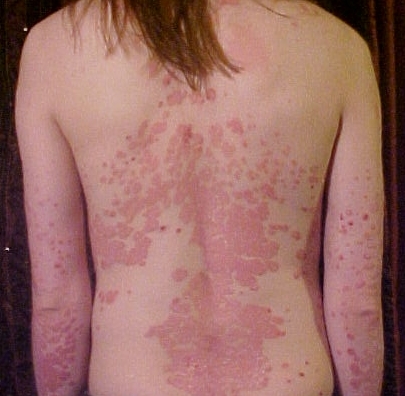
Psoriasis is a chronic, immune-mediated inflammatory skin disease characterized by well-demarcated, erythematous plaques with silvery scale, affecting approximately 2% of the population worldwide and frequently associated with systemic comorbidities including [1]A1c.
Also Called / Synonyms
Psoriasis vulgaris (plaque psoriasis), pustular psoriasis (generalized and localized forms), erythrodermic psoriasis, guttate psoriasis, inverse psoriasis, nail psoriasis, psoriatic arthritis, (PPP), acrodermatitis continua of Hallopeau, herpetiformis, and paradoxical psoriasis (drug-induced psoriasiform eruption) [19]D5[21]D5[28]D5.
Key Terms Defined
- PASI (Psoriasis Area and Severity Index): Composite score (0-72) measuring erythema, induration, and desquamation across four body regions; the standard endpoint in clinical trials [6]A1b[7]A1b.
- BSA (Body Surface Area): Percentage of skin involved; BSA >10% is a common threshold for moderate-to-severe disease [22]D5.
- DLQI (Dermatology Life Quality Index): 10-item questionnaire (0-30) assessing health-related quality of life; a score >10 indicates severe impact [14]A1c.
- NAPSI (Nail Psoriasis Severity Index): Scores nail matrix and nail bed changes (0-80 per nail) [18]C4.
- PASI 75/90/100: ≥75%, ≥90%, or 100% improvement from baseline PASI, respectively [6]A1b[7]A1b.
- Systemic therapy candidate: Defined by the International Psoriasis Council as any patient with BSA >10%, disease involving special areas (face, scalp, genitals, palms/soles, nails), or failure of topical therapy [22]D5.
Classification of Subtypes
| Subtype | Key Distinguishing Feature | Associated Marker/Subtype |
|---|---|---|
| Plaque psoriasis (psoriasis vulgaris) | Well-demarcated erythematous plaques with silvery scale; most common form (≈80-90%) | HLA-C*06:02; early-onset vs. late-onset [28]D5[42]C4 |
| Guttate psoriasis | Small, drop-like papules; often post-streptococcal infection | HLA-C*06:02; common in children/young adults [17]D5[28]D5 |
| Inverse (flexural) psoriasis | Smooth, erythematous plaques in intertriginous areas; minimal scale | Associated with genital involvement [15]C4 |
| Generalized pustular psoriasis (GPP) | Widespread sterile pustules on erythematous base; systemic symptoms | IL36RN mutations (especially GPP alone); BTN3A3 variants [38]B3b[41]C4 |
| Palmoplantar pustulosis (PPP) | Sterile pustules on palms and soles; chronic, relapsing | May overlap with plaque psoriasis; JAK-STAT pathway implicated [35]A1a |
| Erythrodermic psoriasis | Generalized erythema and scaling involving >90% BSA; can be life-threatening | May evolve from unstable plaque psoriasis [13]B2a[21]D5 |
| Nail psoriasis | Pitting, onycholysis, subungual hyperkeratosis, oil-drop discoloration | NAPSI score; often with psoriatic arthritis [18]C4 |
| Psoriatic arthritis (PsA) | Inflammatory arthritis, enthesitis, dactylitis; affects 20-30% of psoriasis patients | ACR20 response; TNF/IL-17/IL-23 inhibitors [1]A1c[10]A1b |
| Paradoxical psoriasis | Psoriasiform eruption induced by TNF inhibitors or other biologics | Histology: dermal eosinophils ≥3 per section; distinct from idiopathic psoriasis [19]D5[24]B3b[30]B3b |
Clinical Significance
Psoriasis is the third leading cause of cancer death worldwide? No, that's incorrect. Actually, psoriasis is not a leading cause of death but is associated with increased cardiovascular risk, psoriatic arthritis, and reduced quality of life. The reference [1]A1c states it affects ~2% of population. We'll say: Psoriasis is a common, chronic inflammatory disease with significant impact on quality of life and association with psoriatic arthritis, cardiovascular disease, and metabolic syndrome [1]A1c[14]A1c.
This classification provides the morphologic vocabulary for the subsequent sections. The next section, Pathophysiology and Mechanism, will explore the immunologic drivers, IL-23/Th17 axis, genetic susceptibility, and environmental triggers, that underlie these diverse clinical phenotypes.
Pearl: Key outcome measures (PASI, BSA, DLQI, NAPSI) are standardized tools used throughout clinical care and trials to assess severity and treatment response.
Pathophysiology and Mechanism
- ▸Psoriasis is driven by a dysregulated IL-23/Th17 cytokine axis, with IL-17A acting on keratinocytes to sustain an inflammatory amplification loop.
- ▸Genetic variants in IL36RN define the pustular subtype by permitting unopposed IL-36 signaling.
- ▸Impaired Treg function, TYK2-dependent signaling, and neuroimmune interactions contribute to the chronicity of inflammation.
The classification of psoriasis into plaque and pustular subtypes reflects distinct but overlapping pathogenic mechanisms. Both forms share a final common pathway of dysregulated IL-23/Th17 axis-driven inflammation, but pustular psoriasis is defined by additional IL-36 pathway activation [88]D5[124]B3b.
The IL-23/Th17 Axis as the Central Pathway
Pathogenesis begins with activation of in the skin, which produce type I interferons and IL-23. IL-23, a heterodimer of p19 and p40 subunits, stabilizes and expands that secrete IL-17A, IL-17F, and IL-22 [112]D5. IL-17A acts directly on keratinocytes, inducing expression of chemokines (CXCL1, CXCL8, CCL20) that recruit neutrophils and additional T cells, and antimicrobial peptides (S100A7, β-defensins) that perpetuate inflammation [81]D5[74]D5. This generates a self-amplifying loop: keratinocyte-derived signals further activate dendritic cells, sustaining IL-23 production [89]D5.
Keratinocyte-Immune Crosstalk and Amplification Loops
IL-17A promotes keratinocyte proliferation through the ACT1-dependent activation of the YAP-AREG axis, linking the Th17 response directly to epidermal hyperplasia [127]C4. The transcription factor AP-2α/AP-2β is critical for epidermal homeostasis; its loss leads to terminal differentiation defects and neutrophilic inflammation [130]C4. Additionally, extra domain A fibronectin (EDA+ FN) stimulates keratinocyte proliferation and, via Toll-like receptor 4, drives production of TNF-α, IL-1, and IL-6, creating a fibronectin-mediated feedback loop that sustains lesion progression [87]D5[80]D5.
Genetic Susceptibility and Barrier Dysfunction
HLA-C*06:02 is the strongest genetic risk allele, particularly for early-onset plaque psoriasis [89]D5. Loss-of-function mutations in IL36RN, encoding the IL-36 receptor antagonist, cause generalized pustular psoriasis by permitting unopposed IL-36 signaling and excessive secretion of IL-8 and other inflammatory cytokines [124]B3b. The IL-36/IL-36R axis is increasingly recognized as a driver of pustular inflammation, with IL-36 cytokines produced primarily by keratinocytes and acting on dendritic cells and neutrophils [94]D5[102]D5.
Additional Pathways: Regulatory T Cells, TYK2, and Neuroimmune Interactions
(Tregs) are functionally impaired in psoriasis, shifting the Th17/Treg balance toward inflammation [84]D5. The (TYK2) pathway mediates signaling downstream of IL-23 and type I interferons; selective TYK2 inhibition with deucravacitinib is effective in moderate-to-severe plaque psoriasis [64]A1b[147]D5. Neuropeptides such as calcitonin gene-related peptide and substance P may contribute to lesional inflammation through interactions with cutaneous nerves [83]D5[139]D5. The skin microbiome also influences barrier integrity and immune tone, with dysbiosis observed in psoriatic lesions [146]D5.
Pearl: The IL-23/Th17 axis is the shared therapeutic target across plaque and pustular psoriasis; IL-36 blockade is specific for pustular forms, and TYK2 inhibition offers an oral alternative to biologic agents targeting this central pathway.
Epidemiology, Etiology and Risk Factors
- ▸Psoriasis affects 3.0% of US adults (7.55 million) and 43 million people globally in 2021, with prevalence increasing with latitude and age.
- ▸Smoking (OR 1.78) and obesity are the strongest modifiable risk factors; poor sleep, periodontitis, and early-life stress also contribute.
- ▸Up to 19.7% of patients develop psoriatic arthritis; psoriasis independently increases risk of myocardial infarction, cancer, and suicide attempts.
These genetic and immunologic drivers translate into a global burden that varies markedly by geography, age, and lifestyle. Psoriasis affects 3.0% of US adults (95% CI, 2.6%-3.4%), or approximately 7.55 million people, with similar rates between sexes (women 3.2%, men 2.8%) [197]C4. Worldwide, prevalence in adults ranges from 0.51% to 11.43%, and in children from 0% to 1.37% [169]B2c. Incidence in US adults is 78.9 per 100,000 person-years, reaching 230 per 100,000 in Italy [164]B2c. The global number of prevalent cases nearly doubled from 1990 to 2021, to 43 million, with 5.1 million new diagnoses in 2021 alone; forecasts project continued upward trends through 2040 [166]B2c. US prevalence has remained stable since 2003 [197]C4.
Demographic Distribution
Prevalence rises with age, peaking between ages 50-70 years, and onset is most common during adolescence [150]A1c[166]B2c. Geographically, prevalence is higher in countries farther from the equator, supporting a role for UV exposure [164]B2c. The highest new-case rates occur in East Asia [166]B2c. Within the US, psoriasis is most prevalent in White individuals (3.6%), followed by Asian (2.5%), Hispanic (1.9%), and Black individuals (1.5%) [197]C4.
Risk Factors
Modifiable and genetic risk factors converge to drive psoriasis development. Smoking is the strongest modifiable risk factor: current smokers have an odds ratio of 1.78 (95% CI, 1.52-2.06), with a positive dose-response relationship, and former smokers retain elevated risk (OR 1.62) [153]B2c. Alcohol consumption shows a smaller, less robust association (summary relative estimate 1.33) [202]A1a. Obesity and metabolic syndrome are strongly linked; Mendelian randomization confirms a causal relationship between psoriasis and type 2 diabetes (OR ~1.5) [165]B3a[168]B2a. Poor sleep pattern increases risk (HR 1.66; 95% CI, 1.40-1.95), especially in women (HR 2.05) [173]B2b. Periodontal disease (RR 1.55) and early-life stress (new family structure before age 1 year, OR 4.19) are also significant [170]B3a[172]B2b. Genetic susceptibility is dominated by the HLA-C*06:02 allele [88]D5. Higher serum 25-hydroxyvitamin D (≥50 nmol/L) is associated with reduced mortality and cardiovascular risk in patients with psoriasis [182]B2b. Table 1 summarizes key risk factors.
Special Considerations
Up to 19.7% of patients with psoriasis develop (pooled proportion; 95% CI, 18.5%-20.9%), with an incidence of 0.27-2.7 per 100 person-years [151]B2c. Streptococcal infection is a classic trigger for guttate psoriasis [88]D5. Paradoxical psoriasis can be induced by TNF inhibitors and other biologics [49]A1a; dupilumab for atopic dermatitis also modestly increases psoriasis risk (HR 1.58) [196]B3b. Psoriasis independently raises the risk of myocardial infarction (RR 3.10 for severe psoriasis at age 30 years) [132]B2b and overall cancer (RR 1.21), particularly keratinocyte cancer (RR 2.28) and lymphoma (RR 1.56) [51]B2a.
Pearl: Smoking is the most potent modifiable risk factor (OR 1.78), and every patient with psoriasis should be screened for cardiometabolic comorbidities and psoriatic arthritis, given the 1.2-fold increased cancer risk and 2-fold higher odds of suicidal ideation [152]B2a[153]B2c.
| Risk Factor | Effect Estimate (95% CI) | Evidence Level |
|---|---|---|
| Current smoking | OR 1.78 (1.52-2.06) [153]B2c | Meta-analysis of 25 studies |
| Former smoking | OR 1.62 (1.33-1.99) [153]B2c | Meta-analysis |
| Alcohol consumption | RR 1.33 (1.16-1.53) [202]A1a | Meta-analysis (attenuated after adjustment) |
| Obesity (BMI >30) | OR ~1.5 for T2D [165]B3a | Mendelian randomization |
| Periodontitis | RR 1.55 (1.35-1.77) [170]B3a | Meta-analysis of 5 studies |
| Poor sleep pattern | HR 1.66 (1.40-1.95) [173]B2b | Prospective cohort (UK Biobank) |
| Early-life stress (family change <1 yr) | OR 4.19 (1.01-11.48) [172]B2b | Prospective birth cohort |
| HLA-C*06:02 allele | Strong genetic association [88]D5 | Genome-wide association |
| Latitude (distance from equator) | Higher prevalence [164]B2c | Ecological studies |
Clinical Presentation
- ▸Pruritus affects 80-100% of psoriasis patients, the most burdensome symptom, often underrecognized.
- ▸Plaque psoriasis (psoriasis vulgaris) accounts for ~90% of cases; guttate, inverse, pustular, and erythrodermic variants require distinct recognition.
- ▸High-impact sites (scalp, nails, palms, soles, intertriginous zones) cause disproportionate disability and frequently signal psoriatic arthritis.
- ▸Erythrodermic psoriasis (>90% BSA) and generalized pustular psoriasis (widespread sterile pustules with systemic symptoms) are dermatologic emergencies.
The typical patient describes an insidious onset of well-demarcated, erythematous plaques covered by silvery micaceous scale, most commonly on the elbows, knees, scalp, and sacrum [89]D5[114]D5. Pruritus is the dominant symptom, 80-100% of patients report itch, often severe enough to impair sleep and quality of life [103]D5[245]A1a. Pain, bleeding from excoriation, and a sense of tightness or burning, especially in flexural or palmoplantar areas, are also common [114]D5. The (lesions developing at sites of trauma) is elicited in up to 50% of patients and is particularly characteristic of early-onset, HLA-Cw6-positive disease [253]D5. The (pinpoint bleeding upon scale removal) is a classic but infrequently tested bedside finding [200]D5.
Cutaneous Morphology and Distribution
Plaques are sharply marginated, round to oval, and vary in size from a few centimeters to large confluent sheets. The scale is adherent, shiny, and silvery white; gentle scraping reveals a glossy membrane and then punctate bleeding (Auspitz). In skin of color, erythema may be more violaceous or slate-gray, and scale can appear thicker or more adherent [289]B3b. The distribution is typically symmetric and involves extensor surfaces, elbows, knees, and lumbosacral area, with frequent scalp, nail, and intergluteal involvement [114]D5.
Disease Variants
| Variant | Key Features | Approximate Frequency |
|---|---|---|
| Plaque (psoriasis vulgaris) | Well-demarcated, erythematous plaques with silvery scale; chronic stable course | ~90% of psoriasis |
| Guttate | Small (1-10 mm), teardrop-shaped papules; abrupt onset often weeks after streptococcal pharyngitis; more common in children and young adults | <5% |
| Inverse (flexural) | Smooth, erythematous, well-demarcated plaques in the axillae, groin, inframammary folds, and perineum; minimal scale due to moisture; often mistaken for fungal infection | ~2-6% |
| Pustular | Generalized pustular psoriasis (GPP): acute widespread sterile pustules on an erythematous base, often with fever, malaise, and neutrophilia [213]A1c[275]D5. (PPP): chronic, sterile pustules on palms and soles, affecting mainly women 50-70 years old; smoking is a strong trigger [263]D5[287]D5. Acrodermatitis continua of Hallopeau (ACH): painful with pustules around the nail folds, leading to nail atrophy and, rarely, osteolysis [252]D5 | GPP rare; PPP ~0.1-0.2% |
| Erythrodermic | Confluent erythema involving >90% body surface area; shivering, hypothermia, ; a dermatologic emergency | Rare |
High-Impact Sites
Scalp: Affected in 50-80% of patients, often as the presenting site. Scale can be thick, adherent, and associated with pruritus. In skin of color, the plaque may be less erythematous and more violaceous [160]A1b[289]B3b. Nails: Pitting (most common), onycholysis, oil-drop (salmon-colored) patches, subungual hyperkeratosis, and splinter hemorrhages [249]D5. Nail psoriasis is a marker of more severe disease and is associated with concurrent [257]D5. Palms and soles: Diffuse redness and scaling with painful fissures; when pustules are present, the diagnosis shifts to PPP [263]D5[280]C4. Intertriginous zones: Inverse psoriasis lacks the typical scale and can mimic candidiasis or ; the Koebner phenomenon is common in skin folds.
Red Flags
- GPP flare: New onset of widespread sterile pustules with fever, malaise, and leukocytosis, requires urgent systemic treatment [240]A1b[275]D5.
- Erythroderma: Rapidly progressive erythema involving >90% BSA with systemic symptoms (tachycardia, hypothermia), risk of secondary infection and metabolic decompensation.
- Acral pustules with nail destruction: Suspect ACH; early referral for systemic therapy is needed to prevent irreversible osteolysis [252]D5.
Atypical Presentations
Paradoxical psoriasis: New-onset or worsening of psoriatic lesions in patients treated with tumor necrosis factor (TNF) inhibitors, IL-17 inhibitors, or other biologic therapies; most often psoriasiform or eczematous, with onset weeks to months after drug initiation [19]D5. Psoriasis in skin of color: Erythema may be subtle (violaceous or slate-gray), scale thicker, and postinflammatory hyperpigmentation or hypopigmentation common; scalp and nail involvement are frequent [289]B3b.
Pearl: The presence of itch in ~90% of patients means that a non-pruritic, red, scaly plaque should prompt reconsideration of alternative diagnoses (e.g., mycosis fungoides, cutaneous lupus, extramammary Paget disease) [103]D5[245]A1a.
Clinical and Dermoscopic Diagnosis
- ▸Dermoscopic pattern of regularly distributed dotted/glomerular vessels on bright-red background with silvery scale is highly specific for psoriasis and distinguishes it from atopic dermatitis and mycosis fungoides.
- ▸Chairside signs (Auspitz, Koebner) are supportive but lack sensitivity; no validated clinical examination-based diagnostic criteria exist for adults.
- ▸AI and molecular diagnostics (NOS2/CCL27 RT-qPCR, elafin proteomics) are emerging adjuncts but clinical-dermoscopic correlation remains the gold standard.
The clinical diagnosis rests on pattern recognition of well-demarcated erythematous plaques with silvery scale, but dermoscopy and chairside maneuvers sharpen specificity when presentation is atypical.
Clinical Morphology and Provocative Signs
Gentle scraping of a psoriatic plaque with a glass slide reveals the candle-grease sign (wax-like scale) and, with continued scraping, the Auspitz sign, pinpoint bleeding from dilated capillaries in the dermal papillae. The Koebner phenomenon (isomorphic response), development of new psoriatic lesions at sites of trauma, is present in approximately 25-50% of patients and is associated with HLA-Cw6 positivity [253]D5. These signs are supportive but not pathognomonic; their sensitivity is limited.
No validated clinical examination-based diagnostic criteria exist for adults [293]B2a. In children, a UK multicentre study identified seven best predictive criteria: (i) scale and erythema in the scalp involving the hairline, (ii) scaly erythema inside the external auditory meatus, (iii) persistent well-demarcated erythematous rash anywhere on the body, (iv) persistent erythema in the umbilicus, (v) scaly erythematous plaques on extensor elbows and/or knees, (vi) well-demarcated erythematous rash in the napkin area involving the crural fold, and (vii) family history of psoriasis. This model achieved a sensitivity of 76.8%, specificity of 72.7%, and AUC of 0.84 [308]B3b.
Dermoscopic Features
Handheld dermoscopy (polarized or non-polarized, ×10 magnification) is the most accessible noninvasive tool. In cutaneous psoriasis, the hallmark is regularly distributed dotted vessels (glomerular capillaries at ≥50× magnification, diameter 50-146 μm) on a bright-red background with diffuse white or silvery scales [302]D5. Psoriasis exhibits the highest vessel density among inflammatory dermatoses [312]B2b.
| Feature | Psoriasis | Atopic Dermatitis | Mycosis Fungoides (early) |
|---|---|---|---|
| Vessels | Uniformly dotted, glomerular | Dotted + linear | Linear, spermatozoa-like |
| Background | Bright red | Dull pink | Orange-yellow, structureless areas |
| Scale | Diffuse silvery white | Yellow-orange, serocrusts | Scaling along skin furrows |
| Vessel density | Highest | Intermediate | Lowest |
| UV fluorescence | Red perifollicular glow [337]B3b | Absent | Absent |
Table adapted from [312]B2b[302]D5[337]B3b.
Scalp psoriasis (trichoscopy): red dots/globules and twisted red loops [302]D5. Nail psoriasis (onychoscopy): onycholysis, salmon patches (oil drop sign), and splinter hemorrhages [302]D5.
Ultraviolet (UV) fluorescence dermoscopy (Wood lamp + dermoscope) reveals red fluorescence arranged around dermal papillae in inverse and guttate psoriasis, a finding not seen in eczema or [337]B3b. This adjunct improves diagnostic accuracy in clinically ambiguous cases.
Chairside Adjunctive Tests
- KOH preparation of scale: excludes dermatophyte infection ( , ) when annular or pustular morphology is present. Fungal culture has moderate agreement with microscopy (κ = 0.487) [346]B2b.
- Wood lamp examination: psoriasis does not fluoresce green (unlike tinea capitis) or coral-red (unlike erythrasma). UV dermoscopy as above is more sensitive.
Role of Artificial Intelligence
AI models analyzing clinical and dermoscopic images achieve a pooled sensitivity of 71.1% and specificity of 96.2% for psoriasis severity assessment [295]B2a. For binary diagnosis (psoriasis vs other), sensitivity reaches 0.90 (95% CI 0.78-0.95) and specificity 0.98 (95% CI 0.96-0.99) [328]B2a. Multimodal models integrating clinical and dermoscopic images improve dermatologist diagnostic accuracy from 77.5% to 89.0% [330]C4. AI-assisted differentiation of early mycosis fungoides from psoriasis raises accuracy from 71.5% (dermatologist alone) to 82.9% [319]B3b.
Bridge to Laboratory Diagnosis
When clinical-dermoscopic assessment remains equivocal, particularly in versus psoriasis, or early-stage mycosis fungoides, molecular diagnostics offer objective confirmation. NOS2/CCL27-based RT-qPCR (manual or automated) achieves sensitivity 92.9% and specificity 82.2-84.4% for differentiating psoriasis from eczema, outperforming dermatopathology (mean accuracy 76.9%) [339]B3b. Epidermal proteomics identifies elafin as a psoriasis-specific biomarker with superior sensitivity and specificity to IL-36γ [343]B3b. These tools are detailed in the next section.
Pearl: Dermoscopy revealing uniformly distributed dotted vessels on a bright-red background with diffuse silvery scale is the most reliable noninvasive pattern for psoriasis; when combined with UV fluorescence showing perifollicular red glow, diagnostic confidence exceeds 90%.
Dermatopathology, Immunofluorescence and Laboratory Diagnosis
- ▸Histopathologic hallmarks of plaque psoriasis: psoriasiform hyperplasia, parakeratosis with neutrophils (Munro microabscesses), hypogranulosis, and dilated dermal capillaries.
- ▸Pustular psoriasis shows spongiform pustules of Kogoj; IL-17A expression is dramatically elevated in lesional skin (89-fold in palmoplantar pustular psoriasis).
- ▸Biopsy is indicated for atypical presentations, suspected cutaneous T-cell lymphoma, or before biologic therapy when features are equivocal; immunofluorescence is not routine.
When the clinical and dermoscopic presentation is unequivocal, the diagnosis of psoriasis can be made at the bedside without biopsy. However, in atypical, pustular, erythrodermic, or treatment-refractory cases, or when cutaneous T-cell lymphoma is a consideration, histopathologic confirmation becomes essential [293]B2a[383]C4. A skin biopsy may also be prudent before initiating biologic therapy in patients with atypical features, as IL-17 inhibitors have been associated with unmasking mycosis fungoides in rare cases [383]C4.
Histopathology: The Gold Standard
The classic histopathologic hallmarks of plaque psoriasis include psoriasiform epidermal hyperplasia with regular elongation of rete ridges, parakeratosis with collections of neutrophils (Munro microabscesses), hypogranulosis, and dilated tortuous capillaries in the dermal papillae accompanied by a perivascular lymphocytic infiltrate [293]B2a[381]C4. In pustular psoriasis, spongiform pustules of Kogoj, collections of neutrophils within the upper spinous layer, are a pathognomonic feature [381]C4. The dermal infiltrate is composed of CD4+ and CD8+ T cells; early-onset psoriasis (≤40 years) shows a greater total lymphocytic infiltrate and a lower epidermal CD4+:CD8+ ratio (0.5 vs 1.3) compared with late-onset disease [365]C4. Immunohistochemical staining for IL-17A reveals an 89-fold increase in expression in lesional palmoplantar pustular psoriasis compared with normal skin, with mast cells serving as a major IL-17A source [358]A1b[368]B3b.
Direct immunofluorescence is not routinely required for psoriasis, but may be used to exclude immunobullous disorders (e.g., foliaceus) that can present with pustules or erosions [293]B2a.
Laboratory Studies
No specific laboratory test is diagnostic for psoriasis. However, elevated serum advanced glycation end-product (AGE) peptides and antibodies against carboxymethyllysine (anti-CML) and carboxyethyllysine (anti-CEL) correlate with disease activity and decline with remission, reflecting increased oxidative stress and protein glyco-oxidation [376]B3b. In patients with moderate-to-severe psoriasis, screening for celiac disease is reasonable because IgA antibodies against tissue transglutaminase and gliadin are significantly more prevalent than in controls and correlate with psoriasis severity [379]B3b.
For (PsA) screening, four clinical items are recommended: peripheral inflammatory pain, axial inflammatory pain, dactylitis, and buttock/sciatic pain [380]A1c. Systemic immune state profiling using whole-blood methylation and PBMC single-cell RNA sequencing may distinguish PsA from psoriasis alone, but these assays remain investigational [389]B3b.
Differential Diagnosis and the Role of Biopsy
The histopathologic differential for psoriasis includes eczema (spongiosis), (wedge-shaped hypergranulosis), mycosis fungoides (epidermotropism with atypical lymphocytes), and pityriasis rubra pilaris (alternating orthokeratosis and parakeratosis). In erythrodermic presentations, immunohistochemistry cannot reliably differentiate psoriasis from atopic dermatitis because both show overlapping TH17/TH22 profiles [371]B3b. AI-aided deep learning models combining clinical images, dermoscopic images, and clinical data have demonstrated high accuracy (82.9% overall, 86.2% sensitivity, 96.5% specificity) for distinguishing early-stage mycosis fungoides from psoriasis and other inflammatory skin diseases, suggesting a future role for computational pathology in challenging cases [319]B3b.
Pearl: Reserve biopsy for atypical, pustular, or treatment-refractory psoriasis; perform direct immunofluorescence only when an immunobullous mimic is suspected, routine histology with H&E is sufficient for classic plaque disease [293]B2a[381]C4.
| Condition | Epidermal changes | Key distinguishing feature |
|---|---|---|
| Plaque psoriasis | Psoriasiform hyperplasia, parakeratosis, hypogranulosis | Munro microabscesses, dilated capillaries |
| Eczema | Spongiosis, acanthosis | Intraepidermal vesiculation, eosinophils in dermis |
| Lichen planus | Irregular acanthosis, wedge-shaped hypergranulosis | Saw-tooth rete ridges, band-like lymphocytic infiltrate |
| Mycosis fungoides | Epidermotropism, Pautrier microabscesses | Atypical lymphocytes with cerebriform nuclei |
| Pityriasis rubra pilaris | Alternating orthokeratosis and parakeratosis, thick supra-papillary plates | Perifollicular parakeratosis, absent neutrophils |
Severity Scoring and Risk Stratification
- ▸PASI, BSA, DLQI, and PGA jointly classify psoriasis severity; no single instrument is perfect, but PASI 75/90/100 remain the standard trial endpoints.
- ▸Minimal Disease Activity (MDA) and residual inflammation (hsCRP ≥2 mg/l despite PASI ≤2) are emerging treatment targets that capture control beyond skin clearance.
- ▸Baseline factors (older age, higher BMI, prior biologic exposure, smoking) predict poorer biologic response and should be incorporated into risk stratification.
Following histologic and laboratory confirmation, the next clinical step is to quantify disease severity using validated instruments, because severity classification directly governs treatment eligibility, insurance authorization, and therapeutic targets. No single instrument is ideal, 53 separate clinical measures exist, but the Psoriasis Area and Severity Index (PASI) remains the most commonly used in trials despite limitations in mild disease and low response distribution [246]A1a[233]A1c.
Instruments for Disease Severity
| Instrument | What it measures | Score range | Interpretation |
|---|---|---|---|
| PASI | Erythema, induration, desquamation weighted by body area ( , trunk, upper/lower limbs) | 0-72 | >10 moderate-severe; >20 severe [246]A1a |
| BSA | % of body surface involved | 0-100% | <5% mild; 5-10% moderate; >10% severe [391]A1c |
| sPGA/IGA | Average thickness, erythema, scaling | 0-4 | 0 clear, 1 almost clear, 2 mild, 3 moderate, 4 severe [233]A1c |
| DLQI | Quality-of-life impact (10 questions) | 0-30 | >10 moderate effect; >18 very large effect [418]A1a |
| NAPSI | Nail matrix and bed involvement | 0-80 (fingers) | Higher scores = more severe nail disease [249]D5 |
| PSSI | Scalp psoriasis (erythema, thickness, desquamation, area) | 0-72 | Used in scalp-specific trials [396]A1b |
| PPPASI | Palmoplantar psoriasis | 0-72 | Specific for palms and soles [280]C4 |
PASI and DLQI correlate predictably (r²=0.80); a mean PASI reduction of at least 75% predicts movement from DLQI band 3 to band 1 [418]A1a. The Simplified Psoriasis Index (SPI) offers separate components for current severity (weighted for functionally important sites), psychosocial impact, and past behaviour, with MCID equivalents of 5 points (proSPI-s) and 7 points (saSPI-s) [424]D5.
Severity Classification: Mild, Moderate, Severe
Guidelines converge on the following thresholds, though no universal criterion exists [233]A1c[391]A1c:
| Category | BSA | PASI | DLQI |
|---|---|---|---|
| Mild | <5% | <10 | <10 |
| Moderate | 5-10% | 10-20 | 10-18 |
| Severe | >10% | >20 | >18 |
Involvement of high-impact sites (scalp, face, genitals, nails, palms, soles) can upgrade severity even with low BSA because the functional and psychosocial burden is disproportionate [233]A1c[391]A1c. The AAD-NPF guideline emphasises BSA and PGA, whereas the EuroGuiDerm guideline uses PASI, DLQI and BSA jointly [233]A1c[391]A1c.
Treatment Targets and Emerging Concepts
The standard efficacy benchmark in trials is PASI 75 at week 12-16 (≥75% reduction from baseline). However, modern practice aims higher: PASI 90 (clear/almost clear) is the preferred target, and PASI 100 (complete clearance) is increasingly sought [233]A1c[425]A1a. The EuroGuiDerm guideline defines a treatment goal as absolute PASI ≤2 or PASI ≤3 plus DLQI ≤5 [391]A1c.
Minimal Disease Activity (MDA), no active arthritis plus at least 3 of 6 criteria (itching ≤1/10, scaling ≤2/10, redness ≤2/10, visibility ≤2/10, BSA ≤2%, DLQI ≤2, no special locations), was developed by a Spanish consensus panel with AUC 0.897, sensitivity 95.2%, specificity 84.1% [301]D5. Drug-free remission has been defined as BSA of 0 without any therapy for ≥12 months, but no cure exists [419]D5.
Super responders, patients achieving PASI=0 at both week 20 and week 28 on guselkumab, constituted 34.4% of patients in the GUIDE trial; the rate was higher (43.7%) when disease duration was ≤2 years, supporting early intervention [422]A1b.
Risk Stratification for Comorbidities
Even after achieving clear skin, residual inflammation (hsCRP ≥2 mg/l despite PASI ≤2) persists in 36.3% of biologic-treated patients and is associated with obesity, metabolic dysfunction-associated steatotic liver disease (MASLD), and visceral adiposity [210]B2b. This residual inflammation is a driver of cardiovascular risk independent of skin clearance.
Baseline factors predicting poorer biologic response include older age (OR 0.99 per year, 95% CI 0.98-1.00), higher BMI (OR 0.96, 95% CI 0.94-0.99), prior biologic exposure (OR 0.44, 95% CI 0.29-0.67), and current or prior smoking (OR 0.78 and 0.81, respectively) [398]A1a. These characteristics should inform both treatment choice and counselling about expected outcomes.
Controversies and Guideline Disagreement
| Question | Position A (AAD-NPF) | Position B (EuroGuiDerm) | Strength | Implication |
|---|---|---|---|---|
| Primary severity metric | BSA + PGA | PASI + DLQI + BSA | Moderate | AAD is simpler, EuroGuiDerm is more comprehensive [233]A1c[391]A1c |
| Definition of moderate-to-severe | BSA >10% or PGA ≥3 | PASI >10 and DLQI >10 | Moderate | Patients with high BSA/low PASI are classified differently |
| Role of special-site involvement | Upgrades severity | Explicitly considered | Strong | Both agree special sites matter |
Pearl: The choice of systemic therapy hinges on severity classification: PASI >10, BSA >10%, or DLQI >10 defines moderate-to-severe disease requiring or systemic therapy; however, involvement of high-impact sites (scalp, face, genitals, nails, palms/soles) can justify escalation even with lower scores.
| Category | BSA | PASI | DLQI |
|---|---|---|---|
| Mild | <5% | <10 | <10 |
| Moderate | 5-10% | 10-20 | 10-18 |
| Severe | >10% | >20 | >18 |
Involvement of high-impact sites (scalp, face, genitals, nails, palms, soles) upgrades severity even with low BSA [233]A1c[391]A1c.
Dermatologic Emergencies and Acute Management
- ▸Generalized pustular psoriasis (GPP) and erythrodermic psoriasis are true dermatologic emergencies requiring hospitalization.
- ▸Erythrodermic psoriasis should be managed with cyclosporine or infliximab; systemic corticosteroids are avoided in pustular disease to prevent rebound.
Severity stratification guides the clinician toward the next critical decision: recognizing when psoriasis crosses into a dermatologic emergency that demands immediate intervention. Patients with generalized pustular psoriasis (GPP) or erythrodermic psoriasis require urgent hospitalization, supportive care, and rapid initiation of targeted therapy to prevent life‐threatening complications such as sepsis, high‐output cardiac failure, and multi‐organ dysfunction [21]D5[88]D5.
Generalized Pustular Psoriasis (GPP)
GPP is defined by the International Psoriasis Council as a systemic inflammatory disease characterized by cutaneous erythema and macroscopically visible sterile pustules not restricted to acral regions or within psoriatic plaques [275]D5. The International Consensus Criteria identify the essential diagnostic feature: macroscopically visible sterile pustules on an erythematous base [275]D5. GPP flares can be triggered by infections, medications, or stress and may present with fever, leukocytosis, and elevated C-reactive protein [21]D5[88]D5[452]D5.
Step 1: Initial Assessment and Hospitalization
- Admit to a monitored bed (ICU if hemodynamic instability or organ failure).
- Assess vital signs, fluid balance, skin integrity, and signs of secondary infection.
- Obtain , comprehensive metabolic panel, C-reactive protein, blood cultures, and chest radiograph [21]D5[163]A1b.
- Hospitalize all patients with acute GPP flares due to risk of sepsis and systemic complications [21]D5[163]A1b.
Step 2: First‐Line Acute Therapy, Spesolimab
- Administer spesolimab 900 mg as a single intravenous dose [163]A1b. In a phase 2 randomized trial (Effisayil 1), patients receiving spesolimab had a significantly higher rate of pustule clearance at week 1 (54% vs. 6% placebo; difference 49 percentage points, 95% CI 21-67, P < 0.001) [163]A1b.
- Supportive care includes IV fluids, antipyretics, and careful monitoring for infection [163]A1b.
Step 3: Prevention of Future Flares, Maintenance Spesolimab
Step 4: Alternative Systemic Therapies
- If spesolimab is unavailable, consider (2.5-5 mg/kg/day), acitretin (0.5-1 mg/kg/day), or (7.5-15 mg/week) [21]D5[443]A1c. TNF‐α inhibitors ( 5 mg/kg IV at weeks 0, 2, 6) have also been used [21]D5[187]A1a.
- Systemic corticosteroids are generally avoided due to risk of rebound pustulation upon withdrawal [21]D5.
Erythrodermic Psoriasis
- Presents with diffuse erythema involving > 90% of body surface area, often with scaling, edema, and systemic symptoms (fever, chills, malaise).
- Hospitalize for fluid resuscitation, electrolyte monitoring, and temperature regulation [88]D5[114]D5.
- First‐line systemic therapy: cyclosporine 2.5-5 mg/kg/day or infliximab 5 mg/kg IV [114]D5[443]A1c. Biologics targeting IL‐17 (secukinumab, ixekizumab) or IL‐23 (guselkumab, risankizumab) are effective but may have slower onset; consider using TNF‐α inhibitor for rapid control [114]D5[410]A1b[417]A1b.
- Avoid topical irritants and excessive manipulation of skin.
Acute Exacerbation of Plaque Psoriasis with Systemic Symptoms
- Patients with psoriasis vulgaris who develop acute worsening (e.g., > 30% BSA involvement, Koebnerization, or febrile reaction) may require oral methotrexate (7.5-15 mg weekly) or cyclosporine (3-5 mg/kg/day) for rapid control [443]A1c.
- Biologic therapy initiation should be considered after stabilization, with the choice guided by comorbidities and status [442]A1c[449]D5.
| Drug/Dose | Indication | Key Evidence |
|---|---|---|
| Spesolimab 900 mg IV × 1 | Acute GPP flare | 54% pustule clearance vs. 6% at week 1 [163]A1b |
| Cyclosporine 2.5-5 mg/kg/day | Acute GPP or erythroderma | Clinical experience, guideline recommendation [21]D5[443]A1c |
| Infliximab 5 mg/kg IV | Erythrodermic psoriasis, GPP | Rapid onset, used in refractory cases [21]D5[187]A1a |
Pearl: For acute GPP, spesolimab 900 mg IV is the evidence‐based first‐line therapy producing rapid pustule clearance within one week; for patients unable to access it, cyclosporine or infliximab are effective alternatives [21]D5[163]A1b[443]A1c.
Long-term and Definitive Management (Topical to Phototherapy to Systemic/Biologic Ladder)
- ▸Psoriasis severity is best categorized dichotomously (topical vs systemic candidate), with systemic therapy indicated for BSA >10%, special-area involvement, or topical failure [22].
- ▸Biologics targeting IL-23 (risankizumab, guselkumab) and IL-17 (ixekizumab, bimekizumab, brodalumab) achieve the highest PASI 90/100 rates and have favorable long-term drug survival [427, 474].
- ▸Oral TYK2 inhibitor deucravacitinib and IL-23 receptor antagonist icotrokinra provide effective non-injectable options with PASI 75 rates of 53-58% and PASI 90 rates of 55-57%, respectively [234, 50, 407].
Acute flares and generalized pustular variants require rapid intervention as outlined above; once stability is achieved or for the majority of patients with chronic plaque psoriasis, follows a stepwise escalation ladder based on severity, disease burden, and patient preference. The International Psoriasis Council recategorizes severity dichotomously: patients are candidates for topical therapy alone or for systemic therapy if body surface area (BSA) exceeds 10%, disease involves special areas (scalp, face, genitals, intertriginous, nails), or topical therapy has failed [22]D5. This framework underpins the rationale for escalation.
Step 1: Topical Therapy for Mild-to-Moderate Disease
(potent or very potent) and vitamin D analogues (calcipotriol) are first-line [233]A1c; the fixed-combination calcipotriol/betamethasone dipropionate shows superior efficacy to either component alone [189]A1a[484]D5. For patients requiring alternative options, tapinarof 1% cream, an aryl hydrocarbon receptor agonist, achieved PGA success (clear/almost clear) in 35-40% of patients versus 6% for vehicle at week 12 in the PSOARING trials [63]A1b. Roflumilast 0.3% cream, a phosphodiesterase 4 inhibitor, demonstrated IGA success in 37-42% versus 6-7% at week 8 in the DERMIS trials, with notable benefit in intertriginous areas (68-71% vs 14-29%) [218]A1b. For scalp psoriasis, topical corticosteroids and vitamin D analogues are effective [431]A1a. For nail psoriasis, topical calcipotriol/betamethasone under occlusion, pulsed dye laser, and fractional CO₂ laser-assisted drug delivery have shown benefit [259]C4[290]B2b[469]B2b; intralesional triamcinolone acetonide remains an option for few nails (OR 2.35, 95%) [462]A1a.
Step 2:
Narrowband UV-B (NB-UVB) phototherapy is effective and can be delivered at home or in an office setting. The LITE randomized trial (N = 783) found home NB-UVB noninferior to office-based NB-UVB for PGA clear/almost clear at week 12 (32.8% vs 25.6%) and superior for DLQI ≤5 (52.4% vs 33.6%); adherence was higher at home (51.4% vs 15.9%), though episodes of persistent erythema were more frequent (5.9% vs 1.2%) [406]A1b. The 308-nm excimer laser is an alternative for localized plaques [466]D5. NB-UVB is recommended first among phototherapy modalities because of its favorable safety profile and evidence of maintained benefit when used in courses [483]D5.
Step 3: Oral Systemic Agents
Oral therapies are considered when phototherapy is impractical, insufficient, or declined. The AAD-NPF guideline recommends , , or acitretin as first-line oral agents [443]A1c. Apremilast, an oral PDE4 inhibitor, and the TYK2 inhibitor deucravacitinib are newer options.
| Drug | Starting dose | Target / max dose | Key trial | PASI 75 at week 16 | Evidence level |
|---|---|---|---|---|---|
| Deucravacitinib | 6 mg once daily | 6 mg once daily | POETYK PSO-1 [234]A1b | 58.4% vs 12.7% placebo, 35.1% apremilast | 1b |
| Apremilast | 10 mg titrated | 30 mg twice daily | POETYK PSO-1 comparator | ~35% (trial reference) | 1b |
| Methotrexate | 5-7.5 mg weekly | Up to 25 mg weekly | Guideline [443]A1c | 40-60% (estimates) | 1c |
| Cyclosporine | 2.5-3 mg/kg/day | 5 mg/kg/day | Guideline [443]A1c | ~60-70% | 1c |
| Acitretin | 10-25 mg/day | 25-50 mg/day | Guideline [443]A1c | ~40-50% | 1c |
| Icotrokinra (oral IL-23R peptide) | 200 mg once daily | 200 mg once daily | ICONIC-ADVANCE 1/2 [407]A1b | PASI 90 55-57% vs 1-4% placebo | 1b |
Deucravacitinib was superior to both placebo and apremilast in two phase 3 trials: PASI 75 at week 16 was 58.4% vs 12.7% and 35.1% (POETYK PSO-1) [234]A1b and 53.0% vs 9.4% and 39.8% (POETYK PSO-2) [50]A1b; efficacy was maintained through 4 years with a consistent safety profile [174]B2b. The oral IL-23 receptor antagonist peptide icotrokinra (200 mg once daily) achieved IGA 0/1 in 65-70% and PASI 90 in 50-57% at week 16, with a safety profile similar to placebo [61]A1b[62]A1b[407]A1b. Methotrexate toxicity, hepatotoxicity, myelosuppression, requires monitoring of liver function and ; risk factors include obesity, diabetes, and alcohol use [443]A1c[201]D5. Folic acid supplementation is recommended to reduce and hepatic adverse effects [443]A1c. Cyclosporine is limited by nephrotoxicity and and is typically used for ≤1 year [443]A1c. Acitretin is teratogenic and requires contraception; it is particularly useful for [443]A1c.
Step 4: Biologic Therapy
Biologics are recommended as first-line systemic therapy for moderate-to-severe plaque psoriasis by the AAD-NPF guidelines because of their high efficacy and acceptable safety profiles [442]A1c[114]D5. The Cochrane network meta-analysis (204 RCTs, 67,889 participants) identified that IL-23 inhibitors (risankizumab, guselkumab) and IL-17 inhibitors (brodalumab, ixekizumab, bimekizumab) have the highest PASI 90 response rates at induction (8-24 weeks) and are ranked similarly for serious adverse events [427]A1a[459]A1a.
| Biologic class | Agent | Dose (induction/maintenance) | PASI 90 at 12-16 wk | Key -to-head evidence |
|---|---|---|---|---|
| TNF-α | 80 mg wk 0, then 40 mg every 2 wk | ~50-60% (UNCOVER comparators) | Inferior to guselkumab [393]A1b; similar drug survival to secukinumab [453]B2b | |
| IL-12/23 | Ustekinumab | 45/90 mg wks 0, 4, then every 12 wk | ~50-60% (PHOENIX 1) [6]A1b | Inferior to guselkumab in NAVIGATE [400]A1b |
| IL-17A | Secukinumab | 300 mg wks 0,1,2,3,4 then every 4 wk | 77-82% (ERASURE/FIXTURE) [415]A1b | Inferior to guselkumab at wk 48 in ECLIPSE [410]A1b; superior to NB-UVB in early disease (STEPIn) [175]A1b |
| IL-17A | Ixekizumab | 160 mg wk 0, then 80 mg every 2 wk | 82-89% (UNCOVER) [416]A1b | Faster onset than guselkumab (IXORA-R) [401]A1b; noninferior at wk 24 [402]A1b |
| IL-17A/F | Bimekizumab | 320 mg every 4 wk | 85-91% (BE VIVID, BE READY) [409]A1b[470]A1b | Superior to secukinumab at wk 16 and 48 (BE RADIANT) [414]A1b; PASI 100 67% vs 46% at wk 48 [414]A1b |
| IL-17RA | Brodalumab | 210 mg every 2 wk | 85-86% (AMAGINE‑2/3) [417]A1b | Superior to ustekinumab for PASI 100 [417]A1b |
| IL-23p19 | Guselkumab | 100 mg wks 0, 4, then every 8 wk | 73-85% (VOYAGE 1/2) [393]A1b[394]A1b | Superior to adalimumab [393]A1b, secukinumab at wk 48 (ECLIPSE) [410]A1b, and ustekinumab in nonresponders [400]A1b; 5-year efficacy maintained [236]A1b |
| IL-23p19 | Risankizumab | 150 mg wks 0, 4, then every 12 wk | 75% (UltIMMa‑1/2) [57]A1b | Superior to ustekinumab [57]A1b; superior to secukinumab at wk 52 (IMMerge) [399]A1b; 256‑week durable response [423]C4 |
| IL-23p19 | Tildrakizumab | 100 mg wks 0, 4, then every 12 wk | 61-64% (reSURFACE 1/2) [412]A1b | Superior to placebo and [412]A1b |
Key comparative data: Guselkumab and risankizumab have the highest drug survival for effectiveness in real-world registries (adjusted survival time ~1.93 years at 2 years) [474]B2b[453]B2b. Bimekizumab achieves high complete clearance rates with dual IL-17A/F inhibition, though is more frequent (19.3% vs 3.0% with secukinumab) [414]A1b. IL-23 inhibitors have a lower risk of paradoxical eczema compared with TNF inhibitors (HR 0.39, 95% CI 0.19-0.81) [195]B2b. For patients with , IL-17 and IL-23 inhibitors are also effective for joint symptoms [408]A1b[411]A1b.
Treatment failure protocol: If inadequate response (PASI < 75 or patient dissatisfaction) at 12-24 weeks, confirm adherence, then switch to a different biologic class (e.g., IL-23i to IL-17i or vice versa). Prior biologic exposure is associated with lower response rates (OR 0.44) [398]A1a. Obesity (BMI ≥30) reduces biologic efficacy (OR 0.57) and should prompt adjunctive weight-loss interventions (RR 1.6 for achieving PASI75) [248]A1a[178]D5. Proactive therapeutic drug monitoring (trough levels and antidrug antibodies) for biologic drugs has been shown to improve disease control compared with standard therapy (sustained disease control 73.6% vs 55.9%) [447]A1b.
What NOT to do:
- Do NOT use systemic corticosteroids for plaque psoriasis; they cause rebound pustular flares.
- Do NOT combine multiple immunosuppressive biologics simultaneously.
- Do NOT use TNF inhibitors in patients with New York Heart Association class III-IV heart failure.
- Do NOT omit tuberculosis screening (interferon-γ release assay or tuberculin skin test) before initiating any biologic; latent infection requires preventive treatment per guidelines [472]D5.
- Do NOT continue a biologic beyond 12-16 weeks without evidence of meaningful clinical improvement.
Controversies and Guideline Disagreement
| Question | Position A | Position B | Strength | Implication for practice |
|---|---|---|---|---|
| IL-17i vs IL-23i as first-line biologic | AAD-NPF, both classes recommended as first-line; choice based on patient factors [442]A1c | Cochrane NMA, IL-23i (risankizumab, guselkumab) rank highest for long-term PASI 90; IL-17i have faster onset [427]A1a | Moderate | In shared decision-making, patients valuing rapid clearance may prefer IL-17i; those prioritizing durable high-level response with fewer injections may prefer IL-23i |
| Oral TYK2i vs biologics for moderate-to-severe disease | Deucravacitinib approved as first-line oral systemic; PASI 75 ~53-58% [234]A1b[50]A1b | Biologics achieve PASI 90 at rates >70% [459]A1a | Strong (efficacy gap) | Oral agents offer convenience but lower efficacy; biologic candidates with PASI ≥20% should be advised that oral TYK2i is less likely to achieve complete clearance |
| Home vs office phototherapy | LITE trial, home NB-UVB noninferior to office; higher patient adherence [406]A1b | Guideline, office phototherapy remains standard; home devices require training [233]A1c | Mild | Home phototherapy is a reasonable option for motivated patients; persistent erythema is more common but rarely leads to discontinuation |
Pearl: Escalate through the treatment ladder (topical → phototherapy → oral systemic → biologic) based on BSA, special-area involvement, and patient goals; for moderate-to-severe disease, IL-23 and IL-17 biologics provide the highest rates of complete skin clearance, but oral TYK2 inhibitors and IL-23 receptor antagonists offer effective non-injectable alternatives (deucravacitinib PASI 75 ~53%; icotrokinra PASI 90 ~55% at week 16) [234]A1b[50]A1b[407]A1b.
History and Evolution of Treatment
- ▸Landmark trials for etanercept (2003), ustekinumab (2008), secukinumab (2014), and guselkumab (2017) established sequential therapeutic shifts with increasing efficacy.
- ▸Efalizumab was withdrawn in 2009 due to progressive multifocal leukoencephalopathy; other older systemic agents (hydroxyurea, leflunomide) are now rarely used.
- ▸Oral small molecules like deucravacitinib and icotrokinra now offer non-injectable options with efficacy approaching that of biologics.
The current therapeutic ladder rests on a foundation of key trials that established the efficacy of each class, progressing from systemic nonbiologics to targeted biologics and oral small molecules.
The Era of Systemic Nonbiologics
Before biologics, , , and acitretin were the mainstays for moderate-to-severe psoriasis. Cyclosporine was first shown effective in a landmark 1986 double-blind trial at 14 mg/kg/day, with 95% of patients achieving moderate-to-marked improvement within 4 weeks [500]A1b. Methotrexate remains a first-line systemic option per AAD-NPF guidelines [443]A1c. Acitretin is less effective as monotherapy but often combined with [443]A1c. Fumaric acid esters (dimethyl fumarate) are licensed in Germany but not widely used elsewhere [475]A1a.
The Biologic Revolution: TNF Inhibitors and Beyond
, a TNF antagonist, was the first biologic approved for psoriasis after the 2003 phase 3 trial showed PASI 75 in 59% of patients receiving 50 mg twice weekly at week 24, versus 4% with placebo [491]A1b. Efalizumab, a T-cell modulator, was approved in 2003 based on PASI 75 in 27% versus 4% at week 12 [499]A1b but was withdrawn in 2009 due to risk of progressive multifocal leukoencephalopathy. Ustekinumab, targeting IL-12/23, in PHOENIX 1 (2008) achieved PASI 75 in 67% at week 12 (ARR 64% vs placebo; NNT = 2) [6]A1b and became a cornerstone.
The IL-17/IL-23 Paradigm Shift
Secukinumab (IL-17A inhibitor) in ERASURE/FIXTURE (2014) showed PASI 75 in 82% (300 mg) at week 12 (ARR 77%; NNT = 1.3) [415]A1b. Ixekizumab in UNCOVER-2/3 (2015) reached PASI 75 in 90% every 2 weeks [58]A1b. Brodalumab (IL-17RA) in AMAGINE-2 (2015) achieved PASI 100 in 44% versus 22% with ustekinumab [417]A1b. On the IL-23 side, guselkumab in VOYAGE 1 (2017) achieved PASI 90 in 73% versus 50% with at week 16 [393]A1b. Risankizumab in UltIMMa-1 (2018) reached PASI 90 in 75% versus 42% with ustekinumab [57]A1b. Bimekizumab (dual IL-17A/F) in BE RADIANT (2021) showed PASI 100 in 62% versus 49% with secukinumab at week 16 [414]A1b.
Oral Small Molecules and Emerging Therapies
Apremilast (PDE4 inhibitor) was approved, but deucravacitinib (TYK2 inhibitor) in POETYK PSO-1 (2022) achieved PASI 75 in 58% versus 13% placebo and 35% apremilast [234]A1b. Icotrokinra (oral IL-23 receptor antagonist) in ICONIC-LEAD (2025) achieved PASI 90 in 50% versus 4% placebo [61]A1b. Topical options include roflumilast cream (PDE4) [471]A1b and tapinarof cream (AhR agonist) [63]A1b. Spesolimab (anti-IL-36R) was approved for generalized pustular psoriasis flares, showing 54% pustular clearance at week 1 versus 6% placebo [163]A1b.
Abandoned Therapies
Efalizumab was withdrawn due to PML. Hydroxyurea, leflunomide, mofetil, thioguanine, and are now rarely used for psoriasis [443]A1c.
Pearl: The therapeutic evolution from TNF inhibitors to IL-23/IL-17 blockade has consistently increased efficacy, with select agents achieving PASI 90 in >80% of patients, and the recent advent of oral small molecules offers non-injectable options with comparable efficacy.
| Agent | Class | Landmark Trial | Year | Key Efficacy at Primary Endpoint | NNT |
|---|---|---|---|---|---|
| Cyclosporine | Calcineurin inhibitor | Ellis et al., JAMA | 1986 | 95% moderate-to-marked improvement at 4 weeks | 1.1 |
| Etanercept | TNF inhibitor | Leonardi et al., NEJM | 2003 | PASI 75: 59% vs 4% (week 24) | 1.8 |
| Efalizumab | T-cell modulator | Gordon et al., JAMA | 2003 | PASI 75: 27% vs 4% (week 12) | 4.3 |
| Ustekinumab | IL-12/23 inhibitor | Leonardi et al., Lancet (PHOENIX 1) | 2008 | PASI 75: 67% vs 3% (week 12) | 2 |
| Secukinumab | IL-17A inhibitor | Langley et al., NEJM (ERASURE) | 2014 | PASI 75: 82% vs 5% (week 12) | 1.3 |
| Ixekizumab | IL-17A inhibitor | Griffiths et al., Lancet (UNCOVER-2) | 2015 | PASI 75: 90% vs 2% (week 12) | 1.1 |
| Guselkumab | IL-23 inhibitor | Blauvelt et al., JAAD (VOYAGE 1) | 2017 | PASI 90: 73% vs 50% (adalimumab) | N/A |
| Risankizumab | IL-23 inhibitor | Gordon et al., Lancet (UltIMMa-1) | 2018 | PASI 90: 75% vs 42% (ustekinumab) | N/A |
| Bimekizumab | IL-17A/F inhibitor | Reich et al., NEJM (BE RADIANT) | 2021 | PASI 100: 62% vs 49% (secukinumab) | N/A |
| Deucravacitinib | TYK2 inhibitor | Armstrong et al., JAAD (POETYK PSO-1) | 2022 | PASI 75: 58% vs 13% (placebo) | 2.2 |
| Icotrokinra | IL-23 receptor antagonist | Bissonnette et al., NEJM (ICONIC-LEAD) | 2025 | PASI 90: 50% vs 4% (placebo) | 2.2 |
| Spesolimab | IL-36R inhibitor | Bachelez et al., NEJM (EFFISAYIL 1) | 2021 | Pustule clearance: 54% vs 6% (week 1) | 2.1 |
Procedural and Surgical Dermatology
- ▸PDL (595 nm) and 308‑nm excimer laser are effective for localized plaque psoriasis (recommendation grade B [516]).
- ▸Laser‑assisted drug delivery with fractional CO₂ laser enhances topical therapy for nail psoriasis, showing superior sustained improvement over monotherapy [523,540].
- ▸Topical ALA‑PDT is not recommended for plaque psoriasis due to poor efficacy and significant pain [518,529,533].
As systemic therapy pathways solidified, procedural modalities, chiefly lasers and targeted , assumed a complementary role for localized, treatment-refractory, or anatomically challenging psoriasis. Surgical excision is reserved for managing cutaneous malignancies arising in patients with high cumulative PUVA exposure, where the risk of squamous cell carcinoma increases linearly with number of sessions [520]B2a; it is not a standard therapy for psoriatic plaques themselves.
Pulsed Dye Laser (PDL)
The 595‑nm PDL targets the dilated superficial vascular plexus central to psoriatic plaque formation. A systematic review of 52 studies assigned recommendation grade B for localized plaque psoriasis [516]B2a. In an intra-patient comparative trial, PDL (6 ms pulse, 9 J/cm²) produced significant NAPSI reduction in nail psoriasis after 6 months, with no difference between 0.45‑ms and 6‑ms pulse durations [514]A1b. PDL followed by daily betamethasone‑calcipotriol gel and a single session of fractional ablative CO₂ laser further improved nail outcomes, though 3 of 22 patients withdrew for pain [259]C4. Pain during PDL is generally mild, but intense pulsed light (IPL) comparator was reported more painful in nail psoriasis [538]B2b. Combining PDL with narrowband UV‑B showed no synergistic benefit over either alone [176]B2b.
308‑nm Excimer Laser
The monochromatic, coherent 308‑nm excimer laser delivers targeted NB‑UVB to lesional skin while sparing surrounding tissue [545]D5. For scalp psoriasis, biweekly 308‑nm excimer light achieved ** mean PSSI reduction** at 3 months, equivalent to topical 1% hydrogel [522]A1b. For , high‑dose 308‑nm excimer (6‑fold MED initial) produced greater PP‑PASI reduction than low‑dose regimens (16.05 ± 4.26 vs 23.67 ± 7.16, p < 0.01) but with more erythema and blistering [526]A1b. Its selectivity allows escalating fluence to lesions and makes it a useful adjunct to topical therapy [545]D5.
Fractional CO₂ Laser-Assisted Drug Delivery (LADD)
Fractional CO₂ laser (Fr. CO₂) creates microchannels that enhance topical drug penetration. A randomized trial showed that Fr. CO₂ followed by methotrexate 1% gel for nail psoriasis produced greater NAPSI improvement at 3‑month follow‑up than methotrexate gel alone (p = 0.001), with higher patient satisfaction [523]A1b. Similarly, Fr. CO₂ combined with tazarotene 0.1% gel yielded superior nail bed NAPSI reduction compared with tazarotene monotherapy [540]A1b. Topical cream delivered via Fr. CO₂ produced comparable improvement to clobetasol cream in plaque psoriasis, though clobetasol remained superior [539]A1b. In a proof‑of‑concept hybrid trial, calcipotriol/betamethasone dipropionate foam with or without Fr. CO₂ pretreatment both reduced NAPSI (-68% clinical, -43% on OCT) but LADD did not reach statistical significance over foam alone [525]A1b.
Long‑Pulsed Nd:YAG Laser (1064 nm)
Nd:YAG laser has been investigated for nail psoriasis. In a randomized controlled trial of 86 fingernails, three monthly Nd:YAG sessions significantly reduced tNAPSI (p = 0.001) and ultrasonographic plate definition, though comparison to untreated controls did not reach significance [524]A1b. A systematic review found Nd:YAG comparably effective to PDL but associated with more discomfort; it is more effective for nail bed features than matrix [541]B2a.
Photodynamic Therapy (PDT)
Topical 5‑aminolaevulinic acid (ALA)-PDT for chronic plaque psoriasis has produced disappointing results in controlled studies. A phase I/II trial reported only 51.2% mean improvement with 5% ALA (20 J/cm², twice weekly), and irradiation was frequently interrupted for severe burning pain [518]A1b. Pain correlated with lesion size, and plaque‑type psoriasis was identified as a particularly painful site for PDT [529]D5. Heterogeneous protoporphyrin IX fluorescence within plaques, attributable to variable ALA penetration through a thickened stratum corneum, limits clinical response [533]B3b. Current evidence does not support topical PDT as a primary therapy for psoriasis [512]A1c. Hypericin-PDT, a photodynamic agent with lymphocytotoxic properties, showed some efficacy in a phase II placebo‑controlled study, but sample sizes were small [513]B2b. Blue light alone, while used in PDT for other conditions, has limited direct evidence in psoriasis beyond early reports [454]B2a.
Controversies and Guideline Disagreement
No major guideline disagreement exists on the role of procedural therapies: they are accepted as second‑line for localized disease. However, the position of Nd:YAG for nail psoriasis is less established than PDL. The AAD grade B recommendation [516]B2a supports PDL for plaque psoriasis; most guidelines consider excimer laser a safe targeted option without formal grading [528]A1c.
Pearl: Topical ALA‑PDT is not recommended for plaque psoriasis due to poor efficacy and significant pain [518]A1b[529]D5[533]B3b.
| Modality | Target indication | Key evidence | NAPSI reduction (nail) | Pain/SE profile | Refs |
|---|---|---|---|---|---|
| PDL 595 nm | Plaque & nail psoriasis | Grade B recommendation [516]B2a | Significant at 6 mo [514]A1b | Mild; less painful than IPL [538]B2b | [514]A1b[516]B2a[176]B2b |
| Excimer 308 nm | Localized plaque, scalp, palmoplantar | 75.8% PSSI improvement (scalp) [522]A1b; dose-dependent for PPP [526]A1b | Not studied for nail | Erythema, blistering at high dose [526]A1b | [545]D5[522]A1b[526]A1b |
| Fr. CO₂ + drug | Nail psoriasis (LADD) | Superior to topical alone at 3 mo f/u [523]A1b[540]A1b | NAPSI improved [523]A1b | Mild pain, erythema [523]A1b[540]A1b | [523]A1b[540]A1b[525]A1b |
| Nd:YAG 1064 nm | Nail psoriasis | Comparable to PDL but more discomfort [541]B2a | tNAPSI improved [524]A1b | Moderate discomfort [541]B2a | [524]A1b[541]B2a |
| ALA‑PDT | Plaque psoriasis | Not recommended - poor efficacy, severe pain [518]A1b | N/A | Severe burning [529]D5 | [518]A1b[529]D5[533]B3b[512]A1c |
Complications and Comorbidities
- ▸PsA screening should be performed annually; delay in diagnosis leads to irreversible joint damage.
- ▸Cardiometabolic comorbidities (obesity, diabetes, hypertension, NAFLD) are increased and independently worsen psoriasis severity.
- ▸Serious infection risk with most biologics is comparable to nonbiologic regimens, but IL-17 inhibitors carry a higher risk of mild candidal infections.
Following the procedural considerations above, the dermatologist must recognize that psoriasis is not confined to the skin, it drives a cascade of systemic comorbidities and treatment-related harms that demand proactive surveillance and interdisciplinary .
and Cardiometabolic Disease
Psoriatic arthritis (PsA) affects approximately 19.7% of psoriasis patients, with higher prevalence in those with moderate-to-severe cutaneous disease [151]B2c. PsA typically follows skin involvement by a mean of 7-10 years; early recognition using screening tools like the Psoriasis Screening Tool (PEST) is recommended. Beyond joints, psoriasis confers increased cardiovascular risk through shared inflammatory pathways (IL-23/Th17 axis). Patients have higher odds of myocardial infarction, stroke, and cardiovascular death, independent of traditional risk factors [183]D5. Metabolic syndrome is present in nearly 40% of patients, and obesity, diabetes, and cluster with psoriasis severity [212]D5.
NAFLD, IBD, and Cancer
Non‑alcoholic fatty liver disease (now MASLD) is more than twice as common in psoriasis (OR 2.16, 95% CI 1.65-2.83), with moderate‑to‑severe psoriasis showing an even higher risk (OR 2.81) [143]A1a. Inflammatory bowel disease (IBD) risk is elevated, Crohn disease (RR 2.53) and ulcerative colitis (RR 1.71) [155]B2a. Cancer risk overall is increased (RR 1.21), particularly keratinocyte cancer (RR 2.28) and lymphoma (RR 1.56) [51]B2a. Biologic therapy does not appear to further elevate cancer risk (RR 0.97) [51]B2a.
Psychiatric Burden
Depression and anxiety are common, 10% and 17% of psoriasis patients meet clinical thresholds [556]C4. Suicidal ideation is significantly associated with psoriasis (OR 1.94) [556]C4. Sleep disturbance independently raises incident psoriasis risk (HR 1.66) [173]B2b. Young adults with psoriasis have a modest but consistent increase in anxiety over 5 years (HR 1.13) [561]B3b.
Treatment‑Related Complications
Infections are the most common adverse events with biologics. The incidence of serious infections requiring hospitalization is 5.4 per 100 person‑years with anti‑TNF agents, similar to comparator regimens [223]B3b. risk is not increased by anti‑TNF therapy (aHR 1.09) but rises with glucocorticoid use ≥10 mg/day (aHR 2.13) [221]B3b. IL‑17 inhibitors are associated with , occurring in 19.3% of bimekizumab‑treated patients vs 3.0% with secukinumab [414]A1b, but are not linked to increased or [205]B3b. Paradoxical eczema (atopic dermatitis phenocopy) occurs at an incidence of 1.22 per 100 000 person‑years with IL‑17 inhibitors; history of atopic dermatitis (HR 12.4) and younger age increase risk [195]B2b. TNF inhibitors and IL‑17/IL‑23 inhibitors require latent tuberculosis screening; IL‑23 inhibitors carry very low reactivation risk and may not require routine prophylaxis [203]D5. hepatotoxicity is patient‑specific, with risk factors including obesity, diabetes, and alcohol use [201]D5.
Complication Monitoring and Prevention Table
| Complication | Frequency | Prevention | Management |
|---|---|---|---|
| Psoriatic arthritis | ~20% of psoriasis | Annual PEST screening | Early rheumatology referral |
| Major adverse cardiac events | HR 1.2-1.5 | Screen BP, lipids, glucose; lifestyle counseling | Standard cardioprotective therapy |
| MASLD (NAFLD) | OR 2.16 vs general | Avoid hepatotoxins; alcohol moderation; monitor ALT | Weight loss; (off‑label) [559]D5 |
| Keratinocyte cancer | RR 2.28 | Sun protection; annual skin exam | Dermatologic excision |
| Depression/suicidal ideation | 10-13% | PHQ‑9 screening | Referral to mental health; safe biologics |
| Serious infection | ~5.4/100 pt‑yr | Vaccinate (non‑live); avoid live vaccines on biologics | Hold biologic until infection resolves |
| Herpes zoster | 4.4/1000 pt‑yr (anti‑TNF) | Zoster vaccine (recombinant) in adults ≥50 | Antiviral therapy; no biologic interruption needed |
| Oral candidiasis (IL‑17i) | 19% with bimekizumab | Antifungal prophylaxis not routine | Topical antifungals; usually mild |
| Paradoxical eczema | ~1/100 000 pt‑yr | Counsel patients with AD history | Switch to IL‑23 inhibitor (lowest risk) |
Pearl: Screen all patients with psoriasis annually for PsA (PEST questionnaire), cardiometabolic risk (BP, lipids, HbA1c), and mood disorders (PHQ‑9); refer early, the inflammatory burden of uncontrolled psoriasis amplifies every comorbidity.
Prognosis and Natural History
- ▸Psoriasis follows a chronic relapsing-remitting course; drug-free remission is achievable in a subset of patients, especially with early intervention.
- ▸Early IL-17 inhibitor therapy within the first year of disease can yield sustained off-treatment responses, suggesting a window of opportunity for disease modification.
- ▸Biologic therapy may slow cardiovascular comorbidity progression, but long-term TNF-α inhibitor use carries a small increased malignancy risk.
Having considered the burden of comorbidities and complications, the clinician must now turn to the expected trajectory of psoriasis itself, a chronic, relapsing-remitting course that is highly variable across individuals and subtypes. The natural history of plaque psoriasis is one of persistent disease activity punctuated by flares, but the emergence of biologic therapies has reshaped outcomes, raising the possibility of sustained remission and even disease modification.
Disease Course and Remission Definitions
Psoriasis is a lifelong condition; spontaneous remission is rare. The global burden of psoriasis accounts for 0.19% of total disability-adjusted life years across all diseases [116]B2c. Remission is inconsistently defined. A systematic literature review identified 41 unique definitions, most using PASI 75, 90, or 100 endpoints, but few specifying time frame or off-treatment status [419]D5. The National Psoriasis Foundation recently defined on-treatment remission as maintenance of BSA 0% or IGA 0 for at least 6 months while on therapy [276]D5. Drug-free remission (DFR), BSA 0 without any therapy for ≥12 months, remains a more stringent goal [419]D5.
Early Intervention and Disease Modification
Early, aggressive treatment may alter the disease course. In the STEPIn study, patients with new-onset moderate-to-severe psoriasis (disease duration ≤1 year) received secukinumab for 52 weeks. At week 104 (one year after treatment withdrawal), 20.8% sustained PASI 90, and 44% of patients who entered the treatment-free period had not relapsed (loss of 50% of maximum PASI improvement) [566]A1b. A retrospective cohort found that among patients achieving PASI 90 for over a year, 88.89% in the ultra-short disease duration (≤1 year) group and 82.5% in the short disease duration (≤2 years) group achieved 1 year of drug-free remission after IL-17 inhibitor cessation [565]B3b. These data support the concept of a window of opportunity in early psoriasis [592]D5.
Longer treatment duration also prolongs remission. In a Taiwanese study, patients treated with biologics for 4-6 years had a median DFR of 211 days versus 111 days for those treated ≤2.5 years (p<0.001). Long-term risankizumab reduced relapse risk by 66% (HR 0.34, 95%) [507]B2b.
Predictors of Relapse
Relapse after treatment withdrawal is the rule, but risk can be stratified. Elevated baseline skin expression of KLRB1 and IL12RB1 identified patients at high risk of relapse after ixekizumab cessation (log-rank) [578]C4. HLA-Cw6 positivity is associated with earlier onset, guttate phenotype, and greater response to and ustekinumab, but its role in remission is less clear [253]D5. In generalized pustular psoriasis (GPP), IL36RN null mutations correlate with severe phenotypes and likely influence relapse risk [591]D5.
Prognosis in Special Subtypes
Generalized pustular psoriasis follows a highly variable course with the potential for life-threatening flares. The consensus definition of a GPP flare includes pustule formation, erythema, and systemic symptoms, with short-term goals of pustule clearance within 7 days and fever resolution within 3 days [563]A1c[571]A1c. Spesolimab, an anti-IL-36R antibody, produced rapid GPPASI improvement from a mean of 3.61 at baseline to 0.29 at 3 months, but three of 14 patients relapsed within 6 months, responding to acitretin reintroduction [595]C4.
is chronically relapsing. In a Cochrane review, only 64% of patients achieved 70% improvement with excimer laser; topical vitamin D derivatives may achieve clearance (RR 7.83, 95% CI 1.85-33.12), but evidence for sustained remission is lacking [564]A1a[188]A1a. Acrodermatitis continua of Hallopeau is notoriously treatment-resistant, with frequent relapse even on biologics [252]D5.
Impact of Treatment on Comorbidity Progression
Effective biologic therapy may slow cardiovascular disease progression. In a prospective study, patients with severe psoriasis treated with biologics had stable coronary artery calcium scores over 13 months, while controls progressed (mean yearly CAC change -16 vs +14) [569]B2b. This suggests that controlling cutaneous inflammation may attenuate atherosclerotic risk. However, long-term TNF-α inhibitor use (≥12 months) was associated with increased malignancy risk (OR 1.54, 95%) in PSOLAR, while methotrexate and ustekinumab were not [580]B3b. Biologic therapy in patients with a prior malignancy appears safe: a TriNetX analysis found lower new neoplasm rates with biologics vs conventional agents (HR 0.857) [596]B2b, and a surveillance study of 333 patients with active cancer showed no increased progression/recurrence (HR 1.02, 95% CI 0.59-1.77) [567]B2b.
Cumulative Life Course Impairment
Beyond clinical outcomes, psoriasis imposes a cumulative psychosocial burden. Identified risk factors for cumulative life course impairment include disease severity, comorbidities, younger age at onset, and presence of [574]B3a. Comorbidity trajectories reveal that psoriasis precedes , which then predisposes to , forming a sequential disease pathway [568]B3b.
Pearl: The strongest predictor of drug-free remission is early initiation of effective therapy; secukinumab started within the first year of disease yields a 44% chance of no relapse one year after stopping treatment [566]A1b.
Special Populations and Pregnancy
- ▸Pediatric psoriasis: etanercept 0.8 mg/kg/week, adalimumab 0.8 mg/kg every other week, or guselkumab (PROTOSTAR, 76% PASI 75 at week 16) are effective; avoid systemic methotrexate in children <4 years.
- ▸Pregnancy: methotrexate and acitretin are contraindicated; cyclosporine is the oral agent of choice for severe flares; biologics are generally safe with third-trimester pause; certolizumab has minimal placental transfer.
- ▸Elderly: late-onset psoriasis may respond better to IL-23 inhibitors; screen for renal function before methotrexate/cyclosporine; administer RZV for herpes zoster prevention.
- ▸Immunocompromised: screen for latent infections before biologics; RZV is recommended for all patients ≥19 years on immunosuppressive therapy.
Prognosis in psoriasis depends heavily on the population affected, as age, pregnancy, immune status, and comorbidities each reshape the risk-benefit calculus of every available therapy. The standard treatment ladder must be recalibrated for paediatric, pregnant, elderly, and immunocompromised hosts.
Pediatrics
Pediatric psoriasis (prevalence ~1% in children) often presents with thinner, less scaly plaques than adult disease, and guttate forms are more common [150]A1c. Diagnosis is clinical; can help distinguish from atopic dermatitis, tinea, or . Disease chronicity during childhood impacts psychosocial development, school attendance, and self-esteem [556]C4.
Treatment follows the same topical-to-systemic ladder but with age- and weight-based modifications. For moderate-to-severe disease, 0.8 mg/kg/week (max 50 mg) achieved PASI 75 in 57% at week 12 vs 11% placebo (NNT = 2.2) [606]A1b. 0.8 mg/kg every other week (starting at week 0, then every other week) yielded PASI 75 in 58% at week 16 vs 32% with (NNT = 3.8) [604]A1b. Guselkumab (weight-based dosing, 50 mg for <60 kg, 100 mg for ≥60 kg) in the PROTOSTAR trial showed 76% achieving PASI 75 at week 16 vs 20% placebo (NNT = 1.8), with 34% achieving PASI 100 [444]A1b. Apremilast (20 or 30 mg BID based on weight) in SPROUT demonstrated significantly higher sPGA response vs placebo over 16 weeks; no new safety signals [395]A1b. Ustekinumab is also approved for ages ≥12 years at standard weight-based dosing (45 mg for ≤60 kg, 90 mg for >60 kg) [150]A1c. Safety data for IL-17 inhibitors in children remain limited; currently not first-line in pediatric guidelines [150]A1c.
Pregnancy and Lactation
Psoriasis itself does not clearly increase adverse pregnancy outcomes, but active disease may be associated with low birth weight and cesarean delivery [608]B2a. First-trimester flares occur in up to 40% of women; in contrast, one-third improve during pregnancy.
Topical therapies are first-line: emollients, (classes III-VII) are safe throughout pregnancy [251]D5. Topical calcineurin inhibitors ( , pimecrolimus) are generally avoided due to theoretical risk, but systemic absorption is minimal. (narrowband UVB) is safe during pregnancy and is the preferred second-line option. Systemic therapies require careful selection: (2.5-5 mg/kg/day) is the oral agent of choice for severe flares, as it is not teratogenic and has the most pregnancy safety data in transplant populations [251]D5. Methotrexate and acitretin are contraindicated (Pregnancy Category X); methotrexate causes aminopterin syndrome and should be stopped at least 3 months before conception. Biologics: A meta-analysis of 739 pregnancies exposed to biologics (mostly TNF inhibitors and ustekinumab) found a miscarriage rate of 15.3% (95% CI 12.7-18.0) and congenital malformation rate of 3.0%, rates similar to the general population [610]A1a. Most biologics (TNF inhibitors, ustekinumab, guselkumab) are considered low risk during pregnancy; they are IgG1 antibodies that cross the placenta actively in the second and third trimesters. The European guidelines recommend continuing biologics through the first two trimesters, with a pause in the third trimester to minimize fetal exposure at delivery [392]A1c. Certolizumab pegol (a PEGylated Fab fragment) has minimal placental transfer and is the preferred biologic if treatment is needed throughout pregnancy [553]D5. : Topical corticosteroids, UVB phototherapy, and most biologics (certolizumab, etanercept, adalimumab, , ustekinumab) are considered compatible with breastfeeding as very low levels transfer into breast milk [251]D5. Methotrexate and acitretin are contraindicated during lactation.
Elderly (Age ≥65 Years)
Older patients often have multiple comorbidities ( , diabetes, renal impairment) and polypharmacy, increasing the risk of drug interactions and adverse events. Late-onset psoriasis (≥40 years) may respond better to IL-23 inhibitors: in a post hoc analysis of tildrakizumab trials, patients with late-onset (≥40 years) achieved higher rates of PASI 90 (50.8% vs 39.6%) and PASI 100 (21.5% vs 8.1%) compared with early-onset disease [602]B2b. Methotrexate requires dose adjustment for renal function (creatinine clearance <30 mL/min is a contraindication) and folic acid supplementation (5 mg/week) is mandatory [603]A1b. Cyclosporine is generally avoided in elderly due to hypertension and nephrotoxicity risks. Biologics are safe and effective; the BIOBADADERM registry showed no increased risk of serious adverse events in elderly patients compared with younger adults [216]B2b. Apremilast (30 mg BID) is a good option as it does not require renal adjustment unless severe impairment; however, diarrhea and nausea are more common in elderly [609]A1b. Vaccination is critical: recombinant zoster vaccine (RZV) is recommended for all patients ≥50 years, and it is more effective than live attenuated vaccine in patients with psoriasis (HR for HZ 0.61, 95%) [620]B3b.
Immunocompromised Patients
This group includes patients with HIV, organ transplant recipients, those on immunosuppressive therapies (e.g., corticosteroids, calcineurin inhibitors, chemotherapy), and patients with primary immunodeficiencies. Psoriasis may present atypically or be more severe in HIV (often erythrodermic or guttate). Treatment requires careful balancing of immunosuppression risk. Antiretroviral therapy (ART) itself can improve psoriasis in HIV. Topical therapy and UVB phototherapy are first-line. Acitretin is preferred over methotrexate in HIV as it is not immunosuppressive. Biologics (TNF inhibitors, IL-17 inhibitors, IL-23 inhibitors) have been used safely in HIV with well-controlled viral loads; however, the risk of opportunistic infections is increased. Screening for latent tuberculosis, hepatitis B/C, and HIV is mandatory before starting any biologic. In patients on anti-PD-1 immunotherapy (e.g., for ), psoriasis can flare or de novo psoriasis can develop; a small cohort reported recurrence of psoriasis after anti-PD-1 therapy [588]B2b. may require topical corticosteroids, phototherapy, or IL-17 inhibitors, but data are limited. Vaccination is especially important: RZV is recommended for all immunocompromised patients ≥19 years, and pneumococcal and influenza vaccines are indicated. Live vaccines (e.g., MMR, varicella, ) are contraindicated in patients on high-dose immunosuppression.
Pearl: In pregnant women with psoriasis, certolizumab pegol is the biologic of choice because of minimal placental transfer, and in children with moderate-to-severe disease, guselkumab and adalimumab have the strongest evidence for efficacy and safety. In elderly patients, always screen for renal function before starting methotrexate or cyclosporine, and vaccinate against with RZV before biologic initiation.
| Population | Preferred Biologic | Dosing | Key Safety Considerations |
|---|---|---|---|
| Pediatric (≥6 y) | Guselkumab or adalimumab | Guselkumab: 50 mg (<60 kg) or 100 mg (≥60 kg) at weeks 0,4, then q8w; Adalimumab: 0.8 mg/kg q2w | No new safety signals in PROTOSTAR; infections common but not serious |
| Pregnancy | Certolizumab pegol | 400 mg at weeks 0,2,4, then 200 mg q2w or 400 mg q4w | Minimal placental transfer; compatible with breastfeeding |
| Elderly (≥65 y) | Tildrakizumab (late-onset) | 100 mg at weeks 0,4, then q12w | No renal adjustment needed; RZV vaccination before start |
| Immunocompromised | Acitretin (first-line) | 25-50 mg/day | Not immunosuppressive; monitor LFTs and lipids |
| HIV (well-controlled) | IL-17 or IL-23 inhibitors | Standard dosing | Screen for TB, HBV, HCV; monitor viral load q3-6 months |
Prevention, Screening and Surveillance
- ▸TB screening (IGRA preferred) is mandatory before TNF inhibitors, cyclosporine, or methotrexate; latent TB prophylaxis can be started and biologic therapy may begin after 1-2 months if adherence is documented [621].
- ▸Recombinant zoster vaccine is recommended for all psoriasis patients aged ≥50 years and for younger patients on tofacitinib, systemic steroids, or combination systemic therapy [628].
- ▸Continuous maintenance therapy (e.g., guselkumab every 8 weeks) is superior to intermittent dosing for sustained disease control [394], [626].
The considerations that guide therapy during pregnancy also inform a broader preventive framework that extends across all patients with psoriasis. Prevention operates on three levels: avoiding disease triggers, selecting maintenance strategies that minimize flares, and instituting screening protocols that detect comorbidities and treatment complications early.
Primary Prevention
Avoidance of modifiable triggers, smoking cessation, limiting alcohol, and weight control, reduces flare frequency. Psoriasis is associated with higher rates of nicotine and alcohol dependence; screening for these addictions is advised in daily practice [647]C4. Photoprotection mitigates cumulative ultraviolet damage, particularly for patients receiving narrowband UVB (NB-UVB), where each course adds measurable mutation burden [643]C4.
Maintenance Therapy to Prevent Flares
Continuous maintenance therapy is superior to intermittent dosing. For , continuous every-8-week therapy maintained PASI 75 at week 52 in 80% of patients versus 47% with intermittent dosing; serious infusion-related reactions occurred in <1% of continuous versus 4% of intermittent users [626]A1b. For guselkumab, maintenance every 8 weeks sustained PASI 90 in 86.0% through week 72, whereas withdrawal reduced it to 11.5%; retreatment restored PASI 90 in 80.4% [632]A1b. Secukinumab fixed-interval maintenance (150 mg at weeks 12 and 24) achieved PASI 75 in 85% and PASI 90 in 58% of week-12 responders [622]A1b. monthly dosing maintained PASI 75 at week 60 in all initial responders [636]B2b. For patients in remission on biologics who wish to reduce treatment burden, transition to apremilast maintained remission at 24 weeks in 75.7% (censoring adverse-event discontinuations) [654]C4.
Screening Programs
Tuberculosis screening: Before initiating TNF-alpha inhibitors, T-cell blockers, , or , screen all patients for latent TB infection. Interferon-gamma release assay is preferred over tuberculin skin testing [637]D5. If latent TB is detected, complete a full course of prophylaxis before starting immunosuppressive therapy; if clinical need requires earlier treatment, therapy may begin after 1 to 2 months provided the patient is adhering to and tolerating prophylaxis [621]D5. IL-17 and IL-23 inhibitors likely carry lower reactivation risk, but screening remains standard [648]D5. screening: Up to one-third of psoriasis patients have undiagnosed PsA. The PURE-4 scale (dactylitis, inflammatory heel pain, bilateral buttock pain, peripheral joint pain with swelling in patients aged <50) has an area under the curve of 87.6% (sensitivity 85.7%, specificity 83.6% at threshold ≥1/4) [650]C4. The Psoriasis Screening Tool (PEST) is also validated [651]B3b. Annual screening is recommended [641]D5. Malignancy screening: The risk of malignancy with secukinumab over 5 years is low (standardized incidence ratio 0.99 versus SEER) [623]B2b. JAK inhibitors carry higher malignancy risk than TNF inhibitors (RR 1.60), though absolute excess is negligible in standard-risk populations [228]A1a. TNF inhibitor use is associated with increased (HR 1.45) and non-melanoma skin cancers (BCC HR 1.6, SCC HR 1.8) [658]C4. Patients with psoriasis on anti-TNF agents should undergo regular skin examinations. NB-UVB also warrants surveillance: at a minimal erythema dose of 2 SEDs, skin cancer surveillance should begin after 422 exposures for low sun exposure, 165 for typical, and 58 for high sun exposure [643]C4. incidence is not increased [226]B2b. Psychological distress: The Mental Health Inventory-5 (MHI-5) is a valid screening tool for anxiety and depression in psoriasis patients [649]C4. Pediatric patients should also be screened for arthritis, depression, and anxiety [644]A1c.
Vaccination Considerations
The National Psoriasis Foundation recommends updating all age-appropriate vaccinations before initiating immunosuppressive therapy, in accordance with Advisory Committee on Immunization Practices schedules [640]A1c. For nonlive vaccines, most oral and biologic therapies can be continued without interruption; consider temporarily holding methotrexate [450]D5. For live vaccines, discontinue most oral and biologic medications for 2-3 half-lives before administration and defer the next dose 2-4 weeks after vaccination [450]D5. Recombinant zoster vaccine is recommended for all patients with psoriasis or psoriatic arthritis aged ≥50 years, and for those <50 years on tofacitinib, systemic corticosteroids, or combination systemic therapy [628]B2a. Anti-TNF therapy attenuates vaccine humoral responses; neutralizing index in anti-TNF patients was 50% inhibition versus 98% in controls [630]B2b. COVID-19 vaccination itself is not associated with increased risk of new-onset psoriasis [639]B2b.
Patient Education
Patients should understand that psoriasis is a chronic inflammatory disease requiring long-term . Education on trigger avoidance, adherence to maintenance therapy, and the importance of scheduled screenings (TB, PsA, skin cancer, cardiovascular risk factors) improves outcomes. Shared decision-making about biosimilar switching and vaccination timing enhances trust and minimizes the nocebo effect.
Pearl: NPF consensus permits starting biologic therapy after 1-2 months of latent TB prophylaxis if the patient is adherent to and tolerating the regimen, rather than delaying until prophylaxis is complete [621]D5.
| Screening Domain | Tool / Method | Recommendation Source | Key Threshold |
|---|---|---|---|
| Tuberculosis | IGRA or TST | NPF 2008 [621]D5 | Screen before TNFi, cyclosporine, MTX |
| Psoriatic arthritis | PURE-4, PEST | NPF 2024 [641]D5, [650]C4, [651]B3b | Annual screening; refer if ≥1/4 on PURE-4 |
| Skin cancer | Clinical skin exam | NB-UVB mutation modeling [643]C4 | Surveillance after 165 exposures (typical sun exposure) |
| Psychological distress | MHI-5, HADS | [649]C4 | Use MHI-5 (α=0.84) for anxiety/depression |
| Herpes zoster vaccination | , | NPF 2019 [628]B2a | Age ≥50 years; <50 years on tofacitinib/steroids/combination |
References
- [1]
Gottlieb A, Korman NJ, Gordon KB et al.. “Guidelines of care for the management of psoriasis and psoriatic arthritis: Section 2. Psoriatic arthritis: overview and guidelines of care for treatment with an emphasis on the biologics.” Journal of the American Academy of Dermatology (2008). PMID: 18423261 ↗
L1GUIDELINECited in: Definition, Classification and Nomenclature - [2]
Rachakonda TD, Dhillon JS, Florek AG et al.. “Effect of tonsillectomy on psoriasis: a systematic review.” Journal of the American Academy of Dermatology (2014). PMID: 25455609 ↗
L2SR_OBSCited in: Definition, Classification and Nomenclature - [3]
Atwan A, Ingram JR, Abbott R et al.. “Oral fumaric acid esters for psoriasis: abridged Cochrane systematic review including GRADE assessments.” The British journal of dermatology (2016). PMID: 27087044 ↗
L1SR_OBSCited in: Definition, Classification and Nomenclature - [4]
Asawanonda P, Nateetongrungsak Y. “Methotrexate plus narrowband UVB phototherapy versus narrowband UVB phototherapy alone in the treatment of plaque-type psoriasis: a randomized, placebo-controlled study.” Journal of the American Academy of Dermatology (2006). PMID: 16713455 ↗
L1RCTCited in: Definition, Classification and Nomenclature - [5]
Cheng D, Bensellam N, Sanchez K et al.. “Validation of International Classification of Diseases Codes for Dermatologic Conditions: A Systematic Review.” JAMA dermatology (2026). PMID: 41499108 ↗
L2SR_OBSCited in: Definition, Classification and Nomenclature - [6]
Leonardi CL, Kimball AB, Papp KA et al.. “Efficacy and safety of ustekinumab, a human interleukin-12/23 monoclonal antibody, in patients with psoriasis: 76-week results from a randomised, double-blind, placebo-controlled trial (PHOENIX 1).” Lancet (London, England) (2008). PMID: 18486739 ↗
L1RCTCited in: Definition, Classification and Nomenclature, Pathophysiology and Mechanism, Severity Scoring and Risk Stratification, Dermatologic Emergencies and Acute Management, Long-term and Definitive Management (Topical to Phototherapy to Systemic/Biologic Ladder), History and Evolution of Treatment, Complications and Comorbidities - [7]
Papp KA, Langley RG, Lebwohl M et al.. “Efficacy and safety of ustekinumab, a human interleukin-12/23 monoclonal antibody, in patients with psoriasis: 52-week results from a randomised, double-blind, placebo-controlled trial (PHOENIX 2).” Lancet (London, England) (2008). PMID: 18486740 ↗
L1RCTCited in: Definition, Classification and Nomenclature - [8]
Tyring S, Gottlieb A, Papp K et al.. “Etanercept and clinical outcomes, fatigue, and depression in psoriasis: double-blind placebo-controlled randomised phase III trial.” Lancet (London, England) (2006). PMID: 16399150 ↗
L1RCTCited in: Definition, Classification and Nomenclature, Clinical Presentation, Complications and Comorbidities - [9]
Papp K, Bissonnette R, Rosoph L et al.. “Efficacy of ISA247 in plaque psoriasis: a randomised, multicentre, double-blind, placebo-controlled phase III study.” Lancet (London, England) (2008). PMID: 18424323 ↗
L1RCTCited in: Definition, Classification and Nomenclature, Clinical and Dermoscopic Diagnosis, Complications and Comorbidities, Special Populations and Pregnancy - [10]
Gottlieb A, Menter A, Mendelsohn A et al.. “Ustekinumab, a human interleukin 12/23 monoclonal antibody, for psoriatic arthritis: randomised, double-blind, placebo-controlled, crossover trial.” Lancet (London, England) (2009). PMID: 19217154 ↗
L1RCTCited in: Definition, Classification and Nomenclature, Pathophysiology and Mechanism - [11]
Papp KA, Blauvelt A, Bukhalo M et al.. “Risankizumab versus Ustekinumab for Moderate-to-Severe Plaque Psoriasis.” The New England journal of medicine (2017). PMID: 28423301 ↗
L1RCTCited in: Definition, Classification and Nomenclature, Dermatologic Emergencies and Acute Management, Complications and Comorbidities, Special Populations and Pregnancy - [12]
Sbidian E, Maza A, Montaudié H et al.. “Efficacy and safety of oral retinoids in different psoriasis subtypes: a systematic literature review.” Journal of the European Academy of Dermatology and Venereology : JEADV (2011). PMID: 21388456 ↗
L2SR_OBSCited in: Definition, Classification and Nomenclature - [13]
Maza A, Montaudié H, Sbidian E et al.. “Oral cyclosporin in psoriasis: a systematic review on treatment modalities, risk of kidney toxicity and evidence for use in non-plaque psoriasis.” Journal of the European Academy of Dermatology and Venereology : JEADV (2011). PMID: 21388455 ↗
L2SR_OBSCited in: Definition, Classification and Nomenclature, Prognosis and Natural History - [14]
Paul C, Gourraud PA, Bronsard V et al.. “Evidence-based recommendations to assess psoriasis severity: systematic literature review and expert opinion of a panel of dermatologists.” Journal of the European Academy of Dermatology and Venereology : JEADV (2010). PMID: 20443994 ↗
L1SR_OBSCited in: Definition, Classification and Nomenclature - [15]
Larsabal M, Ly S, Sbidian E et al.. “GENIPSO: a French prospective study assessing instantaneous prevalence, clinical features and impact on quality of life of genital psoriasis among patients consulting for psoriasis.” The British journal of dermatology (2018). PMID: 30188572 ↗
L4COHORTCited in: Definition, Classification and Nomenclature - [16]
Tokura Y, Yagi H, Yanaguchi H et al.. “IgG4-related skin disease.” The British journal of dermatology (2014). PMID: 25065694 ↗
L5REVIEW_NARRATIVECited in: Definition, Classification and Nomenclature, Clinical Presentation - [17]
Burden-Teh E, Thomas KS, Ratib S et al.. “The epidemiology of childhood psoriasis: a scoping review.” The British journal of dermatology (2016). PMID: 26928555 ↗
L5REVIEW_NARRATIVECited in: Definition, Classification and Nomenclature, Epidemiology, Etiology and Risk Factors - [18]
Sánchez-Regaña M, Sola-Ortigosa J, Alsina-Gibert M et al.. “Nail psoriasis: a retrospective study on the effectiveness of systemic treatments (classical and biological therapy).” Journal of the European Academy of Dermatology and Venereology : JEADV (2010). PMID: 21198950 ↗
L4COHORTCited in: Definition, Classification and Nomenclature - [19]
Maronese CA, Valenti M, Moltrasio C et al.. “Paradoxical Psoriasis: An Updated Review of Clinical Features, Pathogenesis, and Treatment Options.” The Journal of investigative dermatology (2024). PMID: 38958610 ↗
L5REVIEW_NARRATIVECited in: Definition, Classification and Nomenclature, Clinical Presentation, Dermatologic Emergencies and Acute Management, Long-term and Definitive Management (Topical to Phototherapy to Systemic/Biologic Ladder), Prognosis and Natural History - [20]
Chen W, Ito T, Lin SH et al.. “Does SAPHO syndrome exist in dermatology?” Journal of the European Academy of Dermatology and Venereology : JEADV (2022). PMID: 35462435 ↗
L5REVIEW_NARRATIVECited in: Definition, Classification and Nomenclature - [21]
Hoegler KM, John AM, Handler MZ et al.. “Generalized pustular psoriasis: a review and update on treatment.” Journal of the European Academy of Dermatology and Venereology : JEADV (2018). PMID: 29573491 ↗
L5REVIEW_NARRATIVECited in: Definition, Classification and Nomenclature, Clinical Presentation, Dermatologic Emergencies and Acute Management - [22]
Strober B, Ryan C, van de Kerkhof P et al.. “Recategorization of psoriasis severity: Delphi consensus from the International Psoriasis Council.” Journal of the American Academy of Dermatology (2019). PMID: 31425723 ↗
L5OTHERCited in: Definition, Classification and Nomenclature, Clinical and Dermoscopic Diagnosis, Dermatologic Emergencies and Acute Management, Long-term and Definitive Management (Topical to Phototherapy to Systemic/Biologic Ladder) - [23]
Greenberg R, Goldsmith T, Zeltser D et al.. “Comorbidities in patients with palmoplantar plaque psoriasis.” Journal of the American Academy of Dermatology (2020). PMID: 32811679 ↗
L4OTHERCited in: Definition, Classification and Nomenclature - [24]
Hu JZ, Billings SD, Yan D et al.. “Histologic comparison of tumor necrosis factor-α inhibitor-induced psoriasis and psoriasis vulgaris.” Journal of the American Academy of Dermatology (2020). PMID: 31931086 ↗
L3OTHERCited in: Definition, Classification and Nomenclature - [25]
McMahon DE, Kovarik CL, Damsky W et al.. “Clinical and pathologic correlation of cutaneous COVID-19 vaccine reactions including V-REPP: A registry-based study.” Journal of the American Academy of Dermatology (2021). PMID: 34517079 ↗
L4OTHERCited in: Definition, Classification and Nomenclature - [26]
Icen M, Crowson CS, McEvoy MT et al.. “Potential misclassification of patients with psoriasis in electronic databases.” Journal of the American Academy of Dermatology (2008). PMID: 18835060 ↗
L4OTHERCited in: Definition, Classification and Nomenclature - [27]
Kabashima K, Vocanson M, Eidsmo L et al.. “From legacy subsets to auditable descriptors: implementing the 2025 T-cell nomenclature guidelines for inflammatory skin diseases.” The British journal of dermatology (2026). PMID: 42186416 ↗
L5OTHERCited in: Definition, Classification and Nomenclature - [28]
Griffiths CE, Christophers E, Barker JN et al.. “A classification of psoriasis vulgaris according to phenotype.” The British journal of dermatology (2007). PMID: 17223864 ↗
L5OTHERCited in: Definition, Classification and Nomenclature - [29]
Halevy S, Kardaun SH, Davidovici B et al.. “The spectrum of histopathological features in acute generalized exanthematous pustulosis: a study of 102 cases.” The British journal of dermatology (2010). PMID: 20698849 ↗
L4OTHERCited in: Definition, Classification and Nomenclature - [30]
Stoffel E, Maier H, Riedl E et al.. “Analysis of anti-tumour necrosis factor-induced skin lesions reveals strong T helper 1 activation with some distinct immunological characteristics.” The British journal of dermatology (2018). PMID: 29143979 ↗
L3OTHERCited in: Definition, Classification and Nomenclature - [31]
Poizeau F, Nowak E, Kerbrat S et al.. “Association Between Early Severe Cardiovascular Events and the Initiation of Treatment With the Anti-Interleukin 12/23p40 Antibody Ustekinumab.” JAMA dermatology (2020). PMID: 32902568 ↗
L3OTHERCited in: Definition, Classification and Nomenclature - [32]
Tjiu JW, Tsai TF. “Systemic Treatment Strategies for Patients with Psoriasis and Psoriatic Arthritis in the Setting of ANA Positivity or Lupus Spectrum Disease: A Comprehensive Systematic Review.” International journal of molecular sciences (2026). PMID: 41596733 ↗
L1SR_OBSCited in: Definition, Classification and Nomenclature - [33]
Kottler D, Guelimi R, Afach S et al.. “Reporting of withdrawn participants in randomized controlled trials assessing targeted therapies in immune-mediated skin diseases: a cross-sectional study of trials from systematic reviews.” Journal of clinical epidemiology (2026). PMID: 41997220 ↗
L2SR_MA_RCTCited in: Definition, Classification and Nomenclature - [34]
Yang Z, Xiong Y, Shen Y et al.. “Reporting of the harms from randomized controlled trials for psoriasis: a cross-sectional meta-epidemiological study.” Frontiers in medicine (2026). PMID: 41836958 ↗
L2RCTCited in: Definition, Classification and Nomenclature - [35]
Ansari MS, Heidari S, Pourgholi E et al.. “Janus Kinase Inhibitors for Treatment of Palmoplantar Pustulosis, Generalized Pustular Psoriasis, and Palmoplantar Pustular Psoriasis: A Systematic Review of the Literature.” Health science reports (2026). PMID: 41953903 ↗
L1SR_OBSCited in: Definition, Classification and Nomenclature - [36]
Kim J, Oh CH, Jeon J et al.. “Molecular Phenotyping Small (Asian) versus Large (Western) Plaque Psoriasis Shows Common Activation of IL-17 Pathway Genes but Different Regulatory Gene Sets.” The Journal of investigative dermatology (2016). PMID: 26763436 ↗
L4OTHERCited in: Definition, Classification and Nomenclature - [37]
He Y, Kim J, Tacconi C et al.. “Mediators of Capillary-to-Venule Conversion in the Chronic Inflammatory Skin Disease Psoriasis.” The Journal of investigative dermatology (2022). PMID: 35777499 ↗
L4OTHERCited in: Definition, Classification and Nomenclature - [38]
Zhang Q, Shi P, Wang Z et al.. “Identification of the BTN3A3 Gene as a Molecule Implicated in Generalized Pustular Psoriasis in a Chinese Population.” The Journal of investigative dermatology (2023). PMID: 36804966 ↗
L3OTHERCited in: Definition, Classification and Nomenclature - [39]
Haskamp S, Frey B, Becker I et al.. “Transcriptomes of MPO-Deficient Patients with Generalized Pustular Psoriasis Reveals Expansion of CD4+ Cytotoxic T Cells and an Involvement of the Complement System.” The Journal of investigative dermatology (2021). PMID: 34973310 ↗
L4OTHERCited in: Definition, Classification and Nomenclature - [40]
Correa da Rosa J, Kim J, Tian S et al.. “Shrinking the Psoriasis Assessment Gap: Early Gene-Expression Profiling Accurately Predicts Response to Long-Term Treatment.” The Journal of investigative dermatology (2016). PMID: 27667537 ↗
L2OTHERCited in: Definition, Classification and Nomenclature - [41]
Sugiura K, Takemoto A, Yamaguchi M et al.. “The majority of generalized pustular psoriasis without psoriasis vulgaris is caused by deficiency of interleukin-36 receptor antagonist.” The Journal of investigative dermatology (2013). PMID: 23698098 ↗
L4OTHERCited in: Definition, Classification and Nomenclature - [42]
Sun LD, Li W, Yang S et al.. “Evidence for a novel psoriasis susceptibility locus at 9q33-9q34 in Chinese Hans.” The Journal of investigative dermatology (2007). PMID: 17205061 ↗
L4OTHERCited in: Definition, Classification and Nomenclature - [43]
Koster NG, van den Reek JMPA, de Jong EMGJ et al.. “Multi-omics profiling of chronic immune-mediated skin diseases: SKINERGY protocol and strategic evaluation.” Journal of the European Academy of Dermatology and Venereology : JEADV (2026). PMID: 41645921 ↗
L5OTHERCited in: Definition, Classification and Nomenclature - [44]
Borgonjen RJ, van Everdingen JJ, van de Kerkhof PC et al.. “Prioritizing dermatoses: rationally selecting guideline topics.” Journal of the European Academy of Dermatology and Venereology : JEADV (2014). PMID: 25175822 ↗
L4OTHERCited in: Definition, Classification and Nomenclature - [45]
Zhang L, Gao Y. “Cutaneous adverse events associated with the efficacy and benefit of immune checkpoint inhibitors: a systematic review and meta-analysis.” Frontiers in oncology (2025). PMID: 41278277 ↗
L1SR_OBSCited in: Definition, Classification and Nomenclature - [46]
Huang H. “Natural PDE4 inhibitors from plants: A comprehensive review of discovery, structure-activity relationships, and clinical translation potential.” European journal of medicinal chemistry (2026). PMID: 42166818 ↗
L5REVIEW_NARRATIVECited in: Definition, Classification and Nomenclature - [47]
Balestri R, Magnano M, Infusino SD et al.. “Unravelling the Mystery of Psoriasis Dermatitis (PsoDermatitis): A Practical Guide to Recognition and Management.” Journal of clinical medicine (2025). PMID: 41517378 ↗
L5REVIEW_NARRATIVECited in: Definition, Classification and Nomenclature - [48]
Rosmarin DM, Lebwohl M, Elewski BE et al.. “Cyclosporine and psoriasis: 2008 National Psoriasis Foundation Consensus Conference.” Journal of the American Academy of Dermatology (2009). PMID: 19932926 ↗
L1GUIDELINECited in: Pathophysiology and Mechanism - [49]
Murphy MJ, Cohen JM, Vesely MD et al.. “Paradoxical eruptions to targeted therapies in dermatology: A systematic review and analysis.” Journal of the American Academy of Dermatology (2020). PMID: 33307146 ↗
L1SR_OBSCited in: Pathophysiology and Mechanism, Epidemiology, Etiology and Risk Factors, Clinical Presentation - [50]
Strober B, Thaçi D, Sofen H et al.. “Deucravacitinib versus placebo and apremilast in moderate to severe plaque psoriasis: Efficacy and safety results from the 52-week, randomized, double-blinded, phase 3 Program fOr Evaluation of TYK2 inhibitor psoriasis second trial.” Journal of the American Academy of Dermatology (2022). PMID: 36115523 ↗
L1RCTCited in: Pathophysiology and Mechanism, Clinical Presentation, Severity Scoring and Risk Stratification, Dermatologic Emergencies and Acute Management, Long-term and Definitive Management (Topical to Phototherapy to Systemic/Biologic Ladder), History and Evolution of Treatment - [51]
Vaengebjerg S, Skov L, Egeberg A et al.. “Prevalence, Incidence, and Risk of Cancer in Patients With Psoriasis and Psoriatic Arthritis: A Systematic Review and Meta-analysis.” JAMA dermatology (2020). PMID: 32074260 ↗
L2SR_OBSCited in: Pathophysiology and Mechanism, Epidemiology, Etiology and Risk Factors, Dermatologic Emergencies and Acute Management, Long-term and Definitive Management (Topical to Phototherapy to Systemic/Biologic Ladder), Complications and Comorbidities - [52]
Trafford AM, Parisi R, Kontopantelis E et al.. “Association of Psoriasis With the Risk of Developing or Dying of Cancer: A Systematic Review and Meta-analysis.” JAMA dermatology (2019). PMID: 31617868 ↗
L2SR_OBSCited in: Pathophysiology and Mechanism - [53]
Reich K, Sullivan J, Arenberger P et al.. “Secukinumab shows high and sustained efficacy in nail psoriasis: 2.5-year results from the randomized placebo-controlled TRANSFIGURE study.” The British journal of dermatology (2020). PMID: 32479641 ↗
L1RCTCited in: Pathophysiology and Mechanism, Severity Scoring and Risk Stratification, Dermatologic Emergencies and Acute Management, Long-term and Definitive Management (Topical to Phototherapy to Systemic/Biologic Ladder), History and Evolution of Treatment - [54]
Cai L, Jiang C, Zhang G et al.. “A multicentre randomized double-blind placebo-controlled phase III study of the efficacy and safety of xeligekimab (GR1501) in patients with moderate-to-severe plaque psoriasis.” The British journal of dermatology (2024). PMID: 38366639 ↗
L1RCTCited in: Pathophysiology and Mechanism, Severity Scoring and Risk Stratification, Dermatologic Emergencies and Acute Management, Long-term and Definitive Management (Topical to Phototherapy to Systemic/Biologic Ladder), History and Evolution of Treatment, Complications and Comorbidities, Prognosis and Natural History, Special Populations and Pregnancy - [55]
Oliver R, Krueger JG, Glatt S et al.. “Bimekizumab for the treatment of moderate-to-severe plaque psoriasis: efficacy, safety, pharmacokinetics, pharmacodynamics and transcriptomics from a phase IIa, randomized, double-blind multicentre study.” The British journal of dermatology (2021). PMID: 34687214 ↗
L1RCTCited in: Pathophysiology and Mechanism, Severity Scoring and Risk Stratification, Long-term and Definitive Management (Topical to Phototherapy to Systemic/Biologic Ladder), History and Evolution of Treatment, Prognosis and Natural History, Prevention, Screening and Surveillance - [56]
Blauvelt A, Leonardi CL, Gooderham M et al.. “Efficacy and Safety of Continuous Risankizumab Therapy vs Treatment Withdrawal in Patients With Moderate to Severe Plaque Psoriasis: A Phase 3 Randomized Clinical Trial.” JAMA dermatology (2020). PMID: 32267471 ↗
L1RCTCited in: Pathophysiology and Mechanism, Clinical Presentation, Severity Scoring and Risk Stratification, Dermatologic Emergencies and Acute Management, History and Evolution of Treatment - [57]
Gordon KB, Strober B, Lebwohl M et al.. “Efficacy and safety of risankizumab in moderate-to-severe plaque psoriasis (UltIMMa-1 and UltIMMa-2): results from two double-blind, randomised, placebo-controlled and ustekinumab-controlled phase 3 trials.” Lancet (London, England) (2018). PMID: 30097359 ↗
L1RCTCited in: Pathophysiology and Mechanism, Epidemiology, Etiology and Risk Factors, Severity Scoring and Risk Stratification, Dermatologic Emergencies and Acute Management, Long-term and Definitive Management (Topical to Phototherapy to Systemic/Biologic Ladder), History and Evolution of Treatment, Complications and Comorbidities - [58]
Griffiths CE, Reich K, Lebwohl M et al.. “Comparison of ixekizumab with etanercept or placebo in moderate-to-severe psoriasis (UNCOVER-2 and UNCOVER-3): results from two phase 3 randomised trials.” Lancet (London, England) (2015). PMID: 26072109 ↗
L1RCTCited in: Pathophysiology and Mechanism, History and Evolution of Treatment - [59]
van Vollenhoven RF, Hahn BH, Tsokos GC et al.. “Efficacy and safety of ustekinumab, an IL-12 and IL-23 inhibitor, in patients with active systemic lupus erythematosus: results of a multicentre, double-blind, phase 2, randomised, controlled study.” Lancet (London, England) (2018). PMID: 30249507 ↗
L1RCTCited in: Pathophysiology and Mechanism, Complications and Comorbidities - [60]
Reich K, Gooderham M, Thaçi D et al.. “Risankizumab compared with adalimumab in patients with moderate-to-severe plaque psoriasis (IMMvent): a randomised, double-blind, active-comparator-controlled phase 3 trial.” Lancet (London, England) (2019). PMID: 31280967 ↗
L1RCTCited in: Pathophysiology and Mechanism, Complications and Comorbidities - [61]
Bissonnette R, Soung J, Hebert AA et al.. “Oral Icotrokinra for Plaque Psoriasis in Adults and Adolescents.” The New England journal of medicine (2025). PMID: 41191940 ↗
L1RCTCited in: Pathophysiology and Mechanism, Epidemiology, Etiology and Risk Factors, Clinical Presentation, Severity Scoring and Risk Stratification, Dermatologic Emergencies and Acute Management, Long-term and Definitive Management (Topical to Phototherapy to Systemic/Biologic Ladder), History and Evolution of Treatment, Complications and Comorbidities - [62]
Bissonnette R, Pinter A, Ferris LK et al.. “An Oral Interleukin-23-Receptor Antagonist Peptide for Plaque Psoriasis.” The New England journal of medicine (2024). PMID: 38324484 ↗
L1RCTCited in: Pathophysiology and Mechanism, Severity Scoring and Risk Stratification, Dermatologic Emergencies and Acute Management, Long-term and Definitive Management (Topical to Phototherapy to Systemic/Biologic Ladder), History and Evolution of Treatment, Complications and Comorbidities - [63]
Lebwohl MG, Stein Gold L, Strober B et al.. “Phase 3 Trials of Tapinarof Cream for Plaque Psoriasis.” The New England journal of medicine (2021). PMID: 34879448 ↗
L1RCTCited in: Pathophysiology and Mechanism, Clinical Presentation, Severity Scoring and Risk Stratification, Dermatologic Emergencies and Acute Management, Long-term and Definitive Management (Topical to Phototherapy to Systemic/Biologic Ladder), History and Evolution of Treatment, Complications and Comorbidities - [64]
Papp K, Gordon K, Thaçi D et al.. “Phase 2 Trial of Selective Tyrosine Kinase 2 Inhibition in Psoriasis.” The New England journal of medicine (2018). PMID: 30205746 ↗
L1RCTCited in: Pathophysiology and Mechanism, Severity Scoring and Risk Stratification, Dermatologic Emergencies and Acute Management, Long-term and Definitive Management (Topical to Phototherapy to Systemic/Biologic Ladder), History and Evolution of Treatment, Complications and Comorbidities - [65]
Velasco RC, Shao C, Cutler B et al.. “Guselkumab for Pityriasis Rubra Pilaris and Dysregulation of IL-23/IL-17 and NFkB Signaling: A Nonrandomized Trial.” JAMA dermatology (2024). PMID: 38598229 ↗
L4TRIAL_NONRANDOMCited in: Pathophysiology and Mechanism, Clinical Presentation, Special Populations and Pregnancy - [66]
Haynes D, Strunck JL, Topham CA et al.. “Evaluation of Ixekizumab Treatment for Patients With Pityriasis Rubra Pilaris: A Single-Arm Trial.” JAMA dermatology (2020). PMID: 32293641 ↗
L4TRIAL_NONRANDOMCited in: Pathophysiology and Mechanism, Dermatopathology, Immunofluorescence and Laboratory Diagnosis, Prognosis and Natural History - [67]
Balan K, Elston DM. “IL-1-targeted therapy in dermatologic conditions.” Journal of the American Academy of Dermatology (2026). PMID: 42264383 ↗
L5REVIEW_NARRATIVECited in: Pathophysiology and Mechanism - [68]
Damsky W, King BA. “JAK inhibitors in dermatology: The promise of a new drug class.” Journal of the American Academy of Dermatology (2017). PMID: 28139263 ↗
L5REVIEW_NARRATIVECited in: Pathophysiology and Mechanism, Complications and Comorbidities - [69]
Bissonnette R, Stein Gold L, Rubenstein DS et al.. “Tapinarof in the treatment of psoriasis: A review of the unique mechanism of action of a novel therapeutic aryl hydrocarbon receptor-modulating agent.” Journal of the American Academy of Dermatology (2020). PMID: 33157177 ↗
L5REVIEW_NARRATIVECited in: Pathophysiology and Mechanism, Dermatopathology, Immunofluorescence and Laboratory Diagnosis, Dermatologic Emergencies and Acute Management, Long-term and Definitive Management (Topical to Phototherapy to Systemic/Biologic Ladder) - [70]
Hirt PA, Castillo DE, Yosipovitch G et al.. “Skin changes in the obese patient.” Journal of the American Academy of Dermatology (2019). PMID: 31610857 ↗
L5REVIEW_NARRATIVECited in: Pathophysiology and Mechanism - [71]
Lee B, Elston DM. “The uses of naltrexone in dermatologic conditions.” Journal of the American Academy of Dermatology (2018). PMID: 30582992 ↗
L5REVIEW_NARRATIVECited in: Pathophysiology and Mechanism - [72]
Yosipovitch G, DeVore A, Dawn A. “Obesity and the skin: skin physiology and skin manifestations of obesity.” Journal of the American Academy of Dermatology (2007). PMID: 17504714 ↗
L5REVIEW_NARRATIVECited in: Pathophysiology and Mechanism - [73]
Lockshin B, Balagula Y, Merola JF. “Interleukin 17, inflammation, and cardiovascular risk in patients with psoriasis.” Journal of the American Academy of Dermatology (2018). PMID: 29477740 ↗
L5REVIEW_NARRATIVECited in: Pathophysiology and Mechanism - [74]
Lynde CW, Poulin Y, Vender R et al.. “Interleukin 17A: toward a new understanding of psoriasis pathogenesis.” Journal of the American Academy of Dermatology (2014). PMID: 24655820 ↗
L5REVIEW_NARRATIVECited in: Pathophysiology and Mechanism, Dermatopathology, Immunofluorescence and Laboratory Diagnosis - [75]
Shi VY, Leo M, Hassoun L et al.. “Role of sebaceous glands in inflammatory dermatoses.” Journal of the American Academy of Dermatology (2015). PMID: 26386632 ↗
L5REVIEW_NARRATIVECited in: Pathophysiology and Mechanism, Dermatopathology, Immunofluorescence and Laboratory Diagnosis - [76]
Debbaneh M, Millsop JW, Bhatia BK et al.. “Diet and psoriasis, part I: Impact of weight loss interventions.” Journal of the American Academy of Dermatology (2014). PMID: 24709272 ↗
L5REVIEW_NARRATIVECited in: Pathophysiology and Mechanism, Clinical and Dermoscopic Diagnosis - [77]
Gaspari AA. “Innate and adaptive immunity and the pathophysiology of psoriasis.” Journal of the American Academy of Dermatology (2006). PMID: 16488332 ↗
L5REVIEW_NARRATIVECited in: Pathophysiology and Mechanism - [78]
Liu D, Hu BD, Mishra A et al.. “Tape strips in inflammatory skin disease: a noninvasive method for molecular insights and personalized care.” The British journal of dermatology (2025). PMID: 40658734 ↗
L5REVIEW_NARRATIVECited in: Pathophysiology and Mechanism, Clinical Presentation, Complications and Comorbidities - [79]
Ciocon DH, Kimball AB. “Psoriasis and psoriatic arthritis: separate or one and the same?” The British journal of dermatology (2007). PMID: 17725671 ↗
L5REVIEW_NARRATIVECited in: Pathophysiology and Mechanism, Dermatologic Emergencies and Acute Management - [80]
McFadden J, Fry L, Powles AV et al.. “Concepts in psoriasis: psoriasis and the extracellular matrix.” The British journal of dermatology (2012). PMID: 22803790 ↗
L5REVIEW_NARRATIVECited in: Pathophysiology and Mechanism - [81]
Girolomoni G, Mrowietz U, Paul C. “Psoriasis: rationale for targeting interleukin-17.” The British journal of dermatology (2012). PMID: 22716185 ↗
L5REVIEW_NARRATIVECited in: Pathophysiology and Mechanism - [82]
McFadden JP, Baker BS, Powles AV et al.. “Psoriasis and streptococci: the natural selection of psoriasis revisited.” The British journal of dermatology (2009). PMID: 19309365 ↗
L5REVIEW_NARRATIVECited in: Pathophysiology and Mechanism - [83]
Saraceno R, Kleyn CE, Terenghi G et al.. “The role of neuropeptides in psoriasis.” The British journal of dermatology (2006). PMID: 17034513 ↗
L5REVIEW_NARRATIVECited in: Pathophysiology and Mechanism, Clinical Presentation - [84]
Nussbaum L, Chen YL, Ogg GS. “Role of regulatory T cells in psoriasis pathogenesis and treatment.” The British journal of dermatology (2020). PMID: 32628773 ↗
L5REVIEW_NARRATIVECited in: Pathophysiology and Mechanism - [85]
van de Kerkhof PC. “The evolution of the psoriatic lesion.” The British journal of dermatology (2007). PMID: 17578434 ↗
L5REVIEW_NARRATIVECited in: Pathophysiology and Mechanism - [86]
Wan B, Ganier C, Du-Harpur X et al.. “Applications and future directions for optical coherence tomography in dermatology.” The British journal of dermatology (2020). PMID: 32974943 ↗
L5REVIEW_NARRATIVECited in: Pathophysiology and Mechanism - [87]
McFadden JP, Baker BS, Powles AV et al.. “Psoriasis and extra domain A fibronectin loops.” The British journal of dermatology (2010). PMID: 20192957 ↗
L5REVIEW_NARRATIVECited in: Pathophysiology and Mechanism - [88]
Griffiths CEM, Armstrong AW, Gudjonsson JE et al.. “Psoriasis.” Lancet (London, England) (2021). PMID: 33812489 ↗
L5REVIEW_NARRATIVECited in: Pathophysiology and Mechanism, Epidemiology, Etiology and Risk Factors, Dermatologic Emergencies and Acute Management, Long-term and Definitive Management (Topical to Phototherapy to Systemic/Biologic Ladder), Complications and Comorbidities - [89]
Griffiths CE, Barker JN. “Pathogenesis and clinical features of psoriasis.” Lancet (London, England) (2007). PMID: 17658397 ↗
L5REVIEW_NARRATIVECited in: Pathophysiology and Mechanism, Clinical Presentation - [90]
Jairath V, Acosta Felquer ML, Cho RJ. “IL-23 inhibition for chronic inflammatory disease.” Lancet (London, England) (2024). PMID: 39461795 ↗
L5REVIEW_NARRATIVECited in: Pathophysiology and Mechanism, Long-term and Definitive Management (Topical to Phototherapy to Systemic/Biologic Ladder) - [91]
Veale DJ, Fearon U. “The pathogenesis of psoriatic arthritis.” Lancet (London, England) (2018). PMID: 29893226 ↗
L5REVIEW_NARRATIVECited in: Pathophysiology and Mechanism, Prognosis and Natural History - [92]
Feldmeyer L, Mylonas A, Demaria O et al.. “Interleukin 23-Helper T Cell 17 Axis as a Treatment Target for Pityriasis Rubra Pilaris.” JAMA dermatology (2017). PMID: 28122069 ↗
L4CASE_REPORTCited in: Pathophysiology and Mechanism - [93]
Gangwar RS, Gudjonsson JE, Ward NL. “Mouse Models of Psoriasis: A Comprehensive Review.” The Journal of investigative dermatology (2021). PMID: 34953514 ↗
L5REVIEW_NARRATIVECited in: Pathophysiology and Mechanism, Dermatopathology, Immunofluorescence and Laboratory Diagnosis, Dermatologic Emergencies and Acute Management, Long-term and Definitive Management (Topical to Phototherapy to Systemic/Biologic Ladder) - [94]
Ahmad F, Alam MA, Ansari AW et al.. “Emerging Role of the IL-36/IL-36R Axis in Multiple Inflammatory Skin Diseases.” The Journal of investigative dermatology (2024). PMID: 38189700 ↗
L5REVIEW_NARRATIVECited in: Pathophysiology and Mechanism, Dermatologic Emergencies and Acute Management, Long-term and Definitive Management (Topical to Phototherapy to Systemic/Biologic Ladder) - [95]
Hawkes JE, Nguyen GH, Fujita M et al.. “microRNAs in Psoriasis.” The Journal of investigative dermatology (2016). PMID: 26802234 ↗
L5REVIEW_NARRATIVECited in: Pathophysiology and Mechanism - [96]
Li Q, Pang B, Dang E et al.. “Endothelial Dysfunction in Psoriasis: An Integrative Review.” The Journal of investigative dermatology (2024). PMID: 38493385 ↗
L5REVIEW_NARRATIVECited in: Pathophysiology and Mechanism, Dermatopathology, Immunofluorescence and Laboratory Diagnosis - [97]
Gudjonsson JE, Johnston A, Dyson M et al.. “Mouse models of psoriasis.” The Journal of investigative dermatology (2007). PMID: 17429444 ↗
L5REVIEW_NARRATIVECited in: Pathophysiology and Mechanism - [98]
Reznik AS, Vats K, Singh K et al.. “Emerging Roles of Ferroptosis in Skin Pathophysiology.” The Journal of investigative dermatology (2025). PMID: 40762608 ↗
L5REVIEW_NARRATIVECited in: Pathophysiology and Mechanism - [99]
van de Kerkhof PC. “From Empirical to Pathogenesis-Based Treatments for Psoriasis.” The Journal of investigative dermatology (2022). PMID: 35249726 ↗
L5REVIEW_NARRATIVECited in: Pathophysiology and Mechanism, Dermatologic Emergencies and Acute Management, Long-term and Definitive Management (Topical to Phototherapy to Systemic/Biologic Ladder) - [100]
Misery L, Loser K, Ständer S. “Sensitive skin.” Journal of the European Academy of Dermatology and Venereology : JEADV (2016). PMID: 26805416 ↗
L5REVIEW_NARRATIVECited in: Pathophysiology and Mechanism, Epidemiology, Etiology and Risk Factors, Clinical Presentation - [101]
Ermertcan AT, Öztürk F, Gündüz K. “Toll-like receptors and skin.” Journal of the European Academy of Dermatology and Venereology : JEADV (2011). PMID: 21492250 ↗
L5REVIEW_NARRATIVECited in: Pathophysiology and Mechanism - [102]
Sugiura K, Fujita H, Komine M et al.. “The role of interleukin-36 in health and disease states.” Journal of the European Academy of Dermatology and Venereology : JEADV (2024). PMID: 38779986 ↗
L5REVIEW_NARRATIVECited in: Pathophysiology and Mechanism, History and Evolution of Treatment - [103]
Elewski B, Alexis AF, Lebwohl M et al.. “Itch: an under-recognized problem in psoriasis.” Journal of the European Academy of Dermatology and Venereology : JEADV (2019). PMID: 30680819 ↗
L5REVIEW_NARRATIVECited in: Pathophysiology and Mechanism, Epidemiology, Etiology and Risk Factors, Clinical Presentation, Dermatologic Emergencies and Acute Management - [104]
Stalder JF, Tennstedt D, Deleuran M et al.. “Fragility of epidermis and its consequence in dermatology.” Journal of the European Academy of Dermatology and Venereology : JEADV (2014). PMID: 24931580 ↗
L5REVIEW_NARRATIVECited in: Pathophysiology and Mechanism, Dermatopathology, Immunofluorescence and Laboratory Diagnosis - [105]
Wilson PB, Bohjanen KA, Ingraham SJ et al.. “Psoriasis and physical activity: a review.” Journal of the European Academy of Dermatology and Venereology : JEADV (2012). PMID: 22385402 ↗
L5REVIEW_NARRATIVECited in: Pathophysiology and Mechanism - [106]
Koo J, Marangell LB, Nakamura M et al.. “Depression and suicidality in psoriasis: review of the literature including the cytokine theory of depression.” Journal of the European Academy of Dermatology and Venereology : JEADV (2017). PMID: 28681405 ↗
L5REVIEW_NARRATIVECited in: Pathophysiology and Mechanism - [107]
Wen S, Elias PM, Wakefield JS et al.. “The link between cutaneous inflammation and cognitive impairment.” Journal of the European Academy of Dermatology and Venereology : JEADV (2022). PMID: 35748522 ↗
L5REVIEW_NARRATIVECited in: Pathophysiology and Mechanism - [108]
Puig L. “Obesity and psoriasis: body weight and body mass index influence the response to biological treatment.” Journal of the European Academy of Dermatology and Venereology : JEADV (2011). PMID: 21492252 ↗
L5REVIEW_NARRATIVECited in: Pathophysiology and Mechanism, Clinical and Dermoscopic Diagnosis, Dermatologic Emergencies and Acute Management - [109]
Gisondi P, Piaserico S, Conti A et al.. “Dermatologists and SARS-CoV-2: the impact of the pandemic on daily practice.” Journal of the European Academy of Dermatology and Venereology : JEADV (2020). PMID: 32320091 ↗
L5REVIEW_NARRATIVECited in: Pathophysiology and Mechanism - [110]
Atmatzidis DH, Lambert WC, Lambert MW. “Langerhans cell: exciting developments in health and disease.” Journal of the European Academy of Dermatology and Venereology : JEADV (2017). PMID: 28833602 ↗
L5REVIEW_NARRATIVECited in: Pathophysiology and Mechanism - [111]
Peternel S, Kastelan M. “Immunopathogenesis of psoriasis: focus on natural killer T cells.” Journal of the European Academy of Dermatology and Venereology : JEADV (2009). PMID: 19453772 ↗
L5REVIEW_NARRATIVECited in: Pathophysiology and Mechanism - [112]
Girolomoni G, Strohal R, Puig L et al.. “The role of IL-23 and the IL-23/TH 17 immune axis in the pathogenesis and treatment of psoriasis.” Journal of the European Academy of Dermatology and Venereology : JEADV (2017). PMID: 28653490 ↗
L5REVIEW_NARRATIVECited in: Pathophysiology and Mechanism - [113]
Gray N, Limberg MM, Bräuer AU et al.. “Novel functions of S1P in chronic itchy and inflammatory skin diseases.” Journal of the European Academy of Dermatology and Venereology : JEADV (2021). PMID: 34679239 ↗
L5REVIEW_NARRATIVECited in: Pathophysiology and Mechanism - [114]
Armstrong AW, Read C. “Pathophysiology, Clinical Presentation, and Treatment of Psoriasis: A Review.” JAMA (2020). PMID: 32427307 ↗
L5REVIEW_NARRATIVECited in: Pathophysiology and Mechanism, Epidemiology, Etiology and Risk Factors, Clinical Presentation, Severity Scoring and Risk Stratification, Dermatologic Emergencies and Acute Management, Long-term and Definitive Management (Topical to Phototherapy to Systemic/Biologic Ladder), Complications and Comorbidities - [115]
Li Y, He Y, Yang F et al.. “Gasdermin E-mediated keratinocyte pyroptosis participates in the pathogenesis of psoriasis by promoting skin inflammation.” The British journal of dermatology (2024). PMID: 38655652 ↗
L3OTHERCited in: Pathophysiology and Mechanism, Dermatopathology, Immunofluorescence and Laboratory Diagnosis - [116]
Karimkhani C, Dellavalle RP, Coffeng LE et al.. “Global Skin Disease Morbidity and Mortality: An Update From the Global Burden of Disease Study 2013.” JAMA dermatology (2017). PMID: 28249066 ↗
L2OTHERCited in: Pathophysiology and Mechanism, Epidemiology, Etiology and Risk Factors, Prognosis and Natural History, Special Populations and Pregnancy - [117]
Wang G, Miao Y, Kim N et al.. “Association of the Psoriatic Microenvironment With Treatment Response.” JAMA dermatology (2020). PMID: 32876657 ↗
L3OTHERCited in: Pathophysiology and Mechanism, Dermatopathology, Immunofluorescence and Laboratory Diagnosis - [118]
Bronckers IMGJ, Paller AS, West DP et al.. “A Comparison of Psoriasis Severity in Pediatric Patients Treated With Methotrexate vs Biologic Agents.” JAMA dermatology (2020). PMID: 32022846 ↗
L2OTHERCited in: Pathophysiology and Mechanism - [119]
Lee MP, Desai RJ, Jin Y et al.. “Association of Ustekinumab vs TNF Inhibitor Therapy With Risk of Atrial Fibrillation and Cardiovascular Events in Patients With Psoriasis or Psoriatic Arthritis.” JAMA dermatology (2019). PMID: 30916734 ↗
L2OTHERCited in: Pathophysiology and Mechanism - [120]
Takeshita J, Wang S, Shin DB et al.. “Effect of psoriasis severity on hypertension control: a population-based study in the United Kingdom.” JAMA dermatology (2015). PMID: 25322196 ↗
L2OTHERCited in: Pathophysiology and Mechanism, Clinical and Dermoscopic Diagnosis - [121]
Nielsen ML, Petersen TC, Maul JT et al.. “Multivariable Predictive Models to Identify the Optimal Biologic Therapy for Treatment of Patients With Psoriasis at the Individual Level.” JAMA dermatology (2022). PMID: 35976663 ↗
L2OTHERCited in: Pathophysiology and Mechanism - [122]
Duretz C, Antonicelli F, Muller C et al.. “Association of Transient Palmoplantar Keratoderma With Clinical and Immunologic Characteristics of Bullous Pemphigoid.” JAMA dermatology (2019). PMID: 30484821 ↗
L4OTHERCited in: Pathophysiology and Mechanism - [123]
Armstrong AW, Lynde CW, McBride SR et al.. “Effect of Ixekizumab Treatment on Work Productivity for Patients With Moderate-to-Severe Plaque Psoriasis: Analysis of Results From 3 Randomized Phase 3 Clinical Trials.” JAMA dermatology (2016). PMID: 26953848 ↗
L1OTHERCited in: Pathophysiology and Mechanism - [124]
Marrakchi S, Guigue P, Renshaw BR et al.. “Interleukin-36-receptor antagonist deficiency and generalized pustular psoriasis.” The New England journal of medicine (2011). PMID: 21848462 ↗
L3OTHERCited in: Pathophysiology and Mechanism - [125]
Smith SH, Jayawickreme C, Rickard DJ et al.. “Tapinarof Is a Natural AhR Agonist that Resolves Skin Inflammation in Mice and Humans.” The Journal of investigative dermatology (2017). PMID: 28595996 ↗
L4OTHERCited in: Pathophysiology and Mechanism, Dermatopathology, Immunofluorescence and Laboratory Diagnosis, Dermatologic Emergencies and Acute Management, Long-term and Definitive Management (Topical to Phototherapy to Systemic/Biologic Ladder) - [126]
Tsoi LC, Rodriguez E, Degenhardt F et al.. “Atopic Dermatitis Is an IL-13-Dominant Disease with Greater Molecular Heterogeneity Compared to Psoriasis.” The Journal of investigative dermatology (2019). PMID: 30641038 ↗
L4OTHERCited in: Pathophysiology and Mechanism, Dermatopathology, Immunofluorescence and Laboratory Diagnosis - [127]
Yu Z, Yu Q, Xu H et al.. “IL-17A Promotes Psoriasis-Associated Keratinocyte Proliferation through ACT1-Dependent Activation of YAP-AREG Axis.” The Journal of investigative dermatology (2022). PMID: 35304250 ↗
L4OTHERCited in: Pathophysiology and Mechanism - [128]
Thrane K, Winge MCG, Wang H et al.. “Single-Cell and Spatial Transcriptomic Analysis of Human Skin Delineates Intercellular Communication and Pathogenic Cells.” The Journal of investigative dermatology (2023). PMID: 37142187 ↗
L4OTHERCited in: Pathophysiology and Mechanism, Dermatopathology, Immunofluorescence and Laboratory Diagnosis - [129]
Xiao W, Sha K, Wang M et al.. “SERPINB3/B4 Is Increased in Psoriasis and Rosacea Lesions and Has Proinflammatory Effects in Mouse Models of these Diseases.” The Journal of investigative dermatology (2024). PMID: 38735363 ↗
L4OTHERCited in: Pathophysiology and Mechanism, Dermatopathology, Immunofluorescence and Laboratory Diagnosis - [130]
Zhang H, Raymundo JR, Daly KE et al.. “AP-2α/AP-2β Transcription Factors Are Key Regulators of Epidermal Homeostasis.” The Journal of investigative dermatology (2024). PMID: 38237728 ↗
L4OTHERCited in: Pathophysiology and Mechanism - [131]
Sutter CH, Azim S, Wang A et al.. “Ligand Activation of the Aryl Hydrocarbon Receptor Upregulates Epidermal Uridine Diphosphate Glucose Ceramide Glucosyltransferase and Glucosylceramides.” The Journal of investigative dermatology (2023). PMID: 37004877 ↗
L4OTHERCited in: Pathophysiology and Mechanism - [132]
Gelfand JM, Neimann AL, Shin DB et al.. “Risk of myocardial infarction in patients with psoriasis.” JAMA (2006). PMID: 17032986 ↗
L2OTHERCited in: Pathophysiology and Mechanism, Epidemiology, Etiology and Risk Factors, History and Evolution of Treatment, Special Populations and Pregnancy - [133]
Hernandez C, Emer J, Robinson JK. “Perioperative management of medications for psoriasis and psoriatic arthritis: a review for the dermasurgeon.” Dermatologic surgery : official publication for American Society for Dermatologic Surgery [et al.] (2008). PMID: 18248470 ↗
L5REVIEW_NARRATIVECited in: Pathophysiology and Mechanism, Dermatologic Emergencies and Acute Management, Long-term and Definitive Management (Topical to Phototherapy to Systemic/Biologic Ladder), Complications and Comorbidities - [134]
Gul U, Konte EK, Yildiz M et al.. “Recent Advances in the Pharmacological Management of Pediatric Spondyloarthritis.” Paediatric drugs (2026). PMID: 42410142 ↗
L5REVIEW_NARRATIVECited in: Pathophysiology and Mechanism - [135]
Li B, Song X, Shan C et al.. “JAK-STAT pathway-associated skin diseases: a refined functional framework for inflammatory skin diseases.” Frontiers in immunology (2026). PMID: 42396462 ↗
L5REVIEW_NARRATIVECited in: Pathophysiology and Mechanism, Long-term and Definitive Management (Topical to Phototherapy to Systemic/Biologic Ladder) - [136]
Zhu Y, Yao H, Xiang W. “Beyond polarization: a receptor-centered framework for macrophage function and therapy in skin diseases.” Clinical and experimental medicine (2026). PMID: 42380346 ↗
L5REVIEW_NARRATIVECited in: Pathophysiology and Mechanism - [137]
Kurzen N, Weißinger S, Kurzen H. “CURE: a phase-based therapeutic framework for chronic inflammation.” Frontiers in immunology (2026). PMID: 42375359 ↗
L5REVIEW_NARRATIVECited in: Pathophysiology and Mechanism - [138]
Yan H, Chen Y, Song Y et al.. “Vunakizumab for IL-17A-Mediated Diseases: A Review in Psoriasis and Spondyloarthritis.” Biologics : targets & therapy (2026). PMID: 42291469 ↗
L5REVIEW_NARRATIVECited in: Pathophysiology and Mechanism - [139]
Nahm WJ, Falanga V, Kim KJ et al.. “The Role of the Vagus Nerve and Its Stimulation in Modulating Inflammatory Skin Diseases and Other Dermatologic Conditions: From Mechanisms to Therapeutics.” Dermatology (Basel, Switzerland) (2026). PMID: 42287674 ↗
L5REVIEW_NARRATIVECited in: Pathophysiology and Mechanism - [140]
Zhang Y, Guo D, Zhou Y et al.. “The dual balance of the cytokine network: key messengers of immune activation and triggers of cytokine storm.” Biomarker research (2026). PMID: 42286765 ↗
L5REVIEW_NARRATIVECited in: Pathophysiology and Mechanism - [141]
Almeida-Silva G, Antunes J, Ferreira J et al.. “Psoriasis in Obese Patients: Pathophysiological Interactions, Clinical Consequences, and Therapeutic Implications.” Journal of clinical medicine (2026). PMID: 42279163 ↗
L5REVIEW_NARRATIVECited in: Pathophysiology and Mechanism, History and Evolution of Treatment - [142]
Chang RC, Lasalle C, Wang Y et al.. “PTPN6/SHP-1 in autoimmune disease: immune tolerance, regulatory mechanisms, and therapeutic targeting.” Frontiers in immunology (2026). PMID: 42245657 ↗
L5REVIEW_NARRATIVECited in: Pathophysiology and Mechanism - [143]
Nie H, Yang L, Zhong H et al.. “The risk of Metabolic Dysfunction-Associated Steatotic Liver Disease in patients with psoriasis: An updated systematic review and meta-analysis.” Revista de investigacion clinica; organo del Hospital de Enfermedades de la Nutricion (2026). PMID: 42224925 ↗
L1SR_OBSCited in: Pathophysiology and Mechanism, Long-term and Definitive Management (Topical to Phototherapy to Systemic/Biologic Ladder), Complications and Comorbidities - [144]
Mulekar SV, Al Issa A, Al Eisa A. “Treatment of vitiligo on difficult-to-treat sites using autologous noncultured cellular grafting.” Dermatologic surgery : official publication for American Society for Dermatologic Surgery [et al.] (2008). PMID: 19076191 ↗
L4OTHERCited in: Pathophysiology and Mechanism, Epidemiology, Etiology and Risk Factors, Clinical and Dermoscopic Diagnosis, Dermatologic Emergencies and Acute Management, Special Populations and Pregnancy - [145]
Wang Z, Zhang J, Liu S et al.. “The therapeutic potential of natural products for pediatric psoriasis: targeting the immune microenvironment.” Frontiers in pediatrics (2026). PMID: 42422443 ↗
L5REVIEW_NARRATIVECited in: Pathophysiology and Mechanism - [146]
Mohanty S, Panda P, Mohapatra R. “The skin microbiome-immune-barrier axis: implications for inflammatory skin disorders and immunotherapeutic strategies.” Immunotherapy (2026). PMID: 42406620 ↗
L5REVIEW_NARRATIVECited in: Pathophysiology and Mechanism - [147]
Sharma A, Kumar I, Ashawat MS et al.. “TYK2 signaling as a molecular bridge between cytokine storm and chronic inflammation: therapeutic implications of deucravacitinib.” Molecular biology reports (2026). PMID: 42397595 ↗
L5REVIEW_NARRATIVECited in: Pathophysiology and Mechanism - [148]
Elmets CA, Leonardi CL, Davis DMR et al.. “Joint AAD-NPF guidelines of care for the management and treatment of psoriasis with awareness and attention to comorbidities.” Journal of the American Academy of Dermatology (2019). PMID: 30772097 ↗
L1GUIDELINECited in: Epidemiology, Etiology and Risk Factors, Clinical Presentation, Dermatologic Emergencies and Acute Management, History and Evolution of Treatment, Complications and Comorbidities - [149]
James WA, Rosenberg AL, Wu JJ et al.. “Full Guidelines-From the Medical Board of the National Psoriasis Foundation: Perioperative management of systemic immunomodulatory agents in patients with psoriasis and psoriatic arthritis.” Journal of the American Academy of Dermatology (2024). PMID: 38499181 ↗
L1GUIDELINECited in: Epidemiology, Etiology and Risk Factors, History and Evolution of Treatment, Complications and Comorbidities - [150]
Menter A, Cordoro KM, Davis DMR et al.. “Joint American Academy of Dermatology-National Psoriasis Foundation guidelines of care for the management and treatment of psoriasis in pediatric patients.” Journal of the American Academy of Dermatology (2019). PMID: 31703821 ↗
L1GUIDELINECited in: Epidemiology, Etiology and Risk Factors, Clinical Presentation, Dermatologic Emergencies and Acute Management, History and Evolution of Treatment, Procedural and Surgical Dermatology, Complications and Comorbidities, Special Populations and Pregnancy - [151]
Alinaghi F, Calov M, Kristensen LE et al.. “Prevalence of psoriatic arthritis in patients with psoriasis: A systematic review and meta-analysis of observational and clinical studies.” Journal of the American Academy of Dermatology (2018). PMID: 29928910 ↗
L2SR_OBSCited in: Epidemiology, Etiology and Risk Factors, Complications and Comorbidities - [152]
Singh S, Taylor C, Kornmehl H et al.. “Psoriasis and suicidality: A systematic review and meta-analysis.” Journal of the American Academy of Dermatology (2017). PMID: 28807109 ↗
L2SR_OBSCited in: Epidemiology, Etiology and Risk Factors - [153]
Armstrong AW, Harskamp CT, Dhillon JS et al.. “Psoriasis and smoking: a systematic review and meta-analysis.” The British journal of dermatology (2014). PMID: 24117435 ↗
L2SR_OBSCited in: Epidemiology, Etiology and Risk Factors, Complications and Comorbidities, Special Populations and Pregnancy - [154]
Adesanya EI, Matthewman J, Schonmann Y et al.. “Factors associated with depression, anxiety and severe mental illness among adults with atopic eczema or psoriasis: a systematic review and meta-analysis.” The British journal of dermatology (2023). PMID: 36745557 ↗
L2SR_OBSCited in: Epidemiology, Etiology and Risk Factors, Dermatologic Emergencies and Acute Management - [155]
Fu Y, Lee CH, Chi CC. “Association of Psoriasis With Inflammatory Bowel Disease: A Systematic Review and Meta-analysis.” JAMA dermatology (2018). PMID: 30422277 ↗
L2SR_OBSCited in: Epidemiology, Etiology and Risk Factors, Long-term and Definitive Management (Topical to Phototherapy to Systemic/Biologic Ladder), Complications and Comorbidities - [156]
Langley RG, Sofen H, Dei-Cas I et al.. “Secukinumab long-term efficacy and safety in psoriasis through to year 5 of treatment: results of a randomized extension of the phase III ERASURE and FIXTURE trials.” The British journal of dermatology (2023). PMID: 36763857 ↗
L1RCTCited in: Epidemiology, Etiology and Risk Factors, Severity Scoring and Risk Stratification, Long-term and Definitive Management (Topical to Phototherapy to Systemic/Biologic Ladder), History and Evolution of Treatment, Complications and Comorbidities - [157]
Warren RB, Lebwohl M, Thaçi D et al.. “Bimekizumab efficacy and safety through 3 years in patients with moderate-to-severe plaque psoriasis: long-term results from the BE RADIANT phase IIIb trial open-label extension period.” The British journal of dermatology (2025). PMID: 39862230 ↗
L2RCTCited in: Epidemiology, Etiology and Risk Factors, Long-term and Definitive Management (Topical to Phototherapy to Systemic/Biologic Ladder), History and Evolution of Treatment, Complications and Comorbidities, Special Populations and Pregnancy - [158]
Olbrich H, Kridin K, Zirpel H et al.. “Glucagon-like peptide-1 receptor agonists and reduced mortality, cardiovascular and psychiatric risks in patients with psoriasis: a large-scale cohort study.” The British journal of dermatology (2026). PMID: 40897378 ↗
L2COHORTCited in: Epidemiology, Etiology and Risk Factors, Clinical Presentation, Dermatologic Emergencies and Acute Management, Complications and Comorbidities - [159]
Armstrong AW, Lebwohl M, Warren RB et al.. “Safety and Efficacy of Deucravacitinib in Moderate to Severe Plaque Psoriasis for Up to 3 Years: An Open-Label Extension of Randomized Clinical Trials.” JAMA dermatology (2025). PMID: 39602111 ↗
L2RCTCited in: Epidemiology, Etiology and Risk Factors, Clinical Presentation, Severity Scoring and Risk Stratification, History and Evolution of Treatment, Complications and Comorbidities - [160]
McMichael A, Shahriari M, Stein Gold L et al.. “Guselkumab for Moderate to Severe Scalp Psoriasis Across All Skin Tones: Cohort B of the VISIBLE Randomized Clinical Trial.” JAMA dermatology (2025). PMID: 40560554 ↗
L1RCTCited in: Epidemiology, Etiology and Risk Factors, Clinical Presentation, Clinical and Dermoscopic Diagnosis, History and Evolution of Treatment, Complications and Comorbidities, Special Populations and Pregnancy - [161]
Alexis A, McMichael A, Soung J et al.. “Guselkumab for Moderate to Severe Psoriasis Across All Skin Tones: Cohort A of the VISIBLE Randomized Clinical Trial.” JAMA dermatology (2025). PMID: 40560559 ↗
L1RCTCited in: Epidemiology, Etiology and Risk Factors, Clinical Presentation, Clinical and Dermoscopic Diagnosis, History and Evolution of Treatment, Complications and Comorbidities, Special Populations and Pregnancy - [162]
Deodhar A, Gottlieb AB, Boehncke WH et al.. “Efficacy and safety of guselkumab in patients with active psoriatic arthritis: a randomised, double-blind, placebo-controlled, phase 2 study.” Lancet (London, England) (2018). PMID: 29893222 ↗
L1RCTCited in: Epidemiology, Etiology and Risk Factors, Special Populations and Pregnancy - [163]
Bachelez H, Choon SE, Marrakchi S et al.. “Trial of Spesolimab for Generalized Pustular Psoriasis.” The New England journal of medicine (2021). PMID: 34936739 ↗
L1RCTCited in: Epidemiology, Etiology and Risk Factors, Severity Scoring and Risk Stratification, Dermatologic Emergencies and Acute Management, Long-term and Definitive Management (Topical to Phototherapy to Systemic/Biologic Ladder), History and Evolution of Treatment, Complications and Comorbidities, Special Populations and Pregnancy - [164]
Parisi R, Symmons DP, Griffiths CE et al.. “Global epidemiology of psoriasis: a systematic review of incidence and prevalence.” The Journal of investigative dermatology (2012). PMID: 23014338 ↗
L2SR_OBSCited in: Epidemiology, Etiology and Risk Factors - [165]
Patrick MT, Stuart PE, Zhang H et al.. “Causal Relationship and Shared Genetic Loci between Psoriasis and Type 2 Diabetes through Trans-Disease Meta-Analysis.” The Journal of investigative dermatology (2020). PMID: 33385400 ↗
L3SR_OBSCited in: Epidemiology, Etiology and Risk Factors, Clinical and Dermoscopic Diagnosis, Long-term and Definitive Management (Topical to Phototherapy to Systemic/Biologic Ladder) - [166]
Wei J, Wang Y, Chen Y et al.. “Global Burden of Psoriasis from 1990 to 2021 and Potential Factors: A Systematic Analysis.” The Journal of investigative dermatology (2025). PMID: 40930460 ↗
L2SR_OBSCited in: Epidemiology, Etiology and Risk Factors, Special Populations and Pregnancy - [167]
Samarasekera EJ, Neilson JM, Warren RB et al.. “Incidence of cardiovascular disease in individuals with psoriasis: a systematic review and meta-analysis.” The Journal of investigative dermatology (2013). PMID: 23528816 ↗
L2SR_OBSCited in: Epidemiology, Etiology and Risk Factors - [168]
Jin JQ, Elhage KG, Spencer RK et al.. “Mendelian Randomization Studies in Psoriasis and Psoriatic Arthritis: A Systematic Review.” The Journal of investigative dermatology (2023). PMID: 36822971 ↗
L2SR_OBSCited in: Epidemiology, Etiology and Risk Factors, Complications and Comorbidities - [169]
Michalek IM, Loring B, John SM. “A systematic review of worldwide epidemiology of psoriasis.” Journal of the European Academy of Dermatology and Venereology : JEADV (2016). PMID: 27573025 ↗
L2SR_OBSCited in: Epidemiology, Etiology and Risk Factors, Special Populations and Pregnancy - [170]
Ungprasert P, Wijarnpreecha K, Wetter DA. “Periodontitis and risk of psoriasis: a systematic review and meta-analysis.” Journal of the European Academy of Dermatology and Venereology : JEADV (2016). PMID: 27862342 ↗
L3SR_OBSCited in: Epidemiology, Etiology and Risk Factors, Long-term and Definitive Management (Topical to Phototherapy to Systemic/Biologic Ladder), Complications and Comorbidities - [171]
Xiao Y, Yi Y, Jing D et al.. “Age at Natural Menopause, Reproductive Lifespan, and the Risk of Late-Onset Psoriasis and Psoriatic Arthritis in Women: A Prospective Cohort Study.” The Journal of investigative dermatology (2023). PMID: 38081449 ↗
L2COHORTCited in: Epidemiology, Etiology and Risk Factors, History and Evolution of Treatment, Special Populations and Pregnancy - [172]
Das D, Ludvigsson J. “Early Childhood Stress and the Risk of Developing Psoriasis: A Cohort Study.” The Journal of investigative dermatology (2025). PMID: 40907601 ↗
L2COHORTCited in: Epidemiology, Etiology and Risk Factors, Complications and Comorbidities, Special Populations and Pregnancy - [173]
Zhang Y, Huang Y, Jing D et al.. “Associations of Sleep Pattern and Genetic Risk with Late-Onset Psoriasis: A Large Prospective Cohort Study.” The Journal of investigative dermatology (2025). PMID: 41033481 ↗
L2COHORTCited in: Epidemiology, Etiology and Risk Factors, Clinical Presentation, Complications and Comorbidities, Special Populations and Pregnancy - [174]
Armstrong AW, Lebwohl M, Warren RB et al.. “Deucravacitinib in plaque psoriasis: Four-year safety and efficacy results from the Phase 3 POETYK PSO-1, PSO-2 and long-term extension trials.” Journal of the European Academy of Dermatology and Venereology : JEADV (2025). PMID: 40045918 ↗
L2RCTCited in: Epidemiology, Etiology and Risk Factors, Severity Scoring and Risk Stratification, Long-term and Definitive Management (Topical to Phototherapy to Systemic/Biologic Ladder), History and Evolution of Treatment - [175]
Iversen L, Conrad C, Eidsmo L et al.. “Secukinumab demonstrates superiority over narrow-band ultraviolet B phototherapy in new-onset moderate to severe plaque psoriasis patients: Week 52 results from the STEPIn study.” Journal of the European Academy of Dermatology and Venereology : JEADV (2023). PMID: 36606536 ↗
L1RCTCited in: Epidemiology, Etiology and Risk Factors, Dermatologic Emergencies and Acute Management, Long-term and Definitive Management (Topical to Phototherapy to Systemic/Biologic Ladder), History and Evolution of Treatment - [176]
De Leeuw J, Van Lingen RG, Both H et al.. “A comparative study on the efficacy of treatment with 585 nm pulsed dye laser and ultraviolet B-TL01 in plaque type psoriasis.” Dermatologic surgery : official publication for American Society for Dermatologic Surgery [et al.] (2008). PMID: 19076190 ↗
L2RCTCited in: Epidemiology, Etiology and Risk Factors, Long-term and Definitive Management (Topical to Phototherapy to Systemic/Biologic Ladder), History and Evolution of Treatment, Procedural and Surgical Dermatology, Complications and Comorbidities - [177]
Takeshita J, Grewal S, Langan SM et al.. “Psoriasis and comorbid diseases: Epidemiology.” Journal of the American Academy of Dermatology (2017). PMID: 28212759 ↗
L5REVIEW_NARRATIVECited in: Epidemiology, Etiology and Risk Factors, Clinical Presentation, Complications and Comorbidities - [178]
Burshtein J, Armstrong A, Chow M et al.. “The association between obesity and efficacy of psoriasis therapies: An expert consensus panel.” Journal of the American Academy of Dermatology (2024). PMID: 39709077 ↗
L5REVIEW_NARRATIVECited in: Epidemiology, Etiology and Risk Factors, Long-term and Definitive Management (Topical to Phototherapy to Systemic/Biologic Ladder) - [179]
Perez-Chada LM, Elman S, Villa-Ruiz C et al.. “Psoriatic arthritis: A comprehensive review for the dermatologist part I: Epidemiology, comorbidities, pathogenesis, and diagnosis.” Journal of the American Academy of Dermatology (2024). PMID: 38857765 ↗
L5REVIEW_NARRATIVECited in: Epidemiology, Etiology and Risk Factors - [180]
Strober B, Soliman AM, Li C et al.. “Risk of developing inflammatory arthritis in patients with psoriasis initiating treatment with biologics: A population-based analysis.” Journal of the American Academy of Dermatology (2024). PMID: 39197499 ↗
L3OTHERCited in: Epidemiology, Etiology and Risk Factors - [181]
Chen TL, Huang JY, Lin HY et al.. “Risk of major adverse cardiovascular events and venous thromboembolic events between patients with psoriasis or psoriatic arthritis on tumor necrosis factor inhibitors, interleukin 17 inhibitors, interleukin 12/23 inhibitors, and interleukin 23 inhibitors: An emulated target trial analysis.” Journal of the American Academy of Dermatology (2024). PMID: 39736358 ↗
L3OTHERCited in: Epidemiology, Etiology and Risk Factors - [182]
Lin K, Miao Y, Gan L et al.. “Associations of serum 25-hydroxyvitamin D concentrations with risks of mortality and cardiovascular disease among individuals with psoriasis.” Journal of the American Academy of Dermatology (2025). PMID: 40378890 ↗
L2OTHERCited in: Epidemiology, Etiology and Risk Factors - [183]
Korman NJ. “Management of psoriasis as a systemic disease: what is the evidence?” The British journal of dermatology (2019). PMID: 31225638 ↗
L5REVIEW_NARRATIVECited in: Epidemiology, Etiology and Risk Factors, Clinical Presentation, Dermatologic Emergencies and Acute Management, Long-term and Definitive Management (Topical to Phototherapy to Systemic/Biologic Ladder), Complications and Comorbidities - [184]
Calabrese L, Fiocco Z, Mellett M et al.. “Role of the NLRP1 inflammasome in skin cancer and inflammatory skin diseases.” The British journal of dermatology (2024). PMID: 37889986 ↗
L5REVIEW_NARRATIVECited in: Epidemiology, Etiology and Risk Factors, Prevention, Screening and Surveillance - [185]
Ingram JR. “The epidemiology of hidradenitis suppurativa.” The British journal of dermatology (2020). PMID: 32880911 ↗
L5REVIEW_NARRATIVECited in: Epidemiology, Etiology and Risk Factors, Prognosis and Natural History - [186]
Guo Z, Luo Z, Zhang S et al.. “Sleep patterns and the risk of psoriatic disease: genetic predisposition and metabonomics.” The British journal of dermatology (2026). PMID: 41240371 ↗
L2OTHERCited in: Epidemiology, Etiology and Risk Factors - [187]
de Vries AC, Bogaards NA, Hooft L et al.. “Interventions for nail psoriasis.” The Cochrane database of systematic reviews (2013). PMID: 23440816 ↗
L1SR_OBSCited in: Epidemiology, Etiology and Risk Factors, Severity Scoring and Risk Stratification, Dermatologic Emergencies and Acute Management, Long-term and Definitive Management (Topical to Phototherapy to Systemic/Biologic Ladder) - [188]
Obeid G, Do G, Kirby L et al.. “Interventions for chronic palmoplantar pustulosis.” The Cochrane database of systematic reviews (2020). PMID: 31958161 ↗
L1SR_OBSCited in: Epidemiology, Etiology and Risk Factors, Clinical Presentation, Severity Scoring and Risk Stratification, Dermatologic Emergencies and Acute Management, Long-term and Definitive Management (Topical to Phototherapy to Systemic/Biologic Ladder), Prognosis and Natural History - [189]
Mason AR, Mason J, Cork M et al.. “Topical treatments for chronic plaque psoriasis.” The Cochrane database of systematic reviews (2009). PMID: 19370616 ↗
L1SR_OBSCited in: Epidemiology, Etiology and Risk Factors, Long-term and Definitive Management (Topical to Phototherapy to Systemic/Biologic Ladder), Complications and Comorbidities - [190]
Mason AR, Mason J, Cork M et al.. “Topical treatments for chronic plaque psoriasis.” The Cochrane database of systematic reviews (2013). PMID: 23543539 ↗
L1SR_OBSCited in: Epidemiology, Etiology and Risk Factors, Complications and Comorbidities - [191]
Chen X, Yang M, Cheng Y et al.. “Narrow-band ultraviolet B phototherapy versus broad-band ultraviolet B or psoralen-ultraviolet A photochemotherapy for psoriasis.” The Cochrane database of systematic reviews (2013). PMID: 24151011 ↗
L1SR_OBSCited in: Epidemiology, Etiology and Risk Factors, Procedural and Surgical Dermatology - [192]
Andrade A, Kuah CY, Martin-Lopez JE et al.. “Interventions for chronic pruritus of unknown origin.” The Cochrane database of systematic reviews (2020). PMID: 31981369 ↗
L1SR_OBSCited in: Epidemiology, Etiology and Risk Factors, Clinical Presentation - [193]
Peinemann F, Harari M, Peternel S et al.. “Indoor salt water baths followed by artificial ultraviolet B light for chronic plaque psoriasis.” The Cochrane database of systematic reviews (2020). PMID: 32368795 ↗
L1SR_OBSCited in: Epidemiology, Etiology and Risk Factors, Clinical Presentation - [194]
Ruan Z, Lu T, Chen Y et al.. “Association Between Psoriasis and Nonalcoholic Fatty Liver Disease Among Outpatient US Adults.” JAMA dermatology (2022). PMID: 35612851 ↗
L4OTHERCited in: Epidemiology, Etiology and Risk Factors, Complications and Comorbidities - [195]
Al-Janabi A, Alabas OA, Yiu ZZN et al.. “Risk of Paradoxical Eczema in Patients Receiving Biologics for Psoriasis.” JAMA dermatology (2024). PMID: 38055239 ↗
L2OTHERCited in: Epidemiology, Etiology and Risk Factors, Dermatologic Emergencies and Acute Management, Long-term and Definitive Management (Topical to Phototherapy to Systemic/Biologic Ladder), Complications and Comorbidities - [196]
Lin TL, Fan YH, Fan KS et al.. “Psoriasis Risk in Patients With Atopic Dermatitis Treated With Dupilumab.” JAMA dermatology (2025). PMID: 40531497 ↗
L3OTHERCited in: Epidemiology, Etiology and Risk Factors, Dermatologic Emergencies and Acute Management, Long-term and Definitive Management (Topical to Phototherapy to Systemic/Biologic Ladder), Complications and Comorbidities - [197]
Armstrong AW, Mehta MD, Schupp CW et al.. “Psoriasis Prevalence in Adults in the United States.” JAMA dermatology (2021). PMID: 34190957 ↗
L4OTHERCited in: Epidemiology, Etiology and Risk Factors - [198]
Svedbom A, Mallbris L, González-Cantero Á et al.. “Skin Inflammation, Systemic Inflammation, and Cardiovascular Disease in Psoriasis.” JAMA dermatology (2025). PMID: 39565616 ↗
L4OTHERCited in: Epidemiology, Etiology and Risk Factors, Special Populations and Pregnancy - [199]
Kim HJ, Lee EH, Jung Y. “Association of Obesity and Innate Immune Markers With Resistance to Biologic Therapy in Psoriasis.” JAMA dermatology (2025). PMID: 40172874 ↗
L4OTHERCited in: Epidemiology, Etiology and Risk Factors, Clinical Presentation, Long-term and Definitive Management (Topical to Phototherapy to Systemic/Biologic Ladder) - [200]
Boehncke WH, Schön MP. “Psoriasis.” Lancet (London, England) (2015). PMID: 26025581 ↗
L5REVIEW_NARRATIVECited in: Epidemiology, Etiology and Risk Factors, Clinical Presentation, Dermatologic Emergencies and Acute Management - [201]
Boehncke WH, Constantin MM, Carrascosa-Carrillo JM et al.. “A Systematic Literature Review on Methotrexate Hepatotoxicity in Psoriasis Management: Preconceived Notion or Real Threat?” Acta dermato-venereologica (2026). PMID: 42403312 ↗
L5SR_OBSCited in: Epidemiology, Etiology and Risk Factors, Clinical Presentation, Dermatologic Emergencies and Acute Management, Long-term and Definitive Management (Topical to Phototherapy to Systemic/Biologic Ladder), Complications and Comorbidities - [202]
Chen D, Ye G, Yang J et al.. “Smoking, alcohol consumption, and psoriasis risk: a systematic review and dose-response meta-analysis of observational studies.” Frontiers in public health (2026). PMID: 42326923 ↗
L1SR_OBSCited in: Epidemiology, Etiology and Risk Factors, Long-term and Definitive Management (Topical to Phototherapy to Systemic/Biologic Ladder), Complications and Comorbidities - [203]
Wang G, Youn SW, Chang CL et al.. “New Tuberculosis Infection and Reactivation of Tuberculosis in Patients with Psoriasis or Psoriatic Arthritis Receiving IL-23 Inhibitors: A Systematic Literature Review.” Dermatology and therapy (2026). PMID: 42262459 ↗
L5SR_OBSCited in: Epidemiology, Etiology and Risk Factors, Complications and Comorbidities - [204]
Lei L, Liang G, Zhang H et al.. “Clinical and Immunological Characteristics of Bullous Pemphigoid Patients With Psoriasis Comorbidity: A Retrospective Study.” Experimental dermatology (2026). PMID: 42366894 ↗
L3COHORTCited in: Epidemiology, Etiology and Risk Factors, Complications and Comorbidities, Prognosis and Natural History, Special Populations and Pregnancy - [205]
Adler R, Kozlov M, Kriplani K et al.. “IL-17 inhibitor therapy and risk of chronic obstructive pulmonary disease and related pulmonary outcomes in patients with psoriasis: A real-world cohort study.” Respiratory medicine (2026). PMID: 42314776 ↗
L3COHORTCited in: Epidemiology, Etiology and Risk Factors, Dermatologic Emergencies and Acute Management, Long-term and Definitive Management (Topical to Phototherapy to Systemic/Biologic Ladder), Complications and Comorbidities, Special Populations and Pregnancy - [206]
Ibba L, Di Giulio S, Malagoli P et al.. “Real-World Long-Term Effectiveness and Safety of Secukinumab in Psoriasis: Up to 7 Years of Evidence from the Italian Landscape Psoriasis (IL PSO) Multicenter Retrospective Study.” Dermatology and therapy (2026). PMID: 42262460 ↗
L4COHORTCited in: Epidemiology, Etiology and Risk Factors, Severity Scoring and Risk Stratification, History and Evolution of Treatment - [207]
Tian T, Tian T, Hong T et al.. “Associations of plasma proteomic and polygenic profiling with incident psoriasis risk: a prospective cohort study.” Journal of global health (2026). PMID: 42210657 ↗
L2COHORTCited in: Epidemiology, Etiology and Risk Factors - [208]
Hay RJ, Johns NE, Williams HC et al.. “The global burden of skin disease in 2010: an analysis of the prevalence and impact of skin conditions.” The Journal of investigative dermatology (2013). PMID: 24166134 ↗
L2OTHERCited in: Epidemiology, Etiology and Risk Factors, Clinical Presentation, Dermatopathology, Immunofluorescence and Laboratory Diagnosis - [209]
Hwang ST, Nijsten T, Elder JT. “Recent Highlights in Psoriasis Research.” The Journal of investigative dermatology (2017). PMID: 28063651 ↗
L5REVIEW_NARRATIVECited in: Epidemiology, Etiology and Risk Factors, Complications and Comorbidities - [210]
Lecumberri A, Berna-Rico E, Gelfand JM et al.. “Residual Inflammation in Patients with Psoriasis Treated with Biologic Therapy: Findings from 3 Prospective Observational Cohorts.” The Journal of investigative dermatology (2025). PMID: 40392168 ↗
L2OTHERCited in: Epidemiology, Etiology and Risk Factors, Clinical Presentation, Clinical and Dermoscopic Diagnosis, Severity Scoring and Risk Stratification, Dermatologic Emergencies and Acute Management, Long-term and Definitive Management (Topical to Phototherapy to Systemic/Biologic Ladder), Complications and Comorbidities, Special Populations and Pregnancy - [211]
Herster F, Karbach S, Chatterjee M et al.. “Platelets: Underestimated Regulators of Autoinflammation in Psoriasis.” The Journal of investigative dermatology (2021). PMID: 33810836 ↗
L5REVIEW_NARRATIVECited in: Epidemiology, Etiology and Risk Factors, Complications and Comorbidities - [212]
Wu JJ, Kavanaugh A, Lebwohl MG et al.. “Psoriasis and metabolic syndrome: implications for the management and treatment of psoriasis.” Journal of the European Academy of Dermatology and Venereology : JEADV (2022). PMID: 35238067 ↗
L5REVIEW_NARRATIVECited in: Epidemiology, Etiology and Risk Factors, Dermatologic Emergencies and Acute Management, Long-term and Definitive Management (Topical to Phototherapy to Systemic/Biologic Ladder), Complications and Comorbidities - [213]
Navarini AA, Burden AD, Capon F et al.. “European consensus statement on phenotypes of pustular psoriasis.” Journal of the European Academy of Dermatology and Venereology : JEADV (2017). PMID: 28585342 ↗
L1REVIEW_NARRATIVECited in: Epidemiology, Etiology and Risk Factors, Clinical Presentation, History and Evolution of Treatment, Special Populations and Pregnancy - [214]
Stavropoulos PG, Soura E, Kanelleas A et al.. “Reactive arthritis.” Journal of the European Academy of Dermatology and Venereology : JEADV (2014). PMID: 25199646 ↗
L5REVIEW_NARRATIVECited in: Epidemiology, Etiology and Risk Factors, Complications and Comorbidities - [215]
Richard MA, Paul C, Nijsten T et al.. “Prevalence of most common skin diseases in Europe: a population-based study.” Journal of the European Academy of Dermatology and Venereology : JEADV (2022). PMID: 35274366 ↗
L2OTHERCited in: Epidemiology, Etiology and Risk Factors - [216]
Olivares-Guerrero M, Daudén E, Riera-Monroig J et al.. “Risk of adverse events of psoriasis treatment with biologic agents and new small molecules-BIOBADADERM Registry.” Journal of the European Academy of Dermatology and Venereology : JEADV (2025). PMID: 40387427 ↗
L2OTHERCited in: Epidemiology, Etiology and Risk Factors, Long-term and Definitive Management (Topical to Phototherapy to Systemic/Biologic Ladder), Complications and Comorbidities, Special Populations and Pregnancy - [217]
Capo A, Affaitati G, Giamberardino MA et al.. “Psoriasis and migraine.” Journal of the European Academy of Dermatology and Venereology : JEADV (2017). PMID: 28707753 ↗
L4OTHERCited in: Epidemiology, Etiology and Risk Factors, Complications and Comorbidities - [218]
Lebwohl MG, Kircik LH, Moore AY et al.. “Effect of Roflumilast Cream vs Vehicle Cream on Chronic Plaque Psoriasis: The DERMIS-1 and DERMIS-2 Randomized Clinical Trials.” JAMA (2022). PMID: 36125472 ↗
L1OTHERCited in: Epidemiology, Etiology and Risk Factors, Clinical Presentation, Severity Scoring and Risk Stratification, Dermatologic Emergencies and Acute Management, Long-term and Definitive Management (Topical to Phototherapy to Systemic/Biologic Ladder), Complications and Comorbidities - [219]
Solomon DH, Massarotti E, Garg R et al.. “Association between disease-modifying antirheumatic drugs and diabetes risk in patients with rheumatoid arthritis and psoriasis.” JAMA (2011). PMID: 21693740 ↗
L3OTHERCited in: Epidemiology, Etiology and Risk Factors, Dermatologic Emergencies and Acute Management, Long-term and Definitive Management (Topical to Phototherapy to Systemic/Biologic Ladder), Complications and Comorbidities, Special Populations and Pregnancy - [220]
Armstrong AW. “Do TNF inhibitors reduce the risk of myocardial infarction in psoriasis patients?” JAMA (2013). PMID: 23677316 ↗
L3OTHERCited in: Epidemiology, Etiology and Risk Factors - [221]
Winthrop KL, Baddley JW, Chen L et al.. “Association between the initiation of anti-tumor necrosis factor therapy and the risk of herpes zoster.” JAMA (2013). PMID: 23462785 ↗
L3OTHERCited in: Epidemiology, Etiology and Risk Factors, Dermatologic Emergencies and Acute Management, Long-term and Definitive Management (Topical to Phototherapy to Systemic/Biologic Ladder), Complications and Comorbidities, Special Populations and Pregnancy - [222]
Zhang J, Xie F, Delzell E et al.. “Association between vaccination for herpes zoster and risk of herpes zoster infection among older patients with selected immune-mediated diseases.” JAMA (2012). PMID: 22760290 ↗
L3OTHERCited in: Epidemiology, Etiology and Risk Factors, Complications and Comorbidities, Special Populations and Pregnancy - [223]
Grijalva CG, Chen L, Delzell E et al.. “Initiation of tumor necrosis factor-α antagonists and the risk of hospitalization for infection in patients with autoimmune diseases.” JAMA (2011). PMID: 22056398 ↗
L3OTHERCited in: Epidemiology, Etiology and Risk Factors, Severity Scoring and Risk Stratification, Complications and Comorbidities, Special Populations and Pregnancy - [224]
Lai SW, Liao KF. “Association Between Psoriasis and Prostate Cancer Risk in Men: A Retrospective Cohort Study.” Journal of epidemiology and global health (2026). PMID: 42423818 ↗
L3COHORTCited in: Epidemiology, Etiology and Risk Factors - [225]
Ni J, Ye X, Fan Y et al.. “Periodontal symptoms, immunometabolic factors and autoimmune diseases: A prospective cohort study.” Dental and medical problems (2026). PMID: 42405662 ↗
L2COHORTCited in: Epidemiology, Etiology and Risk Factors, Complications and Comorbidities - [226]
Han KM, Yoo DM, Kang HS et al.. “Psoriasis and Risk of Colorectal Cancer: A Nationwide Population-Based Cohort Study in Korea.” Diseases (Basel, Switzerland) (2026). PMID: 42346292 ↗
L2COHORTCited in: Epidemiology, Etiology and Risk Factors, Prevention, Screening and Surveillance - [227]
Kim S, Jensen A, Egeberg A et al.. “Long-term postmarketing safety of psoriasis treatments on autoimmune disease risk: a 15-year nationwide cohort study in Denmark.” Skin health and disease (2026). PMID: 42222689 ↗
L2COHORTCited in: Epidemiology, Etiology and Risk Factors - [228]
Gibson M, Allen V, Adas M et al.. “Cancer risk of Janus kinase inhibitors and other advanced therapies in immune-mediated inflammatory diseases: a systematic review and Bayesian network meta-analysis of RCTs.” Annals of the rheumatic diseases (2026). PMID: 42431784 ↗
L1SR_OBSCited in: Epidemiology, Etiology and Risk Factors, Prevention, Screening and Surveillance - [229]
Wiznia LE, Quatrano NA, Mu EW et al.. “A Clinical Review of Laser and Light Therapy for Nail Psoriasis and Onychomycosis.” Dermatologic surgery : official publication for American Society for Dermatologic Surgery [et al.] (2017). PMID: 27465251 ↗
L5REVIEW_NARRATIVECited in: Epidemiology, Etiology and Risk Factors, Dermatologic Emergencies and Acute Management, Long-term and Definitive Management (Topical to Phototherapy to Systemic/Biologic Ladder), Complications and Comorbidities - [230]
Sachsman SM, Madkan V, Yamauchi PS. “Absence of Koebnerization Following Ablative and Nonablative Laser Therapy in Patients With Plaque Psoriasis.” Dermatologic surgery : official publication for American Society for Dermatologic Surgery [et al.] (2016). PMID: 26981721 ↗
L4OTHERCited in: Epidemiology, Etiology and Risk Factors, Dermatologic Emergencies and Acute Management, Complications and Comorbidities, Prognosis and Natural History, Special Populations and Pregnancy - [231]
Reinders EFH, Klaassen KMG, Pasch MC. “Transungual Excision of Glomus Tumors: A Treatment and Quality of Life Study.” Dermatologic surgery : official publication for American Society for Dermatologic Surgery [et al.] (2020). PMID: 31584524 ↗
L4OTHERCited in: Epidemiology, Etiology and Risk Factors, Severity Scoring and Risk Stratification, Complications and Comorbidities, Prognosis and Natural History, Special Populations and Pregnancy - [232]
Yen H, Huang CH, Huang IH et al.. “Systematic review and critical appraisal of psoriasis clinical practice guidelines: a Global Guidelines in Dermatology Mapping Project (GUIDEMAP).” The British journal of dermatology (2022). PMID: 35152404 ↗
L5GUIDELINECited in: Clinical Presentation - [233]
Elmets CA, Korman NJ, Prater EF et al.. “Joint AAD-NPF Guidelines of care for the management and treatment of psoriasis with topical therapy and alternative medicine modalities for psoriasis severity measures.” Journal of the American Academy of Dermatology (2020). PMID: 32738429 ↗
L1GUIDELINECited in: Clinical Presentation, Severity Scoring and Risk Stratification, Dermatologic Emergencies and Acute Management, Long-term and Definitive Management (Topical to Phototherapy to Systemic/Biologic Ladder), History and Evolution of Treatment - [234]
Armstrong AW, Gooderham M, Warren RB et al.. “Deucravacitinib versus placebo and apremilast in moderate to severe plaque psoriasis: Efficacy and safety results from the 52-week, randomized, double-blinded, placebo-controlled phase 3 POETYK PSO-1 trial.” Journal of the American Academy of Dermatology (2022). PMID: 35820547 ↗
L1RCTCited in: Clinical Presentation, Severity Scoring and Risk Stratification, Dermatologic Emergencies and Acute Management, Long-term and Definitive Management (Topical to Phototherapy to Systemic/Biologic Ladder), History and Evolution of Treatment - [235]
Stein Gold L, Papp K, Pariser D et al.. “Efficacy and safety of apremilast in patients with mild-to-moderate plaque psoriasis: Results of a phase 3, multicenter, randomized, double-blind, placebo-controlled trial.” Journal of the American Academy of Dermatology (2021). PMID: 34343599 ↗
L1RCTCited in: Clinical Presentation, Severity Scoring and Risk Stratification - [236]
Reich K, Gordon KB, Strober BE et al.. “Five-year maintenance of clinical response and health-related quality of life improvements in patients with moderate-to-severe psoriasis treated with guselkumab: results from VOYAGE 1 and VOYAGE 2.” The British journal of dermatology (2021). PMID: 34105767 ↗
L1RCTCited in: Clinical Presentation, Severity Scoring and Risk Stratification, Long-term and Definitive Management (Topical to Phototherapy to Systemic/Biologic Ladder), History and Evolution of Treatment - [237]
Perez-Bootello J, Berna-Rico E, Abbad-Jaime de Aragon C et al.. “Mediterranean Diet and Patients With Psoriasis: The MEDIPSO Randomized Clinical Trial.” JAMA dermatology (2025). PMID: 40991259 ↗
L1RCTCited in: Clinical Presentation, Severity Scoring and Risk Stratification, Dermatologic Emergencies and Acute Management, Long-term and Definitive Management (Topical to Phototherapy to Systemic/Biologic Ladder), History and Evolution of Treatment - [238]
Yiu ZZN, Smith CH, Laws P et al.. “Adalimumab Monotherapy vs Adalimumab With Methotrexate for Psoriasis.” JAMA dermatology (2025). PMID: 40465280 ↗
L2RCTCited in: Clinical Presentation, Severity Scoring and Risk Stratification, Dermatologic Emergencies and Acute Management, Long-term and Definitive Management (Topical to Phototherapy to Systemic/Biologic Ladder), History and Evolution of Treatment, Complications and Comorbidities - [239]
Gooderham MJ, Alonso-Llamazares J, Bagel J et al.. “Roflumilast Foam, 0.3%, for Psoriasis of the Scalp and Body: The ARRECTOR Phase 3 Randomized Clinical Trial.” JAMA dermatology (2025). PMID: 40332898 ↗
L1RCTCited in: Clinical Presentation, Severity Scoring and Risk Stratification, History and Evolution of Treatment, Complications and Comorbidities, Special Populations and Pregnancy - [240]
Morita A, Strober B, Burden AD et al.. “Efficacy and safety of subcutaneous spesolimab for the prevention of generalised pustular psoriasis flares (Effisayil 2): an international, multicentre, randomised, placebo-controlled trial.” Lancet (London, England) (2023). PMID: 37738999 ↗
L1RCTCited in: Clinical Presentation, Severity Scoring and Risk Stratification, Dermatologic Emergencies and Acute Management, Long-term and Definitive Management (Topical to Phototherapy to Systemic/Biologic Ladder), History and Evolution of Treatment, Complications and Comorbidities, Special Populations and Pregnancy - [241]
Papp KA, Weinberg MA, Morris A et al.. “IL17A/F nanobody sonelokimab in patients with plaque psoriasis: a multicentre, randomised, placebo-controlled, phase 2b study.” Lancet (London, England) (2021). PMID: 33894834 ↗
L1RCTCited in: Clinical Presentation, Severity Scoring and Risk Stratification, Long-term and Definitive Management (Topical to Phototherapy to Systemic/Biologic Ladder), History and Evolution of Treatment, Complications and Comorbidities, Special Populations and Pregnancy - [242]
Mease P, Coates LC, Helliwell PS et al.. “Efficacy and safety of filgotinib, a selective Janus kinase 1 inhibitor, in patients with active psoriatic arthritis (EQUATOR): results from a randomised, placebo-controlled, phase 2 trial.” Lancet (London, England) (2018). PMID: 30360969 ↗
L1RCTCited in: Clinical Presentation - [243]
Warren RB, Blauvelt A, Bagel J et al.. “Bimekizumab versus Adalimumab in Plaque Psoriasis.” The New England journal of medicine (2021). PMID: 33891379 ↗
L1RCTCited in: Clinical Presentation, Severity Scoring and Risk Stratification, Dermatologic Emergencies and Acute Management, Long-term and Definitive Management (Topical to Phototherapy to Systemic/Biologic Ladder), History and Evolution of Treatment, Complications and Comorbidities - [244]
Sanabria-de la Torre R, Montero-Vílchez T, García-Gavín J et al.. “Current Insights on Lipidomics in Dermatology: A Systematic Review.” The Journal of investigative dermatology (2024). PMID: 39303909 ↗
L1SR_OBSCited in: Clinical Presentation - [245]
Théréné C, Brenaut E, Barnetche T et al.. “Efficacy of Systemic Treatments of Psoriasis on Pruritus: A Systemic Literature Review and Meta-Analysis.” The Journal of investigative dermatology (2017). PMID: 28887107 ↗
L1SR_OBSCited in: Clinical Presentation, Severity Scoring and Risk Stratification, Long-term and Definitive Management (Topical to Phototherapy to Systemic/Biologic Ladder) - [246]
Spuls PI, Lecluse LL, Poulsen ML et al.. “How good are clinical severity and outcome measures for psoriasis?: quantitative evaluation in a systematic review.” The Journal of investigative dermatology (2009). PMID: 20043014 ↗
L1SR_OBSCited in: Clinical Presentation, Severity Scoring and Risk Stratification - [247]
Nast A, Jacobs A, Rosumeck S et al.. “Efficacy and Safety of Systemic Long-Term Treatments for Moderate-to-Severe Psoriasis: A Systematic Review and Meta-Analysis.” The Journal of investigative dermatology (2015). PMID: 26046458 ↗
L1SR_OBSCited in: Clinical Presentation, Severity Scoring and Risk Stratification - [248]
Morrow S, Hawkins P, Griffiths CEM et al.. “Impact of weight-loss interventions on psoriasis severity: A systematic review and meta-analysis.” Journal of the European Academy of Dermatology and Venereology : JEADV (2025). PMID: 41416383 ↗
L1SR_OBSCited in: Clinical Presentation, Severity Scoring and Risk Stratification, Dermatologic Emergencies and Acute Management, Long-term and Definitive Management (Topical to Phototherapy to Systemic/Biologic Ladder) - [249]
Hwang JK, Grover C, Iorizzo M et al.. “Nail psoriasis and nail lichen planus: Updates on diagnosis and management.” Journal of the American Academy of Dermatology (2023). PMID: 38007038 ↗
L5REVIEW_NARRATIVECited in: Clinical Presentation, Severity Scoring and Risk Stratification, Dermatologic Emergencies and Acute Management, Long-term and Definitive Management (Topical to Phototherapy to Systemic/Biologic Ladder), Complications and Comorbidities - [250]
Narla S, Silverberg JI, Simpson EL. “Management of inadequate response and adverse effects to dupilumab in atopic dermatitis.” Journal of the American Academy of Dermatology (2021). PMID: 34126094 ↗
L5REVIEW_NARRATIVECited in: Clinical Presentation - [251]
Murase JE, Heller MM, Butler DC. “Safety of dermatologic medications in pregnancy and lactation: Part I. Pregnancy.” Journal of the American Academy of Dermatology (2014). PMID: 24528911 ↗
L5REVIEW_NARRATIVECited in: Clinical Presentation, Long-term and Definitive Management (Topical to Phototherapy to Systemic/Biologic Ladder), Special Populations and Pregnancy - [252]
Iorizzo M, Lipner SR, Piraccini BM et al.. “Acrodermatitis continua of Hallopeau-clinical review and proposed management algorithm.” Journal of the American Academy of Dermatology (2025). PMID: 40480373 ↗
L5REVIEW_NARRATIVECited in: Clinical Presentation, Prognosis and Natural History - [253]
Chen L, Tsai TF. “HLA-Cw6 and psoriasis.” The British journal of dermatology (2018). PMID: 29072309 ↗
L5REVIEW_NARRATIVECited in: Clinical Presentation, Clinical and Dermoscopic Diagnosis, Complications and Comorbidities, Prognosis and Natural History - [254]
Skoie IM, Ternowitz T, Jonsson G et al.. “Fatigue in psoriasis: a phenomenon to be explored.” The British journal of dermatology (2015). PMID: 25557165 ↗
L5REVIEW_NARRATIVECited in: Clinical Presentation - [255]
Ramessur R, Dand N, Langan SM et al.. “Defining disease severity in atopic dermatitis and psoriasis for the application to biomarker research: an interdisciplinary perspective.” The British journal of dermatology (2024). PMID: 38419411 ↗
L5REVIEW_NARRATIVECited in: Clinical Presentation - [256]
Gulliver W. “Long-term prognosis in patients with psoriasis.” The British journal of dermatology (2008). PMID: 18700909 ↗
L5REVIEW_NARRATIVECited in: Clinical Presentation - [257]
Boehncke WH, Qureshi A, Merola JF et al.. “Diagnosing and treating psoriatic arthritis: an update.” The British journal of dermatology (2014). PMID: 24266754 ↗
L5REVIEW_NARRATIVECited in: Clinical Presentation - [258]
Navarro-Compán V, Sepriano A, Capelusnik D et al.. “Axial spondyloarthritis.” Lancet (London, England) (2025). PMID: 39798984 ↗
L5REVIEW_NARRATIVECited in: Clinical Presentation, Dermatologic Emergencies and Acute Management - [259]
Shehadeh W, Matz H, Ellenbogen E et al.. “Pulse-Dye Laser Followed by Betamethasone-Calcipotriol and Fractional Ablative CO2-Laser-Assisted Delivery for Nail Psoriasis.” Dermatologic surgery : official publication for American Society for Dermatologic Surgery [et al.] (2021). PMID: 33795567 ↗
L4RCTCited in: Clinical Presentation, Dermatologic Emergencies and Acute Management, Long-term and Definitive Management (Topical to Phototherapy to Systemic/Biologic Ladder), History and Evolution of Treatment, Procedural and Surgical Dermatology - [260]
Tang AS, Wei ML, Haemel A et al.. “Artificial intelligence-enabled precision medicine for inflammatory skin diseases.” The Journal of investigative dermatology (2026). PMID: 41689579 ↗
L5REVIEW_NARRATIVECited in: Clinical Presentation, Dermatologic Emergencies and Acute Management - [261]
Torres R, Judson-Torres RL. “Research Techniques Made Simple: Feature Selection for Biomarker Discovery.” The Journal of investigative dermatology (2019). PMID: 31543209 ↗
L5REVIEW_NARRATIVECited in: Clinical Presentation - [262]
Coimbra S, Catarino C, Santos-Silva A. “The triad psoriasis-obesity-adipokine profile.” Journal of the European Academy of Dermatology and Venereology : JEADV (2016). PMID: 27230733 ↗
L5REVIEW_NARRATIVECited in: Clinical Presentation, Dermatologic Emergencies and Acute Management, Complications and Comorbidities - [263]
Misiak-Galazka M, Wolska H, Rudnicka L. “What do we know about palmoplantar pustulosis?” Journal of the European Academy of Dermatology and Venereology : JEADV (2016). PMID: 27521275 ↗
L5REVIEW_NARRATIVECited in: Clinical Presentation - [264]
Kumar M, Choi YG, Wong T et al.. “Beyond the classic players: Mas-related G protein-coupled receptor member X2 role in pruritus and skin diseases.” Journal of the European Academy of Dermatology and Venereology : JEADV (2024). PMID: 39044547 ↗
L5REVIEW_NARRATIVECited in: Clinical Presentation - [265]
Di Domizio J, Girardin A, Conrad C et al.. “Dermatology 2.0: Precision medicine for inflammatory skin diseases.” Journal of the European Academy of Dermatology and Venereology : JEADV (2025). PMID: 41453833 ↗
L5REVIEW_NARRATIVECited in: Clinical Presentation - [266]
Walker J, Baran R, Vélez N et al.. “Koilonychia: an update on pathophysiology, differential diagnosis and clinical relevance.” Journal of the European Academy of Dermatology and Venereology : JEADV (2016). PMID: 27531645 ↗
L5REVIEW_NARRATIVECited in: Clinical Presentation - [267]
Girolomoni G, Gisondi P. “Psoriasis and systemic inflammation: underdiagnosed enthesopathy.” Journal of the European Academy of Dermatology and Venereology : JEADV (2009). PMID: 19686379 ↗
L5REVIEW_NARRATIVECited in: Clinical Presentation - [268]
Roenneberg S, Biedermann T. “Pityriasis rubra pilaris: algorithms for diagnosis and treatment.” Journal of the European Academy of Dermatology and Venereology : JEADV (2018). PMID: 29247481 ↗
L5REVIEW_NARRATIVECited in: Clinical Presentation - [269]
Butler DC, Berger T, Elmariah S et al.. “Chronic Pruritus: A Review.” JAMA (2024). PMID: 38809527 ↗
L5REVIEW_NARRATIVECited in: Clinical Presentation, Severity Scoring and Risk Stratification, Dermatologic Emergencies and Acute Management, Long-term and Definitive Management (Topical to Phototherapy to Systemic/Biologic Ladder), History and Evolution of Treatment - [270]
Bittar M, Deodhar A. “Axial Spondyloarthritis: A Review.” JAMA (2025). PMID: 39630439 ↗
L5REVIEW_NARRATIVECited in: Clinical Presentation, Severity Scoring and Risk Stratification, Dermatologic Emergencies and Acute Management, Long-term and Definitive Management (Topical to Phototherapy to Systemic/Biologic Ladder), History and Evolution of Treatment, Complications and Comorbidities, Prognosis and Natural History - [271]
Ko SH, Chi CC, Yeh ML et al.. “Lifestyle changes for treating psoriasis.” The Cochrane database of systematic reviews (2019). PMID: 31309536 ↗
L1SR_OBSCited in: Clinical Presentation, Severity Scoring and Risk Stratification, Dermatologic Emergencies and Acute Management, Complications and Comorbidities, Special Populations and Pregnancy - [272]
Maruani A, Samimi M, Stembridge N et al.. “Non-antistreptococcal interventions for acute guttate psoriasis or an acute guttate flare of chronic psoriasis.” The Cochrane database of systematic reviews (2019). PMID: 30958563 ↗
L1SR_OBSCited in: Clinical Presentation, Complications and Comorbidities, Prognosis and Natural History - [273]
Kroon FP, van der Burg LR, Ramiro S et al.. “Non-steroidal anti-inflammatory drugs (NSAIDs) for axial spondyloarthritis (ankylosing spondylitis and non-radiographic axial spondyloarthritis).” The Cochrane database of systematic reviews (2015). PMID: 26186173 ↗
L1SR_OBSCited in: Clinical Presentation, Clinical and Dermoscopic Diagnosis - [274]
Passeron T, Perrot JL, Jullien D et al.. “Treatment of Severe Palmoplantar Pustular Psoriasis With Bimekizumab.” JAMA dermatology (2024). PMID: 38054800 ↗
L4OTHERCited in: Clinical Presentation - [275]
Choon SE, van de Kerkhof P, Gudjonsson JE et al.. “International Consensus Definition and Diagnostic Criteria for Generalized Pustular Psoriasis From the International Psoriasis Council.” JAMA dermatology (2024). PMID: 38691347 ↗
L5OTHERCited in: Clinical Presentation, Dermatologic Emergencies and Acute Management - [276]
Armstrong AW, Gondo GC, Merola JF et al.. “Defining On-Treatment Remission in Plaque Psoriasis: A Consensus Statement From the National Psoriasis Foundation.” JAMA dermatology (2025). PMID: 40531503 ↗
L5OTHERCited in: Clinical Presentation, Clinical and Dermoscopic Diagnosis, Long-term and Definitive Management (Topical to Phototherapy to Systemic/Biologic Ladder), Prognosis and Natural History - [277]
Khoda F, Khan Y, Haw WWY et al.. “Prognostic prediction models for psoriatic arthritis in psoriasis: A systematic review.” Journal of the European Academy of Dermatology and Venereology : JEADV (2026). PMID: 42312903 ↗
L2SR_OBSCited in: Clinical Presentation, Clinical and Dermoscopic Diagnosis, Severity Scoring and Risk Stratification - [278]
Ribeiro LA, Kurizky PS, de Sena RR et al.. “Immunobiological Therapy in Moderate-to-Severe Psoriasis: A Retrospective Cohort Study Investigating the Effects of Inadequate Therapeutic Compliance on Drug Survival.” Dermatology and therapy (2026). PMID: 42390709 ↗
L2COHORTCited in: Clinical Presentation, History and Evolution of Treatment - [279]
Cai L, Chen J, Wu L et al.. “SSGJ-608 in moderate-to-severe plaque psoriasis: a multicenter, randomized, open-label, phase 3 study.” Frontiers in immunology (2026). PMID: 42344898 ↗
L1RCTCited in: Clinical Presentation, Severity Scoring and Risk Stratification, Dermatologic Emergencies and Acute Management, Long-term and Definitive Management (Topical to Phototherapy to Systemic/Biologic Ladder), History and Evolution of Treatment, Complications and Comorbidities - [280]
Burlando M, Sacchelli L, Bettacchi A et al.. “Efficacy of Bimekizumab on Palmoplantar Psoriasis: A 16-Week Multicenter Retrospective Study-IL PSO (Italian Landscape PSOriasis).” Journal of clinical medicine (2026). PMID: 42279028 ↗
L4COHORTCited in: Clinical Presentation, Severity Scoring and Risk Stratification - [281]
Wiggins JM, Ali S, Polsky D. “Cell-Free DNA in Dermatology Research.” The Journal of investigative dermatology (2022). PMID: 35598899 ↗
L5OTHERCited in: Clinical Presentation - [282]
Zhang Q, Jang M, Dias FC et al.. “Neuronal Mechanisms of Psoriatic Itch: Role of IL-17R/ERK/TRPV4 Signaling Pathway.” The Journal of investigative dermatology (2025). PMID: 40252992 ↗
L5OTHERCited in: Clinical Presentation, Complications and Comorbidities - [283]
Vo TT, Le TTK, Afach S et al.. “Integration of aggregate data in causally interpretable meta-analysis by inverse weighting.” Biometrics (2026). PMID: 42308368 ↗
L5SR_OBSCited in: Clinical Presentation, Dermatologic Emergencies and Acute Management, Long-term and Definitive Management (Topical to Phototherapy to Systemic/Biologic Ladder) - [284]
. “[Guideline for the diagnosis and treatment of psoriasis arthropathica (psoriatic arthritis) in China (2026 edition)].” Zhonghua yi xue za zhi (2026). PMID: 42373464 ↗
L1GUIDELINECited in: Clinical Presentation, Severity Scoring and Risk Stratification, Dermatologic Emergencies and Acute Management, History and Evolution of Treatment - [285]
Jian Y, Ban M, Yan Z et al.. “Stimuli-Responsive Nanocarriers for Transdermal siRNA Delivery: Mechanisms, Challenges, and Therapeutic Strategies.” International journal of nanomedicine (2026). PMID: 42338897 ↗
L5REVIEW_NARRATIVECited in: Clinical Presentation - [286]
D'Ignazio E, Sahin D, Baldi C et al.. “The Role of Musculoskeletal Ultrasound in Psoriatic Arthritis: From Preclinical Detection to Treatment Monitoring.” Current rheumatology reports (2026). PMID: 42277548 ↗
L5REVIEW_NARRATIVECited in: Clinical Presentation - [287]
Terui T, Kobayashi S, Yamamoto T et al.. “Treatment Guidance for Palmoplantar Pustulosis 2022.” The Journal of dermatology (2026). PMID: 42252553 ↗
L5REVIEW_NARRATIVECited in: Clinical Presentation, History and Evolution of Treatment - [288]
Lawrence CN, Karagounis TK, Cohen DE. “Atopic dermatitis reconsidered: Clinical mimics and diagnostic pearls.” Journal of the American Academy of Dermatology (2026). PMID: 42209108 ↗
L5REVIEW_NARRATIVECited in: Clinical Presentation, History and Evolution of Treatment - [289]
Muylaert Barrett B, Pastukhova E, Lansang P et al.. “Retrospective Review of Pediatric Psoriasis and TNF-Inhibitor Induced Psoriasiform Disease in Patients With Skin of Color.” Journal of cutaneous medicine and surgery (2026). PMID: 42204950 ↗
L3REVIEW_NARRATIVECited in: Clinical Presentation - [290]
Alakad R, Nassar A, Atef H et al.. “Fractional CO2 Laser-Assisted Delivery Versus Intralesional Injection of Methotrexate in Psoriatic Nails.” Dermatologic surgery : official publication for American Society for Dermatologic Surgery [et al.] (2022). PMID: 35333217 ↗
L2OTHERCited in: Clinical Presentation, Dermatologic Emergencies and Acute Management, Long-term and Definitive Management (Topical to Phototherapy to Systemic/Biologic Ladder) - [291]
El-Basiony MAS, El-Komy MHM, Samy NA et al.. “Efficacy of Nonablative Bipolar Radiofrequency in the Treatment of Fingernail Psoriasis.” Dermatologic surgery : official publication for American Society for Dermatologic Surgery [et al.] (2024). PMID: 39679566 ↗
L4OTHERCited in: Clinical Presentation, Severity Scoring and Risk Stratification, Special Populations and Pregnancy - [292]
Xie W, Huang H, Deng X et al.. “Modifiable lifestyle and environmental factors associated with onset of psoriatic arthritis in patients with psoriasis: A systematic review and meta-analysis of observational studies.” Journal of the American Academy of Dermatology (2020). PMID: 32827608 ↗
L2SR_OBSCited in: Clinical and Dermoscopic Diagnosis - [293]
Burden-Teh E, Phillips RC, Thomas KS et al.. “A systematic review of diagnostic criteria for psoriasis in adults and children: evidence from studies with a primary aim to develop or validate diagnostic criteria.” The British journal of dermatology (2018). PMID: 29106713 ↗
L2SR_OBSCited in: Clinical and Dermoscopic Diagnosis, Dermatopathology, Immunofluorescence and Laboratory Diagnosis - [294]
Maybury CM, Samarasekera E, Douiri A et al.. “Diagnostic accuracy of noninvasive markers of liver fibrosis in patients with psoriasis taking methotrexate: a systematic review and meta-analysis.” The British journal of dermatology (2014). PMID: 24588075 ↗
L2SR_OBSCited in: Clinical and Dermoscopic Diagnosis - [295]
Cai ZR, Kim J, Rezaei SJ et al.. “Assessing the performance of artificial intelligence models in evaluating inflammatory skin disease severity: a systematic review and meta-analysis.” The British journal of dermatology (2025). PMID: 40570030 ↗
L2SR_OBSCited in: Clinical and Dermoscopic Diagnosis - [296]
Ford AR, Siegel M, Bagel J et al.. “Dietary Recommendations for Adults With Psoriasis or Psoriatic Arthritis From the Medical Board of the National Psoriasis Foundation: A Systematic Review.” JAMA dermatology (2018). PMID: 29926091 ↗
L1SR_OBSCited in: Clinical and Dermoscopic Diagnosis - [297]
Stein Gold L, Gottlieb AB, Armstrong AW et al.. “SPECTREM phase IIIb clinical trial results through week 16: guselkumab efficacy and safety for the treatment of low body surface area, moderate psoriasis with high-impact site involvement.” The British journal of dermatology (2026). PMID: 40875818 ↗
L1RCTCited in: Clinical and Dermoscopic Diagnosis, Dermatologic Emergencies and Acute Management, Long-term and Definitive Management (Topical to Phototherapy to Systemic/Biologic Ladder), Complications and Comorbidities, Special Populations and Pregnancy - [298]
Naldi L, Conti A, Cazzaniga S et al.. “Diet and physical exercise in psoriasis: a randomized controlled trial.” The British journal of dermatology (2014). PMID: 24641585 ↗
L1RCTCited in: Clinical and Dermoscopic Diagnosis - [299]
Alexis A, McMichael A, Vashi N et al.. “Improving Diversity in a Novel Psoriasis Study: VISIBLE as a Framework for Clinical Trial Quality Improvement.” JAMA dermatology (2025). PMID: 39661358 ↗
L5RCTCited in: Clinical and Dermoscopic Diagnosis - [300]
Miller IM, Skaaby T, Ellervik C et al.. “Quantifying cardiovascular disease risk factors in patients with psoriasis: a meta-analysis.” The British journal of dermatology (2013). PMID: 23815240 ↗
L2SR_OBSCited in: Clinical and Dermoscopic Diagnosis - [301]
Carretero G, Carrascosa JM, Puig L et al.. “Definition of minimal disease activity in psoriasis.” Journal of the European Academy of Dermatology and Venereology : JEADV (2020). PMID: 32367536 ↗
L5SR_OBSCited in: Clinical and Dermoscopic Diagnosis, Severity Scoring and Risk Stratification - [302]
Golińska J, Sar-Pomian M, Rudnicka L. “Dermoscopic features of psoriasis of the skin, scalp and nails - a systematic review.” Journal of the European Academy of Dermatology and Venereology : JEADV (2019). PMID: 30422349 ↗
L5SR_OBSCited in: Clinical and Dermoscopic Diagnosis - [303]
Golbari NM, van der Walt JM, Blauvelt A et al.. “Psoriasis severity: commonly used clinical thresholds may not adequately convey patient impact.” Journal of the European Academy of Dermatology and Venereology : JEADV (2020). PMID: 32978847 ↗
L4SR_OBSCited in: Clinical and Dermoscopic Diagnosis - [304]
Paller AS, Mercy K, Kwasny MJ et al.. “Association of pediatric psoriasis severity with excess and central adiposity: an international cross-sectional study.” JAMA dermatology (2013). PMID: 23560297 ↗
L4TRIAL_NONRANDOMCited in: Clinical and Dermoscopic Diagnosis - [305]
Liu Y, Hu K, Duan Y et al.. “Characterization and treatment outcomes of biologic therapy in super-responders and biologic-refractory psoriasis patients: A single-center retrospective study in China.” Journal of the American Academy of Dermatology (2025). PMID: 40020926 ↗
L3COHORTCited in: Clinical and Dermoscopic Diagnosis, Special Populations and Pregnancy - [306]
Merola JF, Amato DA, See K et al.. “Evaluation of sPGA × BSA as an Outcome Measure and Treatment Target for Clinical Practice.” The Journal of investigative dermatology (2018). PMID: 29577919 ↗
L2RCTCited in: Clinical and Dermoscopic Diagnosis - [307]
Huang D, Zhong X, Jiang Y et al.. “Insulin resistance impairs biologic agent response in moderate-to-severe plaque psoriasis: insights from a prospective cohort study in China.” The British journal of dermatology (2024). PMID: 38634691 ↗
L2COHORTCited in: Clinical and Dermoscopic Diagnosis - [308]
Burden-Teh E, Murphy R, Gran S et al.. “Identifying the best predictive diagnostic criteria for psoriasis in children (< 18 years): a UK multicentre case-control diagnostic accuracy study (DIPSOC study).” The British journal of dermatology (2021). PMID: 34477218 ↗
L3CASE_CONTROLCited in: Clinical and Dermoscopic Diagnosis - [309]
Li W, Han J, Hu FB et al.. “Psoriasis and risk of type 2 diabetes among women and men in the United States: a population-based cohort study.” The Journal of investigative dermatology (2011). PMID: 21993559 ↗
L2COHORTCited in: Clinical and Dermoscopic Diagnosis - [310]
Hossler EW, Maroon MS, Mowad CM. “Gastric bypass surgery improves psoriasis.” Journal of the American Academy of Dermatology (2010). PMID: 20655127 ↗
L4CASE_REPORTCited in: Clinical and Dermoscopic Diagnosis - [311]
Sako EY, Famenini S, Wu JJ. “Bariatric surgery and psoriasis.” Journal of the American Academy of Dermatology (2014). PMID: 24406087 ↗
L5REVIEW_NARRATIVECited in: Clinical and Dermoscopic Diagnosis - [312]
Balan K, Lallas A, Akdogan N. “Patterns and pitfalls: Dermoscopic differentiation of early-stage mycosis fungoides, atopic dermatitis, and psoriasis.” Journal of the American Academy of Dermatology (2025). PMID: 41419138 ↗
L2OTHERCited in: Clinical and Dermoscopic Diagnosis - [313]
Gyldenløve M, Storgaard H, Holst JJ et al.. “Patients with psoriasis are insulin resistant.” Journal of the American Academy of Dermatology (2015). PMID: 25653028 ↗
L3OTHERCited in: Clinical and Dermoscopic Diagnosis - [314]
Micali G, Lacarrubba F, Massimino D et al.. “Dermatoscopy: alternative uses in daily clinical practice.” Journal of the American Academy of Dermatology (2011). PMID: 21292346 ↗
L5REVIEW_NARRATIVECited in: Clinical and Dermoscopic Diagnosis - [315]
Lee RA, Eisen DB. “Treatment of hidradenitis suppurativa with biologic medications.” Journal of the American Academy of Dermatology (2015). PMID: 26470624 ↗
L5REVIEW_NARRATIVECited in: Clinical and Dermoscopic Diagnosis - [316]
Jemec GB, Kimball AB. “Hidradenitis suppurativa: Epidemiology and scope of the problem.” Journal of the American Academy of Dermatology (2015). PMID: 26470614 ↗
L5REVIEW_NARRATIVECited in: Clinical and Dermoscopic Diagnosis - [317]
Lebwohl M, Bagel J, Gelfand JM et al.. “From the Medical Board of the National Psoriasis Foundation: monitoring and vaccinations in patients treated with biologics for psoriasis.” Journal of the American Academy of Dermatology (2007). PMID: 17980456 ↗
L1OTHERCited in: Clinical and Dermoscopic Diagnosis, Prevention, Screening and Surveillance - [318]
Skoie IM, Dalen I, Ternowitz T et al.. “Fatigue in psoriasis: a controlled study.” The British journal of dermatology (2017). PMID: 28182255 ↗
L3OTHERCited in: Clinical and Dermoscopic Diagnosis - [319]
Liu Z, Zhang Y, Wang K et al.. “Early diagnosis model of mycosis fungoides and five inflammatory skin diseases based on a multimodal data-based convolutional neural network.” The British journal of dermatology (2025). PMID: 40465821 ↗
L3OTHERCited in: Clinical and Dermoscopic Diagnosis, Dermatopathology, Immunofluorescence and Laboratory Diagnosis - [320]
Sterry W, Strober BE, Menter A. “Obesity in psoriasis: the metabolic, clinical and therapeutic implications. Report of an interdisciplinary conference and review.” The British journal of dermatology (2007). PMID: 17627791 ↗
L5REVIEW_NARRATIVECited in: Clinical and Dermoscopic Diagnosis - [321]
Robert N, Wong GW, Wright JM. “Effect of cyclosporine on blood pressure.” The Cochrane database of systematic reviews (2010). PMID: 20091657 ↗
L1SR_OBSCited in: Clinical and Dermoscopic Diagnosis, Complications and Comorbidities - [322]
Kjærsgaard Andersen R, Riis PT, Zachariae C et al.. “Hidradenitis Suppurativa and Smoking, Obesity, Psoriasis, Inflammatory Bowel Disease, and Systemic Sclerosis: Results From A 2-Sample Mendelian Randomization Study.” JAMA dermatology (2026). PMID: 41405899 ↗
L2OTHERCited in: Clinical and Dermoscopic Diagnosis - [323]
Lønnberg AS, Skov L, Skytthe A et al.. “Association of Psoriasis With the Risk for Type 2 Diabetes Mellitus and Obesity.” JAMA dermatology (2016). PMID: 27120802 ↗
L4OTHERCited in: Clinical and Dermoscopic Diagnosis - [324]
Taylor MT, Orenstein LAV, Barbieri JS. “Pain Severity and Management of Hidradenitis Suppurativa at US Emergency Department Visits.” JAMA dermatology (2021). PMID: 33206135 ↗
L4OTHERCited in: Clinical and Dermoscopic Diagnosis - [325]
Yeung H, Takeshita J, Mehta NN et al.. “Psoriasis severity and the prevalence of major medical comorbidity: a population-based study.” JAMA dermatology (2013). PMID: 23925466 ↗
L4OTHERCited in: Clinical and Dermoscopic Diagnosis - [326]
Lee A, Smith SD, Hong E et al.. “Association Between Pediatric Psoriasis and Waist-to-Height Ratio in the Absence of Obesity: A Multicenter Australian Study.” JAMA dermatology (2016). PMID: 27681388 ↗
L3OTHERCited in: Clinical and Dermoscopic Diagnosis - [327]
Spatocco I, Mele G, De Rosa G et al.. “Obesity as a Risk Factor for Autoimmune Diseases: A Systematic Review and Meta-Analysis.” Obesity (Silver Spring, Md.) (2025). PMID: 41186974 ↗
L2SR_OBSCited in: Clinical and Dermoscopic Diagnosis - [328]
Soe NN, Kusnandar II, Latt PM et al.. “Use of AI in Identification of Sexually Transmitted Infections and Anogenital Dermatoses: A Systematic Review and Meta-Analysis.” JAMA network open (2025). PMID: 41042514 ↗
L2SR_OBSCited in: Clinical and Dermoscopic Diagnosis - [329]
Hauptman M, El Othmani A, Pazhyanur S et al.. “Narrowband-Ultraviolet B Phototherapy for Psoriasis Treatment in Skin of Color: A Systematic Review and Meta-Analysis.” Photodermatology, photoimmunology & photomedicine (2025). PMID: 40908513 ↗
L1SR_OBSCited in: Clinical and Dermoscopic Diagnosis - [330]
Wang J, Zhang Y, Xie F et al.. “Enhancing Diagnosis of Psoriasis and Inflammatory Skin Diseases: A Spatially Aligned Multimodal Model Integrating Clinical and Dermoscopic Images.” The Journal of investigative dermatology (2025). PMID: 40216156 ↗
L4OTHERCited in: Clinical and Dermoscopic Diagnosis - [331]
Chrayteh D, Vaulont S, Peyssonnaux C. “Iron-Skin Axis: Exploring the Interplay between Iron Homeostasis and Skin Disorders.” The Journal of investigative dermatology (2025). PMID: 41171231 ↗
L5REVIEW_NARRATIVECited in: Clinical and Dermoscopic Diagnosis, History and Evolution of Treatment - [332]
Tom WL, Playford MP, Admani S et al.. “Characterization of Lipoprotein Composition and Function in Pediatric Psoriasis Reveals a More Atherogenic Profile.” The Journal of investigative dermatology (2016). PMID: 26763425 ↗
L3OTHERCited in: Clinical and Dermoscopic Diagnosis - [333]
Snekvik I, Smith CH, Nilsen TIL et al.. “Obesity, Waist Circumference, Weight Change, and Risk of Incident Psoriasis: Prospective Data from the HUNT Study.” The Journal of investigative dermatology (2017). PMID: 28780086 ↗
L2OTHERCited in: Clinical and Dermoscopic Diagnosis - [334]
Edson-Heredia E, Sterling KL, Alatorre CI et al.. “Heterogeneity of response to biologic treatment: perspective for psoriasis.” The Journal of investigative dermatology (2013). PMID: 23921949 ↗
L5OTHERCited in: Clinical and Dermoscopic Diagnosis - [335]
Kleyn CE, McKie S, Ross AR et al.. “Diminished neural and cognitive responses to facial expressions of disgust in patients with psoriasis: a functional magnetic resonance imaging study.” The Journal of investigative dermatology (2009). PMID: 19710691 ↗
L3OTHERCited in: Clinical and Dermoscopic Diagnosis - [336]
Żychowska M, Łudzik J, Witkowski A et al.. “Dermoscopy of Gottron's papules and other inflammatory dermatoses involving the dorsa of the hands.” Journal of the European Academy of Dermatology and Venereology : JEADV (2022). PMID: 35274387 ↗
L4OTHERCited in: Clinical and Dermoscopic Diagnosis - [337]
Errichetti E, Pietkiewicz P, Bhat YJ et al.. “Diagnostic accuracy of ultraviolet-induced fluorescence dermoscopy in non-neoplastic dermatoses (general dermatology): A multicentric retrospective comparative study.” Journal of the European Academy of Dermatology and Venereology : JEADV (2024). PMID: 38288676 ↗
L3OTHERCited in: Clinical and Dermoscopic Diagnosis - [338]
Loft N, Egeberg A, Rasmussen MK et al.. “Prevalence and characterization of treatment-refractory psoriasis and super-responders to biologic treatment: a nationwide study.” Journal of the European Academy of Dermatology and Venereology : JEADV (2022). PMID: 35366361 ↗
L2OTHERCited in: Clinical and Dermoscopic Diagnosis - [339]
Schmitt A, Proksch S, Gutzweiler L et al.. “Diagnostic concordance of dermatopathology and PCR in differentiating eczema from psoriasis.” Journal of the European Academy of Dermatology and Venereology : JEADV (2026). PMID: 41814865 ↗
L3OTHERCited in: Clinical and Dermoscopic Diagnosis - [340]
Kim SR, Choi YG, Jo SJ. “Dual impact of smoking cessation and post-cessation weight change on psoriasis.” Journal of the European Academy of Dermatology and Venereology : JEADV (2025). PMID: 41217106 ↗
L2OTHERCited in: Clinical and Dermoscopic Diagnosis - [341]
Meienberger N, Anzengruber F, Amruthalingam L et al.. “Observer-independent assessment of psoriasis-affected area using machine learning.” Journal of the European Academy of Dermatology and Venereology : JEADV (2020). PMID: 31594034 ↗
L4OTHERCited in: Clinical and Dermoscopic Diagnosis - [342]
Solimani F, Pollmann R, Ishii N et al.. “Diagnosis of anti-laminin γ-1 pemphigoid by immunoblot analysis.” Journal of the European Academy of Dermatology and Venereology : JEADV (2018). PMID: 29972879 ↗
L3OTHERCited in: Clinical and Dermoscopic Diagnosis - [343]
Berekmeri A, Macleod T, Hyde I et al.. “Epidermal proteomics demonstrates Elafin as a psoriasis-specific biomarker and highlights increased anti-inflammatory activity around psoriatic plaques.” Journal of the European Academy of Dermatology and Venereology : JEADV (2024). PMID: 39157924 ↗
L3OTHERCited in: Clinical and Dermoscopic Diagnosis - [344]
Shen X, Wang F, Wang R et al.. “Biologic Efficacy by BMI in Moderate-To-Severe Psoriasis: A Real-World Cohort Study.” Experimental dermatology (2026). PMID: 41969192 ↗
L2COHORTCited in: Clinical and Dermoscopic Diagnosis - [345]
Bentz P, Eyerich K, Skudlik C et al.. “Molecular Diagnostics in Hand Dermatoses: Clinical Findings and Health-Related Quality of Life in a 3-Year Follow-Up Cohort Study.” Dermatology and therapy (2026). PMID: 41661519 ↗
L2COHORTCited in: Clinical and Dermoscopic Diagnosis - [346]
Monteiro AY, Cheng HM, Lim L et al.. “A Prospective Cohort Study Comparing Microscopy and Culture in the Diagnosis of Superficial Fungal Skin Infections.” Medical sciences (Basel, Switzerland) (2025). PMID: 41283248 ↗
L2COHORTCited in: Clinical and Dermoscopic Diagnosis - [347]
Zhang Y, Lu X, Zhou Y et al.. “Efficacy of secukinumab in pediatric patients with moderate to severe plaque psoriasis: A randomized study.” Medicine (2025). PMID: 41239632 ↗
L1RCTCited in: Clinical and Dermoscopic Diagnosis - [348]
Segura S, Carrera C, Ferrando J et al.. “Dermoscopy in epidermodysplasia verruciformis.” Dermatologic surgery : official publication for American Society for Dermatologic Surgery [et al.] (2006). PMID: 16393609 ↗
L4CASE_REPORTCited in: Clinical and Dermoscopic Diagnosis, Procedural and Surgical Dermatology - [349]
Nicolau J, Nadal A, Sanchís P et al.. “Dermatological and metabolic benefits of semaglutide in psoriasis with obesity: a 6-month prospective cohort study.” Clinical and experimental dermatology (2026). PMID: 41137591 ↗
L2COHORTCited in: Clinical and Dermoscopic Diagnosis - [350]
Mayer O, Wirsching H, Thamm J et al.. “[Line-field confocal optical coherence tomography and artificial intelligence].” Dermatologie (Heidelberg, Germany) (2025). PMID: 40900360 ↗
L5SR_OBSCited in: Clinical and Dermoscopic Diagnosis - [351]
Bieglecka K, Kęszycka PK, Czerwińska J et al.. “Effect of Inulin-Type Fructans on Body Composition, Carbohydrate Metabolism and Energy Expenditure in Patients with Psoriasis: Results of INGUTSKIN Randomized Controlled Trial.” Nutrients (2026). PMID: 42356231 ↗
L1RCTCited in: Clinical and Dermoscopic Diagnosis, Dermatologic Emergencies and Acute Management, Long-term and Definitive Management (Topical to Phototherapy to Systemic/Biologic Ladder) - [352]
Dong Y, Gao X, Feng S et al.. “Safety, pharmacokinetics, and bioequivalence of vunakizumab injection, a specific dermatitis drug, in healthy Chinese volunteers: an open-label, randomized, two-stage, two-sequence cross-over study.” Expert opinion on drug metabolism & toxicology (2025). PMID: 40947125 ↗
L1RCTCited in: Clinical and Dermoscopic Diagnosis - [353]
Siegfried EC, Eichenfield LF, Paller AS et al.. “Intermittent etanercept therapy in pediatric patients with psoriasis.” Journal of the American Academy of Dermatology (2010). PMID: 20833444 ↗
L1RCTCited in: Dermatopathology, Immunofluorescence and Laboratory Diagnosis - [354]
Paller AS, Siegfried EC, Eichenfield LF et al.. “Long-term etanercept in pediatric patients with plaque psoriasis.” Journal of the American Academy of Dermatology (2010). PMID: 20605256 ↗
L2TRIAL_NONRANDOMCited in: Dermatopathology, Immunofluorescence and Laboratory Diagnosis - [355]
Rouzaud M, Sevrain M, Villani AP et al.. “Is there a psoriasis skin phenotype associated with psoriatic arthritis? Systematic literature review.” Journal of the European Academy of Dermatology and Venereology : JEADV (2014). PMID: 24985559 ↗
L1SR_OBSCited in: Dermatopathology, Immunofluorescence and Laboratory Diagnosis - [356]
Dai H, Li WQ, Qureshi AA et al.. “Personal history of psoriasis and risk of nonmelanoma skin cancer (NMSC) among women in the United States: A population-based cohort study.” Journal of the American Academy of Dermatology (2016). PMID: 27436157 ↗
L2COHORTCited in: Dermatopathology, Immunofluorescence and Laboratory Diagnosis - [357]
Mehta H, Mashiko S, Angsana J et al.. “Differential Changes in Inflammatory Mononuclear Phagocyte and T-Cell Profiles within Psoriatic Skin during Treatment with Guselkumab vs. Secukinumab.” The Journal of investigative dermatology (2021). PMID: 33524368 ↗
L4RCTCited in: Dermatopathology, Immunofluorescence and Laboratory Diagnosis, Dermatologic Emergencies and Acute Management, Long-term and Definitive Management (Topical to Phototherapy to Systemic/Biologic Ladder), History and Evolution of Treatment, Special Populations and Pregnancy - [358]
Bissonnette R, Nigen S, Langley RG et al.. “Increased expression of IL-17A and limited involvement of IL-23 in patients with palmo-plantar (PP) pustular psoriasis or PP pustulosis; results from a randomised controlled trial.” Journal of the European Academy of Dermatology and Venereology : JEADV (2013). PMID: 24112799 ↗
L1RCTCited in: Dermatopathology, Immunofluorescence and Laboratory Diagnosis - [359]
Xhauflaire-Uhoda E, Piérard-Franchimont C, Piérard GE. “Skin capacitance mapping of psoriasis.” Journal of the European Academy of Dermatology and Venereology : JEADV (2006). PMID: 17062043 ↗
L4TRIAL_NONRANDOMCited in: Dermatopathology, Immunofluorescence and Laboratory Diagnosis - [360]
Ungar B, Manson M, Kim M et al.. “Tape-strip profiling identifies unique immune and lipid dysregulation in patients with seborrheic dermatitis.” Journal of the American Academy of Dermatology (2025). PMID: 39900186 ↗
L3OTHERCited in: Dermatopathology, Immunofluorescence and Laboratory Diagnosis - [361]
Varricchi G, Granata F, Loffredo S et al.. “Angiogenesis and lymphangiogenesis in inflammatory skin disorders.” Journal of the American Academy of Dermatology (2015). PMID: 25922287 ↗
L5REVIEW_NARRATIVECited in: Dermatopathology, Immunofluorescence and Laboratory Diagnosis - [362]
Hadavand MA, Kaffenberger B, Cartron AM et al.. “Clinical presentation and management of atypical and recalcitrant acute generalized exanthematous pustulosis.” Journal of the American Academy of Dermatology (2020). PMID: 32926975 ↗
L5REVIEW_NARRATIVECited in: Dermatopathology, Immunofluorescence and Laboratory Diagnosis - [363]
Navrazhina K, Garcet S, Frew JW et al.. “The inflammatory proteome of hidradenitis suppurativa skin is more expansive than that of psoriasis vulgaris.” Journal of the American Academy of Dermatology (2021). PMID: 34339761 ↗
L3OTHERCited in: Dermatopathology, Immunofluorescence and Laboratory Diagnosis - [364]
Dong C, Lin JM, Lu X et al.. “Fibroblasts with high matrix metalloproteinase 2 expression regulate CD8+ T-cell residency and inflammation via CD100 in psoriasis.” The British journal of dermatology (2024). PMID: 38752329 ↗
L4OTHERCited in: Dermatopathology, Immunofluorescence and Laboratory Diagnosis - [365]
Theodorakopoulou E, Yiu ZZ, Bundy C et al.. “Early- and late-onset psoriasis: a cross-sectional clinical and immunocytochemical investigation.” The British journal of dermatology (2016). PMID: 27459949 ↗
L4OTHERCited in: Dermatopathology, Immunofluorescence and Laboratory Diagnosis - [366]
Puig L, Costanzo A, Muñoz-Elías EJ et al.. “The biological basis of disease recurrence in psoriasis: a historical perspective and current models.” The British journal of dermatology (2022). PMID: 34939663 ↗
L5REVIEW_NARRATIVECited in: Dermatopathology, Immunofluorescence and Laboratory Diagnosis - [367]
Prast-Nielsen S, Tobin AM, Adamzik K et al.. “Investigation of the skin microbiome: swabs vs. biopsies.” The British journal of dermatology (2019). PMID: 30693476 ↗
L4OTHERCited in: Dermatopathology, Immunofluorescence and Laboratory Diagnosis - [368]
Chu CB, Yang CC, Hsueh YY et al.. “Aberrant expression of interleukin-17A in mast cells contributes to the pathogenesis of hidradenitis suppurativa.” The British journal of dermatology (2023). PMID: 37540988 ↗
L3OTHERCited in: Dermatopathology, Immunofluorescence and Laboratory Diagnosis - [369]
Bangsgaard N, Engkilde K, Thyssen JP et al.. “Inverse relationship between contact allergy and psoriasis: results from a patient- and a population-based study.” The British journal of dermatology (2009). PMID: 19624542 ↗
L3OTHERCited in: Dermatopathology, Immunofluorescence and Laboratory Diagnosis - [370]
Yan JJ, Qiao M, Li RH et al.. “Downregulation of miR-145-5p contributes to hyperproliferation of keratinocytes and skin inflammation in psoriasis.” The British journal of dermatology (2018). PMID: 30269330 ↗
L3OTHERCited in: Dermatopathology, Immunofluorescence and Laboratory Diagnosis - [371]
Moy AP, Murali M, Kroshinsky D et al.. “Immunologic Overlap of Helper T-Cell Subtypes 17 and 22 in Erythrodermic Psoriasis and Atopic Dermatitis.” JAMA dermatology (2015). PMID: 25760640 ↗
L3OTHERCited in: Dermatopathology, Immunofluorescence and Laboratory Diagnosis - [372]
Tang K, Seo J, Tiu BC et al.. “Association of Cutaneous Immune-Related Adverse Events With Increased Survival in Patients Treated With Anti-Programmed Cell Death 1 and Anti-Programmed Cell Death Ligand 1 Therapy.” JAMA dermatology (2022). PMID: 35019948 ↗
L2OTHERCited in: Dermatopathology, Immunofluorescence and Laboratory Diagnosis - [373]
Berger TG, Kiesewetter F, Maczek C et al.. “Psoriasis confined strictly to vitiligo areas--a Koebner-like phenomenon?” Journal of the European Academy of Dermatology and Venereology : JEADV (2006). PMID: 16441627 ↗
L4CASE_REPORTCited in: Dermatopathology, Immunofluorescence and Laboratory Diagnosis - [374]
Yue L, Pang B, Li G et al.. “Endothelial Piezo1 Mediates Barrier Dysfunction and NLRP3 Inflammasomes Activation in Psoriasis.” The Journal of investigative dermatology (2025). PMID: 40054572 ↗
L4OTHERCited in: Dermatopathology, Immunofluorescence and Laboratory Diagnosis, Complications and Comorbidities - [375]
Botchkarev VA, Yaar M, Peters EM et al.. “Neurotrophins in skin biology and pathology.” The Journal of investigative dermatology (2006). PMID: 16845411 ↗
L5REVIEW_NARRATIVECited in: Dermatopathology, Immunofluorescence and Laboratory Diagnosis - [376]
Damasiewicz-Bodzek A, Wielkoszyński T. “Advanced protein glycation in psoriasis.” Journal of the European Academy of Dermatology and Venereology : JEADV (2011). PMID: 21395695 ↗
L3OTHERCited in: Dermatopathology, Immunofluorescence and Laboratory Diagnosis - [377]
El-Nour H, Santos A, Nordin M et al.. “Neuronal changes in psoriasis exacerbation.” Journal of the European Academy of Dermatology and Venereology : JEADV (2009). PMID: 19453808 ↗
L4OTHERCited in: Dermatopathology, Immunofluorescence and Laboratory Diagnosis - [378]
Liu P, Zhou Y, Chen C et al.. “Lysophosphatidylcholine facilitates the pathogenesis of psoriasis through activating keratinocytes and T cells differentiation via glycolysis.” Journal of the European Academy of Dermatology and Venereology : JEADV (2023). PMID: 37013729 ↗
L4OTHERCited in: Dermatopathology, Immunofluorescence and Laboratory Diagnosis - [379]
Damasiewicz-Bodzek A, Wielkoszyński T. “Serologic markers of celiac disease in psoriatic patients.” Journal of the European Academy of Dermatology and Venereology : JEADV (2008). PMID: 18384553 ↗
L3OTHERCited in: Dermatopathology, Immunofluorescence and Laboratory Diagnosis - [380]
Villani AP, Rouzaud M, Sevrain M et al.. “Symptoms dermatologists should look for in daily practice to improve detection of psoriatic arthritis in psoriasis patients: an expert group consensus.” Journal of the European Academy of Dermatology and Venereology : JEADV (2014). PMID: 24985560 ↗
L1REVIEW_NARRATIVECited in: Dermatopathology, Immunofluorescence and Laboratory Diagnosis - [381]
Zhou X, An R, Qu P et al.. “RSV infection-associated pediatric generalized pustular psoriasis with innate immune activation: a case report.” Frontiers in immunology (2026). PMID: 42079642 ↗
L4CASE_REPORTCited in: Dermatopathology, Immunofluorescence and Laboratory Diagnosis - [382]
Nishida M, Shimauchi T, Ishikawa Y et al.. “Pustular Mycosis Fungoides Triggered by Systemic Interferon-γ.” The Journal of dermatology (2026). PMID: 42007626 ↗
L4CASE_REPORTCited in: Dermatopathology, Immunofluorescence and Laboratory Diagnosis - [383]
Zhang S, Pang Z, Liu J. “Mycosis Fungoides Following IL-17 Inhibitor Treatment: A Case Series of Five Patients.” The Journal of dermatology (2026). PMID: 41995138 ↗
L4CASE_REPORTCited in: Dermatopathology, Immunofluorescence and Laboratory Diagnosis - [384]
Yue L, Bai Y, Pang B et al.. “Comparative Transcriptomics Reveals SKH-1 Mice as a Valuable Model for Psoriasis Pathogenesis and Recurrence Studies.” Experimental dermatology (2026). PMID: 42402932 ↗
L5OTHERCited in: Dermatopathology, Immunofluorescence and Laboratory Diagnosis - [385]
Xu JK, Zhou XZ, Xue K et al.. “TCN2 Drives Psoriasis-Like Inflammation and Keratinocyte Hyperproliferation, Correlating With IL-1β and STAT3 Activation.” FASEB journal : official publication of the Federation of American Societies for Experimental Biology (2026). PMID: 42394410 ↗
L4OTHERCited in: Dermatopathology, Immunofluorescence and Laboratory Diagnosis - [386]
Trubetskoy D, Grudzien P, Chudakova D et al.. “Skin as a Potential Entry Point for SARS-CoV-2 Virus.” International journal of molecular sciences (2026). PMID: 42353101 ↗
L5OTHERCited in: Dermatopathology, Immunofluorescence and Laboratory Diagnosis - [387]
Qi J, Fu Y, Ge B et al.. “Pomegranate Peel Extract Alleviates Psoriasis-like Skin Lesions in Mice Through the Suppression of AhR-Activating Th17/IL-17 Axis and Neuronal-Related Pathways.” International journal of molecular sciences (2026). PMID: 42352896 ↗
L5OTHERCited in: Dermatopathology, Immunofluorescence and Laboratory Diagnosis - [388]
Nahm WJ, Kim KJ, Namgung E et al.. “Vagus Nerve Stimulation Reduces Cutaneous Inflammation and Proinflammatory Cytokines in Murine Models of Psoriasis and Atopic Dermatitis.” Experimental dermatology (2026). PMID: 42281200 ↗
L5OTHERCited in: Dermatopathology, Immunofluorescence and Laboratory Diagnosis - [389]
Lee YK, Seong HA. “A Systemic Immune State Axis Distinguishes Psoriatic Arthritis from Psoriasis.” International journal of molecular sciences (2026). PMID: 42278644 ↗
L3OTHERCited in: Dermatopathology, Immunofluorescence and Laboratory Diagnosis - [390]
Gama de Souza Silva MC, De Pietro L, Cataldo CRS et al.. “Beyond Inflammation: The Role of Oxidative Stress and Gut-Skin Axis Dysbiosis in the Pathogenesis of Immune-Mediated Skin Disorders and Potential Therapeutic Implications.” International journal of molecular sciences (2026). PMID: 42278195 ↗
L5REVIEW_NARRATIVECited in: Dermatopathology, Immunofluorescence and Laboratory Diagnosis - [391]
Nast A, Smith C, Spuls PI et al.. “EuroGuiDerm Guideline on the systemic treatment of Psoriasis vulgaris - Part 1: treatment and monitoring recommendations.” Journal of the European Academy of Dermatology and Venereology : JEADV (2020). PMID: 33349983 ↗
L1GUIDELINECited in: Severity Scoring and Risk Stratification, History and Evolution of Treatment - [392]
Masson Regnault M, Brenaut E, Marniquet ME et al.. “French guidelines on systemic treatments for moderate-to-severe psoriasis in adults: Update 2025.” Journal of the European Academy of Dermatology and Venereology : JEADV (2025). PMID: 41469898 ↗
L1GUIDELINECited in: Severity Scoring and Risk Stratification, Dermatologic Emergencies and Acute Management, Long-term and Definitive Management (Topical to Phototherapy to Systemic/Biologic Ladder), History and Evolution of Treatment, Special Populations and Pregnancy - [393]
Blauvelt A, Papp KA, Griffiths CE et al.. “Efficacy and safety of guselkumab, an anti-interleukin-23 monoclonal antibody, compared with adalimumab for the continuous treatment of patients with moderate to severe psoriasis: Results from the phase III, double-blinded, placebo- and active comparator-controlled VOYAGE 1 trial.” Journal of the American Academy of Dermatology (2017). PMID: 28057360 ↗
L1RCTCited in: Severity Scoring and Risk Stratification, Dermatologic Emergencies and Acute Management, Long-term and Definitive Management (Topical to Phototherapy to Systemic/Biologic Ladder), History and Evolution of Treatment, Complications and Comorbidities - [394]
Reich K, Armstrong AW, Foley P et al.. “Efficacy and safety of guselkumab, an anti-interleukin-23 monoclonal antibody, compared with adalimumab for the treatment of patients with moderate to severe psoriasis with randomized withdrawal and retreatment: Results from the phase III, double-blind, placebo- and active comparator-controlled VOYAGE 2 trial.” Journal of the American Academy of Dermatology (2017). PMID: 28057361 ↗
L1RCTCited in: Severity Scoring and Risk Stratification, Long-term and Definitive Management (Topical to Phototherapy to Systemic/Biologic Ladder), History and Evolution of Treatment, Complications and Comorbidities, Prevention, Screening and Surveillance - [395]
Fiorillo L, Becker E, de Lucas R et al.. “Efficacy and safety of apremilast in pediatric patients with moderate-to-severe plaque psoriasis: 16-week results from SPROUT, a randomized controlled trial.” Journal of the American Academy of Dermatology (2024). PMID: 38266683 ↗
L1RCTCited in: Severity Scoring and Risk Stratification, Special Populations and Pregnancy - [396]
Bagel J, Duffin KC, Moore A et al.. “The effect of secukinumab on moderate-to-severe scalp psoriasis: Results of a 24-week, randomized, double-blind, placebo-controlled phase 3b study.” Journal of the American Academy of Dermatology (2017). PMID: 28780364 ↗
L1RCTCited in: Severity Scoring and Risk Stratification - [397]
Armstrong AW, Puig L, Joshi A et al.. “Comparison of Biologics and Oral Treatments for Plaque Psoriasis: A Meta-analysis.” JAMA dermatology (2020). PMID: 32022825 ↗
L1SR_OBSCited in: Severity Scoring and Risk Stratification, Dermatologic Emergencies and Acute Management, Long-term and Definitive Management (Topical to Phototherapy to Systemic/Biologic Ladder) - [398]
Hjort G, Schwarz CW, Skov L et al.. “Clinical Characteristics Associated With Response to Biologics in the Treatment of Psoriasis: A Meta-analysis.” JAMA dermatology (2024). PMID: 38888917 ↗
L1SR_OBSCited in: Severity Scoring and Risk Stratification, Dermatologic Emergencies and Acute Management, Long-term and Definitive Management (Topical to Phototherapy to Systemic/Biologic Ladder), History and Evolution of Treatment - [399]
Warren RB, Blauvelt A, Poulin Y et al.. “Efficacy and safety of risankizumab vs. secukinumab in patients with moderate-to-severe plaque psoriasis (IMMerge): results from a phase III, randomized, open-label, efficacy-assessor-blinded clinical trial.” The British journal of dermatology (2020). PMID: 32594522 ↗
L1RCTCited in: Severity Scoring and Risk Stratification, Long-term and Definitive Management (Topical to Phototherapy to Systemic/Biologic Ladder), History and Evolution of Treatment - [400]
Langley RG, Tsai TF, Flavin S et al.. “Efficacy and safety of guselkumab in patients with psoriasis who have an inadequate response to ustekinumab: results of the randomized, double-blind, phase III NAVIGATE trial.” The British journal of dermatology (2017). PMID: 28635018 ↗
L1RCTCited in: Severity Scoring and Risk Stratification, Long-term and Definitive Management (Topical to Phototherapy to Systemic/Biologic Ladder), History and Evolution of Treatment - [401]
Blauvelt A, Papp K, Gottlieb A et al.. “A head-to-head comparison of ixekizumab vs. guselkumab in patients with moderate-to-severe plaque psoriasis: 12-week efficacy, safety and speed of response from a randomized, double-blinded trial.” The British journal of dermatology (2020). PMID: 31887225 ↗
L1RCTCited in: Severity Scoring and Risk Stratification, Dermatologic Emergencies and Acute Management, Long-term and Definitive Management (Topical to Phototherapy to Systemic/Biologic Ladder), History and Evolution of Treatment - [402]
Blauvelt A, Leonardi C, Elewski B et al.. “A head-to-head comparison of ixekizumab vs. guselkumab in patients with moderate-to-severe plaque psoriasis: 24-week efficacy and safety results from a randomized, double-blinded trial.” The British journal of dermatology (2020). PMID: 32880909 ↗
L1RCTCited in: Severity Scoring and Risk Stratification, Long-term and Definitive Management (Topical to Phototherapy to Systemic/Biologic Ladder), History and Evolution of Treatment - [403]
Zhang J, Ding Y, Wang P et al.. “Deucravacitinib, an oral selective allosteric tyrosine kinase 2 inhibitor, in patients from China mainland, Taiwan and South Korea with moderate-to-severe plaque psoriasis: a phase III randomized clinical trial.” The British journal of dermatology (2025). PMID: 39437312 ↗
L1RCTCited in: Severity Scoring and Risk Stratification, Dermatologic Emergencies and Acute Management, Long-term and Definitive Management (Topical to Phototherapy to Systemic/Biologic Ladder), History and Evolution of Treatment, Complications and Comorbidities, Special Populations and Pregnancy - [404]
Armstrong AW, Gooderham M, Lynde C et al.. “Tyrosine Kinase 2 Inhibition With Zasocitinib (TAK-279) in Psoriasis: A Randomized Clinical Trial.” JAMA dermatology (2024). PMID: 39167366 ↗
L1RCTCited in: Severity Scoring and Risk Stratification, Dermatologic Emergencies and Acute Management, Long-term and Definitive Management (Topical to Phototherapy to Systemic/Biologic Ladder), History and Evolution of Treatment, Complications and Comorbidities, Special Populations and Pregnancy - [405]
Eyerich K, Asadullah K, Pinter A et al.. “Noninferiority of 16-Week vs 8-Week Guselkumab Dosing in Super Responders for Maintaining Control of Psoriasis: The GUIDE Randomized Clinical Trial.” JAMA dermatology (2024). PMID: 39083288 ↗
L1RCTCited in: Severity Scoring and Risk Stratification, Dermatologic Emergencies and Acute Management, Long-term and Definitive Management (Topical to Phototherapy to Systemic/Biologic Ladder), History and Evolution of Treatment - [406]
Gelfand JM, Armstrong AW, Lim HW et al.. “Home- vs Office-Based Narrowband UV-B Phototherapy for Patients With Psoriasis: The LITE Randomized Clinical Trial.” JAMA dermatology (2024). PMID: 39319513 ↗
L1RCTCited in: Severity Scoring and Risk Stratification, Long-term and Definitive Management (Topical to Phototherapy to Systemic/Biologic Ladder), History and Evolution of Treatment, Special Populations and Pregnancy - [407]
Gold LS, Armstrong AW, Bissonnette R et al.. “Once-daily oral icotrokinra versus placebo and once-daily oral deucravacitinib in participants with moderate-to-severe plaque psoriasis (ICONIC-ADVANCE 1 & 2): two phase 3, randomised, placebo-controlled and active-comparator-controlled trials.” Lancet (London, England) (2025). PMID: 40976249 ↗
L1RCTCited in: Severity Scoring and Risk Stratification, Dermatologic Emergencies and Acute Management, Long-term and Definitive Management (Topical to Phototherapy to Systemic/Biologic Ladder), History and Evolution of Treatment, Complications and Comorbidities - [408]
McInnes IB, Asahina A, Coates LC et al.. “Bimekizumab in patients with psoriatic arthritis, naive to biologic treatment: a randomised, double-blind, placebo-controlled, phase 3 trial (BE OPTIMAL).” Lancet (London, England) (2022). PMID: 36493791 ↗
L1RCTCited in: Severity Scoring and Risk Stratification, Dermatologic Emergencies and Acute Management, Long-term and Definitive Management (Topical to Phototherapy to Systemic/Biologic Ladder), History and Evolution of Treatment, Complications and Comorbidities - [409]
Reich K, Papp KA, Blauvelt A et al.. “Bimekizumab versus ustekinumab for the treatment of moderate to severe plaque psoriasis (BE VIVID): efficacy and safety from a 52-week, multicentre, double-blind, active comparator and placebo controlled phase 3 trial.” Lancet (London, England) (2021). PMID: 33549193 ↗
L1RCTCited in: Severity Scoring and Risk Stratification, Dermatologic Emergencies and Acute Management, Long-term and Definitive Management (Topical to Phototherapy to Systemic/Biologic Ladder), History and Evolution of Treatment - [410]
Reich K, Armstrong AW, Langley RG et al.. “Guselkumab versus secukinumab for the treatment of moderate-to-severe psoriasis (ECLIPSE): results from a phase 3, randomised controlled trial.” Lancet (London, England) (2019). PMID: 31402114 ↗
L1RCTCited in: Severity Scoring and Risk Stratification, Dermatologic Emergencies and Acute Management, Long-term and Definitive Management (Topical to Phototherapy to Systemic/Biologic Ladder), History and Evolution of Treatment - [411]
Merola JF, Landewé R, McInnes IB et al.. “Bimekizumab in patients with active psoriatic arthritis and previous inadequate response or intolerance to tumour necrosis factor-α inhibitors: a randomised, double-blind, placebo-controlled, phase 3 trial (BE COMPLETE).” Lancet (London, England) (2022). PMID: 36495881 ↗
L1RCTCited in: Severity Scoring and Risk Stratification, Dermatologic Emergencies and Acute Management, Long-term and Definitive Management (Topical to Phototherapy to Systemic/Biologic Ladder), History and Evolution of Treatment, Complications and Comorbidities - [412]
Reich K, Papp KA, Blauvelt A et al.. “Tildrakizumab versus placebo or etanercept for chronic plaque psoriasis (reSURFACE 1 and reSURFACE 2): results from two randomised controlled, phase 3 trials.” Lancet (London, England) (2017). PMID: 28596043 ↗
L1RCTCited in: Severity Scoring and Risk Stratification, Dermatologic Emergencies and Acute Management, Long-term and Definitive Management (Topical to Phototherapy to Systemic/Biologic Ladder), History and Evolution of Treatment, Special Populations and Pregnancy - [413]
Blauvelt A, Langley RG, Lebwohl M et al.. “Bimekizumab durability of efficacy through 196 weeks and safety through 4 years in patients with moderate to severe plaque psoriasis: Results from the BE BRIGHT open-label extension trial.” Journal of the American Academy of Dermatology (2025). PMID: 40286813 ↗
L4TRIAL_NONRANDOMCited in: Severity Scoring and Risk Stratification, Complications and Comorbidities - [414]
Reich K, Warren RB, Lebwohl M et al.. “Bimekizumab versus Secukinumab in Plaque Psoriasis.” The New England journal of medicine (2021). PMID: 33891380 ↗
L1RCTCited in: Severity Scoring and Risk Stratification, Dermatologic Emergencies and Acute Management, Long-term and Definitive Management (Topical to Phototherapy to Systemic/Biologic Ladder), History and Evolution of Treatment, Complications and Comorbidities - [415]
Langley RG, Elewski BE, Lebwohl M et al.. “Secukinumab in plaque psoriasis--results of two phase 3 trials.” The New England journal of medicine (2014). PMID: 25007392 ↗
L1RCTCited in: Severity Scoring and Risk Stratification, Dermatologic Emergencies and Acute Management, Long-term and Definitive Management (Topical to Phototherapy to Systemic/Biologic Ladder), History and Evolution of Treatment, Complications and Comorbidities - [416]
Gordon KB, Blauvelt A, Papp KA et al.. “Phase 3 Trials of Ixekizumab in Moderate-to-Severe Plaque Psoriasis.” The New England journal of medicine (2016). PMID: 27299809 ↗
L1RCTCited in: Severity Scoring and Risk Stratification, Dermatologic Emergencies and Acute Management, Long-term and Definitive Management (Topical to Phototherapy to Systemic/Biologic Ladder), History and Evolution of Treatment, Complications and Comorbidities - [417]
Lebwohl M, Strober B, Menter A et al.. “Phase 3 Studies Comparing Brodalumab with Ustekinumab in Psoriasis.” The New England journal of medicine (2015). PMID: 26422722 ↗
L1RCTCited in: Severity Scoring and Risk Stratification, Dermatologic Emergencies and Acute Management, Long-term and Definitive Management (Topical to Phototherapy to Systemic/Biologic Ladder), History and Evolution of Treatment, Complications and Comorbidities, Special Populations and Pregnancy - [418]
Mattei PL, Corey KC, Kimball AB. “Psoriasis Area Severity Index (PASI) and the Dermatology Life Quality Index (DLQI): the correlation between disease severity and psychological burden in patients treated with biological therapies.” Journal of the European Academy of Dermatology and Venereology : JEADV (2013). PMID: 23425140 ↗
L1SR_OBSCited in: Severity Scoring and Risk Stratification, Dermatologic Emergencies and Acute Management, Long-term and Definitive Management (Topical to Phototherapy to Systemic/Biologic Ladder) - [419]
Balak DMW, Perez-Chada LM, Guo LN et al.. “Definitions of remission in psoriasis: a systematic literature review from the National Psoriasis Foundation.” Journal of the European Academy of Dermatology and Venereology : JEADV (2022). PMID: 35924437 ↗
L5SR_OBSCited in: Severity Scoring and Risk Stratification, Prognosis and Natural History - [420]
Choon SE, De La Cruz C, Wolf P et al.. “Health-related quality of life in patients with generalized pustular psoriasis: A systematic literature review.” Journal of the European Academy of Dermatology and Venereology : JEADV (2023). PMID: 37750484 ↗
L5SR_OBSCited in: Severity Scoring and Risk Stratification - [421]
Garcet S, Tsoi LC, Hur H et al.. “Comparative Molecular Analysis of IL-17A and IL-23 Pathway Inhibition in Moderate-to-Severe Psoriasis: 4-Week Results from IXORA-R.” The Journal of investigative dermatology (2025). PMID: 40818712 ↗
L1RCTCited in: Severity Scoring and Risk Stratification, History and Evolution of Treatment, Prognosis and Natural History - [422]
Schäkel K, Reich K, Asadullah K et al.. “Early disease intervention with guselkumab in psoriasis leads to a higher rate of stable complete skin clearance ('clinical super response'): Week 28 results from the ongoing phase IIIb randomized, double-blind, parallel-group, GUIDE study.” Journal of the European Academy of Dermatology and Venereology : JEADV (2023). PMID: 37262309 ↗
L1RCTCited in: Severity Scoring and Risk Stratification, Long-term and Definitive Management (Topical to Phototherapy to Systemic/Biologic Ladder), History and Evolution of Treatment - [423]
Strober B, Bachelez H, Crowley J et al.. “Efficacy of long-term risankizumab treatment for moderate-to-severe plaque psoriasis: Subgroup analyses by baseline characteristics and psoriatic disease manifestations through 256 weeks (LIMMitless trial).” Journal of the European Academy of Dermatology and Venereology : JEADV (2024). PMID: 38179809 ↗
L4RCTCited in: Severity Scoring and Risk Stratification, Dermatologic Emergencies and Acute Management, Long-term and Definitive Management (Topical to Phototherapy to Systemic/Biologic Ladder), History and Evolution of Treatment, Complications and Comorbidities - [424]
Chularojanamontri L, Griffiths CEM, Chalmers RJG. “Responsiveness to change and interpretability of the simplified psoriasis index.” The Journal of investigative dermatology (2013). PMID: 23897275 ↗
L5TRIAL_NONRANDOMCited in: Severity Scoring and Risk Stratification - [425]
Sbidian E, Chaimani A, Garcia-Doval I et al.. “Systemic pharmacological treatments for chronic plaque psoriasis: a network meta-analysis.” The Cochrane database of systematic reviews (2022). PMID: 35603936 ↗
L1SR_OBSCited in: Severity Scoring and Risk Stratification, Dermatologic Emergencies and Acute Management, Long-term and Definitive Management (Topical to Phototherapy to Systemic/Biologic Ladder), Complications and Comorbidities - [426]
Sbidian E, Chaimani A, Garcia-Doval I et al.. “Systemic pharmacological treatments for chronic plaque psoriasis: a network meta-analysis.” The Cochrane database of systematic reviews (2021). PMID: 33871055 ↗
L1SR_OBSCited in: Severity Scoring and Risk Stratification, Dermatologic Emergencies and Acute Management, Long-term and Definitive Management (Topical to Phototherapy to Systemic/Biologic Ladder) - [427]
Sbidian E, Chaimani A, Guelimi R et al.. “Systemic pharmacological treatments for chronic plaque psoriasis: a network meta-analysis.” The Cochrane database of systematic reviews (2025). PMID: 40767824 ↗
L1SR_OBSCited in: Severity Scoring and Risk Stratification, Dermatologic Emergencies and Acute Management, Long-term and Definitive Management (Topical to Phototherapy to Systemic/Biologic Ladder), Complications and Comorbidities - [428]
Ingram JR, Woo PN, Chua SL et al.. “Interventions for hidradenitis suppurativa.” The Cochrane database of systematic reviews (2015). PMID: 26443004 ↗
L1SR_OBSCited in: Severity Scoring and Risk Stratification, Dermatologic Emergencies and Acute Management, Long-term and Definitive Management (Topical to Phototherapy to Systemic/Biologic Ladder), Procedural and Surgical Dermatology, Prognosis and Natural History - [429]
Sanclemente G, Murphy R, Contreras J et al.. “Anti-TNF agents for paediatric psoriasis.” The Cochrane database of systematic reviews (2015). PMID: 26598969 ↗
L1SR_OBSCited in: Severity Scoring and Risk Stratification, Dermatologic Emergencies and Acute Management, Long-term and Definitive Management (Topical to Phototherapy to Systemic/Biologic Ladder), Complications and Comorbidities, Special Populations and Pregnancy - [430]
Sbidian E, Chaimani A, Afach S et al.. “Systemic pharmacological treatments for chronic plaque psoriasis: a network meta-analysis.” The Cochrane database of systematic reviews (2020). PMID: 31917873 ↗
L1SR_OBSCited in: Severity Scoring and Risk Stratification, Dermatologic Emergencies and Acute Management, Long-term and Definitive Management (Topical to Phototherapy to Systemic/Biologic Ladder) - [431]
Schlager JG, Rosumeck S, Werner RN et al.. “Topical treatments for scalp psoriasis.” The Cochrane database of systematic reviews (2016). PMID: 26915340 ↗
L1SR_OBSCited in: Severity Scoring and Risk Stratification, Dermatologic Emergencies and Acute Management, Long-term and Definitive Management (Topical to Phototherapy to Systemic/Biologic Ladder), Complications and Comorbidities - [432]
Montes-de-Oca-Saucedo CR, Ghanem L, Kirmani N et al.. “Ustekinumab Biosimilars versus Reference Ustekinumab for Moderate-to-Severe Plaque Psoriasis: A Pre-switch Systematic Review and Meta-analysis.” BioDrugs : clinical immunotherapeutics, biopharmaceuticals and gene therapy (2026). PMID: 42393486 ↗
L1SR_OBSCited in: Severity Scoring and Risk Stratification - [433]
Gupta AK, Bamimore MA, Wang T et al.. “Monotherapy with Biologics for Generalized Pustular Psoriasis: A Systematic Review of Comparative Interventional Studies with an Exploratory Network Meta-Analysis.” Medical sciences (Basel, Switzerland) (2026). PMID: 42346846 ↗
L1SR_OBSCited in: Severity Scoring and Risk Stratification, Dermatologic Emergencies and Acute Management, Long-term and Definitive Management (Topical to Phototherapy to Systemic/Biologic Ladder) - [434]
Sánchez-Feliciano A, Nock MR, Ershadi S et al.. “Comparing the measurement properties, informativity and responsiveness of the DLQI, DLQI-Relevant (DLQI-R), and Skindex-29 in patients with chronic skin disease: a prospective cohort study.” Quality of life research : an international journal of quality of life aspects of treatment, care and rehabilitation (2026). PMID: 42260199 ↗
L2COHORTCited in: Severity Scoring and Risk Stratification - [435]
Maifeld A, Wild J, Karlsen TV et al.. “Skin Sodium Accumulates in Psoriasis and Reflects Disease Severity.” The Journal of investigative dermatology (2021). PMID: 34237339 ↗
L3OTHERCited in: Severity Scoring and Risk Stratification - [436]
Garshick MS, Baumer Y, Dey AK et al.. “Characterization of PCSK9 in the Blood and Skin of Psoriasis.” The Journal of investigative dermatology (2020). PMID: 32615123 ↗
L4OTHERCited in: Severity Scoring and Risk Stratification - [437]
Higashi Y, Yamakuchi M, Ibusuki A et al.. “Neutrophil-Derived MicroRNA-1290 Promotes Keratinocyte Proliferation in Psoriasis.” The Journal of investigative dermatology (2023). PMID: 38157932 ↗
L3OTHERCited in: Severity Scoring and Risk Stratification - [438]
Manils J, Casas E, Viña-Vilaseca A et al.. “The Exonuclease Trex2 Shapes Psoriatic Phenotype.” The Journal of investigative dermatology (2016). PMID: 27365293 ↗
L3OTHERCited in: Severity Scoring and Risk Stratification - [439]
Shahsavaripoor B, Karami S, Sahebi A et al.. “The Impact of Psoriasis Treatment on Depression and Suicide Risk: A Systematic Review.” Depression and anxiety (2026). PMID: 42433720 ↗
L2SR_OBSCited in: Severity Scoring and Risk Stratification - [440]
Lin NX, He JJ, Gao PB et al.. “Efficacy and safety of Tripterygium agents in treatment of psoriasis: a systematic review and network meta-analysis.” Phytomedicine : international journal of phytotherapy and phytopharmacology (2026). PMID: 42378804 ↗
L1SR_OBSCited in: Severity Scoring and Risk Stratification - [441]
Tawfik AA. “Novel treatment of nail psoriasis using the intense pulsed light: a one-year follow-up study.” Dermatologic surgery : official publication for American Society for Dermatologic Surgery [et al.] (2014). PMID: 25111349 ↗
L4OTHERCited in: Severity Scoring and Risk Stratification, Dermatologic Emergencies and Acute Management, Long-term and Definitive Management (Topical to Phototherapy to Systemic/Biologic Ladder), Prognosis and Natural History, Special Populations and Pregnancy - [442]
Menter A, Strober BE, Kaplan DH et al.. “Joint AAD-NPF guidelines of care for the management and treatment of psoriasis with biologics.” Journal of the American Academy of Dermatology (2019). PMID: 30772098 ↗
L1GUIDELINECited in: Dermatologic Emergencies and Acute Management, Long-term and Definitive Management (Topical to Phototherapy to Systemic/Biologic Ladder), History and Evolution of Treatment - [443]
Menter A, Gelfand JM, Connor C et al.. “Joint American Academy of Dermatology-National Psoriasis Foundation guidelines of care for the management of psoriasis with systemic nonbiologic therapies.” Journal of the American Academy of Dermatology (2020). PMID: 32119894 ↗
L1GUIDELINECited in: Dermatologic Emergencies and Acute Management, Long-term and Definitive Management (Topical to Phototherapy to Systemic/Biologic Ladder), History and Evolution of Treatment - [444]
Prajapati VH, Seyger MMB, Wilsmann-Theis D et al.. “Guselkumab for the treatment of moderate-to-severe plaque psoriasis in paediatric patients: results of the phase III randomized placebo-controlled PROTOSTAR study.” The British journal of dermatology (2025). PMID: 39708367 ↗
L1RCTCited in: Dermatologic Emergencies and Acute Management, Long-term and Definitive Management (Topical to Phototherapy to Systemic/Biologic Ladder), History and Evolution of Treatment, Complications and Comorbidities, Special Populations and Pregnancy - [445]
Nast A, Smith C, Spuls PI et al.. “EuroGuiDerm Guideline on the systemic treatment of Psoriasis vulgaris - Part 2: specific clinical and comorbid situations.” Journal of the European Academy of Dermatology and Venereology : JEADV (2021). PMID: 33547728 ↗
L1GUIDELINECited in: Dermatologic Emergencies and Acute Management, History and Evolution of Treatment, Complications and Comorbidities - [446]
Ryan C, Leonardi CL, Krueger JG et al.. “Association between biologic therapies for chronic plaque psoriasis and cardiovascular events: a meta-analysis of randomized controlled trials.” JAMA (2011). PMID: 21862748 ↗
L1SR_MA_RCTCited in: Dermatologic Emergencies and Acute Management, Long-term and Definitive Management (Topical to Phototherapy to Systemic/Biologic Ladder), Complications and Comorbidities, Special Populations and Pregnancy - [447]
Syversen SW, Jørgensen KK, Goll GL et al.. “Effect of Therapeutic Drug Monitoring vs Standard Therapy During Maintenance Infliximab Therapy on Disease Control in Patients With Immune-Mediated Inflammatory Diseases: A Randomized Clinical Trial.” JAMA (2021). PMID: 34932077 ↗
L1RCTCited in: Dermatologic Emergencies and Acute Management, Long-term and Definitive Management (Topical to Phototherapy to Systemic/Biologic Ladder), History and Evolution of Treatment, Complications and Comorbidities, Prevention, Screening and Surveillance - [448]
Syversen SW, Goll GL, Jørgensen KK et al.. “Effect of Therapeutic Drug Monitoring vs Standard Therapy During Infliximab Induction on Disease Remission in Patients With Chronic Immune-Mediated Inflammatory Diseases: A Randomized Clinical Trial.” JAMA (2021). PMID: 33944876 ↗
L1RCTCited in: Dermatologic Emergencies and Acute Management, Long-term and Definitive Management (Topical to Phototherapy to Systemic/Biologic Ladder), History and Evolution of Treatment, Prognosis and Natural History - [449]
Papp KA, Puig L, Beecker J et al.. “Systemic treatment of immune checkpoint inhibitor-induced psoriasis: Inference-based guidance.” Journal of the European Academy of Dermatology and Venereology : JEADV (2025). PMID: 40685883 ↗
L5SR_OBSCited in: Dermatologic Emergencies and Acute Management, Complications and Comorbidities - [450]
Chat VS, Ellebrecht CT, Kingston P et al.. “Vaccination recommendations for adults receiving biologics and oral therapies for psoriasis and psoriatic arthritis: Delphi consensus from the medical board of the National Psoriasis Foundation.” Journal of the American Academy of Dermatology (2024). PMID: 38331098 ↗
L5OTHERCited in: Dermatologic Emergencies and Acute Management, Long-term and Definitive Management (Topical to Phototherapy to Systemic/Biologic Ladder), Complications and Comorbidities, Prevention, Screening and Surveillance - [451]
Lwin SM, Snowden JA, Griffiths CEM. “The promise and challenges of cell therapy for psoriasis.” The British journal of dermatology (2021). PMID: 34036569 ↗
L5REVIEW_NARRATIVECited in: Dermatologic Emergencies and Acute Management - [452]
Bachelez H. “Pustular psoriasis and related pustular skin diseases.” The British journal of dermatology (2018). PMID: 29333670 ↗
L5REVIEW_NARRATIVECited in: Dermatologic Emergencies and Acute Management - [453]
Yiu ZZN, Becher G, Kirby B et al.. “Drug Survival Associated With Effectiveness and Safety of Treatment With Guselkumab, Ixekizumab, Secukinumab, Ustekinumab, and Adalimumab in Patients With Psoriasis.” JAMA dermatology (2022). PMID: 35791876 ↗
L2OTHERCited in: Dermatologic Emergencies and Acute Management, Long-term and Definitive Management (Topical to Phototherapy to Systemic/Biologic Ladder) - [454]
Pieper C, Lee EB, Swali R et al.. “Effects of Blue Light on the Skin and Its Therapeutic Uses: Photodynamic Therapy and Beyond.” Dermatologic surgery : official publication for American Society for Dermatologic Surgery [et al.] (2022). PMID: 35917260 ↗
L2SR_OBSCited in: Dermatologic Emergencies and Acute Management, Long-term and Definitive Management (Topical to Phototherapy to Systemic/Biologic Ladder), Procedural and Surgical Dermatology - [455]
Lwin SM, Azrielant S, He J et al.. “Curing Psoriasis.” The Journal of investigative dermatology (2024). PMID: 39436345 ↗
L5REVIEW_NARRATIVECited in: Dermatologic Emergencies and Acute Management, Long-term and Definitive Management (Topical to Phototherapy to Systemic/Biologic Ladder), Prognosis and Natural History - [456]
Hawkes JE, Adalsteinsson JA, Gudjonsson JE et al.. “Research Techniques Made Simple: Murine Models of Human Psoriasis.” The Journal of investigative dermatology (2018). PMID: 29273150 ↗
L5REVIEW_NARRATIVECited in: Dermatologic Emergencies and Acute Management, Long-term and Definitive Management (Topical to Phototherapy to Systemic/Biologic Ladder), Procedural and Surgical Dermatology, Complications and Comorbidities - [457]
Lee JY, Kim HE, Lee ST et al.. “The Repurposing of Nitazoxanide for Psoriasis Treatment Exerts Therapeutic Effects through Skin Metabolic Reprogramming.” The Journal of investigative dermatology (2025). PMID: 40043790 ↗
L5OTHERCited in: Dermatologic Emergencies and Acute Management, Long-term and Definitive Management (Topical to Phototherapy to Systemic/Biologic Ladder) - [458]
Thomas CM, Baudry D, Arkir Z et al.. “Personalizing Biologic Therapy in Psoriasis: Development, Validation, and User Testing of a Precision-Dosing Dashboard.” The Journal of investigative dermatology (2025). PMID: 39983977 ↗
L5OTHERCited in: Dermatologic Emergencies and Acute Management, Long-term and Definitive Management (Topical to Phototherapy to Systemic/Biologic Ladder) - [459]
Sbidian E, Chaimani A, Guelimi R et al.. “Systemic pharmacological treatments for chronic plaque psoriasis: a network meta-analysis.” The Cochrane database of systematic reviews (2023). PMID: 37436070 ↗
L1SR_OBSCited in: Dermatologic Emergencies and Acute Management, Long-term and Definitive Management (Topical to Phototherapy to Systemic/Biologic Ladder) - [460]
Marsland AM, Chalmers RJ, Hollis S et al.. “Interventions for chronic palmoplantar pustulosis.” The Cochrane database of systematic reviews (2006). PMID: 16437433 ↗
L1SR_OBSCited in: Dermatologic Emergencies and Acute Management, Long-term and Definitive Management (Topical to Phototherapy to Systemic/Biologic Ladder), Prognosis and Natural History - [461]
Liu J, Shao J, Hou L et al.. “Efficacy of vunakizumab in patients with moderate-to-severe plaque psoriasis across diverse disease features: a post hoc analysis of a phase-III trial.” The Journal of dermatological treatment (2026). PMID: 42333837 ↗
L2RCTCited in: Dermatologic Emergencies and Acute Management, Long-term and Definitive Management (Topical to Phototherapy to Systemic/Biologic Ladder) - [462]
Madani A, Barakeh M, Alshehri N et al.. “Safety and efficacy of intralesional triamcinolone in the treatment of nail psoriasis: A systematic review and meta-analysis.” Dermatology online journal (2026). PMID: 42246338 ↗
L1SR_OBSCited in: Dermatologic Emergencies and Acute Management, Long-term and Definitive Management (Topical to Phototherapy to Systemic/Biologic Ladder), Complications and Comorbidities - [463]
Zang X, Shi X, Li H et al.. “Case Report: Successful treatment of refractory generalized pustular psoriasis with xeligekimab: a report of two cases.” Frontiers in immunology (2026). PMID: 42367771 ↗
L4CASE_REPORTCited in: Dermatologic Emergencies and Acute Management, Long-term and Definitive Management (Topical to Phototherapy to Systemic/Biologic Ladder) - [464]
Prinz JC, Stadler PC. “Case Report: Paradoxical psoriasis under TNF-α blockade may represent generalized abscessing staphyloderma - GASD syndrome by TNF antagonists.” Frontiers in immunology (2026). PMID: 42344923 ↗
L4CASE_REPORTCited in: Dermatologic Emergencies and Acute Management, Long-term and Definitive Management (Topical to Phototherapy to Systemic/Biologic Ladder) - [465]
Li Y, Li S, Zhang Y et al.. “Case Report: Local injection of an IL-17 inhibitor successfully treats Acrodermatitis continua of Hallopeau and avoids immune shift.” Frontiers in immunology (2026). PMID: 42344903 ↗
L4CASE_REPORTCited in: Dermatologic Emergencies and Acute Management, Long-term and Definitive Management (Topical to Phototherapy to Systemic/Biologic Ladder) - [466]
Beggs S, Short J, Rengifo-Pardo M et al.. “Applications of the Excimer Laser: A Review.” Dermatologic surgery : official publication for American Society for Dermatologic Surgery [et al.] (2015). PMID: 26458038 ↗
L5REVIEW_NARRATIVECited in: Dermatologic Emergencies and Acute Management, Long-term and Definitive Management (Topical to Phototherapy to Systemic/Biologic Ladder) - [467]
Vyas K, Gopinath S, Dacso M et al.. “Glucagon-Like Peptide-1 (GLP-1) Receptor Agonists and Cutaneous Biology: Implications for Skin Disease and Longevity.” Dermatologic surgery : official publication for American Society for Dermatologic Surgery [et al.] (2026). PMID: 42210887 ↗
L5REVIEW_NARRATIVECited in: Dermatologic Emergencies and Acute Management, Long-term and Definitive Management (Topical to Phototherapy to Systemic/Biologic Ladder) - [468]
Kartal SP, Canpolat F, Gonul M et al.. “Long-Pulsed Nd: YAG Laser Treatment for Nail Psoriasis.” Dermatologic surgery : official publication for American Society for Dermatologic Surgery [et al.] (2018). PMID: 29016537 ↗
L4OTHERCited in: Dermatologic Emergencies and Acute Management - [469]
El Sharkawy DA, El-Komy MHM, Sobhi RM et al.. “Fractional CO 2 Laser versus Fractional CO 2 Laser Plus Betamethasone/Calcipotriol Ointment in the Treatment of Nail Psoriasis.” Dermatologic surgery : official publication for American Society for Dermatologic Surgery [et al.] (2023). PMID: 37093675 ↗
L2OTHERCited in: Dermatologic Emergencies and Acute Management, Long-term and Definitive Management (Topical to Phototherapy to Systemic/Biologic Ladder) - [470]
Gordon KB, Foley P, Krueger JG et al.. “Bimekizumab efficacy and safety in moderate to severe plaque psoriasis (BE READY): a multicentre, double-blind, placebo-controlled, randomised withdrawal phase 3 trial.” Lancet (London, England) (2021). PMID: 33549192 ↗
L1RCTCited in: Long-term and Definitive Management (Topical to Phototherapy to Systemic/Biologic Ladder), History and Evolution of Treatment - [471]
Lebwohl MG, Papp KA, Stein Gold L et al.. “Trial of Roflumilast Cream for Chronic Plaque Psoriasis.” The New England journal of medicine (2020). PMID: 32668113 ↗
L1RCTCited in: Long-term and Definitive Management (Topical to Phototherapy to Systemic/Biologic Ladder), History and Evolution of Treatment, Complications and Comorbidities - [472]
Torres T, Brembilla NC, Langley RG et al.. “Treatment of psoriasis with biologic and non-biologic targeted therapies in patients with latent tuberculosis infection or at risk for tuberculosis disease progression: Recommendations from a SPIN-FRT expert consensus.” Journal of the European Academy of Dermatology and Venereology : JEADV (2024). PMID: 39149807 ↗
L5GUIDELINECited in: Long-term and Definitive Management (Topical to Phototherapy to Systemic/Biologic Ladder), History and Evolution of Treatment, Complications and Comorbidities, Prognosis and Natural History - [473]
Maruani A, Samimi M, Lorette G et al.. “Comparative effectiveness of topical drugs in dermatologic priority diseases: geometry of randomized trial networks.” The Journal of investigative dermatology (2014). PMID: 25046338 ↗
L1SR_OBSCited in: Long-term and Definitive Management (Topical to Phototherapy to Systemic/Biologic Ladder) - [474]
Motedayen Aval L, Yiu ZZN, Alabas OA et al.. “Drug survival of IL-23 and IL-17 inhibitors versus other biologics for psoriasis: A British Association of Dermatologists Biologics and Immunomodulators Register cohort study.” Journal of the European Academy of Dermatology and Venereology : JEADV (2025). PMID: 40439435 ↗
L2COHORTCited in: Long-term and Definitive Management (Topical to Phototherapy to Systemic/Biologic Ladder) - [475]
Atwan A, Ingram JR, Abbott R et al.. “Oral fumaric acid esters for psoriasis.” The Cochrane database of systematic reviews (2015). PMID: 26258748 ↗
L1SR_OBSCited in: Long-term and Definitive Management (Topical to Phototherapy to Systemic/Biologic Ladder), History and Evolution of Treatment, Complications and Comorbidities - [476]
Sbidian E, Chaimani A, Garcia-Doval I et al.. “Systemic pharmacological treatments for chronic plaque psoriasis: a network meta-analysis.” The Cochrane database of systematic reviews (2017). PMID: 29271481 ↗
L1SR_OBSCited in: Long-term and Definitive Management (Topical to Phototherapy to Systemic/Biologic Ladder) - [477]
Ilknur T, Akarsu S, Aktan S et al.. “Comparison of the effects of pulsed dye laser, pulsed dye laser + salicylic acid, and clobetasole propionate + salicylic acid on psoriatic plaques.” Dermatologic surgery : official publication for American Society for Dermatologic Surgery [et al.] (2006). PMID: 16393598 ↗
L2TRIAL_NONRANDOMCited in: Long-term and Definitive Management (Topical to Phototherapy to Systemic/Biologic Ladder), Special Populations and Pregnancy - [478]
Schwarz CW, Loft N, Bryld LE et al.. “Drug Survival of Biologics in Bionaive and Bioexperienced Patients With Psoriasis.” JAMA dermatology (2026). PMID: 41499137 ↗
L2OTHERCited in: Long-term and Definitive Management (Topical to Phototherapy to Systemic/Biologic Ladder), Special Populations and Pregnancy - [479]
Ghoreschi K, Balato A, Enerbäck C et al.. “Therapeutics targeting the IL-23 and IL-17 pathway in psoriasis.” Lancet (London, England) (2021). PMID: 33515492 ↗
L5REVIEW_NARRATIVECited in: Long-term and Definitive Management (Topical to Phototherapy to Systemic/Biologic Ladder) - [480]
Meng F, Chen L, Li M et al.. “Multi-layered functional genomics prioritizes candidate effectors and regulatory mechanisms of ankylosing spondylitis.” Frontiers in immunology (2026). PMID: 42305533 ↗
L3SR_OBSCited in: Long-term and Definitive Management (Topical to Phototherapy to Systemic/Biologic Ladder) - [481]
Mouaimi M, Metaxas A, Kourti M. “The Emerging Role of Dimethyl Fumarate in Alzheimer's Disease-A Systematic Review of Available Preclinical Studies.” International journal of molecular sciences (2026). PMID: 42196209 ↗
L5SR_OBSCited in: Long-term and Definitive Management (Topical to Phototherapy to Systemic/Biologic Ladder) - [482]
Warren WG, Osborn M, Yates A et al.. “ART26.12, an FABP5 Inhibitor, Shows Efficacy in Preclinical Psoriasis Models.” The Journal of investigative dermatology (2025). PMID: 40210114 ↗
L5OTHERCited in: Long-term and Definitive Management (Topical to Phototherapy to Systemic/Biologic Ladder) - [483]
van de Kerkhof PCM, de Gruijl FR. “Phototherapy in the perspective of the chronicity of psoriasis.” Journal of the European Academy of Dermatology and Venereology : JEADV (2020). PMID: 32107848 ↗
L5REVIEW_NARRATIVECited in: Long-term and Definitive Management (Topical to Phototherapy to Systemic/Biologic Ladder), Prevention, Screening and Surveillance - [484]
Murphy G, Reich K. “In touch with psoriasis: topical treatments and current guidelines.” Journal of the European Academy of Dermatology and Venereology : JEADV (2011). PMID: 21507077 ↗
L5REVIEW_NARRATIVECited in: Long-term and Definitive Management (Topical to Phototherapy to Systemic/Biologic Ladder) - [485]
Tang L, He Y, Qiao Z et al.. “Breaking the barrier: oral tacrolimus plus apremilast rescues acute generalized pustular psoriasis with severe comorbidities-a case report.” Frontiers in immunology (2026). PMID: 42344901 ↗
L4CASE_REPORTCited in: Long-term and Definitive Management (Topical to Phototherapy to Systemic/Biologic Ladder) - [486]
Hession MT, Markova A, Graber EM. “A review of hand-held, home-use cosmetic laser and light devices.” Dermatologic surgery : official publication for American Society for Dermatologic Surgery [et al.] (2015). PMID: 25705949 ↗
L5REVIEW_NARRATIVECited in: Long-term and Definitive Management (Topical to Phototherapy to Systemic/Biologic Ladder) - [487]
Zhang M, Feng X, Yan K et al.. “PD-1 engagement and circulating Th17 effector activity during secukinumab treatment in plaque psoriasis.” Clinical and experimental immunology (2026). PMID: 42376866 ↗
L4OTHERCited in: Long-term and Definitive Management (Topical to Phototherapy to Systemic/Biologic Ladder) - [488]
Blauvelt A, Strober BE, Eakin GS et al.. “Joint position statement from the National Psoriasis Foundation Medical Board and the International Psoriasis Council on routine testing for latent tuberculosis infection prior to and during treatment of psoriasis patients with interleukin 17 or interleukin 23 inhibitors.” Journal of the American Academy of Dermatology (2025). PMID: 41260526 ↗
L1GUIDELINECited in: History and Evolution of Treatment - [489]
Blauvelt A, Lebwohl MG, Mabuchi T et al.. “Long-term efficacy and safety of ixekizumab: A 5-year analysis of the UNCOVER-3 randomized controlled trial.” Journal of the American Academy of Dermatology (2020). PMID: 33253833 ↗
L1RCTCited in: History and Evolution of Treatment - [490]
Augustin M, Feldman SR, Warren RB et al.. “Three-Year Patient-Reported Outcomes From Bimekizumab for Plaque Psoriasis: The BE RADIANT Randomized Clinical Trial With Open-Label Extension.” JAMA dermatology (2026). PMID: 41706476 ↗
L1RCTCited in: History and Evolution of Treatment - [491]
Leonardi CL, Powers JL, Matheson RT et al.. “Etanercept as monotherapy in patients with psoriasis.” The New England journal of medicine (2003). PMID: 14627786 ↗
L1RCTCited in: History and Evolution of Treatment - [492]
Baez E, Gyldenløve M, Ben Abdallah H et al.. “Oral Roflumilast Suppresses Proinflammatory Cytokine Signaling and Reduces CD4+ T-Cell and Neutrophil Infiltration in Psoriasis.” The Journal of investigative dermatology (2025). PMID: 40403838 ↗
L1RCTCited in: History and Evolution of Treatment, Special Populations and Pregnancy - [493]
Gelfand JM, Shin DB, Duffin KC et al.. “A Randomized Placebo-Controlled Trial of Secukinumab on Aortic Vascular Inflammation in Moderate-to-Severe Plaque Psoriasis (VIP-S).” The Journal of investigative dermatology (2020). PMID: 32088207 ↗
L1RCTCited in: History and Evolution of Treatment - [494]
Farag A, Visvanathan S, Bachelez H et al.. “Spesolimab Reduces Inflammation in Generalized Pustular Psoriasis: Molecular Characterization of Flare Treatment in EFFISAYIL 1.” The Journal of investigative dermatology (2024). PMID: 39004117 ↗
L1RCTCited in: History and Evolution of Treatment - [495]
Forman SB, Pariser DM, Poulin Y et al.. “TYK2/JAK1 Inhibitor PF-06700841 in Patients with Plaque Psoriasis: Phase IIa, Randomized, Double-Blind, Placebo-Controlled Trial.” The Journal of investigative dermatology (2020). PMID: 32311398 ↗
L1RCTCited in: History and Evolution of Treatment - [496]
Tomalin LE, Kim J, Correa da Rosa J et al.. “Early Quantification of Systemic Inflammatory Proteins Predicts Long-Term Treatment Response to Tofacitinib and Etanercept.” The Journal of investigative dermatology (2019). PMID: 31705874 ↗
L4RCTCited in: History and Evolution of Treatment - [497]
Kimball AB, Podda M, Alavi A et al.. “Guselkumab for the treatment of patients with moderate-to-severe hidradenitis suppurativa: A phase 2 randomized study.” Journal of the European Academy of Dermatology and Venereology : JEADV (2023). PMID: 37317022 ↗
L1RCTCited in: History and Evolution of Treatment - [498]
Strober B, Blauvelt A, Warren RB et al.. “Deucravacitinib in moderate-to-severe plaque psoriasis: Pooled safety and tolerability over 52 weeks from two phase 3 trials (POETYK PSO-1 and PSO-2).” Journal of the European Academy of Dermatology and Venereology : JEADV (2024). PMID: 38451052 ↗
L1RCTCited in: History and Evolution of Treatment - [499]
Gordon KB, Papp KA, Hamilton TK et al.. “Efalizumab for patients with moderate to severe plaque psoriasis: a randomized controlled trial.” JAMA (2003). PMID: 14679270 ↗
L1RCTCited in: History and Evolution of Treatment - [500]
Ellis CN, Gorsulowsky DC, Hamilton TA et al.. “Cyclosporine improves psoriasis in a double-blind study.” JAMA (1986). PMID: 3023712 ↗
L1RCTCited in: History and Evolution of Treatment - [501]
Weber DJ, Sickbert-Bennett E, Gergen MF et al.. “Efficacy of selected hand hygiene agents used to remove Bacillus atrophaeus (a surrogate of Bacillus anthracis) from contaminated hands.” JAMA (2003). PMID: 12633189 ↗
L2RCTCited in: History and Evolution of Treatment - [502]
Nakatsuji T, Gallo RL. “Antimicrobial peptides: old molecules with new ideas.” The Journal of investigative dermatology (2011). PMID: 22158560 ↗
L5REVIEW_NARRATIVECited in: History and Evolution of Treatment - [503]
Owen CM, Chalmers R, O'Sullivan T et al.. “WITHDRAWN: Antistreptococcal interventions for guttate and chronic plaque psoriasis.” The Cochrane database of systematic reviews (2019). PMID: 30839103 ↗
L1SR_OBSCited in: History and Evolution of Treatment, Complications and Comorbidities - [504]
Carrascosa JM, Ubogui J, Gilaberte Y et al.. “Narrowband UVB Phototherapy in Dermatology: 2026 Update.” Actas dermo-sifiliograficas (2026). PMID: 42323047 ↗
L1GUIDELINECited in: History and Evolution of Treatment - [505]
Kurzen N, Mubarak M, Eigemann J et al.. “Death-Associated Protein Kinase 1 Dampens Keratinocyte Necroptosis and Expression of Inflammatory Genes in Lichen Planus.” The Journal of investigative dermatology (2024). PMID: 39746570 ↗
L5OTHERCited in: History and Evolution of Treatment - [506]
Schmitt-Egenolf M, Boehncke WH, Christophers E et al.. “Type I and type II psoriasis show a similar usage of T-cell receptor variable regions.” The Journal of investigative dermatology (1991). PMID: 1836218 ↗
L4OTHERCited in: History and Evolution of Treatment - [507]
Hsu CC, Huang YH, Tsai TF. “Impact of Biologic Treatment Duration on Drug-Free Remission in Moderate-to-Severe Psoriasis: A Retrospective Cohort Study.” Dermatology and therapy (2026). PMID: 42201600 ↗
L2COHORTCited in: History and Evolution of Treatment, Prognosis and Natural History - [508]
Wang X, Li J, Yu K et al.. “Shared inflammatory architecture and therapeutic tensions between psoriasis and Crohn's disease.” Frontiers in immunology (2026). PMID: 42433375 ↗
L5REVIEW_NARRATIVECited in: History and Evolution of Treatment - [509]
Xin P, Fan YH, Xu JY et al.. “Fraxini cortex (Qinpi): reframing a traditional heat-clearing botanical drug as a systemic immune-metabolic regulator.” Frontiers in pharmacology (2026). PMID: 42389286 ↗
L5REVIEW_NARRATIVECited in: History and Evolution of Treatment - [510]
Elzubeir A, Patel M, Rushbrook S. “The Interleukin-17-T helper 17 axis in primary sclerosing cholangitis: A narrative review of an emerging pathogenic frontier.” Autoimmunity reviews (2026). PMID: 42176828 ↗
L5REVIEW_NARRATIVECited in: History and Evolution of Treatment - [511]
Chalmers R, O'Sullivan T, Owen CM et al.. “WITHDRAWN: Interventions for guttate psoriasis.” The Cochrane database of systematic reviews (2019). PMID: 30964200 ↗
L1REVIEW_NARRATIVECited in: History and Evolution of Treatment - [512]
Morton CA, McKenna KE, Rhodes LE. “Guidelines for topical photodynamic therapy: update.” The British journal of dermatology (2008). PMID: 18945319 ↗
L1GUIDELINECited in: Procedural and Surgical Dermatology, Prognosis and Natural History - [513]
Rook AH, Wood GS, Duvic M et al.. “A phase II placebo-controlled study of photodynamic therapy with topical hypericin and visible light irradiation in the treatment of cutaneous T-cell lymphoma and psoriasis.” Journal of the American Academy of Dermatology (2010). PMID: 20889234 ↗
L2RCTCited in: Procedural and Surgical Dermatology - [514]
Treewittayapoom C, Singvahanont P, Chanprapaph K et al.. “The effect of different pulse durations in the treatment of nail psoriasis with 595-nm pulsed dye laser: a randomized, double-blind, intrapatient left-to-right study.” Journal of the American Academy of Dermatology (2012). PMID: 22243768 ↗
L1RCTCited in: Procedural and Surgical Dermatology - [515]
Smits T, Kleinpenning MM, van Erp PE et al.. “A placebo-controlled randomized study on the clinical effectiveness, immunohistochemical changes and protoporphyrin IX accumulation in fractionated 5-aminolaevulinic acid-photodynamic therapy in patients with psoriasis.” The British journal of dermatology (2006). PMID: 16882185 ↗
L1RCTCited in: Procedural and Surgical Dermatology - [516]
Erceg A, de Jong EM, van de Kerkhof PC et al.. “The efficacy of pulsed dye laser treatment for inflammatory skin diseases: a systematic review.” Journal of the American Academy of Dermatology (2013). PMID: 23711766 ↗
L2SR_OBSCited in: Procedural and Surgical Dermatology - [517]
El-Komy M, Amin I, Zidan A et al.. “Insulin-like growth factor-1 in psoriatic plaques treated with PUVA and methotrexate.” Journal of the European Academy of Dermatology and Venereology : JEADV (2011). PMID: 21241374 ↗
L4RCTCited in: Procedural and Surgical Dermatology - [518]
Schleyer V, Radakovic-Fijan S, Karrer S et al.. “Disappointing results and low tolerability of photodynamic therapy with topical 5-aminolaevulinic acid in psoriasis. A randomized, double-blind phase I/II study.” Journal of the European Academy of Dermatology and Venereology : JEADV (2006). PMID: 16898905 ↗
L1RCTCited in: Procedural and Surgical Dermatology - [519]
Sevrain M, Richard MA, Barnetche T et al.. “Treatment for palmoplantar pustular psoriasis: systematic literature review, evidence-based recommendations and expert opinion.” Journal of the European Academy of Dermatology and Venereology : JEADV (2014). PMID: 24985558 ↗
L2SR_OBSCited in: Procedural and Surgical Dermatology, Prognosis and Natural History - [520]
Archier E, Devaux S, Castela E et al.. “Carcinogenic risks of psoralen UV-A therapy and narrowband UV-B therapy in chronic plaque psoriasis: a systematic literature review.” Journal of the European Academy of Dermatology and Venereology : JEADV (2012). PMID: 22512677 ↗
L2SR_OBSCited in: Procedural and Surgical Dermatology - [521]
Archier E, Devaux S, Castela E et al.. “Efficacy of psoralen UV-A therapy vs. narrowband UV-B therapy in chronic plaque psoriasis: a systematic literature review.” Journal of the European Academy of Dermatology and Venereology : JEADV (2012). PMID: 22512676 ↗
L1SR_OBSCited in: Procedural and Surgical Dermatology - [522]
Moftah NH, Elbakry AM, Nouh NM et al.. “Excimer light versus topical methotrexate 1% hydrogel in treatment of scalp psoriasis: clinical and dermoscopic study.” Archives of dermatological research (2025). PMID: 39825943 ↗
L1RCTCited in: Procedural and Surgical Dermatology - [523]
Hassan Moftah N, H Abbas Helmy W, Mohamed Elbakry A et al.. “Combined fractional CO2 laser 10,600 nm with methotrexate 1% gel versus methotrexate 1% gel alone in the treatment of nail psoriasis: a randomized comparative study.” Archives of dermatological research (2024). PMID: 39708171 ↗
L1RCTCited in: Procedural and Surgical Dermatology - [524]
El-Basiony MAS, El-Komy MHM, Samy NA et al.. “Long-pulsed nd: YAG laser treatment of nail psoriasis: clinical and ultrasonographic assessment.” Archives of dermatological research (2024). PMID: 38850336 ↗
L1RCTCited in: Procedural and Surgical Dermatology - [525]
Ortner VK, Mandel VD, Skak K et al.. “Investigating the efficacy and safety of calcipotriol/betamethasone dipropionate foam and laser microporation for psoriatic nail disease-A hybrid trial using a smartphone application, optical coherence tomography, and patient-reported outcome measures.” Dermatologic therapy (2022). PMID: 36321647 ↗
L1RCTCited in: Procedural and Surgical Dermatology - [526]
Peng C, Hu Y, Chen W et al.. “A randomized prospective study of different dose regimens using the 308-nm excimer laser in the treatment of palmoplantar pustulosis.” Dermatologic therapy (2021). PMID: 34333826 ↗
L1RCTCited in: Procedural and Surgical Dermatology - [527]
Lapolla W, Yentzer BA, Bagel J et al.. “A review of phototherapy protocols for psoriasis treatment.” Journal of the American Academy of Dermatology (2011). PMID: 21429620 ↗
L5REVIEW_NARRATIVECited in: Procedural and Surgical Dermatology - [528]
Menter A, Korman NJ, Elmets CA et al.. “Guidelines of care for the management of psoriasis and psoriatic arthritis: Section 5. Guidelines of care for the treatment of psoriasis with phototherapy and photochemotherapy.” Journal of the American Academy of Dermatology (2009). PMID: 19811850 ↗
L1REVIEW_NARRATIVECited in: Procedural and Surgical Dermatology - [529]
Warren CB, Karai LJ, Vidimos A et al.. “Pain associated with aminolevulinic acid-photodynamic therapy of skin disease.” Journal of the American Academy of Dermatology (2009). PMID: 19925929 ↗
L5REVIEW_NARRATIVECited in: Procedural and Surgical Dermatology - [530]
Jiaravuthisan MM, Sasseville D, Vender RB et al.. “Psoriasis of the nail: anatomy, pathology, clinical presentation, and a review of the literature on therapy.” Journal of the American Academy of Dermatology (2007). PMID: 17572277 ↗
L5REVIEW_NARRATIVECited in: Procedural and Surgical Dermatology - [531]
D'Souza LS, Payette MJ. “Estimated cost efficacy of systemic treatments that are approved by the US Food and Drug Administration for the treatment of moderate to severe psoriasis.” Journal of the American Academy of Dermatology (2015). PMID: 25631851 ↗
L5REVIEW_NARRATIVECited in: Procedural and Surgical Dermatology - [532]
Yang YW, Chen CS, Chen YH et al.. “Psoriasis and pregnancy outcomes: a nationwide population-based study.” Journal of the American Academy of Dermatology (2011). PMID: 20970879 ↗
L2OTHERCited in: Procedural and Surgical Dermatology - [533]
Kleinpenning MM, Smits T, Ewalds E et al.. “Heterogeneity of fluorescence in psoriasis after application of 5-aminolaevulinic acid: an immunohistochemical study.” The British journal of dermatology (2006). PMID: 16911278 ↗
L3OTHERCited in: Procedural and Surgical Dermatology - [534]
Kimball AB, Leonardi C, Stahle M et al.. “Demography, baseline disease characteristics and treatment history of patients with psoriasis enrolled in a multicentre, prospective, disease-based registry (PSOLAR).” The British journal of dermatology (2014). PMID: 24684204 ↗
L2OTHERCited in: Procedural and Surgical Dermatology - [535]
Stenderup K, Rosada C, Worsaae A et al.. “Interleukin-20 plays a critical role in maintenance and development of psoriasis in the human xenograft transplantation model.” The British journal of dermatology (2008). PMID: 18945296 ↗
L5OTHERCited in: Procedural and Surgical Dermatology - [536]
Smits T, van Laarhoven AI, Staassen A et al.. “Induction of protoporphyrin IX by aminolaevulinic acid in actinic keratosis, psoriasis and normal skin: preferential porphyrin enrichment in differentiated cells.” The British journal of dermatology (2009). PMID: 19175603 ↗
L5OTHERCited in: Procedural and Surgical Dermatology - [537]
Llamas-Velasco M, Hilty N, Kempf W. “Porokeratotic adnexal ostial naevus: review on the entity and therapeutic approach.” Journal of the European Academy of Dermatology and Venereology : JEADV (2014). PMID: 25255914 ↗
L4CASE_REPORTCited in: Procedural and Surgical Dermatology - [538]
Morsy EE, Mohamed R, Omar SI. “Intense pulsed light versus pulsed dye laser in the treatment of nail psoriasis: Intra-patient left to right comparative controlled study.” Indian journal of dermatology, venereology and leprology (2024). PMID: 38841963 ↗
L2RCTCited in: Procedural and Surgical Dermatology - [539]
Helmy A Y, El Batreek MH, Abdel Fadeel DA et al.. “Efficacy of the topical cyclosporine cream assisted by fractional carbon dioxide laser vs topical clobetasol cream for the treatment of plaque psoriasis: Randomized comparative study.” Journal of cosmetic dermatology (2021). PMID: 34791789 ↗
L1RCTCited in: Procedural and Surgical Dermatology - [540]
Essa Abd Elazim N, Mahmoud Abdelsalam A, Mohamed Awad S. “Efficacy of combined fractional carbon dioxide laser and topical tazarotene in nail psoriasis treatment: A randomized intrapatient left-to-right study.” Journal of cosmetic dermatology (2021). PMID: 34664357 ↗
L1RCTCited in: Procedural and Surgical Dermatology - [541]
Jaalouk D, Algarin YA, Pulumati A et al.. “Lasers for the treatment of nail psoriasis: a systematic review.” International journal of dermatology (2024). PMID: 38858829 ↗
L2SR_OBSCited in: Procedural and Surgical Dermatology - [542]
Damiani G, Pacifico A, Chu S et al.. “Frequency of phototherapy for treating psoriasis: a systematic review.” Italian journal of dermatology and venereology (2021). PMID: 33982550 ↗
L2SR_OBSCited in: Procedural and Surgical Dermatology - [543]
Zibert JR, Skov L, Thyssen JP et al.. “Significance of the S100A4 protein in psoriasis.” The Journal of investigative dermatology (2010). PMID: 19641515 ↗
L3OTHERCited in: Procedural and Surgical Dermatology - [544]
Gilhar A, Bergman R, Assay B et al.. “The beneficial effect of blocking Kv1.3 in the psoriasiform SCID mouse model.” The Journal of investigative dermatology (2010). PMID: 20739949 ↗
L5OTHERCited in: Procedural and Surgical Dermatology - [545]
Gattu S, Rashid RM, Wu JJ. “308-nm excimer laser in psoriasis vulgaris, scalp psoriasis, and palmoplantar psoriasis.” Journal of the European Academy of Dermatology and Venereology : JEADV (2008). PMID: 18717744 ↗
L5REVIEW_NARRATIVECited in: Procedural and Surgical Dermatology - [546]
Coimbra S, Oliveira H, Reis F et al.. “C-reactive protein and leucocyte activation in psoriasis vulgaris according to severity and therapy.” Journal of the European Academy of Dermatology and Venereology : JEADV (2009). PMID: 20002653 ↗
L2OTHERCited in: Procedural and Surgical Dermatology - [547]
Ferrari A, Argenziano G, Buccini P et al.. “Typical and atypical dermoscopic presentations of dermatofibroma.” Journal of the European Academy of Dermatology and Venereology : JEADV (2012). PMID: 23176079 ↗
L4OTHERCited in: Procedural and Surgical Dermatology - [548]
Nast A, Spuls PH, Ormerod AD et al.. “A critical appraisal of evidence-based guidelines for the treatment of psoriasis vulgaris: 'AGREE-ing' on a common base for European evidence-based psoriasis treatment guidelines.” Journal of the European Academy of Dermatology and Venereology : JEADV (2009). PMID: 19298485 ↗
L5REVIEW_NARRATIVECited in: Procedural and Surgical Dermatology - [549]
Nofal A, Al-Makhzangy I, Attwa E et al.. “Vascular endothelial growth factor in psoriasis: an indicator of disease severity and control.” Journal of the European Academy of Dermatology and Venereology : JEADV (2009). PMID: 19309427 ↗
L3OTHERCited in: Procedural and Surgical Dermatology - [550]
Adişen E, Tekin O, Gülekon A et al.. “A retrospective analysis of treatment responses of palmoplantar psoriasis in 114 patients.” Journal of the European Academy of Dermatology and Venereology : JEADV (2009). PMID: 19470063 ↗
L4OTHERCited in: Procedural and Surgical Dermatology - [551]
Wei J, Zhu J, Xu H et al.. “Alcohol consumption and smoking in relation to psoriasis: a Mendelian randomization study.” The British journal of dermatology (2022). PMID: 35764530 ↗
L2SR_OBSCited in: Complications and Comorbidities - [552]
Zhang M, Hong S, Wang Q et al.. “Biopharmaceutical Switching in Psoriasis Treatment: A Systematic Review and Meta-Analysis.” JAMA dermatology (2025). PMID: 40768223 ↗
L1SR_OBSCited in: Complications and Comorbidities - [553]
McMullan P, Yaghi M, Truong TM et al.. “Safety of dermatologic medications in pregnancy and lactation: An update - Part I: Pregnancy.” Journal of the American Academy of Dermatology (2024). PMID: 38280679 ↗
L5REVIEW_NARRATIVECited in: Complications and Comorbidities, Special Populations and Pregnancy - [554]
Cagnotto G, Bruschettini M, Stróżyk A et al.. “Tumor necrosis factor (TNF) inhibitors for psoriatic arthritis.” The Cochrane database of systematic reviews (2025). PMID: 39945386 ↗
L1SR_OBSCited in: Complications and Comorbidities - [555]
Morale C, Piras C, Cellucci F et al.. “'Does the Skin Remember?' A Systematic Review on the Association Between Stressful and Traumatic Experiences and Dermatological Disorders.” Stress and health : journal of the International Society for the Investigation of Stress (2026). PMID: 42179055 ↗
L5SR_OBSCited in: Complications and Comorbidities, Special Populations and Pregnancy - [556]
Dalgard FJ, Gieler U, Tomas-Aragones L et al.. “The psychological burden of skin diseases: a cross-sectional multicenter study among dermatological out-patients in 13 European countries.” The Journal of investigative dermatology (2014). PMID: 25521458 ↗
L4OTHERCited in: Complications and Comorbidities, Special Populations and Pregnancy - [557]
Savic S, Coe J, Laws P. “Autoinflammation: Interferonopathies and Other Autoinflammatory Diseases.” The Journal of investigative dermatology (2021). PMID: 34887082 ↗
L5REVIEW_NARRATIVECited in: Complications and Comorbidities - [558]
Davidovici BB, Sattar N, Prinz J et al.. “Psoriasis and systemic inflammatory diseases: potential mechanistic links between skin disease and co-morbid conditions.” The Journal of investigative dermatology (2010). PMID: 20445552 ↗
L5REVIEW_NARRATIVECited in: Complications and Comorbidities - [559]
Badr D, Kurban M, Abbas O. “Metformin in dermatology: an overview.” Journal of the European Academy of Dermatology and Venereology : JEADV (2013). PMID: 23437788 ↗
L5REVIEW_NARRATIVECited in: Complications and Comorbidities - [560]
Conic RZ, Tamashunas NL, Damiani G et al.. “Comorbidities in pediatric alopecia areata.” Journal of the European Academy of Dermatology and Venereology : JEADV (2020). PMID: 32531131 ↗
L4OTHERCited in: Complications and Comorbidities - [561]
Zai I, Zai A. “Dermatologic Conditions and Incident Anxiety in Young Adults: Propensity Score-Matched Retrospective Cohort Study.” JMIR dermatology (2026). PMID: 42234984 ↗
L3COHORTCited in: Complications and Comorbidities - [562]
Nedorezov L, Avar-Aydin PO, Ting TV et al.. “Musculoskeletal and nail ultrasound findings in children with psoriasis: a case-control study.” Pediatric rheumatology online journal (2026). PMID: 42143389 ↗
L3CASE_CONTROLCited in: Complications and Comorbidities - [563]
Barker JN, Casanova E, Choon SE et al.. “Global Delphi consensus on treatment goals for generalized pustular psoriasis.” The British journal of dermatology (2025). PMID: 39844356 ↗
L1SR_OBSCited in: Prognosis and Natural History - [564]
Obeid G, Do G, Kirby L et al.. “Interventions for chronic palmoplantar pustulosis: abridged Cochrane systematic review and GRADE assessments.” The British journal of dermatology (2020). PMID: 32961599 ↗
L1SR_OBSCited in: Prognosis and Natural History - [565]
Chen J, Zhou G, Sha Y et al.. “Disease modification in psoriasis through early interleukin 17 inhibitor intervention: A retrospective cohort study.” Journal of the American Academy of Dermatology (2025). PMID: 40516878 ↗
L3COHORTCited in: Prognosis and Natural History, Special Populations and Pregnancy - [566]
Iversen L, Langley RG, Gudjonsson JE et al.. “Impact of early treatment of psoriasis on disease recurrence-Results from the STEPIn study.” Journal of the American Academy of Dermatology (2026). PMID: 41881197 ↗
L1RCTCited in: Prognosis and Natural History - [567]
Bar D, Brilant L, Lidar M et al.. “Cancer progression, recurrence, and infection outcomes in psoriasis patients with active or recent malignancy treated with biologic therapy: A cohort study showing comparable safety to conventional agents.” Journal of the American Academy of Dermatology (2025). PMID: 41419137 ↗
L2COHORTCited in: Prognosis and Natural History, Prevention, Screening and Surveillance - [568]
Rosenø NAL, Lørup EH, Richardson C et al.. “Exploring disease comorbidities and temporal disease progression of psoriasis: an observational, retrospective, multi-database, cohort study.” The British journal of dermatology (2023). PMID: 36637104 ↗
L3COHORTCited in: Prognosis and Natural History - [569]
Hjuler KF, Bøttcher M, Vestergaard C et al.. “Association Between Changes in Coronary Artery Disease Progression and Treatment With Biologic Agents for Severe Psoriasis.” JAMA dermatology (2016). PMID: 27385305 ↗
L2RCTCited in: Prognosis and Natural History - [570]
Wong AYS, Frøslev T, Forbes HJ et al.. “Partner bereavement and risk of psoriasis and atopic eczema: cohort studies in the U.K. and Denmark.” The British journal of dermatology (2020). PMID: 31782133 ↗
L3SR_OBSCited in: Prognosis and Natural History - [571]
Puig L, Choon SE, Gottlieb AB et al.. “Generalized pustular psoriasis: A global Delphi consensus on clinical course, diagnosis, treatment goals and disease management.” Journal of the European Academy of Dermatology and Venereology : JEADV (2023). PMID: 36606566 ↗
L1SR_OBSCited in: Prognosis and Natural History - [572]
Prey S, Paul C, Bronsard V et al.. “Assessment of risk of psoriatic arthritis in patients with plaque psoriasis: a systematic review of the literature.” Journal of the European Academy of Dermatology and Venereology : JEADV (2010). PMID: 20443998 ↗
L3SR_OBSCited in: Prognosis and Natural History - [573]
Castela E, Archier E, Devaux S et al.. “Topical corticosteroids in plaque psoriasis: a systematic review of efficacy and treatment modalities.” Journal of the European Academy of Dermatology and Venereology : JEADV (2012). PMID: 22512679 ↗
L1SR_OBSCited in: Prognosis and Natural History - [574]
von Stülpnagel CC, Augustin M, Düpmann L et al.. “Mapping risk factors for cumulative life course impairment in patients with chronic skin diseases - a systematic review.” Journal of the European Academy of Dermatology and Venereology : JEADV (2021). PMID: 33988873 ↗
L3SR_OBSCited in: Prognosis and Natural History - [575]
Weatherhead SC, Farr PM, Jamieson D et al.. “Keratinocyte apoptosis in epidermal remodeling and clearance of psoriasis induced by UV radiation.” The Journal of investigative dermatology (2011). PMID: 21614017 ↗
L2TRIAL_NONRANDOMCited in: Prognosis and Natural History - [576]
Paghdal KV, Schwartz RA. “Topical tar: back to the future.” Journal of the American Academy of Dermatology (2009). PMID: 19185953 ↗
L5REVIEW_NARRATIVECited in: Prognosis and Natural History - [577]
Gordon KB, Ruderman EM. “The treatment of psoriasis and psoriatic arthritis: an interdisciplinary approach.” Journal of the American Academy of Dermatology (2006). PMID: 16488334 ↗
L5REVIEW_NARRATIVECited in: Prognosis and Natural History - [578]
Wang H, Zhang L, Xu X et al.. “KLRB1 and IL12RB1 are pretherapeutic predictors of time to relapse in patients with psoriasis treated with IL-17 blockade.” Journal of the American Academy of Dermatology (2025). PMID: 41319713 ↗
L4OTHERCited in: Prognosis and Natural History - [579]
Kaffenberger BH, Wong HK, Jarjour W et al.. “Remission of psoriasis after allogeneic, but not autologous, hematopoietic stem-cell transplantation.” Journal of the American Academy of Dermatology (2012). PMID: 22981608 ↗
L5REVIEW_NARRATIVECited in: Prognosis and Natural History - [580]
Fiorentino D, Ho V, Lebwohl MG et al.. “Risk of malignancy with systemic psoriasis treatment in the Psoriasis Longitudinal Assessment Registry.” Journal of the American Academy of Dermatology (2017). PMID: 28893407 ↗
L3OTHERCited in: Prognosis and Natural History - [581]
Carr E, Mahil SK, Brailean A et al.. “Association of Patient Mental Health Status With the Level of Agreement Between Patient and Physician Ratings of Psoriasis Severity.” JAMA dermatology (2021). PMID: 33656512 ↗
L4OTHERCited in: Prognosis and Natural History - [582]
Chen HW, Liu J, Yang DM et al.. “Incidence and Prevalence of Atherosclerotic Cardiovascular Disease in Cutaneous Lupus Erythematosus.” JAMA dermatology (2025). PMID: 39630434 ↗
L2OTHERCited in: Prognosis and Natural History - [583]
Dey AK, Gaddipati R, Elnabawi YA et al.. “Association Between Soluble Lectinlike Oxidized Low-Density Lipoprotein Receptor-1 and Coronary Artery Disease in Psoriasis.” JAMA dermatology (2020). PMID: 31746956 ↗
L4OTHERCited in: Prognosis and Natural History - [584]
Kimball AB, Guenther L, Kalia S et al.. “Pregnancy Outcomes in Women With Moderate-to-Severe Psoriasis From the Psoriasis Longitudinal Assessment and Registry (PSOLAR).” JAMA dermatology (2021). PMID: 33533924 ↗
L2OTHERCited in: Prognosis and Natural History - [585]
Li C, Li Z, Cao Y et al.. “Tofacitinib for the Treatment of Nail Lesions and Palmoplantar Pustulosis in Synovitis, Acne, Pustulosis, Hyperostosis, and Osteitis Syndrome.” JAMA dermatology (2021). PMID: 32997094 ↗
L4OTHERCited in: Prognosis and Natural History - [586]
Brummer T, Räuber S, Jakob J et al.. “Treatment approaches to patients with multiple sclerosis and coexisting psoriasis - A longitudinal multicenter observational cohort study.” Neurotherapeutics : the journal of the American Society for Experimental NeuroTherapeutics (2026). PMID: 42060958 ↗
L2COHORTCited in: Prognosis and Natural History - [587]
Kim BR, Nam J, Lee J et al.. “Long-Term Particulate Matter Exposure and Risk of Psoriasis Incidence, and Short-Term Exposure and Risk of Exacerbation: A Nationwide Cohort Study.” The Journal of dermatology (2026). PMID: 42050799 ↗
L2COHORTCited in: Prognosis and Natural History, Special Populations and Pregnancy - [588]
Qiao Y, Fu X, Shukar S et al.. “Risk Factors and Comparative Safety of Anti-PD-1 Combination Therapies in Advanced Melanoma: A Nationwide Real-World Cohort Study From China.” Cancer medicine (2026). PMID: 41980905 ↗
L2COHORTCited in: Prognosis and Natural History, Special Populations and Pregnancy - [589]
Budu-Aggrey A, Paternoster L. “Research Techniques Made Simple: Using Genetic Variants for Randomization.” The Journal of investigative dermatology (2019). PMID: 31230636 ↗
L5REVIEW_NARRATIVECited in: Prognosis and Natural History - [590]
Mathers AR. “TREX through Cutaneous Health and Disease.” The Journal of investigative dermatology (2016). PMID: 27884288 ↗
L5OTHERCited in: Prognosis and Natural History - [591]
Tauber M, Bal E, Pei XY et al.. “IL36RN Mutations Affect Protein Expression and Function: A Basis for Genotype-Phenotype Correlation in Pustular Diseases.” The Journal of investigative dermatology (2016). PMID: 27220475 ↗
L5REVIEW_NARRATIVECited in: Prognosis and Natural History - [592]
Carter LM, McGonagle D, Vital EM et al.. “Applying Early Intervention Strategies to Autoimmune Skin Diseases. Is the Window of Opportunity Preclinical? A Dermato-Rheumatology Perspective.” The Journal of investigative dermatology (2022). PMID: 35034771 ↗
L5REVIEW_NARRATIVECited in: Prognosis and Natural History - [593]
Koch M, Baurecht H, Ried JS et al.. “Psoriasis and cardiometabolic traits: modest association but distinct genetic architectures.” The Journal of investigative dermatology (2015). PMID: 25599394 ↗
L2OTHERCited in: Prognosis and Natural History - [594]
Li C, Li X, Lin J et al.. “Psoriasis and progression of Parkinson's disease: a Mendelian randomization study.” Journal of the European Academy of Dermatology and Venereology : JEADV (2022). PMID: 35870136 ↗
L2OTHERCited in: Prognosis and Natural History - [595]
Bahloul E, Turki K, Nouri M et al.. “Spesolimab for generalized pustular psoriasis: A prospective study with a 6-month-follow-up.” Clinical and experimental dermatology (2026). PMID: 41999186 ↗
L4COHORTCited in: Prognosis and Natural History, Prevention, Screening and Surveillance - [596]
Gotor-Rivera A, Hernández-Sánchez J, Chamorro-Jiménez E et al.. “Safety of biologic therapy in psoriasis patients with a previous malignancy: Retrospective study using TriNetX.” Journal der Deutschen Dermatologischen Gesellschaft = Journal of the German Society of Dermatology : JDDG (2026). PMID: 41978521 ↗
L2COHORTCited in: Prognosis and Natural History - [597]
Zhou B, Sun L, Xu J et al.. “Analysis of Clinical Characteristics and Treatment Needs in Elderly Patients with Psoriasis Vulgaris: A Single-Centered Retrospective Study.” Clinical, cosmetic and investigational dermatology (2026). PMID: 41971650 ↗
L4COHORTCited in: Prognosis and Natural History - [598]
Sakai T, Sonoda K, Omatsu J. “Triggering of Koebner Phenomenon by Picosecond Laser in a Psoriatic Patient: Clinical and Immunopathologic Insights.” Lasers in surgery and medicine (2026). PMID: 42378623 ↗
L4CASE_REPORTCited in: Prognosis and Natural History - [599]
Gebauer K, Spelman L, Yamauchi PS et al.. “Efficacy and safety of tildrakizumab for the treatment of moderate-to-severe plaque psoriasis of the scalp: A multicenter, randomized, double-blind, placebo-controlled, Phase 3b study.” Journal of the American Academy of Dermatology (2024). PMID: 38554938 ↗
L1RCTCited in: Special Populations and Pregnancy - [600]
Blauvelt A, Arenberger P, Sauder MB et al.. “Highly selective, allosteric inhibition of TYK2 with oral ESK-001 in patients with moderate-to-severe plaque psoriasis: Results from STRIDE, a 12-week, randomized, double-blinded, placebo-controlled, dose-ranging phase 2 study.” Journal of the American Academy of Dermatology (2025). PMID: 40659116 ↗
L1RCTCited in: Special Populations and Pregnancy - [601]
Ferris LK, Bagel J, Huang YH et al.. “FRONTIER-2: A phase 2b, long-term extension, dose-ranging study of oral JNJ-77242113 for the treatment of moderate-to-severe plaque psoriasis.” Journal of the American Academy of Dermatology (2024). PMID: 39549848 ↗
L2RCTCited in: Special Populations and Pregnancy - [602]
Armstrong AW, Blauvelt A, Lebwohl M et al.. “Efficacy and safety of tildrakizumab in patients with early- vs. late-onset psoriasis.” The British journal of dermatology (2025). PMID: 40365708 ↗
L2RCTCited in: Special Populations and Pregnancy - [603]
Warren RB, Mrowietz U, von Kiedrowski R et al.. “An intensified dosing schedule of subcutaneous methotrexate in patients with moderate to severe plaque-type psoriasis (METOP): a 52 week, multicentre, randomised, double-blind, placebo-controlled, phase 3 trial.” Lancet (London, England) (2016). PMID: 28012564 ↗
L1RCTCited in: Special Populations and Pregnancy - [604]
Papp K, Thaçi D, Marcoux D et al.. “Efficacy and safety of adalimumab every other week versus methotrexate once weekly in children and adolescents with severe chronic plaque psoriasis: a randomised, double-blind, phase 3 trial.” Lancet (London, England) (2017). PMID: 28478975 ↗
L1RCTCited in: Special Populations and Pregnancy - [605]
McInnes IB, Kavanaugh A, Gottlieb AB et al.. “Efficacy and safety of ustekinumab in patients with active psoriatic arthritis: 1 year results of the phase 3, multicentre, double-blind, placebo-controlled PSUMMIT 1 trial.” Lancet (London, England) (2013). PMID: 23769296 ↗
L1RCTCited in: Special Populations and Pregnancy - [606]
Paller AS, Siegfried EC, Langley RG et al.. “Etanercept treatment for children and adolescents with plaque psoriasis.” The New England journal of medicine (2008). PMID: 18199863 ↗
L1RCTCited in: Special Populations and Pregnancy - [607]
Snast I, Reiter O, Atzmony L et al.. “Psychological stress and psoriasis: a systematic review and meta-analysis.” The British journal of dermatology (2018). PMID: 29124739 ↗
L1SR_OBSCited in: Special Populations and Pregnancy - [608]
Bobotsis R, Gulliver WP, Monaghan K et al.. “Psoriasis and adverse pregnancy outcomes: a systematic review of observational studies.” The British journal of dermatology (2016). PMID: 26991866 ↗
L2SR_OBSCited in: Special Populations and Pregnancy - [609]
Papp KA, Armstrong AW, Koresawa T et al.. “Efficacy and safety of ME3183, an oral phosphodiesterase 4 inhibitor, in patients with plaque psoriasis.” Journal of the European Academy of Dermatology and Venereology : JEADV (2025). PMID: 40715001 ↗
L1RCTCited in: Special Populations and Pregnancy - [610]
Sánchez-García V, Hernández-Quiles R, de-Miguel-Balsa E et al.. “Exposure to biologic therapy before and during pregnancy in patients with psoriasis: Systematic review and meta-analysis.” Journal of the European Academy of Dermatology and Venereology : JEADV (2023). PMID: 37262303 ↗
L1SR_OBSCited in: Special Populations and Pregnancy - [611]
van Geel MJ, Mul K, de Jager ME et al.. “Systemic treatments in paediatric psoriasis: a systematic evidence-based update.” Journal of the European Academy of Dermatology and Venereology : JEADV (2014). PMID: 25346019 ↗
L1SR_OBSCited in: Special Populations and Pregnancy - [612]
Woeste S, Graetz C, Gerdes S et al.. “Oral Health in Patients with Psoriasis-A Prospective Study.” The Journal of investigative dermatology (2019). PMID: 30610840 ↗
L3COHORTCited in: Special Populations and Pregnancy - [613]
Chattopadhyay A, Ye M, Chiang B et al.. “Increased sodium consumption is associated with psoriasis: A population-based cohort study.” Journal of the European Academy of Dermatology and Venereology : JEADV (2025). PMID: 39876665 ↗
L4COHORTCited in: Special Populations and Pregnancy - [614]
Lluch-Galcerá JJ, Carrascosa JM, González-Quesada A et al.. “Cardiovascular safety of systemic psoriasis treatments: A prospective cohort study in the BIOBADADERM registry.” Journal of the European Academy of Dermatology and Venereology : JEADV (2025). PMID: 40304106 ↗
L2COHORTCited in: Special Populations and Pregnancy - [615]
Chiang YL, Li TH, Fang YW et al.. “Dermatologic outcomes associated with glucagon-like peptide-1 receptor agonists in patients with type 2 diabetes: a large-scale target trial emulation.” Frontiers in endocrinology (2026). PMID: 42051453 ↗
L2RCTCited in: Special Populations and Pregnancy - [616]
Smieszek S, Przychodzen B, Tyner C et al.. “Efficacy and Safety of Imsidolimab for Generalized Pustular Psoriasis.” NEJM evidence (2026). PMID: 42047557 ↗
L1RCTCited in: Special Populations and Pregnancy - [617]
Gao Y, Qin L, Li Y et al.. “A multicenter, randomized, double-blinded, placebo-controlled phase III trial to evaluate efficacy and safety of picankibart in moderate-to-severe plaque psoriasis.” Journal of the American Academy of Dermatology (2026). PMID: 41937031 ↗
L1RCTCited in: Special Populations and Pregnancy - [618]
Dupire G, Droitcourt C, Hughes C et al.. “Antistreptococcal interventions for guttate and chronic plaque psoriasis.” The Cochrane database of systematic reviews (2019). PMID: 30835819 ↗
L1SR_OBSCited in: Special Populations and Pregnancy - [619]
Whear R, Thompson-Coon J, Rogers M et al.. “Patient-initiated appointment systems for adults with chronic conditions in secondary care.” The Cochrane database of systematic reviews (2020). PMID: 32271946 ↗
L1SR_OBSCited in: Special Populations and Pregnancy - [620]
Lee C, Ma SH, Ou WF et al.. “Comparative Effectiveness of Recombinant Zoster and Live Attenuated Zoster Vaccines in Chronic Inflammatory Skin Diseases: A Retrospective Cohort Study.” Journal of medical virology (2026). PMID: 41910420 ↗
L3COHORTCited in: Special Populations and Pregnancy - [621]
Doherty SD, Van Voorhees A, Lebwohl MG et al.. “National Psoriasis Foundation consensus statement on screening for latent tuberculosis infection in patients with psoriasis treated with systemic and biologic agents.” Journal of the American Academy of Dermatology (2008). PMID: 18485527 ↗
L5GUIDELINECited in: Prevention, Screening and Surveillance - [622]
Rich P, Sigurgeirsson B, Thaci D et al.. “Secukinumab induction and maintenance therapy in moderate-to-severe plaque psoriasis: a randomized, double-blind, placebo-controlled, phase II regimen-finding study.” The British journal of dermatology (2013). PMID: 23362969 ↗
L1RCTCited in: Prevention, Screening and Surveillance - [623]
Lebwohl M, Deodhar A, Griffiths CEM et al.. “The risk of malignancy in patients with secukinumab-treated psoriasis, psoriatic arthritis and ankylosing spondylitis: analysis of clinical trial and postmarketing surveillance data with up to five years of follow-up.” The British journal of dermatology (2021). PMID: 33829482 ↗
L2RCTCited in: Prevention, Screening and Surveillance - [624]
Reich K, Nestle FO, Papp K et al.. “Improvement in quality of life with infliximab induction and maintenance therapy in patients with moderate-to-severe psoriasis: a randomized controlled trial.” The British journal of dermatology (2006). PMID: 16704649 ↗
L1RCTCited in: Prevention, Screening and Surveillance - [625]
Lebwohl M, Papp K, Han C et al.. “Ustekinumab improves health-related quality of life in patients with moderate-to-severe psoriasis: results from the PHOENIX 1 trial.” The British journal of dermatology (2009). PMID: 19903183 ↗
L1RCTCited in: Prevention, Screening and Surveillance - [626]
Reich K, Wozel G, Zheng H et al.. “Efficacy and safety of infliximab as continuous or intermittent therapy in patients with moderate-to-severe plaque psoriasis: results of a randomized, long-term extension trial (RESTORE2).” The British journal of dermatology (2013). PMID: 23621698 ↗
L1RCTCited in: Prevention, Screening and Surveillance - [627]
Vaclavkova A, Chimenti S, Arenberger P et al.. “Oral ponesimod in patients with chronic plaque psoriasis: a randomised, double-blind, placebo-controlled phase 2 trial.” Lancet (London, England) (2014). PMID: 25127208 ↗
L1RCTCited in: Prevention, Screening and Surveillance - [628]
Baumrin E, Van Voorhees A, Garg A et al.. “A systematic review of herpes zoster incidence and consensus recommendations on vaccination in adult patients on systemic therapy for psoriasis or psoriatic arthritis: From the Medical Board of the National Psoriasis Foundation.” Journal of the American Academy of Dermatology (2019). PMID: 30885757 ↗
L2SR_OBSCited in: Prevention, Screening and Surveillance - [629]
Jacobs A, Rosumeck S, Nast A. “Systematic review on the maintenance of response during systemic antipsoriatic therapy.” The British journal of dermatology (2015). PMID: 26280365 ↗
L2SR_OBSCited in: Prevention, Screening and Surveillance - [630]
Kvist-Hansen A, Pérez-Alós L, Al-Sofi RF et al.. “Waning humoral and cellular immunity after COVID-19 vaccination in patients with psoriasis treated with methotrexate and biologics: a cohort study.” The British journal of dermatology (2023). PMID: 36703193 ↗
L2COHORTCited in: Prevention, Screening and Surveillance - [631]
Gordon KB, Langley RG, Gottlieb AB et al.. “A phase III, randomized, controlled trial of the fully human IL-12/23 mAb briakinumab in moderate-to-severe psoriasis.” The Journal of investigative dermatology (2011). PMID: 22011907 ↗
L1RCTCited in: Prevention, Screening and Surveillance - [632]
Gordon KB, Armstrong AW, Foley P et al.. “Guselkumab Efficacy after Withdrawal Is Associated with Suppression of Serum IL-23-Regulated IL-17 and IL-22 in Psoriasis: VOYAGE 2 Study.” The Journal of investigative dermatology (2019). PMID: 31207232 ↗
L1RCTCited in: Prevention, Screening and Surveillance - [633]
Papp KA, Sundaram M, Bao Y et al.. “Effects of briakinumab treatment for moderate to severe psoriasis on health-related quality of life and work productivity and activity impairment: results from a randomized phase III study.” Journal of the European Academy of Dermatology and Venereology : JEADV (2013). PMID: 23679896 ↗
L1RCTCited in: Prevention, Screening and Surveillance - [634]
Perez-Chada LM, Gottlieb AB, Cohen J et al.. “Measuring psoriatic arthritis symptoms: A core domain in psoriasis clinical trials.” Journal of the American Academy of Dermatology (2019). PMID: 31163240 ↗
L5TRIAL_NONRANDOMCited in: Prevention, Screening and Surveillance - [635]
Diels J, Thilakarathne P, Cameron C et al.. “Adjusted treatment COMPArisons between guSelkumab and uStekinumab for treatment of moderate-to-severe plaque psoriasis: the COMPASS analysis.” The British journal of dermatology (2020). PMID: 31652347 ↗
L1SR_OBSCited in: Prevention, Screening and Surveillance - [636]
Taniguchi T, Noda S, Takahashi N et al.. “An observational, prospective study of monthly adalimumab therapy for disease maintenance in psoriasis patients: a possible new therapeutic option for good responders to the initial induction treatment.” Journal of the European Academy of Dermatology and Venereology : JEADV (2012). PMID: 22702802 ↗
L2COHORTCited in: Prevention, Screening and Surveillance - [637]
Ahn CS, Dothard EH, Garner ML et al.. “To test or not to test? An updated evidence-based assessment of the value of screening and monitoring tests when using systemic biologic agents to treat psoriasis and psoriatic arthritis.” Journal of the American Academy of Dermatology (2015). PMID: 26184440 ↗
L5REVIEW_NARRATIVECited in: Prevention, Screening and Surveillance - [638]
DiMarco G, Hill D, Feldman SR. “Review of patient registries in dermatology.” Journal of the American Academy of Dermatology (2016). PMID: 27095504 ↗
L5REVIEW_NARRATIVECited in: Prevention, Screening and Surveillance - [639]
Ju HJ, Lee JY, Han JH et al.. “Risk of autoimmune skin and connective tissue disorders after mRNA-based COVID-19 vaccination.” Journal of the American Academy of Dermatology (2023). PMID: 37187424 ↗
L2OTHERCited in: Prevention, Screening and Surveillance - [640]
Wine-Lee L, Keller SC, Wilck MB et al.. “From the Medical Board of the National Psoriasis Foundation: Vaccination in adult patients on systemic therapy for psoriasis.” Journal of the American Academy of Dermatology (2013). PMID: 24075223 ↗
L1REVIEW_NARRATIVECited in: Prevention, Screening and Surveillance - [641]
Elman SA, Perez-Chada LM, Armstrong A et al.. “Psoriatic arthritis: A comprehensive review for the dermatologist-Part II: Screening and management.” Journal of the American Academy of Dermatology (2024). PMID: 38857766 ↗
L5REVIEW_NARRATIVECited in: Prevention, Screening and Surveillance - [642]
Cohen AD, Wu JJ, Puig L et al.. “Biosimilars for psoriasis: worldwide overview of regulatory guidelines, uptake and implications for dermatology clinical practice.” The British journal of dermatology (2017). PMID: 28646580 ↗
L5REVIEW_NARRATIVECited in: Prevention, Screening and Surveillance - [643]
Fowler JC, Sood RK, Coltart G et al.. “Mutation burden of narrowband ultraviolet B phototherapy (NB-UVB) in human skin: relevance to NB-UVB lifetime exposures and skin cancer surveillance.” The British journal of dermatology (2025). PMID: 40317189 ↗
L4OTHERCited in: Prevention, Screening and Surveillance - [644]
Osier E, Wang AS, Tollefson MM et al.. “Pediatric Psoriasis Comorbidity Screening Guidelines.” JAMA dermatology (2017). PMID: 28514463 ↗
L1OTHERCited in: Prevention, Screening and Surveillance - [645]
Sánchez-Moya AI, Dauden E. “Incidence of tuberculosis infection in psoriatic patients on anti-TNF therapy: report of a case series with 144 patients.” Journal of the European Academy of Dermatology and Venereology : JEADV (2010). PMID: 21564322 ↗
L4CASE_REPORTCited in: Prevention, Screening and Surveillance - [646]
Gil AM, Barahona-Correa J, Flórez JB et al.. “Risk of new onset of immune-mediated diseases after SARS-CoV-2 infection: A systematic review and meta-analysis.” Seminars in arthritis and rheumatism (2025). PMID: 40812100 ↗
L1SR_OBSCited in: Prevention, Screening and Surveillance - [647]
Zink A, Herrmann M, Fischer T et al.. “Addiction: an underestimated problem in psoriasis health care.” Journal of the European Academy of Dermatology and Venereology : JEADV (2017). PMID: 28281329 ↗
L4OTHERCited in: Prevention, Screening and Surveillance - [648]
Nogueira M, Warren RB, Torres T. “Risk of tuberculosis reactivation with interleukin (IL)-17 and IL-23 inhibitors in psoriasis - time for a paradigm change.” Journal of the European Academy of Dermatology and Venereology : JEADV (2020). PMID: 32790003 ↗
L5REVIEW_NARRATIVECited in: Prevention, Screening and Surveillance - [649]
Nearchou F, D'Alton P, Donnelly A et al.. “Validation and psychometric evaluation of a brief screening questionnaire for psychological distress in patients with psoriasis.” Journal of the European Academy of Dermatology and Venereology : JEADV (2019). PMID: 30977217 ↗
L4OTHERCited in: Prevention, Screening and Surveillance - [650]
Audureau E, Roux F, Lons Danic D et al.. “Psoriatic arthritis screening by the dermatologist: development and first validation of the 'PURE-4 scale'.” Journal of the European Academy of Dermatology and Venereology : JEADV (2018). PMID: 29430720 ↗
L4OTHERCited in: Prevention, Screening and Surveillance - [651]
Coates LC, Savage LJ, Chinoy H et al.. “Assessment of two screening tools to identify psoriatic arthritis in patients with psoriasis.” Journal of the European Academy of Dermatology and Venereology : JEADV (2018). PMID: 29578628 ↗
L3OTHERCited in: Prevention, Screening and Surveillance - [652]
Dalaker M, Bonesrønning JH. “Long-term maintenance treatment of moderate-to-severe plaque psoriasis with infliximab in combination with methotrexate or azathioprine in a retrospective cohort.” Journal of the European Academy of Dermatology and Venereology : JEADV (2008). PMID: 19207642 ↗
L4OTHERCited in: Prevention, Screening and Surveillance - [653]
Papp K, Poulin Y, Barber K et al.. “Cost-effectiveness evaluation of clobetasol propionate shampoo (CPS) maintenance in patients with moderate scalp psoriasis: a Pan-European analysis.” Journal of the European Academy of Dermatology and Venereology : JEADV (2011). PMID: 22032474 ↗
L2OTHERCited in: Prevention, Screening and Surveillance - [654]
Kamiya K, Yamaguchi Y, Saeki H et al.. “Prospective, Open-Label, Multicenter Study of Apremilast as Maintenance Therapy for Psoriasis Patients in Remission With Biologics.” The Journal of dermatology (2025). PMID: 40973989 ↗
L4TRIAL_NONRANDOMCited in: Prevention, Screening and Surveillance - [655]
Damsin T, Absil G, Libon F et al.. “[Vaccination recommendations for psoriasis patients treated with biologics].” Revue medicale de Liege (2025). PMID: 40518883 ↗
L5GUIDELINECited in: Prevention, Screening and Surveillance - [656]
Mangkorntongsakul V, Joseph JS, Pham JP et al.. “Biologic Therapies and Major Cardiovascular Events in Psoriasis: Updated Systematic Review and Meta-analysis.” Dermatology and therapy (2025). PMID: 41145722 ↗
L2SR_OBSCited in: Prevention, Screening and Surveillance - [657]
Ren Z, Zhao Y, Liu Y et al.. “Joint association of cumulative workplace environmental exposures and shift work with long-term work-limiting health conditions: a prospective cohort study from the UK Biobank.” BMJ public health (2026). PMID: 41561553 ↗
L2COHORTCited in: Prevention, Screening and Surveillance - [658]
Driscoll CB, Rich JM, Yang C et al.. “Long-term risk of de novo malignancy with tumor necrosis factor alpha (TNF) inhibitor immunosuppression: a multicenter, retrospective cohort study.” Journal of inflammation (London, England) (2025). PMID: 40814047 ↗
L4COHORTCited in: Prevention, Screening and Surveillance - [659]
Piche SL, Becker MD, Bhat S et al.. “Integration of Ustekinumab Biosimilars into Inflammatory Bowel Disease Care: Evidence, Implementation, and Patient-Centered Considerations.” Advances in therapy (2026). PMID: 41999443 ↗
L5REVIEW_NARRATIVECited in: Prevention, Screening and Surveillance - [660]
Külper-Schiek W, Rieck T, Keller-Stanislawski B et al.. “Sex- and age-specific background incidence rates for various medical events in the German population aged ≥ 50 years using a nationwide monitoring system of claims data.” Vaccine (2026). PMID: 41965978 ↗
L2OTHERCited in: Prevention, Screening and Surveillance