On this page
Quick Reference
Overview and Recommendations
Background
- •SLE is a chronic autoimmune disease characterized by loss of self-tolerance, production of autoantibodies to nuclear antigens, immune complex deposition, and inflammation of multiple organ systems. It affects approximately 3.41 million people globally, with a prevalence of 72.8 per 100,000 in the United States and a striking 9:1 female-to-male ratio. Black women have the highest prevalence (230.9 per 100,000), followed by Hispanic (120.7) and White (84.7) women; American Indian/Alaska Native women reach 270.6 per 100,000.
- •All-cause mortality is three-fold higher than the general population (meta-SMR 2.98), driven by cardiovascular disease, infection, and renal disease. The immunopathogenesis involves a core loop: defective clearance of apoptotic debris and neutrophil extracellular traps (NETs) exposes self-nucleic acids, triggering type I interferon (IFN-I) production, B-cell hyperactivity, and autoantibody formation that propagate immune complex deposition and tissue injury.
- •Three clinical phenotypes identified by cluster analysis of the 2019 EULAR/ACR criteria: mucocutaneous/articular (Cluster 1, best prognosis), severe renal (Cluster 2, worst prognosis with high anti-dsDNA and anti-Sm, highest damage accrual), and mixed connective tissue disease overlap (Cluster 3, anti-U1-RNP positive, intermediate outcome).
- •Classification of SLE uses the 2019 EULAR/ACR criteria, which require a positive antinuclear antibody (ANA) at ≥1:80 titer as an entry criterion, followed by weighted additive criteria in seven clinical and three immunologic domains. A score of ≥10 classifies SLE with sensitivity 96.1% and specificity 93.4%, outperforming earlier ACR 1997 and SLICC 2012 criteria.
- •Key clinical variants include lupus nephritis (30-50% of patients, especially proliferative classes III/IV), neuropsychiatric SLE (20-40% cumulative incidence, ranging from headache to psychosis and transverse myelitis), antiphospholipid syndrome (30-40%, with thrombosis and pregnancy loss), serositis (10-20%), and hematologic predominant disease (50-70% with any cytopenia).
Evaluation
- •Suspect SLE in any patient, especially women of childbearing age, presenting with unexplained fatigue, malar rash (fixed erythema sparing nasolabial folds), painless oral ulcers, non-scarring alopecia, or symmetric non-erosive polyarthritis of small joints. The presence of any two of these three signs, malar rash, oral ulcers, alopecia, has a likelihood ratio >10 for SLE in patients with undiagnosed multisystem symptoms.
- •Ask about constitutional symptoms (fever, weight loss, fatigue), photosensitivity, Raynaud's phenomenon, pleuritic chest pain, pericardial rub, seizures, psychosis, cognitive dysfunction, history of venous or arterial thrombosis, recurrent pregnancy loss, and prior depressive disorder (which increases SLE risk 2.3-fold).
- •Examine for malar/discoid rash, oral/nasal ulcers, alopecia, synovitis, serositis (pleural or pericardial rub), lymphadenopathy, hepatosplenomegaly, and neurologic deficits. Document blood pressure and check for peripheral edema suggesting renal involvement.
- •Order ANA by indirect immunofluorescence on HEp-2 cells as the first test. A negative ANA at 1:80 dilution effectively rules out SLE (sensitivity >95%). If positive, proceed with autoantibody panel: anti-dsDNA (ELISA or Crithidia luciliae), anti-Sm, anti-Ro/SSA, anti-La/SSB, anti-RNP, and antiphospholipid antibodies (lupus anticoagulant, anticardiolipin, anti-β2 glycoprotein I). Also check complement C3/C4, complete blood count, urinalysis with protein-to-creatinine ratio, and serum creatinine.
- •Apply the 2019 EULAR/ACR classification criteria: ANA positive entry criterion, then assign weighted scores in clinical domains (constitutional, hematologic, neuropsychiatric, mucocutaneous, serosal, musculoskeletal, renal) and immunologic domains (antiphospholipid antibodies, complement, SLE-specific antibodies). A cumulative score of ≥10 classifies SLE. Key weighted items: malar rash (6 points), discoid rash (4), oral ulcers (2), non-scarring alopecia (2), synovitis (6), pleural or pericardial effusion (5), proteinuria >0.5 g/24h (4), renal biopsy class III/IV (10), seizures (5), psychosis (3), hemolytic anemia (4), leukopenia (3), thrombocytopenia (4), anti-dsDNA (6), anti-Sm (6), antiphospholipid antibodies (2 points each), low complement (3).
- •Diagnostic criteria are clinical; the classification criteria support diagnosis but are not formal diagnostic criteria. However, they provide a robust framework for identifying SLE, especially when combined with typical clinical features and serology.
- •For suspected lupus nephritis, obtain a renal biopsy for ISN/RPS classification (class III/IV proliferative, class V membranous, or mixed). Biopsy is essential to guide treatment decisions and predict prognosis. For neuropsychiatric symptoms, perform MRI, CSF analysis, and EEG to exclude infection, stroke, or other causes. Joint ultrasound or MRI can document synovitis fulfilling the musculoskeletal domain.
- •Consider differential diagnoses: drug-induced lupus (typically with anti-histone antibodies), rheumatoid arthritis, Sjögren disease, systemic sclerosis, mixed connective tissue disease, infection (e.g., parvovirus B19, HIV, EBV, leprosy), and malignancy. Arthrocentesis is indicated to exclude septic arthritis or crystal arthropathy in patients with arthritis; SLE synovial fluid is inflammatory with mononuclear predominance.
Management
- •Initiate hydroxychloroquine (HCQ) at ≤5 mg/kg real body weight/day (maximum 400 mg/day) for every patient with SLE unless contraindicated. HCQ reduces flare risk, improves lipid profiles, and confers a survival benefit. Do not withdraw HCQ unless retinal toxicity occurs; withdrawal increases flare risk 2.5-fold.
- •For mild-to-moderate non-renal disease inadequately controlled by HCQ, add a conventional synthetic DMARD: methotrexate 15-25 mg once weekly (first-line for arthritis and rash), azathioprine 1-2.5 mg/kg/day, or mycophenolate mofetil 1-3 g/day. Use folic acid with methotrexate.
- •For moderate-to-severe non-renal disease despite HCQ and csDMARDs, add a biologic: belimumab IV 10 mg/kg every 4 weeks or SC 200 mg weekly, or anifrolumab IV 300 mg every 4 weeks. Both are first-line add-on biologics per EULAR 2023. Belimumab reduces severe flare risk by 50% (HR 0.51); anifrolumab improves BICLA response (47.8% vs 31.5%).
- •For lupus nephritis (class III/IV ± V), induce with mycophenolate mofetil 2-3 g/day OR low-dose IV cyclophosphamide 500 mg/m² every 2 weeks for 6 doses, combined with IV methylprednisolone 0.5-1 g/day for 3 days, then oral prednisone 0.5-1 mg/kg/day tapered to ≤7.5 mg/day by 3 months. Add belimumab 10 mg/kg IV every 4 weeks or voclosporin 23.7 mg twice daily for improved renal response (complete renal response at 1 year: 41% vs 23% with voclosporin).
- •For severe neuropsychiatric SLE (e.g., transverse myelitis, vasculitis, psychosis), give high-dose IV methylprednisolone 1 g/day for 3-5 days plus IV cyclophosphamide 500-1000 mg/m² monthly for 6 months. Consider rituximab 1 g IV × 2 doses 2 weeks apart if refractory.
- •For severe thrombocytopenia (<30,000/μL) or autoimmune hemolytic anemia (Hb <8 g/dL), administer IV methylprednisolone 1 g/day for 3 days, IVIG 0.4 g/kg/day for 5 days, ± rituximab. Avoid splenectomy if possible as it may increase infection risk.
- •For refractory disease, escalate therapy: switch between MMF and cyclophosphamide, or add obinutuzumab 1000 mg IV on day 1 and week 2, then every 24 weeks (SRI-4 response 76.7% vs 53.5% in non-renal SLE). Rituximab remains a rescue option for organ-threatening disease but carries a higher serious infection rate (117.7 per 1000 person-years).
- •Monitor disease activity every 1-3 months with CBC, creatinine, urinalysis, complement C3/C4, and anti-dsDNA. For lupus nephritis, monitor 24-hour urine protein and eGFR weekly during induction, then monthly. Document the Lupus Low Disease Activity State (LLDAS) components: SLEDAI-2K ≤4, no major organ activity, PGA ≤1, prednisone ≤7.5 mg/day, and stable immunosuppressants.
- •Taper glucocorticoids aggressively: aim for prednisone ≤5 mg/day by 3-6 months, then withdrawal. Prolonged exposure >7.5 mg/day increases damage accrual, cataracts, osteoporosis, and osteonecrosis. Every 1 mg/day reduction below 7.5 mg improves long-term outcomes.
- •Provide infection prophylaxis: give trimethoprim-sulfamethoxazole 80/400 mg daily for Pneumocystis jirovecii if prednisone >20 mg/day for >4 weeks or with cyclophosphamide. Administer recombinant zoster vaccine (RZV) before starting biologics if possible. Screen for latent TB, hepatitis B, hepatitis C, and HIV before initiating biologics. For patients on rituximab, monitor IgG levels and consider IVIG 0.4 g/kg every 4 weeks if IgG <500 mg/dL and recurrent serious infections.
- •What NOT to do: avoid mycophenolate mofetil in pregnancy (teratogenic); avoid cyclophosphamide in active infection without adequate antimicrobial coverage; avoid abrupt steroid withdrawal; avoid TNF inhibitors (ineffective in SLE and may induce autoantibodies); avoid non-dihydropyridine CCBs (diltiazem, verapamil) in patients with heart failure or lupus nephritis.
- •When to refer: to rheumatology for all SLE patients; to nephrology for renal biopsy and management of lupus nephritis; to neurologist for neuropsychiatric SLE; to maternal-fetal medicine for pregnancy in SLE; to ophthalmology for baseline and annual retinopathy screening after 5 years of HCQ use.
- •Treat-to-target: aim for DORIS remission (clinical SLEDAI-2K = 0, PGA <0.5, prednisone ≤5 mg/day, stable immunosuppressants) or LLDAS. Sustained target for ≥3 consecutive months reduces damage accrual by 40% (HR 0.60) and flare by 44% (HR 0.56). Achieving LLDAS for ≥50% of observed time cuts mortality risk by nearly half (adjusted HR 0.51).
- •Discharge criteria for hospitalized flares: clinical improvement of organ-threatening manifestations, stable vital signs, ability to taper steroids, and follow-up arranged within 2 weeks. For acute flares, initiate high-dose glucocorticoids and appropriate immunosuppressive therapy within 24 hours to prevent irreversible organ damage.
Board Review — High Yield
- •Malar rash, Fixed erythema over malar eminences, sparing nasolabial folds; most specific mucocutaneous sign.
- •Anti-dsDNA, Highly specific for SLE, correlates with disease activity and lupus nephritis; weighted 6 points in EULAR/ACR criteria.
- •Anti-Sm, Pathognomonic for SLE, stable over time; weighted 6 points; sensitivity 20-30% but >99% specificity.
- •Lupus nephritis Class III/IV, Proliferative LN requires aggressive induction with MMF or cyclophosphamide plus corticosteroids; add belimumab or voclosporin.
- •LLDAS, Lupus Low Disease Activity State: SLEDAI-2K ≤4, no major organ activity, PGA ≤1, prednisone ≤7.5 mg/day, stable immunosuppressants; reduces damage accrual by 40%.
- •Hydroxychloroquine retinopathy, Dose-dependent risk; keep ≤5 mg/kg/day; annual screening after 5 years with Humphrey 10-2 visual fields and SD-OCT.
- •Anifrolumab, Type I IFN receptor antagonist; improves BICLA response in moderate-to-severe SLE; increases herpes zoster risk (OR 3.45).
- •Catastrophic APS, Rapid multiorgan failure with microthrombosis; treat with anticoagulation, high-dose glucocorticoids, plasmapheresis, ± rituximab, ± eculizumab.
- •Pregnancy in SLE, Continue HCQ; avoid MMF, MTX, CYC; monitor for congenital heart block if anti-Ro positive; low-dose aspirin plus heparin for APS.
Deep Dive — Evidence Details
Definition, Classification & Nomenclature
- ▸SLE is a clinical diagnosis; classification criteria (2019 EULAR/ACR) are used for research but inform clinical practice.
- ▸Three distinct clinical phenotypes (mucocutaneous/articular, severe renal, MCTD overlap) predict prognosis.
- ▸Prevalence and mortality are highest in Black, Hispanic, and Asian women.
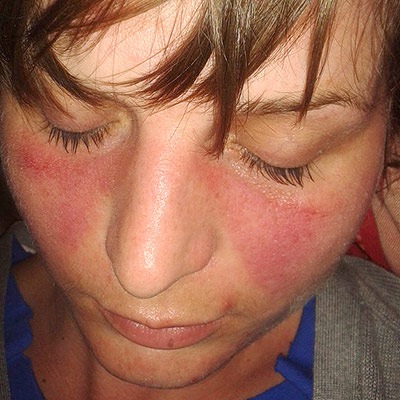
Systemic lupus erythematosus (SLE) is a chronic autoimmune disease characterized by loss of self-tolerance, production of autoantibodies to nuclear antigens, immune complex deposition, and inflammation of multiple organ systems [32]D5[34]D5.
Also Called: SLE, lupus, systemic lupus erythematosus. Historical terms such as "disseminated lupus erythematosus" are no longer used.
Disease States and Treatment Targets
The article uses standardized definitions for disease activity states. Lupus Low Disease Activity State (LLDAS) requires SLEDAI-2K ≤4, no major organ activity, no new disease activity, Physician Global Assessment (PGA) ≤1, ≤7.5 mg/day, and stable immunosuppressant doses [18]B2b. Definition of Remission in SLE (DORIS) requires clinical SLEDAI-2K = 0, PGA <0.5, prednisone ≤5 mg/day, and stable antimalarials or immunosuppressants [2]B2b[13]B2a. Flare is defined as an increase in disease activity requiring treatment escalation. Organ damage refers to irreversible organ injury measured by the Systemic Lupus International Collaborating Clinics/American College of Rheumatology Damage Index (SDI) [59]B3b.
Clinical Phenotypes
SLE is heterogeneous. Cluster analysis of the 2019 EULAR/ACR criteria identifies three distinct phenotypes at diagnosis and follow-up [58]B3b.
| Type | Key Features | Serology | Prognosis |
|---|---|---|---|
| Mucocutaneous/articular (Cluster 1) | Early arthritis, rash, mucosal ulcers | ANA, variable anti-dsDNA | Best survival |
| Severe renal (Cluster 2) | Proliferative nephritis, CNS involvement | High anti-dsDNA, anti-Sm, low complement | Worst prognosis, highest damage [59]B3b |
| MCTD overlap (Cluster 3) | Features of mixed connective tissue disease | Anti-U1-RNP, anti-Ro | Intermediate, often transitions to other clusters |
Diagnosis vs. Classification
SLE is diagnosed clinically; no formal diagnostic criteria exist. The 2019 EULAR/ACR classification criteria require a positive (ANA) at ≥1:80 titer as an entry criterion, followed by weighted additive criteria in seven clinical and three immunologic domains. A score of ≥10 classifies SLE with sensitivity 96.1% and specificity 93.4% [1]A1c[19]A1c. These criteria are designed for research but are widely used to support diagnosis [45]D5. The earlier ACR 1997 and SLICC 2012 criteria are less sensitive or specific by comparison [1]A1c.
Clinical Significance
SLE affects an estimated 72.8 per 100,000 persons in the United States, with prevalence 9 times higher in women than men, and highest among Black women (230.9 per 100,000) [7]B2a. All-cause mortality is 3-fold higher than the general population (meta-SMR 2.98, 95%), driven by cardiovascular disease, infection, and renal disease [11]B2a.
The disease immunopathogenesis, driven by type I interferon signaling, B-cell hyperactivity, and autoantibody production, is discussed in the next section.
Pearl: Prevalence and mortality are highest in Black, Hispanic, and Asian women.
Pathophysiology & Mechanism
- ▸SLE pathogenesis centers on a feed-forward loop of defective debris clearance, type I interferon activation, and autoantibody production that drives immune complex-mediated tissue injury.
- ▸Genetic risk, complement deficiency, and environmental triggers lower the threshold for self-nucleic acids to engage endosomal TLRs and IFN-I signaling.
- ▸NETs, low-density neutrophils, and metabolic reprogramming of immune cells perpetuate inflammation and organ damage.
The clinical and serologic criteria that define SLE emerge from a core immunopathogenic loop: defective clearance of apoptotic debris and neutrophil extracellular traps (NETs) exposes self-nucleic acids, triggering type I interferon (IFN-I) production and autoantibody formation that together propagate immune complex deposition and tissue injury [66]D5[103]D5. Genetic predisposition, complement deficiency, and environmental triggers, ultraviolet light, infection, stress, lower the threshold for this loop to engage [66]D5[70]D5.
Genetic and immunologic susceptibility
Over 80 susceptibility loci have been identified, many converging on the IFN-I pathway, B-cell activation, and immune complex clearance [64]B3a[66]D5. Rare monogenic deficiencies of early complement components (C1q, C2, C4) confer the strongest genetic risk, underscoring the role of complement in safely disposing of apoptotic material [70]D5. Common variants in IRF5, STAT4, and TNFSF13B (encoding BAFF) amplify IFN-I and B-cell responses [66]D5[85]B3b.
Loss of tolerance and autoantibody production
Failure to clear nuclear debris allows self-DNA and RNA to reach endosomal Toll-like receptors (TLR7, TLR9) in plasmacytoid dendritic cells (pDCs), driving IFN-I secretion [79]D5[115]D5. IFN-I then primes myeloid cells and promotes T follicular helper (Tfh) cell differentiation, which in turn supports B-cell production of high-affinity autoantibodies against dsDNA, Smith (Sm), and other nuclear antigens [96]D5. The anti-Sm response is uniquely directed against symmetrical dimethylarginine (sDMA) modifications, a post-translational epitope that can also be found on viral proteins, suggesting molecular mimicry as a trigger [114]B3b. B cells in SLE exhibit an anergic/postactivated (APA) phenotype, global hyporesponsiveness to BCR and TLR9 stimulation, yet are rescued by CD40 signals from Tfh cells, allowing autoreactive clones to escape tolerance [111]D5.
Type I interferon and the innate immune amplifier
IFN-I is the central driver of SLE pathogenesis. Over 70% of patients display an IFN gene signature (IFNGS) in blood and tissues, with IFN-I inducing a cascade of chemokines, cytokines, and co-stimulatory molecules that amplify both innate and adaptive responses [77]D5[95]D5[112]B3b. The IFN-I pathway is sustained by self-DNA/RNA from NETs and apoptotic cells, creating a feed-forward loop [79]D5. Monocytes from SLE patients show metabolic reprogramming (enhanced glycolysis and oxidative phosphorylation) that increases α-ketoglutarate, driving histone demethylation at IFN-stimulated gene promoters and locking in a "trained immunity" state [75]D5.
Effector pathways: immune complexes, complement, NETs
Autoantibody-nucleic acid complexes deposit in target organs, kidney, skin, joints, activating complement and recruiting inflammatory cells [66]D5[70]D5. Complement activation releases C5a and C3a, amplifying inflammation and tissue injury, but also consumes early components, leading to the hypocomplementemia that tracks disease activity [70]D5. Neutrophils in SLE release NETs decorated with tissue factor (TF) and IL-17A, promoting thromboinflammation and fibrosis [72]D5. Low-density neutrophils (LDNs) are a distinct subset that produce abundant NETs and IFN-I, further fueling the cycle [76]D5. The REDD1/autophagy pathway drives NETosis, and inhibits this process, linking its therapeutic mechanism to blockade of NET-driven damage [72]D5[102]D5.
Cellular effectors and tissue injury
Autoreactive B cells differentiate into short-lived plasmablasts and long-lived plasma cells, the latter resistant to B-cell depletion and responsible for persistent autoantibody production [74]D5[82]D5. blocks BAFF to reduce B-cell survival, while emerging therapies such as CD19-directed CAR T cells achieve deep B-cell depletion and sustained serologic remission [65]B2a[84]D5[86]A1a. T cells show aberrant signaling, reduced IL-2 production, and increased IL-17 secretion, contributing to end-organ inflammation [94]D5[103]D5. In the kidney, mesangial and glomerular endothelial cells undergo metabolic reprogramming (glycolysis, mitochondrial oxidation) that amplifies injury [116]D5. The result is a self-sustaining inflammatory circuit that, without intervention, leads to cumulative damage and organ failure.
Pearl: The SLE pathogenic loop, defective clearance → nucleic acid sensing → IFN-I → autoantibodies → immune complexes → tissue injury, explains why (blocks nucleic acid sensing), (blocks B-cell survival), and (blocks IFN-I receptor) each interrupt the cycle at distinct nodes, and why combination therapy may be additive [32]D5[86]A1a[95]D5.
| Mediator | Cell Source | Target/Effect | Therapeutic Target |
|---|---|---|---|
| Type I IFN (IFNα/β) | pDCs, neutrophils | Upregulates IFN-stimulated genes, primes T/B cells | (anti-IFNAR) [95]D5 |
| BAFF (BLyS) | Myeloid cells, stromal cells | B-cell survival, differentiation | [86]A1a |
| IL-21 | Tfh cells | Promotes B-cell activation, class switching | , |
| Complement (C5a, C3a) | Hepatocytes, tissue | Chemotaxis, inflammation, tissue injury | (anti-C5) (off-label) [70]D5 |
| NETs (TF+, IL-17A+) | Neutrophils | Thromboinflammation, fibrosis, autoantigen exposure | [72]D5 |
| Anti-dsDNA, anti-Sm, anti-C1q | B cells, plasma cells | Immune complex deposition, complement activation | , |
| IL-4 | T cells, mast cells | Reverses B-cell anergy, promotes autoreactivity | (exploratory) [69]D5 |
Epidemiology, Etiology & Risk Factors
- ▸SLE disproportionately affects women of childbearing age and non-White populations, with Black women having the highest prevalence.
- ▸Global incidence is 5.14 per 100,000 person-years, with marked geographic variation.
- ▸Prior depressive disorder is a modifiable risk factor for SLE development.
From these immunologic derangements emerges a disease with striking demographic disparities. SLE affects approximately 3.41 million people globally, with an estimated annual incidence of 5.14 per 100,000 person-years (95% CI 1.4 to 15.13) [126]B2a. Global prevalence is 43.7 per 100,000 (95% CI 15.87 to 108.92), though regional variation is extreme: North America reports the highest prevalence at 241 per 100,000, while Africa and Ukraine report the lowest incidence at 0.3 per 100,000 [140]B2a.
Demographic Disparities
Women are affected 9 times more often than men, with peak incidence in middle adulthood (30-50 years) [7]B2a[140]B2a. Racial and ethnic disparities are profound: Black women have the highest prevalence (230.9 per 100,000), followed by Hispanic (120.7), White (84.7), and Asian/Pacific Islander (84.4) women [7]B2a. American Indian/Alaska Native populations carry the highest burden of any group, with prevalence reaching 270.6 per 100,000 in women and 53.8 per 100,000 in men [7]B2a. In the United States, the CDC National Lupus Registries estimate a pooled prevalence of 72.8 per 100,000 (95% CI 65.3-81.0), corresponding to 204,295 affected individuals in 2018 [7]B2a.
Temporal Trends
Incidence of autoimmune diseases overall increased by 4% from 2000-2002 to 2017-2019 in the UK (IRR 1.04, 95% CI 1.00-1.09) [137]B2b. SLE prevalence appears to be rising, likely due to improved survival and diagnosis [140]B2a.
Risk Factors
Established risk factors include female sex, Black or Hispanic ethnicity, family history, and genetic variants in HLA-DR2/DR3, NCF1, NALP1, and interferon pathway genes [127]B2a[151]B3b[166]B3b. Environmental triggers include ultraviolet light, smoking, silica exposure, and Epstein-Barr virus infection [156]D5. Prior depressive disorder is associated with a 2.3-fold increased risk of developing SLE (RR 2.30) [145]B2a. Antiphospholipid antibodies confer a 5-fold increased risk of thrombotic events in SLE [120]A1c.
| Risk Factor | Odds Ratio / Relative Risk | Evidence Level |
|---|---|---|
| Female sex | Prevalence ratio 9:1 vs male | Consistent across studies [7]B2a[140]B2a |
| Black ethnicity (vs White) | Prevalence ratio ~2.7 | Meta-analysis [7]B2a |
| Hispanic ethnicity (vs White) | Prevalence ratio ~1.4 | Meta-analysis [7]B2a |
| American Indian/Alaska Native | Prevalence ratio ~3.2 | Registry [7]B2a |
| aPL positivity (for thrombosis) | OR ≥5.0 | EULAR [120]A1c |
Special Populations
Childhood-onset SLE (diagnosed ≤18 years) has an incidence of 0.7 per 100,000 and accounts for 9% of all SLE cases [28]B2b. In pregnancy, SLE increases the risk of miscarriage, pre-eclampsia (OR 3.20), and preterm birth [135]B2a. These epidemiologic patterns set the stage for the heterogeneous clinical manifestations that follow.
Pearl: Prior depressive disorder is a modifiable risk factor for SLE development.
Clinical Presentation
- ▸Fatigue, malar rash, oral ulcers, and symmetric non-erosive arthritis are the most common presenting symptoms [32].
- ▸Neuropsychiatric SLE affects 20-40% of patients; cognitive impairment is common and often persistent, especially in older-onset or Black patients [141] [230].
- ▸Symptom clustering at diagnosis identifies three distinct prognostic groups: mild mucocutaneous-articular, severe renal, and MCTD-like [58].
sets the stage for recognizing the diverse clinical phenotypes of SLE, which typically emerge over weeks to months. The earliest complaints are constitutional, mucocutaneous, and musculoskeletal: fatigue, lupus-specific rash, mouth ulcers, alopecia, joint pain, and myalgia [32]D5. These symptoms often progress in a relapsing-remitting pattern, with a nadir of activity at 2-4 weeks from onset of a flare.
Presenting Symptoms
Fatigue is the most prevalent symptom, reported by up to 80% of patients, and is frequently associated with pain, mood disturbance, and cognitive impairment [225]D5 [189]B2a. Malar rash (fixed erythema, flat or raised, over the malar eminences, sparing the nasolabial folds) is a classic presenting sign, as are oral ulcers (typically painless palatal ulcers) and non-scarring alopecia [32]D5. Musculoskeletal involvement manifests as symmetric polyarthritis, often affecting the small joints of the hands, wrists, and knees, with non-erosive arthritis on imaging [34]D5.
Organ System Involvement
Cutaneous lupus includes discoid lesions (scaly, atrophic plaques that can cause scarring and hypopigmentation) and photosensitivity [32]D5. Renal involvement (lupus nephritis) may present with , edema, and proteinuria; it is asymptomatic in many patients, emphasizing the need for routine urinalysis [181]A1c. Neuropsychiatric SLE (NPSLE) encompasses a wide spectrum: seizures, psychosis, acute confusional state, and cognitive dysfunction are among the most severe [100]D5 [141]B2a. Cognitive impairment (CI) is common, with 46% of patients in one cohort showing CI over 1 year; persistent CI was associated with older age at diagnosis, Black race, and higher disease damage [230]B2b [220]B2a. Serositis presents as pleuritic chest pain or pericardial rub, with pleural or pericardial effusions on imaging [32]D5. Hematologic manifestations include hemolytic anemia, leukopenia, thrombocytopenia (especially <50 G/L in severe cases), and lymphopenia [206]B2b. Antiphospholipid syndrome (APS) co-occurs in 30-40% of SLE patients, conferring risk of venous/arterial thrombosis and pregnancy loss [129]B2b [217]D5. Other organ systems: ocular (keratoconjunctivitis sicca, , retinopathy) [221]D5, pulmonary (pneumonitis, pulmonary hypertension) [227]B3b, cardiac ( , valvular disease) [213]A1c, (enteritis, pancreatitis) [213]A1c, and adrenal involvement (hemorrhage, adrenal insufficiency) [219]A1a.
Disease Patterns and Variants
Symptom clustering at diagnosis identifies three distinct phenotypes: mild mucocutaneous-articular (best prognosis), severe renal (worst prognosis, with high anti-DNA, anti-Sm), and mixed connective tissue disease-like (anti-U1-RNP positive) [58]B3b. Clusters remain stable over time, but the severe cluster expands.
| Variant | Key Features | Frequency |
|---|---|---|
| Mild mucocutaneous-articular | Rash, arthritis, fatigue | Most common (cluster 1) [58]B3b |
| Lupus nephritis | Proteinuria, hypertension, renal impairment | 30-50% of SLE patients [181]A1c |
| Neuropsychiatric lupus | Seizure, psychosis, cognitive dysfunction, myelopathy | 20-40% cumulative incidence [141]B2a |
| Antiphospholipid syndrome | Thrombosis, pregnancy loss, livedo reticularis | 30-40% of SLE [129]B2b |
| Serositis | Pleuritis, pericarditis, | 10-20% [32]D5 |
| Hematologic predominant | Cytopenias, autoimmune | 50-70% (any cytopenia) [206]B2b |
Red Flags and Atypical Presentations
Red flags requiring urgent evaluation: acute confusion or psychosis (suggests NPSLE), new-onset seizure (especially with aPL), respiratory distress (pneumonitis, pulmonary hemorrhage), rapidly rising creatinine with active urine sediment (proliferative LN), catastrophic APS (rapid multiorgan failure with microthrombosis) [219]A1a [100]D5 [181]A1c. Atypical presentations include: late-onset SLE (≥50 years) with more and less lupus nephritis [141]B2a; childhood-onset SLE with more severe CNS and renal disease, and higher damage accrual [200]D5 [222]B2b; male SLE with more cardiovascular events and worse health literacy [210]C4 [204]D5; and isolated discoid lupus that may progress to SLE (14.4% at 1 year, especially with ANA positivity) [229]B3b.
Pearl: A malar rash that spares the nasolabial folds, accompanied by painless oral ulcers and non-scarring alopecia, should trigger immediate ANA testing; the presence of any two of these three signs has a likelihood ratio for SLE of >10 in patients with undiagnosed multisystem symptoms.
Diagnosis & Workup: Serology, Imaging, Synovial Fluid & Classification Criteria
- ▸The 2019 EULAR/ACR classification criteria require ANA positivity as an entry criterion, followed by additive weighted criteria; a score ≥10 classifies SLE with 96.1% sensitivity and 93.4% specificity.
- ▸Anti-dsDNA and anti-Sm are the most specific autoantibodies for SLE; anti-dsDNA levels correlate with disease activity, especially lupus nephritis.
- ▸Synovial fluid analysis is essential in patients with arthritis to exclude septic arthritis and crystal arthropathies before attributing joint inflammation to SLE.
From the clinical presentation of rash, arthritis, and serositis, the diagnostic pathway begins with serological testing that must be interpreted in the context of weighted classification criteria. The 2019 European League Against Rheumatism/American College of Rheumatology (EULAR/ACR) classification criteria are the gold standard for SLE classification and serve as a practical framework for diagnosis [1]A1c[19]A1c. They require positive antinuclear antibody (ANA) at least once as the obligatory entry criterion (titer ≥1:80 on HEp-2 indirect immunofluorescence), followed by additive weighted criteria grouped into seven clinical and three immunologic domains. A total score of ≥10 points classifies the patient as having SLE. In the validation cohort, the new criteria achieved a sensitivity of 96.1% and specificity of 93.4%, outperforming the ACR 1997 criteria (82.8% sensitivity, 93.4% specificity) [1]A1c[19]A1c.
Laboratory Studies
ANA testing is the first step. A negative ANA by indirect immunofluorescence at a 1:80 dilution effectively rules out SLE (sensitivity >95%) [51]D5[68]A1c. However, a positive ANA is not specific, up to 15% of healthy individuals, especially at low titers, may be positive [51]D5. The autoantibody panel refines the diagnosis and guides prognosis.
| Test | Sensitivity (%) | Specificity (%) | Clinical Significance |
|---|---|---|---|
| Anti-dsDNA (ELISA or Crithidia luciliae) | 60-70 | >95 | Highly specific; correlates with disease activity, especially lupus nephritis [279]D5 |
| Anti-Sm | 20-30 | >99 | Pathognomonic for SLE; stable over time [276]D5 |
| Anti-Ro/SSA | 30-40 | 90-95 | Associated with cutaneous lupus, , and congenital heart block [272]B2b |
| Anti-La/SSB | 10-15 | >95 | Often co-occurs with anti-Ro; increases risk of neonatal lupus [272]B2b |
| Anti-RNP | 25-30 | 90-95 | Associated with mixed connective tissue disease overlap [58]B3b |
| Antiphospholipid antibodies (lupus anticoagulant, anticardiolipin, anti-β2 glycoprotein I) | 30-40 | 95-98 | Part of immunologic domain; associated with thrombotic events and pregnancy loss [1]A1c |
| Low complement C3 and C4 | 40-50 | 85-90 | Reflects immune complex consumption; weighted in criteria [1]A1c |
Anti-dsDNA and anti-Sm carry the highest specificity and are weighted at 6 points each in the immunologic domain [1]A1c. Antiphospholipid antibodies are weighted at 2 points (lupus anticoagulant) or 2 points (anticardiolipin/anti-β2 glycoprotein I). Low complement (C3 or C4) is weighted at 3 points [1]A1c.
Synovial Fluid Analysis
In patients presenting with arthritis, arthrocentesis is essential to exclude septic arthritis and crystal-induced arthropathies. SLE synovial fluid is typically inflammatory with a white blood cell count of 2,000-15,000 cells/mm³, predominantly mononuclear cells. Polarized light microscopy identifies monosodium urate (strongly negative birefringent) or calcium pyrophosphate (weakly positive birefringent) crystals. Gram stain and culture are mandatory to rule out infection, especially in patients on immunosuppressive therapy.
Imaging
Joint ultrasound or MRI can document synovitis, tenosynovitis, and effusion, fulfilling the musculoskeletal domain criterion (weighted at 6 points for objective synovitis [1]A1c). In suspected lupus nephritis, renal biopsy remains the gold standard for histologic classification (ISN/RPS Class III, IV, V) and guides treatment decisions [181]A1c. Chest radiography or CT is indicated for pleural or pericardial effusion (serositis domain, weighted at 5 points for pleural or pericardial effusion [1]A1c).
Diagnostic Algorithm
- Step 1, ANA screening: Perform ANA by IIF on HEp-2 cells. If negative, SLE is highly unlikely; consider alternative diagnoses. If positive (≥1:80), proceed to Step 2.
- Step 2, Domain assessment: Evaluate the patient for clinical domains (constitutional, hematologic, neuropsychiatric, mucocutaneous, serosal, musculoskeletal, renal) and immunologic domains (antiphospholipid antibodies, complement, SLE-specific antibodies). Assign weighted scores per the 2019 EULAR/ACR criteria [1]A1c.
- Step 3, Threshold: If the cumulative score is ≥10, the patient is classified as having SLE. Diagnosis remains clinical, but the criteria provide a robust framework.
- Step 4, Organ-specific workup: For suspected lupus nephritis, obtain renal biopsy. For neuropsychiatric symptoms, perform cerebrospinal fluid analysis, EEG, and MRI to exclude infection and other causes [120]A1c.
- Step 5, Exclusion of mimics: Consider , other autoimmune diseases (e.g., rheumatoid arthritis, Sjögren disease, systemic sclerosis), infection (e.g., leprosy in endemic areas [285]C4), and malignancy.
Pearl: A negative ANA by IIF at 1:80 dilution effectively rules out SLE (sensitivity >95%), but a positive ANA alone is not sufficient, specificity is low, and the weighted criteria are essential to avoid overdiagnosis [1]A1c[51]D5.
Severity, Disease Activity & Risk Stratification
- ▸SLEDAI-2K and BILAG-2004 are the standard global and organ-specific activity indices; BICLA is a composite response used in recent trials.
- ▸The SDI captures irreversible organ damage; its accrual is a strong predictor of mortality and is a key secondary endpoint in trials.
Once the diagnosis is established, the next step is to quantify disease activity and damage, a process that drives treatment decisions and prognostication. Several validated composite indices have been developed to standardise assessment across clinical trials and routine care.
Composite Activity Indices
The Systemic Lupus Erythematosus Disease Activity Index 2000 (SLEDAI-2K) is the most widely used global measure. It weights 24 descriptors across 9 organ systems, with scores ranging from 0 to 105. A SLEDAI-2K score ≥6 defines moderate-to-severe disease, and a reduction of ≥4 points defines a clinically meaningful response in trials [293]A1c. The British Isles Lupus Assessment Group (BILAG) 2004 index is a transitional organ-based measure that assigns each of 9 domains a letter score (A-E), where A denotes severe disease requiring immunosuppression and B denotes moderate activity. BILAG is more sensitive to partial improvement than SLEDAI-2K and is the basis for the BILAG-based Composite Lupus Assessment (BICLA) response used in recent anifrolumab and dapirolizumab pegol trials [298]A1b[247]A1b. The Physician's Global Assessment (PGA) is a 0-3 visual analogue scale that captures the clinician's overall impression; it is included in the SRI-4 and BICLA composite endpoints.
Treat-to-Target and the Definitions of Remission
The treat-to-target (T2T) paradigm has been adopted by EULAR and the BSR [293]A1c[300]A1c. Two consensus-based targets are now central:
| Target | Definition | Rationale |
|---|---|---|
| DORIS Remission | Clinical SLEDAI-2K = 0, PGA <0.5, ≤5 mg/day, and stable immunosuppressants [2]B2b | More stringent than LLDAS; associated with lower damage progression but achieved by fewer patients. In the TULIP LTE, anifrolumab increased DORIS attainment from 18.3% to 30.3% at week 208 (OR 1.9, 95% CI 1.0-3.9) [2]B2b. |
In clinical trials, attainment of LLDAS or DORIS is endorsed as a secondary endpoint. Belimumab increased LLDAS attainment at week 52 [242]B2c and anifrolumab improved time to first LLDAS (HR 1.56) [2]B2b.
Damage Assessment
Irreversible organ damage is measured by the Systemic Lupus International Collaborating Clinics/American College of Rheumatology Damage Index (SDI), which records 41 items across 12 domains, scored cumulatively. Damage accrual is a key predictor of mortality and poor quality of life [264]D5. In the childhood-onset SLE cohort, 44.2% of patients had an SDI score ≥1 after a mean disease duration of 3.8 years [308]B2b. A revised SDI is under development to better capture severity and life-course impact [208]D5.
Risk Stratification
Baseline factors that predict worse outcomes include high disease activity (SLEDAI-2K ≥10), lupus nephritis, persistent anti-dsDNA positivity, low complement, and Black or sub-Saharan African ethnicity [222]B2b[302]B2b. The combination of baseline neutrophil-to-lymphocyte ratio (NLR) with SLEDAI-2K modestly improves prediction of 1-year LLDAS attainment (AUC 0.746) [179]B3b. In SLE-associated pulmonary arterial , a trajectory of rapidly increasing systolic pulmonary artery pressure identifies a high-risk phenotype with markedly worse survival (, p=0.037) [227]B3b.
Pearl: A sustained LLDAS of at least 3 months is a pragmatic, achievable target that reduces damage accrual by 40% and flare by 44%; document the LLDAS components at every visit to guide treatment escalation or de-escalation [302]B2b.
| Target | SLEDAI-2K | Organ Systems | PGA | Prednisone | Immunosuppressants |
|---|---|---|---|---|---|
| LLDAS | ≤4 | No major organ activity (renal, CNS, cardiopulmonary, vasculitis, fever) | ≤1 | ≤7.5 mg/day | Stable |
| DORIS Remission | 0 (clinical) | No activity in any system | <0.5 | ≤5 mg/day | Stable |
Acute Management: Flares & Organ-Threatening Disease
- ▸Organ-threatening SLE flares (LN, NPSLE, alveolar hemorrhage, severe cytopenias, CAPS) require immediate high-dose glucocorticoids and disease-specific immunosuppression.
- ▸First-line for proliferative LN is MMF or IV cyclophosphamide plus glucocorticoids; add belimumab or a calcineurin inhibitor for improved response.
- ▸Refractory disease may benefit from switching between MMF and cyclophosphamide, or adding a biologic (rituximab, obinutuzumab, anifrolumab, belimumab).
Once disease activity is classified and organ-threatening involvement identified, immediate intervention is required to prevent irreversible damage. Flares are defined by new or worsening BILAG A or B domains, an increase in SLEDAI-2K ≥4 points, or the need for treatment escalation [333]B2b. Organ-threatening manifestations include active lupus nephritis (rising creatinine, active urinary sediment, proteinuria >1 g/day), neuropsychiatric SLE (seizures, psychosis, ), diffuse alveolar hemorrhage, severe thrombocytopenia (<30,000/μL), (Hb <8 g/dL), and catastrophic antiphospholipid syndrome (CAPS). Disposition depends on severity: ICU for alveolar hemorrhage, status epilepticus, or CAPS; ward for nephritis flares or severe cytopenias; outpatient for mild-to-moderate flares without organ threat.
Step 1: Initial Assessment and Severity Classification
Confirm flare with history, physical exam, and targeted labs (CBC, Cr, urinalysis with protein-to-creatinine ratio, complement C3/C4, anti-dsDNA, ESR, CRP). For suspected nephritis, obtain a kidney biopsy if not contraindicated to classify ISN/RPS class and guide therapy [318]A1c. For neuropsychiatric symptoms, rule out infection, metabolic derangement, and stroke with MRI, CSF analysis, and EEG.
Step 2: First-Line Interventions by Organ System
Lupus nephritis (class III/IV ± V): The EULAR 2025 update recommends induction with mofetil (MMF) 2-3 g/day or intravenous (IVC) 500-1000 mg/m² every 2 weeks for 6 doses, plus glucocorticoids: 0.5-1 g IV daily for 3 days, followed by oral 0.5-1 mg/kg/day tapered to ≤7.5 mg/day by 3 months [318]A1c. Add belimumab 10 mg/kg IV every 4 weeks or a calcineurin inhibitor (voclosporin 23.7 mg twice daily or ) as combination therapy for improved renal response [318]A1c.
Severe non-renal SLE: The ACR 2025 guideline recommends high-dose glucocorticoids (prednisone 0.5-1 mg/kg/day or IV methylprednisolone 1 g/day × 3 days) plus either MMF, azathioprine, or a biologic (belimumab, anifrolumab, ) [295]A1c. For cutaneous or musculoskeletal flares without organ threat, lower doses may suffice.
Neuropsychiatric SLE: High-dose IV methylprednisolone 1 g/day × 3-5 days plus IVC 500-1000 mg/m² monthly for 6 months. Consider rituximab 1 g IV × 2 doses 2 weeks apart if refractory [295]A1c.
Diffuse alveolar hemorrhage: IV methylprednisolone 1 g/day × 3-5 days plus IVC or rituximab. Consider plasmapheresis if severe or associated with CAPS.
Severe thrombocytopenia (<30,000/μL) or hemolytic anemia (Hb <8 g/dL): IV methylprednisolone 1 g/day × 3 days, IVIG 0.4 g/kg/day × 5 days, ± rituximab. Avoid splenectomy if possible [335]C4.
Catastrophic APS: Therapeutic anticoagulation with unfractionated , high-dose glucocorticoids, plasmapheresis, ± rituximab, ± eculizumab.
Step 3: Escalation for Refractory Disease
If no clinical response within 2-4 weeks, switch between MMF and IVC, or add a biologic. Obinutuzumab 1000 mg IV on day 1 and week 2, then every 24 weeks showed superiority over placebo in non-renal SLE (SRI-4 response 76.7% vs 53.5%; adjusted difference 23.1 percentage points; P<0.001) [310]A1b. Anifrolumab 300 mg IV every 4 weeks improved BICLA response (47.8% vs 31.5%; difference 16.3 percentage points; P=0.001) [298]A1b. Belimumab 10 mg/kg IV every 4 weeks reduced severe flare risk by 50% (HR 0.51; 95% CI 0.35-0.74) [245]A1b. For LN, add a calcineurin inhibitor or switch to combination MMF + tacrolimus.
Step 4: Monitoring and Titration
Monitor daily CBC, Cr, urinalysis, complement, anti-dsDNA during acute phase. For LN, check 24-hour urine protein and eGFR weekly. Taper glucocorticoids by 10-20% per week once clinical response achieved, aiming for prednisone ≤7.5 mg/day by 3 months. Provide PJP prophylaxis ( ) if prednisone >20 mg/day for >4 weeks or with cyclophosphamide [133]B2b. Administer recombinant zoster vaccine before immunosuppression if possible [296]A1b. Start osteoporosis prophylaxis if glucocorticoids expected >3 months.
Step 5: Transition to Maintenance
Once stable (e.g., renal response at 6-12 months), switch to maintenance: MMF 1-2 g/day or azathioprine 2 mg/kg/day, plus hydroxychloroquine 200-400 mg/day [320]A1b. Continue biologic if used. Taper glucocorticoids to lowest effective dose; aim for withdrawal if sustained remission achieved [328]B3b.
What NOT to Do
- Do not use mycophenolate in pregnancy (teratogenic).
- Do not use cyclophosphamide in active infection without adequate antimicrobial coverage.
- Do not abruptly stop glucocorticoids; taper slowly to avoid adrenal insufficiency and flare.
- Do not use TNF inhibitors (ineffective in SLE).
Dosing Table for Acute Flare Management
| Drug | Indication | Starting dose | Target / max dose | Key monitoring |
|---|---|---|---|---|
| Methylprednisolone IV | All organ-threatening flares | 0.5-1 g/day × 3 days | Same | Glucose, BP, infection |
| Prednisone oral | Taper after IV pulse | 0.5-1 mg/kg/day | Taper to ≤7.5 mg/day by 3 months | Glucose, bone density |
| Mycophenolate mofetil | LN induction | 2-3 g/day | 3 g/day | CBC, LFTs, pregnancy test |
| Cyclophosphamide IV | LN, NPSLE, alveolar hemorrhage | 500-1000 mg/m² every 2 weeks | 6 doses | CBC, urinalysis, antiemetics |
| Belimumab IV | Active SLE, LN | 10 mg/kg every 4 weeks | Same | Infusion reactions, IgG levels |
| Anifrolumab IV | Moderate-to-severe SLE | 300 mg every 4 weeks | Same | , infections |
| Obinutuzumab IV | Active SLE (non-renal) | 1000 mg day 1, week 2, then every 24 weeks | Same | Infusion reactions, infections |
| Rituximab IV | Refractory SLE, LN | 1 g × 2 doses 2 weeks apart | Repeat as needed | Infusion reactions, PML risk |
| IVIG | Severe thrombocytopenia, hemolytic anemia | 0.4 g/kg/day × 5 days | Same | Volume overload, renal function |
Controversies and Guideline Disagreement
| Question | Position A | Position B | Strength | Implication |
|---|---|---|---|---|
| First-line biologic for LN | EULAR 2025 recommends adding belimumab or calcineurin inhibitor to MMF/IVC [318]A1c | ACR 2025 does not specify a preferred biologic for LN (separate guideline) [295]A1c | Moderate | In practice, belimumab is increasingly used early in LN; cost and availability vary. |
| Role of rituximab vs obinutuzumab in non-renal SLE | ACR 2025 lists rituximab as an option for refractory disease [295]A1c | ALLEGORY trial shows obinutuzumab superior to placebo (SRI-4 76.7% vs 53.5%) [310]A1b | Strong (new evidence) | Obinutuzumab may become preferred over rituximab for non-renal SLE, but long-term data are limited. |
| Glucocorticoid tapering speed | EULAR recommends tapering to ≤7.5 mg/day by 3 months [318]A1c | ACR emphasizes limiting duration but does not specify a timeline [295]A1c | Mild | Both agree on minimizing glucocorticoid exposure; individualize based on response. |
Pearl: In organ-threatening SLE flares, initiate high-dose glucocorticoids and an appropriate immunosuppressive agent within 24 hours; delay in therapy is associated with irreversible organ damage and increased mortality [318]A1c[295]A1c.
Long-term Management: The DMARD Ladder & Treat-to-Target
- ▸Treat-to-target aiming for DORIS remission or LLDAS reduces damage accrual by 40% and mortality by 50%.
- ▸Hydroxychloroquine ≤5 mg/kg/day is mandatory for all patients; GC should be tapered to ≤5 mg/day, then withdrawn.
- ▸Escalation ladder: HCQ → csDMARD (MTX, AZA, MMF) → biologic (belimumab, anifrolumab) or tsDMARD (deucravacitinib, upadacitinib); rituximab reserved for refractory disease.
Building on the control of acute flares, the long-term goal shifts to sustained suppression of disease activity while minimising glucocorticoid (GC) exposure. The 2023 EULAR recommendations explicitly endorse a treat-to-target (T2T) strategy aiming for remission (DORIS) or, failing that, a lupus low disease activity state (LLDAS) [367]A1c (1c). Achieving either target for ≥3 consecutive months is associated with a 40% reduction in damage accrual (HR 0.60) and a 44% reduction in flare risk (HR 0.56) [302]B2b (2b). Attaining LLDAS for ≥50% of observed time cuts mortality risk by nearly half (adjusted HR 0.51) [14]B2b (2b).
Step 1: Foundation, Hydroxychloroquine
Hydroxychloroquine (HCQ) is recommended for every patient with SLE, at a target dose of ≤5 mg/kg real body weight/day [367]A1c (1c). Doses exceeding 5 mg/kg increase retinal toxicity risk without added efficacy. HCQ reduces flare risk, improves lipid profiles, and confers a survival benefit. In the PRESS trial, HCQ maintenance after GC withdrawal was non-inferior to dual therapy for preventing relapse (relapse rate 11.2% vs 4.7%; difference 6.5%, 95% CI -0.5 to 13.5; Pnon-inferiority=0.034) [320]A1b (1b).
Step 2: Glucocorticoid Minimisation
GC should be used as a bridging therapy and tapered to ≤5 mg/day equivalent within 3-6 months; withdrawal is the ultimate goal [367]A1c (1c). Every 1 mg/day reduction below 7.5 mg improves long-term outcomes. The early addition of a conventional synthetic DMARD (csDMARD) or biologic facilitates GC taper.
Step 3: Escalation, csDMARDs
For patients who remain active despite HCQ and low-dose GC, a csDMARD is the next step:
- (MTX) 15-25 mg once weekly: first-line for moderate non-renal disease, especially arthritis and rash. A 2013 systematic review showed MTX reduces non-renal activity with a steroid-sparing effect [360]B2a (2a).
- Azathioprine (AZA) 1-2.5 mg/kg/day: alternative for cutaneous, haematological, or mild renal disease.
- mofetil (MMF) 1-3 g/day: preferred for lupus nephritis and severe non-renal activity; also used for maintenance after . Mycophenolate withdrawal in quiescent disease increased reactivation risk (18% vs 10% with continuation; absolute difference 8%) [240]A1b (1b), suggesting that many patients require long-term maintenance.
Step 4: Biologic DMARDs & Targeted Synthetic DMARDs
When csDMARDs fail or are not tolerated, add a biologic or targeted synthetic DMARD (tsDMARD):
Belimumab (BLyS inhibitor)
- IV 10 mg/kg every 4 weeks or SC 200 mg weekly.
Anifrolumab (type I IFN receptor antagonist)
- IV 300 mg every 4 weeks or SC 120 mg weekly.
(CD20-depleting antibody)
- Off-label; used in organ-threatening, refractory disease. The BILAG-BR registry showed a serious infection rate of 117.7 per 1000 PY with rituximab, higher than with belimumab [160]B2b (2b). Sequential belimumab + rituximab (BLISS-BELIEVE) did not meet its primary endpoint of disease control at week 52 [234]A1b (1b).
Deucravacitinib (TYK2 inhibitor)
- Oral 3 mg twice daily (not yet FDA-approved for SLE). In the phase 2 PAISLEY trial, SRI-4 response at week 32 was 58% vs 34% (OR 2.8; 95% CI 1.5-5.1; NNT = 5) [235]A1b (1b). Acne and rash were more common with deucravacitinib.
Upadacitinib (JAK1 inhibitor)
- Oral 30 mg once daily (not yet approved). In the SLEek trial, SRI-4 response at week 24 was 54.8% vs 37.3% (P = 0.028) [237]A1b (1b). Long-term extension data through 104 weeks maintained responses [139]A1b (1b). Serious infections and are increased.
Telitacicept (BLyS/APRIL dual inhibitor, approved in China)
- SC 160 mg weekly. In a phase 3 trial, modified SRI-4 response at week 52 was 67.1% vs 32.7% (difference 34.5%; 95% CI 24.3-44.7; NNT = 3) [128]A1b (1b). Upper respiratory tract infections and reduced immunoglobulin levels were more common.
| Drug | Starting dose | Target / max dose | Renal adjustment | Hepatic adjustment | Key monitoring |
|---|---|---|---|---|---|
| Hydroxychloroquine | 200-400 mg/day | ≤5 mg/kg/day | No adjustment | No adjustment | Retinal exam at baseline, then annually after 5 years |
| Methotrexate | 7.5-15 mg once weekly | 15-25 mg once weekly | Contraindicated if eGFR <30 | Use with caution in B/C | LFTs, creatinine, CBC, folate supplementation |
| Azathioprine | 50 mg/day | 1-2.5 mg/kg/day | Reduce dose if eGFR <30 | No adjustment | CBC, LFTs, TPMT genotype |
| Mycophenolate mofetil | 500 mg twice daily | 1-3 g/day | Max dose 2 g/day if eGFR <30 | Avoid in Child-Pugh C | CBC, LFTs, pregnancy test |
| Belimumab IV | 10 mg/kg IV day 0, 14, 28, then q4wk | 10 mg/kg IV q4wk | No adjustment | No adjustment | Infusion reactions, IgG levels |
| Anifrolumab IV | 300 mg IV q4wk | 300 mg IV q4wk | No adjustment | No adjustment | Herpes zoster, hypersensitivity |
| Deucravacitinib | 3 mg twice daily | 3 mg twice daily | No adjustment | No adjustment | CBC, LFTs, lipids |
Step 5: Monitoring and Tapering
Once a patient achieves LLDAS or remission for ≥6 months, slow tapering of GC and then the csDMARD/biologic can be attempted. The EULAR task force recommends first tapering GC to ≤5 mg/day, then to zero, then reducing the immunosuppressant, and finally the biologic [367]A1c (1c). HCQ should never be withdrawn unless retinal toxicity occurs. Disease activity should be assessed every 3-6 months using a validated instrument (SLEDAI-2K, BILAG, or SLE-DAS).
Controversies and Guideline Disagreement
| Question | Position A | Position B | Strength | Implication for practice |
|---|---|---|---|---|
| First biologic choice for non-renal SLE | EULAR 2023 recommends anifrolumab or belimumab as equally valid add-on options [367]A1c (1c) | BSR 2026 does not explicitly prioritise anifrolumab over belimumab [300]A1c (1c) | Mild (wording differences, both allow either) | Choice depends on patient preference (SC vs IV), comorbidities (e.g., herpes zoster risk with anifrolumab), and serological profile |
| Role of rituximab before novel biologics | EULAR reserves rituximab for organ-threatening, refractory disease after belimumab/anifrolumab [367]A1c | Some expert algorithms still position rituximab as second-line after csDMARDs in severe non-renal lupus [370]D5 (5) | Moderate (different escalation thresholds) | Rituximab remains a valuable rescue option but carries higher infection risk; belimumab/anifrolumab should be tried first |
| Calcineurin inhibitors in non-renal lupus | EULAR 2023 mentions CNIs (voclosporin, ) only for lupus nephritis [367]A1c | The AURORA 1 trial established voclosporin’s efficacy in LN, but its use in non-renal SLE is not recommended [244]A1b | None (no disagreement, both restrict to LN) | No controversy; CNIs are not first-line for non-renal disease |
Pearl: Initiate a treat-to-target strategy from the first visit, add a csDMARD (MTX/AZA/MMF) if moderate disease persists after 3 months of HCQ, and escalate to belimumab or anifrolumab if still active at 6 months; every month of GC exposure above 5 mg/day accrues damage (Lancet Rheumatol 2022).
Immunosuppression Safety & Therapeutic Drug Monitoring
- ▸Pre-biologic screening (TB, HBV, HCV, HIV) and baseline immunoglobulins are mandatory before rituximab; serious infection rate is 117.7/1000 person-years in the first year.
- ▸Hydroxychloroquine dose must be ≤5 mg/kg/day real body weight with annual retinal screening after 5 years to prevent irreversible retinopathy.
- ▸Belimumab shows no immunogenicity and modest concentration-response correlation; TDM is not yet standard but may guide dose optimization.
Treat-to-target immunosuppression demands rigorous safety surveillance to balance efficacy against infection, malignancy, and organ toxicity. Protocolized monitoring, pre-biologic screening, ongoing laboratory checks, retinopathy surveillance, infection prophylaxis, and perioperative hold rules, is a first-class recurring clinical activity that prevents avoidable harm.
Pre-Biologic Screening
Before initiating any biologic (belimumab, , anifrolumab, telitacicept), screen for latent tuberculosis (IGRA), hepatitis B (HBsAg, anti-HBc), hepatitis C, and HIV. Baseline , liver and renal function, urinalysis, complement C3/C4, and anti-dsDNA are mandatory. For rituximab, measure immunoglobulin levels (IgG, IgM) and administer pneumococcal, influenza, and vaccines at least 2 weeks before infusion. The BILAG-BR registry reported a serious infection rate of 117.7 per 1000 person-years within the first year of therapy, with rituximab carrying an adjusted hazard ratio of 1.68 versus standard of care [160]B2b. Glucocorticoid use independently increases COVID-19 risk (OR 2.19, 95% CI 1.05-4.58) [401]A1a.
Ongoing Laboratory Monitoring
Monitor CBC, LFTs, renal function, and urinalysis every 1-3 months for all patients on immunosuppressants. For belimumab, infusion reactions occur at 1.5 events/100 patient-years; at 3.0 events/100 patient-years [402]C4. In real-world anifrolumab cohorts, herpes zoster (n=5/206) and respiratory infections (n=6/206) were the most frequent adverse events [283]B2b. For rituximab, monitor B-cell counts and immunoglobulins every 3-6 months; consider IVIG 0.4 g/kg every 4 weeks if recurrent serious infections with low IgG.
Retinopathy Screening
Hydroxychloroquine retinopathy risk is dose-dependent: keep the dose ≤5 mg/kg/day real body weight. Baseline ophthalmologic exam within the first year, then annual screening after 5 years of use. Risk is amplified by renal impairment, tamoxifen co-administration, and cumulative duration [405]D5.
Infection Prophylaxis
For patients on ≥20 mg/day for ≥4 weeks, add 80/400 mg daily for Pneumocystis jirovecii prophylaxis. For rituximab-treated patients, consider 400 mg twice daily for herpes zoster prophylaxis and monitor HBV reactivation (HBsAg and HBV DNA every 3 months if anti-HBc positive).
Perioperative
For elective surgery: hold rituximab 6 months before (or until B-cell reconstitution), hold belimumab 4 weeks, hold anifrolumab 4 weeks. Continue hydroxychloroquine. Maintain chronic glucocorticoids at stress doses (e.g., 100 mg IV every 8 hours on the day of surgery).
Therapeutic Drug Monitoring
Belimumab concentrations vary widely (median 25.8 μg/mL, IQR 20.9-43.5) and modestly correlate with clinical response at month 6: SLEDAI-2K ρ = -0.37 (P = 0.003), Physician Global Assessment ρ = -0.41 (P = 0.005) [387]B2b. No anti-drug antibodies developed during follow-up, indicating low immunogenicity. Rituximab TDM is not standardized; B-cell monitoring (CD19+ count <5 cells/μL) guides retiming of repeat cycles. Anifrolumab TDM remains investigational, no concentration-response thresholds are established.
Pearl: For any patient on rituximab who develops a serious infection, check IgG levels and consider IVIG replacement if IgG <500 mg/dL, this reduces recurrent infection risk and is often overlooked.
| Drug | Pre-Screening | Ongoing Labs (q1-3mo) | Special Monitoring | Perioperative Hold |
|---|---|---|---|---|
| Belimumab | TB, HBV, HCV, HIV; CBC, LFTs, renal, UA, C3/C4, anti-dsDNA | CBC, LFTs, renal, UA | Infusion reactions (1.5/100 pt-yr); herpes zoster (3.0/100 pt-yr) | 4 weeks |
| Anifrolumab | Same as belimumab | CBC, LFTs, renal, UA | Herpes zoster; respiratory infections | 4 weeks |
| Telitacicept | Same as belimumab | CBC, LFTs, renal, UA | Injection site reactions; infections (similar to placebo) | Insufficient data |
Multisystem & Extra-Articular Involvement (Organ-by-Organ Map)
- ▸Lupus nephritis occurs in 38.3% of SLE patients and is the leading cause of morbidity; treat-to-target with LLDAS reduces renal flares and damage.
- ▸Neuropsychiatric SLE carries a 2- to 3-fold increased risk of intracerebral hemorrhage; high-risk features include active nephritis, hypocomplementemia, and lupus anticoagulant.
- ▸Cardiovascular risk is 2-5 times higher; hydroxychloroquine and strict BP control (<130/80 mm Hg) are foundational.
With immunosuppressive safety established, the clinician must now navigate the protean organ manifestations that define SLE. Renal involvement occurs in 38.3% of patients, often as the presenting feature [147]B2b. Proliferative lupus nephritis (class III/IV ± V) is associated with higher anti-C1q and anti-dsDNA levels; anti-C1q predicts complete response (AUC 0.72) [21]B2b. The Renal Activity Index for Lupus (RAIL), a composite of six urinary biomarkers, discriminates active LN from non-renal SLE and tracks treatment response [265]B3b. EULAR recommends achieving complete renal response (proteinuria <0.5-0.7 g/24h with near-normal GFR) by 12 months [181]A1c. For induction, mofetil (MMF 2-3 g/day) or low-dose IV (500 mg × 6 biweekly doses) plus glucocorticoids is standard; add-on belimumab or voclosporin improves response rates [184]B2a[244]A1b. Maintenance with MMF or azathioprine, with glucocorticoids ≤5 mg/day, reduces relapse [181]A1c. Attainment of lupus low disease activity state (LLDAS) at 12 months independently protects against renal flares (HR 0.38) [418]B2b.
Neuropsychiatric SLE (NPSLE)
NPSLE encompasses 19 syndromes, from headache to psychosis. Cerebrovascular events occur in 5-15% of patients; the risk of is 2- to 3-fold higher than in the general population [439]C4. Active lupus nephritis, hypocomplementemia, and lupus anticoagulant positivity constitute a high-risk triad [439]C4. EULAR recommends glucocorticoids and cyclophosphamide for severe NPSLE (e.g., , vasculitis); is reserved for refractory cases [293]A1c[370]D5.
Cutaneous and Mucocutaneous Disease
Lupus-specific rashes (malar, discoid, photosensitive) affect up to 80% of patients. Topical glucocorticoids and hydroxychloroquine (≤5 mg/kg real body weight) are first-line [293]A1c. For refractory cutaneous lupus, , mycophenolate, or belimumab may be added [295]A1c. Nailfold videocapillaroscopy shows enlarged capillaries and microhemorrhages in 12% of patients, correlating with higher disease activity [158]B3b.
Cardiovascular and Pulmonary Involvement
SLE confers a 2- to 5-fold increased risk of cardiovascular disease. EULAR recommends a blood pressure target <130/80 mm Hg and hydroxychloroquine for its cardioprotective effects [412]A1c. Pulmonary manifestations include pleuritis (up to 46% of patients), (ILD), and pulmonary (PH). Belimumab was associated with reduced serositis relapse (HR 0.34) [436]B2b. For ILD, ERS/EULAR guidelines recommend screening with and HRCT; mycophenolate or cyclophosphamide is used for induction [410]A1c. In a predominantly Black and Hispanic cohort, PH independently predicted lupus flare-related hospitalization (HR 1.90) [345]B3b.
Hematologic and Other Systems
Cytopenias (hemolytic anemia, thrombocytopenia, leukopenia) are common. Severe thrombocytopenia (<20,000/μL) may require high-dose glucocorticoids, rituximab, or thrombopoietin agonists [293]A1c. Lupus enteritis presents with abdominal pain and CT findings of bowel wall thickening; glucocorticoids are first-line, with immunosuppressants for recurrence [270]D5.
| Organ System | Screening/Monitoring | Key Interventions |
|---|---|---|
| Renal | Urinalysis, UPCR, eGFR, anti-dsDNA, C3/C4 every 3-6 months | MMF, low-dose CYC, belimumab, voclosporin; target LLDAS [418]B2b |
| Neuropsychiatric | Clinical assessment; MRI, LP if indicated | GC + CYC for severe; rituximab for refractory [293]A1c |
| Cutaneous | Skin exam, photosensitivity history | HCQ, topical GC; MTX, MMF, belimumab [295]A1c |
| Cardiovascular | BP, lipid panel, ECG; consider carotid ultrasound | BP <130/80, HCQ, statin if indicated [412]A1c |
| Pulmonary | PFTs, HRCT if symptoms; echo for PH | MMF/CYC for ILD; vasodilators for PH [410]A1c[345]B3b |
| Hematologic | CBC with differential every visit | GC, rituximab for severe cytopenias [293]A1c |
| CT abdomen if abdominal pain | GC, ISDs for enteritis [270]D5 |
Pearl: Renal involvement remains the strongest predictor of poor outcomes; early detection via urinalysis and anti-dsDNA monitoring every 3-6 months, coupled with treat-to-target aiming for LLDAS, reduces damage accrual and mortality [130]B2a[418]B2b.
Complications: Disease-Driven & Treatment-Related
- ▸Infection is the leading cause of death in SLE (meta-SMR 4.98), with bacterial pneumonia, herpes zoster, and tuberculosis particularly elevated.
- ▸Cardiovascular risk is 2.3-fold higher than controls, but sustained control of modifiable risk factors and disease remission reduce progression.
- ▸Glucocorticoid-related damage (cataracts, osteoporosis, osteonecrosis) dominates iatrogenic harm; tapering to ≤5 mg/day and using steroid-sparing agents is essential.
Having surveyed the organ-by-organ landscape of SLE, the clinician must now confront the two forces that together drive long-term morbidity and mortality: the disease itself and the treatments used to control it. These complications accumulate over years, often silently, and their prevention is as critical as managing acute flares.
Infection: The Leading Cause of Death
Infection is the single most common cause of death in SLE, with a meta‑standardized mortality ratio (meta‑SMR) of 4.98 compared with the general population [11]B2a. The risk of serious infection is nearly threefold higher (pooled RR 2.96, 95% CI 1.28-6.83) [446]B2a. Bacterial pneumonia is the most frequent serious infection, followed by (RR 2.50, 95% CI 2.36-2.65) [446]B2a. Tuberculosis risk is especially elevated (RR 6.11, 95% CI 3.61-10.33) [446]B2a.
Key risk factors for (PJP) include: male sex (HR 2.42), end‑stage renal disease (HR 1.74), mofetil use (HR 4.43), intravenous steroid pulse therapy (HR 108.73), and oral prednisolone equivalent >7.5 mg/day (HR 4.83); hydroxychloroquine is protective (HR 0.51) [133]B2b. was not associated with increased PJP risk [133]B2b.
| Risk factor | Adjusted HR (95% CI) | Source |
|---|---|---|
| IV steroid pulse | 108.73 (P<0.001) | [133]B2b |
| Oral >7.5 mg/day | 4.83 (P<0.001) | [133]B2b |
| Mycophenolate mofetil | 4.43 (P<0.001) | [133]B2b |
| Male sex | 2.42 (P<0.01) | [133]B2b |
| ESRD | 1.74 (P=0.01) | [133]B2b |
| Hydroxychloroquine | 0.51 (P=0.01) | [133]B2b |
Hyposplenism, detected by Howell-Jolly bodies on peripheral smear, occurs in 9.4% of SLE patients and is associated with a 7‑fold higher risk of infection‑related hospitalization (OR 7.3, 95% CI 2.4-21.8), particularly pneumococcal disease [397]B3b.
Cardiovascular Disease: Accelerated Atherosclerosis
(CVD) is the second leading cause of death, with a meta‑SMR of 2.72 [11]B2a. In a 10‑year prospective study, SLE patients had a 2.3‑fold higher risk of carotid plaque progression than healthy controls (IRR 2.26, P=0.002) [10]B2b. Sustained control of traditional cardiovascular risk factors reduced that risk by 32% per attained target (IRR 0.68, P=0.004), and DORIS remission for ≥75% of follow‑up reduced it by 43% (IRR 0.57, P=0.033) [10]B2b.
In a population‑based study of 19 autoimmune diseases, SLE carried the third highest overall CVD risk [164]B2b. The risk is highest in younger patients (age <45 years:) [164]B2b.
The type I interferon pathway is a key driver of vasculopathy; anifrolumab reduces NET complexes and glycoprotein acetylation and improves cholesterol efflux capacity, suggesting potential for cardiovascular risk reduction [351]B2b.
Malignancy
Overall cancer risk is not significantly increased in SLE (meta‑SMR 1.19, 95% CI 0.89-1.59) [11]B2a. However, certain malignancies are more common: non‑Hodgkin lymphoma, lung cancer, and (associated with HPV). The risk of sarcoma is not established from large cohorts, but case reports describe and leiomyosarcoma, possibly related to viral co‑infection [478]D5.
Glucocorticoid‑Related Damage
Chronic glucocorticoid use is the dominant iatrogenic driver of damage. In an inception cohort, glucocorticoid‑exposed patients had higher damage accrual at 5 and 8 years, driven by cataracts, osteoporosis with fragility fractures, and osteonecrosis [461]B2b. The EULAR 2023 recommendations urge tapering to ≤5 mg/day prednisone equivalent and, when possible, withdrawal [367]A1c.
Osteoporosis and Fractures
Vertebral fractures are present in 18-50% of SLE patients, many with normal bone density [474]D5. Risk factors include glucocorticoid use, longer disease duration, low vitamin D, and low BMI [474]D5. The incidence of symptomatic fractures is increased 1.2-4.7‑fold [474]D5.
Hydroxychloroquine Retinopathy
Retinopathy risk increases with cumulative exposure: 1% at 5 years, 1.8% at 6-10 years, 3.3% at 11-15 years, 11.5% at 16-20 years, and 8.0% after 21 years [453]B2b. Higher hydroxychloroquine blood levels predict retinopathy (P=0.0124) [453]B2b. The American Academy of Ophthalmology now recommends a maximum dose of ≤5 mg/kg real body weight; higher doses (≥400 mg/day) reduce cardiovascular events but increase retinopathy risk in patients >45 years (HR 1.87) [454]B2b.
Other Treatment‑Related Complications
- Belimumab: Long‑term safety data from Chinese patients show infection rate of 3.0 events/100 patient‑years for herpes zoster, infrequent malignancy (two cases), and no completed suicides [402]C4. Continuation rate at 1 year was 76% in a real‑world cohort [477]B3b.
- Anifrolumab: In the 3‑year long‑term extension, serious adverse events occurred at a rate of 8.5 per 100 patient‑years (vs 11.2 with placebo); no new safety signals [123]A1b.
- Baricitinib: Integrated safety analysis showed serious infection in 4.4% of the 4 mg group; herpes zoster in 4.7%; no increase in venous thromboembolism [138]A1b.
- COVID‑19 vaccination: SLE patients on immunosuppression have lower vaccine antibody responses, particularly with mycophenolate, , and belimumab [457]B2b. Holding mycophenolate for 1 week after vaccination improves IgG levels without causing flares [457]B2b. Vaccination reduces the risk of severe COVID‑19 to levels comparable to the general population [476]B2b.
Controversies and Guideline Disagreement
| Question | Position A | Position B | Strength | Implication |
|---|---|---|---|---|
| Hydroxychloroquine dose for retinopathy prevention | EULAR 2023, target 5 mg/kg real body weight/day [367]A1c | AAO 2016, dose <5 mg/kg/day [453]B2b | Mild (dose target is same, but EULAR emphasizes risk‑benefit balance) | Both agree on 5 mg/kg; higher doses may be needed for efficacy in some patients, with closer monitoring. |
Pearl: Infection and cardiovascular disease account for the majority of deaths in SLE; aggressive of traditional risk factors, vaccination, and minimization of glucocorticoid exposure are the most effective strategies to reduce long‑term morbidity and mortality.
| Complication | Disease‑Driven | Treatment‑Related | Key Evidence |
|---|---|---|---|
| Infection | Immune dysregulation, hyposplenism, hypocomplementemia | Glucocorticoids, immunosuppressants, biologics | [11]B2a[133]B2b[397]B3b[446]B2a |
| Cardiovascular disease | Accelerated atherosclerosis, type I IFN pathway, NETosis | Glucocorticoids (metabolic effects) | [10]B2b[164]B2b[351]B2b |
| Malignancy | Chronic inflammation, EBV, HPV | Cyclophosphamide (bladder cancer), immunosuppression (lymphoma) | [11]B2a[478]D5 |
| Osteoporosis / fractures | Systemic inflammation, low vitamin D, early menopause | Glucocorticoids | [461]B2b[474]D5 |
| Cataracts | , | Glucocorticoids | [461]B2b |
| Osteonecrosis | , | Glucocorticoids | [461]B2b |
| Retinopathy | , | Hydroxychloroquine | [453]B2b[454]B2b |
History and Evolution of Treatment
- ▸Belimumab (2011) was the first drug approved for SLE in 54 years, validating B-cell targeting; anifrolumab (2021) provided the first type I interferon blockade.
- ▸The shift from high-dose cyclophosphamide to mycophenolate mofetil plus low-dose glucocorticoids reduced toxicity while maintaining efficacy in lupus nephritis.
- ▸Voclosporin (2021) revived calcineurin inhibitors for LN with a novel, non-nephrotoxic compound, and telitacicept demonstrated strong efficacy in phase 3 (NNT = 3).
The recognition that treatment-related toxicity rivaled disease-driven damage drove the search for safer, more targeted approaches. The evolution of SLE therapy over 70 years reflects a progressive shift from broad immunosuppression toward precision biologic intervention, built on a foundation of landmark trials that established, refined, or abandoned each strategy.
The Pre-Biologic Era
Hydroxychloroquine has been the bedrock of SLE since the 1950s, but its efficacy was not confirmed until the 1991 Canadian HCQ Withdrawal Study, which showed that patients continuing the drug had a 2.5-fold lower risk of clinical flare (relative risk 2.5, 95% CI 1.08-5.58) compared with those switched to placebo [490]A1b. This trial established HCQ as mandatory for all patients with SLE [293]A1c.
Corticosteroids remained the mainstay for acute disease, but their long-term toxicity drove efforts to minimize exposure. The 1995 Bootsma trial demonstrated that a rise in anti-dsDNA could be treated with a short course (30 mg/day tapering over 18 weeks), reducing relapse from 83% to 9% (p<0.001) without increasing cumulative steroid dose [486]A1b. However, chronic use of even low-dose glucocorticoids (prednisone >7.5 mg/day) is now recognized as a major contributor to organ damage, and current guidelines mandate tapering to <7.5 mg/day, ideally discontinuation [293]A1c[328]B3b.
was the standard for severe lupus nephritis (LN) through the 1980s, but the 1992 Lupus Nephritis Collaborative Study Group trial found that adding plasmapheresis to prednisone and cyclophosphamide did not improve outcomes (renal failure: 17% vs 25%, p=NS) [491]A1b. The 1983 trial of plasma exchange in mild SLE similarly showed no clinical benefit despite serological changes [487]A1b. These negative results ended the enthusiasm for plasmapheresis in SLE.
mofetil (MMF) emerged as an alternative to cyclophosphamide for LN, and the 2019 EULAR/ERA-EDTA recommendations positioned MMF 2-3 g/day or low-dose intravenous cyclophosphamide (500 mg × 6 biweekly doses) as equivalent first-line induction therapy, both combined with glucocorticoids [181]A1c. The 2024 MMF Withdrawal trial (Chakravarty et al.) showed that in patients with quiescent SLE, MMF withdrawal increased the risk of clinically significant disease reactivation (18% vs 10%), supporting long-term maintenance in selected patients [240]A1b.
The Biologic Revolution
No drug was approved for SLE between 1957 and 2011. That drought ended with belimumab, a monoclonal antibody against B-lymphocyte stimulator (BLyS). The BLISS-52 trial (Navarra et al., 2011) randomized 867 patients and demonstrated that belimumab 10 mg/kg, added to standard therapy, significantly improved the SLE Responder Index (SRI-4) at 52 weeks (58% vs 44%, 95%; NNT = 8) [245]A1b. The subcutaneous BLISS-SC trial confirmed efficacy (61.4% vs 48.4%, OR 1.68, 95% CI 1.25-2.25; NNT = 8) [125]A1b. Belimumab remains the first-line biologic for non-renal SLE [295]A1c[293]A1c.
Anifrolumab, a type I interferon receptor antagonist, succeeded where earlier interferon-targeting trials failed. The phase 3 TULIP-2 trial (Morand et al., 2019) met its primary endpoint using the BILAG-based Composite Lupus Assessment (BICLA), with 47.8% of anifrolumab-treated patients responding versus 31.5% with placebo (difference 16.3 percentage points, 95% CI 6.3-26.3; NNT = 7) [298]A1b. Pooled analysis of TULIP-1 and TULIP-2 confirmed improvements across mucocutaneous, musculoskeletal, and immunological domains [513]A1b. The 3-year long-term extension showed sustained safety and efficacy, with no new safety signals [123]A1b. Anifrolumab is now recommended for moderate-to-severe extrarenal SLE [295]A1c[184]B2a.
Calcineurin Inhibitors and Novel Targets
Voclosporin, a novel calcineurin inhibitor with a non-nephrotoxic profile, was approved for LN based on the AURORA 1 trial (Rovin et al., 2021). At 52 weeks, complete renal response was achieved in 41% of voclosporin-treated patients versus 23% with placebo (OR 2.65, 95%; NNT = 6) [244]A1b. The 2025 EULAR LN update recommends MMF combined with a calcineurin inhibitor (especially voclosporin or ) as an alternative induction regimen [318]A1c.
Telitacicept, a dual BLyS/APRIL inhibitor, showed promise in a phase 2b trial (SRI-4 at 48 weeks: 75.8% for 240 mg vs 33.9% placebo, p<0.001) [121]A1b. The phase 3 trial confirmed a 67.1% SRI-4 response rate versus 32.7% with placebo (adjusted difference 34.5 percentage points, 95% CI 24.3-44.7; NNT = 3) [128]A1b.
Failed Strategies and Lessons Learned
Several high-profile trials have failed to meet their primary endpoints. , despite extensive off-label use in refractory SLE, failed phase 3 trials (LUNAR for LN, EXPLORER for non-renal), though it remains a rescue option in organ-threatening disease [293]A1c[427]C4. The sequential combination of belimumab and rituximab (BLISS-BELIEVE) did not significantly improve disease control at 52 weeks (19.4% vs 16.7%, p=0.53) [234]A1b.
Baricitinib had a mixed trajectory: a phase 2 trial showed benefit for the 4 mg dose (67% resolution of arthritis or rash vs 53% placebo) [187]A1b, but the phase 3 SLE-BRAVE-I trial met its primary endpoint (SRI-4: 57% vs 46%) while SLE-BRAVE-II did not [248]A1b[246]A1b. None of the major secondary endpoints (glucocorticoid tapering, severe flare reduction) were met in either trial, and baricitinib has not been approved for SLE. Secukinumab (IL-17A inhibitor) failed in LN (SELUNE trial: complete renal response 24.2% vs 36.3% placebo) [362]A1b.
Plasmapheresis, high-dose cyclophosphamide, and anti-TNF agents (which can paradoxically induce [497]C4) have been abandoned for routine SLE management.
Pearl: The evolution of SLE therapy, from corticosteroids and cyclophosphamide to targeted biologics and calcineurin inhibitors, has been defined by a series of negative trials (plasmapheresis, rituximab, baricitinib) that refined the evidence base, and a few pivotal positive trials (belimumab, anifrolumab, voclosporin, telitacicept) that advanced the standard of care.
Prognosis & Natural History
- ▸SLE survival has improved to >95% at 5 years, but long-term mortality remains 2-3 times higher than the general population, driven by cardiovascular disease, infections, and renal failure.
- ▸Treat-to-target goals (LLDAS, DORIS) are protective: sustained LLDAS for ≥3 months reduces damage accrual by 40% and flare by 44%.
- ▸Hydroxychloroquine is foundation therapy; it improves complement levels and reduces damage accrual, and is recommended in all patients by EULAR and ACR guidelines.
The natural history of SLE has been radically reshaped over the past half-century, transforming a disease with 50% 5-year mortality in the 1950s-1960s into one with 5-year survival exceeding 95% in modern cohorts [312]A1a. Early diagnosis, judicious use of glucocorticoids, and adoption of treat-to-target strategies have shifted the focus from acute survival to long-term damage prevention. Yet despite these gains, patients with SLE still face a two- to three-fold increased mortality compared with the general population [174]D5, driven by cardiovascular disease, infections, and renal failure [438]B2a.
Damage Accrual as the Central Determinant
Damage accumulation, measured by the Systemic Lupus International Collaborating Clinics/American College of Rheumatology Damage Index (SDI), is the strongest predictor of future morbidity and mortality. Each episode of lupus nephritis, severe flare, or prolonged corticosteroid exposure deposits irreversible damage - vascular, renal, musculoskeletal, or neuropsychiatric - that compounds over time [98]D5. The goal of modern therapy is not merely to suppress symptoms but to prevent this accrual.
Treat-to-Target: LLDAS and DORIS
Validation of the Lupus Low Disease Activity State (LLDAS) and Definitions of Remission in SLE (DORIS) has provided actionable treatment targets. In the Asia Pacific Lupus Collaboration cohort of 3449 patients, any duration of sustained LLDAS or remission longer than 3 months was associated with a 40% reduction in damage accrual (HR 0.60) and a 44% reduction in flare (95% CI 0.51-0.63), with deepening protection for longer durations [302]B2b. These targets are now achievable with modern therapies: over 4 years of anifrolumab treatment, 36.9% of patients attained LLDAS versus 17.1% with placebo (OR 2.7) [2]B2b; belimumab likewise reduced organ damage progression in long-term extension studies [264]D5.
Foundation Therapy: Hydroxychloroquine
Hydroxychloroquine (HCQ) is the single most important modifiable factor in prognosis. HCQ improves complement levels, reduces disease activity, and lowers damage accrual [262]B2b. Both EULAR [293]A1c and ACR [295]A1c recommendations mandate HCQ for all patients with SLE unless contraindicated.
Predictors of Poor Outcome
Renal involvement (especially proliferative lupus nephritis), cardiovascular disease, infections, , diabetes, hematologic abnormalities, and male sex consistently predict worse outcomes [438]B2a. Higher cumulative glucocorticoid and exposure is linked to increased mortality, while HCQ and azathioprine appear protective [438]B2a. In SLE-associated pulmonary hypertension, distinct systolic pulmonary artery pressure trajectories identify a high-risk phenotype with rapid progression and markedly worse survival (, p=0.037) [227]B3b.
Emerging Paradigms
Chimeric antigen receptor (CAR) T-cell therapy directed against CD19 or BCMA has shown potential for durable drug-free remission in small, early-phase case series [22]C4[239]C4[5]C4. While encouraging, these approaches remain investigational, and long-term prognosis data are not yet available.
Table: Key Prognostic Factors in SLE
| Factor | Impact on Prognosis | Evidence Source |
|---|---|---|
| Sustained LLDAS ≥3 months | 40% reduction in damage accrual; 44% reduction in flare | [302]B2b |
| Lupus nephritis (class III/IV) | Increased risk of CKD, ESRD, cardiovascular death | [98]D5[438]B2a |
| Hydroxychloroquine use | Reduced damage accrual, improved complement levels | [262]B2b |
| High cumulative glucocorticoid exposure | Increased mortality, infections, osteoporosis | [438]B2a |
| Male sex | Higher mortality, more severe disease | [438]B2a |
| Antiphospholipid antibodies | Increased thromboembolic events, pregnancy loss | [23]B2b |
Pearl: Any duration of sustained LLDAS or DORIS remission longer than 3 months reduces the risk of damage accrual by 40% and flare by 44% [302]B2b.
Special Populations, Pregnancy & Fertility
- ▸Hydroxychloroquine continuation is the single most important intervention across all special populations, reducing flares and improving pregnancy outcomes.
- ▸Pregnancy requires preconception disease quiescence, avoidance of teratogenic DMARDs, and multidisciplinary monitoring with serial fetal echocardiography for anti-Ro/SSA-positive women.
- ▸Pediatric SLE is more severe than adult-onset but survival exceeds 95% with aggressive therapy; belimumab is approved with weight-based subcutaneous dosing.
Prognosis in SLE has improved, but outcomes diverge across age and reproductive contexts, requiring population-specific strategies.
Pediatrics
Childhood-onset SLE (cSLE) accounts for 10-20% of cases and follows a more aggressive course, with higher renal and neuropsychiatric involvement [472]D5[200]D5. Five-year survival in high-income countries reaches 0.99, but damage accrues within 5-10 years [532]A1a. is universal [295]A1c. is approved for children ≥5 years; subcutaneous dosing uses three weight bands: 200 mg weekly (≥50 kg), every 10 days (30-<50 kg), or every 2 weeks (15-<30 kg) [533]C4. Add-on belimumab reduces SLEDAI by 10.2 points at 6 months and flare risk at 12 months (RR 0.44) [542]B2a. Glucocorticoid exposure must be minimized to protect growth and bone health. Structured transition to adult care is critical [547]D5.
Pregnancy
Preconception counseling is mandatory: aim for ≥6 months of quiescent disease on pregnancy-compatible medications [259]D5[498]D5. Active disease at conception increases preterm birth and pre-eclampsia [134]B2a. Previous lupus nephritis reduces livebirth probability and raises pre-eclampsia risk [134]B2a. Chronic further amplifies risks [134]B2a.
Medication : Continue , it reduces pre-eclampsia and is not associated with major congenital malformations [136]B2b[534]B2b[385]D5. Discontinuation or non-use increases preterm birth (aOR 2.18) [366]B3b. Glucocorticoids at the lowest effective dose. , , and are pregnancy-compatible [259]D5. , , , and are teratogenic and contraindicated [259]D5[366]B3b. Belimumab exposure data are limited; no consistent pattern of birth defects has emerged, but it is not recommended unless benefits outweigh risks [531]C4. For antiphospholipid syndrome, low-dose plus prophylactic is standard [149]D5; HCQ may further improve livebirth rates (OR 2.66) [536]B2a.
Fetal monitoring: Anti-Ro/SSA antibodies carry a 1-2% risk of congenital heart block; serial fetal echocardiography from 16-26 weeks is recommended [255]B3b[282]B2b. Growth scans and Doppler ultrasonography screen for placental insufficiency [62]A1c.
Lactation: Hydroxychloroquine, prednisolone (<20 mg/day), and azathioprine are considered safe [369]D5. has minimal transfer into breast milk.
Elderly
Late-onset SLE (≥50 years) presents with more insidious onset, higher rates of serositis and sicca, and lower renal involvement. Comorbidities, hypertension, diabetes, osteoporosis, complicate management. Glucocorticoids should be used sparingly; HCQ and belimumab are preferred. Mortality is increased compared with age-matched controls, driven by cardiovascular disease and infections [540]B2b.
Immunocompromised
SLE patients on immunosuppressive therapy require vigilant infection prophylaxis. Vaccinate against influenza, pneumococcus, and ; avoid live vaccines. Perioperative management of DMARDs follows ACR guidelines: continue HCQ, hold biologic agents (e.g., belimumab) for one dosing cycle before elective surgery, and restart after wound healing [529]A1c[530]A1c. For patients on high-dose glucocorticoids (>20 mg/day equivalent) plus another immunosuppressant, consider prophylaxis.
Pearl: The single most impactful intervention across all special populations is ensuring hydroxychloroquine continuation, it reduces flares, improves pregnancy outcomes, and has a wide safety margin.
| Medication | Recommendation | Key Evidence |
|---|---|---|
| Azathioprine | Compatible | Safe at ≤2 mg/kg/day [259]D5 |
| Tacrolimus | Compatible | Used in lupus nephritis [259]D5 |
| Mycophenolate mofetil | Contraindicated | Teratogenic [259]D5 |
| Methotrexate | Contraindicated | Teratogenic [259]D5 |
| Cyclophosphamide | Contraindicated | Teratogenic; gonadotoxic [43]B2a |
| Belimumab | Limited data | No consistent birth defect pattern [531]C4 |
| Glucocorticoids | Lowest effective dose | Increase risk of preterm birth, diabetes [259]D5 |
Prevention, Screening & Surveillance
- ▸Cardiovascular risk is 2- to 3-fold higher in SLE; aggressive control of blood pressure (<130/80 mm Hg) and lipids, plus sustained disease remission, reduces atherosclerosis progression.
- ▸Vaccination (influenza, pneumococcal, recombinant zoster, COVID-19) is safe and effective in SLE; coverage remains suboptimal and should be actively promoted.
- ▸Hydroxychloroquine retinopathy screening begins after 5 years of use with annual 10-2 visual fields and OCT; bone protection with DXA and calcium/vitamin D is recommended for glucocorticoid-exposed patients.
Having considered the unique challenges of pregnancy and fertility, the clinician's attention must now turn to the lifelong preventive care that determines long-term outcomes in SLE. The disease itself, its therapies, and associated comorbidities demand a structured prevention bundle: cardiovascular risk , vaccination, bone protection, retinopathy surveillance, and attention to adherence and social determinants.
Cardiovascular Risk Reduction
SLE confers a 2- to 3-fold higher risk of stroke and myocardial infarction [148]B2a and a 2.3-fold higher risk of carotid plaque progression over 10 years [10]B2b. Traditional risk factors - , dyslipidaemia, obesity, smoking - are highly prevalent and suboptimally controlled [161]C4. The 2023 EULAR recommendations advocate aggressive cardiovascular risk factor management, targeting blood pressure <130/80 mm Hg and LDL cholesterol to guideline-recommended levels [367]A1c. The Lupus Atherosclerosis Prevention Study (LAPS) found no benefit from 40 mg daily for subclinical atherosclerosis progression over 2 years [553]A1b; should be used for primary prevention only when traditional risk thresholds are met. Hydroxychloroquine may confer a cardioprotective effect, and sustained disease remission (DORIS ≥75% of follow-up) reduces atherosclerosis progression risk by 43% [10]B2b.
Vaccination
Vaccination is safe in SLE and does not provoke disease flares [558]B3b; however, coverage for influenza (42%) and pneumococcal disease (30%) remains suboptimal [170]B2a. EULAR recommends annual influenza and for all patients with SLE [367]A1c. The recombinant zoster vaccine (RZV) is effective (70% VE in Medicare patients) and does not increase the risk of severe lupus flares [327]B3b; given the increased risk of with anifrolumab (OR 3.45) [167]A1a, RZV should be administered before starting such therapy where possible. vaccination is recommended - pooled seropositivity is 81%, though lower with mofetil or [447]B2a[448]B2b. Human papillomavirus vaccine can be given in women with stable disease [62]A1c. Vaccination should be avoided during high-dose immunosuppression or active flares; live vaccines are contraindicated on immunosuppressive doses exceeding 20 mg/day or equivalent.
Bone Health
Fracture risk is increased 1.2- to 4.7-fold in SLE, driven by glucocorticoid use, systemic inflammation, and vitamin D deficiency [474]D5. The 2023 EULAR guidelines recommend baseline bone mineral density (DXA) assessment and re-screening at guideline-appropriate intervals, calcium and vitamin D supplementation, and bisphosphonate therapy for glucocorticoid-induced osteoporosis when the 10-year fracture risk exceeds treatment thresholds [367]A1c.
Retinopathy Surveillance
Hydroxychloroquine retinopathy risk rises with duration: 1% at 5 years, 11.5% at 16-20 years [453]B2b. The American Academy of Ophthalmology recommends annual screening beginning after 5 years of use, including automated Humphrey 10-2 visual fields and spectral-domain optical coherence tomography [173]D5. Dose should not exceed 5 mg/kg actual body weight [367]A1c.
Patient Education and Adherence
Medication nonadherence affects 43-75% of patients with SLE [555]B2a and is associated with depression, polypharmacy, and lower education level. Routine screening for social determinants of health (SDoH) is feasible in lupus clinics and can identify barriers to adherence [560]C4. Education should emphasise sun protection, regular exercise, smoking cessation, and the importance of consistent medication use.
Pearl: For every patient with SLE, address the prevention bundle at least annually: confirm blood pressure <130/80 mm Hg, ensure influenza and pneumococcal vaccination are up to date, schedule DXA and HCQ retinopathy screening according to risk, and assess adherence during every visit - a single missed question can prevent a preventable flare or hospitalisation.
| Domain | Intervention | Target / Interval | Guideline Source |
|---|---|---|---|
| Cardiovascular | Blood pressure control | <130/80 mm Hg | EULAR 2023 [367]A1c |
| Cardiovascular | Lipid management | Per ASCVD risk | EULAR 2023 [367]A1c |
| Vaccination | Influenza vaccine | Annually | EULAR 2023 [367]A1c |
| Vaccination | Pneumococcal vaccine | PCV20 or PCV15 + PPSV23 per age | EULAR 2023 [367]A1c |
| Vaccination | Recombinant zoster vaccine | 2 doses at age ≥50 (or younger if immunosuppressed) | EULAR 2023 [367]A1c |
| Vaccination | COVID-19 vaccine | Primary series + boosters per local guidelines | EULAR 2023 [367]A1c |
| Bone health | DXA screening | Baseline at glucocorticoid start; repeat every 2-3 years if continued | EULAR 2023 [367]A1c |
| Retinopathy | HCQ screening | Annual after 5 years of use | AAO 2016 [173]D5 |
| Adherence | Medication adherence assessment | Every visit | EULAR 2023 [367]A1c |
References
- [1]
Aringer M, Costenbader K, Daikh D et al.. “2019 European League Against Rheumatism/American College of Rheumatology classification criteria for systemic lupus erythematosus.” Annals of the rheumatic diseases (2019). PMID: 31383717 ↗
L1GUIDELINECited in: Definition, Classification & Nomenclature, Diagnosis & Workup: Serology, Imaging, Synovial Fluid & Classification Criteria, History and Evolution of Treatment - [2]
Morand EF, van Vollenhoven R, Furie RA et al.. “LLDAS and remission attainment with anifrolumab treatment in patients with systemic lupus erythematosus: results from the TULIP and long-term extension randomised controlled trials.” Annals of the rheumatic diseases (2025). PMID: 39948001 ↗
L2RCTCited in: Definition, Classification & Nomenclature, Severity, Disease Activity & Risk Stratification, Long-term Management: The DMARD Ladder & Treat-to-Target, Prognosis & Natural History - [3]
Agmon-Levin N, Ignatenko S, Gordienko A et al.. “B cell depletion and BAFF receptor blockade with ianalumab (VAY736) for the treatment of moderate-to-severe systemic lupus erythematosus: a phase 2 randomised, double-blind, placebo-controlled trial with subsequent open-label treatment.” Annals of the rheumatic diseases (2025). PMID: 41353079 ↗
L1RCTCited in: Definition, Classification & Nomenclature, Acute Management: Flares & Organ-Threatening Disease - [4]
Olsen NJ, Liao D, James JA et al.. “A Randomized, Placebo-Controlled Trial of Hydroxychloroquine in Incomplete Lupus.” Arthritis & rheumatology (Hoboken, N.J.) (2025). PMID: 40955637 ↗
L1RCTCited in: Definition, Classification & Nomenclature, Epidemiology, Etiology & Risk Factors, Long-term Management: The DMARD Ladder & Treat-to-Target, History and Evolution of Treatment, Prevention, Screening & Surveillance - [5]
Hu Z, Cai S, Yu Y et al.. “BCMA-targeted CAR T cell therapy can effectively induce disease remission in refractory lupus nephritis.” Annals of the rheumatic diseases (2025). PMID: 40681435 ↗
L4TRIAL_NONRANDOMCited in: Definition, Classification & Nomenclature, Multisystem & Extra-Articular Involvement (Organ-by-Organ Map), Complications: Disease-Driven & Treatment-Related, Prognosis & Natural History - [6]
Morand EF, Abreu G, Furie RA et al.. “Lupus low disease activity state attainment in the phase 3 TULIP trials of anifrolumab in active systemic lupus erythematosus.” Annals of the rheumatic diseases (2023). PMID: 36690388 ↗
L2TRIAL_NONRANDOMCited in: Definition, Classification & Nomenclature, Long-term Management: The DMARD Ladder & Treat-to-Target - [7]
Izmirly PM, Parton H, Wang L et al.. “Prevalence of Systemic Lupus Erythematosus in the United States: Estimates From a Meta-Analysis of the Centers for Disease Control and Prevention National Lupus Registries.” Arthritis & rheumatology (Hoboken, N.J.) (2021). PMID: 33474834 ↗
L2SR_OBSCited in: Definition, Classification & Nomenclature, Epidemiology, Etiology & Risk Factors, Diagnosis & Workup: Serology, Imaging, Synovial Fluid & Classification Criteria, Prevention, Screening & Surveillance - [8]
Lai ZW, Kelly R, Winans T et al.. “Sirolimus in patients with clinically active systemic lupus erythematosus resistant to, or intolerant of, conventional medications: a single-arm, open-label, phase 1/2 trial.” Lancet (London, England) (2018). PMID: 29551338 ↗
L4RCTCited in: Definition, Classification & Nomenclature, Clinical Presentation, Severity, Disease Activity & Risk Stratification, Long-term Management: The DMARD Ladder & Treat-to-Target, History and Evolution of Treatment - [9]
Luo C, Su S, Liu J et al.. “Efficacy of Telitacicept in Childhood-Onset Systemic Lupus Erythematosus: A Prospective Multicenter Cohort Study With Inverse Probability of Treatment Weighting-Adjusted Comparison to a Historical Control Group Treated With Belimumab.” Arthritis & rheumatology (Hoboken, N.J.) (2025). PMID: 41147706 ↗
L2COHORTCited in: Definition, Classification & Nomenclature, Acute Management: Flares & Organ-Threatening Disease - [10]
Papazoglou N, Sfikakis PP, Tektonidou MG. “Atherosclerotic Plaque Progression and Incident Cardiovascular Events in a 10-Year Prospective Study of Patients With Systemic Lupus Erythematosus: The Impact of Persistent Cardiovascular Risk Factor Target Attainment and Sustained DORIS Remission.” Arthritis & rheumatology (Hoboken, N.J.) (2025). PMID: 39721769 ↗
L2COHORTCited in: Definition, Classification & Nomenclature, Complications: Disease-Driven & Treatment-Related, Prevention, Screening & Surveillance - [11]
Yurkovich M, Vostretsova K, Chen W et al.. “Overall and cause-specific mortality in patients with systemic lupus erythematosus: a meta-analysis of observational studies.” Arthritis care & research (2014). PMID: 24106157 ↗
L2SR_OBSCited in: Definition, Classification & Nomenclature, Complications: Disease-Driven & Treatment-Related - [12]
Leuchten N, Hoyer A, Brinks R et al.. “Performance of Antinuclear Antibodies for Classifying Systemic Lupus Erythematosus: A Systematic Literature Review and Meta-Regression of Diagnostic Data.” Arthritis care & research (2018). PMID: 28544593 ↗
L2SR_OBSCited in: Definition, Classification & Nomenclature - [13]
Yang Z, Cheng C, Wang Z et al.. “Prevalence, Predictors, and Prognostic Benefits of Remission Achievement in Patients With Systemic Lupus Erythematosus: A Systematic Review.” Arthritis care & research (2022). PMID: 32986933 ↗
L2SR_OBSCited in: Definition, Classification & Nomenclature, Epidemiology, Etiology & Risk Factors, Multisystem & Extra-Articular Involvement (Organ-by-Organ Map) - [14]
Kandane-Rathnayake R, Golder V, Louthrenoo W et al.. “Lupus low disease activity state and remission and risk of mortality in patients with systemic lupus erythematosus: a prospective, multinational, longitudinal cohort study.” The Lancet. Rheumatology (2022). PMID: 38261390 ↗
L2COHORTCited in: Definition, Classification & Nomenclature, Diagnosis & Workup: Serology, Imaging, Synovial Fluid & Classification Criteria, Acute Management: Flares & Organ-Threatening Disease, Long-term Management: The DMARD Ladder & Treat-to-Target - [15]
Parodis I, Lindblom J, Tsoi A et al.. “Trajectories of disease evolution upon treatment initiation in systemic lupus erythematosus: results from four clinical trials of belimumab.” Rheumatology (Oxford, England) (2025). PMID: 39412507 ↗
L2TRIAL_NONRANDOMCited in: Definition, Classification & Nomenclature, Acute Management: Flares & Organ-Threatening Disease, Long-term Management: The DMARD Ladder & Treat-to-Target, History and Evolution of Treatment - [16]
Bortoluzzi A, Fanouriakis A, Silvagni E et al.. “Therapeutic strategies and outcomes in neuropsychiatric systemic lupus erythematosus: an international multicentre retrospective study.” Rheumatology (Oxford, England) (2024). PMID: 38402539 ↗
L2COHORTCited in: Definition, Classification & Nomenclature - [17]
Fanouriakis A, Tziolos N, Bertsias G et al.. “Update οn the diagnosis and management of systemic lupus erythematosus.” Annals of the rheumatic diseases (2020). PMID: 33051219 ↗
L5REVIEW_NARRATIVECited in: Definition, Classification & Nomenclature, Diagnosis & Workup: Serology, Imaging, Synovial Fluid & Classification Criteria, Multisystem & Extra-Articular Involvement (Organ-by-Organ Map), Special Populations, Pregnancy & Fertility, Prevention, Screening & Surveillance - [18]
Franklyn K, Lau CS, Navarra SV et al.. “Definition and initial validation of a Lupus Low Disease Activity State (LLDAS).” Annals of the rheumatic diseases (2015). PMID: 26458737 ↗
L2OTHERCited in: Definition, Classification & Nomenclature, Multisystem & Extra-Articular Involvement (Organ-by-Organ Map) - [19]
Aringer M, Costenbader K, Daikh D et al.. “2019 European League Against Rheumatism/American College of Rheumatology Classification Criteria for Systemic Lupus Erythematosus.” Arthritis & rheumatology (Hoboken, N.J.) (2019). PMID: 31385462 ↗
L1OTHERCited in: Definition, Classification & Nomenclature, Diagnosis & Workup: Serology, Imaging, Synovial Fluid & Classification Criteria - [20]
Carlomagno R, Gold N, Liao F et al.. “Genetics of Childhood-Onset Systemic Lupus Erythematosus.” Arthritis & rheumatology (Hoboken, N.J.) (2025). PMID: 40356234 ↗
L3OTHERCited in: Definition, Classification & Nomenclature - [21]
Fava A, Wagner CA, Guthridge CJ et al.. “Association of Autoantibody Concentrations and Trajectories With Lupus Nephritis Histologic Features and Treatment Response.” Arthritis & rheumatology (Hoboken, N.J.) (2024). PMID: 38962936 ↗
L2OTHERCited in: Definition, Classification & Nomenclature, Multisystem & Extra-Articular Involvement (Organ-by-Organ Map) - [22]
Müller F, Taubmann J, Bucci L et al.. “CD19 CAR T-Cell Therapy in Autoimmune Disease - A Case Series with Follow-up.” The New England journal of medicine (2024). PMID: 38381673 ↗
L4CASE_REPORTCited in: Definition, Classification & Nomenclature, Diagnosis & Workup: Serology, Imaging, Synovial Fluid & Classification Criteria, Severity, Disease Activity & Risk Stratification, Prognosis & Natural History - [23]
Moe SR, Haukeland H, Brunborg C et al.. “Accrual of thromboembolic events and antiphospholipid syndrome in new-onset systemic lupus erythematosus: a population-based inception cohort study.” RMD open (2025). PMID: 40903053 ↗
L2COHORTCited in: Definition, Classification & Nomenclature, Epidemiology, Etiology & Risk Factors, Prognosis & Natural History - [24]
Guedon AF, Ricard L, Laurent C et al.. “Identifying high-risk profile in primary antiphospholipid syndrome through cluster analysis: French multicentric cohort study.” RMD open (2023). PMID: 36894193 ↗
L2COHORTCited in: Definition, Classification & Nomenclature - [25]
Fierro JJ, Prins JR, Verstappen GM et al.. “Preconception clinical factors related to adverse pregnancy outcomes in patients with systemic lupus erythematosus or primary Sjögren's syndrome: a retrospective cohort study.” RMD open (2023). PMID: 37652559 ↗
L2COHORTCited in: Definition, Classification & Nomenclature, Special Populations, Pregnancy & Fertility - [26]
Silva CA, Avcin T, Brunner HI. “Taxonomy for systemic lupus erythematosus with onset before adulthood.” Arthritis care & research (2012). PMID: 22730317 ↗
L5REVIEW_NARRATIVECited in: Definition, Classification & Nomenclature, Diagnosis & Workup: Serology, Imaging, Synovial Fluid & Classification Criteria, Special Populations, Pregnancy & Fertility - [27]
Tedeschi SK, Johnson SR, Boumpas D et al.. “Developing and Refining New Candidate Criteria for Systemic Lupus Erythematosus Classification: An International Collaboration.” Arthritis care & research (2018). PMID: 28692774 ↗
L5REVIEW_NARRATIVECited in: Definition, Classification & Nomenclature, Diagnosis & Workup: Serology, Imaging, Synovial Fluid & Classification Criteria - [28]
Valenzuela-Almada MO, Hocaoglu M, Dabit JY et al.. “Epidemiology of Childhood-Onset Systemic Lupus Erythematosus: A Population-Based Study.” Arthritis care & research (2022). PMID: 34825516 ↗
L2OTHERCited in: Definition, Classification & Nomenclature, Epidemiology, Etiology & Risk Factors, Diagnosis & Workup: Serology, Imaging, Synovial Fluid & Classification Criteria - [29]
Case SM, Feldman CH, Guan H et al.. “Posttraumatic Stress Disorder and Risk of Systemic Lupus Erythematosus Among Medicaid Recipients.” Arthritis care & research (2022). PMID: 34309239 ↗
L3OTHERCited in: Definition, Classification & Nomenclature - [30]
Tani C, Cardelli C, Moroni L et al.. “Patient profiles and early response in patients with systemic lupus erythematosus initiating anifrolumab: interim analysis from the ongoing multicentre observational REVEAL study.” The Lancet. Rheumatology (2026). PMID: 41655581 ↗
L4OTHERCited in: Definition, Classification & Nomenclature, Diagnosis & Workup: Serology, Imaging, Synovial Fluid & Classification Criteria - [31]
Bolla E, Semb AG, Petri M et al.. “Cardiovascular risk factor control in antiphospholipid syndrome, and differences between primary and systemic lupus erythematosus-related antiphospholipid syndrome (SURF-SLE and APS project): a cross-sectional study of 1003 individuals from 11 countries.” The Lancet. Rheumatology (2025). PMID: 41274305 ↗
L2OTHERCited in: Definition, Classification & Nomenclature, Epidemiology, Etiology & Risk Factors, Complications: Disease-Driven & Treatment-Related - [32]
Hoi A, Igel T, Mok CC et al.. “Systemic lupus erythematosus.” Lancet (London, England) (2024). PMID: 38642569 ↗
L5REVIEW_NARRATIVECited in: Definition, Classification & Nomenclature, Pathophysiology & Mechanism, Clinical Presentation, Diagnosis & Workup: Serology, Imaging, Synovial Fluid & Classification Criteria, Multisystem & Extra-Articular Involvement (Organ-by-Organ Map), Complications: Disease-Driven & Treatment-Related, Prevention, Screening & Surveillance - [33]
Dörner T, Furie R. “Novel paradigms in systemic lupus erythematosus.” Lancet (London, England) (2019). PMID: 31180031 ↗
L5REVIEW_NARRATIVECited in: Definition, Classification & Nomenclature, Pathophysiology & Mechanism, Clinical Presentation, Diagnosis & Workup: Serology, Imaging, Synovial Fluid & Classification Criteria, Multisystem & Extra-Articular Involvement (Organ-by-Organ Map) - [34]
Lisnevskaia L, Murphy G, Isenberg D. “Systemic lupus erythematosus.” Lancet (London, England) (2014). PMID: 24881804 ↗
L5REVIEW_NARRATIVECited in: Definition, Classification & Nomenclature, Clinical Presentation, Diagnosis & Workup: Serology, Imaging, Synovial Fluid & Classification Criteria, Long-term Management: The DMARD Ladder & Treat-to-Target - [35]
Durcan L, O'Dwyer T, Petri M. “Management strategies and future directions for systemic lupus erythematosus in adults.” Lancet (London, England) (2019). PMID: 31180030 ↗
L5REVIEW_NARRATIVECited in: Definition, Classification & Nomenclature, Clinical Presentation, Diagnosis & Workup: Serology, Imaging, Synovial Fluid & Classification Criteria - [36]
Goldblatt F, O'Neill SG. “Clinical aspects of autoimmune rheumatic diseases.” Lancet (London, England) (2013). PMID: 23993190 ↗
L5REVIEW_NARRATIVECited in: Definition, Classification & Nomenclature - [37]
Lin A, Kandane-Rathnayake R, Morand EF et al.. “Can disease activity and treatment responses be captured by a core set of domains in SLE clinical trials? An analysis of phase III belimumab trial data.” Lupus science & medicine (2026). PMID: 42167880 ↗
L2RCTCited in: Definition, Classification & Nomenclature, Long-term Management: The DMARD Ladder & Treat-to-Target, History and Evolution of Treatment - [38]
Doria A, van Vollenhoven RF, Morand EF et al.. “Efficacy and safety of anifrolumab in patients with systemic lupus erythematosus without prior immunosuppressant use: post hoc analysis of phase 3 TULIP-1 and TULIP-2 trials.” Lupus science & medicine (2026). PMID: 41951251 ↗
L2RCTCited in: Definition, Classification & Nomenclature - [39]
Parodis I, Lindblom J, Levy RA et al.. “Belimumab outperforms placebo for attainment of modified DORIS remission and LLDAS without the glucocorticoid component: a post hoc analysis of five phase III SLE trials.” RMD open (2026). PMID: 42399079 ↗
L2TRIAL_NONRANDOMCited in: Definition, Classification & Nomenclature, Diagnosis & Workup: Serology, Imaging, Synovial Fluid & Classification Criteria, Severity, Disease Activity & Risk Stratification, Acute Management: Flares & Organ-Threatening Disease, Long-term Management: The DMARD Ladder & Treat-to-Target, Prognosis & Natural History - [40]
Shan L, Wang Z, Li S et al.. “Autologous CD19 CAR-T cell therapy for pediatric and adult systemic lupus erythematosus: A phase 1/2 trial.” Molecular therapy : the journal of the American Society of Gene Therapy (2026). PMID: 41935952 ↗
L4TRIAL_NONRANDOMCited in: Definition, Classification & Nomenclature - [41]
Hannon CW, McCourt C, Lima HC et al.. “Interventions for cutaneous disease in systemic lupus erythematosus.” The Cochrane database of systematic reviews (2021). PMID: 33687069 ↗
L1SR_OBSCited in: Definition, Classification & Nomenclature, Long-term Management: The DMARD Ladder & Treat-to-Target, Complications: Disease-Driven & Treatment-Related, Prognosis & Natural History - [42]
Fernandes Moça Trevisani V, Castro AA, Ferreira Neves Neto J et al.. “Cyclophosphamide versus methylprednisolone for treating neuropsychiatric involvement in systemic lupus erythematosus.” The Cochrane database of systematic reviews (2013). PMID: 23450535 ↗
L1SR_OBSCited in: Definition, Classification & Nomenclature, Clinical Presentation, Severity, Disease Activity & Risk Stratification, Complications: Disease-Driven & Treatment-Related, Prognosis & Natural History - [43]
García-Sáenz MR, Ramírez-Rentería C, Espinosa-Cárdenas E et al.. “Premature ovarian insufficiency in patients with systemic lupus erythematosus on cyclophosphamide: a systematic review and meta-analysis.” Frontiers in endocrinology (2026). PMID: 42290873 ↗
L2SR_OBSCited in: Definition, Classification & Nomenclature, Epidemiology, Etiology & Risk Factors, Multisystem & Extra-Articular Involvement (Organ-by-Organ Map), Special Populations, Pregnancy & Fertility - [44]
Yu C, Hui J, Ding S et al.. “Global prevalence, site-specific patterns, and key risk factors for osteoporosis and bone loss in systemic lupus erythematosus: a systematic review and meta-analysis.” Frontiers in immunology (2026). PMID: 42064088 ↗
L2SR_OBSCited in: Definition, Classification & Nomenclature - [45]
Aringer M, Johnson SR. “Classifying and diagnosing systemic lupus erythematosus in the 21st century.” Rheumatology (Oxford, England) (2020). PMID: 33280013 ↗
L5REVIEW_NARRATIVECited in: Definition, Classification & Nomenclature, Clinical Presentation, Diagnosis & Workup: Serology, Imaging, Synovial Fluid & Classification Criteria, Multisystem & Extra-Articular Involvement (Organ-by-Organ Map) - [46]
Thong B, Olsen NJ. “Systemic lupus erythematosus diagnosis and management.” Rheumatology (Oxford, England) (2017). PMID: 28013206 ↗
L5REVIEW_NARRATIVECited in: Definition, Classification & Nomenclature, Diagnosis & Workup: Serology, Imaging, Synovial Fluid & Classification Criteria, Long-term Management: The DMARD Ladder & Treat-to-Target, Multisystem & Extra-Articular Involvement (Organ-by-Organ Map), Prognosis & Natural History - [47]
Liao K, Li N, Bonin J et al.. “The implication of anti-Ro60 with or without anti-Ro52 antibody in patients with systemic lupus erythematosus.” Rheumatology (Oxford, England) (2025). PMID: 39141489 ↗
L2OTHERCited in: Definition, Classification & Nomenclature - [48]
Zayat AS, Mahmoud K, Md Yusof MY et al.. “Defining inflammatory musculoskeletal manifestations in systemic lupus erythematosus.” Rheumatology (Oxford, England) (2019). PMID: 30265343 ↗
L4OTHERCited in: Definition, Classification & Nomenclature, Long-term Management: The DMARD Ladder & Treat-to-Target - [49]
Tay SH, Mak A. “Diagnosing and attributing neuropsychiatric events to systemic lupus erythematosus: time to untie the Gordian knot?” Rheumatology (Oxford, England) (2017). PMID: 27744358 ↗
L5REVIEW_NARRATIVECited in: Definition, Classification & Nomenclature - [50]
Beydon M, McCoy S, Nguyen Y et al.. “Epidemiology of Sjögren syndrome.” Nature reviews. Rheumatology (2023). PMID: 38110617 ↗
L5REVIEW_NARRATIVECited in: Definition, Classification & Nomenclature, Epidemiology, Etiology & Risk Factors, Clinical Presentation, Severity, Disease Activity & Risk Stratification, Prognosis & Natural History - [51]
Bossuyt X, De Langhe E, Borghi MO et al.. “Understanding and interpreting antinuclear antibody tests in systemic rheumatic diseases.” Nature reviews. Rheumatology (2020). PMID: 33154583 ↗
L5REVIEW_NARRATIVECited in: Definition, Classification & Nomenclature, Diagnosis & Workup: Serology, Imaging, Synovial Fluid & Classification Criteria - [52]
Goldbach-Mansky R, Alehashemi S, de Jesus AA. “Emerging concepts and treatments in autoinflammatory interferonopathies and monogenic systemic lupus erythematosus.” Nature reviews. Rheumatology (2024). PMID: 39623155 ↗
L5REVIEW_NARRATIVECited in: Definition, Classification & Nomenclature, Clinical Presentation, Diagnosis & Workup: Serology, Imaging, Synovial Fluid & Classification Criteria - [53]
Cutolo M, Soldano S, Smith V et al.. “Dynamic macrophage phenotypes in autoimmune and inflammatory rheumatic diseases.” Nature reviews. Rheumatology (2025). PMID: 40721670 ↗
L5REVIEW_NARRATIVECited in: Definition, Classification & Nomenclature, Multisystem & Extra-Articular Involvement (Organ-by-Organ Map) - [54]
Carter EE, Barr SG, Clarke AE. “The global burden of SLE: prevalence, health disparities and socioeconomic impact.” Nature reviews. Rheumatology (2016). PMID: 27558659 ↗
L5REVIEW_NARRATIVECited in: Definition, Classification & Nomenclature, Epidemiology, Etiology & Risk Factors - [55]
Parra Sánchez AR, Voskuyl AE, van Vollenhoven RF. “Treat-to-target in systemic lupus erythematosus: advancing towards its implementation.” Nature reviews. Rheumatology (2022). PMID: 35039665 ↗
L5REVIEW_NARRATIVECited in: Definition, Classification & Nomenclature, Severity, Disease Activity & Risk Stratification, Long-term Management: The DMARD Ladder & Treat-to-Target - [56]
Marshall L, Raychaudhuri S, Viatte S. “Understanding rheumatic disease through continuous cell state analysis.” Nature reviews. Rheumatology (2025). PMID: 40335652 ↗
L5REVIEW_NARRATIVECited in: Definition, Classification & Nomenclature - [57]
Zolio L, Hao Y, Kandane-Rathnayake R et al.. “Predictive correlates of arthritis and joint damage in systemic lupus erythematosus: a multinational prospective cohort study.” Rheumatology (Oxford, England) (2026). PMID: 42114134 ↗
L2COHORTCited in: Definition, Classification & Nomenclature - [58]
Le Tallec E, Bourg C, Bouzillé G et al.. “Prognostic insights from symptom clustering analysis in systemic lupus erythematosus.” RMD open (2025). PMID: 40210260 ↗
L3OTHERCited in: Definition, Classification & Nomenclature, Clinical Presentation, Diagnosis & Workup: Serology, Imaging, Synovial Fluid & Classification Criteria - [59]
Garantziotis P, Nikolopoulos D, Katechis S et al.. “Systemic lupus erythematosus damage risk index (SLE-DRI): a simple machine learning-based tool for identifying patients at risk for early organ damage.” RMD open (2025). PMID: 41033712 ↗
L3OTHERCited in: Definition, Classification & Nomenclature, Clinical Presentation, Diagnosis & Workup: Serology, Imaging, Synovial Fluid & Classification Criteria, Multisystem & Extra-Articular Involvement (Organ-by-Organ Map) - [60]
Michelakis IE, Panagiotopoulos A, Kapsia E et al.. “Predictors of a successful glucocorticoid tapering and withdrawal in an inception cohort of patients with lupus nephritis and associations with long-term outcomes and damage accrual.” RMD open (2025). PMID: 41120201 ↗
L2OTHERCited in: Definition, Classification & Nomenclature, Multisystem & Extra-Articular Involvement (Organ-by-Organ Map) - [61]
Fujita Y, Nakayamada S, Kubo S et al.. “Association of peripheral CD8+ T cell activation with disease activity and treatment resistance in systemic lupus erythematosus.” RMD open (2025). PMID: 40010940 ↗
L3OTHERCited in: Definition, Classification & Nomenclature - [62]
Andreoli L, Bertsias GK, Agmon-Levin N et al.. “EULAR recommendations for women's health and the management of family planning, assisted reproduction, pregnancy and menopause in patients with systemic lupus erythematosus and/or antiphospholipid syndrome.” Annals of the rheumatic diseases (2016). PMID: 27457513 ↗
L1GUIDELINECited in: Pathophysiology & Mechanism, Diagnosis & Workup: Serology, Imaging, Synovial Fluid & Classification Criteria, Severity, Disease Activity & Risk Stratification, History and Evolution of Treatment, Special Populations, Pregnancy & Fertility, Prevention, Screening & Surveillance - [63]
Furie R, Werth VP, Milliman E et al.. “Pharmacodynamic Effects of Litifilimab in Lupus in a Randomized, Placebo-Controlled Phase 2 Study: Rapid and Sustained Reductions in Type I Interferon-Associated Gene Expression and Cytokines.” Arthritis & rheumatology (Hoboken, N.J.) (2025). PMID: 40488251 ↗
L1RCTCited in: Pathophysiology & Mechanism, Long-term Management: The DMARD Ladder & Treat-to-Target - [64]
Akizuki S, Ishigaki K, Kochi Y et al.. “PLD4 is a genetic determinant to systemic lupus erythematosus and involved in murine autoimmune phenotypes.” Annals of the rheumatic diseases (2019). PMID: 30679154 ↗
L3SR_OBSCited in: Pathophysiology & Mechanism - [65]
Santosa A, Tan TC. “CAR-T cell therapy for treatment-refractory rheumatic autoimmune diseases: a systematic review of clinical outcomes and safety profiles.” RMD open (2026). PMID: 41781158 ↗
L2SR_OBSCited in: Pathophysiology & Mechanism - [66]
Crow MK. “Pathogenesis of systemic lupus erythematosus: risks, mechanisms and therapeutic targets.” Annals of the rheumatic diseases (2023). PMID: 36792346 ↗
L5REVIEW_NARRATIVECited in: Pathophysiology & Mechanism, Diagnosis & Workup: Serology, Imaging, Synovial Fluid & Classification Criteria - [67]
Schett G, Nagy G, Krönke G et al.. “B-cell depletion in autoimmune diseases.” Annals of the rheumatic diseases (2024). PMID: 38777374 ↗
L5REVIEW_NARRATIVECited in: Pathophysiology & Mechanism - [68]
Agmon-Levin N, Damoiseaux J, Kallenberg C et al.. “International recommendations for the assessment of autoantibodies to cellular antigens referred to as anti-nuclear antibodies.” Annals of the rheumatic diseases (2013). PMID: 24126457 ↗
L1OTHERCited in: Pathophysiology & Mechanism, Diagnosis & Workup: Serology, Imaging, Synovial Fluid & Classification Criteria - [69]
Liu Y, Zhang Z, Kang Z et al.. “Interleukin 4-driven reversal of self-reactive B cell anergy contributes to the pathogenesis of systemic lupus erythematosus.” Annals of the rheumatic diseases (2023). PMID: 37567607 ↗
L5OTHERCited in: Pathophysiology & Mechanism - [70]
Leffler J, Bengtsson AA, Blom AM. “The complement system in systemic lupus erythematosus: an update.” Annals of the rheumatic diseases (2014). PMID: 24845390 ↗
L5REVIEW_NARRATIVECited in: Pathophysiology & Mechanism - [71]
Pisetsky DS, Herbert A. “The role of DNA in the pathogenesis of SLE: DNA as a molecular chameleon.” Annals of the rheumatic diseases (2024). PMID: 38749573 ↗
L5REVIEW_NARRATIVECited in: Pathophysiology & Mechanism - [72]
Frangou E, Chrysanthopoulou A, Mitsios A et al.. “REDD1/autophagy pathway promotes thromboinflammation and fibrosis in human systemic lupus erythematosus (SLE) through NETs decorated with tissue factor (TF) and interleukin-17A (IL-17A).” Annals of the rheumatic diseases (2018). PMID: 30563869 ↗
L5OTHERCited in: Pathophysiology & Mechanism - [73]
Nigrovic PA. “Macrophage Activation Syndrome.” Arthritis & rheumatology (Hoboken, N.J.) (2024). PMID: 39491365 ↗
L5REVIEW_NARRATIVECited in: Pathophysiology & Mechanism, Complications: Disease-Driven & Treatment-Related - [74]
Taubmann J, Müller F, Yalcin Mutlu M et al.. “CD19 Chimeric Antigen Receptor T Cell Treatment: Unraveling the Role of B Cells in Systemic Lupus Erythematosus.” Arthritis & rheumatology (Hoboken, N.J.) (2024). PMID: 38114423 ↗
L5REVIEW_NARRATIVECited in: Pathophysiology & Mechanism, Diagnosis & Workup: Serology, Imaging, Synovial Fluid & Classification Criteria - [75]
Montano EN, Bose M, Huo L et al.. “α-Ketoglutarate-Dependent KDM6 Histone Demethylases and Interferon-Stimulated Gene Expression in Lupus.” Arthritis & rheumatology (Hoboken, N.J.) (2024). PMID: 37800478 ↗
L5OTHERCited in: Pathophysiology & Mechanism - [76]
Tay SH, Celhar T, Fairhurst AM. “Low-Density Neutrophils in Systemic Lupus Erythematosus.” Arthritis & rheumatology (Hoboken, N.J.) (2020). PMID: 32524751 ↗
L5REVIEW_NARRATIVECited in: Pathophysiology & Mechanism, Clinical Presentation - [77]
Crow MK, Olferiev M, Kirou KA. “Standing on Shoulders: Interferon Research From Viral Interference to Lupus Pathogenesis and Treatment.” Arthritis & rheumatology (Hoboken, N.J.) (2024). PMID: 38500017 ↗
L5REVIEW_NARRATIVECited in: Pathophysiology & Mechanism - [78]
Kello N, Anderson E, Diamond B. “Cognitive Dysfunction in Systemic Lupus Erythematosus: A Case for Initiating Trials.” Arthritis & rheumatology (Hoboken, N.J.) (2019). PMID: 31102496 ↗
L5REVIEW_NARRATIVECited in: Pathophysiology & Mechanism, Epidemiology, Etiology & Risk Factors - [79]
MacLauchlan S, Fitzgerald KA, Gravallese EM. “Intracellular Sensing of DNA in Autoinflammation and Autoimmunity.” Arthritis & rheumatology (Hoboken, N.J.) (2022). PMID: 35656967 ↗
L5REVIEW_NARRATIVECited in: Pathophysiology & Mechanism - [80]
Hanly JG, Kozora E, Beyea SD et al.. “Review: Nervous System Disease in Systemic Lupus Erythematosus: Current Status and Future Directions.” Arthritis & rheumatology (Hoboken, N.J.) (2018). PMID: 29927108 ↗
L5REVIEW_NARRATIVECited in: Pathophysiology & Mechanism - [81]
Lungova K, Putman M. “Barriers to CAR T-cell therapy in rheumatology.” The Lancet. Rheumatology (2024). PMID: 39515366 ↗
L5REVIEW_NARRATIVECited in: Pathophysiology & Mechanism, Complications: Disease-Driven & Treatment-Related - [82]
Carter LM, Ehrenstein MR, Vital EM. “Evolution and trajectory of B-cell targeted therapies in rheumatic diseases.” The Lancet. Rheumatology (2025). PMID: 40058377 ↗
L5REVIEW_NARRATIVECited in: Pathophysiology & Mechanism, Clinical Presentation, History and Evolution of Treatment - [83]
Yaung KN, Yeo JG, Kumar P et al.. “Artificial intelligence and high-dimensional technologies in the theragnosis of systemic lupus erythematosus.” The Lancet. Rheumatology (2023). PMID: 38251610 ↗
L5REVIEW_NARRATIVECited in: Pathophysiology & Mechanism, History and Evolution of Treatment - [84]
Schett G, Mackensen A, Mougiakakos D. “CAR T-cell therapy in autoimmune diseases.” Lancet (London, England) (2023). PMID: 37748491 ↗
L5REVIEW_NARRATIVECited in: Pathophysiology & Mechanism - [85]
Steri M, Orrù V, Idda ML et al.. “Overexpression of the Cytokine BAFF and Autoimmunity Risk.” The New England journal of medicine (2017). PMID: 28445677 ↗
L3OTHERCited in: Pathophysiology & Mechanism, Clinical Presentation - [86]
Singh JA, Shah NP, Mudano AS. “Belimumab for systemic lupus erythematosus.” The Cochrane database of systematic reviews (2021). PMID: 33631841 ↗
L1SR_OBSCited in: Pathophysiology & Mechanism, Diagnosis & Workup: Serology, Imaging, Synovial Fluid & Classification Criteria, Severity, Disease Activity & Risk Stratification, Acute Management: Flares & Organ-Threatening Disease, Complications: Disease-Driven & Treatment-Related, Prognosis & Natural History - [87]
Constantin AM, Mărginean N, Constantinescu AM et al.. “Altered reproductive hormone profiles in systemic lupus erythematosus - A systematic review and meta-analysis.” Autoimmunity reviews (2026). PMID: 42409298 ↗
L2SR_OBSCited in: Pathophysiology & Mechanism, Severity, Disease Activity & Risk Stratification, Acute Management: Flares & Organ-Threatening Disease - [88]
Liu H, Yu H, Lü J et al.. “Dual BAFF/APRIL inhibition with telitacicept in systemic lupus erythematosus and IgA nephropathy: pharmacological rationale, clinical efficacy, and safety on female fertility preservation.” Frontiers in pharmacology (2026). PMID: 42244869 ↗
L5SR_OBSCited in: Pathophysiology & Mechanism, Special Populations, Pregnancy & Fertility - [89]
González García A, Fernández-Martín J, Robles Marhuenda Á. “Idiopathic multicentric Castleman disease and associated autoimmune and autoinflammatory conditions: practical guidance for diagnosis.” Rheumatology (Oxford, England) (2023). PMID: 35997567 ↗
L5REVIEW_NARRATIVECited in: Pathophysiology & Mechanism, Clinical Presentation - [90]
Arriens C, Wren JD, Munroe ME et al.. “Systemic lupus erythematosus biomarkers: the challenging quest.” Rheumatology (Oxford, England) (2017). PMID: 28013203 ↗
L5REVIEW_NARRATIVECited in: Pathophysiology & Mechanism, Severity, Disease Activity & Risk Stratification, Multisystem & Extra-Articular Involvement (Organ-by-Organ Map) - [91]
Davis LS, Reimold AM. “Research and therapeutics-traditional and emerging therapies in systemic lupus erythematosus.” Rheumatology (Oxford, England) (2017). PMID: 28375452 ↗
L5REVIEW_NARRATIVECited in: Pathophysiology & Mechanism, Long-term Management: The DMARD Ladder & Treat-to-Target - [92]
Kremer Hovinga IC, Koopmans M, de Heer E et al.. “Chimerism in systemic lupus erythematosus--three hypotheses.” Rheumatology (Oxford, England) (2006). PMID: 17135226 ↗
L5REVIEW_NARRATIVECited in: Pathophysiology & Mechanism, Diagnosis & Workup: Serology, Imaging, Synovial Fluid & Classification Criteria - [93]
Celhar T, Fairhurst AM. “Modelling clinical systemic lupus erythematosus: similarities, differences and success stories.” Rheumatology (Oxford, England) (2017). PMID: 28013204 ↗
L5REVIEW_NARRATIVECited in: Pathophysiology & Mechanism - [94]
Zharkova O, Celhar T, Cravens PD et al.. “Pathways leading to an immunological disease: systemic lupus erythematosus.” Rheumatology (Oxford, England) (2017). PMID: 28375453 ↗
L5REVIEW_NARRATIVECited in: Pathophysiology & Mechanism - [95]
Lauwerys BR, Ducreux J, Houssiau FA. “Type I interferon blockade in systemic lupus erythematosus: where do we stand?” Rheumatology (Oxford, England) (2013). PMID: 24344319 ↗
L5REVIEW_NARRATIVECited in: Pathophysiology & Mechanism - [96]
Gensous N, Schmitt N, Richez C et al.. “T follicular helper cells, interleukin-21 and systemic lupus erythematosus.” Rheumatology (Oxford, England) (2017). PMID: 27498357 ↗
L5REVIEW_NARRATIVECited in: Pathophysiology & Mechanism - [97]
Karim MY, Pisoni CN, Khamashta MA. “Update on immunotherapy for systemic lupus erythematosus--what's hot and what's not!” Rheumatology (Oxford, England) (2009). PMID: 19155279 ↗
L5REVIEW_NARRATIVECited in: Pathophysiology & Mechanism - [98]
Lichtnekert J, Anders HJ. “Lupus nephritis-related chronic kidney disease.” Nature reviews. Rheumatology (2024). PMID: 39317803 ↗
L5REVIEW_NARRATIVECited in: Pathophysiology & Mechanism, Epidemiology, Etiology & Risk Factors, Multisystem & Extra-Articular Involvement (Organ-by-Organ Map), Prognosis & Natural History - [99]
Patiño-Martinez E, Kaplan MJ. “Immunometabolism in systemic lupus erythematosus.” Nature reviews. Rheumatology (2025). PMID: 40524030 ↗
L5REVIEW_NARRATIVECited in: Pathophysiology & Mechanism, Diagnosis & Workup: Serology, Imaging, Synovial Fluid & Classification Criteria - [100]
Legge AC, Hanly JG. “Recent advances in the diagnosis and management of neuropsychiatric lupus.” Nature reviews. Rheumatology (2024). PMID: 39358609 ↗
L5REVIEW_NARRATIVECited in: Pathophysiology & Mechanism, Clinical Presentation - [101]
Szekanecz Z, McInnes IB, Schett G et al.. “Autoinflammation and autoimmunity across rheumatic and musculoskeletal diseases.” Nature reviews. Rheumatology (2021). PMID: 34341562 ↗
L5REVIEW_NARRATIVECited in: Pathophysiology & Mechanism - [102]
Schrezenmeier E, Dörner T. “Mechanisms of action of hydroxychloroquine and chloroquine: implications for rheumatology.” Nature reviews. Rheumatology (2020). PMID: 32034323 ↗
L5REVIEW_NARRATIVECited in: Pathophysiology & Mechanism, Diagnosis & Workup: Serology, Imaging, Synovial Fluid & Classification Criteria, Complications: Disease-Driven & Treatment-Related, Prognosis & Natural History - [103]
Tsokos GC, Lo MS, Costa Reis P et al.. “New insights into the immunopathogenesis of systemic lupus erythematosus.” Nature reviews. Rheumatology (2016). PMID: 27872476 ↗
L5REVIEW_NARRATIVECited in: Pathophysiology & Mechanism, Long-term Management: The DMARD Ladder & Treat-to-Target - [104]
Schwartz N, Stock AD, Putterman C. “Neuropsychiatric lupus: new mechanistic insights and future treatment directions.” Nature reviews. Rheumatology (2019). PMID: 30659245 ↗
L5REVIEW_NARRATIVECited in: Pathophysiology & Mechanism, Clinical Presentation, Diagnosis & Workup: Serology, Imaging, Synovial Fluid & Classification Criteria - [105]
Klein B, Billi AC, Abernathy-Close L et al.. “Cutaneous lupus erythematosus - from pathogenesis to targeted therapy.” Nature reviews. Rheumatology (2025). PMID: 41204012 ↗
L5REVIEW_NARRATIVECited in: Pathophysiology & Mechanism, Prevention, Screening & Surveillance - [106]
Tanaka Y, Luo Y, O'Shea JJ et al.. “Janus kinase-targeting therapies in rheumatology: a mechanisms-based approach.” Nature reviews. Rheumatology (2022). PMID: 34987201 ↗
L5REVIEW_NARRATIVECited in: Pathophysiology & Mechanism - [107]
Vilas-Boas A, Morais SA, Isenberg DA. “Belimumab in systemic lupus erythematosus.” RMD open (2015). PMID: 26509047 ↗
L5REVIEW_NARRATIVECited in: Pathophysiology & Mechanism, Long-term Management: The DMARD Ladder & Treat-to-Target, Prognosis & Natural History - [108]
Satoh-Kanda Y, Nakayamada S, Tanaka Y. “Fine-tuning SLE treatment: the potential of selective TYK2 inhibition.” RMD open (2024). PMID: 39740929 ↗
L5REVIEW_NARRATIVECited in: Pathophysiology & Mechanism - [109]
Blache U, Tretbar S, Koehl U et al.. “CAR T cells for treating autoimmune diseases.” RMD open (2023). PMID: 37996128 ↗
L5REVIEW_NARRATIVECited in: Pathophysiology & Mechanism, Diagnosis & Workup: Serology, Imaging, Synovial Fluid & Classification Criteria - [110]
Claßen P, Meineck M, Plath M et al.. “Treatment with caspase-1 inhibitor diminishes kidney disease in MRL-Faslpr mice and delays systemic illness.” RMD open (2025). PMID: 41436137 ↗
L5OTHERCited in: Pathophysiology & Mechanism - [111]
Dörner T, Szelinski F, Lino AC et al.. “Therapeutic implications of the anergic/postactivated status of B cells in systemic lupus erythematosus.” RMD open (2020). PMID: 32675278 ↗
L5REVIEW_NARRATIVECited in: Pathophysiology & Mechanism, Clinical Presentation, Long-term Management: The DMARD Ladder & Treat-to-Target - [112]
Flint SM, Jovanovic V, Teo BW et al.. “Leucocyte subset-specific type 1 interferon signatures in SLE and other immune-mediated diseases.” RMD open (2016). PMID: 27252891 ↗
L3OTHERCited in: Pathophysiology & Mechanism - [113]
Dey M, Dey M. “PARP1 as a novel therapeutic and diagnostic tool in autoimmune rheumatic diseases: a systematic literature review.” Rheumatology international (2026). PMID: 42262597 ↗
L3SR_OBSCited in: Pathophysiology & Mechanism - [114]
van Vliet LC, Dorjée AL, van der Heide M et al.. “Symmetrical dimethylarginine as the central antigenic determinant of anti-Smith autoantibodies in systemic lupus erythematosus.” Annals of the rheumatic diseases (2026). PMID: 42431785 ↗
L3OTHERCited in: Pathophysiology & Mechanism - [115]
Jones E, Cano-Gamez K. “The emerging clinical relevance of cell-free DNA in lupus: from mechanistic insights to therapeutic opportunities.” Frontiers in immunology (2026). PMID: 42416073 ↗
L5REVIEW_NARRATIVECited in: Pathophysiology & Mechanism - [116]
Scindia Y, Morel L. “Metabolic determinants of autoimmune kidney diseases.” Nature reviews. Nephrology (2026). PMID: 42410158 ↗
L5REVIEW_NARRATIVECited in: Pathophysiology & Mechanism - [117]
Bruschi M, Alberici F, Moroni G et al.. “The landscape of serum autoantibodies in lupus nephritis.” Autoimmunity reviews (2026). PMID: 42409299 ↗
L5REVIEW_NARRATIVECited in: Pathophysiology & Mechanism, History and Evolution of Treatment - [118]
Li Q, Zhang W, Chen Y et al.. “Accelerated immunosenescence in SLE: current evidence and clinical translation.” Frontiers in immunology (2026). PMID: 42389515 ↗
L5REVIEW_NARRATIVECited in: Pathophysiology & Mechanism - [119]
Feng A, Li Q, Jiang N et al.. “The Dual Roles of Regulatory B Cells in Infection, Cancer, and Immunity.” MedComm (2026). PMID: 42368777 ↗
L5REVIEW_NARRATIVECited in: Pathophysiology & Mechanism - [120]
Bertsias GK, Ioannidis JP, Aringer M et al.. “EULAR recommendations for the management of systemic lupus erythematosus with neuropsychiatric manifestations: report of a task force of the EULAR standing committee for clinical affairs.” Annals of the rheumatic diseases (2010). PMID: 20724309 ↗
L1GUIDELINECited in: Epidemiology, Etiology & Risk Factors, Clinical Presentation, Diagnosis & Workup: Serology, Imaging, Synovial Fluid & Classification Criteria, Complications: Disease-Driven & Treatment-Related, Prevention, Screening & Surveillance - [121]
Wu D, Li J, Xu D et al.. “Telitacicept in patients with active systemic lupus erythematosus: results of a phase 2b, randomised, double-blind, placebo-controlled trial.” Annals of the rheumatic diseases (2024). PMID: 38129117 ↗
L1RCTCited in: Epidemiology, Etiology & Risk Factors, Diagnosis & Workup: Serology, Imaging, Synovial Fluid & Classification Criteria, Severity, Disease Activity & Risk Stratification, Acute Management: Flares & Organ-Threatening Disease, Long-term Management: The DMARD Ladder & Treat-to-Target, Immunosuppression Safety & Therapeutic Drug Monitoring, History and Evolution of Treatment, Prognosis & Natural History - [122]
Zhang F, Bae SC, Bass D et al.. “A pivotal phase III, randomised, placebo-controlled study of belimumab in patients with systemic lupus erythematosus located in China, Japan and South Korea.” Annals of the rheumatic diseases (2018). PMID: 29295825 ↗
L1RCTCited in: Epidemiology, Etiology & Risk Factors, Acute Management: Flares & Organ-Threatening Disease, Long-term Management: The DMARD Ladder & Treat-to-Target - [123]
Kalunian KC, Furie R, Morand EF et al.. “A Randomized, Placebo-Controlled Phase III Extension Trial of the Long-Term Safety and Tolerability of Anifrolumab in Active Systemic Lupus Erythematosus.” Arthritis & rheumatology (Hoboken, N.J.) (2022). PMID: 36369793 ↗
L1RCTCited in: Epidemiology, Etiology & Risk Factors, Diagnosis & Workup: Serology, Imaging, Synovial Fluid & Classification Criteria, Severity, Disease Activity & Risk Stratification, Acute Management: Flares & Organ-Threatening Disease, Long-term Management: The DMARD Ladder & Treat-to-Target, Complications: Disease-Driven & Treatment-Related, History and Evolution of Treatment, Prognosis & Natural History - [124]
Furie R, Khamashta M, Merrill JT et al.. “Anifrolumab, an Anti-Interferon-α Receptor Monoclonal Antibody, in Moderate-to-Severe Systemic Lupus Erythematosus.” Arthritis & rheumatology (Hoboken, N.J.) (2017). PMID: 28130918 ↗
L1RCTCited in: Epidemiology, Etiology & Risk Factors, Severity, Disease Activity & Risk Stratification, Long-term Management: The DMARD Ladder & Treat-to-Target, History and Evolution of Treatment - [125]
Stohl W, Schwarting A, Okada M et al.. “Efficacy and Safety of Subcutaneous Belimumab in Systemic Lupus Erythematosus: A Fifty-Two-Week Randomized, Double-Blind, Placebo-Controlled Study.” Arthritis & rheumatology (Hoboken, N.J.) (2017). PMID: 28118533 ↗
L1RCTCited in: Epidemiology, Etiology & Risk Factors, Diagnosis & Workup: Serology, Imaging, Synovial Fluid & Classification Criteria, Severity, Disease Activity & Risk Stratification, Acute Management: Flares & Organ-Threatening Disease, Long-term Management: The DMARD Ladder & Treat-to-Target, History and Evolution of Treatment, Prognosis & Natural History - [126]
Tian J, Zhang D, Yao X et al.. “Global epidemiology of systemic lupus erythematosus: a comprehensive systematic analysis and modelling study.” Annals of the rheumatic diseases (2022). PMID: 36241363 ↗
L2SR_OBSCited in: Epidemiology, Etiology & Risk Factors - [127]
Wang YF, Wei W, Tangtanatakul P et al.. “Identification of Shared and Asian-Specific Loci for Systemic Lupus Erythematosus and Evidence for Roles of Type III Interferon Signaling and Lysosomal Function in the Disease: A Multi-Ancestral Genome-Wide Association Study.” Arthritis & rheumatology (Hoboken, N.J.) (2022). PMID: 34783190 ↗
L2SR_OBSCited in: Epidemiology, Etiology & Risk Factors - [128]
van Vollenhoven RF, Wang L, Merrill JT et al.. “A Phase 3 Trial of Telitacicept for Systemic Lupus Erythematosus.” The New England journal of medicine (2025). PMID: 41092329 ↗
L1RCTCited in: Epidemiology, Etiology & Risk Factors, Diagnosis & Workup: Serology, Imaging, Synovial Fluid & Classification Criteria, Severity, Disease Activity & Risk Stratification, Long-term Management: The DMARD Ladder & Treat-to-Target, Complications: Disease-Driven & Treatment-Related, History and Evolution of Treatment, Prognosis & Natural History - [129]
Cervera R, Serrano R, Pons-Estel GJ et al.. “Morbidity and mortality in the antiphospholipid syndrome during a 10-year period: a multicentre prospective study of 1000 patients.” Annals of the rheumatic diseases (2014). PMID: 24464962 ↗
L3COHORTCited in: Epidemiology, Etiology & Risk Factors, Clinical Presentation, Special Populations, Pregnancy & Fertility - [130]
Ramnarain A, Liam C, Milea D et al.. “Predictors of Organ Damage in Systemic Lupus Erythematosus in the Asia Pacific Region: A Systematic Review.” Arthritis care & research (2024). PMID: 38191962 ↗
L2SR_OBSCited in: Epidemiology, Etiology & Risk Factors, Acute Management: Flares & Organ-Threatening Disease, Multisystem & Extra-Articular Involvement (Organ-by-Organ Map) - [131]
Gao J, Li M, Sun M et al.. “Efficacy and safety of allogeneic CD19 CAR NK-cell therapy in systemic lupus erythematosus: a case series in China.” Lancet (London, England) (2025). PMID: 41240964 ↗
L2TRIAL_NONRANDOMCited in: Epidemiology, Etiology & Risk Factors, Diagnosis & Workup: Serology, Imaging, Synovial Fluid & Classification Criteria, Long-term Management: The DMARD Ladder & Treat-to-Target, Prognosis & Natural History - [132]
Kallas R, Li J, Petri M. “Predictors of Osteonecrosis in Systemic Lupus Erythematosus: A Prospective Cohort Study.” Arthritis care & research (2022). PMID: 33342072 ↗
L3COHORTCited in: Epidemiology, Etiology & Risk Factors, Acute Management: Flares & Organ-Threatening Disease - [133]
Wang WH, Lai CC, Huang YF et al.. “Pneumocystis Jirovecii Pneumonia in Systemic Lupus Erythematosus: A Nationwide Cohort Study in Taiwan.” Arthritis care & research (2022). PMID: 33645012 ↗
L3COHORTCited in: Epidemiology, Etiology & Risk Factors, Acute Management: Flares & Organ-Threatening Disease, Complications: Disease-Driven & Treatment-Related - [134]
Wind M, Fierro JJ, Bloemenkamp KWM et al.. “Pregnancy outcome predictors in systemic lupus erythematosus: a systematic review and meta-analysis.” The Lancet. Rheumatology (2024). PMID: 39153486 ↗
L2SR_OBSCited in: Epidemiology, Etiology & Risk Factors, Diagnosis & Workup: Serology, Imaging, Synovial Fluid & Classification Criteria, Severity, Disease Activity & Risk Stratification, Acute Management: Flares & Organ-Threatening Disease, Multisystem & Extra-Articular Involvement (Organ-by-Organ Map), Prognosis & Natural History, Special Populations, Pregnancy & Fertility, Prevention, Screening & Surveillance - [135]
Singh M, Wambua S, Lee SI et al.. “Autoimmune diseases and adverse pregnancy outcomes: an umbrella review.” Lancet (London, England) (2023). PMID: 37997130 ↗
L2SR_OBSCited in: Epidemiology, Etiology & Risk Factors, Diagnosis & Workup: Serology, Imaging, Synovial Fluid & Classification Criteria, Prognosis & Natural History, Special Populations, Pregnancy & Fertility, Prevention, Screening & Surveillance - [136]
Nguyen NV, Sandström A, Svenungsson E et al.. “Exposure to hydroxychloroquine in early pregnancy and incidence of pre-eclampsia and pre-term delivery in patients with systemic lupus erythematosus in Sweden: a nationwide population-based cohort study.” The Lancet. Rheumatology (2025). PMID: 40516564 ↗
L3COHORTCited in: Epidemiology, Etiology & Risk Factors, Acute Management: Flares & Organ-Threatening Disease, Special Populations, Pregnancy & Fertility, Prevention, Screening & Surveillance - [137]
Conrad N, Misra S, Verbakel JY et al.. “Incidence, prevalence, and co-occurrence of autoimmune disorders over time and by age, sex, and socioeconomic status: a population-based cohort study of 22 million individuals in the UK.” Lancet (London, England) (2023). PMID: 37156255 ↗
L3COHORTCited in: Epidemiology, Etiology & Risk Factors - [138]
Morand E, Smolen JS, Petri M et al.. “Safety profile of baricitinib in patients with systemic lupus erythematosus: an integrated analysis.” RMD open (2023). PMID: 37604638 ↗
L1RCTCited in: Epidemiology, Etiology & Risk Factors, Long-term Management: The DMARD Ladder & Treat-to-Target, Complications: Disease-Driven & Treatment-Related, History and Evolution of Treatment - [139]
Merrill JT, Saxena A, Aringer M et al.. “Efficacy and safety of upadacitinib as monotherapy or combined with elsubrutinib for the treatment of systemic lupus erythematosus: results through 104 weeks in a long-term extension study.” RMD open (2025). PMID: 40829888 ↗
L1RCTCited in: Epidemiology, Etiology & Risk Factors, Acute Management: Flares & Organ-Threatening Disease, Long-term Management: The DMARD Ladder & Treat-to-Target, History and Evolution of Treatment - [140]
Rees F, Doherty M, Grainge MJ et al.. “The worldwide incidence and prevalence of systemic lupus erythematosus: a systematic review of epidemiological studies.” Rheumatology (Oxford, England) (2017). PMID: 28968809 ↗
L2SR_OBSCited in: Epidemiology, Etiology & Risk Factors - [141]
Pamuk ON, Raza AA, Hasni S. “Neuropsychiatric lupus in late- and early-onset systemic lupus erythematosus patients: a systematic review and meta-analysis.” Rheumatology (Oxford, England) (2024). PMID: 37341643 ↗
L2SR_OBSCited in: Epidemiology, Etiology & Risk Factors, Clinical Presentation - [142]
Etchegaray-Morales I, Mendoza-Pinto C, Munguía-Realpozo P et al.. “Risk of diabetes mellitus in systemic lupus erythematosus: systematic review and meta-analysis.” Rheumatology (Oxford, England) (2024). PMID: 38552312 ↗
L2SR_OBSCited in: Epidemiology, Etiology & Risk Factors, Acute Management: Flares & Organ-Threatening Disease - [143]
Forte F, Buonaiuto A, Calcaterra I et al.. “Association of systemic lupus erythematosus with peripheral arterial disease: a meta-analysis of literature studies.” Rheumatology (Oxford, England) (2020). PMID: 32793980 ↗
L2SR_OBSCited in: Epidemiology, Etiology & Risk Factors, Prognosis & Natural History, Prevention, Screening & Surveillance - [144]
Baker K, Pope J. “Employment and work disability in systemic lupus erythematosus: a systematic review.” Rheumatology (Oxford, England) (2009). PMID: 19153144 ↗
L2SR_OBSCited in: Epidemiology, Etiology & Risk Factors - [145]
Liu X, Jia X, Wang X et al.. “Mental health conditions in patients with systemic lupus erythematosus: a systematic review and meta-analysis.” Rheumatology (Oxford, England) (2024). PMID: 38652594 ↗
L2SR_OBSCited in: Epidemiology, Etiology & Risk Factors - [146]
Parodis I, Lindblom J, Palazzo L et al.. “Poor health-related quality of life despite Lupus Low Disease Activity State or Definitions of Remission in systemic lupus erythematosus (SLE) remission in patients with SLE: results from a clinical trial setting.” RMD open (2025). PMID: 41173511 ↗
L2TRIAL_NONRANDOMCited in: Epidemiology, Etiology & Risk Factors, Diagnosis & Workup: Serology, Imaging, Synovial Fluid & Classification Criteria, Severity, Disease Activity & Risk Stratification, Prognosis & Natural History - [147]
Hanly JG, O'Keeffe AG, Su L et al.. “The frequency and outcome of lupus nephritis: results from an international inception cohort study.” Rheumatology (Oxford, England) (2015). PMID: 26342222 ↗
L3COHORTCited in: Epidemiology, Etiology & Risk Factors, Multisystem & Extra-Articular Involvement (Organ-by-Organ Map) - [148]
Yazdany J, Pooley N, Langham J et al.. “Systemic lupus erythematosus; stroke and myocardial infarction risk: a systematic review and meta-analysis.” RMD open (2020). PMID: 32900883 ↗
L2SR_OBSCited in: Epidemiology, Etiology & Risk Factors, Diagnosis & Workup: Serology, Imaging, Synovial Fluid & Classification Criteria, Prevention, Screening & Surveillance - [149]
Tektonidou MG, Andreoli L, Limper M et al.. “EULAR recommendations for the management of antiphospholipid syndrome in adults.” Annals of the rheumatic diseases (2019). PMID: 31092409 ↗
L5OTHERCited in: Epidemiology, Etiology & Risk Factors, Special Populations, Pregnancy & Fertility - [150]
Gómez-Bañuelos E, Celia AI, Trejo-Zambrano MI et al.. “Anti-TFAM antibodies link mitochondrial damage with antiphospholipid syndrome and thrombosis in SLE.” Annals of the rheumatic diseases (2025). PMID: 40350373 ↗
L5OTHERCited in: Epidemiology, Etiology & Risk Factors - [151]
Yuan X, Qin X, Takemoto K et al.. “Human hypofunctional NCF1 variants promote pulmonary fibrosis in the bleomycin-induced mouse model and patients with systemic sclerosis via expansion of SPP1+ monocytes-derived macrophages.” Annals of the rheumatic diseases (2025). PMID: 39919902 ↗
L3OTHERCited in: Epidemiology, Etiology & Risk Factors - [152]
Oliveira C, Temesgen-Oyelakin Y, Naqi M et al.. “A Multiomic Analysis to Identify Drivers of Subclinical Vascular Disease in Systemic Lupus Erythematosus.” Arthritis & rheumatology (Hoboken, N.J.) (2024). PMID: 38923259 ↗
L4OTHERCited in: Epidemiology, Etiology & Risk Factors - [153]
Matsuoka N, Yajima N, Inoue E et al.. “Safety of mycophenolate mofetil in systemic lupus erythematosus maintenance therapy: insights from the LUNA registry in a nationwide prospective cohort study.” RMD open (2025). PMID: 40701623 ↗
L2COHORTCited in: Epidemiology, Etiology & Risk Factors, Severity, Disease Activity & Risk Stratification - [154]
Gomez A, Guimarães de Oliveira D, Karakikla-Mitsakou Z et al.. “Associations between social determinants of health and long-term outcomes in systemic lupus erythematosus: a nationwide population-based cohort study in Sweden.” RMD open (2026). PMID: 41494734 ↗
L2COHORTCited in: Epidemiology, Etiology & Risk Factors - [155]
Plantinga LC, Yazdany J, Pearce BD et al.. “Fluid Cognition Among Individuals With Systemic Lupus Erythematosus.” Arthritis care & research (2024). PMID: 38528776 ↗
L4OTHERCited in: Epidemiology, Etiology & Risk Factors - [156]
Kim Y, Koopman JJE, Choi M et al.. “Environmental Risk Factors for Systemic Lupus Erythematosus Through the Lens of Social Determinants of Health.” Arthritis care & research (2025). PMID: 39800912 ↗
L5REVIEW_NARRATIVECited in: Epidemiology, Etiology & Risk Factors - [157]
Cobo-Ibáñez T, Urruticoechea-Arana A, Rúa-Figueroa I et al.. “Hormonal Dependence and Cancer in Systemic Lupus Erythematosus.” Arthritis care & research (2020). PMID: 31529686 ↗
L2OTHERCited in: Epidemiology, Etiology & Risk Factors, History and Evolution of Treatment - [158]
Ingegnoli F, Ughi N, Riccieri V et al.. “Distribution of nailfold videocapillaroscopy parameters in systemic lupus erythematosus and their association with disease activity: an international blinded case-control analysis on behalf of the EULAR study group on microcirculation in rheumatic diseases.” RMD open (2025). PMID: 40921627 ↗
L3CASE_CONTROLCited in: Epidemiology, Etiology & Risk Factors, Diagnosis & Workup: Serology, Imaging, Synovial Fluid & Classification Criteria, Severity, Disease Activity & Risk Stratification, Acute Management: Flares & Organ-Threatening Disease, Multisystem & Extra-Articular Involvement (Organ-by-Organ Map) - [159]
. “Global, regional, and national burden of other musculoskeletal disorders, 1990-2020, and projections to 2050: a systematic analysis of the Global Burden of Disease Study 2021.” The Lancet. Rheumatology (2023). PMID: 37927903 ↗
L2OTHERCited in: Epidemiology, Etiology & Risk Factors - [160]
Rodziewicz M, Dyball S, Lunt M et al.. “Early infection risk in patients with systemic lupus erythematosus treated with rituximab or belimumab from the British Isles Lupus Assessment Group Biologics Register (BILAG-BR): a prospective longitudinal study.” The Lancet. Rheumatology (2023). PMID: 38251591 ↗
L2OTHERCited in: Epidemiology, Etiology & Risk Factors, Long-term Management: The DMARD Ladder & Treat-to-Target, Immunosuppression Safety & Therapeutic Drug Monitoring, Complications: Disease-Driven & Treatment-Related - [161]
Bolla E, Semb AG, Kerola AM et al.. “Prevalence and target attainment of traditional cardiovascular risk factors in patients with systemic lupus erythematosus: a cross-sectional study including 3401 individuals from 24 countries.” The Lancet. Rheumatology (2024). PMID: 38878780 ↗
L4OTHERCited in: Epidemiology, Etiology & Risk Factors, Complications: Disease-Driven & Treatment-Related, Prevention, Screening & Surveillance - [162]
Raghunath S, Glikmann-Johnston Y, Hanly JG et al.. “Cognitive dysfunction in systemic lupus erythematosus: how do we advance our understanding?” The Lancet. Rheumatology (2022). PMID: 38288924 ↗
L5REVIEW_NARRATIVECited in: Epidemiology, Etiology & Risk Factors - [163]
Eades LE, Hoi AY, Liddle R et al.. “Systemic lupus erythematosus in Aboriginal and Torres Strait Islander peoples in Australia: addressing disparities and barriers to optimising patient care.” The Lancet. Rheumatology (2024). PMID: 38971169 ↗
L5REVIEW_NARRATIVECited in: Epidemiology, Etiology & Risk Factors, Long-term Management: The DMARD Ladder & Treat-to-Target, Multisystem & Extra-Articular Involvement (Organ-by-Organ Map) - [164]
Conrad N, Verbeke G, Molenberghs G et al.. “Autoimmune diseases and cardiovascular risk: a population-based study on 19 autoimmune diseases and 12 cardiovascular diseases in 22 million individuals in the UK.” Lancet (London, England) (2022). PMID: 36041475 ↗
L2OTHERCited in: Epidemiology, Etiology & Risk Factors, Complications: Disease-Driven & Treatment-Related, Prevention, Screening & Surveillance - [165]
Zöller B, Li X, Sundquist J et al.. “Risk of pulmonary embolism in patients with autoimmune disorders: a nationwide follow-up study from Sweden.” Lancet (London, England) (2011). PMID: 22119579 ↗
L2OTHERCited in: Epidemiology, Etiology & Risk Factors - [166]
Jin Y, Mailloux CM, Gowan K et al.. “NALP1 in vitiligo-associated multiple autoimmune disease.” The New England journal of medicine (2007). PMID: 17377159 ↗
L3OTHERCited in: Epidemiology, Etiology & Risk Factors, Clinical Presentation - [167]
Lee YH, Song GG. “Long-term Safety and Efficacy of Anifrolumab in Systemic Lupus Erythematosus: A Meta-Analysis of Randomized Controlled Trials, Extension Studies, and Real-World Cohorts.” Pharmacology (2026). PMID: 42406697 ↗
L1SR_MA_RCTCited in: Epidemiology, Etiology & Risk Factors, Severity, Disease Activity & Risk Stratification, Acute Management: Flares & Organ-Threatening Disease, Prevention, Screening & Surveillance - [168]
Turk MA, Hausman J, Pope JE. “Racial minorities are under-represented in SLE clinical trials: A systematic review and meta-analysis.” Autoimmunity reviews (2026). PMID: 42190855 ↗
L1TRIAL_NONRANDOMCited in: Epidemiology, Etiology & Risk Factors - [169]
Frade S, O'Neill S, Greene D et al.. “Exercise as adjunctive therapy for systemic lupus erythematosus.” The Cochrane database of systematic reviews (2023). PMID: 37073886 ↗
L1SR_OBSCited in: Epidemiology, Etiology & Risk Factors, Clinical Presentation, Severity, Disease Activity & Risk Stratification, Multisystem & Extra-Articular Involvement (Organ-by-Organ Map) - [170]
Du D, Zeng T, Qin J et al.. “Vaccination coverage of influenza and pneumococcal vaccines in patients with rheumatic diseases: a systematic review and meta-analysis.” Rheumatology (Oxford, England) (2026). PMID: 42397204 ↗
L2SR_OBSCited in: Epidemiology, Etiology & Risk Factors, Prevention, Screening & Surveillance - [171]
Li W, Zhao Y, Shu S et al.. “Comparative effectiveness and safety of biologics and targeted small-molecule therapies plus stable background therapy in systemic lupus erythematosus: a systematic review and network meta-analysis.” Frontiers in immunology (2026). PMID: 42170175 ↗
L1SR_OBSCited in: Epidemiology, Etiology & Risk Factors, Complications: Disease-Driven & Treatment-Related - [172]
Dai X, Ding H, Mao D et al.. “Prevalence of female sexual dysfunction among women with systemic lupus erythematosus: a systematic review and meta-analysis.” Frontiers in immunology (2026). PMID: 42158876 ↗
L2SR_OBSCited in: Epidemiology, Etiology & Risk Factors - [173]
Ding HJ, Denniston AK, Rao VK et al.. “Hydroxychloroquine-related retinal toxicity.” Rheumatology (Oxford, England) (2015). PMID: 26428520 ↗
L5REVIEW_NARRATIVECited in: Epidemiology, Etiology & Risk Factors, Diagnosis & Workup: Serology, Imaging, Synovial Fluid & Classification Criteria, Special Populations, Pregnancy & Fertility, Prevention, Screening & Surveillance - [174]
Barber MRW, Drenkard C, Falasinnu T et al.. “Global epidemiology of systemic lupus erythematosus.” Nature reviews. Rheumatology (2021). PMID: 34345022 ↗
L5REVIEW_NARRATIVECited in: Epidemiology, Etiology & Risk Factors, Clinical Presentation, Complications: Disease-Driven & Treatment-Related, Prognosis & Natural History - [175]
Bultink IEM, Dankers W, de Boer MA et al.. “Fertility, pregnancy and lactation in women with systemic lupus erythematosus.” Nature reviews. Rheumatology (2026). PMID: 41946970 ↗
L5REVIEW_NARRATIVECited in: Epidemiology, Etiology & Risk Factors, Multisystem & Extra-Articular Involvement (Organ-by-Organ Map), History and Evolution of Treatment, Special Populations, Pregnancy & Fertility - [176]
Hyrich KL, Machado PM. “Rheumatic disease and COVID-19: epidemiology and outcomes.” Nature reviews. Rheumatology (2021). PMID: 33339986 ↗
L5REVIEW_NARRATIVECited in: Epidemiology, Etiology & Risk Factors, Severity, Disease Activity & Risk Stratification, Complications: Disease-Driven & Treatment-Related - [177]
Mak A, Chan JKY. “Endothelial function and endothelial progenitor cells in systemic lupus erythematosus.” Nature reviews. Rheumatology (2022). PMID: 35393604 ↗
L5REVIEW_NARRATIVECited in: Epidemiology, Etiology & Risk Factors - [178]
Muskardin TLW, Niewold TB. “Type I interferon in rheumatic diseases.” Nature reviews. Rheumatology (2018). PMID: 29559718 ↗
L5REVIEW_NARRATIVECited in: Epidemiology, Etiology & Risk Factors - [179]
Zou Y, Yu R, Yang K et al.. “Baseline neutrophil-to-lymphocyte ratio combined with SLEDAI predicts lupus low disease activity state at 1 year: a cohort study.” Frontiers in immunology (2026). PMID: 42375364 ↗
L3COHORTCited in: Epidemiology, Etiology & Risk Factors, Severity, Disease Activity & Risk Stratification - [180]
Riancho-Zarrabeitia L, Vegas-Revenga N, Domínguez-Casas LC et al.. “Leukocyte Telomere Length and Long-Term Clinical Outcomes in Women with Systemic Lupus Erythematosus: A Prospective Cohort Study.” Journal of clinical medicine (2026). PMID: 42355813 ↗
L2COHORTCited in: Epidemiology, Etiology & Risk Factors, Clinical Presentation, Severity, Disease Activity & Risk Stratification, Complications: Disease-Driven & Treatment-Related - [181]
Fanouriakis A, Kostopoulou M, Cheema K et al.. “2019 Update of the Joint European League Against Rheumatism and European Renal Association-European Dialysis and Transplant Association (EULAR/ERA-EDTA) recommendations for the management of lupus nephritis.” Annals of the rheumatic diseases (2020). PMID: 32220834 ↗
L1GUIDELINECited in: Clinical Presentation, Diagnosis & Workup: Serology, Imaging, Synovial Fluid & Classification Criteria, Severity, Disease Activity & Risk Stratification, Multisystem & Extra-Articular Involvement (Organ-by-Organ Map), History and Evolution of Treatment - [182]
Pons-Estel BA, Bonfa E, Soriano ER et al.. “First Latin American clinical practice guidelines for the treatment of systemic lupus erythematosus: Latin American Group for the Study of Lupus (GLADEL, Grupo Latino Americano de Estudio del Lupus)-Pan-American League of Associations of Rheumatology (PANLAR).” Annals of the rheumatic diseases (2018). PMID: 30045853 ↗
L1GUIDELINECited in: Clinical Presentation, Acute Management: Flares & Organ-Threatening Disease, Multisystem & Extra-Articular Involvement (Organ-by-Organ Map), History and Evolution of Treatment - [183]
Tunnicliffe DJ, Singh-Grewal D, Kim S et al.. “Diagnosis, Monitoring, and Treatment of Systemic Lupus Erythematosus: A Systematic Review of Clinical Practice Guidelines.” Arthritis care & research (2015). PMID: 25778500 ↗
L5GUIDELINECited in: Clinical Presentation, Diagnosis & Workup: Serology, Imaging, Synovial Fluid & Classification Criteria, Multisystem & Extra-Articular Involvement (Organ-by-Organ Map), Prognosis & Natural History - [184]
Kostopoulou M, Mukhtyar CB, Bertsias G et al.. “Management of systemic lupus erythematosus: a systematic literature review informing the 2023 update of the EULAR recommendations.” Annals of the rheumatic diseases (2024). PMID: 38777375 ↗
L2SR_OBSCited in: Clinical Presentation, Multisystem & Extra-Articular Involvement (Organ-by-Organ Map), Complications: Disease-Driven & Treatment-Related, History and Evolution of Treatment - [185]
Morand EF, Werth VP, Wenzel J et al.. “Efficacy and safety of enpatoran, a Toll-like receptor 7/8 inhibitor, in patients with skin manifestations of cutaneous lupus erythematosus or systemic lupus erythematosus: findings from Cohort A of a multicentre, international, double-blind, placebo-controlled, dose-finding phase 2 trial.” The Lancet. Rheumatology (2026). PMID: 42107375 ↗
L1RCTCited in: Clinical Presentation, Diagnosis & Workup: Serology, Imaging, Synovial Fluid & Classification Criteria, Long-term Management: The DMARD Ladder & Treat-to-Target, Complications: Disease-Driven & Treatment-Related, History and Evolution of Treatment, Prevention, Screening & Surveillance - [186]
Shipa M, Santos LR, Nguyen DX et al.. “Identification of biomarkers to stratify response to B-cell-targeted therapies in systemic lupus erythematosus: an exploratory analysis of a randomised controlled trial.” The Lancet. Rheumatology (2022). PMID: 36756239 ↗
L1RCTCited in: Clinical Presentation, Multisystem & Extra-Articular Involvement (Organ-by-Organ Map) - [187]
Wallace DJ, Furie RA, Tanaka Y et al.. “Baricitinib for systemic lupus erythematosus: a double-blind, randomised, placebo-controlled, phase 2 trial.” Lancet (London, England) (2018). PMID: 30043749 ↗
L1RCTCited in: Clinical Presentation, Severity, Disease Activity & Risk Stratification, Long-term Management: The DMARD Ladder & Treat-to-Target, History and Evolution of Treatment - [188]
Morand EF, Dall'Era M, Sanchez-Guerrero J et al.. “Enpatoran, a Toll-like receptor 7/8 inhibitor, in moderate-to-severe systemic lupus erythematosus: findings from Cohort B of a multicentre, international, double-blind, placebo-controlled dose-finding phase 2 trial.” Lancet (London, England) (2026). PMID: 42107374 ↗
L1RCTCited in: Clinical Presentation, Severity, Disease Activity & Risk Stratification, Acute Management: Flares & Organ-Threatening Disease, Long-term Management: The DMARD Ladder & Treat-to-Target, History and Evolution of Treatment, Prognosis & Natural History, Prevention, Screening & Surveillance - [189]
del Pino-Sedeño T, Trujillo-Martín MM, Ruiz-Irastorza G et al.. “Effectiveness of Nonpharmacologic Interventions for Decreasing Fatigue in Adults With Systemic Lupus Erythematosus: A Systematic Review.” Arthritis care & research (2016). PMID: 26238554 ↗
L2SR_OBSCited in: Clinical Presentation - [190]
Tamirou F, Arnaud L, Talarico R et al.. “Systemic lupus erythematosus: state of the art on clinical practice guidelines.” RMD open (2018). PMID: 30564454 ↗
L5GUIDELINECited in: Clinical Presentation, Multisystem & Extra-Articular Involvement (Organ-by-Organ Map) - [191]
Arends EJ, Zlei M, Tipton CM et al.. “Disruption of memory B-cell trafficking by belimumab in patients with systemic lupus erythematosus.” Rheumatology (Oxford, England) (2024). PMID: 38775637 ↗
L1SR_OBSCited in: Clinical Presentation, Diagnosis & Workup: Serology, Imaging, Synovial Fluid & Classification Criteria, Severity, Disease Activity & Risk Stratification - [192]
Silvagni E, Chessa E, Bergossi F et al.. “Relevant domains and outcome measurement instruments in neuropsychiatric systemic lupus erythematosus: a systematic literature review.” Rheumatology (Oxford, England) (2021). PMID: 33788917 ↗
L2SR_OBSCited in: Clinical Presentation - [193]
Blomjous BS, Gajadin GRS, Voskuyl AE et al.. “Work participation in patients with systematic lupus erythematosus: a systematic review.” Rheumatology (Oxford, England) (2022). PMID: 34792543 ↗
L2SR_OBSCited in: Clinical Presentation - [194]
Parodis I, Gomez A, Tsoi A et al.. “Systematic literature review informing the EULAR recommendations for the non-pharmacological management of systemic lupus erythematosus and systemic sclerosis.” RMD open (2023). PMID: 37532469 ↗
L2SR_OBSCited in: Clinical Presentation - [195]
Wang Y, Xie X, Zhang C et al.. “Rheumatoid arthritis, systemic lupus erythematosus and primary Sjögren's syndrome shared megakaryocyte expansion in peripheral blood.” Annals of the rheumatic diseases (2021). PMID: 34462261 ↗
L3OTHERCited in: Clinical Presentation, Diagnosis & Workup: Serology, Imaging, Synovial Fluid & Classification Criteria, Long-term Management: The DMARD Ladder & Treat-to-Target - [196]
Groot N, de Graeff N, Avcin T et al.. “European evidence-based recommendations for diagnosis and treatment of childhood-onset systemic lupus erythematosus: the SHARE initiative.” Annals of the rheumatic diseases (2017). PMID: 28630236 ↗
L1OTHERCited in: Clinical Presentation - [197]
Nikolopoulos D, Manolakou T, Polissidis A et al.. “Microglia activation in the presence of intact blood-brain barrier and disruption of hippocampal neurogenesis via IL-6 and IL-18 mediate early diffuse neuropsychiatric lupus.” Annals of the rheumatic diseases (2023). PMID: 36898766 ↗
L5OTHERCited in: Clinical Presentation - [198]
Fava A, Rao DA, Mohan C et al.. “Urine Proteomics and Renal Single-Cell Transcriptomics Implicate Interleukin-16 in Lupus Nephritis.” Arthritis & rheumatology (Hoboken, N.J.) (2022). PMID: 34783463 ↗
L3OTHERCited in: Clinical Presentation, Multisystem & Extra-Articular Involvement (Organ-by-Organ Map) - [199]
Liu Y, Carmona-Rivera C, Seto NL et al.. “Role of STING Deficiency in Amelioration of Mouse Models of Lupus and Atherosclerosis.” Arthritis & rheumatology (Hoboken, N.J.) (2024). PMID: 39605244 ↗
L5OTHERCited in: Clinical Presentation, Multisystem & Extra-Articular Involvement (Organ-by-Organ Map) - [200]
van der Heijden H, Rameh V, Golden E et al.. “Implications of Inflammatory Processes on a Developing Central Nervous System in Childhood-Onset Systemic Lupus Erythematosus.” Arthritis & rheumatology (Hoboken, N.J.) (2024). PMID: 37901986 ↗
L5REVIEW_NARRATIVECited in: Clinical Presentation, Special Populations, Pregnancy & Fertility - [201]
Klein B, Colesa DJ, Gao Y et al.. “Epidermal Interferon-κ Drives Cutaneous Lupus-Like Lesions, Photosensitivity, and Systemic Autoimmunity In Vivo.” Arthritis & rheumatology (Hoboken, N.J.) (2025). PMID: 40776772 ↗
L5OTHERCited in: Clinical Presentation - [202]
Kim AHJ, Strand V, Sen DP et al.. “Association of Blood Concentrations of Complement Split Product iC3b and Serum C3 With Systemic Lupus Erythematosus Disease Activity.” Arthritis & rheumatology (Hoboken, N.J.) (2019). PMID: 30294950 ↗
L2OTHERCited in: Clinical Presentation - [203]
Bianchi M, Kozyrev SV, Notarnicola A et al.. “Unraveling the Genetics of Shared Clinical and Serological Manifestations in Patients With Systemic Inflammatory Autoimmune Diseases.” Arthritis & rheumatology (Hoboken, N.J.) (2024). PMID: 39284741 ↗
L4OTHERCited in: Clinical Presentation - [204]
Liang MH, Lew ER, Fraser PA et al.. “Choosing to End African American Health Disparities in Patients With Systemic Lupus Erythematosus.” Arthritis & rheumatology (Hoboken, N.J.) (2024). PMID: 38229482 ↗
L5REVIEW_NARRATIVECited in: Clinical Presentation - [205]
Auth J, Müller F, Völkl S et al.. “CD19-targeting CAR T-cell therapy in patients with diffuse systemic sclerosis: a case series.” The Lancet. Rheumatology (2024). PMID: 39542003 ↗
L4CASE_REPORTCited in: Clinical Presentation, Diagnosis & Workup: Serology, Imaging, Synovial Fluid & Classification Criteria, Multisystem & Extra-Articular Involvement (Organ-by-Organ Map) - [206]
Schmidt C, Papo M, Taïeb D et al.. “Severe thrombocytopenia in antiphospholipid syndrome: a retrospective study of 432 patients.” RMD open (2026). PMID: 41956709 ↗
L2COHORTCited in: Clinical Presentation, Special Populations, Pregnancy & Fertility - [207]
Fava A, Wagner CA, Guthridge CJ et al.. “Serum Soluble Mediator Signatures of Lupus Nephritis: Histologic Features and Response to Treatment.” Arthritis care & research (2025). PMID: 41048053 ↗
L2OTHERCited in: Clinical Presentation, Diagnosis & Workup: Serology, Imaging, Synovial Fluid & Classification Criteria, Multisystem & Extra-Articular Involvement (Organ-by-Organ Map), Prognosis & Natural History - [208]
Johnson SR, Gladman DD, Brunner HI et al.. “Evaluating the Construct of Damage in Systemic Lupus Erythematosus.” Arthritis care & research (2022). PMID: 34962100 ↗
L5OTHERCited in: Clinical Presentation, Severity, Disease Activity & Risk Stratification - [209]
Touma Z, Cervera R, Brinks R et al.. “Associations Between Classification Criteria Items in Systemic Lupus Erythematosus.” Arthritis care & research (2020). PMID: 31560454 ↗
L4OTHERCited in: Clinical Presentation, Diagnosis & Workup: Serology, Imaging, Synovial Fluid & Classification Criteria - [210]
Rice C, Ayyala DN, Shi H et al.. “Sex and Racial Differences in Systemic Lupus Erythematosus Among US Adults in the All of Us Research Program.” Arthritis care & research (2023). PMID: 36705447 ↗
L4OTHERCited in: Clinical Presentation - [211]
Chang JC, Varghese SA, Behrens EM et al.. “Improving Outcomes of Pediatric Lupus Care Delivery With Provider Goal-Setting Activities and Multidisciplinary Care Models.” Arthritis care & research (2023). PMID: 37070611 ↗
L4OTHERCited in: Clinical Presentation - [212]
Séguin DJ, Peschken CA, Dolovich C et al.. “Polypharmacy and Potentially Inappropriate Medication Use in Older Adults With Systemic Lupus Erythematosus.” Arthritis care & research (2022). PMID: 34369087 ↗
L4OTHERCited in: Clinical Presentation - [213]
Arnaud L, Ruiz-Irastorza G, Aranow C et al.. “ERN ReCONNET-SLICC-SLEuro expert consensus on the therapeutic management of rare systemic lupus erythematosus manifestations.” The Lancet. Rheumatology (2025). PMID: 40418946 ↗
L1REVIEW_NARRATIVECited in: Clinical Presentation - [214]
Piga M, Chessa E, Morand EF et al.. “Physician Global Assessment International Standardisation COnsensus in Systemic Lupus Erythematosus: the PISCOS study.” The Lancet. Rheumatology (2022). PMID: 38293958 ↗
L5REVIEW_NARRATIVECited in: Clinical Presentation - [215]
Hadjadj J, Wolfers A, Borisov O et al.. “Clinical manifestations, disease penetrance, and treatment in individuals with SOCS1 insufficiency: a registry-based and population-based study.” The Lancet. Rheumatology (2025). PMID: 40024253 ↗
L2OTHERCited in: Clinical Presentation, Long-term Management: The DMARD Ladder & Treat-to-Target - [216]
Singh JA, Hearld LR, Eisen S et al.. “Patient outcomes from implementing a shared decision-making aid for systemic lupus erythematosus: a prospective implementation study.” The Lancet. Rheumatology (2025). PMID: 40975111 ↗
L2OTHERCited in: Clinical Presentation, Multisystem & Extra-Articular Involvement (Organ-by-Organ Map) - [217]
Ruiz-Irastorza G, Crowther M, Branch W et al.. “Antiphospholipid syndrome.” Lancet (London, England) (2010). PMID: 20822807 ↗
L5REVIEW_NARRATIVECited in: Clinical Presentation, Special Populations, Pregnancy & Fertility - [218]
Trevisani VF, Castro AA, Neves Neto JF et al.. “Cyclophosphamide versus methylprednisolone for treating neuropsychiatric involvement in systemic lupus erythematosus.” The Cochrane database of systematic reviews (2006). PMID: 16625558 ↗
L1SR_OBSCited in: Clinical Presentation, Severity, Disease Activity & Risk Stratification, Complications: Disease-Driven & Treatment-Related, Prognosis & Natural History - [219]
Li SG, Long T, Yu R et al.. “Adrenal involvement in antiphospholipid syndrome and SLE-spectrum disease: a systematic review and pooled individual-patient analysis.” Frontiers in immunology (2026). PMID: 42317308 ↗
L1SR_OBSCited in: Clinical Presentation - [220]
Wang Y, Jiang S, Liu Y et al.. “The association between systemic lupus erythematosus and cognitive impairment or dementia: a meta-analysis.” Frontiers in immunology (2026). PMID: 42311684 ↗
L2SR_OBSCited in: Clinical Presentation, Prevention, Screening & Surveillance - [221]
Sivaraj RR, Durrani OM, Denniston AK et al.. “Ocular manifestations of systemic lupus erythematosus.” Rheumatology (Oxford, England) (2007). PMID: 17681981 ↗
L5REVIEW_NARRATIVECited in: Clinical Presentation, Diagnosis & Workup: Serology, Imaging, Synovial Fluid & Classification Criteria, Complications: Disease-Driven & Treatment-Related, Prognosis & Natural History - [222]
Mirguet A, Aeschlimann FA, Lemelle I et al.. “Long-term outcomes of childhood-onset systemic lupus erythematosus.” Rheumatology (Oxford, England) (2025). PMID: 39008948 ↗
L2OTHERCited in: Clinical Presentation, Severity, Disease Activity & Risk Stratification - [223]
Fasano S, Milone A, Nicoletti GF et al.. “Precision medicine in systemic lupus erythematosus.” Nature reviews. Rheumatology (2023). PMID: 37041269 ↗
L5REVIEW_NARRATIVECited in: Clinical Presentation, Multisystem & Extra-Articular Involvement (Organ-by-Organ Map) - [224]
Dörner T, Lipsky PE. “The essential roles of memory B cells in the pathogenesis of systemic lupus erythematosus.” Nature reviews. Rheumatology (2024). PMID: 39511302 ↗
L5REVIEW_NARRATIVECited in: Clinical Presentation, Diagnosis & Workup: Serology, Imaging, Synovial Fluid & Classification Criteria - [225]
Pisetsky DS, Eudy AM, Rogers JL et al.. “Pain in systemic lupus erythematosus: emerging insights and paradigms.” Nature reviews. Rheumatology (2025). PMID: 40858989 ↗
L5REVIEW_NARRATIVECited in: Clinical Presentation, Multisystem & Extra-Articular Involvement (Organ-by-Organ Map) - [226]
Wang Y, Jiang S, Liu Y et al.. “Correction: The association between systemic lupus erythematosus and cognitive impairment or dementia: a meta-analysis.” Frontiers in immunology (2026). PMID: 42389521 ↗
L2SR_OBSCited in: Clinical Presentation - [227]
Guo Q, Wu D, Zhang X et al.. “Implications of systolic pulmonary artery pressure trajectories in systemic lupus erythematosus-associated pulmonary hypertension: a CSTAR-PAH cohort study.” Frontiers in immunology (2026). PMID: 42344918 ↗
L3COHORTCited in: Clinical Presentation, Diagnosis & Workup: Serology, Imaging, Synovial Fluid & Classification Criteria, Severity, Disease Activity & Risk Stratification, History and Evolution of Treatment, Prognosis & Natural History - [228]
Jiang M, Chang Y, Zhang N et al.. “Reassessing the role of antiphospholipid antibodies in placental-mediated adverse pregnancy outcomes in systemic lupus erythematosus: A retrospective cohort study.” International journal of gynaecology and obstetrics: the official organ of the International Federation of Gynaecology and Obstetrics (2026). PMID: 42311195 ↗
L3COHORTCited in: Clinical Presentation - [229]
Arkin LM, Buhr KA, Ardoin SP et al.. “Progression of skin-limited pediatric-onset discoid lupus erythematosus to diagnosis of systemic lupus erythematosus: results of a multicenter, retrospective cohort study.” Journal of the American Academy of Dermatology (2026). PMID: 42297301 ↗
L3COHORTCited in: Clinical Presentation, Special Populations, Pregnancy & Fertility - [230]
Tayer-Shifman OE, Su J, Bingham K et al.. “Intraindividual cognitive function course over time in patients with systemic lupus erythematosus.” RMD open (2025). PMID: 41436139 ↗
L2OTHERCited in: Clinical Presentation - [231]
Cha S, Ahn GY, Kim K et al.. “Unveiling the clinical and genetic impact of neuropsychiatric involvement in systemic lupus erythematosus.” RMD open (2025). PMID: 41062154 ↗
L2OTHERCited in: Clinical Presentation, Long-term Management: The DMARD Ladder & Treat-to-Target - [232]
Mönkemöller K, Weber LT, Häusler M et al.. “Interdisciplinary Clinical Practice Guidelines for patient-centred management of juvenile-onset systemic lupus erythematosus.” EULAR rheumatology open (2025). PMID: 42367668 ↗
L1GUIDELINECited in: Clinical Presentation, Multisystem & Extra-Articular Involvement (Organ-by-Organ Map) - [233]
Sammaritano LR, Askanase A, Bermas BL et al.. “2025 American College of Rheumatology (ACR) Guideline for the Treatment of Systemic Lupus Erythematosus.” Arthritis care & research (2025). PMID: 41182321 ↗
L1GUIDELINECited in: Diagnosis & Workup: Serology, Imaging, Synovial Fluid & Classification Criteria, Severity, Disease Activity & Risk Stratification, Acute Management: Flares & Organ-Threatening Disease, Multisystem & Extra-Articular Involvement (Organ-by-Organ Map), History and Evolution of Treatment, Prognosis & Natural History, Special Populations, Pregnancy & Fertility - [234]
Aranow C, Allaart CF, Amoura Z et al.. “Efficacy and safety of sequential therapy with subcutaneous belimumab and one cycle of rituximab in patients with systemic lupus erythematosus: the phase 3, randomised, placebo-controlled BLISS-BELIEVE study.” Annals of the rheumatic diseases (2024). PMID: 39159997 ↗
L1RCTCited in: Diagnosis & Workup: Serology, Imaging, Synovial Fluid & Classification Criteria, Severity, Disease Activity & Risk Stratification, Long-term Management: The DMARD Ladder & Treat-to-Target, Immunosuppression Safety & Therapeutic Drug Monitoring, History and Evolution of Treatment, Prognosis & Natural History - [235]
Morand E, Pike M, Merrill JT et al.. “Deucravacitinib, a Tyrosine Kinase 2 Inhibitor, in Systemic Lupus Erythematosus: A Phase II, Randomized, Double-Blind, Placebo-Controlled Trial.” Arthritis & rheumatology (Hoboken, N.J.) (2022). PMID: 36369798 ↗
L1RCTCited in: Diagnosis & Workup: Serology, Imaging, Synovial Fluid & Classification Criteria, Severity, Disease Activity & Risk Stratification, Long-term Management: The DMARD Ladder & Treat-to-Target, History and Evolution of Treatment, Prognosis & Natural History - [236]
Manzi S, Bruce IN, Morand EF et al.. “Efficacy and Safety of Subcutaneous Anifrolumab in Systemic Lupus Erythematosus: A Randomized, Phase 3 Study.” Arthritis & rheumatology (Hoboken, N.J.) (2026). PMID: 41466456 ↗
L1RCTCited in: Diagnosis & Workup: Serology, Imaging, Synovial Fluid & Classification Criteria, Severity, Disease Activity & Risk Stratification, Acute Management: Flares & Organ-Threatening Disease, Long-term Management: The DMARD Ladder & Treat-to-Target, History and Evolution of Treatment, Prognosis & Natural History - [237]
Merrill JT, Tanaka Y, D'Cruz D et al.. “Efficacy and Safety of Upadacitinib or Elsubrutinib Alone or in Combination for Patients With Systemic Lupus Erythematosus: A Phase 2 Randomized Controlled Trial.” Arthritis & rheumatology (Hoboken, N.J.) (2024). PMID: 38923871 ↗
L1RCTCited in: Diagnosis & Workup: Serology, Imaging, Synovial Fluid & Classification Criteria, Severity, Disease Activity & Risk Stratification, Acute Management: Flares & Organ-Threatening Disease, Long-term Management: The DMARD Ladder & Treat-to-Target, History and Evolution of Treatment, Prognosis & Natural History - [238]
Merrill JT, Guthridge J, Smith M et al.. “Obexelimab in Systemic Lupus Erythematosus With Exploration of Response Based on Gene Pathway Co-Expression Patterns: A Double-Blind, Randomized, Placebo-Controlled, Phase 2 Trial.” Arthritis & rheumatology (Hoboken, N.J.) (2023). PMID: 37459248 ↗
L1RCTCited in: Diagnosis & Workup: Serology, Imaging, Synovial Fluid & Classification Criteria, Severity, Disease Activity & Risk Stratification, Acute Management: Flares & Organ-Threatening Disease, Long-term Management: The DMARD Ladder & Treat-to-Target, History and Evolution of Treatment, Prognosis & Natural History, Prevention, Screening & Surveillance - [239]
Wang W, He S, Zhang W et al.. “BCMA-CD19 compound CAR T cells for systemic lupus erythematosus: a phase 1 open-label clinical trial.” Annals of the rheumatic diseases (2024). PMID: 38777376 ↗
L4TRIAL_NONRANDOMCited in: Diagnosis & Workup: Serology, Imaging, Synovial Fluid & Classification Criteria, Severity, Disease Activity & Risk Stratification, Multisystem & Extra-Articular Involvement (Organ-by-Organ Map), Prognosis & Natural History - [240]
Chakravarty EF, Utset T, Kamen DL et al.. “Mycophenolate mofetil withdrawal in patients with systemic lupus erythematosus: a multicentre, open-label, randomised controlled trial.” The Lancet. Rheumatology (2024). PMID: 38301682 ↗
L1RCTCited in: Diagnosis & Workup: Serology, Imaging, Synovial Fluid & Classification Criteria, Long-term Management: The DMARD Ladder & Treat-to-Target, Multisystem & Extra-Articular Involvement (Organ-by-Organ Map), History and Evolution of Treatment, Prognosis & Natural History, Prevention, Screening & Surveillance - [241]
Strand V, Kalunian KC, Lee KW et al.. “Long-term effect of anifrolumab on patient-reported outcomes in systemic lupus erythematosus (TULIP-LTE): a randomised, placebo-controlled, phase 3 long-term extension trial.” The Lancet. Rheumatology (2025). PMID: 40324450 ↗
L1RCTCited in: Diagnosis & Workup: Serology, Imaging, Synovial Fluid & Classification Criteria, Severity, Disease Activity & Risk Stratification, Acute Management: Flares & Organ-Threatening Disease, Long-term Management: The DMARD Ladder & Treat-to-Target, History and Evolution of Treatment, Prognosis & Natural History - [242]
Parodis I, Lindblom J, Levy RA et al.. “Attainment of remission and low disease activity after treatment with belimumab in patients with systemic lupus erythematosus: a post-hoc analysis of pooled data from five randomised clinical trials.” The Lancet. Rheumatology (2024). PMID: 39208825 ↗
L2RCTCited in: Diagnosis & Workup: Serology, Imaging, Synovial Fluid & Classification Criteria, Severity, Disease Activity & Risk Stratification, Long-term Management: The DMARD Ladder & Treat-to-Target, History and Evolution of Treatment, Prognosis & Natural History - [243]
Askanase AD, D'Cruz D, Kalunian K et al.. “Cenerimod, a sphingosine-1-phosphate receptor modulator, versus placebo in patients with moderate-to-severe systemic lupus erythematosus (CARE): an international, double-blind, randomised, placebo-controlled, phase 2 trial.” The Lancet. Rheumatology (2024). PMID: 39586304 ↗
L1RCTCited in: Diagnosis & Workup: Serology, Imaging, Synovial Fluid & Classification Criteria, Severity, Disease Activity & Risk Stratification, Acute Management: Flares & Organ-Threatening Disease, Long-term Management: The DMARD Ladder & Treat-to-Target, History and Evolution of Treatment, Prognosis & Natural History, Prevention, Screening & Surveillance - [244]
Rovin BH, Teng YKO, Ginzler EM et al.. “Efficacy and safety of voclosporin versus placebo for lupus nephritis (AURORA 1): a double-blind, randomised, multicentre, placebo-controlled, phase 3 trial.” Lancet (London, England) (2021). PMID: 33971155 ↗
L1RCTCited in: Diagnosis & Workup: Serology, Imaging, Synovial Fluid & Classification Criteria, Long-term Management: The DMARD Ladder & Treat-to-Target, Multisystem & Extra-Articular Involvement (Organ-by-Organ Map), Complications: Disease-Driven & Treatment-Related, History and Evolution of Treatment, Prognosis & Natural History - [245]
Navarra SV, Guzmán RM, Gallacher AE et al.. “Efficacy and safety of belimumab in patients with active systemic lupus erythematosus: a randomised, placebo-controlled, phase 3 trial.” Lancet (London, England) (2011). PMID: 21296403 ↗
L1RCTCited in: Diagnosis & Workup: Serology, Imaging, Synovial Fluid & Classification Criteria, Severity, Disease Activity & Risk Stratification, Acute Management: Flares & Organ-Threatening Disease, Long-term Management: The DMARD Ladder & Treat-to-Target, Complications: Disease-Driven & Treatment-Related, History and Evolution of Treatment, Prognosis & Natural History - [246]
Petri M, Bruce IN, Dörner T et al.. “Baricitinib for systemic lupus erythematosus: a double-blind, randomised, placebo-controlled, phase 3 trial (SLE-BRAVE-II).” Lancet (London, England) (2023). PMID: 36848919 ↗
L1RCTCited in: Diagnosis & Workup: Serology, Imaging, Synovial Fluid & Classification Criteria, Severity, Disease Activity & Risk Stratification, Acute Management: Flares & Organ-Threatening Disease, Long-term Management: The DMARD Ladder & Treat-to-Target, History and Evolution of Treatment, Prognosis & Natural History - [247]
Clowse MEB, Isenberg DA, Merrill JT et al.. “Efficacy and safety of the CD40 ligand inhibitor dapirolizumab pegol in systemic lupus erythematosus (PHOENYCS GO): a randomised, double-blind, placebo-controlled, phase 3 trial.” Lancet (London, England) (2026). PMID: 42214397 ↗
L1RCTCited in: Diagnosis & Workup: Serology, Imaging, Synovial Fluid & Classification Criteria, Severity, Disease Activity & Risk Stratification, Long-term Management: The DMARD Ladder & Treat-to-Target, History and Evolution of Treatment, Prognosis & Natural History - [248]
Morand EF, Vital EM, Petri M et al.. “Baricitinib for systemic lupus erythematosus: a double-blind, randomised, placebo-controlled, phase 3 trial (SLE-BRAVE-I).” Lancet (London, England) (2023). PMID: 36848918 ↗
L1RCTCited in: Diagnosis & Workup: Serology, Imaging, Synovial Fluid & Classification Criteria, Severity, Disease Activity & Risk Stratification, Acute Management: Flares & Organ-Threatening Disease, Long-term Management: The DMARD Ladder & Treat-to-Target, History and Evolution of Treatment, Prognosis & Natural History - [249]
Furie RA, van Vollenhoven RF, Kalunian K et al.. “Trial of Anti-BDCA2 Antibody Litifilimab for Systemic Lupus Erythematosus.” The New England journal of medicine (2022). PMID: 36069871 ↗
L1RCTCited in: Diagnosis & Workup: Serology, Imaging, Synovial Fluid & Classification Criteria, Severity, Disease Activity & Risk Stratification, Long-term Management: The DMARD Ladder & Treat-to-Target, History and Evolution of Treatment, Prognosis & Natural History - [250]
Farge D, Biard L, Weil B et al.. “Allogeneic umbilical cord-derived mesenchymal stromal cells as treatment for systemic lupus erythematosus: a single-centre, open-label, dose-escalation, phase 1 study.” The Lancet. Rheumatology (2024). PMID: 39706212 ↗
L4TRIAL_NONRANDOMCited in: Diagnosis & Workup: Serology, Imaging, Synovial Fluid & Classification Criteria, Severity, Disease Activity & Risk Stratification, Prognosis & Natural History - [251]
Furie RA, Bruce IN, Dörner T et al.. “Phase 2, randomized, placebo-controlled trial of dapirolizumab pegol in patients with moderate-to-severe active systemic lupus erythematosus.” Rheumatology (Oxford, England) (2021). PMID: 33956056 ↗
L1RCTCited in: Diagnosis & Workup: Serology, Imaging, Synovial Fluid & Classification Criteria, Severity, Disease Activity & Risk Stratification, Long-term Management: The DMARD Ladder & Treat-to-Target, History and Evolution of Treatment, Prognosis & Natural History - [252]
Golder V, Kandane-Rathnayake R, Huq M et al.. “Evaluation of remission definitions for systemic lupus erythematosus: a prospective cohort study.” The Lancet. Rheumatology (2019). PMID: 38229337 ↗
L2COHORTCited in: Diagnosis & Workup: Serology, Imaging, Synovial Fluid & Classification Criteria, Acute Management: Flares & Organ-Threatening Disease - [253]
Tanaka Y, Kumanogoh A, Atsumi T et al.. “Safety, pharmacokinetics, biomarker response and efficacy of E6742: a dual antagonist of Toll-like receptors 7 and 8, in a first in patient, randomised, double-blind, phase I/II study in systemic lupus erythematosus.” RMD open (2024). PMID: 39289029 ↗
L1RCTCited in: Diagnosis & Workup: Serology, Imaging, Synovial Fluid & Classification Criteria, Long-term Management: The DMARD Ladder & Treat-to-Target, History and Evolution of Treatment, Prognosis & Natural History - [254]
Parodis I, Lindblom J, Palazzo L et al.. “Outcomes of patients with systemic lupus erythematosus treated with belimumab: a post hoc efficacy analysis of five phase III clinical trials by British Isles Lupus Assessment Group-based Combined Lupus Assessment criteria.” RMD open (2025). PMID: 40274305 ↗
L2RCTCited in: Diagnosis & Workup: Serology, Imaging, Synovial Fluid & Classification Criteria, Severity, Disease Activity & Risk Stratification, Acute Management: Flares & Organ-Threatening Disease, Long-term Management: The DMARD Ladder & Treat-to-Target, History and Evolution of Treatment, Prognosis & Natural History - [255]
Benjamin S, Vi L, Chatterjee D et al.. “Maternal autoantibodies to the sodium potassium pump α1 subunit AT1A1 and fetal autoimmune congenital heart block: a case-control study.” The Lancet. Rheumatology (2025). PMID: 40412415 ↗
L3CASE_CONTROLCited in: Diagnosis & Workup: Serology, Imaging, Synovial Fluid & Classification Criteria, History and Evolution of Treatment, Special Populations, Pregnancy & Fertility - [256]
Wang H, Li T, Sun F et al.. “Safety and efficacy of the SGLT2 inhibitor dapagliflozin in patients with systemic lupus erythematosus: a phase I/II trial.” RMD open (2022). PMID: 36288823 ↗
L4TRIAL_NONRANDOMCited in: Diagnosis & Workup: Serology, Imaging, Synovial Fluid & Classification Criteria, Severity, Disease Activity & Risk Stratification, Acute Management: Flares & Organ-Threatening Disease, Multisystem & Extra-Articular Involvement (Organ-by-Organ Map), Complications: Disease-Driven & Treatment-Related, Prognosis & Natural History - [257]
Grayson PC, Eddy S, Taroni JN et al.. “Metabolic pathways and immunometabolism in rare kidney diseases.” Annals of the rheumatic diseases (2018). PMID: 29724730 ↗
L3OTHERCited in: Diagnosis & Workup: Serology, Imaging, Synovial Fluid & Classification Criteria, Multisystem & Extra-Articular Involvement (Organ-by-Organ Map) - [258]
Evans LS, Lewis KE, DeMonte D et al.. “Povetacicept, an Enhanced Dual APRIL/BAFF Antagonist That Modulates B Lymphocytes and Pathogenic Autoantibodies for the Treatment of Lupus and Other B Cell-Related Autoimmune Diseases.” Arthritis & rheumatology (Hoboken, N.J.) (2023). PMID: 36705554 ↗
L5OTHERCited in: Diagnosis & Workup: Serology, Imaging, Synovial Fluid & Classification Criteria, Multisystem & Extra-Articular Involvement (Organ-by-Organ Map), Prognosis & Natural History - [259]
Tarter L, Bermas BL. “Expert Perspective on a Clinical Challenge: Lupus and Pregnancy.” Arthritis & rheumatology (Hoboken, N.J.) (2024). PMID: 37975160 ↗
L5REVIEW_NARRATIVECited in: Diagnosis & Workup: Serology, Imaging, Synovial Fluid & Classification Criteria, Acute Management: Flares & Organ-Threatening Disease, Long-term Management: The DMARD Ladder & Treat-to-Target, Multisystem & Extra-Articular Involvement (Organ-by-Organ Map), History and Evolution of Treatment, Special Populations, Pregnancy & Fertility - [260]
Yokogawa M, Takaishi M, Nakajima K et al.. “Epicutaneous application of toll-like receptor 7 agonists leads to systemic autoimmunity in wild-type mice: a new model of systemic Lupus erythematosus.” Arthritis & rheumatology (Hoboken, N.J.) (2014). PMID: 24574230 ↗
L5OTHERCited in: Diagnosis & Workup: Serology, Imaging, Synovial Fluid & Classification Criteria, Multisystem & Extra-Articular Involvement (Organ-by-Organ Map) - [261]
Ostendorf L, Burns M, Durek P et al.. “Targeting CD38 with Daratumumab in Refractory Systemic Lupus Erythematosus.” The New England journal of medicine (2020). PMID: 32937047 ↗
L4CASE_REPORTCited in: Diagnosis & Workup: Serology, Imaging, Synovial Fluid & Classification Criteria - [262]
Jacobson R, Goldman D, Fava A et al.. “Hydroxychloroquine Improves Low Complement Levels.” Arthritis care & research (2024). PMID: 38831658 ↗
L2OTHERCited in: Diagnosis & Workup: Serology, Imaging, Synovial Fluid & Classification Criteria, Severity, Disease Activity & Risk Stratification, Prognosis & Natural History - [263]
Katz P, Dall'Era M, Plantinga L et al.. “Measuring Frailty in Systemic Lupus Erythematosus.” Arthritis care & research (2025). PMID: 39648405 ↗
L2OTHERCited in: Diagnosis & Workup: Serology, Imaging, Synovial Fluid & Classification Criteria - [264]
Urowitz MB, Aranow C, Asukai Y et al.. “Impact of Belimumab on Organ Damage in Systemic Lupus Erythematosus.” Arthritis care & research (2022). PMID: 35439360 ↗
L5REVIEW_NARRATIVECited in: Diagnosis & Workup: Serology, Imaging, Synovial Fluid & Classification Criteria, Severity, Disease Activity & Risk Stratification, Acute Management: Flares & Organ-Threatening Disease, Multisystem & Extra-Articular Involvement (Organ-by-Organ Map), Prognosis & Natural History, Prevention, Screening & Surveillance - [265]
Brunner HI, Cody EM, Devarajan P et al.. “The Renal Activity Index for Lupus Identifies Active Renal Disease and Treatment Response in Adult Patients With Systemic Lupus Erythematosus and Lupus Nephritis.” Arthritis care & research (2026). PMID: 41144892 ↗
L3OTHERCited in: Diagnosis & Workup: Serology, Imaging, Synovial Fluid & Classification Criteria, Multisystem & Extra-Articular Involvement (Organ-by-Organ Map) - [266]
AlE'ed A, Vega-Fernandez P, Muscal E et al.. “Challenges of Diagnosing Cognitive Dysfunction With Neuropsychiatric Systemic Lupus Erythematosus in Childhood.” Arthritis care & research (2017). PMID: 27992660 ↗
L5REVIEW_NARRATIVECited in: Diagnosis & Workup: Serology, Imaging, Synovial Fluid & Classification Criteria - [267]
D'Cruz DP, Khamashta MA, Hughes GR. “Systemic lupus erythematosus.” Lancet (London, England) (2007). PMID: 17307106 ↗
L5REVIEW_NARRATIVECited in: Diagnosis & Workup: Serology, Imaging, Synovial Fluid & Classification Criteria, Long-term Management: The DMARD Ladder & Treat-to-Target, Multisystem & Extra-Articular Involvement (Organ-by-Organ Map) - [268]
Beigneux AP, Miyashita K, Ploug M et al.. “Autoantibodies against GPIHBP1 as a Cause of Hypertriglyceridemia.” The New England journal of medicine (2017). PMID: 28402248 ↗
L4OTHERCited in: Diagnosis & Workup: Serology, Imaging, Synovial Fluid & Classification Criteria - [269]
Martinez-Martinez MU, Tejada-Llacsa PJ, Prokop LJ et al.. “Efficacy and safety of belimumab and anifrolumab in systemic lupus erythematosus: A systematic review and network meta-analysis.” Seminars in arthritis and rheumatism (2026). PMID: 42308962 ↗
L1SR_OBSCited in: Diagnosis & Workup: Serology, Imaging, Synovial Fluid & Classification Criteria, Prognosis & Natural History - [270]
Muñoz-Urbano M, Sangle S, D'Cruz DP. “Lupus enteritis: a narrative review.” Rheumatology (Oxford, England) (2024). PMID: 38216993 ↗
L5REVIEW_NARRATIVECited in: Diagnosis & Workup: Serology, Imaging, Synovial Fluid & Classification Criteria, Multisystem & Extra-Articular Involvement (Organ-by-Organ Map), Prognosis & Natural History - [271]
Arnold J, Dass S, Twigg S et al.. “Efficacy and safety of obinutuzumab in systemic lupus erythematosus patients with secondary non-response to rituximab.” Rheumatology (Oxford, England) (2022). PMID: 35266512 ↗
L4OTHERCited in: Diagnosis & Workup: Serology, Imaging, Synovial Fluid & Classification Criteria, Severity, Disease Activity & Risk Stratification, Prognosis & Natural History - [272]
Yamaguchi E, Tsuji H, Ogawa A et al.. “The impact of anti-SSA/Ro antibodies on pregnancy outcomes in patients with systemic lupus erythematosus.” Rheumatology (Oxford, England) (2026). PMID: 41838414 ↗
L2OTHERCited in: Diagnosis & Workup: Serology, Imaging, Synovial Fluid & Classification Criteria, History and Evolution of Treatment, Special Populations, Pregnancy & Fertility - [273]
Gaubitz M. “Epidemiology of connective tissue disorders.” Rheumatology (Oxford, England) (2006). PMID: 16987829 ↗
L5REVIEW_NARRATIVECited in: Diagnosis & Workup: Serology, Imaging, Synovial Fluid & Classification Criteria - [274]
Miyazaki Y, Funada M, Nakayamada S et al.. “Safety and efficacy of anifrolumab therapy in systemic lupus erythematosus in real-world clinical practice: LOOPS registry.” Rheumatology (Oxford, England) (2024). PMID: 37934129 ↗
L4OTHERCited in: Diagnosis & Workup: Serology, Imaging, Synovial Fluid & Classification Criteria, Acute Management: Flares & Organ-Threatening Disease - [275]
Fillatreau S, Manfroi B, Dörner T. “Toll-like receptor signalling in B cells during systemic lupus erythematosus.” Nature reviews. Rheumatology (2020). PMID: 33339987 ↗
L5REVIEW_NARRATIVECited in: Diagnosis & Workup: Serology, Imaging, Synovial Fluid & Classification Criteria - [276]
Pisetsky DS, Lipsky PE. “New insights into the role of antinuclear antibodies in systemic lupus erythematosus.” Nature reviews. Rheumatology (2020). PMID: 32884126 ↗
L5REVIEW_NARRATIVECited in: Diagnosis & Workup: Serology, Imaging, Synovial Fluid & Classification Criteria, Severity, Disease Activity & Risk Stratification, History and Evolution of Treatment, Prognosis & Natural History, Prevention, Screening & Surveillance - [277]
Morel L. “Immunometabolism in systemic lupus erythematosus.” Nature reviews. Rheumatology (2017). PMID: 28360423 ↗
L5REVIEW_NARRATIVECited in: Diagnosis & Workup: Serology, Imaging, Synovial Fluid & Classification Criteria - [278]
Pozsgay J, Szekanecz Z, Sármay G. “Antigen-specific immunotherapies in rheumatic diseases.” Nature reviews. Rheumatology (2017). PMID: 28701761 ↗
L5REVIEW_NARRATIVECited in: Diagnosis & Workup: Serology, Imaging, Synovial Fluid & Classification Criteria, Complications: Disease-Driven & Treatment-Related, Prognosis & Natural History - [279]
Pisetsky DS. “Anti-DNA antibodies--quintessential biomarkers of SLE.” Nature reviews. Rheumatology (2015). PMID: 26581343 ↗
L5REVIEW_NARRATIVECited in: Diagnosis & Workup: Serology, Imaging, Synovial Fluid & Classification Criteria, Severity, Disease Activity & Risk Stratification - [280]
Noble PW, Bernatsky S, Clarke AE et al.. “DNA-damaging autoantibodies and cancer: the lupus butterfly theory.” Nature reviews. Rheumatology (2016). PMID: 27009542 ↗
L5REVIEW_NARRATIVECited in: Diagnosis & Workup: Serology, Imaging, Synovial Fluid & Classification Criteria - [281]
Shafau AL, Suhrawardy A, Alazawi H et al.. “Impact of Systemic Lupus Erythematosus on Short-Term and Long-Term Outcomes in Total Knee Arthroplasty: A National Database Propensity-Matched Cohort Study.” Journal of the American Academy of Orthopaedic Surgeons. Global research & reviews (2026). PMID: 42274404 ↗
L2COHORTCited in: Diagnosis & Workup: Serology, Imaging, Synovial Fluid & Classification Criteria, Complications: Disease-Driven & Treatment-Related, Prognosis & Natural History, Special Populations, Pregnancy & Fertility - [282]
Andreoli L, Gerardi MC, Gerosa M et al.. “Management of pregnancy in autoimmune rheumatic diseases: maternal disease course, gestational and neonatal outcomes and use of medications in the prospectiveItalian P-RHEUM.it study.” RMD open (2024). PMID: 38663885 ↗
L2OTHERCited in: Diagnosis & Workup: Serology, Imaging, Synovial Fluid & Classification Criteria, Severity, Disease Activity & Risk Stratification, Long-term Management: The DMARD Ladder & Treat-to-Target, Multisystem & Extra-Articular Involvement (Organ-by-Organ Map), Prognosis & Natural History, Special Populations, Pregnancy & Fertility - [283]
Calvo-Río V, Secada-Gómez C, Martín-Gutiérrez A et al.. “Anifrolumab in systemic lupus erythematosus: real-world evidence from a Spanish multicentre cohort of 206 patients and literature review.” RMD open (2026). PMID: 41856562 ↗
L2REVIEW_NARRATIVECited in: Diagnosis & Workup: Serology, Imaging, Synovial Fluid & Classification Criteria, Long-term Management: The DMARD Ladder & Treat-to-Target, Immunosuppression Safety & Therapeutic Drug Monitoring, History and Evolution of Treatment - [284]
Akbaba TH, Donmez-Demir B, Colpak AI et al.. “Serum immunoreactivity to neurofilament-medium shows high sensitivity and specificity in patients with Behçet disease.” RMD open (2025). PMID: 40447321 ↗
L3OTHERCited in: Diagnosis & Workup: Serology, Imaging, Synovial Fluid & Classification Criteria - [285]
de Melo MMF, Amadei LP, Neto JMC et al.. “Leprosy masquerading as systemic lupus erythematosus: a case report and systematic review of the literature.” Advances in rheumatology (London, England) (2026). PMID: 42321940 ↗
L4SR_OBSCited in: Diagnosis & Workup: Serology, Imaging, Synovial Fluid & Classification Criteria - [286]
Vincenti L, Sormani J, Belot A et al.. “Anifrolumab, a potential treatment for ADA2 deficiency.” RMD open (2026). PMID: 42409574 ↗
L4CASE_REPORTCited in: Diagnosis & Workup: Serology, Imaging, Synovial Fluid & Classification Criteria, Multisystem & Extra-Articular Involvement (Organ-by-Organ Map) - [287]
Tian M, Zhang Y, Zhang D et al.. “Modified treatment protocol for pediatric systemic lupus erythematosus-associated hemophagocytic lymphohistiocytosis with central nervous system involvement: a case report.” Frontiers in immunology (2026). PMID: 42396464 ↗
L4CASE_REPORTCited in: Diagnosis & Workup: Serology, Imaging, Synovial Fluid & Classification Criteria - [288]
Ries AG, Samalik J, Nocton JJ et al.. “Crohn Disease Presenting as Vaginal Discharge in a Patient With Systemic Lupus Erythematosus.” Pediatrics (2026). PMID: 42303253 ↗
L4CASE_REPORTCited in: Diagnosis & Workup: Serology, Imaging, Synovial Fluid & Classification Criteria - [289]
Duan J, Han L, Zhao W et al.. “Case Report: successful non-surgical management of massive isolated tricuspid Libman-Sacks endocarditis in a pregnant patient with SLE and secondary APS.” Frontiers in immunology (2026). PMID: 42292460 ↗
L4CASE_REPORTCited in: Diagnosis & Workup: Serology, Imaging, Synovial Fluid & Classification Criteria - [290]
Chen WC, Chen YM, Chen IC et al.. “Predominant HLA class I associations with lupus nephritis susceptibility, histology class and reduced renal function in patients with systemic lupus erythematosus: a retrospective case-control study.” Rheumatology international (2026). PMID: 42384312 ↗
L3CASE_CONTROLCited in: Diagnosis & Workup: Serology, Imaging, Synovial Fluid & Classification Criteria, Multisystem & Extra-Articular Involvement (Organ-by-Organ Map) - [291]
Dziedzic R, Zaręba L, Siwiec-Koźlik A et al.. “Clinical and laboratory differences in characteristics of patients with early-onset and late-onset systemic lupus erythematosus: a single-center retrospective study.” Reumatologia (2026). PMID: 42306293 ↗
L2COHORTCited in: Diagnosis & Workup: Serology, Imaging, Synovial Fluid & Classification Criteria, Multisystem & Extra-Articular Involvement (Organ-by-Organ Map) - [292]
Vestin H, Oparina N, Eloranta ML et al.. “Methylation and polygenic risk scores capture different features of systemic lupus erythematosus.” Rheumatology (Oxford, England) (2026). PMID: 42434801 ↗
L3OTHERCited in: Diagnosis & Workup: Serology, Imaging, Synovial Fluid & Classification Criteria, Multisystem & Extra-Articular Involvement (Organ-by-Organ Map) - [293]
Fanouriakis A, Kostopoulou M, Alunno A et al.. “2019 update of the EULAR recommendations for the management of systemic lupus erythematosus.” Annals of the rheumatic diseases (2019). PMID: 30926722 ↗
L1GUIDELINECited in: Severity, Disease Activity & Risk Stratification, Long-term Management: The DMARD Ladder & Treat-to-Target, Multisystem & Extra-Articular Involvement (Organ-by-Organ Map), History and Evolution of Treatment, Prognosis & Natural History, Prevention, Screening & Surveillance - [294]
Parodis I, Girard-Guyonvarc'h C, Arnaud L et al.. “EULAR recommendations for the non-pharmacological management of systemic lupus erythematosus and systemic sclerosis.” Annals of the rheumatic diseases (2024). PMID: 37433575 ↗
L1GUIDELINECited in: Severity, Disease Activity & Risk Stratification, History and Evolution of Treatment - [295]
Sammaritano LR, Askanase A, Bermas BL et al.. “2025 American College of Rheumatology (ACR) Guideline for the Treatment of Systemic Lupus Erythematosus.” Arthritis & rheumatology (Hoboken, N.J.) (2025). PMID: 41187097 ↗
L1GUIDELINECited in: Severity, Disease Activity & Risk Stratification, Acute Management: Flares & Organ-Threatening Disease, Multisystem & Extra-Articular Involvement (Organ-by-Organ Map), History and Evolution of Treatment, Prognosis & Natural History, Special Populations, Pregnancy & Fertility - [296]
Park JK, Kim M, Jung JI et al.. “Immunogenicity, reactogenicity, and safety of two-dose adjuvanted herpes zoster subunit vaccine in patients with systemic lupus erythematosus in South Korea: a single-centre, randomised, double-blind, placebo-controlled trial.” The Lancet. Rheumatology (2024). PMID: 38710192 ↗
L1RCTCited in: Severity, Disease Activity & Risk Stratification, Acute Management: Flares & Organ-Threatening Disease, Long-term Management: The DMARD Ladder & Treat-to-Target, History and Evolution of Treatment - [297]
van Vollenhoven RF, Hahn BH, Tsokos GC et al.. “Efficacy and safety of ustekinumab, an IL-12 and IL-23 inhibitor, in patients with active systemic lupus erythematosus: results of a multicentre, double-blind, phase 2, randomised, controlled study.” Lancet (London, England) (2018). PMID: 30249507 ↗
L1RCTCited in: Severity, Disease Activity & Risk Stratification, Long-term Management: The DMARD Ladder & Treat-to-Target, Multisystem & Extra-Articular Involvement (Organ-by-Organ Map), History and Evolution of Treatment - [298]
Morand EF, Furie R, Tanaka Y et al.. “Trial of Anifrolumab in Active Systemic Lupus Erythematosus.” The New England journal of medicine (2019). PMID: 31851795 ↗
L1RCTCited in: Severity, Disease Activity & Risk Stratification, Acute Management: Flares & Organ-Threatening Disease, Long-term Management: The DMARD Ladder & Treat-to-Target, History and Evolution of Treatment - [299]
Merrill JT, Werth VP, Furie R et al.. “Phase 2 Trial of Iberdomide in Systemic Lupus Erythematosus.” The New England journal of medicine (2022). PMID: 35294813 ↗
L1RCTCited in: Severity, Disease Activity & Risk Stratification, Long-term Management: The DMARD Ladder & Treat-to-Target, History and Evolution of Treatment - [300]
Md Yusof MY, Smith EMD, Lythgoe H et al.. “The 2026 British Society for Rheumatology guideline for the management of children, young people and adults with systemic lupus erythematosus.” Rheumatology (Oxford, England) (2026). PMID: 42336388 ↗
L1GUIDELINECited in: Severity, Disease Activity & Risk Stratification, Long-term Management: The DMARD Ladder & Treat-to-Target, Multisystem & Extra-Articular Involvement (Organ-by-Organ Map), History and Evolution of Treatment, Prognosis & Natural History - [301]
Kandane-Rathnayake R, Louthrenoo W, Luo SF et al.. “Patterns of Medication Use in Systemic Lupus Erythematosus: A Multicenter Cohort Study.” Arthritis care & research (2022). PMID: 34197023 ↗
L2COHORTCited in: Severity, Disease Activity & Risk Stratification - [302]
Golder V, Kandane-Rathnayake R, Li N et al.. “Association of sustained lupus low disease activity state with improved outcomes in systemic lupus erythematosus: a multinational prospective cohort study.” The Lancet. Rheumatology (2024). PMID: 38876129 ↗
L2COHORTCited in: Severity, Disease Activity & Risk Stratification, Acute Management: Flares & Organ-Threatening Disease, Long-term Management: The DMARD Ladder & Treat-to-Target, Prognosis & Natural History - [303]
Baldo F, Erkens RGA, Mizuta M et al.. “Current treatment in macrophage activation syndrome worldwide: a systematic literature review to inform the METAPHOR project.” Rheumatology (Oxford, England) (2025). PMID: 39058514 ↗
L2SR_OBSCited in: Severity, Disease Activity & Risk Stratification, Prognosis & Natural History, Prevention, Screening & Surveillance - [304]
Gwinnutt JM, Wieczorek M, Rodríguez-Carrio J et al.. “Effects of diet on the outcomes of rheumatic and musculoskeletal diseases (RMDs): systematic review and meta-analyses informing the 2021 EULAR recommendations for lifestyle improvements in people with RMDs.” RMD open (2022). PMID: 35654458 ↗
L2SR_OBSCited in: Severity, Disease Activity & Risk Stratification - [305]
Wieczorek M, Gwinnutt JM, Ransay-Colle M et al.. “Smoking, alcohol consumption and disease-specific outcomes in rheumatic and musculoskeletal diseases (RMDs): systematic reviews informing the 2021 EULAR recommendations for lifestyle improvements in people with RMDs.” RMD open (2022). PMID: 35351808 ↗
L2SR_OBSCited in: Severity, Disease Activity & Risk Stratification - [306]
Kellahan SR, Huang X, Lew D et al.. “Depressed Symptomatology in Systemic Lupus Erythematosus Patients.” Arthritis care & research (2022). PMID: 34890116 ↗
L2OTHERCited in: Severity, Disease Activity & Risk Stratification - [307]
Fortin PR, Da Costa D, Neville C et al.. “Challenges of Perceived Self-Management in Lupus.” Arthritis care & research (2022). PMID: 33342087 ↗
L4OTHERCited in: Severity, Disease Activity & Risk Stratification - [308]
Holland MJ, Beresford MW, Feldman BM et al.. “Measuring Disease Damage and Its Severity in Childhood-Onset Systemic Lupus Erythematosus.” Arthritis care & research (2018). PMID: 29409150 ↗
L2OTHERCited in: Severity, Disease Activity & Risk Stratification - [309]
Furie RA, Morand EF, Bruce IN et al.. “Type I interferon inhibitor anifrolumab in active systemic lupus erythematosus (TULIP-1): a randomised, controlled, phase 3 trial.” The Lancet. Rheumatology (2019). PMID: 38229377 ↗
L1OTHERCited in: Severity, Disease Activity & Risk Stratification, Acute Management: Flares & Organ-Threatening Disease, Long-term Management: The DMARD Ladder & Treat-to-Target - [310]
Furie RA, Dall'Era M, Vital EM et al.. “Efficacy and Safety of Obinutuzumab in Active Systemic Lupus Erythematosus.” The New England journal of medicine (2026). PMID: 41789864 ↗
L1OTHERCited in: Severity, Disease Activity & Risk Stratification, Acute Management: Flares & Organ-Threatening Disease, Multisystem & Extra-Articular Involvement (Organ-by-Organ Map) - [311]
Crosbie D, Black C, McIntyre L et al.. “Dehydroepiandrosterone for systemic lupus erythematosus.” The Cochrane database of systematic reviews (2007). PMID: 17943841 ↗
L1SR_OBSCited in: Severity, Disease Activity & Risk Stratification - [312]
Henderson L, Masson P, Craig JC et al.. “Treatment for lupus nephritis.” The Cochrane database of systematic reviews (2012). PMID: 23235592 ↗
L1SR_OBSCited in: Severity, Disease Activity & Risk Stratification, Acute Management: Flares & Organ-Threatening Disease, Multisystem & Extra-Articular Involvement (Organ-by-Organ Map), Complications: Disease-Driven & Treatment-Related, Prognosis & Natural History - [313]
Ushijima TS, Teruya H, Abe T et al.. “Stratification of systemic lupus erythematosus with IGHV4-34 in unswitched memory B cells.” Rheumatology (Oxford, England) (2025). PMID: 40650930 ↗
L4OTHERCited in: Severity, Disease Activity & Risk Stratification, Acute Management: Flares & Organ-Threatening Disease - [314]
Stockfelt M, Teng YKO, Vital EM. “Opportunities and limitations of B cell depletion approaches in SLE.” Nature reviews. Rheumatology (2025). PMID: 39815102 ↗
L5REVIEW_NARRATIVECited in: Severity, Disease Activity & Risk Stratification, Long-term Management: The DMARD Ladder & Treat-to-Target, Prognosis & Natural History - [315]
Lau CS, Mak A. “The socioeconomic burden of SLE.” Nature reviews. Rheumatology (2009). PMID: 19506585 ↗
L5REVIEW_NARRATIVECited in: Severity, Disease Activity & Risk Stratification - [316]
Gatto M, Zen M, Iaccarino L et al.. “New therapeutic strategies in systemic lupus erythematosus management.” Nature reviews. Rheumatology (2019). PMID: 30538302 ↗
L5REVIEW_NARRATIVECited in: Severity, Disease Activity & Risk Stratification - [317]
Barron ML, Dawson RM, Corbett CF et al.. “Assessing and improving communication strategies among healthcare providers and African American individuals with systemic lupus: a scoping review.” BMC rheumatology (2026). PMID: 42363294 ↗
L5SR_OBSCited in: Severity, Disease Activity & Risk Stratification - [318]
Fanouriakis A, Kostopoulou M, Anders HJ et al.. “EULAR recommendations for the management of systemic lupus erythematosus with kidney involvement: 2025 update.” Annals of the rheumatic diseases (2025). PMID: 41107121 ↗
L1GUIDELINECited in: Acute Management: Flares & Organ-Threatening Disease, History and Evolution of Treatment - [319]
Sadun RE, Cooper JC, Belot A et al.. “Development of CARRA/PReS-endorsed consensus Core and Expanded Datasets in childhood-onset systemic lupus erythematosus for international registry-based research.” Annals of the rheumatic diseases (2025). PMID: 39919891 ↗
L5GUIDELINECited in: Acute Management: Flares & Organ-Threatening Disease - [320]
Fei Y, Zhao L, Wu L et al.. “Evaluation and prediction of relapse risk in stable systemic lupus erythematosus patients after glucocorticoid withdrawal (PRESS): an open-label, multicentre, non-inferiority, randomised controlled study in China.” Annals of the rheumatic diseases (2025). PMID: 39919900 ↗
L1RCTCited in: Acute Management: Flares & Organ-Threatening Disease, Long-term Management: The DMARD Ladder & Treat-to-Target - [321]
Jourde-Chiche N, Costedoat-Chalumeau N, Baumstarck K et al.. “Weaning of maintenance immunosuppressive therapy in lupus nephritis (WIN-Lupus): results of a multicentre randomised controlled trial.” Annals of the rheumatic diseases (2022). PMID: 35725295 ↗
L1RCTCited in: Acute Management: Flares & Organ-Threatening Disease - [322]
Sun F, Wang H, Zhang D et al.. “Low-dose belimumab reduced risk of flares in patients with systemic lupus erythematosus: a multicentre, randomised, double-blind, placebo-controlled trial.” Annals of the rheumatic diseases (2025). PMID: 41203461 ↗
L1RCTCited in: Acute Management: Flares & Organ-Threatening Disease, Prevention, Screening & Surveillance - [323]
Connelly K, Kandane-Rathnayake R, Hoi A et al.. “Association of Modified Systemic Lupus Erythematosus Responder Index Attainment With Long-Term Clinical Outcomes: A Five-Year Prospective Study.” Arthritis & rheumatology (Hoboken, N.J.) (2022). PMID: 36122172 ↗
L2COHORTCited in: Acute Management: Flares & Organ-Threatening Disease - [324]
Schletzbaum M, Sweet N, Astor B et al.. “Associations of Postdischarge Follow-Up With Acute Care and Mortality in Lupus: A Medicare Cohort Study.” Arthritis care & research (2023). PMID: 36752354 ↗
L2COHORTCited in: Acute Management: Flares & Organ-Threatening Disease - [325]
Rodríguez-Carrio J, Burska A, Conaghan PG et al.. “Association between type I interferon pathway activation and clinical outcomes in rheumatic and musculoskeletal diseases: a systematic literature review informing EULAR points to consider.” RMD open (2023). PMID: 36882218 ↗
L2SR_OBSCited in: Acute Management: Flares & Organ-Threatening Disease - [326]
Nikoloudaki M, Barmparis GD, Pitsigavdaki S et al.. “Distinct pattern of comorbidities hinders treatment target attainment in SLE through persistent disease activity and delayed glucocorticoid tapering: longitudinal data from a multicentre cohort study.” RMD open (2026). PMID: 41781160 ↗
L2COHORTCited in: Acute Management: Flares & Organ-Threatening Disease - [327]
Mayer SE, Kluberg SA, Spence O et al.. “Effectiveness and safety of the recombinant zoster vaccine in adult patients with systemic lupus erythematosus: a claims-based retrospective cohort study in the USA.” RMD open (2025). PMID: 40780731 ↗
L3COHORTCited in: Acute Management: Flares & Organ-Threatening Disease, Prevention, Screening & Surveillance - [328]
Katechis S, Pitsigavdaki S, Nikoloudaki M et al.. “Combination of clinical factors predicts successful glucocorticoid withdrawal in systemic lupus erythematosus (SLE): results from a multicentre, retrospective cohort study.” RMD open (2025). PMID: 39762120 ↗
L3COHORTCited in: Acute Management: Flares & Organ-Threatening Disease, History and Evolution of Treatment - [329]
Arora S, Katz P, Nika A et al.. “Does Higher Quality of Care in Systemic Lupus Erythematosus Improve Quality of Life?” Arthritis care & research (2023). PMID: 35792677 ↗
L2OTHERCited in: Acute Management: Flares & Organ-Threatening Disease - [330]
Brunner HI, Mina R, Pilkington C et al.. “Preliminary criteria for global flares in childhood-onset systemic lupus erythematosus.” Arthritis care & research (2011). PMID: 21618452 ↗
L5OTHERCited in: Acute Management: Flares & Organ-Threatening Disease - [331]
Feldman CH, Xu C, Costenbader KH. “Avoidable Acute Care Use for Vaccine-Preventable Illnesses Among Medicaid Beneficiaries With Lupus.” Arthritis care & research (2021). PMID: 33949140 ↗
L3OTHERCited in: Acute Management: Flares & Organ-Threatening Disease - [332]
Wright TB, Punaro M. “Paediatric systemic lupus erythematosus: insights from translational research.” Rheumatology (Oxford, England) (2017). PMID: 28375454 ↗
L5REVIEW_NARRATIVECited in: Acute Management: Flares & Organ-Threatening Disease - [333]
McElhone K, Abbott J, Hurley M et al.. “Flares in patients with systemic lupus erythematosus.” Rheumatology (Oxford, England) (2021). PMID: 33325488 ↗
L2OTHERCited in: Acute Management: Flares & Organ-Threatening Disease - [334]
Arnaud L, Tektonidou MG. “Long-term outcomes in systemic lupus erythematosus: trends over time and major contributors.” Rheumatology (Oxford, England) (2020). PMID: 33280012 ↗
L5REVIEW_NARRATIVECited in: Acute Management: Flares & Organ-Threatening Disease, Multisystem & Extra-Articular Involvement (Organ-by-Organ Map) - [335]
Kisaoglu H, Sener S, Demirbas KC et al.. “Severe haematological involvement in children with systemic lupus erythematosus and clinical associations.” Rheumatology (Oxford, England) (2025). PMID: 39093021 ↗
L4OTHERCited in: Acute Management: Flares & Organ-Threatening Disease, Prevention, Screening & Surveillance - [336]
Natoli V, Crow YJ, Hunt DPJ et al.. “Elevated serum interferon-α2 associates with activity and flare risk in juvenile-onset systemic lupus erythematosus.” Rheumatology (Oxford, England) (2025). PMID: 39589907 ↗
L3OTHERCited in: Acute Management: Flares & Organ-Threatening Disease - [337]
Mok CC. “Towards new avenues in the management of lupus glomerulonephritis.” Nature reviews. Rheumatology (2016). PMID: 26729459 ↗
L5REVIEW_NARRATIVECited in: Acute Management: Flares & Organ-Threatening Disease, History and Evolution of Treatment - [338]
Brunner HI, Huggins J, Klein-Gitelman MS. “Pediatric SLE--towards a comprehensive management plan.” Nature reviews. Rheumatology (2011). PMID: 21386795 ↗
L5REVIEW_NARRATIVECited in: Acute Management: Flares & Organ-Threatening Disease, Special Populations, Pregnancy & Fertility - [339]
Akkara Veetil BM, Bongartz T. “Perioperative care for patients with rheumatic diseases.” Nature reviews. Rheumatology (2011). PMID: 22083219 ↗
L5REVIEW_NARRATIVECited in: Acute Management: Flares & Organ-Threatening Disease, Special Populations, Pregnancy & Fertility, Prevention, Screening & Surveillance - [340]
Zhang L, Chen M, Shen B et al.. “The efficacy and safety of iguratimod treatment in stable systemic lupus erythematosus: a preliminary prospective cohort study.” Frontiers in medicine (2026). PMID: 42305973 ↗
L2COHORTCited in: Acute Management: Flares & Organ-Threatening Disease - [341]
Wang C, Bai X, Li J et al.. “Efficacy and safety of telitacicept as an add-on therapy for relapsing lupus nephritis: a retrospective cohort study.” Frontiers in immunology (2026). PMID: 42254007 ↗
L3COHORTCited in: Acute Management: Flares & Organ-Threatening Disease - [342]
Kandane-Rathnayake R, Koelmeyer R, Oon S et al.. “Clinical characteristics and response to standard-of-care treatment in systemic lupus erythematosus patients with or without anti-ribonucleoprotein (RNP) antibodies: an Australian, multi-centre cohort study.” Arthritis research & therapy (2026). PMID: 42116187 ↗
L2COHORTCited in: Acute Management: Flares & Organ-Threatening Disease - [343]
Lemos JR, Lopes AJ, Vigário PDS. “Treatment strategies and clinical outcomes in shrinking lung syndrome in systemic lupus erythematosus: An updated systematic review.” Lupus (2026). PMID: 42301754 ↗
L4SR_OBSCited in: Acute Management: Flares & Organ-Threatening Disease, Prognosis & Natural History - [344]
Miyake H, Onishi A, Tsuji H et al.. “Risk factors and the effect of belimumab on flares during glucocorticoid tapering in systemic lupus erythematosus: A multicentre ANSWER-SLE cohort study.” Modern rheumatology (2026). PMID: 42360362 ↗
L3COHORTCited in: Acute Management: Flares & Organ-Threatening Disease - [345]
King M, Martinez A, Abbruzzese S et al.. “Pulmonary Hypertension in Systemic Lupus Erythematosus Among Black and Hispanic Patients: An Observational Cohort Study.” Journal of clinical rheumatology : practical reports on rheumatic & musculoskeletal diseases (2026). PMID: 42358118 ↗
L3COHORTCited in: Acute Management: Flares & Organ-Threatening Disease, Multisystem & Extra-Articular Involvement (Organ-by-Organ Map) - [346]
Baker T, Sharifian H, Newcombe PJ et al.. “Type I interferon blockade with anifrolumab in patients with systemic lupus erythematosus modulates key immunopathological pathways in a gene expression and proteomic analysis of two phase 3 trials.” Annals of the rheumatic diseases (2024). PMID: 38569851 ↗
L2RCTCited in: Long-term Management: The DMARD Ladder & Treat-to-Target, History and Evolution of Treatment - [347]
Brunner HI, Abud-Mendoza C, Viola DO et al.. “Safety and efficacy of intravenous belimumab in children with systemic lupus erythematosus: results from a randomised, placebo-controlled trial.” Annals of the rheumatic diseases (2020). PMID: 32699034 ↗
L1RCTCited in: Long-term Management: The DMARD Ladder & Treat-to-Target, Prognosis & Natural History - [348]
Aranow C, Atish-Fregoso Y, Lesser M et al.. “Transcutaneous auricular vagus nerve stimulation reduces pain and fatigue in patients with systemic lupus erythematosus: a randomised, double-blind, sham-controlled pilot trial.” Annals of the rheumatic diseases (2020). PMID: 33144299 ↗
L1RCTCited in: Long-term Management: The DMARD Ladder & Treat-to-Target - [349]
Winkler A, Sun W, De S et al.. “The Interleukin-1 Receptor-Associated Kinase 4 Inhibitor PF-06650833 Blocks Inflammation in Preclinical Models of Rheumatic Disease and in Humans Enrolled in a Randomized Clinical Trial.” Arthritis & rheumatology (Hoboken, N.J.) (2021). PMID: 34423919 ↗
L1RCTCited in: Long-term Management: The DMARD Ladder & Treat-to-Target, History and Evolution of Treatment - [350]
Peng J, Dönnes P, Ardoin SP et al.. “Atherosclerosis Progression in the APPLE Trial Can Be Predicted in Young People With Juvenile-Onset Systemic Lupus Erythematosus Using a Novel Lipid Metabolomic Signature.” Arthritis & rheumatology (Hoboken, N.J.) (2023). PMID: 37786302 ↗
L2RCTCited in: Long-term Management: The DMARD Ladder & Treat-to-Target, Complications: Disease-Driven & Treatment-Related, Special Populations, Pregnancy & Fertility, Prevention, Screening & Surveillance - [351]
Casey KA, Smith MA, Sinibaldi D et al.. “Modulation of Cardiometabolic Disease Markers by Type I Interferon Inhibition in Systemic Lupus Erythematosus.” Arthritis & rheumatology (Hoboken, N.J.) (2021). PMID: 32909675 ↗
L2RCTCited in: Long-term Management: The DMARD Ladder & Treat-to-Target, Complications: Disease-Driven & Treatment-Related - [352]
Jesus D, Henriques C, Matos A et al.. “Systemic Lupus Erythematosus Disease Activity Score Remission and Low Disease Activity States Discriminate Drug From Placebo and Better Health-Related Quality of Life.” Arthritis care & research (2024). PMID: 38258369 ↗
L3RCTCited in: Long-term Management: The DMARD Ladder & Treat-to-Target - [353]
Fortin PR, Neville C, Julien AS et al.. “Measuring the Impact of MyLupusGuide in Canada: Results of a Randomized Controlled Study.” Arthritis care & research (2022). PMID: 35225436 ↗
L1RCTCited in: Long-term Management: The DMARD Ladder & Treat-to-Target - [354]
Li LC, Feehan LM, Xie H et al.. “Efficacy of a Physical Activity Counseling Program With Use of a Wearable Tracker in People With Inflammatory Arthritis: A Randomized Controlled Trial.” Arthritis care & research (2020). PMID: 32248626 ↗
L1RCTCited in: Long-term Management: The DMARD Ladder & Treat-to-Target - [355]
Sciascia S, Cuadrado MJ, Sanna G et al.. “Thrombotic risk assessment in systemic lupus erythematosus: validation of the global antiphospholipid syndrome score in a prospective cohort.” Arthritis care & research (2014). PMID: 24964745 ↗
L2RCTCited in: Long-term Management: The DMARD Ladder & Treat-to-Target - [356]
Mok CC, Wong CK, To CH et al.. “Effects of rosuvastatin on vascular biomarkers and carotid atherosclerosis in lupus: a randomized, double-blind, placebo-controlled trial.” Arthritis care & research (2011). PMID: 21309005 ↗
L1RCTCited in: Long-term Management: The DMARD Ladder & Treat-to-Target - [357]
Dall'Era M, Stone D, Levesque V et al.. “Identification of biomarkers that predict response to treatment of lupus nephritis with mycophenolate mofetil or pulse cyclophosphamide.” Arthritis care & research (2010). PMID: 21080348 ↗
L3RCTCited in: Long-term Management: The DMARD Ladder & Treat-to-Target - [358]
Vital EM, Merrill JT, Morand EF et al.. “Anifrolumab efficacy and safety by type I interferon gene signature and clinical subgroups in patients with SLE: post hoc analysis of pooled data from two phase III trials.” Annals of the rheumatic diseases (2022). PMID: 35338035 ↗
L3TRIAL_NONRANDOMCited in: Long-term Management: The DMARD Ladder & Treat-to-Target, Immunosuppression Safety & Therapeutic Drug Monitoring - [359]
Yin X, Kim K, Suetsugu H et al.. “Meta-analysis of 208370 East Asians identifies 113 susceptibility loci for systemic lupus erythematosus.” Annals of the rheumatic diseases (2020). PMID: 33272962 ↗
L3SR_OBSCited in: Long-term Management: The DMARD Ladder & Treat-to-Target - [360]
Pego-Reigosa JM, Cobo-Ibáñez T, Calvo-Alén J et al.. “Efficacy and safety of nonbiologic immunosuppressants in the treatment of nonrenal systemic lupus erythematosus: a systematic review.” Arthritis care & research (2013). PMID: 23609987 ↗
L2SR_OBSCited in: Long-term Management: The DMARD Ladder & Treat-to-Target - [361]
Lee JE, Mendel A, Malhamé I et al.. “An educational tool to improve PREeclamPsia knowledge and Aspirin adheRence in lupus prEgnancies: the PREPARE trial.” Rheumatology (Oxford, England) (2025). PMID: 40578323 ↗
L1RCTCited in: Long-term Management: The DMARD Ladder & Treat-to-Target, History and Evolution of Treatment - [362]
Zhao MH, Cons Molina F, Aroca G et al.. “Secukinumab in active lupus nephritis: results from a phase III randomized, placebo-controlled study (SELUNE) and an open-label extension study.” Rheumatology (Oxford, England) (2026). PMID: 41092316 ↗
L1RCTCited in: Long-term Management: The DMARD Ladder & Treat-to-Target, History and Evolution of Treatment - [363]
Cho J, Shen L, Huq M et al.. “Impact of low disease activity, remission, and complete remission on flares following tapering of corticosteroids and immunosuppressive therapy in patients with systemic lupus erythematous: a multinational cohort study.” The Lancet. Rheumatology (2023). PMID: 38251484 ↗
L2COHORTCited in: Long-term Management: The DMARD Ladder & Treat-to-Target - [364]
Shen N, Weinmann-Menke J, Malvar A et al.. “Efficacy, pharmacokinetics and safety of iscalimab (CFZ533) in patients with proliferative lupus nephritis: a randomised, double-blind, placebo-controlled, phase II study.” RMD open (2025). PMID: 40813108 ↗
L1RCTCited in: Long-term Management: The DMARD Ladder & Treat-to-Target, Immunosuppression Safety & Therapeutic Drug Monitoring, Multisystem & Extra-Articular Involvement (Organ-by-Organ Map), History and Evolution of Treatment, Prognosis & Natural History - [365]
Xu B, Ruan P, Wu H et al.. “Physical activity in relation to the risk of systemic lupus erythematosus: a prospective study including 401 745 individuals.” Rheumatology (Oxford, England) (2025). PMID: 40342027 ↗
L2COHORTCited in: Long-term Management: The DMARD Ladder & Treat-to-Target - [366]
Jung YS, Song YJ, Jang EJ et al.. “Immunosuppressant use and adverse pregnancy outcomes in women with systemic lupus erythematosus: a retrospective cohort study in Korea.” Rheumatology (Oxford, England) (2026). PMID: 41385297 ↗
L3COHORTCited in: Long-term Management: The DMARD Ladder & Treat-to-Target, Special Populations, Pregnancy & Fertility - [367]
Fanouriakis A, Kostopoulou M, Andersen J et al.. “EULAR recommendations for the management of systemic lupus erythematosus: 2023 update.” Annals of the rheumatic diseases (2024). PMID: 37827694 ↗
L1OTHERCited in: Long-term Management: The DMARD Ladder & Treat-to-Target, Multisystem & Extra-Articular Involvement (Organ-by-Organ Map), Complications: Disease-Driven & Treatment-Related, Prevention, Screening & Surveillance - [368]
Materne E, Choi H, Zhou B et al.. “Comparative Risks of Infection With Belimumab Versus Oral Immunosuppressants in Patients With Nonrenal Systemic Lupus Erythematosus.” Arthritis & rheumatology (Hoboken, N.J.) (2023). PMID: 37262382 ↗
L3OTHERCited in: Long-term Management: The DMARD Ladder & Treat-to-Target, Multisystem & Extra-Articular Involvement (Organ-by-Organ Map) - [369]
Chin A, Terrett A, Kwon M et al.. “Recommendations for the Use of Disease-Modifying Antirheumatic Drugs in Pregnancy and Reproductive Health for Patients With Rheumatic Disease: A Scoping Review.” Arthritis care & research (2025). PMID: 40256995 ↗
L5REVIEW_NARRATIVECited in: Long-term Management: The DMARD Ladder & Treat-to-Target, Special Populations, Pregnancy & Fertility - [370]
Muangchan C, van Vollenhoven RF, Bernatsky SR et al.. “Treatment Algorithms in Systemic Lupus Erythematosus.” Arthritis care & research (2015). PMID: 25777803 ↗
L5OTHERCited in: Long-term Management: The DMARD Ladder & Treat-to-Target, Multisystem & Extra-Articular Involvement (Organ-by-Organ Map) - [371]
Polachek A, Gladman DD, Su J et al.. “Defining Low Disease Activity in Systemic Lupus Erythematosus.” Arthritis care & research (2017). PMID: 27696791 ↗
L2OTHERCited in: Long-term Management: The DMARD Ladder & Treat-to-Target, Multisystem & Extra-Articular Involvement (Organ-by-Organ Map) - [372]
Sun K, Corneli AL, Dombeck C et al.. “Barriers to Taking Medications for Systemic Lupus Erythematosus: A Qualitative Study of Racial Minority Patients, Lupus Providers, and Clinic Staff.” Arthritis care & research (2022). PMID: 33662174 ↗
L5OTHERCited in: Long-term Management: The DMARD Ladder & Treat-to-Target - [373]
Mercadé-Besora N, Guo Y, Du M et al.. “Incident Use of Hydroxychloroquine for the Treatment of Rheumatoid Arthritis and Systemic Lupus Erythematosus During the COVID-19 Pandemic.” Arthritis care & research (2024). PMID: 38523562 ↗
L3OTHERCited in: Long-term Management: The DMARD Ladder & Treat-to-Target - [374]
Babaoğlu H, Li J, Goldman D et al.. “Time to Lupus Low Disease Activity State in the Hopkins Lupus Cohort: Role of African American Ethnicity.” Arthritis care & research (2020). PMID: 31507071 ↗
L2OTHERCited in: Long-term Management: The DMARD Ladder & Treat-to-Target - [375]
Tselios K, Gladman DD, Touma Z et al.. “Clinical Remission and Low Disease Activity Outcomes Over 10 Years in Systemic Lupus Erythematosus.” Arthritis care & research (2019). PMID: 30055090 ↗
L2OTHERCited in: Long-term Management: The DMARD Ladder & Treat-to-Target - [376]
Parodis I, Emamikia S, Gomez A et al.. “Definitions of remission in systemic lupus erythematosus: a post-hoc analysis of two randomised clinical trials.” The Lancet. Rheumatology (2019). PMID: 38229393 ↗
L3OTHERCited in: Long-term Management: The DMARD Ladder & Treat-to-Target - [377]
Murphy G, Lisnevskaia L, Isenberg D. “Systemic lupus erythematosus and other autoimmune rheumatic diseases: challenges to treatment.” Lancet (London, England) (2013). PMID: 23972423 ↗
L5REVIEW_NARRATIVECited in: Long-term Management: The DMARD Ladder & Treat-to-Target - [378]
Li R, Li X, Zhu X et al.. “Orelabrutinib for systemic lupus erythematosus: A randomised, double-blind, placebo-controlled study.” Journal of autoimmunity (2026). PMID: 42214214 ↗
L1RCTCited in: Long-term Management: The DMARD Ladder & Treat-to-Target, History and Evolution of Treatment - [379]
Lin CY, Chien JW, Lin KH et al.. “Regulatory B cell expansion and type 1 innate lymphoid cell suppression characterise immune modulation in paediatric lupus nephritis.” RMD open (2026). PMID: 42128531 ↗
L1RCTCited in: Long-term Management: The DMARD Ladder & Treat-to-Target, History and Evolution of Treatment - [380]
Vital E, Wu C, Kahlenberg JM et al.. “Whole blood transcriptome profiling in patients treated with deucravacitinib and novel mechanistic insights into TYK2 inhibition in lupus: results from a post hoc analysis of the PAISLEY SLE phase 2 trial.” Annals of the rheumatic diseases (2026). PMID: 42115051 ↗
L2RCTCited in: Long-term Management: The DMARD Ladder & Treat-to-Target - [381]
Dornjuntai M, Onchan T, Salung L et al.. “Effect of a mobile application-delivered educational video on interest in and uptake of contraception among patients with systemic lupus erythematosus in Thailand: A randomized controlled trial.” Contraception (2026). PMID: 42103414 ↗
L1RCTCited in: Long-term Management: The DMARD Ladder & Treat-to-Target - [382]
Østergaard M, Haavardsholm EA, Nowak M et al.. “Efficacy and safety of branebrutinib (BMS-986195), an irreversible Bruton's tyrosine kinase inhibitor, for the treatment of rheumatoid arthritis: a phase 2a, randomised, double-blind, placebo-controlled study.” The Lancet. Rheumatology (2026). PMID: 42081904 ↗
L1RCTCited in: Long-term Management: The DMARD Ladder & Treat-to-Target, History and Evolution of Treatment - [383]
Martins E, Chindalore VL, Sheng XR et al.. “Phase Ib, multicentre, open-label, dose-escalation study to evaluate the safety, tolerability, pharmacokinetics and pharmacodynamics of subcutaneously administered mosunetuzumab in participants with systemic lupus erythematosus.” Lupus science & medicine (2026). PMID: 42309556 ↗
L4TRIAL_NONRANDOMCited in: Long-term Management: The DMARD Ladder & Treat-to-Target, History and Evolution of Treatment, Prevention, Screening & Surveillance - [384]
Chen Q, Zhu Y, Xu Q et al.. “CAR-T cell therapy for autoimmune diseases: current clinical trial landscape and the next wave of development.” Frontiers in immunology (2026). PMID: 42292395 ↗
L5TRIAL_NONRANDOMCited in: Long-term Management: The DMARD Ladder & Treat-to-Target, Prognosis & Natural History - [385]
Esteve-Valverde E, Miro-Mur F, Anunciacion-LLunell A et al.. “Hydroxychloroquine and teratogenic risk in pregnancy in systemic autoimmune diseases: A systematic narrative review.” Autoimmunity reviews (2026). PMID: 42173228 ↗
L5SR_OBSCited in: Long-term Management: The DMARD Ladder & Treat-to-Target, Special Populations, Pregnancy & Fertility - [386]
Ospina FE, Echeverri A, Zambrano D et al.. “Distinguishing infections vs flares in patients with systemic lupus erythematosus.” Rheumatology (Oxford, England) (2017). PMID: 27744359 ↗
L5REVIEW_NARRATIVECited in: Long-term Management: The DMARD Ladder & Treat-to-Target, Complications: Disease-Driven & Treatment-Related - [387]
Gomez A, Walhelm T, Loeff FC et al.. “Belimumab concentrations and immunogenicity in relation to drug effectiveness and safety in SLE within a Swedish real-world setting.” Rheumatology (Oxford, England) (2025). PMID: 40037576 ↗
L2OTHERCited in: Long-term Management: The DMARD Ladder & Treat-to-Target, Immunosuppression Safety & Therapeutic Drug Monitoring - [388]
Pego-Reigosa JM, Isenberg DA. “Psychosis due to systemic lupus erythematosus: characteristics and long-term outcome of this rare manifestation of the disease.” Rheumatology (Oxford, England) (2008). PMID: 18658205 ↗
L4REVIEW_NARRATIVECited in: Long-term Management: The DMARD Ladder & Treat-to-Target - [389]
Lobbes H, Mahévas M, Alviset S et al.. “Pure red cell aplasia in systemic lupus erythematosus, a nationwide retrospective cohort and review of the literature.” Rheumatology (Oxford, England) (2021). PMID: 33871586 ↗
L4REVIEW_NARRATIVECited in: Long-term Management: The DMARD Ladder & Treat-to-Target - [390]
Xiong W, Lahita RG. “Pragmatic approaches to therapy for systemic lupus erythematosus.” Nature reviews. Rheumatology (2013). PMID: 24166241 ↗
L5REVIEW_NARRATIVECited in: Long-term Management: The DMARD Ladder & Treat-to-Target, Multisystem & Extra-Articular Involvement (Organ-by-Organ Map), Complications: Disease-Driven & Treatment-Related - [391]
Franklyn K, Hoi A, Nikpour M et al.. “The need to define treatment goals for systemic lupus erythematosus.” Nature reviews. Rheumatology (2014). PMID: 25048762 ↗
L5REVIEW_NARRATIVECited in: Long-term Management: The DMARD Ladder & Treat-to-Target - [392]
Robinson GA, Knight A, Tucker LB et al.. “Insights into the pathogenesis of childhood-onset SLE in the past decade.” Nature reviews. Rheumatology (2025). PMID: 41258446 ↗
L5REVIEW_NARRATIVECited in: Long-term Management: The DMARD Ladder & Treat-to-Target, Prevention, Screening & Surveillance - [393]
Davila L, Ranganathan P. “Pharmacogenetics: implications for therapy in rheumatic diseases.” Nature reviews. Rheumatology (2011). PMID: 21826093 ↗
L5REVIEW_NARRATIVECited in: Long-term Management: The DMARD Ladder & Treat-to-Target - [394]
Davies K, Dures E, Ng WF. “Fatigue in inflammatory rheumatic diseases: current knowledge and areas for future research.” Nature reviews. Rheumatology (2021). PMID: 34599320 ↗
L5REVIEW_NARRATIVECited in: Long-term Management: The DMARD Ladder & Treat-to-Target - [395]
Wallace DJ, Gudsoorkar VS, Weisman MH et al.. “New insights into mechanisms of therapeutic effects of antimalarial agents in SLE.” Nature reviews. Rheumatology (2012). PMID: 22801982 ↗
L5REVIEW_NARRATIVECited in: Long-term Management: The DMARD Ladder & Treat-to-Target, Special Populations, Pregnancy & Fertility - [396]
Hsieh EWY, Chung JB, Amin A et al.. “Key considerations for advancing chimeric antigen receptor (CAR) T-cell therapy for systemic lupus erythematosus (SLE): a multi-partner/disciplinary working group perspective.” RMD open (2025). PMID: 41052891 ↗
L5REVIEW_NARRATIVECited in: Long-term Management: The DMARD Ladder & Treat-to-Target, Multisystem & Extra-Articular Involvement (Organ-by-Organ Map) - [397]
Trefond L, Mathian A, Boussouar S et al.. “Hyposplenism in systemic lupus erythematosus: biological and radiological characteristics and its association with increased risk of infection.” RMD open (2026). PMID: 41825925 ↗
L3OTHERCited in: Long-term Management: The DMARD Ladder & Treat-to-Target, Complications: Disease-Driven & Treatment-Related, History and Evolution of Treatment, Prevention, Screening & Surveillance - [398]
Pope JE. “Management of Fatigue in Rheumatoid Arthritis.” RMD open (2020). PMID: 32385141 ↗
L5REVIEW_NARRATIVECited in: Long-term Management: The DMARD Ladder & Treat-to-Target - [399]
Parodis I, Fanouriakis A, Bortoluzzi A et al.. “Practical insights for the clinical implementation of the EULAR recommendations for patients with systemic lupus erythematosus.” RMD open (2025). PMID: 41475837 ↗
L5OTHERCited in: Long-term Management: The DMARD Ladder & Treat-to-Target, Multisystem & Extra-Articular Involvement (Organ-by-Organ Map) - [400]
Humrich JY, Cacoub P, Rosenzwajg M et al.. “Low-dose interleukin-2 therapy in active systemic lupus erythematosus (LUPIL-2): a multicentre, double-blind, randomised and placebo-controlled phase II trial.” Annals of the rheumatic diseases (2022). PMID: 35973803 ↗
L1RCTCited in: Immunosuppression Safety & Therapeutic Drug Monitoring - [401]
Akiyama S, Hamdeh S, Micic D et al.. “Prevalence and clinical outcomes of COVID-19 in patients with autoimmune diseases: a systematic review and meta-analysis.” Annals of the rheumatic diseases (2020). PMID: 33051220 ↗
L1SR_OBSCited in: Immunosuppression Safety & Therapeutic Drug Monitoring - [402]
Zhang F, Zheng J, Li Y et al.. “Phase 3, long-term, open-label extension period of safety and efficacy of belimumab in patients with systemic lupus erythematosus in China, for up to 6 years.” RMD open (2022). PMID: 35428697 ↗
L4RCTCited in: Immunosuppression Safety & Therapeutic Drug Monitoring, Complications: Disease-Driven & Treatment-Related - [403]
Meissner Y, Fischer-Betz R, Andreoli L et al.. “EULAR recommendations for a core data set for pregnancy registries in rheumatology.” Annals of the rheumatic diseases (2020). PMID: 33055080 ↗
L5OTHERCited in: Immunosuppression Safety & Therapeutic Drug Monitoring - [404]
van Vollenhoven RF, Kalunian KC, Dörner T et al.. “Phase 3, multicentre, randomised, placebo-controlled study evaluating the efficacy and safety of ustekinumab in patients with systemic lupus erythematosus.” Annals of the rheumatic diseases (2022). PMID: 35798534 ↗
L1OTHERCited in: Immunosuppression Safety & Therapeutic Drug Monitoring - [405]
Jorge A, Ung C, Young LH et al.. “Hydroxychloroquine retinopathy - implications of research advances for rheumatology care.” Nature reviews. Rheumatology (2018). PMID: 30401979 ↗
L5REVIEW_NARRATIVECited in: Immunosuppression Safety & Therapeutic Drug Monitoring - [406]
Tanaka Y, Bae SC, Bass D et al.. “Long-term open-label continuation study of the safety and efficacy of belimumab for up to 7 years in patients with systemic lupus erythematosus from Japan and South Korea.” RMD open (2021). PMID: 34215703 ↗
L4OTHERCited in: Immunosuppression Safety & Therapeutic Drug Monitoring - [407]
Temiz A, Noversa de Sousa R, Schoen J et al.. “Real-world longitudinal assessment of anifrolumab in patients with systemic lupus erythematosus: clinical outcomes, safety and modulation of cytokines and neutrophil activity.” RMD open (2026). PMID: 42373105 ↗
L4OTHERCited in: Immunosuppression Safety & Therapeutic Drug Monitoring - [408]
de Carvalho JF, de Oliveira Andrade S, Martinez ATA et al.. “Safety of Accelerated Rituximab Infusion in Rheumatic Diseases: A Systematic Review.” Rheumatology and therapy (2025). PMID: 40517360 ↗
L2SR_OBSCited in: Immunosuppression Safety & Therapeutic Drug Monitoring - [409]
Tani C, Cardelli C, Zen M et al.. “Anifrolumab in Refractory Systemic Lupus Erythematosus: A Real-World, Multicenter Study.” The Journal of rheumatology (2024). PMID: 38950957 ↗
L4OTHERCited in: Immunosuppression Safety & Therapeutic Drug Monitoring - [410]
Antoniou KM, Distler O, Gheorghiu AM et al.. “ERS/EULAR clinical practice guidelines for connective tissue disease-associated interstitial lung disease developed by the task force for connective tissue disease-associated interstitial lung disease of the European Respiratory Society (ERS) and the European Alliance of Associations for Rheumatology (EULAR) Endorsed by the European Reference Network on rare respiratory diseases (ERN-LUNG).” Annals of the rheumatic diseases (2025). PMID: 40912974 ↗
L1GUIDELINECited in: Multisystem & Extra-Articular Involvement (Organ-by-Organ Map), History and Evolution of Treatment, Prognosis & Natural History, Prevention, Screening & Surveillance - [411]
Md Yusof MY, Arnold J, Saleem B et al.. “Breakthrough SARS-CoV-2 infections and prediction of moderate-to-severe outcomes during rituximab therapy in patients with rheumatic and musculoskeletal diseases in the UK: a single-centre cohort study.” The Lancet. Rheumatology (2023). PMID: 36712951 ↗
L2COHORTCited in: Multisystem & Extra-Articular Involvement (Organ-by-Organ Map), Complications: Disease-Driven & Treatment-Related, Prevention, Screening & Surveillance - [412]
Drosos GC, Vedder D, Houben E et al.. “EULAR recommendations for cardiovascular risk management in rheumatic and musculoskeletal diseases, including systemic lupus erythematosus and antiphospholipid syndrome.” Annals of the rheumatic diseases (2022). PMID: 35110331 ↗
L1OTHERCited in: Multisystem & Extra-Articular Involvement (Organ-by-Organ Map), Complications: Disease-Driven & Treatment-Related - [413]
Tang X, Peng Y, Jiang Z et al.. “Efferocytosis and Its Role in Rheumatic Diseases.” Arthritis & rheumatology (Hoboken, N.J.) (2025). PMID: 40452369 ↗
L5REVIEW_NARRATIVECited in: Multisystem & Extra-Articular Involvement (Organ-by-Organ Map) - [414]
Bhargava R, Upadhyay R, Zhao C et al.. “Aberrant Glycosylation of IgG in Children With Active Lupus Nephritis Alters Podocyte Metabolism and Causes Podocyte Injury.” Arthritis & rheumatology (Hoboken, N.J.) (2025). PMID: 40297959 ↗
L5OTHERCited in: Multisystem & Extra-Articular Involvement (Organ-by-Organ Map) - [415]
Arora S, Rovin BH. “Expert Perspective: An Approach to Refractory Lupus Nephritis.” Arthritis & rheumatology (Hoboken, N.J.) (2022). PMID: 35166048 ↗
L5OTHERCited in: Multisystem & Extra-Articular Involvement (Organ-by-Organ Map) - [416]
Cerdó T, Woodridge L, Corrales S et al.. “Unveiling Endotypes in Systemic Lupus Erythematosus Through Multiomic Analysis: Insights Into Cardiovascular and Renal Complications.” Arthritis & rheumatology (Hoboken, N.J.) (2026). PMID: 41801022 ↗
L4OTHERCited in: Multisystem & Extra-Articular Involvement (Organ-by-Organ Map) - [417]
Clowse MEB, Rajendran A, Eudy A et al.. “Pregnancy Outcomes in Patients With Interstitial Lung Disease.” Arthritis care & research (2023). PMID: 34748275 ↗
L2OTHERCited in: Multisystem & Extra-Articular Involvement (Organ-by-Organ Map), Special Populations, Pregnancy & Fertility - [418]
Cheung CK, Yap DYH, Lee KL et al.. “Reduction in Renal Relapse and Preservation of Long-Term Kidney Function After Lupus Low Disease Activity in Patients With Lupus Nephritis.” Arthritis care & research (2025). PMID: 40685846 ↗
L2OTHERCited in: Multisystem & Extra-Articular Involvement (Organ-by-Organ Map) - [419]
Simard JF, Liu EF, Chakravarty E et al.. “Pregnancy Outcomes in a Diverse US Lupus Cohort.” Arthritis care & research (2024). PMID: 38221659 ↗
L2OTHERCited in: Multisystem & Extra-Articular Involvement (Organ-by-Organ Map), History and Evolution of Treatment - [420]
Hagen M, Müller F, Wirsching A et al.. “Local immune effector cell-associated toxicity syndrome in CAR T-cell treated patients with autoimmune disease: an observational study.” The Lancet. Rheumatology (2025). PMID: 40318690 ↗
L4OTHERCited in: Multisystem & Extra-Articular Involvement (Organ-by-Organ Map) - [421]
Robinson GA, Peng J, Dönnes P et al.. “Disease-associated and patient-specific immune cell signatures in juvenile-onset systemic lupus erythematosus: patient stratification using a machine-learning approach.” The Lancet. Rheumatology (2020). PMID: 32818204 ↗
L4OTHERCited in: Multisystem & Extra-Articular Involvement (Organ-by-Organ Map) - [422]
Bosch X, Guilabert A, Font J. “Antineutrophil cytoplasmic antibodies.” Lancet (London, England) (2006). PMID: 16876669 ↗
L5REVIEW_NARRATIVECited in: Multisystem & Extra-Articular Involvement (Organ-by-Organ Map) - [423]
Wu L, Guan Z, Zhang X et al.. “Bifidobacterium ameliorates lupus nephritis and modulates aberrant differentiation of lymphocyte subsets.” Rheumatology (Oxford, England) (2025). PMID: 40411762 ↗
L5OTHERCited in: Multisystem & Extra-Articular Involvement (Organ-by-Organ Map) - [424]
Renaudineau Y, Treiner E, Herin F et al.. “Interferon-γ release assay as an emergent powerful biomarker in systemic lupus erythematosus.” Rheumatology (Oxford, England) (2025). PMID: 40440161 ↗
L4OTHERCited in: Multisystem & Extra-Articular Involvement (Organ-by-Organ Map) - [425]
Henning A, Schrezenmeier E, Dörner T. “Current perspectives on biomarkers to safely guide reduction and withdrawal of immunosuppressants in lupus nephritis.” Rheumatology (Oxford, England) (2026). PMID: 41693011 ↗
L5REVIEW_NARRATIVECited in: Multisystem & Extra-Articular Involvement (Organ-by-Organ Map) - [426]
Perenyei M, Jayne DR, Floßmann O. “Gusperimus: immunological mechanism and clinical applications.” Rheumatology (Oxford, England) (2014). PMID: 24501242 ↗
L5REVIEW_NARRATIVECited in: Multisystem & Extra-Articular Involvement (Organ-by-Organ Map) - [427]
Chen Y, Shi N, Lei X et al.. “The efficacy of rituximab plus belimumab or telitacicept in refractory lupus nephritis.” Rheumatology (Oxford, England) (2025). PMID: 38145455 ↗
L4OTHERCited in: Multisystem & Extra-Articular Involvement (Organ-by-Organ Map), History and Evolution of Treatment - [428]
Davidson A. “What is damaging the kidney in lupus nephritis?” Nature reviews. Rheumatology (2015). PMID: 26581344 ↗
L5REVIEW_NARRATIVECited in: Multisystem & Extra-Articular Involvement (Organ-by-Organ Map) - [429]
Maria NI, Davidson A. “Protecting the kidney in systemic lupus erythematosus: from diagnosis to therapy.” Nature reviews. Rheumatology (2020). PMID: 32203285 ↗
L5REVIEW_NARRATIVECited in: Multisystem & Extra-Articular Involvement (Organ-by-Organ Map) - [430]
Shen N, Liang D, Tang Y et al.. “MicroRNAs--novel regulators of systemic lupus erythematosus pathogenesis.” Nature reviews. Rheumatology (2012). PMID: 23070646 ↗
L5REVIEW_NARRATIVECited in: Multisystem & Extra-Articular Involvement (Organ-by-Organ Map) - [431]
Murphy G, Isenberg DA. “New therapies for systemic lupus erythematosus - past imperfect, future tense.” Nature reviews. Rheumatology (2019). PMID: 31165780 ↗
L5REVIEW_NARRATIVECited in: Multisystem & Extra-Articular Involvement (Organ-by-Organ Map) - [432]
Davidson A, Aranow C. “Lupus nephritis: lessons from murine models.” Nature reviews. Rheumatology (2009). PMID: 19949431 ↗
L5REVIEW_NARRATIVECited in: Multisystem & Extra-Articular Involvement (Organ-by-Organ Map) - [433]
Stanford SM, Bottini N. “PTPN22: the archetypal non-HLA autoimmunity gene.” Nature reviews. Rheumatology (2014). PMID: 25003765 ↗
L5REVIEW_NARRATIVECited in: Multisystem & Extra-Articular Involvement (Organ-by-Organ Map) - [434]
Garantziotis P, Moysidou GS, Kapsala N et al.. “Transcriptome analysis to decipher the molecular underpinnings of response to treatment in systemic lupus erythematosus.” RMD open (2025). PMID: 40081913 ↗
L2OTHERCited in: Multisystem & Extra-Articular Involvement (Organ-by-Organ Map) - [435]
Manet C, Aim MA, Queyrel V et al.. “Determinants of social participation in patients living with systemic lupus erythematosus: the Psy-LUP multicentre study.” RMD open (2025). PMID: 40562684 ↗
L2OTHERCited in: Multisystem & Extra-Articular Involvement (Organ-by-Organ Map), History and Evolution of Treatment - [436]
Fels E, Goncalves C, Jousse-Joulin S et al.. “Relapse risk of lupus-related serositis according to immunosuppressive therapy: a national real-world study.” RMD open (2026). PMID: 42128527 ↗
L2OTHERCited in: Multisystem & Extra-Articular Involvement (Organ-by-Organ Map) - [437]
Ranjan S, Dubey M, Panda AK. “Association of galectin-3 in systemic lupus erythematosus: A systematic review and meta-analysis.” Lupus (2026). PMID: 42418310 ↗
L2SR_OBSCited in: Multisystem & Extra-Articular Involvement (Organ-by-Organ Map) - [438]
Alharbi S, Aljohani R. “Mortality and survival in patients with systemic lupus erythematosus in the Middle East and North Africa: a systematic review and meta-analysis.” Rheumatology international (2026). PMID: 42329420 ↗
L2SR_OBSCited in: Multisystem & Extra-Articular Involvement (Organ-by-Organ Map), Complications: Disease-Driven & Treatment-Related, Prognosis & Natural History - [439]
Fang Y, Kang X, He A et al.. “Case report and literature review: neuropsychiatric systemic lupus erythematosus presenting as massive intracerebral hemorrhage.” Frontiers in immunology (2026). PMID: 42344911 ↗
L4CASE_REPORTCited in: Multisystem & Extra-Articular Involvement (Organ-by-Organ Map) - [440]
Wang Y, Zhao L, Guo S et al.. “Allogeneic mesenchymal stromal cells ameliorate lupus nephritis by regulating lipid metabolism via ASGR1.” Stem cell research & therapy (2026). PMID: 42432741 ↗
L5OTHERCited in: Multisystem & Extra-Articular Involvement (Organ-by-Organ Map) - [441]
Mosca M, Tani C, Aringer M et al.. “European League Against Rheumatism recommendations for monitoring patients with systemic lupus erythematosus in clinical practice and in observational studies.” Annals of the rheumatic diseases (2009). PMID: 19892750 ↗
L1GUIDELINECited in: Complications: Disease-Driven & Treatment-Related - [442]
He J, Zhang R, Shao M et al.. “Efficacy and safety of low-dose IL-2 in the treatment of systemic lupus erythematosus: a randomised, double-blind, placebo-controlled trial.” Annals of the rheumatic diseases (2019). PMID: 31537547 ↗
L1RCTCited in: Complications: Disease-Driven & Treatment-Related - [443]
Ruiz-Irastorza G, Ramos-Casals M, Brito-Zeron P et al.. “Clinical efficacy and side effects of antimalarials in systemic lupus erythematosus: a systematic review.” Annals of the rheumatic diseases (2010). PMID: 19103632 ↗
L2SR_OBSCited in: Complications: Disease-Driven & Treatment-Related - [444]
Beltai A, Barnetche T, Daien C et al.. “Cardiovascular Morbidity and Mortality in Primary Sjögren's Syndrome: A Systematic Review and Meta-Analysis.” Arthritis care & research (2020). PMID: 30570824 ↗
L2SR_OBSCited in: Complications: Disease-Driven & Treatment-Related, Prognosis & Natural History, Prevention, Screening & Surveillance - [445]
Gentry CA, Humphrey MB, Thind SK et al.. “Long-term hydroxychloroquine use in patients with rheumatic conditions and development of SARS-CoV-2 infection: a retrospective cohort study.” The Lancet. Rheumatology (2020). PMID: 32984847 ↗
L2COHORTCited in: Complications: Disease-Driven & Treatment-Related - [446]
Pego-Reigosa JM, Nicholson L, Pooley N et al.. “The risk of infections in adult patients with systemic lupus erythematosus: systematic review and meta-analysis.” Rheumatology (Oxford, England) (2021). PMID: 33099651 ↗
L2SR_OBSCited in: Complications: Disease-Driven & Treatment-Related, Prevention, Screening & Surveillance - [447]
Tan SYS, Yee AM, Sim JJL et al.. “COVID-19 vaccination in systemic lupus erythematosus: a systematic review of its effectiveness, immunogenicity, flares and acceptance.” Rheumatology (Oxford, England) (2023). PMID: 36271852 ↗
L2SR_OBSCited in: Complications: Disease-Driven & Treatment-Related, Prevention, Screening & Surveillance - [448]
Colmegna I, Valerio V, Amiable N et al.. “COVID-19 Vaccine in Immunosuppressed Adults with Autoimmune rheumatic Diseases (COVIAAD): safety, immunogenicity and antibody persistence at 12 months following Moderna Spikevax primary series.” RMD open (2023). PMID: 38030231 ↗
L2TRIAL_NONRANDOMCited in: Complications: Disease-Driven & Treatment-Related, Prevention, Screening & Surveillance - [449]
Cognard J, Pietrement C, Laurent A et al.. “Indications, efficacy and safety of rituximab in childhood-onset systemic lupus erythematosus: a retrospective study of the JIR cohort.” Rheumatology (Oxford, England) (2025). PMID: 40279484 ↗
L2COHORTCited in: Complications: Disease-Driven & Treatment-Related - [450]
Kerschbaumer A, Smolen JS, Nash P et al.. “Points to consider for the treatment of immune-mediated inflammatory diseases with Janus kinase inhibitors: a systematic literature research.” RMD open (2020). PMID: 33188136 ↗
L1SR_OBSCited in: Complications: Disease-Driven & Treatment-Related - [451]
Kyriazi N, Vassilakis KD, Bakiri A et al.. “Antiobesity medications in rheumatology. Quo vadis?” Annals of the rheumatic diseases (2025). PMID: 40946026 ↗
L5REVIEW_NARRATIVECited in: Complications: Disease-Driven & Treatment-Related - [452]
Wei S, Yoshida N, Finn G et al.. “Pin1-Targeted Therapy for Systemic Lupus Erythematosus.” Arthritis & rheumatology (Hoboken, N.J.) (2016). PMID: 27159270 ↗
L5OTHERCited in: Complications: Disease-Driven & Treatment-Related - [453]
Petri M, Elkhalifa M, Li J et al.. “Hydroxychloroquine Blood Levels Predict Hydroxychloroquine Retinopathy.” Arthritis & rheumatology (Hoboken, N.J.) (2020). PMID: 31532077 ↗
L2OTHERCited in: Complications: Disease-Driven & Treatment-Related, Prevention, Screening & Surveillance - [454]
Li BM, Hung JH, Yang PC et al.. “Weighing Dose-Related Benefits and Risks of Hydroxychloroquine Treatment in Patients With Systemic Lupus Erythematosus.” Arthritis & rheumatology (Hoboken, N.J.) (2026). PMID: 41423344 ↗
L2OTHERCited in: Complications: Disease-Driven & Treatment-Related - [455]
Desmarais J, Rosenbaum JT, Costenbader KH et al.. “American College of Rheumatology White Paper on Antimalarial Cardiac Toxicity.” Arthritis & rheumatology (Hoboken, N.J.) (2021). PMID: 34697918 ↗
L1OTHERCited in: Complications: Disease-Driven & Treatment-Related - [456]
Löfström B, Backlin C, Sundström C et al.. “Myeloid leukaemia in systemic lupus erythematosus--a nested case-control study based on Swedish registers.” Rheumatology (Oxford, England) (2009). PMID: 19608725 ↗
L3CASE_CONTROLCited in: Complications: Disease-Driven & Treatment-Related - [457]
Petri M, Joyce D, Haag K et al.. “Effect of Systemic Lupus Erythematosus and Immunosuppressive Agents on COVID-19 Vaccination Antibody Response.” Arthritis care & research (2023). PMID: 36714913 ↗
L2OTHERCited in: Complications: Disease-Driven & Treatment-Related, History and Evolution of Treatment - [458]
Rasooly D, Moonesinghe R, Fallon E et al.. “Family History of Arthritis, Osteoporosis, and Carpal Tunnel Syndrome and Risk of These Conditions Among US Adults.” Arthritis care & research (2024). PMID: 39155684 ↗
L2OTHERCited in: Complications: Disease-Driven & Treatment-Related, History and Evolution of Treatment - [459]
Hollander MC, Sage JM, Greenler AJ et al.. “International consensus for provisions of quality-driven care in childhood-onset systemic lupus erythematosus.” Arthritis care & research (2013). PMID: 23463586 ↗
L5REVIEW_NARRATIVECited in: Complications: Disease-Driven & Treatment-Related - [460]
Hiraki LT, Feldman CH, Marty FM et al.. “Serious Infection Rates Among Children With Systemic Lupus Erythematosus Enrolled in Medicaid.” Arthritis care & research (2017). PMID: 28217919 ↗
L2OTHERCited in: Complications: Disease-Driven & Treatment-Related - [461]
Sheane BJ, Gladman DD, Su J et al.. “Disease Outcomes in Glucocorticosteroid-Naive Patients With Systemic Lupus Erythematosus.” Arthritis care & research (2017). PMID: 27214378 ↗
L2OTHERCited in: Complications: Disease-Driven & Treatment-Related - [462]
Rees F, Doherty M, Grainge M et al.. “Burden of Comorbidity in Systemic Lupus Erythematosus in the UK, 1999-2012.” Arthritis care & research (2016). PMID: 26473719 ↗
L2OTHERCited in: Complications: Disease-Driven & Treatment-Related - [463]
Sun F, Wang HJ, Liu Z et al.. “Safety and efficacy of metformin in systemic lupus erythematosus: a multicentre, randomised, double-blind, placebo-controlled trial.” The Lancet. Rheumatology (2020). PMID: 38268156 ↗
L1OTHERCited in: Complications: Disease-Driven & Treatment-Related - [464]
Saxena A, Guttmann A, Masson M et al.. “Evaluation of SARS-CoV-2 IgG antibody reactivity in patients with systemic lupus erythematosus: analysis of a multi-racial and multi-ethnic cohort.” The Lancet. Rheumatology (2021). PMID: 34075358 ↗
L2OTHERCited in: Complications: Disease-Driven & Treatment-Related - [465]
Rirash F, Tingey PC, Harding SE et al.. “Calcium channel blockers for primary and secondary Raynaud's phenomenon.” The Cochrane database of systematic reviews (2017). PMID: 29237099 ↗
L1SR_OBSCited in: Complications: Disease-Driven & Treatment-Related - [466]
Hoving JL, Lacaille D, Urquhart DM et al.. “Non-pharmacological interventions for preventing job loss in workers with inflammatory arthritis.” The Cochrane database of systematic reviews (2014). PMID: 25375291 ↗
L1SR_OBSCited in: Complications: Disease-Driven & Treatment-Related, Prevention, Screening & Surveillance - [467]
Hong Y, Ye J, Hua C. “Single-cell transcriptome-wide Mendelian randomization and colocalization reveal cell-specific mechanisms in systemic lupus erythematosus.” Rheumatology (Oxford, England) (2026). PMID: 41233983 ↗
L2OTHERCited in: Complications: Disease-Driven & Treatment-Related - [468]
Ramirez GA, Efthymiou M, Isenberg DA et al.. “Under crossfire: thromboembolic risk in systemic lupus erythematosus.” Rheumatology (Oxford, England) (2019). PMID: 30380105 ↗
L5REVIEW_NARRATIVECited in: Complications: Disease-Driven & Treatment-Related, Prevention, Screening & Surveillance - [469]
Wahl D, Pengo V. “Viewpoint: Provoked thrombosis in antiphospholipid syndrome.” Rheumatology (Oxford, England) (2024). PMID: 38320585 ↗
L5OTHERCited in: Complications: Disease-Driven & Treatment-Related, Prevention, Screening & Surveillance - [470]
Robinson WH, Younis S, Love ZZ et al.. “Epstein-Barr virus as a potentiator of autoimmune diseases.” Nature reviews. Rheumatology (2024). PMID: 39390260 ↗
L5REVIEW_NARRATIVECited in: Complications: Disease-Driven & Treatment-Related - [471]
Silverman GJ, Azzouz DF, Gisch N et al.. “The gut microbiome in systemic lupus erythematosus: lessons from rheumatic fever.” Nature reviews. Rheumatology (2024). PMID: 38321297 ↗
L5REVIEW_NARRATIVECited in: Complications: Disease-Driven & Treatment-Related - [472]
Kamphuis S, Silverman ED. “Prevalence and burden of pediatric-onset systemic lupus erythematosus.” Nature reviews. Rheumatology (2010). PMID: 20683438 ↗
L5REVIEW_NARRATIVECited in: Complications: Disease-Driven & Treatment-Related, Special Populations, Pregnancy & Fertility, Prevention, Screening & Surveillance - [473]
Goel RR, Kotenko SV, Kaplan MJ. “Interferon lambda in inflammation and autoimmune rheumatic diseases.” Nature reviews. Rheumatology (2021). PMID: 33907323 ↗
L5REVIEW_NARRATIVECited in: Complications: Disease-Driven & Treatment-Related - [474]
Bultink IE, Lems WF. “Systemic lupus erythematosus and fractures.” RMD open (2015). PMID: 26557383 ↗
L5OTHERCited in: Complications: Disease-Driven & Treatment-Related, Prevention, Screening & Surveillance - [475]
Melbouci D, Haidar Ahmad A, Decker P. “Neutrophil extracellular traps (NET): not only antimicrobial but also modulators of innate and adaptive immunities in inflammatory autoimmune diseases.” RMD open (2023). PMID: 37562857 ↗
L5REVIEW_NARRATIVECited in: Complications: Disease-Driven & Treatment-Related - [476]
Jiang X, Sparks J, Wallace Z et al.. “Risk of COVID-19 among unvaccinated and vaccinated patients with systemic lupus erythematosus: a general population study.” RMD open (2023). PMID: 36889799 ↗
L2OTHERCited in: Complications: Disease-Driven & Treatment-Related - [477]
Hara N, Okamoto Y, Katsumata Y. “Continuation of belimumab in patients with systemic lupus erythematosus in a real-world setting: A single-center retrospective cohort study.” Lupus (2026). PMID: 42357948 ↗
L3COHORTCited in: Complications: Disease-Driven & Treatment-Related - [478]
Wołyniec W, Szajewski M, Nałęcz D. “Sarcoma in patients with systemic lupus erythematosus. A systematic review.” Reumatologia (2025). PMID: 42306295 ↗
L5SR_OBSCited in: Complications: Disease-Driven & Treatment-Related - [479]
Liu A, Liu Y, Shi L et al.. “Guillain-Barré syndrome following Escherichia coli meningitis after cupping therapy: a case report.” Frontiers in immunology (2026). PMID: 42254014 ↗
L4CASE_REPORTCited in: Complications: Disease-Driven & Treatment-Related - [480]
Yoo S, Montazeri A, Bennett D et al.. “Folate and global health review series, part 4: syntheses on folate and autoimmune diseases and skeletal outcomes.” Journal of global health (2026). PMID: 42396914 ↗
L2REVIEW_NARRATIVECited in: Complications: Disease-Driven & Treatment-Related - [481]
Granstaff K, Jiang S, Nallagatla S et al.. “Cardiovascular risk goal attainment in the United States rheumatologic population.” American journal of preventive cardiology (2026). PMID: 42395074 ↗
L3OTHERCited in: Complications: Disease-Driven & Treatment-Related - [482]
Sammaritano LR, Bermas BL, Chakravarty EE et al.. “2020 American College of Rheumatology Guideline for the Management of Reproductive Health in Rheumatic and Musculoskeletal Diseases.” Arthritis & rheumatology (Hoboken, N.J.) (2020). PMID: 32090480 ↗
L1GUIDELINECited in: History and Evolution of Treatment, Special Populations, Pregnancy & Fertility - [483]
Goodman SM, Springer BD, Chen AF et al.. “2022 American College of Rheumatology/American Association of Hip and Knee Surgeons Guideline for the Perioperative Management of Antirheumatic Medication in Patients With Rheumatic Diseases Undergoing Elective Total Hip or Total Knee Arthroplasty.” Arthritis care & research (2022). PMID: 35718887 ↗
L1GUIDELINECited in: History and Evolution of Treatment, Special Populations, Pregnancy & Fertility - [484]
Sammaritano LR, Bermas BL, Chakravarty EE et al.. “2020 American College of Rheumatology Guideline for the Management of Reproductive Health in Rheumatic and Musculoskeletal Diseases.” Arthritis care & research (2020). PMID: 32090466 ↗
L1GUIDELINECited in: History and Evolution of Treatment, Special Populations, Pregnancy & Fertility - [485]
Garg S, Unnithan R, Hansen KE et al.. “Clinical Significance of Monitoring Hydroxychloroquine Levels in Patients With Systemic Lupus Erythematosus: A Systematic Review and Meta-Analysis.” Arthritis care & research (2021). PMID: 32004406 ↗
L2SR_OBSCited in: History and Evolution of Treatment - [486]
Bootsma H, Spronk P, Derksen R et al.. “Prevention of relapses in systemic lupus erythematosus.” Lancet (London, England) (1995). PMID: 7783536 ↗
L1RCTCited in: History and Evolution of Treatment - [487]
Wei N, Klippel JH, Huston DP et al.. “Randomised trial of plasma exchange in mild systemic lupus erythematosus.” Lancet (London, England) (1983). PMID: 6129368 ↗
L1RCTCited in: History and Evolution of Treatment - [488]
Sánchez-Guerrero J, Uribe AG, Jiménez-Santana L et al.. “A trial of contraceptive methods in women with systemic lupus erythematosus.” The New England journal of medicine (2005). PMID: 16354890 ↗
L1RCTCited in: History and Evolution of Treatment - [489]
Petri M, Kim MY, Kalunian KC et al.. “Combined oral contraceptives in women with systemic lupus erythematosus.” The New England journal of medicine (2005). PMID: 16354891 ↗
L1RCTCited in: History and Evolution of Treatment - [490]
. “A randomized study of the effect of withdrawing hydroxychloroquine sulfate in systemic lupus erythematosus.” The New England journal of medicine (1991). PMID: 1984192 ↗
L1RCTCited in: History and Evolution of Treatment - [491]
Lewis EJ, Hunsicker LG, Lan SP et al.. “A controlled trial of plasmapheresis therapy in severe lupus nephritis. The Lupus Nephritis Collaborative Study Group.” The New England journal of medicine (1992). PMID: 1569973 ↗
L1RCTCited in: History and Evolution of Treatment - [492]
Laskin CA, Bombardier C, Hannah ME et al.. “Prednisone and aspirin in women with autoantibodies and unexplained recurrent fetal loss.” The New England journal of medicine (1997). PMID: 9219700 ↗
L1RCTCited in: History and Evolution of Treatment - [493]
Dall'Era M, Wofsy D. “Systemic lupus erythematosus clinical trials-an interim analysis.” Nature reviews. Rheumatology (2009). PMID: 19491915 ↗
L5TRIAL_NONRANDOMCited in: History and Evolution of Treatment - [494]
Gavin PG, Allman EL, Jayne D et al.. “Metabolomic profiling of patients with lupus nephritis reveals unique metabolites that are modulated through type I interferon inhibition by anifrolumab treatment in a phase 2 trial.” RMD open (2025). PMID: 41052889 ↗
L1RCTCited in: History and Evolution of Treatment - [495]
Buttgereit F, Tam LS. “Glucocorticoid treatment in patients with inflammatory rheumatic diseases: current practice and open questions.” The Lancet. Rheumatology (2026). PMID: 41936369 ↗
L5REVIEW_NARRATIVECited in: History and Evolution of Treatment - [496]
Ramirez GA, Holopainen NEA, Gerosa M et al.. “Distinctive clinical traits of lupus-related myocarditis: a multicentre retrospective study.” Rheumatology (Oxford, England) (2025). PMID: 39047157 ↗
L3COHORTCited in: History and Evolution of Treatment - [497]
Shakoor N, Michalska M, Harris CA et al.. “Drug-induced systemic lupus erythematosus associated with etanercept therapy.” Lancet (London, England) (2002). PMID: 11867114 ↗
L4CASE_REPORTCited in: History and Evolution of Treatment - [498]
Teng YKO, Bredewold EOW, Rabelink TJ et al.. “An evidence-based approach to pre-pregnancy counselling for patients with systemic lupus erythematosus.” Rheumatology (Oxford, England) (2018). PMID: 29165607 ↗
L5REVIEW_NARRATIVECited in: History and Evolution of Treatment, Special Populations, Pregnancy & Fertility - [499]
Isenberg DA, Rahman A. “Systemic lupus erythematosus in 2013. Taking a closer look at biologic therapy for SLE.” Nature reviews. Rheumatology (2013). PMID: 24342984 ↗
L5REVIEW_NARRATIVECited in: History and Evolution of Treatment - [500]
Thanou A, Merrill JT. “Treatment of systemic lupus erythematosus: new therapeutic avenues and blind alleys.” Nature reviews. Rheumatology (2013). PMID: 24100460 ↗
L5REVIEW_NARRATIVECited in: History and Evolution of Treatment - [501]
Wallace DJ. “The evolution of drug discovery in systemic lupus erythematosus.” Nature reviews. Rheumatology (2015). PMID: 26122951 ↗
L5REVIEW_NARRATIVECited in: History and Evolution of Treatment - [502]
Zhu DY, Castrillon C, Akama-Garren E et al.. “Germinal-centre and extrafollicular B cell pathways in systemic lupus erythematosus.” Nature reviews. Rheumatology (2026). PMID: 41946971 ↗
L5REVIEW_NARRATIVECited in: History and Evolution of Treatment - [503]
Korotkova M, Jakobsson PJ. “Persisting eicosanoid pathways in rheumatic diseases.” Nature reviews. Rheumatology (2014). PMID: 24514915 ↗
L5REVIEW_NARRATIVECited in: History and Evolution of Treatment - [504]
Kochi Y, Suzuki A, Yamada R et al.. “Ethnogenetic heterogeneity of rheumatoid arthritis-implications for pathogenesis.” Nature reviews. Rheumatology (2010). PMID: 20234359 ↗
L5REVIEW_NARRATIVECited in: History and Evolution of Treatment - [505]
Dias C, Isenberg DA. “Susceptibility of patients with rheumatic diseases to B-cell non-Hodgkin lymphoma.” Nature reviews. Rheumatology (2011). PMID: 21637317 ↗
L5REVIEW_NARRATIVECited in: History and Evolution of Treatment - [506]
Eyre S, Orozco G, Worthington J. “The genetics revolution in rheumatology: large scale genomic arrays and genetic mapping.” Nature reviews. Rheumatology (2017). PMID: 28569263 ↗
L5REVIEW_NARRATIVECited in: History and Evolution of Treatment - [507]
Xu J, Zhang Y, Huang H et al.. “Global perspectives on lupus nephritis: a review of clinical trials and therapeutic innovations.” Frontiers in immunology (2026). PMID: 42233033 ↗
L5TRIAL_NONRANDOMCited in: History and Evolution of Treatment - [508]
Williams JN, Dall'Era M, Lim SS et al.. “Increasing Ancestral Diversity in Systemic Lupus Erythematosus Clinical Studies.” Arthritis care & research (2022). PMID: 33026693 ↗
L5OTHERCited in: History and Evolution of Treatment, Prevention, Screening & Surveillance - [509]
Charoenwoodhipong P, Harlow SD, Marder W et al.. “Dietary Omega Polyunsaturated Fatty Acid Intake and Patient-Reported Outcomes in Systemic Lupus Erythematosus: The Michigan Lupus Epidemiology and Surveillance Program.” Arthritis care & research (2020). PMID: 31074595 ↗
L2OTHERCited in: History and Evolution of Treatment - [510]
Sinicato NA, de Oliveira L, Lapa A et al.. “Familial Aggregation of Childhood- and Adulthood-Onset Systemic Lupus Erythematosus.” Arthritis care & research (2020). PMID: 31127864 ↗
L4OTHERCited in: History and Evolution of Treatment - [511]
Simard JF, Liu EF, Rector A et al.. “Hydroxychloroquine and Pre-eclampsia in a Diverse Cohort of Women With Systemic Lupus Erythematosus.” Arthritis care & research (2024). PMID: 38926748 ↗
L2OTHERCited in: History and Evolution of Treatment - [512]
Baihetiyaer M, Zhu X, Wu JS et al.. “From empirical treatment to precision intervention: a multi-database bibliometric analysis of neuropsychiatric systemic lupus erythematosus (2006-2025).” Frontiers in immunology (2026). PMID: 42317317 ↗
L5SR_OBSCited in: History and Evolution of Treatment - [513]
Morand EF, Furie RA, Bruce IN et al.. “Efficacy of anifrolumab across organ domains in patients with moderate-to-severe systemic lupus erythematosus: a post-hoc analysis of pooled data from the TULIP-1 and TULIP-2 trials.” The Lancet. Rheumatology (2022). PMID: 38288923 ↗
L1OTHERCited in: History and Evolution of Treatment - [514]
Arbuckle MR, McClain MT, Rubertone MV et al.. “Development of autoantibodies before the clinical onset of systemic lupus erythematosus.” The New England journal of medicine (2003). PMID: 14561795 ↗
L3OTHERCited in: History and Evolution of Treatment - [515]
Asanuma Y, Oeser A, Shintani AK et al.. “Premature coronary-artery atherosclerosis in systemic lupus erythematosus.” The New England journal of medicine (2003). PMID: 14681506 ↗
L3OTHERCited in: History and Evolution of Treatment - [516]
Khamashta MA, Cuadrado MJ, Mujic F et al.. “The management of thrombosis in the antiphospholipid-antibody syndrome.” The New England journal of medicine (1995). PMID: 7885428 ↗
L2OTHERCited in: History and Evolution of Treatment - [517]
Wadström H, Arkema EV, Sjöwall C et al.. “Cervical neoplasia in systemic lupus erythematosus: a nationwide study.” Rheumatology (Oxford, England) (2017). PMID: 28039412 ↗
L2OTHERCited in: History and Evolution of Treatment - [518]
Huang LW, Wei JC, Chen DY et al.. “Bidirectional association between systemic lupus erythematosus and macrophage activation syndrome: a nationwide population-based study.” Rheumatology (Oxford, England) (2022). PMID: 34146089 ↗
L3OTHERCited in: History and Evolution of Treatment - [519]
Ji L, Gao D, Hao Y et al.. “Low-dose glucocorticoids withdrawn in systemic lupus erythematosus: a desirable and attainable goal.” Rheumatology (Oxford, England) (2022). PMID: 35412598 ↗
L2OTHERCited in: History and Evolution of Treatment - [520]
Chevalier K, Thoreau B, Michel M et al.. “Unravelling IPAF, VEDOSS and connective tissue diseases classifications through the mixed connective tissue disease spectrum.” RMD open (2025). PMID: 41130746 ↗
L2OTHERCited in: History and Evolution of Treatment - [521]
Li D, Pan X, He Z et al.. “HIF-1α in macrophage polarization: roles in immunometabolism and autoimmune diseases.” Journal of leukocyte biology (2026). PMID: 42311122 ↗
L5REVIEW_NARRATIVECited in: History and Evolution of Treatment - [522]
Ueno M, Kubo S, Todoroki Y et al.. “Immune regulation and cell metabolism in B cell subsets in patients with systemic lupus erythematosus.” Frontiers in immunology (2026). PMID: 42273699 ↗
L5REVIEW_NARRATIVECited in: History and Evolution of Treatment - [523]
Yuan M, Xu XS. “Translating B-Cell and Plasma-Cell Targeting from Oncology to Autoimmunity: Modalities, Quantitative Bridging, and a Development Roadmap.” Clinical pharmacology and therapeutics (2026). PMID: 42244451 ↗
L5REVIEW_NARRATIVECited in: History and Evolution of Treatment - [524]
Zhu TY, Tam LS, Li EK. “Cost-of-illness studies in systemic lupus erythematosus: A systematic review.” Arthritis care & research (2011). PMID: 21557530 ↗
L2SR_OBSCited in: Prognosis & Natural History - [525]
Lim LS, Lee SJ, Feldman BM et al.. “Systematic review of the quality of prognosis studies in systemic lupus erythematosus.” Arthritis care & research (2014). PMID: 24643975 ↗
L2SR_OBSCited in: Prognosis & Natural History - [526]
Rentsch CT, DeVito NJ, MacKenna B et al.. “Effect of pre-exposure use of hydroxychloroquine on COVID-19 mortality: a population-based cohort study in patients with rheumatoid arthritis or systemic lupus erythematosus using the OpenSAFELY platform.” The Lancet. Rheumatology (2020). PMID: 33349815 ↗
L2COHORTCited in: Prognosis & Natural History, Prevention, Screening & Surveillance - [527]
Wobma H, Ardoin SP, Bonifant CL et al.. “CAR T cell therapy for children with rheumatic disease: the time is now.” Nature reviews. Rheumatology (2025). PMID: 40603629 ↗
L5REVIEW_NARRATIVECited in: Prognosis & Natural History - [528]
Bertsias G, Ioannidis JP, Boletis J et al.. “EULAR recommendations for the management of systemic lupus erythematosus. Report of a Task Force of the EULAR Standing Committee for International Clinical Studies Including Therapeutics.” Annals of the rheumatic diseases (2007). PMID: 17504841 ↗
L1GUIDELINECited in: Special Populations, Pregnancy & Fertility - [529]
Goodman SM, Springer BD, Chen AF et al.. “2022 American College of Rheumatology/American Association of Hip and Knee Surgeons Guideline for the Perioperative Management of Antirheumatic Medication in Patients With Rheumatic Diseases Undergoing Elective Total Hip or Total Knee Arthroplasty.” Arthritis & rheumatology (Hoboken, N.J.) (2022). PMID: 35722708 ↗
L1GUIDELINECited in: Special Populations, Pregnancy & Fertility - [530]
Goodman SM, Springer B, Guyatt G et al.. “2017 American College of Rheumatology/American Association of Hip and Knee Surgeons Guideline for the Perioperative Management of Antirheumatic Medication in Patients With Rheumatic Diseases Undergoing Elective Total Hip or Total Knee Arthroplasty.” Arthritis & rheumatology (Hoboken, N.J.) (2017). PMID: 28620948 ↗
L1GUIDELINECited in: Special Populations, Pregnancy & Fertility - [531]
Petri M, Landy H, Clowse MEB et al.. “Belimumab use during pregnancy: a summary of birth defects and pregnancy loss from belimumab clinical trials, a pregnancy registry and postmarketing reports.” Annals of the rheumatic diseases (2022). PMID: 36198440 ↗
L4TRIAL_NONRANDOMCited in: Special Populations, Pregnancy & Fertility - [532]
Tektonidou MG, Lewandowski LB, Hu J et al.. “Survival in adults and children with systemic lupus erythematosus: a systematic review and Bayesian meta-analysis of studies from 1950 to 2016.” Annals of the rheumatic diseases (2017). PMID: 28794077 ↗
L1SR_OBSCited in: Special Populations, Pregnancy & Fertility - [533]
Brunner HI, Antón J, Calvo-Penadés I et al.. “Pharmacokinetics, Pharmacodynamics, and Safety of Subcutaneous Belimumab in Pediatric Patients With Systemic Lupus Erythematosus: A Multicenter, Open-Label Trial.” Arthritis care & research (2026). PMID: 41261055 ↗
L4TRIAL_NONRANDOMCited in: Special Populations, Pregnancy & Fertility - [534]
Nguyen NV, Svenungsson E, Dominicus A et al.. “Hydroxychloroquine in lupus or rheumatoid arthritis pregnancy and risk of major congenital malformations: a population-based cohort study.” Rheumatology (Oxford, England) (2025). PMID: 38479815 ↗
L2COHORTCited in: Special Populations, Pregnancy & Fertility - [535]
Tektonidou MG, Andreoli L, Limper M et al.. “Management of thrombotic and obstetric antiphospholipid syndrome: a systematic literature review informing the EULAR recommendations for the management of antiphospholipid syndrome in adults.” RMD open (2019). PMID: 31168416 ↗
L2SR_OBSCited in: Special Populations, Pregnancy & Fertility - [536]
Berman A, Kenet G, Lubetsky A et al.. “Hydroxychloroquine and pregnancy outcomes in patients with anti-phospholipid syndrome: a systematic review and meta-analysis.” RMD open (2025). PMID: 40866107 ↗
L2SR_OBSCited in: Special Populations, Pregnancy & Fertility - [537]
Lien HJT, Pedersen TT, Jakobsen B et al.. “Single-cell resolution of longitudinal blood transcriptome profiles in rheumatoid arthritis, systemic lupus erythematosus and healthy control pregnancies.” Annals of the rheumatic diseases (2024). PMID: 38049980 ↗
L2OTHERCited in: Special Populations, Pregnancy & Fertility - [538]
Kaneko S, Hatano M, Shimbo A et al.. “Serum Cytokine Profiling Differentiates Underlying Diseases in Cytokine Storm Syndrome.” Arthritis & rheumatology (Hoboken, N.J.) (2025). PMID: 40776831 ↗
L3OTHERCited in: Special Populations, Pregnancy & Fertility - [539]
Abisror N, Nguyen Y, Marozio L et al.. “Obstetrical outcome and treatments in seronegative primary APS: data from European retrospective study.” RMD open (2020). PMID: 32848089 ↗
L2COHORTCited in: Special Populations, Pregnancy & Fertility - [540]
Bruera S, Lei X, Pundole X et al.. “Systemic Lupus Erythematosus and Mortality in Elderly Patients With Early Breast Cancer.” Arthritis care & research (2022). PMID: 34558796 ↗
L2OTHERCited in: Special Populations, Pregnancy & Fertility - [541]
Murarasu A, Guettrot-Imbert G, Le Guern V et al.. “Characterisation of a high-risk profile for maternal thrombotic and severe haemorrhagic complications in pregnant women with antiphospholipid syndrome in France (GR2): a multicentre, prospective, observational study.” The Lancet. Rheumatology (2022). PMID: 38261392 ↗
L2OTHERCited in: Special Populations, Pregnancy & Fertility - [542]
Le TPA, Loh EW, Tam KW. “Long-term efficacy and safety of belimumab in children with systemic lupus erythematosus: a meta-analysis of real-world data.” Rheumatology (Oxford, England) (2026). PMID: 42036838 ↗
L2SR_OBSCited in: Special Populations, Pregnancy & Fertility - [543]
Alle G, Guettrot-Imbert G, Larosa M et al.. “Hydroxychloroquine levels in pregnancy and materno-fetal outcomes in systemic lupus erythematosus patients.” Rheumatology (Oxford, England) (2025). PMID: 38837707 ↗
L2OTHERCited in: Special Populations, Pregnancy & Fertility - [544]
Hickman RA, Gordon C. “Causes and management of infertility in systemic lupus erythematosus.” Rheumatology (Oxford, England) (2011). PMID: 21652585 ↗
L5REVIEW_NARRATIVECited in: Special Populations, Pregnancy & Fertility - [545]
Saar P, Hermann W, Müller-Ladner U. “Connective tissue diseases and pregnancy.” Rheumatology (Oxford, England) (2006). PMID: 16987830 ↗
L5REVIEW_NARRATIVECited in: Special Populations, Pregnancy & Fertility - [546]
Lateef A, Petri M. “Management of pregnancy in systemic lupus erythematosus.” Nature reviews. Rheumatology (2012). PMID: 22907290 ↗
L5REVIEW_NARRATIVECited in: Special Populations, Pregnancy & Fertility, Prevention, Screening & Surveillance - [547]
Hersh A, von Scheven E, Yelin E. “Adult outcomes of childhood-onset rheumatic diseases.” Nature reviews. Rheumatology (2011). PMID: 21487383 ↗
L5REVIEW_NARRATIVECited in: Special Populations, Pregnancy & Fertility - [548]
Tower C, Crocker I, Chirico D et al.. “SLE and pregnancy: the potential role for regulatory T cells.” Nature reviews. Rheumatology (2010). PMID: 20736925 ↗
L5REVIEW_NARRATIVECited in: Special Populations, Pregnancy & Fertility - [549]
Fu Y, Feng T, Sun C et al.. “Clinical correlates and predictors of thrombocytopenia in childhood-onset systemic lupus erythematosus: a retrospective cohort study.” Pediatric rheumatology online journal (2026). PMID: 42251347 ↗
L2COHORTCited in: Special Populations, Pregnancy & Fertility - [550]
Ma K, Zhou J, Feng J et al.. “Associations between gestational weight gain and birthweight outcomes for women with systemic lupus erythematosus: based on a single-center retrospective cohort study.” BMC pregnancy and childbirth (2026). PMID: 42121100 ↗
L2COHORTCited in: Special Populations, Pregnancy & Fertility - [551]
Mehta B, Jannat-Khah D, Glaser KK et al.. “Fetal and maternal morbidity in pregnant patients with Lupus: a 10-year US nationwide analysis.” RMD open (2023). PMID: 37185223 ↗
L2OTHERCited in: Special Populations, Pregnancy & Fertility, Prevention, Screening & Surveillance - [552]
Jung YM, Park JK, Oh MJ et al.. “Increased risk of congenital malformations in offspring born to women with systemic lupus erythematosus in South Korea: a nationwide population-based study.” RMD open (2023). PMID: 37270202 ↗
L2OTHERCited in: Special Populations, Pregnancy & Fertility - [553]
Petri MA, Kiani AN, Post W et al.. “Lupus Atherosclerosis Prevention Study (LAPS).” Annals of the rheumatic diseases (2010). PMID: 21177297 ↗
L1RCTCited in: Prevention, Screening & Surveillance - [554]
Sims S, Rowsey K, Hemmerich C et al.. “Systematic Review of Inequitable Population Representation in Systemic Lupus Erythematosus Clinical Trials.” Arthritis care & research (2025). PMID: 40438917 ↗
L1TRIAL_NONRANDOMCited in: Prevention, Screening & Surveillance - [555]
Mehat P, Atiquzzaman M, Esdaile JM et al.. “Medication Nonadherence in Systemic Lupus Erythematosus: A Systematic Review.” Arthritis care & research (2017). PMID: 28086003 ↗
L2SR_OBSCited in: Prevention, Screening & Surveillance - [556]
Jiang Y, Rudin RS, Solomon DH. “Clinical Visit Frequencies in Rheumatology: A Systematic Literature Review.” Arthritis care & research (2023). PMID: 36807719 ↗
L2SR_OBSCited in: Prevention, Screening & Surveillance - [557]
Petrocchi V, Visintini E, De Marchi G et al.. “Patient Experiences of Systemic Lupus Erythematosus: Findings From a Systematic Review, Meta-Summary, and Meta-Synthesis.” Arthritis care & research (2022). PMID: 34133081 ↗
L5SR_OBSCited in: Prevention, Screening & Surveillance - [558]
Grimaldi-Bensouda L, Le Guern V, Kone-Paut I et al.. “The risk of systemic lupus erythematosus associated with vaccines: an international case-control study.” Arthritis & rheumatology (Hoboken, N.J.) (2014). PMID: 24591123 ↗
L3CASE_CONTROLCited in: Prevention, Screening & Surveillance - [559]
Ramanujan SA, Cravens EN, Krishfield SM et al.. “Estrogen-Induced hsa-miR-10b-5p Is Elevated in T Cells From Patients With Systemic Lupus Erythematosus and Down-Regulates Serine/Arginine-Rich Splicing Factor 1.” Arthritis & rheumatology (Hoboken, N.J.) (2021). PMID: 33982889 ↗
L3OTHERCited in: Prevention, Screening & Surveillance - [560]
Lim SS, Nadipelli VR, Bruno M et al.. “Screening for Social Determinants of Health in Patients With Systemic Lupus Erythematosus: A Point-of-Care Feasibility Study.” Arthritis care & research (2025). PMID: 40386910 ↗
L4OTHERCited in: Prevention, Screening & Surveillance - [561]
Zhang Z, Li F, Li Y et al.. “Comparison of aspirin and rivaroxaban for the prevention of pulmonary embolism and deep vein thrombosis in high thrombotic risk patients with systemic lupus erythematosus: study protocol for a multicentre, prospective, randomised controlled trial.” Lupus science & medicine (2026). PMID: 42161432 ↗
L5TRIAL_NONRANDOMCited in: Prevention, Screening & Surveillance - [562]
Hu Y, Wen M, Wen L et al.. “Comorbid autoimmune disease in stiff-person syndrome spectrum disorder: a systematic review and meta-analysis.” Journal of neurology (2026). PMID: 42390536 ↗
L2SR_OBSCited in: Prevention, Screening & Surveillance - [563]
Linge P, Fortin PR, Lood C et al.. “The non-haemostatic role of platelets in systemic lupus erythematosus.” Nature reviews. Rheumatology (2018). PMID: 29559714 ↗
L5REVIEW_NARRATIVECited in: Prevention, Screening & Surveillance - [564]
Deane KD, El-Gabalawy H. “Pathogenesis and prevention of rheumatic disease: focus on preclinical RA and SLE.” Nature reviews. Rheumatology (2014). PMID: 24514912 ↗
L5REVIEW_NARRATIVECited in: Prevention, Screening & Surveillance - [565]
You H, Zhao J, Zhang M et al.. “Development and external validation of a prediction model for venous thromboembolism in systemic lupus erythematosus.” RMD open (2023). PMID: 37996129 ↗
L2OTHERCited in: Prevention, Screening & Surveillance - [566]
Wang K, Zhao J, Feng X et al.. “PD-1/PD-L1 governed cross-talk of exhausted CD8+ T and memory B cells in systemic lupus erythematosus.” RMD open (2024). PMID: 38233074 ↗
L3OTHERCited in: Prevention, Screening & Surveillance