On this page
Quick Reference
Overview and Recommendations
Background
- •Ulcerative colitis (UC) is a chronic relapsing-remitting IBD characterized by continuous mucosal inflammation starting at the anal verge and extending proximally to a variable extent, confined to the colon and rectum. It affects approximately 5 million people worldwide, with highest incidence in Europe (24.3 per 100,000 person-years) and North America (19.2 per 100,000).
- •Pathogenesis involves a primary defect in the mucus barrier (reduced MUC2), microbial dysbiosis (decreased butyrate producers, increased adherent-invasive E. coli and Candida), and immune activation via the IL-23/Th17 pathway, TNF-α, and α4β7 integrin-mediated lymphocyte trafficking. These mechanisms provide multiple therapeutic targets.
- •Disease classification by extent (Montreal E1 proctitis ≤15 cm, E2 left-sided up to splenic flexure, E3 extensive/pancolitis) guides treatment and prognosis. Acute severe UC (ASUC) is defined by Truelove and Witts criteria (≥6 bloody stools/day plus systemic toxicity) and requires urgent hospitalization.
- •The modern treat-to-target paradigm aims for clinical and endoscopic remission (Mayo endoscopic subscore 0-1). Colectomy risk has declined from ~13% to ~7% at 5 years with biologics (infliximab, vedolizumab, ustekinumab) and small molecules (tofacitinib, upadacitinib, ozanimod, etrasimod), driven by landmark trials such as ACT 1/2, GEMINI 1, UNIFI, OCTAVE, and U-ACHIEVE.
Evaluation
- •Suspect UC in patients with bloody diarrhea, urgency, tenesmus, and abdominal pain. Exclude infectious colitis with stool culture, Clostridioides difficile toxin, and ova/parasite exam.
- •Assess inflammation: fecal calprotectin <150 μg/g effectively rules out active endoscopic inflammation (negative LR ~0.28); CRP has modest sensitivity (49%) but high specificity (92%). Perform ileocolonoscopy with segmental biopsies as the gold standard to confirm diagnosis.
- •Document continuous inflammation starting at the anal verge using the Mayo Endoscopic Subscore (0-3) or UCEIS (0-8). Classify extent by Montreal (E1/E2/E3), this determines treatment approach and prognostic counseling.
- •Obtain baseline labs: CBC, CRP, albumin, ferritin. Check pANCA if diagnostic uncertainty exists (specificity 89%, sensitivity 55%). Consider intestinal ultrasound: bowel wall thickness >2.8 mm predicts remission (AUC 0.87).
- •In ASUC, apply Truelove and Witts criteria (≥6 bloody stools/day plus pulse >90, temp >37.8°C, Hb <10.5 g/dL, or ESR >30 mm/h). Obtain abdominal X-ray for toxic megacolon (dilation >5.5 cm).
- •Assess steroid response at day 3 using Oxford criteria: persistent stool frequency >8/day or CRP >45 mg/L predicts steroid failure with ~85% sensitivity and mandates rescue therapy.
- •Biopsy for histology using the Nancy Index (grades 0-4) or Robarts score; histologic activity independently predicts relapse. Test for CMV by immunohistochemistry or PCR in steroid-refractory severe colitis.
- •For long-standing disease (>8 years), perform surveillance colonoscopy with dye-based chromoendoscopy and targeted biopsies, random biopsies have negligible yield. In pregnancy, continue anti-TNF therapy; disease activity is more harmful than medication.
Management
- •For mild-to-moderate active UC, begin mesalazine (5-ASA) 2.4-4.8 g/day oral plus topical enema or suppository. Alternatively, budesonide MMX 9 mg once daily for 8 weeks (combined clinical/endoscopic remission 17.4% vs 4.5% placebo). Reserve prednisone 40 mg/day for 5-ASA failures.
- •For ASUC: hospitalize, start IV methylprednisolone 60 mg daily or hydrocortisone 100 mg q6h, plus VTE prophylaxis with enoxaparin 40 mg SC daily. Assess day 3 using Oxford criteria; continue IV steroids for up to 7 days.
- •Steroid-refractory ASUC: initiate rescue therapy with infliximab 5 mg/kg IV at weeks 0, 2, 6 (then q8wk), ciclosporin 2 mg/kg/day continuous IV, or tofacitinib 10 mg BID. If no response in 48-72 hours, consult colorectal surgery for subtotal colectomy.
- •After achieving remission, maintain with the same advanced therapy. In biologic-naïve patients, preferred higher-efficacy options (per 2024 AGA): infliximab, vedolizumab, ozanimod, etrasimod, upadacitinib, risankizumab, guselkumab.
- •For prior anti-TNF failure, rank tofacitinib, upadacitinib, and ustekinumab highest. Combine anti-TNF with azathioprine 2-2.5 mg/kg/day to improve outcomes. Maintenance dosing: vedolizumab 300 mg IV q8wk or 108 mg SC q2wk; ustekinumab 90 mg SC q8-12wk; upadacitinib 15-30 mg daily; tofacitinib 5-10 mg BID.
- •Taper corticosteroids over at least 10 weeks (6-week taper is inferior for steroid-free remission, RR 2.19). Use treat-to-target monitoring: clinical symptoms, fecal calprotectin <150 μg/g, colonoscopy every 1-3 years target Mayo 0-1.
- •What NOT to do: methotrexate monotherapy for maintenance (no benefit); thiopurine monotherapy for induction; probiotics for remission; antidiarrheals, anticholinergics, or opioids in ASUC.
- •Screen for latent infections (TB, hepatitis) before advanced therapy. Vaccinate against influenza, pneumococcus, and herpes zoster (especially before JAK inhibitors, HZ risk RR ~7).
- •CRC surveillance: start colonoscopy 8-10 years after diagnosis, repeat every 1-3 years based on risk (PSC, prior dysplasia). Use chromoendoscopy. Recommend Mediterranean diet, regular physical activity; low-FODMAP for functional symptoms.
- •Special populations: in pregnancy, continue anti-TNF; in elderly, assess frailty and consider vedolizumab for safety; in children, use weight-based 5-ASA (30-40 mg/kg/day).
Board Review — High Yield
- •Montreal E1 (proctitis), Inflammation ≤15 cm from anal verge; often responds to topical 5-ASA alone.
- •Truelove and Witts criteria, ≥6 bloody stools/day plus systemic toxicity defines acute severe UC; prompts hospitalisation and IV steroids.
- •Oxford criteria, At day 3 of IV steroids, stool frequency >8/day or CRP >45 mg/L predicts need for rescue therapy (85% sensitivity).
- •Fecal calprotectin <150 μg/g, Effectively rules out active endoscopic inflammation; normal CRP does not.
- •Mayo Endoscopic Subscore 0, Normal mucosa; target of treat-to-target strategies. MES 0-1 is endoscopic remission.
- •Vedolizumab, Gut-selective α4β7 integrin inhibitor; superior to adalimumab in head-to-head VARSITY trial; low infection risk.
- •JAK inhibitors and herpes zoster, Tofacitinib and upadacitinib increase HZ risk (RR ~7); vaccinate before initiation.
- •Dye-based chromoendoscopy, Preferred surveillance technique for dysplasia detection; random biopsies have negligible yield.
- •Colectomy risk decline, 5-year risk ~7% in modern era (down from ~13% historically) due to biologics and small molecules.
- •Anti-TNF continuation in pregnancy, Not associated with increased adverse outcomes; disease activity is more harmful than medication.
Deep Dive — Evidence Details
Definition, Classification & Nomenclature
- ▸Montreal E1/E2/E3 extent classification is stable over time and directly informs treatment, topical therapy for proctitis, systemic agents for extensive colitis.
- ▸Endoscopic activity is graded by Mayo endoscopic subscore or UCEIS; histologic remission is recognized as a deeper therapeutic target per STRIDE-II.
- ▸Ulcerative proctitis is defined as inflammation ≤15 cm from the anal verge, a definition that shapes trial eligibility and topical-first management.
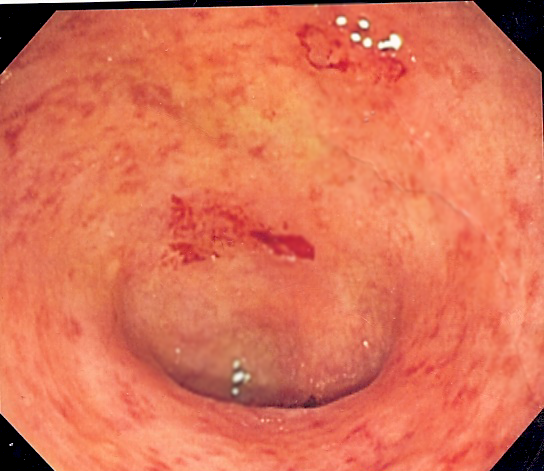
Ulcerative colitis (UC) is a chronic, relapsing-remitting inflammatory bowel disease characterized by diffuse, continuous mucosal inflammation starting at the anal verge and extending proximally to a variable extent, confined to the colon and rectum.
Also called: colitis ulcerosa, idiopathic proctocolitis, UC.
Classification by Disease Extent (Montreal Classification)
The Montreal system [3]D5 defines three subgroups based on the proximal extent of inflammation at , which guides treatment selection and prognostic counseling. Extent is considered stable over time once established [47]B3b.
| Category | Extent | Key Features |
|---|---|---|
| E1 (Proctitis) | Limited to rectum (≤15 cm from anal verge) [22]D5 | Often responds to topical therapy alone; lower risk |
| E2 (Left-sided) | Inflammation distal to the splenic flexure | Requires combination oral+rectal therapy in moderate disease |
| E3 (Extensive/Pancolitis) | Proximal to the splenic flexure | Higher colectomy and risk; necessitates systemic therapy [28]B2b |
Severity and Activity Definitions
Disease activity is assessed across clinical, endoscopic, and histologic domains. The Mayo endoscopic subscore (0-3) and the Ulcerative Colitis Endoscopic Index of Severity (UCEIS) (0-8) are the principal endoscopic scales [29]D5. The Montreal severity score (S0-S3) stratifies clinical activity: S0=remission, S1=mild, S2=moderate, S3=severe. Acute severe ulcerative colitis (ASUC) is a life-threatening presentation defined by the Truelove and Witts criteria (≥6 bloody stools/day plus systemic toxicity) [31]A1c.
Histologic activity is scored using the Nancy Index (grades 0-4) or Robarts Histopathology Index [39]C4[10]D5. The STRIDE treat-to-target initiative identifies clinical remission (resolution of rectal bleeding and stool frequency), endoscopic remission (Mayo 0-1), and histologic remission as sequential therapeutic goals [12]A1c[18]A1c.
Related Diagnostic Categories
Inflammatory bowel disease unclassified (IBDU) describes colonic inflammation that cannot be definitively categorized as UC or Crohn's disease after full workup [55]A1c. UC confined to the rectum is termed ulcerative proctitis; isolated proctitis is distinct in its responsiveness to topical therapies and its inclusion in clinical trials requires a maximum extent of 15 cm from the anal verge [22]D5.
Pearl: Ulcerative proctitis is defined as inflammation ≤15 cm from the anal verge, a definition that shapes trial eligibility and topical-first .
| Category | Extent | Clinical Implications |
|---|---|---|
| E1 (Proctitis) | Limited to rectum (≤15 cm) | Responds to topical 5-ASA/suppositories; low colectomy risk |
| E2 (Left-sided) | Distal to splenic flexure | Combination oral + rectal 5-ASA; increased risk of extension |
| E3 (Extensive/Pancolitis) | Proximal to splenic flexure | Higher colectomy rate (up to 20% at 10 yr) and colorectal cancer risk |
Pathophysiology & Mechanism
- ▸The colonic mucus barrier is structurally weakened in UC, with reduced MUC2 and altered goblet cell function independent of local inflammation.
- ▸Microbial dysbiosis in UC features loss of butyrate-producing species and expansion of pathobionts (AIEC, P. excrementihominis, Candida) that drive neutrophil recruitment and NETosis.
- ▸Immune dysregulation centers on the IL‑23/Th17 axis and JAK‑STAT signaling, with leukocyte trafficking via α4β7 integrin enabling gut‑selective inflammation.
Moving from macroscopic classification to the molecular events sustaining colonic inflammation, the pathogenesis of ulcerative colitis (UC) can be understood as a cascade beginning at the epithelial surface and propagating through microbial, immune, and stromal compartments.
Epithelial Barrier Dysfunction and Mucus Defects
The colonic inner mucus layer, composed primarily of the mucin MUC2, forms a physical barrier separating luminal microbes from the epithelium. In active UC, major structural mucus components including MUC2 are significantly reduced (p < 0.0001), and this reduction is observed even in non‑inflamed segments . The number of sentinel goblet cells decreases and their secretory response to microbial challenge is attenuated . Approximately 30% of patients with UC exhibit abnormal penetrability of the inner mucus layer, a defect linked to reduced expression of the SLC26A3 anion exchanger that supplies bicarbonate required for mucin barrier formation . These abnormalities precede overt inflammation, suggesting they represent a primary pathogenic event rather than an epiphenomenon.
Microbial Dysbiosis and Pathobionts
The compromised mucus barrier permits abnormal contact between luminal microbes and the epithelium, driving a shift in the gut ecosystem. Microbial α‑diversity is consistently decreased in UC . Among the taxa whose abundances change, butyrate‑producing species from the Lachnospiraceae and Oscillospiraceae families are reduced, while Escherichia coli is increased in nearly half of studies . Specific pathobionts have been implicated:
- Adherent‑invasive E. coli (AIEC) colonize the mucosa and persist within macrophages by evading autophagy .
- Parasutterella excrementihominis is enriched in UC and exacerbates colitis by driving neutrophil extracellular trap (NET) formation via metabolites succinic acid and 6‑hydroxyhexanoic acid, activating gasdermin D‑dependent NETosis .
- Fungal dysbiosis also occurs: the relative abundance of Candida species is increased 3.5‑fold during clinical activity and correlates with loss of protective bacterial correlations .
These microbial changes are not merely associative, they contribute mechanistically to inflammation, and their manipulation through has been shown to induce remission (risk ratio 3.6 for steroid‑free clinical/endoscopic remission at week 8 ).
Immune Dysregulation: From Innate to Adaptive
Barrier disruption and microbial translocation activate innate immune cells. Neutrophils are recruited to the mucosa, where epithelial transmigration is a hallmark of active UC . Once in the tissue, neutrophils can form NETs, amplifying tissue damage .
Subsequently, an aberrant adaptive immune response develops. UC has traditionally been viewed as a Th2‑dominant disease, but contemporary evidence points to a central role for the interleukin‑23 (IL‑23)/Th17 pathway. IL‑23 is a heterodimer of p19 and p40 subunits; selective blockade of the p19 subunit with mirikizumab improves clinical and endoscopic outcomes [[75]A1b,[92]D5]. The transcription factor GATA3, which drives Th2 cytokine production, is overexpressed in UC mucosa and has been targeted experimentally with a DNAzyme .
Additional cytokine pathways of importance include:
- TL1A/DR3 signaling, which acts as a potent costimulator of effector T cells and is also expressed on stromal cells where it may promote fibrosis .
- TNF‑α, the target of anti‑TNF biologics, though TNF‑α antagonism is less effective in UC than in Crohn's disease for reasons that remain unclear.
Effector Mechanisms, Fibrosis, and Systemic Amplification
The final common pathway of mucosal inflammation involves leukocyte trafficking via the α4β7 integrin-MAdCAM‑1 interaction, which directs lymphocytes to the gut. Blockade of this interaction with vedolizumab reduces the risk of failing to induce remission (RR 0.86, 95% CI 0.80-0.91) [[129]A1a,[136]A1a].
Chronic inflammation drives intestinal fibrosis through activation of stromal cells and accumulation of extracellular matrix. Even in UC, which spares the deep layers, persistent inflammation increases wall stiffness and contributes to symptoms [[38]D5,[93]D5].
Systemically, the pro‑inflammatory milieu promotes a hypercoagulable state with abnormalities in coagulation factors and increased thrombotic risk . Vagal tone is reduced, and the loss of the cholinergic anti‑inflammatory pathway may further perpetuate inflammation .
In summary, UC pathogenesis begins with a defective mucus barrier, followed by microbial dysbiosis and pathobiont expansion, which together trigger innate and adaptive immune responses sustained by IL‑23/Th17, TL1A, and JAK‑STAT signaling. Neutrophil infiltration, NETosis, and uncontrolled lymphocyte recruitment produce the characteristic mucosal damage, while chronicity leads to fibrosis and systemic complications. These mechanisms provide multiple therapeutic targets and explain the rationale for current and emerging treatments. How these pathogenic processes interact with genetic susceptibility and environmental triggers is examined in the following section.
Pearl: The mucus barrier defect in UC appears to be a primary, inflammation‑independent abnormality, reduced MUC2 and loss of sentinel goblet cells occur even in non‑inflamed segments, making barrier restoration a rational early intervention target.
| Step | Key Mediator / Structure | Consequence | Therapeutic Target |
|---|---|---|---|
| Mucus barrier defect | MUC2, SLC26A3, goblet cells | Increased microbial-epithelial contact | None approved (investigational) |
| Dysbiosis | Butyrate producers ↓, AIEC ↑, Candida ↑ | Loss of regulation, pathobiont overgrowth | FMT, probiotics |
| Neutrophil recruitment | α4β7 integrin, MAdCAM‑1 | Mucosal transmigration, tissue damage | Vedolizumab |
| Adaptive immune activation | IL‑23 (p19/p40), Th17, TL1A/DR3 | Sustained inflammation | Mirikizumab, ustekinumab; TL1A inhibitors (investigational) |
| Cytokine signaling | JAK-STAT | Amplification of inflammatory gene expression | Tofacitinib, upadacitinib |
| Tissue remodeling / fibrosis | Stromal cells, ECM | Wall stiffness, stricture (rare in UC) | Antifibrotic (none approved) |
Epidemiology, Etiology & Risk Factors
- ▸Ulcerative colitis incidence is stabilizing in Western countries but rising sharply in newly industrialized regions, with an estimated 5 million cases worldwide.
- ▸Genetic risk (polygenic score HR 2.15) and unfavorable lifestyle (HR 1.98) contribute independently and synergistically (HR 4.44).
- ▸Modifiable risk factors include periodontitis (aHR 1.21), early-life mebendazole exposure (aHR 1.32), and allostatic load (HR 1.17); antibiotic use and appendectomy do not increase UC risk.
After the immune dysregulation described in the previous section, the global of ulcerative colitis (UC) reveals a disease whose incidence and prevalence patterns strongly support an interplay of genetic, microbial, and environmental triggers.
Incidence & Prevalence
An estimated 5 million people worldwide live with UC [196]D5. The highest annual incidence occurs in Europe (24.3 per 100,000 person-years) and North America (19.2 per 100,000), while in Asia and the Middle East it is 6.3 per 100,000 [155]B2a. Prevalence reaches 505 per 100,000 in Norway and 286 per 100,000 in the USA [180]B2a. Pediatric-onset UC is also rising: 84% of studies report increasing incidence over the 21st century [154]B2a.
Temporal Trends
In Western countries, incidence is now stabilizing, but prevalence exceeds 0.3% of the population [180]B2a. By contrast, newly industrialized nations are experiencing rapid increases: Brazil shows an annual percent change of +14.9% and Taiwan +4.8% (95% CI 1.8-8.0) [180]B2a. This pattern mirrors Westernization and implicates modifiable environmental exposures.
Risk Factors (Non-modifiable and Modifiable)
Genetic susceptibility is a powerful driver. Offspring of mothers diagnosed with IBD before childbirth have a 6.27-fold increased risk of IBD (aHR 6.27, 95% CI 5.21-7.54); paternal diagnosis before birth carries an aHR of 5.26 (95% CI 4.22-6.56) [167]B2b. High polygenic risk scores alone confer an HR of 2.15 for UC [168]B2b.
Modifiable factors carry comparable effect sizes. An unfavorable lifestyle (0-2 of 5 healthy factors) yields an HR of 1.98 for UC [168]B2b. The combination of high genetic risk and unfavorable lifestyle amplifies risk to an HR of 4.44 [168]B2b. Periodontitis is associated with a 21% increased risk of UC (aHR 1.21, 95% CI 1.10-1.32) [20]B2b. Early-life mebendazole exposure, suggesting a hygiene-related effect, increases adult-onset UC risk by 32% (aHR 1.32, 95% CI 1.12-1.55) [169]B2b. Higher allostatic load (composite of physiological stress markers) also modestly raises UC risk (HR 1.17, 95% CI 1.04-1.32) [208]B2b.
Conversely, antibiotic exposure has no significant association with UC (OR 1.08, 95% CI 0.91-1.27) [164]B2a. Appendectomy does not protect against developing UC and after diagnosis may increase risk (OR 2.2, 95% CI 1.1-4.5) [161]B2b. Protective factors include adherence to a [144]A1c and higher physical activity levels, though the relationship with UC is complex [217]B2b.
Risk Factor Table
| Factor | OR/RR/HR (95% CI) | Evidence Level | Source |
|---|---|---|---|
| Non-modifiable | |||
| High polygenic risk score | HR 2.15 (1.82-2.53) | High [2b] | [168]B2b |
| Maternal IBD before childbirth | aHR 6.27 (5.21-7.54) | High [2b] | [167]B2b |
| Paternal IBD before childbirth | aHR 5.26 (4.22-6.56) | High [2b] | [167]B2b |
| Modifiable | |||
| Unfavorable lifestyle | HR 1.98 (1.73-2.27) | High [2b] | [168]B2b |
| High genetic risk + unfavorable lifestyle | HR 4.44 (3.34-5.91) | High [2b] | [168]B2b |
| Periodontitis | aHR 1.21 (1.10-1.32) | Moderate [2b] | [20]B2b |
| Early-life mebendazole exposure | aHR 1.32 (1.12-1.55) | Moderate [2b] | [169]B2b |
| Higher allostatic load | HR 1.17 (1.04-1.32) | Moderate [2b] | [208]B2b |
| Antibiotic use (any) | OR 1.08 (0.91-1.27) | High [2a] (not significant) | [164]B2a |
| Appendectomy (any time) | OR 1.09 (0.8-1.5) - not sig. for protection | Moderate [2b] | [161]B2b |
| Mediterranean diet | (protective, HR not quantified) | Expert consensus | [144]A1c |
Special Considerations
Seasonal variation in UC onset is not well-established in the literature. The hygiene hypothesis is supported by the mebendazole finding [169]B2b, but antibiotic exposure does not increase risk [164]B2a. No vaccine-related increase in UC risk has been identified in these data.
Pearl: A patient with high genetic risk who also has an unfavorable lifestyle faces four times the risk of developing UC compared to the average population, emphasizing that lifestyle modification (diet, oral hygiene, stress reduction) may meaningfully lower risk even in genetically susceptible individuals [168]B2b.
| Factor | OR/RR/HR (95% CI) | Evidence Level | Source |
|---|---|---|---|
| Non-modifiable | |||
| High polygenic risk score | HR 2.15 (1.82-2.53) | High [2b] | [168]B2b |
| Maternal IBD before childbirth | aHR 6.27 (5.21-7.54) | High [2b] | [167]B2b |
| Paternal IBD before childbirth | aHR 5.26 (4.22-6.56) | High [2b] | [167]B2b |
| Modifiable | |||
| Unfavorable lifestyle | HR 1.98 (1.73-2.27) | High [2b] | [168]B2b |
| High genetic risk + unfavorable lifestyle | HR 4.44 (3.34-5.91) | High [2b] | [168]B2b |
| Periodontitis | aHR 1.21 (1.10-1.32) | Moderate [2b] | [20]B2b |
| Early-life mebendazole exposure | aHR 1.32 (1.12-1.55) | Moderate [2b] | [169]B2b |
| Higher allostatic load | HR 1.17 (1.04-1.32) | Moderate [2b] | [208]B2b |
| Antibiotic use (any) | OR 1.08 (0.91-1.27) | High [2a] (not significant) | [164]B2a |
| Appendectomy (any time) | Not protective for development | Moderate [2b] | [161]B2b |
| Mediterranean diet | Protective (HR not quantified) | Expert consensus | [144]A1c |
Clinical Presentation
- ▸Ulcerative colitis typically presents with bloody diarrhea and urgency; median time to diagnosis is 3.3 months (IQR 1.9-7.3) [246].
- ▸Disease extent at diagnosis (proctitis vs left-sided vs pancolitis) guides therapy and predicts prognosis; limited disease may extend proximally over time [226].
- ▸Non-bloody diarrhea or weight loss >10% at onset should raise suspicion for a subsequent change in diagnosis to Crohn's disease [225].
- ▸Acute severe colitis (15% of patients) requires urgent hospitalization; the prothrombotic state persists for 8-12 weeks after discharge [222, 244].
Symptoms emerge gradually in most patients, although up to 15% present with acute severe colitis requiring hospitalization [244]D5. The median time from symptom onset to diagnosis is 3.3 months (IQR 1.9-7.3) for ulcerative colitis, shorter than for Crohn’s disease [246]B2b. The hallmark symptom is bloody diarrhea, accompanied by urgency, tenesmus, and cramping abdominal pain. Stool frequency and the presence of nocturnal defecation help gauge severity. In mild-to-moderate disease, patients typically pass fewer than six stools per day with intermittent bleeding, whereas moderate disease (Modified Mayo Disease Activity Index ≥8) involves more frequent stools and persistent bleeding [219]A1b. Severe disease is defined by >6 bloody stools daily, systemic toxicity (fever, tachycardia), and elevated inflammatory markers [244]D5. Weight loss exceeding 10% at presentation is atypical for ulcerative colitis and should raise suspicion for a subsequent change in diagnosis to Crohn's disease (odds ratio not calculable from reported data) [225]B3b. Non-bloody diarrhea as an initial symptom is also a predictor of diagnostic change to Crohn's disease [225]B3b. Patients with acute severe ulcerative colitis remain prothrombotic for 8-12 weeks after discharge, with elevated thrombin generation and clot firmness compared with quiescent disease controls [222]B2b.
Physical Examination
General examination should assess for fever, tachycardia, hypotension, and pallor, signs of systemic inflammation or anemia. Abdominal palpation may reveal tenderness in the left lower quadrant or, in pancolitis, diffuse discomfort. Abdominal distension with reduced or absent bowel sounds suggests impending toxic megacolon. Digital rectal examination can demonstrate tenderness, blood on the examining finger, and should exclude a perianal source (rare in ulcerative colitis). Nutritional status, including body mass index and signs of weight loss, should be documented.
Phenotypic Variants by Disease Extent
Disease extent, the proximal border of inflammation at , is a major prognostic factor and determines treatment approach [226]C4[227]D5. The Montreal classification divides extent into E1 (proctitis), E2 (left-sided), and E3 (extensive/pancolitis). In elderly patients (≥60 years), proctitis and left-sided colitis are relatively more common [224]B2a. In Greek patients with primary sclerosing cholangitis-associated ulcerative colitis, pancolitis was present in 76% [248]B2b. Limited disease (proctitis or left-sided) can extend proximally over time, and molecular signatures at the endoscopic demarcation zone may predict extension better than clinical features alone [226]C4.
| Variant | Montreal Code | Typical Features | Approximate Frequency at Diagnosis |
|---|---|---|---|
| Proctitis | E1 | Rectal bleeding, urgency, tenesmus; no proximal extension | ~30-40% (varies by population) [224]B2a[226]C4 |
| Left-sided colitis | E2 | Bloody diarrhea, left lower quadrant pain; inflammation up to splenic flexure | ~30-40% [224]B2a[226]C4 |
| Extensive colitis (pancolitis) | E3 | Frequent bloody diarrhea, systemic symptoms; inflammation proximal to splenic flexure | ~20-30% [226]C4 |
| PSC-associated colitis | , | Often pancolitis with right-sided predominance; may be quiescent | Variable; 76% pancolitis in one Greek cohort [248]B2b |
Red Flags Requiring Urgent Action
The following features should prompt immediate hospitalization and escalation of therapy:
- Acute severe colitis: >6 bloody stools/day, fever >37.5°C, heart rate >90/min, hemoglobin <10.5 g/dL, ESR >30 mm/h (Truelove & Witts criteria, thresholds not explicitly reported in cited abstracts, but consistent with clinical trials [244]D5[245]C4).
- Abdominal distension, rebound tenderness, or decreased bowel sounds: may indicate toxic megacolon.
- Heavy hemorrhage: visible massive bleeding or hemodynamic instability.
- Hypercoagulable state: patients with acute severe colitis have elevated risk of venous thromboembolism for 8-12 weeks after discharge [222]B2b.
- CMV reactivation: consider in steroid-refractory severe colitis; prevalence up to 25% in specimens [243]D5.
Atypical Presentations
Elderly-onset disease: more frequently limited to proctitis or left-sided colitis, but diagnostic confusion with diverticular disease or ischemic colitis is common [224]B2a. Monogenic disease (very early onset): children diagnosed before age 6 years, especially those with a family history of autoimmunity, extra-intestinal manifestations, or bloody loose stool (78% in one monogenic UC cohort), should prompt genetic evaluation [228]B2b. Immune checkpoint inhibitor enterocolitis closely mimics idiopathic ulcerative colitis endoscopically and histologically [237]D5. Conversion to Crohn’s disease: initial presentation with non-bloody diarrhea or significant weight loss predicts a later change in diagnosis [225]B3b. Associated large vessel vasculitis: in rare patients, or giant cell arteritis may precede or follow the diagnosis of colitis, with specific vascular features such as upper limb claudication or artery involvement [251]B3b.
Pearl: The triad of non-bloody diarrhea, weight loss >10% at presentation, and extensive colonic involvement on initial colonoscopy strongly suggests a future change in diagnosis to Crohn's disease rather than pure ulcerative colitis [225]B3b. A low threshold for re-evaluation of diagnosis is warranted when these features are present.
Diagnosis & Workup (Endoscopy, Imaging & Severity Labs)
- ▸Ileocolonoscopy with segmental biopsies is the gold-standard diagnostic test, allowing assessment of extent and severity.
- ▸Fecal calprotectin (>150 μg/g) is the preferred noninvasive biomarker, with superior sensitivity to CRP for detecting endoscopic activity.
- ▸pANCA serology has high specificity but low sensitivity for UC; emerging anti-integrin αvβ6 antibodies show promise as a novel diagnostic marker.
For a patient presenting with bloody diarrhea, the diagnostic pathway must first exclude infectious colitis and then establish the diagnosis, extent, and severity of ulcerative colitis through a structured sequence of laboratory testing, imaging, and definitive endoscopy. The cornerstone of diagnosis is ileocolonoscopy with segmental biopsies, the gold-standard test that confirms the diagnosis, defines disease extent, and provides tissue for histology [2]A1c[4]A1c. Endoscopic scoring systems, the Mayo Endoscopic Subscore (MES) and the Ulcerative Colitis Endoscopic Index of Severity (UCEIS), standardize severity assessment, though a validated definition of endoscopic remission (MES 0 or UCEIS 0) is essential for treatment targets [318]B2a.
Gold-Standard: with Biopsy
Ileocolonoscopy must be performed in the pre-treatment state to assess the continuous, circumferential mucosal inflammation starting at the anal verge and extending proximally. Key endoscopic findings include loss of vascular pattern, granularity, friability, and ulceration. Biopsies should be taken from each segment, including the rectum, to demonstrate crypt architectural distortion, basal plasmacytosis, and a diffuse, predominantly neutrophilic infiltrate [286]D5. Histology distinguishes UC from Crohn’s disease: UC shows diffuse continuous inflammation, while Crohn’s features skip lesions, granulomas, and deeper transmural involvement [269]B2b. The sensitivity of colonoscopy with biopsy for diagnosing UC in suspected cases exceeds 95% [115]D5.
Laboratory Studies
Initial labs should exclude infection (stool culture, Clostridioides difficile toxin, ova/parasites) and assess inflammation. Fecal calprotectin is the first-line noninvasive biomarker: a level <150 μg/g effectively rules out active inflammation (negative likelihood ratio ~0.28), while values >150 μg/g support endoscopic activity and can avoid routine colonoscopy [254]A1c. C-reactive protein (CRP) has modest sensitivity (0.49) but high specificity (0.92) for endoscopic activity [162]B2a; a normal CRP does not exclude disease. Fecal lactoferrin performs similarly (sensitivity 0.82, specificity 0.79) [162]B2a. Serologic markers, perinuclear antineutrophil cytoplasmic antibody (pANCA), are specific (88.5%) but insensitive (55.3%) for UC; however, pANCA combined with negative ASCA can aid differentiation from Crohn’s, particularly in children [263]B2a. An emerging autoantibody against integrin αvβ6 shows sensitivity 92.0% and specificity 94.8% for UC, but is not yet standard [276]B3b.
| Test | Finding in UC | Sensitivity | Specificity |
|---|---|---|---|
| Fecal calprotectin | >150 μg/g | 88% | 73% |
| CRP | Elevated | 49% | 92% |
| Fecal lactoferrin | Elevated | 82% | 79% |
| pANCA | Positive | 55% | 89% |
Pooled estimates from meta-analyses [162]B2a[263]B2a
Imaging
Intestinal ultrasound (IUS) is increasingly used for point-of-care assessment of disease activity and treatment response. The most important parameter is bowel wall thickness (BWT): a threshold of 2.8 mm predicts endoscopic remission (area under the curve [AUC] 0.87), and 3.9 mm predicts endoscopic improvement (AUC 0.92) [165]B2b. IUS can detect changes as early as 2 weeks after starting therapy [278]B2b. Transperineal ultrasound complements IUS for rectal evaluation, where BWT ≤4 mm predicts endoscopic and histologic healing (AUC 0.90) [314]C4. Cross-sectional imaging (CT or MR enterography) is reserved for suspected complications (toxic megacolon, perforation) or when colonoscopy is incomplete [271]B2a.
Biopsy and Histology
Histologic activity correlates with clinical outcomes. The presence of acute inflammatory cells (neutrophils in lamina propria or crypt epithelium) and epithelial erosion are the most reproducible features [282]C4. Histologic remission, defined as absence of active inflammation (e.g., Geboes score <2.1), is associated with lower relapse risk and is a target in treat-to-strategy [316]B2b. Biopsy should also assess for cytomegalovirus (CMV) in steroid-refractory cases [291]D5.
Diagnostic Algorithm
- Exclude infection: stool culture, C. difficile toxin, ova/parasites.
- Assess inflammation: fecal calprotectin (>150 μg/g suggests active disease [254]A1c).
- Confirm diagnosis: colonoscopy with segmental biopsies; document endoscopic severity (MES or UCEIS).
- Define extent: Montreal classification (E1 proctitis, E2 left-sided, E3 extensive) based on endoscopic extent.
- Baseline labs: CRP, albumin, hemoglobin, ferritin (iron deficiency common [321]B3b).
- Consider imaging: IUS if available for baseline activity monitoring.
Pearl: Fecal calprotectin <150 μg/g effectively rules out active endoscopic inflammation; a normal CRP does not [162]B2a. Combined noninvasive testing can guide treatment decisions without repeated colonoscopy in many patients [254]A1c.
| Test | Finding in Active UC | Pooled Sensitivity | Pooled Specificity | Reference |
|---|---|---|---|---|
| Fecal calprotectin | >150 μg/g | 0.88 | 0.73 | [162]B2a |
| CRP | Elevated | 0.49 | 0.92 | [162]B2a |
| Fecal lactoferrin | Elevated | 0.82 | 0.79 | [162]B2a |
| pANCA | Positive | 0.55 | 0.89 | [263]B2a |
Severity, Staging & Risk Stratification (GI Scores)
- ▸Fecal calprotectin <150 μg/g reliably rules out active inflammation in patients in symptomatic remission, reducing need for routine endoscopy [254].
- ▸UCEIS provides more granular endoscopic assessment than MES and improves AI-based severity classification [268][29].
- ▸Histologic activity (Nancy grade ≥1) independently predicts relapse and colorectal neoplasia; histologic remission is a emerging target [39][48][26].
Endoscopic and histologic severity scores, along with validated biomarkers, now gate treatment decisions because symptoms correlate only moderately with endoscopic activity in ulcerative colitis (UC) [339]B2a[285]D5. The 2023 AGA guideline recommends a biomarker-and-symptom-based monitoring strategy over symptom-based monitoring alone; in patients in symptomatic remission, fecal calprotectin <150 μg/g, normal fecal lactoferrin, and/or normal CRP can avoid routine endoscopy [254]A1c. This section operationalizes the principal severity, staging, and prognostic scores that guide escalation and disposition.
Clinical Activity Scores
The Mayo score (range 0-12, four components: stool frequency, rectal bleeding, endoscopy subscore, physician global assessment) remains the regulatory standard for trials. A total Mayo score 0-2 with no subscore >1 defines clinical remission [322]A1c[337]D5. The partial Mayo score (three non-endoscopic components) is used for rapid serial assessment; a reduction ≥3 points from baseline and ≥30%, plus a decrease in rectal bleeding subscore ≥1 or absolute subscore 0-1, defines clinical response [259]A1b. The Simple Clinical Colitis Activity Index (SCCAI) (range 0-19) is a validated symptom-based tool used in outpatient monitoring; scores 3-9 correspond to mild-moderate activity [82]A1b.
Endoscopic Scores
| Score | Components | Range | Remission Definition | Key Features |
|---|---|---|---|---|
| Mayo Endoscopic Subscore (MES) | Mucosal appearance (0 normal, 1 mild erythema/decreased vascular pattern, 2 marked erythema/absent vascular pattern/friability, 3 spontaneous bleeding/ulceration) | 0-3 | MES 0 (or 0-1 in some trial definitions) | Most widely used; simple but loses granularity; interobserver κ ~0.78 [350]C4[337]D5 |
| Ulcerative Colitis Endoscopic Index of Severity (UCEIS) | Vascular pattern, bleeding, erosions/ulcers (each 0-3) | 0-8 | UCEIS 0 (or ≤1 in some definitions) | More granular; better sensitivity for subtle disease change [268]B2a[29]D5 |
Convolutional neural network-based machine learning algorithms achieve pooled diagnostic accuracy 91.5% for endoscopic severity (sensitivity 82.8%, specificity 92.4%) [268]B2a. The PICaSSO score, a virtual chromoendoscopy-based index, correlates with histologic remission and predicts flare [301]D5[355]C4.
Histologic Scores
Persistent histologic activity independently predicts clinical relapse, hospitalization, and colorectal neoplasia (pooled OR for neoplasia with mucosal inflammation: 3.5) [26]B2a[48]D5. The Nancy index (five grades, 0-4) relies on three descriptors (ulceration, acute inflammatory infiltrate, chronic inflammatory infiltrate) with excellent inter-reader reliability (ICC 0.86) [39]C4. The Robarts Histopathology Index (RHI) and Geboes score are widely used in trials; an RHI ≤3 and Nancy grade 0 define histologic remission [48]D5[212]B2a. In the UNIFI study, patients who achieved disease clearance (symptomatic remission plus histo-endoscopic mucosal improvement) 8 weeks after ustekinumab induction had significantly higher rates of long-term clinical remission (63.6% vs 35.2%) [341]B2b.
Acute Severe UC Scores
Truelove-Witts criteria define acute severe UC: ≥6 bloody stools/day plus any of pulse >90 bpm, temperature >37.8°C, hemoglobin <10.5 g/dL, or ESR >30 mm/h [334]D5. The Lichtiger index (range 0-21) is the preferred response measure in ASUC trials; a drop of >3 points and absolute score <10 for 2 consecutive days defines day 7 response [326]A1b. The Oxford criteria (stool frequency >8/day or CRP >45 mg/L at day 3) identify patients with high risk of steroid failure and need for rescue therapy [334]D5.
Prognostic Biomarkers
The IBDhi/IBDlo whole-blood 17-gene qPCR classifier stratifies newly diagnosed patients into two subgroups with strongly divergent risk: IBDhi patients have hazard ratio for early treatment escalation of 3.12 (95% CI not calculable from abstract) in UC [280]B2b. Among biologic-exposed patients, network meta-analysis ranks upadacitinib, tofacitinib, and ustekinumab highest for achieving remission [327]A1a.
Controversies and Guideline Disagreement
| Question | Position A | Position B | Strength | Implication |
|---|---|---|---|---|
| MES vs UCEIS as preferred outcome | MES 0-1 remains regulatory standard, simpler [337]D5 | UCEIS provides granularity and better AI training performance [268]B2a | Low-grade evidence; expert opinion | UCEIS increasingly used in trials; MES sufficient for routine practice |
| Histologic remission as treatment target | AGA does not recommend histologic targets as a requirement [322]A1c | IOIBD SPIRIT consensus includes histo-endoscopic improvement (HEMI) as a goal [13]D5 | Conditional; outcome data supportive but not yet actionable in guidelines | Consider histologic evaluation when endoscopic remission is achieved but relapse risk remains high |
Pearl: In patients with moderate-to-severe symptoms, a fecal calprotectin >150 μg/g can trigger therapy escalation without routine endoscopy, but when biomarkers and symptoms are discrepant, endoscopic assessment is still required [254]A1c.
| Score | Type | Components | Range | Remission Definition | Key Properties |
|---|---|---|---|---|---|
| Mayo Endoscopic Subscore (MES) | Endoscopic | 0 normal, 1 mild erythema/decreased vascular pattern, 2 marked erythema/absent friability, 3 spontaneous bleeding/ulceration | 0-3 | MES 0 (or 0-1 in some trial definitions) | Simple, widely used; interobserver κ ~0.78 [350]C4[337]D5 |
| Ulcerative Colitis Endoscopic Index of Severity (UCEIS) | Endoscopic | Vascular pattern (0-3), bleeding (0-3), erosions/ulcers (0-3) | 0-8 | UCEIS 0 (or ≤1 in some definitions) | More granular; better AI training performance [268]B2a[29]D5 |
| Nancy Index | Histologic | Ulceration (0-3), acute inflammatory infiltrate (0-3), chronic inflammatory infiltrate (0-3) | 0-4 (5 grades) | Nancy grade 0 | Excellent inter-reader ICC 0.86 [39]C4 |
| Robarts Histopathology Index (RHI) | Histologic | Chronic inflammatory infiltrate, lamina propria neutrophils, neutrophils in epithelium, erosion/ulceration | 0-33 | RHI ≤3 | Responsive to change; used in trials [48]D5[212]B2a |
| Geboes Score | Histologic | Architectural changes, chronic/acute inflammation, crypt destruction, erosion/ulceration | 0-5.4 (multiple subgrades) | Geboes ≤2B.0 | Validated but complex [48]D5[212]B2a |
Acute Management
- ▸Acute severe UC is defined by Truelove and Witts criteria; hospitalize immediately for IV corticosteroids and VTE prophylaxis.
- ▸Assess response at day 3 using Oxford criteria; steroid-refractory patients require rescue therapy with infliximab, ciclosporin, or tofacitinib (10 mg TID).
- ▸Top-down infliximab plus azathioprine after IV steroid response reduces 52-week treatment failure; taper steroids over at least 10 weeks.
Once severity stratification identifies a patient with acute severe ulcerative colitis (ASUC) by Truelove and Witts criteria (≥6 bloody stools daily plus one or more of: pulse >90 bpm, temperature >37.8°C, hemoglobin <10.5 g/dL, ESR >30 mm/h), the pathway shifts from outpatient optimization to urgent inpatient resuscitation and pharmacologic intervention.
Step 1: Hospitalization, Resuscitation, and Infection Exclusion
Admit immediately. Check , C-reactive protein (CRP), albumin, electrolytes, creatinine. Obtain stool cultures and Clostridioides difficile testing; a coexistent infection can mimic or exacerbate a flare. Obtain plain abdominal radiography to rule out colonic dilation >5.5 cm (toxic megacolon). Begin intravenous fluids, correct hypokalemia, and start venous thromboembolism prophylaxis (UC flare carries a 3- to 4-fold increased VTE risk). Avoid antidiarrheal agents, anticholinergics, and opioids.
Step 2: First-Line Therapy, Intravenous Corticosteroids
Administer 60 mg IV once daily or 100 mg IV every 6 hours. Assess clinical response at day 3 using the Oxford criteria: persistent stool frequency >8/day or CRP >45 mg/L predicts corticosteroid failure (need for rescue therapy) with ~85% sensitivity [388]A1b. Continue IV steroids for a total of 5 to 7 days before declaring non-response.
Step 3: Rescue Therapy for Steroid-Refractory ASUC
Patients who fail IV corticosteroids by day 3-5 require prompt rescue. Three evidence-based options exist:
| Drug | Dose | Key trial | Outcome vs comparator |
|---|---|---|---|
| Ciclosporin | 2 mg/kg/day IV continuous infusion | CYSIF [388]A1b | No superiority over ; requires BP and renal monitoring |
Tofacitinib is the only oral option and has shown a strong signal in a single-center RCT; infliximab remains the most widely used rescue agent globally. Ciclosporin is an alternative when infliximab is contraindicated. All three decrease rate compared with continued steroids alone. Patients who do not improve within 48-72 hours of rescue therapy should be evaluated for subtotal colectomy.
Step 4: Transition to Maintenance Therapy
Once clinical response is achieved (typically within 5-7 days of rescue), transition to maintenance. The ACTIVE trial demonstrated that top-down infliximab plus azathioprine was superior to azathioprine alone in lowering treatment failure at 52 weeks in ASUC patients who had responded to IV steroids (RR 3.85, 95% CI 1.15-12.88) [325]A1b. Taper corticosteroids over at least 10 weeks; a 6-week taper was inferior to a 10-week taper for achieving 6-month steroid-free remission (RR 2.19) [397]A1b.
For Mild-to-Moderate Acute Flares (Outpatient)
Patients with mild-to-moderate active UC (Mayo score 4-10, no systemic toxicity) begin or escalate 5-ASA therapy: oral mesalazine 2.4-4.8 g/day plus topical mesalazine enema or suppository. Budesonide MMX 9 mg once daily for 8 weeks is effective for achieving combined clinical and endoscopic remission (17.4% vs 4.5% placebo, OR 4.49) [370]A1b. Oral 40 mg/day is reserved for moderate flares that fail 5-ASA.
Pearl: In ASUC, assess steroid response formally at day 3 using Oxford criteria; early initiation of rescue therapy (infliximab, ciclosporin, or tofacitinib) reduces colectomy rates and improves long-term outcomes [326]A1b[388]A1b.
| Drug | Dose | Key trial | Outcome vs comparator |
|---|---|---|---|
| Ciclosporin | 2 mg/kg/day IV continuous infusion | CYSIF [388]A1b | No superiority over infliximab; monitor BP, renal |
| Tofacitinib | 10 mg three times daily × 7 days (oral) | TACOS (2023) [326]A1b | Day-7 response 83% vs 59% (OR 3.42, 1.37-8.48); 90-day rescue 0.13 vs 0.38 |
Long-term & Definitive Medical Management
- ▸STRIDE-II targets: clinical remission plus endoscopic remission (Mayo 0-1) are the long-term goals; histologic healing is an emerging depth marker [12, 18].
- ▸AGA 2024 ranks upadacitinib, guselkumab, etrasimod, vedolizumab, and infliximab as higher-efficacy maintenance agents in biologic-naïve patients; tofacitinib, upadacitinib, and ustekinumab are preferred in TNF-antagonist-experienced patients [322, 327, 408].
- ▸Lifestyle adjuncts (Mediterranean diet, physical activity, avoidance of high meat intake) reduce flare risk; low-FODMAP diet improves functional symptoms but may alter microbiome [74, 144, 166].
Step 1: Establish the Treatment Target
The transition from acute rescue to durable disease control begins by anchoring therapy to the treat-to-target framework. STRIDE-II mandates clinical remission (resolution of rectal bleeding and near-normal stool frequency) plus endoscopic remission (Mayo endoscopic subscore 0-1) as the long-term goals [12]A1c[18]A1c. Histologic healing, though not yet a formal target, predicts lower relapse risk [406]D5[48]D5. Short-term targets include normalisation of C‑reactive protein and faecal calprotectin, usually within 8-12 weeks [12]A1c. Once remission is confirmed, the clinician selects a maintenance regimen based on prior therapy exposure, disease extent, and patient preference.
Step 2: First‑Line Maintenance in Moderate‑to‑Severe UC
For patients who achieved remission with a biologic or small molecule, the same agent is continued. The 2024 AGA guideline stratifies agents by efficacy in biologic‑naïve vs. biologic‑experienced populations [322]A1c. The table below summarises the core maintenance options.
Table: Maintenance Advanced Therapies, Dosing, Efficacy, and NNT
| Agent | Maintenance dose | Clinical remission at 1 year | NNT vs placebo | Key trial |
|---|---|---|---|---|
| Upadacitinib | 15 mg or 30 mg once daily | Highest ranked in NMA [327]A1a | , | U‑ACHIEVE [329]A1b |
| Guselkumab | 200 mg SC q4wk or 100 mg SC q8wk | 50% (200 mg), 45% (100 mg) vs. 19% placebo [330]A1b | 3.2-3.8 | QUASAR |
| Etrasimod | 2 mg once daily | 32% vs. 7% at week 52 [331]A1b | 4.0 | ELEVATE |
| Vedolizumab | 300 mg IV q8wk (or 108 mg SC q2wk) | 42-45% vs. 16% [148]A1b[145]A1b | ~4 | GEMINI 1 |
| Tofacitinib | 5 mg or 10 mg twice daily | 34% (5 mg), 41% (10 mg) vs. 11% [379]A1b | ~4-5 | OCTAVE Sustain |
| Ozanimod | 1 mg (0.92 mg) once daily | 37% vs. 19% [151]A1b | 5.4 | True North |
| Ustekinumab | 90 mg SC q8wk or q12wk | 44% (q8wk), 38% (q12wk) vs. 24% [150]A1b | ~5-7 | UNIFI |
| Mirikizumab | 200 mg SC q4wk | 50% vs. 25% [378]A1b | 4.0 | LUCENT‑2 |
| Filgotinib | 200 mg once daily | Effective in SELECTION [159]A1b | , | SELECTION |
| (biosimilar) | 5 mg/kg IV q8wk or 120 mg SC q2wk | 62% SC vs. 32% placebo (CD); 43% vs. 21% (UC) [324]A1b | ~4-5 | LIBERTY |
In biologic‑naïve patients, infliximab, vedolizumab, ozanimod, etrasimod, upadacitinib, risankizumab, and guselkumab are preferred as higher‑efficacy options [322]A1c[327]A1a. In patients with prior TNF‑antagonist exposure, tofacitinib, upadacitinib, and ustekinumab are ranked highest [322]A1c[408]A1a. Combination of a TNF antagonist with an immunomodulator (thiopurine or ) improves outcomes over monotherapy and is recommended by AGA [322]A1c; the ACTIVE trial confirmed an advantage of infliximab + azathioprine over azathioprine alone after ASUC (treatment failure 53% vs. 82% at 1 year; HR 3.85) [325]A1b.
Step 3: Lifestyle and Dietary Adjunctive Therapy
The AGA 2024 expert review recommends a for all patients with IBD, rich in fruits, vegetables, monounsaturated fats, and lean proteins, while limiting ultra‑processed foods [144]A1c[110]A1c. A low‑FODMAP diet may improve functional gut symptoms in quiescent UC (adequate relief 52% vs. 16%; P = 0.007) but reduces beneficial Bifidobacterium [74]A1b. Multidonor faecal microbiota transplantation combined with an anti‑inflammatory diet induced deep remission in mild‑moderate UC (36% vs. 9%; P = 0.03) and was sustained by diet alone at 48 weeks [76]A1b. Regular physical activity reduces flare risk and fatigue [421]D5. Higher meat intake is associated with increased objective flares (aHR 1.95) [166]B2b.
Step 4: Managing Loss of Response and Treatment Failure
When remission is lost on a stable dose, first assess adherence and objective inflammation (faecal calprotectin, CRP, endoscopy). For biologic therapies, therapeutic drug monitoring guides dose intensification or switch. Dose de‑escalation in sustained remission carries a 1‑year relapse rate of 7-50% (low‑quality evidence) [405]B2a; cautious tapering is reserved for selected patients in deep remission ≥6 months. For upadacitinib, loss of response after dose reduction can be recaptured with 45 mg re‑induction in >80% of cases [427]C4. Switching within a class (e.g., from tofacitinib to upadacitinib) is effective: 69% clinical remission at 8 weeks in tofacitinib‑experienced patients [426]C4[207]B3b.
Step 5: What NOT to Do, Do not use methotrexate monotherapy for maintenance; RCTs show no benefit over placebo [437]A1a[442]A1a., Do not use thiopurine monotherapy for induction; it is slow and inferior to advanced therapies [322]A1c., Do not rely on for maintenance of remission; they are no better than mesalazine [210]A1a[133]A1a.
Controversies and Guideline Disagreement
| Question | Position A | Position B | Strength | Implication |
|---|---|---|---|---|
| Thiopurine use in biologic era | AGA 2024 suggests thiopurine monotherapy for maintenance of steroid‑induced remission [322]A1c | BSG 2025 emphasises personalised decision, noting lymphoma risk (HR 5.28) [183]B2b[2]A1c | Moderate | Thiopurines remain an option for low‑risk, steroid‑dependent patients but require careful monitoring |
| Anti‑TNF withdrawal in remission | GETECCU trial found no significant difference in sustained remission at 1 year after withdrawal (84% vs. 76%) [364]A1b | Observational data warn of higher biomarker activity after withdrawal [364]A1b | Mild | Withdrawal may be considered in patients with prolonged deep remission; objective markers may still worsen |
Pearl: For maintenance of remission, choose a higher‑efficacy agent in biologic‑naïve patients (infliximab, vedolizumab, ozanimod, upadacitinib, guselkumab) and match prior‑failure patients to class‑switching agents (tofacitinib, upadacitinib, ustekinumab); always pair advanced therapy with lifestyle optimisation (Mediterranean diet, regular exercise) to sustain long‑term disease control [322]A1c[327]A1a[144]A1c.
| Agent | Maintenance dose | Clinical remission at 1 year | NNT vs placebo | Key trial |
|---|---|---|---|---|
| Upadacitinib | 15 mg or 30 mg once daily | Highest ranked in NMA [327]A1a | , | U‑ACHIEVE [329]A1b |
| Guselkumab | 200 mg SC q4wk or 100 mg SC q8wk | 50% (200 mg), 45% (100 mg) vs. 19% placebo [330]A1b | 3.2-3.8 | QUASAR |
| Etrasimod | 2 mg once daily | 32% vs. 7% at week 52 [331]A1b | 4.0 | ELEVATE |
| Vedolizumab | 300 mg IV q8wk (or 108 mg SC q2wk) | 42-45% vs. 16% [148]A1b[145]A1b | ~4 | GEMINI 1 |
| Tofacitinib | 5 mg or 10 mg twice daily | 34% (5 mg), 41% (10 mg) vs. 11% [379]A1b | ~4-5 | OCTAVE Sustain |
| Ozanimod | 1 mg (0.92 mg) once daily | 37% vs. 19% [151]A1b | 5.4 | True North |
| Ustekinumab | 90 mg SC q8wk or q12wk | 44% (q8wk), 38% (q12wk) vs. 24% [150]A1b | ~5-7 | UNIFI |
| Mirikizumab | 200 mg SC q4wk | 50% vs. 25% [378]A1b | 4.0 | LUCENT‑2 |
| Filgotinib | 200 mg once daily | Effective in SELECTION [159]A1b | , | SELECTION |
| Infliximab (biosimilar) | 5 mg/kg IV q8wk or 120 mg SC q2wk | 62% SC vs. 32% placebo (CD); 43% vs. 21% (UC) [324]A1b | ~4-5 | LIBERTY |
Endoscopic & Procedural Management
- ▸Dye-based chromoendoscopy (methylene blue or indigo carmine) is superior to high-definition white-light endoscopy for dysplasia detection (OR 1.78, 95% CI 1.06-3.00) and should be the standard surveillance technique.
- ▸Endoscopic submucosal dissection achieves en bloc resection rates >90% for colitis-associated neoplasia with acceptable complication rates, offering a colon-sparing alternative to colectomy.
- ▸AI-enabled endoscopic scoring (cumulative disease score) better correlates with symptomatic remission and quality of life than the Mayo endoscopic subscore, and the IOIBD consensus supports its integration into clinical trial central reading.
Once long-term medical therapy is established, endoscopic and procedural interventions serve dual roles, confirming mucosal healing, detecting dysplasia, and resecting neoplastic lesions while preserving the colon.
Surveillance for Dysplasia Detection
Dye-based chromoendoscopy (DCE) with targeted biopsies is the preferred surveillance technique for patients with long-standing (>8 years) colitis. In a network meta-analysis of 25 studies, DCE ranked highest (SUCRA 83%) and was superior to high-definition white-light endoscopy (HD-WLE) for per-lesion dysplasia detection (OR 1.78, 95% CI 1.06-3.00); among ulcerative colitis patients, DCE was also superior to narrow-band imaging (NBI) (OR 1.69) [272]A1a. Random background biopsies have negligible yield, only 1 in 2707 (0.04%) in a multicenter parallel-group trial [454]A1b, and should be abandoned in favor of targeted sampling after mucosal dye spray (methylene blue 0.1% or indigo carmine 0.4%).
Virtual chromoendoscopy techniques (NBI, blue-light imaging [BLI], linked-color imaging [LCI]) offer practical alternatives, but performance is not equivalent in all settings. A prospective randomized trial comparing methylene blue DCE with BLI/LCI on the same Fujifilm platform found significantly higher per-patient dysplasia detection with DCE (12% vs 8%, p=0.04), particularly for flat and right-sided lesions [307]A1b. The 2017 multicentre trial comparing NBI with DCE found no difference in neoplasia detection (21.2% vs 21.5%; OR 1.02, 95% CI 0.44-2.35) [451]A1b, but NBI did not improve detection over HD-WLE in a parallel-group design (9% in each arm) [454]A1b. The AGA and ESGE guidelines recommend DCE as the primary surveillance method; virtual chromoendoscopy may be used when dye spraying is unavailable, but with acknowledgment of possibly lower sensitivity for subtle dysplasia.
Artificial Intelligence-Assisted Endoscopic Assessment
AI-enabled computer vision is entering clinical practice to standardize endoscopic severity scoring. A convolutional neural network (CNN) achieved a test accuracy of 0.84 in distinguishing all four Mayo endoscopic subscore (MES) categories, with area under the curve of 0.997 for discriminating MES 0 from MES 1-3 [473]B3b. A meta-analysis of 12 studies reported pooled diagnostic accuracy of 91.5% for CNN-based algorithms, with higher sensitivity using the Ulcerative Colitis Endoscopic Index of Severity (UCEIS) training than MES (93.6% vs 82%) [268]B2a. The automated cumulative disease score (CDS), derived from computer-vision analysis of full-length videos, correlates better with symptomatic remission and quality of life than the single worst-segment MES (κ=0.57 vs 0.44 for agreement with partial Mayo remission) [257]A1b and can reduce required sample sizes in trials by 50% [457]C4. The International Organization for the Study of IBD (IOIBD) consensus supports integrating AI into central reading with human oversight to improve objectivity and efficiency [59]A1c.
Endoscopic Resection of Colitis-Associated Neoplasia
Endoscopic mucosal resection (EMR) and endoscopic submucosal dissection (ESD) are now viable alternatives to for discrete dysplastic lesions that are resectable en bloc. ESD achieves en bloc resection rates exceeding 90% in expert centers, despite a high prevalence of submucosal fibrosis (97%) [300]C4. In a multicenter registry of 238 endoscopic resections, perforation occurred in 2.5% overall and 6.3% with ESD; local recurrence was 2.7% over a median 35-month follow-up, and overall survival was significantly better in the endoscopic resection group than in those proceeding directly to surgery [199]B2b. A 2025 multicenter series of ESD for high-risk colitis-associated neoplasia (HR-CAN) reported en bloc, R0, and curative resection rates of 95.8%, 85.4%, and 83.3%, respectively; adverse events were all conservatively managed, and after a mean 23-month follow-up, local recurrence and metachronous lesions each occurred in 3.1% [304]C4. However, patients with confirmed UCAN (defined by non-polypoid morphology and aberrant p53/Ki-67 immunostaining) have a 5-year cumulative incidence of metachronous confirmed UCAN of 52% after endoscopic resection, warranting close surveillance (HR 11.05) [72]B3b. The AGA Clinical Practice Update [455]A1c supports endoscopic resection as first-line for resectable dysplasia, with colectomy reserved for non-resectable lesions, high-grade dysplasia not amenable to complete removal, or metachronous recurrence.
Endoscopic of Pouch Disorders
After ileal pouch-anal anastomosis (IPAA), pouchoscopy with biopsies is the cornerstone for diagnosing pouchitis and Crohn’s-like disease of the pouch [303]D5. Endoscopic balloon dilation is effective for fibrotic strictures at the anastomosis or mid-pouch; needle-knife stricturotomy can be used for short, dense strictures refractory to dilation [41]D5[297]D5. Anastomotic leaks, sinuses, and fistulas are increasingly managed with endoscopic closure techniques (fibrin glue, endoscopic clips, or suturing) as an alternative to revisional surgery [455]A1c.
Pearl: Dye-based chromoendoscopy with targeted biopsies remains the gold standard for dysplasia surveillance in long-standing ulcerative colitis; endoscopic submucosal dissection by an expert operator can achieve curative resection of large dysplastic lesions, but meticulous follow-up for metachronous neoplasia is mandatory.
| Technique | Key Evidence | Per-patient detection | Advantages | Limitations |
|---|---|---|---|---|
| Dye-based chromoendoscopy (DCE) | NMA [272]A1a, RCT [307]A1b | 12% vs 8% (BLI/LCI) | Superior to all other modalities, especially for flat/right-sided lesions | Longer procedure time, requires dye spray training |
| Narrow-band imaging (NBI) | RCT [451]A1b[454]A1b | ~21% (similar to DCE in one trial) | Shorter withdrawal time, no dye needed | Not superior to HD-WLE; may miss subtle dysplasia |
| High-definition white-light (HD-WLE) + random biopsies | RCT [453]A1b | ~3.9-5.6% | Fast, widely available | Random biopsy yield 0.04% [454]A1b; inferior to DCE |
| Full-spectrum endoscopy (FUSE) | Tandem RCT [447]A1b | Mean 0.37 vs 0.13 dysplastic lesions per subject | Panoramic view reduces miss rate (25% vs 75%) | Requires dedicated scope system |
| AI-assisted analysis | Meta-analysis [268]B2a, Prospective [473]B3b | Accuracy 91.5% for MES classification | Standardizes scoring, reduces interobserver variability | Requires validated software, not yet routine in all centers |
History and Evolution of Treatment
- ▸1977 discovery of 5-ASA as the active moiety of sulfasalazine enabled targeted mesalamine therapy.
- ▸Infliximab (ACT 1/2, 2005) was the first biologic proven for UC, reducing 8-week non-response from 63% to 31%.
- ▸AGA 2024 living guideline ranks therapies into higher, intermediate, and lower efficacy tiers to guide sequencing.
- ▸Therapies abandoned or not recommended: nicotine, methotrexate, fecal microbiota transplantation, and thiopurine monotherapy for induction.
The endoscopic tools for diagnosis and surveillance evolved alongside a parallel revolution in pharmacotherapy. The treatment of UC has transformed from empiric sulfasalazine to a stratified algorithm of advanced therapies, each milestone driven by landmark randomized trials.
The Aminosalicylate Foundation
Sulfasalazine, developed in the 1940s for rheumatoid arthritis, was found serendipitously to benefit colitis. The 1977 experiment by Azad Khan and colleagues established that 5-aminosalicylic acid (5-ASA) is the active therapeutic moiety, with sulphapyridine serving only as a colonic-delivery carrier [511]C4. This discovery spawned a family of mesalamine formulations. Schroeder et al. (1987) demonstrated that oral 5-ASA 4.8 g/day induced complete response in 24% and partial response in 50% of patients versus 5% and 13% with placebo (P<0.0001) [505]A1b. A meta-analysis confirmed rectal 5-ASA efficacy for active distal disease (pooled OR 7.36 for remission) [507]A1a. The Cochrane review found that 5-ASA was superior to placebo for maintaining remission (Peto OR 0.47; NNT=6), though sulfasalazine itself had slightly better efficacy than newer 5-ASA agents in -to-head comparisons [519]A1a.
Corticosteroids and Immunomodulators
The landmark 1955 cortisone trial for acute severe UC established corticosteroids as first-line therapy for moderate-to-severe flares [334]D5. Thiopurines (azathioprine, mercaptopurine) were later adopted as steroid-sparing agents, though the AGA now recommends against thiopurine monotherapy for induction and suggests it only for maintenance of corticosteroid-induced remission [322]A1c. was evaluated but proved ineffective for induction (RR 0.96, 95% CI 0.58-1.59 vs placebo) and is not recommended [518]A1a.
The Biologic Era
was the first biologic approved for UC. The ACT 1 and 2 trials (2005) showed that infliximab 5 mg/kg at weeks 0, 2, 6, then every 8 weeks achieved clinical response in 69% at week 8 versus 37% with placebo (P<0.001), with durable benefit to week 54 [504]A1b. followed (ULTRA 2, 2011), with remission rates of 16.5% at week 8 and 17.3% at week 52 (vs 9.3% and 8.5% placebo) [360]A1b. Vedolizumab, a gut-selective α4β7 integrin inhibitor, demonstrated superiority in GEMINI 1 (2013): 47.1% response at week 6 vs 25.5% placebo; maintenance remission was 41.8% with every-8-week dosing vs 15.9% placebo [148]A1b. In the head-to-head VARSITY trial (2019), vedolizumab was superior to adalimumab for clinical remission at week 52 (31.3% vs 22.5%) [149]A1b. Ustekinumab, an IL-12/23 p40 antagonist, achieved clinical remission in the UNIFI program at week 44 in 38.4% (every 12 weeks) and 43.8% (every 8 weeks) of patients vs 24.0% placebo [150]A1b. Guselkumab (IL-23 p19 inhibitor) showed clinical remission at maintenance week 44 in 50% (200 mg every 4 weeks) and 45% (100 mg every 8 weeks) vs 19% for placebo (QUASAR, 2024) [330]A1b. Mirikizumab (IL-23 p19) induced clinical remission in 24.2% vs 13.3% at week 12 (LUCENT-1) and maintained in 49.9% vs 25.1% at week 40 (LUCENT-2) [378]A1b.
Small Molecules: JAK Inhibitors and S1P Modulators
Tofacitinib, a pan-JAK inhibitor, was the first oral small molecule. The OCTAVE trials (2017) showed induction remission of 18.5% and 16.6% at 8 weeks vs placebo (8.2%, 3.6%); maintenance remission at 52 weeks was 34.3% (5 mg) and 40.6% (10 mg) vs 11.1% [379]A1b. Upadacitinib, a selective JAK1 inhibitor, achieved rapid induction (U-ACHIEVE/U-ACCOMPLISH): clinical remission at week 8 in 27% and 33% vs placebo 4% and 4% [329]A1b. Filgotinib, a JAK1 preferential inhibitor, showed efficacy in biologic-naïve and experienced patients (SELECTION) [159]A1b. The S1P receptor modulators ozanimod (True North, 2021) and etrasimod (ELEVATE, 2023) provide oral alternatives: ozanimod achieved clinical remission in 18.4% vs 6.0% at week 10 and 37.0% vs 18.5% at week 52 [151]A1b; etrasimod 2 mg daily showed 27% remission at week 12 and 32% at week 52 vs 7% in both periods [331]A1b.
Abandoned and Failed Therapies
Transdermal nicotine showed modest benefit (17/35 complete remission vs 9/37 placebo) in 1994 but never entered routine practice due to side effects [506]A1b. Probiotic Escherichia coli Nissle 1917 was equivalent to mesalamine for maintenance in a single-center trial but never gained widespread adoption [509]A1b. is not recommended for treating IBD outside clinical trials [498]A1c. Methotrexate monotherapy for induction has no proven benefit [518]A1a.
Contemporary Treatment Paradigm
The 2024 AGA living guideline classifies advanced therapies into efficacy tiers: higher-efficacy options (infliximab, vedolizumab, ozanimod, etrasimod, upadacitinib, risankizumab, guselkumab) are preferred over intermediate (golimumab, ustekinumab, tofacitinib, filgotinib, mirikizumab) or lower-efficacy (adalimumab) agents, especially in patients with prior biologic exposure [322]A1c. The result of this therapeutic evolution: contemporary 5-year risk has fallen from ~13% to ~7% in population-based cohorts [177]B2a.
Pearl: The identification of 5-ASA as the active moiety of sulfasalazine in 1977 [511]C4 remains the single most consequential pharmacologic discovery in UC, enabling the entire modern mesalamine class and providing a foundation for step-up therapy.
| Drug Class | Landmark Trial(s) | Year | Key Efficacy Finding |
|---|---|---|---|
| Sulfasalazine | Azad Khan et al. [511]C4 | 1977 | 5-ASA identified as active moiety |
| Oral 5-ASA | Schroeder et al. [505]A1b | 1987 | 4.8 g/day: 24% complete response vs 5% placebo |
| Anti-TNF (infliximab) | ACT 1/2 [504]A1b | 2005 | Clinical response week 8: 69% vs 37% |
| Anti-TNF (adalimumab) | ULTRA 2 [360]A1b | 2011 | Remission week 52: 17.3% vs 8.5% |
| Anti-α4β7 (vedolizumab) | GEMINI 1 [148]A1b | 2013 | Response week 6: 47.1% vs 25.5% |
| JAK inhibitor (tofacitinib) | OCTAVE 1/2 [379]A1b | 2017 | Induction remission: 18.5%/16.6% vs 8.2%/3.6% |
| IL-12/23 (ustekinumab) | UNIFI [150]A1b | 2019 | Maintenance remission week 44: 43.8% vs 24.0% |
| S1P (ozanimod) | True North [151]A1b | 2021 | Remission week 52: 37.0% vs 18.5% |
| JAK1 (upadacitinib) | U-ACHIEVE/U-ACCOMPLISH [329]A1b | 2022 | Induction remission: 27-33% vs 4% placebo |
| S1P (etrasimod) | ELEVATE 52/12 [331]A1b | 2023 | Remission week 52: 32% vs 7% |
| IL-23p19 (mirikizumab) | LUCENT-1/2 [378]A1b | 2023 | Induction remission: 24.2% vs 13.3% |
| IL-23p19 (guselkumab) | QUASAR [330]A1b | 2024 | Maintenance remission week 44: 50% vs 19% |
Complications
- ▸Venous thromboembolism is a leading preventable complication, all hospitalized UC patients require pharmacologic VTE prophylaxis.
- ▸Thiopurine use, especially combination therapy, increases cancer risk (aHR 2.49); risk normalizes after discontinuation.
- ▸Opportunistic infections, particularly herpes zoster with JAK inhibitors, necessitate vaccination and vigilant monitoring.
Despite therapeutic advances, patients with ulcerative colitis remain at risk for several disease- and treatment-related complications that require active surveillance and preventive strategies.
Venous Thromboembolism
Ulcerative colitis inherently creates a hypercoagulable state driven by systemic inflammation, with a ~2-fold increased baseline risk of venous thromboembolism (VTE) [106]D5. Hospitalization for acute flares further amplifies this risk. All hospitalized patients with UC should receive pharmacologic thromboprophylaxis with low-molecular-weight (e.g., 40 mg subcutaneously daily) unless contraindicated [291]D5. Post-discharge extended prophylaxis is not routinely indicated but may be considered in patients with prior VTE or ongoing severe disease.
Long-standing UC increases colorectal cancer (CRC) risk, particularly with disease duration >10 years, extensive colitis, and concomitant primary sclerosing cholangitis [543]B2a. Surveillance with dye-based chromoendoscopy or high-definition white-light endoscopy is recommended every 1-2 years beginning 8-10 years after symptom onset [352]D5. Thiopurine therapy further amplifies cancer risk: monotherapy increases hazard by 36% (aHR 1.36), while combination with anti-TNF elevates risk further (aHR 2.49) [550]B3b. Risk returns to baseline after thiopurine discontinuation (aHR 0.89) [550]B3b.
Infections
Infectious complications vary by drug class. Biologic agents, particularly anti-TNFs combined with thiopurines, increase the risk of opportunistic infections including tuberculosis and fungal infections [37]D5. Vedolizumab, with its gut-selective mechanism, shows no statistically significant increase in opportunistic infection vs placebo (RR 2.34 for non-gut-specific agents) [555]A1a. Janus kinase inhibitors (e.g., tofacitinib, filgotinib) carry a heightened risk of (RR 1.57 vs placebo) [542]A1a; the varicella-zoster vaccine should be administered before therapy when feasible. All patients on immunosuppression should receive annual influenza and ; live vaccines are contraindicated during active therapy.
Medication-Specific Adverse Events
| Complication | Frequency | Prevention | |
|---|---|---|---|
| Corticosteroid-related (hyperglycemia, osteoporosis, adrenal insufficiency) | High with prolonged use | Limit duration; lowest effective dose; calcium/vitamin D supplementation | Taper gradually; monitor blood glucose; DXA screening after 3 months of use [37]D5 |
| Thiopurine-induced myelosuppression | ~3-5% | Check TPMT genotype before starting; monitor CBC every 1-2 weeks initially | Reduce dose or hold; consider allopurinol co-therapy in non-responders |
| Anti-TNF infusion reactions | ~5% | Pre-medication with acetaminophen and antihistamine for first infusions | Slow infusion rate; treat mild reactions symptomatically; discontinue if severe |
| JAK inhibitor-related lipid elevation | Dose-dependent (tofacitinib 10 mg BID) | Check lipid panel at baseline and 4-8 weeks after initiation | Initiate statin therapy per lipid guidelines; dose reduction may not reverse elevation [259]A1b |
| Herpes zoster (JAK inhibitor class) | ~2.7/100 patient-years [542]A1a | Consider vaccination before start | Antiviral therapy ( 800 mg 5×/day for 7 days); hold JAK inhibitor until resolution |
Post- Complications
Patients undergoing total proctocolectomy with ileal pouch-anal anastomosis (IPAA) are at risk for pouchitis (up to 50% within 10 years), pouch failure (5-10%), and reduced female fertility [37]D5. Pouchitis typically responds to ( 500 mg BID for 14 days); chronic refractory cases may require biologic therapy or pouch excision.
Pearl: Hospitalized UC patients should receive prophylactic LMWH (enoxaparin 40 mg SC daily) and undergo annual influenza and pneumococcal vaccination while on immunosuppression. The risk of VTE remains elevated for 90 days after discharge, counsel patients about early ambulation and leg swelling.
Prognosis & Natural History
- ▸Contemporary 5-year colectomy risk has fallen to approximately 7.0%, down from 8.8% in historical cohorts [177].
- ▸Faecal calprotectin ≥250 μg/g triples the hazard of an objective flare and is the most powerful modifiable biomarker for risk stratification [166].
- ▸Upadacitinib provides the most rapid symptom relief; vedolizumab has the highest 1-year drug persistence in real-world use [335,564].
Beyond these complications, the natural history of UC follows a chronic relapsing-remitting trajectory. In population-based cohorts, the cumulative risk of relapse is 70-80% at 10 years, with disease extension from left-sided to extensive colitis occurring in 10-30% of patients [176]B2a. Approximately 10-15% of patients experience an aggressive course requiring early escalation of therapy. Mortality is not increased, but morbidity is substantial: nearly 50% of patients require UC-related hospitalization, and the 5-year risk of re-hospitalization is approximately 50% [176]B2a.
Risk Over Time
The risk of colectomy has declined with modern therapy. In contemporary cohorts (after 2000), the cumulative risk is 2.8% at 1 year, 7.0% at 5 years, and 9.6% at 10 years, compared with overall historical risks of 4.0%, 8.8%, and 13.3%, respectively [177]B2a. This decline likely reflects earlier use of immunomodulators and biologics.
Predictors of Relapse and Disease Progression
| Predictor | Effect on Outcome | Source |
|---|---|---|
| Faecal calprotectin 50-250 μg/g | aHR 1.98 for objective flare; aHR 1.52 for patient-reported flare | [166]B2b |
| High habitual meat intake (UC) | aHR 1.95 for objective flare (highest vs lowest quartile) | [166]B2b |
| Histological activity (persistent microscopic inflammation) | Predicts clinical relapse, hospitalization, corticosteroid use, and dysplasia | [48]D5 |
| AI-based vascular-active mucosa (vs healing) | Relapse rate 23.9% vs 3.0% over 12 months | [184]B2b |
| Anxiety at baseline | RR 1.68 for therapy escalation; RR 1.72 for hospitalization | [501]B2a |
| Depression at baseline | RR 1.60 for flare; RR 1.63 for surgery | [501]B2a |
| Active disease at baseline | RR 2.24 for future anxiety or depression | [501]B2a |
Faecal calprotectin is the strongest modifiable biomarker: a level ≥250 μg/g triples the hazard of an objective flare within the next year [166]B2b. Histological remission, defined by validated scores such as the Nancy or Robarts index, is emerging as a key prognostic anchor because it stratifies relapse risk in patients with endoscopically quiescent disease [48]D5[406]D5.
Impact of Medical Therapy on Natural History
Treat-to-target strategies aiming for endoscopic healing (Mayo endoscopic subscore 0-1) reduce the risk of colectomy [12]A1c. Rapid symptom relief varies by drug class: upadacitinib 45 mg once daily is the most effective agent for early symptomatic remission, with an estimated 68% of patients achieving response by week 2 vs 10% with placebo (NNT not calculable from reported data) [335]A1a. In the ACTIVE trial, combination therapy with and azathioprine after an acute severe UC episode reduced treatment failure at 1 year from 81.5% to 53.3% compared with azathioprine alone (RR 3.85; 95% CI 1.15-12.88; NNT ≈ 4) [325]A1b. Anti-TNF withdrawal in patients in sustained remission does not increase clinical relapse at 1 year (84% vs 76%), but objective markers of activity (faecal calprotectin >250 μg/g) rise significantly in the withdrawal arm [364]A1b.
Long-Term Outcomes With Advanced Therapies
Persistence (a real-world surrogate for efficacy plus tolerability) is highest for vedolizumab (1-year persistence 73.8%) in UC, and it remains superior to TNF antagonists over 2 years (RR 1.33) [564]B2a. Ustekinumab maintains symptomatic remission in 55.2% of patients at 4 years, with 96.4% being corticosteroid-free [372]A1b. Upadacitinib 30 mg once daily ranks first for maintenance of clinical remission and endoscopic improvement in network meta-analyses [411]A1a[407]A1a. Etrasimod 2 mg once daily ranks highest for histological improvement after induction [413]A1a. These data support a growing armamentarium capable of altering the long-term course for most patients.
Psychological Comorbidity and the Brain-Gut Axis
Bidirectional effects are well documented: active disease at baseline doubles the risk of new-onset anxiety or depression (RR 2.24), while anxiety and depression each increase the risk of future flare, hospitalization, and surgery [501]B2a. Integrating mental health assessment into routine UC care may improve both psychological and disease outcomes [373]A1b.
Pearl: A faecal calprotectin level ≥250 μg/g is the single most actionable predictor of impending flare (aHR 3.25 for objective flare) and should trigger early reassessment and treatment optimization, even in patients with minimal symptoms [166]B2b.
| Predictor | Effect on Outcome | Source |
|---|---|---|
| Faecal calprotectin 50-250 μg/g | aHR 1.98 for objective flare | [166]B2b |
| High habitual meat intake (UC) | aHR 1.95 for objective flare (highest vs lowest quartile) | [166]B2b |
| Histological activity | Predicts relapse, hospitalization, corticosteroid use, dysplasia | [48]D5 |
| AI-based vascular-active mucosa | 23.9% relapse vs 3.0% with healing at 12 months | [184]B2b |
| Anxiety at baseline | RR 1.68 for therapy escalation; RR 1.72 for hospitalization | [501]B2a |
| Depression at baseline | RR 1.60 for flare; RR 1.63 for surgery | [501]B2a |
| Active disease at baseline | RR 2.24 for future anxiety or depression | [501]B2a |
Special Populations & Pregnancy
- ▸Pediatric UC: early anti-TNF escalation is associated with declining surgical resection rates; week-4 clinical remission predicts long-term steroid-free success with mesalazine.
- ▸Pregnancy: anti-TNF therapy is safe to continue throughout all trimesters; outcomes are comparable to the general population; disease remission is the priority.
- ▸Elderly and immunocompromised: frailty is reversible with disease control; prior cancer or endemic infection risk (e.g., leishmaniasis) demands modified therapy selection and screening.
Given the variability in natural history and treatment response observed across populations, specific host factors, age, pregnancy, immune status, demand tailored approaches that shift both diagnostic thresholds and therapeutic algorithms.
Pediatrics
Pediatric-onset ulcerative colitis incidence is rising globally, with the highest rates in Northern Europe and North America [154]B2a. The PROTECT inception cohort demonstrated that low baseline clinical severity, high hemoglobin, and clinical remission by week 4 strongly predict 52-week corticosteroid-free remission with mesalazine alone (area under the curve 0.70) [173]B2b. Capsule endoscopy can accurately assess mucosal disease activity in children (sensitivity 96%, specificity 100%) and is better tolerated than [264]B2b. Serum proteomics, including an 8-protein classifier, achieves an AUC of 0.95 for diagnosing IBD and can discriminate ulcerative colitis from Crohn's disease (AUC 0.93) [574]B3b. Anti-TNF therapy is increasingly used in children, and its rising prevalence (from 5.9% to 61.1% across three epochs) has been associated with declining surgical resection rates, particularly for Crohn's disease (from 4.9% to 1.5%, p = 0.006) [215]B3b. Weight-based dosing of 5-ASA (starting at 30-40 mg/kg/day) and anti-TNF agents is standard in pediatric care, with early escalation improving outcomes.
Pregnancy
Biologic therapy during pregnancy is safe: pooled adverse pregnancy outcomes among 6963 women with IBD on biologics are comparable to the general population, early pregnancy loss 8%, preterm birth 9%, low birth weight 8%, and congenital malformations 1% [178]B2a. Continued anti-TNF use through the third trimester is not associated with increased risk of preterm birth (RR 1.41), low birth weight (RR 1.32), or congenital malformations (RR 1.28) [178]B2a. Vedolizumab may be associated with higher rates of early pregnancy loss and preterm birth compared with anti-TNF in subgroup analyses, but numbers are small [178]B2a. Assisted reproductive technology yields pregnancy and live birth rates similar to the general population in women with ulcerative colitis, though live birth rates are reduced after ileal pouch-anal anastomosis failure (hazard ratio 0.36, 95% CI 0.14-0.92) [565]B2a. The guiding principle from the Global Consensus Statement is that maternal health best supports infant health; maintaining disease remission throughout pregnancy is the priority [40]D5.
Elderly
Frailty is an emerging prognostic factor in active IBD. In a prospective cohort, 20.4% of patients with active disease were frail and 72.2% pre-frail; after 6 months of advanced therapy and achievement of clinical remission, frailty resolved completely, and robust status increased from 7.4% to 42.6% [445]C4. Severe baseline disease (aOR 4.51) and anti-TNF initiation (aOR 3.69) independently predicted frailty improvement [445]C4. Comorbidity interactions are critical: patients with IBD and prior cancer receive less immunomodulator therapy and have a higher risk of IBD-related surgery [216]B3b. Vedolizumab's favorable long-term safety profile, with no progressive multifocal leukoencephalopathy and low infection rates, makes it an attractive option in elderly patients with comorbidities [410]B2b. Assess frailty before escalating therapy, and consider gut-selective agents to minimize systemic immunosuppression.
Immunocompromised
In patients with prior or coexisting cancer, anti-TNF and immunomodulator therapy is often discontinued after cancer diagnosis, and surgical intervention becomes more frequent [216]B3b. Biologic therapy in endemic Mediterranean regions markedly increases the risk of symptomatic leishmaniasis (adjusted OR 16.1); most cases are cutaneous, and PCR is often required for diagnosis [250]B3b. For recurrent Clostridioides difficile infection, the AGA recommends against fecal microbiota-based therapies in severely immunocompromised adults [498]A1c. IBD itself carries a two-fold increased risk of (aHR 2.1, 95% CI 1.8-2.4), and concomitant IBD-ILD increases 5-year mortality to 29.3% [214]B3b. In immunocompromised hosts, screen for latent infections (tuberculosis, viral hepatitis, leishmaniasis where endemic) before starting advanced therapy, avoid live vaccines, and maintain heightened vigilance for opportunistic infections throughout treatment.
Pearl: In pregnant women with UC, continuing anti-TNF therapy throughout pregnancy is not associated with increased adverse outcomes, disease activity, not medication, is the primary driver of pregnancy complications [178]B2a.
Prevention, Screening & Surveillance
- ▸Surveillance colonoscopy with dye-based chromoendoscopy is associated with reduced CRC incidence and mortality; begin 8-10 years after UC onset.
- ▸Risk-stratify intervals: two consecutive negative colonoscopies allow extended intervals; high-risk features (PSC, LGD, invisible/multifocal dysplasia) require annual exams.
- ▸Vaccination against herpes zoster is strongly recommended before initiating JAK inhibitors (tofacitinib/upadacitinib) given a 6-8 fold increased risk.
Beyond pregnancy-specific care, the of UC extends to mitigating long-term (CRC) risk through systematic surveillance and addressing vaccine-preventable infections. Colonoscopic surveillance in IBD is associated with a reduction in CRC development (OR 0.58, 95% CI 0.42-0.80) and CRC-associated death (OR 0.36, 95% CI 0.19-0.69), and increased detection of early-stage CRC [577]A1a. The 2025 ACG guideline recommends initiating surveillance 8 to 10 years after UC diagnosis for those with extensive colitis, and 15 years for left-sided disease [404]A1c. For patients with concurrent primary sclerosing cholangitis (PSC), surveillance should begin immediately at PSC diagnosis and continue annually [157]B2a[607]B3b. Dye-based chromoendoscopy (DCE) with targeted biopsies is the preferred technique: DCE detects more dysplasia per patient than standard-definition white-light endoscopy (RR 2.12, 95% CI 1.15-3.91) [23]A1a, and ranks highest in network meta-analysis for per-lesion detection (SUCRA 83%) [272]A1a. Although virtual chromoendoscopy (NBI, LCI) may offer comparable yields in some settings [451]A1b[614]B3b, DCE remains the benchmark for high-risk populations [307]A1b. Surveillance intervals are risk-stratified. Patients with two consecutive negative colonoscopies (no post-inflammatory polyps, strictures, activity, or neoplasia) have a very low risk of advanced CRN and may safely extend intervals beyond 3 years [579]B2b. Conversely, those with high-risk features, low-grade dysplasia (LGD), invisible dysplasia, multifocal or distal LGD, or PSC, warrant annual surveillance [584]B2a[604]B3b[607]B3b. The annual CRC incidence among UC-LGD patients under surveillance is 0.8% (95% CI 0.4-1.3), with a ninefold increased risk of cancer compared to those without LGD [584]B2a[588]B2a. Chemoprevention with 5-aminosalicylates (5-ASA) may reduce CRC risk (OR 0.4, 95% CI 0.2-0.9) via cell-cycle arrest and anti-inflammatory pathways [554]D5[586]B3b. Statin use in primary cardiovascular prevention has also been associated with a 22% lower risk of incident IBD (aHR 0.84, 95% CI 0.72-0.97; NNT = 2881 over 5 years) [609]B2b. No evidence supports an association between routine childhood vaccinations and subsequent IBD risk [582]B2a. vaccination achieves seroconversion in 96% of IBD patients (pooled rate), though titers decay faster in those on anti-TNF therapy, supporting additional doses [583]B2a. vaccination is recommended before initiating tofacitinib or upadacitinib, as these agents increase HZ risk (RR 6.9 and 7.9, respectively; NNH 97 and 83) [590]A1a. All patients should receive annual influenza and pneumococcal vaccines; live vaccines require timing relative to immunosuppression [404]A1c. Patient education should emphasize adherence to surveillance intervals, recognition of alarm symptoms (bleeding, weight loss), and the importance of smoking cessation and healthy lifestyle, as never-smoking is independently associated with lower UC incidence (HR 0.58, 95% CI 0.48-0.72) [591]B2b.
Pearl: A single episode of invisible low-grade dysplasia warrants repeat colonoscopy with chromoendoscopy within 3-6 months to confirm persistence and assess for synchronous lesions before committing to annual surveillance or .
| Risk Category | Features | Recommended Interval |
|---|---|---|
| Low | Two consecutive negative colonoscopies (no visible lesions, no activity, no pseudopolyps) | 3-5 years [579]B2b |
| Intermediate | Extensive colitis, post-inflammatory pseudopolyps, family history of CRC | 2-3 years [302]D5 |
| High | PSC, prior LGD (especially invisible, multifocal, or distal), stricture, prior dysplasia | Every 1 year [404]A1c[607]B3b |
| Vaccine | Recommendation | Timing Relative to Immunosuppression |
|---|---|---|
| Influenza (inactivated) | Annual [404]A1c | Safe on therapy |
| Pneumococcal (PCV20 / PPSV23) | All patients [404]A1c | Before initiating immunosuppression if possible |
| Herpes Zoster (recombinant) | Strongly recommended before JAK inhibitors [590]A1a | Complete ≥2 weeks before starting tofacitinib/upadacitinib |
| COVID-19 (mRNA/adenoviral) | Recommended with additional doses [583]B2a | Safe on all therapies; titers wane faster on anti-TNF |
| Live vaccines (MMR, VZV, yellow fever) | Contraindicated during immunosuppression [404]A1c | Administer ≥4 weeks before starting therapy |
References
- [1]
Bressler B, Marshall JK, Bernstein CN et al.. “Clinical practice guidelines for the medical management of nonhospitalized ulcerative colitis: the Toronto consensus.” Gastroenterology (2015). PMID: 25747596 ↗
L1GUIDELINECited in: Definition, Classification & Nomenclature - [2]
Moran GW, Gordon M, Sinopolou V et al.. “British Society of Gastroenterology guidelines on inflammatory bowel disease in adults: 2025.” Gut (2025). PMID: 40550582 ↗
L1GUIDELINECited in: Definition, Classification & Nomenclature, Diagnosis & Workup (Endoscopy, Imaging & Severity Labs), Long-term & Definitive Medical Management, History and Evolution of Treatment, Prognosis & Natural History - [3]
Mowat C, Cole A, Windsor A et al.. “Guidelines for the management of inflammatory bowel disease in adults.” Gut (2011). PMID: 21464096 ↗
L5GUIDELINECited in: Definition, Classification & Nomenclature, History and Evolution of Treatment, Prevention, Screening & Surveillance - [4]
Rubin DT, Ananthakrishnan AN, Siegel CA et al.. “ACG Clinical Guideline: Ulcerative Colitis in Adults.” The American journal of gastroenterology (2019). PMID: 30840605 ↗
L1GUIDELINECited in: Definition, Classification & Nomenclature, Diagnosis & Workup (Endoscopy, Imaging & Severity Labs), Severity, Staging & Risk Stratification (GI Scores), Long-term & Definitive Medical Management, History and Evolution of Treatment, Prognosis & Natural History, Prevention, Screening & Surveillance - [5]
Rubin DT, Ananthakrishnan AN, Siegel CA et al.. “ACG Clinical Guideline Update: Ulcerative Colitis in Adults.” The American journal of gastroenterology (2025). PMID: 40701556 ↗
L1GUIDELINECited in: Definition, Classification & Nomenclature, Epidemiology, Etiology & Risk Factors, History and Evolution of Treatment - [6]
Turner D, Travis SP, Griffiths AM et al.. “Consensus for managing acute severe ulcerative colitis in children: a systematic review and joint statement from ECCO, ESPGHAN, and the Porto IBD Working Group of ESPGHAN.” The American journal of gastroenterology (2011). PMID: 21224839 ↗
L1GUIDELINECited in: Definition, Classification & Nomenclature, Diagnosis & Workup (Endoscopy, Imaging & Severity Labs) - [7]
Kornbluth A, Sachar DB. “Ulcerative colitis practice guidelines in adults: American College Of Gastroenterology, Practice Parameters Committee.” The American journal of gastroenterology (2010). PMID: 20068560 ↗
L5GUIDELINECited in: Definition, Classification & Nomenclature, Severity, Staging & Risk Stratification (GI Scores), History and Evolution of Treatment - [8]
Ma C, Hanzel J, Panaccione R et al.. “CORE-IBD: A Multidisciplinary International Consensus Initiative to Develop a Core Outcome Set for Randomized Controlled Trials in Inflammatory Bowel Disease.” Gastroenterology (2022). PMID: 35788348 ↗
L5RCTCited in: Definition, Classification & Nomenclature - [9]
Hanžel J, Solitano V, Vuyyuru SK et al.. “An International Consensus on Appropriate Management of Corticosteroids in Clinical Trials in Inflammatory Bowel Disease.” Gastroenterology (2025). PMID: 40446946 ↗
L5TRIAL_NONRANDOMCited in: Definition, Classification & Nomenclature - [10]
Ma C, Sedano R, Almradi A et al.. “An International Consensus to Standardize Integration of Histopathology in Ulcerative Colitis Clinical Trials.” Gastroenterology (2021). PMID: 33610533 ↗
L5TRIAL_NONRANDOMCited in: Definition, Classification & Nomenclature - [11]
Stidham RW, Ghanem LR, Fletcher JG et al.. “Artificial Intelligence-Enabled Clinical Trials in Inflammatory Bowel Disease: Automating and Enhancing Disease Assessment and Study Management.” Gastroenterology (2025). PMID: 40158739 ↗
L5TRIAL_NONRANDOMCited in: Definition, Classification & Nomenclature - [12]
Turner D, Ricciuto A, Lewis A et al.. “STRIDE-II: An Update on the Selecting Therapeutic Targets in Inflammatory Bowel Disease (STRIDE) Initiative of the International Organization for the Study of IBD (IOIBD): Determining Therapeutic Goals for Treat-to-Target strategies in IBD.” Gastroenterology (2021). PMID: 33359090 ↗
L1SR_OBSCited in: Definition, Classification & Nomenclature, Long-term & Definitive Medical Management, Prognosis & Natural History, Special Populations & Pregnancy - [13]
Le Berre C, Peyrin-Biroulet L. “Selecting End Points for Disease-Modification Trials in Inflammatory Bowel Disease: the SPIRIT Consensus From the IOIBD.” Gastroenterology (2021). PMID: 33421515 ↗
L5SR_OBSCited in: Definition, Classification & Nomenclature, Severity, Staging & Risk Stratification (GI Scores), Complications - [14]
Orlanski-Meyer E, Aardoom M, Ricciuto A et al.. “Predicting Outcomes in Pediatric Ulcerative Colitis for Management Optimization: Systematic Review and Consensus Statements From the Pediatric Inflammatory Bowel Disease-Ahead Program.” Gastroenterology (2020). PMID: 32976826 ↗
L2SR_OBSCited in: Definition, Classification & Nomenclature, Complications - [15]
Ruemmele FM, Hyams JS, Otley A et al.. “Outcome measures for clinical trials in paediatric IBD: an evidence-based, expert-driven practical statement paper of the paediatric ECCO committee.” Gut (2014). PMID: 24821616 ↗
L5TRIAL_NONRANDOMCited in: Definition, Classification & Nomenclature, Diagnosis & Workup (Endoscopy, Imaging & Severity Labs) - [16]
Carballal S, Maisterra S, López-Serrano A et al.. “Real-life chromoendoscopy for neoplasia detection and characterisation in long-standing IBD.” Gut (2016). PMID: 27612488 ↗
L2TRIAL_NONRANDOMCited in: Definition, Classification & Nomenclature, Endoscopic & Procedural Management, Prevention, Screening & Surveillance - [17]
Waljee A, Waljee J, Morris AM et al.. “Threefold increased risk of infertility: a meta-analysis of infertility after ileal pouch anal anastomosis in ulcerative colitis.” Gut (2006). PMID: 16772310 ↗
L2SR_OBSCited in: Definition, Classification & Nomenclature, Severity, Staging & Risk Stratification (GI Scores) - [18]
Peyrin-Biroulet L, Sandborn W, Sands BE et al.. “Selecting Therapeutic Targets in Inflammatory Bowel Disease (STRIDE): Determining Therapeutic Goals for Treat-to-Target.” The American journal of gastroenterology (2015). PMID: 26303131 ↗
L1SR_OBSCited in: Definition, Classification & Nomenclature, Long-term & Definitive Medical Management, Complications, Prognosis & Natural History - [19]
van den Broek FJ, Fockens P, van Eeden S et al.. “Narrow-band imaging versus high-definition endoscopy for the diagnosis of neoplasia in ulcerative colitis.” Endoscopy (2010). PMID: 21165822 ↗
L1RCTCited in: Definition, Classification & Nomenclature, Diagnosis & Workup (Endoscopy, Imaging & Severity Labs), Acute Management, Long-term & Definitive Medical Management, Endoscopic & Procedural Management, History and Evolution of Treatment, Special Populations & Pregnancy - [20]
Park Y, Park JH, Leem GH et al.. “Periodontitis and the Incidence of Inflammatory Bowel Diseases: A Nationwide Population-Based Cohort Study.” The American journal of gastroenterology (2025). PMID: 39819636 ↗
L2COHORTCited in: Definition, Classification & Nomenclature, Epidemiology, Etiology & Risk Factors - [21]
Honap S, Jairath V, Sands BE et al.. “Acute Severe Ulcerative Colitis: An International Delphi Consensus on Clinical Trial Design and Endpoints.” Clinical gastroenterology and hepatology : the official clinical practice journal of the American Gastroenterological Association (2024). PMID: 39681225 ↗
L5TRIAL_NONRANDOMCited in: Definition, Classification & Nomenclature, Severity, Staging & Risk Stratification (GI Scores) - [22]
Caron B, Abreu MT, Siegel CA et al.. “IOIBD Recommendations for Clinical Trials in Ulcerative Proctitis: The PROCTRIAL Consensus.” Clinical gastroenterology and hepatology : the official clinical practice journal of the American Gastroenterological Association (2022). PMID: 35189386 ↗
L5TRIAL_NONRANDOMCited in: Definition, Classification & Nomenclature, Diagnosis & Workup (Endoscopy, Imaging & Severity Labs) - [23]
Iannone A, Ruospo M, Wong G et al.. “Chromoendoscopy for Surveillance in Ulcerative Colitis and Crohn's Disease: A Systematic Review of Randomized Trials.” Clinical gastroenterology and hepatology : the official clinical practice journal of the American Gastroenterological Association (2016). PMID: 27890853 ↗
L1SR_OBSCited in: Definition, Classification & Nomenclature, Diagnosis & Workup (Endoscopy, Imaging & Severity Labs), Prevention, Screening & Surveillance - [24]
Shi HY, Levy AN, Trivedi HD et al.. “Ethnicity Influences Phenotype and Outcomes in Inflammatory Bowel Disease: A Systematic Review and Meta-analysis of Population-based Studies.” Clinical gastroenterology and hepatology : the official clinical practice journal of the American Gastroenterological Association (2017). PMID: 28603049 ↗
L2SR_OBSCited in: Definition, Classification & Nomenclature, Clinical Presentation - [25]
Kotze PG, Underwood FE, Damião AOMC et al.. “Progression of Inflammatory Bowel Diseases Throughout Latin America and the Caribbean: A Systematic Review.” Clinical gastroenterology and hepatology : the official clinical practice journal of the American Gastroenterological Association (2019). PMID: 31252191 ↗
L2SR_OBSCited in: Definition, Classification & Nomenclature - [26]
Flores BM, O'Connor A, Moss AC. “Impact of mucosal inflammation on risk of colorectal neoplasia in patients with ulcerative colitis: a systematic review and meta-analysis.” Gastrointestinal endoscopy (2017). PMID: 28750838 ↗
L2SR_OBSCited in: Definition, Classification & Nomenclature, Epidemiology, Etiology & Risk Factors, Diagnosis & Workup (Endoscopy, Imaging & Severity Labs), Severity, Staging & Risk Stratification (GI Scores), Prevention, Screening & Surveillance - [27]
Feuerstein JD, Rakowsky S, Sattler L et al.. “Meta-analysis of dye-based chromoendoscopy compared with standard- and high-definition white-light endoscopy in patients with inflammatory bowel disease at increased risk of colon cancer.” Gastrointestinal endoscopy (2019). PMID: 31009609 ↗
L2SR_OBSCited in: Definition, Classification & Nomenclature, Severity, Staging & Risk Stratification (GI Scores), Endoscopic & Procedural Management - [28]
Olén O, Erichsen R, Sachs MC et al.. “Colorectal cancer in ulcerative colitis: a Scandinavian population-based cohort study.” Lancet (London, England) (2020). PMID: 31929014 ↗
L2COHORTCited in: Definition, Classification & Nomenclature, Epidemiology, Etiology & Risk Factors, Diagnosis & Workup (Endoscopy, Imaging & Severity Labs), Prevention, Screening & Surveillance - [29]
Vuitton L, Peyrin-Biroulet L, Colombel JF et al.. “Defining endoscopic response and remission in ulcerative colitis clinical trials: an international consensus.” Alimentary pharmacology & therapeutics (2017). PMID: 28112419 ↗
L5TRIAL_NONRANDOMCited in: Definition, Classification & Nomenclature, Diagnosis & Workup (Endoscopy, Imaging & Severity Labs), Severity, Staging & Risk Stratification (GI Scores) - [30]
Ten Hove JR, Mooiweer E, van der Meulen de Jong AE et al.. “Clinical implications of low grade dysplasia found during inflammatory bowel disease surveillance: a retrospective study comparing chromoendoscopy and white-light endoscopy.” Endoscopy (2016). PMID: 27951611 ↗
L3COHORTCited in: Definition, Classification & Nomenclature, Epidemiology, Etiology & Risk Factors, Severity, Staging & Risk Stratification (GI Scores), Prognosis & Natural History, Prevention, Screening & Surveillance - [31]
Chen JH, Andrews JM, Kariyawasam V et al.. “Review article: acute severe ulcerative colitis - evidence-based consensus statements.” Alimentary pharmacology & therapeutics (2016). PMID: 27226344 ↗
L1SR_OBSCited in: Definition, Classification & Nomenclature - [32]
D'Amico F, Bonovas S, Danese S et al.. “Review article: faecal calprotectin and histologic remission in ulcerative colitis.” Alimentary pharmacology & therapeutics (2020). PMID: 32048751 ↗
L2SR_OBSCited in: Definition, Classification & Nomenclature, Long-term & Definitive Medical Management, Prognosis & Natural History - [33]
Ma C, MacDonald JK, Nguyen TM et al.. “Systematic review: disease activity indices for immune checkpoint inhibitor-associated enterocolitis.” Alimentary pharmacology & therapeutics (2021). PMID: 34821404 ↗
L2SR_OBSCited in: Definition, Classification & Nomenclature, Severity, Staging & Risk Stratification (GI Scores) - [34]
Lu C, Verstockt B, Winter MW et al.. “Review Article: Extending the Frontiers of Intestinal Ultrasound Knowledge, Performance and Expansion.” Alimentary pharmacology & therapeutics (2025). PMID: 41235810 ↗
L5SR_OBSCited in: Definition, Classification & Nomenclature - [35]
Jayasooriya N, Baillie S, Blackwell J et al.. “Systematic review with meta-analysis: Time to diagnosis and the impact of delayed diagnosis on clinical outcomes in inflammatory bowel disease.” Alimentary pharmacology & therapeutics (2023). PMID: 36627691 ↗
L2SR_OBSCited in: Definition, Classification & Nomenclature, Complications - [36]
Desai A, Sehgal P, Khataniar H et al.. “Obesity Is Associated With Worsened Outcomes in Patients With Ulcerative Colitis on Advanced Therapies: A Propensity Matched Cohort Study From the U.S.” Alimentary pharmacology & therapeutics (2025). PMID: 39844347 ↗
L3COHORTCited in: Definition, Classification & Nomenclature - [37]
Lamb CA, Kennedy NA, Raine T et al.. “British Society of Gastroenterology consensus guidelines on the management of inflammatory bowel disease in adults.” Gut (2019). PMID: 31562236 ↗
L5OTHERCited in: Definition, Classification & Nomenclature, Complications, Prevention, Screening & Surveillance - [38]
Rieder F, Mukherjee PK, Massey WJ et al.. “Fibrosis in IBD: from pathogenesis to therapeutic targets.” Gut (2024). PMID: 38233198 ↗
L5REVIEW_NARRATIVECited in: Definition, Classification & Nomenclature, Pathophysiology & Mechanism, Complications - [39]
Marchal-Bressenot A, Salleron J, Boulagnon-Rombi C et al.. “Development and validation of the Nancy histological index for UC.” Gut (2015). PMID: 26464414 ↗
L4OTHERCited in: Definition, Classification & Nomenclature, Severity, Staging & Risk Stratification (GI Scores) - [40]
Mahadevan U, Seow CH, Barnes EL et al.. “Global Consensus Statement on the Management of Pregnancy in Inflammatory Bowel Disease.” The American journal of gastroenterology (2025). PMID: 40862489 ↗
L5OTHERCited in: Definition, Classification & Nomenclature, Special Populations & Pregnancy - [41]
Santiago P, Barnes EL, Raffals LE. “Classification and Management of Disorders of the J Pouch.” The American journal of gastroenterology (2023). PMID: 37252759 ↗
L5REVIEW_NARRATIVECited in: Definition, Classification & Nomenclature, Endoscopic & Procedural Management - [42]
Adamina M, Kienle P, Chaparro M et al.. “ECCO Guidelines on Therapeutics in Ulcerative Colitis: Surgical Treatment.” Journal of Crohn's & colitis (2026). PMID: 42381162 ↗
L1GUIDELINECited in: Definition, Classification & Nomenclature, History and Evolution of Treatment - [43]
Ooi CJ, Ling KL, Limsrivilai J et al.. “Asian Pacific Association of Gastroenterology (APAGE) Clinical Practice Guidelines on the Use of Small Molecules and IL-23 p19 Inhibitors in Ulcerative Colitis and Crohn's Disease.” Journal of gastroenterology and hepatology (2026). PMID: 42117726 ↗
L5GUIDELINECited in: Definition, Classification & Nomenclature, Long-term & Definitive Medical Management, History and Evolution of Treatment, Prevention, Screening & Surveillance - [44]
Mahadevan U, Seow CH, Barnes EL et al.. “Global Consensus Statement on the Management of Pregnancy in Inflammatory Bowel Disease.” Clinical gastroenterology and hepatology : the official clinical practice journal of the American Gastroenterological Association (2025). PMID: 40874901 ↗
L5OTHERCited in: Definition, Classification & Nomenclature - [45]
Münch A, Langner C. “Microscopic colitis: clinical and pathologic perspectives.” Clinical gastroenterology and hepatology : the official clinical practice journal of the American Gastroenterological Association (2014). PMID: 24407107 ↗
L5REVIEW_NARRATIVECited in: Definition, Classification & Nomenclature, Pathophysiology & Mechanism, Clinical Presentation - [46]
Reinisch W, Gottlieb K, Colombel JF et al.. “Comparison of the EMA and FDA Guidelines on Ulcerative Colitis Drug Development.” Clinical gastroenterology and hepatology : the official clinical practice journal of the American Gastroenterological Association (2018). PMID: 31352970 ↗
L5REVIEW_NARRATIVECited in: Definition, Classification & Nomenclature - [47]
Cleynen I, Boucher G, Jostins L et al.. “Inherited determinants of Crohn's disease and ulcerative colitis phenotypes: a genetic association study.” Lancet (London, England) (2015). PMID: 26490195 ↗
L3OTHERCited in: Definition, Classification & Nomenclature, Severity, Staging & Risk Stratification (GI Scores) - [48]
Pai RK, Jairath V, Vande Casteele N et al.. “The emerging role of histologic disease activity assessment in ulcerative colitis.” Gastrointestinal endoscopy (2018). PMID: 30142351 ↗
L5REVIEW_NARRATIVECited in: Definition, Classification & Nomenclature, Diagnosis & Workup (Endoscopy, Imaging & Severity Labs), Severity, Staging & Risk Stratification (GI Scores), Long-term & Definitive Medical Management, Prognosis & Natural History, Special Populations & Pregnancy - [49]
Yan B, Feagan B, Teriaky A et al.. “Reliability of EUS indices to detect inflammation in ulcerative colitis.” Gastrointestinal endoscopy (2017). PMID: 28760533 ↗
L4OTHERCited in: Definition, Classification & Nomenclature, Severity, Staging & Risk Stratification (GI Scores), Special Populations & Pregnancy - [50]
Sugimoto S, Naganuma M, Iwao Y et al.. “Endoscopic morphologic features of ulcerative colitis-associated dysplasia classified according to the SCENIC consensus statement.” Gastrointestinal endoscopy (2016). PMID: 27884517 ↗
L4OTHERCited in: Definition, Classification & Nomenclature - [51]
Karstensen JG, Săftoiu A, Brynskov J et al.. “Confocal laser endomicroscopy in ulcerative colitis: a longitudinal study of endomicroscopic changes and response to medical therapy (with videos).” Gastrointestinal endoscopy (2016). PMID: 26945556 ↗
L4OTHERCited in: Definition, Classification & Nomenclature, Long-term & Definitive Medical Management, Prognosis & Natural History - [52]
Bisschops R, Bessissow T, Dekker E et al.. “Pit pattern analysis with high-definition chromoendoscopy and narrow-band imaging for optical diagnosis of dysplasia in patients with ulcerative colitis.” Gastrointestinal endoscopy (2017). PMID: 28986266 ↗
L4OTHERCited in: Definition, Classification & Nomenclature - [53]
Trivedi PJ, Kiesslich R, Hodson J et al.. “The Paddington International Virtual Chromoendoscopy Score in ulcerative colitis exhibits very good inter-rater agreement after computerized module training: a multicenter study across academic and community practice (with video).” Gastrointestinal endoscopy (2018). PMID: 29548940 ↗
L4OTHERCited in: Definition, Classification & Nomenclature, Complications - [54]
van den Broek FJ, van Es JA, van Eeden S et al.. “Pilot study of probe-based confocal laser endomicroscopy during colonoscopic surveillance of patients with longstanding ulcerative colitis.” Endoscopy (2010). PMID: 21165821 ↗
L4OTHERCited in: Definition, Classification & Nomenclature, Prevention, Screening & Surveillance - [55]
Bourreille A, Ignjatovic A, Aabakken L et al.. “Role of small-bowel endoscopy in the management of patients with inflammatory bowel disease: an international OMED-ECCO consensus.” Endoscopy (2009). PMID: 19588292 ↗
L1REVIEW_NARRATIVECited in: Definition, Classification & Nomenclature, Diagnosis & Workup (Endoscopy, Imaging & Severity Labs), Special Populations & Pregnancy - [56]
Hurlstone DP, Sanders DS, McAlindon ME et al.. “High-magnification chromoscopic colonoscopy in ulcerative colitis: a valid tool for in vivo optical biopsy and assessment of disease extent.” Endoscopy (2006). PMID: 17163321 ↗
L4OTHERCited in: Definition, Classification & Nomenclature, Endoscopic & Procedural Management, Prognosis & Natural History - [57]
Iacucci M, Fort Gasia M, Hassan C et al.. “Complete mucosal healing defined by endoscopic Mayo subscore still demonstrates abnormalities by novel high definition colonoscopy and refined histological gradings.” Endoscopy (2015). PMID: 25826276 ↗
L4OTHERCited in: Definition, Classification & Nomenclature, Severity, Staging & Risk Stratification (GI Scores), Endoscopic & Procedural Management - [58]
Pedersen L, Valori R, Bernstein I et al.. “Risk of post-colonoscopy colorectal cancer in Denmark: time trends and comparison with Sweden and the English National Health Service.” Endoscopy (2019). PMID: 31174223 ↗
L2OTHERCited in: Definition, Classification & Nomenclature - [59]
Dignass A, Narula N, Pratap K et al.. “IOlBD evidence-based consensus on the use of artificial intelligence for assessment of endoscopic and histologic endpoints in clinical trials of inflammatory bowel disease.” Journal of Crohn's & colitis (2026). PMID: 41802119 ↗
L1TRIAL_NONRANDOMCited in: Definition, Classification & Nomenclature, Diagnosis & Workup (Endoscopy, Imaging & Severity Labs), Endoscopic & Procedural Management - [60]
Xhumari J, Ojeda A, Akinsuyi OS et al.. “Cross-species systems analysis distinguishes inflammatory remodeling from primary mucus secretory failure in inflammatory bowel disease.” Frontiers in immunology (2026). PMID: 42344920 ↗
L5SR_OBSCited in: Definition, Classification & Nomenclature, Epidemiology, Etiology & Risk Factors - [61]
Moraes BF, Leite GAPD, Visentini LM et al.. “Safety of advanced therapies in pregnant women with inflammatory bowel disease: a systematic review and Meta-Analysis.” Journal of Crohn's & colitis (2026). PMID: 41874976 ↗
L1SR_OBSCited in: Definition, Classification & Nomenclature - [62]
Das P, Sakhuja P, Singh A et al.. “Histological interpretation and reporting of intestinal mucosal biopsies in suspected cases of inflammatory bowel disease: Joint IAPM-ISG-CCFI Working Group Recommendations.” Indian journal of gastroenterology : official journal of the Indian Society of Gastroenterology (2026). PMID: 41673255 ↗
L1GUIDELINECited in: Definition, Classification & Nomenclature - [63]
Swaminathan A, Day AS, Sparrow MP et al.. “Review article: Measuring disease severity in inflammatory bowel disease - Beyond treat to target.” Alimentary pharmacology & therapeutics (2024). PMID: 39403053 ↗
L5REVIEW_NARRATIVECited in: Definition, Classification & Nomenclature, Severity, Staging & Risk Stratification (GI Scores), History and Evolution of Treatment - [64]
Hasskamp J, Meinhardt C, Patton PH et al.. “Azathioprine and 6-mercaptopurine for maintenance of remission in ulcerative colitis.” The Cochrane database of systematic reviews (2025). PMID: 40013523 ↗
L1SR_OBSCited in: Definition, Classification & Nomenclature, Long-term & Definitive Medical Management, Prognosis & Natural History, Special Populations & Pregnancy - [65]
Timmer A, Patton PH, Chande N et al.. “Azathioprine and 6-mercaptopurine for maintenance of remission in ulcerative colitis.” The Cochrane database of systematic reviews (2016). PMID: 27192092 ↗
L1SR_OBSCited in: Definition, Classification & Nomenclature, Epidemiology, Etiology & Risk Factors, Long-term & Definitive Medical Management, Prognosis & Natural History, Special Populations & Pregnancy - [66]
Sinopoulou V, Gordon M, Gregory V et al.. “Prebiotics for induction and maintenance of remission in ulcerative colitis.” The Cochrane database of systematic reviews (2024). PMID: 38501688 ↗
L1SR_OBSCited in: Definition, Classification & Nomenclature, Severity, Staging & Risk Stratification (GI Scores), Special Populations & Pregnancy - [67]
Timmer A, McDonald JW, Tsoulis DJ et al.. “Azathioprine and 6-mercaptopurine for maintenance of remission in ulcerative colitis.” The Cochrane database of systematic reviews (2012). PMID: 22972046 ↗
L1SR_OBSCited in: Definition, Classification & Nomenclature, Epidemiology, Etiology & Risk Factors, Long-term & Definitive Medical Management, Special Populations & Pregnancy - [68]
Farrell D, Artom M, Czuber-Dochan W et al.. “Interventions for fatigue in inflammatory bowel disease.” The Cochrane database of systematic reviews (2020). PMID: 32297974 ↗
L1SR_OBSCited in: Definition, Classification & Nomenclature - [69]
Chande N, McDonald JW, Macdonald JK et al.. “Unfractionated or low-molecular weight heparin for induction of remission in ulcerative colitis.” The Cochrane database of systematic reviews (2010). PMID: 20927749 ↗
L1SR_OBSCited in: Definition, Classification & Nomenclature, Complications - [70]
Kafil TS, Nguyen TM, MacDonald JK et al.. “Cannabis for the treatment of ulcerative colitis.” The Cochrane database of systematic reviews (2018). PMID: 30406638 ↗
L1SR_OBSCited in: Definition, Classification & Nomenclature - [71]
Belling R, McLaren S, Woods L. “Specialist nursing interventions for inflammatory bowel disease.” The Cochrane database of systematic reviews (2009). PMID: 19821376 ↗
L1SR_OBSCited in: Definition, Classification & Nomenclature - [72]
Nishio M, Hirasawa K, Chiba S et al.. “Long-Term Outcomes After Endoscopic Resection for Strictly Defined Ulcerative Colitis-Associated Neoplasia: An Exploratory Retrospective Cohort Study.” Digestive endoscopy : official journal of the Japan Gastroenterological Endoscopy Society (2026). PMID: 42204839 ↗
L3COHORTCited in: Definition, Classification & Nomenclature, Diagnosis & Workup (Endoscopy, Imaging & Severity Labs), Severity, Staging & Risk Stratification (GI Scores), Endoscopic & Procedural Management, Prevention, Screening & Surveillance - [73]
Wang Y, Sun X, Chen J et al.. “Associations between oral health problems and inflammatory bowel disease: evidence from prospective cohort study.” Frontiers in immunology (2026). PMID: 41909690 ↗
L2COHORTCited in: Definition, Classification & Nomenclature - [74]
Cox SR, Lindsay JO, Fromentin S et al.. “Effects of Low FODMAP Diet on Symptoms, Fecal Microbiome, and Markers of Inflammation in Patients With Quiescent Inflammatory Bowel Disease in a Randomized Trial.” Gastroenterology (2019). PMID: 31586453 ↗
L1RCTCited in: Pathophysiology & Mechanism, Severity, Staging & Risk Stratification (GI Scores), Acute Management, Long-term & Definitive Medical Management, History and Evolution of Treatment, Prognosis & Natural History - [75]
Sandborn WJ, Ferrante M, Bhandari BR et al.. “Efficacy and Safety of Mirikizumab in a Randomized Phase 2 Study of Patients With Ulcerative Colitis.” Gastroenterology (2019). PMID: 31493397 ↗
L1RCTCited in: Pathophysiology & Mechanism, Complications - [76]
Kedia S, Virmani S, K Vuyyuru S et al.. “Faecal microbiota transplantation with anti-inflammatory diet (FMT-AID) followed by anti-inflammatory diet alone is effective in inducing and maintaining remission over 1 year in mild to moderate ulcerative colitis: a randomised controlled trial.” Gut (2022). PMID: 35973787 ↗
L1RCTCited in: Pathophysiology & Mechanism, Acute Management, Long-term & Definitive Medical Management, History and Evolution of Treatment, Prognosis & Natural History - [77]
Kao D, Wong K, Jijon H et al.. “Preliminary Results From a Multicenter, Randomized Trial Using Fecal Microbiota Transplantation to Induce Remission in Patients With Mild-to-Moderate Crohn's Disease.” The American journal of gastroenterology (2024). PMID: 39530534 ↗
L1RCTCited in: Pathophysiology & Mechanism, Diagnosis & Workup (Endoscopy, Imaging & Severity Labs), Severity, Staging & Risk Stratification (GI Scores), Acute Management, Long-term & Definitive Medical Management, History and Evolution of Treatment - [78]
Cheifetz AS, Allegretti JR, Quintas M et al.. “Small-Molecule Neutrophil Modulator ADS051 is Safe and Well-Tolerated in a Phase 1 Single Ascending Dose Study.” The American journal of gastroenterology (2024). PMID: 39588987 ↗
L4RCTCited in: Pathophysiology & Mechanism - [79]
Piovani D, Danese S, Peyrin-Biroulet L et al.. “Environmental Risk Factors for Inflammatory Bowel Diseases: An Umbrella Review of Meta-analyses.” Gastroenterology (2019). PMID: 31014995 ↗
L2SR_OBSCited in: Pathophysiology & Mechanism, Severity, Staging & Risk Stratification (GI Scores) - [80]
Pittayanon R, Lau JT, Leontiadis GI et al.. “Differences in Gut Microbiota in Patients With vs Without Inflammatory Bowel Diseases: A Systematic Review.” Gastroenterology (2019). PMID: 31812509 ↗
L3SR_OBSCited in: Pathophysiology & Mechanism - [81]
Allegretti JR, Kassam Z, Carrellas M et al.. “Fecal Microbiota Transplantation in Patients With Primary Sclerosing Cholangitis: A Pilot Clinical Trial.” The American journal of gastroenterology (2019). PMID: 30730351 ↗
L4TRIAL_NONRANDOMCited in: Pathophysiology & Mechanism, Diagnosis & Workup (Endoscopy, Imaging & Severity Labs), Severity, Staging & Risk Stratification (GI Scores), Endoscopic & Procedural Management, Prognosis & Natural History - [82]
Kedia S, Virmani S, Bajaj A et al.. “Coconut Water Induces Clinical Remission in Mild to Moderate Ulcerative Colitis: Double-blind Placebo-controlled Trial.” Clinical gastroenterology and hepatology : the official clinical practice journal of the American Gastroenterological Association (2024). PMID: 38278200 ↗
L1RCTCited in: Pathophysiology & Mechanism, Severity, Staging & Risk Stratification (GI Scores), Acute Management, Long-term & Definitive Medical Management, History and Evolution of Treatment, Prognosis & Natural History - [83]
Fritsch J, Garces L, Quintero MA et al.. “Low-Fat, High-Fiber Diet Reduces Markers of Inflammation and Dysbiosis and Improves Quality of Life in Patients With Ulcerative Colitis.” Clinical gastroenterology and hepatology : the official clinical practice journal of the American Gastroenterological Association (2020). PMID: 32445952 ↗
L1RCTCited in: Pathophysiology & Mechanism, Severity, Staging & Risk Stratification (GI Scores), Acute Management, Long-term & Definitive Medical Management, History and Evolution of Treatment - [84]
Paramsothy S, Kamm MA, Kaakoush NO et al.. “Multidonor intensive faecal microbiota transplantation for active ulcerative colitis: a randomised placebo-controlled trial.” Lancet (London, England) (2017). PMID: 28214091 ↗
L1RCTCited in: Pathophysiology & Mechanism, Diagnosis & Workup (Endoscopy, Imaging & Severity Labs), Severity, Staging & Risk Stratification (GI Scores), Acute Management, Long-term & Definitive Medical Management, History and Evolution of Treatment, Prognosis & Natural History - [85]
Bolte LA, Vich Vila A, Imhann F et al.. “Long-term dietary patterns are associated with pro-inflammatory and anti-inflammatory features of the gut microbiome.” Gut (2021). PMID: 33811041 ↗
L2SR_OBSCited in: Pathophysiology & Mechanism, Epidemiology, Etiology & Risk Factors - [86]
Lee HH, Solitano V, Singh S et al.. “Differential Efficacy of Advanced Therapies in Inducing Remission in Ulcerative Colitis Based on Prior Exposure to TNF Antagonists.” Clinical gastroenterology and hepatology : the official clinical practice journal of the American Gastroenterological Association (2024). PMID: 39732355 ↗
L1SR_OBSCited in: Pathophysiology & Mechanism, Long-term & Definitive Medical Management, Prognosis & Natural History - [87]
Bénard MV, de Goffau MC, Blonk J et al.. “Gut Microbiota Features in Relation to Fecal Microbiota Transplantation Outcome in Ulcerative Colitis: A Systematic Review and Meta-Analysis.” Clinical gastroenterology and hepatology : the official clinical practice journal of the American Gastroenterological Association (2024). PMID: 39442743 ↗
L2SR_OBSCited in: Pathophysiology & Mechanism - [88]
Faye AS, Axelrad JE, Sun J et al.. “Atherosclerosis as a Risk Factor of Inflammatory Bowel Disease: A Population-Based Case-Control Study.” The American journal of gastroenterology (2023). PMID: 37721310 ↗
L3CASE_CONTROLCited in: Pathophysiology & Mechanism - [89]
Pavlidis P, Powell N, Vincent RP et al.. “Systematic review: bile acids and intestinal inflammation-luminal aggressors or regulators of mucosal defence?” Alimentary pharmacology & therapeutics (2015). PMID: 26223936 ↗
L5SR_OBSCited in: Pathophysiology & Mechanism - [90]
Rogler G, Singh A, Kavanaugh A et al.. “Extraintestinal Manifestations of Inflammatory Bowel Disease: Current Concepts, Treatment, and Implications for Disease Management.” Gastroenterology (2021). PMID: 34358489 ↗
L5REVIEW_NARRATIVECited in: Pathophysiology & Mechanism, Epidemiology, Etiology & Risk Factors, Clinical Presentation, Severity, Staging & Risk Stratification (GI Scores) - [91]
Kaplan GG, Ng SC. “Understanding and Preventing the Global Increase of Inflammatory Bowel Disease.” Gastroenterology (2016). PMID: 27793607 ↗
L5REVIEW_NARRATIVECited in: Pathophysiology & Mechanism - [92]
Bourgonje AR, Ungaro RC, Mehandru S et al.. “Targeting the Interleukin 23 Pathway in Inflammatory Bowel Disease.” Gastroenterology (2024). PMID: 38945499 ↗
L5REVIEW_NARRATIVECited in: Pathophysiology & Mechanism, Long-term & Definitive Medical Management - [93]
Rieder F, Fiocchi C, Rogler G. “Mechanisms, Management, and Treatment of Fibrosis in Patients With Inflammatory Bowel Diseases.” Gastroenterology (2016). PMID: 27720839 ↗
L5REVIEW_NARRATIVECited in: Pathophysiology & Mechanism, Diagnosis & Workup (Endoscopy, Imaging & Severity Labs), Endoscopic & Procedural Management - [94]
Gilliland A, Chan JJ, De Wolfe TJ et al.. “Pathobionts in Inflammatory Bowel Disease: Origins, Underlying Mechanisms, and Implications for Clinical Care.” Gastroenterology (2023). PMID: 37734419 ↗
L5REVIEW_NARRATIVECited in: Pathophysiology & Mechanism, Clinical Presentation - [95]
Gobert AP, Latour YL, Asim M et al.. “Protective Role of Spermidine in Colitis and Colon Carcinogenesis.” Gastroenterology (2021). PMID: 34767785 ↗
L4OTHERCited in: Pathophysiology & Mechanism, Prevention, Screening & Surveillance - [96]
Bamias G, Menghini P, Pizarro TT et al.. “Targeting TL1A and DR3: the new frontier of anti-cytokine therapy in IBD.” Gut (2025). PMID: 39266053 ↗
L5REVIEW_NARRATIVECited in: Pathophysiology & Mechanism, Long-term & Definitive Medical Management, Special Populations & Pregnancy - [97]
Palmela C, Chevarin C, Xu Z et al.. “Adherent-invasive Escherichia coli in inflammatory bowel disease.” Gut (2017). PMID: 29141957 ↗
L5REVIEW_NARRATIVECited in: Pathophysiology & Mechanism, Epidemiology, Etiology & Risk Factors - [98]
Vich Vila A, Hu S, Andreu-Sánchez S et al.. “Faecal metabolome and its determinants in inflammatory bowel disease.” Gut (2023). PMID: 36958817 ↗
L3OTHERCited in: Pathophysiology & Mechanism - [99]
Vich Vila A, Zhang J, Liu M et al.. “Untargeted faecal metabolomics for the discovery of biomarkers and treatment targets for inflammatory bowel diseases.” Gut (2024). PMID: 39002973 ↗
L5REVIEW_NARRATIVECited in: Pathophysiology & Mechanism - [100]
Tan H, Huang L, Wang J et al.. “Parasutterella excrementihominis exacerbates experimental colitis and colitis-associated colorectal cancer via pathogenic NETosis activation.” Gut (2026). PMID: 41448880 ↗
L3OTHERCited in: Pathophysiology & Mechanism, Complications - [101]
Neurath MF, Vieth M. “Different levels of healing in inflammatory bowel diseases: mucosal, histological, transmural, barrier and complete healing.” Gut (2023). PMID: 37640443 ↗
L5REVIEW_NARRATIVECited in: Pathophysiology & Mechanism, Diagnosis & Workup (Endoscopy, Imaging & Severity Labs), Long-term & Definitive Medical Management, Special Populations & Pregnancy - [102]
van der Post S, Jabbar KS, Birchenough G et al.. “Structural weakening of the colonic mucus barrier is an early event in ulcerative colitis pathogenesis.” Gut (2019). PMID: 30914450 ↗
L3OTHERCited in: Pathophysiology & Mechanism, Diagnosis & Workup (Endoscopy, Imaging & Severity Labs), Long-term & Definitive Medical Management, Special Populations & Pregnancy - [103]
Dubinsky M, Bleakman AP, Panaccione R et al.. “Bowel Urgency in Ulcerative Colitis: Current Perspectives and Future Directions.” The American journal of gastroenterology (2023). PMID: 37436151 ↗
L5REVIEW_NARRATIVECited in: Pathophysiology & Mechanism - [104]
Coffey JC, Rowan F, Burke J et al.. “Pathogenesis of and unifying hypothesis for idiopathic pouchitis.” The American journal of gastroenterology (2009). PMID: 19259080 ↗
L5REVIEW_NARRATIVECited in: Pathophysiology & Mechanism - [105]
Brown SJ, Mayer L. “The immune response in inflammatory bowel disease.” The American journal of gastroenterology (2007). PMID: 17561966 ↗
L5REVIEW_NARRATIVECited in: Pathophysiology & Mechanism - [106]
Danese S, Papa A, Saibeni S et al.. “Inflammation and coagulation in inflammatory bowel disease: The clot thickens.” The American journal of gastroenterology (2006). PMID: 17100967 ↗
L5REVIEW_NARRATIVECited in: Pathophysiology & Mechanism, Clinical Presentation, Complications - [107]
Damman CJ, Miller SI, Surawicz CM et al.. “The microbiome and inflammatory bowel disease: is there a therapeutic role for fecal microbiota transplantation?” The American journal of gastroenterology (2012). PMID: 23034604 ↗
L5REVIEW_NARRATIVECited in: Pathophysiology & Mechanism - [108]
Navaneethan U, Shen B. “Secondary pouchitis: those with identifiable etiopathogenetic or triggering factors.” The American journal of gastroenterology (2009). PMID: 19755972 ↗
L5REVIEW_NARRATIVECited in: Pathophysiology & Mechanism - [109]
Khanna S, Allegretti JR, Hashash JG et al.. “AGA Clinical Practice Update on Management of Clostridioides difficile Infection in Inflammatory Bowel Disease: Expert Review.” Gastroenterology (2026). PMID: 42138670 ↗
L1GUIDELINECited in: Pathophysiology & Mechanism, History and Evolution of Treatment, Prognosis & Natural History - [110]
Levine A, Rhodes JM, Lindsay JO et al.. “Dietary Guidance From the International Organization for the Study of Inflammatory Bowel Diseases.” Clinical gastroenterology and hepatology : the official clinical practice journal of the American Gastroenterological Association (2020). PMID: 32068150 ↗
L1REVIEW_NARRATIVECited in: Pathophysiology & Mechanism, Long-term & Definitive Medical Management - [111]
Chen J, Dan L, Yuan S et al.. “Dietary Antioxidant Capacity, Genetic Susceptibility and Polymorphism, and Inflammatory Bowel Disease Risk in a Prospective Cohort.” Clinical gastroenterology and hepatology : the official clinical practice journal of the American Gastroenterological Association (2024). PMID: 39510220 ↗
L2OTHERCited in: Pathophysiology & Mechanism - [112]
Jangi S, Hsia K, Zhao N et al.. “Dynamics of the Gut Mycobiome in Patients With Ulcerative Colitis.” Clinical gastroenterology and hepatology : the official clinical practice journal of the American Gastroenterological Association (2023). PMID: 37802272 ↗
L2OTHERCited in: Pathophysiology & Mechanism - [113]
Sasson AN, Ananthakrishnan AN, Raman M. “Diet in Treatment of Inflammatory Bowel Diseases.” Clinical gastroenterology and hepatology : the official clinical practice journal of the American Gastroenterological Association (2019). PMID: 31812656 ↗
L5REVIEW_NARRATIVECited in: Pathophysiology & Mechanism - [114]
Caron B, Ghosh S, Danese S et al.. “Identifying, Understanding, and Managing Fecal Urgency in Inflammatory Bowel Diseases.” Clinical gastroenterology and hepatology : the official clinical practice journal of the American Gastroenterological Association (2023). PMID: 36906079 ↗
L5REVIEW_NARRATIVECited in: Pathophysiology & Mechanism - [115]
Ungaro R, Mehandru S, Allen PB et al.. “Ulcerative colitis.” Lancet (London, England) (2016). PMID: 27914657 ↗
L5REVIEW_NARRATIVECited in: Pathophysiology & Mechanism, Epidemiology, Etiology & Risk Factors, Diagnosis & Workup (Endoscopy, Imaging & Severity Labs), Long-term & Definitive Medical Management - [116]
Ordás I, Eckmann L, Talamini M et al.. “Ulcerative colitis.” Lancet (London, England) (2012). PMID: 22914296 ↗
L5REVIEW_NARRATIVECited in: Pathophysiology & Mechanism - [117]
Atreya R, Kühbacher T, Vieth M et al.. “Targeting the transcription factor GATA3 by the DNAzyme formulation SB012 in patients with moderately-to-severely active ulcerative colitis: a multicenter, randomized, placebo-controlled, phase 2a induction trial.” Inflammatory bowel diseases (2026). PMID: 42118952 ↗
L1RCTCited in: Pathophysiology & Mechanism, Severity, Staging & Risk Stratification (GI Scores), Acute Management, Long-term & Definitive Medical Management, History and Evolution of Treatment, Prognosis & Natural History - [118]
Hart A, Navabi S, D'Haens G et al.. “Effect of Mirikizumab on Clinical and Endoscopic Outcomes Based on Prior Advanced Therapy Failure in Patients With Moderately to Severely Active Ulcerative Colitis.” United European gastroenterology journal (2026). PMID: 42104877 ↗
L1RCTCited in: Pathophysiology & Mechanism, Diagnosis & Workup (Endoscopy, Imaging & Severity Labs), Severity, Staging & Risk Stratification (GI Scores), Acute Management, Long-term & Definitive Medical Management, Endoscopic & Procedural Management, Prognosis & Natural History - [119]
Tesoi DF, Trandafir LM, Bozomitu L et al.. “Molecular Mechanisms Underlying the Higher Prevalence of Anemia in Crohn's Disease Compared with Ulcerative Colitis: A Systematic Review.” International journal of molecular sciences (2026). PMID: 42353283 ↗
L5SR_OBSCited in: Pathophysiology & Mechanism, Epidemiology, Etiology & Risk Factors - [120]
Lunney PC, Leong RW. “Review article: Ulcerative colitis, smoking and nicotine therapy.” Alimentary pharmacology & therapeutics (2012). PMID: 23072629 ↗
L5REVIEW_NARRATIVECited in: Pathophysiology & Mechanism, Long-term & Definitive Medical Management - [121]
Schieffer KM, Williams ED, Yochum GS et al.. “Review article: the pathogenesis of pouchitis.” Alimentary pharmacology & therapeutics (2016). PMID: 27554912 ↗
L5REVIEW_NARRATIVECited in: Pathophysiology & Mechanism - [122]
Lam S, Zuo T, Ho M et al.. “Review article: fungal alterations in inflammatory bowel diseases.” Alimentary pharmacology & therapeutics (2019). PMID: 31648369 ↗
L5REVIEW_NARRATIVECited in: Pathophysiology & Mechanism - [123]
Lobatón T, Vermeire S, Van Assche G et al.. “Review article: anti-adhesion therapies for inflammatory bowel disease.” Alimentary pharmacology & therapeutics (2014). PMID: 24479980 ↗
L5REVIEW_NARRATIVECited in: Pathophysiology & Mechanism - [124]
Papoutsopoulou S, Satsangi J, Campbell BJ et al.. “Review article: impact of cigarette smoking on intestinal inflammation-direct and indirect mechanisms.” Alimentary pharmacology & therapeutics (2020). PMID: 32372449 ↗
L5REVIEW_NARRATIVECited in: Pathophysiology & Mechanism - [125]
Mogilevski T, Burgell R, Aziz Q et al.. “Review article: the role of the autonomic nervous system in the pathogenesis and therapy of IBD.” Alimentary pharmacology & therapeutics (2019). PMID: 31418887 ↗
L5REVIEW_NARRATIVECited in: Pathophysiology & Mechanism - [126]
McIlroy J, Ianiro G, Mukhopadhya I et al.. “Review article: the gut microbiome in inflammatory bowel disease-avenues for microbial management.” Alimentary pharmacology & therapeutics (2017). PMID: 29034981 ↗
L5REVIEW_NARRATIVECited in: Pathophysiology & Mechanism - [127]
Ashton JJ, Latham K, Beattie RM et al.. “Review article: the genetics of the human leucocyte antigen region in inflammatory bowel disease.” Alimentary pharmacology & therapeutics (2019). PMID: 31518029 ↗
L5REVIEW_NARRATIVECited in: Pathophysiology & Mechanism - [128]
Barré A, Colombel JF, Ungaro R. “Review article: predictors of response to vedolizumab and ustekinumab in inflammatory bowel disease.” Alimentary pharmacology & therapeutics (2018). PMID: 29430672 ↗
L5REVIEW_NARRATIVECited in: Pathophysiology & Mechanism - [129]
Bickston SJ, Behm BW, Tsoulis DJ et al.. “Vedolizumab for induction and maintenance of remission in ulcerative colitis.” The Cochrane database of systematic reviews (2014). PMID: 25105240 ↗
L1SR_OBSCited in: Pathophysiology & Mechanism - [130]
Carter F, Alsayb M, Marshall JK et al.. “Mesalamine (5-ASA) for the prevention of recurrent diverticulitis.” The Cochrane database of systematic reviews (2017). PMID: 28973845 ↗
L1SR_OBSCited in: Pathophysiology & Mechanism, Epidemiology, Etiology & Risk Factors, Diagnosis & Workup (Endoscopy, Imaging & Severity Labs) - [131]
Limketkai BN, Akobeng AK, Gordon M et al.. “Probiotics for induction of remission in Crohn's disease.” The Cochrane database of systematic reviews (2020). PMID: 32678465 ↗
L1SR_OBSCited in: Pathophysiology & Mechanism, Severity, Staging & Risk Stratification (GI Scores) - [132]
Rosenfeld G, Parker CE, MacDonald JK et al.. “Etrolizumab for induction of remission in ulcerative colitis.” The Cochrane database of systematic reviews (2015). PMID: 26630451 ↗
L1SR_OBSCited in: Pathophysiology & Mechanism, Long-term & Definitive Medical Management - [133]
Naidoo K, Gordon M, Fagbemi AO et al.. “Probiotics for maintenance of remission in ulcerative colitis.” The Cochrane database of systematic reviews (2011). PMID: 22161412 ↗
L1SR_OBSCited in: Pathophysiology & Mechanism, Epidemiology, Etiology & Risk Factors, Long-term & Definitive Medical Management - [134]
Wallace C, Gordon M, Sinopoulou V et al.. “Vitamin D for the treatment of inflammatory bowel disease.” The Cochrane database of systematic reviews (2023). PMID: 37781953 ↗
L1SR_OBSCited in: Pathophysiology & Mechanism - [135]
Imdad A, Nicholson MR, Tanner-Smith EE et al.. “Fecal transplantation for treatment of inflammatory bowel disease.” The Cochrane database of systematic reviews (2018). PMID: 30480772 ↗
L1SR_OBSCited in: Pathophysiology & Mechanism, Complications - [136]
Behm BW, Bickston SJ. “Humanized antibody to the alpha4beta7 integrin for induction of remission in ulcerative colitis.” The Cochrane database of systematic reviews (2009). PMID: 19160337 ↗
L1SR_OBSCited in: Pathophysiology & Mechanism - [137]
Davies SC, Hussein IM, Nguyen TM et al.. “Oral Janus kinase inhibitors for maintenance of remission in ulcerative colitis.” The Cochrane database of systematic reviews (2020). PMID: 31984480 ↗
L1SR_OBSCited in: Pathophysiology & Mechanism - [138]
Yang Q, Yan Y. “A meta-analysis of the efficacy and safety of Janus kinase inhibitors in patients with ulcerative colitis.” Medicine (2026). PMID: 42116395 ↗
L1SR_OBSCited in: Pathophysiology & Mechanism - [139]
Maragno P, Amoroso C, Conforti S et al.. “The Assessment of Multidimensional Clinical, Biological and Patient-Reported Outcomes to Evaluate the Efficacy of Add-On Lactobacillus rhamnosus GG Supplementation in Mild Ulcerative Colitis: A Randomized Pilot Trial.” Nutrients (2026). PMID: 42123931 ↗
L1RCTCited in: Pathophysiology & Mechanism - [140]
Bogdanova AA, Borbón-García A, Ley RE et al.. “Human gut flagellome profiling using FlaPro reveals TLR5-related phenotype-specific alterations in IBD.” Gut microbes (2026). PMID: 42424228 ↗
L3OTHERCited in: Pathophysiology & Mechanism - [141]
Wang Y, Tian Y, Cui H et al.. “Multi-Omics Framework Integrating Genetics, Microbiome, Metabolism, and Immunity for Deciphering Ulcerative Colitis Pathogenesis and Diagnostic Biomarker Discovery.” FASEB journal : official publication of the Federation of American Societies for Experimental Biology (2026). PMID: 42411190 ↗
L2OTHERCited in: Pathophysiology & Mechanism - [142]
Karaskova E, Friedecky D, Kleparnik D et al.. “Cardiovascular risk in inflammatory bowel disease: focus on lipids and visceral adipose tissue.” Frontiers in endocrinology (2026). PMID: 42404342 ↗
L5REVIEW_NARRATIVECited in: Pathophysiology & Mechanism - [143]
An N, Wang R, Jiao H et al.. “Lactylation-Related Genes in Ulcerative Colitis: A Multiomics Mendelian Randomization Study for Therapeutic Target Discovery.” Human mutation (2026). PMID: 42369205 ↗
L2OTHERCited in: Pathophysiology & Mechanism - [144]
Hashash JG, Elkins J, Lewis JD et al.. “AGA Clinical Practice Update on Diet and Nutritional Therapies in Patients With Inflammatory Bowel Disease: Expert Review.” Gastroenterology (2024). PMID: 38276922 ↗
L1GUIDELINECited in: Epidemiology, Etiology & Risk Factors, Clinical Presentation, Diagnosis & Workup (Endoscopy, Imaging & Severity Labs), Long-term & Definitive Medical Management, History and Evolution of Treatment, Prognosis & Natural History, Special Populations & Pregnancy - [145]
Sandborn WJ, Baert F, Danese S et al.. “Efficacy and Safety of Vedolizumab Subcutaneous Formulation in a Randomized Trial of Patients With Ulcerative Colitis.” Gastroenterology (2019). PMID: 31470005 ↗
L1RCTCited in: Epidemiology, Etiology & Risk Factors, Diagnosis & Workup (Endoscopy, Imaging & Severity Labs), Severity, Staging & Risk Stratification (GI Scores), Acute Management, Long-term & Definitive Medical Management, History and Evolution of Treatment, Prognosis & Natural History, Special Populations & Pregnancy - [146]
Sands BE, Peyrin-Biroulet L, Kierkus J et al.. “Efficacy and Safety of Mirikizumab in a Randomized Phase 2 Study of Patients With Crohn's Disease.” Gastroenterology (2021). PMID: 34748774 ↗
L1RCTCited in: Epidemiology, Etiology & Risk Factors, Diagnosis & Workup (Endoscopy, Imaging & Severity Labs) - [147]
Sands BE, Rubin DT, Loftus EV et al.. “Impact of Prior Biologic Exposure on Ozanimod Efficacy and Safety in the Phase 3 True North Clinical Trial.” The American journal of gastroenterology (2025). PMID: 39773524 ↗
L1RCTCited in: Epidemiology, Etiology & Risk Factors, Acute Management, Special Populations & Pregnancy - [148]
Feagan BG, Rutgeerts P, Sands BE et al.. “Vedolizumab as induction and maintenance therapy for ulcerative colitis.” The New England journal of medicine (2013). PMID: 23964932 ↗
L1RCTCited in: Epidemiology, Etiology & Risk Factors, Acute Management, Long-term & Definitive Medical Management, History and Evolution of Treatment, Complications, Prognosis & Natural History, Special Populations & Pregnancy - [149]
Sands BE, Peyrin-Biroulet L, Loftus EV et al.. “Vedolizumab versus Adalimumab for Moderate-to-Severe Ulcerative Colitis.” The New England journal of medicine (2019). PMID: 31553834 ↗
L1RCTCited in: Epidemiology, Etiology & Risk Factors, Acute Management, Long-term & Definitive Medical Management, History and Evolution of Treatment, Prognosis & Natural History, Special Populations & Pregnancy - [150]
Sands BE, Sandborn WJ, Panaccione R et al.. “Ustekinumab as Induction and Maintenance Therapy for Ulcerative Colitis.” The New England journal of medicine (2019). PMID: 31553833 ↗
L1RCTCited in: Epidemiology, Etiology & Risk Factors, Acute Management, Long-term & Definitive Medical Management, History and Evolution of Treatment, Prognosis & Natural History, Special Populations & Pregnancy - [151]
Sandborn WJ, Feagan BG, D'Haens G et al.. “Ozanimod as Induction and Maintenance Therapy for Ulcerative Colitis.” The New England journal of medicine (2021). PMID: 34587385 ↗
L1RCTCited in: Epidemiology, Etiology & Risk Factors, Severity, Staging & Risk Stratification (GI Scores), Acute Management, Long-term & Definitive Medical Management, History and Evolution of Treatment, Prognosis & Natural History, Special Populations & Pregnancy - [152]
Sands BE, Feagan BG, Peyrin-Biroulet L et al.. “Phase 2 Trial of Anti-TL1A Monoclonal Antibody Tulisokibart for Ulcerative Colitis.” The New England journal of medicine (2024). PMID: 39321363 ↗
L1RCTCited in: Epidemiology, Etiology & Risk Factors, Acute Management, Long-term & Definitive Medical Management, History and Evolution of Treatment, Prognosis & Natural History, Special Populations & Pregnancy - [153]
Travis S, Silverberg MS, Danese S et al.. “Vedolizumab for the Treatment of Chronic Pouchitis.” The New England journal of medicine (2023). PMID: 36988594 ↗
L1RCTCited in: Epidemiology, Etiology & Risk Factors, Acute Management, Long-term & Definitive Medical Management, History and Evolution of Treatment, Prognosis & Natural History, Special Populations & Pregnancy - [154]
Kuenzig ME, Fung SG, Marderfeld L et al.. “Twenty-first Century Trends in the Global Epidemiology of Pediatric-Onset Inflammatory Bowel Disease: Systematic Review.” Gastroenterology (2022). PMID: 34995526 ↗
L2SR_OBSCited in: Epidemiology, Etiology & Risk Factors, Special Populations & Pregnancy - [155]
Molodecky NA, Soon IS, Rabi DM et al.. “Increasing incidence and prevalence of the inflammatory bowel diseases with time, based on systematic review.” Gastroenterology (2011). PMID: 22001864 ↗
L2SR_OBSCited in: Epidemiology, Etiology & Risk Factors - [156]
Wijnands AM, de Jong ME, Lutgens MWMD et al.. “Prognostic Factors for Advanced Colorectal Neoplasia in Inflammatory Bowel Disease: Systematic Review and Meta-analysis.” Gastroenterology (2020). PMID: 33385426 ↗
L2SR_OBSCited in: Epidemiology, Etiology & Risk Factors, History and Evolution of Treatment, Prevention, Screening & Surveillance - [157]
Barberio B, Massimi D, Cazzagon N et al.. “Prevalence of Primary Sclerosing Cholangitis in Patients With Inflammatory Bowel Disease: A Systematic Review and Meta-analysis.” Gastroenterology (2021). PMID: 34425093 ↗
L2SR_OBSCited in: Epidemiology, Etiology & Risk Factors, Prevention, Screening & Surveillance - [158]
Ferrante M, D'Haens G, Jairath V et al.. “Efficacy and safety of mirikizumab in patients with moderately-to-severely active Crohn's disease: a phase 3, multicentre, randomised, double-blind, placebo-controlled and active-controlled, treat-through study.” Lancet (London, England) (2024). PMID: 39581202 ↗
L1RCTCited in: Epidemiology, Etiology & Risk Factors, Severity, Staging & Risk Stratification (GI Scores), Acute Management, Long-term & Definitive Medical Management, History and Evolution of Treatment, Prognosis & Natural History, Special Populations & Pregnancy - [159]
Feagan BG, Danese S, Loftus EV et al.. “Filgotinib as induction and maintenance therapy for ulcerative colitis (SELECTION): a phase 2b/3 double-blind, randomised, placebo-controlled trial.” Lancet (London, England) (2021). PMID: 34090625 ↗
L1RCTCited in: Epidemiology, Etiology & Risk Factors, Acute Management, Long-term & Definitive Medical Management, History and Evolution of Treatment, Complications, Prognosis & Natural History, Special Populations & Pregnancy - [160]
Estevinho MM, Midya V, Cohen-Mekelburg S et al.. “Emerging role of environmental pollutants in inflammatory bowel disease risk, outcomes and underlying mechanisms.” Gut (2025). PMID: 39179372 ↗
L5SR_OBSCited in: Epidemiology, Etiology & Risk Factors - [161]
Parian A, Limketkai B, Koh J et al.. “Appendectomy does not decrease the risk of future colectomy in UC: results from a large cohort and meta-analysis.” Gut (2016). PMID: 27196594 ↗
L2SR_OBSCited in: Epidemiology, Etiology & Risk Factors, Severity, Staging & Risk Stratification (GI Scores) - [162]
Mosli MH, Zou G, Garg SK et al.. “C-Reactive Protein, Fecal Calprotectin, and Stool Lactoferrin for Detection of Endoscopic Activity in Symptomatic Inflammatory Bowel Disease Patients: A Systematic Review and Meta-Analysis.” The American journal of gastroenterology (2015). PMID: 25964225 ↗
L2SR_OBSCited in: Epidemiology, Etiology & Risk Factors, Diagnosis & Workup (Endoscopy, Imaging & Severity Labs) - [163]
Jess T, Gamborg M, Munkholm P et al.. “Overall and cause-specific mortality in ulcerative colitis: meta-analysis of population-based inception cohort studies.” The American journal of gastroenterology (2007). PMID: 17156150 ↗
L2SR_OBSCited in: Epidemiology, Etiology & Risk Factors - [164]
Ungaro R, Bernstein CN, Gearry R et al.. “Antibiotics associated with increased risk of new-onset Crohn's disease but not ulcerative colitis: a meta-analysis.” The American journal of gastroenterology (2014). PMID: 25223575 ↗
L2SR_OBSCited in: Epidemiology, Etiology & Risk Factors - [165]
de Voogd F, van Wassenaer EA, Mookhoek A et al.. “Intestinal Ultrasound Is Accurate to Determine Endoscopic Response and Remission in Patients With Moderate to Severe Ulcerative Colitis: A Longitudinal Prospective Cohort Study.” Gastroenterology (2022). PMID: 36030056 ↗
L2COHORTCited in: Epidemiology, Etiology & Risk Factors, Diagnosis & Workup (Endoscopy, Imaging & Severity Labs) - [166]
Constantine-Cooke N, Gros B, Plevris N et al.. “Associations between demographic, clinical and dietary factors and flares in inflammatory bowel disease: the PRognostic effect of Environmental factors in Crohn's and Colitis (PREdiCCt) prospective cohort study.” Gut (2026). PMID: 41554630 ↗
L2COHORTCited in: Epidemiology, Etiology & Risk Factors, Long-term & Definitive Medical Management, Prognosis & Natural History - [167]
Bonfils L, Poulsen G, Agrawal M et al.. “Impact of prenatal and postnatal maternal IBD status on offspring's risk of IBD: a population-based cohort study.” Gut (2025). PMID: 39054059 ↗
L2COHORTCited in: Epidemiology, Etiology & Risk Factors - [168]
Sun Y, Yuan S, Chen X et al.. “The Contribution of Genetic Risk and Lifestyle Factors in the Development of Adult-Onset Inflammatory Bowel Disease: A Prospective Cohort Study.” The American journal of gastroenterology (2023). PMID: 36695739 ↗
L2COHORTCited in: Epidemiology, Etiology & Risk Factors - [169]
Agrawal M, Allin KH, Iversen AT et al.. “Early-Life Mebendazole Exposure Increases the Risk of Adult-Onset Ulcerative Colitis: A Population-Based Cohort Study.” The American journal of gastroenterology (2022). PMID: 36040420 ↗
L2COHORTCited in: Epidemiology, Etiology & Risk Factors - [170]
Mårild K, Söderling J, Stephansson O et al.. “Inflammatory Bowel Disease, Periconceptional Disease Activity, and Risk of Major Congenital Anomalies: A Nationwide Cohort Study.” The American journal of gastroenterology (2025). PMID: 39945675 ↗
L2COHORTCited in: Epidemiology, Etiology & Risk Factors - [171]
Danese S, Klopocka M, Scherl EJ et al.. “Anti-TL1A Antibody PF-06480605 Safety and Efficacy for Ulcerative Colitis: A Phase 2a Single-Arm Study.” Clinical gastroenterology and hepatology : the official clinical practice journal of the American Gastroenterological Association (2021). PMID: 34126262 ↗
L4TRIAL_NONRANDOMCited in: Epidemiology, Etiology & Risk Factors, Diagnosis & Workup (Endoscopy, Imaging & Severity Labs), Special Populations & Pregnancy - [172]
Sands BE, Schreiber S, Danese S et al.. “A Phase 2 Study of MORF-057, an Oral α4β7 Integrin Inhibitor in Moderately to Severely Active Ulcerative Colitis.” Clinical gastroenterology and hepatology : the official clinical practice journal of the American Gastroenterological Association (2025). PMID: 40769468 ↗
L4TRIAL_NONRANDOMCited in: Epidemiology, Etiology & Risk Factors, Severity, Staging & Risk Stratification (GI Scores) - [173]
Hyams JS, Davis Thomas S, Gotman N et al.. “Clinical and biological predictors of response to standardised paediatric colitis therapy (PROTECT): a multicentre inception cohort study.” Lancet (London, England) (2019). PMID: 30935734 ↗
L2TRIAL_NONRANDOMCited in: Epidemiology, Etiology & Risk Factors, Diagnosis & Workup (Endoscopy, Imaging & Severity Labs), Long-term & Definitive Medical Management, Special Populations & Pregnancy - [174]
O'Sullivan DE, Sutherland RL, Town S et al.. “Risk Factors for Early-Onset Colorectal Cancer: A Systematic Review and Meta-analysis.” Clinical gastroenterology and hepatology : the official clinical practice journal of the American Gastroenterological Association (2021). PMID: 33524598 ↗
L2SR_OBSCited in: Epidemiology, Etiology & Risk Factors, History and Evolution of Treatment - [175]
Buie MJ, Quan J, Windsor JW et al.. “Global Hospitalization Trends for Crohn's Disease and Ulcerative Colitis in the 21st Century: A Systematic Review With Temporal Analyses.” Clinical gastroenterology and hepatology : the official clinical practice journal of the American Gastroenterological Association (2022). PMID: 35863682 ↗
L2SR_OBSCited in: Epidemiology, Etiology & Risk Factors - [176]
Fumery M, Singh S, Dulai PS et al.. “Natural History of Adult Ulcerative Colitis in Population-based Cohorts: A Systematic Review.” Clinical gastroenterology and hepatology : the official clinical practice journal of the American Gastroenterological Association (2017). PMID: 28625817 ↗
L2SR_OBSCited in: Epidemiology, Etiology & Risk Factors, Long-term & Definitive Medical Management, History and Evolution of Treatment, Prognosis & Natural History, Special Populations & Pregnancy - [177]
Tsai L, Ma C, Dulai PS et al.. “Contemporary Risk of Surgery in Patients With Ulcerative Colitis and Crohn's Disease: A Meta-Analysis of Population-Based Cohorts.” Clinical gastroenterology and hepatology : the official clinical practice journal of the American Gastroenterological Association (2020). PMID: 33127595 ↗
L2SR_OBSCited in: Epidemiology, Etiology & Risk Factors, History and Evolution of Treatment, Prognosis & Natural History - [178]
Nielsen OH, Gubatan JM, Juhl CB et al.. “Biologics for Inflammatory Bowel Disease and Their Safety in Pregnancy: A Systematic Review and Meta-analysis.” Clinical gastroenterology and hepatology : the official clinical practice journal of the American Gastroenterological Association (2020). PMID: 32931960 ↗
L2SR_OBSCited in: Epidemiology, Etiology & Risk Factors, Prognosis & Natural History, Special Populations & Pregnancy - [179]
Vuyyuru SK, Shaban N, Yuan Y et al.. “Medical Therapy for Acute Severe Ulcerative Colitis: A Systematic Review With Meta-analysis.” Clinical gastroenterology and hepatology : the official clinical practice journal of the American Gastroenterological Association (2025). PMID: 40339949 ↗
L1SR_OBSCited in: Epidemiology, Etiology & Risk Factors, Prognosis & Natural History, Special Populations & Pregnancy - [180]
Ng SC, Shi HY, Hamidi N et al.. “Worldwide incidence and prevalence of inflammatory bowel disease in the 21st century: a systematic review of population-based studies.” Lancet (London, England) (2017). PMID: 29050646 ↗
L2SR_OBSCited in: Epidemiology, Etiology & Risk Factors - [181]
Iacopini F, Saito Y, Yamada M et al.. “Curative endoscopic submucosal dissection of large nonpolypoid superficial neoplasms in ulcerative colitis (with videos).” Gastrointestinal endoscopy (2015). PMID: 25982856 ↗
L4TRIAL_NONRANDOMCited in: Epidemiology, Etiology & Risk Factors, Endoscopic & Procedural Management, Special Populations & Pregnancy - [182]
Peyrin-Biroulet L, Rahier JF, Kirchgesner J et al.. “I-CARE, a European Prospective Cohort Study Assessing Safety and Effectiveness of Biologics in Inflammatory Bowel Disease.” Clinical gastroenterology and hepatology : the official clinical practice journal of the American Gastroenterological Association (2022). PMID: 36152897 ↗
L2COHORTCited in: Epidemiology, Etiology & Risk Factors - [183]
Beaugerie L, Brousse N, Bouvier AM et al.. “Lymphoproliferative disorders in patients receiving thiopurines for inflammatory bowel disease: a prospective observational cohort study.” Lancet (London, England) (2009). PMID: 19837455 ↗
L2COHORTCited in: Epidemiology, Etiology & Risk Factors, Long-term & Definitive Medical Management - [184]
Kuroki T, Maeda Y, Kudo SE et al.. “A novel artificial intelligence-assisted "vascular healing" diagnosis for prediction of future clinical relapse in patients with ulcerative colitis: a prospective cohort study (with video).” Gastrointestinal endoscopy (2024). PMID: 38215859 ↗
L2COHORTCited in: Epidemiology, Etiology & Risk Factors, Diagnosis & Workup (Endoscopy, Imaging & Severity Labs), Severity, Staging & Risk Stratification (GI Scores), Long-term & Definitive Medical Management, Endoscopic & Procedural Management, Prognosis & Natural History, Special Populations & Pregnancy - [185]
Maeda Y, Kudo SE, Ogata N et al.. “Evaluation in real-time use of artificial intelligence during colonoscopy to predict relapse of ulcerative colitis: a prospective study.” Gastrointestinal endoscopy (2021). PMID: 34695422 ↗
L2COHORTCited in: Epidemiology, Etiology & Risk Factors, Long-term & Definitive Medical Management, Prognosis & Natural History - [186]
Nardone OM, Noor NM, Prabhu A et al.. “The Effectiveness of Medical Therapies for Joint, Skin and Eye Extraintestinal Manifestations in IBD-An Umbrella Review.” Alimentary pharmacology & therapeutics (2025). PMID: 40329548 ↗
L2SR_OBSCited in: Epidemiology, Etiology & Risk Factors, Prognosis & Natural History - [187]
Taxonera C, Olivares D, López-García ON et al.. “Meta-analysis: Real-world effectiveness and safety of ustekinumab in patients with ulcerative colitis.” Alimentary pharmacology & therapeutics (2023). PMID: 36645145 ↗
L2SR_OBSCited in: Epidemiology, Etiology & Risk Factors - [188]
Peyrin-Biroulet L, Germain A, Patel AS et al.. “Systematic review: outcomes and post-operative complications following colectomy for ulcerative colitis.” Alimentary pharmacology & therapeutics (2016). PMID: 27534519 ↗
L2SR_OBSCited in: Epidemiology, Etiology & Risk Factors - [189]
Sehgal P, Colombel JF, Aboubakr A et al.. “Systematic review: safety of mesalazine in ulcerative colitis.” Alimentary pharmacology & therapeutics (2018). PMID: 29722441 ↗
L2SR_OBSCited in: Epidemiology, Etiology & Risk Factors - [190]
Giri S, Harindranath S, Chandnani S et al.. “Systematic Review: Stigma Associated With Inflammatory Bowel Disease.” Alimentary pharmacology & therapeutics (2025). PMID: 41186070 ↗
L2SR_OBSCited in: Epidemiology, Etiology & Risk Factors - [191]
Fu T, Chen H, Chen X et al.. “Sugar-sweetened beverages, artificially sweetened beverages and natural juices and risk of inflammatory bowel disease: a cohort study of 121,490 participants.” Alimentary pharmacology & therapeutics (2022). PMID: 35848057 ↗
L2COHORTCited in: Epidemiology, Etiology & Risk Factors - [192]
Jukic A, Bakiri L, Wagner EF et al.. “Calprotectin: from biomarker to biological function.” Gut (2021). PMID: 34145045 ↗
L5REVIEW_NARRATIVECited in: Epidemiology, Etiology & Risk Factors, History and Evolution of Treatment, Prognosis & Natural History - [193]
Colombel JF, Sands BE, Rutgeerts P et al.. “The safety of vedolizumab for ulcerative colitis and Crohn's disease.” Gut (2016). PMID: 26893500 ↗
L2OTHERCited in: Epidemiology, Etiology & Risk Factors, Long-term & Definitive Medical Management, Complications, Prognosis & Natural History, Special Populations & Pregnancy - [194]
Ma Y, Zhang X, Xuan B et al.. “Disruption of CerS6-mediated sphingolipid metabolism by FTO deficiency aggravates ulcerative colitis.” Gut (2024). PMID: 37734910 ↗
L5OTHERCited in: Epidemiology, Etiology & Risk Factors, Severity, Staging & Risk Stratification (GI Scores) - [195]
Gharahdaghi N, Yeh PJ, Ceron-Gutierrez L et al.. “Interleukin-10 Autoantibodies and HLA-DRB1*01:03 in Inflammatory Bowel Disease.” The New England journal of medicine (2026). PMID: 42269151 ↗
L3OTHERCited in: Epidemiology, Etiology & Risk Factors - [196]
Le Berre C, Honap S, Peyrin-Biroulet L. “Ulcerative colitis.” Lancet (London, England) (2023). PMID: 37573077 ↗
L5REVIEW_NARRATIVECited in: Epidemiology, Etiology & Risk Factors, Long-term & Definitive Medical Management - [197]
Ran Z, Chen Y, Miao Y et al.. “Mirikizumab as Induction and Maintenance Therapy in Chinese Patients with Ulcerative Colitis: A Subpopulation Analysis of the Randomized, Global Phase 3 LUCENT-1 and LUCENT-2 Trials.” BioDrugs : clinical immunotherapeutics, biopharmaceuticals and gene therapy (2026). PMID: 42120652 ↗
L2RCTCited in: Epidemiology, Etiology & Risk Factors, Acute Management, Long-term & Definitive Medical Management, History and Evolution of Treatment, Complications, Prognosis & Natural History - [198]
Kawabata Y, Kudo SE, Maeda Y et al.. “Clinical impact of combination of lesion-border findings and pit patterns for identifying invasive versus noninvasive neoplastic lesions in ulcerative colitis.” Gastrointestinal endoscopy (2025). PMID: 40780500 ↗
L3OTHERCited in: Epidemiology, Etiology & Risk Factors, Diagnosis & Workup (Endoscopy, Imaging & Severity Labs), Complications, Special Populations & Pregnancy - [199]
Hirai M, Yanai S, Kunisaki R et al.. “Effectiveness of endoscopic resection for colorectal neoplasms in ulcerative colitis: a multicenter registration study.” Gastrointestinal endoscopy (2023). PMID: 37263363 ↗
L2OTHERCited in: Epidemiology, Etiology & Risk Factors, Diagnosis & Workup (Endoscopy, Imaging & Severity Labs), Endoscopic & Procedural Management, Complications, Prognosis & Natural History, Special Populations & Pregnancy - [200]
Hayashi Y, Takabayashi K, Kato M et al.. “Usefulness of texture and color enhancement imaging in assessing mucosal healing in patients with ulcerative colitis.” Gastrointestinal endoscopy (2022). PMID: 36460084 ↗
L4OTHERCited in: Epidemiology, Etiology & Risk Factors, Long-term & Definitive Medical Management, Endoscopic & Procedural Management, Prognosis & Natural History - [201]
Akiyama S, Sakamoto T, Kobayashi M et al.. “Clinical usefulness of hypoxia imaging colonoscopy for the objective measurement of ulcerative colitis disease activity.” Gastrointestinal endoscopy (2024). PMID: 38184118 ↗
L3OTHERCited in: Epidemiology, Etiology & Risk Factors, Diagnosis & Workup (Endoscopy, Imaging & Severity Labs) - [202]
Parker B, Buchanan J, Wordsworth S et al.. “Surgery versus surveillance in ulcerative colitis patients with endoscopically invisible low-grade dysplasia: a cost-effectiveness analysis.” Gastrointestinal endoscopy (2017). PMID: 28882578 ↗
L2OTHERCited in: Epidemiology, Etiology & Risk Factors, Prevention, Screening & Surveillance - [203]
Ben-Horin S, Izhaki Z, Haj-Natur O et al.. “Rarity of adenomatous polyps in ulcerative colitis and its implications for colonic carcinogenesis.” Endoscopy (2015). PMID: 26427000 ↗
L3OTHERCited in: Epidemiology, Etiology & Risk Factors, Diagnosis & Workup (Endoscopy, Imaging & Severity Labs), Special Populations & Pregnancy - [204]
Su S, Zhou H, Wang Z et al.. “When intestinal ulceration meets hematologic malignancies: clinical features and mortality from a pooled individual-patient data systematic review.” Frontiers in immunology (2026). PMID: 42292435 ↗
L2SR_OBSCited in: Epidemiology, Etiology & Risk Factors, Clinical Presentation, History and Evolution of Treatment - [205]
Goyal MK, Dutta P, Choy MC et al.. “Rethinking the dose: A Bayesian meta-analysis of infliximab intensification in acute severe ulcerative colitis.” Inflammatory bowel diseases (2026). PMID: 42030468 ↗
L1SR_OBSCited in: Epidemiology, Etiology & Risk Factors, Severity, Staging & Risk Stratification (GI Scores), Long-term & Definitive Medical Management - [206]
Takagi Y, Sato T, Nishiguchi T et al.. “Real-World Effectiveness and Safety of Mirikizumab Induction Therapy in Patients With Ulcerative Colitis: A Multicentre Retrospective Observational Study.” Alimentary pharmacology & therapeutics (2025). PMID: 40205711 ↗
L3OTHERCited in: Epidemiology, Etiology & Risk Factors, Severity, Staging & Risk Stratification (GI Scores), Long-term & Definitive Medical Management, Prognosis & Natural History, Special Populations & Pregnancy - [207]
Osty M, Altwegg R, Serrero M et al.. “Effectiveness and Safety of a Second JAK Inhibitor in Ulcerative Colitis: The J2J Multicentre Study.” Alimentary pharmacology & therapeutics (2025). PMID: 40400411 ↗
L3OTHERCited in: Epidemiology, Etiology & Risk Factors, Severity, Staging & Risk Stratification (GI Scores), Long-term & Definitive Medical Management, Special Populations & Pregnancy - [208]
Zhao J, Xue E, Zhou S et al.. “Allostatic load increases the incidence and risk of adverse prognosis in inflammatory bowel disease.” Alimentary pharmacology & therapeutics (2024). PMID: 39166843 ↗
L2OTHERCited in: Epidemiology, Etiology & Risk Factors, Special Populations & Pregnancy - [209]
Murray A, Nguyen TM, Parker CE et al.. “Oral 5-aminosalicylic acid for maintenance of remission in ulcerative colitis.” The Cochrane database of systematic reviews (2020). PMID: 32856298 ↗
L1SR_OBSCited in: Epidemiology, Etiology & Risk Factors, Long-term & Definitive Medical Management, Prognosis & Natural History, Special Populations & Pregnancy - [210]
Iheozor-Ejiofor Z, Kaur L, Gordon M et al.. “Probiotics for maintenance of remission in ulcerative colitis.” The Cochrane database of systematic reviews (2020). PMID: 32128794 ↗
L1SR_OBSCited in: Epidemiology, Etiology & Risk Factors, Long-term & Definitive Medical Management, Prognosis & Natural History - [211]
Mallon P, McKay D, Kirk S et al.. “Probiotics for induction of remission in ulcerative colitis.” The Cochrane database of systematic reviews (2007). PMID: 17943867 ↗
L1SR_OBSCited in: Epidemiology, Etiology & Risk Factors - [212]
Mosli MH, Parker CE, Nelson SA et al.. “Histologic scoring indices for evaluation of disease activity in ulcerative colitis.” The Cochrane database of systematic reviews (2017). PMID: 28542712 ↗
L2SR_OBSCited in: Epidemiology, Etiology & Risk Factors, Severity, Staging & Risk Stratification (GI Scores) - [213]
Bye WA, Nguyen TM, Parker CE et al.. “Strategies for detecting colon cancer in patients with inflammatory bowel disease.” The Cochrane database of systematic reviews (2017). PMID: 28922695 ↗
L2SR_OBSCited in: Epidemiology, Etiology & Risk Factors, Diagnosis & Workup (Endoscopy, Imaging & Severity Labs), Prevention, Screening & Surveillance - [214]
Baekdal JA, Hansen ESH, Meteran H et al.. “Risk and outcome of interstitial lung disease in inflammatory bowel disease: evidence from a Danish nationwide population-based cohort study.” Journal of Crohn's & colitis (2026). PMID: 42378711 ↗
L3COHORTCited in: Epidemiology, Etiology & Risk Factors, Special Populations & Pregnancy - [215]
Green Z, Nicholas M, Vuijk S et al.. “Escalating anti-tumour necrosis factor exposure with reductions in surgical resection rates in paediatric inflammatory bowel disease: an 18-year real-world population-based cohort study.” BMJ open gastroenterology (2026). PMID: 42342332 ↗
L3COHORTCited in: Epidemiology, Etiology & Risk Factors, Special Populations & Pregnancy - [216]
Plovgaard J, Wewer MD, Bendtsen F et al.. “Medical and surgical therapies for patients with inflammatory bowel diseases and prior or coexisting cancer: a Danish nationwide cohort study.” Journal of Crohn's & colitis (2026). PMID: 42302199 ↗
L3COHORTCited in: Epidemiology, Etiology & Risk Factors, History and Evolution of Treatment, Special Populations & Pregnancy - [217]
Wei Y, He B, Zhang G et al.. “Association between physical activity and inflammatory bowel disease: a prospective cohort study.” Frontiers in public health (2026). PMID: 42221652 ↗
L2COHORTCited in: Epidemiology, Etiology & Risk Factors - [218]
Vande Casteele N, Ferrante M, Van Assche G et al.. “Trough concentrations of infliximab guide dosing for patients with inflammatory bowel disease.” Gastroenterology (2015). PMID: 25724455 ↗
L1RCTCited in: Clinical Presentation - [219]
Scherl EJ, Pruitt R, Gordon GL et al.. “Safety and efficacy of a new 3.3 g b.i.d. tablet formulation in patients with mild-to-moderately-active ulcerative colitis: a multicenter, randomized, double-blind, placebo-controlled study.” The American journal of gastroenterology (2009). PMID: 19491859 ↗
L1RCTCited in: Clinical Presentation - [220]
Šimurina M, de Haan N, Vučković F et al.. “Glycosylation of Immunoglobulin G Associates With Clinical Features of Inflammatory Bowel Diseases.” Gastroenterology (2018). PMID: 29309774 ↗
L4SR_OBSCited in: Clinical Presentation - [221]
Damas OM, Jahann DA, Reznik R et al.. “Phenotypic manifestations of inflammatory bowel disease differ between Hispanics and non-Hispanic whites: results of a large cohort study.” The American journal of gastroenterology (2012). PMID: 23247580 ↗
L3COHORTCited in: Clinical Presentation - [222]
Griffiths BJ, Desborough MJR, Duijvestein M et al.. “Hypercoagulation After Hospital Discharge in Acute Severe Ulcerative Colitis: A Prospective Study.” Clinical gastroenterology and hepatology : the official clinical practice journal of the American Gastroenterological Association (2024). PMID: 39694211 ↗
L2COHORTCited in: Clinical Presentation - [223]
Pardi DS, Sandborn WJ. “Systematic review: the management of pouchitis.” Alimentary pharmacology & therapeutics (2006). PMID: 16611268 ↗
L5SR_OBSCited in: Clinical Presentation, Diagnosis & Workup (Endoscopy, Imaging & Severity Labs) - [224]
Gisbert JP, Chaparro M. “Systematic review with meta-analysis: inflammatory bowel disease in the elderly.” Alimentary pharmacology & therapeutics (2014). PMID: 24405149 ↗
L2SR_OBSCited in: Clinical Presentation - [225]
Melmed GY, Elashoff R, Chen GC et al.. “Predicting a change in diagnosis from ulcerative colitis to Crohn's disease: a nested, case-control study.” Clinical gastroenterology and hepatology : the official clinical practice journal of the American Gastroenterological Association (2007). PMID: 17478347 ↗
L3CASE_CONTROLCited in: Clinical Presentation - [226]
Argmann C, Tokuyama M, Ungaro RC et al.. “Molecular Characterization of Limited Ulcerative Colitis Reveals Novel Biology and Predictors of Disease Extension.” Gastroenterology (2021). PMID: 34480882 ↗
L4OTHERCited in: Clinical Presentation - [227]
Verstockt B, Bressler B, Martinez-Lozano H et al.. “Time to Revisit Disease Classification in Inflammatory Bowel Disease: Is the Current Classification of Inflammatory Bowel Disease Good Enough for Optimal Clinical Management?” Gastroenterology (2022). PMID: 34995534 ↗
L5REVIEW_NARRATIVECited in: Clinical Presentation - [228]
Crowley E, Warner N, Pan J et al.. “Prevalence and Clinical Features of Inflammatory Bowel Diseases Associated With Monogenic Variants, Identified by Whole-Exome Sequencing in 1000 Children at a Single Center.” Gastroenterology (2020). PMID: 32084423 ↗
L2OTHERCited in: Clinical Presentation - [229]
Vermeire S, Van Assche G, Rutgeerts P. “Laboratory markers in IBD: useful, magic, or unnecessary toys?” Gut (2006). PMID: 16474109 ↗
L5REVIEW_NARRATIVECited in: Clinical Presentation - [230]
Chambers CD, Johnson DL, Luo Y et al.. “Birth Outcomes in Women Who Have Taken Vedolizumab in Pregnancy: Results From the Vedolizumab Pregnancy Exposure Registry.” The American journal of gastroenterology (2025). PMID: 40498121 ↗
L2OTHERCited in: Clinical Presentation - [231]
Jairath V. “Hyperbaric Oxygen for Hospitalized patients with Ulcerative Colitis.” The American journal of gastroenterology (2018). PMID: 30158711 ↗
L5OTHERCited in: Clinical Presentation - [232]
Maunder RG, Greenberg GR, Hunter JJ et al.. “Psychobiological subtypes of ulcerative colitis: pANCA status moderates the relationship between disease activity and psychological distress.” The American journal of gastroenterology (2006). PMID: 17029612 ↗
L2OTHERCited in: Clinical Presentation - [233]
Gupta N, Bostrom AG, Kirschner BS et al.. “Presentation and disease course in early- compared to later-onset pediatric Crohn's disease.” The American journal of gastroenterology (2008). PMID: 18796101 ↗
L2OTHERCited in: Clinical Presentation - [234]
Lakatos PL, Papp M, Rieder F. “Serologic antiglycan antibodies in inflammatory bowel disease.” The American journal of gastroenterology (2011). PMID: 21245832 ↗
L5REVIEW_NARRATIVECited in: Clinical Presentation - [235]
Lau A, Chande N, Ponich T et al.. “Predictive factors associated with immunosuppressive agent use in ulcerative colitis: a case-control study.” Alimentary pharmacology & therapeutics (2008). PMID: 18564323 ↗
L3CASE_CONTROLCited in: Clinical Presentation - [236]
Mathews SC, Izmailyan S, Brito FA et al.. “Prevalence and Financial Burden of Digestive Diseases in a Commercially Insured Population.” Clinical gastroenterology and hepatology : the official clinical practice journal of the American Gastroenterological Association (2021). PMID: 34217877 ↗
L2OTHERCited in: Clinical Presentation - [237]
Shirwaikar Thomas A, Hanauer S, Wang Y. “Immune Checkpoint Inhibitor Enterocolitis vs Idiopathic Inflammatory Bowel Disease.” Clinical gastroenterology and hepatology : the official clinical practice journal of the American Gastroenterological Association (2022). PMID: 36270617 ↗
L5REVIEW_NARRATIVECited in: Clinical Presentation, Prevention, Screening & Surveillance - [238]
Gargallo-Puyuelo CJ, Ricart E, Iglesias E et al.. “Sex-Related Differences in the Phenotype and Course of Inflammatory Bowel Disease: SEXEII Study of ENEIDA.” Clinical gastroenterology and hepatology : the official clinical practice journal of the American Gastroenterological Association (2024). PMID: 38782172 ↗
L2OTHERCited in: Clinical Presentation - [239]
Delaunoit T, Limburg PJ, Goldberg RM et al.. “Colorectal cancer prognosis among patients with inflammatory bowel disease.” Clinical gastroenterology and hepatology : the official clinical practice journal of the American Gastroenterological Association (2006). PMID: 16527697 ↗
L3OTHERCited in: Clinical Presentation - [240]
Jairath V, Danese S, D'Haens GR et al.. “Safety and pharmacokinetics of SOR102, an oral bispecific inhibitor of TNF and interleukin-23 in healthy participants and patients with ulcerative colitis: a first-in-human, double-blind, randomised, placebo-controlled, phase 1 trial.” The lancet. Gastroenterology & hepatology (2025). PMID: 41242336 ↗
L1RCTCited in: Clinical Presentation - [241]
Mehdizadeh S, Chen G, Enayati PJ et al.. “Diagnostic yield of capsule endoscopy in ulcerative colitis and inflammatory bowel disease of unclassified type (IBDU).” Endoscopy (2007). PMID: 18058654 ↗
L4OTHERCited in: Clinical Presentation, Diagnosis & Workup (Endoscopy, Imaging & Severity Labs), Severity, Staging & Risk Stratification (GI Scores), Endoscopic & Procedural Management, History and Evolution of Treatment, Special Populations & Pregnancy - [242]
Sung J, Ho KY, Chiu HM et al.. “The use of Pillcam Colon in assessing mucosal inflammation in ulcerative colitis: a multicenter study.” Endoscopy (2012). PMID: 22696193 ↗
L2OTHERCited in: Clinical Presentation, Endoscopic & Procedural Management - [243]
Sager K, Alam S, Bond A et al.. “Review article: cytomegalovirus and inflammatory bowel disease.” Alimentary pharmacology & therapeutics (2015). PMID: 25684400 ↗
L5REVIEW_NARRATIVECited in: Clinical Presentation - [244]
Rosen MJ, Minar P, Vinks AA. “Review article: applying pharmacokinetics to optimise dosing of anti-TNF biologics in acute severe ulcerative colitis.” Alimentary pharmacology & therapeutics (2015). PMID: 25809869 ↗
L5REVIEW_NARRATIVECited in: Clinical Presentation - [245]
Kohn A, Daperno M, Armuzzi A et al.. “Infliximab in severe ulcerative colitis: short-term results of different infusion regimens and long-term follow-up.” Alimentary pharmacology & therapeutics (2007). PMID: 17697208 ↗
L4OTHERCited in: Clinical Presentation - [246]
Walker GJ, Lin S, Chanchlani N et al.. “Quality improvement project identifies factors associated with delay in IBD diagnosis.” Alimentary pharmacology & therapeutics (2020). PMID: 32573819 ↗
L2OTHERCited in: Clinical Presentation - [247]
Moore L, Tang L, Lopez R et al.. “Clinical features of ileal pouch-anal anastomosis in African American patients with underlying ulcerative colitis.” Alimentary pharmacology & therapeutics (2009). PMID: 19485976 ↗
L3OTHERCited in: Clinical Presentation - [248]
Theodoros V, Fotios F, Konstantinos M et al.. “HERACLIS-PSC: Current characteristics of primary sclerosing cholangitis with or without inflammatory bowel disease in Greece-a national multicenter cohort study.” Digestive and liver disease : official journal of the Italian Society of Gastroenterology and the Italian Association for the Study of the Liver (2026). PMID: 41577581 ↗
L2COHORTCited in: Clinical Presentation - [249]
Litsou E, Psychogios G, Saridi M et al.. “Ear, Nose, and Throat Manifestations in Inflammatory Bowel Diseases: A Systematic Review of the Clinical Spectrum.” Medicina (Kaunas, Lithuania) (2026). PMID: 42195197 ↗
L2SR_OBSCited in: Clinical Presentation - [250]
Gimeno-Pitarch L, Iborra M, Crespo A et al.. “Risk of symptomatic leishmaniasis in patients with inflammatory bowel disease receiving biologic therapy in an endemic Mediterranean region: a population-based case-control study.” Journal of Crohn's & colitis (2026). PMID: 42257254 ↗
L3CASE_CONTROLCited in: Clinical Presentation, Special Populations & Pregnancy - [251]
Maillet F, Nguyen Y, Espitia O et al.. “Association between large vessel vasculitis and inflammatory bowel disease: a case-control study.” Rheumatology (Oxford, England) (2025). PMID: 39898825 ↗
L3CASE_CONTROLCited in: Clinical Presentation - [252]
Hütter G, Winkelhausen M, Tönges L et al.. “Severe cerebellitis as a manifestation of infliximab-associated overlap of neurosarcoidosis and myelin oligodendrocyte glycoprotein antibody-associated disease - case report.” Frontiers in immunology (2026). PMID: 42305552 ↗
L4CASE_REPORTCited in: Clinical Presentation, Diagnosis & Workup (Endoscopy, Imaging & Severity Labs) - [253]
Drago E, Carfora R, Cafferata B et al.. “Case Report: Severe kidney involvement in a case of very early onset inflammatory bowel disease.” Frontiers in immunology (2025). PMID: 41346608 ↗
L4CASE_REPORTCited in: Clinical Presentation - [254]
Singh S, Ananthakrishnan AN, Nguyen NH et al.. “AGA Clinical Practice Guideline on the Role of Biomarkers for the Management of Ulcerative Colitis.” Gastroenterology (2023). PMID: 36822736 ↗
L1GUIDELINECited in: Diagnosis & Workup (Endoscopy, Imaging & Severity Labs), Severity, Staging & Risk Stratification (GI Scores), History and Evolution of Treatment - [255]
Sandborn WJ, Peyrin-Biroulet L, Zhang J et al.. “Efficacy and Safety of Etrasimod in a Phase 2 Randomized Trial of Patients With Ulcerative Colitis.” Gastroenterology (2019). PMID: 31711921 ↗
L1RCTCited in: Diagnosis & Workup (Endoscopy, Imaging & Severity Labs), Acute Management, Complications - [256]
Li Wai Suen CFD, Choy MC, Con D et al.. “Early Infliximab Levels and Clearance Predict Outcomes After Infliximab Rescue in Acute Severe Ulcerative Colitis: Results From PREDICT-UC.” Gastroenterology (2025). PMID: 40701396 ↗
L1RCTCited in: Diagnosis & Workup (Endoscopy, Imaging & Severity Labs) - [257]
Stidham RW, Cai L, Wittrup E et al.. “Artificial Intelligence Analysis of Endoscopy Outperforms Conventional Endoscopic Scoring for Agreement With Symptoms and Quality of Life in a Phase 3 Ulcerative Colitis Trial.” The American journal of gastroenterology (2025). PMID: 41247057 ↗
L1RCTCited in: Diagnosis & Workup (Endoscopy, Imaging & Severity Labs), Acute Management, Endoscopic & Procedural Management - [258]
Chavannes M, Dolinger MT, Cohen-Mekelburg S et al.. “AGA Clinical Practice Update on the Role of Intestinal Ultrasound in Inflammatory Bowel Disease: Commentary.” Clinical gastroenterology and hepatology : the official clinical practice journal of the American Gastroenterological Association (2024). PMID: 39001773 ↗
L1GUIDELINECited in: Diagnosis & Workup (Endoscopy, Imaging & Severity Labs), History and Evolution of Treatment - [259]
Sandborn WJ, Ghosh S, Panes J et al.. “Tofacitinib, an oral Janus kinase inhibitor, in active ulcerative colitis.” The New England journal of medicine (2012). PMID: 22894574 ↗
L1RCTCited in: Diagnosis & Workup (Endoscopy, Imaging & Severity Labs), Severity, Staging & Risk Stratification (GI Scores), Acute Management, Long-term & Definitive Medical Management, Complications - [260]
Peter Rimmer, Zhang F, Scott G et al.. “The Gut Microbiome at the Onset of Inflammatory Bowel Disease: A Systematic Review and Unified Bioinformatic Synthesis.” Gastroenterology (2025). PMID: 41432650 ↗
L2SR_OBSCited in: Diagnosis & Workup (Endoscopy, Imaging & Severity Labs) - [261]
Danese S, Neurath MF, Kopoń A et al.. “Effects of Apremilast, an Oral Inhibitor of Phosphodiesterase 4, in a Randomized Trial of Patients With Active Ulcerative Colitis.” Clinical gastroenterology and hepatology : the official clinical practice journal of the American Gastroenterological Association (2020). PMID: 31926340 ↗
L1RCTCited in: Diagnosis & Workup (Endoscopy, Imaging & Severity Labs), Severity, Staging & Risk Stratification (GI Scores), Acute Management, Long-term & Definitive Medical Management, History and Evolution of Treatment, Complications - [262]
Lee MW, Pourmorady JS, Laine L. “Use of Fecal Occult Blood Testing as a Diagnostic Tool for Clinical Indications: A Systematic Review and Meta-Analysis.” The American journal of gastroenterology (2020). PMID: 31972617 ↗
L2SR_OBSCited in: Diagnosis & Workup (Endoscopy, Imaging & Severity Labs), Prevention, Screening & Surveillance - [263]
Reese GE, Constantinides VA, Simillis C et al.. “Diagnostic precision of anti-Saccharomyces cerevisiae antibodies and perinuclear antineutrophil cytoplasmic antibodies in inflammatory bowel disease.” The American journal of gastroenterology (2006). PMID: 16952282 ↗
L2SR_OBSCited in: Diagnosis & Workup (Endoscopy, Imaging & Severity Labs) - [264]
Oliva S, Di Nardo G, Hassan C et al.. “Second-generation colon capsule endoscopy vs. colonoscopy in pediatric ulcerative colitis: a pilot study.” Endoscopy (2014). PMID: 24777427 ↗
L2RCTCited in: Diagnosis & Workup (Endoscopy, Imaging & Severity Labs), Severity, Staging & Risk Stratification (GI Scores), Special Populations & Pregnancy - [265]
Dekker E, van den Broek FJ, Reitsma JB et al.. “Narrow-band imaging compared with conventional colonoscopy for the detection of dysplasia in patients with longstanding ulcerative colitis.” Endoscopy (2007). PMID: 17385106 ↗
L1RCTCited in: Diagnosis & Workup (Endoscopy, Imaging & Severity Labs), Acute Management, Long-term & Definitive Medical Management, History and Evolution of Treatment, Prevention, Screening & Surveillance - [266]
Kochhar GS, Khataniar H, Jairath V et al.. “Comparative Effectiveness of Upadacitinib and Tofacitinib in Ulcerative Colitis: A US Propensity-Matched Cohort Study.” The American journal of gastroenterology (2024). PMID: 38976357 ↗
L2COHORTCited in: Diagnosis & Workup (Endoscopy, Imaging & Severity Labs) - [267]
Narula N, Alshahrani AA, Yuan Y et al.. “Patient-Reported Outcomes and Endoscopic Appearance of Ulcerative Colitis: A Systematic Review and Meta-analysis.” Clinical gastroenterology and hepatology : the official clinical practice journal of the American Gastroenterological Association (2018). PMID: 29913273 ↗
L2SR_OBSCited in: Diagnosis & Workup (Endoscopy, Imaging & Severity Labs), Complications - [268]
Jahagirdar V, Bapaye J, Chandan S et al.. “Diagnostic accuracy of convolutional neural network-based machine learning algorithms in endoscopic severity prediction of ulcerative colitis: a systematic review and meta-analysis.” Gastrointestinal endoscopy (2023). PMID: 37094691 ↗
L2SR_OBSCited in: Diagnosis & Workup (Endoscopy, Imaging & Severity Labs), Severity, Staging & Risk Stratification (GI Scores), Endoscopic & Procedural Management - [269]
Tontini GE, Mudter J, Vieth M et al.. “Confocal laser endomicroscopy for the differential diagnosis of ulcerative colitis and Crohn's disease: a pilot study.” Endoscopy (2014). PMID: 25521573 ↗
L2TRIAL_NONRANDOMCited in: Diagnosis & Workup (Endoscopy, Imaging & Severity Labs), History and Evolution of Treatment, Special Populations & Pregnancy - [270]
Shen J, Ran ZH, Tong JL et al.. “Meta-analysis: The utility and safety of heparin in the treatment of active ulcerative colitis.” Alimentary pharmacology & therapeutics (2007). PMID: 17697199 ↗
L1SR_OBSCited in: Diagnosis & Workup (Endoscopy, Imaging & Severity Labs) - [271]
Chatu S, Subramanian V, Pollok RC. “Meta-analysis: diagnostic medical radiation exposure in inflammatory bowel disease.” Alimentary pharmacology & therapeutics (2012). PMID: 22239831 ↗
L2SR_OBSCited in: Diagnosis & Workup (Endoscopy, Imaging & Severity Labs) - [272]
Shehab M, Al-Hindawi A, Alrashed F et al.. “Network Meta-Analysis: Comparison of Endoscopic Dysplasia Detection Technologies in Inflammatory Bowel Disease.” Alimentary pharmacology & therapeutics (2025). PMID: 39825829 ↗
L1SR_OBSCited in: Diagnosis & Workup (Endoscopy, Imaging & Severity Labs), Endoscopic & Procedural Management, Prevention, Screening & Surveillance - [273]
Ma C, Guizzetti L, Panaccione R et al.. “Systematic review with meta-analysis: endoscopic and histologic placebo rates in induction and maintenance trials of ulcerative colitis.” Alimentary pharmacology & therapeutics (2018). PMID: 29696670 ↗
L1SR_OBSCited in: Diagnosis & Workup (Endoscopy, Imaging & Severity Labs) - [274]
Jandl B, Dighe S, Baumgartner M et al.. “Gastrointestinal Biofilms: Endoscopic Detection, Disease Relevance, and Therapeutic Strategies.” Gastroenterology (2024). PMID: 38876174 ↗
L5REVIEW_NARRATIVECited in: Diagnosis & Workup (Endoscopy, Imaging & Severity Labs) - [275]
Baumgartner M, Lang M, Holley H et al.. “Mucosal Biofilms Are an Endoscopic Feature of Irritable Bowel Syndrome and Ulcerative Colitis.” Gastroenterology (2021). PMID: 34146566 ↗
L2OTHERCited in: Diagnosis & Workup (Endoscopy, Imaging & Severity Labs) - [276]
Kuwada T, Shiokawa M, Kodama Y et al.. “Identification of an Anti-Integrin αvβ6 Autoantibody in Patients With Ulcerative Colitis.” Gastroenterology (2021). PMID: 33582126 ↗
L3OTHERCited in: Diagnosis & Workup (Endoscopy, Imaging & Severity Labs) - [277]
Kane SV, Reau N. “Clinical advances: pregnancy in gastroenterologic and hepatic conditions.” Gut (2023). PMID: 36759153 ↗
L5REVIEW_NARRATIVECited in: Diagnosis & Workup (Endoscopy, Imaging & Severity Labs) - [278]
Maaser C, Petersen F, Helwig U et al.. “Intestinal ultrasound for monitoring therapeutic response in patients with ulcerative colitis: results from the TRUST&UC study.” Gut (2019). PMID: 31862811 ↗
L2OTHERCited in: Diagnosis & Workup (Endoscopy, Imaging & Severity Labs) - [279]
Seyed Tabib NS, Madgwick M, Sudhakar P et al.. “Big data in IBD: big progress for clinical practice.” Gut (2020). PMID: 32111636 ↗
L5REVIEW_NARRATIVECited in: Diagnosis & Workup (Endoscopy, Imaging & Severity Labs), Severity, Staging & Risk Stratification (GI Scores), Complications - [280]
Biasci D, Lee JC, Noor NM et al.. “A blood-based prognostic biomarker in IBD.” Gut (2019). PMID: 31030191 ↗
L2OTHERCited in: Diagnosis & Workup (Endoscopy, Imaging & Severity Labs), Severity, Staging & Risk Stratification (GI Scores) - [281]
Johansson ME, Gustafsson JK, Holmén-Larsson J et al.. “Bacteria penetrate the normally impenetrable inner colon mucus layer in both murine colitis models and patients with ulcerative colitis.” Gut (2013). PMID: 23426893 ↗
L3OTHERCited in: Diagnosis & Workup (Endoscopy, Imaging & Severity Labs), Long-term & Definitive Medical Management - [282]
Bressenot A, Salleron J, Bastien C et al.. “Comparing histological activity indexes in UC.” Gut (2014). PMID: 25246423 ↗
L4OTHERCited in: Diagnosis & Workup (Endoscopy, Imaging & Severity Labs), Endoscopic & Procedural Management - [283]
Curtius K, Kabir M, Al Bakir I et al.. “Multicentre derivation and validation of a colitis-associated colorectal cancer risk prediction web tool.” Gut (2021). PMID: 33990383 ↗
L2OTHERCited in: Diagnosis & Workup (Endoscopy, Imaging & Severity Labs) - [284]
Turner D, Walsh CM, Benchimol EI et al.. “Severe paediatric ulcerative colitis: incidence, outcomes and optimal timing for second-line therapy.” Gut (2007). PMID: 17981888 ↗
L2OTHERCited in: Diagnosis & Workup (Endoscopy, Imaging & Severity Labs) - [285]
Gaidos JKJ, Hashash JG. “Monitoring Inflammatory Bowel Disease Activity: When, How, and Why.” The American journal of gastroenterology (2025). PMID: 40488637 ↗
L5REVIEW_NARRATIVECited in: Diagnosis & Workup (Endoscopy, Imaging & Severity Labs), Severity, Staging & Risk Stratification (GI Scores), Long-term & Definitive Medical Management, Prognosis & Natural History - [286]
Yantiss RK, Odze RD. “Pitfalls in the interpretation of nonneoplastic mucosal biopsies in inflammatory bowel disease.” The American journal of gastroenterology (2007). PMID: 17324129 ↗
L5REVIEW_NARRATIVECited in: Diagnosis & Workup (Endoscopy, Imaging & Severity Labs) - [287]
Kochhar GS, Dziegielewski C, Schairer JN et al.. “Role of Endoscopy in Inflammatory Bowel Disease: What Every Gastroenterologist Should Know.” The American journal of gastroenterology (2025). PMID: 40298226 ↗
L5REVIEW_NARRATIVECited in: Diagnosis & Workup (Endoscopy, Imaging & Severity Labs), Endoscopic & Procedural Management, Prevention, Screening & Surveillance - [288]
Loftus EV, Colombel JF, Takeuchi K et al.. “Upadacitinib Therapy Reduces Ulcerative Colitis Symptoms as Early as Day 1 of Induction Treatment.” Clinical gastroenterology and hepatology : the official clinical practice journal of the American Gastroenterological Association (2022). PMID: 36464141 ↗
L1OTHERCited in: Diagnosis & Workup (Endoscopy, Imaging & Severity Labs), Severity, Staging & Risk Stratification (GI Scores), Long-term & Definitive Medical Management, Complications - [289]
Wijnands AM, Penning de Vries BBL, Lutgens MWMD et al.. “Dynamic Prediction of Advanced Colorectal Neoplasia in Inflammatory Bowel Disease.” Clinical gastroenterology and hepatology : the official clinical practice journal of the American Gastroenterological Association (2024). PMID: 38431223 ↗
L2OTHERCited in: Diagnosis & Workup (Endoscopy, Imaging & Severity Labs), Prevention, Screening & Surveillance - [290]
Dulai PS, Singh S, Vande Casteele N et al.. “Development and Validation of Clinical Scoring Tool to Predict Outcomes of Treatment With Vedolizumab in Patients With Ulcerative Colitis.” Clinical gastroenterology and hepatology : the official clinical practice journal of the American Gastroenterological Association (2020). PMID: 32062041 ↗
L1OTHERCited in: Diagnosis & Workup (Endoscopy, Imaging & Severity Labs) - [291]
Kaur M, Dalal RL, Shaffer S et al.. “Inpatient Management of Inflammatory Bowel Disease-Related Complications.” Clinical gastroenterology and hepatology : the official clinical practice journal of the American Gastroenterological Association (2020). PMID: 31927105 ↗
L5REVIEW_NARRATIVECited in: Diagnosis & Workup (Endoscopy, Imaging & Severity Labs), Endoscopic & Procedural Management, Complications - [292]
Dulai PS, Jairath V. “How Do We Treat Inflammatory Bowel Diseases to Aim For Endoscopic Remission?” Clinical gastroenterology and hepatology : the official clinical practice journal of the American Gastroenterological Association (2019). PMID: 31887449 ↗
L5REVIEW_NARRATIVECited in: Diagnosis & Workup (Endoscopy, Imaging & Severity Labs) - [293]
Lamps LW, Knapple WL. “Diverticular disease-associated segmental colitis.” Clinical gastroenterology and hepatology : the official clinical practice journal of the American Gastroenterological Association (2007). PMID: 17234553 ↗
L5OTHERCited in: Diagnosis & Workup (Endoscopy, Imaging & Severity Labs) - [294]
Hart A, Sridhar S, Venkat S et al.. “Multiomic characterisation of the clinical efficacy of guselkumab induction therapy in ulcerative colitis.” BMJ open gastroenterology (2026). PMID: 41871904 ↗
L1RCTCited in: Diagnosis & Workup (Endoscopy, Imaging & Severity Labs), Acute Management - [295]
Kochhar GS, Pal P. “Endoscopy in inflammatory bowel disease: what every endoscopist should know.” Gastrointestinal endoscopy (2025). PMID: 40334796 ↗
L2REVIEW_NARRATIVECited in: Diagnosis & Workup (Endoscopy, Imaging & Severity Labs), Severity, Staging & Risk Stratification (GI Scores), Endoscopic & Procedural Management - [296]
Kiesslich R, Neurath MF. “Advanced endoscopy imaging in inflammatory bowel diseases.” Gastrointestinal endoscopy (2016). PMID: 27816496 ↗
L2REVIEW_NARRATIVECited in: Diagnosis & Workup (Endoscopy, Imaging & Severity Labs) - [297]
Paine E, Shen B. “Endoscopic therapy in inflammatory bowel diseases (with videos).” Gastrointestinal endoscopy (2013). PMID: 24139079 ↗
L5REVIEW_NARRATIVECited in: Diagnosis & Workup (Endoscopy, Imaging & Severity Labs), Endoscopic & Procedural Management, Complications - [298]
Fan Y, Mu R, Xu H et al.. “Novel deep learning-based computer-aided diagnosis system for predicting inflammatory activity in ulcerative colitis.” Gastrointestinal endoscopy (2022). PMID: 35985375 ↗
L4OTHERCited in: Diagnosis & Workup (Endoscopy, Imaging & Severity Labs), Complications - [299]
Rodriguez SA, Collins JM, Knigge KL et al.. “Surveillance and management of dysplasia in ulcerative colitis.” Gastrointestinal endoscopy (2007). PMID: 17321245 ↗
L4OTHERCited in: Diagnosis & Workup (Endoscopy, Imaging & Severity Labs), Prevention, Screening & Surveillance - [300]
Suzuki N, Toyonaga T, East JE. “Endoscopic submucosal dissection of colitis-related dysplasia.” Endoscopy (2017). PMID: 28806821 ↗
L4OTHERCited in: Diagnosis & Workup (Endoscopy, Imaging & Severity Labs), Endoscopic & Procedural Management, Complications, Special Populations & Pregnancy - [301]
Iacucci M, Cannatelli R, Parigi TL et al.. “A virtual chromoendoscopy artificial intelligence system to detect endoscopic and histologic activity/remission and predict clinical outcomes in ulcerative colitis.” Endoscopy (2022). PMID: 36228649 ↗
L5OTHERCited in: Diagnosis & Workup (Endoscopy, Imaging & Severity Labs), Severity, Staging & Risk Stratification (GI Scores), Long-term & Definitive Medical Management, Prognosis & Natural History - [302]
Schusselé Filliettaz S, Juillerat P, Burnand B et al.. “Appropriateness of colonoscopy in Europe (EPAGE II). Chronic diarrhea and known inflammatory bowel disease.” Endoscopy (2009). PMID: 19280533 ↗
L5REVIEW_NARRATIVECited in: Diagnosis & Workup (Endoscopy, Imaging & Severity Labs), History and Evolution of Treatment, Prevention, Screening & Surveillance - [303]
Pardi DS, Shen B. “Endoscopy in the management of patients after ileal pouch surgery for ulcerative colitis.” Endoscopy (2008). PMID: 18464195 ↗
L5REVIEW_NARRATIVECited in: Diagnosis & Workup (Endoscopy, Imaging & Severity Labs), Severity, Staging & Risk Stratification (GI Scores), Endoscopic & Procedural Management, Prognosis & Natural History - [304]
Maselli R, de Sire R, Barbaro F et al.. “Outcomes of endoscopic submucosal dissection for high-risk colorectal colitis-associated neoplasia in inflammatory bowel disease.” Endoscopy (2025). PMID: 39848273 ↗
L4OTHERCited in: Diagnosis & Workup (Endoscopy, Imaging & Severity Labs), Endoscopic & Procedural Management, Prognosis & Natural History, Special Populations & Pregnancy - [305]
Mulders L, Pruijt M, Van Oostrom J et al.. “Hyperbaric oxygen therapy alters bowel perfusion and improves outcomes in patients with treatment-refractory ulcerative colitis: a prospective pilot trial.” Journal of Crohn's & colitis (2026). PMID: 42136082 ↗
L4TRIAL_NONRANDOMCited in: Diagnosis & Workup (Endoscopy, Imaging & Severity Labs), Severity, Staging & Risk Stratification (GI Scores), Complications, Prognosis & Natural History - [306]
Peyrin-Biroulet L, Seenan JP, Armuzzi A et al.. “Efficacy and Safety of Ravagalimab in Patients with Moderate-to-Severe Ulcerative Colitis: Data from a Phase 2a Trial.” Advances in therapy (2026). PMID: 41920263 ↗
L4TRIAL_NONRANDOMCited in: Diagnosis & Workup (Endoscopy, Imaging & Severity Labs), Severity, Staging & Risk Stratification (GI Scores) - [307]
Alshatti Y, Alshammari S, Alenezi M et al.. “Comparison of methylene blue dye-based chromoendoscopy and Fujifilm virtual chromoendoscopy (blue light imaging and linked color imaging) for dysplasia detection in inflammatory bowel disease: a prospective single-center randomized study.” BMC gastroenterology (2026). PMID: 41981491 ↗
L1RCTCited in: Diagnosis & Workup (Endoscopy, Imaging & Severity Labs), Endoscopic & Procedural Management, Prevention, Screening & Surveillance - [308]
Vos JMBW, Teichert C, De Voogd FAE et al.. “The predictive value of intestinal ultrasound for treatment response in inflammatory bowel disease: a systematic review and pooled data analysis.” Journal of Crohn's & colitis (2026). PMID: 41983602 ↗
L2SR_OBSCited in: Diagnosis & Workup (Endoscopy, Imaging & Severity Labs) - [309]
Huang B, An H, Qiu Y et al.. “Comparative Effectiveness and Safety of Fecal Microbiota Transplantation in Ulcerative Colitis: An Updated Systematic Review and Meta-Analysis.” Advances in therapy (2026). PMID: 41945234 ↗
L1SR_OBSCited in: Diagnosis & Workup (Endoscopy, Imaging & Severity Labs) - [310]
Arena S, Loria G, Cassaro F et al.. “Laparoscopic versus open ileal Pouch-Anal anastomosis in paediatric patients: A systematic review and meta-analysis.” Journal of pediatric surgery (2026). PMID: 41759620 ↗
L2SR_OBSCited in: Diagnosis & Workup (Endoscopy, Imaging & Severity Labs) - [311]
Chen J, Ruan X, Yuan S et al.. “Antioxidants, minerals and vitamins in relation to Crohn's disease and ulcerative colitis: A Mendelian randomization study.” Alimentary pharmacology & therapeutics (2023). PMID: 36645152 ↗
L2OTHERCited in: Diagnosis & Workup (Endoscopy, Imaging & Severity Labs) - [312]
Ling Lundström M, Peterson C, Hedin CRH et al.. “Faecal biomarkers for diagnosis and prediction of disease course in treatment-naïve patients with IBD.” Alimentary pharmacology & therapeutics (2024). PMID: 38997818 ↗
L2OTHERCited in: Diagnosis & Workup (Endoscopy, Imaging & Severity Labs) - [313]
Travis SP, Higgins PD, Orchard T et al.. “Review article: defining remission in ulcerative colitis.” Alimentary pharmacology & therapeutics (2011). PMID: 21615435 ↗
L5REVIEW_NARRATIVECited in: Diagnosis & Workup (Endoscopy, Imaging & Severity Labs), Long-term & Definitive Medical Management - [314]
Sagami S, Kobayashi T, Aihara K et al.. “Transperineal ultrasound predicts endoscopic and histological healing in ulcerative colitis.” Alimentary pharmacology & therapeutics (2020). PMID: 32383166 ↗
L4OTHERCited in: Diagnosis & Workup (Endoscopy, Imaging & Severity Labs), Endoscopic & Procedural Management - [315]
Fukuda T, Yamazaki H, Miyatani Y et al.. “Recent steroid use and the relapse risk in ulcerative colitis patients with endoscopic healing.” Alimentary pharmacology & therapeutics (2024). PMID: 38651779 ↗
L2OTHERCited in: Diagnosis & Workup (Endoscopy, Imaging & Severity Labs) - [316]
Jangi S, Yoon H, Dulai PS et al.. “Predictors and outcomes of histological remission in ulcerative colitis treated to endoscopic healing.” Alimentary pharmacology & therapeutics (2020). PMID: 33119168 ↗
L2OTHERCited in: Diagnosis & Workup (Endoscopy, Imaging & Severity Labs) - [317]
Ahmed Ali U, Keus F, Heikens JT et al.. “Open versus laparoscopic (assisted) ileo pouch anal anastomosis for ulcerative colitis and familial adenomatous polyposis.” The Cochrane database of systematic reviews (2009). PMID: 19160273 ↗
L1SR_OBSCited in: Diagnosis & Workup (Endoscopy, Imaging & Severity Labs) - [318]
Mohammed Vashist N, Samaan M, Mosli MH et al.. “Endoscopic scoring indices for evaluation of disease activity in ulcerative colitis.” The Cochrane database of systematic reviews (2018). PMID: 29338066 ↗
L2SR_OBSCited in: Diagnosis & Workup (Endoscopy, Imaging & Severity Labs), Severity, Staging & Risk Stratification (GI Scores) - [319]
Turner D, Steinhart AH, Griffiths AM. “Omega 3 fatty acids (fish oil) for maintenance of remission in ulcerative colitis.” The Cochrane database of systematic reviews (2007). PMID: 17636844 ↗
L1SR_OBSCited in: Diagnosis & Workup (Endoscopy, Imaging & Severity Labs) - [320]
Collins PD, Mpofu C, Watson AJ et al.. “Strategies for detecting colon cancer and/or dysplasia in patients with inflammatory bowel disease.” The Cochrane database of systematic reviews (2006). PMID: 16625534 ↗
L2SR_OBSCited in: Diagnosis & Workup (Endoscopy, Imaging & Severity Labs), Prevention, Screening & Surveillance - [321]
Tang JT, Wang X, Chen H et al.. “The real diagnostic value of serum iron in iron deficiency anemia among patients with inflammatory bowel disease: A retrospective study.” The Journal of international medical research (2026). PMID: 42087743 ↗
L3COHORTCited in: Diagnosis & Workup (Endoscopy, Imaging & Severity Labs) - [322]
Singh S, Loftus EV, Limketkai BN et al.. “AGA Living Clinical Practice Guideline on Pharmacological Management of Moderate-to-Severe Ulcerative Colitis.” Gastroenterology (2024). PMID: 39572132 ↗
L1GUIDELINECited in: Severity, Staging & Risk Stratification (GI Scores), Long-term & Definitive Medical Management, History and Evolution of Treatment, Prognosis & Natural History, Special Populations & Pregnancy - [323]
Hart A, Panaccione R, Steinwurz F et al.. “Efficacy and Safety of Guselkumab Subcutaneous Induction and Maintenance in Participants With Moderately to Severely Active Crohn's Disease: Results From the Phase 3 GRAVITI Study.” Gastroenterology (2025). PMID: 40113101 ↗
L1RCTCited in: Severity, Staging & Risk Stratification (GI Scores), Acute Management, Long-term & Definitive Medical Management, History and Evolution of Treatment, Prognosis & Natural History, Special Populations & Pregnancy - [324]
Hanauer SB, Sands BE, Schreiber S et al.. “Subcutaneous Infliximab (CT-P13 SC) as Maintenance Therapy for Inflammatory Bowel Disease: Two Randomized Phase 3 Trials (LIBERTY).” Gastroenterology (2024). PMID: 38788861 ↗
L1RCTCited in: Severity, Staging & Risk Stratification (GI Scores), Acute Management, Long-term & Definitive Medical Management, History and Evolution of Treatment, Prognosis & Natural History, Special Populations & Pregnancy - [325]
Amiot A, Seksik P, Meyer A et al.. “Top-down infliximab plus azathioprine versus azathioprine alone in patients with acute severe ulcerative colitis responsive to intravenous steroids: a parallel, open-label randomised controlled trial, the ACTIVE trial.” Gut (2025). PMID: 39586616 ↗
L1RCTCited in: Severity, Staging & Risk Stratification (GI Scores), Acute Management, Long-term & Definitive Medical Management, History and Evolution of Treatment, Prognosis & Natural History, Special Populations & Pregnancy - [326]
Singh A, Goyal MK, Midha V et al.. “Tofacitinib in Acute Severe Ulcerative Colitis (TACOS): A Randomized Controlled Trial.” The American journal of gastroenterology (2023). PMID: 38131615 ↗
L1RCTCited in: Severity, Staging & Risk Stratification (GI Scores), Acute Management, Long-term & Definitive Medical Management, History and Evolution of Treatment, Prognosis & Natural History, Special Populations & Pregnancy - [327]
Ananthakrishnan AN, Murad MH, Scott FI et al.. “Comparative Efficacy of Advanced Therapies for Management of Moderate-to-Severe Ulcerative Colitis: 2024 American Gastroenterological Association Evidence Synthesis.” Gastroenterology (2024). PMID: 39425738 ↗
L1SR_OBSCited in: Severity, Staging & Risk Stratification (GI Scores), Long-term & Definitive Medical Management, Prognosis & Natural History, Special Populations & Pregnancy - [328]
Pudipeddi A, Paramsothy S, Kariyawasam V et al.. “Effects of Thiopurine Withdrawal on Vedolizumab-Treated Patients With Ulcerative Colitis: A Randomized Controlled Trial.” Clinical gastroenterology and hepatology : the official clinical practice journal of the American Gastroenterological Association (2024). PMID: 38729400 ↗
L1RCTCited in: Severity, Staging & Risk Stratification (GI Scores), Acute Management, History and Evolution of Treatment - [329]
Danese S, Vermeire S, Zhou W et al.. “Upadacitinib as induction and maintenance therapy for moderately to severely active ulcerative colitis: results from three phase 3, multicentre, double-blind, randomised trials.” Lancet (London, England) (2022). PMID: 35644166 ↗
L1RCTCited in: Severity, Staging & Risk Stratification (GI Scores), Acute Management, Long-term & Definitive Medical Management, History and Evolution of Treatment, Prognosis & Natural History, Special Populations & Pregnancy - [330]
Rubin DT, Allegretti JR, Panés J et al.. “Guselkumab in patients with moderately to severely active ulcerative colitis (QUASAR): phase 3 double-blind, randomised, placebo-controlled induction and maintenance studies.” Lancet (London, England) (2024). PMID: 39706209 ↗
L1RCTCited in: Severity, Staging & Risk Stratification (GI Scores), Acute Management, Long-term & Definitive Medical Management, History and Evolution of Treatment, Prognosis & Natural History, Special Populations & Pregnancy - [331]
Sandborn WJ, Vermeire S, Peyrin-Biroulet L et al.. “Etrasimod as induction and maintenance therapy for ulcerative colitis (ELEVATE): two randomised, double-blind, placebo-controlled, phase 3 studies.” Lancet (London, England) (2023). PMID: 36871574 ↗
L1RCTCited in: Severity, Staging & Risk Stratification (GI Scores), Acute Management, Long-term & Definitive Medical Management, History and Evolution of Treatment, Prognosis & Natural History, Special Populations & Pregnancy - [332]
Vermeire S, Sandborn WJ, Danese S et al.. “Anti-MAdCAM antibody (PF-00547659) for ulcerative colitis (TURANDOT): a phase 2, randomised, double-blind, placebo-controlled trial.” Lancet (London, England) (2017). PMID: 28527704 ↗
L1RCTCited in: Severity, Staging & Risk Stratification (GI Scores), Acute Management, Long-term & Definitive Medical Management, History and Evolution of Treatment, Complications, Prognosis & Natural History, Special Populations & Pregnancy - [333]
Jørgensen KK, Olsen IC, Goll GL et al.. “Switching from originator infliximab to biosimilar CT-P13 compared with maintained treatment with originator infliximab (NOR-SWITCH): a 52-week, randomised, double-blind, non-inferiority trial.” Lancet (London, England) (2017). PMID: 28502609 ↗
L1RCTCited in: Severity, Staging & Risk Stratification (GI Scores), Acute Management, Long-term & Definitive Medical Management, Prognosis & Natural History - [334]
Honap S, Jairath V, Sands BE et al.. “Acute severe ulcerative colitis trials: the past, the present and the future.” Gut (2024). PMID: 38834296 ↗
L5SR_OBSCited in: Severity, Staging & Risk Stratification (GI Scores), History and Evolution of Treatment, Prognosis & Natural History, Special Populations & Pregnancy - [335]
Ahuja D, Murad MH, Ma C et al.. “Comparative Speed of Early Symptomatic Remission With Advanced Therapies for Moderate-to-Severe Ulcerative Colitis: A Systematic Review and Network Meta-Analysis.” The American journal of gastroenterology (2023). PMID: 36976548 ↗
L1SR_OBSCited in: Severity, Staging & Risk Stratification (GI Scores), Long-term & Definitive Medical Management, Complications, Prognosis & Natural History, Special Populations & Pregnancy - [336]
Hou JK, Abraham B, El-Serag H. “Dietary intake and risk of developing inflammatory bowel disease: a systematic review of the literature.” The American journal of gastroenterology (2011). PMID: 21468064 ↗
L2SR_OBSCited in: Severity, Staging & Risk Stratification (GI Scores) - [337]
Khanna R, Ma C, Jairath V et al.. “Endoscopic Assessment of Inflammatory Bowel Disease Activity in Clinical Trials.” Clinical gastroenterology and hepatology : the official clinical practice journal of the American Gastroenterological Association (2020). PMID: 33338657 ↗
L5TRIAL_NONRANDOMCited in: Severity, Staging & Risk Stratification (GI Scores) - [338]
Duan R, Zhang C, Li G et al.. “Antibiotic Exposure and Risk of New-Onset Inflammatory Bowel Disease: A Systematic Review and Dose-Response Meta-Analysis.” Clinical gastroenterology and hepatology : the official clinical practice journal of the American Gastroenterological Association (2024). PMID: 38423349 ↗
L2SR_OBSCited in: Severity, Staging & Risk Stratification (GI Scores) - [339]
Restellini S, Chao CY, Martel M et al.. “Clinical Parameters Correlate With Endoscopic Activity of Ulcerative Colitis: A Systematic Review.” Clinical gastroenterology and hepatology : the official clinical practice journal of the American Gastroenterological Association (2018). PMID: 30583048 ↗
L2SR_OBSCited in: Severity, Staging & Risk Stratification (GI Scores), Endoscopic & Procedural Management, Complications - [340]
Feagan BG, Matsuoka K, Rogler G et al.. “Long-term safety and efficacy of filgotinib for the treatment of moderately to severely active ulcerative colitis: Interim analysis from up to 4 years of follow-up in the SELECTION open-label long-term extension study.” Alimentary pharmacology & therapeutics (2024). PMID: 39086130 ↗
L2RCTCited in: Severity, Staging & Risk Stratification (GI Scores), Acute Management, Long-term & Definitive Medical Management, History and Evolution of Treatment, Special Populations & Pregnancy - [341]
Danese S, Leong RW, Sands BE et al.. “Clinical Trial: Association Between Early Disease Clearance and Long-Term Outcomes-4-Year Results From the Phase 3 UNIFI Study of Ustekinumab in Ulcerative Colitis.” Alimentary pharmacology & therapeutics (2025). PMID: 40668079 ↗
L2RCTCited in: Severity, Staging & Risk Stratification (GI Scores), Acute Management, History and Evolution of Treatment, Complications - [342]
Akiyama S, Yokoyama K, Yagi S et al.. “Efficacy and safety of filgotinib for ulcerative colitis: A real-world multicenter retrospective study in Japan.” Alimentary pharmacology & therapeutics (2024). PMID: 38494867 ↗
L4COHORTCited in: Severity, Staging & Risk Stratification (GI Scores), Long-term & Definitive Medical Management, Complications, Prognosis & Natural History, Special Populations & Pregnancy - [343]
Fumery M, Nancey S, Filippi J et al.. “Effectiveness of golimumab intensification in ulcerative colitis: A multicentric prospective study.” Alimentary pharmacology & therapeutics (2023). PMID: 36849714 ↗
L2COHORTCited in: Severity, Staging & Risk Stratification (GI Scores) - [344]
Hsu NY, Nayar S, Gettler K et al.. “NOX1 is essential for TNFα-induced intestinal epithelial ROS secretion and inhibits M cell signatures.” Gut (2022). PMID: 36191961 ↗
L5OTHERCited in: Severity, Staging & Risk Stratification (GI Scores), Long-term & Definitive Medical Management - [345]
Machiels K, Joossens M, Sabino J et al.. “A decrease of the butyrate-producing species Roseburia hominis and Faecalibacterium prausnitzii defines dysbiosis in patients with ulcerative colitis.” Gut (2013). PMID: 24021287 ↗
L3OTHERCited in: Severity, Staging & Risk Stratification (GI Scores) - [346]
García MJ, Brenes Y, Vicuña M et al.. “Persistence, Effectiveness, and Safety of Upadacitinib in Crohn's Disease and Ulcerative Colitis in Real Life: Results From a Spanish Nationwide Study (Ureal Study).” The American journal of gastroenterology (2024). PMID: 39588977 ↗
L4OTHERCited in: Severity, Staging & Risk Stratification (GI Scores), Long-term & Definitive Medical Management - [347]
Sahami S, Kooij IA, Meijer SL et al.. “The Link between the Appendix and Ulcerative Colitis: Clinical Relevance and Potential Immunological Mechanisms.” The American journal of gastroenterology (2015). PMID: 26416189 ↗
L5REVIEW_NARRATIVECited in: Severity, Staging & Risk Stratification (GI Scores) - [348]
Ahmad I, Chaturvedi AR, Jain A et al.. “Efficacy and Safety of a Tacrolimus Lipid Suspension Enema in Mild-to-Moderate Ulcerative Colitis: A Multicenter, Prospective, Double-Blind, Phase II Randomized Controlled Trial.” Clinical therapeutics (2026). PMID: 42128775 ↗
L1RCTCited in: Severity, Staging & Risk Stratification (GI Scores), Acute Management, Long-term & Definitive Medical Management, History and Evolution of Treatment, Complications, Prognosis & Natural History - [349]
Colombel JF, Danese S, Schreiber S et al.. “Impact of Immunogenicity on Clinical Outcomes in Patients With Moderate-to-Severe Inflammatory Bowel Disease Receiving Subcutaneous Infliximab: A Post Hoc Analysis of the LIBERTY Trials.” United European gastroenterology journal (2026). PMID: 41986154 ↗
L2RCTCited in: Severity, Staging & Risk Stratification (GI Scores), Acute Management - [350]
Yao H, Najarian K, Gryak J et al.. “Fully automated endoscopic disease activity assessment in ulcerative colitis.” Gastrointestinal endoscopy (2020). PMID: 32810479 ↗
L4OTHERCited in: Severity, Staging & Risk Stratification (GI Scores), Long-term & Definitive Medical Management, Prognosis & Natural History - [351]
Samaan MA, Shen B, Mosli MH et al.. “Reliability among central readers in the evaluation of endoscopic disease activity in pouchitis.” Gastrointestinal endoscopy (2018). PMID: 29660321 ↗
L5OTHERCited in: Severity, Staging & Risk Stratification (GI Scores) - [352]
Limdi JK, Picco M, Farraye FA. “A review of endoscopic scoring systems and their importance in a treat-to-target approach in inflammatory bowel disease (with videos).” Gastrointestinal endoscopy (2019). PMID: 31786161 ↗
L5REVIEW_NARRATIVECited in: Severity, Staging & Risk Stratification (GI Scores), Long-term & Definitive Medical Management, Complications, Prognosis & Natural History - [353]
Nakazato Y, Naganuma M, Sugimoto S et al.. “Endocytoscopy can be used to assess histological healing in ulcerative colitis.” Endoscopy (2017). PMID: 28472831 ↗
L4OTHERCited in: Severity, Staging & Risk Stratification (GI Scores), Long-term & Definitive Medical Management, Endoscopic & Procedural Management, Prognosis & Natural History - [354]
Sinonquel P, Lenfant M, Eelbode T et al.. “Real-time automated assessment of histological disease activity in patients with ulcerative colitis using single-wavelength endoscopy technology.” Endoscopy (2025). PMID: 40074006 ↗
L4OTHERCited in: Severity, Staging & Risk Stratification (GI Scores), Long-term & Definitive Medical Management, Endoscopic & Procedural Management, Prognosis & Natural History - [355]
Iacucci M, Kiesslich R, Gui X et al.. “Beyond white light: optical enhancement in conjunction with magnification colonoscopy for the assessment of mucosal healing in ulcerative colitis.” Endoscopy (2017). PMID: 28315280 ↗
L4OTHERCited in: Severity, Staging & Risk Stratification (GI Scores), Endoscopic & Procedural Management - [356]
Danese S, Dignass A, Laharie D et al.. “Mirikizumab is associated with rapid and sustained improvements in novel measures of bowel urgency in moderately-to-severely active ulcerative colitis: 28-week results from the LUCENT-URGE trial.” Journal of Crohn's & colitis (2026). PMID: 42112567 ↗
L4TRIAL_NONRANDOMCited in: Severity, Staging & Risk Stratification (GI Scores), Long-term & Definitive Medical Management, Prognosis & Natural History - [357]
Bénard MV, Van Der Spek MJ, Davids M et al.. “Transfer of faeces in ulcerative colitis 2: improving efficacy - study protocol for a multicentre randomised controlled trial (TURN2 study).” BMJ open (2026). PMID: 42086265 ↗
L5TRIAL_NONRANDOMCited in: Severity, Staging & Risk Stratification (GI Scores), Long-term & Definitive Medical Management, Prognosis & Natural History - [358]
Singh A, Bhardwaj A, Sharma R et al.. “Azathioprine or Tofacitinib as Maintenance Therapy in Corticosteroid-Responsive Acute Severe Ulcerative Colitis.” Alimentary pharmacology & therapeutics (2025). PMID: 40538240 ↗
L2OTHERCited in: Severity, Staging & Risk Stratification (GI Scores), Long-term & Definitive Medical Management - [359]
Schreiber S, Ben-Horin S, Leszczyszyn J et al.. “Randomized Controlled Trial: Subcutaneous vs Intravenous Infliximab CT-P13 Maintenance in Inflammatory Bowel Disease.” Gastroenterology (2021). PMID: 33676969 ↗
L1RCTCited in: Acute Management, Long-term & Definitive Medical Management, History and Evolution of Treatment - [360]
Sandborn WJ, van Assche G, Reinisch W et al.. “Adalimumab induces and maintains clinical remission in patients with moderate-to-severe ulcerative colitis.” Gastroenterology (2011). PMID: 22062358 ↗
L1RCTCited in: Acute Management, Long-term & Definitive Medical Management, History and Evolution of Treatment - [361]
Sandborn WJ, Ghosh S, Panes J et al.. “Efficacy of Upadacitinib in a Randomized Trial of Patients With Active Ulcerative Colitis.” Gastroenterology (2020). PMID: 32092309 ↗
L1RCTCited in: Acute Management - [362]
Sandborn WJ, Feagan BG, Marano C et al.. “Subcutaneous golimumab induces clinical response and remission in patients with moderate-to-severe ulcerative colitis.” Gastroenterology (2013). PMID: 23735746 ↗
L1RCTCited in: Acute Management - [363]
Peyrin-Biroulet L, Allegretti JR, Rubin DT et al.. “Guselkumab in Patients With Moderately to Severely Active Ulcerative Colitis: QUASAR Phase 2b Induction Study.” Gastroenterology (2023). PMID: 37659673 ↗
L1RCTCited in: Acute Management, Complications - [364]
Gisbert JP, Donday MG, Riestra S et al.. “Withdrawal of antitumour necrosis factor in inflammatory bowel disease patients in remission: a randomised placebo-controlled clinical trial of GETECCU.” Gut (2025). PMID: 39794921 ↗
L1RCTCited in: Acute Management, Long-term & Definitive Medical Management, History and Evolution of Treatment, Prognosis & Natural History, Special Populations & Pregnancy - [365]
Wagner F, Mansfield JC, Lekkerkerker AN et al.. “Dose escalation randomised study of efmarodocokin alfa in healthy volunteers and patients with ulcerative colitis.” Gut (2023). PMID: 36732049 ↗
L1RCTCited in: Acute Management, History and Evolution of Treatment - [366]
Leiper K, Martin K, Ellis A et al.. “Randomised placebo-controlled trial of rituximab (anti-CD20) in active ulcerative colitis.” Gut (2011). PMID: 21471566 ↗
L1RCTCited in: Acute Management - [367]
James SL, Christophersen CT, Bird AR et al.. “Abnormal fibre usage in UC in remission.” Gut (2014). PMID: 25037189 ↗
L1RCTCited in: Acute Management - [368]
Kamm MA, Lichtenstein GR, Sandborn WJ et al.. “Randomised trial of once- or twice-daily MMX mesalazine for maintenance of remission in ulcerative colitis.” Gut (2008). PMID: 18272546 ↗
L1RCTCited in: Acute Management - [369]
Elkjaer M, Shuhaibar M, Burisch J et al.. “E-health empowers patients with ulcerative colitis: a randomised controlled trial of the web-guided 'Constant-care' approach.” Gut (2010). PMID: 21071584 ↗
L1RCTCited in: Acute Management - [370]
Travis SP, Danese S, Kupcinskas L et al.. “Once-daily budesonide MMX in active, mild-to-moderate ulcerative colitis: results from the randomised CORE II study.” Gut (2013). PMID: 23436336 ↗
L1RCTCited in: Acute Management, Complications - [371]
Ardizzone S, Maconi G, Russo A et al.. “Randomised controlled trial of azathioprine and 5-aminosalicylic acid for treatment of steroid dependent ulcerative colitis.” Gut (2005). PMID: 15972298 ↗
L1RCTCited in: Acute Management - [372]
Afif W, Arasaradnam RP, Abreu MT et al.. “Efficacy and Safety of Ustekinumab for Ulcerative Colitis Through 4 Years: Final Results of the UNIFI Long-Term Maintenance Study.” The American journal of gastroenterology (2023). PMID: 38095692 ↗
L1RCTCited in: Acute Management, Long-term & Definitive Medical Management, History and Evolution of Treatment, Prognosis & Natural History, Special Populations & Pregnancy - [373]
Naude C, Skvarc D, Maunick B et al.. “Acceptance and Commitment Therapy for Adults Living With Inflammatory Bowel Disease and Distress: A Randomized Controlled Trial.” The American journal of gastroenterology (2024). PMID: 39162706 ↗
L1RCTCited in: Acute Management, History and Evolution of Treatment, Prognosis & Natural History - [374]
Torres J, Panés J, Siegel CA et al.. “Symptom Resolution and Meaningful Improvement in Quality of Life With Risankizumab in Patients With Ulcerative Colitis: Post Hoc Analysis of the Randomized INSPIRE and COMMAND Studies.” The American journal of gastroenterology (2025). PMID: 40094309 ↗
L1RCTCited in: Acute Management - [375]
Lee SD, Ehrlich AC, Pellanda P et al.. “Long-Term Safety of Mirikizumab in Patients With Moderately to Severely Active Ulcerative Colitis: An Integrated 2-Year Safety Analysis.” The American journal of gastroenterology (2025). PMID: 40071779 ↗
L1RCTCited in: Acute Management - [376]
Kaplan HC, Opipari-Arrigan L, Yang J et al.. “Personalized Research on Diet in Ulcerative Colitis and Crohn's Disease: A Series of N-of-1 Diet Trials.” The American journal of gastroenterology (2022). PMID: 35442220 ↗
L2RCTCited in: Acute Management - [377]
Tse CS, Lewis JD, Horst SN et al.. “Inflammatory Bowel Diseases-Specific Cognitive Behavioral Therapy Delivered Through Telehealth Reduces Disability: Addressing Disability Effectively With Psychosocial Telemedicine Pragmatic Randomized Controlled Trial.” The American journal of gastroenterology (2025). PMID: 40736700 ↗
L1RCTCited in: Acute Management - [378]
D'Haens G, Dubinsky M, Kobayashi T et al.. “Mirikizumab as Induction and Maintenance Therapy for Ulcerative Colitis.” The New England journal of medicine (2023). PMID: 37379135 ↗
L1RCTCited in: Acute Management, Long-term & Definitive Medical Management, History and Evolution of Treatment, Prognosis & Natural History, Special Populations & Pregnancy - [379]
Sandborn WJ, Su C, Sands BE et al.. “Tofacitinib as Induction and Maintenance Therapy for Ulcerative Colitis.” The New England journal of medicine (2017). PMID: 28467869 ↗
L1RCTCited in: Acute Management, Long-term & Definitive Medical Management, History and Evolution of Treatment, Prognosis & Natural History, Special Populations & Pregnancy - [380]
Sandborn WJ, Feagan BG, Wolf DC et al.. “Ozanimod Induction and Maintenance Treatment for Ulcerative Colitis.” The New England journal of medicine (2016). PMID: 27144850 ↗
L1RCTCited in: Acute Management, Long-term & Definitive Medical Management, History and Evolution of Treatment, Complications, Prognosis & Natural History, Special Populations & Pregnancy - [381]
Ben-Horin S, Salomon N, Karampekos G et al.. “Curcumin-QingDai Combination for Patients With Active Ulcerative Colitis: A Randomized, Double-Blinded, Placebo-Controlled Trial.” Clinical gastroenterology and hepatology : the official clinical practice journal of the American Gastroenterological Association (2023). PMID: 37302449 ↗
L1RCTCited in: Acute Management, Long-term & Definitive Medical Management, History and Evolution of Treatment, Special Populations & Pregnancy - [382]
Jairath V, D'Haens G, Sands BE et al.. “Bowel Urgency in Crohn's Disease: Effects of Mirikizumab in a Randomized Controlled Phase 3 Study.” Clinical gastroenterology and hepatology : the official clinical practice journal of the American Gastroenterological Association (2025). PMID: 40669578 ↗
L1RCTCited in: Acute Management, History and Evolution of Treatment, Special Populations & Pregnancy - [383]
Sands BE, D'Haens G, Panaccione R et al.. “Ozanimod in Patients With Moderate to Severe Ulcerative Colitis Naive to Advanced Therapies.” Clinical gastroenterology and hepatology : the official clinical practice journal of the American Gastroenterological Association (2024). PMID: 38723981 ↗
L1RCTCited in: Acute Management, History and Evolution of Treatment - [384]
Armuzzi A, Cross RK, Lichtenstein GR et al.. “Cardiovascular Safety of Ozanimod in Patients With Ulcerative Colitis: True North and Open-Label Extension Analyses.” Clinical gastroenterology and hepatology : the official clinical practice journal of the American Gastroenterological Association (2023). PMID: 38040274 ↗
L2RCTCited in: Acute Management, History and Evolution of Treatment - [385]
Magro F, Peyrin-Biroulet L, Sands BE et al.. “Endoscopic, Histologic, and Composite Endpoints in Patients With Ulcerative Colitis Treated With Etrasimod.” Clinical gastroenterology and hepatology : the official clinical practice journal of the American Gastroenterological Association (2024). PMID: 39089519 ↗
L2RCTCited in: Acute Management - [386]
Jairath V, Feagan BG, Silverberg MS et al.. “Mucosal Healing With Vedolizumab in Patients With Chronic Pouchitis: EARNEST, a Randomized, Double-Blind, Placebo-Controlled Trial.” Clinical gastroenterology and hepatology : the official clinical practice journal of the American Gastroenterological Association (2024). PMID: 39025255 ↗
L1RCTCited in: Acute Management - [387]
Vermeire S, O'Byrne S, Keir M et al.. “Etrolizumab as induction therapy for ulcerative colitis: a randomised, controlled, phase 2 trial.” Lancet (London, England) (2014). PMID: 24814090 ↗
L1RCTCited in: Acute Management, Long-term & Definitive Medical Management, History and Evolution of Treatment, Prognosis & Natural History, Special Populations & Pregnancy - [388]
Laharie D, Bourreille A, Branche J et al.. “Ciclosporin versus infliximab in patients with severe ulcerative colitis refractory to intravenous steroids: a parallel, open-label randomised controlled trial.” Lancet (London, England) (2012). PMID: 23063316 ↗
L1RCTCited in: Acute Management, Long-term & Definitive Medical Management, Special Populations & Pregnancy - [389]
de Lange T, Svensen AM, Larsen S et al.. “The functionality and reliability of an Internet interface for assessments of endoscopic still images and video clips: distributed research in gastroenterology.” Gastrointestinal endoscopy (2006). PMID: 16500394 ↗
L4RCTCited in: Acute Management, Long-term & Definitive Medical Management, History and Evolution of Treatment - [390]
Karstensen JG, Săftoiu A, Brynskov J et al.. “Confocal laser endomicroscopy: a novel method for prediction of relapse in Crohn's disease.” Endoscopy (2015). PMID: 26583952 ↗
L2RCTCited in: Acute Management, Long-term & Definitive Medical Management, Endoscopic & Procedural Management, History and Evolution of Treatment, Prognosis & Natural History, Special Populations & Pregnancy - [391]
Nordestgaard RLM, Lo B, Bergstrøm R et al.. “Clinical Trial: Evaluating a Single 1600 mg Tablet Regimen of 5-Aminosalicylate for Ulcerative Colitis-The EASI Trial.” Alimentary pharmacology & therapeutics (2025). PMID: 40955556 ↗
L1RCTCited in: Acute Management, History and Evolution of Treatment - [392]
Neelam PB, Mekala D, Patel R et al.. “Efficacy and Safety of Vedolizumab and Tofacitinib (VETO) Combination Therapy in Refractory Ulcerative Colitis Unresponsive to Anti-TNF and a Second-Line Advanced Therapy: A Prospective Cohort Nested Within a Randomised Trial.” Alimentary pharmacology & therapeutics (2025). PMID: 40755085 ↗
L1RCTCited in: Acute Management - [393]
Danese S, Levesque BG, Feagan BG et al.. “Randomised clinical trial: a phase 1b study of GB004, an oral HIF-1α stabiliser, for treatment of ulcerative colitis.” Alimentary pharmacology & therapeutics (2022). PMID: 35014040 ↗
L1RCTCited in: Acute Management - [394]
Panaccione R, Danese S, Sandborn WJ et al.. “Ustekinumab is effective and safe for ulcerative colitis through 2 years of maintenance therapy.” Alimentary pharmacology & therapeutics (2020). PMID: 33086438 ↗
L1RCTCited in: Acute Management, Complications - [395]
Casanova MJ, Rubín de Célix C, Riestra S et al.. “Long-Term Outcomes Following Withdrawal of Anti-Tumour Necrosis Factor Treatment in Inflammatory Bowel Disease Patients in Remission: The Exit Long-Term Study of GETECCU.” Alimentary pharmacology & therapeutics (2025). PMID: 40317957 ↗
L1RCTCited in: Acute Management - [396]
Osterman MT, Rosario M, Lasch K et al.. “Vedolizumab exposure levels and clinical outcomes in ulcerative colitis: determining the potential for dose optimisation.” Alimentary pharmacology & therapeutics (2019). PMID: 30663076 ↗
L2RCTCited in: Acute Management - [397]
Kumar A, Patil AN, Grewal J et al.. “Clinical Trial: Long Versus Short Tapering of Steroids in Steroid Responsive Moderate to Severely Active Ulcerative Colitis-A Randomised Controlled Trial.” Alimentary pharmacology & therapeutics (2026). PMID: 41482657 ↗
L1RCTCited in: Acute Management - [398]
Ikegami S, Nakamura M, Honda T et al.. “Efficacy of 1-kestose supplementation in patients with mild to moderate ulcerative colitis: A randomised, double-blind, placebo-controlled pilot study.” Alimentary pharmacology & therapeutics (2023). PMID: 36644995 ↗
L1RCTCited in: Acute Management - [399]
Dubinsky MC, Schreiber S, Yarur AJ et al.. “Recovery of response and long-term outcomes following loss of response and dose escalation of subcutaneous infliximab: a post hoc analysis of the LIBERTY-CD & LIBERTY-UC trials.” Inflammatory bowel diseases (2026). PMID: 41849243 ↗
L2RCTCited in: Acute Management - [400]
Peters L, Matysiak A, Hübener S et al.. “Course and predictors of somatic symptom disorder in irritable bowel syndrome and ulcerative colitis: A longitudinal analysis from the SOMA.GUT-RCT.” General hospital psychiatry (2026). PMID: 41833154 ↗
L2RCTCited in: Acute Management - [401]
Sands BE, Clemow DB, D'Haens G et al.. “Mirikizumab four-year sustained and durable efficacy and safety in ulcerative colitis: Final findings from the LUCENT-3 open-label extension study.” Inflammatory bowel diseases (2026). PMID: 41777218 ↗
L2RCTCited in: Acute Management, Complications - [402]
Dubinsky MC, Chaparro M, Irving PM et al.. “Rapid symptomatic improvement with etrasimod in ulcerative colitis: a post-hoc analysis of the ELEVATE UC program.” Inflammatory bowel diseases (2026). PMID: 41655066 ↗
L2RCTCited in: Acute Management, Complications - [403]
Ben-Horin S, Novack L, Mao R et al.. “Efficacy of Biologic Drugs in Short-Duration Versus Long-Duration Inflammatory Bowel Disease: A Systematic Review and an Individual-Patient Data Meta-Analysis of Randomized Controlled Trials.” Gastroenterology (2021). PMID: 34757139 ↗
L1SR_MA_RCTCited in: Long-term & Definitive Medical Management - [404]
Farraye FA, Melmed GY, Lichtenstein GR et al.. “ACG Clinical Guideline Update: Preventive Care in Inflammatory Bowel Disease.” The American journal of gastroenterology (2025). PMID: 40701559 ↗
L1GUIDELINECited in: Long-term & Definitive Medical Management, History and Evolution of Treatment, Prevention, Screening & Surveillance - [405]
Little DHW, Tabatabavakili S, Shaffer SR et al.. “Effectiveness of Dose De-escalation of Biologic Therapy in Inflammatory Bowel Disease: A Systematic Review.” The American journal of gastroenterology (2020). PMID: 33156094 ↗
L2SR_OBSCited in: Long-term & Definitive Medical Management - [406]
Chateau T, Feakins R, Marchal-Bressenot A et al.. “Histological Remission in Ulcerative Colitis: Under the Microscope Is the Cure.” The American journal of gastroenterology (2020). PMID: 31809296 ↗
L5SR_OBSCited in: Long-term & Definitive Medical Management, History and Evolution of Treatment, Prognosis & Natural History, Special Populations & Pregnancy - [407]
Shehab M, Alrashed F, Alsayegh A et al.. “Comparative Efficacy of Biologics and Small Molecule in Ulcerative Colitis: A Systematic Review and Network Meta-analysis.” Clinical gastroenterology and hepatology : the official clinical practice journal of the American Gastroenterological Association (2024). PMID: 39182898 ↗
L1SR_OBSCited in: Long-term & Definitive Medical Management, Prognosis & Natural History, Special Populations & Pregnancy - [408]
Singh S, Murad MH, Fumery M et al.. “First- and Second-Line Pharmacotherapies for Patients With Moderate to Severely Active Ulcerative Colitis: An Updated Network Meta-Analysis.” Clinical gastroenterology and hepatology : the official clinical practice journal of the American Gastroenterological Association (2020). PMID: 31945470 ↗
L1SR_OBSCited in: Long-term & Definitive Medical Management, Prognosis & Natural History, Special Populations & Pregnancy - [409]
Limketkai BN, Godoy-Brewer G, Parian AM et al.. “Dietary Interventions for the Treatment of Inflammatory Bowel Diseases: An Updated Systematic Review and Meta-analysis.” Clinical gastroenterology and hepatology : the official clinical practice journal of the American Gastroenterological Association (2022). PMID: 36470529 ↗
L2SR_OBSCited in: Long-term & Definitive Medical Management, Prognosis & Natural History - [410]
Loftus EV, Feagan BG, Panaccione R et al.. “Long-term safety of vedolizumab for inflammatory bowel disease.” Alimentary pharmacology & therapeutics (2020). PMID: 32876349 ↗
L2TRIAL_NONRANDOMCited in: Long-term & Definitive Medical Management, Prognosis & Natural History, Special Populations & Pregnancy - [411]
Barberio B, Gracie DJ, Black CJ et al.. “Network Meta-Analysis: Efficacy of Biological Therapies and Small Molecules as Maintenance Therapy in Ulcerative Colitis.” Alimentary pharmacology & therapeutics (2025). PMID: 40407729 ↗
L1SR_OBSCited in: Long-term & Definitive Medical Management, Prognosis & Natural History, Special Populations & Pregnancy - [412]
Aruljothy A, Singh S, Narula N et al.. “Systematic review with meta-analysis: Medical therapies for treatment of ulcerative proctitis.” Alimentary pharmacology & therapeutics (2023). PMID: 37589498 ↗
L1SR_OBSCited in: Long-term & Definitive Medical Management, Prognosis & Natural History - [413]
Estevinho MM, Sousa-Pinto B, Moreira PL et al.. “Network Meta-Analysis: Histologic and Histo-Endoscopic Improvement and Remission With Advanced Therapy in Ulcerative Colitis.” Alimentary pharmacology & therapeutics (2024). PMID: 39367678 ↗
L1SR_OBSCited in: Long-term & Definitive Medical Management, Prognosis & Natural History, Special Populations & Pregnancy - [414]
Gisbert JP, González-Lama Y, Maté J. “Systematic review: Infliximab therapy in ulcerative colitis.” Alimentary pharmacology & therapeutics (2007). PMID: 17229218 ↗
L1SR_OBSCited in: Long-term & Definitive Medical Management, Special Populations & Pregnancy - [415]
Chetwood JD, Arzivian A, Tran Y et al.. “Meta-Analysis: Intravenous Versus Subcutaneous Infliximab in Inflammatory Bowel Disease.” Alimentary pharmacology & therapeutics (2025). PMID: 40641122 ↗
L1SR_OBSCited in: Long-term & Definitive Medical Management - [416]
Krugliak Cleveland N, Torres J, Rubin DT. “What Does Disease Progression Look Like in Ulcerative Colitis, and How Might It Be Prevented?” Gastroenterology (2022). PMID: 35101421 ↗
L5REVIEW_NARRATIVECited in: Long-term & Definitive Medical Management, Complications - [417]
Hirten RP, Danieletto M, Sanchez-Mayor M et al.. “Physiological Data Collected From Wearable Devices Identify and Predict Inflammatory Bowel Disease Flares.” Gastroenterology (2025). PMID: 39826619 ↗
L2OTHERCited in: Long-term & Definitive Medical Management - [418]
Herrlinger KR, Fellermann K, Stange EF. “Tacrolimus--finally!” Gut (2006). PMID: 16905691 ↗
L5OTHERCited in: Long-term & Definitive Medical Management - [419]
Ochsenkühn T, D'Haens G. “Current misunderstandings in the management of ulcerative colitis.” Gut (2011). PMID: 21504997 ↗
L5REVIEW_NARRATIVECited in: Long-term & Definitive Medical Management - [420]
Van Assche G, Vermeire S, Rutgeerts P. “Management of acute severe ulcerative colitis.” Gut (2010). PMID: 21030524 ↗
L5REVIEW_NARRATIVECited in: Long-term & Definitive Medical Management - [421]
Rozich JJ, Holmer A, Singh S. “Effect of Lifestyle Factors on Outcomes in Patients With Inflammatory Bowel Diseases.” The American journal of gastroenterology (2020). PMID: 32224703 ↗
L5REVIEW_NARRATIVECited in: Long-term & Definitive Medical Management, Complications - [422]
Long MD, Rubin DT. “Histologic Remission in Ulcerative Colitis: Are We There Yet?” The American journal of gastroenterology (2019). PMID: 31021831 ↗
L5OTHERCited in: Long-term & Definitive Medical Management - [423]
Solitano V, Ogunsakin RE, Yuan Y et al.. “Effectiveness and Safety of Advanced Combination Treatment in Patients With Refractory Inflammatory Bowel Disease or Concomitant Immune-Mediated Disease or Extraintestinal Manifestations: A Multicenter Canadian Study.” The American journal of gastroenterology (2025). PMID: 40471825 ↗
L2OTHERCited in: Long-term & Definitive Medical Management - [424]
Qureshi W, Hoang S, Frye J et al.. “AGA Clinical Practice Update on Diagnosis and Treatment of Hemorrhoids: Expert Review.” Clinical gastroenterology and hepatology : the official clinical practice journal of the American Gastroenterological Association (2026). PMID: 42067175 ↗
L1GUIDELINECited in: Long-term & Definitive Medical Management, Endoscopic & Procedural Management, Complications - [425]
Battat R, Chang JT, Loftus EV et al.. “IBD Matchmaking: Rational Combination Therapy.” Clinical gastroenterology and hepatology : the official clinical practice journal of the American Gastroenterological Association (2024). PMID: 39025253 ↗
L5REVIEW_NARRATIVECited in: Long-term & Definitive Medical Management - [426]
Friedberg S, Choi D, Hunold T et al.. “Upadacitinib Is Effective and Safe in Both Ulcerative Colitis and Crohn's Disease: Prospective Real-World Experience.” Clinical gastroenterology and hepatology : the official clinical practice journal of the American Gastroenterological Association (2023). PMID: 36898598 ↗
L4OTHERCited in: Long-term & Definitive Medical Management - [427]
Ho AHY, Choi D, Mathew AJ et al.. “Real-world Experience of Upadacitinib Reinduction and High-dose Maintenance Therapy in Inflammatory Bowel Disease.” Clinical gastroenterology and hepatology : the official clinical practice journal of the American Gastroenterological Association (2025). PMID: 40782945 ↗
L4OTHERCited in: Long-term & Definitive Medical Management - [428]
Vitali F, Morgenstern N, Eckstein M et al.. “Endocytoscopy for assessing histologic inflammation in ulcerative colitis: development and prospective validation of the ELECT (ErLangen Endocytoscopy in ColiTis) score (with videos).” Gastrointestinal endoscopy (2022). PMID: 36058265 ↗
L4OTHERCited in: Long-term & Definitive Medical Management, Endoscopic & Procedural Management, Prognosis & Natural History - [429]
Yoshizawa S, Kobayashi K, Katsumata T et al.. “Clinical usefulness of EUS for active ulcerative colitis.” Gastrointestinal endoscopy (2007). PMID: 17258984 ↗
L4OTHERCited in: Long-term & Definitive Medical Management - [430]
Kinoshita S, Uraoka T, Nishizawa T et al.. “The role of colorectal endoscopic submucosal dissection in patients with ulcerative colitis.” Gastrointestinal endoscopy (2017). PMID: 29122603 ↗
L4OTHERCited in: Long-term & Definitive Medical Management, Endoscopic & Procedural Management, Complications - [431]
Cannatelli R, Bazarova A, Furfaro F et al.. “Reproducibility of the electronic chromoendoscopy PICaSSO score (Paddington International Virtual ChromoendoScopy ScOre) in ulcerative colitis using multiple endoscopic platforms: a prospective multicenter international study (with video).” Gastrointestinal endoscopy (2022). PMID: 35182574 ↗
L4OTHERCited in: Long-term & Definitive Medical Management, Endoscopic & Procedural Management - [432]
Quénéhervé L, David G, Bourreille A et al.. “Quantitative assessment of mucosal architecture using computer-based analysis of confocal laser endomicroscopy in inflammatory bowel diseases.” Gastrointestinal endoscopy (2018). PMID: 30120955 ↗
L4OTHERCited in: Long-term & Definitive Medical Management, Prevention, Screening & Surveillance - [433]
Park SH, Yang SK, Kim MJ et al.. “Long term follow-up of appendiceal and distal right-sided colonic inflammation.” Endoscopy (2011). PMID: 22198779 ↗
L4OTHERCited in: Long-term & Definitive Medical Management, Prognosis & Natural History - [434]
Ochsenkühn T, Tillack C, Stepp H et al.. “Low frequency of colorectal dysplasia in patients with long-standing inflammatory bowel disease colitis: detection by fluorescence endoscopy.” Endoscopy (2006). PMID: 16767582 ↗
L4OTHERCited in: Long-term & Definitive Medical Management - [435]
Goodwin SW, Yuan Y, Singh S et al.. “The impact of global recruitment and country income on placebo rates in inflammatory bowel disease clinical trials.” Journal of Crohn's & colitis (2026). PMID: 42357952 ↗
L2TRIAL_NONRANDOMCited in: Long-term & Definitive Medical Management, Prognosis & Natural History, Special Populations & Pregnancy - [436]
Radford S, Albuquerque DAN, Najeeb Z et al.. “Safety and efficacy of advanced combination therapies for treating inflammatory bowel disease in adults: a systematic review and meta-analysis.” BMJ open gastroenterology (2026). PMID: 42276736 ↗
L1SR_OBSCited in: Long-term & Definitive Medical Management, Special Populations & Pregnancy - [437]
Chande N, MacDonald JK, McDonald JW. “Methotrexate for induction of remission in ulcerative colitis.” The Cochrane database of systematic reviews (2007). PMID: 17943916 ↗
L1SR_OBSCited in: Long-term & Definitive Medical Management - [438]
Sinopoulou V, Gordon M, Akobeng AK et al.. “Interventions for the management of abdominal pain in Crohn's disease and inflammatory bowel disease.” The Cochrane database of systematic reviews (2021). PMID: 34844288 ↗
L1SR_OBSCited in: Long-term & Definitive Medical Management, Prognosis & Natural History - [439]
Marshall JK, Thabane M, Steinhart AH et al.. “Rectal 5-aminosalicylic acid for maintenance of remission in ulcerative colitis.” The Cochrane database of systematic reviews (2012). PMID: 23152224 ↗
L1SR_OBSCited in: Long-term & Definitive Medical Management - [440]
Kumar S, Ahuja V, Sankar MJ et al.. “Curcumin for maintenance of remission in ulcerative colitis.” The Cochrane database of systematic reviews (2012). PMID: 23076948 ↗
L1SR_OBSCited in: Long-term & Definitive Medical Management, Prognosis & Natural History, Special Populations & Pregnancy - [441]
Hui S, Sinopoulou V, Gordon M et al.. “Vedolizumab for induction and maintenance of remission in Crohn's disease.” The Cochrane database of systematic reviews (2023). PMID: 37458279 ↗
L1SR_OBSCited in: Long-term & Definitive Medical Management, Prognosis & Natural History, Special Populations & Pregnancy - [442]
Wang Y, MacDonald JK, Vandermeer B et al.. “Methotrexate for maintenance of remission in ulcerative colitis.” The Cochrane database of systematic reviews (2015). PMID: 26263042 ↗
L1SR_OBSCited in: Long-term & Definitive Medical Management, Prognosis & Natural History - [443]
El-Matary W, Vandermeer B, Griffiths AM. “Methotrexate for maintenance of remission in ulcerative colitis.” The Cochrane database of systematic reviews (2009). PMID: 19588435 ↗
L1SR_OBSCited in: Long-term & Definitive Medical Management, Prognosis & Natural History - [444]
Tursi A, Pasta A, Elisei W et al.. “Comparative Effectiveness and Safety of Tofacitinib, Filgotinib, and Upadacitinib in Ulcerative Colitis: A Multicenter Real-World Cohort Study.” Advances in therapy (2026). PMID: 42105145 ↗
L4COHORTCited in: Long-term & Definitive Medical Management - [445]
Topala M, Ionescu V, Cojocaru M et al.. “Reversal of Frailty and Improvement in Quality of Life Following Advanced Therapy Initiation in Patients with Inflammatory Bowel Disease: A Prospective Cohort Study.” Medicina (Kaunas, Lithuania) (2026). PMID: 42356205 ↗
L4COHORTCited in: Long-term & Definitive Medical Management, Special Populations & Pregnancy - [446]
Alla D, Appala S, Meyur S et al.. “Safety and efficacy of etrasimod in ulcerative colitis: Evidence from a meta-analysis.” Medicine (2026). PMID: 42332476 ↗
L1SR_OBSCited in: Long-term & Definitive Medical Management - [447]
Leong RW, Ooi M, Corte C et al.. “Full-Spectrum Endoscopy Improves Surveillance for Dysplasia in Patients With Inflammatory Bowel Diseases.” Gastroenterology (2017). PMID: 28126349 ↗
L1RCTCited in: Endoscopic & Procedural Management, Prevention, Screening & Surveillance - [448]
Gottlieb K, Requa J, Karnes W et al.. “Central Reading of Ulcerative Colitis Clinical Trial Videos Using Neural Networks.” Gastroenterology (2020). PMID: 33098883 ↗
L4RCTCited in: Endoscopic & Procedural Management - [449]
Sandborn WJ, Panés J, Zhang H et al.. “Correlation Between Concentrations of Fecal Calprotectin and Outcomes of Patients With Ulcerative Colitis in a Phase 2 Trial.” Gastroenterology (2015). PMID: 26376350 ↗
L4RCTCited in: Endoscopic & Procedural Management - [450]
Kiesslich R, Goetz M, Lammersdorf K et al.. “Chromoscopy-guided endomicroscopy increases the diagnostic yield of intraepithelial neoplasia in ulcerative colitis.” Gastroenterology (2007). PMID: 17383417 ↗
L1RCTCited in: Endoscopic & Procedural Management, Prevention, Screening & Surveillance - [451]
Bisschops R, Bessissow T, Joseph JA et al.. “Chromoendoscopy versus narrow band imaging in UC: a prospective randomised controlled trial.” Gut (2017). PMID: 28698230 ↗
L1RCTCited in: Endoscopic & Procedural Management, Prevention, Screening & Surveillance - [452]
van den Broek FJ, Fockens P, van Eeden S et al.. “Endoscopic tri-modal imaging for surveillance in ulcerative colitis: randomised comparison of high-resolution endoscopy and autofluorescence imaging for neoplasia detection; and evaluation of narrow-band imaging for classification of lesions.” Gut (2008). PMID: 18367559 ↗
L1RCTCited in: Endoscopic & Procedural Management - [453]
Yang DH, Park SJ, Kim HS et al.. “High-Definition Chromoendoscopy Versus High-Definition White Light Colonoscopy for Neoplasia Surveillance in Ulcerative Colitis: A Randomized Controlled Trial.” The American journal of gastroenterology (2019). PMID: 31567166 ↗
L1RCTCited in: Endoscopic & Procedural Management - [454]
Ignjatovic A, East JE, Subramanian V et al.. “Narrow band imaging for detection of dysplasia in colitis: a randomized controlled trial.” The American journal of gastroenterology (2012). PMID: 22613903 ↗
L1RCTCited in: Endoscopic & Procedural Management - [455]
Kochhar GS, Coelho-Prabhu N, Hashash JG et al.. “AGA Clinical Practice Update on the Role of Therapeutic Endoscopy in Inflammatory Bowel Disease: Commentary.” Clinical gastroenterology and hepatology : the official clinical practice journal of the American Gastroenterological Association (2026). PMID: 41518369 ↗
L1GUIDELINECited in: Endoscopic & Procedural Management, Complications - [456]
Buchner AM, Farraye FA, Iacucci M. “AGA Clinical Practice Update on Endoscopic Scoring Systems in Inflammatory Bowel Disease: Commentary.” Clinical gastroenterology and hepatology : the official clinical practice journal of the American Gastroenterological Association (2024). PMID: 39297813 ↗
L1GUIDELINECited in: Endoscopic & Procedural Management - [457]
Stidham RW, Cai L, Cheng S et al.. “Using Computer Vision to Improve Endoscopic Disease Quantification in Therapeutic Clinical Trials of Ulcerative Colitis.” Gastroenterology (2023). PMID: 37832924 ↗
L4TRIAL_NONRANDOMCited in: Endoscopic & Procedural Management - [458]
Steenholdt C, Jensen JT, Brynskov J et al.. “Patient Satisfaction of Propofol Versus Midazolam and Fentanyl Sedation During Colonoscopy in Inflammatory Bowel Disease.” Clinical gastroenterology and hepatology : the official clinical practice journal of the American Gastroenterological Association (2020). PMID: 33371995 ↗
L1RCTCited in: Endoscopic & Procedural Management - [459]
Ordás I, Rimola J, García-Bosch O et al.. “Diagnostic accuracy of magnetic resonance colonography for the evaluation of disease activity and severity in ulcerative colitis: a prospective study.” Gut (2012). PMID: 22936673 ↗
L2COHORTCited in: Endoscopic & Procedural Management - [460]
Parente F, Molteni M, Marino B et al.. “Are colonoscopy and bowel ultrasound useful for assessing response to short-term therapy and predicting disease outcome of moderate-to-severe forms of ulcerative colitis?: a prospective study.” The American journal of gastroenterology (2009). PMID: 19997096 ↗
L2COHORTCited in: Endoscopic & Procedural Management - [461]
East JE, Suzuki N, von Herbay A et al.. “Narrow band imaging with magnification for dysplasia detection and pit pattern assessment in ulcerative colitis surveillance: a case with multiple dysplasia associated lesions or masses.” Gut (2006). PMID: 16966701 ↗
L4CASE_REPORTCited in: Endoscopic & Procedural Management - [462]
Menghini P, Buttó LF, Gomez-Nguyen A et al.. “Tumor Necrosis Factor-Like Ligand 1A/Death Receptor 3 Signaling Regulates the Generation of Pathogenic T Helper 9 Cells in Experimental Crohn's Disease.” Gastroenterology (2025). PMID: 40204100 ↗
L5OTHERCited in: Endoscopic & Procedural Management - [463]
Travis SP, Schnell D, Krzeski P et al.. “Reliability and initial validation of the ulcerative colitis endoscopic index of severity.” Gastroenterology (2013). PMID: 23891974 ↗
L4OTHERCited in: Endoscopic & Procedural Management - [464]
Li H, Chan L, Bartuzi P et al.. “Copper metabolism domain-containing 1 represses genes that promote inflammation and protects mice from colitis and colitis-associated cancer.” Gastroenterology (2014). PMID: 24727021 ↗
L5OTHERCited in: Endoscopic & Procedural Management - [465]
Velayos FS, Liu L, Lewis JD et al.. “Prevalence of colorectal cancer surveillance for ulcerative colitis in an integrated health care delivery system.” Gastroenterology (2010). PMID: 20659470 ↗
L3OTHERCited in: Endoscopic & Procedural Management, Prevention, Screening & Surveillance - [466]
Hurlstone DP, Sanders DS, Atkinson R et al.. “Endoscopic mucosal resection for flat neoplasia in chronic ulcerative colitis: can we change the endoscopic management paradigm?” Gut (2006). PMID: 17135310 ↗
L3OTHERCited in: Endoscopic & Procedural Management - [467]
Bossuyt P, Nakase H, Vermeire S et al.. “Automatic, computer-aided determination of endoscopic and histological inflammation in patients with mild to moderate ulcerative colitis based on red density.” Gut (2020). PMID: 31915237 ↗
L2OTHERCited in: Endoscopic & Procedural Management - [468]
Hansen R, Meade S, Beattie RM et al.. “Adaptations to the current ECCO/ESPGHAN guidelines on the management of paediatric acute severe colitis in the context of the COVID-19 pandemic: a RAND appropriateness panel.” Gut (2020). PMID: 32873696 ↗
L5OTHERCited in: Endoscopic & Procedural Management - [469]
Kiesslich R, Duckworth CA, Moussata D et al.. “Local barrier dysfunction identified by confocal laser endomicroscopy predicts relapse in inflammatory bowel disease.” Gut (2011). PMID: 22115910 ↗
L2OTHERCited in: Endoscopic & Procedural Management - [470]
Oussalah A, Laurent V, Bruot O et al.. “Diffusion-weighted magnetic resonance without bowel preparation for detecting colonic inflammation in inflammatory bowel disease.” Gut (2010). PMID: 20525970 ↗
L3OTHERCited in: Endoscopic & Procedural Management - [471]
Nishio Y, Ando T, Maeda O et al.. “Pit patterns in rectal mucosa assessed by magnifying colonoscope are predictive of relapse in patients with quiescent ulcerative colitis.” Gut (2006). PMID: 16682428 ↗
L2OTHERCited in: Endoscopic & Procedural Management - [472]
Lee JW, Woo D, Kim KO et al.. “Deep Learning Model Using Stool Pictures for Predicting Endoscopic Mucosal Inflammation in Patients With Ulcerative Colitis.” The American journal of gastroenterology (2024). PMID: 39051648 ↗
L2OTHERCited in: Endoscopic & Procedural Management - [473]
Lo B, Liu Z, Bendtsen F et al.. “High Accuracy in Classifying Endoscopic Severity in Ulcerative Colitis Using Convolutional Neural Network.” The American journal of gastroenterology (2022). PMID: 35849628 ↗
L3OTHERCited in: Endoscopic & Procedural Management - [474]
Hata K, Anzai H, Ikeuchi H et al.. “Surveillance Colonoscopy for Ulcerative Colitis-Associated Colorectal Cancer Offers Better Overall Survival in Real-World Surgically Resected Cases.” The American journal of gastroenterology (2019). PMID: 30747769 ↗
L3OTHERCited in: Endoscopic & Procedural Management, Prevention, Screening & Surveillance - [475]
McHugh JB, Appelman HD, McKenna BJ. “The diagnostic value of endoscopic terminal ileum biopsies.” The American journal of gastroenterology (2007). PMID: 17391315 ↗
L4OTHERCited in: Endoscopic & Procedural Management - [476]
Li CQ, Xie XJ, Yu T et al.. “Classification of inflammation activity in ulcerative colitis by confocal laser endomicroscopy.” The American journal of gastroenterology (2009). PMID: 19935787 ↗
L4OTHERCited in: Endoscopic & Procedural Management - [477]
Matsumoto T, Hisamatsu T, Esaki M et al.. “Guidelines for endoscopic diagnosis and treatment of inflammatory bowel diseases.” Digestive endoscopy : official journal of the Japan Gastroenterological Endoscopy Society (2025). PMID: 40025935 ↗
L1GUIDELINECited in: Endoscopic & Procedural Management - [478]
Hurlstone DP, Thomson M, Brown S et al.. “Confocal endomicroscopy in ulcerative colitis: differentiating dysplasia-associated lesional mass and adenoma-like mass.” Clinical gastroenterology and hepatology : the official clinical practice journal of the American Gastroenterological Association (2007). PMID: 17690019 ↗
L2OTHERCited in: Endoscopic & Procedural Management - [479]
Leifeld L, Rogler G, Stallmach A et al.. “White-Light or Narrow-Band Imaging Colonoscopy in Surveillance of Ulcerative Colitis: A Prospective Multicenter Study.” Clinical gastroenterology and hepatology : the official clinical practice journal of the American Gastroenterological Association (2015). PMID: 25952309 ↗
L2OTHERCited in: Endoscopic & Procedural Management - [480]
Samuel S, Bruining DH, Loftus EV et al.. “Validation of the ulcerative colitis colonoscopic index of severity and its correlation with disease activity measures.” Clinical gastroenterology and hepatology : the official clinical practice journal of the American Gastroenterological Association (2012). PMID: 22902762 ↗
L2OTHERCited in: Endoscopic & Procedural Management - [481]
Roifman I, Sun YC, Fedwick JP et al.. “Evidence of endothelial dysfunction in patients with inflammatory bowel disease.” Clinical gastroenterology and hepatology : the official clinical practice journal of the American Gastroenterological Association (2008). PMID: 19121648 ↗
L3OTHERCited in: Endoscopic & Procedural Management - [482]
Ricciuto A, Fish J, Carman N et al.. “Symptoms Do Not Correlate With Findings From Colonoscopy in Children With Inflammatory Bowel Disease and Primary Sclerosing Cholangitis.” Clinical gastroenterology and hepatology : the official clinical practice journal of the American Gastroenterological Association (2018). PMID: 29378308 ↗
L4OTHERCited in: Endoscopic & Procedural Management - [483]
Mooiweer E, van der Meulen-de Jong AE, Ponsioen CY et al.. “Incidence of Interval Colorectal Cancer Among Inflammatory Bowel Disease Patients Undergoing Regular Colonoscopic Surveillance.” Clinical gastroenterology and hepatology : the official clinical practice journal of the American Gastroenterological Association (2015). PMID: 25956835 ↗
L2OTHERCited in: Endoscopic & Procedural Management - [484]
Ozeki Y, Hirasawa K, Ikeda R et al.. “Safety and efficacy of water pressure endoscopic submucosal dissection for colorectal tumors with submucosal fibrosis (with video).” Gastrointestinal endoscopy (2021). PMID: 33798542 ↗
L2OTHERCited in: Endoscopic & Procedural Management - [485]
Iacucci M, Santacroce G, Meseguer P et al.. “Endo-Histo foundational fusion model: a novel artificial intelligence for assessing histologic remission and response to therapy in ulcerative colitis clinical trial.” Journal of Crohn's & colitis (2025). PMID: 40581339 ↗
L2TRIAL_NONRANDOMCited in: Endoscopic & Procedural Management - [486]
Kaur S, Jindal N, Kaur A et al.. “A randomized control trial to assess the effectiveness of a brief educational intervention on colonoscopy preparation and experience in patients with inflammatory bowel disease.” BMC gastroenterology (2025). PMID: 40883670 ↗
L1RCTCited in: Endoscopic & Procedural Management - [487]
Obrador A, Ginard D, Barranco L. “Review article: colorectal cancer surveillance in ulcerative colitis - what should we be doing?” Alimentary pharmacology & therapeutics (2006). PMID: 16961747 ↗
L5REVIEW_NARRATIVECited in: Endoscopic & Procedural Management, Prevention, Screening & Surveillance - [488]
van den Broek FJ, Fockens P, Dekker E. “Review article: New developments in colonic imaging.” Alimentary pharmacology & therapeutics (2007). PMID: 18081653 ↗
L5REVIEW_NARRATIVECited in: Endoscopic & Procedural Management - [489]
Ellrichmann M, Wietzke-Braun P, Dhar S et al.. “Endoscopic ultrasound of the colon for the differentiation of Crohn's disease and ulcerative colitis in comparison with healthy controls.” Alimentary pharmacology & therapeutics (2014). PMID: 24612000 ↗
L2OTHERCited in: Endoscopic & Procedural Management - [490]
Tursi A, Elisei W, Giorgetti GM et al.. “Inflammatory manifestations at colonoscopy in patients with colonic diverticular disease.” Alimentary pharmacology & therapeutics (2010). PMID: 21133960 ↗
L4OTHERCited in: Endoscopic & Procedural Management - [491]
Johnson DH, Khanna S, Smyrk TC et al.. “Detection rate and outcome of colonic serrated epithelial changes in patients with ulcerative colitis or Crohn's colitis.” Alimentary pharmacology & therapeutics (2014). PMID: 24779703 ↗
L2OTHERCited in: Endoscopic & Procedural Management - [492]
Pal P, Mateen MA, Pooja K et al.. “Leveraging existing mid-end ultrasound machine for point-of-care intestinal ultrasound in low-resource settings: Prospective, real-world impact on clinical decision-making.” Alimentary pharmacology & therapeutics (2024). PMID: 38975815 ↗
L2OTHERCited in: Endoscopic & Procedural Management - [493]
Vleggaar FP, Lutgens MW, Claessen MM. “Review article: The relevance of surveillance endoscopy in long-lasting inflammatory bowel disease.” Alimentary pharmacology & therapeutics (2007). PMID: 18081648 ↗
L5REVIEW_NARRATIVECited in: Endoscopic & Procedural Management - [494]
Tse CS, Loftus EV, Raffals LE et al.. “Effects of vedolizumab, adalimumab and infliximab on biliary inflammation in individuals with primary sclerosing cholangitis and inflammatory bowel disease.” Alimentary pharmacology & therapeutics (2018). PMID: 29808485 ↗
L2OTHERCited in: Endoscopic & Procedural Management - [495]
Chouraki V, Savoye G, Dauchet L et al.. “The changing pattern of Crohn's disease incidence in northern France: a continuing increase in the 10- to 19-year-old age bracket (1988-2007).” Alimentary pharmacology & therapeutics (2011). PMID: 21488915 ↗
L2OTHERCited in: Endoscopic & Procedural Management - [496]
Miyake T, Matsuda T, Takemasa I et al.. “Impact of sex differences on risk factors for postoperative complications in transanal endoscopic surgery for rectal cancer: a large-scale Japanese multicenter cohort study.” Surgical endoscopy (2025). PMID: 40528078 ↗
L2COHORTCited in: Endoscopic & Procedural Management - [497]
Barnes EL, Agrawal M, Syal G et al.. “AGA Clinical Practice Guideline on the Management of Pouchitis and Inflammatory Pouch Disorders.” Gastroenterology (2024). PMID: 38128971 ↗
L1GUIDELINECited in: History and Evolution of Treatment - [498]
Peery AF, Kelly CR, Kao D et al.. “AGA Clinical Practice Guideline on Fecal Microbiota-Based Therapies for Select Gastrointestinal Diseases.” Gastroenterology (2024). PMID: 38395525 ↗
L1GUIDELINECited in: History and Evolution of Treatment, Prognosis & Natural History, Special Populations & Pregnancy - [499]
Kornbluth A, Sachar DB. “Ulcerative colitis practice guidelines in adults. American College of Gastroenterology, Practice Parameters Committee.” The American journal of gastroenterology (1997). PMID: 9040192 ↗
L1GUIDELINECited in: History and Evolution of Treatment - [500]
Kornbluth A, Sachar DB. “Ulcerative colitis practice guidelines in adults (update): American College of Gastroenterology, Practice Parameters Committee.” The American journal of gastroenterology (2004). PMID: 15233681 ↗
L1GUIDELINECited in: History and Evolution of Treatment - [501]
Fairbrass KM, Lovatt J, Barberio B et al.. “Bidirectional brain-gut axis effects influence mood and prognosis in IBD: a systematic review and meta-analysis.” Gut (2021). PMID: 34725197 ↗
L2SR_OBSCited in: History and Evolution of Treatment, Prognosis & Natural History - [502]
Ungaro R, Colombel JF, Lissoos T et al.. “A Treat-to-Target Update in Ulcerative Colitis: A Systematic Review.” The American journal of gastroenterology (2019). PMID: 30908297 ↗
L2SR_OBSCited in: History and Evolution of Treatment - [503]
Pouw RE, Bisschops R, Gecse KB et al.. “Endoscopic tissue sampling - Part 2: Lower gastrointestinal tract. European Society of Gastrointestinal Endoscopy (ESGE) Guideline.” Endoscopy (2021). PMID: 34715702 ↗
L1GUIDELINECited in: History and Evolution of Treatment - [504]
Rutgeerts P, Sandborn WJ, Feagan BG et al.. “Infliximab for induction and maintenance therapy for ulcerative colitis.” The New England journal of medicine (2005). PMID: 16339095 ↗
L1RCTCited in: History and Evolution of Treatment - [505]
Schroeder KW, Tremaine WJ, Ilstrup DM. “Coated oral 5-aminosalicylic acid therapy for mildly to moderately active ulcerative colitis. A randomized study.” The New England journal of medicine (1987). PMID: 3317057 ↗
L1RCTCited in: History and Evolution of Treatment - [506]
Pullan RD, Rhodes J, Ganesh S et al.. “Transdermal nicotine for active ulcerative colitis.” The New England journal of medicine (1994). PMID: 8114833 ↗
L1RCTCited in: History and Evolution of Treatment - [507]
Marshall JK, Irvine EJ. “Rectal aminosalicylate therapy for distal ulcerative colitis: a meta-analysis.” Alimentary pharmacology & therapeutics (1995). PMID: 7654892 ↗
L1SR_MA_RCTCited in: History and Evolution of Treatment - [508]
Robinson A, Thompson DG, Wilkin D et al.. “Guided self-management and patient-directed follow-up of ulcerative colitis: a randomised trial.” Lancet (London, England) (2001). PMID: 11583752 ↗
L1RCTCited in: History and Evolution of Treatment - [509]
Rembacken BJ, Snelling AM, Hawkey PM et al.. “Non-pathogenic Escherichia coli versus mesalazine for the treatment of ulcerative colitis: a randomised trial.” Lancet (London, England) (1999). PMID: 10466665 ↗
L1RCTCited in: History and Evolution of Treatment - [510]
Courtney MG, Nunes DP, Bergin CF et al.. “Randomised comparison of olsalazine and mesalazine in prevention of relapses in ulcerative colitis.” Lancet (London, England) (1992). PMID: 1349676 ↗
L1RCTCited in: History and Evolution of Treatment - [511]
Azad Khan AK, Piris J, Truelove SC. “An experiment to determine the active therapeutic moiety of sulphasalazine.” Lancet (London, England) (1977). PMID: 72239 ↗
L4RCTCited in: History and Evolution of Treatment - [512]
Maracle B, Quan S, Hamilton P et al.. “Systematic Review: Efficacy, Safety and Metabolic Outcomes of GLP-1 Receptor Agonists in Inflammatory Bowel Disease.” Alimentary pharmacology & therapeutics (2025). PMID: 41319219 ↗
L2SR_OBSCited in: History and Evolution of Treatment - [513]
Schreiber S, Aden K, Tran F et al.. “Rise of precision medicine: can it deliver on its promise in IBD?” Gut (2025). PMID: 41052915 ↗
L5REVIEW_NARRATIVECited in: History and Evolution of Treatment, Special Populations & Pregnancy - [514]
Kalla R, Ventham NT, Kennedy NA et al.. “MicroRNAs: new players in IBD.” Gut (2014). PMID: 25475103 ↗
L5REVIEW_NARRATIVECited in: History and Evolution of Treatment - [515]
van Staa TP, Card T, Logan RF et al.. “5-Aminosalicylate use and colorectal cancer risk in inflammatory bowel disease: a large epidemiological study.” Gut (2005). PMID: 15994215 ↗
L3REVIEW_NARRATIVECited in: History and Evolution of Treatment - [516]
Jairath V, Zou GY, Parker CE et al.. “Placebo response and remission rates in randomised trials of induction and maintenance therapy for ulcerative colitis.” The Cochrane database of systematic reviews (2017). PMID: 28886205 ↗
L1SR_OBSCited in: History and Evolution of Treatment, Complications - [517]
Miao XP, Li JS, Ouyang Q et al.. “Tolerability of selective cyclooxygenase 2 inhibitors used for the treatment of rheumatological manifestations of inflammatory bowel disease.” The Cochrane database of systematic reviews (2014). PMID: 25340915 ↗
L1SR_OBSCited in: History and Evolution of Treatment, Complications - [518]
Chande N, Wang Y, MacDonald JK et al.. “Methotrexate for induction of remission in ulcerative colitis.” The Cochrane database of systematic reviews (2014). PMID: 25162749 ↗
L1SR_OBSCited in: History and Evolution of Treatment - [519]
Sutherland L, Macdonald JK. “Oral 5-aminosalicylic acid for maintenance of remission in ulcerative colitis.” The Cochrane database of systematic reviews (2006). PMID: 16625537 ↗
L1SR_OBSCited in: History and Evolution of Treatment - [520]
Sutherland L, Roth D, Beck P et al.. “Oral 5-aminosalicylic acid for maintaining remission in ulcerative colitis.” The Cochrane database of systematic reviews (2000). PMID: 10796556 ↗
L1SR_OBSCited in: History and Evolution of Treatment - [521]
Sutherland L, Roth D, Beck P et al.. “Oral 5-aminosalicylic acid for maintenance of remission in ulcerative colitis.” The Cochrane database of systematic reviews (2002). PMID: 12519547 ↗
L1SR_OBSCited in: History and Evolution of Treatment - [522]
Fumery M, Duricova D, Gower-Rousseau C et al.. “Review article: the natural history of paediatric-onset ulcerative colitis in population-based studies.” Alimentary pharmacology & therapeutics (2015). PMID: 26582737 ↗
L2REVIEW_NARRATIVECited in: History and Evolution of Treatment - [523]
Falasco G, Zinicola R, Forbes A. “Review article: Immunosuppressants in distal ulcerative colitis.” Alimentary pharmacology & therapeutics (2002). PMID: 11860400 ↗
L2REVIEW_NARRATIVECited in: History and Evolution of Treatment - [524]
Seah D, De Cruz P. “Review article: the practical management of acute severe ulcerative colitis.” Alimentary pharmacology & therapeutics (2016). PMID: 26725569 ↗
L5REVIEW_NARRATIVECited in: History and Evolution of Treatment - [525]
Eaden J. “Review article: colorectal carcinoma and inflammatory bowel disease.” Alimentary pharmacology & therapeutics (2004). PMID: 15352890 ↗
L5REVIEW_NARRATIVECited in: History and Evolution of Treatment - [526]
Goyal MK, Srivastava H, Sehgal T et al.. “Review Article: TL1A Inhibitors in IBD - Mechanistic Rationale and Clinical Evidence.” Alimentary pharmacology & therapeutics (2026). PMID: 41941212 ↗
L5REVIEW_NARRATIVECited in: History and Evolution of Treatment - [527]
Chapman TP, Frias Gomes C, Louis E et al.. “Review article: withdrawal of 5-aminosalicylates in inflammatory bowel disease.” Alimentary pharmacology & therapeutics (2020). PMID: 32452591 ↗
L5REVIEW_NARRATIVECited in: History and Evolution of Treatment - [528]
Di Febo G, Milazzo G, Gizzi G et al.. “Antibiotic-associated colitis: always pseudomembranous?” Endoscopy (1982). PMID: 7094898 ↗
L4CASE_REPORTCited in: History and Evolution of Treatment - [529]
Willén R, Carlén B, Cronstedt J et al.. “Intestinal spirochaetosis of the colon diagnosed with colono-ileoscopy and multiple biopsies.” Endoscopy (1985). PMID: 3987641 ↗
L4CASE_REPORTCited in: History and Evolution of Treatment - [530]
Ordás I, Caballol B, Giordano A et al.. “Position statement of the Spanish Working Group on Crohn's Disease and Ulcerative Colitis (GETECCU) on the diagnosis and management of acute severe ulcerative colitis.” Gastroenterologia y hepatologia (2026). PMID: 42248446 ↗
L1GUIDELINECited in: History and Evolution of Treatment - [531]
Lan N, Hull TL, Shen B. “Endoscopic sinusotomy versus redo surgery for the treatment of chronic pouch anastomotic sinus in ulcerative colitis patients.” Gastrointestinal endoscopy (2018). PMID: 30107182 ↗
L3OTHERCited in: History and Evolution of Treatment - [532]
Levine DS, Reid BJ. “Endoscopic biopsy technique for acquiring larger mucosal samples.” Gastrointestinal endoscopy (1991). PMID: 2070985 ↗
L4OTHERCited in: History and Evolution of Treatment - [533]
Deepak P, Hanson GJ, Fletcher JG et al.. “Incremental diagnostic yield of chromoendoscopy and outcomes in inflammatory bowel disease patients with a history of colorectal dysplasia on white-light endoscopy.” Gastrointestinal endoscopy (2015). PMID: 26408903 ↗
L3OTHERCited in: History and Evolution of Treatment - [534]
Jorge AD, Esley C. “Primary sclerosing cholangitis.” Endoscopy (1985). PMID: 3156032 ↗
L4OTHERCited in: History and Evolution of Treatment - [535]
de Lange T, Moum BA, Tholfsen JK et al.. “Standardization and quality of endoscopy text reports in ulcerative colitis.” Endoscopy (2003). PMID: 14551861 ↗
L2OTHERCited in: History and Evolution of Treatment - [536]
Niu Y, Zhang J, Chen S et al.. “Risk factors of inflammatory bowel disease complicating anemia: A systematic review and meta-analysis.” Medicine (2026). PMID: 42116329 ↗
L2SR_OBSCited in: History and Evolution of Treatment - [537]
Huang Y, Qin D, Yang Q et al.. “Efficacy and safety of compound Qingdai enema in rapidly alleviating inflammatory activity in ulcerative colitis: a prospective study.” Frontiers in pharmacology (2026). PMID: 42358354 ↗
L4COHORTCited in: History and Evolution of Treatment - [538]
Jia S, Yu X, Bao B et al.. “Synergistic effects of probiotics and low-FODMAP diet on clinical and inflammatory outcomes in ulcerative colitis: a retrospective cohort study.” Frontiers in medicine (2026). PMID: 42292278 ↗
L3COHORTCited in: History and Evolution of Treatment - [539]
Van Assche G, Sandborn WJ, Feagan BG et al.. “Daclizumab, a humanised monoclonal antibody to the interleukin 2 receptor (CD25), for the treatment of moderately to severely active ulcerative colitis: a randomised, double blind, placebo controlled, dose ranging trial.” Gut (2006). PMID: 16603634 ↗
L1RCTCited in: Complications - [540]
Narula N, Hamam H, Peerani F et al.. “Resolution of Rectal Bleeding by Day 7 in Acute Severe Ulcerative Colitis Is Prognostic for Postdischarge Corticosteroid-Free Clinical Remission and Endoscopic Improvement.” The American journal of gastroenterology (2024). PMID: 38775974 ↗
L2RCTCited in: Complications - [541]
Su C, Lewis JD, Goldberg B et al.. “A meta-analysis of the placebo rates of remission and response in clinical trials of active ulcerative colitis.” Gastroenterology (2006). PMID: 17258720 ↗
L1TRIAL_NONRANDOMCited in: Complications - [542]
Olivera PA, Lasa JS, Bonovas S et al.. “Safety of Janus Kinase Inhibitors in Patients With Inflammatory Bowel Diseases or Other Immune-mediated Diseases: A Systematic Review and Meta-Analysis.” Gastroenterology (2020). PMID: 31926171 ↗
L1SR_OBSCited in: Complications - [543]
Piovani D, Hassan C, Repici A et al.. “Risk of Cancer in Inflammatory Bowel Diseases: Umbrella Review and Reanalysis of Meta-analyses.” Gastroenterology (2022). PMID: 35643170 ↗
L2SR_OBSCited in: Complications - [544]
Mannon PJ, Hornung RL, Yang Z et al.. “Suppression of inflammation in ulcerative colitis by interferon-β-1a is accompanied by inhibition of IL-13 production.” Gut (2010). PMID: 20971977 ↗
L4TRIAL_NONRANDOMCited in: Complications - [545]
Vester-Andersen MK, Prosberg MV, Jess T et al.. “Disease course and surgery rates in inflammatory bowel disease: a population-based, 7-year follow-up study in the era of immunomodulating therapy.” The American journal of gastroenterology (2014). PMID: 24642581 ↗
L2TRIAL_NONRANDOMCited in: Complications - [546]
Laharie D, Bourreille A, Branche J et al.. “Evolution of Endoscopic Lesions in Steroid-Refractory Acute Severe Ulcerative Colitis Responding to Infliximab or Cyclosporine.” Clinical gastroenterology and hepatology : the official clinical practice journal of the American Gastroenterological Association (2020). PMID: 32777552 ↗
L2RCTCited in: Complications - [547]
Olén O, Askling J, Sachs MC et al.. “Mortality in adult-onset and elderly-onset IBD: a nationwide register-based cohort study 1964-2014.” Gut (2019). PMID: 31092591 ↗
L3COHORTCited in: Complications - [548]
Ma C, Jeyarajah J, Guizzetti L et al.. “Modeling Endoscopic Improvement after Induction Treatment With Mesalamine in Patients With Mild-to-Moderate Ulcerative Colitis.” Clinical gastroenterology and hepatology : the official clinical practice journal of the American Gastroenterological Association (2020). PMID: 33279779 ↗
L2TRIAL_NONRANDOMCited in: Complications - [549]
Rozich JJ, Dulai PS, Fumery M et al.. “Progression of Elderly Onset Inflammatory Bowel Diseases: A Systematic Review and Meta-Analysis of Population-Based Cohort Studies.” Clinical gastroenterology and hepatology : the official clinical practice journal of the American Gastroenterological Association (2020). PMID: 32142940 ↗
L2SR_OBSCited in: Complications - [550]
Wewer MD, Letnar G, Andersen KK et al.. “Thiopurines and the Risk of Cancer in Patients With Inflammatory Bowel Disease and Reference Individuals Without Inflammatory Bowel Disease: A Danish Nationwide Cohort Study (1996-2018).” Clinical gastroenterology and hepatology : the official clinical practice journal of the American Gastroenterological Association (2024). PMID: 39209201 ↗
L3COHORTCited in: Complications - [551]
Shi HY, Chan FKL, Higashimori A et al.. “A prospective study on second-generation colon capsule endoscopy to detect mucosal lesions and disease activity in ulcerative colitis (with video).” Gastrointestinal endoscopy (2017). PMID: 28713062 ↗
L2COHORTCited in: Complications, Special Populations & Pregnancy - [552]
Dulai PS, Bonner LB, Sadler C et al.. “Clinical Trial Design Considerations for Hospitalised Patients With Ulcerative Colitis Flares and Application to Study Hyperbaric Oxygen Therapy in the NIDDK HBOT-UC Consortium.” Alimentary pharmacology & therapeutics (2024). PMID: 39403018 ↗
L5TRIAL_NONRANDOMCited in: Complications - [553]
Roda G, Narula N, Pinotti R et al.. “Systematic review with meta-analysis: proximal disease extension in limited ulcerative colitis.” Alimentary pharmacology & therapeutics (2017). PMID: 28449361 ↗
L2SR_OBSCited in: Complications - [554]
Lyakhovich A, Gasche C. “Systematic review: molecular chemoprevention of colorectal malignancy by mesalazine.” Alimentary pharmacology & therapeutics (2009). PMID: 19891667 ↗
L5SR_OBSCited in: Complications, Prevention, Screening & Surveillance - [555]
Luthra P, Peyrin-Biroulet L, Ford AC. “Systematic review and meta-analysis: opportunistic infections and malignancies during treatment with anti-integrin antibodies in inflammatory bowel disease.” Alimentary pharmacology & therapeutics (2015). PMID: 25903741 ↗
L1SR_OBSCited in: Complications - [556]
Sandborn WJ, Kamm MA, Lichtenstein GR et al.. “MMX Multi Matrix System mesalazine for the induction of remission in patients with mild-to-moderate ulcerative colitis: a combined analysis of two randomized, double-blind, placebo-controlled trials.” Alimentary pharmacology & therapeutics (2007). PMID: 17593066 ↗
L1SR_OBSCited in: Complications - [557]
Dulai PS, Rai V, Raffals LE et al.. “Recommendations on the Appropriate Management of Steroids and Discharge Planning During and After Hospital Admission for Moderate-Severe Ulcerative Colitis: Results of a RAND Appropriateness Panel.” The American journal of gastroenterology (2022). PMID: 35416799 ↗
L5REVIEW_NARRATIVECited in: Complications - [558]
Sninsky JA, Barnes EL, Zhang X et al.. “Urgency and Its Association With Quality of Life and Clinical Outcomes in Patients With Ulcerative Colitis.” The American journal of gastroenterology (2022). PMID: 35169109 ↗
L2OTHERCited in: Complications - [559]
Danese S, Ferrante M, Feagan BG et al.. “Rapid and Sustained Symptom Relief in Patients With Ulcerative Colitis Treated With Filgotinib: Data From the Phase 2b/3 SELECTION Trial.” The American journal of gastroenterology (2022). PMID: 36113491 ↗
L1OTHERCited in: Complications - [560]
Long M, Allegretti JR, Danese S et al.. “Efficacy and safety of subcutaneous guselkumab induction therapy in participants with moderately to severely active ulcerative colitis (ASTRO): a double-blind, treat-through, randomised, placebo-controlled, phase 3 trial.” The lancet. Gastroenterology & hepatology (2026). PMID: 41544637 ↗
L1RCTCited in: Complications - [561]
Nast A, Altenburg A, Augustin M et al.. “S3 Guideline for the Treatment of Psoriasis vulgaris, adapted from EuroGuiDerm - part 2: Specific clinical and comorbid situations.” Journal der Deutschen Dermatologischen Gesellschaft = Journal of the German Society of Dermatology : JDDG (2026). PMID: 41641952 ↗
L1GUIDELINECited in: Complications - [562]
Rubin DT, Rothe JA, Hetzel JT et al.. “Are dysplasia and colorectal cancer endoscopically visible in patients with ulcerative colitis?” Gastrointestinal endoscopy (2007). PMID: 17451704 ↗
L4OTHERCited in: Complications, Special Populations & Pregnancy, Prevention, Screening & Surveillance - [563]
Chande N, McDonald JW, Macdonald JK. “Unfractionated or low-molecular weight heparin for induction of remission in ulcerative colitis.” The Cochrane database of systematic reviews (2008). PMID: 18425969 ↗
L1SR_OBSCited in: Complications - [564]
Yiu TH, Ko Y, Pudipeddi A et al.. “Meta-analysis: Persistence of advanced therapies in the treatment of inflammatory bowel disease.” Alimentary pharmacology & therapeutics (2024). PMID: 38651771 ↗
L2SR_OBSCited in: Prognosis & Natural History - [565]
Laube R, Tran Y, Paramsothy S et al.. “Assisted Reproductive Technology in Crohn's Disease and Ulcerative Colitis: A Systematic Review and Meta-Analysis.” The American journal of gastroenterology (2021). PMID: 34694245 ↗
L2SR_OBSCited in: Special Populations & Pregnancy - [566]
Ford AC, Achkar JP, Khan KJ et al.. “Efficacy of 5-aminosalicylates in ulcerative colitis: systematic review and meta-analysis.” The American journal of gastroenterology (2011). PMID: 21407188 ↗
L1SR_OBSCited in: Special Populations & Pregnancy - [567]
Zhang L, Agrawal M, Ng SC et al.. “Early-life exposures and the microbiome: implications for IBD prevention.” Gut (2024). PMID: 38123972 ↗
L5REVIEW_NARRATIVECited in: Special Populations & Pregnancy - [568]
Chang S, Murphy M, Malter L. “A Review of Available Medical Therapies to Treat Moderate-to-Severe Inflammatory Bowel Disease.” The American journal of gastroenterology (2023). PMID: 37615291 ↗
L5REVIEW_NARRATIVECited in: Special Populations & Pregnancy - [569]
Fudman DI, McConnell RA, Ha C et al.. “Modern Advanced Therapies for Inflammatory Bowel Diseases: Practical Considerations and Positioning.” Clinical gastroenterology and hepatology : the official clinical practice journal of the American Gastroenterological Association (2024). PMID: 39147217 ↗
L5REVIEW_NARRATIVECited in: Special Populations & Pregnancy - [570]
Ozawa T, Ishihara S, Fujishiro M et al.. “Novel computer-assisted diagnosis system for endoscopic disease activity in patients with ulcerative colitis.” Gastrointestinal endoscopy (2018). PMID: 30367878 ↗
L4OTHERCited in: Special Populations & Pregnancy - [571]
Roseira J, Marafini I, Bilican G et al.. “Entering a new age of innovation in IBD clinical trial design.” Med (New York, N.Y.) (2026). PMID: 42285045 ↗
L5TRIAL_NONRANDOMCited in: Special Populations & Pregnancy - [572]
Gordon M, Sinopoulou V, Grafton-Clarke C et al.. “Antibiotics for the induction and maintenance of remission in ulcerative colitis.” The Cochrane database of systematic reviews (2022). PMID: 35583095 ↗
L1SR_OBSCited in: Special Populations & Pregnancy - [573]
Timmer A, McDonald JW, Macdonald JK. “Azathioprine and 6-mercaptopurine for maintenance of remission in ulcerative colitis.” The Cochrane database of systematic reviews (2007). PMID: 17253451 ↗
L1SR_OBSCited in: Special Populations & Pregnancy - [574]
Omede M, Otu HH, Grossberg LB et al.. “Serum proteomics in paediatric inflammatory bowel disease from a case-control study: biomarker discovery and ulcerative colitis-Crohn's disease differentiation.” EBioMedicine (2026). PMID: 42214844 ↗
L3CASE_CONTROLCited in: Special Populations & Pregnancy - [575]
Watanabe T, Ajioka Y, Mitsuyama K et al.. “Comparison of Targeted vs Random Biopsies for Surveillance of Ulcerative Colitis-Associated Colorectal Cancer.” Gastroenterology (2016). PMID: 27523980 ↗
L1RCTCited in: Prevention, Screening & Surveillance - [576]
Kandiah K, Subramaniam S, Thayalasekaran S et al.. “Multicentre randomised controlled trial on virtual chromoendoscopy in the detection of neoplasia during colitis surveillance high-definition colonoscopy (the VIRTUOSO trial).” Gut (2020). PMID: 33214162 ↗
L1RCTCited in: Prevention, Screening & Surveillance - [577]
Bye WA, Ma C, Nguyen TM et al.. “Strategies for Detecting Colorectal Cancer in Patients with Inflammatory Bowel Disease: A Cochrane Systematic Review and Meta-Analysis.” The American journal of gastroenterology (2018). PMID: 30353058 ↗
L1SR_OBSCited in: Prevention, Screening & Surveillance - [578]
Khan N, Abbas AM, Lichtenstein GR et al.. “Risk of lymphoma in patients with ulcerative colitis treated with thiopurines: a nationwide retrospective cohort study.” Gastroenterology (2013). PMID: 23891975 ↗
L2COHORTCited in: Prevention, Screening & Surveillance - [579]
Ten Hove JR, Shah SC, Shaffer SR et al.. “Consecutive negative findings on colonoscopy during surveillance predict a low risk of advanced neoplasia in patients with inflammatory bowel disease with long-standing colitis: results of a 15-year multicentre, multinational cohort study.” Gut (2018). PMID: 29720408 ↗
L2COHORTCited in: Prevention, Screening & Surveillance - [580]
Mårild K, Söderling J, Lebwohl B et al.. “Association of Celiac Disease and Inflammatory Bowel Disease: A Nationwide Register-Based Cohort Study.” The American journal of gastroenterology (2022). PMID: 35613563 ↗
L2COHORTCited in: Prevention, Screening & Surveillance - [581]
Wanders LK, Dekker E, Pullens B et al.. “Cancer risk after resection of polypoid dysplasia in patients with longstanding ulcerative colitis: a meta-analysis.” Clinical gastroenterology and hepatology : the official clinical practice journal of the American Gastroenterological Association (2013). PMID: 23920032 ↗
L1SR_OBSCited in: Prevention, Screening & Surveillance - [582]
Pineton de Chambrun G, Dauchet L, Gower-Rousseau C et al.. “Vaccination and Risk for Developing Inflammatory Bowel Disease: A Meta-Analysis of Case-Control and Cohort Studies.” Clinical gastroenterology and hepatology : the official clinical practice journal of the American Gastroenterological Association (2015). PMID: 25956840 ↗
L2SR_OBSCited in: Prevention, Screening & Surveillance - [583]
Jena A, James D, Singh AK et al.. “Effectiveness and Durability of COVID-19 Vaccination in 9447 Patients With IBD: A Systematic Review and Meta-Analysis.” Clinical gastroenterology and hepatology : the official clinical practice journal of the American Gastroenterological Association (2022). PMID: 35189387 ↗
L2SR_OBSCited in: Prevention, Screening & Surveillance - [584]
Fumery M, Dulai PS, Gupta S et al.. “Incidence, Risk Factors, and Outcomes of Colorectal Cancer in Patients With Ulcerative Colitis With Low-Grade Dysplasia: A Systematic Review and Meta-analysis.” Clinical gastroenterology and hepatology : the official clinical practice journal of the American Gastroenterological Association (2016). PMID: 27916678 ↗
L2SR_OBSCited in: Prevention, Screening & Surveillance - [585]
Matsumoto T, Kudo T, Jo Y et al.. “Magnifying colonoscopy with narrow band imaging system for the diagnosis of dysplasia in ulcerative colitis: a pilot study.” Gastrointestinal endoscopy (2007). PMID: 17826773 ↗
L4TRIAL_NONRANDOMCited in: Prevention, Screening & Surveillance - [586]
Velayos FS, Loftus EV, Jess T et al.. “Predictive and protective factors associated with colorectal cancer in ulcerative colitis: A case-control study.” Gastroenterology (2006). PMID: 16762617 ↗
L3CASE_CONTROLCited in: Prevention, Screening & Surveillance - [587]
Rodríguez-Lago I, Aguirre U, Cabriada JL et al.. “Increased Medication Utilization Precedes Incidentally Diagnosed Inflammatory Bowel Disease: A Multicenter, Case-Control Study.” The American journal of gastroenterology (2024). PMID: 39787350 ↗
L3CASE_CONTROLCited in: Prevention, Screening & Surveillance - [588]
Thomas T, Abrams KA, Robinson RJ et al.. “Meta-analysis: cancer risk of low-grade dysplasia in chronic ulcerative colitis.” Alimentary pharmacology & therapeutics (2007). PMID: 17311598 ↗
L2SR_OBSCited in: Prevention, Screening & Surveillance - [589]
Lai CY, Sung J, Cheng F et al.. “Systematic review with meta-analysis: review of donor features, procedures and outcomes in 168 clinical studies of faecal microbiota transplantation.” Alimentary pharmacology & therapeutics (2019). PMID: 30628108 ↗
L2SR_OBSCited in: Prevention, Screening & Surveillance - [590]
Din S, Selinger CP, Black CJ et al.. “Systematic review with network meta-analysis: Risk of Herpes zoster with biological therapies and small molecules in inflammatory bowel disease.” Alimentary pharmacology & therapeutics (2022). PMID: 36585944 ↗
L1SR_OBSCited in: Prevention, Screening & Surveillance - [591]
Ho FF, Gao YY, Chen Y et al.. “Association of Healthy Lifestyle Behaviours With Incident Inflammatory Bowel Disease: A Population-Based Prospective Cohort Study.” Alimentary pharmacology & therapeutics (2025). PMID: 39957597 ↗
L2COHORTCited in: Prevention, Screening & Surveillance - [592]
Everhov ÅH, Erichsen R, Järås J et al.. “Colorectal cancer in elderly-onset inflammatory bowel disease: a 1969-2017 Scandinavian register-based cohort study.” Alimentary pharmacology & therapeutics (2022). PMID: 35916190 ↗
L2COHORTCited in: Prevention, Screening & Surveillance - [593]
Ballester MP, Mesonero F, Flórez-Diez P et al.. “Adherence to endoscopic surveillance for advanced lesions and colorectal cancer in inflammatory bowel disease: an AEG and GETECCU collaborative cohort study.” Alimentary pharmacology & therapeutics (2022). PMID: 35224758 ↗
L2COHORTCited in: Prevention, Screening & Surveillance - [594]
Torres J, Petralia F, Sato T et al.. “Serum Biomarkers Identify Patients Who Will Develop Inflammatory Bowel Diseases Up to 5 Years Before Diagnosis.” Gastroenterology (2020). PMID: 32165208 ↗
L3OTHERCited in: Prevention, Screening & Surveillance - [595]
Awais D, Siegel CA, Higgins PD. “Modelling dysplasia detection in ulcerative colitis: clinical implications of surveillance intensity.” Gut (2009). PMID: 19651634 ↗
L5OTHERCited in: Prevention, Screening & Surveillance - [596]
Lutgens MW, Vleggaar FP, Schipper ME et al.. “High frequency of early colorectal cancer in inflammatory bowel disease.” Gut (2008). PMID: 18337322 ↗
L2OTHERCited in: Prevention, Screening & Surveillance - [597]
Choi CR, Al Bakir I, Ding NJ et al.. “Cumulative burden of inflammation predicts colorectal neoplasia risk in ulcerative colitis: a large single-centre study.” Gut (2017). PMID: 29150489 ↗
L2OTHERCited in: Prevention, Screening & Surveillance - [598]
Khalili H, Higuchi LM, Ananthakrishnan AN et al.. “Oral contraceptives, reproductive factors and risk of inflammatory bowel disease.” Gut (2012). PMID: 22619368 ↗
L2OTHERCited in: Prevention, Screening & Surveillance - [599]
Kisiel JB, Loftus EV. “Clarity and caution in the natural history of low-grade dysplasia in ulcerative colitis.” The American journal of gastroenterology (2015). PMID: 26465907 ↗
L5OTHERCited in: Prevention, Screening & Surveillance - [600]
Birch RJ, Burr N, Subramanian V et al.. “Inflammatory Bowel Disease-Associated Colorectal Cancer Epidemiology and Outcomes: An English Population-Based Study.” The American journal of gastroenterology (2022). PMID: 36327438 ↗
L2OTHERCited in: Prevention, Screening & Surveillance - [601]
Singh S, Velayos FS, Rubin DT. “Common Instances of Low-value Care in Inflammatory Bowel Diseases.” Clinical gastroenterology and hepatology : the official clinical practice journal of the American Gastroenterological Association (2023). PMID: 37879517 ↗
L5REVIEW_NARRATIVECited in: Prevention, Screening & Surveillance - [602]
Axelrad JE, Rubin DT. “The Management of Colorectal Neoplasia in Patients With Inflammatory Bowel Disease.” Clinical gastroenterology and hepatology : the official clinical practice journal of the American Gastroenterological Association (2024). PMID: 38432648 ↗
L5REVIEW_NARRATIVECited in: Prevention, Screening & Surveillance - [603]
Sasson AN, Sheehan G, Yu A et al.. “Yield and Predictors of Surveillance Colonoscopies in Older Adults With Long-standing Ulcerative Colitis.” Clinical gastroenterology and hepatology : the official clinical practice journal of the American Gastroenterological Association (2021). PMID: 34425278 ↗
L2OTHERCited in: Prevention, Screening & Surveillance - [604]
Goldstone R, Itzkowitz S, Harpaz N et al.. “Progression of low-grade dysplasia in ulcerative colitis: effect of colonic location.” Gastrointestinal endoscopy (2011). PMID: 21907984 ↗
L3OTHERCited in: Prevention, Screening & Surveillance - [605]
Konijeti GG, Shrime MG, Ananthakrishnan AN et al.. “Cost-effectiveness analysis of chromoendoscopy for colorectal cancer surveillance in patients with ulcerative colitis.” Gastrointestinal endoscopy (2013). PMID: 24262637 ↗
L2OTHERCited in: Prevention, Screening & Surveillance - [606]
Shinagawa T, Hata K, Morikawa T et al.. “Pine-cone and villi patterns are endoscopic signs suggestive of ulcerative colitis-associated colorectal cancer and dysplasia.” Gastrointestinal endoscopy (2018). PMID: 30326231 ↗
L4OTHERCited in: Prevention, Screening & Surveillance - [607]
Navaneethan U, Kochhar G, Venkatesh PG et al.. “Duration and severity of primary sclerosing cholangitis is not associated with risk of neoplastic changes in the colon in patients with ulcerative colitis.” Gastrointestinal endoscopy (2012). PMID: 22405258 ↗
L3OTHERCited in: Prevention, Screening & Surveillance - [608]
Rubin DT, Modesto I, Vermeire S et al.. “Worldwide post-marketing safety surveillance experience with tofacitinib in ulcerative colitis.” Alimentary pharmacology & therapeutics (2021). PMID: 34626429 ↗
L4OTHERCited in: Prevention, Screening & Surveillance - [609]
Faye AS, Allin KH, Poulsen GJ et al.. “Statin use for primary prevention of cardiovascular disease reduces the risk of incident IBD: A population-based cohort study.” Journal of internal medicine (2025). PMID: 41131862 ↗
L2COHORTCited in: Prevention, Screening & Surveillance - [610]
Nguyen B, Quon S. “Is Inflammatory Bowel Disease a Risk Factor for Perforation During Diagnostic Colonoscopy? A Systematic Review and Meta-Analysis.” Digestive diseases and sciences (2025). PMID: 40946116 ↗
L1SR_OBSCited in: Prevention, Screening & Surveillance - [611]
Khamis MM, Karam I, Lang GD et al.. “Neuroendocrine neoplasms diagnosed in the setting of inflammatory bowel disease: A systematic review and proposed management algorithm.” Medicine (2026). PMID: 41931335 ↗
L4SR_OBSCited in: Prevention, Screening & Surveillance - [612]
Mitrova K, Kostrejova M, Zdychyncova K et al.. “Effect of tofacitinib exposure in utero and during breastfeeding on the immune status of exposed child.” Journal of Crohn's & colitis (2025). PMID: 40127036 ↗
L4CASE_REPORTCited in: Prevention, Screening & Surveillance - [613]
Garcia-Sagué B, Brunet-Mas E, Vela E et al.. “TIME-trend and forecasting of the economic impact of inflammatory bowel disease in Catalonia: a population-based analysis.” Journal of medical economics (2026). PMID: 42394418 ↗
L2OTHERCited in: Prevention, Screening & Surveillance - [614]
Gabbiadini R, Franchellucci G, Minini F et al.. “Virtual chromoendoscopy with linked color imaging versus dye-chromoendoscopy in the surveillance of patients with long-standing colonic inflammatory bowel disease.” Journal of Crohn's & colitis (2026). PMID: 42315966 ↗
L3OTHERCited in: Prevention, Screening & Surveillance